
Mary Hollingsworth (2) (1950–)
Author of The Cardinal's Hat: Money, Ambition, and Everyday Life in the Court of a Borgia Prince
For other authors named Mary Hollingsworth, see the disambiguation page.
Works by Mary Hollingsworth
The Cardinal's Hat: Money, Ambition, and Everyday Life in the Court of a Borgia Prince (2004) 198 copies, 2 reviews
Tagged
Common Knowledge
- Legal name
- Hollingsworth, Elizabeth Mary
- Birthdate
- 1950-11
- Gender
- female
- Occupations
- historian
- Nationality
- UK
- Associated Place (for map)
- UK
Members
Reviews

TL;DR: Avoid this book: it merely presents an unstructured sequence of historical facts sorted by year, and is unwilling to engage in the kinds of selecting, telling, interpreting and presenting of information that I expect from a history book written by an expert.
I thought this book was disappointing, and a waste of money. Every section covers a single year or so, listing the things that happened around the scions of the Borgia family and what they did in those years. But that is as far as show more it goes: There is hardly any attempt at highlighting red threads or trends or anything else that would impose some structure on the lists of facts that Hollingsworth presents here. Which things are going to be important later? How do they impact each other? Which seemingly unrelated items would naturally go together in a culture that, to me, is both foreign and in the past? Figuring all that out is the kind of work that non-specialists are unable to do, work that a historian can rightly be expected to do for their readers. But Hollingsworth seems uninterested in structuring and presenting historical facts from a perspective that is a little wider than a yearly play-by-play. show less
I thought this book was disappointing, and a waste of money. Every section covers a single year or so, listing the things that happened around the scions of the Borgia family and what they did in those years. But that is as far as show more it goes: There is hardly any attempt at highlighting red threads or trends or anything else that would impose some structure on the lists of facts that Hollingsworth presents here. Which things are going to be important later? How do they impact each other? Which seemingly unrelated items would naturally go together in a culture that, to me, is both foreign and in the past? Figuring all that out is the kind of work that non-specialists are unable to do, work that a historian can rightly be expected to do for their readers. But Hollingsworth seems uninterested in structuring and presenting historical facts from a perspective that is a little wider than a yearly play-by-play. show less
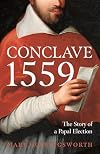
Mary Hollingsworth has delivered an 'insider' account of the Papal Conclave of 1559 through the eyes of the aristocratic Cardinal Ippolito d'Este, leader of the French faction that contested for the prize of appointing the next Pope with both the pro-Spaniards and the Italians linked to Paul IV.
The late Paul IV was unpopular and had run a repressive and vicious administration so Romans were waiting for something better. The fact that it took so long (nearly four months) to 'cut a deal' is show more one of the things that makes this Conclave so interesting.
Her sources are d'Este's papers, above all his account books (over 200) and letters (over 2,000). We have a blow by blow account of the micro-politics of the Papacy where two thirds of the vote of well over 50 Cardinals would decide the tone and fate of Catholic Christianity as well as of Northern Italy.
And what a rum lot these cardinals are, nearly all about as spiritual as a conclave of gangsters in interwar Chicago - competitive, manipulative, ostentatious, greedy and often deeply unpleasant, with one of their number in the job as a teenage jobsworth yet it kept elite wheels turning.
There is also the phenomenon of the cardinal-nephew for us to cope with. Each Pope would make new cardinals out of his relatives (this was accepted as due to the 'family') and these would make a 'dead weight' mini-faction in the Conclave. The practice was only ended finally in the 1690s.
We see the lack of dignity and squalor of the election as it unfolded beneath Michelangelo's Last Judgement and the other great works in the Apostolic Palace. We also see the frustration of the Papal Master of Ceremonies [Firmano] as his instructions were ignored and chaos ensued.
This is Namier-type history with personal interests triumphing over anything much greater. The overwhelming impression here is of Firmano trying to herd cats as the cardinals and their hangers-on behaved like naughty fourth formers in a boarding school straight out of St. Trinians.
Sometimes the complex negotiations in the election can be hard to follow. The author also rather likes the minutiae of clerical expenditures. Hollingsworth has introduced an odd 'tic' by which almost exactly the same balance of factions is repeated at the head of her account of key days.
But these are small complaints to set against the readability of the story and the clarity she provides about political life at the beating heart of a still fundamentally medieval Catholicism, Renaissance culture notwithstanding.
There was a lot at stake here because, once appointed, the Pope was an absolute autocrat with his hands on a great deal of patronage for the major noble families of Italy and huge influence over the tone and direction of continental foreign policy in age of great power rivalry.
There is an equally important ideological sub-text insofar as Protestantism had arisen as a threat over the previous forty years or so. Cardinals would have different responses to the challenge - reformist-accommodating, hard-line or simply uninterested and pragmatic.
Who became Pope therefore mattered at multiple levels - in relation to accommodation with princely Protestantism or not, in advantage for Spain or France in Italy, for Church reform and credibility, for noble houses in Italy, for the peace of mind of the Romans themselves and for their quality of life.
The two Great Powers attempting to influence the election were the superpower of Habsburg Spain and its weakening rival Valois France with the three main factions in the Conclave attempting every possible dirty trick to protect their interests. As a result, you have quite a story.
Although not in the top ten longest conclaves in Papal history, it was, at well over three and a half months, the longest in the sixteenth century because of the sheer difficulty of getting the two thirds majority amidst the gross interference of the outside powers and desperate greed of some families
In the end a Medici was elected as Pius IV. He was not a bad choice as a reasonably sensible and moderate candidate who helped clean up some of the corruption and who resumed the slow-burning reforming Council of Trent which had initiated the Counter-Reformation.
Ippolito d'Este, clearly highly regarded and influential, risked his own wealth to get through a Conclave where one speculated to accumulate, hoping that the right choice would deliver greater benefits and so recovery of funds. This was simple entrepreneurialism.
Others gambled and lost with the downright evil Neapolitan Carafa family suffering most. 1561 saw the execution of the Cardinal (a cruel and licentious gay bandit and murderer) and his brother (wife murderer and gangster) in 1561.
These Cardinals are mostly an unprepossessing lot. Some were honest. Most were not stupid. A very few were what we might understand as moral in the sense that the Church teaches morality. The rest were mostly opportunistic equivalents of our billionaires or aristocratic thugs, sometimes both.
Still, as the mafia say, that was then and this is now. The Conclave was a hinge point after which the Church begins the slow process of reform - simony was not outlawed until the 1690s - if only because of a growing understanding that Protestantism arose because of its own Italianate excesses.
There is a coda to the main story as d'Este (who had inherited the Archbishopric of Milan at the age of 10) becomes Cardinal-Protector of France just as that country stumbles its way into the first of its eight wars of religion. There are some interesting perspectives here. He died in 1572.
D'Este, an undoubtedly highly intelligent statesman and diplomat, was not untypical of his time - an aristocrat destined for the Church from a very early age and seeing preferment as a means to wealth and the protection of the family interest and its alliances.
Despite the complexity of the negotiations, the book is highly readable. The author is good at revealing character - especially important in dealing with the somewhat inept and pushy Spanish Ambassador Francisco de Vargas and the increasingly desperate Cardinal Carlo Carafa.
The double-dealing is sometimes quite fun to observe. The reputation of sixteenth century Italy is done no favours. We have ground for judging its church nobility as just a classy form of sustained criminality. Still, the seeds of something better were sown in 1559. show less
The late Paul IV was unpopular and had run a repressive and vicious administration so Romans were waiting for something better. The fact that it took so long (nearly four months) to 'cut a deal' is show more one of the things that makes this Conclave so interesting.
Her sources are d'Este's papers, above all his account books (over 200) and letters (over 2,000). We have a blow by blow account of the micro-politics of the Papacy where two thirds of the vote of well over 50 Cardinals would decide the tone and fate of Catholic Christianity as well as of Northern Italy.
And what a rum lot these cardinals are, nearly all about as spiritual as a conclave of gangsters in interwar Chicago - competitive, manipulative, ostentatious, greedy and often deeply unpleasant, with one of their number in the job as a teenage jobsworth yet it kept elite wheels turning.
There is also the phenomenon of the cardinal-nephew for us to cope with. Each Pope would make new cardinals out of his relatives (this was accepted as due to the 'family') and these would make a 'dead weight' mini-faction in the Conclave. The practice was only ended finally in the 1690s.
We see the lack of dignity and squalor of the election as it unfolded beneath Michelangelo's Last Judgement and the other great works in the Apostolic Palace. We also see the frustration of the Papal Master of Ceremonies [Firmano] as his instructions were ignored and chaos ensued.
This is Namier-type history with personal interests triumphing over anything much greater. The overwhelming impression here is of Firmano trying to herd cats as the cardinals and their hangers-on behaved like naughty fourth formers in a boarding school straight out of St. Trinians.
Sometimes the complex negotiations in the election can be hard to follow. The author also rather likes the minutiae of clerical expenditures. Hollingsworth has introduced an odd 'tic' by which almost exactly the same balance of factions is repeated at the head of her account of key days.
But these are small complaints to set against the readability of the story and the clarity she provides about political life at the beating heart of a still fundamentally medieval Catholicism, Renaissance culture notwithstanding.
There was a lot at stake here because, once appointed, the Pope was an absolute autocrat with his hands on a great deal of patronage for the major noble families of Italy and huge influence over the tone and direction of continental foreign policy in age of great power rivalry.
There is an equally important ideological sub-text insofar as Protestantism had arisen as a threat over the previous forty years or so. Cardinals would have different responses to the challenge - reformist-accommodating, hard-line or simply uninterested and pragmatic.
Who became Pope therefore mattered at multiple levels - in relation to accommodation with princely Protestantism or not, in advantage for Spain or France in Italy, for Church reform and credibility, for noble houses in Italy, for the peace of mind of the Romans themselves and for their quality of life.
The two Great Powers attempting to influence the election were the superpower of Habsburg Spain and its weakening rival Valois France with the three main factions in the Conclave attempting every possible dirty trick to protect their interests. As a result, you have quite a story.
Although not in the top ten longest conclaves in Papal history, it was, at well over three and a half months, the longest in the sixteenth century because of the sheer difficulty of getting the two thirds majority amidst the gross interference of the outside powers and desperate greed of some families
In the end a Medici was elected as Pius IV. He was not a bad choice as a reasonably sensible and moderate candidate who helped clean up some of the corruption and who resumed the slow-burning reforming Council of Trent which had initiated the Counter-Reformation.
Ippolito d'Este, clearly highly regarded and influential, risked his own wealth to get through a Conclave where one speculated to accumulate, hoping that the right choice would deliver greater benefits and so recovery of funds. This was simple entrepreneurialism.
Others gambled and lost with the downright evil Neapolitan Carafa family suffering most. 1561 saw the execution of the Cardinal (a cruel and licentious gay bandit and murderer) and his brother (wife murderer and gangster) in 1561.
These Cardinals are mostly an unprepossessing lot. Some were honest. Most were not stupid. A very few were what we might understand as moral in the sense that the Church teaches morality. The rest were mostly opportunistic equivalents of our billionaires or aristocratic thugs, sometimes both.
Still, as the mafia say, that was then and this is now. The Conclave was a hinge point after which the Church begins the slow process of reform - simony was not outlawed until the 1690s - if only because of a growing understanding that Protestantism arose because of its own Italianate excesses.
There is a coda to the main story as d'Este (who had inherited the Archbishopric of Milan at the age of 10) becomes Cardinal-Protector of France just as that country stumbles its way into the first of its eight wars of religion. There are some interesting perspectives here. He died in 1572.
D'Este, an undoubtedly highly intelligent statesman and diplomat, was not untypical of his time - an aristocrat destined for the Church from a very early age and seeing preferment as a means to wealth and the protection of the family interest and its alliances.
Despite the complexity of the negotiations, the book is highly readable. The author is good at revealing character - especially important in dealing with the somewhat inept and pushy Spanish Ambassador Francisco de Vargas and the increasingly desperate Cardinal Carlo Carafa.
The double-dealing is sometimes quite fun to observe. The reputation of sixteenth century Italy is done no favours. We have ground for judging its church nobility as just a classy form of sustained criminality. Still, the seeds of something better were sown in 1559. show less
Roman summers are notoriously ominous for the health of popes and cardinals alike. As the sultry summer of 1559 drew to a close, Paul IV, the harshly repressive pontiff infamous for establishing both the Roman Inquisition and the Index of Prohibited Books, died in the Apostolic Palace. While riots broke out across Rome, the College of Cardinals began their preparations for the forthcoming conclave. Given both the late pontiff’s misguided foreign and domestic policies and the fragile show more political situation across Western Christendom, the conclave met at a time of great importance.
Mary Hollingsworth returns to the tumultuous life of Cardinal Ippolito d’Este (1509-72) with a highly enjoyable and thrilling read in Conclave 1559. The second son of Lucrezia Borgia and Alfonso I d’Este, he had been catapulted into the church hierarchy aged nine when he inherited the archbishopric of Milan from his uncle of the same name. He was elevated to the College of Cardinals on 20 December 1538 in Paul III’s fifth set of creations. While Hollingsworth’s book on Ippolito’s life, The Cardinal’s Hat (2004), built upon her doctoral research on cardinal’s households and their roles as patrons of the arts, Conclave 1559 uses Ippolito’s surviving ledgers for the first time as a means of scrutinising the longest conclave of the 16th century and the ramifications it had across Christendom for years to come.
Papal conclaves still hold a unique fascination. Nevertheless, accounts from inside the walls of conclaves are rare. The publication of the Liber Notarum of the Papal Master of Ceremonies, Johannes Burchard (c.1450-1506), by Louis Thuasne in 1883-85 provided historians with evidence of the ceremonial aspects of the clandestine process. By using Ippolito’s own papers, Hollingsworth is able to portray the human side to the conclave process, the gruelling voting processes, the arduous politicking of the 47 cardinals and the practical side of outfitting each cardinal’s cell. It is this meticulous analysis that is the real merit of the book. Readers are presented with a clear picture of what life was like for those ensconced in the Sala Regia during this most clandestine of processes to the extent that the ‘aroma’ of the 47 men and their conclavisti, the tallow candles in the cardinal’s cells and rooms and the vast plates of food arriving for the sequestered cardinals seem olfactible.
Read the rest of the review at HistoryToday.com.
Katharine Fellows recently completed a PhD on the office of the Papal Vice-Chancellor at St Peter’s College, Oxford. show less
Mary Hollingsworth returns to the tumultuous life of Cardinal Ippolito d’Este (1509-72) with a highly enjoyable and thrilling read in Conclave 1559. The second son of Lucrezia Borgia and Alfonso I d’Este, he had been catapulted into the church hierarchy aged nine when he inherited the archbishopric of Milan from his uncle of the same name. He was elevated to the College of Cardinals on 20 December 1538 in Paul III’s fifth set of creations. While Hollingsworth’s book on Ippolito’s life, The Cardinal’s Hat (2004), built upon her doctoral research on cardinal’s households and their roles as patrons of the arts, Conclave 1559 uses Ippolito’s surviving ledgers for the first time as a means of scrutinising the longest conclave of the 16th century and the ramifications it had across Christendom for years to come.
Papal conclaves still hold a unique fascination. Nevertheless, accounts from inside the walls of conclaves are rare. The publication of the Liber Notarum of the Papal Master of Ceremonies, Johannes Burchard (c.1450-1506), by Louis Thuasne in 1883-85 provided historians with evidence of the ceremonial aspects of the clandestine process. By using Ippolito’s own papers, Hollingsworth is able to portray the human side to the conclave process, the gruelling voting processes, the arduous politicking of the 47 cardinals and the practical side of outfitting each cardinal’s cell. It is this meticulous analysis that is the real merit of the book. Readers are presented with a clear picture of what life was like for those ensconced in the Sala Regia during this most clandestine of processes to the extent that the ‘aroma’ of the 47 men and their conclavisti, the tallow candles in the cardinal’s cells and rooms and the vast plates of food arriving for the sequestered cardinals seem olfactible.
Read the rest of the review at HistoryToday.com.
Katharine Fellows recently completed a PhD on the office of the Papal Vice-Chancellor at St Peter’s College, Oxford. show less
This account is largely based on the personal papers of the late cardinal of Ferrara, including his account books. These ledgers of money flowing in and out can be a fascinating glimpse of life in the past, and here we see a tumbling enumeration of purchases of silver for the cardinals table and of shoes for servants who were too poor to afford their own; of expensive horses and carriages as gift to royalty, and frequent small tips to courtiers, servants and street performers; of bread, vast show more quantities of wine, and beeswax candles. We get an idea of how the household of the cardinal functioned, not only as a home, but as the court of a prince.
The conclave of 1559 became the central story of the book. Italy was a fragmented country, with many city-states and small dukedoms, but also a strong presence of the neighbouring powers on the peninsula: French, Spanish, or (Holy Roman) Imperial. Therefore the practical need was for a Pope who was an effective and accepted secular ruler as well as a religious leader. But the reality was one of unseemly and at times ridiculous double-dealing. Because the cardinals were divided in three factions of roughly equal size, but membership was fluid and votes could not be relied on, there was ample scope to corrupt the process. Everyone tried to— and the Spanish ambassador in particular went out of control.
The picture that emerges of the 16th century college of cardinals is a riotous one. Among them, many were aristocrats motivated by a sense of duty to their family and their people, such as d’Este appears to have been, not necessarily devout, but professional. There were also a small number of genuinely religious men, sometimes intolerant and inflexible, but sincere. And there were some too who were plainly parasites, unscrupulous and greedy. Locking them all up together in a confined, stuffy and smelly space, each with three or four servants to worsen the overcrowding, with rich food and two litres of wine per day, did not bring out the best in any of them. Hollingsworth’s dry narrative still ketches a tumultuous series of events, at times hilarious if you have a bit of imagination.
The book ends with a report of d’Estes mission to France, where as papal legate he tried to negotiate the growing conflict between Catholics and Protestants. Both the cardinal and the pope appear to have been motivated by a genuine wish to avoid violence. Alas, it was not to be, and France sank into decades of civil war. This story is left unfinished: It vanishes rather abruptly into the background when d’Este at last returned home.
In all, this is enjoyable history of a man who personified a lot of the problems and challenges of the renaissance church. There are times when you wish for a bit more context, or a bit more personality. But that would have required the invention of a historical novel. Let someone else do that—it would be fun! show less
The conclave of 1559 became the central story of the book. Italy was a fragmented country, with many city-states and small dukedoms, but also a strong presence of the neighbouring powers on the peninsula: French, Spanish, or (Holy Roman) Imperial. Therefore the practical need was for a Pope who was an effective and accepted secular ruler as well as a religious leader. But the reality was one of unseemly and at times ridiculous double-dealing. Because the cardinals were divided in three factions of roughly equal size, but membership was fluid and votes could not be relied on, there was ample scope to corrupt the process. Everyone tried to— and the Spanish ambassador in particular went out of control.
The picture that emerges of the 16th century college of cardinals is a riotous one. Among them, many were aristocrats motivated by a sense of duty to their family and their people, such as d’Este appears to have been, not necessarily devout, but professional. There were also a small number of genuinely religious men, sometimes intolerant and inflexible, but sincere. And there were some too who were plainly parasites, unscrupulous and greedy. Locking them all up together in a confined, stuffy and smelly space, each with three or four servants to worsen the overcrowding, with rich food and two litres of wine per day, did not bring out the best in any of them. Hollingsworth’s dry narrative still ketches a tumultuous series of events, at times hilarious if you have a bit of imagination.
The book ends with a report of d’Estes mission to France, where as papal legate he tried to negotiate the growing conflict between Catholics and Protestants. Both the cardinal and the pope appear to have been motivated by a genuine wish to avoid violence. Alas, it was not to be, and France sank into decades of civil war. This story is left unfinished: It vanishes rather abruptly into the background when d’Este at last returned home.
In all, this is enjoyable history of a man who personified a lot of the problems and challenges of the renaissance church. There are times when you wish for a bit more context, or a bit more personality. But that would have required the invention of a historical novel. Let someone else do that—it would be fun! show less
Lists
You May Also Like


Statistics
- Works
- 12
- Members
- 914
- Popularity
- #28,064
- Rating
- 3.9
- Reviews
- 12
- ISBNs
- 182
- Languages
- 11
- Favorited
- 2
