
Tawfiq al-Hakim (1898–1987)
Author of Diary of a Country Prosecutor
About the Author
Tawfiq al-Hakim was the undisputed pioneer of dramatic writing in Arabic. Born in Alexandria, Egypt, he studied law in Paris and spent time with writers there. In 1928 he was appointed an attorney to the public prosecutor in the provinces of Egypt, and his experiences there inspired his novel The show more Maze of Justice. He resigned from government service and devoted himself completely to writing. Among his works widely read in Europe, particularly in France, are The Return of the Spring (1933) and The Tree Climber (1962), considered his masterwork. 020 Al-I Ahmad, Jalal Life Dates:1923-1969 Born in Tehran, Iran, in 1923, Jalal Al-i Ahmad is considered to be one of Iran's major modern prose writers, distinguished in both fiction and nonfiction. His first works of fiction began to appear in 1945. His seminal work, Mudir-i Madrasah (The School Principal) (1958) is social criticism as much as a novel-a blend that has led to many of Al-i Ahmad's works, especially his later ones, being banned. His political affiliations changed markedly during his life. The son of a Shi'ah cleric, he eventually came to have a strong belief in Islamic government and the importance of Shi'ah Islam in Iranian life, but earlier in his life he was active in the Tudeh (Communist) party and a strong supporter of Muhammad Musaddiq. Unquestionably, though, he was a nationalist with a strong dislike of Western culture and its pervasive intrusion in Iran. These feelings are particularly evident in his best-known nonfiction work in both Iran and the West, Gharbzadigi (Struck by the West). Originally published in serialized form in 1962, only a part appeared before it was banned. The first uncensored edition was published in 1978. Yet Al-i Ahmad was not solely an angry voice. Cynicism and disillusionment mingled with humor is part of his prose. His last novel, Nafrin-i Zamin (Cursing of the Land), was published in 1968 shortly before he died of a heart attack. (Bowker Author Biography) show less
Image credit: Courtesy of Egypt State Information Service
Works by Tawfiq al-Hakim
Plays, Prefaces and Postscripts of Tawfiq Al-Hakim: Theatre of the Mind. Ed and Tr from the Arabic by William M. Hutchins (304p) (1981) 17 copies
الرباط المقدس 9 copies
بجماليون 6 copies
أرني الله (Arabic Edition) 4 copies
السلطان الحائر (Arabic Edition) 4 copies
أهل الكهف 4 copies
ليلة الزفاف (Arabic Edition) 4 copies
الخروج من الجنة 4 copies
الملك أوديب 3 copies
يوميات نائب فى الأرياف 3 copies
أرني الله 3 copies
التعادلية مع الإسلام 3 copies
راقصة المعبد 3 copies
Isis 3 copies
حديث مع الكوكب 2 copies
مدرسة المغفلين 2 copies
عصفور من الشرق 2 copies
ثورة الشباب 2 copies
الطعام لكل فم 2 copies
شهرزاد 2 copies
راهب بين النساء 1 copy
Пьесы 1 copy
Diario de un fiscal rural 1 copy
أهل الكهف (Arabic Edition) 1 copy
فن الأدب (Arabic Edition) 1 copy
شهرزاد 1 copy
السلطان الحائر 1 copy
تاريخ. حياة معدة 1 copy
سلطان الظلام 1 copy
الأيدي الناعمة 1 copy
تحت شمس الفكر 1 copy
سلطان الظلام 1 copy
لعبة الموت 1 copy
رحلة إلى الغد 1 copy
يقظة الفكر 1 copy
شجرة الحكم 1 copy
فن الأدب 1 copy
ملامح داخلية 1 copy
أرني الله (Arabic Edition) 1 copy
الصفقة 1 copy
وثائق في طريق عودة الوعي 1 copy
ليلة الزفاف 1 copy
مدرسة المغفلين 1 copy
عودة الوعي 1 copy
توفيق الحكيم يتذكر 1 copy
يوميات نائب فى الأرياف 1 copy
The Sultan's Dilemma 1 copy
إيزيس 1 copy
شمس النهار 1 copy
ايزيس 1 copy
????? ?????? ????? 1 copy
A Deserted Street 1 copy
ايزيس 1 copy
Mohamed محمد 1 copy
Associated Works
Tablet & Pen: Literary Landscapes from the Modern Middle East (Words Without Borders) (2010) — Contributor — 221 copies, 2 reviews
Tagged
Common Knowledge
- Canonical name
- al-Hakim, Tawfiq
- Legal name
- توفيق الحكيم
Tawfīq el-Ḥakīm - Other names
- al-Hakim, Tawfiq Ismail
el-Hakim, Tawfik - Birthdate
- 1898-10-09
- Date of death
- 1987-07-26
- Gender
- male
- Education
- Sorbonne
- Occupations
- novelist, playwright
- Nationality
- Egypt
- Birthplace
- Alexandria, Egypt
- Place of death
- Cairo, Egypt
- Associated Place (for map)
- Egypt
Members
Reviews

Would you care about the life a cockroach? Anyone who had ever lived in a flat had probably seen the creatures and the usual reaction is to kill the thing as fast as possible (and make sure you kill all of its kin). And yet, this play makes you care about a cockroach.
The complete play is first published in 1966; its two parts (slightly different...) were initially published as two separate plays in the previous 2 years under the same name: a one act one (the first act) and a two-acts one show more (the second and third). Not knowing that before I read it, I kept looking for the characters of the first act to show up again - except for the main protagonist, noone else crosses between the to main parts.
The story opens in an apartments' bathroom where the king and queen of cockroaches discuss their main enemy. No - it is not the humans - the cockroaches had seen the poisons and the shoes used to kill them but they are so much bigger that they believe them to be natural phenomenons. The enemy are the ants -- who wait for one of our heroes to fall on its back and thus get immobilized and attack - carrying the cockroach home for food. But the two royals and the rest of the population cannot decide who needs to do what work - as usual and if you forget for a second that you are reading about cockroaches, you can decide that you are listening to a modern country's government... The act closes with a tragedy - the king falls into the bathtub and cannot get out.
And once the curtain falls on that act, we won't see the rest of cockroaches again -- although we will see the ants.
The second act opens in the bedroom of the apartment where Samia and Adil are waking up for work -- and the regular morning disagreement on who is to take a bath first starts almost immediately. But with the king in the bathtub, trying to escape, Adil decides that he wants to find out when the creature will give up... and the play goes into its absurdist phase. The doctor is summoned (and convinced that this is a good way for someone to spend a day), at various times various characters decide that they identify with the cockroach (or that someone else in the room does). Until the bathtub is filled by the cook and our main character dies of course (or are Samia and Adil the main characters). A dead cockroach on the floor is food for ants so they come... and then the cook wipes them out.
You can read this as a comedic piece but it is also deeply philosophical - would you help someone you do not like or will you enjoy looking at them trying over and over? When a failure is inevitable, do you help or do you just watch?
I was not sure I was sold on the premise of the play when I started reading it but at the end it actually works - especially when you change the cast and put the same story on a global scale.
Tawfik al-Hakim is one of the big play-writers of Egypt but it does not seem like a lot of his plays had been translated. I plan to track down the ones that had been though. show less
The complete play is first published in 1966; its two parts (slightly different...) were initially published as two separate plays in the previous 2 years under the same name: a one act one (the first act) and a two-acts one show more (the second and third). Not knowing that before I read it, I kept looking for the characters of the first act to show up again - except for the main protagonist, noone else crosses between the to main parts.
The story opens in an apartments' bathroom where the king and queen of cockroaches discuss their main enemy. No - it is not the humans - the cockroaches had seen the poisons and the shoes used to kill them but they are so much bigger that they believe them to be natural phenomenons. The enemy are the ants -- who wait for one of our heroes to fall on its back and thus get immobilized and attack - carrying the cockroach home for food. But the two royals and the rest of the population cannot decide who needs to do what work - as usual and if you forget for a second that you are reading about cockroaches, you can decide that you are listening to a modern country's government... The act closes with a tragedy - the king falls into the bathtub and cannot get out.
And once the curtain falls on that act, we won't see the rest of cockroaches again -- although we will see the ants.
The second act opens in the bedroom of the apartment where Samia and Adil are waking up for work -- and the regular morning disagreement on who is to take a bath first starts almost immediately. But with the king in the bathtub, trying to escape, Adil decides that he wants to find out when the creature will give up... and the play goes into its absurdist phase. The doctor is summoned (and convinced that this is a good way for someone to spend a day), at various times various characters decide that they identify with the cockroach (or that someone else in the room does). Until the bathtub is filled by the cook and our main character dies of course (or are Samia and Adil the main characters). A dead cockroach on the floor is food for ants so they come... and then the cook wipes them out.
You can read this as a comedic piece but it is also deeply philosophical - would you help someone you do not like or will you enjoy looking at them trying over and over? When a failure is inevitable, do you help or do you just watch?
I was not sure I was sold on the premise of the play when I started reading it but at the end it actually works - especially when you change the cast and put the same story on a global scale.
Tawfik al-Hakim is one of the big play-writers of Egypt but it does not seem like a lot of his plays had been translated. I plan to track down the ones that had been though. show less

A giant in Egyptian literature. I read his Maze of Justice some years ago and enjoyed it. Not this one. It was first published in 1933 and is touted as the story of the 1919 Revolution (throwing off the yoke of the colonial British government). Either I am an incompetent reader (a distinct possibility) or this has virtually nothing to do with the coming of the 1919 Revolution except that it covers the period shortly before it. Advertised as “a trailblazing political novel that illustrates show more the way one man's spiritual awakening ties to a political awakening of a nation,” it is actually the story of a boy who falls in love with his next-door neighbor, a woman a few years too old for him. That “relationship” is the most significant portion of the book, the remainder being primarily taken up with the lives and tribulations of the people in the house in which the boy lives. His rich parents in the countryside make a brief appearance and the customers of a café across the street make occasional appearances. The Revolution appears out of nowhere in the last dozen or two dozen pages; they are almost as if tacked on from another book. The only connection to what came before is the same characters as witnesses to the eruption of violence. To the extent that the “love story” is a metaphor for the Egyptian people under the British yoke, I never got it.
The book wasn’t particularly well-written and the translation struck me as a poor job. William Maynard Hutchins, a major translator—indeed, he translated Mahfouz’s “Cairo Trilogy” into English among other things—did the translation. It seems that he must have done the Mahfouz at the same time and there is no doubt in my mind where his attention was. It reads too often as if he simply sleepwalked through it. The English is occasionally stilted, ungrammatical, and just difficult. A sad job of translating and a grave disappointment of a book. (That said, I’d be very curious to hear from someone else who has read it to make certain I’m not just blind to something.) show less
The book wasn’t particularly well-written and the translation struck me as a poor job. William Maynard Hutchins, a major translator—indeed, he translated Mahfouz’s “Cairo Trilogy” into English among other things—did the translation. It seems that he must have done the Mahfouz at the same time and there is no doubt in my mind where his attention was. It reads too often as if he simply sleepwalked through it. The English is occasionally stilted, ungrammatical, and just difficult. A sad job of translating and a grave disappointment of a book. (That said, I’d be very curious to hear from someone else who has read it to make certain I’m not just blind to something.) show less
"أدركتُ أنّ الأرواح في مصر لا قيمة لها لأن الذين عليهم أن يفكروا في هذه الأرواح لا يفكرون فيها إلا قليلا"
"ما الذى روّعه ؟
أهو منظر العظام قى ذاتها، أم فكرة الموت الممثلة فيها، أم المصير الآدمى و قد رآه أمامه رأى العين ؟
و لماذا لم يعد منظر الجثث و العظام يؤثر فى مثلى و فى مثل show more الطبيب ، و حتى فى مثل اللحاد أو الحراس هذا التأثير ؟ يخيل إلىَّ أن الجثث و العظام قد فقدت لدينا ما فيها من رموز. فهى لا تعدو فى نظرنا قطع من الأخشاب و عيدان الحطب و قوالب الطين و الآجر. إنها أشياء تتداولها أيدينا فى عملنا اليومى. لقد انفصل عنها ذلك الرمز الذى هو كل قوتها؟
ما مصير البشرية و ما قيمتها لو ذهب عنها الرمز ... "الرمز" هو فى ذاته كائن لا وجود له. هو لا شئ و هو مع ذلك كل شئ فى حياتنا الآدمية. هذا اللا شئ الذى نشيد عليه حياتنا هو كل ما نملك من سمو نختال به و نمتاز على غيرنا من المخلوقات"
.
عندما بدأت هذا الكتاب لم تكن الطبعة التي أمتلكها تطرقت إلى كون هذه يوميات شخصية لتوفيق الحكيم فترة نيابته في الأرياف فقرأتها وأنا على اعتقاد أنه رغم
واقعية أوصافها وأحداثها إلا أن شخصياتها من وحي خيال المؤلف وعندما بدأت بصفحات الكتاب الأولى كنت على اقتناع تام بأني لن أكمله وأني لن أتحمل ذلك الإسترسال المفصل الذي اعتمده الكاتب إلا أني وجدتني رغمًا عني لا أضع الكتاب جانبًا ولم أمل منه للحظة فأكثر من كون هذا الكتاب يوميات أو جريمة يبحث فيها النائب أو رواية تتعاقب أحداثها ؛ فهو بالأحرى تسجيلا وثائقيا لحياة المصري بالريف الذي ربما لو عرض الآن لوجدته مطابقًا تمامًا لوضع الريفيين في وقتنا الحاضر فيمكنك أن تعدها رواية لا تموت أبدًا من الواقع المصري. show less
"ما الذى روّعه ؟
أهو منظر العظام قى ذاتها، أم فكرة الموت الممثلة فيها، أم المصير الآدمى و قد رآه أمامه رأى العين ؟
و لماذا لم يعد منظر الجثث و العظام يؤثر فى مثلى و فى مثل show more الطبيب ، و حتى فى مثل اللحاد أو الحراس هذا التأثير ؟ يخيل إلىَّ أن الجثث و العظام قد فقدت لدينا ما فيها من رموز. فهى لا تعدو فى نظرنا قطع من الأخشاب و عيدان الحطب و قوالب الطين و الآجر. إنها أشياء تتداولها أيدينا فى عملنا اليومى. لقد انفصل عنها ذلك الرمز الذى هو كل قوتها؟
ما مصير البشرية و ما قيمتها لو ذهب عنها الرمز ... "الرمز" هو فى ذاته كائن لا وجود له. هو لا شئ و هو مع ذلك كل شئ فى حياتنا الآدمية. هذا اللا شئ الذى نشيد عليه حياتنا هو كل ما نملك من سمو نختال به و نمتاز على غيرنا من المخلوقات"
.
عندما بدأت هذا الكتاب لم تكن الطبعة التي أمتلكها تطرقت إلى كون هذه يوميات شخصية لتوفيق الحكيم فترة نيابته في الأرياف فقرأتها وأنا على اعتقاد أنه رغم
واقعية أوصافها وأحداثها إلا أن شخصياتها من وحي خيال المؤلف وعندما بدأت بصفحات الكتاب الأولى كنت على اقتناع تام بأني لن أكمله وأني لن أتحمل ذلك الإسترسال المفصل الذي اعتمده الكاتب إلا أني وجدتني رغمًا عني لا أضع الكتاب جانبًا ولم أمل منه للحظة فأكثر من كون هذا الكتاب يوميات أو جريمة يبحث فيها النائب أو رواية تتعاقب أحداثها ؛ فهو بالأحرى تسجيلا وثائقيا لحياة المصري بالريف الذي ربما لو عرض الآن لوجدته مطابقًا تمامًا لوضع الريفيين في وقتنا الحاضر فيمكنك أن تعدها رواية لا تموت أبدًا من الواقع المصري. show less
http://www.mytwostotinki.com/?p=1193
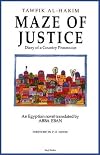
Diary of a Country Prosecutor (also published under the title Maze of Justice) is a partly autobiographical short novel by Tawfik al-Hakim; it was first published in 1937. Al-Hakim based the book on his personal experiences as a Prosecutor.
The narrator is a young Public Prosecutor from Cairo that works in a small town in the Nile delta. He keeps a diary in which he describes his life and thoughts in this rather dull, boring place, surrounded by usually show more illiterate fellahin and a few a bit more wealthy traders and village dignitaries and state representatives, like the umdah, the local mayor, and the ma’mur, the officer in charge for the public order in the district. Some judges, ushers, legal assistants, and ghafirs (sentries) complete the cast of characters of this novel – almost. Because there are also two somehow elusive characters in the book: the beautiful peasant girl Rim and the mysterious and eccentric Sheikh Asfour who usually knows more about what’s going on than all representatives of the state together but who prefers usually to keep his knowledge for himself.
The book starts with a crime. Someone shot at Kamar al-Dawla Alwan, but there is no visible motif nor is there a suspect. The Public Prosecutor describes the investigation and it is soon obvious that the reader cannot expect a classical whodunit. In fact, the search for the perpetrator is not so much what drives the story, but the absurd way how the law is exercised.
It is revealing what the narrator says about the two judges with whom he is working. One is terribly slow and usually charges all defendants as guilty, the other is terribly fast (because he wants to catch the 11 a.m. train back to Cairo in time every day) and charges also all defendants as guilty. The law is based on the Code Napoleon, a foreign import completely alien to the fellahin who don’t understand anything about it.
"The usher went on calling out names. The type of charge had begun to vary and we were entering a different world, for the judge was now saying to the accused, ‘You are charged with having washed your clothes in the canal!’ – ‘Your honor – may God exalt your station – are you going to fine me just because I washed my clothes?’ – ‘It’s for washing them in the canal.’ – ‘Well, where else could I wash them?’ – The judge hesitated, deep in thought, and could give no answer. He knew very well that these poor wretches had no wash basins in their village, filled with fresh flowing water from the tap. They were left to live like cattle all their lives and were yet required to submit to a modern legal system imported from abroad. – The judge turned to me and said, ‘The Legal Officer! Opinion, please.’ – ‘The state is not concerned to inquire where this man should wash his clothes. Its only interest is the application of the law.’ – The judge turned his glance away from me, lowered his head, shook it and then spoke swiftly like a man rolling a weight off his shoulders: ‘Fined twenty piastres. Next case.’"
Even more outrageous is a case in which the ‘speedy’ judge is in charge:
"A decrepit bent-backed man with a white beard came forward, hobbling on a stick. The judge pounced on him with a question: ‘You expended reserved wheat?’ – ‘it was my wheat, your honor, and I ate it with my family.’ – ‘Pleads guilty. One month with hard labour!’ – ‘A month! Do you hear, Muslims! My own wheat, my own crop, my own property…!’ – The policeman dragged him away. As he went, he stared at those in court with goggling eyes as though he could not believe that he had heard the sentence aright. Surely his ears must have deceived him and the spectators must have heard the truth. For he had stolen no man’s wheat. It is true that the usher had visited him and ‘reserved’ his wheat, appointing him as a trustee until such time as he paid the government tax. But the pangs of hunger had seized him violently – him and his family; so he had eaten his own wheat. But who could possibly regard him as a thief on that account and punish him for stealing? It was impossible for this old fellow to understand a law which called him a thief for eating his own harvest, sown by his own hands. These were crimes invented by the law to protect the money of the government or of private creditors; but they were not natural crimes in the eyes of the poor farmer, whose simple instinct could not find any sin in them. He knows well enough that assault is a crime, and murder is a crime, and theft is a crime; for all these involve an obvious aggression against somebody else and reveal clear and evident moral turpitude. But ‘expending reserved property’ – and this was something whose principle and definition he could not grasp. For him it was purely a formal, legalistic crime, whose impact he must go on enduring without believing in it at all."
Tawfik al-Hakim’s book is first of all a powerful attack on the state of the legal system in his home country, which didn’t even try to establish justice – but ‘the law’. It shows the situation in its full absurdity and frequently with a savage humor that borders the macabre: there is a scene where the town barber, under the supervision of the Public Prosecutor and a pathologist, is dragging corpse after corpse out of first one grave and then another in a muddled attempt to locate the body of a woman who has been murdered. ‘The comedy is grim, but comedy it is’, as Booker Prize Winner P.H. Newby says in his foreword to the edition I read. That someone is arrested for the murder that is clearly innocent, is just adding to the picture.
Al-Hakim was a liberal; he studied law in France in the 1920s and started a career as a Public Prosecutor in Egypt but got quickly very disappointed and pessimistic. He is today considered a classic of modern Arabic literature. He was the Arab world’s leading dramatist, as well as a major writer of novels and short stories. Diary of a Country Prosecutor (elegantly translated by the young Abba Eban, later to become a famous Israeli diplomat and politician) is a brilliant book in the tradition of Gogol and Kafka; and I am afraid that it hasn’t lost its relevance even today. show less
Diary of a Country Prosecutor (also published under the title Maze of Justice) is a partly autobiographical short novel by Tawfik al-Hakim; it was first published in 1937. Al-Hakim based the book on his personal experiences as a Prosecutor.
The narrator is a young Public Prosecutor from Cairo that works in a small town in the Nile delta. He keeps a diary in which he describes his life and thoughts in this rather dull, boring place, surrounded by usually show more illiterate fellahin and a few a bit more wealthy traders and village dignitaries and state representatives, like the umdah, the local mayor, and the ma’mur, the officer in charge for the public order in the district. Some judges, ushers, legal assistants, and ghafirs (sentries) complete the cast of characters of this novel – almost. Because there are also two somehow elusive characters in the book: the beautiful peasant girl Rim and the mysterious and eccentric Sheikh Asfour who usually knows more about what’s going on than all representatives of the state together but who prefers usually to keep his knowledge for himself.
The book starts with a crime. Someone shot at Kamar al-Dawla Alwan, but there is no visible motif nor is there a suspect. The Public Prosecutor describes the investigation and it is soon obvious that the reader cannot expect a classical whodunit. In fact, the search for the perpetrator is not so much what drives the story, but the absurd way how the law is exercised.
It is revealing what the narrator says about the two judges with whom he is working. One is terribly slow and usually charges all defendants as guilty, the other is terribly fast (because he wants to catch the 11 a.m. train back to Cairo in time every day) and charges also all defendants as guilty. The law is based on the Code Napoleon, a foreign import completely alien to the fellahin who don’t understand anything about it.
"The usher went on calling out names. The type of charge had begun to vary and we were entering a different world, for the judge was now saying to the accused, ‘You are charged with having washed your clothes in the canal!’ – ‘Your honor – may God exalt your station – are you going to fine me just because I washed my clothes?’ – ‘It’s for washing them in the canal.’ – ‘Well, where else could I wash them?’ – The judge hesitated, deep in thought, and could give no answer. He knew very well that these poor wretches had no wash basins in their village, filled with fresh flowing water from the tap. They were left to live like cattle all their lives and were yet required to submit to a modern legal system imported from abroad. – The judge turned to me and said, ‘The Legal Officer! Opinion, please.’ – ‘The state is not concerned to inquire where this man should wash his clothes. Its only interest is the application of the law.’ – The judge turned his glance away from me, lowered his head, shook it and then spoke swiftly like a man rolling a weight off his shoulders: ‘Fined twenty piastres. Next case.’"
Even more outrageous is a case in which the ‘speedy’ judge is in charge:
"A decrepit bent-backed man with a white beard came forward, hobbling on a stick. The judge pounced on him with a question: ‘You expended reserved wheat?’ – ‘it was my wheat, your honor, and I ate it with my family.’ – ‘Pleads guilty. One month with hard labour!’ – ‘A month! Do you hear, Muslims! My own wheat, my own crop, my own property…!’ – The policeman dragged him away. As he went, he stared at those in court with goggling eyes as though he could not believe that he had heard the sentence aright. Surely his ears must have deceived him and the spectators must have heard the truth. For he had stolen no man’s wheat. It is true that the usher had visited him and ‘reserved’ his wheat, appointing him as a trustee until such time as he paid the government tax. But the pangs of hunger had seized him violently – him and his family; so he had eaten his own wheat. But who could possibly regard him as a thief on that account and punish him for stealing? It was impossible for this old fellow to understand a law which called him a thief for eating his own harvest, sown by his own hands. These were crimes invented by the law to protect the money of the government or of private creditors; but they were not natural crimes in the eyes of the poor farmer, whose simple instinct could not find any sin in them. He knows well enough that assault is a crime, and murder is a crime, and theft is a crime; for all these involve an obvious aggression against somebody else and reveal clear and evident moral turpitude. But ‘expending reserved property’ – and this was something whose principle and definition he could not grasp. For him it was purely a formal, legalistic crime, whose impact he must go on enduring without believing in it at all."
Tawfik al-Hakim’s book is first of all a powerful attack on the state of the legal system in his home country, which didn’t even try to establish justice – but ‘the law’. It shows the situation in its full absurdity and frequently with a savage humor that borders the macabre: there is a scene where the town barber, under the supervision of the Public Prosecutor and a pathologist, is dragging corpse after corpse out of first one grave and then another in a muddled attempt to locate the body of a woman who has been murdered. ‘The comedy is grim, but comedy it is’, as Booker Prize Winner P.H. Newby says in his foreword to the edition I read. That someone is arrested for the murder that is clearly innocent, is just adding to the picture.
Al-Hakim was a liberal; he studied law in France in the 1920s and started a career as a Public Prosecutor in Egypt but got quickly very disappointed and pessimistic. He is today considered a classic of modern Arabic literature. He was the Arab world’s leading dramatist, as well as a major writer of novels and short stories. Diary of a Country Prosecutor (elegantly translated by the young Abba Eban, later to become a famous Israeli diplomat and politician) is a brilliant book in the tradition of Gogol and Kafka; and I am afraid that it hasn’t lost its relevance even today. show less
Lists
Reading LIst (1)
Awards

You May Also Like


Associated Authors
Statistics
- Works
- 108
- Also by
- 5
- Members
- 495
- Popularity
- #49,935
- Rating
- 3.7
- Reviews
- 23
- ISBNs
- 75
- Languages
- 5
- Favorited
- 2