
Mulk Raj Anand (1905–2004)
Author of Untouchable
About the Author
Works by Mulk Raj Anand
Letters on India 2 copies
Selected stories 2 copies
The barber's trade union 2 copies
More Indian fairy tales 1 copy
Deccani Kalams 1 copy
Museums of India 1 copy
Islamic Architecture 1 copy
Chandīgarh 1 copy
On Education 1 copy
Mora 1 copy
Treasures of Indian Museums 1 copy
Mathura 1 copy
The Big Heart 1 copy
Intoccabile 1 copy
Tealevél 1 copy
village, The 1 copy
The Persian theatre 1 copy
MargVOL XXIV No. 2 1 copy
Associated Works
Gender in Modernism: New Geographies, Complex Intersections (2007) — Contributor — 12 copies, 1 review
Tagged
Common Knowledge
- Birthdate
- 1905-12-12
- Date of death
- 2004-10-28
- Gender
- male
- Nationality
- India
- Associated Place (for map)
- India
Members
Reviews

A day in the life of a single Dalit and the ways in which he secures food and tries to accommodate his mixture of yearning and resignation with those of his family and those of the castes above him.
Feels much more modern than what I expected from a 1930s book. Beautifully written. Concerned with the plight of the Dalit and their slave-like existence on the periphery of Hindu society, but does so not through melodrama or preachiness, but by presenting their lives as-is. Attitudes and show more viewpoints are contrasted, not by setting up straw characters to serve as mouthpieces for political views, but by having nuanced characters clash in nuanced ways. Life as she is lived makes an excellent case for change, better than authorial filibustering ever could. The one speech that does make it into the book is admittedly anvilicious, but even that is tempered by how its effects on the main character are different from the ones intended. Even so, the book left me wonderfully conflicted. Nicely done! show less
Feels much more modern than what I expected from a 1930s book. Beautifully written. Concerned with the plight of the Dalit and their slave-like existence on the periphery of Hindu society, but does so not through melodrama or preachiness, but by presenting their lives as-is. Attitudes and show more viewpoints are contrasted, not by setting up straw characters to serve as mouthpieces for political views, but by having nuanced characters clash in nuanced ways. Life as she is lived makes an excellent case for change, better than authorial filibustering ever could. The one speech that does make it into the book is admittedly anvilicious, but even that is tempered by how its effects on the main character are different from the ones intended. Even so, the book left me wonderfully conflicted. Nicely done! show less

Munoo is a young boy who leaves his far North India hill village in the belief that life will be better somewhere else. Anywhere else. In the process of discovering the world, he goes from town to town and, eventually, to Bombay and Simla, working in inevitably menial positions everywhere. His youth (and concomitant naivete) keep prompting the reader to want to grab him and tell him “No! Don’t do it,” but that is a measure of how convincingly Anand has drawn both the characters and the show more circumstances. Munoo’s endless struggle just to survive is a heart-rending picture of life among the poorest classes in 1940s India. Anand’s depiction calls Dickens to mind in showing how the poorest live and, even more powerfully, the way they disappear, unremarked by virtually anyone. He is particularly effective at making clear the life of a day with its routine insults and humiliations, the place (and impact) of both faith and fatalism and the power of racism—not just of the English but of the caste system itself. Sadly, I cannot help but wonder how much has changed. show less
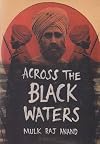
This is an excellent novel that gives an account of the Indian soldiers who served during the First World War, we see them arrive in Marseille, experiencing Europe for the first time, before moving north to the trenches in Flanders. Mulk Raj Anand was in the same generation of writers as Virginia Woolf and T. S. Eliot, and his prose style and approach to wartime politics put him alongside the best of the early twentieth century novelists. This is an essential First World War one novel and show more should be read alongside the more canonical war literature. The novel is the middle part of a trilogy (although you wouldn't know it from this edition) but can be read as a standalone book quite easily.
While the novel is excellent, the modern edition published by Shalimar Books to coincide with centenary of the Great War is very poor. There are glaring typographical errors on nearly every page, from sentences cut in half to spaces inserted within words, all of which is garnished with random punctuation and spelling mistakes. These mistakes are so consistent that it is hard not to come to the conclusion that no one proof read the book before it was sent to the printers. It makes reading the novel very difficult. show less
While the novel is excellent, the modern edition published by Shalimar Books to coincide with centenary of the Great War is very poor. There are glaring typographical errors on nearly every page, from sentences cut in half to spaces inserted within words, all of which is garnished with random punctuation and spelling mistakes. These mistakes are so consistent that it is hard not to come to the conclusion that no one proof read the book before it was sent to the printers. It makes reading the novel very difficult. show less
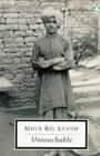
Bakha is a young Untouchable, at an age where passion and reason battle fiercely and rebellion is difficult to contain. Through the adventures of a day, we see the contrasts of his life - his social condition, his familial predicament, his precious humanity. Anand thus walks us through all the emotions from servility to righteous anger, as this young man navigates life's unfairness.
The conclusion is a hopeful one: Gandhi, who preaches unity and independence, and modernity which is knocking show more at India's door both carried by the heavy gusts of wind, lead us to believe that Bakha can have a better future... the question that remains is, will he (Bakha) have the enduring courage to see it through. show less
The conclusion is a hopeful one: Gandhi, who preaches unity and independence, and modernity which is knocking show more at India's door both carried by the heavy gusts of wind, lead us to believe that Bakha can have a better future... the question that remains is, will he (Bakha) have the enduring courage to see it through. show less
Lists
Awards


You May Also Like


Associated Authors
Statistics
- Works
- 95
- Also by
- 3
- Members
- 1,368
- Popularity
- #18,795
- Rating
- 3.5
- Reviews
- 27
- ISBNs
- 112
- Languages
- 7
- Favorited
- 4