
Mary Shelley (1797–1851)
Author of Frankenstein
About the Author
Mary Wollstonecraft Shelley was born in England on August 30, 1797. Her parents were two celebrated liberal thinkers, William Godwin, a social philosopher, and Mary Wollstonecraft, a women's rights advocate. Eleven days after Mary's birth, her mother died of puerperal fever. Four motherless years show more later, Godwin married Mary Jane Clairmont, bringing her and her two children into the same household with Mary and her half-sister, Fanny. Mary's idolization of her father, his detached and rational treatment of their bond, and her step-mother's preference for her own children created a tense and awkward home. Mary's education and free-thinking were encouraged, so it should not surprise us today that at the age of sixteen she ran off with the brilliant, nineteen-year old and unhappily married Percy Bysshe Shelley. Shelley became her ideal, but their life together was a difficult one. Traumas plagued them: Shelley's wife and Mary's half-sister both committed suicide; Mary and Shelley wed shortly after he was widowed but social disapproval forced them from England; three of their children died in infancy or childhood; and while Shelley was an aristocrat and a genius, he was also moody and had little money. Mary conceived of her magnum opus, Frankenstein, or the Modern Prometheus, when she was only nineteen when Lord Byron suggested they tell ghost stories at a house party. The resulting book took over two years to write and can be seen as the brilliant creation of a powerful but tormented mind. The story of Frankenstein has endured nearly two centuries and countless variations because of its timeless exploration of the tension between our quest for knowledge and our thirst for good. Shelley drowned when Mary was only 24, leaving her with an infant and debts. She died from a brain tumor on February 1, 1851 at the age of 54. (Bowker Author Biography) show less
Disambiguation Notice:
(ita) Please don't combine Shelley with Mary Shelley. Yes, some people will have entered books this way, but it more commonly refers to her husband the poet Percy Bysshe Shelley, with whom "Shelley" should also not be combined.
Please don't combine Shelley with Mary Shelley. There is more than one author with that surname.
Mary Wollstonecraft Shelley (1797-1851) was the author of "Frankenstein". Her mother, Mary Wollstonecraft (1759-1797) was the author of "A vindication of the rights of woman" and has a separate author page.
Image credit: Portrait by Richard Rothwell (c.1840)
Series
Works by Mary Shelley
Bernie Wrightson's Frankenstein (A Marvel Illustrated Novel) (1983) — Author — 273 copies, 6 reviews
Frankenstein: Annotated for Scientists, Engineers, and Creators of All Kinds (2017) 172 copies, 1 review
Four Gothic Novels: The Castle of Otranto; Vathek; The Monk; Frankenstein (1764) 134 copies, 1 review
Frankenstein: A Kaplan SAT Score-Raising Classic (Kaplan Score Raising Classics) (2004) 124 copies, 2 reviews
Frankenstein (Pretty Books - Painted Editions) (Harper Muse Classics: Painted Editions) (2022) — Author — 99 copies
Frankenstein / The Strange Case of Dr. Jekyll and Mr. Hyde (Townsend Library Edition) (2005) 77 copies
The Mortal Immortal: The Complete Supernatural Short Fiction of Mary Shelley (1996) 45 copies, 1 review
History of a Six Weeks' Tour through a part of France, Switzerland, Germany, and Holland (1817) 42 copies, 3 reviews
Frankenstein: Or, the Modern Prometheus, with Related Readings (Glencoe Literature Library) (2000) 25 copies
Frankenstein, Or, the Modern Prometheus: With Supplementary Essays and Poems from the Twentieth Century (1988) 23 copies, 1 review
Dr. Jekyll and Mr. Hyde / The Secret Sharer / Transformation: Three Tales of Doubles (2008) — Contributor — 23 copies, 2 reviews
Frankenstein - Kid Classics: The Classic Edition Reimagined Just-for-Kids! (Kid Classic #2) (1) (2021) 19 copies
Reading & Training : Mary Shelley : Frankenstein [book + sound recording] (2003) — Writer — 18 copies
Frankenstein Diaries: The Romantics: The Secret Memoirs of Mary Shelley (Volume 1) (2015) 17 copies, 1 review
The Complete Frankenstein: 200-year Edition: Including both the 1818 and 1831 Versions, and Bonus Chapter: Farewell, Dear Prometheus (2017) 15 copies
Frankenstein: A Case Study in Contemporary Criticism (Case Studies in Contemporary Criticism) (2000) 15 copies
El mortal inmortal: Y otras fantasías góticas (El Club Diógenes) (Spanish Edition) (1994) 11 copies, 1 review
Frankenstein: Unabridged and Unadapted from the Original Text, and With Thirteen Related Readings (2002) 11 copies
1984 (Signet Classics) 11 copies
Frankenstein and the Critics (Illustrated. Includes full text of 'Frankenstein 1818.') (2014) — Contributor — 9 copies
Frankenstein. Ein Schauerroman: Das Meisterwerk der englischen Romantik gebunden in Cabra-Leder mit Goldprägung: 20 (2023) 7 copies
[No title] 6 copies
Short Fiction 5 copies
Ghostly Tales from the Lost Summer of 1816 - Frankenstein, The Vampyre & Other Stories from the Villa Diodati (2019) 5 copies
Best of Gothic Horror: The Edgar Allan Poe Collection, Dr Jeckyll & Mr. Hyde (Literate Listener) (2000) 4 copies
Frankenstein I by Mary Shelley - Del Prado Miniature (The Miniature Classics Library) (2003) 4 copies
Frankenstein II by Mary Shelley - Del Prado Miniature (The Miniature Classics Library) (2003) 4 copies
Frankeinstein. Material Auxiliar. Educacion Secundaria (Aula Literària) - 9788431671198 (2009) 4 copies
The Complete Novels of Mary Shelley: Frankenstein, The Last Man, Valperga, The Fortunes of Perkin Warbeck, Lodore & Falkner (2017) 3 copies
LibriVox Horror Story Collection 005 3 copies
Mary Shelley: Complete Edition With Works Including, Frankenstein, The Last Man, Mathilda And Proserpine & Midas (Annotated) (2014) 3 copies
Frankenstein and Others: The Complete Weird Fiction of Mary Shelley (Classics of Gothic Horror) (2018) 3 copies
The Frankenstein Notebooks: A Facsimile Edition of Mary Shelley's Manuscript Novel, 1816-17 (1996) 3 copies
The Journals of Mary Shelley, 1814-1844: 1814-1822 (Journals of Mary Shelley, July, 1814-1822) (1987) 3 copies
Mary Shelley's Frankenstein, Annotated and Illustrated: The Uncensored 1818 Text with Maps, Essays, and Analysis (Oldstyle Tales' Gothic Novels) (2017) 3 copies
Die Geschichte des Doktor Frankenstein und seines Mord Monsters oder Die Allgewalt der Liebe: Von der Mensch-Maschine zur Gewalt-Maschine (1975) 3 copies
Frankenstein: A play in two acts 3 copies
Dracula + Frankenstein + Phantom of the Opera (HORROR CLASSICS, 3 Volume Matched Set) (1965) 3 copies
Frankenstein. Level B1. Helbling Readers Blue Series. Classics. Con espansione online. Con CD-Audio (2020) 3 copies
On Ghosts 2 copies
The Ghost of the Private Theatricals 2 copies
Frankestien 2 copies
Frankenstein (Case Studies in Contemporary Criticism) 2nd (second) edition Text Only (2000) 2 copies
Frankenstein (Illustrated) for kids: Adapted for kids aged 9-11 Grades 4-7, Key Stages 2 and 3 by Lazlo Ferran (2018) 2 copies
Easy Classics: Frankenstein 2 copies
Frankenstein, 1818 & 1831 Edition 2 copies
Frankenstein [Short Story] 2 copies
Frankenstein 2 copies
Classic Post-Apocalyptic Novels (Golden Deer Classics): The Time Machine, The War Of The Worlds, The Last Man, The Scarlet Plague, After London (2017) 2 copies
Book 9788866487586 2 copies
Франкенштейн 1 copy
The Parvenue 1 copy
The Monster Collection 1 copy
O MISTÉRIO DA IMOETALIDADE 1 copy
First Flight 1 copy
O MISTÉRIO DA IMORTALIDADE 1 copy
(all) 1 copy
La véritable histoire de Frankenstein : Collection : Bibliothèque poche rouge cartonnée (1976) 1 copy
Frankenstein (Abridged Audiobook Edition - Not to be combined with complete Unabridged editions) 1 copy
The Reanimated Englishman 1 copy
The Creature Lives! 1 copy
Poslední člověk 1 copy
Frankenstein, Story Book Grade 4: Steck-Vaughn Short Classics, Student Reader 5pk (Short Classics Set 1) (1991) 1 copy
Frankenstein — Author — 1 copy
The Sisters of Albano 1 copy
ÊRacconti gotici 1 copy
FRANKENSTEIN OU O PROMETEU MODERNO - EDIÇÃO DE LUXO: RESERVA DE VERNIZ, ALTO RELEVO, FITILHO, CABECE (2024) 1 copy
Frankenstein, audio abridged 1 copy
Viaggio in Italia 1 copy
Frankenstein. Ediz. a colori 1 copy
Journals of Mary Shelley: Part II: July 1822-1844 (Journals of Mary Shelley, July 1822-1844) (1987) 1 copy
Spinebreakers Frankenstein 1 copy
Frankenstein by John Grant 1 copy
Autograph letter signed 1 copy
Recollections of Italy 1 copy
Ferninando Eboli 1 copy
The Bride of Modern Italy 1 copy
A Cold and Stormy Summer: Frankenstein, The Vampyre, and other writings inspired by Geneva, Switzerland in 1816 (2012) 1 copy
A Tale of the Passions 1 copy
Mary Shelley: The Ultimate Collection (All 7 Novels including Frankenstein, Short Stories, Bonus Audiobook Links & More) (2014) 1 copy
Frankenstein (Adapted) 1 copy
Frankestein - second level 1 copy
The Geneva Collection Frankenstein by Mary Shelley The Vampyre, by John Polidori (Classroomclassics) (2011) 1 copy
The Complete Poems 1 copy
2008 1 copy
The Swiss Peasant 1 copy
Tales of the Dark Romantics and Beyond: Tales of the Dark Romantics — Contributor — 1 copy
The keepsake for 1832 1 copy
Shelley, Mary Archive 1 copy
Mary Shelley 1781-1851 bio 1 copy
The Brother and Sister 1 copy
Associated Works
Three Gothic Novels: The Castle of Otranto / Vathek / Frankenstein (1968) — Contributor — 664 copies, 5 reviews
The Assassin's Cloak: An Anthology of the World's Greatest Diarists (2000) — Contributor, some editions — 622 copies, 9 reviews
The Norton Anthology of English Literature, 4th Edition, Volume 2 (1979) — Contributor — 271 copies, 1 review
The Graphic Canon, Vol. 2: From "Kubla Khan" to the Brontë Sisters to The Picture of Dorian Gray (2012) — Contributor — 213 copies, 2 reviews
Isaac Asimov Presents : The Best Science Fiction of the 19th Century (1981) — Contributor — 156 copies, 2 reviews
The Mel Brooks Collection (Blazing Saddles / Young Frankenstein / Silent Movie / Robin Hood: Men In Tights / To Be or Not to Be / History of the World, Part I / The Twelve Chairs… (2015) — Author — 140 copies
The Prentice Hall Anthology of Science Fiction and Fantasy (2000) — Contributor — 99 copies, 2 reviews
Great British Tales of Terror: Gothic Stories of Horror and Romance 1765-1840 (1972) — Contributor — 86 copies
Frankenstein Dreams: A Connoisseur's Collection of Victorian Science Fiction (2017) — Contributor — 75 copies, 5 reviews
In the Shadow of Frankenstein: Tales of the Modern Prometheus (2016) — Contributor — 58 copies, 1 review
Ladies of the Gothics: Tales of Romance and Terror by the Gentle Sex (1975) — Contributor — 48 copies, 1 review
The Lifted Veil: The Book of Fantastic Literature by Women 1800-World War II (1806) — Contributor — 45 copies
Lapham's Quarterly - Lines of Work: Volume IV, Number 2, Spring 2011 (2011) — Contributor — 32 copies, 2 reviews
The Gentlewomen of Evil: An Anthology of Rare Supernatural Stories from the Pens of Victorian Ladies (1967) — Contributor — 29 copies
Ladies of Horror: Two Centuries of Supernatural Stories by the Gentle Sex (1971) — Contributor — 29 copies
The Origins of Science Fiction (Oxford World's Classics Hardback Collection) (2022) — Contributor — 25 copies, 1 review
A Quaint and Curious Volume: Tales and Poems of the Gothic (2019) — Contributor — 19 copies, 1 review
#Frankenstein; Or, The Modern Prometheus: A Literary Classic Told in Tweets for the 21st Century Audience (Twit Lit Classics) (2018) — Original work — 14 copies
The Afterlife of Frankenstein: A Century of Mad Science, Automata, and Monsters Inspired by Mary Shelley, 1818-1918 (Clockwork Editions) (2023) — Contributor — 13 copies
Masters of the Macabre: An Anthology of Mystery, Horror, and Detection (1975) — Contributor — 13 copies
Mary Shelley's Frankenstein Starring Boris Karloff (Legendary Comics Classic Monsters) (2024) — Contributor — 9 copies
10 Penguin Classics on 45 CDs (The Mayor of Casterbridge, Pride & Prejudice, Great Expectations, Frankenstein, Jane Eyre, Crime & Punishment, Wuthering Heights, Northanger Abbey,… (2007) — Contributor — 9 copies, 1 review
The Frankenstein Monster [1973] #1 — Contributor — 7 copies
The Frankenstein Monster [1973] #4 — Contributor — 6 copies
Faseskift : science fiction noveller : et udvalg (1984) — Author, some editions — 5 copies, 1 review
The Frankenstein Monster [1973] #3 — Contributor — 3 copies
The Frankenstein Monster [1973] #2 — Contributor — 3 copies
Weird Tales Volume 20 Number 5, November 1932 — Contributor — 2 copies
Weird Tales Volume 20 Number 4, October 1932 — Contributor — 2 copies
Great Classic Horror Stories: Frankenstein, the Signalman Carmilla, Dr. Jekyll and Mr. Hyde the Yellow Wallpaper, Dracula (2018) — Contributor — 1 copy, 1 review
Marvel Classics Comics No. 20 — Story — 1 copy
The princess's story book — Contributor — 1 copy
The King's Story Book — Contributor — 1 copy
Tagged
Common Knowledge
- Legal name
- Shelley, Mary Wollstonecraft Godwin
- Other names
- Godwin, Mary Wollstonecraft (birth name)
Shelley, Mary Wollstonecraft - Birthdate
- 1797-08-30
- Date of death
- 1851-02-01
- Gender
- female
- Education
- at home
- Occupations
- novelist
poet
editor
short story writer
essayist - Awards and honors
- SF Hall Of Fame (Posthumous Inductee, 2004)
- Relationships
- Shelley, Percy Bysshe (husband)
Godwin, William (father)
Wollstonecraft, Mary (mother)
Clairmont, Claire (stepsister) - Short biography
- Mary Wollstonecraft Shelley was born in London, the daughter of two major English intellectuals and writers, Mary Wollstonecraft and her husband William Godwin. She fell in love with Percy Bysshe Shelley, a married man and father, and scandalized society by eloping with him in 1814. Two years later, they were married and in 1818, she published her most famous work, her first novel: Frankenstein or The Modern Prometheus. She also wrote several other novels, including Valperga (1823) and The Last Man (1826), as well as numerous novellas, short stories, poems, plays, essays, and articles for periodicals of the day, travel books, and a biography of her husband. At the time of Shelley's death in 1822, she was regarded as a major novelist married to a minor poet, but she spent 30 years promoting his work to help him achieve lasting fame.
- Cause of death
- brain tumour
- Nationality
- UK
- Birthplace
- Somers Town, London, England, UK
- Places of residence
- London, England, UK
Villa Diodati, Lake Geneva, Switzerland
Harrow, Middlesex, England, UK
Florence, Italy
Pisa, Italy - Place of death
- London, England, UK
- Burial location
- St. Peter's Churchyard, Bournemouth, Hampshire, England, UK
- Map Location
- England, UK
- Disambiguation notice
- Please don't combine Shelley with Mary Shelley. There is more than one author with that surname.
Mary Wollstonecraft Shelley (1797-1851) was the author of "Frankenstein". Her mother, Mary Wollstonecraft (1759-1797) was the author of "A vindication of the rights of woman" and has a separate author page.
Members
Discussions
Mary Shelley's Frankenstein in Gothic Literature (January 13)
Morning Bell Editions - Frankenstein in Fine Press Forum (November 2025)
Frankestein in Easton Press Collectors (October 2024)
Terrible cover: Frankenstein in Good Show Sir! — bad science fiction and fantasy covers (July 2024)
Folio Archives 345: The Last Man by Mary Shelley 2012 in Folio Society Devotees (October 2023)
Folio Archives 310: Frankenstein by Mary Shelley 2004 in Folio Society Devotees (February 2023)
Frankenstein LE 2022 in Folio Society Devotees (December 2022)
OT: Question about the 1823 edition of Frankenstein in Folio Society Devotees (September 2022)
Frankenstein Bicentennial group read in 2018 Category Challenge (January 2018)
Frankenstein: 1818 version in hardcover? in Thing(amabrarian)s That Go Bump in the Night (January 2008)
Reviews
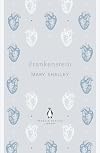
Contrary to popular belief, Frankenstein is not a book about a savage monster created by a crazed scientist who escapes to wreak havoc on unsuspecting nobodies. If anybody is the monster here, it's Victor Frankenstein himself, who has been given the power of a god to create a life, but doesn't consider the psychological flaws in the experiment. I see Frankenstein as more of a social novel than a horror novel in this respect. Shelley wants for the reader to sympathize with the Creature, not show more to condemn him like the cottagers do, who do so just because he's different. Frankenstein depicts the anti-Eden of new birth, a lonely soul without a companion, which is why the Creature rebels. The Creature is but a child without maturity or experience, summoned into a world which despises him, so how can we expect him to behave any differently? show less
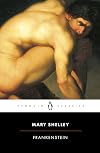
We're all monsters here, some of us are just in denial.
Also, parenthood (whether biological or artificial) should require a permit.
Victor Frankenstein is a naïve twenty-something with a (very misguided) cause. Plagued by daydreams of greatness, he sets out to outright build himself the perfect human being. Armed with a disturbing lack of foresight, inadequate planning, and all-round narcissism, he ends up giving life to a hideous-looking creature. Faced with what he saw as utter failure, show more Frankenstein then very sensibly runs away. Because let's face it: owning up to one's mistakes is soooo three centuries ago.
The universe has, of course, very different ideas. Human cruelty gets exposed, accusations are bandied about, and a whole lot of (innocent) people die. Nobody learns a thing from all this.
Full disclosure: I'm a complete philistine when it comes to the classics. I don't praise trailblazing ideas. I rarely appreciate effort in the face of adversity. And I actually tend to break out in hives at the mere whiff of melodrama. Especially when it comes wrapped in lyrical prose.
I was initially hoping to get into the whole avenging ange-- erm monster aspect , on reading about Frankenstein's refusal to feel even a shred of empathy for his creature. I was so horrified that I even started raging at the Audible app. It reminded me of someone once suggesting I return my newly adopted kitten for not learning manners fast enough. If that thought had me fantasising about angry mobs waving rusty old pitchforks, you can imagine how Frankenstein made me feel.
I basically spent the rest of the book rooting for the creature to do as much damage as (in)humanly possible. And I have to admit that I was rather disappointed by what he (it?) achieved. Frankenstein got off way too easy. To be fair, his constant victimising coupled with my general dislike of the writing style may have just tired me out sooner than expected.
Score: 3/5 stars
This book may very well be a trailblazer from both a historical and cultural point of view, but that still doesn't make me like it. show less
Also, parenthood (whether biological or artificial) should require a permit.
Victor Frankenstein is a naïve twenty-something with a (very misguided) cause. Plagued by daydreams of greatness, he sets out to outright build himself the perfect human being. Armed with a disturbing lack of foresight, inadequate planning, and all-round narcissism, he ends up giving life to a hideous-looking creature. Faced with what he saw as utter failure, show more Frankenstein then very sensibly runs away. Because let's face it: owning up to one's mistakes is soooo three centuries ago.
The universe has, of course, very different ideas. Human cruelty gets exposed, accusations are bandied about, and a whole lot of (innocent) people die. Nobody learns a thing from all this.
Full disclosure: I'm a complete philistine when it comes to the classics. I don't praise trailblazing ideas. I rarely appreciate effort in the face of adversity. And I actually tend to break out in hives at the mere whiff of melodrama. Especially when it comes wrapped in lyrical prose.
I was initially hoping to get into the whole avenging ange-- erm monster aspect , on reading about Frankenstein's refusal to feel even a shred of empathy for his creature. I was so horrified that I even started raging at the Audible app. It reminded me of someone once suggesting I return my newly adopted kitten for not learning manners fast enough. If that thought had me fantasising about angry mobs waving rusty old pitchforks, you can imagine how Frankenstein made me feel.
I basically spent the rest of the book rooting for the creature to do as much damage as (in)humanly possible. And I have to admit that I was rather disappointed by what he (it?) achieved. Frankenstein got off way too easy. To be fair, his constant victimising coupled with my general dislike of the writing style may have just tired me out sooner than expected.
Score: 3/5 stars
This book may very well be a trailblazer from both a historical and cultural point of view, but that still doesn't make me like it. show less
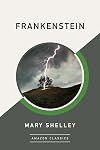
A lonely English sea captain sets sail for the North Pole from his base in Russia. As he grows closer to his destination, his crew rescues an emaciated form from the icy waters. Their mysterious guest slowly recovers his strength, then relates (to the captain, at least) an incredible story: he is chasing a monster - a demon - of his own creation, with a mixture of fear, vengeance, and determination.
I was surprised to find a frame story; though why, I'm not sure - quite a few novels from this show more time period are constructed thus. There is a hint of Dracula as well, with the epistolary style of this frame. But of course the meat of the work is in the 23 chapters between these letters, one in which Victor Frankenstein confronts quite a few existential questions around the idea of what it means to play god.
This is quite a compelling tale, not the least reason being that its written in such a manner as to suggest that Frankenstein is insane, and has been for most of his adult life. The fact that he falls into illness the very same night that he gives his horrible creation life, and continues to have these spells of illness any time he has a 'confrontation' with the creature, gives pay to that idea. The fact that he, alone, is aware of the creature's existence and is the only one who ever speaks with him is another reason for thinking thus. I spent most of the book trying to decide if this was some sort of phantom delusion or if his personality had somehow split into two conscious entities. Either way, the idea that he was blaming himself for his monster's crimes from the start, and pursuing him to the literal ends of the earth, makes the idea of him literally chasing himself into craziness all the more likely.
I'm no great critic of literature, so I suppose no matter how you interpret it, there are still lots of thought-provoking ideas and questions here. What does it mean to create another sentient being? Do you have a charge to care for it? Can you really close Pandora's box after opening it? What does it mean to be an outcast on the basis of qualities you can't control? Does a complete absence of love or support lead to a life of evil and vengeance? There's certainly lots to chew on.
I never read this book when I was a kid, and have grown up with the popular culture ideas of Frankenstein('s monster). I'm not sure I would have truly appreciated it without a bit of life experience behind me, so I'm glad I'm reading it for the first time as an adult. show less
I was surprised to find a frame story; though why, I'm not sure - quite a few novels from this show more time period are constructed thus. There is a hint of Dracula as well, with the epistolary style of this frame. But of course the meat of the work is in the 23 chapters between these letters, one in which Victor Frankenstein confronts quite a few existential questions around the idea of what it means to play god.
I'm no great critic of literature, so I suppose no matter how you interpret it, there are still lots of thought-provoking ideas and questions here. What does it mean to create another sentient being? Do you have a charge to care for it? Can you really close Pandora's box after opening it? What does it mean to be an outcast on the basis of qualities you can't control? Does a complete absence of love or support lead to a life of evil and vengeance? There's certainly lots to chew on.
I never read this book when I was a kid, and have grown up with the popular culture ideas of Frankenstein('s monster). I'm not sure I would have truly appreciated it without a bit of life experience behind me, so I'm glad I'm reading it for the first time as an adult. show less
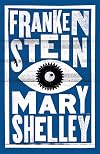
I’m almost ashamed to admit that I didn’t read this book until I got to second year of university. I know it’s a classic, but I didn’t actually get my hands on a copy until I was doing it for a class called ‘Sensibility and Romanticism’, and even then I didn’t actually appreciate this book for what it was. Younger me read it, but I don’t think she enjoyed it as much as I did this year.
Here’s the thing – I’m a firm believer in the maxim that you enjoy certain books more show more when you’re older. Some books require a certain outlook on life to be able to appreciate them, and I think this is one of them. There are a lot of heavy themes in it and even though a twenty year old is technically an adult, I don’t think that somebody who has just started to learn how to think critically can be tasked with understanding how amazing and thought-provoking this book is.
I’m sure that most of us have heard the story in some iteration or other – Victor Frankenstein, brilliant young scientist, embarks on an academic journey to discover the secrets of life and create life himself like God would. He succeeds and is immediately horrified by his creation. He shuns everything that he ever did, trying hard to stray away from the work that consumed him for so many years, but eventually the Creature (as he calls it) catches up to him.
The Creature, you see, has very much been evolving and learning on his own. The Creature has learned how to speak and how to read, and has read stories that have made it realize that it was abandoned by its creator. The Creature, still naïve, tried to find shelter with a family who it was doing kind deeds for in exchange for it leaving in their shed that they never used (without them knowing about it, of course). However, when he reveals himself to them, they chase him out of the area where they live and the Creature realizes that he can never be loved. Enraged, he goes on a quest to find his creator, Victor, and then gives him an ultimatum – either Victor makes him a companion, a female Creature that he can live with and not be so lonely, or he will kill everyone that Victor loves and then, finally, kill Victor.
Honestly, this novel is at its heart about two main things – man’s struggle with a god who has abandoned us, and god’s struggle with a creation that has gone too far. It also raises a lot of scientific and philosophical questions about life and creation. But mainly, the novel addresses the two sides of the same coin – a creation that never wanted to exist in the first place, and a creator that is starting to regret it.
In today’s day and age, with our impending environmental doom looming above us (we all know we’re causing the death of our own planet here, people!), this book feels even more prevalent. If we go by the Bible version of the story, God created Man to have him name all the animals and live with them and nature in perfect harmony in the Garden of Eden. We fucked that up (no need to go into the details of that…) and went against our original purpose of being able to live beside nature harmoniously. Now, we’ve fucked up the planet almost to the point of no return, and if we don’t stop soon it’s going to get worse, and it almost feels like God has lost all faith in us because of our actions. But it also feels like us raising a giant middle finger at God ourselves, because we feel like he abandoned us a long time ago and this is our retaliation to that.
It’s a back and forth between the Creature and Victor. The Creature gives Victor many chances, and yet Victor decides that he doesn’t want to help the Creature time and again, abandoning him and causing the death of everyone he loves – friends, wife, siblings, father. Victor is responsible for all of this simply because he doesn’t care enough for the Creature to actually help him; the Creature, knowing full well that his Creator has abandoned him, still tries to get his attention like a child vying for the paternal affection it always wanted (only a bit more murderously, I would say).
So, who’s in the right? The Creature who just wants to feel loved or the Creator who realizes the mistake he made and doesn’t want to repeat it?
Basically, I love this book for making me actually think about things. I give it 5/5 stars! show less
Here’s the thing – I’m a firm believer in the maxim that you enjoy certain books more show more when you’re older. Some books require a certain outlook on life to be able to appreciate them, and I think this is one of them. There are a lot of heavy themes in it and even though a twenty year old is technically an adult, I don’t think that somebody who has just started to learn how to think critically can be tasked with understanding how amazing and thought-provoking this book is.
I’m sure that most of us have heard the story in some iteration or other – Victor Frankenstein, brilliant young scientist, embarks on an academic journey to discover the secrets of life and create life himself like God would. He succeeds and is immediately horrified by his creation. He shuns everything that he ever did, trying hard to stray away from the work that consumed him for so many years, but eventually the Creature (as he calls it) catches up to him.
The Creature, you see, has very much been evolving and learning on his own. The Creature has learned how to speak and how to read, and has read stories that have made it realize that it was abandoned by its creator. The Creature, still naïve, tried to find shelter with a family who it was doing kind deeds for in exchange for it leaving in their shed that they never used (without them knowing about it, of course). However, when he reveals himself to them, they chase him out of the area where they live and the Creature realizes that he can never be loved. Enraged, he goes on a quest to find his creator, Victor, and then gives him an ultimatum – either Victor makes him a companion, a female Creature that he can live with and not be so lonely, or he will kill everyone that Victor loves and then, finally, kill Victor.
Honestly, this novel is at its heart about two main things – man’s struggle with a god who has abandoned us, and god’s struggle with a creation that has gone too far. It also raises a lot of scientific and philosophical questions about life and creation. But mainly, the novel addresses the two sides of the same coin – a creation that never wanted to exist in the first place, and a creator that is starting to regret it.
In today’s day and age, with our impending environmental doom looming above us (we all know we’re causing the death of our own planet here, people!), this book feels even more prevalent. If we go by the Bible version of the story, God created Man to have him name all the animals and live with them and nature in perfect harmony in the Garden of Eden. We fucked that up (no need to go into the details of that…) and went against our original purpose of being able to live beside nature harmoniously. Now, we’ve fucked up the planet almost to the point of no return, and if we don’t stop soon it’s going to get worse, and it almost feels like God has lost all faith in us because of our actions. But it also feels like us raising a giant middle finger at God ourselves, because we feel like he abandoned us a long time ago and this is our retaliation to that.
It’s a back and forth between the Creature and Victor. The Creature gives Victor many chances, and yet Victor decides that he doesn’t want to help the Creature time and again, abandoning him and causing the death of everyone he loves – friends, wife, siblings, father. Victor is responsible for all of this simply because he doesn’t care enough for the Creature to actually help him; the Creature, knowing full well that his Creator has abandoned him, still tries to get his attention like a child vying for the paternal affection it always wanted (only a bit more murderously, I would say).
So, who’s in the right? The Creature who just wants to feel loved or the Creator who realizes the mistake he made and doesn’t want to repeat it?
Basically, I love this book for making me actually think about things. I give it 5/5 stars! show less
Lists
Literary Witches (3)
Greatest Books (1)
Uni (1)
. (1)
Unread books (1)
Overdue Podcast (1)
Europe (1)
1820s (1)
MPLClassics (1)
Arctic novels (1)
bound (1)
100 knjiga (1)
Sonlight Books (1)
Fiction For Men (1)
Science Fiction (1)
Victorian Period (1)
Franklit (1)
blue's books (1)
Daria (1)
Epistolary Books (1)
Winter Books (1)
H (1)
100 Hemskaste (1)
SF Masterworks (1)
Catalog (1)
Power (1)
DELETE (1)
Out of Copyright (1)
BBC Big Read (2)
Reading LIst (2)
Folio Society (2)
To Read - Horror (2)
19th Century (2)
Favourite Books (2)
Read These Too (1)
el (2)
Short and Sweet (1)
1810s (1)
AP Lit (1)
. (1)
BBC Top Books (1)
Carole's List (1)
First Novels (1)
SF Masterworks (1)
SFFCat 2015 (1)
BitLife (1)
Female Author (1)
A Reading List (1)
Eerie eTales (1)
Check Library (1)
Five star books (1)
100 (1)
top 100 (1)
Ambleside Books (1)
Awards


You May Also Like


Associated Authors
Statistics
- Works
- 438
- Also by
- 147
- Members
- 73,538
- Popularity
- #172
- Rating
- 3.9
- Reviews
- 1,204
- ISBNs
- 2,693
- Languages
- 43
- Favorited
- 92


