
Thomas Keneally
Author of Schindler's List
About the Author
Thomas Keneally was born in Sydney, Australia on October 7, 1935. Although he initially studied for the Catholic priesthood, he abandoned that idea in 1960, turning to teaching and clerical work before writing and publishing his first novel, The Place at Whitton, in 1964. Since that time he has show more been a full-time writer, aside from the occasional stint as a lecturer or writer-in-residence. He won the Booker Prize in 1982 for Schindler's Ark, which Stephen Spielberg adapted into the film Schindler's List. He won the Miles Franklin Award twice with Bring Larks and Heroes and Three Cheers for the Paraclete. His other fiction books include The Chant of Jimmy Blacksmith, Gossip from the Forest, Confederates, The People's Train, Bettany's Book, An Angel in Australia, The Widow and Her Hero, and The Daughters of Mars. His nonfiction works include Searching for Schindler, Three Famines, The Commonwealth of Thieves, The Great Shame, and American Scoundrel. In 1983, he was awarded the order of Australia for his services to Australian Literature. Thomas Keneally is the recipient of the 2015 Australia Council Award for Lifetime Achievement in Literature. The award, formerly known as the Writers' Emeritus Award, recognises 'the achievements of eminent literary writers over the age of 60 who have made an outstanding and lifelong contribution to Australian literature. (Bowker Author Biography) show less
Disambiguation Notice:
(yid) VIAF:41842145
Series
Works by Thomas Keneally
The Great Shame: And the Triumph of the Irish in the English-Speaking World (1998) 806 copies, 10 reviews
The Place Where Souls Are Born: A Journey into the American Southwest (Destinations) (1992) 44 copies
Australians 2 copies
The Emperor's Last Island 1 copy
1995 1 copy
Associated Works
Strangers in Their Own Land: Young Jews in Germany and Austria Today (1986) — Preface, some editions — 72 copies
Oskar Schindler: The man behind the list (A&E Biography)[1994 TV episode] (1998) — Self — 2 copies, 1 review
Tagged
Common Knowledge
- Other names
- Coyle, William
Keneally, Thomas Michael - Birthdate
- 1935-10-07
- Gender
- male
- Education
- St Patrick's College, Strathfield
St Patrick's Seminary, Manly - Occupations
- teacher
novelist
playwright
historian - Organizations
- Manly-Warringah Sea Eagles
- Awards and honors
- Australian Living Treasure
Order of Australia (Officer ∙ 1983)
NSW Premier's Literary Award (2008)
Helmerich Award (2007)
Honorary Doctorate, National University of Ireland - Nationality
- Australia
- Birthplace
- Sydney, New South Wales, Australia
- Associated Place (for map)
- New South Wales, Australia
Members
Discussions
1001 Group Read: November, 2011: Schindler's Ark (aka. Schindler's List) in 1001 Books to read before you die (December 2011)
Reviews
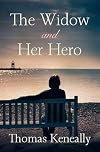
From the beginning, we know the hero, Australian Captain Leo Waterhouse, was killed as a result of a clandestine raid during WWII. His widow, Grace, tells the story of what happened to her husband and how she dealt with it, over a period of time covering the 1940s to 2000s. This book explores the nature of heroism and grief.
Keneally is obviously a talented writer. It must have been a challenge to figure out how to tell this tale through the widow’s point of view, since she remains outside show more the military chain of command and is not directly privy to the details of military operations. A number of outsiders are looking into how the mission went so horribly wrong, and they convey their findings to Grace, sometimes many years after the fact. She does not always want to hear these new accounts. She must then confront her grief in a new way, and it is a gut-wrenching experience all over again.
The book is reflective in tone. The characters are easy to envision as real people. The settings in Australia, Singapore, and the Malay islands are vividly described. I very much enjoyed the literary references, especially the analogies to George Bernard Shaw’s The Devils’s Disciple. I need to read more of Keneally’s work. show less
Keneally is obviously a talented writer. It must have been a challenge to figure out how to tell this tale through the widow’s point of view, since she remains outside show more the military chain of command and is not directly privy to the details of military operations. A number of outsiders are looking into how the mission went so horribly wrong, and they convey their findings to Grace, sometimes many years after the fact. She does not always want to hear these new accounts. She must then confront her grief in a new way, and it is a gut-wrenching experience all over again.
The book is reflective in tone. The characters are easy to envision as real people. The settings in Australia, Singapore, and the Malay islands are vividly described. I very much enjoyed the literary references, especially the analogies to George Bernard Shaw’s The Devils’s Disciple. I need to read more of Keneally’s work. show less
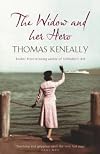
This is not the kind of book I would normally read - I prefer to avoid stories of war heroism and derring-do, but I am glad I made an exception for this, since Keneally's approach is brilliantly nuanced and full of moral ambiguity.
The central story is largely based on fact - there were two Australian raids on Japanese held Singapore, and the second ended disastrously for the men involved. Keneally's masterstroke is to tell their story through the voice of a widow, who barely knew her young show more husband, but finds out more of his story piecemeal over the next 60 years. Perhaps the idea of the captured men awaiting execution filling their time rehearsing Shaw's The Devil's Disciple is a little fanciful, but this is a very moving story. show less
The central story is largely based on fact - there were two Australian raids on Japanese held Singapore, and the second ended disastrously for the men involved. Keneally's masterstroke is to tell their story through the voice of a widow, who barely knew her young show more husband, but finds out more of his story piecemeal over the next 60 years. Perhaps the idea of the captured men awaiting execution filling their time rehearsing Shaw's The Devil's Disciple is a little fanciful, but this is a very moving story. show less

An uneven read for me. It started very slowly and the style - weird sentence fragments and quasi-stream of consciousness narration on occasion - put me off a bit. I did eventually settle in as the story of Tim Shea, an Irish immigrant to Australia around the turn of the century, unfolded in relation to the small town north of Sydney where he keeps a grocery with his wife and two children. There is a lot in the book about intolerance - towards the natives, towards the Irish, towards show more Catholics, towards any perceived "outsider." Tim is basically a decent man who wants to go along to get along but his principles thwart him. I found the pacing of the story uneven and the ending a bit rushed. This was my first read of a Keneally novel but won't be my last.
3.75 stars show less
3.75 stars show less
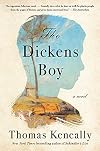
In 1868, Edward Dickens, the tenth child of the famous author, emigrates to Australia to learn the sheep business. Just shy of his seventeenth birthday, he arrives with far more psychological baggage than physical possessions. Besides the name he can’t possibly live up to, which prompts everyone he meets to draw faulty conclusions about him, he has failed to apply himself at everything he’s ever attempted, save cricket. As he is all too aware, he doesn’t appear promising material. He show more also bears the cultural, social, and religious prejudices you’d expect of a righteous Victorian, some of which may work against him in the outback.
But young Plorn, as the family calls him — an abbreviation of an immense nickname — has two advantages. He desires to learn and will take instruction from anyone; and he has his older brother, Alfred, who has preceded him to Australia. That Alfred is named for Tennyson, and Plorn, for Edward Bulwer Lytton (who wrote, “It was a dark and stormy night”), hints at the burden they carry. But for Plorn, it’s even worse, because the entire continent seems composed of people who have memorized his father’s works and suppose he has done the same, when, in fact, he has never read a word of them.
From this ingenious premise, Keneally spins a delightful, often hilarious, wide-ranging coming-of-age novel. You have the usual themes, such as sexual awakening, learning to adjust abstract moral sense to real-life circumstances, and how to judge another person in his or her fullness, allowing for their imperfections. To that, add what it means to be a family outcast in a country colonized by outcasts. Plorn is convinced that Father sent him away out of love, but Alfred is less sure, and their differing points of view about that, and their father’s character, cause conflict. This issue occupies Plorn throughout the novel.
Plorn may adapt rather rapidly, perhaps conveniently, but you have to admire how he lets his insistence that he has none of his father’s gifts stand for the wish to be taken as his own man. Inwardly, he has doubts about who that man is, but he derives warmth and satisfaction from people saluting his individuality — welcome to the democracy of the outback. He also has enough sense to avoid employers to whom he has an introduction and seek someone more to his liking, at which he succeeds admirably.
Fred Bonney, who manages a sheep station with intelligent tolerance, teaches young Plorn all he needs to know about sheep ranching and encourages his rise. A better mentor would be hard to find, and if Fred happens to be the one rancher who tries to understand and befriend the Indigenous people (though unapologetic about having taken their land), consider that a lucky Dickensian coincidence. But Keneally makes the most of it, and even when the story turns harsh, even murderous, kindness isn’t far away. That too is a theme, whether humans are innately evil with occasional good impulses, or good with occasional evil ones.
Keneally wishes to celebrate the frontier ethic, in which a person’s deeds and capabilities often, but not always, matter more than his or her birth. As such, you can pretty much tell the good guys from the bad guys without a scorecard, and they seldom do anything to challenge the judgment; perhaps that’s Dickensian too. However, laughter levels that broad-brush approach, with a theatrical tone that Dickens himself might have admired.
Naturally, a girl figures in the story, and though I wish the adjective “pretty” did not introduce her every appearance, I like how Keneally portrays Plorn’s sexual confusion.
The Dickens Boy is a thoroughly enjoyable novel. I would have wanted more variation within some of the characters to match the way the author poses moral problems, as shades of gray. But it’s a worthy book nonetheless. show less
But young Plorn, as the family calls him — an abbreviation of an immense nickname — has two advantages. He desires to learn and will take instruction from anyone; and he has his older brother, Alfred, who has preceded him to Australia. That Alfred is named for Tennyson, and Plorn, for Edward Bulwer Lytton (who wrote, “It was a dark and stormy night”), hints at the burden they carry. But for Plorn, it’s even worse, because the entire continent seems composed of people who have memorized his father’s works and suppose he has done the same, when, in fact, he has never read a word of them.
From this ingenious premise, Keneally spins a delightful, often hilarious, wide-ranging coming-of-age novel. You have the usual themes, such as sexual awakening, learning to adjust abstract moral sense to real-life circumstances, and how to judge another person in his or her fullness, allowing for their imperfections. To that, add what it means to be a family outcast in a country colonized by outcasts. Plorn is convinced that Father sent him away out of love, but Alfred is less sure, and their differing points of view about that, and their father’s character, cause conflict. This issue occupies Plorn throughout the novel.
Plorn may adapt rather rapidly, perhaps conveniently, but you have to admire how he lets his insistence that he has none of his father’s gifts stand for the wish to be taken as his own man. Inwardly, he has doubts about who that man is, but he derives warmth and satisfaction from people saluting his individuality — welcome to the democracy of the outback. He also has enough sense to avoid employers to whom he has an introduction and seek someone more to his liking, at which he succeeds admirably.
Fred Bonney, who manages a sheep station with intelligent tolerance, teaches young Plorn all he needs to know about sheep ranching and encourages his rise. A better mentor would be hard to find, and if Fred happens to be the one rancher who tries to understand and befriend the Indigenous people (though unapologetic about having taken their land), consider that a lucky Dickensian coincidence. But Keneally makes the most of it, and even when the story turns harsh, even murderous, kindness isn’t far away. That too is a theme, whether humans are innately evil with occasional good impulses, or good with occasional evil ones.
Keneally wishes to celebrate the frontier ethic, in which a person’s deeds and capabilities often, but not always, matter more than his or her birth. As such, you can pretty much tell the good guys from the bad guys without a scorecard, and they seldom do anything to challenge the judgment; perhaps that’s Dickensian too. However, laughter levels that broad-brush approach, with a theatrical tone that Dickens himself might have admired.
Naturally, a girl figures in the story, and though I wish the adjective “pretty” did not introduce her every appearance, I like how Keneally portrays Plorn’s sexual confusion.
The Dickens Boy is a thoroughly enjoyable novel. I would have wanted more variation within some of the characters to match the way the author poses moral problems, as shades of gray. But it’s a worthy book nonetheless. show less
Lists
Booker Prize (4)
Women's Stories (1)
A Novel Cure (1)
TBR (1)
Tagged Doctors (1)
Non-Fiction (1)
1970s (1)
Big Jubilee List (1)
Holocaust (1)
1980s (1)
THE WAR ROOM (4)
Women in War (2)
Review 2 (1)
Page Turners (1)
Awards


You May Also Like


Associated Authors
Statistics
- Works
- 83
- Also by
- 23
- Members
- 19,931
- Popularity
- #1,086
- Rating
- 3.9
- Reviews
- 344
- ISBNs
- 905
- Languages
- 28
- Favorited
- 14