kidzdoc's back for more in 2013 part 1
This topic was continued by kidzdoc's back for more in 2013 part 2.
Talk Club Read 2013
Join LibraryThing to post.
This topic is currently marked as "dormant"—the last message is more than 90 days old. You can revive it by posting a reply.
1kidzdoc


Currently reading:


The Other City by Michal Ajvaz
The Accidental City: Improvising New Orleans by Lawrence N. Powell
The Unlikely Pilgrimage of Harold Fry by Rachel Joyce
Completed books:
January:
1. Quiet London by Siobhan Wall (review)
2. The Chip-Chip Gatherers by Shiva Naipaul (review)
3. Our Lady of Alice Bhatti by Mohammed Hanif (review)
4. The Eleven by Pierre Michon (review)
5. Pediatric Advanced Life Support Provider Manual by Leon Chameides, MD (review)
6. Communion Town by Sam Thompson (review)
7. Damascus by Joshua Mohr (review)
8. The Walls of Delhi by Uday Prakash (review)
9. Inspiring Quotes: The Greatest Quotes of Martin Luther King Junior by Martin Luther King, Jr. (review)
10. A Happy Death by Albert Camus (review)
11. Place of Mind by Richard Blanco
February:
12. Great House by Nicole Krauss (TBR) (review)
13. In the House of the Interpreter by Ngũgĩ wa Thiong'o (review)
14. Bill Veeck's Crosstown Classic by Bill Veeck with Ed Linn (review)
15. Stone Upon Stone by Wiesław Myśliwski (TBR) (review)
16. Big Machine by Victor LaValle (TBR) (review)
Books acquired in 2013: (✔ = completed book, bold = purchased book)
January:
1. The Eleven by Pierre Michon (5 January; LT Early Reviewers book) ✔
2. Place of Mind by Richard Blanco (21 January; Kindle book)
3. A History of the Present Illness by Louise Aranson (29 January; Kindle book)
2kidzdoc

Happy New Year, everyone. The photo of the baby in the first message is one of Reuters' best photos of 2011, and was taken by Edgardo Garrido in the pediatric unit at hospital Escuela in Tegucigalpa, Honduras on 10/21/11. Garrido made the following comments about this photo:
It was three years ago that I photographed a childbirth room at Escuela hospital, the largest in Honduras. Time seems to have stood still. Now there are different doctors, mothers and children, but the poverty is the same. Rooms full of valiant women who bleed and wrap their children with old sheets adorn the poverty of this place where shame is not a valid issue. I walk freely between the birthing rooms, rest area, caesarean section and reception, but I have no permission to enter the pediatrics area until a new medical chief authorizes me. There are healthy and sick babies. One of them is this baby who got my attention because it moves non-stop. Next to him is a lamp that provides heat to stay alive. I expect that he will continue to play with his hands, making the image more aesthetic or photographic. After five minutes this happens and I shoot photos. I recognized that I have a "beautiful picture", but I do not see that the position of his fingers shows a number seven. It is a picture of a baby like so many others who were born, many of the 7 billion that live on our planet today. It hits me as it begins to emerge as poetry of life in Honduras where thousands of human beings are born, but where thousands are killed without completing their natural cycle; dramatically murdered every day."
Babies and children are God's most precious gift to man, yet so many of them suffer from poor health, neglect, physical and sexual abuse and, in tragedies in Newtown, Connecticut and elsewhere around the world, premature death. May we never forget what happened on that horrible day, and may we all keep the children of the world in our hearts and minds throughout the year and do whatever we can to ensure that they grow up to be healthy adults who have the opportunity to achieve their fullest potential.
3kidzdoc
This is a list of the groups and challenges that I plan to participate in this year:
Reading Globally
First quarter: Central & Eastern European literature
Second quarter: Southeast Asian literature
Third quarter: Francophone literature (excluding European writers)
Fourth quarter: South American literature
I still haven't read any books for the 2012 4th quarter theme, China & Neighboring Countries, so I plan to read several books from this region early this year.
Author Theme Reads
Main author:
Émile Zola (Jan-Dec)
Mini-Authors:
Honoré de Balzac (Jan-Mar)
Guy de Maupassant (Apr-Jun)
Marguerite Duras (Jul-Sep)
Simone de Beauvoir (Oct-Dec)
I probably won't participate in this challenge much this year, although I will probably read the one novel and one short story collection by Zola that I own, but I'll definitely read books by de Beauvoir during and possibly before the 4th quarter:
She Came to Stay
The Blood of Others
The Mandarins
America Day by Day (a re-read, but I loved this book!)
Philosophical Writings
Adieux: A Farewell to Sartre
I'll also plan to read How to Read Beauvoir by Stella Sandford.
Read Mo Yan
steven03tx from Club Read created this group in December, for those who wish to read books by Mo Yan, this year's winner of the Nobel Prize for Literature. I plan to read the books I already own and haven't yet read:
The Garlic Ballads
The Republic of Wine
Life and Death Are Wearing Me Out
Pow!
Literary Centennials
steven03tx also created this group in December, which is meant to focus on authors and works celebrating their 100th, 200th, 300th etc. anniversaries. Albert Camus is one of the authors who was born in 1913, so I'll read the books I own and haven't read for this theme:
A Happy Death
The Fall
The First Man
Exile and the Kingdom
The Myth of Sisyphus and Other Essays
Camus at "Combat": Writing 1944-1947
Notebooks 1951-1959
Patrick White 100th Anniversary Challenge
I failed to read any of the three books I purchased for this challenge, but I'll make an effort to read them in 2013:
The Vivisector
Voss
The Tree of Man
Booker Prize
I created this group in 2011, and I'll certainly continue to lead it in 2013 and beyond. I intended to finish the entire 2012 longlist before the end of the year, but I didn't do so. I'll finish it early this year, once I read these books:
Communion Town by Sam Thompson
Skios by Michael Frayn
The Teleportation Accident by Ned Beauman
Umbrella by Will Self
The Unlikely Pilgrimage of Harold Fry by Rachel Joyce
Orange January/July
I read the shortlist and participated in the shadow jury for last year's Orange Prize, which as many of you know will become the Women's Prize for Fiction this year. I plan to participate again in 2013, pending other book commitments, and I'll definitely read at least one book for Orange January (probably Great House by Nicole Krauss, to complete my reading of the 2011 shortlist) and for Orange July.
Medicine
This group remains moribund, and I didn't read as many of my medicine and public health TBR books as I would have liked, but I still plan to read 1-2 books per month, old and new. These are some of the books I'd like to read this year:
Power, Politics and Universal Health Care: The Inside Story of a Century-Long Battle by Stuart Altman and David Shactman
The Human Right to Health by Jonathan Wolff
Health Care for Some: Rights and Rationing in the United States Since 1930 by Beatrix Hoffman
Haiti After the Earthquake by Paul Farmer
When Doctors Become Patients by Robert Klitzman
The Politics of Medicaid by Laura Katz Olson
Madmen: A Social history of Madhouses, Mad-Doctors and Lunatics by Roy Porter
An Anatomy of Addiction: Sigmund Freud, William Halsted and the Miracle Drug Cocaine by Howard Markel
Death in a Small Package: A Short History of Anthrax by Susan D. Jones
A Pediatrician's Journal: Caring for Children in a Broken Medical System by Brian G. Orr, MD
The Tennis Partner by Abraham Verghese
I'll also participate in reading books for these literary prizes (and possibly one or two others):
DSC Prize for South Asian Literature
Hurston/Wright Legacy Awards
National Book Awards
Wellcome Trust Book Prize
Reading Globally
First quarter: Central & Eastern European literature
Second quarter: Southeast Asian literature
Third quarter: Francophone literature (excluding European writers)
Fourth quarter: South American literature
I still haven't read any books for the 2012 4th quarter theme, China & Neighboring Countries, so I plan to read several books from this region early this year.
Author Theme Reads
Main author:
Émile Zola (Jan-Dec)
Mini-Authors:
Honoré de Balzac (Jan-Mar)
Guy de Maupassant (Apr-Jun)
Marguerite Duras (Jul-Sep)
Simone de Beauvoir (Oct-Dec)
I probably won't participate in this challenge much this year, although I will probably read the one novel and one short story collection by Zola that I own, but I'll definitely read books by de Beauvoir during and possibly before the 4th quarter:
She Came to Stay
The Blood of Others
The Mandarins
America Day by Day (a re-read, but I loved this book!)
Philosophical Writings
Adieux: A Farewell to Sartre
I'll also plan to read How to Read Beauvoir by Stella Sandford.
Read Mo Yan
steven03tx from Club Read created this group in December, for those who wish to read books by Mo Yan, this year's winner of the Nobel Prize for Literature. I plan to read the books I already own and haven't yet read:
The Garlic Ballads
The Republic of Wine
Life and Death Are Wearing Me Out
Pow!
Literary Centennials
steven03tx also created this group in December, which is meant to focus on authors and works celebrating their 100th, 200th, 300th etc. anniversaries. Albert Camus is one of the authors who was born in 1913, so I'll read the books I own and haven't read for this theme:
A Happy Death
The Fall
The First Man
Exile and the Kingdom
The Myth of Sisyphus and Other Essays
Camus at "Combat": Writing 1944-1947
Notebooks 1951-1959
Patrick White 100th Anniversary Challenge
I failed to read any of the three books I purchased for this challenge, but I'll make an effort to read them in 2013:
The Vivisector
Voss
The Tree of Man
Booker Prize
I created this group in 2011, and I'll certainly continue to lead it in 2013 and beyond. I intended to finish the entire 2012 longlist before the end of the year, but I didn't do so. I'll finish it early this year, once I read these books:
Communion Town by Sam Thompson
Skios by Michael Frayn
The Teleportation Accident by Ned Beauman
Umbrella by Will Self
The Unlikely Pilgrimage of Harold Fry by Rachel Joyce
Orange January/July
I read the shortlist and participated in the shadow jury for last year's Orange Prize, which as many of you know will become the Women's Prize for Fiction this year. I plan to participate again in 2013, pending other book commitments, and I'll definitely read at least one book for Orange January (probably Great House by Nicole Krauss, to complete my reading of the 2011 shortlist) and for Orange July.
Medicine
This group remains moribund, and I didn't read as many of my medicine and public health TBR books as I would have liked, but I still plan to read 1-2 books per month, old and new. These are some of the books I'd like to read this year:
Power, Politics and Universal Health Care: The Inside Story of a Century-Long Battle by Stuart Altman and David Shactman
The Human Right to Health by Jonathan Wolff
Health Care for Some: Rights and Rationing in the United States Since 1930 by Beatrix Hoffman
Haiti After the Earthquake by Paul Farmer
When Doctors Become Patients by Robert Klitzman
The Politics of Medicaid by Laura Katz Olson
Madmen: A Social history of Madhouses, Mad-Doctors and Lunatics by Roy Porter
An Anatomy of Addiction: Sigmund Freud, William Halsted and the Miracle Drug Cocaine by Howard Markel
Death in a Small Package: A Short History of Anthrax by Susan D. Jones
A Pediatrician's Journal: Caring for Children in a Broken Medical System by Brian G. Orr, MD
The Tennis Partner by Abraham Verghese
I'll also participate in reading books for these literary prizes (and possibly one or two others):
DSC Prize for South Asian Literature
Hurston/Wright Legacy Awards
National Book Awards
Wellcome Trust Book Prize
4kidzdoc
Planned reads for January (as always, subject to change):
Albert Camus: A Happy Death (completed)
Mohammed Hanif, Our Lady of Alice Bhatti (completed)
Nicole Krauss, Great House (reading)
Charles Lemert, Why Niebuhr Matters
Wiesław Myśliwski: Stone Upon Stone
Lawrence N. Powell: The Accidental City: Improvising New Orleans (reading)
Uday Prakash: The Walls of Delhi (completed)
Salman Rushdie: The Satanic Verses (reading)
Bruno Schulz: The Street of Crocodiles and Other Stories
Sam Thompson, Communion Town (completed)
Siobhan Wall: Quiet London (completed)
Can Xue: Vertical Motion
Mo Yan: Pow!
Shiva Naipaul: The Chip-Chip Gatherers (completed)
Pierre Michon: The Eleven (completed)
Leon Chameides, MD, et al.: Pediatric Advanced Life Support Provider Manual (completed)
Joshua Mohr: Damascus (completed)
Martin Luther King, Jr.: Inspiring Quotes: The Greatest Quotes of Martin Luther King Junior (completed)
Place of Mind by Richard Blanco (reading)
Albert Camus: A Happy Death (completed)
Mohammed Hanif, Our Lady of Alice Bhatti (completed)
Nicole Krauss, Great House (reading)
Lawrence N. Powell: The Accidental City: Improvising New Orleans (reading)
Uday Prakash: The Walls of Delhi (completed)
Sam Thompson, Communion Town (completed)
Siobhan Wall: Quiet London (completed)
Can Xue: Vertical Motion
Mo Yan: Pow!
Shiva Naipaul: The Chip-Chip Gatherers (completed)
Pierre Michon: The Eleven (completed)
Leon Chameides, MD, et al.: Pediatric Advanced Life Support Provider Manual (completed)
Joshua Mohr: Damascus (completed)
Martin Luther King, Jr.: Inspiring Quotes: The Greatest Quotes of Martin Luther King Junior (completed)
Place of Mind by Richard Blanco (reading)
5kidzdoc
These are my favorite novels that were published in the US or UK in 2012:
The Garden of Evening Mists by Tan Twan Eng
Bring Up the Bodies by Hilary Mantel (winner of this year's The Man Booker Prize for Fiction)
The Song of Achilles by Madeline Miller (winner of this year's Orange Prize for Fiction)
NW by Zadie Smith
The Lighthouse by Alison Moore
Scenes from Early Life by Philip Hensher
Painter of Silence by Georgina Harding
Narcopolis by Jeet Thayil
Mister Blue by Jacques Poulin
Three Strong Women by Marie NDiaye
And here are my favorite 2012 nonfiction books:
God's Hotel: A Doctor, a Hospital, and a Pilgrimage to the Heart of Medicine by Victoria Sweet, MD
Panther Baby by Jamal Joseph
Fragile Beginnings: Discoveries and Triumphs in the Newborn ICU by Adam Wolfberg, MD
Circulation: William Harvey's Revolutionary Idea by Thomas Wright (winner of the 2012 Wellcome Trust Book Prize)
Joseph Anton by Salman Rushdie
The Patient Survival Guide: 8 Simple Solutions to Prevent Hospital- and Healthcare-Associated Infections by Dr. Maryanne McGuckin
India Becoming: A Portrait of Life in Modern India by Akash Kapur
The Cage: The Fight for Sri Lanka and the Last Days of the Tamil Tigers by Gordon Weiss
Being Sam Frears: A Life Less Ordinary by Mary Mount
Writing in the Dark: Essays on Literature and Politics by David Grossman
The Garden of Evening Mists by Tan Twan Eng
Bring Up the Bodies by Hilary Mantel (winner of this year's The Man Booker Prize for Fiction)
The Song of Achilles by Madeline Miller (winner of this year's Orange Prize for Fiction)
NW by Zadie Smith
The Lighthouse by Alison Moore
Scenes from Early Life by Philip Hensher
Painter of Silence by Georgina Harding
Narcopolis by Jeet Thayil
Mister Blue by Jacques Poulin
Three Strong Women by Marie NDiaye
And here are my favorite 2012 nonfiction books:
God's Hotel: A Doctor, a Hospital, and a Pilgrimage to the Heart of Medicine by Victoria Sweet, MD
Panther Baby by Jamal Joseph
Fragile Beginnings: Discoveries and Triumphs in the Newborn ICU by Adam Wolfberg, MD
Circulation: William Harvey's Revolutionary Idea by Thomas Wright (winner of the 2012 Wellcome Trust Book Prize)
Joseph Anton by Salman Rushdie
The Patient Survival Guide: 8 Simple Solutions to Prevent Hospital- and Healthcare-Associated Infections by Dr. Maryanne McGuckin
India Becoming: A Portrait of Life in Modern India by Akash Kapur
The Cage: The Fight for Sri Lanka and the Last Days of the Tamil Tigers by Gordon Weiss
Being Sam Frears: A Life Less Ordinary by Mary Mount
Writing in the Dark: Essays on Literature and Politics by David Grossman
6Polaris-
Happy New Year Darryl! A great looking thread already - I shall follow your reading with interest. The Accidental City and Quiet London are both on my wishlist so I'm curious to hear what you make of them both. Rushdie's memoir looks intriguing as well.
7Polaris-
Apologies - I was getting muddled - I see Joseph Anton was one of your best reads of 2012, and that you're now reading Satanic Verses, not vice versa.
8labfs39
Wonderful start to your 2013 thread. The photographers comments on his photo gave me goosebumps. I will echo your prayer for the children of the world. I added a couple of books to my list, as well as linked to some of the themed groups. I never know whether to follow you here or 75 challenge, so both are starred. :-) Happy New Year!
9detailmuse
Arresting photo to begin your thread, Darryl, I kept thinking "nebula," and I suppose that would give its own wonderful interpretation to the potential of this child. I loved the photographer's comment.
I missed your mention of India Becoming last year; it's one to read now in case a trip there becomes reality next year.
I missed your mention of India Becoming last year; it's one to read now in case a trip there becomes reality next year.
10avidmom
My favorite picture you've chosen to start any of your threads.
Babies and children are God's most precious gift to man.
So true.
Babies and children are God's most precious gift to man.
So true.
11arubabookwoman
What a beautiful opening photo--and how touching, sad and true the words accompanying it.
12baswood
Enjoying your new thread already
Hank Mobley - wow He sounded good with Miles Davis at the Blackhawk in 1961
Hank Mobley - wow He sounded good with Miles Davis at the Blackhawk in 1961
13avaland
>5 kidzdoc: I was just sent the newest NDiaye translation. If I don't decide to read it in the very near future, I'll send it on to you.
14The_Hibernator
Hi Darryl! I decided to join Club Reads too this year. :) Garden of the Evening Mists and Song of Achilles were on my list of last year's favorites too.
15kidzdoc
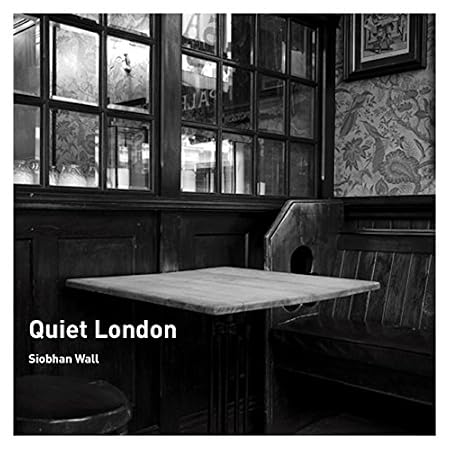
Book #1: Quiet London by Siobhan Wall
My rating:
This lovely little book was written by an artist and university lecturer based in London who began to search for places of solitude within the noisy, crowded streets of the capital. Based on personal explorations and recommendations from friends and people she encountered, Quiet London briefly describes well over 100 hidden and lesser known gardens, parks, art galleries, cafes, bookshops, cemeteries and other spots where one can relax in an environment free of music and crowds within zones 1 and 2. Each entry includes a photograph, web site, and directions via the Underground and bus. Only a couple of the sites were familiar to me, particularly the London Review Cake Shop within the London Review Bookshop and The Foundling Museum, but there were at least two or three dozen sites that looked interesting. This is a book that I'll bring with me on all of my future trips to London, and I would highly recommend it for casual visitors and longtime residents of the city.
My rating:

This lovely little book was written by an artist and university lecturer based in London who began to search for places of solitude within the noisy, crowded streets of the capital. Based on personal explorations and recommendations from friends and people she encountered, Quiet London briefly describes well over 100 hidden and lesser known gardens, parks, art galleries, cafes, bookshops, cemeteries and other spots where one can relax in an environment free of music and crowds within zones 1 and 2. Each entry includes a photograph, web site, and directions via the Underground and bus. Only a couple of the sites were familiar to me, particularly the London Review Cake Shop within the London Review Bookshop and The Foundling Museum, but there were at least two or three dozen sites that looked interesting. This is a book that I'll bring with me on all of my future trips to London, and I would highly recommend it for casual visitors and longtime residents of the city.
16kidzdoc
>6 Polaris-: Happy New Year, Paul! Quiet London, which I received as a Christmas gift from my best friends, was exactly what I wanted, a small and easily portable guide to places of solitude within central London. I've visited the capital five times in the past six years, and I'll definitely go there once or twice in 2013. The Accidental City is very good so far, and it also was what I wanted, a book about the early history of New Orleans and why the original settlers chose to locate the city where it is. I lived in NOLA for a little over three years when I "attended" Tulane University in the late 1970s to early 1980s, and after my visit to the Crescent City in October I'll definitely return there for long weekends with my old college roommate and medical conferences on a regular basis starting this year.
>7 Polaris-: Right; I read and enjoyed Joseph Anton, although I failed to write a review of it last year. I haven't read The Satanic Verses for several weeks, and it's one of my holdover books from 2012 along with The Accidental City. I'll definitely read it this month, although I'll probably read Pow!, the most recently translated novel by Mo Yan, first.
>8 labfs39: Happy New Year, Lisa! My 75 Books thread is typically far more active than this one, but I do want to be more active here than I was last year.
>9 detailmuse: Thanks MJ. India Becoming was a very good analysis of the transformation of modern India, although I suspect that there may be better books out there.
>10 avidmom:, 11 Thanks, avidmom and Deborah. I did put a good amount of effort in finding a photo that I wanted to start the New Year with, so I'm glad that you both liked it.
>12 baswood: Thanks, Barry. I'm ashamed to say that I don't have any of Miles Davis's Live at the Blackhawk albums. I'll plan to get at least one of them next month, when I go to San Francisco for the Chinese New Year celebration.
>13 avaland: That would be great, Lois! What's the name of the book?
>14 The_Hibernator: Hi, Rachel! I'm glad that you've decided to join Club Read. Several of us participate in both groups, and each has its strengths. This group is an exceptionally dangerous one for my wish list, as you'll soon find out.
>7 Polaris-: Right; I read and enjoyed Joseph Anton, although I failed to write a review of it last year. I haven't read The Satanic Verses for several weeks, and it's one of my holdover books from 2012 along with The Accidental City. I'll definitely read it this month, although I'll probably read Pow!, the most recently translated novel by Mo Yan, first.
>8 labfs39: Happy New Year, Lisa! My 75 Books thread is typically far more active than this one, but I do want to be more active here than I was last year.
>9 detailmuse: Thanks MJ. India Becoming was a very good analysis of the transformation of modern India, although I suspect that there may be better books out there.
>10 avidmom:, 11 Thanks, avidmom and Deborah. I did put a good amount of effort in finding a photo that I wanted to start the New Year with, so I'm glad that you both liked it.
>12 baswood: Thanks, Barry. I'm ashamed to say that I don't have any of Miles Davis's Live at the Blackhawk albums. I'll plan to get at least one of them next month, when I go to San Francisco for the Chinese New Year celebration.
>13 avaland: That would be great, Lois! What's the name of the book?
>14 The_Hibernator: Hi, Rachel! I'm glad that you've decided to join Club Read. Several of us participate in both groups, and each has its strengths. This group is an exceptionally dangerous one for my wish list, as you'll soon find out.
17SassyLassy
Quiet London: what a wonderful idea for a book. I think all great cities have these spots, it's just a matter of finding them. However, I think that like good fishing spots, you can't let anyone else know about them.
You'll have to let your fellow LTers know how they pan out.
You'll have to let your fellow LTers know how they pan out.
18LisaMorr
Quiet London is the inaugural book to be added to my WishList after joining Club Read for the first time. Excellent addition I might add, and I'll definitely pick it up before my first trip to the UK this year. Thanks!
19janeajones
Quiet London sounds splendiferous. If and when we get back to London, I'll definitely bring it along, as the the last couple of times we were there, I began to be overwhelmed with the busy-ness of the city (probably my age).
20avaland
Darryl, the Ndiaye book is All My Friends. It's being published by the Center for the Art of Translation, due out in May. 140 pages, so a quickie.
22rebeccanyc
A few years ago, I saw a similar book about New York in the bookstores here, New York's 50 Best Places to find Peace and Quiet.
23arubabookwoman
I I ever get back to London (where I lived 1967-1968), Quiet London will be the first book I read. I'm hoping to get a trip to England in sometime in the next two years.
24rebeccanyc
That must have been an exciting time to be in London, Deborah.
25arubabookwoman
Yes it was--Rolling Stones, Beatles, Mary Quant, Carnaby Street, etc. etc.--in fact it was the center of the universe for a teenager--I was a senior in high school. On the other hand there was also the Victoria and Albert, the Tate, the British Museum, the London Symphony Orchestra, etc. etc. In some ways, the specialness of my time there makes me a little reluctant to go back.
27kidzdoc
>17 SassyLassy: Will do, SassyLassy. I'll definitely visit London in the late summer/early fall, as I usually do, and hopefully I can make it there in April as well.
>18 LisaMorr: Thanks, Lisa! I hope that you enjoy Quiet London.
BTW I just noticed that you're from the North Hills. I attended Pitt's medical school from 1993-1997, and I lived in Shadyside during that time. H2P!
>19 janeajones: I love the bustle of major cities like NYC and London, and I feel energized and stimulated by all of the amenities that these places offer. However, I also need breaks from the
chaos at times. Fortunately London has several quiet small parks and cafes, particularly in Bloomsbury, where I usually stay.
>20 avaland: I just read a brief description of All My Friends on the Two Lines Press web site, and I would love to read it.
>21 baswood: I think you would like Quiet London, Barry. Are you planning to visit the capital this year?
>22 rebeccanyc: I would bet that there are numerous articles, if not books, about quiet places in NYC. One of my favorite places is the Brooklyn Botanical Garden, along with the nearby Brooklyn Museum.
>23 arubabookwoman:-26 I would have loved to have lived in London in the late 1960s!
>18 LisaMorr: Thanks, Lisa! I hope that you enjoy Quiet London.
BTW I just noticed that you're from the North Hills. I attended Pitt's medical school from 1993-1997, and I lived in Shadyside during that time. H2P!
>19 janeajones: I love the bustle of major cities like NYC and London, and I feel energized and stimulated by all of the amenities that these places offer. However, I also need breaks from the
chaos at times. Fortunately London has several quiet small parks and cafes, particularly in Bloomsbury, where I usually stay.
>20 avaland: I just read a brief description of All My Friends on the Two Lines Press web site, and I would love to read it.
>21 baswood: I think you would like Quiet London, Barry. Are you planning to visit the capital this year?
>22 rebeccanyc: I would bet that there are numerous articles, if not books, about quiet places in NYC. One of my favorite places is the Brooklyn Botanical Garden, along with the nearby Brooklyn Museum.
>23 arubabookwoman:-26 I would have loved to have lived in London in the late 1960s!
28zenomax
Another vote for Quiet London here.
Although I've lived in the UK for 14 years I still visit London in tourist mode at least once a year. I always look for offbeat and out of the way museums, coffee shops and the more eccentric side of the city. Nice review.
Although I've lived in the UK for 14 years I still visit London in tourist mode at least once a year. I always look for offbeat and out of the way museums, coffee shops and the more eccentric side of the city. Nice review.
29baswood
I am not planning to go to London anytime soon. Paris is closer and I much prefer it to London.
30kidzdoc
>28 zenomax: Thanks, zenomax. Any recommendations of offbeat places in London would be greatly appreciated!
>29 baswood: What bookstores do you frequent, Barry? I plan to go to Shakespeare & Company when I eventually visit Paris for the first time, hopefully in the coming spring or fall, but I don't know of other English language bookshops that would be worth visiting.
>29 baswood: What bookstores do you frequent, Barry? I plan to go to Shakespeare & Company when I eventually visit Paris for the first time, hopefully in the coming spring or fall, but I don't know of other English language bookshops that would be worth visiting.
31kidzdoc
Last night I read the Guardian article 2013: the year ahead in books. Several listed books are now on my radar screen:
The Blind Man's Garden by Nadeem Aslam (Faber). The author of The Wasted Vigil returns with a lyrical novel set after 9/11, as two Pakistani foster brothers sneak into Afghanistan to treat wounded civilians.
The Childhood of Jesus by JM Coetzee (Harvill Secker). A man, a woman and a boy must make a new life in an unknown country, stripped of old memories and identity. After clashing with the authorities, they go on the run, in the new novel from the Nobel laureate.
How to Get Filthy Rich in Rising Asia by Mohsin Hamid (Hamish Hamilton). Hamid's followup to The Reluctant Fundamentalist is a joyously barbed satire on entrepreneurialism and the juggernaut of globalisation. Written as a self-help book in the second person, it traces its unnamed hero's rise from rural poverty to corporate tycoon through exemplary life lessons – "Move to the city", "Don't fall in love", "Be prepared to use violence". Will be one of the standout novels of the year.
Ghana Must Go by Taiye Selasi (Viking). The much-anticipated debut novel by the author of the explosive story "The Sex Lives of African Girls" is a multi-generational saga about a Ghanaian surgeon, his Nigerian wife and their four children. It's taken years for the family to make it good in the US, but their lives fall apart in an evening.
Americanah by Chimamanda Ngozi Adichie (Fourth Estate). A young couple flee the military dictatorship in Nigeria for America and London. Can their relationship survive distance, globalisation and the passage of time?
Levels of Life by Julian Barnes (Cape). An affecting, profound (if slim) volume in three parts: the first history, the second fiction, the third memoir.
Mom and Me and Mom by Maya Angelou (Virago). Angelou was, as we know from I Know Why the Caged Bird Sings, raised by her grandmother. This is the first time she has confronted head-on her relationship with the mother who sent her away – and who was, among other things, the first black woman officer in the merchant marines and a player in the gambling business.
Last Friends by Jane Gardam (Little, Brown). Witty, tender and humane, Gardam's Old Filth and The Man in the Wooden Hat brilliantly anatomised the long marriage of characters forged in England's colonial past. The final volume in the trilogy focuses on Filth's rival in work and love.
The Blind Man's Garden by Nadeem Aslam (Faber). The author of The Wasted Vigil returns with a lyrical novel set after 9/11, as two Pakistani foster brothers sneak into Afghanistan to treat wounded civilians.
The Childhood of Jesus by JM Coetzee (Harvill Secker). A man, a woman and a boy must make a new life in an unknown country, stripped of old memories and identity. After clashing with the authorities, they go on the run, in the new novel from the Nobel laureate.
How to Get Filthy Rich in Rising Asia by Mohsin Hamid (Hamish Hamilton). Hamid's followup to The Reluctant Fundamentalist is a joyously barbed satire on entrepreneurialism and the juggernaut of globalisation. Written as a self-help book in the second person, it traces its unnamed hero's rise from rural poverty to corporate tycoon through exemplary life lessons – "Move to the city", "Don't fall in love", "Be prepared to use violence". Will be one of the standout novels of the year.
Ghana Must Go by Taiye Selasi (Viking). The much-anticipated debut novel by the author of the explosive story "The Sex Lives of African Girls" is a multi-generational saga about a Ghanaian surgeon, his Nigerian wife and their four children. It's taken years for the family to make it good in the US, but their lives fall apart in an evening.
Americanah by Chimamanda Ngozi Adichie (Fourth Estate). A young couple flee the military dictatorship in Nigeria for America and London. Can their relationship survive distance, globalisation and the passage of time?
Levels of Life by Julian Barnes (Cape). An affecting, profound (if slim) volume in three parts: the first history, the second fiction, the third memoir.
Mom and Me and Mom by Maya Angelou (Virago). Angelou was, as we know from I Know Why the Caged Bird Sings, raised by her grandmother. This is the first time she has confronted head-on her relationship with the mother who sent her away – and who was, among other things, the first black woman officer in the merchant marines and a player in the gambling business.
Last Friends by Jane Gardam (Little, Brown). Witty, tender and humane, Gardam's Old Filth and The Man in the Wooden Hat brilliantly anatomised the long marriage of characters forged in England's colonial past. The final volume in the trilogy focuses on Filth's rival in work and love.
32kidzdoc
George Saunders must be a happy man this weekend. The feature article in today's New York Times Magazine is about him, and his new book Tenth of December: Stories; the cover of the magazine displays a broken fortune cookie, and the fortune inside reads The best book you'll read this year is George Saunders's 'Tenth of December'.
article: George Saunders Has Written the Best Book You’ll Read This Year
Yesterday's Guardian Review features a glowing review of the book by Hani Kunzru:
Tenth of December by George Saunders – review
And, the Guardian article I referenced in the previous message also mentions the book:
Tenth of December by George Saunders (Bloomsbury). A welcome return for the master of the surreal short story. Disturbing drug trials; a morale-boosting memo to a bizarre workforce; a very strange garden decoration … In this new collection Saunders uses comic bureaucracy to hint at atrocity, and spins poignant parables out of his characters' hesitation and inarticulacy.
I haven't read anything by Saunders, but several of his short stories have appeared in The New Yorker recently. I'll read a couple of these stories online, and consider buying Tenth of December if I like them, which I suspect that I will.
Has anyone else read his books or short stories?
article: George Saunders Has Written the Best Book You’ll Read This Year
Yesterday's Guardian Review features a glowing review of the book by Hani Kunzru:
Tenth of December by George Saunders – review
And, the Guardian article I referenced in the previous message also mentions the book:
Tenth of December by George Saunders (Bloomsbury). A welcome return for the master of the surreal short story. Disturbing drug trials; a morale-boosting memo to a bizarre workforce; a very strange garden decoration … In this new collection Saunders uses comic bureaucracy to hint at atrocity, and spins poignant parables out of his characters' hesitation and inarticulacy.
I haven't read anything by Saunders, but several of his short stories have appeared in The New Yorker recently. I'll read a couple of these stories online, and consider buying Tenth of December if I like them, which I suspect that I will.
Has anyone else read his books or short stories?
33rebeccanyc
As I posted in your other thread, looking forward to the new Adichie, and Ghana Must Go sounds intriguing too.
After checking the Guardian article, also looking forward to the new James Salter (one of my favorite writers), maybe the new John le Carre (although I find most of his non-Cold War novels disappointing), possibly Feral: Rewilding the Land, Sea and Human Life, because I read another book on this topic in 2011, The Faraway Nearby (because I'm a Rebecca Solnit admirer), and Simon Schama's The History of the Jews (called "the book he always wanted to write"). Thanks for the link!
After checking the Guardian article, also looking forward to the new James Salter (one of my favorite writers), maybe the new John le Carre (although I find most of his non-Cold War novels disappointing), possibly Feral: Rewilding the Land, Sea and Human Life, because I read another book on this topic in 2011, The Faraway Nearby (because I'm a Rebecca Solnit admirer), and Simon Schama's The History of the Jews (called "the book he always wanted to write"). Thanks for the link!
34LisaMorr
>27 kidzdoc: How did you enjoy your time in Pittsburgh? I've been here for 13 years now, resulting from a relocation from the Virginia Beach area that I didn't particularly want (my company was bought). It has turned out great and we really enjoy living here.
>31 kidzdoc: How to Get Filthy Rich in Rising Asia looks really interesting. I'm curious if you read The Reluctant Fundamentalist an what you though of it. I have that on my TBR mountain.
>31 kidzdoc: How to Get Filthy Rich in Rising Asia looks really interesting. I'm curious if you read The Reluctant Fundamentalist an what you though of it. I have that on my TBR mountain.
35kidzdoc
>33 rebeccanyc: It's fairly likely that I'll get all of the books I listed, until the reviews of them put me against them.
>34 LisaMorr: Pittsburgh definitely grew on me, Lisa. It was a little too small and parochial for me at first, as I worked in NYC and lived just outside of Philadelphia before I matriculated at Pitt, but I grew to like Shadyside and Squirrel Hill, the neighborhoods where most of the medical students lived, my neighbors in my building (on the corner of Ellsworth and Summerlea, one block east of Negley), and the cultural amenities in the city, especially the Pittsburgh Symphony Orchestra, the Pittsburgh Public Theater, and the summer play readings at CMU. We loved going to the Strip District, and restaurants such as Mallorca and Kiku on the South Side, and La Feria and Thai Place on Walnut Street. I'd consider moving back there, although I'll probably move back to the Philadelphia/NJ/NYC area in the next few years, as my parents are in their late 70s.
I did read The Reluctant Fundamentalist several years ago, and I liked it a lot. The transformation of the narrator (Changez, I think) from a westernized Pakistani who graduated from Princeton and worked on Wall Street, to an embittered and cynical Islamic fundamentalist was both believable and chilling, even more so after the identity and story of the Pakistani man who tried to set off a bomb in Times Square became public.
>34 LisaMorr: Pittsburgh definitely grew on me, Lisa. It was a little too small and parochial for me at first, as I worked in NYC and lived just outside of Philadelphia before I matriculated at Pitt, but I grew to like Shadyside and Squirrel Hill, the neighborhoods where most of the medical students lived, my neighbors in my building (on the corner of Ellsworth and Summerlea, one block east of Negley), and the cultural amenities in the city, especially the Pittsburgh Symphony Orchestra, the Pittsburgh Public Theater, and the summer play readings at CMU. We loved going to the Strip District, and restaurants such as Mallorca and Kiku on the South Side, and La Feria and Thai Place on Walnut Street. I'd consider moving back there, although I'll probably move back to the Philadelphia/NJ/NYC area in the next few years, as my parents are in their late 70s.
I did read The Reluctant Fundamentalist several years ago, and I liked it a lot. The transformation of the narrator (Changez, I think) from a westernized Pakistani who graduated from Princeton and worked on Wall Street, to an embittered and cynical Islamic fundamentalist was both believable and chilling, even more so after the identity and story of the Pakistani man who tried to set off a bomb in Times Square became public.
36Linda92007
Thanks for the link to the Guardian article, Darryl. Lots to look forward to, including some very interesting poetry collections, and hopefully without long delays in US publication.
>32 kidzdoc: As I posted on your 75 Group thread, I read Tenth of December as an ER book and really disliked it, although I seem to be very much in the minority. I would urge you to read some his stories in The New Yorker online, to judge for yourself before making the purchase.
>32 kidzdoc: As I posted on your 75 Group thread, I read Tenth of December as an ER book and really disliked it, although I seem to be very much in the minority. I would urge you to read some his stories in The New Yorker online, to judge for yourself before making the purchase.
37LisaMorr
>35 kidzdoc: Glad it grew on you. Prior to Virginia Beach, I lived outside of Philly and definitely enjoyed that area. It definitely has 'more'. Even though it's smaller, and admittedly parochial, I do enjoy many of the benefits of it being smaller, for example less traffic. And thanks for your thoughts on The Reluctant Fundamentalist.
38edwinbcn
>re George Saunders short stories
In August 2011, I read In Persuasion Nation, which I reviewed in a single sentence:
Not funny, over the top, ridicule as a result of lack of true imagination, this book was very disappointing.
Most other reviewers express the same impression, of exaggeration and the bizarre, but some appreciate it a lot more than I do.
In August 2011, I read In Persuasion Nation, which I reviewed in a single sentence:
Not funny, over the top, ridicule as a result of lack of true imagination, this book was very disappointing.

Most other reviewers express the same impression, of exaggeration and the bizarre, but some appreciate it a lot more than I do.
39RidgewayGirl
I thought The Reluctant Fundamentalist was excellent, and I'll be eagerly waiting for the first reviews of his new book. I'm not sure about the theme, but I'm willing to be convinced.
40rachbxl
Found you! Happy New Year - I look forward to following your reading through yet another year.
41baswood
Darryl, My favourite English/Canadienne bookshop in Paris is the Abbey Bookshop. Here is the link
https://plus.google.com/102640483034856007495/about?gl=uk&hl=en#102640483034...
Books are piled everywhere and if you venture into the basement, you might never emerge again.
It is a very short distance from Shakespeare and Co.
https://plus.google.com/102640483034856007495/about?gl=uk&hl=en#102640483034...
Books are piled everywhere and if you venture into the basement, you might never emerge again.
It is a very short distance from Shakespeare and Co.
42kidzdoc
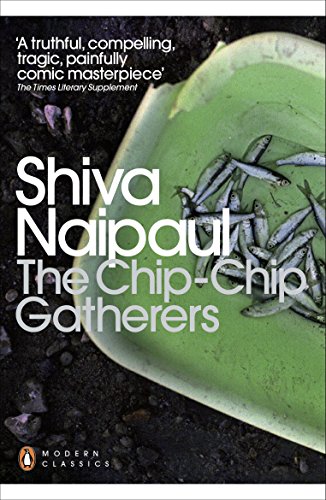
Book #2: The Chip-Chip Gatherers by Shiva Naipaul
My rating:

The chip-chip, formally known as Donax variabilis, is a tiny edible mollusk which populates the Eastern United States and the Caribbean. The meat from these sea creatures is considered to be a delicacy in Trinidad, the country in which Shiva Naipaul’s second novel is set. The chip-chip serves as excellent metaphor for the poor inhabitants of the island: their lives are “nasty, brutish and short”, as they struggle against both the recurrent waves that wash them from their sea bed communities, and the birds and humans that thoughtlessly consume them en masse.
The Chip-Chip Gatherers, the winner of the 1973 Whitbread Prize, is set in the Settlement, a community of poor Indians that is so insignificant that it doesn’t appear on any maps of Trinidad. The dominant character is Ashok (Egbert) Ramsaran, a ruthless and eccentric tyrant whose successful trucking company and extortionary money lending business has made him the most powerful man in the community. Egbert is a self made man who turned his back on his aimless parents and wayward brothers, and he refuses to lift a finger to help them or anyone else. He has one son, Wilbert, who he grooms to take over the business after his death. Despite his wealth, Egbert adamantly refuses to provide his son with a formal education, as he views doctors and lawyers as lying cheaters, and he regularly belittles and harangues Wilbert into submission.
His estranged best friend from childhood, Vishnu Bholai, works as the community’s local grocer, after failing in his dream to become a lawyer. Vishnu’s strikingly handsome and rather vain son Julian is a promising student who plans to gain a scholarship to England to pursue a career in medicine. Vishnu seeks reconciliation with Egbert, and fervently desires for Wilbert and Julian to become close friends, but the boys, like their fathers, have little in common.
Egbert’s long suffering and nearly invisible wife Rani dies of a heart attack, which initially provides her husband with relief and freedom. However, he soon finds himself lonely, as he has no friends and has lost his only companion. Rani’s mother Basdai, realizing that her financial link to Ramsaran has been severed upon her daughter’s death, cleverly creates a plan to keep her monetary pipeline intact. She cajoles her wayward niece Sushila, who is strikingly attractive and single, to offer her services as a housemaid to Egbert, and lure him into taking her on as his mistress. Sushila has a daughter out of wedlock named Sita, a moody, bookish and determined girl who also strives to escape the influence of Basdai, her daughters and daughters-in-law, and her mother, who left her in the care of Basdai to seek favors in the larger cities of San Fernando and Port of Spain. Basdai’s plan is successful at first, but ultimately she derives no benefit from it, and later the relationship between Egbert and Sushila takes a tragic turn that has wide ramifications on the others.
The main characters are linked by their ruthless desire to escape from the others in the community in order to achieve success, like a crab that seeks to crawl out of a barrel while the others pull him back in. Love and happiness are viewed as foolish pursuits that only lead to failure. They are desperate and fatalistic, and their extreme individualism blinds them toward any thoughts of working with each other to achieve common goals.
The Chip-Chip Gatherers is a deceptively simple novel, filled with humor and pathos, compelling characters , and evocative descriptions of the Settlement and its inhabitants. Shiva Naipaul mines the same fertile soil as his far more successful older brother Vidya (V.S.) did in his novels A House for Mr. Biswas and The Mystic Masseur, but this novel stands on its own and is a unique and captivating view of a postcolonial culture that is nearly the equal of Vidya’s early novels. Sadly, Shiva died of a heart attack in 1985 at the age of 40 and did not achieve much recognition or success during his lifetime, but hopefully the recent reissuing of The Chip-Chip Gatherers by Penguin Classics (UK), along with his 1970 debut novel Fireflies, will permit a new generation of readers to experience and enjoy the work of this talented and largely forgotten writer.
My rating:
It was at this time, when the tide was out, that the beds of chip-chip were exposed and squadrons of women and children from the village would come down to the beach armed with buckets and basins to gather the harvest of shells. The women wore petticoats but the smaller children would be naked. Separate working parties fanned out along the beach. Squatting on their haunches, they labored long and assiduously, shoveling and raking over the wet sand with their hands; filling the buckets and basins with their pink and yellow shells which were the size and shape of a long fingernail. Inside each was the sought-after prize: a miniscule kernel of insipid flesh. A full bucket of shells would provide them with a mouthful. But they were not deterred by the disproportion between their labours and their gains. Rather, the very meagreness of their reward seemed to spur them on. Quarrels were frequent, their chief cause being the intrusion of an alien group into the staked-out territory of another. Some of these border conflicts could flare into violence. Tempers sparked easily in the scorching sun.
The chip-chip, formally known as Donax variabilis, is a tiny edible mollusk which populates the Eastern United States and the Caribbean. The meat from these sea creatures is considered to be a delicacy in Trinidad, the country in which Shiva Naipaul’s second novel is set. The chip-chip serves as excellent metaphor for the poor inhabitants of the island: their lives are “nasty, brutish and short”, as they struggle against both the recurrent waves that wash them from their sea bed communities, and the birds and humans that thoughtlessly consume them en masse.
The Chip-Chip Gatherers, the winner of the 1973 Whitbread Prize, is set in the Settlement, a community of poor Indians that is so insignificant that it doesn’t appear on any maps of Trinidad. The dominant character is Ashok (Egbert) Ramsaran, a ruthless and eccentric tyrant whose successful trucking company and extortionary money lending business has made him the most powerful man in the community. Egbert is a self made man who turned his back on his aimless parents and wayward brothers, and he refuses to lift a finger to help them or anyone else. He has one son, Wilbert, who he grooms to take over the business after his death. Despite his wealth, Egbert adamantly refuses to provide his son with a formal education, as he views doctors and lawyers as lying cheaters, and he regularly belittles and harangues Wilbert into submission.
His estranged best friend from childhood, Vishnu Bholai, works as the community’s local grocer, after failing in his dream to become a lawyer. Vishnu’s strikingly handsome and rather vain son Julian is a promising student who plans to gain a scholarship to England to pursue a career in medicine. Vishnu seeks reconciliation with Egbert, and fervently desires for Wilbert and Julian to become close friends, but the boys, like their fathers, have little in common.
Egbert’s long suffering and nearly invisible wife Rani dies of a heart attack, which initially provides her husband with relief and freedom. However, he soon finds himself lonely, as he has no friends and has lost his only companion. Rani’s mother Basdai, realizing that her financial link to Ramsaran has been severed upon her daughter’s death, cleverly creates a plan to keep her monetary pipeline intact. She cajoles her wayward niece Sushila, who is strikingly attractive and single, to offer her services as a housemaid to Egbert, and lure him into taking her on as his mistress. Sushila has a daughter out of wedlock named Sita, a moody, bookish and determined girl who also strives to escape the influence of Basdai, her daughters and daughters-in-law, and her mother, who left her in the care of Basdai to seek favors in the larger cities of San Fernando and Port of Spain. Basdai’s plan is successful at first, but ultimately she derives no benefit from it, and later the relationship between Egbert and Sushila takes a tragic turn that has wide ramifications on the others.
The main characters are linked by their ruthless desire to escape from the others in the community in order to achieve success, like a crab that seeks to crawl out of a barrel while the others pull him back in. Love and happiness are viewed as foolish pursuits that only lead to failure. They are desperate and fatalistic, and their extreme individualism blinds them toward any thoughts of working with each other to achieve common goals.
The Chip-Chip Gatherers is a deceptively simple novel, filled with humor and pathos, compelling characters , and evocative descriptions of the Settlement and its inhabitants. Shiva Naipaul mines the same fertile soil as his far more successful older brother Vidya (V.S.) did in his novels A House for Mr. Biswas and The Mystic Masseur, but this novel stands on its own and is a unique and captivating view of a postcolonial culture that is nearly the equal of Vidya’s early novels. Sadly, Shiva died of a heart attack in 1985 at the age of 40 and did not achieve much recognition or success during his lifetime, but hopefully the recent reissuing of The Chip-Chip Gatherers by Penguin Classics (UK), along with his 1970 debut novel Fireflies, will permit a new generation of readers to experience and enjoy the work of this talented and largely forgotten writer.
43kidzdoc
>36 Linda92007: You're welcome, Linda. I glossed over the poetry selections, so I'll have to go back to the article to look for them.
>37 LisaMorr: I agree with you, Lisa. Living for four years in Pittsburgh made me appreciate smaller cities, such as Madison, Wisconsin, where my best friends live. Pittsburgh drivers were far more polite than those in Atlanta and the East Coast cities, and traffic jams were far less common or extensive. I also liked the city's unique neighborhoods, and the ethnic diversity within them, particularly in Squirrel Hill, East Liberty, Lawrenceville and Polish Hill.
>38 edwinbcn: Ouch. Thanks for that review, Edwin. Your comments and several others I've read on LT since yesterday have made me far less eager to purchase Tenth of December. I'll definitely read several of his New Yorker stories online before I decide to buy his latest book, which comes out in the US tomorrow.
>39 RidgewayGirl: The theme of Hamid's new book is intriguing to me, and I enjoyed The Reluctant Fundamentalist, so I'll almost certainly buy How to Get Filthy Rich in Rising Asia.
>40 rachbxl: Happy New Year, Rachel! I look forward to following your reading plans as well.
>41 baswood: Thanks for your recommendation of The Abbey Bookshop, Barry. I'll definitely stop by there if I make it to Paris this year.
>37 LisaMorr: I agree with you, Lisa. Living for four years in Pittsburgh made me appreciate smaller cities, such as Madison, Wisconsin, where my best friends live. Pittsburgh drivers were far more polite than those in Atlanta and the East Coast cities, and traffic jams were far less common or extensive. I also liked the city's unique neighborhoods, and the ethnic diversity within them, particularly in Squirrel Hill, East Liberty, Lawrenceville and Polish Hill.
>38 edwinbcn: Ouch. Thanks for that review, Edwin. Your comments and several others I've read on LT since yesterday have made me far less eager to purchase Tenth of December. I'll definitely read several of his New Yorker stories online before I decide to buy his latest book, which comes out in the US tomorrow.
>39 RidgewayGirl: The theme of Hamid's new book is intriguing to me, and I enjoyed The Reluctant Fundamentalist, so I'll almost certainly buy How to Get Filthy Rich in Rising Asia.
>40 rachbxl: Happy New Year, Rachel! I look forward to following your reading plans as well.
>41 baswood: Thanks for your recommendation of The Abbey Bookshop, Barry. I'll definitely stop by there if I make it to Paris this year.
44Linda92007
Excellent review of The Chip-Chip Gatherers, Darryl. I was not aware that V.S. had a brother who was also an author., but will now look for his books.
45kidzdoc
Uh oh. The Millions' Great 2013 Book Preview is out, and my wish list is about to grow exponentially as a result. These are the books that interest me the most:
Revenge: Eleven Dark Tales by Yoko Ogawa: English-reading fans of the prolific and much-lauded Yoko Ogawa rejoice at the advent of Revenge, a set of eleven stories translated from Japanese by Stephen Snyder. The stories, like Ogawa’s other novels (among them The Diving Pool, The Housekeeper and the Professor, and Hotel Iris) are purportedly elegant and creepy.
Ways of Going Home by Alejandro Zambra: Drop the phrase “Chilean novelist” and literary minds automatically flock to Bolaño. However, Alejandro Zambra is another name those words should soon conjure if they don’t already. Zambra was named one of Granta’s Best Young Spanish Language Novelists in 2010, and his soon-to-be-released third novel, Ways of Going Home, just won a PEN translation award. The novel has dual narratives: a child’s perspective in Pinochet’s Chile and an author’s meditation on the struggle of writing. In Zambra’s own words (from our 2011 interview): “It’s a book about memory, about parents, about Chile. It’s about the 80s, about the years when we children were secondary characters in the literature of our parents. It’s about the dictatorship, as well, I guess. And about literature, intimacy, the construction of intimacy.”
See Now Then by Jamaica Kincaid: For See Now Then, her first novel in a decade, Jamaica Kincaid settles into a small town in Vermont, where she dissects the past, present and future of the crumbling marriage of Mrs. Sweet, mother of two children named Heracles and Persephone, a woman whose composer husband leaves her for a younger musician. Kincaid is known as a writer who can see clean through the surface of things – and people – and this novel assures us that “Mrs. Sweet could see Mrs. Sweet very well.”
The Bridge Over the Neroch: And Other Works by Leonid Tsypkin: Like Chekhov, Tsypkin was a doctor by trade. In fact, that was all most people knew him as during his lifetime. At the time of Tsypkin’s death, his novel Summer in Baden-Baden, one of the most beautiful to come out of the Soviet Era, remained unpublished, trapped in a drawer in Moscow. Now New Directions brings us the “remaining writings”: a novella and several short stories.
The City of Devi by Manil Suri: Manil Suri is perhaps best known for his first novel The Death of Vishnu, which was long-listed for the Booker and shortlisted for the 2002 PEN/Faulkner Award. The City of Devi, his third novel, takes place in a Mumbai emptied out under threat of nuclear attack. Sarita, a 33-year-old statistician, stays in the city to find her beloved husband, who has mysteriously vanished. She ends up teaming up with a gay Muslim man named Jaz, and together they travel across this dangerous and absurd and magical landscape. According to Keran Desai, this is Suri’s “bravest and most passionate book,” which combines “the thrill of Bollywood with the pull of a thriller.”
How to Get Filthy Rich in Rising Asia by Mohsin Hamid: Previously mentioned in the Guardian list I posted yesterday.
The Childhood of Jesus by J.M. Coetzee: Also previously mentioned.
Harvard Square by André Aciman: In 1970s Cambridge, Massachusetts, a young Harvard graduate student from Egypt wants to be the consummate American, fully assimilated and ensconced in the ivory tower as a literature professor. Then he meets Kalaj — an Arab cab driver who denigrates American mass culture and captivates the student with his seedy, adventurous life. Harvard Square tells the story of this young student’s dilemma, caught between the lofty world of Harvard academia and the magnetic company of his new friend.
The Dark Road by Ma Jian: Ma Jian, whose books and person are both banned from China, published his third novel The Dark Road in June (Yunchen Publishing House, Taipei); the English translation will be released by Penguin. The story: a couple determined to give birth to a second child in order to carry on the family line flee their village and the family planning crackdown. At Sampsonia Way, Tienchi Martin-Liao described it as “an absurd story” that uses “magical realism to describe the perverse reality in China.” The publisher describes it as “a haunting and indelible portrait of the tragedies befalling women and families at the hands of China’s one-child policy and of the human spirit’s capacity to endure even the most brutal cruelty.” Martin-Liao tells us that the book’s title, Yin Zhi Dao, also means vagina, or place of life and origin.
My Struggle: Book Two: A Man in Love by Karl Ove Knausgaard: The first part of Knausgaard’s six-part behemoth was the single most stirring novel I read in 2012. Or is the word memoir? Anyway, this year sees the publication of Part Two, which apparently shifts the emphasis from Knausgaard’s childhood and the death of his father to his romantic foibles as an adult. But form trumps content in this book, and I’d read 400 pages of Knausgaard dilating on trips to the dentist. There’s still time to run out and catch up on Part One before May rolls around. I can’t imagine many readers who finish it won’t want to keep going.
N.B. I have My Struggle: Book One, so I'll definitely read it this year.
Americanah by Chimamanda Ngozi Adichie: Also previously mentioned.
Love Is Power, or Something Like That by A. Igoni Barrett: Barrett’s middle name, Igonibo, means stranger, though he’s no stranger to all things literary: he chronicled his childhood bookishness in our pages last year, and his father is Jamaican-born poet Lindsay Barrett who settled in Nigeria, where the younger Barrett was born and still lives. The streets of Lagos provide the backdrop for his second story collection, Love Is Power, or Something Like That. His first was called From the Cave of Rotten Teeth, and rotting teeth seems to be something of a recurring motif. It’s picked up at least tangentially in this book with “My Smelling Mouth Problem,” a story where the protagonist’s halitosis causes disturbances on a city bus ride.
TransAtlantic by Colum McCann: Known for deftly lacing his fiction with historical events – such as the high-wire walk between the twin towers that opened his National Book Award-winning novel, Let the Great World Spin – McCann threads together three very different journeys to Ireland in his new novel, Transatlantic. The first was Frederick Douglass’s trip to denounce slavery in 1845, just as the potato famine was beginning; the second was the first transatlantic flight, in 1919, by Jack Alcock and Arthur Brown; and the third was former U.S. Sen. George Mitchell’s repeated crossings to broker the 1998 Good Friday Agreement. In an interview, McCann said it’s the aftermath of such large historic events that interests him as a novelist: “What happens in the quiet moments? What happens when the plane has landed?”
Five Star Billionaire by Tash Aw: In his third novel, Aw writes about Malaysian immigrants to contemporary Shanghai, featuring an ensemble cast who hail from diverse backgrounds; their stories are interwoven, and counterpointed with the lives they left behind. Aw, who was a practicing lawyer while writing his first novel, The Harmony Silk Factory, won accolades for his debut: longlisted for Man Booker Prize, International Impac Dublin Award and the Guardian First Book Prize; winner of the Whitbread First Novel Award as well as the Commonwealth Writers Prize for Best First Novel (Asia Pacific region).
Clare of the Sea-Light by Edwidge Danticat: My time at the University of Miami overlapped with Danticat’s, though unfortunately I never took her creative writing course. I did, however, see her speak at an event for the English department during my junior year. She was astounding. There are prose stylists in this world and then there are storytellers, and rare are people like Danticat who are both. She read from her memoir Brother, I’m Dying, which features one of the most devastating and personal depictions of our wretched immigration system ever written. Haiti has always been an remarkable place – a nation built with equal measures of hope, passion, charm, malfeasance and tragedy. In this forthcoming story collection, Clare of the Sea-Light – which draws its title from a piece she originally published in Haiti Noir – we can expect the prodigiously talented author to render each aspect of the place beautifully.
Dissident Gardens by Jonathan Lethem: Sunnyside Queens has long held a contrarian perspective. In the 1920s, as urban development projects washed over the outer boroughs, the folks in Sunnyside did all they could to keep the place from turning into a cookie-cutter suburb. Driveways were banned and garages were disallowed. Instead of lawns, the neighborhood’s designers recommended long courtyards that spanned the entire length of blocks – these were meant to encourage mingling and space sharing. It’s no doubt this spirit of dissent, skepticism and opinionated egalitarianism that’s drawn Jonathan Lethem to the neighborhood as the centerpiece for his new novel, a “family epic,” which focuses on three generations of American leftists growing up in the outer borough.
Revenge: Eleven Dark Tales by Yoko Ogawa: English-reading fans of the prolific and much-lauded Yoko Ogawa rejoice at the advent of Revenge, a set of eleven stories translated from Japanese by Stephen Snyder. The stories, like Ogawa’s other novels (among them The Diving Pool, The Housekeeper and the Professor, and Hotel Iris) are purportedly elegant and creepy.
Ways of Going Home by Alejandro Zambra: Drop the phrase “Chilean novelist” and literary minds automatically flock to Bolaño. However, Alejandro Zambra is another name those words should soon conjure if they don’t already. Zambra was named one of Granta’s Best Young Spanish Language Novelists in 2010, and his soon-to-be-released third novel, Ways of Going Home, just won a PEN translation award. The novel has dual narratives: a child’s perspective in Pinochet’s Chile and an author’s meditation on the struggle of writing. In Zambra’s own words (from our 2011 interview): “It’s a book about memory, about parents, about Chile. It’s about the 80s, about the years when we children were secondary characters in the literature of our parents. It’s about the dictatorship, as well, I guess. And about literature, intimacy, the construction of intimacy.”
See Now Then by Jamaica Kincaid: For See Now Then, her first novel in a decade, Jamaica Kincaid settles into a small town in Vermont, where she dissects the past, present and future of the crumbling marriage of Mrs. Sweet, mother of two children named Heracles and Persephone, a woman whose composer husband leaves her for a younger musician. Kincaid is known as a writer who can see clean through the surface of things – and people – and this novel assures us that “Mrs. Sweet could see Mrs. Sweet very well.”
The Bridge Over the Neroch: And Other Works by Leonid Tsypkin: Like Chekhov, Tsypkin was a doctor by trade. In fact, that was all most people knew him as during his lifetime. At the time of Tsypkin’s death, his novel Summer in Baden-Baden, one of the most beautiful to come out of the Soviet Era, remained unpublished, trapped in a drawer in Moscow. Now New Directions brings us the “remaining writings”: a novella and several short stories.
The City of Devi by Manil Suri: Manil Suri is perhaps best known for his first novel The Death of Vishnu, which was long-listed for the Booker and shortlisted for the 2002 PEN/Faulkner Award. The City of Devi, his third novel, takes place in a Mumbai emptied out under threat of nuclear attack. Sarita, a 33-year-old statistician, stays in the city to find her beloved husband, who has mysteriously vanished. She ends up teaming up with a gay Muslim man named Jaz, and together they travel across this dangerous and absurd and magical landscape. According to Keran Desai, this is Suri’s “bravest and most passionate book,” which combines “the thrill of Bollywood with the pull of a thriller.”
How to Get Filthy Rich in Rising Asia by Mohsin Hamid: Previously mentioned in the Guardian list I posted yesterday.
The Childhood of Jesus by J.M. Coetzee: Also previously mentioned.
Harvard Square by André Aciman: In 1970s Cambridge, Massachusetts, a young Harvard graduate student from Egypt wants to be the consummate American, fully assimilated and ensconced in the ivory tower as a literature professor. Then he meets Kalaj — an Arab cab driver who denigrates American mass culture and captivates the student with his seedy, adventurous life. Harvard Square tells the story of this young student’s dilemma, caught between the lofty world of Harvard academia and the magnetic company of his new friend.
The Dark Road by Ma Jian: Ma Jian, whose books and person are both banned from China, published his third novel The Dark Road in June (Yunchen Publishing House, Taipei); the English translation will be released by Penguin. The story: a couple determined to give birth to a second child in order to carry on the family line flee their village and the family planning crackdown. At Sampsonia Way, Tienchi Martin-Liao described it as “an absurd story” that uses “magical realism to describe the perverse reality in China.” The publisher describes it as “a haunting and indelible portrait of the tragedies befalling women and families at the hands of China’s one-child policy and of the human spirit’s capacity to endure even the most brutal cruelty.” Martin-Liao tells us that the book’s title, Yin Zhi Dao, also means vagina, or place of life and origin.
My Struggle: Book Two: A Man in Love by Karl Ove Knausgaard: The first part of Knausgaard’s six-part behemoth was the single most stirring novel I read in 2012. Or is the word memoir? Anyway, this year sees the publication of Part Two, which apparently shifts the emphasis from Knausgaard’s childhood and the death of his father to his romantic foibles as an adult. But form trumps content in this book, and I’d read 400 pages of Knausgaard dilating on trips to the dentist. There’s still time to run out and catch up on Part One before May rolls around. I can’t imagine many readers who finish it won’t want to keep going.
N.B. I have My Struggle: Book One, so I'll definitely read it this year.
Americanah by Chimamanda Ngozi Adichie: Also previously mentioned.
Love Is Power, or Something Like That by A. Igoni Barrett: Barrett’s middle name, Igonibo, means stranger, though he’s no stranger to all things literary: he chronicled his childhood bookishness in our pages last year, and his father is Jamaican-born poet Lindsay Barrett who settled in Nigeria, where the younger Barrett was born and still lives. The streets of Lagos provide the backdrop for his second story collection, Love Is Power, or Something Like That. His first was called From the Cave of Rotten Teeth, and rotting teeth seems to be something of a recurring motif. It’s picked up at least tangentially in this book with “My Smelling Mouth Problem,” a story where the protagonist’s halitosis causes disturbances on a city bus ride.
TransAtlantic by Colum McCann: Known for deftly lacing his fiction with historical events – such as the high-wire walk between the twin towers that opened his National Book Award-winning novel, Let the Great World Spin – McCann threads together three very different journeys to Ireland in his new novel, Transatlantic. The first was Frederick Douglass’s trip to denounce slavery in 1845, just as the potato famine was beginning; the second was the first transatlantic flight, in 1919, by Jack Alcock and Arthur Brown; and the third was former U.S. Sen. George Mitchell’s repeated crossings to broker the 1998 Good Friday Agreement. In an interview, McCann said it’s the aftermath of such large historic events that interests him as a novelist: “What happens in the quiet moments? What happens when the plane has landed?”
Five Star Billionaire by Tash Aw: In his third novel, Aw writes about Malaysian immigrants to contemporary Shanghai, featuring an ensemble cast who hail from diverse backgrounds; their stories are interwoven, and counterpointed with the lives they left behind. Aw, who was a practicing lawyer while writing his first novel, The Harmony Silk Factory, won accolades for his debut: longlisted for Man Booker Prize, International Impac Dublin Award and the Guardian First Book Prize; winner of the Whitbread First Novel Award as well as the Commonwealth Writers Prize for Best First Novel (Asia Pacific region).
Clare of the Sea-Light by Edwidge Danticat: My time at the University of Miami overlapped with Danticat’s, though unfortunately I never took her creative writing course. I did, however, see her speak at an event for the English department during my junior year. She was astounding. There are prose stylists in this world and then there are storytellers, and rare are people like Danticat who are both. She read from her memoir Brother, I’m Dying, which features one of the most devastating and personal depictions of our wretched immigration system ever written. Haiti has always been an remarkable place – a nation built with equal measures of hope, passion, charm, malfeasance and tragedy. In this forthcoming story collection, Clare of the Sea-Light – which draws its title from a piece she originally published in Haiti Noir – we can expect the prodigiously talented author to render each aspect of the place beautifully.
Dissident Gardens by Jonathan Lethem: Sunnyside Queens has long held a contrarian perspective. In the 1920s, as urban development projects washed over the outer boroughs, the folks in Sunnyside did all they could to keep the place from turning into a cookie-cutter suburb. Driveways were banned and garages were disallowed. Instead of lawns, the neighborhood’s designers recommended long courtyards that spanned the entire length of blocks – these were meant to encourage mingling and space sharing. It’s no doubt this spirit of dissent, skepticism and opinionated egalitarianism that’s drawn Jonathan Lethem to the neighborhood as the centerpiece for his new novel, a “family epic,” which focuses on three generations of American leftists growing up in the outer borough.
46kidzdoc
>44 Linda92007: Thanks, Linda. You can easily find used copies of previous editions of The Chip-Chip Gatherers and Fireflies for sale on Amazon and AbeBooks for less than $5. I bought my copy, a 2012 reissue, at Foyles in London last September; it isn't available in the US, though.
47markon
I am eagerly awaiting Americanah and resolutely turning my face away from all the other good stuff mentioned (except, maybe, The Accidental City - heard an interview with Lawrence Powell yesterday on the Bob Edward's show.)
48labfs39
Great review, Darryl. I've seen those bivalves a million times and never once thought of them as food. I wonder how they open them without damaging the flesh. In any case, it sounds like an interesting, if bleak, book.
49RidgewayGirl
That was a very, very bad link, in regards to the number of books subsequently added to my wish list, some of which needed to be put on pre-order. Some of them look exceedingly readable.
50rebeccanyc
Thanks (I guess) for that list! Several of your selections sound very intriguing, although I'm not a fan of some of the authors you've picked.
51baswood
I thoroughly enjoyed reading your great review of the Chip-chip Gatherers.
52kidzdoc
Book #3: Our Lady of Alice Bhatti by Mohammed Hanif
My rating:
2012 Wellcome Trust Book Prize shortlist
2013 DSC Prize for South Asian Literature shortlist
The latest novel by Mohammed Hanif, author of the Booker Prize longlisted novel A Case of Exploding Mangoes, is set in contemporary Karachi, Pakistan in the Sacred Heart Hospital for All Ailments, a public hospital formerly established by the Catholic Church and led by a Catholic chief medical officer but staffed by Muslim doctors and nurses. Alice Bhatti is a newly hired nurse who trained at Sacred Heart, but was forced to leave due to her outspoken Christian beliefs and a trumped up conviction of attempted murder. She is single, attractive and well endowed, which makes her the source of unwanted attention from male patients and visitors to Sacred Heart. She is friends with Noor, a teenage street urchin who has managed to obtain a jack of all trades position at Sacred Heart while caring for his mother, who is dying from three cancers. Noor is also friends with Teddy Butt, a bodybuilder with a violent temper who works with but is not a member of the G Squad, a shadowy arm of the Pakistani police which captures, tortures and kills insurgents that terrorize the civilian population.
Teddy falls in love with Alice, who suddenly agrees to marry him after rejecting his initial advances. Their flawed relationship, Teddy's troubled activities with the G Squad and Alice's apparent ability to bring the dead and dying to life form the major subjects of this novel. Unfortunately, I found Our Lady of Alice Bhatti to be quite implausible, as its stories about medical practice and the daily workings of a large public hospital strained credulity, and its characters were dull and inscrutable. The novel consisted of a series of connected events rather than a cohesive story, and by the end I had completely lost interest in what happened to Alice, Teddy and Noor.
My rating:

2012 Wellcome Trust Book Prize shortlist
2013 DSC Prize for South Asian Literature shortlist
The latest novel by Mohammed Hanif, author of the Booker Prize longlisted novel A Case of Exploding Mangoes, is set in contemporary Karachi, Pakistan in the Sacred Heart Hospital for All Ailments, a public hospital formerly established by the Catholic Church and led by a Catholic chief medical officer but staffed by Muslim doctors and nurses. Alice Bhatti is a newly hired nurse who trained at Sacred Heart, but was forced to leave due to her outspoken Christian beliefs and a trumped up conviction of attempted murder. She is single, attractive and well endowed, which makes her the source of unwanted attention from male patients and visitors to Sacred Heart. She is friends with Noor, a teenage street urchin who has managed to obtain a jack of all trades position at Sacred Heart while caring for his mother, who is dying from three cancers. Noor is also friends with Teddy Butt, a bodybuilder with a violent temper who works with but is not a member of the G Squad, a shadowy arm of the Pakistani police which captures, tortures and kills insurgents that terrorize the civilian population.
Teddy falls in love with Alice, who suddenly agrees to marry him after rejecting his initial advances. Their flawed relationship, Teddy's troubled activities with the G Squad and Alice's apparent ability to bring the dead and dying to life form the major subjects of this novel. Unfortunately, I found Our Lady of Alice Bhatti to be quite implausible, as its stories about medical practice and the daily workings of a large public hospital strained credulity, and its characters were dull and inscrutable. The novel consisted of a series of connected events rather than a cohesive story, and by the end I had completely lost interest in what happened to Alice, Teddy and Noor.
53qebo
52: Well that's too bad, because I'd suppose the practice of medicine in other countries would be of interest to you.
54kidzdoc
>47 markon: I found information about last Thursday's episode of The Bob Edwards Show that includes an interview of Lawrence Powell, the author of The Accidental City, but it seems as though podcasts of past episodes are no longer available.
>48 labfs39: Thanks, Lisa. The Chip-Chip Gatherers was a bleak, but it was filled with humor and was one of the more captivating books I've read recently.
>49 RidgewayGirl: Sorry, Kay...
>50 rebeccanyc: Which of those authors don't you like, Rebecca?
>51 baswood: Thanks, Barry!
>48 labfs39: Thanks, Lisa. The Chip-Chip Gatherers was a bleak, but it was filled with humor and was one of the more captivating books I've read recently.
>49 RidgewayGirl: Sorry, Kay...
>50 rebeccanyc: Which of those authors don't you like, Rebecca?
>51 baswood: Thanks, Barry!
55kidzdoc
>52 kidzdoc: You're right, Katherine. However, these books about medicine have to be largely accurate and definitely plausible, which this book was not. Little things such as the comment about a "strain of non-Hodgkins lymphoma" that would go unnoticed by most readers are very irritating to me (no doctor would refer to a strain of a cancer!). There were numerous other medical impossibilities, such as a stillborn blue baby that miraculously comes to life nearly an hour after being pronounced dead and is completely healthy afterward, and the three cancers that plagued Noor's mother simultaneously. Even without those errors I still would not have liked this book, as it was contrived and poorly written IMO.
56kidzdoc
Here's another list of enticing 2013 books, from Scott Esposito of Conversational Reading.
Interesting New Books — 2013
This list is heavily tilted toward international literature. These are the most interesting books to me besides that ones that I've already mentioned.
Adan in Eden by Carlos Fuentes (Release date: January 15; Publisher: Dalkey Archive Press)
““Fuentes does not cease to amaze. This latest work is an uproariously comic novel that deals head on with many of the gravest issues of 21st-century Mexico . . . The reader marvels throughout that the author of this fiercely perspicacious and laugh-out-loud funny novel is in his eighties: Fuentes’s familiar wit and breadth of experience are here in spades, but he also packs a high-velocity edginess worthy of a writer a third his age.””
Percival Everett by Virgil Russell by Percival Everett (Release date: February 5; Publisher: Graywolf Press)
A story inside a story inside a story. A man visits his aging father in a nursing home, where his father writes the novel he imagines his son would write. Or is it the novel that the son imagines his father would imagine, if he were to imagine the kind of novel the son would write?
Let’s simplify: a woman seeks an apprenticeship with a painter, claiming to be his long-lost daughter. A contractor-for-hire named Murphy can’t distinguish between the two brothers who employ him. And in Murphy’s troubled dreams, Nat Turner imagines the life of William Styron. These narratives twist together with anecdotes from the nursing home, each building on the other until they crest in a wild, outlandish excursion of the inmates led by the father. Anchoring these shifting plotlines is a running commentary between father and son that sheds doubt on the truthfulness of each story. Because, after all, what narrator can we ever trust?
Not only is Percival Everett by Virgil Russell a powerful, compassionate meditation on old age and its humiliations, it is an ingenious culmination of Everett’s recurring preoccupations. All of his prior work, his metaphysical and philosophical inquiries, his investigations into the nature of narrative, have led to this masterful book. Percival Everett has never been more cunning, more brilliant and subversive, than he is in this, his most important and elusive novel to date.
That Smell and Notes from Prison by Sonallah Ibrahim (Release date: February 13; Publisher: New Directions)
That Smell is Sonallah Ibrahim’s modernist masterpiece and one of the most influential novels written in Arabic since WWII. Composed after a five-year term in prison, the semi-autobiographical story follows a recently released political prisoner as he wanders through Cairo, adrift in his native city. Living under house arrest, he tries to write of his tortuous experience, but instead smokes, spies on the neighbors, visits old lovers, and marvels at Egypt’s new consumer culture. Published in 1966, That Smell was immediately banned and the print-run confiscated. The original, uncensored version did not appear in Egypt for another twenty years.
For this edition, translator Robyn Creswell has also included an annotated selection of the author’s Notes from Prison, Ibrahim’s prison diaries—a personal archive comprising hundreds of handwritten notes copied onto Bafra-brand cigarette papers and smuggled out of jail. These stark, intense writings shed unexpected light on the sources and motives of Ibrahim’s groundbreaking novel. Also included in this edition is Ibrahim’s celebrated essay about the writing and reception of That Smell.
Ten White Geese: A Novel by Gerbrand Bakker (Release date: February 26; Publisher: Penguin)
A woman rents a remote farm in rural Wales. She says her name is Emilie. An Emily Dickinson scholar, she has fled Amsterdam, having just confessed to an affair. On the farm she finds ten geese. One by one they disappear. Who is this woman? Will her husband manage to find her? The young man who stays the night: why won’t he leave? And the vanishing geese?
Set against a stark and pristine landscape, and with a seductive blend of solace and menace, this novel of stealth intrigue summons from a woman’s silent longing fugitive moments of profound beauty and compassion.
Into Disaster: Chronicles of Intellectual Life, 1941 by Maurice Blanchot (Release date: July 1; Publisher: Fordham University Press)
The German Occupation of France put an end to Maurice Blanchot’s career as a political journalist. In April 1941 he began to publish a weekly column of literary criticism in the Journal des Débats, which became the source for his first critical work, Faux pas (1943). As well as providing a unique perspective on cultural life during the Occupation, these pieces offer crucial insights into the mind and art of a writer who was to become one of the most influential figures on the French literary scene in the second half of the twentieth century.
As well as laying the basis for the career of one France’s most original writers and thinkers, these articles also offer a reminder that Blanchot’s political awareness remains undimmed, through clear if sometimes coded acts of criticism or defiance of the prevailing order.
Interesting New Books — 2013
This list is heavily tilted toward international literature. These are the most interesting books to me besides that ones that I've already mentioned.
Adan in Eden by Carlos Fuentes (Release date: January 15; Publisher: Dalkey Archive Press)
““Fuentes does not cease to amaze. This latest work is an uproariously comic novel that deals head on with many of the gravest issues of 21st-century Mexico . . . The reader marvels throughout that the author of this fiercely perspicacious and laugh-out-loud funny novel is in his eighties: Fuentes’s familiar wit and breadth of experience are here in spades, but he also packs a high-velocity edginess worthy of a writer a third his age.””
Percival Everett by Virgil Russell by Percival Everett (Release date: February 5; Publisher: Graywolf Press)
A story inside a story inside a story. A man visits his aging father in a nursing home, where his father writes the novel he imagines his son would write. Or is it the novel that the son imagines his father would imagine, if he were to imagine the kind of novel the son would write?
Let’s simplify: a woman seeks an apprenticeship with a painter, claiming to be his long-lost daughter. A contractor-for-hire named Murphy can’t distinguish between the two brothers who employ him. And in Murphy’s troubled dreams, Nat Turner imagines the life of William Styron. These narratives twist together with anecdotes from the nursing home, each building on the other until they crest in a wild, outlandish excursion of the inmates led by the father. Anchoring these shifting plotlines is a running commentary between father and son that sheds doubt on the truthfulness of each story. Because, after all, what narrator can we ever trust?
Not only is Percival Everett by Virgil Russell a powerful, compassionate meditation on old age and its humiliations, it is an ingenious culmination of Everett’s recurring preoccupations. All of his prior work, his metaphysical and philosophical inquiries, his investigations into the nature of narrative, have led to this masterful book. Percival Everett has never been more cunning, more brilliant and subversive, than he is in this, his most important and elusive novel to date.
That Smell and Notes from Prison by Sonallah Ibrahim (Release date: February 13; Publisher: New Directions)
That Smell is Sonallah Ibrahim’s modernist masterpiece and one of the most influential novels written in Arabic since WWII. Composed after a five-year term in prison, the semi-autobiographical story follows a recently released political prisoner as he wanders through Cairo, adrift in his native city. Living under house arrest, he tries to write of his tortuous experience, but instead smokes, spies on the neighbors, visits old lovers, and marvels at Egypt’s new consumer culture. Published in 1966, That Smell was immediately banned and the print-run confiscated. The original, uncensored version did not appear in Egypt for another twenty years.
For this edition, translator Robyn Creswell has also included an annotated selection of the author’s Notes from Prison, Ibrahim’s prison diaries—a personal archive comprising hundreds of handwritten notes copied onto Bafra-brand cigarette papers and smuggled out of jail. These stark, intense writings shed unexpected light on the sources and motives of Ibrahim’s groundbreaking novel. Also included in this edition is Ibrahim’s celebrated essay about the writing and reception of That Smell.
Ten White Geese: A Novel by Gerbrand Bakker (Release date: February 26; Publisher: Penguin)
A woman rents a remote farm in rural Wales. She says her name is Emilie. An Emily Dickinson scholar, she has fled Amsterdam, having just confessed to an affair. On the farm she finds ten geese. One by one they disappear. Who is this woman? Will her husband manage to find her? The young man who stays the night: why won’t he leave? And the vanishing geese?
Set against a stark and pristine landscape, and with a seductive blend of solace and menace, this novel of stealth intrigue summons from a woman’s silent longing fugitive moments of profound beauty and compassion.
Into Disaster: Chronicles of Intellectual Life, 1941 by Maurice Blanchot (Release date: July 1; Publisher: Fordham University Press)
The German Occupation of France put an end to Maurice Blanchot’s career as a political journalist. In April 1941 he began to publish a weekly column of literary criticism in the Journal des Débats, which became the source for his first critical work, Faux pas (1943). As well as providing a unique perspective on cultural life during the Occupation, these pieces offer crucial insights into the mind and art of a writer who was to become one of the most influential figures on the French literary scene in the second half of the twentieth century.
As well as laying the basis for the career of one France’s most original writers and thinkers, these articles also offer a reminder that Blanchot’s political awareness remains undimmed, through clear if sometimes coded acts of criticism or defiance of the prevailing order.
57dmsteyn
Interesting review of Our Lady of Alice Bhatti, Darryl. My father is an anaesthetist, and he often complains about the misuse of medical terminology and plausibility-straining events in books, so I can see how those would irritate you as well. But, as you say, you didn't like the way the book was written, either.
58charbutton
SO many exciting books coming out this year! I'm looking forward to Percival Everett, Edwidge Danticat and Chimamanda Ngozi Adichie - 3 of my favourite authors. City of Devi sounds intriguing too.
59rebeccanyc
#54 I wasn't a fan of The Death of Vishnu, so I'm reluctant to try anything else by Manil Suri, and Jonathan Franzen is one of the authors I have an irrational dislike of! But I'm very interested in the Tsypkin, Aciman, McCann, Danticat, and Adichie.
#56 I saw Adam in Eden in the bookstore yesterday, but didn't buy it because I was so disappointed in Fuentes' Vlad, which I read last year. I'll probably read it eventually, though.
#56 I saw Adam in Eden in the bookstore yesterday, but didn't buy it because I was so disappointed in Fuentes' Vlad, which I read last year. I'll probably read it eventually, though.
60labfs39
That Smell and Notes from Prison particularly catches my attention. I'll look forward to your review.
61kidzdoc
>57 dmsteyn: Thanks, Dewald. If the medical misinformation is limited and not germane to the story I can be forgiving. However, in this novel, the glorification of Alice Bhatti was due to her ability to revive the dead and dying, and much of the story took place in the Sacred Heart Hospital, so there were numerous medical literary errors throughout the book.
>58 charbutton: Right, Char. All three authors you mentioned are among my favorites, and although I haven't read The Death of Vishnu yet, Suri's latest book sounds interesting.
>59 rebeccanyc: I looked for your review of The Death of Vishnu but I don't see one, Rebecca. What didn't you like about it?
I've only read Freedom by Jonathan Franzen, but I also own The Corrections. I'm in no hurry to read it, or anything else by him.
I haven't been fond of anything I've read by Carlos Fuentes yet, but I'm still willing and eager to give Adam in Eden a try.
>60 labfs39: Will do, Lisa.
>58 charbutton: Right, Char. All three authors you mentioned are among my favorites, and although I haven't read The Death of Vishnu yet, Suri's latest book sounds interesting.
>59 rebeccanyc: I looked for your review of The Death of Vishnu but I don't see one, Rebecca. What didn't you like about it?
I've only read Freedom by Jonathan Franzen, but I also own The Corrections. I'm in no hurry to read it, or anything else by him.
I haven't been fond of anything I've read by Carlos Fuentes yet, but I'm still willing and eager to give Adam in Eden a try.
>60 labfs39: Will do, Lisa.
62deebee1
>42 kidzdoc: Great review of The Chip-Chip Gatherers. Sounds like something I would enjoy.
>45 kidzdoc: What a list! I'm especially intrigued by the Zambra and the Tsypkin.
>48 labfs39: Lisa, I suppose, like most edible bivalves, they need to be put in hot water until the they open and the flesh could be taken out intact.
>56 kidzdoc: Another enticing list -- I'm curious about the Fuentes and the Blanchot.
Your lists are dangerous to my wishlist, Darryl!
>45 kidzdoc: What a list! I'm especially intrigued by the Zambra and the Tsypkin.
>48 labfs39: Lisa, I suppose, like most edible bivalves, they need to be put in hot water until the they open and the flesh could be taken out intact.
>56 kidzdoc: Another enticing list -- I'm curious about the Fuentes and the Blanchot.
Your lists are dangerous to my wishlist, Darryl!
63rebeccanyc
#61 I read The Death of Vishnu before I was on LT, so there is no review. To tell you the truth, I can't remember what I didn't like about it. I don't think I actively disliked it; I think I just was disappointed by it, but why I cannot tell you. So much for my memory. I almost bought a book today called MasterMind: How to Think Like Sherlock Holmes by Maria Konnikova, because I heard the author on my local NPR station, and I still may get it. She discusses how to remember things better in it.
I was fascinated by the only other Carlos Fuentes I've read, the mammoth Terra Nostra. It was a long and serious undertaking, and I'm sure I missed a lot, but I'm not sure if anything can live up to it.
I was fascinated by the only other Carlos Fuentes I've read, the mammoth Terra Nostra. It was a long and serious undertaking, and I'm sure I missed a lot, but I'm not sure if anything can live up to it.
64RidgewayGirl
Oh, but The Corrections is much better than Freedom, Darryl. Don't dismiss him until you've read his best.
65kidzdoc
Book #4: The Eleven by Pierre Michon

My rating:
"The Eleven is not a painting of History, it is History."
More than 200 years after its creation, an unnamed narrator stands alongside his voiceless subject in the Louvre as they study The Eleven, "the world's most famous painting." Created by François-Élie Corentin in 1794, the painting portrays the eleven members of the Committee for Public Safety led by Robespierre, as they stand around a table filled with four-pound loaves of bread and Clamart wine. The French historian Michelet described the painting as a "secular last supper" in his 1852 work History of the French Revolution, and his 12 page description of The Eleven in his book has stood as the definitive interpretation of the masterpiece since then.
The narrator of this novel discusses the painting with his subject, and claims that there is much more to its creation than Michelet's flawed description of it. He briefly describes the life of Corentin, who grew up the river town of Combleux and flourished under the undying devotion of his mother and grandmother; his father, a failed poet; and the reason for the painting's commission during the Reign of Terror which followed the French Revolution. The Terror, which lasted from 1793-94, was a time in which a power struggle between Robespierre, Danton and Hébert led to the execution of tens of thousands of French citizens deemed enemies of the Revolution. The narrator describes the actions and motivations of the eleven members of the Committee for Public Safety, and portrays the difficult position that many supporters of its leading members found themselves in.
The Eleven, which was originally published as Les Onze and won the prestigious Grand Prix du roman de l'Académie française in 2009, is a deliberate and nonlinear short novel, which was a tedious read at times but ultimately gelled into an interesting and worthwhile story at its end. I suspect that the book is far more rewarding in its original language, but the patient reader of the English version may enjoy it as well.

My rating:

"The Eleven is not a painting of History, it is History."
More than 200 years after its creation, an unnamed narrator stands alongside his voiceless subject in the Louvre as they study The Eleven, "the world's most famous painting." Created by François-Élie Corentin in 1794, the painting portrays the eleven members of the Committee for Public Safety led by Robespierre, as they stand around a table filled with four-pound loaves of bread and Clamart wine. The French historian Michelet described the painting as a "secular last supper" in his 1852 work History of the French Revolution, and his 12 page description of The Eleven in his book has stood as the definitive interpretation of the masterpiece since then.
The narrator of this novel discusses the painting with his subject, and claims that there is much more to its creation than Michelet's flawed description of it. He briefly describes the life of Corentin, who grew up the river town of Combleux and flourished under the undying devotion of his mother and grandmother; his father, a failed poet; and the reason for the painting's commission during the Reign of Terror which followed the French Revolution. The Terror, which lasted from 1793-94, was a time in which a power struggle between Robespierre, Danton and Hébert led to the execution of tens of thousands of French citizens deemed enemies of the Revolution. The narrator describes the actions and motivations of the eleven members of the Committee for Public Safety, and portrays the difficult position that many supporters of its leading members found themselves in.
The Eleven, which was originally published as Les Onze and won the prestigious Grand Prix du roman de l'Académie française in 2009, is a deliberate and nonlinear short novel, which was a tedious read at times but ultimately gelled into an interesting and worthwhile story at its end. I suspect that the book is far more rewarding in its original language, but the patient reader of the English version may enjoy it as well.
66kidzdoc
>62 deebee1: Thanks, deebee. I think you would enjoy The Chip-Chip Gatherers.
I enjoy looking at The Millions' list of upcoming books every January; several of them invariably end up in my personal library.
The list by Scott Esposito of Conversational Reading is also enticing.
Your lists are dangerous to my wishlist, Darryl!
Ha! Look who's talking; your thread is one of the biggest dangers to my wishlist! ;-)
>63 rebeccanyc: I thought that I owned The Death of Vishnu, but it isn't in my LT library.
I've very interested in contemporary Mexico, in part because many of the patients and families I care for in the hospital come from that country, so I'll probably buy Carlos Fuentes's new book regardless.
>64 RidgewayGirl: Okay...I won't discard The Corrections as I had intended to do. It will probably remain at the bottom of my TBR list, though.
I enjoy looking at The Millions' list of upcoming books every January; several of them invariably end up in my personal library.
The list by Scott Esposito of Conversational Reading is also enticing.
Your lists are dangerous to my wishlist, Darryl!
Ha! Look who's talking; your thread is one of the biggest dangers to my wishlist! ;-)
>63 rebeccanyc: I thought that I owned The Death of Vishnu, but it isn't in my LT library.
I've very interested in contemporary Mexico, in part because many of the patients and families I care for in the hospital come from that country, so I'll probably buy Carlos Fuentes's new book regardless.
>64 RidgewayGirl: Okay...I won't discard The Corrections as I had intended to do. It will probably remain at the bottom of my TBR list, though.
67kidzdoc
The shortlist for this year's Man Asian Literary Prize was announced today:
Between Clay and Dust - Musharraf Ali Farooqi (Pakistan)
The Briefcase – Hiromi Kawakami (Japan)
Silent House - Orhan Pamuk (Turkey)
The Garden of Evening Mists - Tan Twan Eng (Malaysia)
Narcopolis - Jeet Thayil (India)
The winner will be announced on March 13th. I've read The Garden of Evening Mists and Narcopolis, but I don't own and haven't read the other three shortlisted novels. My favorite book reviewer, Maya Jaggi, is the chair of judges for this year's award, so I'll check out these three books.
Between Clay and Dust - Musharraf Ali Farooqi (Pakistan)
The Briefcase – Hiromi Kawakami (Japan)
Silent House - Orhan Pamuk (Turkey)
The Garden of Evening Mists - Tan Twan Eng (Malaysia)
Narcopolis - Jeet Thayil (India)
The winner will be announced on March 13th. I've read The Garden of Evening Mists and Narcopolis, but I don't own and haven't read the other three shortlisted novels. My favorite book reviewer, Maya Jaggi, is the chair of judges for this year's award, so I'll check out these three books.
68The_Hibernator
Silent House was written in the 80's. So I take it the award is for new translations into English?
69rebeccanyc
I received The Eleven from my Archipelago subscription and am interested in reading it since I've been reading a lot about France and especially the revolutionary period.
If your interest in contemporary Mexico extends to the grimmer sides of it, I cannot recommend highly enough Murder City: Ciudad Juarez and the Global Economy's New Killing Fields. It is poetic and chilling.
If your interest in contemporary Mexico extends to the grimmer sides of it, I cannot recommend highly enough Murder City: Ciudad Juarez and the Global Economy's New Killing Fields. It is poetic and chilling.
70lilisin
A Japanese book! I'll be looking out for reviews of The Briefcase to see if I want to add it to my TBR right away.
71baswood
Excellent review of The Eleven, Pierre Michon Darryl, which will interest me, but I will read it in translation.
72kidzdoc
>68 The_Hibernator: Silent House was written in the 80's. So I take it the award is for new translations into English?
Right, Rachel.
>69 rebeccanyc: Did you renew your Archipelago Books subscription, Rebecca? I decided not to renew mine, as I have a stack of unread Archipelago titles that I'd like to get to. I didn't renew my NYRB Book Club subscription, either.
>70 lilisin: I'm also curious about The Briefcase, but I haven't heard anything about it.
>71 baswood: Thanks, Barry!
Right, Rachel.
>69 rebeccanyc: Did you renew your Archipelago Books subscription, Rebecca? I decided not to renew mine, as I have a stack of unread Archipelago titles that I'd like to get to. I didn't renew my NYRB Book Club subscription, either.
>70 lilisin: I'm also curious about The Briefcase, but I haven't heard anything about it.
>71 baswood: Thanks, Barry!
73amandameale
Happy New Year Darryl. Fascinating thread. Yours is the first I've looked at and already I have a MUST BUY book: The Chip-Chip Gatherers.
74rebeccanyc
#72 I did renew mine, although I had mixed feelings about it, both because I too have a stack of unread titles and because the upcoming books didn't sound as appealing as some in the past. But I admire what they are doing and felt I was supporting them by resubscribing. Same for my Open Letter subscription. I never subscribed to NYRB because it's so easy for me to look at their books in my favorite bookstores.
75wandering_star
I have just been off to look at some of Maya Jaggi's reviews after your recommendation - she reviews some really interesting books. I am used to getting book recommendations from your thread, Darryl, but a recommendation for a reviewer may be a first...
76petermc
Re: The Briefcase by Kawakami Hiromi
Here's a review worth reading: http://japaneseliterature.wordpress.com/tag/kawakami-hiromi/
Here's a review worth reading: http://japaneseliterature.wordpress.com/tag/kawakami-hiromi/
77lilisin
Oh yes, I love her blog! She writes so thoroughly it's very impressive. I realize now that I had already read the review to the book and just forgot to mark it.
78avaland
Oh, Darryl, I turn around and you've got a zillion posts on your thread for me to catch up with!
Be careful loving at the those advance lists because you know what the next step is, don't you? You'll start reading the advance publisher catalogs (it can be addicting). And wouldn't be interesting if you did, for then you could write your own list of what looks interesting in them ;-)
Be careful loving at the those advance lists because you know what the next step is, don't you? You'll start reading the advance publisher catalogs (it can be addicting). And wouldn't be interesting if you did, for then you could write your own list of what looks interesting in them ;-)
79dchaikin
#78 a zillion posts already indeed...
Sadly just catching up, Darryl. Fantastic review of The Chip-Chip Gathers. Intrigued by The Eleven. I don't have any frame of reference for Quiet London, but if did I would be interested. And so many lists with so many books...
Sadly just catching up, Darryl. Fantastic review of The Chip-Chip Gathers. Intrigued by The Eleven. I don't have any frame of reference for Quiet London, but if did I would be interested. And so many lists with so many books...
80janemarieprice
Is The Eleven a real painting Darryl? I've been trying (unsuccessfully) to find an image of it.
81kidzdoc
>73 amandameale: Happy New Year, Amanda! I hope that you're staying cool in Sydney, as I understand that Australia had extremely high temperatures last week. I look forward to your comments about The Chip-Chip Gatherers.
>74 rebeccanyc: I debated about renewing my Archipelago Books subscription for this year, but in the end I decided not to, mainly because I have so many unread Archipelago books already. Several of the Forthcoming Archipelago Books are interesting to me, particularly The Bottom of the Jar by Abdellatif Laâbi, Firefly by Severo Sarduy, My Struggle: Book Two by Karl Ove Knausgaard, The Woman of Porto Pim by Antonio Tabucchi and Ripe to Burst by Frankétienne. I do want to continue to support Archipelago, so I'll probably buy at least three or four of these books this year.
How have you liked your Open Letter subscription?
>75 wandering_star: Right, wandering_star. Maya Jaggi is the only reviewer I've ever recommended. Here's her Guardian web page, which includes links to the reviews and articles she's written for the paper:
http://www.guardian.co.uk/profile/mayajaggi?INTCMP=SRCH
>76 petermc: Thanks, Peter; that's a great review of The Briefcase, and I'll now add this book to my wish list.
>77 lilisin: That's good to know, lilisin. I'll follow her blog as well.
>78 avaland: Hi, Lois! That's a good point; the only advance catalog I look at is the one from Archipelago Books. It would be best if I stayed ignorant of the others.
>79 dchaikin: Ha! You have nearly as many posts on your thread as I do on mine, Dan. :-)
I need to catch up on your thread as well. I'll certainly do that this week, as I'm off from work for the next nine days after working the past five days. My next "book" will be the Pediatric Advanced Life Support Provider Manual that I'll have to study over the next three days, in preparation for the Pediatric Advanced Life Support (PALS) Renewal Course that I'll take on Thursday. We have to take this course every two years, but the content and format of the course changed significantly last year, so I'll have to read the manual closely.
>80 janemarieprice: Good question, Jane. I've also been looking for François-Élie Corentin's The Eleven, but I haven't found any information about it. Given the narrator's claim that it is "the world's most famous painting", I'm left to conclude that it's a fictional painting.
>74 rebeccanyc: I debated about renewing my Archipelago Books subscription for this year, but in the end I decided not to, mainly because I have so many unread Archipelago books already. Several of the Forthcoming Archipelago Books are interesting to me, particularly The Bottom of the Jar by Abdellatif Laâbi, Firefly by Severo Sarduy, My Struggle: Book Two by Karl Ove Knausgaard, The Woman of Porto Pim by Antonio Tabucchi and Ripe to Burst by Frankétienne. I do want to continue to support Archipelago, so I'll probably buy at least three or four of these books this year.
How have you liked your Open Letter subscription?
>75 wandering_star: Right, wandering_star. Maya Jaggi is the only reviewer I've ever recommended. Here's her Guardian web page, which includes links to the reviews and articles she's written for the paper:
http://www.guardian.co.uk/profile/mayajaggi?INTCMP=SRCH
>76 petermc: Thanks, Peter; that's a great review of The Briefcase, and I'll now add this book to my wish list.
>77 lilisin: That's good to know, lilisin. I'll follow her blog as well.
>78 avaland: Hi, Lois! That's a good point; the only advance catalog I look at is the one from Archipelago Books. It would be best if I stayed ignorant of the others.
>79 dchaikin: Ha! You have nearly as many posts on your thread as I do on mine, Dan. :-)
I need to catch up on your thread as well. I'll certainly do that this week, as I'm off from work for the next nine days after working the past five days. My next "book" will be the Pediatric Advanced Life Support Provider Manual that I'll have to study over the next three days, in preparation for the Pediatric Advanced Life Support (PALS) Renewal Course that I'll take on Thursday. We have to take this course every two years, but the content and format of the course changed significantly last year, so I'll have to read the manual closely.
>80 janemarieprice: Good question, Jane. I've also been looking for François-Élie Corentin's The Eleven, but I haven't found any information about it. Given the narrator's claim that it is "the world's most famous painting", I'm left to conclude that it's a fictional painting.
82janemarieprice
81 - That's what I assumed. Especially considering the Mona Lisa is certainly the most famous painting in the Louvre.
83rebeccanyc
81. Alas, I haven't read most of my Open Letter books either, but I like the ones I've read.
84kidzdoc
The finalists for the 2012 National Book Critics Circle Awards were announced earlier today:
AUTOBIOGRAPHY
Reyna Grande, The Distance Between Us (Atria Books)
Maureen N. McLane, My Poets (Farrar, Straus and Giroux)
Anthony Shadid, House of Stone: A Memoir of Home, Family, and a Lost Middle East (Houghton Mifflin Harcourt)
Leanne Shapton, Swimming Studies (Blue Rider Press)
Ngũgĩ wa Thiong’o, In the House of the Interpreter (Pantheon)
BIOGRAPHY
Robert A. Caro, The Passage of Power: The Years of Lyndon Johnson (Alfred A. Knopf)
Lisa Cohen, All We Know: Three Lives (Farrar, Straus and Giroux)
Michael Gorra, Portrait of a Novel: Henry James and the Making of an American Masterpiece (A Liveright Book: W.W. Norton)
Lisa Jarnot, Robert Duncan, The Ambassador from Venus: A Biography (University of California Press)
Tom Reiss, The Black Count: Glory, Revolution, Betrayal, and the Real Count of Monte Cristo (Crown Publishers)
CRITICISM
Paul Elie, Reinventing Bach (Farrar, Straus and Giroux)
Daniel Mendelsohn, Waiting for the Barbarians: Essays from the Classics to Pop Culture (New York Review Books)
Mary Ruefle, Madness, Rack, and Honey (Wave Books)
Marina Warner, Stranger Magic: Charmed States and the Arabian Nights (Belknap Press: Harvard University Press)
Kevin Young, The Grey Album: On the Blackness of Blackness (Graywolf Press)
FICTION
Laurent Binet, HHhH, translated by Sam Taylor (Farrar, Straus and Giroux)
Ben Fountain, Billy Lynn’s Long Halftime Walk (Ecco)
Adam Johnson, The Orphan Master’s Son (Random House)
Lydia Millet, Magnificence (W.W. Norton)
Zadie Smith, NW (The Penguin Press)
NONFICTION
Katherine Boo, Behind the Beautiful Forevers: Life, Death, and Hope in a Mumbai Undercity (Random House)
Steve Coll, Private Empire: ExxonMobil and American Power (The Penguin Press)
Jim Holt, Why Does the World Exist? An Existential Detective Story (A Liveright Book: W.W. Norton)
David Quammen, Spillover: Animal Infections and the Next Human Pandemic (W.W. Norton)
Andrew Solomon, Far From the Tree: Parents, Children, and the Search for Identity (Scribner)
POETRY
David Ferry, Bewilderment: New Poems and Translations (University of Chicago Press)
Lucia Perillo, On the Spectrum of Possible Deaths (Copper Canyon Press)
Allan Peterson, Fragile Acts (McSweeney’s Books)
D.A. Powell, Useless Landscape, or A Guide for Boys (Graywolf Press)
A.E. Stallings, Olives (Triquarterly: Northwestern University Press)
"Winners of the National Book Critics Circle book awards will be announced on Thursday, February 28, 2013, at 6:00 p.m. at the New School’s Tishman Auditorium. A finalists’ reading will be held on February 27, 2013, also at 6:00 p.m. at the New School’s Tishman Auditorium. Founded in 1974 in New York City, the NBCC is the sole award bestowed by working critics and book-review editors."
More information: http://bookcritics.org/
AUTOBIOGRAPHY
Reyna Grande, The Distance Between Us (Atria Books)
Maureen N. McLane, My Poets (Farrar, Straus and Giroux)
Anthony Shadid, House of Stone: A Memoir of Home, Family, and a Lost Middle East (Houghton Mifflin Harcourt)
Leanne Shapton, Swimming Studies (Blue Rider Press)
Ngũgĩ wa Thiong’o, In the House of the Interpreter (Pantheon)
BIOGRAPHY
Robert A. Caro, The Passage of Power: The Years of Lyndon Johnson (Alfred A. Knopf)
Lisa Cohen, All We Know: Three Lives (Farrar, Straus and Giroux)
Michael Gorra, Portrait of a Novel: Henry James and the Making of an American Masterpiece (A Liveright Book: W.W. Norton)
Lisa Jarnot, Robert Duncan, The Ambassador from Venus: A Biography (University of California Press)
Tom Reiss, The Black Count: Glory, Revolution, Betrayal, and the Real Count of Monte Cristo (Crown Publishers)
CRITICISM
Paul Elie, Reinventing Bach (Farrar, Straus and Giroux)
Daniel Mendelsohn, Waiting for the Barbarians: Essays from the Classics to Pop Culture (New York Review Books)
Mary Ruefle, Madness, Rack, and Honey (Wave Books)
Marina Warner, Stranger Magic: Charmed States and the Arabian Nights (Belknap Press: Harvard University Press)
Kevin Young, The Grey Album: On the Blackness of Blackness (Graywolf Press)
FICTION
Laurent Binet, HHhH, translated by Sam Taylor (Farrar, Straus and Giroux)
Ben Fountain, Billy Lynn’s Long Halftime Walk (Ecco)
Adam Johnson, The Orphan Master’s Son (Random House)
Lydia Millet, Magnificence (W.W. Norton)
Zadie Smith, NW (The Penguin Press)
NONFICTION
Katherine Boo, Behind the Beautiful Forevers: Life, Death, and Hope in a Mumbai Undercity (Random House)
Steve Coll, Private Empire: ExxonMobil and American Power (The Penguin Press)
Jim Holt, Why Does the World Exist? An Existential Detective Story (A Liveright Book: W.W. Norton)
David Quammen, Spillover: Animal Infections and the Next Human Pandemic (W.W. Norton)
Andrew Solomon, Far From the Tree: Parents, Children, and the Search for Identity (Scribner)
POETRY
David Ferry, Bewilderment: New Poems and Translations (University of Chicago Press)
Lucia Perillo, On the Spectrum of Possible Deaths (Copper Canyon Press)
Allan Peterson, Fragile Acts (McSweeney’s Books)
D.A. Powell, Useless Landscape, or A Guide for Boys (Graywolf Press)
A.E. Stallings, Olives (Triquarterly: Northwestern University Press)
"Winners of the National Book Critics Circle book awards will be announced on Thursday, February 28, 2013, at 6:00 p.m. at the New School’s Tishman Auditorium. A finalists’ reading will be held on February 27, 2013, also at 6:00 p.m. at the New School’s Tishman Auditorium. Founded in 1974 in New York City, the NBCC is the sole award bestowed by working critics and book-review editors."
More information: http://bookcritics.org/
85rebeccanyc
Interesting list. I've read In the House of the Interpreter but don't consider it as good as Ngugi's first memoir, Dreams in a Time of War, and have also read The Black Count. I'd like to read the Caro, but know I'll have to start at the beginning. Not particularly interested in any of the fiction titles, but all of the nonficiton titles sound interesting (if, mostly, grim).
Thanks for posting this.
Thanks for posting this.
86dchaikin
#81 - goodness, that's true about my thread...
#84 - Glad you post these lists here. Very interesting.
#84 - Glad you post these lists here. Very interesting.
87kidzdoc
(Note: This review will be of no use to almost everyone. Feel free to skip past it.)
Book #5: Pediatric Advanced Life Support Provider Manual (October 2011 edition) by Leon Chameides, MD (editor), et al.

My rating:
This is the latest edition of the manual for those taking the Pediatric Advanced Life Support (PALS) course, which is designed for physicians, physician assistants, nurse practitioners, nurses, respiratory therapists and EMTs to successfully stabilize seriously and critically ill infants and children in and outside of a medical setting and permit them to be safely transported to an ED or PICU. The manual emphasizes the physiology of the cardiovascular and respiratory systems, and incorporates new recommendations based on the most recent clinical studies, including the updated 2010 American Heart Association Basic Life Support Infant and Child CPR techniques. It also stresses effective team dynamics; recognition and management of respiratory distress and failure, cardiovascular emergencies and shock; post-resuscitation management; and the pharmacology of the medications used in life-threatening emergencies. The appendix includes BLS competency testing; competency checklists for the skills and learning stations; and heart rhythm recognition. Also included is an invaluable pocket card which summarizes essential PALS information for reference in these emergencies.
The PALS Provider Manual is well written, and students who read it carefully and thoroughly will be well prepared for the certification and renewal courses.
Book #5: Pediatric Advanced Life Support Provider Manual (October 2011 edition) by Leon Chameides, MD (editor), et al.

My rating:

This is the latest edition of the manual for those taking the Pediatric Advanced Life Support (PALS) course, which is designed for physicians, physician assistants, nurse practitioners, nurses, respiratory therapists and EMTs to successfully stabilize seriously and critically ill infants and children in and outside of a medical setting and permit them to be safely transported to an ED or PICU. The manual emphasizes the physiology of the cardiovascular and respiratory systems, and incorporates new recommendations based on the most recent clinical studies, including the updated 2010 American Heart Association Basic Life Support Infant and Child CPR techniques. It also stresses effective team dynamics; recognition and management of respiratory distress and failure, cardiovascular emergencies and shock; post-resuscitation management; and the pharmacology of the medications used in life-threatening emergencies. The appendix includes BLS competency testing; competency checklists for the skills and learning stations; and heart rhythm recognition. Also included is an invaluable pocket card which summarizes essential PALS information for reference in these emergencies.
The PALS Provider Manual is well written, and students who read it carefully and thoroughly will be well prepared for the certification and renewal courses.
88kidzdoc
Book #6: Communion Town: A City in Ten Chapters by Sam Thompson
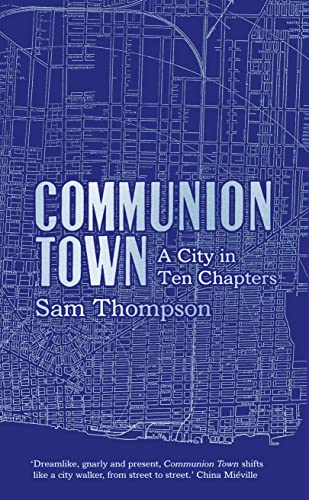

My rating:
This city is Epidamnus while this story is being told: when another one is told it will become another town. — Platus
Have you noticed how each of us conjures up our own city? You have your secret haunts and private landmarks and favourite short cuts and I have mine, so as we navigate the streets each of us walks through a world of our own invention.
This strange and uneven but fascinating "novel" (using the term loosely) is set in Communion Town, a fictional modern city which is recognizable yet sinister and inscrutable. Its places and neighborhoods have strange names, such as Shambles Heath, Strangers' Market and Gorgonstown. Its streets are often filled with days old rubbish, and most homes and shops are decrepit and unkempt. On its sidewalks, tourists and workers frequently encounter packs of wild youths, the Cynics who are a constant threat to public safety, and shabbily dressed figures who lie motionless on the ground but suddenly come to life and demand attention whenever anyone gazes upon them. The nights are filled with even more dangers, as malevolent flâneurs and ghost-like figures prey upon unwary passersby.
The book consists of ten stories, in which the characters within each chapter view and describe the city from different vantage points, in the manner of individuals who describe an elephant from different angles. Unlike the stories in books such as Other Lives by André Brink and Scenes from Village Life by Amos Oz, which are also set in one city, the main characters in the different chapters of Communion Town do not interact with each other, although rarely a figure who seems familiar makes an appearance at the periphery, then disappears once you gaze in his direction. Several of the chapters are hauntingly brilliant, particularly "Communion Town", which opens the book, in which a voyeuristic narrator speaks to a recent young female immigrant who he fancies, whose partner has mysteriously disappeared within the city; "Good Slaughter", based on a slaughterhouse worker who holds a deep resentment and suspicion of his new supervisor; and "The Significant City of Lazarus Glass", based on a murder mystery involving the city's most respected private investigator and his arch nemesis, who was a dear friend and trusted colleague before he became the city's most feared and elusive criminal. Other stories were well written but less captivating, and a few were trivial and overly clever.
As a whole, the stories in Communion Town had a dreamlike but dark quality to them, with an ever present sense of fear, uncertainty and menace. The book is best read as a collection of beautifully written but unrelated stories about a mysterious city the first time around, and those who wish to give it a second try can look for the apparent connections between the chapters and their characters.
I was prepared to dislike this book, after I read several lukewarm reviews in the British newspapers and negative comments by private readers. However, I was captivated by it, despite its unevenness, and unlike many I do think it deserved its inclusion in last year's Booker Prize longlist. It is a unique and unsettling debut work by a talented author who is willing to take risks and succeeds more often than he fails.

My rating:
This city is Epidamnus while this story is being told: when another one is told it will become another town. — Platus
Have you noticed how each of us conjures up our own city? You have your secret haunts and private landmarks and favourite short cuts and I have mine, so as we navigate the streets each of us walks through a world of our own invention.
This strange and uneven but fascinating "novel" (using the term loosely) is set in Communion Town, a fictional modern city which is recognizable yet sinister and inscrutable. Its places and neighborhoods have strange names, such as Shambles Heath, Strangers' Market and Gorgonstown. Its streets are often filled with days old rubbish, and most homes and shops are decrepit and unkempt. On its sidewalks, tourists and workers frequently encounter packs of wild youths, the Cynics who are a constant threat to public safety, and shabbily dressed figures who lie motionless on the ground but suddenly come to life and demand attention whenever anyone gazes upon them. The nights are filled with even more dangers, as malevolent flâneurs and ghost-like figures prey upon unwary passersby.
The book consists of ten stories, in which the characters within each chapter view and describe the city from different vantage points, in the manner of individuals who describe an elephant from different angles. Unlike the stories in books such as Other Lives by André Brink and Scenes from Village Life by Amos Oz, which are also set in one city, the main characters in the different chapters of Communion Town do not interact with each other, although rarely a figure who seems familiar makes an appearance at the periphery, then disappears once you gaze in his direction. Several of the chapters are hauntingly brilliant, particularly "Communion Town", which opens the book, in which a voyeuristic narrator speaks to a recent young female immigrant who he fancies, whose partner has mysteriously disappeared within the city; "Good Slaughter", based on a slaughterhouse worker who holds a deep resentment and suspicion of his new supervisor; and "The Significant City of Lazarus Glass", based on a murder mystery involving the city's most respected private investigator and his arch nemesis, who was a dear friend and trusted colleague before he became the city's most feared and elusive criminal. Other stories were well written but less captivating, and a few were trivial and overly clever.
As a whole, the stories in Communion Town had a dreamlike but dark quality to them, with an ever present sense of fear, uncertainty and menace. The book is best read as a collection of beautifully written but unrelated stories about a mysterious city the first time around, and those who wish to give it a second try can look for the apparent connections between the chapters and their characters.
I was prepared to dislike this book, after I read several lukewarm reviews in the British newspapers and negative comments by private readers. However, I was captivated by it, despite its unevenness, and unlike many I do think it deserved its inclusion in last year's Booker Prize longlist. It is a unique and unsettling debut work by a talented author who is willing to take risks and succeeds more often than he fails.
89dmsteyn
Thiis sounds very interesting, Darryl. I'm always interested in books that try something different, and this seems like a good example. I didn't specifically avoid this book (I don't think I ever saw it in a bookshop in South Africa), but I was aware of the lukewarm reviews, so I'm glad that you've given me an alternative impression.
90rebeccanyc
Sounds like a very intriguing book.
91kidzdoc
Thanks, Dewald. Communion Town fits well with the books chosen by last year's jury, who sought out books that "reveal more, the more often you read it", according to the chair of judges, Peter Stothard. It was a pleasurable read, and I do plan to give it another go in the near future.
I had a hard time finding the book when I went to London last September, as none of my usual sources (Foyles, London Review Bookshop, Waterstone's, Blackwell's) in central London had it on display. I finally ordered it from the flagship Foyles, which had stored copies of it. It hasn't been published in the US yet.
Thanks, Rebecca. Yes, it was intriguing, and a far better book than I thought it was going to be, based on those reviews.
I had a hard time finding the book when I went to London last September, as none of my usual sources (Foyles, London Review Bookshop, Waterstone's, Blackwell's) in central London had it on display. I finally ordered it from the flagship Foyles, which had stored copies of it. It hasn't been published in the US yet.
Thanks, Rebecca. Yes, it was intriguing, and a far better book than I thought it was going to be, based on those reviews.
92baswood
Great review of Communion Town Intriguing to know how to categorize a book like this: dystopian, fantasy, science fiction, mystery
93letterpress
Communion Town is definitely one for the wishlist, damn it. I find the idea of a book revealing more of itself on subsequent readings very appealing, and if an author is willing to take risks with their writing, then I'm willing to take risks with my reading. Thanks for the excellent review, and also for posting the published reviews on the work page.
94absurdeist
32, 38, 43> Jumping in late here, but just wanted to give a vote of confidence for at least one of George Saunders' short story collections. I didn't bother w/ In Persuasion Nation because of the consistently negative reviews, but Pastoralia was a riot.
95kidzdoc
>92 baswood: Thanks, Barry. I think you could place Communion Town in any of the categories you mentioned.
>93 letterpress: Thanks, Annalisse!
>94 absurdeist: Thanks for the mention of Pastoralia, EF. I'll look for it and Tenth of December soon.
>93 letterpress: Thanks, Annalisse!
>94 absurdeist: Thanks for the mention of Pastoralia, EF. I'll look for it and Tenth of December soon.
96Linda92007
Great review of Communion Town, Darryl. It reminds me that I need to look for several from the Booker nominees that had caught my eye, but which I didn't pursue at the time.
97kidzdoc
Book #7: Damascus by Joshua Mohr
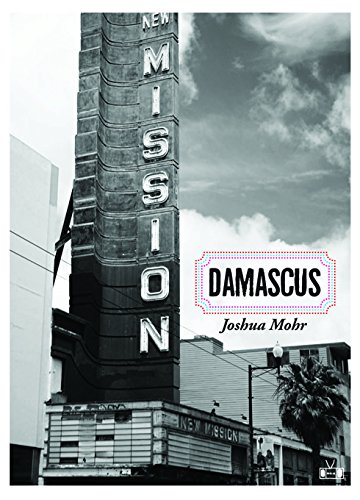
My rating:
The Mission District in San Francisco is one of the oldest residential neighborhoods in the city, and throughout its history it has served as one of the primary stepping stones for new immigrants to the Bay Area. Spanish missionaries and wealthy Mexican ranchers displaced the Native American population in the mid 19th century, and they were followed by immigrants from Ireland, Germany and Poland in the early 20th century, people from Mexico and Latin America in the middle of the century, and South Americans towards its end. The Mission has undergone extensive gentrification in the last 25 years, whose newest residents include a variety of artists, computer professionals left over from the dot-com boom, and young families and single professionals who desire affordable housing in the city and appreciate the vibrancy and diversity that exists there. The neighborhood does have its seamy side, with drunks, the mentally ill and homeless people on display, especially on Mission Street and close to San Francisco General Hospital on Potrero Avenue, and the gangs that operate at its edges.
However, the Mission has much to offer to its residents and visitors, with superb ethnic restaurants and stores, numerous independent bookstores, small venues which house works by new and established artists, musicians and playwrights, and the murals that define the neighborhood.
When I saw the cover of Damascus, with its portrayal of the decaying New Mission Theater on Mission Street, I picked it up immediately, in the hope that the book would describe the Mission District and its people. Wrong. What I got instead was yet another Weird Americana novel, in which the author seemingly sought out the most eccentric people he could find in real life, throw them together haphazardly and thoughtlessly in a literary pot, and see if he could construct a coherent story out of it.
Damascus is a divey bar populated by shabby men and city workers whose primary goal is to get more drunk than its proprietor, Owen, a forgettable man whose primary feature is a birthmark beneath his nose that looks like Hitler's mustache, which earns him derision from his bartender and his customers. The bar is in poor condition and is barely profitable. Its most notable regular is Shambles, a divorced woman who earns her keep—which is mainly spent on drinks—by giving hand jobs to men in the bar's bathroom. She is befriended by No Eyebrows, a man with end stage cancer who abandons his loving wife and daughter in the North Bay, as he cannot bear to die in front of them.
Owen begins to wear a Santa Claus outfit purchased from a street vendor, in the hope that a change of appearance will improve his outlook on life and his perception by others. In an effort to change the bar's image he decides to host an exhibition by Syl, a local artist who happens to the best friend of his niece, Daphne. It is 2003, and the country is divided by the Iraq War. Syl uses her art to protest the War on Terror, and creates 12 portraits of young American soldiers killed in the line of duty. She emphasizes her work by having a member of the audience nail a live fish over the face of each soldier, in order to represent the stench of death that accompanies the immoral and illegitimate war. Her art earns her the ire of Byron, a former Marine and present drunkard and ne'er do well who served with Owen, who vows to shut down the exhibition by whatever means are necessary.
Other than the rare reference to a familiar street or location, Damascus has absolutely nothing to do with San Francisco, the Mission District or its diverse population, and it could have taken place in any medium- or large-sized American city. It is filled with bland, one dimensional characters who failed to capture my interest, and the stories about Shambles and No Eyebrows were completely irrelevant to the main story line. Not recommended.
My rating:

The Mission District in San Francisco is one of the oldest residential neighborhoods in the city, and throughout its history it has served as one of the primary stepping stones for new immigrants to the Bay Area. Spanish missionaries and wealthy Mexican ranchers displaced the Native American population in the mid 19th century, and they were followed by immigrants from Ireland, Germany and Poland in the early 20th century, people from Mexico and Latin America in the middle of the century, and South Americans towards its end. The Mission has undergone extensive gentrification in the last 25 years, whose newest residents include a variety of artists, computer professionals left over from the dot-com boom, and young families and single professionals who desire affordable housing in the city and appreciate the vibrancy and diversity that exists there. The neighborhood does have its seamy side, with drunks, the mentally ill and homeless people on display, especially on Mission Street and close to San Francisco General Hospital on Potrero Avenue, and the gangs that operate at its edges.
However, the Mission has much to offer to its residents and visitors, with superb ethnic restaurants and stores, numerous independent bookstores, small venues which house works by new and established artists, musicians and playwrights, and the murals that define the neighborhood.
When I saw the cover of Damascus, with its portrayal of the decaying New Mission Theater on Mission Street, I picked it up immediately, in the hope that the book would describe the Mission District and its people. Wrong. What I got instead was yet another Weird Americana novel, in which the author seemingly sought out the most eccentric people he could find in real life, throw them together haphazardly and thoughtlessly in a literary pot, and see if he could construct a coherent story out of it.
Damascus is a divey bar populated by shabby men and city workers whose primary goal is to get more drunk than its proprietor, Owen, a forgettable man whose primary feature is a birthmark beneath his nose that looks like Hitler's mustache, which earns him derision from his bartender and his customers. The bar is in poor condition and is barely profitable. Its most notable regular is Shambles, a divorced woman who earns her keep—which is mainly spent on drinks—by giving hand jobs to men in the bar's bathroom. She is befriended by No Eyebrows, a man with end stage cancer who abandons his loving wife and daughter in the North Bay, as he cannot bear to die in front of them.
Owen begins to wear a Santa Claus outfit purchased from a street vendor, in the hope that a change of appearance will improve his outlook on life and his perception by others. In an effort to change the bar's image he decides to host an exhibition by Syl, a local artist who happens to the best friend of his niece, Daphne. It is 2003, and the country is divided by the Iraq War. Syl uses her art to protest the War on Terror, and creates 12 portraits of young American soldiers killed in the line of duty. She emphasizes her work by having a member of the audience nail a live fish over the face of each soldier, in order to represent the stench of death that accompanies the immoral and illegitimate war. Her art earns her the ire of Byron, a former Marine and present drunkard and ne'er do well who served with Owen, who vows to shut down the exhibition by whatever means are necessary.
Other than the rare reference to a familiar street or location, Damascus has absolutely nothing to do with San Francisco, the Mission District or its diverse population, and it could have taken place in any medium- or large-sized American city. It is filled with bland, one dimensional characters who failed to capture my interest, and the stories about Shambles and No Eyebrows were completely irrelevant to the main story line. Not recommended.
98kidzdoc
>96 Linda92007: Thanks, Linda. I do plan to complete the 2012 Booker Prize longlist before this year's Booker Dozen is announced. I've read eight of the 12 books so far, with only Umbrella, The Teleportation Accident, Skios and The Unlikely Pilgrimage of Harold Fry left to go.
99SassyLassy
Great review of Communion Town, shades of James Kelman's definitely not the tourists' Glasgow by the sounds of it.
Interesting duo of books to read back to back, sorry Damascus didn't work out.
Interesting duo of books to read back to back, sorry Damascus didn't work out.
100kidzdoc
Thanks, Sassy. I decided to read Damascus now, as it's one of the books I've owned for over a year that I was most eager to get to. San Francisco is my favorite US city, as I've been going there at least 2-3 times per year since 2000, and the Mission District is one of the neighborhoods I visit most often. This novel was profoundly disappointing, as it could have taken place in Topeka, Kansas or any other nondescript city in America.
101streamsong
As DD and I were trying out a new recipe for the crockpot yesterday, (Cuban pork and sweet potato stew), I wondered if you had had time to begin your crockpot experiment.
102kidzdoc
I did receive my new crockpot, but I haven't used it yet. I plan to go to Barnes & Noble later today or probably tomorrow, to look at crockpot cook books, and I'll probably make my first meal this coming weekend.
Cuban pork and sweet potato stew sounds delightful!
Cuban pork and sweet potato stew sounds delightful!

104mkboylan
Hi Kidzdoc. I've been following your on the non-fiction thread and am starring you here as I have enjoyed your posts. I also loved Panther Baby Did you get to the see the author interview at BookTV? It's fun and available online at the BookTV website.
Quiet London sounds great - reminds me in a very tiny way of when I was in college searching for those quiet places. I went to a commuter college so spent many extra hours on campus and desparately needed peace and quiet. I just felt so overstimulated sometimes. Unromantically enough, one of my favorite spots ended up being a room off the women's restroom, where there was an old fashioned fainting couch in a small room with no windows - allowing me a few minutes of nice dark and quiet sensory deprivation! Then I could move out to the more open quiet places! One of the perhaps sillier games my husband and I play is if we were homeless, where would we hang out. We usually end up choosing a university. I went to a state college that was pretty homeless friendly. It was nice - I'm sure that sounds weird, but it was nice to see the school give people a break, and of course they added another perspective to my education.
Quiet London sounds great - reminds me in a very tiny way of when I was in college searching for those quiet places. I went to a commuter college so spent many extra hours on campus and desparately needed peace and quiet. I just felt so overstimulated sometimes. Unromantically enough, one of my favorite spots ended up being a room off the women's restroom, where there was an old fashioned fainting couch in a small room with no windows - allowing me a few minutes of nice dark and quiet sensory deprivation! Then I could move out to the more open quiet places! One of the perhaps sillier games my husband and I play is if we were homeless, where would we hang out. We usually end up choosing a university. I went to a state college that was pretty homeless friendly. It was nice - I'm sure that sounds weird, but it was nice to see the school give people a break, and of course they added another perspective to my education.
106kidzdoc
>104 mkboylan: Thanks, Merrikay! I missed the BookTV interview of Jamal Joseph, so I'll have to look for it; thanks for letting me know about it.
Interesting comments about finding quiet places on a college campus. I attended a large state university (Rutgers) for most of my undergraduate years, whose main branch consists of five large campuses, one of which is over two miles in length. So, it was easy to find quiet places to study and reflect there.
I went to medical school at a large private university (U of Pittsburgh, a.k.a. Pitt), which was set in a very busy neighborhood and was more a collection of buildings between traffic congested streets. The medical school was on the main campus, unlike many other med schools that are physically separate, so it was considerably more difficult to find quiet places there, even though it sat near the top of a steep hill ("Cardiac Hill").

However, Pitt did have one building that I could go to for respite: the gigantic Cathedral of Learning, which is the tallest educational building in the Western Hemisphere.
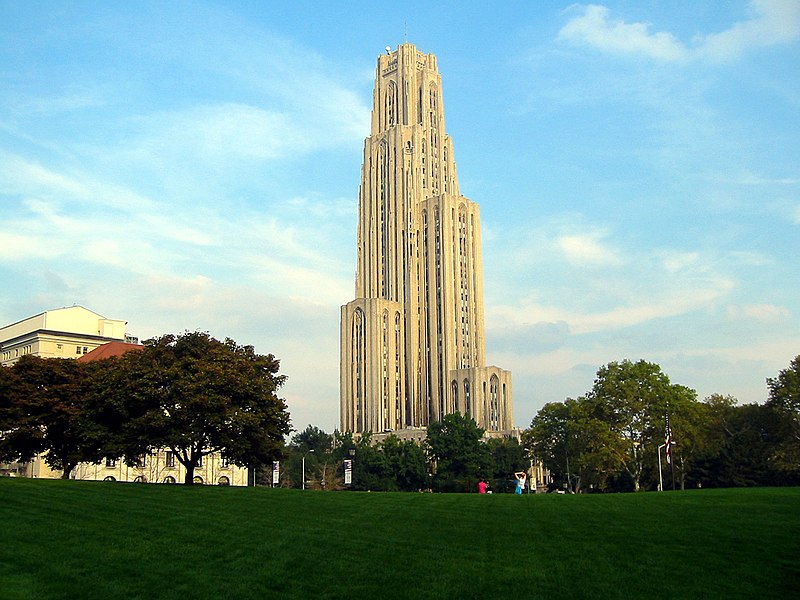
The main level was very broad and had very high ceilings, so it was easy to find a quiet table, even if you were sitting close to other people, and there were plenty of deserted spots on one of the upper 41 floors.
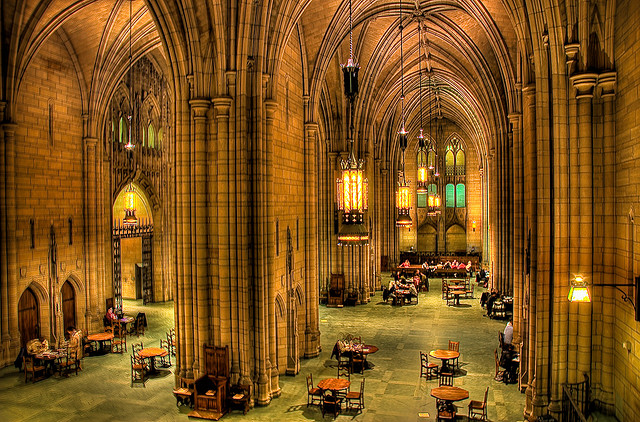
Interesting comments about finding quiet places on a college campus. I attended a large state university (Rutgers) for most of my undergraduate years, whose main branch consists of five large campuses, one of which is over two miles in length. So, it was easy to find quiet places to study and reflect there.
I went to medical school at a large private university (U of Pittsburgh, a.k.a. Pitt), which was set in a very busy neighborhood and was more a collection of buildings between traffic congested streets. The medical school was on the main campus, unlike many other med schools that are physically separate, so it was considerably more difficult to find quiet places there, even though it sat near the top of a steep hill ("Cardiac Hill").

However, Pitt did have one building that I could go to for respite: the gigantic Cathedral of Learning, which is the tallest educational building in the Western Hemisphere.
The main level was very broad and had very high ceilings, so it was easy to find a quiet table, even if you were sitting close to other people, and there were plenty of deserted spots on one of the upper 41 floors.
107cabegley
Thanks for those pictures, Darryl. I went to Carnegie-Mellon, and looking at the Cathedral of Learning brought me right back.
108kidzdoc
>105 baswood: Thanks, Barry.
>106 kidzdoc: CMU is a great university with a beautiful campus (as you know), Chris. For non-Pittsburghers, CMU's and Pitt's campuses are in the same neighborhood, Oakland, and are very close to each other along Forbes Avenue.
There are several Pittsburghers and Pitt alumni in the 75 Books group, but I don't think I've met anyone from CMU (with the possible exception of one new member, whitewavedarling, who is in graduate school at one of the city's universities).
>106 kidzdoc: CMU is a great university with a beautiful campus (as you know), Chris. For non-Pittsburghers, CMU's and Pitt's campuses are in the same neighborhood, Oakland, and are very close to each other along Forbes Avenue.
There are several Pittsburghers and Pitt alumni in the 75 Books group, but I don't think I've met anyone from CMU (with the possible exception of one new member, whitewavedarling, who is in graduate school at one of the city's universities).
109labfs39
My favorite college studying spot was one of the alcoves on the balcony of the small English library. The doors at the far end could be opened in the summer onto the lawn and they served tea and cookies every day at 4 pm. I was such a regular that they asked me if I wanted to work there. And so I got paid to sit and study, serve the tea and cookies, or close up in the evenings. Pretty idyllic.


110kidzdoc
Book #8: The Walls of Delhi by Uday Prakash, translated by Jason Grunebaum
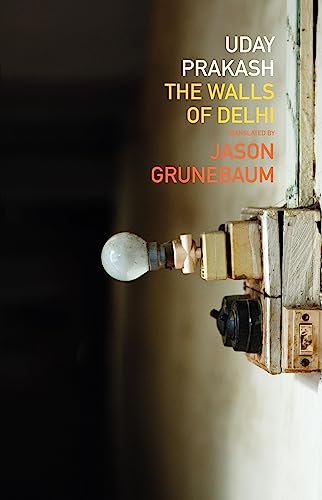
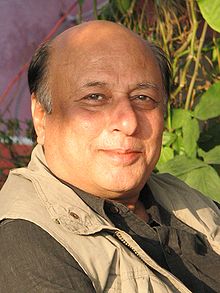
Shortlist, 2013 DSC Prize for South Asian Literature
My rating:
You ought to know the truth: there are only two reasons lives like ours are stamped out. One: our lives are left over as proof of past and present sins and crimes against castes, races, cultures; they always want to keep this as hidden as they can. Two: our lives get in the way of the enterprising city, or act as a road bump in the master plan of a country that thinks of itself as a big player on the world stage. Our very humanity threatens to reveal the wicked culture of money and means as something suspect and unlovely. That's why whenever civilizations once developing, now on the brink of prosperity, decide to embark on a program of 'beautification', they try to root out such lives, the same way the mess on the floor is swept outside.
Uday Prakash is one of India's most highly respected writers, due to his rich stories of modern life and his willingness to describe the corruption and caste prejudice that exists there. However, his career has been marked by harassment by government officials, which has caused him to be fired from numerous jobs and to become a jack of many trades in order to feed his family. He was born in the state of Madhya Pradesh in 1951, to a family of village landlords. After the premature deaths of his parents he obtained a university degree in Sagar, Madhya Pradesh, and taught comparative literature and Hindi at Jawaharlal Nehru University in New Delhi, where he has resided since 1975.
In the words of Jason Grunebaum, the narrator of this book, "In many of his stories, Uday Prakash shows how those who dare to dissent against a suffocating system are punished. But with his biting satire and delightful narrative detours he also demonstrates how humor and compassion ultimately provide the best means to fight back and escape."
The Walls of Delhi consists of three short stories, all set in Delhi at the end of the 20th and the beginning of the 21st century, about a person struggling against poverty and corruption, each one told through the eyes of a narrator that knows him well. In "The Walls of Delhi", Ramnivas Pasiya is a lower caste emigrant to Delhi who is barely able to support his young family as a part-time sanitation worker, in a neighborhood filled with street vendors, prostitutes and smackheads. One of his jobs is to clean a fitness club where wealthy Hindis go to lose weight, while the poor that surround them are engaged in a daily struggle to find sufficient food for the day. "Mohandas" describes the life of Mohandas Viswakarma, who becomes the first person from his village to obtain a university degree and graduates second in his class, yet finds that the expected pathways to success are closed to him, as less educated and talented men with personal connections or the ability to bribe officials obtain employment ahead of him. Finally, "Mangosil" is about a young boy from a poor family cursed with seven prior miscarriages, whose is born healthy but experiences massive and painful enlargement of his head in proportion to his body, while simultaneously developing unusual wisdom and intelligence. Doctors are willing to diagnose and treat him, but their fees are beyond the means of his parents.
These three stories are all suffused with both tragedy and humor, which prevents this book from being an overly depressing one, though it isn't a light or frivolous read. The narrator or characters make frequent and poignant comments about Indian society and its caste prejudice and rampant corruption that flow smoothly within each story. I could not put this book down once I started it, and I finished it in one sitting. The Walls of Delhi is a masterful book about modern India, which is a far better book than The White Tiger, Aravind Adiga's Booker Prize winning novel, and it deserves to be widely read and appreciated.
Shortlist, 2013 DSC Prize for South Asian Literature
My rating:
You ought to know the truth: there are only two reasons lives like ours are stamped out. One: our lives are left over as proof of past and present sins and crimes against castes, races, cultures; they always want to keep this as hidden as they can. Two: our lives get in the way of the enterprising city, or act as a road bump in the master plan of a country that thinks of itself as a big player on the world stage. Our very humanity threatens to reveal the wicked culture of money and means as something suspect and unlovely. That's why whenever civilizations once developing, now on the brink of prosperity, decide to embark on a program of 'beautification', they try to root out such lives, the same way the mess on the floor is swept outside.
Uday Prakash is one of India's most highly respected writers, due to his rich stories of modern life and his willingness to describe the corruption and caste prejudice that exists there. However, his career has been marked by harassment by government officials, which has caused him to be fired from numerous jobs and to become a jack of many trades in order to feed his family. He was born in the state of Madhya Pradesh in 1951, to a family of village landlords. After the premature deaths of his parents he obtained a university degree in Sagar, Madhya Pradesh, and taught comparative literature and Hindi at Jawaharlal Nehru University in New Delhi, where he has resided since 1975.
In the words of Jason Grunebaum, the narrator of this book, "In many of his stories, Uday Prakash shows how those who dare to dissent against a suffocating system are punished. But with his biting satire and delightful narrative detours he also demonstrates how humor and compassion ultimately provide the best means to fight back and escape."
The Walls of Delhi consists of three short stories, all set in Delhi at the end of the 20th and the beginning of the 21st century, about a person struggling against poverty and corruption, each one told through the eyes of a narrator that knows him well. In "The Walls of Delhi", Ramnivas Pasiya is a lower caste emigrant to Delhi who is barely able to support his young family as a part-time sanitation worker, in a neighborhood filled with street vendors, prostitutes and smackheads. One of his jobs is to clean a fitness club where wealthy Hindis go to lose weight, while the poor that surround them are engaged in a daily struggle to find sufficient food for the day. "Mohandas" describes the life of Mohandas Viswakarma, who becomes the first person from his village to obtain a university degree and graduates second in his class, yet finds that the expected pathways to success are closed to him, as less educated and talented men with personal connections or the ability to bribe officials obtain employment ahead of him. Finally, "Mangosil" is about a young boy from a poor family cursed with seven prior miscarriages, whose is born healthy but experiences massive and painful enlargement of his head in proportion to his body, while simultaneously developing unusual wisdom and intelligence. Doctors are willing to diagnose and treat him, but their fees are beyond the means of his parents.
These three stories are all suffused with both tragedy and humor, which prevents this book from being an overly depressing one, though it isn't a light or frivolous read. The narrator or characters make frequent and poignant comments about Indian society and its caste prejudice and rampant corruption that flow smoothly within each story. I could not put this book down once I started it, and I finished it in one sitting. The Walls of Delhi is a masterful book about modern India, which is a far better book than The White Tiger, Aravind Adiga's Booker Prize winning novel, and it deserves to be widely read and appreciated.
111kidzdoc
Now that I've finished The Walls of Delhi by Uday Prakash I have completed the six books shortlisted for this year's DSC Prize for South Asian Literature, which has quickly become a favorite award of mine. Here's my final ranking of the shortlist, which as a whole was outstanding:
1. The Good Muslim by Tahmima Anam
2. River of Smoke by Amitav Ghosh
3. The Walls of Delhi by Uday Prakash
4. Narcopolis by Jeet Thayil
5. The Wandering Falcon by Jamil Ahmad
6. Our Lady of Alice Bhatti by Mohammed Hanif
The winner will be announced on Friday, during the DSC Jaipur Literature Festival.
The Hanif was the only one of the six I didn't like; all of the others were at least 4 star reads.
>109 labfs39: That's a lovely photo and story about your college English library, Lisa!
1. The Good Muslim by Tahmima Anam
2. River of Smoke by Amitav Ghosh
3. The Walls of Delhi by Uday Prakash
4. Narcopolis by Jeet Thayil
5. The Wandering Falcon by Jamil Ahmad
6. Our Lady of Alice Bhatti by Mohammed Hanif
The winner will be announced on Friday, during the DSC Jaipur Literature Festival.
The Hanif was the only one of the six I didn't like; all of the others were at least 4 star reads.
>109 labfs39: That's a lovely photo and story about your college English library, Lisa!
112Linda92007
The Walls of Delhi sounds wonderful. Great review, Darryl!
Both The Cathedral of Learning and Lisa's library look incredible. If I had had somewhere like that to read and study, I'm not sure I would have wanted to graduate!
Both The Cathedral of Learning and Lisa's library look incredible. If I had had somewhere like that to read and study, I'm not sure I would have wanted to graduate!
113rebeccanyc
The Walls of Delhi does sound interesting; I was not a fan of The White Tiger, so I'm glad to learn this is better! Congratulations on reading all the shortlisted titles!
And ditto what Linda said about the Cathedral of Learning and Lisa's library looking incredible. I don't think they could have kept me from wanting to graduate, though. I was really eager to enter the "real world" and get a job at that time. Now, of course, I'd love to just relocate to those libraries and read! (Well, maybe for part of the time.)
And ditto what Linda said about the Cathedral of Learning and Lisa's library looking incredible. I don't think they could have kept me from wanting to graduate, though. I was really eager to enter the "real world" and get a job at that time. Now, of course, I'd love to just relocate to those libraries and read! (Well, maybe for part of the time.)
114baswood
Great review of The Walls of Delhi,which goes straight onto my long short-list. Love that opening paragraph, that you quoted.
115avidmom
Loved your book review of The Walls of Delhi and certainly enjoyed those beautiful pictures of quiet places!
116wandering_star
Everybody else has already said this but I love the pictures and the review! My favourite photo is the one of the inside of the Cathedral of Learning.
My university had several different libraries and I used to go to different ones for different moods - including the one where I knew my friends could find me if I wanted to be distracted, and ones where I knew I wouldn't run into anyone I knew if I really had proper work to do...
My university had several different libraries and I used to go to different ones for different moods - including the one where I knew my friends could find me if I wanted to be distracted, and ones where I knew I wouldn't run into anyone I knew if I really had proper work to do...
117kidzdoc
>112 Linda92007: Thanks, Linda.
I didn't study in the Cathedral of Learning often, as I usually studied at home or at one of my classmates' apartments. Otherwise, I could usually find a quiet spot in one of our PBL (problem based learning) rooms in the medical school building, or especially in the cafeteria of Presbyterian University Hospital near the top of the building, which was spacious and quiet except at lunchtime during the week, and open 21-22 hours per day. And, it was easier to become distracted by the architecture in the Cathedral of Learning than in a small study room with tiny windows. You could tell whenever someone entered the Cathedral for the first time, as he would stand there with his eyes and mouth wide open, in silent awe of the place.
>113 rebeccanyc: Thanks, Rebecca. It was easy to read this year's shortlist, as I had already read four of the books (The Good Muslim, River of Smoke, Narcopolis and The Wandering Falcon) when the longlist came out, and already owned another one (Our Lady of Alice Bhatti). All of these books should be available in the US and the UK by now.
>114 baswood: Thanks, Barry. There were several good quotes in the book, which were easy to recall using Kindle's highlight feature, but that one struck me more than any other one did.
>115 avidmom: Thanks, avidmom!
>116 wandering_star: Thanks, wandering_star. Needless to say, those interior and exterior photos of the Cathedral of Learning are far less impressive than actually being there in person. My friends and I quickly learned, in the days before cell phones and before we were given pagers, that it wasn't a good idea to try to find each other within the Commons Room (displayed in the fourth photo), or especially in any random room or floor there. And, the massive University of Pittsburgh Medical Center is only seen in part in the second photo. Many medical students would show up a few minutes late on the first day of a new hospital rotation, as they would get lost within the UPMC campus, whose buildings were connected by tunnels and sky bridges.
I didn't study in the Cathedral of Learning often, as I usually studied at home or at one of my classmates' apartments. Otherwise, I could usually find a quiet spot in one of our PBL (problem based learning) rooms in the medical school building, or especially in the cafeteria of Presbyterian University Hospital near the top of the building, which was spacious and quiet except at lunchtime during the week, and open 21-22 hours per day. And, it was easier to become distracted by the architecture in the Cathedral of Learning than in a small study room with tiny windows. You could tell whenever someone entered the Cathedral for the first time, as he would stand there with his eyes and mouth wide open, in silent awe of the place.
>113 rebeccanyc: Thanks, Rebecca. It was easy to read this year's shortlist, as I had already read four of the books (The Good Muslim, River of Smoke, Narcopolis and The Wandering Falcon) when the longlist came out, and already owned another one (Our Lady of Alice Bhatti). All of these books should be available in the US and the UK by now.
>114 baswood: Thanks, Barry. There were several good quotes in the book, which were easy to recall using Kindle's highlight feature, but that one struck me more than any other one did.
>115 avidmom: Thanks, avidmom!
>116 wandering_star: Thanks, wandering_star. Needless to say, those interior and exterior photos of the Cathedral of Learning are far less impressive than actually being there in person. My friends and I quickly learned, in the days before cell phones and before we were given pagers, that it wasn't a good idea to try to find each other within the Commons Room (displayed in the fourth photo), or especially in any random room or floor there. And, the massive University of Pittsburgh Medical Center is only seen in part in the second photo. Many medical students would show up a few minutes late on the first day of a new hospital rotation, as they would get lost within the UPMC campus, whose buildings were connected by tunnels and sky bridges.
118avaland
>110 kidzdoc: Sounds like an interesting book, Darryl. And that's a good report on the nominees. Quite a list.
119henkmet
Very nice review on The walls of Delhi and thanks for the pointer to the DSC prize.
Gorgeous libraries you had! The most salient feature I remember of ours is that is was incredibly in the same building as the music studios, separating the silent cabins and the brass studio with a single wall. No trumpet practice until the library was closed.
Gorgeous libraries you had! The most salient feature I remember of ours is that is was incredibly in the same building as the music studios, separating the silent cabins and the brass studio with a single wall. No trumpet practice until the library was closed.
121detailmuse
Darryl you've hooked me on The Walls of Delhi. Expensive, though.
122labfs39
It seems as though only one other of Uday Prakash's works has been translated into English, Short Shorts Long Shots, and you are right, MJ, both are expensive and my library doesn't have either of them. There is a translation coming out in May of The Girl with the Golden Parasol, also translated by Jason Grunebaum. (No touchstones for any of these.)
I'm glad I'm not the only one who found The White Tiger lacking.
I'm glad I'm not the only one who found The White Tiger lacking.
123janeajones
The nominees for the Man Booker International Prize have been announced: http://www.themanbookerprize.com/the-man-booker-international-prize-2013 . This one differs from the Man Booker Prize as it is awarded every two years for an author's body of work, not a single book.
Josip Novakovich, one of the nominees, is currently an artist-in-residence at the Hermitage Artist Retreat in conjunction with our college. He did a reading on campus last week.
Josip Novakovich, one of the nominees, is currently an artist-in-residence at the Hermitage Artist Retreat in conjunction with our college. He did a reading on campus last week.
124labfs39
And Vladimir Sorokin is on the list. I just finished reading Ice Trilogy today and thought it was brilliant.
125DieFledermaus
Catching up. Great reviews as usual. Also as usual - your impressive efforts to read all the books from various shortlists.
The Walls of Delhi sounds very intriguing.
The Cathedral of Learning is gorgeous - looks very Art Deco.
The Walls of Delhi sounds very intriguing.
The Cathedral of Learning is gorgeous - looks very Art Deco.
126bragan
Also catching up... I think Communion Town is one that's going onto my wishlist, as well.
127rachbxl
Catching up too! The Walls of Delhi has gone on my wishlist.
128dmsteyn
Great review of The Walls of Delhi, Darryl. I'd be worried that the stories are too polemical, but you make it sound like that isn't the case.
Oh, and I also didn't particularly care for The White Tiger - not terrible, but not Booker-material, either.
Oh, and I also didn't particularly care for The White Tiger - not terrible, but not Booker-material, either.
129kidzdoc
Now it's time for me to catch up!
>118 avaland: Thanks, Lois. BTW, Narcopolis by Jeet Thayil was announced as the winner of the DSC Prize for South Asian Literature on Friday:
http://dscprize.com/global/updates/jeet-thayils-narcopolis-wins-the-dsc-prize-20...
I read this last year, as it was shortlisted for last year's Booker Prize, and I thought it was very good, but I didn't enjoy it as much as The Good Muslim, River of Smoke or The Walls of Delhi. I may re-read Narcopolis later this year, as I suspect that it would benefit from a second go.
>119 henkmet: Thanks, Henk. The Commons Room on the main floor of the Cathedral of Learning wasn't a true library, but its primary purpose was a study area. The university libraries I used during my undergraduate, medical school and residency training were functional and unimpressive, but apparently the main library at Emory University, where I completed residency, is supposed to be visually impressive and well stocked with international literature. As an alumnus I can use the library and borrow books from it, so I'll start going there later this year.
>120 dchaikin: Thanks, Dan. It was relatively easy for me to read the DSC Prize shortlist in its entirety, as I had already read four of the books ahead of time, namely The Good Muslim, River of Smoke, Narcopolis and The Wandering Falcon. I'd like to read next year's shortlist, although I probably won't finish it ahead of the prize announcement.
>121 detailmuse: MJ, I bought the Kindle version of The Walls of Delhi, which currently sells for $9.99 in the US.
>122 labfs39: Thanks for the info about Uday Prakash, Lisa. The Girl With the Golden Parasol was originally published in 2001, and translated into English by Jason Grunebaum (who also translated The Walls of Delhi) for Penguin India in 2008. According to the translator's notes at the end of The Walls of Delhi, The Girl With the Golden Parasol "tells the story of a non-Brahmin boy with a Brahmin girl". Its publication led him to being accused of stirring up caste unrest, and he was publicly vilified for the work, although his fans did enjoy it. I'll certainly look for it when it comes out!
I thought that the 2008 Booker shortlist was pretty weak, as there was only one book I enjoyed, Sea of Poppies by Amitav Ghosh. I read two other shortlisted books that year in addition to The White Tiger, The Secret Scripture by Sebastian Barry, and A Fraction of the Whole by Steve Toltz, which were decent reads but hardly Booker worthy, especially the Toltz.
>118 avaland: Thanks, Lois. BTW, Narcopolis by Jeet Thayil was announced as the winner of the DSC Prize for South Asian Literature on Friday:
http://dscprize.com/global/updates/jeet-thayils-narcopolis-wins-the-dsc-prize-20...
I read this last year, as it was shortlisted for last year's Booker Prize, and I thought it was very good, but I didn't enjoy it as much as The Good Muslim, River of Smoke or The Walls of Delhi. I may re-read Narcopolis later this year, as I suspect that it would benefit from a second go.
>119 henkmet: Thanks, Henk. The Commons Room on the main floor of the Cathedral of Learning wasn't a true library, but its primary purpose was a study area. The university libraries I used during my undergraduate, medical school and residency training were functional and unimpressive, but apparently the main library at Emory University, where I completed residency, is supposed to be visually impressive and well stocked with international literature. As an alumnus I can use the library and borrow books from it, so I'll start going there later this year.
>120 dchaikin: Thanks, Dan. It was relatively easy for me to read the DSC Prize shortlist in its entirety, as I had already read four of the books ahead of time, namely The Good Muslim, River of Smoke, Narcopolis and The Wandering Falcon. I'd like to read next year's shortlist, although I probably won't finish it ahead of the prize announcement.
>121 detailmuse: MJ, I bought the Kindle version of The Walls of Delhi, which currently sells for $9.99 in the US.
>122 labfs39: Thanks for the info about Uday Prakash, Lisa. The Girl With the Golden Parasol was originally published in 2001, and translated into English by Jason Grunebaum (who also translated The Walls of Delhi) for Penguin India in 2008. According to the translator's notes at the end of The Walls of Delhi, The Girl With the Golden Parasol "tells the story of a non-Brahmin boy with a Brahmin girl". Its publication led him to being accused of stirring up caste unrest, and he was publicly vilified for the work, although his fans did enjoy it. I'll certainly look for it when it comes out!
I thought that the 2008 Booker shortlist was pretty weak, as there was only one book I enjoyed, Sea of Poppies by Amitav Ghosh. I read two other shortlisted books that year in addition to The White Tiger, The Secret Scripture by Sebastian Barry, and A Fraction of the Whole by Steve Toltz, which were decent reads but hardly Booker worthy, especially the Toltz.
130kidzdoc
>123 janeajones: Thanks for mentioning the Man Booker International Prize, Jane. Here are the finalists for this year's prize:
U R Ananthamurthy (India)
Aharon Appelfeld (Israel)
Lydia Davis (USA)
Intizar Husain (Pakistan)
Yan Lianke (China)
Marie NDiaye (France)
Josip Novakovich (Canada)
Marilynne Robinson (USA)
Vladimir Sorokin (Russia)
Peter Stamm (Switzerland)
I've read Three Strong Women by Marie NDiaye, which I reviewed for the latest issue of Belletrista, and Serve the People! by Yian Lianke; I enjoyed both books. This year I plan to Dream of Ding Village by Yan Lianke, Blooms of Darkness by Aharon Appelfeld, which won the Independent Foreign Fiction Prize last year. I own Home by Marilynne Robinson, which I bought because it was on sale at Borders a few years ago and I thought that I should read it, in the same manner that a child should eat more broccoli.
I haven't heard of Ananthamurthy, Davis, Husain, Novakovish, or Stamm, so I'm curious to learn more about them.
>124 labfs39: Thanks, Lisa. I remember that Rebecca enjoyed Ice Trilogy too, so I'll add it to my wish list.
>125 DieFledermaus: Thanks, DieF. I enjoy reading shortlisted books for my favorite book awards, as there is almost always a hidden gem or two amongst them. For me, The Good Muslim and The Walls of Delhi fit that description for this year's DSC Prize shortlist.
>126 bragan: I think you'd enjoy Communion Town, Betty.
>127 rachbxl: Hi, Rachel! I think that The Walls of Delhi is also available in the UK.
>128 dmsteyn: I didn't find the stories in The Walls of Delhi to be overly polemical, Dewald, but from what I can tell Prakash's work has been criticized throughout India for that reason.
The White Tiger is one of my least favorite Booker winners.
U R Ananthamurthy (India)
Aharon Appelfeld (Israel)
Lydia Davis (USA)
Intizar Husain (Pakistan)
Yan Lianke (China)
Marie NDiaye (France)
Josip Novakovich (Canada)
Marilynne Robinson (USA)
Vladimir Sorokin (Russia)
Peter Stamm (Switzerland)
I've read Three Strong Women by Marie NDiaye, which I reviewed for the latest issue of Belletrista, and Serve the People! by Yian Lianke; I enjoyed both books. This year I plan to Dream of Ding Village by Yan Lianke, Blooms of Darkness by Aharon Appelfeld, which won the Independent Foreign Fiction Prize last year. I own Home by Marilynne Robinson, which I bought because it was on sale at Borders a few years ago and I thought that I should read it, in the same manner that a child should eat more broccoli.
I haven't heard of Ananthamurthy, Davis, Husain, Novakovish, or Stamm, so I'm curious to learn more about them.
>124 labfs39: Thanks, Lisa. I remember that Rebecca enjoyed Ice Trilogy too, so I'll add it to my wish list.
>125 DieFledermaus: Thanks, DieF. I enjoy reading shortlisted books for my favorite book awards, as there is almost always a hidden gem or two amongst them. For me, The Good Muslim and The Walls of Delhi fit that description for this year's DSC Prize shortlist.
>126 bragan: I think you'd enjoy Communion Town, Betty.
>127 rachbxl: Hi, Rachel! I think that The Walls of Delhi is also available in the UK.
>128 dmsteyn: I didn't find the stories in The Walls of Delhi to be overly polemical, Dewald, but from what I can tell Prakash's work has been criticized throughout India for that reason.
The White Tiger is one of my least favorite Booker winners.
134rachbxl
Broccoli over cauliflower any day for me! But I share your feeling about Home, Darryl, and I've no idea why that is. Maybe I'll be pleasantly surprised when I finally get to it.
135dchaikin
Dewald (and Darryl & Rachel) - Since I didn't get much out of Gilead until after I read Home and then re-read Gilead, it's probably safe to say that Home is a simpler book. No comment on good-ness. The thing about Home is that I really attached to the narrator, by which I think I mean I bought in to it.
136Mr.Durick
Broccoli and cauliflower are the same species, I've been told. It surprises me that one could cause an adverse reaction that the other doesn't. I liked both Gilead and Home, not to mention Housekeeping. I like all of the cruciform vegetables, preferably cooked at least a little.
Robert
Robert
137LisaMorr
Great reviews of Communion Town and The Walls of Delhi and they both going on my Wish List.
138kidzdoc
Book #10: A Happy Death by Albert Camus
My rating:
A Happy Death was Camus's first attempt at writing a novel, which he worked on from 1936-1938 when he was in his early to mid twenties. He (wisely) chose not to submit it for publication, but after his death in 1960, his widow (unwisely) decided to allow the unfinished manuscripts to be corrected and compiled into a book, which was published in 1971.
This book is based in part on Camus's early experiences, including his childhood in a blue collar neighborhood in Algiers, his early troubled marriage to Simone Hié, a heroin addict who was unfaithful to him, his travels to central Europe and Italy in 1936 and 1937, his confinement in a sanatorium for treatment of tuberculosis which he contracted as a teenager, and his return to Algeria in 1938.
The main character in A Happy Death is Patrice Mersault, a young office worker in Algiers who is bored and unsatisfied with his life. His current lover introduces him to Roland Zagreus, an slightly older man who has accumulated a large fortune but is unable to derive benefit from it due to an accident that led to the amputation of his legs. The two men become friends, and Zagreus shares his philosophy of life with the younger man. In his view, man is able to create personal happiness through money, which allows him time to achieve freedom from responsibility and the drudgery of everyday work:
Mersault decides to test Zagreus's theory, as he murders the invalid and takes his money. Soon afterward he becomes ill with fever and fatigue, but he decides to go to Warsaw. He is miserable there, due to his illness and to the squalid conditions that exist in the depressed city, and he leaves there to travel to Genoa, and eventually back to Algiers. He stays with three younger women in a house overlooking the city, which brings him some degree of pleasure but not contentment, and he marries a woman who he is physically attracted to but does not love. Later he purchases a house in a small village on the Algerian coast, which provides him with security and comfort, but he remains vaguely unsatisfied. His health worsens, and he realizes with the utmost dread and terror that death is slowly creeping upon him:
For me, A Happy Death was difficult and, at times, painful to read despite its short length. I found Mersault to be largely inscrutable, and the female characters were poorly developed and portrayed as vain and shallow creatures. It is best viewed as a precursor for his first published novel The Stranger (whose main character is Meursault) rather than a unique work in itself, and all but the most ardent Camus fans should avoid it, unlike The Plague.
My rating:

A Happy Death was Camus's first attempt at writing a novel, which he worked on from 1936-1938 when he was in his early to mid twenties. He (wisely) chose not to submit it for publication, but after his death in 1960, his widow (unwisely) decided to allow the unfinished manuscripts to be corrected and compiled into a book, which was published in 1971.
This book is based in part on Camus's early experiences, including his childhood in a blue collar neighborhood in Algiers, his early troubled marriage to Simone Hié, a heroin addict who was unfaithful to him, his travels to central Europe and Italy in 1936 and 1937, his confinement in a sanatorium for treatment of tuberculosis which he contracted as a teenager, and his return to Algeria in 1938.
The main character in A Happy Death is Patrice Mersault, a young office worker in Algiers who is bored and unsatisfied with his life. His current lover introduces him to Roland Zagreus, an slightly older man who has accumulated a large fortune but is unable to derive benefit from it due to an accident that led to the amputation of his legs. The two men become friends, and Zagreus shares his philosophy of life with the younger man. In his view, man is able to create personal happiness through money, which allows him time to achieve freedom from responsibility and the drudgery of everyday work:
"You see, Mersault, for a man who is well born, being happy is never complicated. It's enough to take up the general fate, only not with the will for renunciation like so many fake great men, but with the will for happiness. Only it takes time to be happy. A lot of time. Happiness, too, is a long patience. And in almost every case, we use up our lives making money, when we should be using our money to gain time."
Mersault decides to test Zagreus's theory, as he murders the invalid and takes his money. Soon afterward he becomes ill with fever and fatigue, but he decides to go to Warsaw. He is miserable there, due to his illness and to the squalid conditions that exist in the depressed city, and he leaves there to travel to Genoa, and eventually back to Algiers. He stays with three younger women in a house overlooking the city, which brings him some degree of pleasure but not contentment, and he marries a woman who he is physically attracted to but does not love. Later he purchases a house in a small village on the Algerian coast, which provides him with security and comfort, but he remains vaguely unsatisfied. His health worsens, and he realizes with the utmost dread and terror that death is slowly creeping upon him:
He realized now that to be afraid of this death he was staring at with animal terror meant to be afraid of life. Fear of dying justified a limitless attachment to what is alive in man. And all those who had not made the gestures necessary to live their lives, all those who feared and exalted impotence—they were afraid of death because of the sanction it gave to a life in which they had not been involved. They had not lived enough, never having lived at all.
For me, A Happy Death was difficult and, at times, painful to read despite its short length. I found Mersault to be largely inscrutable, and the female characters were poorly developed and portrayed as vain and shallow creatures. It is best viewed as a precursor for his first published novel The Stranger (whose main character is Meursault) rather than a unique work in itself, and all but the most ardent Camus fans should avoid it, unlike The Plague.
139kidzdoc
>134 rachbxl: Rachel, the topic and setting of Home isn't one I would normally be interested in, which is probably the main reason why it isn't that appealing to me. I'll try to get to it later this year, though.
>135 dchaikin: That's good to hear, Dan. The more good things I hear about Home the more likely it is that I'll read it soon.
>136 Mr.Durick: You're right, Robert, and it doesn't seem to make much sense that I would be so sensitive to broccoli and not cauliflower. However, that is the case for me; I love cauliflower and can eat it cooked or raw without problems, but I don't digest broccoli well, and will have bloating and gas afterward, especially if I eat raw broccoli in salads. My guess is that this is due to its high carbohydrate (CHO) content, as I've also become very lactose intolerant in the past 10 years or so.
I will try my best to forget about my broccoli comment when I read Home!
>137 LisaMorr: Thanks, Lisa!
>135 dchaikin: That's good to hear, Dan. The more good things I hear about Home the more likely it is that I'll read it soon.
>136 Mr.Durick: You're right, Robert, and it doesn't seem to make much sense that I would be so sensitive to broccoli and not cauliflower. However, that is the case for me; I love cauliflower and can eat it cooked or raw without problems, but I don't digest broccoli well, and will have bloating and gas afterward, especially if I eat raw broccoli in salads. My guess is that this is due to its high carbohydrate (CHO) content, as I've also become very lactose intolerant in the past 10 years or so.
I will try my best to forget about my broccoli comment when I read Home!
>137 LisaMorr: Thanks, Lisa!
140kidzdoc
Book #9: Inspiring Quotes: The Greatest Quotes of Martin Luther King Junior

My rating:
This short e-book, which I borrowed from the Kindle lending library, is composed of several well known quotes and excerpts from speeches and letters by Martin Luther King, Jr., which will be familiar to most readers. This book may be of some interest to young readers and those who are looking for a particular famous quote or passage, but it is too simplistic and fragmented to recommend to anyone else.

My rating:

This short e-book, which I borrowed from the Kindle lending library, is composed of several well known quotes and excerpts from speeches and letters by Martin Luther King, Jr., which will be familiar to most readers. This book may be of some interest to young readers and those who are looking for a particular famous quote or passage, but it is too simplistic and fragmented to recommend to anyone else.
141dmsteyn
>138 kidzdoc: Strange, Darryl, the book sounds like it has an interesting story, but apparently it isn't well-developed or -constructed. I am definitely going to read some Camus later this year, but will probably avoid this one like, ahem, the Plague.
>140 kidzdoc: I find King an interesting figure, and would like to read more by and about him, but this doesn't seem like the place to go.
Sorry that your last two reads haven't really been that satisfying.
>140 kidzdoc: I find King an interesting figure, and would like to read more by and about him, but this doesn't seem like the place to go.
Sorry that your last two reads haven't really been that satisfying.
142labfs39
Echoing Dewald that A Happy Death sounds promising. Too bad it didn't deliver. Hope your next read proves more satisfying.
143baswood
Thanks for the heads up on A Happy Death I might still read it, but only after I have completed my reading of Camus books published during his lifetime.
144baswood
FRIENDSHIP
The Garlick is a friend of the carrots
the carrots are friends of the potato
the onion is fickle and cannot decide
where her loyalties lie and has hence
formed a loveless but practical
alliance with everyone except the
BROCCOLI. Do not ask about the
BROCCOLI it will only make you cry.
From the thoughts of Edward Monkton which appears on the front of my address book
The Garlick is a friend of the carrots
the carrots are friends of the potato
the onion is fickle and cannot decide
where her loyalties lie and has hence
formed a loveless but practical
alliance with everyone except the
BROCCOLI. Do not ask about the
BROCCOLI it will only make you cry.
From the thoughts of Edward Monkton which appears on the front of my address book
145janeajones
144> wonderful!
146absurdeist
130> Have you read Lydia Davis' stories? I understand she can translate Proust & Flaubert like few can, but her condensed story-abstracts or "flash fiction" or "miniatures" or whatever you prefer to call her work, 75% of it anyway, especially the extremely shorter stuff that reads more to me like riddles than prose, leaves me cold. And yet The Collected Stories of Lydia Davis has a huge rating here in LT, and many contemporary literary icons heap lauds on her like she were Borges or Beckett. Maybe she is, and I just don't see it. Do you? I'm not saying she's not interesting or innovative, but the Man Booker? Why not nominate a Deborah Eisenberg instead?
147kidzdoc
>141 dmsteyn: I'd like to read more about Camus' intent in writing A Happy Death, and why he chose to abandon it in favor of the similarly themed The Stranger. I'll plan to re-read The Stranger next, and compare it to A Happy Death, and I'll go back to the Olivier Todd biography of Camus, which I read several years ago, to see if Todd discusses that first attempt by Camus at writing a novel.
I should read (or re-read) more of MLK's own writing. Why We Can't Wait comes to mind, along with Where Do We Go from Here: Chaos or Community?, The Autobiography of Martin Luther King, Jr. and Stride Toward Freedom: The Montgomery Story. I've read all of these books before and during high school, but that was quite a long time ago. I'd suggest starting with the autobiography or the story of the Montgomery bus boycott, which was King's first formal involvement in the civil rights movement.
However, if you want to read something immediately, the full text of King's Letter from a Birmingham Jail is available online here:
http://www.africa.upenn.edu/Articles_Gen/Letter_Birmingham.html
It was written in April, 1963 and sent to the leading white ministers in Birmingham, Alabama, who were opposed to the nonviolent methods of the black high school and college students in the city. They were famously and notoriously sprayed with powerful water cannons, beaten, attacked by dogs, and arrested en masse by "Bull" Connor's police force. Those images were captured and displayed within the US and around the world, and the Birmingham Campaign directly led to the landmark Civil Rights Act that was requested by JFK in June of that year, passed by Congress in the aftermath of his assassination in November, and signed by LBJ the following year.
BTW, I see the old Ebenzer Baptist Church, where "Daddy" King and, later, MLK preached, at least every two weeks, as the barbershop I go to is on the same corner as the church, and just across the street from the MLK, Jr. National Historic Site.
>142 labfs39: Thanks, Lisa. I'm currently reading Great House by Nicole Krauss for Orange January; it's the only book shortlisted for the 2011 Orange Prize that I haven't read it. It's very good so far, but I'm less than ¼ of the way through it.
>143 baswood: Good idea, Barry. I'll definitely read the fictional works by Camus I haven't read yet, namely The Fall, The First Man and Exile and the Kingdom, and I'll probably re-read The Stranger in February or March. I'll read at least some of his nonfiction works, and I may decide to read the entire Notebooks series, although I only own the last one, Notebooks 1951-1959.
>144 baswood:, 145 Ha! I'm now an admirer of Edward Monkton. Does he say anything about turnips or mirlitons, my least favorite vegetables? ;-)
>146 absurdeist: I hadn't heard of Lydia Davis before that list of finalists came out. I did see that The Collected Stories of Lydia Davis has a very high average rating (4.36 stars) here; however, I don't know any of the LTers who rated the book. I think that Deborah (Cariola), whose opinion I respect and often agree with, recommended her work, but no one else has, to my knowledge. I probably won't read that book or anything by her, at least not in the near future.
I've heard of Deborah Eisenberg, but I haven't read anything by her either.
Edited to correct spelling and grammatical errors due to insufficient caffeine.
I should read (or re-read) more of MLK's own writing. Why We Can't Wait comes to mind, along with Where Do We Go from Here: Chaos or Community?, The Autobiography of Martin Luther King, Jr. and Stride Toward Freedom: The Montgomery Story. I've read all of these books before and during high school, but that was quite a long time ago. I'd suggest starting with the autobiography or the story of the Montgomery bus boycott, which was King's first formal involvement in the civil rights movement.
However, if you want to read something immediately, the full text of King's Letter from a Birmingham Jail is available online here:
http://www.africa.upenn.edu/Articles_Gen/Letter_Birmingham.html
It was written in April, 1963 and sent to the leading white ministers in Birmingham, Alabama, who were opposed to the nonviolent methods of the black high school and college students in the city. They were famously and notoriously sprayed with powerful water cannons, beaten, attacked by dogs, and arrested en masse by "Bull" Connor's police force. Those images were captured and displayed within the US and around the world, and the Birmingham Campaign directly led to the landmark Civil Rights Act that was requested by JFK in June of that year, passed by Congress in the aftermath of his assassination in November, and signed by LBJ the following year.
BTW, I see the old Ebenzer Baptist Church, where "Daddy" King and, later, MLK preached, at least every two weeks, as the barbershop I go to is on the same corner as the church, and just across the street from the MLK, Jr. National Historic Site.
>142 labfs39: Thanks, Lisa. I'm currently reading Great House by Nicole Krauss for Orange January; it's the only book shortlisted for the 2011 Orange Prize that I haven't read it. It's very good so far, but I'm less than ¼ of the way through it.
>143 baswood: Good idea, Barry. I'll definitely read the fictional works by Camus I haven't read yet, namely The Fall, The First Man and Exile and the Kingdom, and I'll probably re-read The Stranger in February or March. I'll read at least some of his nonfiction works, and I may decide to read the entire Notebooks series, although I only own the last one, Notebooks 1951-1959.
>144 baswood:, 145 Ha! I'm now an admirer of Edward Monkton. Does he say anything about turnips or mirlitons, my least favorite vegetables? ;-)
>146 absurdeist: I hadn't heard of Lydia Davis before that list of finalists came out. I did see that The Collected Stories of Lydia Davis has a very high average rating (4.36 stars) here; however, I don't know any of the LTers who rated the book. I think that Deborah (Cariola), whose opinion I respect and often agree with, recommended her work, but no one else has, to my knowledge. I probably won't read that book or anything by her, at least not in the near future.
I've heard of Deborah Eisenberg, but I haven't read anything by her either.
Edited to correct spelling and grammatical errors due to insufficient caffeine.
148dmsteyn
Thanks for all the MLK recommendations, Darryl. I'll read King's Letter from a Birmingham Jail later tonight.
149kidzdoc
>148 dmsteyn: Great; I look forward to your thoughts about it, Dewald.
Planned reads for February (as always, subject to change):
Stuart Altman and David Shactman: Power, Politics, and Universal Health Care
Kwame Anthony Appiah: Cosmopolitanism: Ethics in a World of Strangers
Louise Aranson: A History of the Present Illness
Noam Chomsky: Power Systems: Conversations on Global Democratic Uprisings and the New Challenges to U.S. Empire
Mohsin Hamid: How to Get Filthy Rich in Rising Asia
Rachel Joyce: The Unlikely Pilgrimage of Harold Fry
Victor LaValle: Big Machine
Wiesław Myśliwski: Stone Upon Stone
Lawrence N. Powell: The Accidental City: Improvising New Orleans (reading)
Bruno Schulz: The Street of Crocodiles and Other Stories
Wole Soyinka: Of Africa
Ngũgĩ wa Thiong'o: In the House of the Interpreter
Can Xue: Vertical Motion
Mo Yan: Pow!
Planned reads for February (as always, subject to change):
Stuart Altman and David Shactman: Power, Politics, and Universal Health Care
Kwame Anthony Appiah: Cosmopolitanism: Ethics in a World of Strangers
Louise Aranson: A History of the Present Illness
Noam Chomsky: Power Systems: Conversations on Global Democratic Uprisings and the New Challenges to U.S. Empire
Mohsin Hamid: How to Get Filthy Rich in Rising Asia
Rachel Joyce: The Unlikely Pilgrimage of Harold Fry
Victor LaValle: Big Machine
Wiesław Myśliwski: Stone Upon Stone
Lawrence N. Powell: The Accidental City: Improvising New Orleans (reading)
Bruno Schulz: The Street of Crocodiles and Other Stories
Wole Soyinka: Of Africa
Ngũgĩ wa Thiong'o: In the House of the Interpreter
Can Xue: Vertical Motion
Mo Yan: Pow!
150dmsteyn
First of all, let me thank you, Darryl, for sending me the link to the Letter; I was profoundly moved by it. King's humanity and dignity shine through in every line of the letter. Couple that with his sonorous and limpid prose, and I am left with a bittersweet feeling at the thought of his fate. Like our own Nelson Mandela, who is unfortunately not the power he once was, King represents a victory for humanity over its deep-seated divisions. I know I am in danger of falling into clichéd expressions here, so I will stop my paean to both men here, I think. (Not that they do not deserve praise).
I was impressed by King's obvious erudition and reading. I do not mean that to sound patronising, though I am afraid it might. In any case, I agreed with most of his views concerning peaceful demonstrations and opposition. I was a bit saddened to recognise his portrayal of the "white moderate" as a common figure in Apartheid South Africa. King describes such a person as one "who is more devoted to 'order' than to justice; who prefers a negative peace which is the absence of tension to a positive peace which is the presence of justice...". Although I was born just before the final emancipation of non-whites in South Africa, I have heard and read too many stories of earlier times to not feel a twinge of... regret? shame? at reading King's words. In my opinion, we all need to have the courage of our convictions, and we should not be pusillanimous in our rejection of racism and other forms of bias. That said, I am wary of King's notions of extermism, though he certainly qualifies them. It is not my place to criticise King, but I have seen too many demagogues rise up in the "New" South Africa, promising change and hope through extremist actions, but concealing hatred and inverted racial antagonism in their words.
Finally, I'd like to say something about Christianity, which forms a strong undercurrent to King's argument in the letter. (It would be surprising were it not there, considering King's calling and upbringing). I have always had some problems with the notion of organised religion, a point on which I strongly disagree with King. I will give my view by quoting King:
Is organized religion too inextricably bound to the status quo to save our nation and the world? Perhaps I must turn my faith to the inner spiritual church, the church within the church, as the true ekklesia and the hope of the world.
Obviously, King views this as a mistaken notion. I do not. I will not go into details here, but organised religion gives me cold sweats. It is, in my opinion, an excuse for too much evil in the world, exactly the kind of evil that King describes in his letter. This is certainly unfortunate. I would love the security of a devout community, but communities always need leaders, and leaders nearly always want power. Corruption seems unavoidable. The same is true of politics, which I view as a necessary evil. Religion, however "necessary" to the individual (a debatable point) does not need a further corrupting influence on it. Only my opinion, for what it is worth.
I hope I have not upset anyone with those last few paragraphs. They are definitely debatable, and I will not mind anyone doing so. Thanks in advance for using your thread to air some of my views, Darryl!
I was impressed by King's obvious erudition and reading. I do not mean that to sound patronising, though I am afraid it might. In any case, I agreed with most of his views concerning peaceful demonstrations and opposition. I was a bit saddened to recognise his portrayal of the "white moderate" as a common figure in Apartheid South Africa. King describes such a person as one "who is more devoted to 'order' than to justice; who prefers a negative peace which is the absence of tension to a positive peace which is the presence of justice...". Although I was born just before the final emancipation of non-whites in South Africa, I have heard and read too many stories of earlier times to not feel a twinge of... regret? shame? at reading King's words. In my opinion, we all need to have the courage of our convictions, and we should not be pusillanimous in our rejection of racism and other forms of bias. That said, I am wary of King's notions of extermism, though he certainly qualifies them. It is not my place to criticise King, but I have seen too many demagogues rise up in the "New" South Africa, promising change and hope through extremist actions, but concealing hatred and inverted racial antagonism in their words.
Finally, I'd like to say something about Christianity, which forms a strong undercurrent to King's argument in the letter. (It would be surprising were it not there, considering King's calling and upbringing). I have always had some problems with the notion of organised religion, a point on which I strongly disagree with King. I will give my view by quoting King:
Is organized religion too inextricably bound to the status quo to save our nation and the world? Perhaps I must turn my faith to the inner spiritual church, the church within the church, as the true ekklesia and the hope of the world.
Obviously, King views this as a mistaken notion. I do not. I will not go into details here, but organised religion gives me cold sweats. It is, in my opinion, an excuse for too much evil in the world, exactly the kind of evil that King describes in his letter. This is certainly unfortunate. I would love the security of a devout community, but communities always need leaders, and leaders nearly always want power. Corruption seems unavoidable. The same is true of politics, which I view as a necessary evil. Religion, however "necessary" to the individual (a debatable point) does not need a further corrupting influence on it. Only my opinion, for what it is worth.
I hope I have not upset anyone with those last few paragraphs. They are definitely debatable, and I will not mind anyone doing so. Thanks in advance for using your thread to air some of my views, Darryl!
151RidgewayGirl
Very well said. Likewise, with your comments regarding organized religion.
152kidzdoc
Fabulous comments, Dewald; thanks for posting them here. I thought that King's letter was brilliantly conceived and logical, and from what I remember it was very influential in persuading the white ministers, most of whom were in the category of "moderate whites" that you mentioned, to support the civil rights movement as a whole and the Birmingham protesters in particular. IMO history has clearly shown that King's moderate and nonviolent approach was much more effective and long lasting than the radical tactics of the Black Panthers and similar black separatist movements. The Panthers did achieve several laudable short term goals, particularly the creation of community based health clinics, after school educational programs and job fairs, but many of them stopped operating after the Panthers were rendered toothless by local and federal police and especially infighting amongst its leaders.
What isn't mentioned in that letter is the nearly equally unhelpful attitudes of the few but influential middle- and upper-class blacks who also preferred the status quo during the civil rights movement, as they were largely willing to tolerate racial prejudice and segregation in order to maintain their financial well being and position within and outside of the black community.
As a private Christian (I was raised in the Lutheran church and I'm still a believer, but I don't currently attend church services) I agree with your assessment of much of organized religion, at least in the manner it is practiced in the US. There are several ministers of mega-churches, particularly in the Atlanta area, who accrue millions of dollars and untold power and influence, but are morally bankrupt and sometimes criminally negligent in my view. People in the US, especially in the Deep South, may have heard of Creflo Dollar and Eddie Long, two powerful Atlanta area ministers who were recently investigated by the United States Senate Committee on Finance for possible illegal activities in the operations of their churches. Dollar was arrested for assaulting his daughter last year, and several young church members filed a lawsuit against Long for alleged sexual impropriety.
On the other hand, the church that I attended as a child in the 1960s and 1970s represented the best aspects of religion, and how it can benefit the community and lobby for equal rights. Unfortunately none of the churches I've been a member of or attended since then has come close to that one, so it remains my home church even though I live far away from it.
What isn't mentioned in that letter is the nearly equally unhelpful attitudes of the few but influential middle- and upper-class blacks who also preferred the status quo during the civil rights movement, as they were largely willing to tolerate racial prejudice and segregation in order to maintain their financial well being and position within and outside of the black community.
As a private Christian (I was raised in the Lutheran church and I'm still a believer, but I don't currently attend church services) I agree with your assessment of much of organized religion, at least in the manner it is practiced in the US. There are several ministers of mega-churches, particularly in the Atlanta area, who accrue millions of dollars and untold power and influence, but are morally bankrupt and sometimes criminally negligent in my view. People in the US, especially in the Deep South, may have heard of Creflo Dollar and Eddie Long, two powerful Atlanta area ministers who were recently investigated by the United States Senate Committee on Finance for possible illegal activities in the operations of their churches. Dollar was arrested for assaulting his daughter last year, and several young church members filed a lawsuit against Long for alleged sexual impropriety.
On the other hand, the church that I attended as a child in the 1960s and 1970s represented the best aspects of religion, and how it can benefit the community and lobby for equal rights. Unfortunately none of the churches I've been a member of or attended since then has come close to that one, so it remains my home church even though I live far away from it.
153avidmom
This is quite an interesting discussion going on here! I haven't read much on King and the Civil Rights movement except for .. And the Walls Came Tumbling Down by Ralph David Abernathy a few years ago. Here is an interesting thread I found today: http://www.librarything.com/topic/33871 that lists some books about MLK & a youtube link to a speech.
I've been reading the NT lately, especially the Gospels, and it's very clear that Jesus reserved his harshest words for the hypocritcal religious leaders of the day - especially those that took advantage of the people. I've been fortunate enough to be part of some really fantastic churches who actually work to better the community around them. To me, that is the definition of "church."
I've been reading the NT lately, especially the Gospels, and it's very clear that Jesus reserved his harshest words for the hypocritcal religious leaders of the day - especially those that took advantage of the people. I've been fortunate enough to be part of some really fantastic churches who actually work to better the community around them. To me, that is the definition of "church."
154dchaikin
Much going on here. Excellent review of A Happy Death, which, even though you didn't like it, left me curious to read it and other works by Camus.
#150 Dewald, I find myself nodding to all you say about organized religion here, and yet in RL I have been getting more attached to my synagogue and finding it rewarding. I think there is simply much variation and some of these can turn out bad while others can be rewarding. Presumably most religious organizations have a little of both sides.
#150 Dewald, I find myself nodding to all you say about organized religion here, and yet in RL I have been getting more attached to my synagogue and finding it rewarding. I think there is simply much variation and some of these can turn out bad while others can be rewarding. Presumably most religious organizations have a little of both sides.
155charbutton
Really interesting discussion. I'm what could be called an ardent atheist with a strong antipathy towards organised religion. I will never be a believer but...My father died when I was 8 and my Mum turned to the church of England) so I can see that it can offer comfort and a supportive community.
156mkboylan
Yes - enjoying this discussion very much - my silly addition to it: You've heard the old joke? No one can say Christianity doesn't work because it's never been tried?
157kidzdoc
Book #12: Great House by Nicole Krauss
My rating:
Finalist, National Book Award (2010)
Shortlist, Orange Prize for Fiction (2010)
"I inherited it {the desk} from the former owner of the house. And I began to think about how I hated this desk. I wished I could get rid of it, and yet something in me wouldn't allow for that. It'd be a waste. You'd have to chop it up to get it down the stairs. It was built into the room and all that. So I began to think about this idea of the burden of inheritance. Now as I said at the same time I was a new mother, and of course I wasn't writing about furniture, I wasn't writing about physical objects really. I think what I thinking about was the idea of what is it that our parents pass down to us emotionally in terms of moods, griefs, sadnesses, angles at which we view and face the world and what then do we pass down often unknowingly to our children. This became a subject of great intense importance to me as I was facing the idea of bringing up my own child."
—Excerpt from Conversation: Nicole Krauss' 'Great House', PBS NewsHour, October 22, 2010
This difficult but brilliant and affecting novel consists of four sets of disparate characters, who all share a direct or obscure connection to a writing desk, which is imposing and overwhelming in size and filled with secret drawers and odd features, yet intensely memorable and deeply comforting to those who have possessed it.
The 'Great House' of the title refers to the school built by the 1st century rabbi Yochanan ben Zakkai after the destruction of Jerusalem during the First Jewish-Roman War, in which Judaic law and religion was re-established:
Two thousand years have passed, my father used to tell me, and now every Jewish soul is built around the house that burned in that fire, so vast that we can, each one of us, only recall the tiniest fragment: a pattern on the wall, a knot in the wood of a door, a memory of how light fell across the floor. But if every Jewish memory were put together, every last holy fragment joined up again as one, the House would be built again, said Weisz, or rather a memory of the House so perfect that it would be, in essence, the original itself.
Great House consists of two parts, with four chapters for the four stories in each part, followed by a short chapter at the end of Part II that helps link the characters together. In the first chapter, "All Rise", a middle aged woman speaks to a judge about her life as a writer, her failed relationship with her husband due to her need for solitude and devotion to her work in exclusion of him, and how she came to acquire the desk, and to give it away. "True Kindness" is an emotional and internal plea by an old man to his estranged child after the death of the man's wife in Israel, one filled with intense hatred, bitterness and love. In "Swimming Holes", an Englishman recalls his long term marriage to his eastern European Jewish wife, who emigrated to the UK at the onset of World War II and withheld her past life and its secrets from him until the end of her life. Finally, "Lies Told By Children" is narrated by an American woman who studies at Oxford, where she meets and falls in love with another student, a rootless young man who is crippled and fortified by his intimate connection with his sister and his overbearing father.
Each of the major characters in the novel share a need for solitude and an inability to establish trust with the person who is most dear to them. Unrequited love is the necessary result, along with grief and regret for what was lost to them. Past memories resurface frequently, which are generally unpleasant and only add to the characters' loneliness and despair.
Great House requires substantial attention and work by the reader to connect the characters to each other, which seemed to me as though I was trying to build a single puzzle from pieces from four different puzzles mixed together and scattered in different rooms of a large house. I suspect that the novel may hold different meanings for each reader, based on their own histories and experiences, and that a second reading of the book would be rewarding and enlightening. It is a beautifully written book, whose characters deeply touched me, and I am tempted to immediately start reading it again to find those missing pieces.
My rating:
Finalist, National Book Award (2010)
Shortlist, Orange Prize for Fiction (2010)
"I inherited it {the desk} from the former owner of the house. And I began to think about how I hated this desk. I wished I could get rid of it, and yet something in me wouldn't allow for that. It'd be a waste. You'd have to chop it up to get it down the stairs. It was built into the room and all that. So I began to think about this idea of the burden of inheritance. Now as I said at the same time I was a new mother, and of course I wasn't writing about furniture, I wasn't writing about physical objects really. I think what I thinking about was the idea of what is it that our parents pass down to us emotionally in terms of moods, griefs, sadnesses, angles at which we view and face the world and what then do we pass down often unknowingly to our children. This became a subject of great intense importance to me as I was facing the idea of bringing up my own child."
—Excerpt from Conversation: Nicole Krauss' 'Great House', PBS NewsHour, October 22, 2010
This difficult but brilliant and affecting novel consists of four sets of disparate characters, who all share a direct or obscure connection to a writing desk, which is imposing and overwhelming in size and filled with secret drawers and odd features, yet intensely memorable and deeply comforting to those who have possessed it.
The 'Great House' of the title refers to the school built by the 1st century rabbi Yochanan ben Zakkai after the destruction of Jerusalem during the First Jewish-Roman War, in which Judaic law and religion was re-established:
Two thousand years have passed, my father used to tell me, and now every Jewish soul is built around the house that burned in that fire, so vast that we can, each one of us, only recall the tiniest fragment: a pattern on the wall, a knot in the wood of a door, a memory of how light fell across the floor. But if every Jewish memory were put together, every last holy fragment joined up again as one, the House would be built again, said Weisz, or rather a memory of the House so perfect that it would be, in essence, the original itself.
Great House consists of two parts, with four chapters for the four stories in each part, followed by a short chapter at the end of Part II that helps link the characters together. In the first chapter, "All Rise", a middle aged woman speaks to a judge about her life as a writer, her failed relationship with her husband due to her need for solitude and devotion to her work in exclusion of him, and how she came to acquire the desk, and to give it away. "True Kindness" is an emotional and internal plea by an old man to his estranged child after the death of the man's wife in Israel, one filled with intense hatred, bitterness and love. In "Swimming Holes", an Englishman recalls his long term marriage to his eastern European Jewish wife, who emigrated to the UK at the onset of World War II and withheld her past life and its secrets from him until the end of her life. Finally, "Lies Told By Children" is narrated by an American woman who studies at Oxford, where she meets and falls in love with another student, a rootless young man who is crippled and fortified by his intimate connection with his sister and his overbearing father.
Each of the major characters in the novel share a need for solitude and an inability to establish trust with the person who is most dear to them. Unrequited love is the necessary result, along with grief and regret for what was lost to them. Past memories resurface frequently, which are generally unpleasant and only add to the characters' loneliness and despair.
Great House requires substantial attention and work by the reader to connect the characters to each other, which seemed to me as though I was trying to build a single puzzle from pieces from four different puzzles mixed together and scattered in different rooms of a large house. I suspect that the novel may hold different meanings for each reader, based on their own histories and experiences, and that a second reading of the book would be rewarding and enlightening. It is a beautifully written book, whose characters deeply touched me, and I am tempted to immediately start reading it again to find those missing pieces.
158dmsteyn
>157 kidzdoc: Sounds like a, well, great book, Darryl.
159Linda92007
Fabulous review of Great House, Darryl! You have captured it wonderfully. I loved that book and hope some day to return for a re-reading, as it was challenging to find all of the links and I am certain there was much I missed.
161wandering_star
Fantastic review! I have this on my TBR but after this it's right at the top.
163kidzdoc
>153 avidmom: Thanks for posting that link to books by and about MLK, avidmom. I should try to find a progressive Lutheran church in Atlanta, preferably one which is racially diverse and active within the community.
>154 dchaikin: Thanks, Dan. I think that many who have read The Stranger, The Plague and other works of fiction by Camus will be very disappointed by A Happy Death, but I'm glad that I read it, and I'm eager to compare it to The Stranger.
>155 charbutton: My paternal grandfather was a solid Catholic, and I would often attend Sunday mass with him when we lived in Jersey City (where he also lived). For me, the Lutheran church we attended was an essential part of my life as a child. I attended the school associated with the church from kindergarten through 8th grade, which was a much better option than the public school I would have attended, and cheaper than the other private elementary schools in the city (that public school had been a good one when my father was a child in the 1940s, but it and the other public schools in the city started to go sharply downhill in the 1960s and 1970s). Some but not all of my friends from church attended the school, and vice versa, so I had a nice group of friends from different races and ethnic backgrounds (German, Irish, Polish, African American, and even Puerto Rican and Dominican) with similar interests. The church itself was nearly as welcoming as my nuclear and extended family was, and it was active in community improvement projects and civil rights activities with other religious and non-religious organizations in the city. I can firmly say that this church was influential and beneficial to me as a child, and it had a lot to do with the person I turned out to be (flawed, but hopefully more good than bad).
>156 mkboylan: Uh...no. I can't say that I've heard of that joke.
>158 dmsteyn: Thanks, Dewald. There have been mixed reviews of Great House, on LT and elsewhere, but I greatly enjoyed it.
>159 Linda92007: Thanks, Linda. I think Great House would be perfect for a group read, particularly a real life one in which everyone had read the book closely before the group met.
>160 henkmet: You're welcome, Henk!
>161 wandering_star: Thanks, Margaret!
>162 labfs39: Thanks, Lisa; I hope that you do decide to read it.
>154 dchaikin: Thanks, Dan. I think that many who have read The Stranger, The Plague and other works of fiction by Camus will be very disappointed by A Happy Death, but I'm glad that I read it, and I'm eager to compare it to The Stranger.
>155 charbutton: My paternal grandfather was a solid Catholic, and I would often attend Sunday mass with him when we lived in Jersey City (where he also lived). For me, the Lutheran church we attended was an essential part of my life as a child. I attended the school associated with the church from kindergarten through 8th grade, which was a much better option than the public school I would have attended, and cheaper than the other private elementary schools in the city (that public school had been a good one when my father was a child in the 1940s, but it and the other public schools in the city started to go sharply downhill in the 1960s and 1970s). Some but not all of my friends from church attended the school, and vice versa, so I had a nice group of friends from different races and ethnic backgrounds (German, Irish, Polish, African American, and even Puerto Rican and Dominican) with similar interests. The church itself was nearly as welcoming as my nuclear and extended family was, and it was active in community improvement projects and civil rights activities with other religious and non-religious organizations in the city. I can firmly say that this church was influential and beneficial to me as a child, and it had a lot to do with the person I turned out to be (flawed, but hopefully more good than bad).
>156 mkboylan: Uh...no. I can't say that I've heard of that joke.
>158 dmsteyn: Thanks, Dewald. There have been mixed reviews of Great House, on LT and elsewhere, but I greatly enjoyed it.
>159 Linda92007: Thanks, Linda. I think Great House would be perfect for a group read, particularly a real life one in which everyone had read the book closely before the group met.
>160 henkmet: You're welcome, Henk!
>161 wandering_star: Thanks, Margaret!
>162 labfs39: Thanks, Lisa; I hope that you do decide to read it.
164RidgewayGirl
Well, that's it. I've been avoiding Great House, but you've pushed it onto my wishlist.
165baswood
Excellent review of Great House. I wonder if I ought to suggest it for my book club's next read
167mkboylan
163 Well, that IS the joke. It's based on my second favorite scripture where Paul asks why he continues to do the things he does not want to do, and fails to do the things he wants to do. I can just SO relate to that.
My first favorite scripture: David was a man after God's own heart. David was such a bad boy, he gives me hope for myself.
My first favorite scripture: David was a man after God's own heart. David was such a bad boy, he gives me hope for myself.
168kidzdoc
>164 RidgewayGirl: Thanks, Kay. Although this book has had as many positive reviews as negative ones, several LTers whose opinions I respect, including Rebecca, Cyrel and Amanda in Club Read and AnneDC, SqueakyChu, and lindsacl in the 75 Books group, highly recommended it, so I was more inclined to give it a go.
>165 baswood: Barry, I think that Great House would be a great choice for a book club to read. It would almost certainly lead to a spirited conversation, as it would almost certainly not be universally liked, and the hidden clues and different interpretations of the stories are ripe for discussion as well.
>166 deebee1: Thanks, deebee! I think that you would enjoy it.
>167 mkboylan: Ah, I think I get the joke now.
>165 baswood: Barry, I think that Great House would be a great choice for a book club to read. It would almost certainly lead to a spirited conversation, as it would almost certainly not be universally liked, and the hidden clues and different interpretations of the stories are ripe for discussion as well.
>166 deebee1: Thanks, deebee! I think that you would enjoy it.
>167 mkboylan: Ah, I think I get the joke now.
169kidzdoc
On Friday I began to post daily mini-bios of authors from the African diaspora in honor of Black History Month on my Facebook page, with a focus on living writers who are less well known to casual readers. As I was creating today's bio I thought that they might be of some interest for those who read my Club Read and 75 Books threads, even though y'all are far more likely to have at least some familiarity with these authors and may find the bios a bit simplistic. I'll post the first five tributes here; feel free to let me know if you think that they are worthwhile or not.

My first notable author of the day for Black History Month is Natasha Trethewey, the current United States Poet Laureate, who is also a professor of English and Creative Writing at Emory University. Ms. Trethewey was born in Gulfport, Mississippi in 1966 to an African American mother and a Caucasian father, who were illegally married at that time. She earned degrees from the University of Georgia, Hollins University (where her father Eric Trethewey is a professor of English and an award winning poet) and UMass Amherst. She was named the 19th US Poet Laureate in June 2012, and she officially began her duties in September.
Ms. Trethewey has published several books of poetry, most notably Native Guard, the 2007 winner of the Pulitzer Prize for Poetry, which describes her mother's life and untimely death. Other notable books include Beyond Katrina: A Meditation on the Mississippi Gulf Coast, an elegy to her home town and the devastating impact that Hurricane Katrina had on it; Bellocq's Ophelia, a poetic description of the Storyville prostitutes famously photographed by E.J. Bellocq in New Orleans in the early 20th century; and her latest collection Thrall, which tells the stories of mixed race figures portrayed in paintings throughout history. Ms. Trethewey is one of my favorite living poets, due to her unique ability to give a voice to the forgotten characters she describes, and I have read and would highly recommend these books to fans of modern poetry and to the general reader.

My first notable author of the day for Black History Month is Natasha Trethewey, the current United States Poet Laureate, who is also a professor of English and Creative Writing at Emory University. Ms. Trethewey was born in Gulfport, Mississippi in 1966 to an African American mother and a Caucasian father, who were illegally married at that time. She earned degrees from the University of Georgia, Hollins University (where her father Eric Trethewey is a professor of English and an award winning poet) and UMass Amherst. She was named the 19th US Poet Laureate in June 2012, and she officially began her duties in September.
Ms. Trethewey has published several books of poetry, most notably Native Guard, the 2007 winner of the Pulitzer Prize for Poetry, which describes her mother's life and untimely death. Other notable books include Beyond Katrina: A Meditation on the Mississippi Gulf Coast, an elegy to her home town and the devastating impact that Hurricane Katrina had on it; Bellocq's Ophelia, a poetic description of the Storyville prostitutes famously photographed by E.J. Bellocq in New Orleans in the early 20th century; and her latest collection Thrall, which tells the stories of mixed race figures portrayed in paintings throughout history. Ms. Trethewey is one of my favorite living poets, due to her unique ability to give a voice to the forgotten characters she describes, and I have read and would highly recommend these books to fans of modern poetry and to the general reader.
170kidzdoc

My featured Black History Month author for February 2nd is Wole Soyinka, the 1986 winner of the Nobel Prize in Literature and the first writer from the African diaspora to receive that honor. He was born in Abeokuta, Nigeria in 1934 and received degrees at University College, Ibadan and at the University of Leeds (UK). His 1957 play The Invention was performed at The Royal Court Theatre in London, as was his 1959 play The Lion and the Jewel. He returned to Nigeria to teach as he continued to write, and he was imprisoned for 22 months from 1967-68 during the civil war between the Nigerian government and the Biafran people. After his release he returned to the UK, where he continued to write plays, poetry and novels and briefly served as a lecturer at the University of Cambridge.
Mr. Soyinka continues to write, teach and lecture in Nigeria and around the world, and he continues to speak out against tyranny and oppression in his home country and other African countries. Other notable works include his memoirs Aké: The Years of Childhood, You Must Set Forth at Dawn, and his most recent book Of Africa, which was published in 2012; his plays Death and the King's Horseman and Kongi's Harvest; his novels The Interpreters and Season of Anomie; and his poetry collections A Big Airplane Crashed Into The Earth and Samarkand and Other Markets I Have Known.
I was fortunate enough to see Mr. Soyinka lecture in person several years ago in Oakland, California. He is a genuinely warm and very humorous man, and he had the audience laughing and applauding throughout his talk. May God bless Wole Soyinka with many more years of good health and productive activity!
171kidzdoc

The featured Black History Month author for February 3rd is Edwidge Danticat, who was born in Port-au-Prince, Haiti in 1969. Her parents emigrated to NYC when she was a young child, and Edwidge was raised by her aunt and uncle until she joined her parents in America at the age of 12. She received a BA at Barnard College and an MFA at Brown University. Her master's thesis formed the basis for her first novel Breath, Eyes, Memory, a haunting story of a young Haitian girl who struggles to overcome her troubled past and personal demons to make her own way in the world. She has won and been nominated for several awards for her novels, short story collections, and nonfiction works, including a National Book Award nomination for Krik? Krak!, the National Book Critics Circle Award for Brother, I'm Dying, and the OCM Bocas Prize for Caribbean Literature for Create Dangerously: The Immigrant Artist at Work. She has taught at NYU and the University of Miami, and she has been praised for her support and advocacy of the Haitian people living within the country and abroad.
172kidzdoc

February 4th's featured author is the Kenyan novelist, playwright, essayist, activist and professor Ngũgĩ wa Thiong'o, who is frequently mentioned as a finalist for the Nobel Prize in Literature. He was born in Kamiriithu, Kenya in 1938, and was baptized James Ngũgĩ by his parents. He was strongly influenced by the Kenyan fight for independence from the British that began in 1952, as his parents and older brother were actively involved in the movement. He was educated at Makerere University in Uganda and the University of Leeds in England, where he wrote his first novel Weep Not, Child in 1964, the first novel from a writer from East Africa to be published in English, which was harshly critical of English colonial rule in Kenya. He later wrote The River Between (1965), a novel about the Kenyan Emergency (which was referred to as the Mau Mau Uprising by the British colonialists), and A Grain of Wheat (1967), a searing novel about the Kenyan independence movement and its troubled aftermath. At that time he changed his name to Ngũgĩ wa Thiong'o, in a repudiation of his English first name and in order to embrace his Kikuyu heritage. He also began to write in his native Gĩkũyũ language, and he encouraged other African authors to write in the language of their people rather than the language of the European colonialists.
In later years he became active in protests against Daniel Arap Moi, the Kenyan dictator, and he was imprisoned after the publication of his play I Will Marry When I Want, which was critical of the Moi government. While he was in prison he wrote his next novel Devil on the Cross, using toilet paper in his cell.
After his release he lived in exile and ultimately left Kenya. He continued to write, and he taught at Yale, NYU and the University of California, Irvine, where he serves as a a Distinguished Professor of English and Comparative Literature and as the Director of the International Center for Writing and Translation. His most recent novel is Wizard of the Crow, a biting satire about a fictional African ruler, which is one of my top 10 favorite novels of the 21st century. I have just started his latest book, In the House of the Interpreter: A Memoir, which was selected as a finalist for the 2012 National Book Critics Circle Award for Autobiography.
173kidzdoc

Today's featured author for Black History Month is a writer that more of you will be familiar with, the British author Zadie Smith. She was born in NW London to a Jamaican mother and an Anglo British father. She read English literature at King's College, Cambridge, and in her senior year she wrote her first novel, White Teeth, which was both a critical and a financial success. This hilarious and bittersweet novel about two best friends, one Anglo and one Bangladeshi, and their families in postwar England won five literary awards and was selected as one of Time Magazine's 100 Best English-language Novels from 1923 to 2005. Her later novels have also been well received; On Beauty won the 2006 Orange Prize for Fiction, and The Autograph Man won the 2003 Jewish Quarterly-Wingate Literary Prize in 2003. Her latest novel, NW, published last year, was chosen as a finalist for the 2012 National Book Critics Circle Award for Fiction, which will be awarded later this year.
Ms. Smith currently teaches fiction at NYU, and previously taught at Columbia. She has written a book of essays about writing, entitled Changing My Mind, and she is a frequent contributor to The New York Review of Books, The New Yorker, and other literary publications. The current issue of The New Yorker includes her newest short story, The Embassy of Cambodia, which can be read for free via this link:
http://www.newyorker.com/fiction/features/2013/02/11/130211fi_fiction_smith
174dmsteyn
Enjoyed your contributions to Black History Month, Darryl. I didn't know Natasha Trethewey or Edwidge Danticat, so your biographies have expanded my knowledge. Thanks!
175kidzdoc
You're welcome, Dewald. I'm glad that you found them useful and that two of the authors were not familiar to you. I intend to post a bio every day this month, of authors whose books I've read recently and who have received critical acclaim (e.g., nomination for a major literary award). I haven't made a complete list of authors yet, but I'd ideally like to have 14 female and 14 male authors.
176Linda92007
Darryl, although I was familiar with all of the authors, I have not read them all and the bios were a great reminder of books that are on my wishlist. I hope you will continue to post these tributes on LT.
177wandering_star
Yes, a fantastic resource - looking forward to your reviews of some of the books mentioned. I too have had the pleasure of seeing Soyinka lecture - unfortunately it was nearly twenty years ago, so I can't remember any of the content, but I do remember he was a brilliant speaker - as you say, funny and thought-provoking.
179RidgewayGirl
I'm enjoying the bios, and I look forward to reading more of them.
180charbutton
Looking forward to more bios and adding yet more books to my wish list!
181SassyLassy
Great way to celebrate and four great writers to start. Will keep checking in to see who's up next.
Wonderful review of The Great House.
Wonderful review of The Great House.
182rebeccanyc
Just catching up, so can't comment on everything. I'll be interested in what you think of Big Machine, since it was you who introduced me to Victor Lavalle, and of Vertical Motion, a book I gave up on, and of In the House of the Interpreter, which I enjoyed but felt fell short of Dreams in a Time of War. I also have Of Africa on the TBR.
And I was, as you know, a big fan of Great House, so I'm glad you enjoyed it too. It was a book that really kept me thinking.
Thanks for your Black History Month author bios. I am definitely interested in reading Wole Soyinka, who I have completely neglected.
And I was, as you know, a big fan of Great House, so I'm glad you enjoyed it too. It was a book that really kept me thinking.
Thanks for your Black History Month author bios. I am definitely interested in reading Wole Soyinka, who I have completely neglected.
183rachbxl
Great review, Darryl. I hadn't rushed to read Great House as I wasn't bowled over by The History of Love, which I found a bit saccharine and twee in parts, but you're making me think I might change my mind...
184charbutton
>183 rachbxl:, nice to know someone else was a bit underwhelmed by The History of Love.
185kidzdoc

Today's featured author for Black History Month is the Kittitian-British novelist, essayist and professor Caryl Phillips, who was born in St. Kitts in 1958 and emigrated with his parents from that tiny Caribbean island to the UK later that year. He grew up in Leeds and read English literature at Queen's College, Oxford. While at Oxford he directed several plays, and he became a playwright after graduation, when he moved to Edinburgh. In 1980 he traveled back to his home country, and that journey inspired him to write his first novel, The Final Passage, a bittersweet account of a West Indian woman who emigrates to London to seek a better life, where she experiences love and freedom but also finds heartache and racial prejudice.
Phillips first received critical praise for his 1991 novel Cambridge, which concerns the tragic life of a 19th century Caribbean slave. He moved from the UK to the US, where he taught English literature at Amherst College. While there he wrote his most acclaimed novel Crossing the River, a symbolic work about three siblings captured in west Africa, who each appear in a separate period of time in US history. This novel won two major literary awards and was shortlisted for the Man Booker Prize in 1993. His most notable works of fiction include A Distant Shore, a stunning and award winning collection of short stories about the immigrant experience in the UK; Dancing in the Dark, a fictionalized account of the life of Bert Williams, an early 20th century African American entertainer who found success by dressing in blackface and participating in minstrel shows; and Foreigners: Three English Lives, another fictional account of the lives of three black Britons whose lives ended tragically. His collections of essays include A New World Order, an examination of the meaning of home in increasingly international societies, and Colour Me English, his latest book, which combines deeply personal essays and analyses of the writers who influenced him the most.
I was fortunate to be in London with Mr. Phillips was interviewed by the dub poet Linton Kwesi Johnson at Foyles Bookshop, where they talked about Foreigners and their experiences as black Britons. Although I found his latest novel In the Falling Snow to be rather disappointing, Caryl Phillips is probably my favorite living writer from the African diaspora.
186detailmuse
Wonderful review of Great House. I enjoyed the writing in it and The History of Love enough that I’ll read anything by Krauss. (This makes me notice that I’ve overlooked her debut, Man Walks into a Room. By far her lowest rated book but I still think I’ll take a look.)
Thanks for the Black History Month writer bios. I’m interested to try some of Natasha Trethewey’s poetry.
Thanks for the Black History Month writer bios. I’m interested to try some of Natasha Trethewey’s poetry.
187kidzdoc
>176 Linda92007:-182 Thanks Linda, Margaret, Barry, Kay, Char, Sassy and Rebecca! I'll continue to post daily Black History month bios for the remainder of the month.
>182 rebeccanyc: Rebecca, I finished In the House of the Interpreter this afternoon. I would agree that Dreams in a Time of War was a more memorable book, but I did enjoy this latest memoir. I would assume that he is working on his next memoir now. I'll probably read Big Machine this weekend, and On Africa sometime next week. I'd like to read Vertical Motion, but it's at the bottom of the list of books I plan to read this month. I'm not sure why I bought it, as I couldn't finish her novel Five Spice Street.
>183 rachbxl: Rachel, your description of A History of Love as "saccharine and twee" is enough to make me not want to read it.
>184 charbutton: Thanks, Char; I'll definitely avoid that book now.
>182 rebeccanyc: Rebecca, I finished In the House of the Interpreter this afternoon. I would agree that Dreams in a Time of War was a more memorable book, but I did enjoy this latest memoir. I would assume that he is working on his next memoir now. I'll probably read Big Machine this weekend, and On Africa sometime next week. I'd like to read Vertical Motion, but it's at the bottom of the list of books I plan to read this month. I'm not sure why I bought it, as I couldn't finish her novel Five Spice Street.
>183 rachbxl: Rachel, your description of A History of Love as "saccharine and twee" is enough to make me not want to read it.
>184 charbutton: Thanks, Char; I'll definitely avoid that book now.
188kidzdoc
>186 detailmuse: Thanks, MJ. I'll need a lot more positive reviews of A History of Love to offset Rachel's description of it, but I'll be interested in reading any subsequent books by Nicole Krauss.
I've enjoyed all the poetry collections I've read by Ms. Trethewey, along with Beyond Katrina, her memoir and tribute to her brother and home town of Gulfport, Mississippi, which also contains several poems.
I've enjoyed all the poetry collections I've read by Ms. Trethewey, along with Beyond Katrina, her memoir and tribute to her brother and home town of Gulfport, Mississippi, which also contains several poems.
189henkmet
Thanks for the Black History Month, Darryl. So many authors I'd never heard of before but very inspiring to read their bios.
190dmsteyn
I don't whether you've decided on all the bios your going to post, Darryl, but I'd just like to plump for a few South Africans: Zakes Mda, Zoe Wicomb, and K. Sello Duiker are all excellent writers...
Hope you don't mind my recommendations. Also don't know whether you've heard of these writers, but they are all great.
Hope you don't mind my recommendations. Also don't know whether you've heard of these writers, but they are all great.
191Nickelini
Concerning your post 185, would it be terribly wrong to say "be still my heart"? (combo of picture + your write up) Why haven't I come across him before? Off to research . . .
192kidzdoc
>189 henkmet: You're welcome, Henk.
>190 dmsteyn: Thanks for posting those recommendations, Dewald. For this month I plan to focus on little known authors from the African diaspora whose books I've read and enjoyed. However, I'd encourage everyone to mention their favorite writers as well.
I've heard of Zakes Mda and Zoë Wicomb, but not K. Sello Duiker. I don't own any of their books, though. Which ones would you recommend?
Your mention of Mda reminded me that Caryl Phillips reviewed his memoir Sometimes There Is a Void: Memoirs of an Outsider last month in The New York Review of Books. Here's a link to the article:
South Africa: Life with Father
This exercise has made me realize how few of these authors I'm familiar with, even though I have quite a few highly regarded books by writers of African descent that I haven't read yet, including The Famished Road by Ben Okri, Abyssinian Chronicles by Moses Isegawa, Texaco by Patrick Chamoiseau, and Someone Knows My Name (also known as The Book of Negroes) by Lawrence Hill.
I'm very tempted to write a similar set of bios for South Asian Heritage Month in May, as there are a number of authors from that region whose books I've read and enjoyed recently. I'm sure there are 15-20 lesser known authors I can choose from, but I think I'd have to include familiar names such as Salman Rushdie and V.S. Naipaul to get close to 31 bios.
>191 Nickelini: Joyce, I had read most of Caryl Phillips' books before I became active in this group, so I'm not sure I've reviewed anything by him in LT. My favorites are A Distant Shore, Dancing in the Dark, Foreigners and Colour Me English.
>190 dmsteyn: Thanks for posting those recommendations, Dewald. For this month I plan to focus on little known authors from the African diaspora whose books I've read and enjoyed. However, I'd encourage everyone to mention their favorite writers as well.
I've heard of Zakes Mda and Zoë Wicomb, but not K. Sello Duiker. I don't own any of their books, though. Which ones would you recommend?
Your mention of Mda reminded me that Caryl Phillips reviewed his memoir Sometimes There Is a Void: Memoirs of an Outsider last month in The New York Review of Books. Here's a link to the article:
South Africa: Life with Father
This exercise has made me realize how few of these authors I'm familiar with, even though I have quite a few highly regarded books by writers of African descent that I haven't read yet, including The Famished Road by Ben Okri, Abyssinian Chronicles by Moses Isegawa, Texaco by Patrick Chamoiseau, and Someone Knows My Name (also known as The Book of Negroes) by Lawrence Hill.
I'm very tempted to write a similar set of bios for South Asian Heritage Month in May, as there are a number of authors from that region whose books I've read and enjoyed recently. I'm sure there are 15-20 lesser known authors I can choose from, but I think I'd have to include familiar names such as Salman Rushdie and V.S. Naipaul to get close to 31 bios.
>191 Nickelini: Joyce, I had read most of Caryl Phillips' books before I became active in this group, so I'm not sure I've reviewed anything by him in LT. My favorites are A Distant Shore, Dancing in the Dark, Foreigners and Colour Me English.
193dmsteyn
I haven't read a lot by these authors, but I plan to read more of their books. For Zakes Mda, I'd recommend The Heart of Redness and The Whale Caller. For Wicomb, I'd recommend David's Story. Duiker is a bit of a tragic case: a wonderfully talented writer, he committed suicide after a nervous breakdown in 2005. I'd recommend his The Quiet Violence of Dreams.
194kidzdoc
Thanks for those recommendations, Dewald! I'll look for them when I go to Barnes & Noble later today or tomorrow.
195deebee1
The author bios is a wonderful idea, darryl. I hope you will continue doing the same for South Asian authors.
196SassyLassy
Love the idea of a South Asian month too. You could wind up doing a whole round the world tour: Africa, South Asia, how about the Caribbean diaspora? Dionne Brand, Dany Laferriere, V S Naipaul and Austin Clarke come to mind right away, but there are many many more.
197cabegley
Just echoing others--it's such a great idea, and I hope you do it again for South Asian Heritage month.
198kidzdoc
Book #13: In the House of the Interpreter: A Memoir by Ngũgĩ wa Thiong'o

My rating:
Finalist, 2012 National Book Critics Circle Award for Autobiography
The latest book by Ngũgĩ picks up his life story where his childood memoir, Dreams in a Time of War, left off. It is April 1955, and the Kenyan Emergency, also known as the Mau Mau Uprising, is raging throughout the country. The Mau Mau, a group of Kikuyu freedom fighters, are at war with the colonial British government in an effort to achieve independence, after repeated cries to address grievances against their people were systematically ignored. The Mau Mau specialize in lightning quick strikes against the colonialists and Kikuyu supporters, which spread terror throughout the country. The British Army responds by fighting the Mau Mau in the forests and jungles, while cracking down harshly on the Kikuyu villagers who they suspect are supporting the freedom fighters.
Ngũgĩ's older brother Good Wallace has fled to join the freedom fighters, after he barely escaped with his life from an attack by local police after he visited his family in their home village of Kamĩrĩthũ. The townspeople and local officials are aware of Good Wallace's participation in the Uprising, and the family's activities are under surveillance.
As the book opens, James Ngũgĩ, the author's baptismal name, has returned from his first term at Alliance High School, the first and most highly regarded secondary school for black Kenyan students. His excitement at seeing his family again is quickly lost, as his home village has been razed to the ground, unbeknownst to him. He is eventually directed to a home guard post that has also been given the name Kamĩrĩthũ, which is essentially a concentration camp comprised of people from several nearby villagers, under guard by the British Army. Those who are loyal to the colonial government receive better housing and more freedom, and families like the Ngũgĩs are relegated to substandard living conditions and are closely monitored.
James wears his Alliance uniform proudly outside of the school grounds, as it is widely recognized as a mark of success by fellow Kikuyus, and he views it as a sort of talisman that will protect him from suspicion or harm by British soldiers. The school was founded by European missionaries and modeled on schools for the education of Native Americans and African Americans in the post-Civil War South, particularly Tuskegee Institute in Alabama and Hampton Institute in Virginia. During Ngũgĩ's years at Alliance it was led by Edward Carey Francis, a visionary Englishman who transformed the school from a largely vocational one to an institute of higher learning based on rigorous study within and outside the classroom that would mold and generate the future leaders of the country. Black teachers from across the country worked alongside their European counterparts, and as a result Alliance students were self-confident, intellectually minded, and prepared to attend university or serve as teachers and leaders within their communities.
James grows in confidence during his Alliance years, under the influence of his teachers and close classmates, as he excels in his studies, writes his first short story and becomes a respected Christian teacher to children in a distant village. However, he is deeply conflicted between his education, which is heavily focused on England as the center of the world and colonialism as beneficial to the citizens of the British Empire, and his people's desire for freedom and his concern about Good Wallace, who was captured and imprisoned by the British Army, and his mother, who was detained and tortured while he was there. He graduates second in his class, takes on a temporary teaching position, and is accepted into Uganda's Makerere University, one of the most prestigious post-secondary schools for African students. However, in the aftermath of his acceptance to university, he falls into a dangerous situation that threatens to overturn all of his hard work and success.
In the House of the Interpreter is named in honor of Edward Carey Francis, who viewed Alliance as a modern version of the Interpreter's House in the 17th century novel The Pilgrim's Progress by John Bunyan, a place "where the dust we had brought from the outside could be swept away by the law of good behavior and watered by the gospel of Christian service." It is a valuable and detailed though time limited view into Ngũgĩ's formative years, and the experiences during a time of personal and political upheaval that penetrated the fortress of higher learning that Alliance represented to him and his classmates.

My rating:
Finalist, 2012 National Book Critics Circle Award for Autobiography
The latest book by Ngũgĩ picks up his life story where his childood memoir, Dreams in a Time of War, left off. It is April 1955, and the Kenyan Emergency, also known as the Mau Mau Uprising, is raging throughout the country. The Mau Mau, a group of Kikuyu freedom fighters, are at war with the colonial British government in an effort to achieve independence, after repeated cries to address grievances against their people were systematically ignored. The Mau Mau specialize in lightning quick strikes against the colonialists and Kikuyu supporters, which spread terror throughout the country. The British Army responds by fighting the Mau Mau in the forests and jungles, while cracking down harshly on the Kikuyu villagers who they suspect are supporting the freedom fighters.
Ngũgĩ's older brother Good Wallace has fled to join the freedom fighters, after he barely escaped with his life from an attack by local police after he visited his family in their home village of Kamĩrĩthũ. The townspeople and local officials are aware of Good Wallace's participation in the Uprising, and the family's activities are under surveillance.
As the book opens, James Ngũgĩ, the author's baptismal name, has returned from his first term at Alliance High School, the first and most highly regarded secondary school for black Kenyan students. His excitement at seeing his family again is quickly lost, as his home village has been razed to the ground, unbeknownst to him. He is eventually directed to a home guard post that has also been given the name Kamĩrĩthũ, which is essentially a concentration camp comprised of people from several nearby villagers, under guard by the British Army. Those who are loyal to the colonial government receive better housing and more freedom, and families like the Ngũgĩs are relegated to substandard living conditions and are closely monitored.
James wears his Alliance uniform proudly outside of the school grounds, as it is widely recognized as a mark of success by fellow Kikuyus, and he views it as a sort of talisman that will protect him from suspicion or harm by British soldiers. The school was founded by European missionaries and modeled on schools for the education of Native Americans and African Americans in the post-Civil War South, particularly Tuskegee Institute in Alabama and Hampton Institute in Virginia. During Ngũgĩ's years at Alliance it was led by Edward Carey Francis, a visionary Englishman who transformed the school from a largely vocational one to an institute of higher learning based on rigorous study within and outside the classroom that would mold and generate the future leaders of the country. Black teachers from across the country worked alongside their European counterparts, and as a result Alliance students were self-confident, intellectually minded, and prepared to attend university or serve as teachers and leaders within their communities.
James grows in confidence during his Alliance years, under the influence of his teachers and close classmates, as he excels in his studies, writes his first short story and becomes a respected Christian teacher to children in a distant village. However, he is deeply conflicted between his education, which is heavily focused on England as the center of the world and colonialism as beneficial to the citizens of the British Empire, and his people's desire for freedom and his concern about Good Wallace, who was captured and imprisoned by the British Army, and his mother, who was detained and tortured while he was there. He graduates second in his class, takes on a temporary teaching position, and is accepted into Uganda's Makerere University, one of the most prestigious post-secondary schools for African students. However, in the aftermath of his acceptance to university, he falls into a dangerous situation that threatens to overturn all of his hard work and success.
In the House of the Interpreter is named in honor of Edward Carey Francis, who viewed Alliance as a modern version of the Interpreter's House in the 17th century novel The Pilgrim's Progress by John Bunyan, a place "where the dust we had brought from the outside could be swept away by the law of good behavior and watered by the gospel of Christian service." It is a valuable and detailed though time limited view into Ngũgĩ's formative years, and the experiences during a time of personal and political upheaval that penetrated the fortress of higher learning that Alliance represented to him and his classmates.
199dmsteyn
Great review of the Ngugi, Darryl. I've read two of his novels, A Grain of Wheat and Wizard of the Crow, of which preferred the older book. I'd like to read more of his work, including his non-fiction.
200kidzdoc
>199 dmsteyn: Thanks, Dewald. You've selected my two favorite Ngũgĩ novels, which both earned 5 stars from me. Like Rebecca, I preferred his childhood memoir Dreams in a Time of War better than In the House of the Interpreter, but both books were very good.
201dmsteyn
>200 kidzdoc: How many of his novels have you read, Darryl? I thought Wizard of the Crow was a bit bloated, but I wasn't feeling particularly well when I read it, which may explain my reaction to it.
202kidzdoc
>201 dmsteyn: I've read nearly all of his novels. Let's see...Weep Not, Child (1964), The River Between (1965), A Grain of Wheat (1967), Devil on the Cross (1980), Matigari (1986) and Wizard of the Crow (2004). I haven't read Petals of Blood (1977), although I own it. I've also read his play I Will Marry When I Want and his two memoirs. I haven't read the two collections of essays I own, Something Torn and New: An African Renaissance, and Globalectics: Theory and the Politics of Knowing; I think that Rebecca has read both books, though.
203kidzdoc
Book #14: Bill Veeck's Crosstown Classic by Bill Veeck with Ed Linn

My rating:
This excerpt from Bill Veeck's autobiography Veeck--As In Wreck is the February free e-book from the University of Chicago Press, which consists of two chapters from that book. Veeck (1914-1986) was a famous baseball innovator and owner of three professional ball clubs, who was elected to the Baseball Hall of Fame in 1991. He is best known for planting the ivy at Wrigley Field, the longtime home of the Chicago Cubs; signing Larry Doby, the first African American to play for an American League team (the Cleveland Indians) in July 1947, several months after Jackie Robinson integrated the National League in May of that year (with the Brooklyn Dodgers); using the midget Eddie Gaedel as a pinch hitter for the woeful St. Louis Browns in 1951; and his disastrous 1979 promotion "Disco Demolition Night" while he owned the Chicago White Sox, which led to a riot in the stands and a forfeiture of the game.
Veeck was a colorful and controversial figure, and I thought that this excerpt would be an entertaining short read. It consists of two chapters, "The Battle of Wrigley Field", which describes his early career spent working for Chicago Cubs owner Phil Wrigley, his successful idea to cover the outfield wall with ivy, and his failure in getting Wrigley to install lights for night games, which was mildly interesting, and "Chuck Comiskey and the National Debt", a dreadfully boring financially based discussion of his acquisition of the Chicago White Sox in the late 1950s. These chapters were poorly written and massively disappointing, and I'd only recommend this excerpt to the diehard fan of either Chicago baseball club.

My rating:
This excerpt from Bill Veeck's autobiography Veeck--As In Wreck is the February free e-book from the University of Chicago Press, which consists of two chapters from that book. Veeck (1914-1986) was a famous baseball innovator and owner of three professional ball clubs, who was elected to the Baseball Hall of Fame in 1991. He is best known for planting the ivy at Wrigley Field, the longtime home of the Chicago Cubs; signing Larry Doby, the first African American to play for an American League team (the Cleveland Indians) in July 1947, several months after Jackie Robinson integrated the National League in May of that year (with the Brooklyn Dodgers); using the midget Eddie Gaedel as a pinch hitter for the woeful St. Louis Browns in 1951; and his disastrous 1979 promotion "Disco Demolition Night" while he owned the Chicago White Sox, which led to a riot in the stands and a forfeiture of the game.
Veeck was a colorful and controversial figure, and I thought that this excerpt would be an entertaining short read. It consists of two chapters, "The Battle of Wrigley Field", which describes his early career spent working for Chicago Cubs owner Phil Wrigley, his successful idea to cover the outfield wall with ivy, and his failure in getting Wrigley to install lights for night games, which was mildly interesting, and "Chuck Comiskey and the National Debt", a dreadfully boring financially based discussion of his acquisition of the Chicago White Sox in the late 1950s. These chapters were poorly written and massively disappointing, and I'd only recommend this excerpt to the diehard fan of either Chicago baseball club.
204kidzdoc

My author of the day for Black History Month is Aminatta Forna, who was born to a Sierra Leonean father and a Scottish mother in Glasgow in 1964. She and her family traveled to Sierra Leone when she was an infant, and her physician father was imprisoned and later hanged for his political activity during the country's civil war. This became the basis for her 2003 memoir The Devil That Danced on the Water: A Daughter's Quest. She and her mother returned to the UK, and she received a law degree from University College London. After her graduation she served as a Harkness Fellow at the University of California, Berkeley, then returned to the UK to work for the BBC as a reporter, where she also completed three documentary films, "Through African Eyes", "Africa Unmasked", and "The Lost Libraries of Timbuktu". She also established the Rogbonko Project to build a school in Sierra Leone, and she oversees several other projects to benefit the poor in that country.
Ms. Forna is the author of two novels, Ancestor Stones, which won three literary awards, and The Memory of Love, an outstanding book set in the aftermath of the Sierra Leonan civil war, which won the Commonwealth Writers' Prize Best Book Award in 2011. It was my favorite novel from that year as well.
Ms. Forna is a Professor of Creative Writing at Bath Spa University in England, a judge for this year's Man Booker International Prize, and a frequent contributing writer to several publications and radio and television stations in the UK.
206kidzdoc
>195 deebee1:-197 Thanks deebee, Sassy and Chris. I will do the same thing for South Asian Heritage Month.
>205 mkboylan: Thanks, Merrikay!
>205 mkboylan: Thanks, Merrikay!
207rebeccanyc
198 Great review, Darryl!
201 Dewald, I've read a lot of Ngugi too, including the novels Wizard of the Crow (which was the book that got me started reading him), A Grain of Wheat, Petals of Blood, The River Between, Weep Not, Child, Matigari, and Devil on the Cross; both memoirs, Dreams in Time of War and In the House of the Interpreter; and, yes Darryl, both collections of essays you mention, Something Torn and New and Globalectics, as well as Decolonising the Mind. In 2011, the Ngugi was one of the quarterly authors in the Author Theme Reads Group; you can find an introductory thread here and there are also threads on individual books.
201 Dewald, I've read a lot of Ngugi too, including the novels Wizard of the Crow (which was the book that got me started reading him), A Grain of Wheat, Petals of Blood, The River Between, Weep Not, Child, Matigari, and Devil on the Cross; both memoirs, Dreams in Time of War and In the House of the Interpreter; and, yes Darryl, both collections of essays you mention, Something Torn and New and Globalectics, as well as Decolonising the Mind. In 2011, the Ngugi was one of the quarterly authors in the Author Theme Reads Group; you can find an introductory thread here and there are also threads on individual books.
208janeajones
Love the bios, Darryl -- catching up here and discovering some authors like Aminatta Forna, of whom I was totally unaware. Thanks.
209kidzdoc

RIP Donald Byrd (1932-2013), one of the greatest jazz trumpeters of the 1950s and 1960s, who was one of the very few hard bop musicians to have a successful career as a crossover artist in the 1970s and beyond. He was born in Detroit, joined Lionel Hampton's band while still in high school at the famed Cass Technical High School, and after graduation moved to NYC to attend the Manhattan School of Music. He became a member of Art Blakey's Jazz Messengers after the tragic death of Clifford Brown in 1956, then served as a co-leader of the influential Jazz Lab alongside the alto saxophonist Gigi Gryce. He was a popular sideman on dozens of albums on the Blue Note Records and Prestige Records labels during the mid 1950s to mid 1960s, performing frequently with John Coltrane, Hank Mobley, Red Garland, Jackie McLean and Kenny Burrell, while recording well received albums such as "Fuego" (1959) and "Free Form" (1961) as a leader.
He received wider attention and critical acclaim upon the release of his 1963 album "A New Perspective", which featured a gospel choir alongside a hard bop septet; the song "Cristo Redentor" (Christ the Redeemer) was one of my favorites as a young child.
In the 1970s he embraced the jazz fusion movement, recording with the Mizell Brothers, and he later created his own band, the Blackbyrds, which released several popular albums, including "Black Byrd" (1973), the best selling album in the history of Blue Note Records, "Stepping into Tomorrow" (1974), and "Places and Spaces" (1975).
From the mid 1970s to the end of his working life Byrd spent his time teaching, while he received a master's degree and a doctorate from Columbia University. He taught primarily at North Carolina Central University, Rutgers (my alma mater), NYU, Howard and Oberlin.
Donald Byrd died at his home in Teaneck, NJ on February 4, at the age of 80, but his death was not announced publicly until today.
YouTube: Fuego
YouTube: Cristo Redentor
YouTube: Places and Spaces
210kidzdoc
>207 rebeccanyc: Thanks, Rebecca. Like you, I first read Wizard of the Crow, and then began to look for everything Ngũgĩ wrote that I could find.
>209 kidzdoc: You're welcome, Jane. I haven't read Ancestor Stones yet, and I was unaware of her memoir The Devil That Danced on the Water until today.
>209 kidzdoc: You're welcome, Jane. I haven't read Ancestor Stones yet, and I was unaware of her memoir The Devil That Danced on the Water until today.
211Mr.Durick
Thank you for the Donald Byrd notice. I just put three of his CD's on my audio-visual wishlist.
Robert
Robert
212kidzdoc
>211 Mr.Durick: You're welcome, Robert. I've corrected my message to display the three YouTube videos I had meant to post.
As I expected, WKCR-FM, Columbia University's jazz station, is hosting a Donald Byrd Memorial Broadcast today, from 5 am to 6:45 pm EST. You can listen to it free online via the link below:
Donald Byrd Memorial Broadcast
As I expected, WKCR-FM, Columbia University's jazz station, is hosting a Donald Byrd Memorial Broadcast today, from 5 am to 6:45 pm EST. You can listen to it free online via the link below:
Donald Byrd Memorial Broadcast
213RidgewayGirl
The Memory of Love wins high praise from you. I'm adding it to the wish list.
214kidzdoc

My author of the day for Black History Month is the author, playwright, filmmaker and lawyer Patrick Chamoiseau from the Caribbean island of Martinique, who is one of the leading Francophone authors from outside of France. He was born in the Martiniquan capital of Fort-de-France in 1953, and studied law in Martinique and France. He became well known in his country, an overseas territory of France, when he and two other authors published a manifesto entitled "Elogé de la créolité", which questioned the relevance of négritude to the people of Martinique. The earlier theory held that racial unity amongst the varied members of the African diaspora was the best method to counteract the hegemony used by France and other colonial powers to subjugate the people of foreign lands, whereas créolité argued that French Caribbean colonies such as Martinique should examine their relationship with the mother country separate from the French African colonies, due to their unique elements and difficulties.
Chamoiseau's literary focus is on the people of Martinique, in particular the narrative stories to which he was exposed in childhood, and the history of the conflicted relationship the island has had with France. His first book was Chronique des sept misères (Chronicle of the Seven Sorrows), a novel about a marketplace worker that is enriched with magical realism and influenced by characters from Creole folktales. His second book, Solibo magnifique (Solibo Magnificent), is a tragicomic police procedural that is suffused with Creole wisdom and experience. He first received critical acclaim upon the release of Texaco, the winner of the 1992 Prix Goncourt, the leading literary award in France. This novel is a narrative history of Martinique told through the eyes of a former slave, who founded a village on the grounds of an old oil refinery. Other books by Chamoiseau available in English translation include Creole Folktales, School Days, and Childhood, which all describe his early years and influences.
215rebeccanyc
I can't tell you how many times I looked at Chamoiseau's Texaco in the bookstore and then decided not to buy it! Have your read anything by him, Darryl?
216rebeccanyc
Well, that was weird. Nothing happened when I clicked on "Post Message" and then my post showed up anyway. Just testing here to see if it happens again.
217kidzdoc
>213 RidgewayGirl: Several of us rated The Memory of Love very highly, and were disappointed that The Tiger's Wife was awarded the Orange Prize instead of it.
>215 rebeccanyc: Yes; I've read Creole Folktales and School Days. I'll read Texaco and Solibo Magnificent for the Reading Globally Francophone literature third quarter group read.
>216 rebeccanyc: I've done that before, too. Sometimes the message doesn't appear right away when you click the "Post message" button, but it does so a few seconds later. If you click the button beforehand, you get two messages. No lo entiendo.
>215 rebeccanyc: Yes; I've read Creole Folktales and School Days. I'll read Texaco and Solibo Magnificent for the Reading Globally Francophone literature third quarter group read.
>216 rebeccanyc: I've done that before, too. Sometimes the message doesn't appear right away when you click the "Post message" button, but it does so a few seconds later. If you click the button beforehand, you get two messages. No lo entiendo.
219kidzdoc
>218 baswood: Thanks, Barry.

My author of the day for Black History Month is the American novelist and professor Jesmyn Ward, whose second novel Salvage the Bones won the National Book Award for Fiction in 2011. She was born in DeLisle, a small town on the Mississippi Gulf Coast, and received bachelor's and master's degrees from Stanford University and a master's degree from the University of Michigan. She decided to become a writer in her senior year at Stanford, after her brother was killed by a drunken driver. After she received her MFA from Michigan her family's home was flooded during Hurricane Katrina, forcing them to flee for their lives. This experience and those of her childhood were the primary influences for Salvage the Bones, a powerful novel narrated by an African American teenage girl living in coastal Mississippi with her troubled brothers and strict father, who decide to remain in town as Katrina approaches. The book touches on the lives families in rural towns, teenage pregnancy, love and desire, and the unrealized hopes and dreams of those caught up in a cycle of poverty, which is filled with unforgettable characters and superb writing.
Ms. Ward's debut novel, Where the Line Bleeds, describes the lives of twin teenage brothers caught in a cycle of poverty and despair after being abandoned by their mother and raised by their grandmother in southern Mississippi. She is currently working on her third book, Men We Reaped, a memoir dedicated to her brother and four other young African American men who died in her hometown.
Jessmyn Ward currently serves as an Assistant Professor of English at the University of South Alabama. She also writes poetry, which can be read on her blog at http://jesmimi.blogspot.com/.

My author of the day for Black History Month is the American novelist and professor Jesmyn Ward, whose second novel Salvage the Bones won the National Book Award for Fiction in 2011. She was born in DeLisle, a small town on the Mississippi Gulf Coast, and received bachelor's and master's degrees from Stanford University and a master's degree from the University of Michigan. She decided to become a writer in her senior year at Stanford, after her brother was killed by a drunken driver. After she received her MFA from Michigan her family's home was flooded during Hurricane Katrina, forcing them to flee for their lives. This experience and those of her childhood were the primary influences for Salvage the Bones, a powerful novel narrated by an African American teenage girl living in coastal Mississippi with her troubled brothers and strict father, who decide to remain in town as Katrina approaches. The book touches on the lives families in rural towns, teenage pregnancy, love and desire, and the unrealized hopes and dreams of those caught up in a cycle of poverty, which is filled with unforgettable characters and superb writing.
Ms. Ward's debut novel, Where the Line Bleeds, describes the lives of twin teenage brothers caught in a cycle of poverty and despair after being abandoned by their mother and raised by their grandmother in southern Mississippi. She is currently working on her third book, Men We Reaped, a memoir dedicated to her brother and four other young African American men who died in her hometown.
Jessmyn Ward currently serves as an Assistant Professor of English at the University of South Alabama. She also writes poetry, which can be read on her blog at http://jesmimi.blogspot.com/.
220mkboylan
I am definitely watching for Men We Reaped. What a great title. Off to check out her blog.
221kidzdoc
>220 mkboylan: According to Amazon, Men We Reaped will be released on September 17th, published by Bloomsbury USA. Here's a description of the book:
Amazon: Men We Reaped
“We saw the lightning and that was the guns; and then we heard the thunder and that was the big guns; and then we heard the rain falling and that was the blood falling; and when we came to get in the crops, it was dead men that we reaped.” —Harriet Tubman
In five years, Jesmyn Ward lost five young men in her life—to drugs, accidents, suicide, and the bad luck that can follow people who live in poverty, particularly black men. Dealing with these losses, one after another, made Jesmyn ask the question: Why? And as she began to write about the experience of living through all the dying, she realized the truth—and it took her breath away. Her brother and her friends all died because of who they were and where they were from, because they lived with a history of racism and economic struggle that fostered drug addiction and the dissolution of family and relationships. Jesmyn says the answer was so obvious she felt stupid for not seeing it. But it nagged at her until she knew she had to write about her community, to write their stories and her own.
Jesmyn grew up in poverty in rural Mississippi. She writes powerfully about the pressures this brings, on the men who can do no right and the women who stand in for family in a society where the men are often absent. She bravely tells her story, revisiting the agonizing losses of her only brother and her friends. As the sole member of her family to leave home and pursue higher education, she writes about this parallel American universe with the objectivity distance provides and the intimacy of utter familiarity. A brutal world rendered beautifully, Jesmyn Ward’s memoir will sit comfortably alongside Edwidge Danticat’s Brother, I'm Dying, Tobias Wolff's This Boy’s Life, and Maya Angelou’s I Know Why the Caged Bird Sings.
Amazon: Men We Reaped
222mkboylan
It made me think of that one I just read with Angela Davis. I watched her last night on netflix in Black Power Mixtape and she had a powerful response to a reporter who asked her about violence. You're asking ME about violence? I grew up in Birmingham hearing the sound of bombs. The girls who were killed in the church bombing were my neighbors. Pre-ordered.
Also reminded me of a line from another one of my favs Bridge of Courage where one of the female rebels is asked how it is for women in combat. She replies that that is a question for children. We are fighting for our lives.
Also reminded me of a line from another one of my favs Bridge of Courage where one of the female rebels is asked how it is for women in combat. She replies that that is a question for children. We are fighting for our lives.
223kidzdoc

Today's featured living author for Black History Month is the novelist, biographer, music critic and public intellectual Albert Murray, who was born in Mobile County, Alabama in 1916.He graduated from Alabama's Tuskegee Institute, where he was introduced to another promising student, Ralph Ellison, author of the groundbreaking novel Invisible Man, which won the National Book Award in 1953. The two men would become close friends for many years after Ellison left Tuskegee, and their correspondence to each other during the 1950s is preserved in the superb book Trading Twelves: The Selected Letters of Ralph Ellison and Albert Murray. Ellison and Murray discuss Ellison's novel, the life of the writer, the nascent civil rights movement, and especially jazz. Both men preferred more traditional swing and big band music played by Duke Ellington and Count Basie, and rejected the bebop style of jazz performed by Dizzy Gillespie, Thelonious Monk, Miles Davis and others that was taking hold in NYC at that time.
Murray, like Ellison, left Tuskegee after graduation to move to New York, and earned a master's degree from NYU in 1948, while serving as an officer in the United States Air Force. He began his writing career in 1962, and published his first book The Omni-Americans: Black Experience and American Culture in 1970, in which he criticized sociologists and public intellectuals who portrayed African Americans as a uni-faceted and simplistic group, and successfully argued that they were as diverse and multi-layered as any other people, and were not substantially different from white Americans in their beliefs, hopes and dreams. The book includes the famous statement "the so-called black and so-called white people of the United States resemble nobody else in the world so much as they resemble each other."
The following year Murray published South to a Very Old Place, a memoir of his experiences in Northern and Southern cities before and after the civil rights movement, which reads as a jazz inflicted train journey from New York to Memphis via Greensboro, Atlanta, Mobile and New Orleans. His first novel, Train Whistle Guitar, was released in 1974, the first book in a vibrant tetralogy that also included The Spyglass Tree, The Seven League Boots and The Magic Keys. The protagonist of all three novels is Scooter, a boy who grows up in a small Alabama town in the years following World War I, attends college elsewhere in the state in the 1930s, and joins a traveling jazz band during the Swing Era.
Murray did not receive much critical attention until he was acclaimed by the critic Stanley Crouch in the 1980s. His other works include the nonfiction books Stomping the Blues and The Hero and the Blues, which both describe the effects of the blues on literature and society. At the age of 96, Murray is fortunately still with us, and his novels and nonfiction books remain widely available in print and electronic formats.
224kidzdoc
>222 mkboylan: Thanks for mentioning the Black Power Mixtapes, Merrikay. I had that on my Amazon wishlist last year but removed it for some reason. I'll order it soon. Bridge of Courage: Life Stories of the Guatemalan Compañeros & Compañeras sounds interesting; I've added it to my wishlist as well.
225rebeccanyc
I had never heard of Albert Murray; thanks for the introduction. Men We Reaped sounds harrowing and important.
226kidzdoc
>225 rebeccanyc: You're welcome, Rebecca. I'm glad that I could introduce you, and presumably others, to a little known author, especially since he is in his mid 90s.
I'll buy Men We Reaped as soon as it's published and read it shortly afterward.
I'll buy Men We Reaped as soon as it's published and read it shortly afterward.
227charbutton
Thanks for the continuing great reviews and bios!
I have a Caryl Philips book (can't see which one from here on the sofa) which I'll now bump up the TBR list.
I saw Linton Kwesi Johnson perform his dub poetry a few years ago - he was brilliant!
I loved Wizard of the Crow, it's one of my all-time favourites and that has made me slightly reluctant to pick up another by Ngugi - what if the next one doesn't live up to this?
I have a Caryl Philips book (can't see which one from here on the sofa) which I'll now bump up the TBR list.
I saw Linton Kwesi Johnson perform his dub poetry a few years ago - he was brilliant!
I loved Wizard of the Crow, it's one of my all-time favourites and that has made me slightly reluctant to pick up another by Ngugi - what if the next one doesn't live up to this?
228kidzdoc

Today's Black History Month author of the day is the American award winning poet and professor Toi Derricotte, who teaches at the University of Pittsburgh (a.k.a. Pitt). She was born in Detroit in 1941, to a very light skinned Creole mother from Louisiana and an undertaker from Kentucky who was African American, but was also light skinned enough to be able to pass for a Caucasian person. However, both of her parents were active in the civil rights movement when they met in the 1930s, and Derricotte was raised with a strong sense of racial awareness and pride, although she could also pass for white.
She received a bachelor's degree at Detroit's Wayne State University in 1965. Her undergraduate years were interrupted by an out of wedlock pregnancy, which caused her to leave school temporarily and live in a Catholic home for unwed mothers, alone from her family, close friends and lover. This experience and her decision to give birth without pain medication formed the basis for her powerful poetry collection Natural Birth, which was published in 1983 and re-released in 2000, with a special dedication to her son.
She moved to New York in 1967, where she was active in the Black Arts Movement but found greater kinship with the mostly white feminist writers and intellectuals in the city, due to her personal experiences. Her initial poems dealt with black women who were oppressed by gender as well as race, and in 1978 she published her first book, Empress of the Death House. She received a master's degree at NYU in 1984, and in 1991 she began to teach at Pitt, where she continues to serve as a Professor in the Department of English.
Her other poetry collections include Captivity (1989), a look at subjugation through the experiences of African American women; Tender (Pitt Poetry Series) (1997), which deals with racial identity, particularly for light skinned blacks; and The Undertaker's Daughter (2006), her most recent book, which is an inner look at her difficult childhood and the life of her abusive and troubled father.
I first became aware of Ms. Derricotte as a medical student at Pitt, as her memoir The Black Notebooks: An Interior Journey was published to critical acclaim and local attention during my senior year in 1997. I was deeply moved by her story of childhood abuse, personal difficulty in fitting in and being accepted due to her race and natural shyness, and her dogged determination in overcoming obstacles to find personal and professional success as an adult.
In addition to her body of work and teaching responsibilities, Ms. Derricotte is also known as the co-founder, along with poet Cornelius Eady, of Cave Canem, a foundation that nurtures and inspires African American poets. Two anthologies of poetry have resulted from this foundation's work: Gathering Ground: A Reader Celebrating Cave Canem’s First Decade (2006), and The Ringing Ear: Black Poets Lean South (2007).
229kidzdoc
>227 charbutton: You're welcome, Char. I can't see that Caryl Phillips book from here either; which one is it?
Unfortunately LKJ didn't read any of his poems during the event at Foyles I attended. I bought his poetry collection Selected Poems when I was in the bookshop, and I was able to speak to him for several minutes when both he and Caryl Phillips signed their books after the talk. I think I was the only American in the audience, or at least the only one without a British accent who asked a question during the Q&A period. He asked where I was from, and when I told him I lived in Atlanta, he told an absolutely hilarious story about his visit there several years ago (which I won't be able to do any justice here). He decided to take a leak outdoors, and afterward he was arrested by a city policeman for "peein' in the dyam bushes dere", told with his rich Jamaican patois. I, Caryl Phillips, the Foyles event staff members, and the members of the audience who could hear his story were convulsing in laughter afterward. I would love to see him perform in person.
Wizard of the Crow is one of my favorite novels, but I loved his earlier novels A Grain of Wheat and The River Between nearly as much.
Unfortunately LKJ didn't read any of his poems during the event at Foyles I attended. I bought his poetry collection Selected Poems when I was in the bookshop, and I was able to speak to him for several minutes when both he and Caryl Phillips signed their books after the talk. I think I was the only American in the audience, or at least the only one without a British accent who asked a question during the Q&A period. He asked where I was from, and when I told him I lived in Atlanta, he told an absolutely hilarious story about his visit there several years ago (which I won't be able to do any justice here). He decided to take a leak outdoors, and afterward he was arrested by a city policeman for "peein' in the dyam bushes dere", told with his rich Jamaican patois. I, Caryl Phillips, the Foyles event staff members, and the members of the audience who could hear his story were convulsing in laughter afterward. I would love to see him perform in person.
Wizard of the Crow is one of my favorite novels, but I loved his earlier novels A Grain of Wheat and The River Between nearly as much.
230StevenTX
I'm enjoying your Black History Month posts. After reading about Patrick Chamoiseau I snapped up a copy of Texaco I found at the book store on Sunday.
231Linda92007
Wonderful posts for Black History Month, Darryl. Far too much to specifically comment on and my wishlist is growing and growing.
233kidzdoc
>232 mkboylan: Thanks, Merrikay!
234kidzdoc

Today's featured author for the day for Black History Month is the Tanzanian author Abdulrazak Gurnah, who is best known for his novels set in his birth country and his adopted home of England. He was born in Zanzibar, an island that is part of Tanzania, in 1948. He emigrated to the UK as a student in 1968, and he was awarded a bachelor's degree at the University of London and a PhD at the University of Kent. He taught in England and Nigeria before he returned to the University of Kent, where he has taught literature for many years.
Gurnah's novels serve as sensitive insights into the life of the emigrant, who travels to a foreign country to escape political turmoil or personal crisis, or to seek a better life for himself, but must overcome displacement and discover his own identity to survive and succeed. His first three novels, Memory of Departure (1987), Pilgrims Way (1988) and Dottie (1990), describe the life of an immigrant in late 20th century Britain. He first achieved critical success with his next novel, Paradise, the story of a young boy in early 20th century east Africa who was sold to his uncle to settle a debt, and travels with a caravan from his home village to cities and coastal areas of the future Tanzania. This book was shortlisted for the 1994 Booker Prize, which was won by James Gelman's novel, How Late It Was, How Late. Two later novels were also well received: By the Sea (2001), a haunting novel about two Zanzibarian men from different backgrounds who struggle to survive as illegal immigrants in an English coastal town, which was longlisted for that year's Booker Prize; and Desertion (2005), a beautifully written novel about a forbidden love between an Englishman and a young Tanzanian woman who rescues him from harm, which was shortlisted for the 2006 Commonwealth Writers' Prize.
235kidzdoc

My author for the day for Black History Month is the French-Senegalese novelist and playwright Marie NDiaye, whose most recent novel Three Strong Women (Trois femmes puissantes) won the Prix Goncourt in 2009, making her the first woman from the African diaspora to receive the most prestigious literary award in France. She was born just outside of France in 1967 to a French mother and a Senegalese father, who returned to his home country soon after her birth. She published her first novel, Quant au riche avenir, at the age of 17, and subsequently studied literature and linguistics at La Sorbonne, Paris.
She first received attention after the release of her novel Rosie Carpe, the winner of the 2001 Prix Femina, which is the story of a young pregnant woman of mixed French and African descent, who travels to Guadeloupe to seek her brother and find peace and reconciliation within herself and the family who has abandoned her. Three Strong Women consists of the interlinked stories of three women of Senegalese descent, each of whom is faced with a personal crisis that cannot be simply or satisfactorily resolved.
These two books are currently available in the US and UK in English translation; hopefully her seven other novels will translated as well. Her 2004 collection of short stories Tous mes amis (All My Friends) will be published in English by Two Lines Press this coming May.
236kidzdoc

Today's featured author of the day for Black History Month is the award winning novelist and journalist Dinaw Mengestu, who was born in Addis Ababa, Ethiopia in 1978. He moved to the United States with his family at the age of two, and received a BA in English from Georgetown University in 2000, and an MFA from Columbia University in 2005.
His first novel, The Beautiful Things That Heaven Bears (published as Children of the Revolution in the UK), is a beautifully written and heart rending story of a lonely and troubled recent immigrant who seeks solace and companionship in the Ethiopian community in Washington, DC, and develops a greater and more meaningful relationship with a young white divorcée and her daughter who live next door in a gentrified neighborhood in the city. This book won the 2007 Prix du Premier Meilleur Roman Etranger, the French literary award for the best novel written by a foreigner, along with the Guardian First Book Award (UK), and it was selected as one of the notable books of the year by The New York Times. His second novel, How to Read the Air, tells the story of a man born in Ethiopia and raised in the US, who has recently divorced his wife and lost his university teaching position, who takes a spiritual and geographical journey similar to the one he and his parents and took as new immigrants in order to learn more about them, and understand who he is and what he should become.
Mengestu has also written about conflicts in Darfur and northern Uganda, in Rolling Stone and Jane Magazine respectively, and his work has also appeared in The New Yorker, The Wall Street Journal, Harper's Magazine and Granta. He was awarded a MacArthur Fellowship (commonly referred to as a Genius Grant) in 2012. His third novel, All Our Names, which is set in an unnamed African country in the 1960s and 1970s as it undergoes a transition from independence to violence under a totalitarian regime, is scheduled to be released in late 2013.
237kidzdoc
Book #15: Stone Upon Stone by Wiesław Myśliwski
My rating:
Winner, 2012 PEN Translation Prize
Winner, 2012 Best Translated Book Award
Having a tomb built. It's easy enough to say. But if you've never done it, you have no idea how much one of those things costs. It's almost as much as a house. Though they say a tomb is a house as well, just for the next life. Whether it's for eternity or not, a person needs a corner to call their own.
Symek Pietruszka has returned to his home village in late 20th century Poland, after a two year hospital stay that has left him crippled but unbowed. He is in the twilight of his remarkable yet largely unfulfilled life, one spent working indifferently on his parents' farm and in different occupations; attending numerous village parties, where excessive drinking, carousing and fighting were essential to an entertaining evening; exchanging favors for mundane, loveless sex with any woman that he could; and gaining some degree of respect from his fellow villagers for his bravery as a soldier in the Polish Army at the start of World War II, and as an often wounded but never defeated freedom fighter during the German occupation, which earned him the nickname "Eagle". He has always lived in the moment, with little concern for his parents, his three brothers, and the villagers who criticize his irresponsible and wayward behaviors.
Upon his return, Symek finds that his parents' house and farm have been completely ransacked by his neighbors, and everything of any value has been taken, in the manner of a pack of hyenas that have completely feasted on a dead animal. He is devastated, yet he remains undeterred in his plan to build a lavish family tomb, one which will house his late parents, his brothers and their wives, and himself.
Symek engages in frequent flashbacks as he tells his story, and he describes his impoverished childhood in which bread was often a desired luxury, his relationship with his deeply religious but troubled parents, his fantastic experiences and numerous escapes, and his past friends and lovers. He also notes the changes that have taken place during his lifetime, and he bemoans the skilled craftsmanship and individualistic lifestyle that have been replaced by modern equipment and collectivism.
Stone Upon Stone is a sweeping and masterful epic of life in a poverty stricken Polish village during most of the 20th century, whose people struggle to survive and are filled with animosity toward their neighbors and families, yet persevere and occasionally thrive. The narration is simple and filled with rustic wisdom, in keeping with the book's rural setting, and it flows seamlessly, due in large part to the expert translation by Bill Johnston, who was rightfully recognized and rewarded for his effort.
My rating:
Winner, 2012 PEN Translation Prize
Winner, 2012 Best Translated Book Award
Having a tomb built. It's easy enough to say. But if you've never done it, you have no idea how much one of those things costs. It's almost as much as a house. Though they say a tomb is a house as well, just for the next life. Whether it's for eternity or not, a person needs a corner to call their own.
Symek Pietruszka has returned to his home village in late 20th century Poland, after a two year hospital stay that has left him crippled but unbowed. He is in the twilight of his remarkable yet largely unfulfilled life, one spent working indifferently on his parents' farm and in different occupations; attending numerous village parties, where excessive drinking, carousing and fighting were essential to an entertaining evening; exchanging favors for mundane, loveless sex with any woman that he could; and gaining some degree of respect from his fellow villagers for his bravery as a soldier in the Polish Army at the start of World War II, and as an often wounded but never defeated freedom fighter during the German occupation, which earned him the nickname "Eagle". He has always lived in the moment, with little concern for his parents, his three brothers, and the villagers who criticize his irresponsible and wayward behaviors.
Upon his return, Symek finds that his parents' house and farm have been completely ransacked by his neighbors, and everything of any value has been taken, in the manner of a pack of hyenas that have completely feasted on a dead animal. He is devastated, yet he remains undeterred in his plan to build a lavish family tomb, one which will house his late parents, his brothers and their wives, and himself.
Symek engages in frequent flashbacks as he tells his story, and he describes his impoverished childhood in which bread was often a desired luxury, his relationship with his deeply religious but troubled parents, his fantastic experiences and numerous escapes, and his past friends and lovers. He also notes the changes that have taken place during his lifetime, and he bemoans the skilled craftsmanship and individualistic lifestyle that have been replaced by modern equipment and collectivism.
Stone Upon Stone is a sweeping and masterful epic of life in a poverty stricken Polish village during most of the 20th century, whose people struggle to survive and are filled with animosity toward their neighbors and families, yet persevere and occasionally thrive. The narration is simple and filled with rustic wisdom, in keeping with the book's rural setting, and it flows seamlessly, due in large part to the expert translation by Bill Johnston, who was rightfully recognized and rewarded for his effort.
238rebeccanyc
Thanks for this review of Stone upon Stone, which has been on my TBR since I received it from Archipelago several years ago. Its length makes it a little daunting, but your review encourages me to pick it up sooner rather than later.
239charbutton
Stone Upon Stone is added to my wishlist - thanks!
240kidzdoc
Book #16: Big Machine by Victor LaValle
My rating:
Doubt is the big machine. It grinds up the delusions of men and women.
"I'm not here to spread bad news, Ricky. Listen to my words. The Voice called Judah. Of all the folks it might've picked, it picked a runaway slave Do you understand what that means?"
The Dean tapped the wooden match against the stone fireplace.
"Means it's ours, Ricky. The Voice chose us. Despised by many, but not the Voice. The American Negro finally got its god."
This wacky and highly entertaining rollercoaster ride of a novel begins in Union Station in Utica, New York. Ricky Rice is a 40 year old black janitor in the station, a survivor of a suicide cult that his parents belonged to in Queens, NY during his childhood, years spent in foster care, and a series of menial jobs and failed love affairs. He is a former junkie who has been clean for several years, but he still keeps a stash of heroin handy in case the urge to shoot up becomes too strong. He receives a envelope at work on a winter day in 2005, which contains a one way bus ticket to Burlington, Vermont, and a mysterious note that informs him that it's time to honor the promise he made in Cedar Rapids, Iowa three years before.
Ricky decides to take a chance, since there is little for him in Utica, and embarks on the trip. He is taken to a compound and meets six other African Americans, all former substance abusers or petty criminals who received similar requests. They are met by the Dean, an older man who tells them they have been called because each of them once heard the Voice, a powerful supernatural being who originally spoke to and enriched a former 18th century slave. Those who have heard the Voice are all poor African Americans, dispossessed and despised by the larger society and by traditional Christian religions. The seven are titled the Unlikely Scholars, and are charged with deciphering hidden external and internal clues to locate the Voice, in exchange for free room & board at the compound. Several months later, Ricky is called by the Dean, and he is sent to California on a mission that promises to be as dangerous as it is mysterious, in the company of an attractive woman at the compound who he has seen but knows nothing about.
The novel includes flashbacks to Ricky's childhood, the crisis that led him to hear the Voice, and the story of the mysterious woman, which is intertwined with the events of the increasingly bizarre mission, which is much better read than described in a review. LaValle expertly mixes a rich stew filled with elements of the supernatural and science fiction, along with a unique literary style filled with humor and pathos, which will appeal to a wide variety of readers. I'd highly encourage everyone to read this book, but please make sure that your seat belt is tightly fastened before take off.
My rating:
Doubt is the big machine. It grinds up the delusions of men and women.
"I'm not here to spread bad news, Ricky. Listen to my words. The Voice called Judah. Of all the folks it might've picked, it picked a runaway slave Do you understand what that means?"
The Dean tapped the wooden match against the stone fireplace.
"Means it's ours, Ricky. The Voice chose us. Despised by many, but not the Voice. The American Negro finally got its god."
This wacky and highly entertaining rollercoaster ride of a novel begins in Union Station in Utica, New York. Ricky Rice is a 40 year old black janitor in the station, a survivor of a suicide cult that his parents belonged to in Queens, NY during his childhood, years spent in foster care, and a series of menial jobs and failed love affairs. He is a former junkie who has been clean for several years, but he still keeps a stash of heroin handy in case the urge to shoot up becomes too strong. He receives a envelope at work on a winter day in 2005, which contains a one way bus ticket to Burlington, Vermont, and a mysterious note that informs him that it's time to honor the promise he made in Cedar Rapids, Iowa three years before.
Ricky decides to take a chance, since there is little for him in Utica, and embarks on the trip. He is taken to a compound and meets six other African Americans, all former substance abusers or petty criminals who received similar requests. They are met by the Dean, an older man who tells them they have been called because each of them once heard the Voice, a powerful supernatural being who originally spoke to and enriched a former 18th century slave. Those who have heard the Voice are all poor African Americans, dispossessed and despised by the larger society and by traditional Christian religions. The seven are titled the Unlikely Scholars, and are charged with deciphering hidden external and internal clues to locate the Voice, in exchange for free room & board at the compound. Several months later, Ricky is called by the Dean, and he is sent to California on a mission that promises to be as dangerous as it is mysterious, in the company of an attractive woman at the compound who he has seen but knows nothing about.
The novel includes flashbacks to Ricky's childhood, the crisis that led him to hear the Voice, and the story of the mysterious woman, which is intertwined with the events of the increasingly bizarre mission, which is much better read than described in a review. LaValle expertly mixes a rich stew filled with elements of the supernatural and science fiction, along with a unique literary style filled with humor and pathos, which will appeal to a wide variety of readers. I'd highly encourage everyone to read this book, but please make sure that your seat belt is tightly fastened before take off.
241Linda92007
Excellent review of Stone Upon Stone, Darryl. I have added it to my wishlist. Archipelago does seem to publish some great books and I have thought about subscribing. But I have reservations about their reliability, as I have won three of their ER books in recent months, none of which have ever arrived.
I will also keep an eye out for Big Machine. I am curious about how LaValle depicts the region, as Utica is only about an hour away from us.
I will also keep an eye out for Big Machine. I am curious about how LaValle depicts the region, as Utica is only about an hour away from us.
242kidzdoc
>238 rebeccanyc: You're welcome, Rebecca. Stone Upon Stone is a tome, a 534 pages, but it's a very enjoyable book to read, which probably has a lot to do with its excellent and award winning translation by Bill Johnston.
BTW, how many pages must a book be to be considered a tome? I haven't seen a formal delineation of this, but I use 500 or more pages as my definition.
>239 charbutton: You're welcome, Char! Stone Upon Stone was published by Archipelago Books, based in Brooklyn, and I have seen Archipelago titles sold at the Charing Cross branch of Foyles. On one visit I noticed a cone shaped rack filled with nothing but Archipelago books, which was located near the bookshop's side entrance on Manette Street.
BTW, how many pages must a book be to be considered a tome? I haven't seen a formal delineation of this, but I use 500 or more pages as my definition.
>239 charbutton: You're welcome, Char! Stone Upon Stone was published by Archipelago Books, based in Brooklyn, and I have seen Archipelago titles sold at the Charing Cross branch of Foyles. On one visit I noticed a cone shaped rack filled with nothing but Archipelago books, which was located near the bookshop's side entrance on Manette Street.
243rebeccanyc
I enjoyed Big Machine too, and I wouldn't have read it if you hadn't introduced me to Victor Lavalle with The Devil in Silver.
244dmsteyn
Two great reviews, Darryl! I'm especially interested in the Lavalle, whose books I haven't seen in any of our bookshops.
245kidzdoc
>243 rebeccanyc: I had forgotten that I had introduced Victor LaValle to you, Rebecca, especially because you read Big Machine before I did. I have his earlier novel The Ecstatic on my Kindle, and I'll read it soon.
>244 dmsteyn: Thanks, Dewald. LaValle is, IMO, another underrecognized author here in the US, and I'll write a profile of him later this month.
I just heard the very sad and shocking news about Paralympic star Oscar Pistorius' arrest for suspicion of murdering his girlfriend, and read an article in the online edition of today's New York Times just now.
Pistorius Charged With Murder in Shooting of Woman
>244 dmsteyn: Thanks, Dewald. LaValle is, IMO, another underrecognized author here in the US, and I'll write a profile of him later this month.
I just heard the very sad and shocking news about Paralympic star Oscar Pistorius' arrest for suspicion of murdering his girlfriend, and read an article in the online edition of today's New York Times just now.
Pistorius Charged With Murder in Shooting of Woman
246dmsteyn
>245 kidzdoc: Yes, it is very sad news. We've been following it since this morning, but I think we'll only really know what has happened after Pistorius appears in court.
248avidmom
Big Machine sounds really good!
249Rise
Very much interested in Stone Upon Stone after your review, especially taking note of the fact that it is long and enjoyable.
250kidzdoc
>246 dmsteyn: Dewald, I read about today's court hearing in the Guardian, which indicated that the prosecution will charge Pistorius with premeditated murder. As you can probably imagine this is a major story in the US as well, and last night's PBS NewsHour spent roughly 10 minutes interviewing a New York Times writer who profiled him in the Sunday Magazine last year.
>247 baswood: Right, Barry. LaValle described Big Machine as a ghost story that includes elements of different genres, which can also be said for his most recent novel The Devil in Silver, which I read and reviewed last year. I've just written a mini-bio about him on my new thread.
>248 avidmom: It was very good, avidmom. I liked it better than The Devil in Silver, although I enjoyed both books.
>249 Rise: Thanks, Rise. The Archipelago edition of Stone Upon Stone is 534 pages long, but the story and the translation were so good that I was reluctant to see it come to an end.
New thread here: http://www.librarything.com/topic/150066
>247 baswood: Right, Barry. LaValle described Big Machine as a ghost story that includes elements of different genres, which can also be said for his most recent novel The Devil in Silver, which I read and reviewed last year. I've just written a mini-bio about him on my new thread.
>248 avidmom: It was very good, avidmom. I liked it better than The Devil in Silver, although I enjoyed both books.
>249 Rise: Thanks, Rise. The Archipelago edition of Stone Upon Stone is 534 pages long, but the story and the translation were so good that I was reluctant to see it come to an end.
New thread here: http://www.librarything.com/topic/150066
251kidzdoc
>241 Linda92007: Sorry, Linda; I missed seeing the message you wrote yesterday.
I did not renew my Archipelago subscription for this year, as I own 15-20 unread titles by this publisher. I had no problem with receiving books as a subscription member, and I almost always got them in advance of the publication date. I do want to continue to support them, but for this year at least I'll choose to buy the titles I'm most interested in on an individual basis.
Rebecca and Deborah, did you renew your Archipelago subscriptions this year?
LaValle hardly mentioned Utica in Big Machine. The novel opened in Union Station, but by the end of the second chapter (page 9) he was already on a bus headed to Burlington.
I did not renew my Archipelago subscription for this year, as I own 15-20 unread titles by this publisher. I had no problem with receiving books as a subscription member, and I almost always got them in advance of the publication date. I do want to continue to support them, but for this year at least I'll choose to buy the titles I'm most interested in on an individual basis.
Rebecca and Deborah, did you renew your Archipelago subscriptions this year?
LaValle hardly mentioned Utica in Big Machine. The novel opened in Union Station, but by the end of the second chapter (page 9) he was already on a bus headed to Burlington.
252rebeccanyc
Darryl, I did renew my Archipelago subscription, but I'm way behind on reading the books they've sent. In a way, I'd like to cancel it, but I would feel guilty because they're based in Brooklyn.
This topic was continued by kidzdoc's back for more in 2013 part 2.

