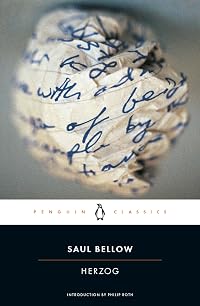
Herzog
by Saul Bellow
On This Page
Description
Winner of the National Book Award when it was first published in 1964, Herzog traces five days in the life of a failed academic whose wife has recently left him for his best friend. Through the device of letter writing, Herzog movingly portrays both the internal life of its eponymous hero and the complexity of modern consciousness. Like the protagonists of most of Bellow's novels-Dangling Man, The Victim, Seize the Day, Henderson the Rain King, etc.-Herzog is a man seeking balance, trying to show more regain a foothold on his life. Thrown out of his ex-wife's house, he retreats to his abandoned home in Ludeyville, a remote village in the Berkshire mountains to which Herzog had previously moved his wife and friends. Here amid the dust and vermin of the disused house, Herzog begins scribbling letters to family, friends, lovers, colleagues, enemies, dead philosophers, ex- Presidents, to anyone with whom he feels compelled to set the record straight. The letters, we learn, are never sent. They are a means to cure himself of the immense psychic strain of his failed second marriage, a method by which he can recognize truths that will free him to love others and to learn to abide with the knowledge of death. In order to do so he must confront the fact that he has been a bad husband, a loving but poor father, an ungrateful child, a distant brother, an egoist to friends, and an apathetic citizen. Herzog is primarily a novel of redemption. For all of its innovative techniques and brilliant comedy, it tells one of the oldest of stories. Like The Divine Comedy or the dark night of the soul of St. John of the Cross, it progresses from darkness to light, from ignorance to enlightenment. Today it is still considered one of the greatest literary expressions of postwar America. show lessTags
Recommendations

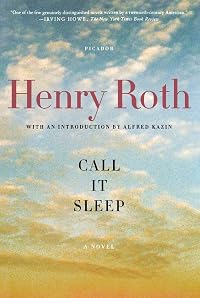
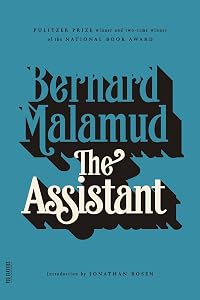
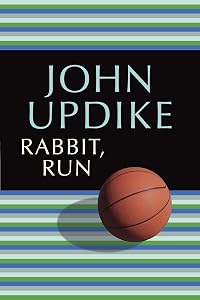
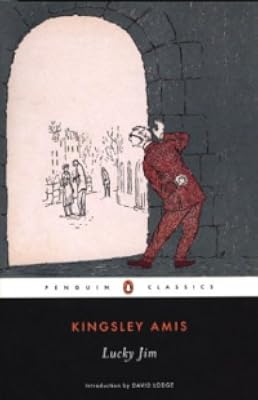

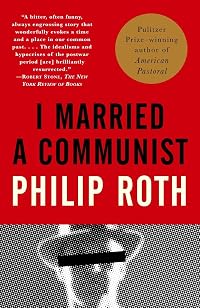
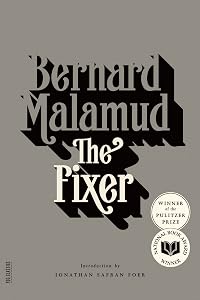
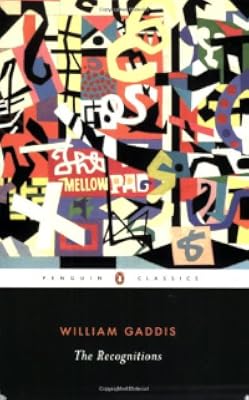
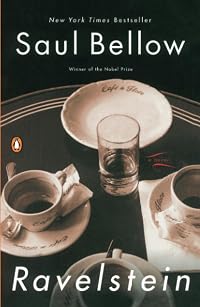










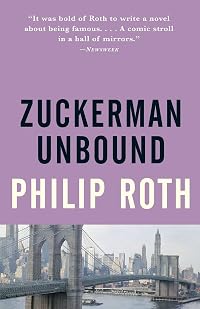

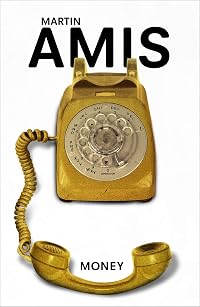
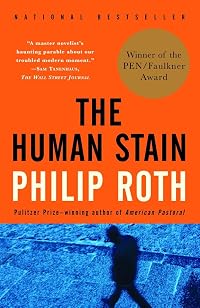
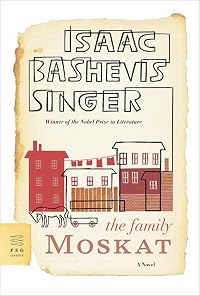

Member Recommendations


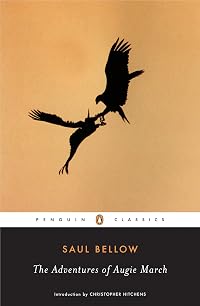
thorold Rushdie's Fury is an ironic 21st century take on the professor-as-victim theme, with a whole string of references back to Herzog.
Member Reviews
A Jewish intellectual rages in unsent letters at the shortcomings of his acquaintances and his peers as a method of remaining calm and sane during his brutal second divorce. I wasn’t always enraptured with the novel, for what I thought was going to be a metafictional deconstruction of the modern world turned out instead to be a realistic psychological novel. But I only got mildly irritated in places, never truly vexed, for the details churning in poor Herzog’s mind were colorful and fascinating. I enjoyed them in a voyeuristic manner, for I always suspect that Bellow, like Roth, was drawing on his own disastrous experiences with women. If nothing else, I made me feel smug with how I have lived my life.
Malcolm Hillgartner adapted his show more booming American voice to a variety of female, Jewish, and even African American accents well enough to be believable without being stereotypical. show less
Malcolm Hillgartner adapted his show more booming American voice to a variety of female, Jewish, and even African American accents well enough to be believable without being stereotypical. show less
I remember reading "Henderson the Rain King" and then "Ravelstein" perhaps in my first or second year of university, and thinking they were pedantic and overly contrived. I hadn't read anything by him in the intervening ten years or so. Then, on a fluke, I picked up "Herzog" wondering if I might have learned how to appreciate Bellow. To make a long story short, I read it in a few days, and finished it thinking that it may be one of the greatest American novels of the last fifty years.
Bellow once said "People don't realize how much they are in the grip of ideas. We live among ideas much more than we live in nature." Bellow's Moses Herzog - both the protagonist and the novel he inhabits - are brilliantly illustrative of this. He is a show more scholar of nineteenth-century intellectual history whose interests run from Hegel to "the state of nature in seventeenth- and eighteenth-century English and French political philosophy," the title of his only published book. Herzog brims, intensely and relentlessly, with ideas; they are how Moses relates to his world. Unable to articulate his ideas in any other way beside letter-writing, Moses does this endlessly, composing letters to President Eisenhower, his dog, his mother, and the long-dead philosophers that have consumed a lifetime's worth of attention. He never sends them.
After two failed marriages, the second of which ended with his best friend Valentine Gersbach living with his wife, and a current love affair with a woman named Ramona which is in ambiguous standing, Moses decides to escape. But he can't. Everywhere he goes, he is confronted with the world's ugliness: while waiting to talk to his divorce lawyer, he overhears cases of prostitution and child abuse, he is haunted by the life that Valentine and his ex-wife are living, and is tempted to take a few Old World Russian rubles and a handgun from the desk of his dead father. At the end of the novel, Moses achieves a kind of catharsis in which he finds that he no longer needs to write any letters, and in which the sentimentalist might hold some faint hope that Ramona might successfully enter his life. Knowing Moses, I wouldn't hold my breath, but I was surprised at the degree to which I was hoping that he would find an undiluted happiness which wouldn't have to suffer his constant hyperscrutiny.
This is a book about all the Big Subjects: writing, memory, displacement both physical and intellectual, love and its discontents, and philosophy. It seems that not even the novel itself can contain its subjects or all of its size. "Herzog" asks a lot of its readers, but I found its rewards to be numerous. If you have never read Bellow before, I would suggest that you read the first fifty pages. If you dislike it, don't bother with the rest: he never eases up and the tone doesn't change. However, don't make the same mistake I made, reading a couple of his books in college and then failing to return to him for a decade. Bellow, at least for me, was one of those writers that I needed to be at a certain age to fully appreciate. show less
Bellow once said "People don't realize how much they are in the grip of ideas. We live among ideas much more than we live in nature." Bellow's Moses Herzog - both the protagonist and the novel he inhabits - are brilliantly illustrative of this. He is a show more scholar of nineteenth-century intellectual history whose interests run from Hegel to "the state of nature in seventeenth- and eighteenth-century English and French political philosophy," the title of his only published book. Herzog brims, intensely and relentlessly, with ideas; they are how Moses relates to his world. Unable to articulate his ideas in any other way beside letter-writing, Moses does this endlessly, composing letters to President Eisenhower, his dog, his mother, and the long-dead philosophers that have consumed a lifetime's worth of attention. He never sends them.
After two failed marriages, the second of which ended with his best friend Valentine Gersbach living with his wife, and a current love affair with a woman named Ramona which is in ambiguous standing, Moses decides to escape. But he can't. Everywhere he goes, he is confronted with the world's ugliness: while waiting to talk to his divorce lawyer, he overhears cases of prostitution and child abuse, he is haunted by the life that Valentine and his ex-wife are living, and is tempted to take a few Old World Russian rubles and a handgun from the desk of his dead father. At the end of the novel, Moses achieves a kind of catharsis in which he finds that he no longer needs to write any letters, and in which the sentimentalist might hold some faint hope that Ramona might successfully enter his life. Knowing Moses, I wouldn't hold my breath, but I was surprised at the degree to which I was hoping that he would find an undiluted happiness which wouldn't have to suffer his constant hyperscrutiny.
This is a book about all the Big Subjects: writing, memory, displacement both physical and intellectual, love and its discontents, and philosophy. It seems that not even the novel itself can contain its subjects or all of its size. "Herzog" asks a lot of its readers, but I found its rewards to be numerous. If you have never read Bellow before, I would suggest that you read the first fifty pages. If you dislike it, don't bother with the rest: he never eases up and the tone doesn't change. However, don't make the same mistake I made, reading a couple of his books in college and then failing to return to him for a decade. Bellow, at least for me, was one of those writers that I needed to be at a certain age to fully appreciate. show less
And here we are again. Another Saul Bellow novel completed and at least, this time, I can (kind of) see the appeal.
Whereas I read The Adventures of Augie March with a growing disappointment in its precociousness (both linguistic and ideological) and Dickensian weight, here I read Herzog with an, quite to the contrary, appreciation for its quirks and peccadilloes as a novel.
Now, please understand, this 'novel' is a mess, an absolute mess. It's in fact only barely a novel. But, please, let me reiterate, THIS NOVEL IS AN ABSOLUTE MESS. In some respects this 'mess' actually contributes to the book's appeal. Characters don't speak like characters rather they speak as representatives for whatever ideas Bellow decides need debating. Again, in show more the vein of Dostoyevsky. Though Bellow inserts more than his share of biblical Hebrew and Yiddish within all this ‘anglo-European’ knowledge to let us know (at times to the point of maddening) that this is a Jewish author's author. And unlike Augie March, Bellow has shown maturation as a writer in greater ability to synthesize all his disparate influences into something resembling a coherent whole.
That's the charming aspect of the mess, now for the rest. Bellow is pretentious, more than that he's a complete elitist and snob. This shines through nearly every aspect of this novel's themes, characters, and presentation. How many actual people can do as the titular Herzog can do and work through their existential angst and marital woes while, as another reviewer put it, bumming around Europe on someone else's dime? Not many. And while I understand that escapism is inherent to certain kinds of fiction here it just reads as one writer's 'let them eat cake' mentality. Possibly Bellow thought that the weight of the ideas he was positing in his story would subsume the more pretentious aspects of his story or maybe he didn't give a damn (much of this is reflective of what Bellow himself went through at one point in his own life though as with much else, Bellow was dismissive of this kind of reading).
But I gave this story a four out of five and I mean it when I say that I enjoyed this book. It's bulky and uneven, and the elitism and intellectual narcissism can be off-putting to the point of suffocation but all of this becomes irrelevant or at least tolerable when you let yourself be taken away by the greatest aspect of Saul Bellow's writing and that is the joy of it. Much like what I read in his Selected Short Stories and even in stretches of Augie March, Bellow is at his best when the infectious joy and enthusiasm of writing and language and ideas takes him and, by extension, his readers up and away from the banal inanities of everyday life and per moment thought.
Is it a slog and a struggle? Yes. But in all honesty there's not much else like it that I've found in the canon so far. show less
Whereas I read The Adventures of Augie March with a growing disappointment in its precociousness (both linguistic and ideological) and Dickensian weight, here I read Herzog with an, quite to the contrary, appreciation for its quirks and peccadilloes as a novel.
Now, please understand, this 'novel' is a mess, an absolute mess. It's in fact only barely a novel. But, please, let me reiterate, THIS NOVEL IS AN ABSOLUTE MESS. In some respects this 'mess' actually contributes to the book's appeal. Characters don't speak like characters rather they speak as representatives for whatever ideas Bellow decides need debating. Again, in show more the vein of Dostoyevsky. Though Bellow inserts more than his share of biblical Hebrew and Yiddish within all this ‘anglo-European’ knowledge to let us know (at times to the point of maddening) that this is a Jewish author's author. And unlike Augie March, Bellow has shown maturation as a writer in greater ability to synthesize all his disparate influences into something resembling a coherent whole.
That's the charming aspect of the mess, now for the rest. Bellow is pretentious, more than that he's a complete elitist and snob. This shines through nearly every aspect of this novel's themes, characters, and presentation. How many actual people can do as the titular Herzog can do and work through their existential angst and marital woes while, as another reviewer put it, bumming around Europe on someone else's dime? Not many. And while I understand that escapism is inherent to certain kinds of fiction here it just reads as one writer's 'let them eat cake' mentality. Possibly Bellow thought that the weight of the ideas he was positing in his story would subsume the more pretentious aspects of his story or maybe he didn't give a damn (much of this is reflective of what Bellow himself went through at one point in his own life though as with much else, Bellow was dismissive of this kind of reading).
But I gave this story a four out of five and I mean it when I say that I enjoyed this book. It's bulky and uneven, and the elitism and intellectual narcissism can be off-putting to the point of suffocation but all of this becomes irrelevant or at least tolerable when you let yourself be taken away by the greatest aspect of Saul Bellow's writing and that is the joy of it. Much like what I read in his Selected Short Stories and even in stretches of Augie March, Bellow is at his best when the infectious joy and enthusiasm of writing and language and ideas takes him and, by extension, his readers up and away from the banal inanities of everyday life and per moment thought.
Is it a slog and a struggle? Yes. But in all honesty there's not much else like it that I've found in the canon so far. show less
Cracked up by divorce and disillusionment, Moses E. Herzog writes letters to the living and the dead, arguing with them about how to live decently, despite the fractures of the modern world. Bellow is, as ever, the inimitable stylist, and through every sentence, Herzog appears with a wild intensity. But am I ever supposed to trust his revelations? An edge of irony pierces the novel. Whether it pieces all the way through, each reader must decide.
I think that "Herzog" is a fine novel, but I also think that it's a tough book to love, or even to like. I imagine that there are a lot of readers who aren't going to be too interested in exploring the myriad neuroses of a depressed, self-involved nearly broke middle-aged Jewish intellectual with two ex-wives. Herzog is a deeply flawed character, and there's a lot about him, like his abiding grudge against his second ex-wife and her new lover, which might not be redeemable. Also, the book lacks what most people would call a plot: we witness the main character walk around New York, take a trip to Martha's Vineyard, and drive around Chicago, but this one makes "Mrs. Dalloway" look tightly plotted and full of action. As he wanders, Herzog, show more reminisces, berates himself and others, considers the state of the modern world in knotty paragraphs peppered with five-dollar words, and writes a lot of letters he'll never send. The book even lacks much of an emotional arc. Baggy and formless as it sometimes seems, Bellow resists the urge to tie all of the strands of his character's life together too neatly in the novel's last pages, and I imagine that many readers will find this anticlimactic. "Herzog" is, by turns, boring, spellbinding, exacting and diffuse. It makes Phillip Roth look like beach reading.
Somehow, though, I think that Herzog is a very worthwhile book, perhaps even an essential book, though perhaps not for the reasons its author intended. Bellow is, first of all, a fantastic writer at the sentence level. This isn't to say that his writing is traditionally beautiful or lyrical: these adjectives often don't apply to his prose. But I think it's clear that he managed to develop an absolutely unmistakable voice. There is such a thing as a "Bellow sentence," and maybe saying that a writer's bent the language they work in into an uncontestably unique shape is the highest compliment that you can pay a writer. Not coincidentally, Bellow is also very, very good at what one might call the small stuff: tiny physical details, the often ignored rituals of everyday life, descriptions of buildings and clothes and skylines. It would be easy, I suppose, to call Herzog a pre-feminist troglodyte, and he certainly is a grouch, if a grouch who has certain grandly romantic tendencies. But sixty years or so after it was first written, the novel might be considered a perfectly preserved image of middle-class life in America in the middle years of the twentieth century. It's all extraordinarily vivid, and Bellow takes the same meticulous care in describing his character's attitudes and expectations as he does describing the minutia of his daily life. His intellectual digressions, too, might be taken by some readers to be the products of a disorganized, overeducated mind, and in some sense, they are. But I also think that Bellow took the time to bury this book's themes very deeply indeed. There is, underneath all of this verbiage, a genuine meditation about how, or if, one can remain human in an increasingly dangerous and pitiless modern world. Moses Herzog is full of personality quirks, and not all of these are exactly pleasant, but he is also a man of his era, an iconic character despite himself. "Herzog" might also be considered as a series of expertly rendered brief interviews with hideous people: during the few days whose events are described here, Herzog spends time with many of the individuals who are most important to him. We meet his stepmother, his brother, some of his friends, his lawyer. Some of these scenes are amusing and others are sad, but, reading them, you might easily come to the conclusion that Bellow's got "it," the gift of making fiction seem real and human. Even as one recognizes many of these characters as Jewish-American "types," one emerges from the book feeling that one has actually met them. That's a rare talent, and one that can't be learned in writing workshops. And maybe that's the best reason to read "Herzog," it proves, as D.H. Lawrence did, that the products of literary genius aren't always neat or admirable. Challenging and often frustrating, but also recommendable. show less
Somehow, though, I think that Herzog is a very worthwhile book, perhaps even an essential book, though perhaps not for the reasons its author intended. Bellow is, first of all, a fantastic writer at the sentence level. This isn't to say that his writing is traditionally beautiful or lyrical: these adjectives often don't apply to his prose. But I think it's clear that he managed to develop an absolutely unmistakable voice. There is such a thing as a "Bellow sentence," and maybe saying that a writer's bent the language they work in into an uncontestably unique shape is the highest compliment that you can pay a writer. Not coincidentally, Bellow is also very, very good at what one might call the small stuff: tiny physical details, the often ignored rituals of everyday life, descriptions of buildings and clothes and skylines. It would be easy, I suppose, to call Herzog a pre-feminist troglodyte, and he certainly is a grouch, if a grouch who has certain grandly romantic tendencies. But sixty years or so after it was first written, the novel might be considered a perfectly preserved image of middle-class life in America in the middle years of the twentieth century. It's all extraordinarily vivid, and Bellow takes the same meticulous care in describing his character's attitudes and expectations as he does describing the minutia of his daily life. His intellectual digressions, too, might be taken by some readers to be the products of a disorganized, overeducated mind, and in some sense, they are. But I also think that Bellow took the time to bury this book's themes very deeply indeed. There is, underneath all of this verbiage, a genuine meditation about how, or if, one can remain human in an increasingly dangerous and pitiless modern world. Moses Herzog is full of personality quirks, and not all of these are exactly pleasant, but he is also a man of his era, an iconic character despite himself. "Herzog" might also be considered as a series of expertly rendered brief interviews with hideous people: during the few days whose events are described here, Herzog spends time with many of the individuals who are most important to him. We meet his stepmother, his brother, some of his friends, his lawyer. Some of these scenes are amusing and others are sad, but, reading them, you might easily come to the conclusion that Bellow's got "it," the gift of making fiction seem real and human. Even as one recognizes many of these characters as Jewish-American "types," one emerges from the book feeling that one has actually met them. That's a rare talent, and one that can't be learned in writing workshops. And maybe that's the best reason to read "Herzog," it proves, as D.H. Lawrence did, that the products of literary genius aren't always neat or admirable. Challenging and often frustrating, but also recommendable. show less
"Pseudointellectual" is a term which is almost entirely misused. We ought to think of it as analogous to Adorno's conception of "pseudoactivity": a kind of signature-gathering ostensibly toward political ends, which functions as catharsis ('blood is a cathartic agent'), but necessarily fails as a kind politics (see: posting for clout).
Bellow's "intellectualism" is disquieting in a similar way. Most reviewers note his frequent reference to such august authors as Hegel, Nietzsche, Kierkegaard (and more!) As I have already noted in an earlier, less-mature review, these are all empty signifiers. Not only is every detail required for (Bellow's) interpretation of these thinkers contained within the novel itself, but an understanding of their show more work often detracts or contradicts the simplifications Herzog appears to synthesize. Herzog's Hegel is someone who said 'modern man is a product of history', Herzog's Nietzsche is someone who said 'god is dead', Herzog's Kierkegaard is someone who said 'before he can live, man must come to experience hell.'. This "pseudointellectual" activity explains why the so-called 'philosophical letters' throughout the text do not progress beyond the first object of thought before breaking off.
Who was it who noted "the reactionary is not capable of experience"? Bellow writes like someone who has been divorced (wikipedia corroborates), but as someone who has never 'experienced' it. Herzog is incapable of understanding this issue, ostensibly the central plot of the novel, as even suggesting a personal failing of our protagonist. The 'philosophical letters', obviously the extruded displacement of an emotional crisis, never rise to the level of introspection. In what is presented as a triumphant "moving on" in the final act of the novel, Herzog sends his daughter an ugly piano, which is sure to provoke an argument with his ex-wife (like a child/bully who must constantly engage the object he claims to hate). This kind of puerile backbiting appears to have resulted in four divorces (wikipedia), and a perhaps five, were the last not forestalled by infirmity and oblivion.
Herzog's conception of fatherhood as a kind of aestheticized 'ownership' of children is another perplexing (if not uncommon) delusion. Not even the author can conceive of a relationship with Herzog's daughter which lasts more than three hours (or in which she isn't affectionate and deferential). Though he often cites a particular (mis)quotation of Kierkegaard (above), the more appropriate reference from The Concept of Anxiety is that the Aesthetic, in contrast with the Ethical, does not exist in time (duration). The aestheticized relationship between Herzog and his daughter would dissolve/suffocate if extended past a couple scenes.
Thank goodness we are already "driving our oxcarts over the bones of the dead," Bellow, Roth, and Heller too. show less
Bellow's "intellectualism" is disquieting in a similar way. Most reviewers note his frequent reference to such august authors as Hegel, Nietzsche, Kierkegaard (and more!) As I have already noted in an earlier, less-mature review, these are all empty signifiers. Not only is every detail required for (Bellow's) interpretation of these thinkers contained within the novel itself, but an understanding of their show more work often detracts or contradicts the simplifications Herzog appears to synthesize. Herzog's Hegel is someone who said 'modern man is a product of history', Herzog's Nietzsche is someone who said 'god is dead', Herzog's Kierkegaard is someone who said 'before he can live, man must come to experience hell.'. This "pseudointellectual" activity explains why the so-called 'philosophical letters' throughout the text do not progress beyond the first object of thought before breaking off.
Who was it who noted "the reactionary is not capable of experience"? Bellow writes like someone who has been divorced (wikipedia corroborates), but as someone who has never 'experienced' it. Herzog is incapable of understanding this issue, ostensibly the central plot of the novel, as even suggesting a personal failing of our protagonist. The 'philosophical letters', obviously the extruded displacement of an emotional crisis, never rise to the level of introspection. In what is presented as a triumphant "moving on" in the final act of the novel, Herzog sends his daughter an ugly piano, which is sure to provoke an argument with his ex-wife (like a child/bully who must constantly engage the object he claims to hate). This kind of puerile backbiting appears to have resulted in four divorces (wikipedia), and a perhaps five, were the last not forestalled by infirmity and oblivion.
Herzog's conception of fatherhood as a kind of aestheticized 'ownership' of children is another perplexing (if not uncommon) delusion. Not even the author can conceive of a relationship with Herzog's daughter which lasts more than three hours (or in which she isn't affectionate and deferential). Though he often cites a particular (mis)quotation of Kierkegaard (above), the more appropriate reference from The Concept of Anxiety is that the Aesthetic, in contrast with the Ethical, does not exist in time (duration). The aestheticized relationship between Herzog and his daughter would dissolve/suffocate if extended past a couple scenes.
Thank goodness we are already "driving our oxcarts over the bones of the dead," Bellow, Roth, and Heller too. show less
Fifty years on, it's probably time to take the blinkers off and start seeing this as a book that should be flung aside with great force. I do still have a little niggling doubt: Bellow was clearly someone who could write when he wanted to. It's a novel that puts big ideas across in clever, subtle ways, and it contains some passages where the writing is extremely beautiful.
But 90% of it is utterly unappealing. It's presented from the point of view of a protagonist I just couldn't find any sympathy with. You would probably have to be a male, heterosexual intellectual really to appreciate it, preferably an unreconstructed 1960s type that's never heard of the women's movement. Herzog is supposed to be someone the reader engages with, but show more in the end he just acts like all the middle-class divorced dads I know, falling to pieces until a new girlfriend conveniently turns up to look after him.
I wonder if anyone's thought of rewriting the story from Madeleine's point of view? show less
But 90% of it is utterly unappealing. It's presented from the point of view of a protagonist I just couldn't find any sympathy with. You would probably have to be a male, heterosexual intellectual really to appreciate it, preferably an unreconstructed 1960s type that's never heard of the women's movement. Herzog is supposed to be someone the reader engages with, but show more in the end he just acts like all the middle-class divorced dads I know, falling to pieces until a new girlfriend conveniently turns up to look after him.
I wonder if anyone's thought of rewriting the story from Madeleine's point of view? show less
Members
- Recently Added By
Published Reviews
ThingScore 100
Anybody who has gotten some distance from a heartbreak’s wickedest throes, and wants to understand it, and wants to feel again the vibrancy of mind that made love possible in the first place, should read... Herzog.
added by Shortride
A masterpiece... Herzog's voice... for all its wildness and strangeness and foolishness is the voice of a civilization, our civilization... The book is new and classic, and its publicaiton now... suggests that things are looking up for America and its civilization.
added by GYKM
With this new work, his sixth novel, Saul Bellow emerges not only as the most intelligent novelist of his generation but also as the most consistently interesting in the point of growth and development. To my mind, too, he is the finest stylist at present writing fiction in America.
added by GYKM
Lists

1001 Books You Must Read Before You Die
1,448 works; 1,137 members

The Guardian's 1000 Novels Everyone Must Read
1,005 works; 552 members
501 Must-Read Books
529 works; 72 members

David Bowie's Top 100
97 works; 23 members
Novels from The Guardian's Great American Novelist Tournament
148 works; 24 members
20th Century Literature
1,161 works; 55 members

The Top Ten: Writers Pick Their Favorite Books
240 works; 33 members

Favourite Books
1,820 works; 316 members

Stream of Consciousness
87 works; 8 members

Philosophical Fiction
97 works; 27 members

Favorite Long Books
330 works; 42 members

The Guardian's 100 greatest novels of all time
100 works; 16 members

Jewish Books
367 works; 24 members
1960s, Best books published therein
254 works; 22 members
Canon de la narrativa universal del siglo XX
254 works; 6 members
Time Magazine's "All-Time 100"
113 works; 15 members

National Book Award - Fiction
78 works; 10 members
Nobel Price Winners
222 works; 20 members
Harold Bloom - The Western Canon: D. The Chaotic Age
833 works; 24 members
The American Experience
173 works; 18 members

1960s
281 works; 16 members
LibraryThingers' 1001 Books You Must Read Before You Die
442 works; 30 members

Epistolary Books
105 works; 27 members
Time's All-Time 100 Novels
100 works; 27 members
Folio Society
831 works; 53 members

Five star books
1,767 works; 110 members
1,001 BYMRBYD Concensus
723 works; 27 members

The Greatest Books
99 works; 5 members

A Novel Cure
742 works; 23 members
Best First Lines
133 works; 8 members
TML 200 Best Books 1950-1999
202 works; 10 members

Love Triangles in Literature
108 works; 15 members
David Bowie's List of Top 100 Books
94 works; 6 members

Book Riot's 100 must-read works of Jewish Fiction
100 works; 8 members

Top 10 Dodgy Lawyers in Literature
10 works; 2 members

Most Depressing Books
69 works; 16 members

Publisher's Weekly Bestsellers - Part II - 1940 - 1979
355 works; 6 members

SHOULD Read Books!
354 works; 9 members
Literature About Adultery
69 works; 10 members

Tammen Keltainen kirjasto
81 works; 1 member
American Lit for Eng 11 Research Project
368 works; 6 members

DigitalDreamDoor top 300
300 works; 4 members

GREAT 1960s BOOKS
37 works; 1 member
Wishlist
99 works; 1 member
David Bowie’s Top 100 Favourite Reads
100 works; 3 members

living room bookshelf
150 works; 1 member
.
396 works; 1 member

The Modern Library (The Two Hundred Best Novels....
202 works; 1 member
Canon de la narrativa universal del s. XX (cicutadry)
499 works; 3 members

100 knjiga
100 works; 1 member

Florida
366 works; 3 members

Lucy's Long List
69 works; 1 member
New Lifetime Reading Plan by Fadiman and Major
225 works; 5 members

Jim's Bookshelf
16 works; 1 member
My TBR
371 works; 3 members

National Book Award winners
65 works; 11 members

Literary Works Read in College
316 works; 15 members
Tablet Magazine's List of 101 Great Jewish Books
103 works; 9 members

Unread books
1,063 works; 87 members
Blue Pyramid 1,276 Best Books of All Time
1,248 works; 32 members
Author Information

143+ Works 33,908 Members
Saul Bellow was born in Lachine, Quebec, Canada on June 10, 1915. He attended the University of Chicago, received a Bachelor's degree in sociology and anthropology from Northwestern University in 1937, and did graduate work at the University of Wisconsin. He taught at several universities including the University of Minnesota, Princeton show more University, the University of Chicago, New York University, and Boston University. His first novel, Dangling Man, was published in 1944. His other works include The Victim, Seize the Day, Henderson the Rain King, Mosby's Memoirs and Other Stories, To Jerusalem and Back: A Personal Account, Him with His Foot in His Mouth and Other Stories, More Die of Heartbreak, and Something to Remember Me By. He received numerous awards including the 1975 Pulitzer Prize for Humboldt's Gift, the 1976 Nobel Prize in Literature, and three National Book Awards for fiction for The Adventures of Augie March in 1954, Herzog in 1964, and Mr. Sammler's Planet in 1970. Also a playwright, he wrote The Last Analysis and three short plays, collectively entitled Under the Weather, which were produced on Broadway in 1966. He died on April 5, 2005. (Bowker Author Biography) show less
Some Editions
Awards and Honors
Series
Belongs to Publisher Series
Work Relationships
Is contained in
Contains
Has as a commentary on the text
Has as a student's study guide
Common Knowledge
- Canonical title
- Herzog
- Original title
- Herzog
- Original publication date
- 1964
- People/Characters
- Moses Elkanah Herzog; Madelaine Pontritter Herzog (wife); Daisy (wife); June Herzog (daughter); Marco Herzog (son); Ramona (show all 16); Luke Asphalter; Sandor Himmelstein; Valentine Gersbach; Sarah Herzog (mother); Phoebe Gersbach; Willie Herzog (brother); Alexander Herzog (brother); Doctor Edvig; Jonah Herzog (father); Helen Herzog (sister)
- Important places
- Chicago, Illinois, USA; Philadelphia, Pennsylvania, USA; New York, New York, USA; Ludeyville, Massachusetts, USA; Illinois, USA; Massachusetts, USA (show all 8); New York, USA; Pennsylvania, USA
- Dedication*
- To Pat Covici, a great editor and, better yet, a generous friend, this book is affectionately dedicated
- First words
- If I am out of my mind, it's all right with me, thought Moses Herzog.
The transformation of the novelist who published Dangling Man in 1944 and The Victim in 1947 into the novelist who published The Adventures of Augie March in '53 is revolutionary. (Introduction) - Quotations
- "Why to get laid is actually socially constructive and useful, an act of citizenship."
- Last words
- (Click to show. Warning: May contain spoilers.)Not a single word.
(Click to show. Warning: May contain spoilers.)Bellow is banished. (Introduction) - Blurbers
- Bradbury, Malcolm
- Original language
- English
- Disambiguation notice
- Please distinguish this ccritical edition, which includes substantial additional material, from Saul Bellow's original 1964 novel, Herzog. Thank you.
*Some information comes from Common Knowledge in other languages. Click "Edit" for more information.
Classifications
Statistics
- Members
- 5,712
- Popularity
- 2,312
- Reviews
- 68
- Rating
- (3.67)
- Languages
- 20 — Catalan, Czech, Danish, Dutch, English, Estonian, Finnish, French, German, Italian, Norwegian (Bokmål), Farsi/Persian, Polish, Portuguese, Romanian, Russian, Slovenian, Spanish, Swedish, Turkish
- Media
- Paper, Audiobook, Ebook
- ISBNs
- 112
- ASINs
- 70