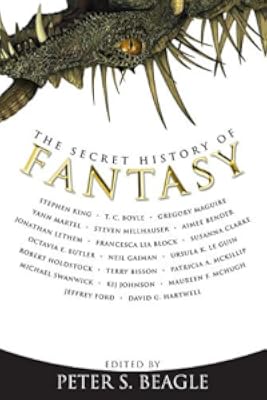
The Secret History of Fantasy
by Peter S. Beagle (Editor)
On This Page
Description
Tired of the same old fantasy? Here are nineteen much-needed antidotes to clichéd tales of swords and sorcery. Fantasy is back, and it's better than ever!Tags
Recommendations
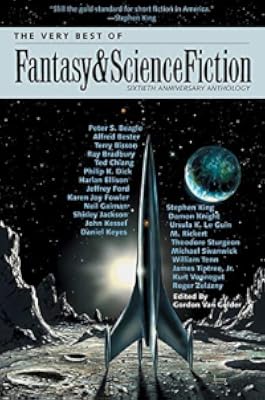
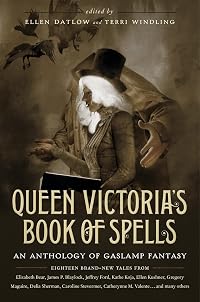
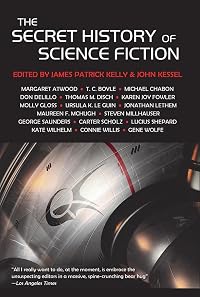


Member Reviews
Amazing fantasy stories that break the stereotype of what "fantasy" is. Contains an interesting discussion of the topic by Ursula Le Guin, which provided me with insight on the development of the "fantasy" field and subsequent dividing of genre fiction.
Enjoyed "Ancestor Money" by Maureen McHugh. Admired the cleverness of Gregory Maguire's "Scarecrow," yet another take on the "Wizard of Oz" with some existential philosophy. Patricia McKillip was vaguely haunting in "Lady of the Skulls." I admired "We are Norsemen" by T.C. Boyle and Neil Gaiman's "Snow, Glass, Apples," but it was an uncomfortable story. Steven Millhauser's "The Barnum Museum" was one of my favorites, with very lyrical prose. Steven King's "Mrs. Todd's Shortcut" was show more clever and wistful. Terry Bisson's "Bears Discover Fire" was an unusual take on modern urban fantasy. Aimee Bender's "Fruit and Words" had an imaginative basis, but was uncomfortable. Jeffrey Ford's "The Empire of Ice Cream" had an astounding concept of alternate reality with a twist ending. Sad more than horrorful.
I enjoyed Micheal Swanwick's "The Edge of the World" a great deal, and will look for more from him, likewise Kij Johnson's "26 Monkeys, Also the Abyss." Peter Beagle's contribution was lyrical, beautiful, and wistful. I could live without Yann Martel's "The Vita Aeterna Mirror Company" just because it's format was so off-putting. Johnathan Lethem's "Super Goat Man" took far too much space for its concept, and left me with an uncomfortable taste in my mouth. But the majority of contributions were very original and beautifully written. show less
Enjoyed "Ancestor Money" by Maureen McHugh. Admired the cleverness of Gregory Maguire's "Scarecrow," yet another take on the "Wizard of Oz" with some existential philosophy. Patricia McKillip was vaguely haunting in "Lady of the Skulls." I admired "We are Norsemen" by T.C. Boyle and Neil Gaiman's "Snow, Glass, Apples," but it was an uncomfortable story. Steven Millhauser's "The Barnum Museum" was one of my favorites, with very lyrical prose. Steven King's "Mrs. Todd's Shortcut" was show more clever and wistful. Terry Bisson's "Bears Discover Fire" was an unusual take on modern urban fantasy. Aimee Bender's "Fruit and Words" had an imaginative basis, but was uncomfortable. Jeffrey Ford's "The Empire of Ice Cream" had an astounding concept of alternate reality with a twist ending. Sad more than horrorful.
I enjoyed Micheal Swanwick's "The Edge of the World" a great deal, and will look for more from him, likewise Kij Johnson's "26 Monkeys, Also the Abyss." Peter Beagle's contribution was lyrical, beautiful, and wistful. I could live without Yann Martel's "The Vita Aeterna Mirror Company" just because it's format was so off-putting. Johnathan Lethem's "Super Goat Man" took far too much space for its concept, and left me with an uncomfortable taste in my mouth. But the majority of contributions were very original and beautifully written. show less
I truly enjoyed this collection of fantasy stories that Beagle out together, mostly because it stayed away from the "epic" or "sword and sorcery" sub-genre that seems to dominate the genre as a whole and serves as a stereotype for fantasy geeks.
Some of the stories I didn't care for as much, but there weren't any I completely hated, and some of them I loved.
The standouts:
"The Lady of Skulls" by Patricia McKillip: This story is as close the anthology gets to sword and sorcery. A fable-like tale of knights who must correctly choose the most valuable item in a tower holding the greatest treasures in the world or die when they leave. Told through the POV of the tower's inhabitant: the Lady of the Skulls.
"Snow, Glass, Apples" by Neil Gaiman: show more A re-telling of Snow White from the POV of the queen/stepmother who might not actually be evil. With elements of vampirism and necrophilia, this rendition would make the Brothers Grimm proud.
"The Empire of Ice Cream" by author: Jeffery Ford: This was my favorite of the collection. It's protagonist is William, a boy with synesthesia, who composes music based on the colors associated with the notes. He discovers he can see a girl named Anna when he eats coffee ice cream and struggles with the strange relationship that develops. Great twist in the end!
Besides the stories, Peter S. Beagle and David G. Hartwell supply some essays about the history of the genre which I enjoyed. [author: Ursula LeGuinn] also supplied an essay, but hers was a defense of the genre that rambled a bit too much for my taste.
Overall a definite read for any fantasy reader, or someone who wants to read something non-realistic for a change. show less
Some of the stories I didn't care for as much, but there weren't any I completely hated, and some of them I loved.
The standouts:
"The Lady of Skulls" by Patricia McKillip: This story is as close the anthology gets to sword and sorcery. A fable-like tale of knights who must correctly choose the most valuable item in a tower holding the greatest treasures in the world or die when they leave. Told through the POV of the tower's inhabitant: the Lady of the Skulls.
"Snow, Glass, Apples" by Neil Gaiman: show more A re-telling of Snow White from the POV of the queen/stepmother who might not actually be evil. With elements of vampirism and necrophilia, this rendition would make the Brothers Grimm proud.
"The Empire of Ice Cream" by author: Jeffery Ford: This was my favorite of the collection. It's protagonist is William, a boy with synesthesia, who composes music based on the colors associated with the notes. He discovers he can see a girl named Anna when he eats coffee ice cream and struggles with the strange relationship that develops. Great twist in the end!
Besides the stories, Peter S. Beagle and David G. Hartwell supply some essays about the history of the genre which I enjoyed. [author: Ursula LeGuinn] also supplied an essay, but hers was a defense of the genre that rambled a bit too much for my taste.
Overall a definite read for any fantasy reader, or someone who wants to read something non-realistic for a change. show less
Although I understand the frustration of writers tired of being marginalized, it's difficult to talk about without sounding whiny. Ursula LeGuin manages; Beagle, not so much. But none of that takes away from the fact that this is a stellar anthology whose lineup of participating authors should open a few eyes regarding “fantasy literature.” Particular favorites include Steven Millhauser's “The Barnum Museum,” “The Empire of Ice Cream” by Jeffrey Ford, Octavia E. Butler's “The Book of Martha,” and “26 Monkeys, Also the Abyss” by Kij Johnson.
Pretty good stuff. I wanted to give this four stars except most of the best stories I had already read elsewhere, which means, I think, that it's not very "secret," at least not to me. Anyhow, some standout stories: I haven't read much Steven King but his "Mrs Todd's Shortcut" (which I hadn't read before even though it was apparently written in 1984) was probably my favorite of the bunch. I have master's in literature, so I'm not supposed to read Steven King (sarc), but he sure knows how to create characters, develop a sense of wonder, and pump up the intensity. My other favorites were "The Empire of Ice Cream" by Jeffrey Ford, "Bears Discover Fire" by Terry Bisson, and "Mythago Wood" by Robert Holdstock, all of which I had read before, show more "Mythago" in novel form. Another standout is "Super Goat Man" by Jonathan Lethem. The writing is excellent, even though I found the ending very disappointing. The only real clunkers (for me) were Octavia Butler's preachy, religious, trite, "The Book of Martha" and Yann Martel's unreadable, post-modern wannabe "The Vita Aeturna Mirror Company." Overall, look at the table of contents; if you haven't read most of the stories, then this is worth reading. Also, the excellent introduction by Beagle, which offers a scathing disparagement of Tolkien copycat fantasy, is very interesting and appropriate. show less
This is an impressive collection of fantasy short stories, most of them from the last two decades. I enjoyed most of them unreservedly. There are also two excellent essays at the back about the history of fantasy and its relationship to the literary canon.
I didn't like the way that the book was packaged, with the tag line of "fantasy is back" - there has been a continuous tradition of thoughtful, well-written fantasy in the twentieth century; it's just been overlooked and then overshadowed by bad sword & sorcery paperbacks. I'm also wondering when fantasy set in invented worlds will join the quasi-canon of literary fantasy - everyone praises Tolkien and Le Guin, then proceeds to include mostly urban and historical fantasy in their show more short story collections.
Peter Beagle did good at including women writers, less good at representing non-white or non-class-privileged experiences.
Favorite stories: probably Stephen King's "Mrs. Todd's Shortcut," Terry Bisson's "Bears Discover Fire" (totally as good as the hype), Jeffrey Ford's "The Empire of Ice Cream," Kij Johnson's "26 Monkeys, Also the Abyss." And I'd already read and loved the Susanna Clarke short story. show less
I didn't like the way that the book was packaged, with the tag line of "fantasy is back" - there has been a continuous tradition of thoughtful, well-written fantasy in the twentieth century; it's just been overlooked and then overshadowed by bad sword & sorcery paperbacks. I'm also wondering when fantasy set in invented worlds will join the quasi-canon of literary fantasy - everyone praises Tolkien and Le Guin, then proceeds to include mostly urban and historical fantasy in their show more short story collections.
Peter Beagle did good at including women writers, less good at representing non-white or non-class-privileged experiences.
Favorite stories: probably Stephen King's "Mrs. Todd's Shortcut," Terry Bisson's "Bears Discover Fire" (totally as good as the hype), Jeffrey Ford's "The Empire of Ice Cream," Kij Johnson's "26 Monkeys, Also the Abyss." And I'd already read and loved the Susanna Clarke short story. show less
A mixed bag of an anthology. Some absolutely spectacular ones, and a few I found unpleasant (one outright repulsive). This really surprised me, considering the names involved.
I read most of this awhile ago and just finished it up. I don't remember much about the rest of the book, but the last few stories and essays are great. One essay goes into the Harry Potter phenomenon - why that series became so popular when better books with similar themes languish in obscurity - and another discusses the divide between genre fiction and so-called literary fiction.
Members
- Recently Added By
Author Information

Peter S. Beagle was born in Manhattan in April of 1939. During his senior year of high school, Beagle entered a poem and a short story in the 1955 Scholastic Writing Awards Contest, not knowing that the Grand Prize was a college education. He won that prize and went on to spend four years at the University of Pittsburgh after graduating from high show more school in 1955. In his sophomore year at the University of Pittsburgh, Beagle entered another contest, winning first place again in Seventeen Magazine's Short Story Contest. At the age of 19, he published "A Fine and Private Place." Beagle graduated college with a degree in Creative Writing and a Spanish minor and then spent a year overseas. When he returned, his new-found agent had enrolled him in a writing workshop at Stanford. After his first few published stories, Beagle supported himself and his family as a freelancer for many years. In the 70's he began to write screenplays, as well as take up the hobby of singing folk songs at a local club. Beagle has published music as well as books, both his passions, and both lucrative. Beagle gives lectures and readings at universities, and also hosts writing workshops at schools such as the University of Washington and Clarion West. His works have been translated into 15 languages. Beagle has also written a script for Star Trek: The Next Generation and the screenplay for the animated feature version of The Lord of the Rings. In 1987, Beagle's "The Last Unicorn" was proclaimed the Number 5 All Time Fantasy Novel. That same year, "The Innkeeper's Song" won the Mythopoetic Fantasy Award. In 1997, "The Unicorn Sonata" won the Locus Poll Award for Best Novella, and in 1998, "Giant Bones" won the same award as well as being nominated for the 1998 World Fantasy Award. (Bowker Author Biography) show less
All Editions
Some Editions
Work Relationships
Contains
Common Knowledge
- Dedication
- In memory of Robert Holdstock, 1948-2009
And with gratitude to Ellen Datlow, John Kessel, Jill Roberts, Bernie Goodman, and Jacob Weisman - First words
- In the afterlife, Rachel lived alone.
- Last words
- (Click to show. Warning: May contain spoilers.)They send her home with a pinochle deck.
(last story)
And now it seems is a bad time for serious adult readers to reject, wholesale, the tale of wonder and the illumination of the human condition that fantasy has brought us throughout history.
(last essay)
Classifications
- Genres
- Fiction and Literature, Fantasy
- DDC/MDS
- 813.0876608 — Literature & rhetoric American literature in English American fiction in English By type Genre fiction Adventure fiction Speculative fiction Fantasy Collections
- LCC
- PS648 .F3 .S43 — Language and Literature American literature American literature Collections of American literature Prose (General)
- BISAC
Statistics
- Members
- 231
- Popularity
- 140,304
- Reviews
- 7
- Rating
- (3.89)
- Languages
- English
- Media
- Paper
- ISBNs
- 1