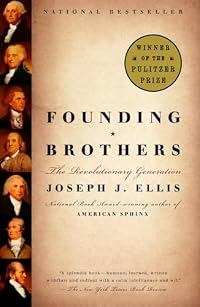
Founding Brothers: The Revolutionary Generation
by Joseph J. Ellis
On This Page
Description
An analysis of the intertwined careers of the founders of the American republic documents the lives of John Adams, Aaron Burr, Benjamin Franklin, Alexander Hamilton, Thomas Jefferson, James Madison, and George Washington.Tags
Recommendations
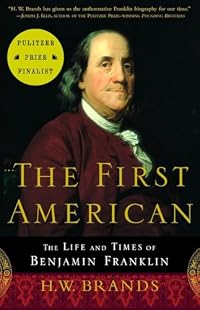
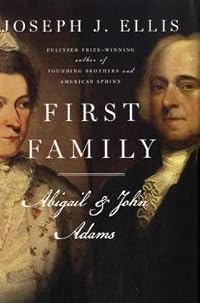
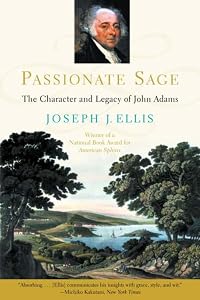
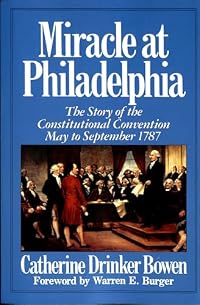






Member Recommendations



Burr by Gore Vidal
themulhern This is a fictional account of Aaron Burr's career told mostly via his fictionalized reminiscences. He also appears, now a very old man, with a legal practice in New York. Vidal's take on the founding brothers seemed deeply caustic to me when I read this book many years ago. The same events crop up in both books, since Aaron Burr was an officer in the Revolutionary Army and then a prominent politician through the early 1800s.
It's Even Worse than It Looks: How the American Constitutional System Collided with the New Politics of Extremism by Thomas E. Mann
themulhern Compare and contrast the party politics of the late 1700s and early 1800s with the party politics of today. Is it really that much worse today? Josep Ellis says that it is, but his "The Founding Brothers" describes some very cynical party maneuvers and some deep philosophical divides. Maybe those founding brothers did it with a bit more grace, and that's the only difference.
Member Reviews
An excellent one volume history on the founding fathers, with an emphasis on the years 1789-1800. I came to the book looking for an easy read, which it definitely is not (in the sense that it's relatively scholarly, and portrays a very nuanced view).
The form of the book is interesting, at first I assumed it to be a series of anecdotes about the Founding Fathers, but it actually is a deep analysis of certain events that epitomize certain themes that Ellis wants to get across. Chief of those themes is how fragile and uncertain the American project seemed to the founders, the complexities of the Founding men, and the unprecedented improvisations the Founders had to made do with. Ellis tries to put us at the time, without the benefit of show more hindsight. For example, when analyzing the famous Burr-Hamilton Duel, Ellis looks at why that duel occurred, past simple moralistic condemnations of the barbaric practice and simple pettiness. For Ellis, the duel occurred because Hamilton was afraid that a man such as Burr, an opportunist at heart, could wreck the Union with his self seeking nature (in particular by encouraging the New England/New York secessionists). The Founding Fathers had to deal with the opposing ideologies between the spirit of '76 (that the revolution was a radical break with tradition and would herald in global egalitarianism) and the pragmatic needs of nation building (such as a centralized government and Anglophile treaties). At the same time, the American project was unprecedented. Respected theorists of the day thought that large polities such as the colonies could never become republics, let alone 13 colonies that did not have a history of cooperation. A lot of the interest and friction comes from the fact that the founders were trying something that had never been tried before. Of particular interest to me is the formation of party culture in the US. Political parties were essentially new ideas. The idea of a loyal opposition did not exist. Retrospectively, we talk about the Federalist, Republican divide but at the time they wouldn't have seen themselves as political parties. The Federalists would have seen themselves as the government, and the Republicans as a subversive threat, while the Republicans saw themselves as a temporarily faction formed to oppose the Federalists who hijacked the government at the expense of the spirit of '76. Such a telling of history explains the apparent absurdity of the first three presidents not campaigning openly for election, and the fact that the runner up became vice president. Such a world is so foreign to modern day lfie, but the friendships, rivalries and jealousies are not.
I applaud Ellis's attempts to deeply analyze and discuss the contradictions and difficulties of the founding era. Chief of the issues is slavery, Ellis is no apologist but delves into the difficulty of feasible solutions, i.e. how to compensate owners and what to do with the freed population and the potential for the issue to wreck the entire constitutional project by inflaming sectional conflict. Ultimately, Ellis concludes that it would have been difficult to resolve the issue, but that the founders had solved other difficult issues before (I agree with Ellis here that the Founders more or less dropped the ball). It was interesting that after 1776 many prominent observers thought that slavery would be on a natural path to extinction, and how post revolutionary war how stupid this prediction seemed. It's become a cliche but ultimately, it took a civil war to resolve the can that the Founders kicked down the road.
Finally, I appreciated the complexities that Ellis brings to light. Ellis discusses the difference between Jefferson and Adams. Jefferson tended to see history, in a simple narrative way between neat factions and categories while Adams thought that history tended to be written by people after the fact, and chooses simple icons and stories to fit a neat fiction. Adams thought historians ignored the edges and nuances of events that did not fit their story, and obscure the truth by presenting a simple story. Of course, this was a related to the fact that Adams thought himself often neglected by historians since he did not neatly fall into any particular pose. I believe that Ellis had Adam's conception of history in mind when he wrote this book. It makes for a more complex story, but likely one more reflective of the truth. show less
The form of the book is interesting, at first I assumed it to be a series of anecdotes about the Founding Fathers, but it actually is a deep analysis of certain events that epitomize certain themes that Ellis wants to get across. Chief of those themes is how fragile and uncertain the American project seemed to the founders, the complexities of the Founding men, and the unprecedented improvisations the Founders had to made do with. Ellis tries to put us at the time, without the benefit of show more hindsight. For example, when analyzing the famous Burr-Hamilton Duel, Ellis looks at why that duel occurred, past simple moralistic condemnations of the barbaric practice and simple pettiness. For Ellis, the duel occurred because Hamilton was afraid that a man such as Burr, an opportunist at heart, could wreck the Union with his self seeking nature (in particular by encouraging the New England/New York secessionists). The Founding Fathers had to deal with the opposing ideologies between the spirit of '76 (that the revolution was a radical break with tradition and would herald in global egalitarianism) and the pragmatic needs of nation building (such as a centralized government and Anglophile treaties). At the same time, the American project was unprecedented. Respected theorists of the day thought that large polities such as the colonies could never become republics, let alone 13 colonies that did not have a history of cooperation. A lot of the interest and friction comes from the fact that the founders were trying something that had never been tried before. Of particular interest to me is the formation of party culture in the US. Political parties were essentially new ideas. The idea of a loyal opposition did not exist. Retrospectively, we talk about the Federalist, Republican divide but at the time they wouldn't have seen themselves as political parties. The Federalists would have seen themselves as the government, and the Republicans as a subversive threat, while the Republicans saw themselves as a temporarily faction formed to oppose the Federalists who hijacked the government at the expense of the spirit of '76. Such a telling of history explains the apparent absurdity of the first three presidents not campaigning openly for election, and the fact that the runner up became vice president. Such a world is so foreign to modern day lfie, but the friendships, rivalries and jealousies are not.
I applaud Ellis's attempts to deeply analyze and discuss the contradictions and difficulties of the founding era. Chief of the issues is slavery, Ellis is no apologist but delves into the difficulty of feasible solutions, i.e. how to compensate owners and what to do with the freed population and the potential for the issue to wreck the entire constitutional project by inflaming sectional conflict. Ultimately, Ellis concludes that it would have been difficult to resolve the issue, but that the founders had solved other difficult issues before (I agree with Ellis here that the Founders more or less dropped the ball). It was interesting that after 1776 many prominent observers thought that slavery would be on a natural path to extinction, and how post revolutionary war how stupid this prediction seemed. It's become a cliche but ultimately, it took a civil war to resolve the can that the Founders kicked down the road.
Finally, I appreciated the complexities that Ellis brings to light. Ellis discusses the difference between Jefferson and Adams. Jefferson tended to see history, in a simple narrative way between neat factions and categories while Adams thought that history tended to be written by people after the fact, and chooses simple icons and stories to fit a neat fiction. Adams thought historians ignored the edges and nuances of events that did not fit their story, and obscure the truth by presenting a simple story. Of course, this was a related to the fact that Adams thought himself often neglected by historians since he did not neatly fall into any particular pose. I believe that Ellis had Adam's conception of history in mind when he wrote this book. It makes for a more complex story, but likely one more reflective of the truth. show less
These are not the founding fathers of The Federalist Papers or from you gilt-edged, aura-infused history books. This is the more complicated version, and it doesn't require hundreds or thousands of pages to get to the core of these complicated men. Ellis has written those books, but he wanted something reduced down for easier swallowing. There's coverage of the duel between Burr and Hamilton - honestly, can't think a a worse person to focus a musical puff piece on than Hamilton - and coverage of Jefferson and Adams' friendship - and the decade or more virulent rift between them. But the best section covers the issue of slavery, put on the table in 1790 by a petition from Quakers to abolish it. These guys throw up their hands at the show more problem, identifying it as a union-busting insoluble issue. If they'd only foreseen how right they were about the union-busting part, but they were wrong about the insoluble piece. It's just that they didn't have any will left after mounting a revolution and would rather rest on the laurels of their accomplishment than to focus the revolutionary impetus on the very people who needed it the most.
5 bones!!!!!
Highly Recommended show less
5 bones!!!!!
Highly Recommended show less
Founding Brothers by Joseph Ellis
4 stars
I keep returning to this book. I want to read it again to see if I really understand the conclusions Ellis is trying to assert. There is a great deal of information here and not being terribly well grounded in history, I often felt over my head. I think it is a credit to Ellis’ writing that he kept me interested enough to persist in reading and rereading to get at the meat. Reading his descriptions I felt I was coming to know the character and motivations of these iconic historical figures. For example, regarding Ben Franklin, “Franklin’s great gift was an uncanny knack for levitating above political camps, operating at an altitude that permitted him to view the essential patterns and then show more comment with great irony and wit on the behavior of those groveling on the ground.” That sentence alone makes me want to read more about Ben Franklin. I know next to nothing about James Madison except his position as an early president, but this reference fascinates me, “… his enduring influence on the thought of Thomas Jefferson……visible only in the way that one detects iron filings within a magnetic field …” It’s very intriguing. For me this is a great book. Any book that makes me want to find out more on a subject is a success. show less
4 stars
I keep returning to this book. I want to read it again to see if I really understand the conclusions Ellis is trying to assert. There is a great deal of information here and not being terribly well grounded in history, I often felt over my head. I think it is a credit to Ellis’ writing that he kept me interested enough to persist in reading and rereading to get at the meat. Reading his descriptions I felt I was coming to know the character and motivations of these iconic historical figures. For example, regarding Ben Franklin, “Franklin’s great gift was an uncanny knack for levitating above political camps, operating at an altitude that permitted him to view the essential patterns and then show more comment with great irony and wit on the behavior of those groveling on the ground.” That sentence alone makes me want to read more about Ben Franklin. I know next to nothing about James Madison except his position as an early president, but this reference fascinates me, “… his enduring influence on the thought of Thomas Jefferson……visible only in the way that one detects iron filings within a magnetic field …” It’s very intriguing. For me this is a great book. Any book that makes me want to find out more on a subject is a success. show less
Imagine a country where presidential pretenders declared no party affiliation, a country where they stood above partisan politics, a country where holders of high office acted out of principle rather than for their financial supporters. The United States used to be such a country, at least through the administrations of its first two presidents, Washington and Adams.
Now imagine a country where men who had fought successfully for independence saw their unity shattered by diverging paths, some seeing their new national government as an entity to be strengthened for the protection, maintenance and development of the country, while their compatriots saw the strengthening of that government as oppression and destructive of the independence show more they had just won. Within only a brief twenty years following the issuance of the Declaration of Independence, the United States saw its newly-born self stretched along those diverging paths.
Imagine next a country beset by a problem too difficult to address, much less to solve. This was a country whose highest elected officials almost unanimously chose to ignore a conundrum which, if confronted, would, they believed, have resulted in the destruction of the still-young nation. This problem continued to fester, unresolved, for the next eighty years until it did in fact break the country apart, but by then the national government had become strong enough to reunite it and to begin to resolve the problem by force of arms. Dare one breathe the word "slavery"?
Today, about 230 years after the United States declared its independence from England, we find it hard to think that the unity of the nation, indeed the very existence of the United States (which did not start out very united at all), endured a weak and perilous beginning. For decades after its civil war with its mother country, which it was pleased to call its Revolution, the new nation traversed perilous waters and came closer to foundering than most of its current citizens realize.
Many paths--some conflicting--were begun by leaders of the Revolutionary Era, who were, in the immediately ensuing years, also the leaders of the nation, and those paths have led to today's United States of America. Ellis's FOUNDING BROTHERS: THE REVOLUTIONARY GENERATION is a fascinating look at several of the most influential of those leaders. At the very least, the book will leave its readers with a more accurate understanding of the formative years of the nation and perhaps with a whole new perception of some of the country's icons such as Thomas Jefferson who was, perhaps, not quite as shining an example as one may have been taught. Be prepared also to leave the book with a fuller understanding of our second president, John Adams, who may have been a much greater man than is apparent from his treatment in many traditional American history books.
Oh dear, now I've done it. Used the dreaded word "history," that is. If FOUNDING BROTHERS is a history, it must be boring, right? Let's see. In the second chapter, we're treated to a .54-caliber ball from the pistol of Aaron Burr tearing a two-inch hole in the side of Alexander Hamilton, ricocheting off a rib, ripping through his liver and diaphragm, and splintering a vertebra. Boring? That must be left for each reader to judge for himself, but I hardly found it boring. Not counting the notes at the end, which few readers will glance at anyway, Ellis has written 248 pages of very interesting observations of the trials and turmoils that beset a new country that had yet to figure out quite what it was going to do with its independence.
To what extent can one trust the accuracy of Ellis's observations? Every modern historian labors under the same limitation of having to reconstruct what the truth may have looked like 230 years ago, and no one knows what truth is anyway. All we can know are our perceptions of the truth, and all we can do is to reconstruct history as accurately as our perceptions and tools allow. Until a time travel machine materializes in our midst, however, I am more than ready to admit Ellis's observations into my concept of our country's history. I feel that his book will interest everyone who enjoys well-written history or who has even a smidgen of curiosity as to what the USA looked like as a new-born baby (often with a bad case of colic). show less
Now imagine a country where men who had fought successfully for independence saw their unity shattered by diverging paths, some seeing their new national government as an entity to be strengthened for the protection, maintenance and development of the country, while their compatriots saw the strengthening of that government as oppression and destructive of the independence show more they had just won. Within only a brief twenty years following the issuance of the Declaration of Independence, the United States saw its newly-born self stretched along those diverging paths.
Imagine next a country beset by a problem too difficult to address, much less to solve. This was a country whose highest elected officials almost unanimously chose to ignore a conundrum which, if confronted, would, they believed, have resulted in the destruction of the still-young nation. This problem continued to fester, unresolved, for the next eighty years until it did in fact break the country apart, but by then the national government had become strong enough to reunite it and to begin to resolve the problem by force of arms. Dare one breathe the word "slavery"?
Today, about 230 years after the United States declared its independence from England, we find it hard to think that the unity of the nation, indeed the very existence of the United States (which did not start out very united at all), endured a weak and perilous beginning. For decades after its civil war with its mother country, which it was pleased to call its Revolution, the new nation traversed perilous waters and came closer to foundering than most of its current citizens realize.
Many paths--some conflicting--were begun by leaders of the Revolutionary Era, who were, in the immediately ensuing years, also the leaders of the nation, and those paths have led to today's United States of America. Ellis's FOUNDING BROTHERS: THE REVOLUTIONARY GENERATION is a fascinating look at several of the most influential of those leaders. At the very least, the book will leave its readers with a more accurate understanding of the formative years of the nation and perhaps with a whole new perception of some of the country's icons such as Thomas Jefferson who was, perhaps, not quite as shining an example as one may have been taught. Be prepared also to leave the book with a fuller understanding of our second president, John Adams, who may have been a much greater man than is apparent from his treatment in many traditional American history books.
Oh dear, now I've done it. Used the dreaded word "history," that is. If FOUNDING BROTHERS is a history, it must be boring, right? Let's see. In the second chapter, we're treated to a .54-caliber ball from the pistol of Aaron Burr tearing a two-inch hole in the side of Alexander Hamilton, ricocheting off a rib, ripping through his liver and diaphragm, and splintering a vertebra. Boring? That must be left for each reader to judge for himself, but I hardly found it boring. Not counting the notes at the end, which few readers will glance at anyway, Ellis has written 248 pages of very interesting observations of the trials and turmoils that beset a new country that had yet to figure out quite what it was going to do with its independence.
To what extent can one trust the accuracy of Ellis's observations? Every modern historian labors under the same limitation of having to reconstruct what the truth may have looked like 230 years ago, and no one knows what truth is anyway. All we can know are our perceptions of the truth, and all we can do is to reconstruct history as accurately as our perceptions and tools allow. Until a time travel machine materializes in our midst, however, I am more than ready to admit Ellis's observations into my concept of our country's history. I feel that his book will interest everyone who enjoys well-written history or who has even a smidgen of curiosity as to what the USA looked like as a new-born baby (often with a bad case of colic). show less
Deservedly considered a classic of the genre, FOUNDING BROTHERS is a riveting and personal look at the founding generation after they completed their revolution and were faced with running the country. Rivalry, strategy, idealism, legacy, and most importantly, survival, were at the front of their minds as they navigated questions of seeking alliances in Europe, tackling slavery, uniting the northern and southern colonies, etc. To lean on a cliche, Ellis really breathes life into these icons, restoring their humanity and petty frailties while lauding their accomplishments. An absolutely marvelous work of American history.
Before reading this book, my internal snapshot of what the founders of the U.S.A. did was a fuzzy but stable picture. Most of these images came from what I was taught in school and my trips to places like Mount Vernon and Monticello. I had inklings that my picture was neither accurate nor complete. But reading this book made many fuzzy sections much clearer.
Part of growing up is learning that things are seldom straightforward. People are complicated; therefore, the situations they find themselves in are anything but tidy. I have never encountered a book that makes that fact as evident as this one does.
Historian Joseph J. Ellis writes not as much about the founders themselves as about the situations that developed our national mythos. show more Starting with the infamous duel between Aaron Burr and Alexander Hamilton, Ellis examined what happened and why it happened. He presents past interactions that led to this deadly confrontation and the character traits (and flaws) of both men. Finally, he speculates on the outcome of the duel for the nation and posterity.
From this dramatic start, he moves on to the complicated arguments over the Constitution and whether the federal government or the states should be more powerful. The economic interests of the south, especially in Virginia, had an outsized influence on the outcome, which resulted in some issues remaining unsolved. He covers crucial issues ranging from slavery, George Washington’s legacy as President, and the battle between the Republicans like Madison and Jefferson (who generally favored individual independence and states’ rights) and the Federalists like Washington and Adams, who saw the need for a strong national government and a united effort.
I was surprised to find myself pleasantly swept up in the questions Ellis explores. He made it possible to grasp the issues with minimal effort. I tip my hat to him as a historian and a writer. My eyes tend to cross when learning about politics, government, and law, but he did a masterful job of making it understandable and interesting. If you want to increase your understanding of the revolutionary period, I’d pick another book to start learning. It would be an excellent choice once you have a grip on the events and the issues at stake. show less
Part of growing up is learning that things are seldom straightforward. People are complicated; therefore, the situations they find themselves in are anything but tidy. I have never encountered a book that makes that fact as evident as this one does.
Historian Joseph J. Ellis writes not as much about the founders themselves as about the situations that developed our national mythos. show more Starting with the infamous duel between Aaron Burr and Alexander Hamilton, Ellis examined what happened and why it happened. He presents past interactions that led to this deadly confrontation and the character traits (and flaws) of both men. Finally, he speculates on the outcome of the duel for the nation and posterity.
From this dramatic start, he moves on to the complicated arguments over the Constitution and whether the federal government or the states should be more powerful. The economic interests of the south, especially in Virginia, had an outsized influence on the outcome, which resulted in some issues remaining unsolved. He covers crucial issues ranging from slavery, George Washington’s legacy as President, and the battle between the Republicans like Madison and Jefferson (who generally favored individual independence and states’ rights) and the Federalists like Washington and Adams, who saw the need for a strong national government and a united effort.
I was surprised to find myself pleasantly swept up in the questions Ellis explores. He made it possible to grasp the issues with minimal effort. I tip my hat to him as a historian and a writer. My eyes tend to cross when learning about politics, government, and law, but he did a masterful job of making it understandable and interesting. If you want to increase your understanding of the revolutionary period, I’d pick another book to start learning. It would be an excellent choice once you have a grip on the events and the issues at stake. show less
It is human nature to romanticize events in history, to elevate the players above the level of human. Ellis uses 6 different vignettes from the founding of the United States to illustrate that the Founders were human, with opinions, sometimes right, sometimes wrong. Instead of trying to write a comprehensive history, he writes a balanced narrative showing how the achievement of the revolutionary generation was a collective enterprise that succeeded because of the diversity of personalities and ideologies present in the mix... they all knew one another personally...they managed to take the most threatening and divisive issue off the political agenda.
My favorites of all the sections were The Farewell, about George Washington's farewell show more and the peaceful transfer of power, and The Friendship, about the falling out of Adams and Jefferson and the eventual reconciliation.
One quote I particularly liked illustrated the reality (as Adams saw it) of the American Revolution, and lends some perspective to the political battles of today:
As Adams remembered it, on the other hand, "all the great critical questions about men and measures from 1774 to 1778 were desperately contested and highly problematic occasions, usually decided by the vote of a single state, and that vote was often decided by a single individual." Nothing was clear, inevitable or even comprehensible to the soldiers in the field at Saratoga or the statesmen in the corridors at Philadelphia: "It was patched and piebald policy then, as it is now, ever was, and ever will be, world without end." The real drama of the American Revolution, which was perfectly in accord with Adam's memory as well as with the turbulent conditions of his own soul, was its inherent messiness. This meant recovering the exciting but terrifying sense that all the major players had at the time - namely, that they were making it up as they went along, improvising on the edge of catastrophe." show less
My favorites of all the sections were The Farewell, about George Washington's farewell show more and the peaceful transfer of power, and The Friendship, about the falling out of Adams and Jefferson and the eventual reconciliation.
One quote I particularly liked illustrated the reality (as Adams saw it) of the American Revolution, and lends some perspective to the political battles of today:
As Adams remembered it, on the other hand, "all the great critical questions about men and measures from 1774 to 1778 were desperately contested and highly problematic occasions, usually decided by the vote of a single state, and that vote was often decided by a single individual." Nothing was clear, inevitable or even comprehensible to the soldiers in the field at Saratoga or the statesmen in the corridors at Philadelphia: "It was patched and piebald policy then, as it is now, ever was, and ever will be, world without end." The real drama of the American Revolution, which was perfectly in accord with Adam's memory as well as with the turbulent conditions of his own soul, was its inherent messiness. This meant recovering the exciting but terrifying sense that all the major players had at the time - namely, that they were making it up as they went along, improvising on the edge of catastrophe." show less
Members
- Recently Added By
Published Reviews
added by Shortride
Lists

Best U.S. History Books (1754-1828)
363 works; 17 members

Founding Father
104 works; 11 members

French and Indian War through the War of 1812 (non-fiction)
31 works; 3 members

Best Biographies, Autobiographies and Memoirs
464 works; 156 members

Non-Fiction Worth Reading
1,015 works; 261 members

Pulitzer Prize for History
16 works; 2 members

Blue Pyramid 1,276 Best Books of All Time
1,248 works; 32 members

Mustich's 1000 Books to Read Before You Die: A Life Changing List
1,001 works; 18 members

Books in the Bibliography of Freethinkers by Susan Jacoby
155 works; 1 member

LT picks: Blue Books
197 works; 44 members
Author Information

20+ Works 21,277 Members
Joseph J. Ellis was born in Washington, D.C. on July 18, 1943. He received a B.A. from the College of William and Mary in 1965 and a M.A., M.Phil., and Ph.D. from Yale University. He was an instructor in the department of American studies at Yale University from 1968 to 1969 and an assistant professor in the department of history and social show more studies at the U.S. Military Academy at West Point from 1969 to 1972. He began his career at Mount Holyoke College as assistant professor in the department of history in 1972 and was made professor in 1979. Ellis was dean of the faculty at Mount Holyoke from 1980 to 1990. He retired from his position as the Ford Foundation Professor of History at Mount Holyoke College. He is the author of numerous books including After the Revolution: Profiles of Early American Culture, His Excellency: George Washington, American Creation: Triumphs and Tragedies at the Founding of the Republic, First Family: Abigail and John Adams, Revolutionary Summer: The Birth of American Independence, and The Quartet: Orchestrating the Second American Revolution, 1783-1789. He has received the National Book Award in Nonfiction for American Sphinx in 1997 and the Pulitzer Prize for History for Founding Brothers: The Revolutionary Generation in 2001. (Bowker Author Biography) show less
Awards and Honors
Awards
Distinctions
Work Relationships
Has the adaptation
Common Knowledge
- Original title
- Founding Brothers
- Original publication date
- 2001
- People/Characters
- Aaron Burr; Alexander Hamilton; Thomas Jefferson; James Madison; George Washington; John Adams (show all 112); Abigail Adams; Samuel Adams; Pierre L'Enfant; John Jay; Henry Adams; John Quincy Adams; Thomas Boylston Adams; Joseph Addison; Fisher Ames; John Andre; Benedict Arnold; Benjamin Franklin Bache; Abraham Baldwin; Martha Ballard; James Bayard; John Beckley; Anthony Benezet; Isaiah Berlin; Daniel Boone; Edward Braddock; John Henri Browere; Aedanus Burke; Theodosia Burr; Pierce Butler; James Callender; Charles Carroll; John Church; Lucius Quinctius Cincinnatus; Henry Clay; George Clinton; William Cobbett; Edward Coles; Charles Cooper; Tench Coxe; William Duer; Maria Jefferson Eppes; Fernando Fairfax; Joseph Fauchet; Benjamin Franklin; Albert Gallatin; George III, King of the United Kingdom; Elbridge Gerry; Elizabeth Hamilton; Philip Hamilton; Benjamin Harrison (of Virginia | Declaration of Independence); Sally Hemings; Patrick Henry; Oliver Wendell Holmes, Sr.; David Hosack; David Hume (1711-1776); Andrew Jackson; James Jackson; Samuel Johnson; Marquis de Lafayette; John Laurance; Henry Laurens; Henry Lee; Robert E. Lee; Abraham Lincoln; John Marshall, 4th Chief Justice of the United States; Martin Luther (1483-1546); George Mason; Cotton Mather; Phillip Mazzei; Warner Mifflin; James Monroe; Benjamin Moore; Gouverneur Morris; Napoleon Bonaparte; John Page; Thomas Paine; Charles Willson Peale; John Pemberton; Nathaniel Pendleton; Timothy Pickering; Charles Cotesworth Pinckney; Thomas Pinckney; Joseph Priestley; Edmund Randolph; John Randolph; Thomas Jefferson Randolph; Maria Reynolds; Richard Rumbold; Benjamin Rush; John Rutledge; Philip Schuyler; Thomas Scott; William Scott; Theodore Sedgwick; William Short; Abigail Adams Smith; Sidi Mehemet Ibrahim; Venture Smith; William Loughton Smith; Gilbert Stuart; Charles Maurice de Talleyrand-Périgord; John Taylor; John Trumbull; St. George Tucker; William Tudor; William Van Ness; Voltaire ("François-Marie Arouet", 1694-1778); Mercy Otis Warren; Alfred North Whitehead; James Wilson; George Wythe
- Important places
- Boston, Massachusetts, USA; Connecticut, USA; Georgia, USA; Louisiana Territory, USA; Missouri, USA; Mount Vernon, Virginia, USA (show all 12); New Hampshire, USA; New Jersey, USA; New York, New York, USA; Philadelphia, Pennsylvania, USA; Rhode Island, USA; Vermont, USA
- Important events
- Burr-Hamilton Duel; Constitutional Convention; George Washington's Farewell Address; American Revolution
- Related movies
- Founding Brothers (2002 | IMDb)
- Dedication
- For Ellen
- First words
- No event in American history which was so improbable at the time has seemed so inevitable in retrospect as the American Revolution.
- Last words
- (Click to show. Warning: May contain spoilers.)Whatever the version, he was wrong for the moment by right for the ages.
- Publisher's editor
- Green, Ashbel; Muchnik, Asya
- Blurbers
- Donald, David Herbert; Schwarz, Benjamin; McCullough, David; Woodward, C. Vann; Auchincloss, Kenneth; Kakutani, Michiko (show all 7); Gordon S. Wood
- Canonical DDC/MDS
- 973.40922
- Canonical LCC
- E302.5 .E45 2000
- Disambiguation notice
- Full title (2001): Founding brothers : the revolutionary generation / by Joseph J. Ellis.
Classifications
- Genres
- History, General Nonfiction, Biography & Memoir, Nonfiction
- DDC/MDS
- 973.40922 — History & geography History of North America United States Constitutional period (1789-1809) Constitutional period (1789-1809) Constitutional history
- LCC
- E302.5 .E45 — History of the United States United States Revolution to the Civil War, 1775/1783-1861 Biography (Late eighteenth century)
- BISAC
Statistics
- Members
- 7,622
- Popularity
- 1,495
- Reviews
- 79
- Rating
- (3.93)
- Languages
- Dutch, English, French, German
- Media
- Paper, Audiobook, Ebook
- ISBNs
- 30
- UPCs
- 4
- ASINs
- 33