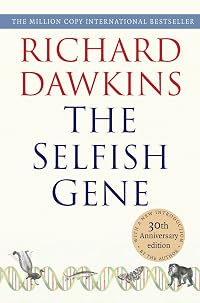
The Selfish Gene
by Richard Dawkins
On This Page
Description
The million copy international bestseller, critically acclaimed and translated into over 25 languages.As influential today as when it was first published, The Selfish Gene has become a classic exposition of evolutionary thought. Professor Dawkins articulates a gene's eye view of evolution - a view giving centre stage to these persistent units of information, and in which organisms can be seen as vehicles for their replication. This imaginative, powerful, and stylistically brilliant work not show more only brought the insights of Neo-Darwinism to a wide audience, but galvanized the biologycommunity, generating much debate and stimulating whole new areas of research. Forty years later, its insights remain as relevant today as on the day it was published.This 40th anniversary edition includes a new epilogue from the author discussing the continuing relevance of these ideas in evolutionary biology today, as well as the original prefaces and foreword, and extracts from early reviews.Oxford Landmark Science books are 'must-read' classics of modern science writing which have crystallized big ideas, and shaped the way we think. show lessTags
Recommendations








Member Recommendations





Member Reviews
To begin with, for someone who laments all the misconceptions and misunderstandings of the book, Richard Dawkins should bear most of the blame in choosing what is probably the worst imaginable choice for the title. As Dawkins would admit later, three better alternatives would have been The Cooperative Gene, The Immortal Gene, or The Altruistic Vehicle.
In the title The Selfish Gene, the emphasis should be on “gene,” not on “selfish,” as in a gene that codes for selfishness. But Dawkins should have anticipated the confusion and the tendency for critics to use this against him without even reading the book. Nothing screams social darwinism more than the title The Selfish Gene, even though the book is clearly anti-social darwinism show more in content.
There’s even a passage Dawkins wrote that, as he states in the introduction, he wishes he could remove: “Let us try to teach generosity and altruism, because we are born selfish.” This again conveys the wrong idea.
I can’t help but think this should have all been anticipated, and so this detracts from the otherwise brilliant ideas in the book. Here are what I take those ideas to be.
The main idea represents a new way of thinking about evolution in terms of “replicators” and “vehicles.” The replicators are strands of DNA that are housed, copied, and transmitted by and through bodies, which act as vehicles for the replicators.
While it’s natural to think of an animal body as using DNA to reproduce and replicate itself, Dawkins reverses this and claims that a better, more accurate way of depicting the situation is as replicators using bodies to replicate and transmit themselves.
And so the unit of natural selection is at the level of the gene, not the individual. And this shouldn’t be controversial because it’s not even possible for an individual to act as a replicator. A replicator must be copied with high levels of accuracy to be passed on, and an individual cannot copy itself with any degree of accuracy at all. An individual is a unique assortment of genes in specific arrangements, and during reproduction only half of his/her entire genome is transmitted to offspring, and even in this half the genes are shuffled and reconfigured in different arrangements. The only things that live on in the same arrangement are particular genes, the immortal strands of DNA that pass through the vehicles known as animals and plants.
You can say that natural selection works at the level of the individual, not the gene, because genes are shielded from the environment. This seems to be a contradiction of the selfish gene theory, but it isn’t. Here’s why: genes provide the instructions for building bodies, and so have phenotypic effects (a phenotype is an observable characteristic resulting from genetic instruction). Natural selection works on individual bodies, but the bodies are constructed based on instructions from the genes. So in a sense natural selection is working at both levels, but it is only the gene that is acting as a true replicator.
For example, if a hard shell protects an animal and offers a reproductive advantage, this animal will survive and reproduce at higher rates. Natural selection has operated at the level of the individual. But the genes for producing a hard shell are what’s being passed on to other bodies during reproduction, so it’s really the level of the gene where evolution is taking place and it’s really the gene that is being selected for.
It’s important to remember that evolution by natural selection is a mechanical, physical process, and “viewing” the process at different levels is just a matter of pedagogical convenience. This clarifies another misconception: genes are not consciously “trying” to replicate themselves, it just helps to understand the phenomenon through personification. If we think of genes as selfishly acting to perpetuate themselves, we can understand the process more clearly.
The final misconception I want to cover is the connection between biological evolution and morality or politics. As Richard Dawkins clearly states in the book, there is no necessary connection between evolution and how we should structure our behavior or organize our society. Evolution has crafted our brains, but our brains have long taken over the process of everyday living. As Steven Pinker reminded us, he has chosen to not have children, instead dedicating his life to teaching, writing, and friends, and if his genes don’t like it they can go jump in the lake. Dawkins also thinks it should be obvious that our brains can override our selfish genes, using the obvious example of contraceptives.
A good rule of thumb is, if you hear someone make a moral claim based on evolution, they probably don’t understand how evolution works. And if they do, they’re making the obvious mistake of not noticing how our consciousness has allowed us to escape the dictates of our biology. More than likely, they’re just using biology to justify an archaic and dogmatic social arrangement in which they stand to benefit.
The last thing I’ll mention is the connection between evolution and human meaning. Some people have commented that reading this book has sent them into a state of depression, as it paints a rather bleak and mechanical view of the world. I have three responses to this:
1. Truth is truth, whether we want to believe it or not. The universe is under no obligation to conform to our wishes. We must have the courage to face reality, wherever the evidence and our reasoning leads. Anything else is childish self-delusion.
2. Most people do not derive life satisfaction based on the ultimate fate or nature of the material world anyway. Even if the arguments from the book are true, what does this have to do with family, friends, hobbies, music, art, positive emotions, and everything else that makes life worth living?
3. Scientific knowledge is never complete or certain. Our limited senses capture only portions of reality, our scientific knowledge is incomplete, and future discoveries are presently unforeseeable. I’m not suggesting anything supernatural here, only that we have both knowledge and ignorance about the world. Turning ignorance into knowledge via religion, superstition, mysticism, etc. leads only to confusion and inaccuracy, but at the same time we cannot close our minds to thinking our knowledge is complete. If this is enough for you to hold out hope for deeper meaning infused into the universe, then that is a legitimate position. show less
In the title The Selfish Gene, the emphasis should be on “gene,” not on “selfish,” as in a gene that codes for selfishness. But Dawkins should have anticipated the confusion and the tendency for critics to use this against him without even reading the book. Nothing screams social darwinism more than the title The Selfish Gene, even though the book is clearly anti-social darwinism show more in content.
There’s even a passage Dawkins wrote that, as he states in the introduction, he wishes he could remove: “Let us try to teach generosity and altruism, because we are born selfish.” This again conveys the wrong idea.
I can’t help but think this should have all been anticipated, and so this detracts from the otherwise brilliant ideas in the book. Here are what I take those ideas to be.
The main idea represents a new way of thinking about evolution in terms of “replicators” and “vehicles.” The replicators are strands of DNA that are housed, copied, and transmitted by and through bodies, which act as vehicles for the replicators.
While it’s natural to think of an animal body as using DNA to reproduce and replicate itself, Dawkins reverses this and claims that a better, more accurate way of depicting the situation is as replicators using bodies to replicate and transmit themselves.
And so the unit of natural selection is at the level of the gene, not the individual. And this shouldn’t be controversial because it’s not even possible for an individual to act as a replicator. A replicator must be copied with high levels of accuracy to be passed on, and an individual cannot copy itself with any degree of accuracy at all. An individual is a unique assortment of genes in specific arrangements, and during reproduction only half of his/her entire genome is transmitted to offspring, and even in this half the genes are shuffled and reconfigured in different arrangements. The only things that live on in the same arrangement are particular genes, the immortal strands of DNA that pass through the vehicles known as animals and plants.
You can say that natural selection works at the level of the individual, not the gene, because genes are shielded from the environment. This seems to be a contradiction of the selfish gene theory, but it isn’t. Here’s why: genes provide the instructions for building bodies, and so have phenotypic effects (a phenotype is an observable characteristic resulting from genetic instruction). Natural selection works on individual bodies, but the bodies are constructed based on instructions from the genes. So in a sense natural selection is working at both levels, but it is only the gene that is acting as a true replicator.
For example, if a hard shell protects an animal and offers a reproductive advantage, this animal will survive and reproduce at higher rates. Natural selection has operated at the level of the individual. But the genes for producing a hard shell are what’s being passed on to other bodies during reproduction, so it’s really the level of the gene where evolution is taking place and it’s really the gene that is being selected for.
It’s important to remember that evolution by natural selection is a mechanical, physical process, and “viewing” the process at different levels is just a matter of pedagogical convenience. This clarifies another misconception: genes are not consciously “trying” to replicate themselves, it just helps to understand the phenomenon through personification. If we think of genes as selfishly acting to perpetuate themselves, we can understand the process more clearly.
The final misconception I want to cover is the connection between biological evolution and morality or politics. As Richard Dawkins clearly states in the book, there is no necessary connection between evolution and how we should structure our behavior or organize our society. Evolution has crafted our brains, but our brains have long taken over the process of everyday living. As Steven Pinker reminded us, he has chosen to not have children, instead dedicating his life to teaching, writing, and friends, and if his genes don’t like it they can go jump in the lake. Dawkins also thinks it should be obvious that our brains can override our selfish genes, using the obvious example of contraceptives.
A good rule of thumb is, if you hear someone make a moral claim based on evolution, they probably don’t understand how evolution works. And if they do, they’re making the obvious mistake of not noticing how our consciousness has allowed us to escape the dictates of our biology. More than likely, they’re just using biology to justify an archaic and dogmatic social arrangement in which they stand to benefit.
The last thing I’ll mention is the connection between evolution and human meaning. Some people have commented that reading this book has sent them into a state of depression, as it paints a rather bleak and mechanical view of the world. I have three responses to this:
1. Truth is truth, whether we want to believe it or not. The universe is under no obligation to conform to our wishes. We must have the courage to face reality, wherever the evidence and our reasoning leads. Anything else is childish self-delusion.
2. Most people do not derive life satisfaction based on the ultimate fate or nature of the material world anyway. Even if the arguments from the book are true, what does this have to do with family, friends, hobbies, music, art, positive emotions, and everything else that makes life worth living?
3. Scientific knowledge is never complete or certain. Our limited senses capture only portions of reality, our scientific knowledge is incomplete, and future discoveries are presently unforeseeable. I’m not suggesting anything supernatural here, only that we have both knowledge and ignorance about the world. Turning ignorance into knowledge via religion, superstition, mysticism, etc. leads only to confusion and inaccuracy, but at the same time we cannot close our minds to thinking our knowledge is complete. If this is enough for you to hold out hope for deeper meaning infused into the universe, then that is a legitimate position. show less
What makes a good book, in my opinion, is one that changes the way you view the world. It offers another way to think about how things are and why. It challenges you and amazes you. The Selfish Gene altered the way I see life on earth.
Dawkins is a fantastic writer and he does a superb job at describing complex operations using metaphors that are simple and connectable. It helped tremendously when he described the inner workings of DNA structure and the minute process of meiosis. I'm not too familiar with Game Theory but the examples he used made it easy to follow and understand for the most part.
The Selfish Gene shines most when Dawkins describes how certain animals behave in the wild, whether 'selfishly' or 'altruistically'. He uses show more real world studies which I found captivating. The fact that the female praying mantis rips the head off of her mate and then eats it either during or after copulation is wild!
By the end of the last chapter, I feel like I walked away with a fairly good understanding of his theory. The adage 'survival of the fittest' was never clear of who exactly benefits being the fittest. Is it the entire species? Is it the group of species? Is it the individual? Or is the answer found deeper inside the individual at the microscopic level?
Life arose as simple organisms but came to grow into extreme intricacy and complexity. The ancient single celled organism 'wanted' to proliferate and continue its existence. It came that through teamwork, or altruism, it (the replicating cell) could benefit itself, hence the selfishness. So I can see how this theory can have truth to it. I'm not a biologist however so of course I can be mistaken, but that's what I took away from this book.
Highly recommended to anyone interested in evolution and how life started on our beautiful planet. show less
Dawkins is a fantastic writer and he does a superb job at describing complex operations using metaphors that are simple and connectable. It helped tremendously when he described the inner workings of DNA structure and the minute process of meiosis. I'm not too familiar with Game Theory but the examples he used made it easy to follow and understand for the most part.
The Selfish Gene shines most when Dawkins describes how certain animals behave in the wild, whether 'selfishly' or 'altruistically'. He uses show more real world studies which I found captivating. The fact that the female praying mantis rips the head off of her mate and then eats it either during or after copulation is wild!
By the end of the last chapter, I feel like I walked away with a fairly good understanding of his theory. The adage 'survival of the fittest' was never clear of who exactly benefits being the fittest. Is it the entire species? Is it the group of species? Is it the individual? Or is the answer found deeper inside the individual at the microscopic level?
Life arose as simple organisms but came to grow into extreme intricacy and complexity. The ancient single celled organism 'wanted' to proliferate and continue its existence. It came that through teamwork, or altruism, it (the replicating cell) could benefit itself, hence the selfishness. So I can see how this theory can have truth to it. I'm not a biologist however so of course I can be mistaken, but that's what I took away from this book.
Highly recommended to anyone interested in evolution and how life started on our beautiful planet. show less
Dawkins spends a lot of time in his new introduction to this edition trying to persuade us that he is not a crude genetic determinist. He tries to dig himself out of the hole he got himself into when he described us as "lumbering robots" created by our genes. (Chapter 2.)
But in an interview published in "New Statesman" (26th March 1999), while discussing cloning, Dawkins said: "Cloning Saddam Hussein would be horrible. Cloning David Attenborough, or someone we all admire, might be fine."
If that isn't crude genetic determinism, then I don't know what is. Does Dawkins really think that the nastiness of the dead dictator and the niceness of the admirable Attenborough are simply the result of their genes, and nothing to do with their show more upbringing, experiences, social circumstances and life-history?
This certainly does not suggest that Dawkins has a grasp of the subtle and complex interaction between our genetic potentiality and the environmental factors which play an enormous part in making us what we are.
Nor does Dawkins have a real understanding of religion. He is like the philosophers of the Enlightenment in that he thinks that religious beliefs can be dispelled by directly confronting them with rational, scientific arguments. But any atheist (including myself) will know that religious peoples' ideas are not easily dislodged from their heads by logical arguments. And this is not because they have been infected by "memes". (Memes are Dawkins' imaginary cultural equivalent of genes - a totally inadequate way of explaining how people are socialized into accepting beliefs.)
Darwin himself realised the difficulties when he wrote that: "...direct arguments against Christianity & theism produce hardly any effect on the public; & freedom of thought is best promoted by the gradual illumination of men's minds, which follow[s] from the advance of science."
But to understand why it is difficult to win people away from religious prejudices by direct argument, we need to look at what Darwin's contemporary, Karl Marx, had to say. Marx focussed on the social role of religion. He pointed out that it is used by the powerful to keep the masses under control. ("The Divine Right of Kings", for example.) But he also pointed out that it can inspire the downtrodden in their rebellions. For example, even we atheists must acknowledge that the Christianity of Martin Luther King was a very different thing from that of George W. Bush.
Marx is also known for writing that religion is the "opium of the people". But the full quotation is: "Religion is the sigh of the oppressed creature, the heart of a heartless world, and the soul of soulless conditions. It is the opium of the people."
In other words, oppressed and alienated people who are prevented from living full lives often turn to religion as a comfort. It fulfills a need for them. It is therefore difficult to win them from their religious views by logical argument.
Dawkins does not see that the best way to undermine religion is, as Marx said, to change society in order to remove people's need for religion. In a society without alienation, inequality and oppression, religion would wither away. (And I don't mean the bureaucratic state capitalist tyranny of the so-called "communist" states.)
To conclude, I have to say that, despite Dawkins' protestations, his opponents within the field of evolutionary biology - Richard Lewontin, Steven Rose, Niles Eldredge and the late Stephen Jay Gould - provide a much fuller account of evolution and of "human nature". show less
But in an interview published in "New Statesman" (26th March 1999), while discussing cloning, Dawkins said: "Cloning Saddam Hussein would be horrible. Cloning David Attenborough, or someone we all admire, might be fine."
If that isn't crude genetic determinism, then I don't know what is. Does Dawkins really think that the nastiness of the dead dictator and the niceness of the admirable Attenborough are simply the result of their genes, and nothing to do with their show more upbringing, experiences, social circumstances and life-history?
This certainly does not suggest that Dawkins has a grasp of the subtle and complex interaction between our genetic potentiality and the environmental factors which play an enormous part in making us what we are.
Nor does Dawkins have a real understanding of religion. He is like the philosophers of the Enlightenment in that he thinks that religious beliefs can be dispelled by directly confronting them with rational, scientific arguments. But any atheist (including myself) will know that religious peoples' ideas are not easily dislodged from their heads by logical arguments. And this is not because they have been infected by "memes". (Memes are Dawkins' imaginary cultural equivalent of genes - a totally inadequate way of explaining how people are socialized into accepting beliefs.)
Darwin himself realised the difficulties when he wrote that: "...direct arguments against Christianity & theism produce hardly any effect on the public; & freedom of thought is best promoted by the gradual illumination of men's minds, which follow[s] from the advance of science."
But to understand why it is difficult to win people away from religious prejudices by direct argument, we need to look at what Darwin's contemporary, Karl Marx, had to say. Marx focussed on the social role of religion. He pointed out that it is used by the powerful to keep the masses under control. ("The Divine Right of Kings", for example.) But he also pointed out that it can inspire the downtrodden in their rebellions. For example, even we atheists must acknowledge that the Christianity of Martin Luther King was a very different thing from that of George W. Bush.
Marx is also known for writing that religion is the "opium of the people". But the full quotation is: "Religion is the sigh of the oppressed creature, the heart of a heartless world, and the soul of soulless conditions. It is the opium of the people."
In other words, oppressed and alienated people who are prevented from living full lives often turn to religion as a comfort. It fulfills a need for them. It is therefore difficult to win them from their religious views by logical argument.
Dawkins does not see that the best way to undermine religion is, as Marx said, to change society in order to remove people's need for religion. In a society without alienation, inequality and oppression, religion would wither away. (And I don't mean the bureaucratic state capitalist tyranny of the so-called "communist" states.)
To conclude, I have to say that, despite Dawkins' protestations, his opponents within the field of evolutionary biology - Richard Lewontin, Steven Rose, Niles Eldredge and the late Stephen Jay Gould - provide a much fuller account of evolution and of "human nature". show less
When I first picked up The Selfish Gene, I was intrigued by the title. Having read Ayn Rand’s The Virtue of Selfishness, I was curious—was Dawkins making a case for raw self-interest as a driving force in evolution? The answer was far more nuanced.
Dawkins doesn’t argue that individuals should be selfish, nor that they always are. Instead, he presents a bold claim: evolution doesn’t favor individuals, or even species—it favors genes. Genes are the true players in natural selection, and everything we see in nature, from cutthroat competition to deep altruism, emerges from their struggle to replicate.
While the book transformed our understanding of biology, it also sparked decades of misinterpretation. Many assumed it was show more advocating selfishness as a virtue, but Dawkins was explaining the mechanics of evolution, not prescribing human behavior. So, what are the book’s most important ideas?
1. Genes Are the True Players in Evolution
Most people assume evolution works at the level of individuals or species—"survival of the fittest" implying the strongest animals or best-adapted groups endure. Dawkins challenges this. Genes, not organisms, are the fundamental unit of natural selection.
Genes are self-replicating units of biological information, made of DNA, that pass from one generation to the next. Organisms—including humans—are merely temporary survival machines that carry these genes forward. Evolution selects genes based on how well they help themselves replicate, not necessarily how well they help an individual live or how much they benefit a species.
This idea reframed how we study evolution, shifting focus from species survival to gene survival.
It explains why some traits persist even if they harm individuals—as long as the gene spreads, it survives (e.g., peacocks’ burdensome tails exist because they attract mates).
Evolution is not a conscious process—genes don’t "want" anything, but those that replicate best are the ones that remain.
2. Selfish Genes Can Produce Altruistic Behavior
If genes are selfish, why do we see altruism in nature—why do animals help others, sometimes at their own expense? The answer is kin selection: an organism is more likely to help relatives because those relatives carry copies of the same genes.
A mother sacrificing for her child makes sense in evolutionary terms because her child carries half of her genes. Helping the child survive means the genes survive.
Worker ants, bees, and termites never reproduce, yet they sacrifice themselves for the colony. This works because the queen carries the same genetic material, ensuring their genes persist.
Even human cooperation—such as protecting family members—is often linked to shared genetics, though cultural and social factors complicate things further.
Dawkins’ point is clear: just because genes are "selfish" doesn’t mean organisms always act selfishly. Sometimes, helping others ensures the gene’s survival better than pure competition would.
3. Memes: The Evolution of Ideas
One of the book’s most influential (and unexpected) ideas is memes—units of cultural transmission that spread like genes. A meme could be a phrase, a belief, a fashion trend, or even a political ideology. Just as natural selection favors genes that replicate well, cultural selection favors memes that spread successfully.
Religions, languages, and customs evolve based on how effectively they spread, not necessarily how true or beneficial they are.
This idea explains why internet memes go viral—they mutate, replicate, and outcompete others based on what grabs attention.
In many ways, our ideas are "survival machines" just like our bodies—competing for influence and longevity.
This concept laid the foundation for modern discussions on viral marketing, digital culture, and social media algorithms, even though it was introduced in 1976.
4. Evolution is an Arms Race—Not Progress Toward Perfection
A common misunderstanding of evolution is that it moves toward an ideal state—a perfected version of a species. Dawkins debunks this. Evolution is not a ladder; it’s an arms race, where species constantly adapt to keep up with predators, prey, and environmental changes.
Why do cheetahs get faster? Because gazelles get better at escaping. If one slows down, the other gains an advantage, so both evolve in a race with no finish line.
Why does the flu keep mutating? Because our immune systems adapt—so the virus must evolve faster to survive.
Why do companies constantly rebrand and innovate? Because competitors are doing the same—standing still means falling behind.
This idea, known as The Red Queen Effect, applies far beyond biology. Technology, economics, and warfare all follow similar patterns—change is constant, and the only way to survive is to keep adapting.
5. Humans Are Unique—We Can Override Our Programming
Perhaps the most profound idea in The Selfish Gene is that, while genes shape us, we are not prisoners to them. Unlike most animals, humans can recognize their biological instincts and choose to act differently.
We can choose not to reproduce, despite evolution programming us to do so.
We can help strangers, even when there’s no genetic benefit.
We can reject destructive ideas, even if they’ve spread memetically.
Dawkins argues that, unlike other species, we have the power to go against the selfish programming of our genes and memes—a fascinating perspective on free will and human potential.
An Objectivist Perspective: A is A—And Evolution Proves It
Dawkins’ gene-centered view of evolution is, at its core, a reaffirmation of "A is A"—reality is what it is, independent of human wishes. He dismantles collectivist misconceptions about evolution, proving that natural selection does not operate “for the good of the species” but through the cold, mechanistic reality of genetic survival. Just as Rand rejected the idea that individuals exist to serve society, Dawkins rejects the notion that nature selects for the collective. Instead, genes act in self-preserving ways that, when advantageous, produce cooperation—but never self-sacrifice for its own sake.
This ties directly to the Red Queen Effect, which Objectivists might recognize as the biological equivalent of rational self-improvement. Just as species must constantly adapt to survive, individuals must continually grow, think, and innovate to thrive in reality. Dawkins provides the mechanics of adaptation, but Rand provides the philosophy that gives it direction. The two are not mutually exclusive—science explains what "is", and philosophy guides what "ought to be." Evolution may explain why we have the ability to reason, but it is our responsibility to use it consciously, productively, and purposefully—to master our nature rather than be ruled by it.
Final Thoughts: What This Means for Today and the Future
The Selfish Gene changed how we understand evolution, but its ideas stretch far beyond biology. Today, they influence:
AI & machine learning – Genetic algorithms mimic evolutionary competition, constantly optimizing for efficiency.
Business strategy – Companies act like evolving organisms, adapting or dying based on market pressures.
Social media virality – Memes spread like genes, competing for attention and replication.
And perhaps most importantly, it forces us to question human nature: Are we just biological machines, or can we outthink our programming?
I think we can.
If you enjoy big ideas about life, competition, and what drives us, The Selfish Gene is essential. But if you’re looking for a light read, this isn’t it. show less
Dawkins doesn’t argue that individuals should be selfish, nor that they always are. Instead, he presents a bold claim: evolution doesn’t favor individuals, or even species—it favors genes. Genes are the true players in natural selection, and everything we see in nature, from cutthroat competition to deep altruism, emerges from their struggle to replicate.
While the book transformed our understanding of biology, it also sparked decades of misinterpretation. Many assumed it was show more advocating selfishness as a virtue, but Dawkins was explaining the mechanics of evolution, not prescribing human behavior. So, what are the book’s most important ideas?
1. Genes Are the True Players in Evolution
Most people assume evolution works at the level of individuals or species—"survival of the fittest" implying the strongest animals or best-adapted groups endure. Dawkins challenges this. Genes, not organisms, are the fundamental unit of natural selection.
Genes are self-replicating units of biological information, made of DNA, that pass from one generation to the next. Organisms—including humans—are merely temporary survival machines that carry these genes forward. Evolution selects genes based on how well they help themselves replicate, not necessarily how well they help an individual live or how much they benefit a species.
2. Selfish Genes Can Produce Altruistic Behavior
If genes are selfish, why do we see altruism in nature—why do animals help others, sometimes at their own expense? The answer is kin selection: an organism is more likely to help relatives because those relatives carry copies of the same genes.
Dawkins’ point is clear: just because genes are "selfish" doesn’t mean organisms always act selfishly. Sometimes, helping others ensures the gene’s survival better than pure competition would.
3. Memes: The Evolution of Ideas
One of the book’s most influential (and unexpected) ideas is memes—units of cultural transmission that spread like genes. A meme could be a phrase, a belief, a fashion trend, or even a political ideology. Just as natural selection favors genes that replicate well, cultural selection favors memes that spread successfully.
This concept laid the foundation for modern discussions on viral marketing, digital culture, and social media algorithms, even though it was introduced in 1976.
4. Evolution is an Arms Race—Not Progress Toward Perfection
A common misunderstanding of evolution is that it moves toward an ideal state—a perfected version of a species. Dawkins debunks this. Evolution is not a ladder; it’s an arms race, where species constantly adapt to keep up with predators, prey, and environmental changes.
This idea, known as The Red Queen Effect, applies far beyond biology. Technology, economics, and warfare all follow similar patterns—change is constant, and the only way to survive is to keep adapting.
5. Humans Are Unique—We Can Override Our Programming
Perhaps the most profound idea in The Selfish Gene is that, while genes shape us, we are not prisoners to them. Unlike most animals, humans can recognize their biological instincts and choose to act differently.
Dawkins argues that, unlike other species, we have the power to go against the selfish programming of our genes and memes—a fascinating perspective on free will and human potential.
An Objectivist Perspective: A is A—And Evolution Proves It
Dawkins’ gene-centered view of evolution is, at its core, a reaffirmation of "A is A"—reality is what it is, independent of human wishes. He dismantles collectivist misconceptions about evolution, proving that natural selection does not operate “for the good of the species” but through the cold, mechanistic reality of genetic survival. Just as Rand rejected the idea that individuals exist to serve society, Dawkins rejects the notion that nature selects for the collective. Instead, genes act in self-preserving ways that, when advantageous, produce cooperation—but never self-sacrifice for its own sake.
This ties directly to the Red Queen Effect, which Objectivists might recognize as the biological equivalent of rational self-improvement. Just as species must constantly adapt to survive, individuals must continually grow, think, and innovate to thrive in reality. Dawkins provides the mechanics of adaptation, but Rand provides the philosophy that gives it direction. The two are not mutually exclusive—science explains what "is", and philosophy guides what "ought to be." Evolution may explain why we have the ability to reason, but it is our responsibility to use it consciously, productively, and purposefully—to master our nature rather than be ruled by it.
Final Thoughts: What This Means for Today and the Future
The Selfish Gene changed how we understand evolution, but its ideas stretch far beyond biology. Today, they influence:
And perhaps most importantly, it forces us to question human nature: Are we just biological machines, or can we outthink our programming?
I think we can.
If you enjoy big ideas about life, competition, and what drives us, The Selfish Gene is essential. But if you’re looking for a light read, this isn’t it. show less
Often alluded to as being 'the most important book about evolution since Darwin', 'The Selfish Gene' by Richard Dawkins, published more than 40 years ago now, remains for sure an absolute must-read on the topic. He, in fact, takes over where Darwin had stopped. While Darwin had explained the process through natural selection, what remained to explain was what tool, exactly, allowed for such selection. For Dawkins, the answer are the genes.
In fact, he goes even further. As far as he is concerned, there is indeed a great misunderstanding when it comes to natural selection: it's not about the survival of species, nor is it about the survival of individuals, but about the survival of genes. We (animals, plants) are merely 'machines', show more sheltering the genes in question and that have been competing, over millions of years, to survive. Individual organisms die, not genes -here's what makes them key, then, to the selective process.
If this idea, bold and radical back in the 1970s, had made its splash (it got him a quarrel with Stephen Jay Gould, although here was more a mediatic battle than one based on content) it has now become more widely accepted -although still challenged. And... why not? It explains a lot of things, from the presence in organisms of useless, even, detrimental/ harmful genes, to help enlightening us a bit more when it comes to sex, aggression, and altruism (both within and between species). Here was a step forward in our understanding, then, and yet...
And yet, it still suffers from various misunderstanding. Dawkins, then, settled to clarify things, in updated editions which render this book even more relevant and necessary.
If genes, in their selfish quest to survive, have built the machines that we are, one of the collateral damages of such building is the emergence of our nervous systems, hence our brains, hence consciousness. He is no philosopher, and so he is not delving into details in here; but he insists: this, then, makes us cultural creatures, that he explains by coining the term 'memes'. Better: over time, these memes took over genes to such a point that we are now the only specie able to revolt against their selfish tyranny. From then on, to reduce us to our genes, to try and explain human nature by relying on genetics alone, is, therefore, stupid -the selfish gene theory has nothing to do with eugenics!
Here's a key book, then, that truly offers a radically new perspective upon who we are, besides dispelling many (many) myths about genetics itself. Brilliant. show less
In fact, he goes even further. As far as he is concerned, there is indeed a great misunderstanding when it comes to natural selection: it's not about the survival of species, nor is it about the survival of individuals, but about the survival of genes. We (animals, plants) are merely 'machines', show more sheltering the genes in question and that have been competing, over millions of years, to survive. Individual organisms die, not genes -here's what makes them key, then, to the selective process.
If this idea, bold and radical back in the 1970s, had made its splash (it got him a quarrel with Stephen Jay Gould, although here was more a mediatic battle than one based on content) it has now become more widely accepted -although still challenged. And... why not? It explains a lot of things, from the presence in organisms of useless, even, detrimental/ harmful genes, to help enlightening us a bit more when it comes to sex, aggression, and altruism (both within and between species). Here was a step forward in our understanding, then, and yet...
And yet, it still suffers from various misunderstanding. Dawkins, then, settled to clarify things, in updated editions which render this book even more relevant and necessary.
If genes, in their selfish quest to survive, have built the machines that we are, one of the collateral damages of such building is the emergence of our nervous systems, hence our brains, hence consciousness. He is no philosopher, and so he is not delving into details in here; but he insists: this, then, makes us cultural creatures, that he explains by coining the term 'memes'. Better: over time, these memes took over genes to such a point that we are now the only specie able to revolt against their selfish tyranny. From then on, to reduce us to our genes, to try and explain human nature by relying on genetics alone, is, therefore, stupid -the selfish gene theory has nothing to do with eugenics!
Here's a key book, then, that truly offers a radically new perspective upon who we are, besides dispelling many (many) myths about genetics itself. Brilliant. show less
Color me very impressed. I can now see why this is considered to be one of those hugely popular science books I keep hearing about and the reason why Dawkins has become so widely known and/or respected with or without his notoriety.
Indeed, the pure science bits were pretty much awesome. We, or at least I, have heard of this theory in other contexts before and none of it really comes as much surprise to see that genes, themselves, have evolved strategies that are exactly the same as Game Theory in order to find the best possible outcome for continued replication. Hence: the selfish gene.
Enormous simple computers running through the prisoner's dilemma with each other, rival genes, and especially within whole organisms which could just be show more seen as gigantic living spacecraft giving the genes an evolutionary advantage of finding new and more prosperous adaptations.
Yup! That's us!
I honestly don't see the problem. I love the idea that we are just galaxies of little robots running complicated Game Theories that eventually turn into a great cooperative machine where everyone (mostly) benefits, with plenty of complicated moves going way beyond hawks and doves and straight into the horribly complicated multi-defectors, forgivers, and other evolutionary styles that depend on the events that have gone before and the pre-knowledge (or lack of) a set end-date for the entire experiment... in other words, our deaths, whether pre-planned or simply the entire mass of genes just coming to realize that it's no longer in their best interest to keep pushing this jalopy around any longer if they're not getting anything out of it... like further replication. :)
Even when it's not precisely sex, it's still all about sex. :)
Of course, what I've just mentioned isn't the entire book, because, as a matter of fact, the book walks us through so many stages of thought, previous research, developments, mistakes, and upgraded theories and surprising conclusions based on soooooo much observable data that any of us might be rightfully confounded with the weight of it unless we were in the heart of the research, ourselves.
It's science, baby.
Make sure you don't make the data conform to your theory. Build your theory from observable data. Improve upon it as the building blocks are proved or disproved, keep going until it is so damn robust until nothing but a true miracle could topple it, and then keep asking new questions.
The fact is, this theory has nothing (or everything) to do with our lives. We play Game Theory, too, in exactly the same way every gene everywhere does, but we just happen to be able to make models on top of the situations and we're able to choose whether to see through the lies, the hawk strategies, or when to stop cooperating if the advantages work out much better for us if we did. We, like our genes, can choose long-term cooperative strategies or play everything like a Bear market. :)
Even this book says that it's very likely that Nice Guys can win, but just like our lives, the gene lives keep discovering ever more complicated strategies and all eventual strategies become more and more situational.
Isn't that us, to a tea? I wonder if most complaints about this book stem from complaints about Game Theory rather than the perceived conclusion (much better spelled out, not in this book, but in later books)... that atheism rules the day. It really isn't evident here. Instead, we have a macrocosm mimicking the microcosm and no one wants to challenge their comfortable world view.
Things aren't simple. All choices to betray or cooperate are then met with situation and memory and ever complex meta-contexts, the difference between us and genes being that we're self-aware and the genes are not.
Yes, yes, I see where the arguments can start coming out of the closet about self-determination and such, but that's not really the point of this book at all. The point is that it's a successful model that accurately describes reality. It has nothing at all to do with the macro-world except obliquely, and makes no value judgments on our art, our beliefs, or how we think about ourselves except in our uniquely stubborn and self-delusional ways that love to take things out of context and apply misunderstood concepts to our general lives and wonder why everything gets so screwed up. :)
But then, maybe I'm just applying my own incomplete models to yet another and we lousy humans still lack WAY TOO MUCH data to build a really impressively improved model. :)
Come on, Deep Thought. Where are you? :) show less
Indeed, the pure science bits were pretty much awesome. We, or at least I, have heard of this theory in other contexts before and none of it really comes as much surprise to see that genes, themselves, have evolved strategies that are exactly the same as Game Theory in order to find the best possible outcome for continued replication. Hence: the selfish gene.
Enormous simple computers running through the prisoner's dilemma with each other, rival genes, and especially within whole organisms which could just be show more seen as gigantic living spacecraft giving the genes an evolutionary advantage of finding new and more prosperous adaptations.
Yup! That's us!
I honestly don't see the problem. I love the idea that we are just galaxies of little robots running complicated Game Theories that eventually turn into a great cooperative machine where everyone (mostly) benefits, with plenty of complicated moves going way beyond hawks and doves and straight into the horribly complicated multi-defectors, forgivers, and other evolutionary styles that depend on the events that have gone before and the pre-knowledge (or lack of) a set end-date for the entire experiment... in other words, our deaths, whether pre-planned or simply the entire mass of genes just coming to realize that it's no longer in their best interest to keep pushing this jalopy around any longer if they're not getting anything out of it... like further replication. :)
Even when it's not precisely sex, it's still all about sex. :)
Of course, what I've just mentioned isn't the entire book, because, as a matter of fact, the book walks us through so many stages of thought, previous research, developments, mistakes, and upgraded theories and surprising conclusions based on soooooo much observable data that any of us might be rightfully confounded with the weight of it unless we were in the heart of the research, ourselves.
It's science, baby.
Make sure you don't make the data conform to your theory. Build your theory from observable data. Improve upon it as the building blocks are proved or disproved, keep going until it is so damn robust until nothing but a true miracle could topple it, and then keep asking new questions.
The fact is, this theory has nothing (or everything) to do with our lives. We play Game Theory, too, in exactly the same way every gene everywhere does, but we just happen to be able to make models on top of the situations and we're able to choose whether to see through the lies, the hawk strategies, or when to stop cooperating if the advantages work out much better for us if we did. We, like our genes, can choose long-term cooperative strategies or play everything like a Bear market. :)
Even this book says that it's very likely that Nice Guys can win, but just like our lives, the gene lives keep discovering ever more complicated strategies and all eventual strategies become more and more situational.
Isn't that us, to a tea? I wonder if most complaints about this book stem from complaints about Game Theory rather than the perceived conclusion (much better spelled out, not in this book, but in later books)... that atheism rules the day. It really isn't evident here. Instead, we have a macrocosm mimicking the microcosm and no one wants to challenge their comfortable world view.
Things aren't simple. All choices to betray or cooperate are then met with situation and memory and ever complex meta-contexts, the difference between us and genes being that we're self-aware and the genes are not.
Yes, yes, I see where the arguments can start coming out of the closet about self-determination and such, but that's not really the point of this book at all. The point is that it's a successful model that accurately describes reality. It has nothing at all to do with the macro-world except obliquely, and makes no value judgments on our art, our beliefs, or how we think about ourselves except in our uniquely stubborn and self-delusional ways that love to take things out of context and apply misunderstood concepts to our general lives and wonder why everything gets so screwed up. :)
But then, maybe I'm just applying my own incomplete models to yet another and we lousy humans still lack WAY TOO MUCH data to build a really impressively improved model. :)
Come on, Deep Thought. Where are you? :) show less
I first discovered Richard Dawkins by reading his Devil's Chaplain novel (by the way, that's a very nice book as well!). I then moved on to many others, among which The Selfish Gene, and I found them all, at the very least, challenging. Meaning that they force you to think of your existence non-conventionally (at least for those who are not biologist by nature).
The Selfish Gene in particular exposes Dawkins' opinion about the smallest unit on which the forces of natural selection are at work: the gene. Embracing the idea opens up new perspective on what we (as human in particular or as living beings in general) are: merely containers for what is truly living and evolving (yes, you guessed it!): pools of genes.
In what could appear as a show more cold and distant (misanthropic even) narrative voice, Dawkins investigates the consequences of his theory, getting to the point of explaining our own emotions and family connections with striking mathematical arguments: my brother and I share 50% of the same gene pool, which is why I will favor his survival more than the one of a distant relative. Similarly, my daughters has 50% of my own gene pool, but better chances than I have to grow, live, and push that pool further. Thus, I will forever choose to save her life over mine.
As I said, it is far from being a reassuring and warm story, the one that Dawkins tell us in this book. But science does not claim to be neither warm nor reassuring. Science attempts to explain what we perceive as true facts.
So if you are willing to feel some your most solid foundations cracking here and there, this book is for you. And then I promise you'll be looking for another one from the same author. show less
The Selfish Gene in particular exposes Dawkins' opinion about the smallest unit on which the forces of natural selection are at work: the gene. Embracing the idea opens up new perspective on what we (as human in particular or as living beings in general) are: merely containers for what is truly living and evolving (yes, you guessed it!): pools of genes.
In what could appear as a show more cold and distant (misanthropic even) narrative voice, Dawkins investigates the consequences of his theory, getting to the point of explaining our own emotions and family connections with striking mathematical arguments: my brother and I share 50% of the same gene pool, which is why I will favor his survival more than the one of a distant relative. Similarly, my daughters has 50% of my own gene pool, but better chances than I have to grow, live, and push that pool further. Thus, I will forever choose to save her life over mine.
As I said, it is far from being a reassuring and warm story, the one that Dawkins tell us in this book. But science does not claim to be neither warm nor reassuring. Science attempts to explain what we perceive as true facts.
So if you are willing to feel some your most solid foundations cracking here and there, this book is for you. And then I promise you'll be looking for another one from the same author. show less
Members
- Recently Added By
Published Reviews
added by themulhern
added by themulhern
Lists

Vote: Science, Religion, and History Group Reads
30 works; 17 members

Best Science Books for Non-Scientists
113 works; 57 members

Books That Changed Me
158 works; 47 members

Non-Fiction Worth Reading
1,016 works; 262 members

The One Book That Changed You
15 works; 16 members

25 Greatest Science Books of All Time
33 works; 6 members

Nature’s Nether Regions
4 works; 1 member

Unread books
1,063 works; 87 members

Falling for Science
56 works; 3 members

My Wishlist
40 works; 1 member

al.vick-wishlist-science and nature
83 works; 1 member

Alan Kay's Reading List
103 works; 3 members

Five star books
1,767 works; 109 members

Biblioteca de não ficção
41 works; 1 member

A Good Read (Radio 4)
287 works; 1 member

Books Cited in Blueprint by Nicholas Christakis
261 works; 1 member

In Our Time books
4,934 works; 2 members

el
1,139 works; 1 member
Books That Changed Our Perspective
423 works; 168 members

Books Do Furnish a Life
43 works; 1 member

Top Five Books of 2024
795 works; 264 members

The Well-Educated Mind, Susan Wise Bauer, 2016
179 works; 3 members

BBC World Book Club
267 works; 5 members

Favourite Books
1,820 works; 316 members

Mustich's 1000 Books to Read Before You Die: A Life Changing List
1,001 works; 20 members

Mind Expanding Books by hackerkid
581 works; 8 members
The Great Courses: Earth at the Crossroads
48 works; 1 member
The Great Courses: The Darwinian Revolution
50 works; 1 member

KIB Non-Fiction Book Cloud
41 works; 1 member

Atheism, humanism, freethought, &c. — Best nonfiction books in favour of
167 works; 14 members

al.vick-parents books
301 works; 1 member
Read These Too
458 works; 9 members

World Book Club (BBC World Service)
212 works; 1 member
Talk Discussions
Past Discussions
GROUP READ - The Selfish Gene by Richard Dawkins in 75 Books Challenge for 2014 (August 2014)
Author Information

78+ Works 64,078 Members
Richard Dawkins was educated at Oxford University and taught zoology at the University of California and Oxford University, holding the position of the Charles Simonyi Professor of the Public Understanding of Science. He writes about such topics as DNA and genetic engineering, virtual reality, astronomy, and evolution. His books include The show more Selfish Gene, The Extended Phenotype, The Blind Watchmaker, River Out of Eden, Climbing Mount Improbable, The God Delusion, and An Appetite for Wonder: The Making of a Scientist. (Bowker Author Biography) show less
Some Editions
Awards and Honors
Notable Lists
Series
Belongs to Publisher Series
Work Relationships
Is contained in
Common Knowledge
- Canonical title
- The Selfish Gene
- Original title
- The Selfish Gene
- Original publication date
- 1976
- First words
- Intelligent life on a planet comes of age when it first works out the reason for its own existence.
It is sobering to realize that I have lived nearly half my life with The Selfish Gene - for better or for worse.
(Introduction to 30th Anniversary Edition, Richard Dawkins, 2025)
In the dozen years since The Selfish Gene was published its central message has become textbook orthodoxy.
(Preface to Second Edition, Richard Dawkins, 1989)
The chimpanzee and the human share about 99.5 per cent of their evolutionary history, yet most human thinkers regard the chimp as a malformed, irrelevant oddity while seeing themselves as stepping-stones to the Almighty.
<... (show all)br>(Foreword to First Edition, Robert L. Trivers, 1976)
This book should be read almost as though it were science fiction.
(Preface to First Edition, Richard Dawkins, 1976)
Scientists, unlike politicians, can take pleasure in being wrong.
(Epilogue to Fortieth Anniversary Edition) - Quotations
- Although the book has been widely read and enjoyed, it has also aroused strong hostility. Much of this hostility arises, I believe, from misunderstanding, or rather, from several misunderstandings. Of these, the most fundamen... (show all)tal is a failure to understand what the book is about. It is a book about the evolutionary process - it is not about morals, or about politics, or about the human sciences. If you are not interested in how evolution came about, and cannot conceive how anyone could be seriously concerned about anything other than human affairs, then do not read it: it will only make you needlessly angry.
(from Genes and Memes a review of The Extended Phenotype by John Maynard Smith) - Last words
- (Click to show. Warning: May contain spoilers.)The only kind of entity that has to exist in order for life to arise, anywhere in the universe, is the immortal replicator.
- Blurbers
- Hart, Maarten 't; Medawar, Sir Peter; Hamilton, W. D.; Tiger, Lionel; Tresidder, Megan; Smith, John Maynard (show all 11); Davies, N. B.; Charnov, Eric L.; Appleyard, Bryan; Darlington, C. D.; Ridley, Matt
- Original language
- English
- Disambiguation notice*
- (Dutch) Nederlandse uitg. oorspr. verschenen o.d.t.: Het zelfzuchtige erfdeel
*Some information comes from Common Knowledge in other languages. Click "Edit" for more information.
Classifications
Statistics
- Members
- 11,941
- Popularity
- 739
- Reviews
- 135
- Rating
- (4.25)
- Languages
- 23 — Czech, Danish, Dutch, English, Estonian, Finnish, French, German, Greek, Hebrew, Hungarian, Italian, Korean, Norwegian (Bokmål), Polish, Russian, Serbian, Slovenian, Spanish, Swedish, Turkish, Portuguese (Portugal), Chinese, traditional
- Media
- Paper, Audiobook, Ebook
- ISBNs
- 101
- UPCs
- 1
- ASINs
- 44