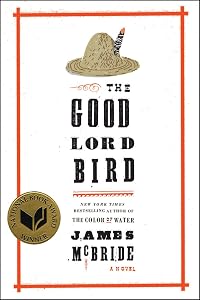
The Good Lord Bird
by James McBride
On This Page
Description
Henry Shackleford is a young slave living in the Kansas Territory in 1857, when the region is a battleground between anti- and pro-slavery forces. When John Brown, the legendary abolitionist, arrives in the area, an argument between Brown and Henry's master quickly turns violent. Henry is forced to leave town - with Brown, who believes he's a girl. Over the ensuing months, Henry - whom Brown nicknames Little Onion - conceals his true identity as he struggles to stay alive. Eventually Little show more Onion finds himself with Brown at the historic raid on Harpers Ferry in 1859 - one of the great catalysts for the Civil War. An absorbing mixture of history and imagination, The Good Lord Bird is both a rousing adventure and a moving exploration of identity and survival. show lessTags
Recommendations





Member Recommendations
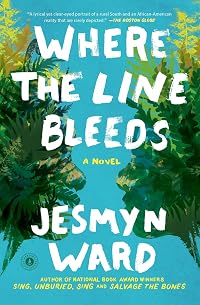
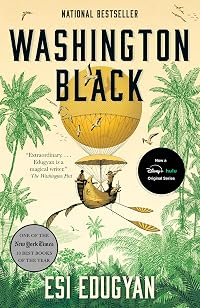
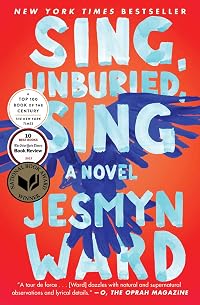
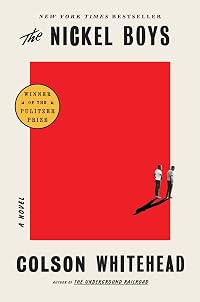
novelcommentary Similar style and time period
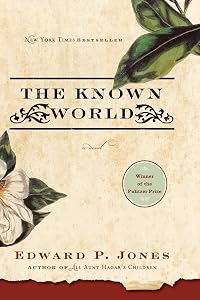
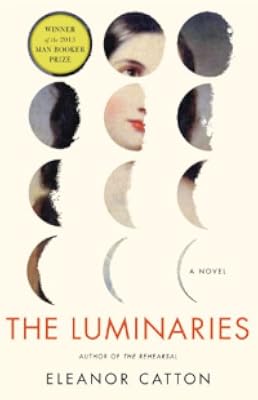
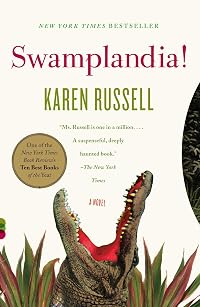
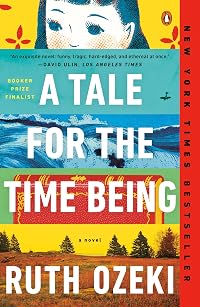
quartzite Another fictional take on the John Brown story, this one told through the voice of his third son Owen.
Lirmac Another fictionalised account of John Brown and Harper's Ferry.
jscape2000 Two dark comedies about slavery and the civil war, featuring characters who invert transcend race and gender.

jscape2000 A pair of dark comedies amid the horrors of war. Memorable protagonists, a wide ensemble, and possible divine intervention.
Member Reviews
This historical fiction novel about abolitionist John Brown and his raid on Harper's Ferry is full of drama, humor, and nonsense. It's a big cast of characters who seem larger than life and somewhat unrealistic. But at the same time, the book is clearly rooted in real events and from what I know of John Brown, he was slightly unhinged. So maybe McBride gets it right.
The main character is a boy named Henry who joins up with John Brown when his father is killed. John Brown thinks he's a girl, and Henry spends the next years of his life as Henrietta, because it's just easier. Nicknamed Little Onion by Brown, Henry is black but light colored enough to pass for white, and male but feminine enough looking to pass for a girl. The action moves show more from Kansas to Philadelphia to Canada and to Harper's Ferry. Frederick Douglass and Harriet Tubman both make appearances.
I admired this book, but I didn't love it. It was a bit too violent and a bit too over the top for my taste. show less
The main character is a boy named Henry who joins up with John Brown when his father is killed. John Brown thinks he's a girl, and Henry spends the next years of his life as Henrietta, because it's just easier. Nicknamed Little Onion by Brown, Henry is black but light colored enough to pass for white, and male but feminine enough looking to pass for a girl. The action moves show more from Kansas to Philadelphia to Canada and to Harper's Ferry. Frederick Douglass and Harriet Tubman both make appearances.
I admired this book, but I didn't love it. It was a bit too violent and a bit too over the top for my taste. show less
“Whatever he believed, he believed. It didn’t matter to him whether it was really true or not. He just changed the truth till it fit him. He was a real white man.”
“He was like everybody in war. He believed God was on his side. Everybody got God on their side in a war. Problem is, God ain’t tellin’ nobody who He’s for.”
A young slave, named Henry Shackleford, is living in the Kansas territory, in 1857. It was a volatile area, in a volatile time, with slavery being the hot-button issue. Enter, John Brown, an infamous abolitionist, who ends up mistaking Henry for a girl and steals the boy away from his master, nicknaming him Little Onion.
Henry remains, in the disguise as a girl, as a safeguard and ends up traveling with show more Brown and his gang. Finally ending up at the fateful events at Harper's Ferry.
This novel caught me by surprise. A mix of historical figures, like Brown, Frederick Douglas and Harriet Tubman, blended in with fictional characters. It is bold, funny, adventurous, deadly serious and highly readable. More Little Big Man than Cloudsplitter, or The Confessions of Nat Turner. Good stuff. show less
“He was like everybody in war. He believed God was on his side. Everybody got God on their side in a war. Problem is, God ain’t tellin’ nobody who He’s for.”
A young slave, named Henry Shackleford, is living in the Kansas territory, in 1857. It was a volatile area, in a volatile time, with slavery being the hot-button issue. Enter, John Brown, an infamous abolitionist, who ends up mistaking Henry for a girl and steals the boy away from his master, nicknaming him Little Onion.
Henry remains, in the disguise as a girl, as a safeguard and ends up traveling with show more Brown and his gang. Finally ending up at the fateful events at Harper's Ferry.
This novel caught me by surprise. A mix of historical figures, like Brown, Frederick Douglas and Harriet Tubman, blended in with fictional characters. It is bold, funny, adventurous, deadly serious and highly readable. More Little Big Man than Cloudsplitter, or The Confessions of Nat Turner. Good stuff. show less
With The Good Lord Bird James McBride has written an interesting and often humorous fictional account of John Brown's escapades from the days of "Burning Kansas" to his demise at Harpers Ferry.
The unlikely narrator of the events chronicled in this novel, those leading up to Brown’s quixotic raid at Harpers Ferry, is Henry Shackleford, aka Little Onion, whose father is killed while Brown is in the process of liberating some slaves. Brown takes the 12-year-old away thinking he’s a girl, and Onion keeps up the disguise for the next few years. Onion, while sounding like a typical 12-year-old often makes observations that belie his age, and his fluidity of gender identity allows him a certain leeway in his life. He comments: "I weren't show more for being a girl, mind you. But there was certain advantages, like not having to lift nothing heavy, and not having to carry a pistol or rifle, and fellers admiring you for being tough as a boy . . ."(p 78)
And in another episode he gets taken in by Pie, a beautiful prostitute, where he witnesses some activity almost more unseemly than a 12-year-old should have to stand. The interlude with Pie occurs during a two-year period where Brown disappears from Onion’s life, but they’re reunited a few months before the debacle at Harpers Ferry. In that time, Brown visits Frederick Douglass, and, in the most implausible scene in the novel, Douglass drinks a bit too much and chases after the nubile Onion.
The stakes are raised as Brown approaches October 1859, for even Onion recognizes the futility of the raid, where Brown expects hundreds of slaves to rise in revolt and gets only a handful. Onion notes that Brown’s fanaticism increasingly approaches “lunacy” as the time for the raid gets closer, and Brown never loses that obsessive glint in his eye that tells him he’s doing the Lord’s work. At the end, Onion reasserts his identity as a male and escapes just before Brown’s execution.
The book works as an exercise in point of view and has some memorable vignettes of Brown's escapades while continually emphasizing an obsession that almost borders on lunacy. John Brown was definitely not a nice man and it was not surprising that in spite of, or perhaps because of his reputation, he was not joined by the masses of black supporters that he expected when he attempted his epic raid. show less
The unlikely narrator of the events chronicled in this novel, those leading up to Brown’s quixotic raid at Harpers Ferry, is Henry Shackleford, aka Little Onion, whose father is killed while Brown is in the process of liberating some slaves. Brown takes the 12-year-old away thinking he’s a girl, and Onion keeps up the disguise for the next few years. Onion, while sounding like a typical 12-year-old often makes observations that belie his age, and his fluidity of gender identity allows him a certain leeway in his life. He comments: "I weren't show more for being a girl, mind you. But there was certain advantages, like not having to lift nothing heavy, and not having to carry a pistol or rifle, and fellers admiring you for being tough as a boy . . ."(p 78)
And in another episode he gets taken in by Pie, a beautiful prostitute, where he witnesses some activity almost more unseemly than a 12-year-old should have to stand. The interlude with Pie occurs during a two-year period where Brown disappears from Onion’s life, but they’re reunited a few months before the debacle at Harpers Ferry. In that time, Brown visits Frederick Douglass, and, in the most implausible scene in the novel, Douglass drinks a bit too much and chases after the nubile Onion.
The stakes are raised as Brown approaches October 1859, for even Onion recognizes the futility of the raid, where Brown expects hundreds of slaves to rise in revolt and gets only a handful. Onion notes that Brown’s fanaticism increasingly approaches “lunacy” as the time for the raid gets closer, and Brown never loses that obsessive glint in his eye that tells him he’s doing the Lord’s work. At the end, Onion reasserts his identity as a male and escapes just before Brown’s execution.
The book works as an exercise in point of view and has some memorable vignettes of Brown's escapades while continually emphasizing an obsession that almost borders on lunacy. John Brown was definitely not a nice man and it was not surprising that in spite of, or perhaps because of his reputation, he was not joined by the masses of black supporters that he expected when he attempted his epic raid. show less
McBride’s latest is a rambunctious imaginative historical adventure tale offering a fresh perspective on a volatile period in American history – John Brown’s zealous quest to free the slaves and the events leading up to raid on Harper’s Ferry. As the book opens in 1856 Kansas Territory, the narrator 10 year-old, Henry “Onion” Shackleford is learning a trade and slave survival tips witnesses his father being killed in a shoot-out between his master and the abolitionist John Brown. With John Brown winning this round, Henry is scooped up into the folds of John Brown and his crusade, and in the confusion is mistaken for a girl and called Onion. Onion is the perfect combination of youthful naivety and savvy with a dollop of show more mischief to capture the searing morally complex issues of race and identity of the times.
A consummate storyteller, McBride effectively uses sly humor and erudition, along with lyrically rich yet precisely raw language to keep the reader fully engaged in the exploits though we already know what happens at Harper Ferry in 1859. A combination of fictional and real characters highlights both that often issues are not just black and white but many variations in-between the spectrum and it is often an event that will force a person to move from the gray area to one of the ends, and success is often not the event itself but its legacy effect on what comes after.
As a fan of historical fiction, I thoroughly enjoyed this fresh look at a pivotal point in our history and the often flawed nature of historical figures. This book is thought-provoking and thought-challenging and long with masterful pacing, intriguing characters, and writing purposely insightful will hold the reader’s attention well past the last page. show less
A consummate storyteller, McBride effectively uses sly humor and erudition, along with lyrically rich yet precisely raw language to keep the reader fully engaged in the exploits though we already know what happens at Harper Ferry in 1859. A combination of fictional and real characters highlights both that often issues are not just black and white but many variations in-between the spectrum and it is often an event that will force a person to move from the gray area to one of the ends, and success is often not the event itself but its legacy effect on what comes after.
As a fan of historical fiction, I thoroughly enjoyed this fresh look at a pivotal point in our history and the often flawed nature of historical figures. This book is thought-provoking and thought-challenging and long with masterful pacing, intriguing characters, and writing purposely insightful will hold the reader’s attention well past the last page. show less
Published in 2013, The Good Lord Bird is James McBride’s fictionalized account of John Brown’s violent crusade against slavery during the period 1857-1859. The book’s opening chapters are set in the Kansas Territory where Brown and his “army” battled pro-slavers, with its concluding section describing his raid against a federal armory and arsenal in Virginia. The story’s narrator is a young slave, Henry, who is living in the Kansas Territory when he is “liberated” by John Brown and adopted into his army after Henry’s father is killed in 1857. Henry, a ten-year-old boy, is mistaken for a girl and viewed as a good luck charm by Brown, who gives him the name Little Onion. A running joke throughout the book is that while show more the whites all believe Henry is female, all the Blacks he meets instantly know better.
For the most part, McBride glosses over Brown’s violent deeds in the Kansas Territory. Rather, as seen through Henry’s eyes, the focus is on Brown’s fanatical religious belief that he’s been chosen by God to end the practice of slavery. The plan he comes up with to “hive the bees” and lead an uprising of slaves in Virginia is doomed from the start. Several other well known personalities of the time also make appearances along the way, including Frederick Douglass and Harriet Tubman. But the true star of the story is Henry himself, a boy more interested in staying alive than remaining at Brown’s side to the bitter end.
Having recently read McBride’s Deacon King Kong, I was impressed with his ability to tell a story humorously while preserving its seriousness. There is humor in The Good Lord Bird as well, but for me it barely registered. McBride’s Brown is presented throughout as both a folk hero and a madman. It makes for an engaging read, and the twist of presenting it from the standpoint of a young black boy dressed as a girl is a novel one. Hopefully, after reading this piece of historical fiction, it will spark the desire to learn more about the man that many believe proved to be the catalyst in sparking the Civil War. show less
For the most part, McBride glosses over Brown’s violent deeds in the Kansas Territory. Rather, as seen through Henry’s eyes, the focus is on Brown’s fanatical religious belief that he’s been chosen by God to end the practice of slavery. The plan he comes up with to “hive the bees” and lead an uprising of slaves in Virginia is doomed from the start. Several other well known personalities of the time also make appearances along the way, including Frederick Douglass and Harriet Tubman. But the true star of the story is Henry himself, a boy more interested in staying alive than remaining at Brown’s side to the bitter end.
Having recently read McBride’s Deacon King Kong, I was impressed with his ability to tell a story humorously while preserving its seriousness. There is humor in The Good Lord Bird as well, but for me it barely registered. McBride’s Brown is presented throughout as both a folk hero and a madman. It makes for an engaging read, and the twist of presenting it from the standpoint of a young black boy dressed as a girl is a novel one. Hopefully, after reading this piece of historical fiction, it will spark the desire to learn more about the man that many believe proved to be the catalyst in sparking the Civil War. show less
It’s always fascinating when a gifted author takes on the challenge of retelling a historical incident – especially one that’s been so mythologized, a lot of the base truth has been lost along the way. (Josephine Tey’s Daughter of Time comes to mind.) Often the purpose is to look for answers, but in this case I think McBride’s purpose is to challenge us to ask ourselves whether we have been asking the right questions.
Hopefully, most everyone who read this book will remember something about John Brown, the magnificently bearded zealot who, during the Civil War, plotted to spark and arm a slave uprising by raiding the armory at Harpers Ferry and then passing on the guns to blacks ready to fight for their own freedom. McBride’s show more work here is to –through a fictionalized observer, a black boy named Onion – flesh out the story with details about the state of the abolitionist movement at the time Brown was at work, information about the inner workings of his “band,” and insights into how the raid on Harpers Ferry was planned and intended to work.
Who’s Onion? He’s a young boy disguised for convenience as a girl who finds herself inadvertently (and unwillingly) absorbed into Brown’s band. (Trust McBride to pile on the social commentary by noting that, in the years preceeding the Civil War, even women had more rights than slaves.) Unlike the rest of Brown’s converts, Onion isn’t a religious zealot called by God to end slavery – he’s just a young black boy trying to stay alive in a world where the only thing he knows for sure is that half the people in the world wouldn’t hesitate to kill him, and the other half wouldn’t do anything to stop it. By casting Onion as the narrator, McBride enables us to witness these mythologized events in unfamiliar, more skeptical way.
Some of the questions raised within the text: If someone is basically making up their own scripture, are their actions in pursuit of those aims religious or merely narcissistic? (In this account, Brown’s actual knowledge of the Bible is questionable.) How did ministers who *did* read and the Bible justify slavery? (McBride incorporates a scene in which a black parishioner confronts the minster who converted her to Christianity.) Is it ever moral to perform evil deeds in the name of good? (For instance, are we okay with Brown slaughtering people just because they own slaves – even those that don’t necessarily condone slavery?) Should blacks be expected to sacrifice themselves for each other just because they share a common fate? (This comes up several times – notably when Sibone sacrfices herself to protect her fellow slaves; again when Brown runs into unexpected difficulty convincing black to join his uprising.) Were Brown’s several victories prior to Harper’s Ferry attributable to his abilities as a general, or was he just stupid lucky? (McBride depicts at least one of his initial skirmishes with government forces as a masterpiece of tactics; others, however, are depicted as chaotic.) And finally – was Brown just a crackpot … or was he, a la Joan of Arc, truly carrying out the will of God as best he knew? (For instance, when Brown warns an adversary that God will smite the gun from his hand, and the gun does actually end up flying out of his hand, should we interpret that as coincidence or divine intervention?)
If you’re looking for answers to any of these, you aren’t going to find them here. What you will find, however, is a complex, well written, and deeply humane exploration of America’s “original sin” from a perspective that isn’t often considered. And while you won’t find any overt references to today’s #BlackLivesMatter movement either, you’d have to be singularly obtuse not to spot the parallels between politics and society then vs. now.
In response to those who argue that the book starts slow, I concur that some chapters may move more briskly than others, but I also urge readers tempted to skip those chapters, or to set aside the book entirely, to persevere. By the time they turn the final page, I predict readers will consider the time and effort they dedicated to pondering the issues raised by this novel to be time well and thoughtfully spent. I know I do. show less
Hopefully, most everyone who read this book will remember something about John Brown, the magnificently bearded zealot who, during the Civil War, plotted to spark and arm a slave uprising by raiding the armory at Harpers Ferry and then passing on the guns to blacks ready to fight for their own freedom. McBride’s show more work here is to –through a fictionalized observer, a black boy named Onion – flesh out the story with details about the state of the abolitionist movement at the time Brown was at work, information about the inner workings of his “band,” and insights into how the raid on Harpers Ferry was planned and intended to work.
Who’s Onion? He’s a young boy disguised for convenience as a girl who finds herself inadvertently (and unwillingly) absorbed into Brown’s band. (Trust McBride to pile on the social commentary by noting that, in the years preceeding the Civil War, even women had more rights than slaves.) Unlike the rest of Brown’s converts, Onion isn’t a religious zealot called by God to end slavery – he’s just a young black boy trying to stay alive in a world where the only thing he knows for sure is that half the people in the world wouldn’t hesitate to kill him, and the other half wouldn’t do anything to stop it. By casting Onion as the narrator, McBride enables us to witness these mythologized events in unfamiliar, more skeptical way.
Some of the questions raised within the text: If someone is basically making up their own scripture, are their actions in pursuit of those aims religious or merely narcissistic? (In this account, Brown’s actual knowledge of the Bible is questionable.) How did ministers who *did* read and the Bible justify slavery? (McBride incorporates a scene in which a black parishioner confronts the minster who converted her to Christianity.) Is it ever moral to perform evil deeds in the name of good? (For instance, are we okay with Brown slaughtering people just because they own slaves – even those that don’t necessarily condone slavery?) Should blacks be expected to sacrifice themselves for each other just because they share a common fate? (This comes up several times – notably when Sibone sacrfices herself to protect her fellow slaves; again when Brown runs into unexpected difficulty convincing black to join his uprising.) Were Brown’s several victories prior to Harper’s Ferry attributable to his abilities as a general, or was he just stupid lucky? (McBride depicts at least one of his initial skirmishes with government forces as a masterpiece of tactics; others, however, are depicted as chaotic.) And finally – was Brown just a crackpot … or was he, a la Joan of Arc, truly carrying out the will of God as best he knew? (For instance, when Brown warns an adversary that God will smite the gun from his hand, and the gun does actually end up flying out of his hand, should we interpret that as coincidence or divine intervention?)
If you’re looking for answers to any of these, you aren’t going to find them here. What you will find, however, is a complex, well written, and deeply humane exploration of America’s “original sin” from a perspective that isn’t often considered. And while you won’t find any overt references to today’s #BlackLivesMatter movement either, you’d have to be singularly obtuse not to spot the parallels between politics and society then vs. now.
In response to those who argue that the book starts slow, I concur that some chapters may move more briskly than others, but I also urge readers tempted to skip those chapters, or to set aside the book entirely, to persevere. By the time they turn the final page, I predict readers will consider the time and effort they dedicated to pondering the issues raised by this novel to be time well and thoughtfully spent. I know I do. show less
A remarkable tale of an abolitionist that changed everything
Having loved his most recent book, Deacon King Kong, I anticipated another great story though in this case, the protagonist isn't fictional. Set during the years prior to the Civil War, John Brown's preacher-like devotion to the Lord is borderline insane. Stumbling upon a young black girl he nicknames Onion he ignores the fact she is actually a 'he' and becomes the child's mentor. With the Captain's goal to abolish slavery he gathers his sons in Iowa and concocts a complex scheme to free slaves. Using Onion as the Negro spokesperson to 'hive the bees', he leverages long standing friendships with folks in the East, some of which are black. McBride's skill at engaging the reader show more with action, missteps and humor is unique as are the characters he chooses. In many ways, Brown's 'insanity' and unrelenting commitment to his goal bears similarity to Don Quixote with Onion as his Sancho. In case you wonder what the title refers to, he withholds the meaning until the very last paragraph though there are hints throughout the story. Highly recommended, its especially valid in the divided times of today. And for those with Showtime, you'll be happy to know the series follows the book closely. show less
Having loved his most recent book, Deacon King Kong, I anticipated another great story though in this case, the protagonist isn't fictional. Set during the years prior to the Civil War, John Brown's preacher-like devotion to the Lord is borderline insane. Stumbling upon a young black girl he nicknames Onion he ignores the fact she is actually a 'he' and becomes the child's mentor. With the Captain's goal to abolish slavery he gathers his sons in Iowa and concocts a complex scheme to free slaves. Using Onion as the Negro spokesperson to 'hive the bees', he leverages long standing friendships with folks in the East, some of which are black. McBride's skill at engaging the reader show more with action, missteps and humor is unique as are the characters he chooses. In many ways, Brown's 'insanity' and unrelenting commitment to his goal bears similarity to Don Quixote with Onion as his Sancho. In case you wonder what the title refers to, he withholds the meaning until the very last paragraph though there are hints throughout the story. Highly recommended, its especially valid in the divided times of today. And for those with Showtime, you'll be happy to know the series follows the book closely. show less
Members
- Recently Added By
Published Reviews
ThingScore 88
The book appears to be very random, as though the author and his editor had failed to spot that there are a troublesome number of repetitions and inconsistencies. Brown’s endless praying seems to be a comedic line that McBride has overinvested in.... McBride’s other running joke is that most of the slaves have not the slightest interest in being liberated.... Onion, although occupying show more hundreds of pages, is never interesting or even fully realised.... After the inevitable tragedy of Harper’s Ferry..., Onion finds his way to Philadelphia and freedom. Unexpectedly, this final section of the book really takes wing and almost redeems what I think is a missed opportunity. show less
added by Muscogulus
...unpretentious, very funny, and totally endearing.... Still, any comic novel about such a calamitous time is a daring conceit, which in the wrong hands could go painfully wrong. McBride’s America feels huge, chaotic, and very much in formation.... Comparisons to Twain are inevitable, particularly given McBride’s use of vernacular.... But the raucous joy of traveling with Brown and his show more army also recalls Chaucer and Boccaccio. Brown may not be a polished hero, but he’s certainly an entertaining one, particularly with his band of not-so-merry men and one spunky, cross-dressing kid in tow. show less
added by Muscogulus
This is a story that popular culture doesn't often visit, and it takes a daring writer to tackle a decidedly unflattering pre-Civil War story. Yet, in McBride's capable hands, the indelicate matter of a befuddled tween from the mid-19th century provides a new perspective on one of the most decisive periods in the history of this country.
added by Muscogulus
Lists

2014 Tournament of Books
17 works; 20 members

Historical Fiction
889 works; 91 members

Top Five Books of 2014
1,064 works; 398 members

Best African American Literature
53 works; 9 members

National Book Award - Fiction
78 works; 10 members

Top Five Books of 2020
982 works; 348 members

50 Books from the Past 50 Years
50 works; 8 members

Books Read in 2014
2,343 works; 86 members

Book Riot's 100 must-read works of Jewish Fiction
100 works; 8 members

Literature by People of Color
81 works; 9 members
Animals in the Title
498 works; 11 members

Books Read in 2020
4,379 works; 123 members

Kirkus Reviews Best Fiction of 2013
99 works; 6 members

KayStJ's to-read list
1,616 works; 11 members
National Book Award winners
65 works; 11 members
Literary Travelogue of the United States Challenge
133 works; 6 members
Author Information

12+ Works 18,371 Members
James McBride studied composition at The Oberlin Conservatory of Music in Ohio and received a master's degree in journalism from Columbia University. He was a staff writer for The Boston Globe, People Magazine, and The Washington Post. His works include the memoir The Color of Water, the biography Kill 'Em and Leave, and two novels entitled show more Miracle at St. Anna and Song Yet Sung. He wrote the screenplay for Miracle at St. Anna when it was made into a movie in 2008. He won the National Book Award for The Good Lord Bird. He is a saxophonist and former sideman for jazz legend Jimmy Scott. He has written songs for Anita Baker, Grover Washington Jr., Gary Burton, and Barney, the PBS television character. He received the Stephen Sondheim Award and the Richard Rodgers Foundation Horizon Award for his musical Bo-Bos co-written with playwright Ed Shockley. In 2005, he published the first volume of a CD-based documentary about life as lived by low-profile jazz musicians entitled The Process. He is currently a Distinguished Writer in Residence at New York University. (Bowker Author Biography) show less
Some Editions
Awards and Honors
Awards
Distinctions
Series
Belongs to Publisher Series
Le strade [Fazi] (434)
Common Knowledge
- Canonical title
- The Good Lord Bird
- Original title
- The Good Lord Bird
- Original publication date
- 2013
- People/Characters
- John Brown, abolitionist; Frederick Douglass; Harriet Tubman; Henry "Onion" Shackleford; Owen Brown (1824-1889); Frederick Brown (1830-1856) (show all 11); Watson Brown (1835-1859); Salmon Brown (1836-1919); Oliver Brown (1839-1859); Annie Brown (1843-1926); John Henry Kagi (1835-1859)
- Important places
- Harpers Ferry, Virginia, USA
- Important events
- American Civil War (1861 | 1865); John Brown's raid on Harpers Ferry (1859-10-16 | 18); Pottawatomie Massacre (1856-5-23 | 26); Bleeding Kansas (1854 | 1859)
- Related movies
- The Good Lord Bird (2020 | IMDb)
- Dedication
- FOR MA AND JADE,
WHO LOVED A GOOD WHOPPER - First words
- Prologue:
Rare Negro Papers Found
by A.J. Watson
Wilmington, Del. (AP)
June 14, 1966
A fire that destroyed the city's oldest Negro church has led to the discovery of a wild slave narrative that highlights a ... (show all)little-known era of American history
Chapter 1:
I was born a colored man and don't you forget it. - Quotations
- "Being a Negro’s a lie, anyway. Nobody sees the real you. Nobody knows who you are inside. You just judged on what you are on the outside whatever your color. Mulatto, colored, black, it don’t matter. You just a Negro to ... (show all)the world."
- Original language
- English
Classifications
Statistics
- Members
- 2,486
- Popularity
- 7,735
- Reviews
- 138
- Rating
- (3.90)
- Languages
- 9 — Danish, Dutch, English, French, German, Italian, Polish, Portuguese, Spanish
- Media
- Paper, Audiobook, Ebook
- ISBNs
- 33
- ASINs
- 10
