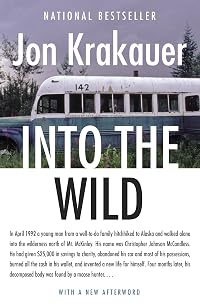
Into the Wild
by Jon Krakauer
On This Page
Description
In April 1992 a young man from a well-to-do family hitchhiked to Alaska and walked alone into the wilderness north of Mt. McKinley. He had given $25,000 in savings to charity, abandoned his car and most of his possessions, burned all the cash in his wallet, and invented a new life for himself. Four months later, his decomposed body was found by a moose hunter. How Christopher Johnson McCandless came to die is the unforgettable story of Into the Wild. Immediately after graduating from college show more in 1991, McCandless had roamed through the West and Southwest on a vision quest like those made by his heroes Jack London and John Muir. In the Mojave Desert he abandoned his car, stripped it of its license plates, and burned all of his cash. He would give himself a new name, Alexander Supertramp, and, unencumbered by money and belongings, he would be free to wallow in the raw, unfiltered experiences that nature presented. Craving a blank spot on the map, McCandless simply threw the maps away. Leaving behind his desperate parents and sister, he vanished into the wild. Jon Krakauer constructs a clarifying prism through which he reassembles the disquieting facts of McCandless's short life. Admitting an interst that borders on obsession, he searches for the clues to the drives and desires that propelled McCandless. When McCandless's innocent mistakes turn out to be irreversible and fatal, he becomes the stuff of tabloid headlines and is dismissed for his naiveté, pretensions, and hubris. He is said to have had a death wish but wanting to die is a very different thing from being compelled to look over the edge. Krakauer brings McCandless's uncompromising pilgrimage out of the shadows, and the peril, adversity, and renunciation sought by this enigmatic young man are illuminated with a rare understanding--and not an ounce of sentimentality. Mesmerizing, heartbreaking, Into the Wild is a tour de force. The power and luminosity of Jon Krakauer's stoytelling blaze through every page. show lessTags
Recommendations





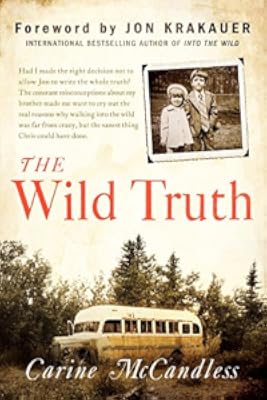
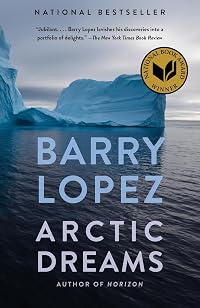

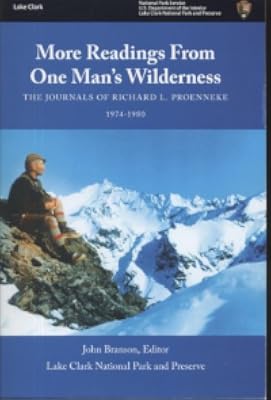
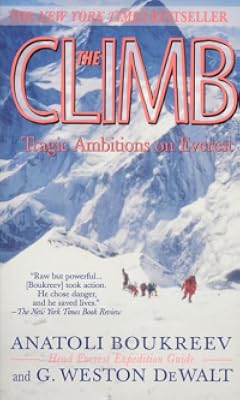
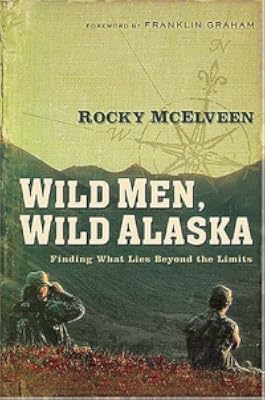



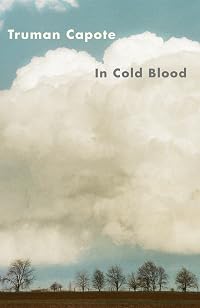
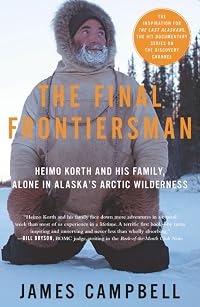

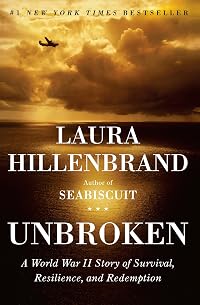

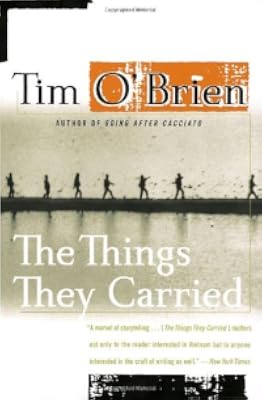
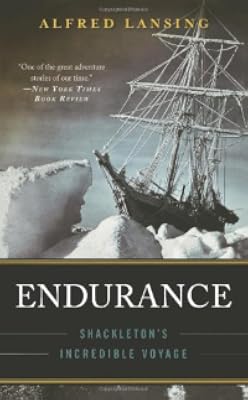
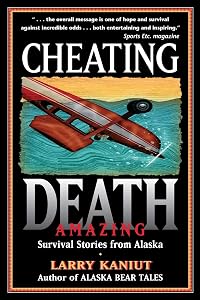

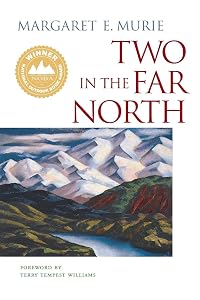
Member Recommendations

thiagobomfim That is a history of a boy inspired by Thoreau and his masterpiece: Wladen.
51
stephmo Both books deal with idealists and end in Alaska. Both stories present a certain mythology available only from the Alaskan wilderness.
20
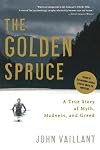
by anonymous user

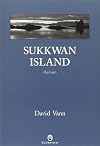
raton-liseur Il peut paraître étrange de rapprocher ces deux livres. Pourtant ils sont entrés en résonance lorsque je les ai lus à un an d’intervalle. Tous les deux sont sombres puisqu’il y est question de mort, et tous les deux ont pour fond la beauté rude des paysages glacials de l’Alaska. C’est cette confrontation fatale entre le blanc de la neige et le noir de la mort qui m’a saisie dans ces deux livres, même si les raisons qui sous-tendent ces deux quêtes vers les paysages du Grand Nord sont (à première vue) sans point commun.
10




Off the Map by Hib
by anonymous user

Member Reviews
Except he was stupid. Now, Krakauer makes a huge deal about how smart, how intellectual McCandless was. How big of a reader he was. How animated, how intelligent, how engaging he was. He touched a lot of lives on his adventures across America; he made friends.
But he didn't get it. The boy repeatedly picked up and left, leaving people and places behind without much of a care in the world as to what his departure meant to those
But what gets me about this book is how determined Krakauer is to compare himself to McCandless. He devotes a few chapters to creating parallels to himself and McCandless, insisting that he was that same headstrong boy in his twenties. But he missed out on one big, huge detail: he survived his twenties, and he did it because he knew what he was doing. He took maps. He took gear. He didn't just look at a vast, open wilderness and start walking. He planned.
McCandless didn't, and it got him killed. It's said repeatedly, in the book, in the news articles, and in the movie -- had McCandless simply taken a map with him, he'd have known about nearby cabins. He'd have known about a river crossing. He'd have known he wasn't nearly as far into the wilderness as he'd come to believe he was. He'd likely have survived the entire ordeal. And yet.
The book itself is fantastic. It's engrossing, it's well-written, and it gives you a pretty damn good look into McCandless's short life. It certainly tries to make him into a hero, an American rambling man -- but for me it fell short in that regard, trying to make McCandless out to be a whale when really, he was simply a fish.
This is Jon Krakauer's famous study of Chris "Alex" McCandless, a young man who rejected his wealthy family and much of civilization in general in favor of a life on the road and in the wilderness. In 1992, he realized his ultimate goal of retreating to the Alaskan wild to live off the land, only to die of starvation there a few months later.
It's a sensitive examination of a complex life and an unfortunate death. And while Krakauer writes with real sympathy for McCandless, he leaves it very much up to the reader to form their own option of the guy. Was he a naive, reckless dumbass with more fancy philosophical thoughts than common sense, who had no business being where he was, as under-prepared as he was? Or was he a smart, sensitive, show more thoughtful guy carrying on a long tradition of seeking personal insight through contact with the wild, who died more because he was unlucky than because he was dumb or arrogant? Or was he both? Me, I think I'm going to go with both, but it's a surprisingly complex and thought-provoking question to ponder.
And Krakauer's writing as he invites us to ponder these things is good. He jumps back and forth from time to time and topic to topic: re-tracing McCandless's steps on his journey, filling in his backstory, discussing other people who disappeared in the wilderness in similar ways, even recounting a story from Krakauer's own youth that he feels gives him some insight into McCandless's thinking. All of this hopping around could easily have become confusing or mildly annoying, but somehow it instead works very well. And Krakauer has an excellent instinct for when to offer up his own thoughts and relevant experiences, and when to remove himself from the story and let his subject matter speak for itself. show less
It's a sensitive examination of a complex life and an unfortunate death. And while Krakauer writes with real sympathy for McCandless, he leaves it very much up to the reader to form their own option of the guy. Was he a naive, reckless dumbass with more fancy philosophical thoughts than common sense, who had no business being where he was, as under-prepared as he was? Or was he a smart, sensitive, show more thoughtful guy carrying on a long tradition of seeking personal insight through contact with the wild, who died more because he was unlucky than because he was dumb or arrogant? Or was he both? Me, I think I'm going to go with both, but it's a surprisingly complex and thought-provoking question to ponder.
And Krakauer's writing as he invites us to ponder these things is good. He jumps back and forth from time to time and topic to topic: re-tracing McCandless's steps on his journey, filling in his backstory, discussing other people who disappeared in the wilderness in similar ways, even recounting a story from Krakauer's own youth that he feels gives him some insight into McCandless's thinking. All of this hopping around could easily have become confusing or mildly annoying, but somehow it instead works very well. And Krakauer has an excellent instinct for when to offer up his own thoughts and relevant experiences, and when to remove himself from the story and let his subject matter speak for itself. show less
A fascinating account of Chris "Alexander Supertramp" McCandless who walked into the Alaskan wilderness in the spring of 1992 and died of starvation approximately 100 days later. Krakauer interweaves Chris' story, the stories of other well-known adventuring loners, and his own story of time spent in the wilds of Alaska. He creates a surprisingly complete picture from the small amount of information and sources available to him, and presents a complex portrait of a young man who was idealistic and naive, arrogant and self-conscious, and brave in the face of hardship but frightened of personal connections. Some internetting after I finished listening to the book revealed that there was yet more to the story and that people were still show more drawn to it. I know I won't forget it any time soon. show less
Stories about eccentrics who live in isolation, consciously seek out the wild, and hold extremely radical views on humanity and society are usually not my thing. You find them in all countries and regions, but for some reason most often in the United States. Is it the extreme cult of the free individual, the cultivated hatred of everything related to government and regulation, the lack of proper education, etc.? I know, this strongly smacks of one-sided prejudice on my part, but it is noticeable.
Nevertheless, this book, about an overconfident young man found dead in 1992 in a remote area of Alaska, did appeal to me. This is mainly because Jon Krakauer has made it an honest quest to discover what exactly motivated Chris McCandles to show more isolate himself and go to extremes in an attempt to live entirely on his own and with few resources, dependent on nature itself, in an area generally considered unhabitable. Krakauer has turned it an attempt to reconstruct not only McCandles' physical journey, but especially his mental trajectory. He does so with a critical eye and respect, but also, interwoven, a certain admiration and fascination for a highly gifted young man who made such a radical life choice. A brilliant book. show less
Nevertheless, this book, about an overconfident young man found dead in 1992 in a remote area of Alaska, did appeal to me. This is mainly because Jon Krakauer has made it an honest quest to discover what exactly motivated Chris McCandles to show more isolate himself and go to extremes in an attempt to live entirely on his own and with few resources, dependent on nature itself, in an area generally considered unhabitable. Krakauer has turned it an attempt to reconstruct not only McCandles' physical journey, but especially his mental trajectory. He does so with a critical eye and respect, but also, interwoven, a certain admiration and fascination for a highly gifted young man who made such a radical life choice. A brilliant book. show less
5!!! A stunning piece of narrative nonfiction that refuses to let you look away from a young man’s longing, his pride, and the brutal beauty of the stories we tell ourselves about freedom.
The premise is simple and already infamous. Christopher McCandless, fresh out of college, sheds his old life, takes the name Alexander Supertramp, drifts through the West, and heads for Alaska with a near religious hunger for purity. He is found dead months later. Krakauer treats it like a mystery, but also like a question aimed straight at the reader: what, exactly, was he trying to outrun.
What makes this book unputdownable is that Krakauer does not flatten McCandless into either martyr or idiot. He lets him be brilliant and naive, tender and show more stubborn, generous and self mythologizing, sometimes in the same breath. The portrait is built from letters, interviews, and the small trail of impressions McCandless left on strangers, which means you feel the ache of him as a presence more than a person. That distance becomes its own kind of truth. This is a book about the way charisma can be accidental, the way conviction can look like cruelty to the people who love you, and the way a certain American masculinity confuses suffering with meaning.
Krakauer’s real subject is yearning, but he is honest about the costs. The wilderness here is not a motivational poster. It is indifferent, gorgeous, and lethal. The father son tension running beneath the narrative lands hard, not as a tidy explanation, but as a pressure system that shapes everything McCandless touches, including his refusal to accept help, his need to prove something unnamed, his appetite for extremity. show less
The premise is simple and already infamous. Christopher McCandless, fresh out of college, sheds his old life, takes the name Alexander Supertramp, drifts through the West, and heads for Alaska with a near religious hunger for purity. He is found dead months later. Krakauer treats it like a mystery, but also like a question aimed straight at the reader: what, exactly, was he trying to outrun.
What makes this book unputdownable is that Krakauer does not flatten McCandless into either martyr or idiot. He lets him be brilliant and naive, tender and show more stubborn, generous and self mythologizing, sometimes in the same breath. The portrait is built from letters, interviews, and the small trail of impressions McCandless left on strangers, which means you feel the ache of him as a presence more than a person. That distance becomes its own kind of truth. This is a book about the way charisma can be accidental, the way conviction can look like cruelty to the people who love you, and the way a certain American masculinity confuses suffering with meaning.
Krakauer’s real subject is yearning, but he is honest about the costs. The wilderness here is not a motivational poster. It is indifferent, gorgeous, and lethal. The father son tension running beneath the narrative lands hard, not as a tidy explanation, but as a pressure system that shapes everything McCandless touches, including his refusal to accept help, his need to prove something unnamed, his appetite for extremity. show less
If this hadn't been chosen by my book club, I wouldn't have finished it. Blame my bias on the subject material. I don't considerable Chris McCandless and his journey to be noble, I consider them foolhardy examples of the arrogance of youth that didn't warrant a book and a movie. It doesn't help that I was reading this book while hearing news stories of all of the people in the Texas area needing rescue after ignoring mandatory evacuation orders. Going into a treacherious natural situation inadequately prepared (physically or mentally) is stupid, not noble.
We are all heroes to ourselves. McCandless was, Krakauer is. This doesn't vary. All that varies is how we define heroism and how much, or how little, we are prepared to do to for that stance.
In order to get people, usually young men, to sacrifice their lives we tell them of those that went before and tell them they were heroes who died for their countries, died for their principles, died even for their dreams. Impractical dreams that are the province of the young. And those who would be heroes never concern themselves with the practical, that is far too mundane, it is for others to take care of those details.
McCandless' dream of heroism was to survive entirely alone and entirely off the land at the ends of the earth. It didn't include show more the practicality of learning about the wild foods he might forage in that area, or how he might survive in extreme weather conditions, or even exactly where his place of solitude was situated so that when he sought succour at the end, he didn't even know how close it really was.
The final photograph he took of himself is of a wasted face, gaunt but beautiful with the shining eyes of one who has lived his dream and is satisfied. Then he died. show less
In order to get people, usually young men, to sacrifice their lives we tell them of those that went before and tell them they were heroes who died for their countries, died for their principles, died even for their dreams. Impractical dreams that are the province of the young. And those who would be heroes never concern themselves with the practical, that is far too mundane, it is for others to take care of those details.
McCandless' dream of heroism was to survive entirely alone and entirely off the land at the ends of the earth. It didn't include show more the practicality of learning about the wild foods he might forage in that area, or how he might survive in extreme weather conditions, or even exactly where his place of solitude was situated so that when he sought succour at the end, he didn't even know how close it really was.
The final photograph he took of himself is of a wasted face, gaunt but beautiful with the shining eyes of one who has lived his dream and is satisfied. Then he died. show less
Members
- Recently Added By
Published Reviews
ThingScore 88
Christopher McCandless's life and his death may have been meaningless, absurd, even reprehensible, but by the end of "Into the Wild," you care for him deeply.
added by Shortride
Mr. Krakauer has taken the tale of a kook who went into the woods, and made of it a heart-rending drama of human yearning.
added by Shortride
Lists

100 Biographies & Memoirs to Read in a Lifetime
42 works; 18 members

Non-Fiction Worth Reading
1,025 works; 264 members

100 Biographies and Memoirs to Read in a (Single) Lifetime
98 works; 12 members
Best Autobiographies and Memoirs
370 works; 67 members
Adventure Travel & Exploration In North America
12 works; 5 members

Best Biographies
216 works; 26 members

Recommend the 20 best books you've read in the last five years
2,168 works; 603 members

Set in the Pacific Northwest
136 works; 7 members

Unread books
1,063 works; 83 members

Books about/set in Alaska
51 works; 12 members

books read in 2019
50 works; 1 member

Books Read in 2021
5,361 works; 114 members

Books Read in 2003
261 works; 7 members

Literary Works Read in College
316 works; 15 members

Best Adventure Stories
66 works; 15 members

College Reads (Lit Edition)
75 works; 5 members

Books Read in 2023
5,638 works; 147 members

99 Bücher, die man gelesen haben muss
37 works; 1 member

Books You Read For University
184 works; 3 members

Non-Fiction
68 works; 1 member

The Edge of Survival: Tales from Beyond
12 works; 1 member

el
1,139 works; 1 member

Wilderness Survival (Hatchet readers)
19 works; 1 member

Books Read in 2017
4,249 works; 130 members

In the Wild Reading List
12 works; 3 members

The American West
18 works; 2 members

Books Read in 2011
684 works; 19 members

Books Read in 2004
212 works; 7 members

Top 100 to Read before you Die
109 works; 7 members

Alphabetical Books
211 works; 3 members

Literary Travelogue of the United States Challenge
133 works; 6 members

LibraryThingers' 1001 Books You Must Read Before You Die
442 works; 29 members

Allie's Wishlist
217 works; 2 members

Best Books About Journeys and Quests
117 works; 30 members

1990s
309 works; 17 members

Best Survival Stories
97 works; 15 members

Read the book and saw the movie
1,170 works; 195 members

In Our Time books
4,934 works; 2 members
Talk Discussions
Past Discussions
True story: Young "supertramp" dies alone after eating potatoe seeds. in Name that Book (January 2013)
Author Information

29+ Works 52,415 Members
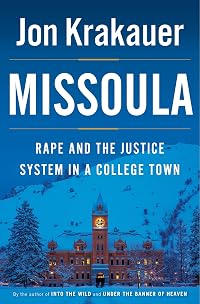
Jon Krakauer was born in Brookline, Massachusetts on April 12, 1954. He received a degree in environmental studies from Hampshire College in Massachusetts in 1976. He worked as a carpenter, fisherman, and writer. He articles on mountain climbing appeared in several publications including GQ, National Geographic, Architectural Digest, Playboy, The show more New Yorker, and Rolling Stone. In 1996, he climbed Mt. Everest, but a storm took the lives of four of the five teammates who reached the summit with him. An analysis of the calamity he wrote for Outside magazine received a National Magazine Award. An article he wrote for Smithsonian about volcanology received the 1997 Walter Sullivan Award for Excellence in Science Journalism. He is the author of several books including Into Thin Air: A Personal Account of the Mt. Everest Disaster; Under the Banner of Heaven: A Story of Violent Faith; Where Men Win Glory: The Odyssey of Pat Tillman; Three Cups of Deceit: How Greg Mortenson, Humanitarian Hero, Lost His Way; and Missoula: Rape and the Justice System in a College Town. His book, Into the Wild, was made into a movie in 2007. He is also the editor of the Modern Library Exploration series. (Bowker Author Biography) show less
Some Editions
Awards and Honors
Awards
Distinctions
Series
Belongs to Publisher Series
Work Relationships
Has the adaptation
Is an expanded version of
Has as a study
Has as a supplement
Has as a student's study guide
Common Knowledge
- Canonical title
- Into the Wild
- Original title
- Into the Wild
- Alternate titles*
- Voyage au bout de la solitude
- Original publication date
- 1996 (1e édition originale américaine) (1e é | dition originale amé | ricaine)
- People/Characters
- Christopher McCandless (Alexander Supertramp); Jim Gallien; Wayne Westerberg; Samuel Walter McCandless, jr.; Everett Ruess; Gail Borah (show all 34); Jan Burres; George Dreeszen; Roman Dial; Chris Fish; Ronald Franz; Jim Freeman; Eric Hathaway; Andy Horowitz; Loren Johnson; Peter Kalitka; Butch Killian; Jon Krakauer; Lewis Krakauer; Billie McCandless; Carine McCandless; Sam McCandless; Carl McCunn; Gene Rosellini; Gordon Samel; Kai Sandburn; Ken Sleight; Gaylord Stuckey; Ferdie Swanson; Ken Thompson; Brad Walsh; John Mallon Waterman; Mary Westerberg; Lori Zarza
- Important places
- Alaska, USA; Carthage, South Dakota, USA; Bullhead City, Arizona, USA; Topock, Arizona, USA; Anza-Borrego, California, USA; Davis Gulch, Utah, USA (show all 11); Fairbanks, Alaska, USA; Chesapeake Beach, Maryland, USA; Emory College (Atlanta); Atlanta, Georgia, USA; Western USA
- Important events
- Death of Christopher McCandless (1992)
- Related movies
- Into the Wild (2007 | IMDb)
- Dedication
- For Linda
- First words
- Jim Gallien had driven four miles out of Fairbanks when he spotted the hitchhiker standing in the snow beside the road, thumb raised high, shivering in the gray Alaska dawn.
- Quotations
- The very basic core of a man's living spirit is his passion for adventure. The joy of life comes from our encounters with new experiences, and hence there is no greater joy than to have an endlessly changing horizon, for each... (show all) day to have a new and different sun.
- Last words
- (Click to show. Warning: May contain spoilers.)For a few minutes the roof of the bus remains visible among the stunted trees, a tiny white gleam in a wild green sea, growing smaller and smaller, and then it's gone.
- Original language
- English
- Canonical DDC/MDS
- 917.98045
- Canonical LCC
- CT9971.M38
*Some information comes from Common Knowledge in other languages. Click "Edit" for more information.
Classifications
- Genres
- Travel, Biography & Memoir, General Nonfiction, Nonfiction
- DDC/MDS
- 917.98045 — History & geography Geography & travel Geography of and travel in North America West Coast U.S. Alaska
- LCC
- CT9971 .M38 — Auxiliary Sciences of History Biography Biography Biography. By subject Other miscellaneous groups
- BISAC
Statistics
- Members
- 20,293
- Popularity
- 289
- Reviews
- 486
- Rating
- (3.88)
- Languages
- 22 — Catalan, Chinese, Czech, Danish, Dutch, English, Finnish, French, German, Hebrew, Hungarian, Italian, Japanese, Latvian, Norwegian (Bokmål), Polish, Romanian, Croatian, Spanish, Swedish, Turkish, Portuguese (Portugal)
- Media
- Paper, Audiobook, Ebook
- ISBNs
- 107
- UPCs
- 1
- ASINs
- 55