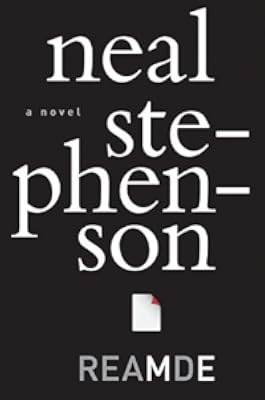
On This Page
Description
When his own high-tech start up turns into a Fortune 500 computer gaming group, Richard Forthrast, the black sheep of an Iowa family who has amassed an illegal fortune, finds the line between fantasy and reality becoming blurred when a virtual war for dominance is triggered.Tags
Recommendations

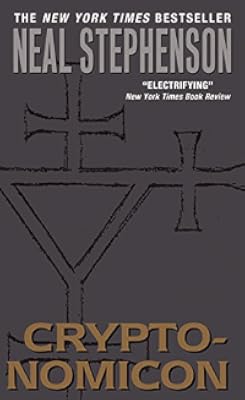
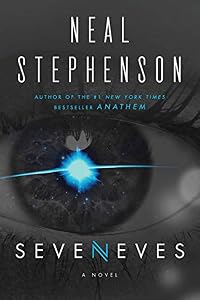
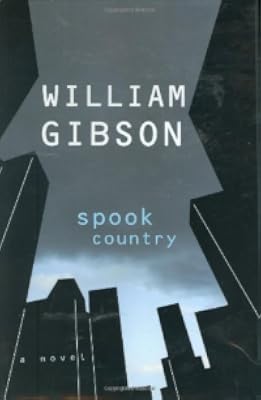
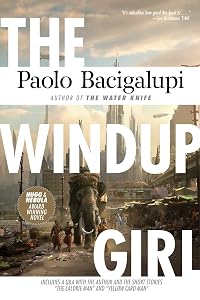
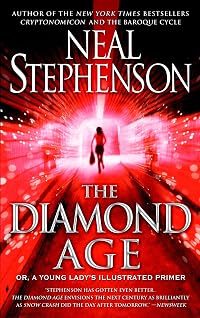









Member Recommendations

themulhern There has been some talk about Stephenson's female characters and some assertion that he is anti-feminist. My feeling is that he is, perhaps, writing his female characters as "bad feminists" in the sense that Roxane Gay uses that term in this collection of essays.

by anonymous user

themulhern Somewhat unorthodox family is sundered by bad guys and in multiple concurrent narratives re-assembles itself, meanwhile finding new allies and new enemies. The chief female character emerges as a character with agency.
Member Reviews
As my first foray into Neal Stephenson’s books, I guess it makes sense that I would pick what some reviewers have billed as being one of his more “accessible” works. Having enjoyed many a summer in my youth devouring spy thrillers by the likes of Robert Ludlum and enjoying stories with a techno angle, Reamde is what I would bill as the perfect “beach read” for me: enough suspense and action to keep me page-turning while still providing me with an interesting plot and story-line that, while at times detailed, does not get overly boring during the slower bits. Some might argue that Stephenson tends to delve a little too deeply into explaining certain things but I prefer the explanations over the author making assumptions that show more his reader can connect the dots, and yes, the geek in me did enjoy the level of detail provided to describe T’Rain, even if it seems a bit unrealistic. I am reading this type of book for escapism, not for realism. Yes, the fact that a good chunk of the story is set in the Pacific Northwest is also a huge draw for me, so that was a bonus. The cast of characters is quite the mixed bag – Russian mobsters, computer geeks, secret agents, Islamic terrorists and “living-off-the-grid” survivalists – that one would think would be a mess but under Stephenson’s skilled pen, this works and adds to the entertainment value of the story. Love the sarcasm laced through this one! I also loved that the three female characters are strong, independent thinkers and just as driven and dynamic as the male characters are. No “shrinking violet” personalities here. Happenstance can make for weird events and Stephenson leans hard on chance as a tool to enable a lot of what happens to… well… happen. Given that the story is told in the first person narrative from the point of view of multiple characters, this makes for re-hashing old ground to capture an event from each character’s unique perspective, so not a straightforward linear read, but essential IMO to communicate all that transpires.
Overall, a satisfying adventure/thriller ride and perfect for summer escapism reading. I am looking forward to reading more of Stephenson’s works. show less
Overall, a satisfying adventure/thriller ride and perfect for summer escapism reading. I am looking forward to reading more of Stephenson’s works. show less
When unsuspecting virtual-world mogul Richard Forthrast lends out a thumbdrive to his niece's boyfriend, the laptop's harddrive -- which contains secrets of Russian organized crime -- becomes encrypted and held for ransom. The virus REAMDE instructs its victims to bring the equivalent of $75 to a particular in-game location in exchange for the decryption key. Russian organized crime is (unsurprisingly) displeased, and they kidnap the niece, her boyfriend, and a few other individuals for an expedition to the hackers' base in China. Through cleverness and subterfuge, the posse identifies and storms the Chinese hackers' home. But here -- 300 pages in, and where most authors would finish -- Stephenson is just getting started. Hidden in the show more same building, you see, is a band of international terrorists, and it's these guys -- not the virtual world with its naughty Chinese teen hackers, and not the Russian mafia intent on crushing those Chinese hackers -- who comprise the final 700 pages of plot.
And you know what? It works. The book might have been stronger if the first 300 pages stood alone, but it wouldn't have been Stephenson. Stephenson rambles. It's what allows him to achieve his trademark uniting of disparate ideas within coherent plots. This particular book lucidly combines spycraft, far-right isolationists, motorhomes, gun culture, big business, and the wilderness of the Pacific Northwest, in addition to all the hacking and gaming themes previously mentioned. Like Stephenson's other books, it also boasts many oh-but-he-called-it-one-liners (like "As hire As, and Bs hire Cs" and "The young woman had turned toward him and thrust her pink gloves up in the air in a gesture that, from a man, meant 'Touchdown!' and, from a woman, 'I will hug you now!'"). I revel in the combination of random and astute.
Reamde is an action-packed technothriller. Although I can pick at it (ahem -- the final fight drags, the epilogue-like denouement is cheesy, and oh, did I mention it rambles?), week after week, I carved out extra time to read this novel. In other words, it completely won me over.
Clearly, though, this book is not for everyone. People who don't participate in geek subculture (and those who expect substantial time investments to have correspondingly substantial lifelong impacts) should probably look elsewhere. For Renaissance geeks not looking for Deep? Reamde is a must-read. show less
And you know what? It works. The book might have been stronger if the first 300 pages stood alone, but it wouldn't have been Stephenson. Stephenson rambles. It's what allows him to achieve his trademark uniting of disparate ideas within coherent plots. This particular book lucidly combines spycraft, far-right isolationists, motorhomes, gun culture, big business, and the wilderness of the Pacific Northwest, in addition to all the hacking and gaming themes previously mentioned. Like Stephenson's other books, it also boasts many oh-but-he-called-it-one-liners (like "As hire As, and Bs hire Cs" and "The young woman had turned toward him and thrust her pink gloves up in the air in a gesture that, from a man, meant 'Touchdown!' and, from a woman, 'I will hug you now!'"). I revel in the combination of random and astute.
Reamde is an action-packed technothriller. Although I can pick at it (ahem -- the final fight drags, the epilogue-like denouement is cheesy, and oh, did I mention it rambles?), week after week, I carved out extra time to read this novel. In other words, it completely won me over.
Clearly, though, this book is not for everyone. People who don't participate in geek subculture (and those who expect substantial time investments to have correspondingly substantial lifelong impacts) should probably look elsewhere. For Renaissance geeks not looking for Deep? Reamde is a must-read. show less
Full of clever Stephensonian bon mots. Toward the end, I lost track of the objectives of the bad guys entirely; the good guys' objective, to thwart the bad guys, was pretty obvious. The coda is a bit irritating, and so are some of the last bits of the final shootout. As with Stephenson's other novels, there are a number of groups of individuals, forming networks with internal alliances, which interact in complicated ways. This book has much in common with the thrillers, "Interface" and "Cobweb", that Stephenson penned with his father-in-law, and yet a good deal in common with "Cryptonomicon" in its intricacy and its focus on the transmission and accumulation of wealth. The book is psychologically sound; the "Furious Muses" really rung a show more bell for me as did Zula's preoccupations. The importance of the virtual plot diminishes as the action returns to the North American continent leaving a lot of very loose threads and a bit of a let-down.
Stephenson raises significant and disturbing questions in all his books, and it may be that his most contemporary novels are the most disturbing because the questions are more immediate.
He has constructed a mythology in which Midwesterners are the most virtuous of all people, possessed of strong family affections and good with guns and technology.
I have read some reviews that argue that Stephenson's book is somehow anti-feminist. These arguments rest mostly on dialogue and a few musings about the understanding of or knowing about the idea of "feminism" among certain people or cultures. But the book can also be viewed as extremely feminist; while Zula is put in a very bad position she makes herself the opposite of a victim in a way that has gruesome consequences for several of those who try to terrorize her. Good work, Stephenson.
The idea of the "cerulean collar" workers is as old as Zodiac. show less
Stephenson raises significant and disturbing questions in all his books, and it may be that his most contemporary novels are the most disturbing because the questions are more immediate.
He has constructed a mythology in which Midwesterners are the most virtuous of all people, possessed of strong family affections and good with guns and technology.
I have read some reviews that argue that Stephenson's book is somehow anti-feminist. These arguments rest mostly on dialogue and a few musings about the understanding of or knowing about the idea of "feminism" among certain people or cultures. But the book can also be viewed as extremely feminist; while Zula is put in a very bad position she makes herself the opposite of a victim in a way that has gruesome consequences for several of those who try to terrorize her. Good work, Stephenson.
The idea of the "cerulean collar" workers is as old as Zodiac. show less
"Long, enjoyable read. "Snow Crash" all grown up."
"Reamde" is more than 34 hours long and I still regretted reaching the end.
Malcolm Hillgartner delivers a masterful performance that kept me engaged throughout.
The opening chapter of REAMDE reads like something from John Irving or Richard Russo. It establishes Richard Forthrast, online war game billionaire and former smuggler, in the context of his Iowa farming clan family which covers the American spectrum from "American Taliban" Freemen, living off the grid, through Vietnam vets working the farms to Zula, Richard's adopted Eritrean niece.
The home team here is American in all its flavours, but the game is played, both online and in real life, on a global stage, stretching through show more Canada, China, and the Philippines, with characters from the Russian, the UK (a half-chinese British spy, a Scottish fraudster and a black Welsh Jihadist), Hungary, and China.
The plot is complex but clear and its twists and turns are driven as much by the characters as it is by the underlying situation.
The themes are rich and rewarding: the links between the cyberworld and real life, the nature of money and power, the clash of cultures between the West and the rest, the power of friendship, the limitations of money and the value of honour in uncertain times.
Richard Forthrast is in his 50's. He's lived long enough to make parts of the cyberpunk fantasy imagined in Stephenson's "Snow Crash" (published in 1992, two years before the World Wide Web was born) into a reality and is now living with the consequences.
The book is named after a computer virus that preys on people in the real world and makes them pay up in Cyberspace (shades of Bitcoin here), starting a real world hunt for the hackers that spirals out into ever increasing mayhem.
The actions scenes are crisp and focused. The sense of place is strong. The people are believable.
In the end I wondered if the on line game was really so important to it all. Then I slapped my forehead, gave the obligatory Simpson's "Duh!" and realised that that was perhaps Stephenson's main message: of all the kinds of reality that are out there, the one that matters most is the one where you do anything you have to to make those you love safe. show less
"Reamde" is more than 34 hours long and I still regretted reaching the end.
Malcolm Hillgartner delivers a masterful performance that kept me engaged throughout.
The opening chapter of REAMDE reads like something from John Irving or Richard Russo. It establishes Richard Forthrast, online war game billionaire and former smuggler, in the context of his Iowa farming clan family which covers the American spectrum from "American Taliban" Freemen, living off the grid, through Vietnam vets working the farms to Zula, Richard's adopted Eritrean niece.
The home team here is American in all its flavours, but the game is played, both online and in real life, on a global stage, stretching through show more Canada, China, and the Philippines, with characters from the Russian, the UK (a half-chinese British spy, a Scottish fraudster and a black Welsh Jihadist), Hungary, and China.
The plot is complex but clear and its twists and turns are driven as much by the characters as it is by the underlying situation.
The themes are rich and rewarding: the links between the cyberworld and real life, the nature of money and power, the clash of cultures between the West and the rest, the power of friendship, the limitations of money and the value of honour in uncertain times.
Richard Forthrast is in his 50's. He's lived long enough to make parts of the cyberpunk fantasy imagined in Stephenson's "Snow Crash" (published in 1992, two years before the World Wide Web was born) into a reality and is now living with the consequences.
The book is named after a computer virus that preys on people in the real world and makes them pay up in Cyberspace (shades of Bitcoin here), starting a real world hunt for the hackers that spirals out into ever increasing mayhem.
The actions scenes are crisp and focused. The sense of place is strong. The people are believable.
In the end I wondered if the on line game was really so important to it all. Then I slapped my forehead, gave the obligatory Simpson's "Duh!" and realised that that was perhaps Stephenson's main message: of all the kinds of reality that are out there, the one that matters most is the one where you do anything you have to to make those you love safe. show less
Well that was a blast. One thousand pages of a blast, which is quite some blast, when you think about it. I honestly think that the last time I read a thriller that was over one thousand pages long was Tom Clancy's Rainbow Six and I have no compunction admitting that I skipped huge chunks of that rubbish. Didn't skip a page of this, though I think Clancy may have been a touchstone: it is after all a big chunky international thriller with the Russian Mob and ruthless Jihadists, and while it's not a techno-thriller per se, much of the plot depends on cutting-edge tech, specifically an MMORPG called T'Rain. Ludlum also springs to mind, but mostly when he does, or Clancy, or Dale Brown it's to think how much more fun this is than having to show more wade through their sub-literate tosh. Oddly enough, the climactic shoot-out in the wastes of the Canadian-American border was strongly reminiscent of James Crumley's The Mexican Tree Duck. When I first read Stephenson's Zodiac, he wrote a forword where he acknowledged Crumley's influence, which prompted me to check out Crumley, for which I am eternally grateful. Anyway, I have to write a straightforward review of this for the Tipp Tatler no less, so I'll come back and do that tomorrow, I just wanted to get my initial thoughts down quick.
Here we go:
It’s rare to find a thriller that clocks in at over a thousand pages, and rarer still to find one that can justify it. Tom Clancy, in his heydey, churned out a few tomes that needed their own forklifts to carry around, but the longer Clancy’s books got, the less readable they were. Not so with Reamde.
The unpronounceable title is the name on a computer file, a misspelling of Readme, and in this file is a highly contagious virus that takes over your computer and locks all your data in an unbreakable encryption, the key to which is available on the payment of a small ransom. The ransom has to be deposited in a certain area of a virtual world, the setting for the online game T’Rain. The game’s creator, Richard Forthrast, has just hired his niece, Zula, to work for his corporation. Her boyfriend, Peter, is selling some illegally obtained credit card numbers to the Russian mob. The mob’s American connection plays T’Rain. The mob’s data gets locked up by Reamde. The mob want the data back, and fast. Paying the ransom online proves difficult, so the mob grab Zula and Peter, fly to the Chinese city of Xiamen and commence a hunt for the hacker who created the virus.
Phew. This sounds exhaustive and exhausting, but it’s all set up for for what follows and is both fast-moving and entertaining. What happens next is an explosive gun battle that sparks a small global war as Zula is captured by terrorists and the small group of unlikely friends she has made in Xiamen set out against all odds to rescue her, while her family desperately try to find out what happened to her. The whole thing ends in a lengthy running gun battle in the cold wild wastes of the Canadian-American border.
Despite its length, the pages fly by. Between the excitement of the action, the dry wit used in describing Richard’s life and times and the globe-hopping descriptions of modern life, there is never a dull moment, and the book can be both hilariously funny, deeply absorbing and incredibly gripping. Highly recommended. show less
Here we go:
It’s rare to find a thriller that clocks in at over a thousand pages, and rarer still to find one that can justify it. Tom Clancy, in his heydey, churned out a few tomes that needed their own forklifts to carry around, but the longer Clancy’s books got, the less readable they were. Not so with Reamde.
The unpronounceable title is the name on a computer file, a misspelling of Readme, and in this file is a highly contagious virus that takes over your computer and locks all your data in an unbreakable encryption, the key to which is available on the payment of a small ransom. The ransom has to be deposited in a certain area of a virtual world, the setting for the online game T’Rain. The game’s creator, Richard Forthrast, has just hired his niece, Zula, to work for his corporation. Her boyfriend, Peter, is selling some illegally obtained credit card numbers to the Russian mob. The mob’s American connection plays T’Rain. The mob’s data gets locked up by Reamde. The mob want the data back, and fast. Paying the ransom online proves difficult, so the mob grab Zula and Peter, fly to the Chinese city of Xiamen and commence a hunt for the hacker who created the virus.
Phew. This sounds exhaustive and exhausting, but it’s all set up for for what follows and is both fast-moving and entertaining. What happens next is an explosive gun battle that sparks a small global war as Zula is captured by terrorists and the small group of unlikely friends she has made in Xiamen set out against all odds to rescue her, while her family desperately try to find out what happened to her. The whole thing ends in a lengthy running gun battle in the cold wild wastes of the Canadian-American border.
Despite its length, the pages fly by. Between the excitement of the action, the dry wit used in describing Richard’s life and times and the globe-hopping descriptions of modern life, there is never a dull moment, and the book can be both hilariously funny, deeply absorbing and incredibly gripping. Highly recommended. show less
You don't have to go to the movies to enjoy a good action flick. You can simply read this book.
Ever since I read Cryptonomicon I tend to classify Neal Stephenson's characters as Shaftoes or Waterhouses (even more so after being blown to pieces by the deepening over-arching meta-narrative of The Baroque Cycle). There are certainly other archetypes in Stephenson's novels, but these two stand out like a modern take on cartesian dualism, Waterhouses being the Quixotesque, mind-ridden, abstractly intellectual counterweights to the Sancho-like, practical, down-to-earth Shaftoes. Even though I'm over-simplifying things, it remains true that most Shaftoes are in the warrior/rogue side of the (fantasy setting) spectrum and most Waterhouses in show more the mage/cleric extreme (Randy, one of the main characters in Cryptonomicon, considers himself more a dwarf than an elf, for example, but a technomage is still a mage, not a fighter).
Accordingly, Snow Crash is mainly a Shaftoenian book, meanwhile Anathem could be described better as Waterhouseian (The Age of Diamond probably ranking in the middle of the scale).
Reamde is pretty balanced as well, in regards to this (totally personal and arbitrary) Shaftoe/Waterhouse proportion. But that's not the only thing it shares with Cryptonomicon and its sequel. For starters, it's the less fictional of the Stephenson's books that I've read, and the characters, abundant and compelling as always, are nevertheless more grounded, not as flamboyantly distinctive as, say, Hiro Protagonist or Half-Cocked Jack (the best one ever). Their histories and personalities are still rich and intricate though, with the traditional bit of cynical caricaturization, genealogical networking and multicultural background that one has come to expect from Stephenson.
What Reamde does NOT have is subplots and underplots and, really, anything but the main plot: it is a fairly straight reading.
That doesn't mean that is not dense (or, unsurprisingly, LONG). It only means it is different. There's some review around there titled 'Has Stephenson Gone Mainstream?' and I can totally understand where it comes from, because yes, at some points it reads as a sort of Crichton or Clancy best-seller (that in itself is no bad: it shows us that Stephenson can switch between genres without losing his own voice). But unlike a typical read-and-forget techno-thriller, Reamde zigzags here and there into assay-like ten page-long inspired ramblings about all kinds of subjects, from sociology (social networking is a big deal in this book, just as it is in real life) to military strategy to geology, from religion to economy to mmorpgs-life and includes, of course, that exquisite and by now usual take on geography (I always wonder, as I explore the locations on Google Earth, if Stephenson has been in all those exotic places, since he paints such colorful and detailed pictures of them; I've learn more about the planet reading his books than watching NatGeo).
I'm also a fan of the way he treats love and romantic relationships, directly and often even materialistically. Not as in 'it's all about hormones' but as in 'love is as real as a stone'. Love may be a complex concept, but as an emotion is pretty simple. That is in Reamde, as well as friendship and family bonds, and is not uncommon for me to find myself longing for a similar world where feelings where more... manageable? limpid? Maybe just 'summarizable'.
The book has, in any case, its problems. Reamde is full of Deus Ex Machinae. Really, the whole story is rooted in a very unlucky coincidence that works also as a hinge between the reflexive, slumbering-mammoth first fifth of the book and the action-packed, frenetic rest of it. You start reading Reamde thinking it is about information technologies (one of Stephenson's signatures), money undercurrents and economic abstractions (an important part of the Cryptonomicon/The Baroque Cycle saga) and suddenly it becomes something completely different: gangsters, spies, terrorists... I wasn't prepared for that, and I confess I wasn't sure, when it happened, that I would like it.
But I liked it. I fucking loved it.
The Deus Exes are not improbable (or ridiculous) enough to spoil the joy. The interludes (those damn-you moments when you're submerged in the action and the writer stops and changes the scene or the POV... I'm looking at you, G.R.R. Martin) are not as long as to annoy or distract... Not much, anyway. Time goes blindingly fast or unbearably slow depending if there bullets or endless roads involved, but there are no dull moments, just a continuous adventure running on the headlights of threatening disaster. The characters are smart, but believable, imperfect, layered. Favorites all of them (although I have a soft spot for the Shaftoe type, i.e., Sokolov). The things they do and the things that happen to them are entirely plausible, so much so that sometimes you actually hope for the impossible. But Stephenson knows best when and how to 'godly intervene'.
I should be shutting up now, before I go into any details, so you can enjoy every and all little surprise and long description.
I started this mini review thinking 'this is a great book, but is not the best from Stephenson'. But now, revisiting it as I write, I find that is as good as the others (that is, very, very good), and that I actually read it the fastest.
In all seriousness, in the right hands it would make an amazing movie. show less
Ever since I read Cryptonomicon I tend to classify Neal Stephenson's characters as Shaftoes or Waterhouses (even more so after being blown to pieces by the deepening over-arching meta-narrative of The Baroque Cycle). There are certainly other archetypes in Stephenson's novels, but these two stand out like a modern take on cartesian dualism, Waterhouses being the Quixotesque, mind-ridden, abstractly intellectual counterweights to the Sancho-like, practical, down-to-earth Shaftoes. Even though I'm over-simplifying things, it remains true that most Shaftoes are in the warrior/rogue side of the (fantasy setting) spectrum and most Waterhouses in show more the mage/cleric extreme (Randy, one of the main characters in Cryptonomicon, considers himself more a dwarf than an elf, for example, but a technomage is still a mage, not a fighter).
Accordingly, Snow Crash is mainly a Shaftoenian book, meanwhile Anathem could be described better as Waterhouseian (The Age of Diamond probably ranking in the middle of the scale).
Reamde is pretty balanced as well, in regards to this (totally personal and arbitrary) Shaftoe/Waterhouse proportion. But that's not the only thing it shares with Cryptonomicon and its sequel. For starters, it's the less fictional of the Stephenson's books that I've read, and the characters, abundant and compelling as always, are nevertheless more grounded, not as flamboyantly distinctive as, say, Hiro Protagonist or Half-Cocked Jack (the best one ever). Their histories and personalities are still rich and intricate though, with the traditional bit of cynical caricaturization, genealogical networking and multicultural background that one has come to expect from Stephenson.
What Reamde does NOT have is subplots and underplots and, really, anything but the main plot: it is a fairly straight reading.
That doesn't mean that is not dense (or, unsurprisingly, LONG). It only means it is different. There's some review around there titled 'Has Stephenson Gone Mainstream?' and I can totally understand where it comes from, because yes, at some points it reads as a sort of Crichton or Clancy best-seller (that in itself is no bad: it shows us that Stephenson can switch between genres without losing his own voice). But unlike a typical read-and-forget techno-thriller, Reamde zigzags here and there into assay-like ten page-long inspired ramblings about all kinds of subjects, from sociology (social networking is a big deal in this book, just as it is in real life) to military strategy to geology, from religion to economy to mmorpgs-life and includes, of course, that exquisite and by now usual take on geography (I always wonder, as I explore the locations on Google Earth, if Stephenson has been in all those exotic places, since he paints such colorful and detailed pictures of them; I've learn more about the planet reading his books than watching NatGeo).
I'm also a fan of the way he treats love and romantic relationships, directly and often even materialistically. Not as in 'it's all about hormones' but as in 'love is as real as a stone'. Love may be a complex concept, but as an emotion is pretty simple. That is in Reamde, as well as friendship and family bonds, and is not uncommon for me to find myself longing for a similar world where feelings where more... manageable? limpid? Maybe just 'summarizable'.
The book has, in any case, its problems. Reamde is full of Deus Ex Machinae. Really, the whole story is rooted in a very unlucky coincidence that works also as a hinge between the reflexive, slumbering-mammoth first fifth of the book and the action-packed, frenetic rest of it. You start reading Reamde thinking it is about information technologies (one of Stephenson's signatures), money undercurrents and economic abstractions (an important part of the Cryptonomicon/The Baroque Cycle saga) and suddenly it becomes something completely different: gangsters, spies, terrorists... I wasn't prepared for that, and I confess I wasn't sure, when it happened, that I would like it.
But I liked it. I fucking loved it.
The Deus Exes are not improbable (or ridiculous) enough to spoil the joy. The interludes (those damn-you moments when you're submerged in the action and the writer stops and changes the scene or the POV... I'm looking at you, G.R.R. Martin) are not as long as to annoy or distract... Not much, anyway. Time goes blindingly fast or unbearably slow depending if there bullets or endless roads involved, but there are no dull moments, just a continuous adventure running on the headlights of threatening disaster. The characters are smart, but believable, imperfect, layered. Favorites all of them (although I have a soft spot for the Shaftoe type, i.e., Sokolov). The things they do and the things that happen to them are entirely plausible, so much so that sometimes you actually hope for the impossible. But Stephenson knows best when and how to 'godly intervene'.
I should be shutting up now, before I go into any details, so you can enjoy every and all little surprise and long description.
I started this mini review thinking 'this is a great book, but is not the best from Stephenson'. But now, revisiting it as I write, I find that is as good as the others (that is, very, very good), and that I actually read it the fastest.
In all seriousness, in the right hands it would make an amazing movie. show less
Ridiculous, bordering on preposterous, almost a farce, but sadly insufficiently over the top to actually be a farce, and so it's just bad. Gamer SF has been a thing for a considerable time, and terrorist adventure is a cliche. Smashing them together into a tome via coincidence and luck is just shoddy and does neither any favours. Detail, as ever is not Stephenson's hallmark, and he manages to display many instances of failing in this regard as usual. He does have a wondrous visions which has granted his other SF works some acclaim. Sadly there appears to be only one concept involved here, which is that a multi-player game could be designed such that it's fun to play and still have a deliberate appeal to script-kiddies looking for easy show more money. Rather than explore any consequences of this, the rest of the book is an utterly stupid last man standing terrorist shoot out, where all the guys end up with a girl of their choosing. It's trite, stereotyped, annoying and lazy.
The plot, such as it is, is that Richard having drifted through various careers including a secluded US/Can border crossing has founded a successful online MUD similar to WoW and made his fortune by allowing entrepreneurs to mine game currency for real USD. The boyfriend of his niece accidentally gets a PCvirus from that game, that corrupts a russian mafia's finance scheme. The russians kidnap him and Richard's niece and seek revenge on the chinese hackers who'd written the virus. This operation accidentally involves a jihadist operation in the same city, and they all flee back to the US and the secret crossing into Canada. Whereupon the farce becomes more evident as five separate groups crawl around the mountains all trying to shoot each other. It's just silly.
Some of the detailed errors that just jar completely beyond my suspension of disbelief (yours may vary) were such as: Guns and ammo being repeatedly dunked in seawater and firing completely well, despite all characters noting the importance of keeping barrels out of mud at other times; a human hunting cougar (just about believable) having made a kill then continuing on to hunt past several more corpses as if it didn't already have months of food in front of it; perhaps worst of all being able to find an in game character prepared to swap millions of real USD for in-game currency of limited utility and not even for in-game artifacts; nearly everyone has an utterly inhuman pain tolerance as well being able to run on broken limbs having being repeatedly shot or buildings dropped on them.
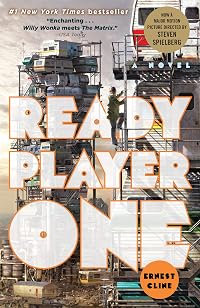
It's too long, not good enough, stereotyped bordering on racist and lacking in innovation or joy. It's not totally without merit, and the plot rattles along fast enough without too much tedious exposition of his earlier works, but you can't sustain 1000 pages of rattle. The coincidences rack up beyond unlikely into stupid, and the characters lack any kind of depth at all, being over trusting incapable of surprise and capable of surviving utterly extreme levels of pain and wounding without suffering or impeding their movements. Although this is perhaps slightly less bad than his worst writings, I would recommend you read Diamond Age and Snow Crash, and then find a better author to spend 1000 pages with. Ready Player One for gamer SF and maybe Tom Clancy for terrorism techno-thrillers. Both combined are fewer pages. show less
The plot, such as it is, is that Richard having drifted through various careers including a secluded US/Can border crossing has founded a successful online MUD similar to WoW and made his fortune by allowing entrepreneurs to mine game currency for real USD. The boyfriend of his niece accidentally gets a PCvirus from that game, that corrupts a russian mafia's finance scheme. The russians kidnap him and Richard's niece and seek revenge on the chinese hackers who'd written the virus. This operation accidentally involves a jihadist operation in the same city, and they all flee back to the US and the secret crossing into Canada. Whereupon the farce becomes more evident as five separate groups crawl around the mountains all trying to shoot each other. It's just silly.
Some of the detailed errors that just jar completely beyond my suspension of disbelief (yours may vary) were such as: Guns and ammo being repeatedly dunked in seawater and firing completely well, despite all characters noting the importance of keeping barrels out of mud at other times; a human hunting cougar (just about believable) having made a kill then continuing on to hunt past several more corpses as if it didn't already have months of food in front of it; perhaps worst of all being able to find an in game character prepared to swap millions of real USD for in-game currency of limited utility and not even for in-game artifacts; nearly everyone has an utterly inhuman pain tolerance as well being able to run on broken limbs having being repeatedly shot or buildings dropped on them.
It's too long, not good enough, stereotyped bordering on racist and lacking in innovation or joy. It's not totally without merit, and the plot rattles along fast enough without too much tedious exposition of his earlier works, but you can't sustain 1000 pages of rattle. The coincidences rack up beyond unlikely into stupid, and the characters lack any kind of depth at all, being over trusting incapable of surprise and capable of surviving utterly extreme levels of pain and wounding without suffering or impeding their movements. Although this is perhaps slightly less bad than his worst writings, I would recommend you read Diamond Age and Snow Crash, and then find a better author to spend 1000 pages with. Ready Player One for gamer SF and maybe Tom Clancy for terrorism techno-thrillers. Both combined are fewer pages. show less
Members
- Recently Added By
Published Reviews
ThingScore 93
All of Stephenson's fiction has thrilling moments (and as his novels tend to be big, those moments can go on for many, many pages), but this is the first of his books that is nothing but a thriller, one that will sit comfortably on shelves weighed down by, say, the complete works of Robert Ludlum.
added by dcozy
"Like Stephenson's most critically acclaimed novel, Cryptonomicon, Reamde combines meticulous observation of the stranger socioeconomic effects wrought by technology with rousing fusillades of adventure."
added by bookfitz
Sci-fi geeks flock to the master's wildly complex novels -- but his latest, "Reamde," is maddeningly conventional
added by bertilak
Lists

io9 Book Club
70 works; 4 members

Books Read in 2016
4,666 works; 199 members

Simulated Reality in Fiction
124 works; 7 members

Books Read in 2019
4,052 works; 110 members

Favourite Books
1,820 works; 316 members

Favorite Long Books
330 works; 42 members
Author Information

80+ Works 118,865 Members
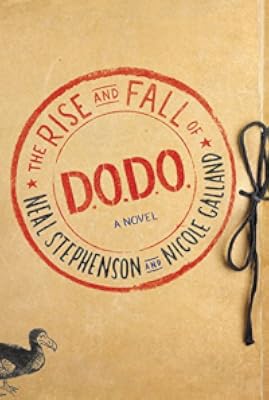
Neal Stephenson, the science fiction author, was born on October 31, 1959 in Maryland. He graduated from Boston University in 1981 with a B.A. in Geography with a minor in physics. His first novel, The Big U, was published in 1984. It received little attention and stayed out of print until Stephenson allowed it to be reprinted in 2001. His second show more novel was Zodiac: The Eco-Thriller was published in 1988, but it was his novel Snow Crash (1992) that brought him popularity. It fused memetics, computer viruses, and other high-tech themes with Sumerian mythology. Neal Stephenson has won several awards: Hugo for Best Novel for The Diamond Age (1996), the Arthur C. Clarke for Best Novel for Quicksilver (2004), and the Prometheus Award for Best Novel for The System of the World (2005). He recently completed the The Baroque Cycle Trilogy, a series of historical novels. It consists of eight books and was originally published in three volumes and Reamde. His latest novel is entitled The Rise and Fall of D. O. D. O. Stephenson also writes under the pseudonym Stephen Bury. (Bowker Author Biography) show less
Some Editions
Awards and Honors
Awards
Distinctions
Notable Lists
Series

Work Relationships
Common Knowledge
- Canonical title
- Reamde
- Original title
- Reamde
- Original publication date
- 2011-09-20
- People/Characters
- Richard "Dodge" Forthrast; Zula Forthrast; Corvallis "C-Plus" Kawasaki; P.T. "Pluto" Olszewski; Devin "Skeletor" Skraelin; Donald "D-squared" Cameron (show all 19); Peter Curtis; Abdallah Jones; Olivia Halifax-Lin; Qian Yuxia; Csongor Takács; Sokolov; Marlon; Seamus Costello; Ivanov; Jacob Forthrast; John Forthrast; Nolan Xu; Wallace
- Important places
- Seattle, Washington, USA; Idaho, USA; Prohibition Crick, Idaho, USA; Xiamen, China; Manila, The Philippines; Elphinstone, British Columbia, Canada (show all 8); British Columbia, Canada; Canada
- First words
- Richard kept his head down. Not all those cow pies were frozen, and the ones that were could turn an ankle.
- Quotations
- "Fate has given us a totally awesome foe." -Qian Yuxia
- Last words
- (Click to show. Warning: May contain spoilers.)"You know it," Seamus said.
- Original language
- English
Classifications
Statistics
- Members
- 4,780
- Popularity
- 2,986
- Reviews
- 246
- Rating
- (3.87)
- Languages
- 6 — English, French, German, Italian, Polish, Spanish
- Media
- Paper, Audiobook, Ebook
- ISBNs
- 32
- ASINs
- 19
