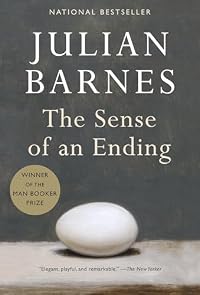
The Sense of an Ending
by Julian Barnes
On This Page
Description
This intense new novel follows a middle-aged man as he contends with a past he has never much thought about until his oldest friends return with a vengeance, one of them from the grave another maddeningly present. Tony Webster thought he'd left all of this behind as he built a life for himself, and by now his marriage and family and career have fallen into an amicable divorce and retirement. But he is then presented with a mysterious legacy that obliges him to reconsider various things, and show more to revise his estimation of his own nature and his place in the world. show lessTags
Recommendations



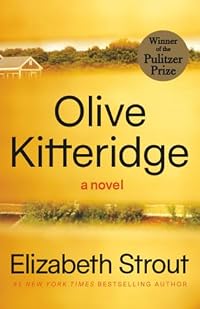
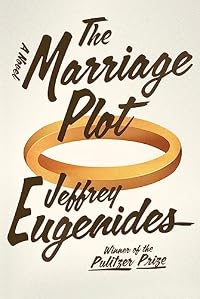
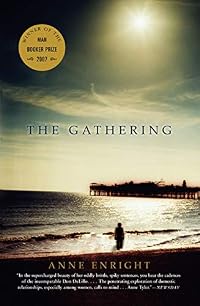

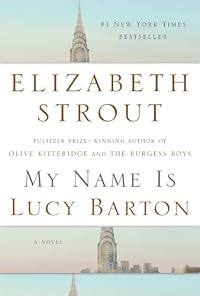
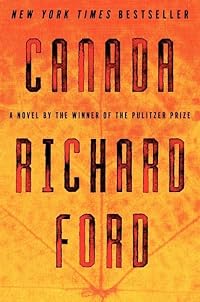
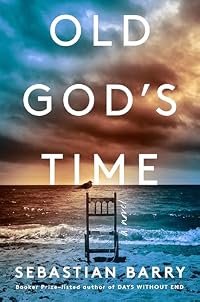
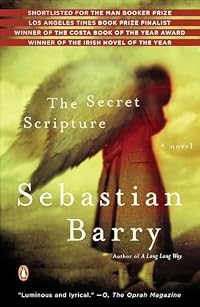







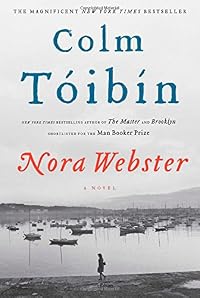
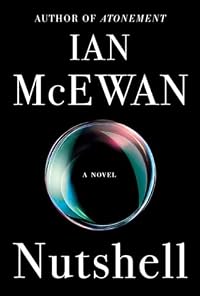
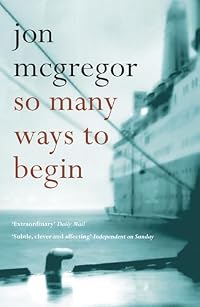
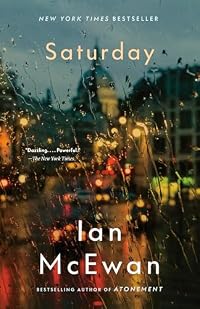
Member Recommendations
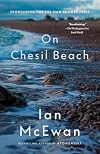
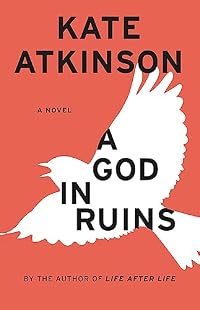
Cariola Another brief but powerful novel that explores how our perceptions vary and memories change over time, as well as regrets over lost oppotunities. McEwan is, like Barnes, a master of words and character development. On Chesil Beach made the Booker short list in 2007--and should have won!
BookshelfMonstrosity These brief, intricately plotted novels are reflective, character-driven stories that examine a pivotal event from different perspectives. In a complex narrative that shifts between past and present, individuals who grew up in 1960s England discover that memory can be unreliable.
113
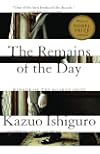
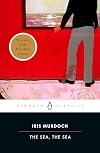
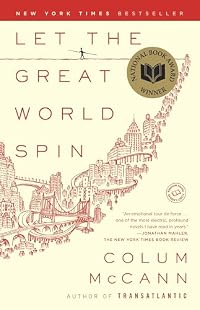
Queenofcups I found myself thinking of Murdoch's The Sea, The Sea as I read this book. There is some affinity in theme and story. Murdoch is expansive, where Barnes is elegant and economical. It won the Booker in 1978, and it's well worth another look.
71



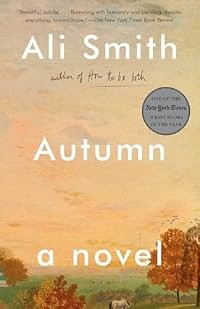
jayne_charles Intelligently written account of an old guy reminiscing, with the added bonus in this case of an education in Balkan history along the way
11
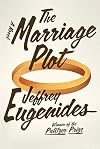
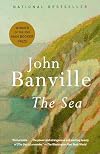
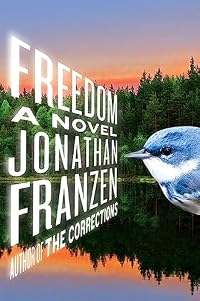
bookmomo Men looking back on their youth, similar issues with memories. Both beautiful reads.
24


sweetiegherkin Two short and seemingly simple, quiet novels that both have a lot to unpack & would be good for book club to discuss the deeper meanings.
Member Reviews
This book is a scream. A hilarious take on people making assumptions that sound logical but are based on nothing substantial at all. Kind of a Holden Caulfield who ages and learns nothing except that he is still emotionally stunted. A homage to the French penchant for discussing self-deception but then being nonchalant about the answer (Descartes' deus deceptor) and Montaigne's fruitless search for moral universals but felt the search still noble.
Barnes' flirtation with French folly or illusion was what kept me going till the end. Finished this, in two days. Great read based on Adrian's earnest proclamation: "Adrian paused. He took a sip of beer, and then said with sudden vehemence, "I hate the way the English have of not being serious show more about being serious. I really hate it."
Not for young adults. This is the third book by Barnes I've read. All excellent: England, England and A History of the World in 10 1/2 Chapters. show less
Barnes' flirtation with French folly or illusion was what kept me going till the end. Finished this, in two days. Great read based on Adrian's earnest proclamation: "Adrian paused. He took a sip of beer, and then said with sudden vehemence, "I hate the way the English have of not being serious show more about being serious. I really hate it."
Not for young adults. This is the third book by Barnes I've read. All excellent: England, England and A History of the World in 10 1/2 Chapters. show less
This is a powerful book about the vagaries and dangers of nostalgia and memory. Tony, a retired man replays the story of his early adulthood and his relationship with a group of friends from school and a former girlfriend. As he becomes aware that one of the friends who had killed himself many years before, did so for reasons that he didn't understand at the time, Tony is forced to confront the flaws in his own character and the consequences of his own youthful behaviour.
I suspect that this tale could go way over the heads of younger people, but as someone of a certain age who is often lost in nostalgia and troubled memories, this really hit the spot. A powerful read.
I suspect that this tale could go way over the heads of younger people, but as someone of a certain age who is often lost in nostalgia and troubled memories, this really hit the spot. A powerful read.
I've been curious to read this book since it has gotten talked about so much on LT lately. This is the Man Booker prize winner for 2011. It is a short novel that reads somewhat like a short story in that it is tightly focused on one event and the ramifications of this event about 40 years later. It's told in first person and I liked the narrator. As in so many first-person narrations, the reliability of the narrator is always in question, but one difference is that the narrator is trying to be reliable, but knows his memory is faulty. The book really delves into how well we really remember our own lives. I've read a lot of books that deal with "how well can you ever really know another person?", but this book turns that into "how well show more do we really know ourselves?". Are our memories accurate and complete? Are the events that we remember the ones that really have the most impact on others that were involved? And do we remember the events the same way that others do?
I really enjoyed this book and would love to read more by Julian Barnes. I didn't read the other nominees for the Booker prize this year, but I thought this was a worthy winner. show less
I really enjoyed this book and would love to read more by Julian Barnes. I didn't read the other nominees for the Booker prize this year, but I thought this was a worthy winner. show less
I've often wondered if my feelings about books I review are changed by the act of reviewing them. I finished this book a week or so ago, and it's taken me a while to get around to writing the review because, well, I'm not quite sure what I think of it. It is, without question, beautifully written, with passages like this one:
But time … how time first grounds us and then confounds us. We thought we were being mature when we were only being safe. We imagined we were being responsible but were only being cowardly. What we called realism turned out to be a way of avoiding things rather than facing them. Time … give us enough time and our best-supported decisions will seem wobbly, our certainties whimsical.
At its heart, The Sense of an show more Ending seems to be all about time, and especially memory, and how the former can distort the latter without our even being quite aware of it. The character Tony narrates the entire novel putting himself at the center of the story, as we all do when we are the one doing the telling. It is only in the closing pages that Barnes tilts the story on its side, and we along with Tony see that the real story is not his to tell, after all.
As I've thought through the book while writing this review, I've come to realize I actually liked it quite a lot. Which brings me back to the question: If I had simply rated this book straight after reading it, would it still have gotten 4½ stars? I think perhaps not. It is deceptively slender in pages, which is not to be confused with being slight in stature. Barnes does his readers the favor of not spelling out every little detail, and there are still things that I'm not sure about (why did Veronica's mum leave Tony that £500?) It may not wrap everything up neatly in a little bow, but The Sense of an Ending is a book that rewards careful reading and contemplation. show less
But time … how time first grounds us and then confounds us. We thought we were being mature when we were only being safe. We imagined we were being responsible but were only being cowardly. What we called realism turned out to be a way of avoiding things rather than facing them. Time … give us enough time and our best-supported decisions will seem wobbly, our certainties whimsical.
At its heart, The Sense of an show more Ending seems to be all about time, and especially memory, and how the former can distort the latter without our even being quite aware of it. The character Tony narrates the entire novel putting himself at the center of the story, as we all do when we are the one doing the telling. It is only in the closing pages that Barnes tilts the story on its side, and we along with Tony see that the real story is not his to tell, after all.
As I've thought through the book while writing this review, I've come to realize I actually liked it quite a lot. Which brings me back to the question: If I had simply rated this book straight after reading it, would it still have gotten 4½ stars? I think perhaps not. It is deceptively slender in pages, which is not to be confused with being slight in stature. Barnes does his readers the favor of not spelling out every little detail, and there are still things that I'm not sure about (why did Veronica's mum leave Tony that £500?) It may not wrap everything up neatly in a little bow, but The Sense of an Ending is a book that rewards careful reading and contemplation. show less
This unobtrusive little book packs quite a punch. You may be reading along thinking to yourself, “Yes, this is a nice little read. Not too much happening so this could get boring.” Then “bam!” The tension builds and builds while you are furiously turning pages, until the last page is turned and you say to yourself, “What the heck just happened?”
What happened was you just experienced Julian Barnes’ Booker Prize winning novel and oh my, he is at the top of his game. The story is a tale of time and memory. Middle-aged retiree Tony Webster is forced to recall a time when he was a young student but a funny thing happens to our memories when time intervenes. Not only are they fuzzy, they often don’t coincide with those of show more other people involved. And Barnes offers many thoughtful insights into how time and memory warp over the years:
“But time…how time first grounds us and then confounds us. We thought we were being mature when we were only being safe. We imagined we were being responsible but were only being cowardly. What we called realism turned out to be a way of avoiding things rather than facing them. Time…give us enough time and our best-supported decisions will be wobbly, our certainties whimsical.” (Page 102)
Tony goes on to try to put together the memories of that long ago time when he receives a letter notifying him of a bequest left to him in a will. This leads him to reconnect with an old girlfriend. She, however, is not a willing participant and, after numerous attempts, Tony is led to a dire conclusion that nobody sees coming, especially the reader.
Heart-pounding suspense, thought-provoking, very, very satisfying and highly recommended. show less
What happened was you just experienced Julian Barnes’ Booker Prize winning novel and oh my, he is at the top of his game. The story is a tale of time and memory. Middle-aged retiree Tony Webster is forced to recall a time when he was a young student but a funny thing happens to our memories when time intervenes. Not only are they fuzzy, they often don’t coincide with those of show more other people involved. And Barnes offers many thoughtful insights into how time and memory warp over the years:
“But time…how time first grounds us and then confounds us. We thought we were being mature when we were only being safe. We imagined we were being responsible but were only being cowardly. What we called realism turned out to be a way of avoiding things rather than facing them. Time…give us enough time and our best-supported decisions will be wobbly, our certainties whimsical.” (Page 102)
Tony goes on to try to put together the memories of that long ago time when he receives a letter notifying him of a bequest left to him in a will. This leads him to reconnect with an old girlfriend. She, however, is not a willing participant and, after numerous attempts, Tony is led to a dire conclusion that nobody sees coming, especially the reader.
Heart-pounding suspense, thought-provoking, very, very satisfying and highly recommended. show less
"How often do we tell our own life story? How often do we adjust, embellish, make sly cuts? And the longer life goes on, the fewer are those around to challenge our account, to remind us that our life is not our life, merely the story we have told about our life. Told to others, but--mainly--to ourselves."
It is perhaps a mark of my arrogant assurance of my own precociously sophisticated understanding of life that I can't remember the last time I considered any book as something I was "too young to understand." If for no other reason, I like this book because I am grateful for any ungentle reminder that there are plenty of subjects, experiences, and emotions that are as of yet beyond my comprehension.
"The Sense of an Ending" appears to be an elegiac examination of the human impulse to search for truth: in actuality, it slowly reveals itself to be a harsh denunciation of the human impulse to retroactively arrange the facts of one's experience into a semblance of satisfactory narrative from which we try to infer meaning. In the winding-down show more of his life, the conflict of historical fact and personal memory erode and reshape the narrator's conception of himself in a bleak display of what the author suggests to be not only his own personal failings, but the failings of ultimate human experience. I am well aware of the irony of my own vehement mental rejections of this thesis ("Pff. I'm never gonna be like THAT."); nevertheless, I feel confident in stating that the suckerpunch of this novel is meant for those with a little more life-experience to regret, and I am only regretful that I didn't quite have it in me to truly appreciate this book. show less
"The Sense of an Ending" appears to be an elegiac examination of the human impulse to search for truth: in actuality, it slowly reveals itself to be a harsh denunciation of the human impulse to retroactively arrange the facts of one's experience into a semblance of satisfactory narrative from which we try to infer meaning. In the winding-down show more of his life, the conflict of historical fact and personal memory erode and reshape the narrator's conception of himself in a bleak display of what the author suggests to be not only his own personal failings, but the failings of ultimate human experience. I am well aware of the irony of my own vehement mental rejections of this thesis ("Pff. I'm never gonna be like THAT."); nevertheless, I feel confident in stating that the suckerpunch of this novel is meant for those with a little more life-experience to regret, and I am only regretful that I didn't quite have it in me to truly appreciate this book. show less
Members
- Recently Added By
Published Reviews
ThingScore 100
By now, The Sense of an Ending by Julian Barnes has gained itself a reputation for being the novel you must read twice.....
Nearly every paragraph in this book has multiple interpretations. Once all the questions are answered, the reader is left in the same state that Tony is in the book’s final pages—floored at life’s essential mysteries, and frustrated that they cannot be relived. show more Fortunately for us, we can just read the book again. show less
Nearly every paragraph in this book has multiple interpretations. Once all the questions are answered, the reader is left in the same state that Tony is in the book’s final pages—floored at life’s essential mysteries, and frustrated that they cannot be relived. show more Fortunately for us, we can just read the book again. show less
added by Nickelini
Barnes' work is one in which, event-wise, not a whole lot happens. Unless we’re talking about the events of the brain and the tricks of time and memory. If that's the case, then Barnes has impressively condensed an undertaking of biblical proportions into a mere 163 pages.
added by WeeklyAlibi
A man's closest-held beliefs about a friend, former lover and himself are undone in a subtly devastating novella from Barnes. It's an intense exploration of how we write our own histories and how our actions in moments of anger can have consequences that stretch across decades. The novel's narrator, Anthony, is in late middle age, and recalling friendships from adolescence and early adulthood. show more What at first seems like a polite meditation on childhood and memory leaves the reader asking difficult questions about how often we strive to paint ourselves in the best possible light. show less
added by kthomp25
Lists

1001 Books You Must Read Before You Die
1,448 works; 1,132 members

Top Five Books of 2013
1,562 works; 715 members

Recommend the 20 best books you've read in the last five years
2,168 works; 601 members

Booker Prize
491 works; 62 members

Best 21st Century Books (So Far)
670 works; 86 members
Favourite Booker Prize contenders
73 works; 21 members
Best Contemporary Literary Fiction (Around the Last 30 Years)
388 works; 123 members

Read the book and saw the movie
1,170 works; 192 members

Unreliable Narrators
170 works; 43 members

Best Friendship Stories
205 works; 16 members
Booker Prize Shortlist: Titles Read
103 works; 10 members

Books Read in 2014
2,343 works; 86 members

Vulture's 100 Best Books of the 21st Century (So Far)
98 works; 9 members

Top Five Books of 2014
1,064 works; 398 members

Five star books
1,755 works; 107 members

Lithub: The 50 Best Contemporary Novels Under 200 Pages
50 works; 4 members
Fiction For Men
142 works; 10 members

40 Books to Read Before You’re 40
40 works; 4 members

Best books read in 2011
200 works; 51 members

2008-2012 Notable Books for Adults
127 works; 10 members

did I say that I didn't mean that (unreliable narrators)
34 works; 7 members

Short and Sweet
243 works; 23 members

Man Booker Prize Longlist 2011
13 works; 2 members

A Novel Cure
742 works; 23 members

Books Read in 2017
4,249 works; 130 members
Contemporary Fiction
109 works; 7 members

Academia in Fiction
158 works; 23 members

Authors from England
147 works; 4 members

Books Read in 2015
3,299 works; 126 members

Firewatch reading list
14 works; 1 member
SantaThing 2014 Gifts
299 works; 17 members

Books Read in 2018
4,360 works; 110 members

My TBR
371 works; 3 members

Art of Reading
188 works; 5 members

Caroline Calloway Reading Challenge (Adapted from Reddit)
27 works; 1 member

Books Read in 2013
1,630 works; 51 members

Books Read in 2021
5,361 works; 113 members

living room bookshelf
150 works; 1 member

Retrospective of 20th- and 21st-century literature
154 works; 1 member

.
184 works; 1 member

Books Read in 2011
684 works; 20 members

Books Read in 2026
1,795 works; 63 members
Talk Discussions
Past Discussions
The Sense of an Ending by Julian Barnes in Booker Prize (August 2011)
Author Information

89+ Works 42,996 Members
Julian Barnes was born in Leicester, England, on January 19, 1946. He received a degree in modern languages from Magdalen College, Oxford University in 1968. He has held jobs as a lexicographer for the Oxford English Dictionary, a reviewer and literary editor for the New Statesmen and the New Review, and a television critic. He has written show more numerous works of fiction including Arthur and George, Pulse: Stories, The Noise of Time, and England, England. He received the Somerset Maugham Award in 1980 for Metroland, the Geoffrey Faber Memorial Prize in 1985 and a Prix Medicis in 1986 for Flaubert's Parrot, and the Man Booker Prize in 2011 for The Sense of an Ending. He also writes non-fiction works including Letters from London, The Pedant in the Kitchen, and Nothing to Be Frightened Of. He received the Shakespeare Prize by the FVS Foundation in 1993, the Austrian State Prize for European Literature in 2004, and the David Cohen Prize for Literature in 2011. He writes detective novels under the pseudonym Dan Kavanaugh. His works under this name include Duffy, Fiddle City, Putting the Boot In, and Going to the Dogs. (Bowker Author Biography) show less
Some Editions
Awards and Honors
Awards
Distinctions
Notable Lists
Series
Belongs to Publisher Series
Work Relationships
Has the adaptation
Common Knowledge
- Canonical title
- The Sense of an Ending
- Original title
- The Sense of an Ending
- Original publication date
- 2011
- People/Characters
- Veronica Ford; Adrian Finn; Anthony Webster; Sarah Ford; Margaret Webster; Jack Ford (show all 20); Mr. Webster; Mrs. Webster; Mr. Ford; Adrian Finn, Jr; Old Joe Hunt; Alex; Colin Simpson; Marshall; Phil Dixon; Annie; Susie Webster; Mr. Gunnell; Mrs. Marriott; Terry
- Important places
- Bristol, England, UK; Cambridge, Cambridgeshire, England, UK; London, England, UK; Kent, England, UK
- Related movies
- The Sense of an Ending (2017 | IMDb)
- Dedication
- for Pat
- First words
- I remember, in no particular order:
-a shiny inner wrist;
-steam rising from a wet sink as a hot frying pan is laughingly tossed into it;
-gouts of sperm circling a plughole, be... (show all)fore being sluiced down the full length of a tall house;
-a river rushing nonsensically upstream, its wave and wash lit by half a dozen chasing torchbeams;
-another river, broad and grey, the direction of its flow disguised by a stiff wind exciting the surface;
-bathwater long gone cold behind a locked door. - Quotations
- "We could start perhaps with the seemingly simple question. What is History? Any thoughts, Webster?
'History is the lies of the victors,' I replied a little too quickly.'
Yes, I was rather afraid you'd say that. Well as... (show all) long as you remember that it is also the self-delusions of the defeated...' (p. 25, large print ed.)
We muddle along, we let life happen to us, we gradually build up a store of memories. There is the question of accumulation, but not in the sense that Adrian meant, just the simple adding up and adding on of life. And as the ... (show all)poet pointed out, there is a difference between addition and increase.
Indeed, isn't the whole business of ascribing responsibility a kind of cop-out? We want to blame an individual so that everyone else is exculpated. Or we blame a historical process as a way of exonerating individuals. Or it's... (show all) all anarchic chaos, with the same consequence. It seems to be me that there is--was--a chain of individual responsibilities, all of which were necessary, but not so long a chain that everybody can simply blame everyone else. But of course, my desire to ascribe responsibility might be more a reflection of my own cast of mind than a fair analysis of what happened. That's one of the central problems of history, isn't it sir? The question of subjective versus objective interpretation, the fact that we need to know the history of the historian in order to understand the version that is being put in front of us.
That last isn't something I actually saw, but what you end up remembering isn't always the same as what you have witnessed.
And yet it takes only the smallest pleasure or pain to teach us time's malleability. Some emotions speed it up, others slow it down; occasionally, it seems to go missing--until the eventual point when it really does go missin... (show all)g, never to return.
I'm not very interested in my schooldays, and don't feel any nostalgia for them. But school is where it all began, so I need to return briefly to a few incidents that have grown into anecdotes, to some approximate memories wh... (show all)ich time has deformed into certainty. If I can't be sure of the actual events any more, I can at least be true to the impressions those facts left. That's the best I can manage.
Though why should we expect age to mellow us? If it isn't life's business to reward merit, why should it be life's business to give us warm, comfortable feelings toward its end? What possible evolutionary purpose could nostal... (show all)gia serve?
How often do we tell our own life story? How often do we adjust, embellish, make sly cuts? And the longer life goes on, the fewer are those around to challenge our account, to remind us that our life is not our life, merely t... (show all)he story we have told about our life. Told to others, but--mainly--to ourselves.
Does character develop over time? In novels, of course it does; otherwise there wouldn't be much of a story. But in life? I sometimes wonder. Our attitudes and opinions change, we develop new habits and eccentricities; but th... (show all)at's something different, more like decoration. Perhaps character resembles intelligence, except that character peaks a little later: between twenty and thirty, say. And after that, we're just stuck with what we've got. We're on our own. If so, that would explain a lot of lives, wouldn't it? And also-- if this isn't too grand a word--our tragedy.
I was saying, confidently, how the chief characteristic of remorse is that nothing can be done about it: that the time has passed for apology or amends. But what if I'm wrong? What if by some means remorse can be made to flow... (show all) backwards, can be transmuted into simple guilt, then apologised for, and then forgiven?
History is that certainty produced at the point where the imperfections of memory meet the inadequacies of documentation" p17 - Last words
- (Click to show. Warning: May contain spoilers.)There is accumulation. There is responsibility. And beyond this, there is unrest. There is great unrest.
- Blurbers*
- Cartwright, Justin; Wagner, Erica
- Original language
- English
- Canonical DDC/MDS
- 823.914
- Canonical LCC
- PR6052.A6657
*Some information comes from Common Knowledge in other languages. Click "Edit" for more information.
Classifications
Statistics
- Members
- 9,221
- Popularity
- 1,148
- Reviews
- 573
- Rating
- (3.79)
- Languages
- 25 — Catalan, Czech, Danish, Dutch, English, Estonian, Finnish, French, German, Greek, Hungarian, Italian, Korean, Lithuanian, Norwegian (Bokmål), Polish, Romanian, Russian, Croatian, Slovak, Slovenian, Spanish, Swedish, Turkish, Portuguese (Portugal)
- Media
- Paper, Audiobook, Ebook
- ISBNs
- 98
- UPCs
- 2
- ASINs
- 42