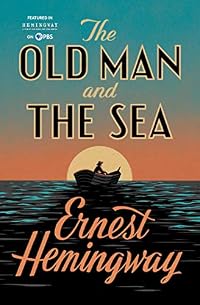
The Old Man and the Sea
by Ernest Hemingway 
On This Page
Description
The last novel Ernest Hemingway saw published, The Old Man and the Sea has proved itself to be one of the enduring works of American fiction. It is the story of an old Cuban fisherman and his supreme ordeal: a relentless, agonizing battle with a giant marlin far out in the Gulf Stream. Using the simple, powerful language of a fable, Hemingway takes the timeless themes of courage in the face of defeat and personal triumph won from loss and transforms them into a magnificent twentieth-century show more classic. show lessTags
Recommendations

























Member Recommendations


Member Reviews
“Yet each man kills the thing he loves.” Oscar Wilde
Bloodsports
This is not sport. This is real fishing. For survival: his, and those who buy his catch. But it can be bloody.
As a small town omnivore, shopping for sanitised meat and fish - neatly plucked, gutted, washed, and butchered - it's easy for me to forget whence it came. Hemingway plunges me into the raw reality of what I eat, and of those who do the dirty, and sometimes dangerous work to supply it.
More importantly, he pulls beauty from the jaws of the primal, visceral battle between man and beast.
Not Plot
Santiago, an old Cuban fisherman, has not caught anything for 84 days - until he hooks an enormous marlin. It will require great strength and stamina to land it, and he is show more alone, a long way from land or other fishermen, with limited drinking water, and no radio or shelter from the sun. The marlin could stay hooked for days, then break free. As he waits, he ponders the sea, fish, and birds, reminisces about his childhood, thinks fondly of the boy he taught to fish, and wonders about the baseball results.
Poetry
If the plot sounds dull, it’s because this novella is not about plot. That is just the canvas on which Hemingway daubs his deceptively simple, strikingly plain prose.
This is a poetic meditation of one man’s relationship with his environment and with Manolin, the boy who tenderly ensures that he eats, drinks, and has the equipment he needs - even though his parents now make him go out on more successful boats.
It is lyrical, multi-sensory, and at times, almost liturgical, especially the conversations with Manolin, which remind me of those between the nameless father and son in Cormac McCarthy’s The Road, reviewed HERE. Both relationships focus on survival, and find comfort in reciting shared hopes they secretly know to be futile (and both are conveyed with minimal punctuation).
Identity, Destiny, Morality
“Perhaps I should not have been a fisherman… But that was the thing I was born for.”
As he faces fish, birds, jellyfish, porpoises, and turtles, Santiago anthropomorphises them, anticipates their thoughts, and talks to them. He talks to himself too, addressing “old man…”.
He has no scruples about killing sharks, which scavenge, kill, and wound, even when not hungry. He harpoons one “without hope, but with resolution and complete malignancy”.
But to the marlin, he speaks reverently, prey though it is: “Fish… I love you and respect you very much. But I will kill you before this day ends.”
The marlin was so exceptionally large and beautiful, he is haunted by its death. “Do not think about sin… I have no understanding of it and I am not sure that I believe in it. Perhaps it was a sin to kill the fish. I suppose it was even though I did it to keep me alive and feed many people. But then everything is a sin. Do not think about sin… There are people who are paid to do it… You were born to be a fisherman as the fish was born to be a fish.” Then again, “You did not kill the fish only to keep alive and to sell for food, he thought. You killed him for pride and because you are a fisherman.” and “I killed him in self-defence… And I killed him well. Everything kills everything else in some way. Fishing kills me exactly as it keeps me alive.”
Santiago asks, “You loved him when he was alive and you loved him after. If you love him, it is not a sin to kill him. Or is it more?” I tend to the latter view, but was reminded of The Ballad of Reading Gaol (longer excerpt below), “Yet each man kills the thing he loves”.
I am fortunate to have been born with more choices about what to be. But a blank slate can be a different sort of burden, and it offers no protection against killing the thing one loves.
Symbolism?
Hemingway famously said, "There isn't any symbolism. The sea is the sea. The old man is an old man. The boy is a boy and the fish is a fish.” Even taking that at face value, there is much depth in the lyrical, philosophical musings. (And I note the quote doesn’t mention the recurring and unexpected motif of lions on an African beach that Santiago fondly remembers from childhood!)
But it’s hard not to infer any symbolism.
There’s explicit symbolism in the gender of language. Santiago thinks of the sea as the feminine la mar, whereas many of the younger fishermen use the masculine el mar. He explains that the feminine is associated with love and “something that gave or withheld great favours”, whereas the flashy youngsters, with their motor-boats and technology, “spoke of her as a contestant or a place or even an enemy”. Gender is a hot topic at the moment, but in 1952, Hemingway noted the power of binary labels to reflect narrow thinking.
There’s the worship of the magnificent marlin and the great Joe DiMaggio. With DiMaggio, it is pure idolatry, but Santiago’s reverence for the marlin is complex and conflicted. He is in awe of it: “Such a calm, strong fish… so fearless and confident.” and “Never have I seen a greater, or more beautiful, or calmer or more noble thing.” Nevertheless, “His determination to kill him never relaxed in his sorrow for him. There is no one worthy of eating him.” Wilde again, “Yet each man kills the thing he loves”.
There’s the devoted relationship between Santiago and Manolin: once the old man cared for the boy, but now the roles are reversed. The beginning and ending of lives, as one generation fades, in favour of the next.
And the sea: giver and taker of life, moody, unpredictable, and awesome in the ancient sense. We strive to master it, even as we know it to be a Sisyphean task.
I’m sorry, Hemingway, but I see symbols.
Quotes
· Scars “as old as erosions in a fishless desert”.
· “He smelled the tar and oakum of the deck as he slept and he smelled the smell of Africa that the land breeze brought at morning.”
· “He left the smell of the land behind” - yet we’re more used to considering the smell of the sea.
· “The old man looked at him with his sunburned, confident, loving eyes.” A striking combination of adjectives.
· Jellyfish: “He looked down in the water and saw the tiny fish that were coloured like the trailing filaments and swam between them and under the small shade the bubble made as it drifted.”
· “The sea was very dark and the light made prisms in the water. The myriad flecks of the plankton were annulled now by the high sun.”
· "The long, golden beaches, and the white beaches, so white they hurt your eyes, and the high capes and the brown mountains… Lions on the beach. They played like young cats in the dusk."
· "The clouds were built up... and he looked ahead and saw a flight of wild ducks etching themselves against the sky over the water, then blurring, then etching again and he knew no man was ever alone on the sea."
· “The white cumulus built like friendly piles of ice-cream.”
· Marlin are “not as intelligent as we who kill them; although they are more noble and more able.”
· “They passed a great island of Sargasso weed that heaved and swung in the light sea as though the ocean were making love with something under a yellow blanket.”
· “I went out too far.”
· “The old man was dreaming about the lions” on the African beach - as will I, I hope.
Second Time Lucky with Hemingway
This book was very different from my first, unhappy encounter with Hemingway, Men Without Women, reviewed HERE. But that was nearly four years ago; I was a different reader then, and somehow, battling an enormous fish is less off-puttingly macho than all the boxing and bullfighting was.
Each man kills the thing he loves
“Yet each man kills the thing he loves,
By each let this be heard,
Some do it with a bitter look,
Some with a flattering word,
The coward does it with a kiss,
The brave man with a sword!
Some kill their love when they are young,
And some when they are old;
Some strangle with the hands of Lust,
Some with the hands of Gold:
The kindest use a knife, because
The dead so soon grow cold.
Some love too little, some too long,
Some sell, and others buy;
Some do the deed with many tears,
And some without a sigh:
For each man kills the thing he loves,
Yet each man does not die.”
From The Ballad of Reading Gaol, by Oscar Wilde
Final, Wider Thoughts on Symbolism
In 1963, a 16-year old wrote to a dozen well-known authors to ask about intentional and unintentional symbolism in their works. The answers are very different, and provide food for thought:
Short article here.
Longer article here.
Image source for marlin: http://www.kingsailfishmounts.com/UserFiles/83-inch%20white%20marlin.jpg
Image source for lion: http://www.kimballstock.com/pix/AFW/17/AFW_17_RK0020_04_P.JPG show less
Bloodsports
This is not sport. This is real fishing. For survival: his, and those who buy his catch. But it can be bloody.
As a small town omnivore, shopping for sanitised meat and fish - neatly plucked, gutted, washed, and butchered - it's easy for me to forget whence it came. Hemingway plunges me into the raw reality of what I eat, and of those who do the dirty, and sometimes dangerous work to supply it.
More importantly, he pulls beauty from the jaws of the primal, visceral battle between man and beast.
Not Plot
Santiago, an old Cuban fisherman, has not caught anything for 84 days - until he hooks an enormous marlin. It will require great strength and stamina to land it, and he is show more alone, a long way from land or other fishermen, with limited drinking water, and no radio or shelter from the sun. The marlin could stay hooked for days, then break free. As he waits, he ponders the sea, fish, and birds, reminisces about his childhood, thinks fondly of the boy he taught to fish, and wonders about the baseball results.
Poetry
If the plot sounds dull, it’s because this novella is not about plot. That is just the canvas on which Hemingway daubs his deceptively simple, strikingly plain prose.
This is a poetic meditation of one man’s relationship with his environment and with Manolin, the boy who tenderly ensures that he eats, drinks, and has the equipment he needs - even though his parents now make him go out on more successful boats.
It is lyrical, multi-sensory, and at times, almost liturgical, especially the conversations with Manolin, which remind me of those between the nameless father and son in Cormac McCarthy’s The Road, reviewed HERE. Both relationships focus on survival, and find comfort in reciting shared hopes they secretly know to be futile (and both are conveyed with minimal punctuation).
Identity, Destiny, Morality
“Perhaps I should not have been a fisherman… But that was the thing I was born for.”
As he faces fish, birds, jellyfish, porpoises, and turtles, Santiago anthropomorphises them, anticipates their thoughts, and talks to them. He talks to himself too, addressing “old man…”.
He has no scruples about killing sharks, which scavenge, kill, and wound, even when not hungry. He harpoons one “without hope, but with resolution and complete malignancy”.
But to the marlin, he speaks reverently, prey though it is: “Fish… I love you and respect you very much. But I will kill you before this day ends.”
The marlin was so exceptionally large and beautiful, he is haunted by its death. “Do not think about sin… I have no understanding of it and I am not sure that I believe in it. Perhaps it was a sin to kill the fish. I suppose it was even though I did it to keep me alive and feed many people. But then everything is a sin. Do not think about sin… There are people who are paid to do it… You were born to be a fisherman as the fish was born to be a fish.” Then again, “You did not kill the fish only to keep alive and to sell for food, he thought. You killed him for pride and because you are a fisherman.” and “I killed him in self-defence… And I killed him well. Everything kills everything else in some way. Fishing kills me exactly as it keeps me alive.”
Santiago asks, “You loved him when he was alive and you loved him after. If you love him, it is not a sin to kill him. Or is it more?” I tend to the latter view, but was reminded of The Ballad of Reading Gaol (longer excerpt below), “Yet each man kills the thing he loves”.
I am fortunate to have been born with more choices about what to be. But a blank slate can be a different sort of burden, and it offers no protection against killing the thing one loves.
Symbolism?
Hemingway famously said, "There isn't any symbolism. The sea is the sea. The old man is an old man. The boy is a boy and the fish is a fish.” Even taking that at face value, there is much depth in the lyrical, philosophical musings. (And I note the quote doesn’t mention the recurring and unexpected motif of lions on an African beach that Santiago fondly remembers from childhood!)
But it’s hard not to infer any symbolism.
There’s explicit symbolism in the gender of language. Santiago thinks of the sea as the feminine la mar, whereas many of the younger fishermen use the masculine el mar. He explains that the feminine is associated with love and “something that gave or withheld great favours”, whereas the flashy youngsters, with their motor-boats and technology, “spoke of her as a contestant or a place or even an enemy”. Gender is a hot topic at the moment, but in 1952, Hemingway noted the power of binary labels to reflect narrow thinking.
There’s the worship of the magnificent marlin and the great Joe DiMaggio. With DiMaggio, it is pure idolatry, but Santiago’s reverence for the marlin is complex and conflicted. He is in awe of it: “Such a calm, strong fish… so fearless and confident.” and “Never have I seen a greater, or more beautiful, or calmer or more noble thing.” Nevertheless, “His determination to kill him never relaxed in his sorrow for him. There is no one worthy of eating him.” Wilde again, “Yet each man kills the thing he loves”.
There’s the devoted relationship between Santiago and Manolin: once the old man cared for the boy, but now the roles are reversed. The beginning and ending of lives, as one generation fades, in favour of the next.
And the sea: giver and taker of life, moody, unpredictable, and awesome in the ancient sense. We strive to master it, even as we know it to be a Sisyphean task.
I’m sorry, Hemingway, but I see symbols.
Quotes
· Scars “as old as erosions in a fishless desert”.
· “He smelled the tar and oakum of the deck as he slept and he smelled the smell of Africa that the land breeze brought at morning.”
· “He left the smell of the land behind” - yet we’re more used to considering the smell of the sea.
· “The old man looked at him with his sunburned, confident, loving eyes.” A striking combination of adjectives.
· Jellyfish: “He looked down in the water and saw the tiny fish that were coloured like the trailing filaments and swam between them and under the small shade the bubble made as it drifted.”
· “The sea was very dark and the light made prisms in the water. The myriad flecks of the plankton were annulled now by the high sun.”
· "The long, golden beaches, and the white beaches, so white they hurt your eyes, and the high capes and the brown mountains… Lions on the beach. They played like young cats in the dusk."
· "The clouds were built up... and he looked ahead and saw a flight of wild ducks etching themselves against the sky over the water, then blurring, then etching again and he knew no man was ever alone on the sea."
· “The white cumulus built like friendly piles of ice-cream.”
· Marlin are “not as intelligent as we who kill them; although they are more noble and more able.”
· “They passed a great island of Sargasso weed that heaved and swung in the light sea as though the ocean were making love with something under a yellow blanket.”
· “I went out too far.”
· “The old man was dreaming about the lions” on the African beach - as will I, I hope.
Second Time Lucky with Hemingway
This book was very different from my first, unhappy encounter with Hemingway, Men Without Women, reviewed HERE. But that was nearly four years ago; I was a different reader then, and somehow, battling an enormous fish is less off-puttingly macho than all the boxing and bullfighting was.
Each man kills the thing he loves
“Yet each man kills the thing he loves,
By each let this be heard,
Some do it with a bitter look,
Some with a flattering word,
The coward does it with a kiss,
The brave man with a sword!
Some kill their love when they are young,
And some when they are old;
Some strangle with the hands of Lust,
Some with the hands of Gold:
The kindest use a knife, because
The dead so soon grow cold.
Some love too little, some too long,
Some sell, and others buy;
Some do the deed with many tears,
And some without a sigh:
For each man kills the thing he loves,
Yet each man does not die.”
From The Ballad of Reading Gaol, by Oscar Wilde
Final, Wider Thoughts on Symbolism
In 1963, a 16-year old wrote to a dozen well-known authors to ask about intentional and unintentional symbolism in their works. The answers are very different, and provide food for thought:
Short article here.
Longer article here.
Image source for marlin: http://www.kingsailfishmounts.com/UserFiles/83-inch%20white%20marlin.jpg
Image source for lion: http://www.kimballstock.com/pix/AFW/17/AFW_17_RK0020_04_P.JPG show less
There's something to be said for the simplicity of The Old Man and the Sea. Everything about it seems to recall a simpler time, or at least a simpler place – a world where everything is summed up in clear, measured sentences, and qualities like greatness and heroism are completely unambiguous. They are the qualities we might attribute to the old man, whose stoic struggle with his fish is the stuff of legend. He never worries or plans more than a few steps ahead; he simply endures each moment as it comes. Not once does it occur to him that he could give up; that it might be dangerous to pursue an immense fish for three days away from the mainland in a tiny skiff. In another context, the old man's approach would amount to stupidity. But show more in the measured tones of an old man who has come to see the world in his own plainly ordered way, it is not stupidity. It is greatness. In this way, Hemingway evokes a sort of nostalgia for a world less complex than our own. Perhaps, after days of being bombarded with baffling amounts of information, and grappling with seemingly unsolvable dilemmas, we all dream, like the old man, of lions; of greatness beyond uncertainty.
Perhaps, also, the great and simple writing reflects the sea itself. The way it washes over you, steady and unchanging, can seem monotonous at first, but once you have sunk into it you begin to discover life, complexity, subtlety where there seemed to be none before. Hemingway's style produces a very specific effect, and there is no doubt that he has achieved that effect spectacularly, but I am still unsure whether it is quite to my liking. I now intend to go back and read some of his earlier work – perhaps I will find it easier to engage with. show less
Perhaps, also, the great and simple writing reflects the sea itself. The way it washes over you, steady and unchanging, can seem monotonous at first, but once you have sunk into it you begin to discover life, complexity, subtlety where there seemed to be none before. Hemingway's style produces a very specific effect, and there is no doubt that he has achieved that effect spectacularly, but I am still unsure whether it is quite to my liking. I now intend to go back and read some of his earlier work – perhaps I will find it easier to engage with. show less
'But man is not made for defeat,' he said. 'A man can be destroyed but not defeated.'" (pg. 80).
Ernest Hemingway's The Old Man and the Sea tells the story of Santiago, a luckless old Cuban fisherman who has gone eighty-four days without a catch. He decides to travel far out to sea to try to change his luck, and hooks an eighteen-foot, 1,500-pound marlin fish. What follows is the indomitable struggle of one man over a period of a few days as he wrestles with the fish to try to subdue it and bring it back to harbour.
As my brief synopsis suggests, it is not the most exhilarating premise. I have no interest in fishing, and many of the references went over my head (gunwale, skiff, leader, tiller, etc.). I even had to look up 'marlin' to show more confirm the mental picture I had of it (I was correct, but had been far from sure). But Hemingway writes (as always) with a deceptively simple beauty, well enough to sustain my interest for the book's 99 pages. Where the story grabs is in its underlying themes. It is, in essence, an allegory of man's struggle against nature. This is, of course, manifested most directly in his struggles with the big fish, but also against the elements (as a fisherman, Santiago must use the weather to guide his course and manipulate his craft) and his own natural body (fighting against his fatigue, hunger, self-doubt and also pain as the taut fishing line cuts his skin. His weaker left hand is also described as a 'traitor' that 'betrays' him). Despite the title - and the cover (my Arrow Books edition shows a raging sea) - the one natural element that he does not battle is the ocean itself, which is calm throughout.
In showing the old fisherman's struggle with nature, Hemingway also shows how man is one with the natural world. The old man feels a kinship with the marlin (referring to it as a 'brother') and praises its magnificence and strength. "Man is not much beside the great birds and beasts," he muses on page 51. But just as there is prey, there must also be predators. Santiago muses on whether it is a sin to kill such a magnificent creature, and when it is finally subdued, the old man's 'prize' is cruelly snatched from him by relentless waves of sharks. Even though Santiago recognises the inevitable outcome of the shark attacks, he still fights back. When his harpoon is lost, he lashes his knife to an oar. When the knife snaps as it is embedded in a shark, he rips the tiller from the steering rudder. Shorn of all his weapons and weary to the point of collapse, he clubs the sharks with a broken oar, even though he knows this will not kill any of the blood-frenzied predators. To my mind, Hemingway does this to remind us that life is a violent struggle in which creatures, whether men, marlin or sharks, must do battle with one another. This is evident when a small bird comes to rest on Santiago's boat. Knowing that hawks will soon be hunting it, he invites the bird to rest but that it must eventually go and "take your chance like any man or bird or fish." (pg. 40). Hemingway alludes to a sort of primitive chivalry in this eternal struggle. He honours his opponent (the marlin) and, like two enemy soldiers clashing in an anti-war novel, regrets that they must come together to do battle. He does not celebrate his victory, conceding that, with his guile and with his hooks and baits, "I am only better than him through trickery and he meant me no harm." (pg. 76). With the sharks, he fights against the hopeless odds and, upon returning to harbour, bears his loss stoically and rests.
To return to the quotation at the start of this review, the old man could be destroyed but not defeated. Defeat is a man-made concept; it is alien to the natural chivalric order of things. The marlin did not give up; it endured to the end of its natural limits. The old man did not surrender the fish to the sharks; he fought back, even when it was futile. Rather, both were destroyed: the marlin by the old man, and the old man by the sharks. Upon returning to harbour, Santiago dreams of the lions, as he did before, showing that even as his efforts have been destroyed and made irrelevant by the sharks, he has not been defeated. Arguably, merely catching the fish was a victory in itself, as the old man had proved to the other fishermen that he was still capable of doing so despite his 84-day streak. Had the story not ended with his return to the harbour, one could imagine Santiago setting out again as soon as he had recuperated, and casting his line out into the depths. Hemingway even hints at this when Santiago bemoans his lack of preparedness, particularly on page 85, and resolves to rectify this for the next trip. Perhaps the eternal struggle is not futile; on page 57, Santiago is thankful that man is not cursed to hunt and try to kill the stars, or the sun and the moon. Like the fish, these are natural things. But fish, at least, can be caught and subdued, and defeat on one day could be victory on another (whilst wishing he had not encountered the marlin only to have it snatched from him, the old man notes: "But who knows? It might have turned out well." (pg. 86)). Trying to subdue the stars would be futile but, against the denizens of the ocean, man can fulfil his compulsion to do battle with nature and still have his small victories from time to time.
This, at least, is my humble interpretation of the story. Even if others do not agree with my perspective, it shows how remarkable The Old Man and the Sea is, that Hemingway can present, in less than 100 pages, a thematic story of as great a depth as the ocean in which it takes place." show less
Ernest Hemingway's The Old Man and the Sea tells the story of Santiago, a luckless old Cuban fisherman who has gone eighty-four days without a catch. He decides to travel far out to sea to try to change his luck, and hooks an eighteen-foot, 1,500-pound marlin fish. What follows is the indomitable struggle of one man over a period of a few days as he wrestles with the fish to try to subdue it and bring it back to harbour.
As my brief synopsis suggests, it is not the most exhilarating premise. I have no interest in fishing, and many of the references went over my head (gunwale, skiff, leader, tiller, etc.). I even had to look up 'marlin' to show more confirm the mental picture I had of it (I was correct, but had been far from sure). But Hemingway writes (as always) with a deceptively simple beauty, well enough to sustain my interest for the book's 99 pages. Where the story grabs is in its underlying themes. It is, in essence, an allegory of man's struggle against nature. This is, of course, manifested most directly in his struggles with the big fish, but also against the elements (as a fisherman, Santiago must use the weather to guide his course and manipulate his craft) and his own natural body (fighting against his fatigue, hunger, self-doubt and also pain as the taut fishing line cuts his skin. His weaker left hand is also described as a 'traitor' that 'betrays' him). Despite the title - and the cover (my Arrow Books edition shows a raging sea) - the one natural element that he does not battle is the ocean itself, which is calm throughout.
In showing the old fisherman's struggle with nature, Hemingway also shows how man is one with the natural world. The old man feels a kinship with the marlin (referring to it as a 'brother') and praises its magnificence and strength. "Man is not much beside the great birds and beasts," he muses on page 51. But just as there is prey, there must also be predators. Santiago muses on whether it is a sin to kill such a magnificent creature, and when it is finally subdued, the old man's 'prize' is cruelly snatched from him by relentless waves of sharks. Even though Santiago recognises the inevitable outcome of the shark attacks, he still fights back. When his harpoon is lost, he lashes his knife to an oar. When the knife snaps as it is embedded in a shark, he rips the tiller from the steering rudder. Shorn of all his weapons and weary to the point of collapse, he clubs the sharks with a broken oar, even though he knows this will not kill any of the blood-frenzied predators. To my mind, Hemingway does this to remind us that life is a violent struggle in which creatures, whether men, marlin or sharks, must do battle with one another. This is evident when a small bird comes to rest on Santiago's boat. Knowing that hawks will soon be hunting it, he invites the bird to rest but that it must eventually go and "take your chance like any man or bird or fish." (pg. 40). Hemingway alludes to a sort of primitive chivalry in this eternal struggle. He honours his opponent (the marlin) and, like two enemy soldiers clashing in an anti-war novel, regrets that they must come together to do battle. He does not celebrate his victory, conceding that, with his guile and with his hooks and baits, "I am only better than him through trickery and he meant me no harm." (pg. 76). With the sharks, he fights against the hopeless odds and, upon returning to harbour, bears his loss stoically and rests.
To return to the quotation at the start of this review, the old man could be destroyed but not defeated. Defeat is a man-made concept; it is alien to the natural chivalric order of things. The marlin did not give up; it endured to the end of its natural limits. The old man did not surrender the fish to the sharks; he fought back, even when it was futile. Rather, both were destroyed: the marlin by the old man, and the old man by the sharks. Upon returning to harbour, Santiago dreams of the lions, as he did before, showing that even as his efforts have been destroyed and made irrelevant by the sharks, he has not been defeated. Arguably, merely catching the fish was a victory in itself, as the old man had proved to the other fishermen that he was still capable of doing so despite his 84-day streak. Had the story not ended with his return to the harbour, one could imagine Santiago setting out again as soon as he had recuperated, and casting his line out into the depths. Hemingway even hints at this when Santiago bemoans his lack of preparedness, particularly on page 85, and resolves to rectify this for the next trip. Perhaps the eternal struggle is not futile; on page 57, Santiago is thankful that man is not cursed to hunt and try to kill the stars, or the sun and the moon. Like the fish, these are natural things. But fish, at least, can be caught and subdued, and defeat on one day could be victory on another (whilst wishing he had not encountered the marlin only to have it snatched from him, the old man notes: "But who knows? It might have turned out well." (pg. 86)). Trying to subdue the stars would be futile but, against the denizens of the ocean, man can fulfil his compulsion to do battle with nature and still have his small victories from time to time.
This, at least, is my humble interpretation of the story. Even if others do not agree with my perspective, it shows how remarkable The Old Man and the Sea is, that Hemingway can present, in less than 100 pages, a thematic story of as great a depth as the ocean in which it takes place." show less
Whether or not one enjoys this book is partly a matter of personal temperament, but upon re-reading, I'm convinced more than ever that The Old Man and the Sea is objectively Hemingway's best.
Here's why I think so: Hemingway's prose is deliberately minimalist, the sentences carefully stripped back. In its best moments, I think his prose feels like looking into a clear water. The style doesn't obtrude or obscure; it has a lovely cleanness; so what's suggested underneath the words has the feel of being laid bare. It's a style that I generally like, partly for its novelty.
What could be a more perfect match for this style than the simple fishermen of this book whose lives have a similar minimalist effect? They live with such touching show more dignity, with an empathy among themselves so profound that it hardly requires speech, and with such reserves of great, quiet strength.
These characters say so little, but I've come to love them so deeply!
In fact, the perfect match of style and substance elevates the whole work with its clean, broad lines into myth. For me, everything about the book radiates with a mythological, transforming power. It doesn't feel quite real - not because the image is fractured or marred but because it's trying to be something else, like a good modernist painting that lays bare the truth in a way much more profoundly than a representational image ever could. The story is somehow half in this world and half somewhere else, steeped in magic, Plato's cave of forms perhaps?
Yes, the plot is somewhat thin, and there are really only two characters of significance; yet for my part I could have read 800 more pages.
Here's a dolphin catch quote that I think is representative of the book's feel, for me pure suggestiveness beginning to end - it doesn't really figure in the plot; so no need to worry about spoilers:
"Its jaws were working convulsively in quick bites against the hook and it pounded the bottom of the skiff with its long flat body, its tail and its head until he clubbed it across the shining golden head until it shivered and was still."
"Shining golden head," I so love that - it gives the poet-lover in me chills of wonder!
I've read many other books by Hemingway including A Farewell to Arms, The Sun Also Rises, To Have and Have Not, and The Snows of Kilimanjaro and Other Stories, and some of them were very good. Still, I feel that The Old Man and the Sea is in another whole league of greatness.
I recommend it especially to anyone who likes reading myths! The men, creatures, and objects of the story function well as themselves, but they also have the feel of symbols from beginning to end! There's much to be gained from piecing together the various allegories Hemingway's writing might suggest; I highly recommend a little Internet research - it's interesting and can add depth to the story.
But in the end, after reducing it to any kind of allegory, I just can't leave it at that level - it would feel too much like going to Catholic mass wearing a tank top, chewing gum, and listening to a Walkman while waiting in line for communion. I can pull the words down to the level of one allegory or another for a moment, but then I have to let them spring back up to where they belong - with a weary fisherman in his boat amid a fierce wonder of ocean, darkness and stars! show less
Here's why I think so: Hemingway's prose is deliberately minimalist, the sentences carefully stripped back. In its best moments, I think his prose feels like looking into a clear water. The style doesn't obtrude or obscure; it has a lovely cleanness; so what's suggested underneath the words has the feel of being laid bare. It's a style that I generally like, partly for its novelty.
What could be a more perfect match for this style than the simple fishermen of this book whose lives have a similar minimalist effect? They live with such touching show more dignity, with an empathy among themselves so profound that it hardly requires speech, and with such reserves of great, quiet strength.
These characters say so little, but I've come to love them so deeply!
In fact, the perfect match of style and substance elevates the whole work with its clean, broad lines into myth. For me, everything about the book radiates with a mythological, transforming power. It doesn't feel quite real - not because the image is fractured or marred but because it's trying to be something else, like a good modernist painting that lays bare the truth in a way much more profoundly than a representational image ever could. The story is somehow half in this world and half somewhere else, steeped in magic, Plato's cave of forms perhaps?
Yes, the plot is somewhat thin, and there are really only two characters of significance; yet for my part I could have read 800 more pages.
Here's a dolphin catch quote that I think is representative of the book's feel, for me pure suggestiveness beginning to end - it doesn't really figure in the plot; so no need to worry about spoilers:
"Its jaws were working convulsively in quick bites against the hook and it pounded the bottom of the skiff with its long flat body, its tail and its head until he clubbed it across the shining golden head until it shivered and was still."
"Shining golden head," I so love that - it gives the poet-lover in me chills of wonder!
I've read many other books by Hemingway including A Farewell to Arms, The Sun Also Rises, To Have and Have Not, and The Snows of Kilimanjaro and Other Stories, and some of them were very good. Still, I feel that The Old Man and the Sea is in another whole league of greatness.
I recommend it especially to anyone who likes reading myths! The men, creatures, and objects of the story function well as themselves, but they also have the feel of symbols from beginning to end! There's much to be gained from piecing together the various allegories Hemingway's writing might suggest; I highly recommend a little Internet research - it's interesting and can add depth to the story.
But in the end, after reducing it to any kind of allegory, I just can't leave it at that level - it would feel too much like going to Catholic mass wearing a tank top, chewing gum, and listening to a Walkman while waiting in line for communion. I can pull the words down to the level of one allegory or another for a moment, but then I have to let them spring back up to where they belong - with a weary fisherman in his boat amid a fierce wonder of ocean, darkness and stars! show less
A story of one man’s entire life told through the lens of just one moment in his life (a night out fishing) which will make him either a hero or will kill him. Either way, he will fight to the death and never give up. “Man is not made for defeat,” the old man said, “A man can be destroyed but not defeated.”
It’s a simple and superb story.
The story is stoic in worldview. The old man works hard, lives with integrity, does not complain or boast, and despite great suffering never gives up. At one point the old man says, “I am too old to club sharks to death. But I will try it as long as I have the oars and the short club and the tiller.”
Stoicism is right to view the world as a complex and tragic place to live. Suffering show more spares no one and it reaches into every part of our lives. To survive we must work hard, live with integrity, avoid complaining and boasting, and refuse to give up.
But there is something sad about Hemingway’s worldview. He, to quote one commentator, “understood the truth of tragedy so deeply but failed to understand the redemption… Without the hope that comes from that redemption, it is no surprise that he sought relief in such things as drink, dalliance, sport, and suicide but found no lasting satisfaction in them. The real surprise is that he was so driven to communicate the truth of tragedy to others… By his writing he became an apostle of a grim gospel.”
And yet surprisingly, The Old Man and the Sea is littered with religious language and metaphor. The old man talks of faith and doubt, he prays, his hands are pierced, the fishing line cuts stigmatic stripes into his back, he caries his mast on his shoulders and falls down exhausted under it’s weight.
The story ends with the town talking about the skeleton of the great fish, while the gospels end with the town talking about and Jesus empty tomb and stories of people who had seen him alive. Follow anything (fish, fame, women, adventure, wealth) and, even if you succeed in capturing it, the sharks will begin to tear at it, and in the end all you will have is a skeleton. Hemingway gets this. That’s life. Don’t give up. Keep fighting. But, Jesus says, follow me and though your life may be hard, in the end you will gain everything:
“Whoever wants to be my disciple must deny themselves and take up their cross and follow me. For whoever wants to save their life will lose it, but whoever loses their life for me and for the gospel will save it. What good is it for someone to gain the whole world, yet forfeit their soul? ” (Mark 8:34-36) show less
It’s a simple and superb story.
The story is stoic in worldview. The old man works hard, lives with integrity, does not complain or boast, and despite great suffering never gives up. At one point the old man says, “I am too old to club sharks to death. But I will try it as long as I have the oars and the short club and the tiller.”
Stoicism is right to view the world as a complex and tragic place to live. Suffering show more spares no one and it reaches into every part of our lives. To survive we must work hard, live with integrity, avoid complaining and boasting, and refuse to give up.
But there is something sad about Hemingway’s worldview. He, to quote one commentator, “understood the truth of tragedy so deeply but failed to understand the redemption… Without the hope that comes from that redemption, it is no surprise that he sought relief in such things as drink, dalliance, sport, and suicide but found no lasting satisfaction in them. The real surprise is that he was so driven to communicate the truth of tragedy to others… By his writing he became an apostle of a grim gospel.”
And yet surprisingly, The Old Man and the Sea is littered with religious language and metaphor. The old man talks of faith and doubt, he prays, his hands are pierced, the fishing line cuts stigmatic stripes into his back, he caries his mast on his shoulders and falls down exhausted under it’s weight.
The story ends with the town talking about the skeleton of the great fish, while the gospels end with the town talking about and Jesus empty tomb and stories of people who had seen him alive. Follow anything (fish, fame, women, adventure, wealth) and, even if you succeed in capturing it, the sharks will begin to tear at it, and in the end all you will have is a skeleton. Hemingway gets this. That’s life. Don’t give up. Keep fighting. But, Jesus says, follow me and though your life may be hard, in the end you will gain everything:
“Whoever wants to be my disciple must deny themselves and take up their cross and follow me. For whoever wants to save their life will lose it, but whoever loses their life for me and for the gospel will save it. What good is it for someone to gain the whole world, yet forfeit their soul? ” (Mark 8:34-36) show less
Endurance as Elegy: A Review of Hemingway’s The Old Man and the Sea
In the vast canon of American literature, few works achieve the compression and resonance of Ernest Hemingway’s The Old Man and the Sea. Published in 1952, it arrived as a late-career reaffirmation of the author’s spare aesthetic, distilling decades of thematic preoccupation—grace under pressure, ritualized labor, and the silent dignity of the individual—into a novella that reads as both fable and elegy.
The story is deceptively simple: Santiago, an aging Cuban fisherman, ventures far into the Gulf Stream after eighty-four days without a catch. He hooks a colossal marlin, and over two days and nights wages a solitary war of attrition against the fish, only to show more see his prize devoured by sharks before he can return to shore. But simplicity is not shallowness. Hemingway transforms this elemental plot into a meditation on struggle, pride, and the relationship between man and the natural world.
Central to the novella’s power is Santiago himself. He is neither hero in the conventional sense nor victim. Instead, Hemingway presents him as a figure of stoic endurance, defined by his unshakeable sense of purpose. The famous line—“Man is not made for defeat. A man can be destroyed but not defeated”—is not boast but creed. Santiago’s battle with the marlin becomes a spiritual test, a demonstration that the value of an act lies not in its material outcome but in the quality of one’s commitment to it.
The sea is far more than setting; it is a dynamic, almost sentient presence. Hemingway renders it with the precision of a naturalist and the reverence of a mystic. Santiago speaks of the sea as la mar, feminine and nurturing, even as it proves indifferent to his suffering. The marlin itself becomes a brother—an equal worthy of respect—and the sharks that strip away the evidence of Santiago’s triumph are rendered as mindless forces of annihilation. In this, Hemingway avoids easy sentimentality; the natural world is neither cruel nor kind. It simply is.
Stylistically, the prose is Hemingway at his most refined. The sentences are short, their syntax deceptively simple, yet they accumulate into a rhythm that mimics the ocean’s swells. Dialogue is minimal, often reduced to Santiago’s interior monologue—half prayer, half self-exhortation. The iceberg theory operates at full force: vast emotional and philosophical weight rests beneath the surface of concrete description. A reader expecting ornate metaphor or psychological exposition will find none; instead, the meaning emerges from the stark accumulation of action and observation.
The novella’s cultural resonance is perhaps its most surprising dimension. Published at mid-century, it became a touchstone for postwar existentialism, celebrated for its depiction of meaning forged in the face of absurdity. Yet Hemingway resists the nihilistic turn that such a reading might imply. Santiago returns with nothing but a skeleton, yet he dreams again of lions on the African shore—a recurring image that represents youth, strength, and the continuity of life. The ending is not triumphant, but it is not despairing either. It is, like Santiago himself, quietly, stubbornly enduring.
The Old Man and the Sea is not without its critics. Some have called its symbolism heavy-handed—the crucifixion imagery in Santiago’s homeward journey is indeed conspicuous—and its portrayal of Manichaean struggle can feel dated in an era that demands more nuanced engagements with ecology and labor. But to read it as a simple allegory of heroic individualism is to miss its subtler textures. This is a book about humility as much as pride, about love for what one fights against, and about the dignity that persists even when external validation is stripped away.
It remains Hemingway’s final major statement, the work that earned him the Pulitzer Prize and paved the way for his Nobel. More than that, it endures because it speaks to a fundamental human experience: the confrontation with one’s own limits, and the choice of how to meet them. In prose so clean it seems inevitable, Hemingway offers not catharsis but clarity—a recognition that some struggles are their own reward, and that grace is measured not in what one brings back, but in how one holds on. show less
In the vast canon of American literature, few works achieve the compression and resonance of Ernest Hemingway’s The Old Man and the Sea. Published in 1952, it arrived as a late-career reaffirmation of the author’s spare aesthetic, distilling decades of thematic preoccupation—grace under pressure, ritualized labor, and the silent dignity of the individual—into a novella that reads as both fable and elegy.
The story is deceptively simple: Santiago, an aging Cuban fisherman, ventures far into the Gulf Stream after eighty-four days without a catch. He hooks a colossal marlin, and over two days and nights wages a solitary war of attrition against the fish, only to show more see his prize devoured by sharks before he can return to shore. But simplicity is not shallowness. Hemingway transforms this elemental plot into a meditation on struggle, pride, and the relationship between man and the natural world.
Central to the novella’s power is Santiago himself. He is neither hero in the conventional sense nor victim. Instead, Hemingway presents him as a figure of stoic endurance, defined by his unshakeable sense of purpose. The famous line—“Man is not made for defeat. A man can be destroyed but not defeated”—is not boast but creed. Santiago’s battle with the marlin becomes a spiritual test, a demonstration that the value of an act lies not in its material outcome but in the quality of one’s commitment to it.
The sea is far more than setting; it is a dynamic, almost sentient presence. Hemingway renders it with the precision of a naturalist and the reverence of a mystic. Santiago speaks of the sea as la mar, feminine and nurturing, even as it proves indifferent to his suffering. The marlin itself becomes a brother—an equal worthy of respect—and the sharks that strip away the evidence of Santiago’s triumph are rendered as mindless forces of annihilation. In this, Hemingway avoids easy sentimentality; the natural world is neither cruel nor kind. It simply is.
Stylistically, the prose is Hemingway at his most refined. The sentences are short, their syntax deceptively simple, yet they accumulate into a rhythm that mimics the ocean’s swells. Dialogue is minimal, often reduced to Santiago’s interior monologue—half prayer, half self-exhortation. The iceberg theory operates at full force: vast emotional and philosophical weight rests beneath the surface of concrete description. A reader expecting ornate metaphor or psychological exposition will find none; instead, the meaning emerges from the stark accumulation of action and observation.
The novella’s cultural resonance is perhaps its most surprising dimension. Published at mid-century, it became a touchstone for postwar existentialism, celebrated for its depiction of meaning forged in the face of absurdity. Yet Hemingway resists the nihilistic turn that such a reading might imply. Santiago returns with nothing but a skeleton, yet he dreams again of lions on the African shore—a recurring image that represents youth, strength, and the continuity of life. The ending is not triumphant, but it is not despairing either. It is, like Santiago himself, quietly, stubbornly enduring.
The Old Man and the Sea is not without its critics. Some have called its symbolism heavy-handed—the crucifixion imagery in Santiago’s homeward journey is indeed conspicuous—and its portrayal of Manichaean struggle can feel dated in an era that demands more nuanced engagements with ecology and labor. But to read it as a simple allegory of heroic individualism is to miss its subtler textures. This is a book about humility as much as pride, about love for what one fights against, and about the dignity that persists even when external validation is stripped away.
It remains Hemingway’s final major statement, the work that earned him the Pulitzer Prize and paved the way for his Nobel. More than that, it endures because it speaks to a fundamental human experience: the confrontation with one’s own limits, and the choice of how to meet them. In prose so clean it seems inevitable, Hemingway offers not catharsis but clarity—a recognition that some struggles are their own reward, and that grace is measured not in what one brings back, but in how one holds on. show less
Hemingway makes this look effortless, which is exactly why it hits so hard. Santiago heads out in his little skiff, hooks something massive, and the book becomes a tight, aching contest between a man and the sea, with pride, patience, and sheer stubborn willpower on the line.
What surprised me most is how intimate it feels. You spend so much time with Santiago’s thoughts and hands and hunger that the Gulf Stream starts to feel like a whole world. The bond between Santiago and Manolin adds warmth without turning sentimental, and it makes the loneliness of the fight land even deeper.
The writing is clean and spare, but it carries a lot of weight. Every small detail matters, and by the time the sea takes its due, it’s impossible not to show more feel both wrecked and strangely uplifted. 🌊 show less
What surprised me most is how intimate it feels. You spend so much time with Santiago’s thoughts and hands and hunger that the Gulf Stream starts to feel like a whole world. The bond between Santiago and Manolin adds warmth without turning sentimental, and it makes the loneliness of the fight land even deeper.
The writing is clean and spare, but it carries a lot of weight. Every small detail matters, and by the time the sea takes its due, it’s impossible not to show more feel both wrecked and strangely uplifted. 🌊 show less
Members
- Recently Added By
Published Reviews
ThingScore 100
The Old Man and the Sea has almost none of the old Hemingway truculence, the hard-guy sentimentality that sometimes gives even his most devoted admirers twinges of discomfort. As a story, it is clean and straight. Those who admire craftsmanship will be right in calling it a masterpiece... it is a poem of action, praising a brave man, a magnificent fish and the sea, with perhaps a new show more underlying reverence for the Creator of such wonders. show less
added by jjlong
It is a tale superbly told and in the telling Ernest Hemingway uses all the craft his hard, disciplined trying over so many years has given him.
added by Shortride
Lists

1001 Books You Must Read Before You Die
1,448 works; 1,132 members

The Guardian's 1000 Novels Everyone Must Read
1,005 works; 549 members

Classics you know you should have read but probably haven't
421 works; 407 members

Pulitzer Prize Winners for Fiction
102 works; 54 members
501 Must-Read Books
508 works; 72 members
BBC Big Read
191 works; 45 members

Radcliffe's 100 Best Novel of the 20th Century
100 works; 32 members

The 100 Best Books of All Time by Norwegian Book Club (World Library)
104 works; 23 members
20th Century Literature
1,161 works; 54 members

Great American Novels
158 works; 40 members

Read the book and saw the movie
1,170 works; 192 members
The Top Ten: Writers Pick Their Favorite Books
240 works; 31 members

Top Five Books of 2013
1,562 works; 715 members

water on the brain: maritime fiction
74 works; 17 members

Best Psychological Fiction
81 works; 16 members

1950s
340 works; 22 members
National Book Award Finalists - Fiction
377 works; 12 members
LibraryThingers' 1001 Books You Must Read Before You Die
442 works; 30 members

Nobel Price Winners
222 works; 20 members
Canon de la narrativa universal del siglo XX
254 works; 6 members
Best Friendship Stories
205 works; 16 members

Short and Sweet
243 works; 23 members

Best Adventure Stories
66 works; 13 members

Books You Read During High School (For School)
301 works; 53 members

Top Five Books of 2020
982 works; 348 members
Year 9 Reading List
29 works; 3 members

Pulitzer Prize-Winning Books
42 works; 9 members
Fiction For Men
142 works; 10 members
1,001 BYMRBYD Concensus
723 works; 27 members

1964 College Preparatory Reading List
202 works; 8 members

Readable Classics
110 works; 15 members

Top Five Books of 2014
1,064 works; 398 members

A Novel Cure
742 works; 23 members

Anthony Burgess 99 Post War Novels
99 works; 7 members
Blue Pyramid 1,276 Best Books of All Time
1,248 works; 32 members
Top 100 to Read before you Die
109 works; 7 members
Best of American Literature
146 works; 9 members

100 World Classics
99 works; 15 members
Jordan B. Peterson's Recommended Books
104 works; 5 members
TML 200 Best Books 1950-1999
202 works; 10 members
Best First Lines
133 works; 8 members

Favorite Caribbean Books
60 works; 28 members

One Book, Many Authors
441 works; 40 members
My list of 100 books to read next
100 works; 4 members
Books tagged favorites
390 works; 30 members

the old and the restless
62 works; 14 members

Modernism
140 works; 8 members

Carole's List
445 works; 13 members

Books About Older People
50 works; 11 members

Discontinued
19 works; 4 members
Overdue Podcast
803 works; 9 members

recalling favorites...
105 works; 2 members

Generation Joshua
115 works; 3 members
CCE 1000 Good Books List
1,033 works; 12 members

Books Read in 2022
5,164 works; 113 members

Publisher's Weekly Bestsellers - Part II - 1940 - 1979
355 works; 5 members

Books Read in 2007
326 works; 8 members

Pageturners
40 works; 6 members

Blackwell's Five Foot Bookshelf
72 works; 4 members
My Favourite Books
86 works; 5 members

Books Read in 2020
4,379 works; 124 members
http://thegreatestbooks.org's Greatest Fiction Books
59 works; 1 member
BingoDOG - Animals in Adult Fiction
78 works; 18 members

Tammen Keltainen kirjasto
81 works; 1 member
American Lit for Eng 11 Research Project
368 works; 6 members
Books Mentioned in The Wedding Planner's Daughter series
107 works; 2 members

Macho Fiction
7 works; 4 members

Ocean Setting
33 works; 5 members

The Modern Library (The Two Hundred Best Novels....
202 works; 1 member
Adult Stories Involving Animals
76 works; 6 members

Tagged by Tim or Meh!
91 works; 9 members
Classical Conversations Challenge I Exposition
20 works; 1 member
Great Short Books: A Year of Reading-Briefly
59 works; 4 members

100 knjiga
100 works; 1 member
BitLife
212 works; 4 members

Books Read in 2024
4,623 works; 126 members

Recommended Reading : 600 Classics Reviewed, Editors of Salem Press, 2015
634 works; 6 members
.
396 works; 1 member
Canon de la narrativa universal del s. XX (cicutadry)
499 works; 3 members

Retrospective of 20th- and 21st-century literature
154 works; 1 member

Recommended Literary Books
111 works; 1 member
DigitalDreamDoor top 300
300 works; 4 members

Titles to Avoid
6 works; 1 member

Read in 2007
55 works; 1 member
The Complete Rory Gilmore Reading List
506 works; 5 members

.
194 works; 2 members
School Made Us Read It
380 works; 196 members

Books Read in 2021
5,361 works; 113 members

Mustich's 1000 Books to Read Before You Die: A Life Changing List
1,001 works; 18 members
BIRDS IN FICTION & NON-FICTION
17 works; 1 member

Greatest Books, allegedly
484 works; 9 members

Sonlight Books
1,487 works; 25 members

Very Very Bad
22 works; 7 members

Latin America
45 works; 6 members
Protagonists - Men
32 works; 2 members

Best Survival Stories
97 works; 15 members

Novels that you shouldn't waste your time on
94 works; 52 members

Ambleside Books
459 works; 18 members
Books With Water Words in the Title
186 works; 12 members
Honey For a Child's Heart
1,152 works; 25 members

Books We Resisted Reading
175 works; 106 members
Short Books to Read
14 works; 2 members
Best Sea Stories
33 works; 5 members
Allegorical Fiction
16 works; 4 members

Biggest Disappointments
606 works; 164 members
Mitski!
25 works; 1 member
Novels/Poems/Short Stories/Anything Storytelling Related
112 works; 2 members

Summer Books
82 works; 9 members

Best Books on Fisheries, Fishing Fleets and Fish
42 works; 3 members
The American Experience
173 works; 18 members

NPRs audience picks: 100 best beach reads
105 works; 12 members
Favorite Coming of Age Novels.
164 works; 51 members

Unread books
1,063 works; 87 members
Talk Discussions
Past Discussions
The Old Man and the Sea by Ernest Hemingway - LIMITED EDITIONS CLUB 1990 in George Macy devotees (September 2023)
Author Information

656+ Works 173,353 Members
Ernest Miller Hemingway was born in the family home in Oak Park, Ill., on July 21, 1899. In high school, Hemingway enjoyed working on The Trapeze, his school newspaper, where he wrote his first articles. Upon graduation in the spring of 1917, Hemingway took a job as a cub reporter for the Kansas City Star. After a short stint in the U.S. Army as a show more volunteer Red Cross ambulance driver in Italy, Hemingway moved to Paris, and it was here that Hemingway began his well-documented career as a novelist. Hemingway's first collection of short stories and vignettes, entitled In Our Time, was published in 1925. His first major novel, The Sun Also Rises, the story of American and English expatriates in Paris and on excursion to Pamplona, immediately established him as one of the great prose stylists and preeminent writers of his time. In this book, Hemingway quotes Gertrude Stein, "You are all a lost generation," thereby labeling himself and other expatriate writers, including F. Scott Fitzgerald, T.S. Eliot, and Ford Madox Ford. Other novels written by Hemingway include: A Farewell To Arms, the story, based in part on Hemingway's life, of an American ambulance driver on the Italian front and his passion for a beautiful English nurse; For Whom the Bell Tolls, the story of an American who fought, loved, and died with the guerrillas in the mountains of Spain; and To Have and Have Not, about an honest man forced into running contraband between Cuba and Key West. Non-fiction includes Green Hills of Africa, Hemingway's lyrical journal of a month on safari in East Africa; and A Moveable Feast, his recollections of Paris in the Roaring 20s. In 1954, Hemingway won the Nobel Prize in Literature for his novella, The Old Man and the Sea. A year after being hospitalized for uncontrolled high blood pressure, liver disease, diabetes, and depression, Hemingway committed suicide on July 2, 1961, in Ketchum, Idaho. (Bowker Author Biography) show less
Ernest Hemingway has a Legacy Library. Legacy libraries are the personal libraries of famous readers, entered by LibraryThing members from the Legacy Libraries group.
Some Editions
Awards and Honors
Series
Belongs to Publisher Series
Proa Butxaca (23)
Biblioteca Universal Planeta (Fábula, 36)
Gallimard, Soleil (62)
Biblioteca Folha (11)
Keltainen kirjasto (14)
Medusa [Mondadori] (306)
Columna Jove (29)
Bibliothek Suhrkamp (214)
Colecção Mil Folhas (63)
A tot vent (125)
Lanterne (L 145)
rororo (328)
Reclams Universal-Bibliothek (9075)
Gallimard, Folio (7-6487)
Work Relationships
Is contained in
The Sun Also Rises / A Farewell to Arms / To Have and Have Not / The Old Man and the Sea / For Whom the Bell Tolls by Ernest Hemingway
A Farewell to Arms / For Whom The Bell Tolls / The Old Man and the Sea / The Sun Also Rises by Ernest Hemingway (indirect)
For Whom the Bell Tolls / The Snows of Kilimanjaro / Fiesta / The Short Happy Life of Francis Macomber / Across the River and into the Trees / The Old Man and the Sea by Ernest Hemingway
Ernest Hemingway Book-of-the-Month-Club Set of 6: A Farewell to Arms, A Moveable Feast, For Whom the Bell Tolls, The Sun Also Rises, The Old Man and the Sea, The Complete Short Stories by Ernest Hemingway
Ernest Hemingway - Four Novels - Complete and Unabridged: The Sun Also Rises, A Farewell to Arms, For Whom the Bell Tolls, The Old Man and the Sea by Ernest Hemingway
The Sun Also Rises / A Farewell to Arms / For Whom the Bell Tolls / The Old Man and the Sea / The Complete Short Stories by Ernest Hemingway
Has the adaptation
Is abridged in
Has as a reference guide/companion
Has as a study
Has as a commentary on the text
Common Knowledge
- Canonical title
- The Old Man and the Sea
- Original title
- The Old Man and the Sea
- Original publication date
- 1952
- People/Characters
- Santiago (el Campeon); Manolin; Rogelio; Pedrico
- Important places
- Cuba; Gulf of Mexico
- Related movies
- The Old Man and the Sea (1958 | IMDb); The Old Man and the Sea (1990 | IMDb); The Old Man and the Sea (1999 | IMDb)
- Dedication
- To Charlie Scribner and to Max Perkins
- First words
- He was an old man who fished alone in a skiff in the Gulf Stream and he had gone eighty-four days now without taking a fish.
- Last words
- (Click to show. Warning: May contain spoilers.)The old man was dreaming about the lions.
- Publisher's editor
- Oeser, Hans-Christian (Reclam)
- Blurbers
- Burgess, Anthony
- Original language
- English
- Canonical DDC/MDS
- 813.52
- Canonical LCC
- PS3515.E37
Classifications
Statistics
- Members
- 35,294
- Popularity
- 86
- Reviews
- 561
- Rating
- (3.77)
- Languages
- 41 — Arabic, Bosnian, Bulgarian, Catalan, Chinese, Czech, Danish, Dutch, English, Esperanto, Estonian, Finnish, French, German, Galician, Greek, Hebrew, Hungarian, Indonesian, Italian, Japanese, Korean, Lithuanian, Low German, Norwegian (Bokmål), Norwegian, Farsi/Persian, Polish, Romanian, Russian, Serbian, Croatian, Slovak, Spanish, Swedish, Tajik, Thai, Turkish, Ukrainian, Portuguese (Portugal), Portuguese (Brazil)
- Media
- Paper, Audiobook, Ebook
- ISBNs
- 558
- UPCs
- 5
- ASINs
- 326