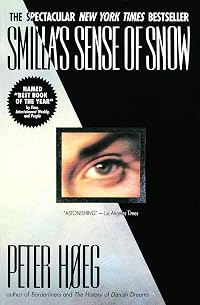
Smilla's Sense of Snow
by Peter Høeg
On This Page
Description
Isaiah, the son of one of Smilla Jasperson's neighbors, is found face-down in the snow outside her Copenhagen apartment building, leaving the usually stoical Smilla disturbed. She quickly rejects the official verdict of accidental death when she observes the footprints the boy left in the snow.Tags
Recommendations


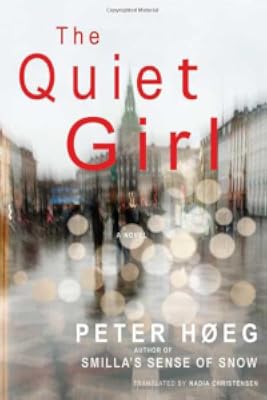


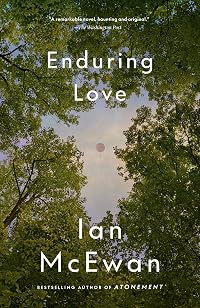
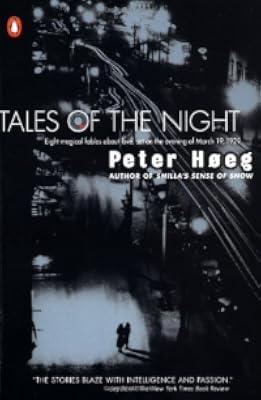

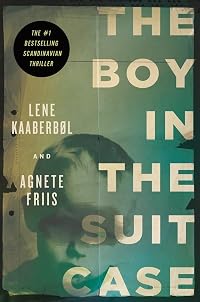

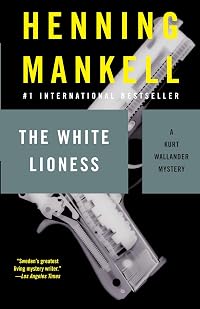
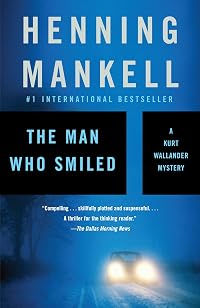

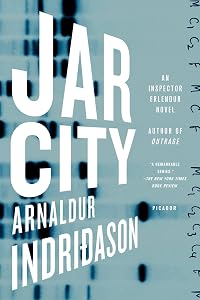

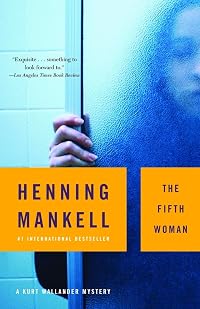
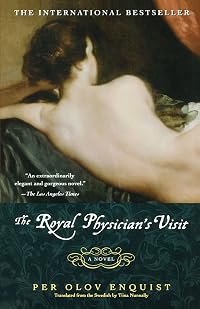
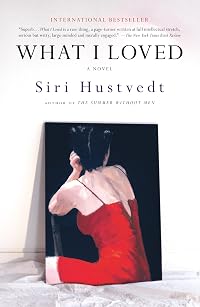
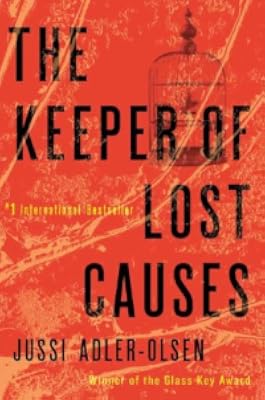

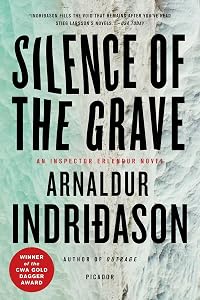
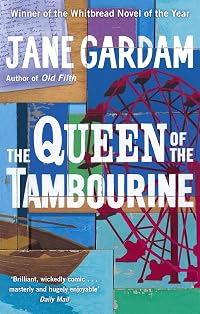





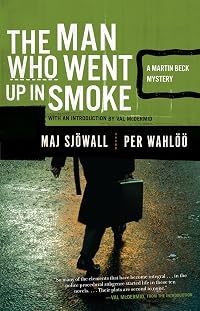
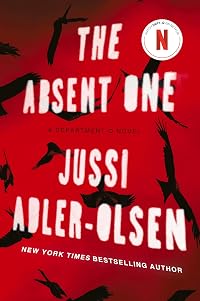



Member Recommendations
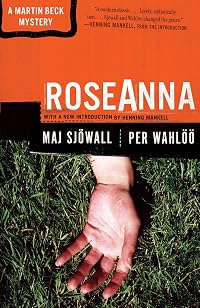
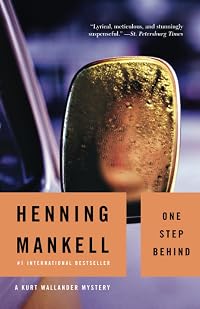
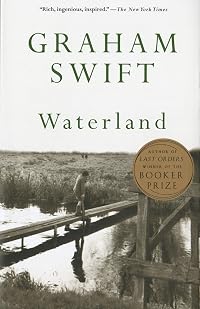
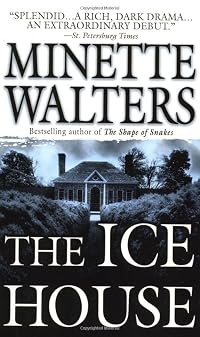
taz_ Charm school drop-outs Lisbeth Salander of "The Girl With The Dragon Tattoo" and Smilla Qaaviqaaq Jaspersen of "Smilla's Sense of Snow" strike me as unconventional soul sisters of the detective mystery. Each haunted by demons of the past, fiercely independent, armored in cynicism and misanthropy, they share a certain psychic landscape and brilliant, icy resourcefulness. If you love one, I predict you'll love the other.
162
terran Winter atmosphere, immigrant alienation, slow-moving plot
40
shelfoflisa A mystery to be solved by a character on the edge of society, in an evocative setting.
31

jayne_charles More intrigue at sub-zero temperatures
charl08 Female protagonist on a road trip in Nordic temperatures.


EMS_24 Story with a search, hidden information, minerals in a remote area.
Member Reviews
I'm not familiar with the action/thriller genre so I don't know to what extent this book's preposterous plot is par for the course. We get Nazis, heroin, mummies, a dash of random BDSM, and much much more on our way to a finale with meteorites and killer worms possibly (it wasn't clear to me) from outer space. That sounds exciting in theory, but most of the book's 469 pages are devoted to lengthy descriptions of our indestructible heroine scurrying about first the streets of Copenhagen, then, for what seems like aeons, the Escher-like environment of a cargo ship on its way to Greenland. Along the way Smilla has lots of fights in which each blow is described precisely — at one point she's whacking a man repeatedly with a steel ball in show more a sock while he whacks back with a marlin spike, then next minute they're allies, chatting amiably on deck. In general, characters absorb quantities of physical punishment beyond the norm even of action films and video games.
Other than the descriptions of Smilla moving around and trading blows that would incapacitate anyone outside this book — each action sequence prefaced by a flashback to Smilla's quirky childhood, invariably concluding with a zenlike moral —, frequent reminders of the exact temperature, and detailed descriptions of the contents of every drawer, pocket, and shelf (always turned to lethal effect by Smilla), we get dialogue, much of which is baldly expository:
"...their problem was the ice. First they built a prototype of what was supposed to be the world's largest and most solid drilling platform, the Joint Venture Warrior, a product of glasnost and Home Rule, a cooperative venture between the United States, the Soviet Union, and Denmark's largest shipping company A. P. Møller..." (continues for 400 words)
— or clipped and elliptical with a mind to the movie adaptation.
Despite all this I was quite enjoying the book at first. There's nothing inherently annoying about Hoeg's prose and the mystery was intriguing. But the more we learn, the more ridiculous it all is. I mean, why exactly does Hviid want to haul this massive meteorite back to Denmark clandestinely? What does he plan to do with it, stash it in his basement and study the space-worms? Speaking of Hviid, he's a most unimpressive final boss, the least menacing of the various antagonists faced by our unfeasibly accomplished (deep knowledge of math, chemistry, physics, etc., author of a million scientific papers, world expert in all things ice-related despite flunking out of several schools) protagonist. In the end Hviid, and my interest in the book, simply melts away like the sad remains of a snowman on the first warm day of spring. show less
Other than the descriptions of Smilla moving around and trading blows that would incapacitate anyone outside this book — each action sequence prefaced by a flashback to Smilla's quirky childhood, invariably concluding with a zenlike moral —, frequent reminders of the exact temperature, and detailed descriptions of the contents of every drawer, pocket, and shelf (always turned to lethal effect by Smilla), we get dialogue, much of which is baldly expository:
"...their problem was the ice. First they built a prototype of what was supposed to be the world's largest and most solid drilling platform, the Joint Venture Warrior, a product of glasnost and Home Rule, a cooperative venture between the United States, the Soviet Union, and Denmark's largest shipping company A. P. Møller..." (continues for 400 words)
— or clipped and elliptical with a mind to the movie adaptation.
Despite all this I was quite enjoying the book at first. There's nothing inherently annoying about Hoeg's prose and the mystery was intriguing. But the more we learn, the more ridiculous it all is. I mean, why exactly does Hviid want to haul this massive meteorite back to Denmark clandestinely? What does he plan to do with it, stash it in his basement and study the space-worms? Speaking of Hviid, he's a most unimpressive final boss, the least menacing of the various antagonists faced by our unfeasibly accomplished (deep knowledge of math, chemistry, physics, etc., author of a million scientific papers, world expert in all things ice-related despite flunking out of several schools) protagonist. In the end Hviid, and my interest in the book, simply melts away like the sad remains of a snowman on the first warm day of spring. show less
"Deep inside I know that trying to figure things out leads to blindness, that the desire to understand has a built-in brutality that erases what you seek to comprehend. Only experience is sensitive. But maybe I'm both weak and brutal. I've never been able to resist trying."
Smilla's story is a complex one. It is in part a thriller about the suspicious death of a young boy and a woman's unrelenting search to find out the truth despite the danger to her own life. But it's also a character study about Smilla, a half Greenlandic, half Danish woman whose years of growing up on the ice as a child has taught her and innate sense of the subtleties of snow and ice, a woman like an iceberg, whose surface hides much larger depths within.
The pace is show more too plodding and contemplative to be a page turner as I would expect a thriller to be, but there are moments that are gripping. I enjoyed working my way through this.
However, I have a love/hate relationship with the ending. I don't know what to do with it or how to feel. On the one hand, it's clever and suits Smilla's personality perfectly. On the other hand, it's clever instead of satisfying and that pisses me off. show less
Smilla's story is a complex one. It is in part a thriller about the suspicious death of a young boy and a woman's unrelenting search to find out the truth despite the danger to her own life. But it's also a character study about Smilla, a half Greenlandic, half Danish woman whose years of growing up on the ice as a child has taught her and innate sense of the subtleties of snow and ice, a woman like an iceberg, whose surface hides much larger depths within.
The pace is show more too plodding and contemplative to be a page turner as I would expect a thriller to be, but there are moments that are gripping. I enjoyed working my way through this.
However, I have a love/hate relationship with the ending. I don't know what to do with it or how to feel. On the one hand, it's clever and suits Smilla's personality perfectly. On the other hand, it's clever instead of satisfying and that pisses me off. show less
there were absolutely little gems throughout this book, but overall it was just too much. too confusing, too convoluted, too tenuous, too verbose. i'm pretty confused about how popular this was, considering how it really doesn't fit into the thriller/suspense category, or the mystery category easily, and with its length and density i don't see it appealing to such a large number of people. definitely there were parts that were great, but mostly this was not what i'd hoped.
i did enjoy learning about greenland - i found myself looking up quite a bit when reading this. and thought this bit was quite surprising:
"Some years ago they measured the light at Siorapaluk in Greenland. From December to February, when the sun is gone. People imagine show more eternal night. But there are stars and the moon, and now and then the northern lights. And the snow. They registered the same amount of lumens as outside a medium-sized provincial town in Denmark."
"If you consider all the unpleasantness you encounter while you're alive, it seems improbable that it would all come to an end simply because you're dead." show less
i did enjoy learning about greenland - i found myself looking up quite a bit when reading this. and thought this bit was quite surprising:
"Some years ago they measured the light at Siorapaluk in Greenland. From December to February, when the sun is gone. People imagine show more eternal night. But there are stars and the moon, and now and then the northern lights. And the snow. They registered the same amount of lumens as outside a medium-sized provincial town in Denmark."
"If you consider all the unpleasantness you encounter while you're alive, it seems improbable that it would all come to an end simply because you're dead." show less
"The body's pain is so paper-thin and insignificant compared to that of the mind."
This book was initially written in Danish and then translated into English. The story follows Smilla Jaspersen, a 37-year-old Greenlander living in Copenhagen. Smilla is a loner by nature, but there is one person in her life she feels a connection to, her young neighbour, Isaiah. This is revealed through a series of flashbacks, because in the novel’s opening chapter it is revealed that Isaiah has died following a fall off the snowy roof of their apartment block.
Accidental death say the police but Smilla knows the boy and moreover has a feeling for snow. She reads a different story in his snowy footprints. Isaiah wasn’t playing, he was running from show more something. Smilla decides to investigate this untimely death and soon realises that she has stumbled onto something much bigger than a solitary death. What's more she can read the smallest changes in ice and snow.
This novel is an entertaining mystery/thriller that IMHO has enough in it for anyone who is a fan of that particular genre but for me, the best part was learning about the history and culture of Greenland. Hoeg deftly explores the many problems of the colonization of this island nation, weaving historical context into his text. I started the novel knowing absolutely nothing about the relationship between Denmark and Greenland, so it was a interesting to learn something about their uneasy history. Hoeg’s prose is densely packed, full of information, action, and on occasion, wonderfully vivid imagery.
Coincidentally I started this on a day that it had started to snow in my own neighbourhood and if nothing else, it reminded me that British winters are rather tame in comparison to those endured in the bone-chilling arctic.
"Whining is a virus, a lethal, infectious, epidemic disease." show less
This book was initially written in Danish and then translated into English. The story follows Smilla Jaspersen, a 37-year-old Greenlander living in Copenhagen. Smilla is a loner by nature, but there is one person in her life she feels a connection to, her young neighbour, Isaiah. This is revealed through a series of flashbacks, because in the novel’s opening chapter it is revealed that Isaiah has died following a fall off the snowy roof of their apartment block.
Accidental death say the police but Smilla knows the boy and moreover has a feeling for snow. She reads a different story in his snowy footprints. Isaiah wasn’t playing, he was running from show more something. Smilla decides to investigate this untimely death and soon realises that she has stumbled onto something much bigger than a solitary death. What's more she can read the smallest changes in ice and snow.
This novel is an entertaining mystery/thriller that IMHO has enough in it for anyone who is a fan of that particular genre but for me, the best part was learning about the history and culture of Greenland. Hoeg deftly explores the many problems of the colonization of this island nation, weaving historical context into his text. I started the novel knowing absolutely nothing about the relationship between Denmark and Greenland, so it was a interesting to learn something about their uneasy history. Hoeg’s prose is densely packed, full of information, action, and on occasion, wonderfully vivid imagery.
Coincidentally I started this on a day that it had started to snow in my own neighbourhood and if nothing else, it reminded me that British winters are rather tame in comparison to those endured in the bone-chilling arctic.
"Whining is a virus, a lethal, infectious, epidemic disease." show less
The plot of this crime novel is broad and complicated, but it starts like this: Smilla is a woman in her thirties living in an apartment complex in Copenhagen. One snowy day, the young son of one of her neighbours falls off the roof and the police quickly decides that it was an accident. Smilla, however, knows that the boy was afraid of heights and that it's not possible that he climbed up there by himself or in play. Smilla is the daughter of an Inuit hunter and grew up in Greenland, so she has a feeling for snow that goes far beyond what city dwellers can see, and thus, she also detects more things in the snow that suggest that the boy was killed. This discovery leads to a journey through Copenhagen and later onto a ship to Greenland, show more deep into the history of expeditions and scientists, and Smilla's own past.
I think that this crime plot is only half of it, though. Interwoven, the reader learns a lot about Greenland, both concerning science and history, and about the treatment of the Inuit in Denmark and the colonization of Greenland. All this was quite lost on me when I read it for the first time, but now I found it very interesting and eye-opening. Previously, I have not really been aware of this part of Danish/European history. When I realized that this topic was so important in the book I was a bit wary because it's written from the point of view of an indigenous woman by a non-indigenous man, but I think it was written very profoundly, and when I did some online research, I did not find any articles criticizing this aspect.
The story itself drags a little in some chapters and I think it could have been a bit shorter to hold up the interest of the reader a little more. Sometimes the background of the crime is too detailed and it gets a bit repetitive. Nevertheless, it is an unusual novel composed in poetic and strong language, with a powerful heroine and a fascinating topic. show less
I think that this crime plot is only half of it, though. Interwoven, the reader learns a lot about Greenland, both concerning science and history, and about the treatment of the Inuit in Denmark and the colonization of Greenland. All this was quite lost on me when I read it for the first time, but now I found it very interesting and eye-opening. Previously, I have not really been aware of this part of Danish/European history. When I realized that this topic was so important in the book I was a bit wary because it's written from the point of view of an indigenous woman by a non-indigenous man, but I think it was written very profoundly, and when I did some online research, I did not find any articles criticizing this aspect.
The story itself drags a little in some chapters and I think it could have been a bit shorter to hold up the interest of the reader a little more. Sometimes the background of the crime is too detailed and it gets a bit repetitive. Nevertheless, it is an unusual novel composed in poetic and strong language, with a powerful heroine and a fascinating topic. show less
Mystery doesn't typically grab me as a genre and I can do without thrillers on the whole, but this one has more depth than I expected. I learned a lot about the Denmark-Greenland political relationship, and this was a great way to explore it. There's also a lot about the Arctic and its peoples. Smilla, for example, is a Greenlander living in Denmark. Just like Canada's Inuit, she is very attuned to all the subtle varieties of ice and snow. It requires precisely somebody with her background to observe important clues when a young boy appears to commit suicide by leaping off a roof.
The subsequent story doesn't unfold in the typical way (at least, not as I expected); it's less a 'whodunnit' than a 'whydtheydoit'. Smilla just wants to show more understand. All of her motives are intrinsic, but she's absolutely relentless. This is exactly the kind of character I like best, a gruff logician with a secret emotional side. Standing a whole 5 foot 4, she can milk people's assumptions for all they're worth. It's great to watch her in action, even when her stamina challenges belief. Smilla relies on boldness, spontaneity and solid instincts. This led into a few humourous bits (the dog, the maintenance lady, etc.) but just as frequently she made some brilliant moves. A light touch keeps things more intriguing than frustrating when unfolding events need time to explain themselves as she makes her next leap.
Smilla has many layers and a lot of history that she's very introspective about, mercilessly examining herself under a microscope. This degree of personal honesty grants her the power to read others so well, and humanity in general: what drives us, how we are driven by others. There's exploration here of deeper mysteries than just the one at hand, and it's a rare book in this genre that makes so much quality time to do that. Despite Smilla's direct approach it's not a light, breezy read to the end. In fact, I wouldn't have minded less resolution than I got. By then it felt like the main point was the journey, about always following your own star however inhospitable the wilderness you call home. show less
The subsequent story doesn't unfold in the typical way (at least, not as I expected); it's less a 'whodunnit' than a 'whydtheydoit'. Smilla just wants to show more understand. All of her motives are intrinsic, but she's absolutely relentless. This is exactly the kind of character I like best, a gruff logician with a secret emotional side. Standing a whole 5 foot 4, she can milk people's assumptions for all they're worth. It's great to watch her in action, even when her stamina challenges belief. Smilla relies on boldness, spontaneity and solid instincts. This led into a few humourous bits (the dog, the maintenance lady, etc.) but just as frequently she made some brilliant moves. A light touch keeps things more intriguing than frustrating when unfolding events need time to explain themselves as she makes her next leap.
Smilla has many layers and a lot of history that she's very introspective about, mercilessly examining herself under a microscope. This degree of personal honesty grants her the power to read others so well, and humanity in general: what drives us, how we are driven by others. There's exploration here of deeper mysteries than just the one at hand, and it's a rare book in this genre that makes so much quality time to do that. Despite Smilla's direct approach it's not a light, breezy read to the end. In fact, I wouldn't have minded less resolution than I got. By then it felt like the main point was the journey, about always following your own star however inhospitable the wilderness you call home. show less
I read Peter Høeg's "Smilla's Sense of Snow" after being entranced by Julia Ormond as Smilla Jasperson in the movie. Smilla Jaspersen--half Greenlander, half Dane, an unconventional loner and brilliant scientist who struggles with her conflicted upbringing--is devastated when a young boy she has befriended mysteriously falls to his death from the roof of their apartment building. Unsatisfied that it was an accident, she follows a trail from Copenhagen to the bleak Arctic reaches to solve his murder. Since that time I've probably read it a half a dozen times--and not for the incantatory power of the prose. Don't get me wrong--the writing is terrific and the story is compelling, complex, and extraordinarily well-plotted--but what gripped show more me most about this book was the main character. And she still grips me today.
Smilla is undoubtedly the first contemporary fictional female character who isn't a wife, mother, saint, or a whore. Imagine a grown-up cross between Nancy Drew and Pippi Longstocking--if they'd been kicked out of every school they ever attended, hitchhiked around the world, maybe did some low-level smuggling, and somewhere along the way managed to pick up a couple of graduate degrees. Smilla is clever, bold, smart, independent, funny, adventurous, slightly reckless, and feels no qualms about telling the men who get in her way to shove off. She's a boat-rocker, whistle-blower, a rule-breaker who thumbs her nose at authority and refuses to submit, like a well-behaved girl, to the ancillary role society would like her to play (e.g., wife, mother, saint, whore). Which, of course, drive the men whose power she challenges into a fury that makes them want to annihilate her. The irony is that she was created by a man.
But Smilla's rebellion does not come without intense self-scrutiny and the painful knowledge that she's a lone wolf; at one despairing point in the book she even calls herself a loser. She admits her freakishness, the fact that she cannot find deep connections with others. She usually refrains from getting involved with men because she's terrified of becoming too dependent, of losing herself. She's terrified of being vulnerable, of being loved, of being left. And yet despite all of her fears she plods forward. She laments her inability to make a permanent place for herself in the world, and yet that doesn't deter her from what she feels is her duty--to solve the death of a little boy who may be the one person to whom she had what came close to a true connection. But the greater, unspoken challenge is how to live in the world as a black sheep, particularly if you are a woman.
Perhaps the intense dislike some feel towards Smilla stems from her daring to challenge the established structure of society which, despite all the advancements women have made, still places men on top and women underneath. Men dislike her because they can't abide a woman who doesn't know her second place; women dislike her because it forces them to address the power they give away by seeking validation from men. Plus, the world does not show any love for those who tell the truth or root out corruption--they are, more often than not, eliminated in one way or other. And yet, without those who exposed secrets or took the unpopular stand, who took the heat and bucked convention, we'd still be toiling in some medieval gloom.
I also loved how Høeg, in comparing Denmark to Greenland, underscores how the "progress" and "development" of the modern world have all but destroyed the integrity of ancient cultures, the beauty of the wilderness, and the deeply-ingrained rituals that lend meaning to life as well as binding people together. He weaves examples into the main plot as a kind of elegy to the world as it was before man's maniacal drive to improve it. Some improvements come to mind that did indeed improve the quality of life for mankind--fire, penicillin, and efficient farming methods--but there are so many more that can only make you weep. show less
Smilla is undoubtedly the first contemporary fictional female character who isn't a wife, mother, saint, or a whore. Imagine a grown-up cross between Nancy Drew and Pippi Longstocking--if they'd been kicked out of every school they ever attended, hitchhiked around the world, maybe did some low-level smuggling, and somewhere along the way managed to pick up a couple of graduate degrees. Smilla is clever, bold, smart, independent, funny, adventurous, slightly reckless, and feels no qualms about telling the men who get in her way to shove off. She's a boat-rocker, whistle-blower, a rule-breaker who thumbs her nose at authority and refuses to submit, like a well-behaved girl, to the ancillary role society would like her to play (e.g., wife, mother, saint, whore). Which, of course, drive the men whose power she challenges into a fury that makes them want to annihilate her. The irony is that she was created by a man.
But Smilla's rebellion does not come without intense self-scrutiny and the painful knowledge that she's a lone wolf; at one despairing point in the book she even calls herself a loser. She admits her freakishness, the fact that she cannot find deep connections with others. She usually refrains from getting involved with men because she's terrified of becoming too dependent, of losing herself. She's terrified of being vulnerable, of being loved, of being left. And yet despite all of her fears she plods forward. She laments her inability to make a permanent place for herself in the world, and yet that doesn't deter her from what she feels is her duty--to solve the death of a little boy who may be the one person to whom she had what came close to a true connection. But the greater, unspoken challenge is how to live in the world as a black sheep, particularly if you are a woman.
Perhaps the intense dislike some feel towards Smilla stems from her daring to challenge the established structure of society which, despite all the advancements women have made, still places men on top and women underneath. Men dislike her because they can't abide a woman who doesn't know her second place; women dislike her because it forces them to address the power they give away by seeking validation from men. Plus, the world does not show any love for those who tell the truth or root out corruption--they are, more often than not, eliminated in one way or other. And yet, without those who exposed secrets or took the unpopular stand, who took the heat and bucked convention, we'd still be toiling in some medieval gloom.
I also loved how Høeg, in comparing Denmark to Greenland, underscores how the "progress" and "development" of the modern world have all but destroyed the integrity of ancient cultures, the beauty of the wilderness, and the deeply-ingrained rituals that lend meaning to life as well as binding people together. He weaves examples into the main plot as a kind of elegy to the world as it was before man's maniacal drive to improve it. Some improvements come to mind that did indeed improve the quality of life for mankind--fire, penicillin, and efficient farming methods--but there are so many more that can only make you weep. show less
Members
- Recently Added By
Lists

The Guardian's 1000 Novels Everyone Must Read
1,005 works; 552 members

1001 Books You Must Read Before You Die
1,448 works; 1,137 members

Scandinavian Crime Fiction
224 works; 37 members

Best Crime Fiction
262 works; 39 members
501 Must-Read Books
529 works; 72 members
Nordic Crime Fiction
66 works; 10 members

Best Female Detectives and "Cozy Mysteries"
23 works; 17 members

Best Noir Fiction
160 works; 14 members

Top Five Books of 2013
1,562 works; 721 members

Winter Books
127 works; 17 members

Pleasant Surprises: Books That Exceeded Our Expectations
418 works; 143 members

Crime and Mysteries to Read
746 works; 31 members

Crime Writers' Association Daggers
76 works; 4 members

Nordic Crime
2 works; 2 members

Female Protagonist
1,056 works; 57 members

Detective Stories
343 works; 5 members

aborted books in 2020
36 works; 1 member

1990s
309 works; 17 members

I Can't Finish This Book
189 works; 22 members

Books Read in 2020
4,379 works; 124 members

Stephen King's 'On Writing' reading list
95 works; 4 members

Books We'd Want on a Desert Island
204 works; 133 members

Books Read in 2007
326 works; 8 members
The 100 Best Crime Novels and Thrillers since 1945
100 works; 6 members

Mooie titels
80 works; 1 member
Books We Love to Reread
695 works; 298 members

Gen X Library
245 works; 4 members

Our Favorite Comfort Reads
334 works; 200 members

Read in 2007
55 works; 1 member

1,001 BYMRBYD Concensus
723 works; 27 members

Fiction with Women's Names in the Title
378 works; 15 members

Speculative Fiction from around the World
610 works; 18 members

BingoDOG - Scientists in Fiction
111 works; 17 members

Best of World Literature
437 works; 52 members
20th Century Literature
1,161 works; 55 members

Books Set in the Polar Regions
16 works; 6 members

Summer Reads 2014
207 works; 70 members

Books Read in 2014
2,344 works; 89 members

Global Mysteries
90 works; 6 members

New Authors to Read
21 works; 3 members
Page Turners
185 works; 11 members
Arctic novels
35 works; 5 members
Favourite Books
1,820 works; 316 members

Macmillan Publishers
129 works; 3 members

BBC Radio 4 Bookclub
341 works; 13 members

Europe
205 works; 6 members
Global Reads: Books Set in Western Europe
186 works; 10 members

Books Read in 1996
30 works; 1 member

Books About Murder
313 works; 7 members
Author Information

19+ Works 13,881 Members
Peter Hoeg, is a writer. He was born in Copenhagen, Denmark in 1957. Hoeg's first book, The History of Danish Dreams, was published in 1988. Another book, Smilla's Sense of Snow, received the Glass Key Award from the Crime Writers of Scandinavia in 1992. The book was made into a film in 1997 starring Julia Ormond, Gabriel Bryne, and Vanessa show more Redgrave. (Bowker Author Biography) show less
Some Editions
Awards and Honors
Awards
Distinctions
Notable Lists
Series
Belongs to Publisher Series
Work Relationships
Contains
Has the adaptation
Is abridged in
Has as a student's study guide
Common Knowledge
- Canonical title
- Smilla's Sense of Snow
- Original title
- Frøken Smillas fornemmelse for sne
- Alternate titles
- Smilla's Sense of Snow; Miss Smilla's Feeling for Snow
- Original publication date
- 1992
- People/Characters
- Smilla Qaavigaaq Jaspersen
- Important places
- Copenhagen, Denmark; Greenland; Gela Alta; Kronos (ship); Denmark
- Related movies
- Smilla's Sense of Snow (1997 | IMDb)
- First words
- Tr. Tiina Nunnally, US publication:
It's freezing - an extraordinary 0 Fahrenheit - and it's snowing, and in the language that is no longer mine, the snow is qanik - big, almost weightless crystals falling in clumps an... (show all)d covering the ground with a layer of pulverized white frost.
Tr. 'F. David' (Tiina Nunnally, plus changes by the publisher and author), UK publication:
It is freezing, an extraordinary -18°C, and it's snowing, and in the language which is no longer mine, the snow is qanik... (show all)> - big, almost weightless crystals falling in stacks and covering the ground with a layer of pulverized white frost.
Det fryser ekstraordinære 18 grader celcius, og det sner, og på det sprog som ikke mere er mit, er sneen qanik, store næsten vægtløse krystaller, der falder i stabler, og dækker jorden med et lag af pulveriseret, hvid f... (show all)rost. - Quotations
- This winter I've been able to watch the ice forming
"Even if they ripped off your arms and legs, you'd find some way to kick back,"~ Verlaine to Smilla
The bad thing about death is not that it changes the future. It's that it leaves us alone with our memories.
The number system is like human life. First you have the natural numbers. The ones that are whole and positive. The numbers of the small child. But human consciousness expands. The child discovers longing. The mathematical ex... (show all)pression for longing is the negative numbers. The formalization of the feeling that you are missing something. Human consciousness expands and grows even more, and the child discovers the in-between spaces. Between stones, between pieces of moss on the stones, between people. And between numbers. ... That leads to fractions. Whole numbers plus fractions produce the rational numbers. Human consciousness doesn't stop there. It wants to go beyond reason. It adds an operation as absurd as the extraction of roots. And produces irrational numbers. ... It's a form of madness. Because the irrational numbers are infinite. They can't be written down. They force human consciousness out beyond the limits. And by adding irrational numbers to rational numbers, you get real numbers. ... It never stops. ... We expand the real numbers with the imaginary ones, square roots of negative numbers. these are numbers that normal human consciousness cannot comprehend. And when we add the imaginary numbers to the real numbers, we have the complex number system.
The problem with being able to hate the colonization of Greenland with a pure hatred is that, no matter what you may detest about it, the colonization irrefutably improved the material needs of an existence that was one of th... (show all)e most difficult in the world.
Not one day of my adult life has passed that I haven't been amazed at how poorly Danes and Greenlanders understand each other. It's worse for Greenlanders, of course. It's not healthy for the tightrope walker to be misunderst... (show all)ood by the person who's holding the rope. And in this century the Inuit's life has been a tightrope dance on a cord fastened at one end to the world's least hospitable land with the world's most severe and fluctuating climate, and fastened at the other end to the Danish colonial administration.
I feel the same way about my spatial freedom as I've noticed men feel about their testicles. I cradle it like a baby, and worship it as a goddess.
In the central room there are about fifty terminals. I wait for a while. When an elderly man comes in, I follow him. When he sits down, I stand behind him and pay attention. He doesn't notice me. He sits there for an hour. Th... (show all)en he leaves, I sit down at a free terminal and press a key. The machine prompts: Log on user ID? I type LTH3 - just as the elderly gentleman did. The machine replies: Welcome ... Your password? I type JPB. The way the elderly gentleman did. The machine replies: Welcome Mr Jens Peter Bramslev. - Last words
- (Click to show. Warning: May contain spoilers.)Tr. 'F. David' (Tiina Nunnally, plus changes by the publisher and author), UK publication:
Tell us, they'll come and say to me. So we may understand and close the case. They're wrong. It's only what you do not understand that you can come to a conclusion about. There will be no conclusion.
(Click to show. Warning: May contain spoilers.)Fortæl os, vil de komme og sige til mig. Så vi forstår og kan afslutte. De tager fejl. Det er kun det man ikke forstår, man kan afslutte. Det kommer ikke til nogen afgørelse. - Blurbers
- Smith, Martin Cruz; Elkins, Aaron; Rendell, Ruth; White, Edmund; Binding, Paul; Williams, John (show all 9); Berlins, Nicholas; Berlins, Marcel; Riemer, Andrew
- Original language
- Danish
- Disambiguation notice
- Original title: Frøken Smilla’s fornemmelse for sne
US Title: Smilla's Sense of Snow
UK title: Miss Smilla's Feeling for Snow
Classifications
- Genres
- Fiction and Literature, Mystery
- DDC/MDS
- 839.81374 — Literature & rhetoric German & related literatures Other Germanic literatures Danish and Norwegian literatures Danish Danish fiction 1900–2000 Late 20th century 1945–2000
- LCC
- PT8176.18 .O335 .F7613 — Language and Literature German, Dutch and Scandinavian literatures Danish literature Individual authors or works 1961-2000
- BISAC
Statistics
- Members
- 7,945
- Popularity
- 1,423
- Reviews
- 177
- Rating
- (3.76)
- Languages
- 26 — Bulgarian, Czech, Danish, Dutch, English, Estonian, Finnish, French, German, Greek, Hebrew, Hungarian, Icelandic, Italian, Lithuanian, Norwegian (Bokmål), Norwegian, Farsi/Persian, Polish, Portuguese, Russian, Croatian, Slovak, Spanish, Swedish, Turkish
- Media
- Paper, Audiobook, Ebook
- ISBNs
- 136
- UPCs
- 3
- ASINs
- 56