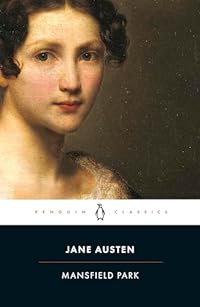
Mansfield Park
by Jane Austen
On This Page
Description
Mansfield Park is the study of three families--the Bertrams, the Crawfords, and the Prices. The story's heroine, Fanny Price, is at its center. She is adopted into the family of her rich uncle Thomas Bertram, and is condescendingly treated as a poor relation by "Aunt Norris." Of her cousins, only Edmund, a young clergyman, appreciates her fine qualities, and she falls in love with him. Unfortunately, however, he is drawn to the shallow and worldly Mary Crawford. Fanny's quiet passivity, show more steadfast loyalty, and natural goodness are matched against the wit and brilliance of her lovely rival. Jane Austen skillfully uses her characters' emotional relationships to explore the social and moral values by which they attempt to order their lives. show lessTags
Recommendations



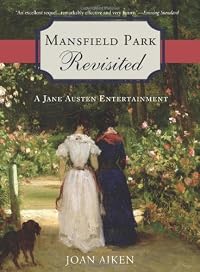



Member Recommendations
Member Reviews
Can I admit it? Loyal Janeite though I am, this is my least favourite of Jane's novels.
Not for the usual reason, though. I actually like Fanny, and I don't think she's a prude (I think these need to be read in the context of their periods; see review of Jane Eyre); on the contrary, her naivete awakens a tender, protective feeling in me. The reason I (gasp) didn't like it:
if a normal novel goes
exposition --> rising action --> climax --> falling action --> resolution,
Mansfield Park goes
exposition--> rising action --> "assume falling action (and resolution) happened."
Yep. And, no less, after spending a good couple hundred pages convincing you that no, that resolution will not, under any circumstances, be possible.
To wit: Several hundred show more pages: "Edmund thinks of Fanny as a sister. Edmund is in love with Miss Crawford. Edmund will never fall in love with Fanny. Edmund thinks of Fanny as a sister. Edmund is in love with Miss Crawford. Edmund will never fall in love with Fanny. Ever."
Second-last page: "Eventually Edmund stopped loving Miss Crawford. Then he started loving Fanny, so they lived happily ever after." Or, more precisely: "I only entreat everybody to believe that exactly at the time when it was quite natural that it should be so, and not a week earlier, Edmund did cease to care about Miss Crawford, and became as anxious to marry Fanny as Fanny herself could desire." She does not even describe it happening, or when it happened, or A. NY. THING. Just, as the sort of wrapping-up conclusiony epilogue stuff, she mentions that it happens, the way she describes the state of the Gardiners at the end of P&P or Charlotte Bronte talks about St John at the end of Jane Eyre. As a postscript. As an afterthought. As though that event weren't the point of the WHOLE. BLOODY. NOVEL.
(deep breath)
It was good to get that out.
In other news, Edmund. At the beginning, when he's the only person in the entire world being a little bit decent to Fanny, I was all like "Awww he's such a nice guy." But later in the book, especially when he's in love with Miss Crawford, his relationship with Fanny becomes increasingly selfish. he is the taker; she is the giver. (Of emotional energy and care, not gold chains.) Case in point: when they dance together at the ball, does he ask how she's doing? Does he consider the idea that she might want companionship? No. He takes advantage of her niceness for "peace": "His mind was fagged, and her happiness sprung from being the friend with whom it could find repose. “I am worn out with civility,” said he. “I have been talking incessantly all night, and with nothing to say. But with you, Fanny, there may be peace. You will not want to be talked to. Let us have the luxury of silence.”" Because he's suffering, her comfort is irrelevant. Who cares whether Fanny is happy when Miss Crawford doesn't like clergymen? During that entire period, she supports him and comforts him; their relationship is centred around his comfort, and hers is irrelevant. That doesn't seem like friendship, in love or not in love. Thus, Edmund is not, in fact, an exception from the way that *everyone* uses and takes advantage of Fanny -- yet another thing which makes MP's conclusion so disappointing, as this does not change right up to the end.
And last comment: I can't resist saying this, but this has more of that creepy Regency rape-culture obsession with women being persuadable all the time that there is in Northanger Abbey--only there, it's coming from John Thorpe, who's a creep, and here it's from people you're supposed to respect, like Sir Thomas. Worrying. show less
Not for the usual reason, though. I actually like Fanny, and I don't think she's a prude (I think these need to be read in the context of their periods; see review of Jane Eyre); on the contrary, her naivete awakens a tender, protective feeling in me. The reason I (gasp) didn't like it:
if a normal novel goes
exposition --> rising action --> climax --> falling action --> resolution,
Mansfield Park goes
exposition--> rising action --> "assume falling action (and resolution) happened."
Yep. And, no less, after spending a good couple hundred pages convincing you that no, that resolution will not, under any circumstances, be possible.
To wit:
Second-last page: "Eventually Edmund stopped loving Miss Crawford. Then he started loving Fanny, so they lived happily ever after." Or, more precisely: "I only entreat everybody to believe that exactly at the time when it was quite natural that it should be so, and not a week earlier, Edmund did cease to care about Miss Crawford, and became as anxious to marry Fanny as Fanny herself could desire." She does not even describe it happening, or when it happened, or A. NY. THING. Just, as the sort of wrapping-up conclusiony epilogue stuff, she mentions that it happens, the way she describes the state of the Gardiners at the end of P&P or Charlotte Bronte talks about St John at the end of Jane Eyre. As a postscript. As an afterthought. As though that event weren't the point of the WHOLE. BLOODY. NOVEL.
(deep breath)
It was good to get that out.
In other news, Edmund. At the beginning, when he's the only person in the entire world being a little bit decent to Fanny, I was all like "Awww he's such a nice guy." But later in the book, especially when he's in love with Miss Crawford, his relationship with Fanny becomes increasingly selfish. he is the taker; she is the giver. (Of emotional energy and care, not gold chains.) Case in point: when they dance together at the ball, does he ask how she's doing? Does he consider the idea that she might want companionship? No. He takes advantage of her niceness for "peace": "His mind was fagged, and her happiness sprung from being the friend with whom it could find repose. “I am worn out with civility,” said he. “I have been talking incessantly all night, and with nothing to say. But with you, Fanny, there may be peace. You will not want to be talked to. Let us have the luxury of silence.”" Because he's suffering, her comfort is irrelevant. Who cares whether Fanny is happy when Miss Crawford doesn't like clergymen? During that entire period, she supports him and comforts him; their relationship is centred around his comfort, and hers is irrelevant. That doesn't seem like friendship, in love or not in love. Thus, Edmund is not, in fact, an exception from the way that *everyone* uses and takes advantage of Fanny -- yet another thing which makes MP's conclusion so disappointing, as this does not change right up to the end.
And last comment: I can't resist saying this, but this has more of that creepy Regency rape-culture obsession with women being persuadable all the time that there is in Northanger Abbey--only there, it's coming from John Thorpe, who's a creep, and here it's from people you're supposed to respect, like Sir Thomas. Worrying. show less
Fanny Price realizes that if she just does nothing for long enough, all her dreams will eventually come true.
I'm working my way through Austen's novels. This is the next-to-last I have to read, and I really enjoyed it. It was a mature, multi-layered story that completely drew me in. While I can't say that I particularly liked any of the characters, I really felt like I got to know them well, as people. There was no perfect man, no Mr. Knightley or Mr. Darcy to swoon over. These were more like real people, warts and all, many of them growing up quite painfully. Along with Persuasion, Mansfield Park struck me as a one of Austen's more psychological novels. Oh yes, it's also funny, and cutting, and there are some shocking bits toward the show more end. A rewarding read. show less
I'm working my way through Austen's novels. This is the next-to-last I have to read, and I really enjoyed it. It was a mature, multi-layered story that completely drew me in. While I can't say that I particularly liked any of the characters, I really felt like I got to know them well, as people. There was no perfect man, no Mr. Knightley or Mr. Darcy to swoon over. These were more like real people, warts and all, many of them growing up quite painfully. Along with Persuasion, Mansfield Park struck me as a one of Austen's more psychological novels. Oh yes, it's also funny, and cutting, and there are some shocking bits toward the show more end. A rewarding read. show less
I approached Mansfield Park with a bit of trepidation, as most Austen fans I know consider this the worst of the lot. I was pleasantly surprised by how much I enjoyed the book. I think the key is to go in with an open mind and to not compare it too closely to Pride and Prejudice or any other work. The writing is excellent and Austen’s humor is very present, especially in the descriptions, dialogue and actions of the secondary characters.
Mansfield Park is different from the other Austens I’ve read (P&P, Sense and Sensibility and Emma) in that it is more serious in its concerns and more of a commentary on morality. But far from boring or preachy, Austen strikes a nice balance between those concerns and the humor and social observation show more included in her other works.
While I did wish Fanny Price had more spunk in some situations, the circumstances of her childhood and her being brought to Mansfield are such that her rather timid and retreating nature were understandable. Since Mansfield Park is not, to my mind, intended as a romantic work, the lack of chemistry between Fanny and Edmund also makes sense. Austen is less concerned with them as lovers than as moral figures whose interior compasses bring them inexorably together.
This is definitely not my favorite of the Austen novels I’ve read, but it is still entertaining and perhaps more thought-provoking. show less
Mansfield Park is different from the other Austens I’ve read (P&P, Sense and Sensibility and Emma) in that it is more serious in its concerns and more of a commentary on morality. But far from boring or preachy, Austen strikes a nice balance between those concerns and the humor and social observation show more included in her other works.
While I did wish Fanny Price had more spunk in some situations, the circumstances of her childhood and her being brought to Mansfield are such that her rather timid and retreating nature were understandable. Since Mansfield Park is not, to my mind, intended as a romantic work, the lack of chemistry between Fanny and Edmund also makes sense. Austen is less concerned with them as lovers than as moral figures whose interior compasses bring them inexorably together.
This is definitely not my favorite of the Austen novels I’ve read, but it is still entertaining and perhaps more thought-provoking. show less
Fanny Price is not scintillating, not a go-getter, not a modern girl: h*ll, she's not even that interesting. But, as the title might suggest, this book isn't really ABOUT Fanny Price: it's about place, about social upheaval, about virtue, reasons to get married, and money. Its width of scope is refreshing: it's more weighty than Emma without the tediousness of a Vanity Fair. This novel really grew on me after chapter 30. Its ending is truly surprising, in a very Sherlock Homlesian or O. Henryesque way. That alone makes it a worthwhile read. Dec 26, 2009
Reread this book five years later. It's fascinating how you bring your own prejudices, experiences, expectations, and desires to reading. I've changed so much from 21 to 26. Austen's show more creations are living, breathing beings, who do, as well. A great note to end the year. show less
Reread this book five years later. It's fascinating how you bring your own prejudices, experiences, expectations, and desires to reading. I've changed so much from 21 to 26. Austen's show more creations are living, breathing beings, who do, as well. A great note to end the year. show less
A reread for the - I'm not sure, 4th time? Mansfield Park used to be my least favorite Austen book (which still means I loved it) but it grows on me every time I read it. I now think it's actually one of her more mature books, with tons of opportunity to read between the lines, really interesting set up of believable characters, and lots of subtle humor and authorial commentary.
Fanny herself has also grown on me. She is often described as meek and mild and maddeningly won't ever put herself first. But I didn't see her that way on this reading. I saw that she is quiet and introverted and has been taught that her opinion isn't wanted, but her interior comments are quite perceptive and intelligent. And humanizing her even more, her show more interior thoughts, when revealed, are often self-centered, can be petty, and stubborn. I like this.
Also, a really large part of me wanted Henry Crawford to succeed with Fanny this time and become the person he thought he could be with her. First time to feel that way too!
I happily look forward to my next rereading of this book. show less
Fanny herself has also grown on me. She is often described as meek and mild and maddeningly won't ever put herself first. But I didn't see her that way on this reading. I saw that she is quiet and introverted and has been taught that her opinion isn't wanted, but her interior comments are quite perceptive and intelligent. And humanizing her even more, her show more interior thoughts, when revealed, are often self-centered, can be petty, and stubborn. I like this.
I happily look forward to my next rereading of this book. show less
Original review from 2011: I approached Mansfield Park with a bit of trepidation, as most Austen fans I know consider this the worst of the lot. I was pleasantly surprised by how much I enjoyed the book. I think the key is to go in with an open mind and to not compare it too closely to Pride and Prejudice or any other work. The writing is excellent and Austen’s humor is very present, especially in the descriptions, dialogue and actions of the secondary characters.
Mansfield Park is different from the other Austens I’ve read (P&P, Sense and Sensibility and Emma) in that it is more serious in its concerns and more of a commentary on morality. But far from boring or preachy, Austen strikes a nice balance between those concerns and the show more humor and social observation included in her other works.
While I did wish Fanny Price had more spunk in some situations, the circumstances of her childhood and her being brought to Mansfield are such that her rather timid and retreating nature were understandable. Since Mansfield Park is not, to my mind, intended as a romantic work, the lack of chemistry between Fanny and Edmund also makes sense. Austen is less concerned with them as lovers than as moral figures whose interior compasses bring them inexorably together.
This is definitely not my favorite of the Austen novels I’ve read, but it is still entertaining and perhaps more thought-provoking. show less
Mansfield Park is different from the other Austens I’ve read (P&P, Sense and Sensibility and Emma) in that it is more serious in its concerns and more of a commentary on morality. But far from boring or preachy, Austen strikes a nice balance between those concerns and the show more humor and social observation included in her other works.
While I did wish Fanny Price had more spunk in some situations, the circumstances of her childhood and her being brought to Mansfield are such that her rather timid and retreating nature were understandable. Since Mansfield Park is not, to my mind, intended as a romantic work, the lack of chemistry between Fanny and Edmund also makes sense. Austen is less concerned with them as lovers than as moral figures whose interior compasses bring them inexorably together.
This is definitely not my favorite of the Austen novels I’ve read, but it is still entertaining and perhaps more thought-provoking. show less
This was my second reading of Mansfield Park, and my feelings are so different this time around that an entirely new review is in order. My first reading was more than a decade ago. I found it a bit of a slog, with a slow-moving, interminable storyline and stereotypical characters. Well, I was wrong.
The Bertrams of Mansfield Park get the notion that taking in their 10-year-old niece, Fanny Price, would be a benefit both to Fanny and her parents, who are raising a large family on far less income. Fanny is intimidated by Mansfield Park, and largely ignored by her upper-class cousins except for Edmund, the second son. Her uncle, Sir Thomas, leaves to attend to “business interests” in Antigua, and Fanny falls into the role of companion show more to her aunt, Lady Bertram. Eight years pass, during which time Fanny is educated and adapts to the comforts of her new lifestyle, even as she is prevented from experiencing all of the social privileges enjoyed by her cousins Maria and Julia. Nevertheless, Fanny develops a very clear set of values, and is able to resist pressure to marry someone she believes completely wrong for her. When Fanny at long last has the opportunity to visit her family, she realizes how much Mansfield Park has changed her. During her time away, the Bertram family is rocked by two major events that have far-reaching consequences.
In many ways, this book is typical of Jane Austen’s novels in its exploration and satirization of English society, and its depiction of the rhythms of country life. But Fanny is a unique heroine, coming from a lower class and ultimately proving herself the best person in the bunch. I liked her much more on this re-read than I did the first time around. Fanny’s aunt, Mrs Norris, was also delightful as the character you love to hate. Having convinced Sir Thomas that taking in Fanny is their duty to the family, she continually avoids taking any responsibility for Fanny herself, and is most vocal in trying to keep Fanny in her place. Mrs Norris is awful, but Austen’s portrayal made me laugh out loud. The book ends with each character getting pretty much what they deserved, both good and bad -- a very satisfying conclusion. show less
The Bertrams of Mansfield Park get the notion that taking in their 10-year-old niece, Fanny Price, would be a benefit both to Fanny and her parents, who are raising a large family on far less income. Fanny is intimidated by Mansfield Park, and largely ignored by her upper-class cousins except for Edmund, the second son. Her uncle, Sir Thomas, leaves to attend to “business interests” in Antigua, and Fanny falls into the role of companion show more to her aunt, Lady Bertram. Eight years pass, during which time Fanny is educated and adapts to the comforts of her new lifestyle, even as she is prevented from experiencing all of the social privileges enjoyed by her cousins Maria and Julia. Nevertheless, Fanny develops a very clear set of values, and is able to resist pressure to marry someone she believes completely wrong for her. When Fanny at long last has the opportunity to visit her family, she realizes how much Mansfield Park has changed her. During her time away, the Bertram family is rocked by two major events that have far-reaching consequences.
In many ways, this book is typical of Jane Austen’s novels in its exploration and satirization of English society, and its depiction of the rhythms of country life. But Fanny is a unique heroine, coming from a lower class and ultimately proving herself the best person in the bunch. I liked her much more on this re-read than I did the first time around. Fanny’s aunt, Mrs Norris, was also delightful as the character you love to hate. Having convinced Sir Thomas that taking in Fanny is their duty to the family, she continually avoids taking any responsibility for Fanny herself, and is most vocal in trying to keep Fanny in her place. Mrs Norris is awful, but Austen’s portrayal made me laugh out loud. The book ends with each character getting pretty much what they deserved, both good and bad -- a very satisfying conclusion. show less
Members
- Recently Added By
Lists

1001 Books You Must Read Before You Die
1,448 works; 1,132 members

The Guardian's 1000 Novels Everyone Must Read
1,005 works; 546 members

Read the book and saw the movie
1,170 works; 192 members

Classics you know you should have read but probably haven't
421 works; 407 members

Favourite 19th century fiction
257 works; 62 members
Best of British Literature
226 works; 41 members

Female Author
1,235 works; 67 members

Favourite Books
1,817 works; 316 members
Literature About Social Class
134 works; 19 members
Books I've Read More Than Once
602 works; 49 members
Female Protagonist
1,056 works; 56 members
Best Family Stories
241 works; 22 members

Favourite Virago Modern Classics
183 works; 38 members
Best Satire
188 works; 27 members

Books Set in Great Britain
191 works; 13 members
Love and Marriage
93 works; 10 members

Favorite Long Books
330 works; 42 members
Folio Society
831 works; 53 members

Western World's Greatest Books - Project Gutenberg
295 works; 15 members

Best Laugh Out Loud Books
143 works; 49 members
Harold Bloom - The Western Canon: C. The Democratic Age
336 works; 15 members
Women's reading list
50 works; 7 members

Houses and Buildings as Characters in Fiction
182 works; 29 members
Literature About Women and Girls
391 works; 39 members
Readable Classics
110 works; 15 members

Global Reads: Books Set in the United Kingdom and Ireland
109 works; 5 members

1,001 BYMRBYD Concensus
723 works; 27 members
Love Triangles in Literature
108 works; 15 members

Out of Copyright
244 works; 14 members
Best Domestic Fiction
77 works; 6 members

Movie Adaptations
111 works; 4 members
Books Read in 2015
3,298 works; 126 members

Mind Expanding Books by hackerkid
581 works; 8 members
Books tagged favorites
390 works; 30 members

Bibliography for How to be a Heroine
148 works; 12 members
Good, Smart, Clean Fiction
46 works; 4 members

United Kingdom
82 works; 4 members

SHOULD Read Books!
354 works; 9 members

Books on my Kindle
162 works; 3 members

Books Read/Reading in 2018
5 works; 1 member

University literature
145 works; 5 members

1810s
11 works; 2 members

Books Read in 2022
5,164 works; 113 members
Literature About Adultery
69 works; 10 members

W. S. Maugham's Reading Suggestions for Spiritual Enrichment: British
24 works; 3 members

Comedy of Manners
73 works; 1 member

Shelf 101
60 works; 1 member

Recommended Reading : 600 Classics Reviewed, Editors of Salem Press, 2015
634 works; 6 members

The 150 Greatest Novels of All Time
150 works; 6 members
Reading LIst
648 works; 1 member

Survey suggestions
16 works; 2 members
Book Worlds We'd Like To Visit
322 works; 158 members

2024-25 reading
36 works; 1 member
Vlogbrothers Book Recommendations
307 works; 4 members
Books Featured in Jane Austen's Bookshelf
37 works; 7 members
Books You Read For University
184 works; 3 members

Literary Works Read in College
316 works; 15 members
Mustich's 1000 Books to Read Before You Die: A Life Changing List
1,001 works; 18 members

AP Lit
363 works; 6 members

Art of Reading
188 works; 5 members

Ambleside Books
459 works; 18 members

Books Read in 2012
815 works; 34 members

Tagged 19th Century
104 works; 7 members

Alphabetical Books
211 works; 3 members

Watched the Movie, Probably Won't Read the Book
185 works; 34 members

Unread books
1,063 works; 87 members

Best of World Literature
431 works; 51 members
Talk Discussions
Past Discussions
Tutored read: Mansfield Park by Jane Austen - Thread 2 in 75 Books Challenge for 2015 (June 2022)
Tutored read: Mansfield Park by Jane Austen in 75 Books Challenge for 2015 (June 2022)
Discussion Thread: Mansfield Park in 2015 Category Challenge (September 2015)
Austenathon 2011: Mansfield Park (Spoiler Thread) in 75 Books Challenge for 2011 (July 2011)
Austenathon 2011: Mansfield Park (Non-Spoiler Thread) in 75 Books Challenge for 2011 (June 2011)
Fanny Price - Passive/Agressive? in I Love Jane Austen (May 2010)
Help! Trying (again) to finish Mansfield Park..... in I Love Jane Austen (May 2009)
Author Information

Jane Austen's life is striking for the contrast between the great works she wrote in secret and the outward appearance of being quite dull and ordinary. Austen was born in the small English town of Steventon in Hampshire, and educated at home by her clergyman father. She was deeply devoted to her family. For a short time, the Austens lived in the show more resort city of Bath, but when her father died, they returned to Steventon, where Austen lived until her death at the age of 41. Austen was drawn to literature early, she began writing novels that satirized both the writers and the manners of the 1790's. Her sharp sense of humor and keen eye for the ridiculous in human behavior gave her works lasting appeal. She is at her best in such books as Pride and Prejudice (1813), Mansfield Park (1814), and Emma (1816), in which she examines and often ridicules the behavior of small groups of middle-class characters. Austen relies heavily on conversations among her characters to reveal their personalities, and at times her novels read almost like plays. Several of them have, in fact, been made into films. She is considered to be one of the most beloved British authors. (Bowker Author Biography) show less
Some Editions
Awards and Honors
Notable Lists
Series
Belongs to Publisher Series
Romance Classics (1)
Work Relationships
Is contained in
Sense and Sensibility / Pride and Prejudice / Mansfield Park / Emma / Northanger Abbey / Persuasion / Lady Susan by Jane Austen
Sense and Sensibility / Pride and Prejudice / Mansfield Park / Emma / Northanger Abbey / Persuasion by Jane Austen
Emma / Mansfield Park / Northanger Abbey / Persuasion / Pride and Prejudice / Sense and Sensibility / Shorter Works by Jane Austen
Romance Classics: Jane Eyre / Mansfield Park / Lorna Doone / Far from the Madding Crowd / Middlemarch / Agnes Grey by Charlotte Brontë
Contains
Is retold in
Has the (non-series) sequel
Has the adaptation
Is parodied in
Is replied to in
Inspired
Has as a reference guide/companion
Has as a study
Has as a commentary on the text
Has as a student's study guide
Common Knowledge
- Canonical title*
- Mansfield Park
- Original title
- Mansfield Park
- Original publication date
- 1814-07-01
- People/Characters
- Fanny Price; Edmund Bertram; Thomas Bertram (Sir); Lady Bertram; Mrs. Norris; Tom Bertram (show all 19); Maria Bertram; Julia Bertram; Mary Crawford; Henry Crawford; Mr. Rushworth; Mr. Yates; William Price (Lieutenant, British Navy); Mr. Price; Frances Price (Mrs., mother of Fanny Price); Susan Price; Dr. Grant; Mrs. Grant; Lady Stornoway
- Important places
- Mansfield Park, Northamptonshire, England, UK (fictional place); Portsmouth, Hampshire, England, UK; Northamptonshire, England, UK; Sotherton, Northamptonshire, England, UK; England, UK
- Important events
- Napoleonic Wars; 19th century
- Related movies
- Mansfield Park (1983 | BBC TV mini-series | IMDb); Mansfield Park (1999 | Patricia Rozema | IMDb); Mansfield Park (2007 | TV | IMDb)
- First words
- About thirty years ago, Miss Maria Ward of Huntingdon, with only seven thousand pounds, had the good luck to captivate Sir Thomas Bertram, of Mansfield Park, in the county of Northampton, and to be thereby raised to the rank ... (show all)of a baronet's lady, with all the comforts and consequences of an handsome house and large income.
- Quotations
- But there certainly are not so many men of large fortune in the world, as there are pretty women to deserve them.
It is Fanny that I think of all day and dream of all night.
Where an opinion be general, it is usually correct. - Last words
- (Click to show. Warning: May contain spoilers.)On that event they removed to Mansfield; and the Parsonage there, which, under each of its two former owners, Fanny had never been able to approach but with some painful sensation of restraint or alarm, soon grew as dear to her heart, and as thoroughly perfect in her eyes, as everything else within the view and patronage of Mansfield Park had long been.
- Blurbers
- Mitford, Mary Russell
- Original language
- British English
*Some information comes from Common Knowledge in other languages. Click "Edit" for more information.
Classifications
Statistics
- Members
- 25,534
- Popularity
- 178
- Reviews
- 402
- Rating
- (3.83)
- Languages
- 23 — Catalan, Chinese, Czech, Danish, Dutch, English, Estonian, Finnish, French, German, Greek, Hungarian, Italian, Latvian, Norwegian (Bokmål), Farsi/Persian, Polish, Russian, Croatian, Spanish, Swedish, Turkish, Portuguese (Portugal)
- Media
- Paper, Audiobook, Ebook
- ISBNs
- 798
- UPCs
- 7
- ASINs
- 312