
Norwegian Wood
by Haruki Murakami
On This Page
Description
"Toru, a quiet and preternaturally serious young college student in Tokyo, is devoted to Naoko, a beautiful and introspective young woman, but their mutual passion is marked by the tragic death of their best friend years before. Toru begins to adapt to campus life and the loneliness and isolation he faces there, but Naoko finds the pressures and responsibilities of life unbearable. As she retreats further into her own world, Toru finds himself reaching out to others and drawn to a fiercely show more independent and sexually liberated young woman."--Back cover. show lessTags
Recommendations
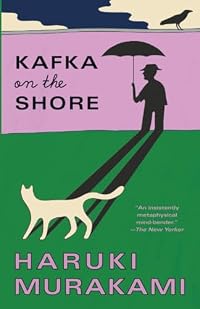

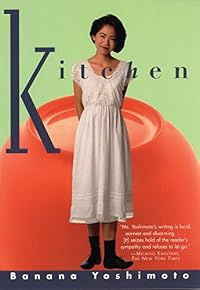

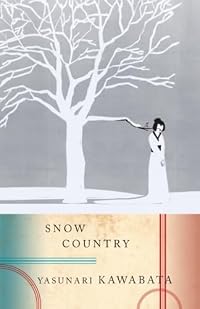
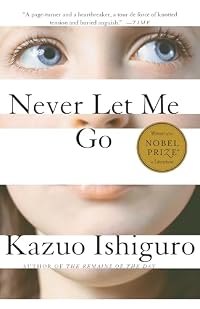





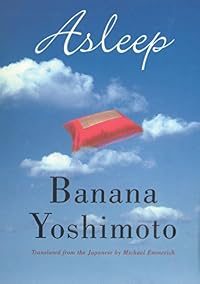





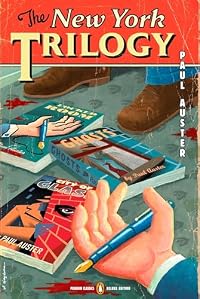

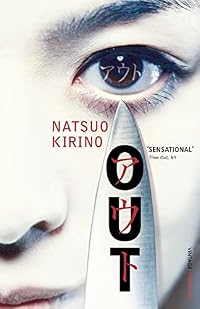
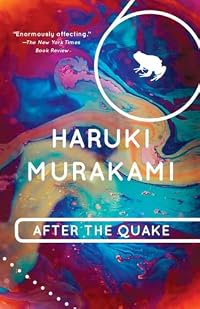



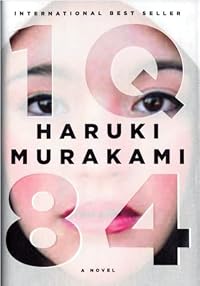



Member Recommendations
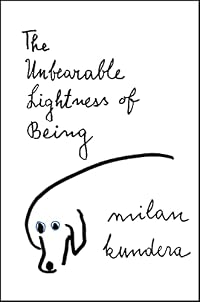
Jannes Many interesting parallells, and the protagonist of Norwegian Wood compares himself with Holden Caulfield from Catcher on several occations.
Also recommended by hippietrail
126
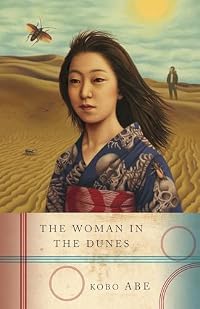
jalonsoarevalo MAravillosa recreación tomando como letmotiv el libro de Orwell 1984
40
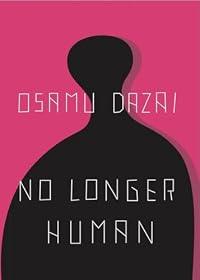
Lex23 Both books beautifully describe a difficult relationship between a man and a woman with a psychiatric background
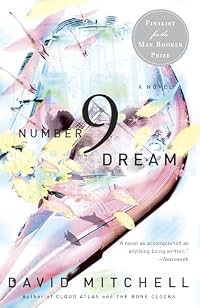
ursula Murakami is influenced by Brautigan. Both are simple but weird tales of love and life.
Member Reviews
This is the first time I have read one of Murakami’s novels and I am impressed. This book is beautifully written – Murakami’s style is elegant and atmospheric. In Norwegian Wood, he explores love, loss, fear, and memory.
As the book opens, protagonist Toru Watanabe is looking back on his college days, seventeen years past. He had moved from Kobe to Tokyo to study at Waseda University after suffering the loss of his best friend, Kizuki, to suicide. The story follows Toru’s relationships with two young women – Naoko, his friend and Kizuki’s girlfriend, and Midori, an eccentric college classmate. Naoko is struggling to overcome severe mental health issues, which leads her to a secluded sanctuary in the countryside. Midori has show more had a rough early life with parents that paid little attention to her, and she has developed a bold and unconventional approach to life. All three try to overcome painful memories and find their way in the world, some more successfully than others.
This is a powerful story about grappling with loneliness and depression. It portrays how sex and love can be both positive and negative forces. Toru attempts to break through grief and find a path to a happier life. He wants to help Naoko get back to the world of the living. Midori holds a more optimistic attitude toward life despite her earlier hardships. The supporting characters are well-developed and lend depth to the narrative. This book stimulates reflection and will linger in my thoughts. show less
As the book opens, protagonist Toru Watanabe is looking back on his college days, seventeen years past. He had moved from Kobe to Tokyo to study at Waseda University after suffering the loss of his best friend, Kizuki, to suicide. The story follows Toru’s relationships with two young women – Naoko, his friend and Kizuki’s girlfriend, and Midori, an eccentric college classmate. Naoko is struggling to overcome severe mental health issues, which leads her to a secluded sanctuary in the countryside. Midori has show more had a rough early life with parents that paid little attention to her, and she has developed a bold and unconventional approach to life. All three try to overcome painful memories and find their way in the world, some more successfully than others.
This is a powerful story about grappling with loneliness and depression. It portrays how sex and love can be both positive and negative forces. Toru attempts to break through grief and find a path to a happier life. He wants to help Naoko get back to the world of the living. Midori holds a more optimistic attitude toward life despite her earlier hardships. The supporting characters are well-developed and lend depth to the narrative. This book stimulates reflection and will linger in my thoughts. show less
In this book Murakami expounds on the imperfections of us all and demonstrates that no matter how much we try not to hurt the people we love that we can inadvertently end up doing the very thing we do not want to do. This is not a book for the vulnerable but it is about the vulnerable and, if one agrees with my interpretation of Murakami’s work, we are all vulnerable.
The themes tackled in this book are heavy. They include the effect of suicide on those left behind; coping with the illness and death of a close relative; first love; mental illness; self-loathing and self-criticism; coming of age; a sense of duty to the dead; misunderstandings between loved ones. There is much in this book that will make it a difficult read for many but, show more for those able and willing to take up the challenge, it is a rewarding read.
Jay Rubin obviously did an excellent job with the translation as the only clues to its being a translation are the words in the book identifying the translator and the knowledge that Murakami writes in Japanese. I always believe that the more inconspicuous the presence of a translator in a work the greater is the skill of that translator. show less
The themes tackled in this book are heavy. They include the effect of suicide on those left behind; coping with the illness and death of a close relative; first love; mental illness; self-loathing and self-criticism; coming of age; a sense of duty to the dead; misunderstandings between loved ones. There is much in this book that will make it a difficult read for many but, show more for those able and willing to take up the challenge, it is a rewarding read.
Jay Rubin obviously did an excellent job with the translation as the only clues to its being a translation are the words in the book identifying the translator and the knowledge that Murakami writes in Japanese. I always believe that the more inconspicuous the presence of a translator in a work the greater is the skill of that translator. show less
I went through at least five separate stages with this book. The first: "Whoa, impressionistic. Is this gonna be like a Japanese John Fowles with more confusing sentences and no good translation for 'nantonaku'?" The second: "Oh, I see.He's a kind of scrubbed-clean anomie-and-beauty purveyor, and the kids like him because his classic tale of teen love and confusion is leavened with their same modern 'whatever,' and he's ostensibly J but Americo-global-neutral enough to appeal to the not-Japan-understanding-but-Harajuku-Girls-approving of crowd." The third: "Actually, I wonder how much of the above was translator choice, because way to give them generic slang like 'kiddo' and translate 'bento' but not 'sukiyaki,' you filthmonger. And the show more thing is, I really wanna pin down the real you, Haruki, because I'm starting to realize the inner J-ness of this tale as well as the huge my-damn-situation-relevance, and I'm getting a little bit wound up because the J's have done me right in the how-to-live department before, but I worry about where he's going with Naoko . . . ."
And then: "PURE HATE. How could you, you self-indulging piece of garbage, how could you write the facilest, ugliest, cruelest happy ending imaginable, the one everyone thinks about and hates themselves for. How could you reduce it to a life/death duality and give more professors more hooks to hang their shit on and destroy the trueness at the core?"
Stage five: "Wait, whoa. I just gained huge insight into myself and the world and love by the way I raged at that flatness. Maybe this guy knows what he's doing after all. And the book's not over yet, and Reiko is coming in to Greek-chorus us back on track . . . ."
Stage six(!) and last: Utter dumbfoundment. I've seen the ambiguous ending,and in this tale it was true and right and shit, dawg, Toru IS just Nick Urfe but magic island igai. But OMG how masterly a last line, shaking everything up in a flash and making it sinister, but with just the right ray of not-hope-but-inconclusiveness. But still sinister."
Crazy good, but nothing can forgive that lynchpin moment I went mad about. But I'll read him again. show less
And then: "PURE HATE. How could you, you self-indulging piece of garbage, how could you write the facilest, ugliest, cruelest happy ending imaginable, the one everyone thinks about and hates themselves for. How could you reduce it to a life/death duality and give more professors more hooks to hang their shit on and destroy the trueness at the core?"
Stage five: "Wait, whoa. I just gained huge insight into myself and the world and love by the way I raged at that flatness. Maybe this guy knows what he's doing after all. And the book's not over yet, and Reiko is coming in to Greek-chorus us back on track . . . ."
Stage six(!) and last: Utter dumbfoundment. I've seen the ambiguous ending,and in this tale it was true and right and shit, dawg, Toru IS just Nick Urfe but magic island igai. But OMG how masterly a last line, shaking everything up in a flash and making it sinister, but with just the right ray of not-hope-but-inconclusiveness. But still sinister."
Crazy good, but nothing can forgive that lynchpin moment I went mad about. But I'll read him again. show less
This book says so much in so few pages and is probably the best I’ve ever read about mental health, depression and suicide. The book is told through the voice of a young Japanese college student called Toru. It is about his coming-of-age and how three very different women helped him grow up and gave him what he needed to keep him from falling into the depression that ever threatened after the death of his friend. It is set in the 1960’s culture revolution in Tokyo. It begins with the unexpected suicide of Toru’s best friend in high school, and takes Toru to college in Tokyo where he tries to forge a life for himself while dealing with the death of his 17 year old friend. The book is like a symphony with the blending of the music, show more the culture, and the dreaminess of the beginning of the rock and roll and drug culture. The book is marvellously real and we see the world through Toru’s eyes. I is like being in the middle of a dream. So much is said about mental health and the book illustrates so clearly the fragileness of the human psyche. Throughout, the pathos of the words from the Beatles song Norwegian Wood wrap a web around Toru and his world.
“I once had a girl, or should I say she had me?”—Norwegian Wood by The Beatles. This happens to be my favourite Beatles song and I will never be able to listen to it again without thinking of earnest, honest and caring Toru. I urge everyone to read this book. It is magical! show less
“I once had a girl, or should I say she had me?”—Norwegian Wood by The Beatles. This happens to be my favourite Beatles song and I will never be able to listen to it again without thinking of earnest, honest and caring Toru. I urge everyone to read this book. It is magical! show less
Norwegian Wood by [a:Haruki Murakami|3354|Haruki Murakami|http://d.gr-assets.com/authors/1350230608p2/3354.jpg] is an absolute delight. It is, without a doubt, one of the best books I have ever read. Norwegian Wood captures the essence of a lot of things - one should imagine Murakami wearing a wizard's robe while slowly cooking up the ingredients of a masterpiece.
The main story focuses around Toru Watanabe, who is, in all respects, just a guy. A young man with emotions, with desires, who isn't limited by his own body or mind. The rest of the book is a love story, it's about attraction, special moments, the wounds that distance and time inflict on a loving heart. It's about settling down while looking for adventure (Midori). But most of show more all, it tries to capture the permanent sadness that lingers within (specifically through Naoko, making for some heartbreakingly beautiful scenes). The novel is drenched in solitude, and the difficulty of both sharing and appreciating the good that comes our way.
I could really go on and on about this book. It's sheer storytelling pleasure, and one of the most subtle attacks on the heart one could imagine. show less
The main story focuses around Toru Watanabe, who is, in all respects, just a guy. A young man with emotions, with desires, who isn't limited by his own body or mind. The rest of the book is a love story, it's about attraction, special moments, the wounds that distance and time inflict on a loving heart. It's about settling down while looking for adventure (Midori). But most of show more all, it tries to capture the permanent sadness that lingers within (specifically through Naoko, making for some heartbreakingly beautiful scenes). The novel is drenched in solitude, and the difficulty of both sharing and appreciating the good that comes our way.
I could really go on and on about this book. It's sheer storytelling pleasure, and one of the most subtle attacks on the heart one could imagine. show less
perfect book for when the year is ending and it’s cold and you feel all depressed and angsty, because the book is chock full of depressed angsty teenagers who do the whole depression and angst thing REALLY well, actually; what’s worse than two of your top five emotions being misrepresented, right? main character is really funny, and smart, too, in a nonchalant way, which is likeable for the main character of a murakami book, but if you meet a guy like this in person, you’d better run the opposite way. my favourite scenes were probably all the times midori called toru out for being self-centred. also reiko’s letter to toru when he writes to her about his ‘moral quandary’ (read: being in love with two girls, bollywood style) show more tugged at my heart strings for some reason i do not wish to disclose and/or am unable to. transcribing some of it below (pg 355):
“…all of us (by which I mean all of us, both normal and not-so-normal) are imperfect human beings living in an imperfect world. We don't live with the mechanical precision of a bank account or by measuring all our lines and angles with rulers and protractors. Am I right?
My own personal feeling is that Midori sounds like a great girl. I understand just reading your letter why you would be drawn to her. And I understand, too, why you would also be drawn to Naoko. There's nothing the least bit sinful about it. Things like that happen all the time in this great big world of ours.
It's like taking a boat out on a beautiful lake on a beautiful day and thinking both the sky and the lake are beautiful. So stop eating yourself up. Things will go where they're supposed to go if you just let them take their natural course. Despite your best efforts, people are going to be hurt when it's time for them to be hurt. Life is like that. I know I sound like I'm preaching from a pulpit, but it's about time you learned to live like this. You try too hard to make life fit your way of doing things. If you don't want to spend time in an insane asylum, you have to open up a little more and let yourself go with life's natural flow. I'm just a powerless and imperfect woman, but still there are times when I think to myself how wonderful life can be! Believe me, it's true! So stop what you're doing this minute and get happy. Work at making yourself happy!”
i haven’t read a lot of murakami myself, but this would be The murakami book i recommend to new readers (if you can get around the suspiciously high frequency at which unremarkable male narrators get laid, which i did) show less
“…all of us (by which I mean all of us, both normal and not-so-normal) are imperfect human beings living in an imperfect world. We don't live with the mechanical precision of a bank account or by measuring all our lines and angles with rulers and protractors. Am I right?
My own personal feeling is that Midori sounds like a great girl. I understand just reading your letter why you would be drawn to her. And I understand, too, why you would also be drawn to Naoko. There's nothing the least bit sinful about it. Things like that happen all the time in this great big world of ours.
It's like taking a boat out on a beautiful lake on a beautiful day and thinking both the sky and the lake are beautiful. So stop eating yourself up. Things will go where they're supposed to go if you just let them take their natural course. Despite your best efforts, people are going to be hurt when it's time for them to be hurt. Life is like that. I know I sound like I'm preaching from a pulpit, but it's about time you learned to live like this. You try too hard to make life fit your way of doing things. If you don't want to spend time in an insane asylum, you have to open up a little more and let yourself go with life's natural flow. I'm just a powerless and imperfect woman, but still there are times when I think to myself how wonderful life can be! Believe me, it's true! So stop what you're doing this minute and get happy. Work at making yourself happy!”
i haven’t read a lot of murakami myself, but this would be The murakami book i recommend to new readers (if you can get around the suspiciously high frequency at which unremarkable male narrators get laid, which i did) show less
In the few days after reading this, my appreciation of this book fell from "Not his best" to "I wish I hadn't read this book".
I think this is mainly because of the almost offhand way suicides are treated here. Sure, they hurt the people that are close, but that's just because they're dead, not because they decided to kill themselves. How can he treat suicides like they are some kind of natural disaster, instead of a choice, and a tragic and/or aggressive choice at that? He does talk about the choice of his main character not to commit suicide, when there is nothing in his life that would warrant such an act. Is this choice the only thing that keeps him alive?
Apart from that, there doesn't seem much point to the whole story, which makes show more the suicides, and the casual sex as well, even more pointless. Maybe the pointlessness is the point of this book, like in Catcher in the Rye, but even then I would have liked some kind of glimpse, some kind of intuitive inkling, that this isn't all there is to life. show less
I think this is mainly because of the almost offhand way suicides are treated here. Sure, they hurt the people that are close, but that's just because they're dead, not because they decided to kill themselves. How can he treat suicides like they are some kind of natural disaster, instead of a choice, and a tragic and/or aggressive choice at that? He does talk about the choice of his main character not to commit suicide, when there is nothing in his life that would warrant such an act. Is this choice the only thing that keeps him alive?
Apart from that, there doesn't seem much point to the whole story, which makes show more the suicides, and the casual sex as well, even more pointless. Maybe the pointlessness is the point of this book, like in Catcher in the Rye, but even then I would have liked some kind of glimpse, some kind of intuitive inkling, that this isn't all there is to life. show less
Members
- Recently Added By
Published Reviews
ThingScore 75
Menschen wie Toru Watanabe trifft man in allen Büchern von Haruki Murakami. Es sind Singles, die in ihren Apartments sitzen und sich alte Filme anschauen, die Miles Davis hören und Scotch dazu trinken. Das Schicksal hat Spuren in ihnen hinterlassen, so wie in Toru Watanabe, der mit Naoko die einzige wirkliche Liebe seines Lebens verloren hat. Aber diese Spuren sind wie Kratzer auf einer show more Schallplatte. Sie kehren regelmäßig wieder und jedes Mal wieder erschrickt man - auch wenn sich bereits nicht mehr so genau erinnern kann, bei welcher Gelegenheit man die Nadel einmal zu unvorsichtig aufgesetzt hat. show less
added by Indy133
Lists

The Guardian's 1000 Novels Everyone Must Read
1,005 works; 549 members

Classics you know you should have read but probably haven't
421 works; 407 members

Japanese Literature
230 works; 40 members

Top Five Books of 2013
1,562 works; 721 members
20th Century Literature
1,161 works; 55 members

Mental health fiction
55 works; 18 members

Favorite Literary Love Stories
182 works; 100 members

Unread books
1,063 works; 86 members

Favorite Coming of Age Novels.
164 works; 51 members

Novels Published in 1987
81 works; 19 members
Haruki Murakami's Books
16 works; 5 members

magic realism novels
44 works; 11 members

1980s
356 works; 23 members

Top Five Books of 2018
802 works; 265 members
Top Five Books of 2017
757 works; 231 members

Top Five Books of 2016
795 works; 229 members

Books I read in 2023
1 work; 1 member

Literature by People of Color
81 works; 9 members

SHOULD Read Books!
354 works; 9 members

Books Read in 2017
4,249 works; 129 members

SomethingAwful TBB BOTM
66 works; 2 members

Books Read in 2022
5,164 works; 111 members

Winter Books
8 works; 1 member

Books Read in 2016
4,666 works; 199 members

Plan to Read Books
75 works; 1 member
Overdue Podcast
803 works; 9 members
Books We Want To Read Again For The First Time
384 works; 160 members

romance
7 works; 1 member

Cult Classics
30 works; 1 member

Books We Discovered On LibraryThing
530 works; 130 members

Canon de la narrativa universal del s. XX (cicutadry)
499 works; 3 members

el
1,139 works; 1 member
Not the NYT list of top 100 21st century books
100 works; 6 members

Yet another list
67 works; 1 member

Books discovered on LibraryThing
256 works; 36 members
sexuality
3 works; 1 member

BitLife
212 works; 4 members

2023
32 works; 1 member

Books Read in 2021
5,361 works; 114 members

BookTok Adult
115 works; 2 members

Books Read in 2019
4,052 works; 110 members

Tonikat reading completed on Librarything journals
329 works; 2 members

KayStJ's to-read list
1,616 works; 11 members

Biggest Disappointments
606 works; 168 members

100 knjiga
100 works; 1 member
Talk Discussions
Past Discussions
Murakami anyone? in Book talk (September 2023)
Printing issues in Norwegian Wood in Folio Society Devotees (December 2022)
Norwegian Wood Group Read: General Thread in 75 Books Challenge for 2010 (August 2010)
Norwegian Wood Group Read: Week Two ( Chapters 6-7 ) in 75 Books Challenge for 2010 (May 2010)
Norwegian Wood Group Read: Week 3 ( Chapters 8-11 ) in 75 Books Challenge for 2010 (May 2010)
Norwegian Wood Group Read: Week One ( Chapters 1-5 ) in 75 Books Challenge for 2010 (May 2010)
Author Information

285+ Works 173,968 Members
Haruki Murakami was born on January 12, 1949 in Kyoto, Japan and studied at Tokyo's Waseda University. He opened a coffeehouse/jazz bar in the capital called Peter Cat with his wife. He became a full-time author following the publication of his first novel, Hear the Wind Sing, in 1979. He writes both fiction and non-fiction works. His fiction show more works include Norwegian Wood, Colorless Tsukuru Tazaki and His Years of Pilgrimage, The Strange Library, and Men Without Women. Several of his stories have been adapted for the stage and as films. His nonfiction works include What I Talk About When I Talk About Running. He has received numerous literary awards including the Franz Kafka Prize for Kafka on the Shore, the Yomiuri Prize for The Wind-Up Bird Chronicle, and the Jerusalem Prize. He has translated into Japanese literature written by F. Scott Fitzgerald, Raymond Carver, Truman Capote, John Irving, and Paul Theroux. (Bowker Author Biography) show less
Some Editions
Awards and Honors
Distinctions
Series
Belongs to Publisher Series
Work Relationships
Has the adaptation
Common Knowledge
- Canonical title*
- Tokio blues
- Original title
- ノルウェイの森 (Noruwei no mori) (Noruwei no mori)
- Alternate titles*
- Norwegian Wood
- Original publication date
- 1987
- People/Characters
- Toru Watanabe; Naoko; Midori Kobayashi; Reiko Ishida; Kizuki; Nagasawa (show all 7); Hatsumi
- Important places
- Japan; Tokyo, Japan
- Important events
- Student Protests (1968)
- Related movies
- Norwegian Wood (2010 | IMDb)
- Dedication
- For Many Fêtes
- First words
- I was 37 then, strapped in my seat as the huge 747 plunged through dense cloud cover on approach to Hamburg airport.
- Quotations*
- "la mort n'est pas le bout de la vie, elle en fait partie"
- Last words
- (Click to show. Warning: May contain spoilers.)Again and again I called out for Midori from the dead centre of this place that was no place.
- Original language
- Japanese
*Some information comes from Common Knowledge in other languages. Click "Edit" for more information.
Classifications
- Genres
- Fiction and Literature, General Fiction
- DDC/MDS
- 895.635 — Literature & rhetoric Asian Literature Literatures of East and Southeast Asia Japanese Japanese fiction 1945–2000
- LCC
- PL856 .U673 .N6713 — Language and Literature Languages and literatures of Eastern Asia, Africa, Oceania Languages of Eastern Asia, Africa, Oceania Japanese language and literature Japanese literature Individual authors and works
- BISAC
Statistics
- Members
- 18,925
- Popularity
- 319
- Reviews
- 394
- Rating
- (3.93)
- Languages
- 34 — Arabic, Bulgarian, Catalan, Chinese, Czech, Danish, Dutch, English, Estonian, Finnish, French, German, Greek, Hebrew, Hungarian, Icelandic, Indonesian, Italian, Japanese, Korean, Latvian, Lithuanian, Malayalam, Maltese, Norwegian (Bokmål), Norwegian, Polish, Romanian, Russian, Serbian, Spanish, Swedish, Turkish, Portuguese (Portugal)
- Media
- Paper, Audiobook, Ebook
- ISBNs
- 186
- ASINs
- 44