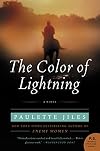
The Color of Lightning
by Paulette Jiles
On This Page
Description
"Meticulously researched and beautifully crafted.... This is glorious work." — Washington Post"A gripping, deeply relevant book." — New York Times Book Review
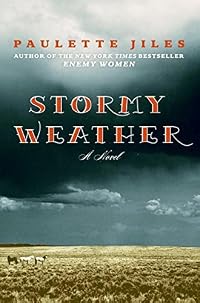
From Paulette Jiles, author of the critically acclaimed New York Times bestsellers Enemy Women and Stormy Weather, comes a stirring work of fiction set on the untamed Texas frontier in the aftermath of the Civil War. One of only twelve books longlisted for the 2009 Scotiabank Giller Prize—one of Canada's most prestigious show more literary awards—The Color of Lightning is a beautifully rendered and unforgettable re-examination of one of the darkest periods in U.S. history.
. show less
Tags
Recommendations







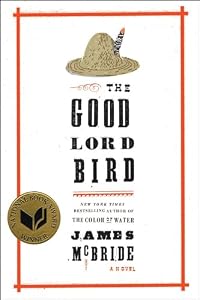
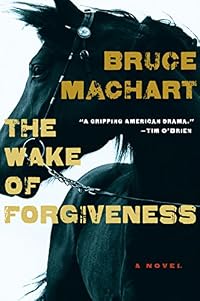
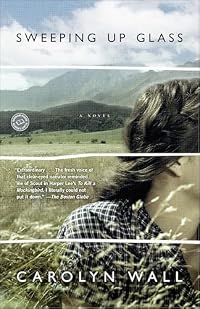
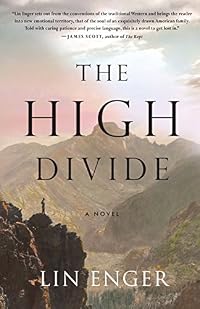
Member Recommendations
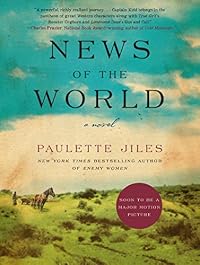
amelielyle Readers who enjoy stories of Indian captives may also like this alternative in which whites are willingly joined to tribes.
amelielyle A mesmerizing, austere tale of the ambivalent life of a former
white captive set on the post-Civil War western frontier. Like Jiles' novel, it is as much psychological fiction as historical--dealing with the human costs of violence and war.
Member Reviews
Historical fiction based on a real person, Britt Johnson, a freed black man, who lived with his family on the frontier in post-Civil War Texas. In the opening few chapters, Britt’s wife, another woman, and their children, are abducted by Kiowa and Comanche raiders. He has no idea where they have been taken and the storyline follows his long process of figuring out how to rescue them. His journey leads him to make several unlikely alliances. The story explores the complex relationships between settlers, indigenous tribes, and African Americans during this period.
One notable aspect of the novel is its portrayal of the harsh realities faced by the characters as they deal with the many challenges of survival on the Texas frontier. show more Jiles’s writing elegantly captures the physical and emotional toll of this environment. She does not spare descriptions of the brutalities that were part of their lives (sensitive readers be forewarned).
Britt Johnson is a compelling protagonist. He was free prior to the end of slavery, but settlers make assumptions that he had recently been a slave. In his travels, the people he meets react differently to him. Some see only his race, but others view him as an individual who can relate to both the settlers and the tribes. The novel also delves into the cultural clashes between the settlers and tribes, particularly the Comanche and Kiowa.
Another key aspect of the novel is the portrayal Samuel Hammond, the Quaker placed in charge of Indian Affairs, who acted as liaison with the same tribes involved in the raid. It describes his rather naïve assumption that all captives would want to be returned to their original white families. He has no concept that many, especially children, feel part of the tribal community and have no desire to return. When they do return, the results are mostly negative. Jiles skillfully portrays the complexities of these interactions, offering a glimpse into the many cultural misunderstandings and why attempts at coexistence ultimately failed.
Jiles's prose is outstanding – poetic, evocative and rich in historical detail, immersing readers in the vividly depicted landscape and time period. The narrative, while rooted in historical events, incorporates fictional elements that contribute to the novel's depth. In the Afterword, the author clarifies what is fact versus fiction. I found it a powerful story that captures the harsh realities of the era through its diverse cast of characters and their interconnected stories. It also provides a sad commentary on the factors that led to the isolation of the indigenous tribes. I can also recommend Jiles's News of the World. show less
One notable aspect of the novel is its portrayal of the harsh realities faced by the characters as they deal with the many challenges of survival on the Texas frontier. show more Jiles’s writing elegantly captures the physical and emotional toll of this environment. She does not spare descriptions of the brutalities that were part of their lives (sensitive readers be forewarned).
Britt Johnson is a compelling protagonist. He was free prior to the end of slavery, but settlers make assumptions that he had recently been a slave. In his travels, the people he meets react differently to him. Some see only his race, but others view him as an individual who can relate to both the settlers and the tribes. The novel also delves into the cultural clashes between the settlers and tribes, particularly the Comanche and Kiowa.
Another key aspect of the novel is the portrayal Samuel Hammond, the Quaker placed in charge of Indian Affairs, who acted as liaison with the same tribes involved in the raid. It describes his rather naïve assumption that all captives would want to be returned to their original white families. He has no concept that many, especially children, feel part of the tribal community and have no desire to return. When they do return, the results are mostly negative. Jiles skillfully portrays the complexities of these interactions, offering a glimpse into the many cultural misunderstandings and why attempts at coexistence ultimately failed.
Jiles's prose is outstanding – poetic, evocative and rich in historical detail, immersing readers in the vividly depicted landscape and time period. The narrative, while rooted in historical events, incorporates fictional elements that contribute to the novel's depth. In the Afterword, the author clarifies what is fact versus fiction. I found it a powerful story that captures the harsh realities of the era through its diverse cast of characters and their interconnected stories. It also provides a sad commentary on the factors that led to the isolation of the indigenous tribes. I can also recommend Jiles's News of the World. show less
This historical novel was fleshed out from what little is known about Britt Johnson, a freed slave who moved with his family from Kentucky to Texas in 1863. Jiles, who is a poet as well as an author of novels, paints the new alien landscape of these immigrants with an artistic eye:
“They had come to live on the very edge of the great Rolling Plains, with the forested country behind them and the empty lands in front. Long, attentive lines of timber ran like lost regiments along the rivers and creeks. Everything was strange to them: the cactus in all its hooked varieties, the elusive antelope in white bibs and black antlers, the red sandstone dug up in plates to build chimneys and fireplaces big enough to get into in case there was a show more shooting situation.”
And indeed, a shooting situation came soon enough. The Johnsons built a house in Elm Creek in Texas, just south of territory occupied by the warlike Comanche and Kiowa tribes. The two bands often raided together since many of the Comanche had been decimated by cholera and smallpox transmitted by whites when the gold rush wagons passed through the plains. Jiles integrates these and other facts about the tribes and their history into the story, and also presents the point of the view of the white settlers, who felt terrorized by the Natives. The U.S., however, had control of the land, superior weapons, and a racist disregard for the Native Americans, and it was never going to end well for the Natives.
In the meantime, however, the depredation of the Comanche and Kiowa continued, and as this story begins, Britt’s family and other homesteads in the area were attacked by the tribes when the men were off on a journey. Britt’s oldest son was killed, and Britt's wife Mary and their two younger children, Jube and Cherry, were taken captive by the Kiowa. A white neighbor, the widow Elizabeth, and some of her grandchildren, were taken by the Comanche. Eventually, Britt set out to get them all back.
A parallel story describes the metamorphosis of Samuel Hammond, a Quaker from Philadelphia who comes to nearby Fort Sill to serve as the Indian agent to the Comanche and Kiowa. Samuel is full of ideals and optimism. He wants to conquer the Indians with kindness rather than force, and convince them of what he considers to be the superior ways of whites. While Samuel initially believed the U.S. should honor its treaties and give the Natives the supplies promised to them, he soon decided that it was more important to get white captives back. He withheld food and other goods until the captives were brought in, although some of the captives had lived among the tribes for many years, and could not even remember their original families.
To his despair, however, Samuel discovered that the captives did not seem happy to be back. In one case, he tried to reassure a 15-year-old girl, taken when she was five, that she wouldn't go hungry anymore. But as Jiles writes (based on written reports of attempts to “rehabilitate” captives at the time):
“. . . she was not afraid of going hungry, or of starvation. She was afraid of the slow death of confinement. Of being trapped inside immovable houses and stiff clothing. Of the sky shuttered away from her sight, herself hidden from the operatic excitement of the constant wind and the high spirits that came when they struck out like cheerful vagabonds across the wide earth with all of life in front of them and unfolding and perpetually new. And now herself in a wooden cave. She could not go out at dawn alone and sing, she would not be seen and known by the rising sun.”
Samuel could not understand any of it. He only knew the world of hours and regimens, constricted clothing, regulated behavior, and houses with roofs overhead. He understood accumulation of possessions rather than spartan lives punctuated by the delight of finding gifts in nature. All of this, Samuel thought, he must bring to an end: “That was his job. That was why he was here.”
Conflict and tragedy are the inevitable result of the clash of civilizations and the fight for distribution of resources. Jiles presents both the good and bad on both sides, and although both employ plenty of violence, it never seems like a fair fight.
Britt’s story is heroic and full of interesting details about how people survived in that threatening desert landscape. As a black man, Britt faced additional hurdles, and Jiles also juxtaposes the attitudes of Native Americans and whites toward blacks.
Samuel's ignorance and arrogance was not, and still is not, atypical, but Jiles was careful to highlight his good intentions. She also portrayed the army sympathetically, although their record of massacres of Native Americans was far from salutary.
Evaluation: As is true of her other books, the extensive research Jiles has done on this period of history is evident throughout the narrative, which manages to be poetic rather than a dry recitation. It is no mean feat to describe violence and destruction in terms of eloquence and beauty. Courage and character are also recurring themes in Jiles’ books. Those interested in what this lawless time and place were like will be rewarded by working through her oeuvre. show less
“They had come to live on the very edge of the great Rolling Plains, with the forested country behind them and the empty lands in front. Long, attentive lines of timber ran like lost regiments along the rivers and creeks. Everything was strange to them: the cactus in all its hooked varieties, the elusive antelope in white bibs and black antlers, the red sandstone dug up in plates to build chimneys and fireplaces big enough to get into in case there was a show more shooting situation.”
And indeed, a shooting situation came soon enough. The Johnsons built a house in Elm Creek in Texas, just south of territory occupied by the warlike Comanche and Kiowa tribes. The two bands often raided together since many of the Comanche had been decimated by cholera and smallpox transmitted by whites when the gold rush wagons passed through the plains. Jiles integrates these and other facts about the tribes and their history into the story, and also presents the point of the view of the white settlers, who felt terrorized by the Natives. The U.S., however, had control of the land, superior weapons, and a racist disregard for the Native Americans, and it was never going to end well for the Natives.
In the meantime, however, the depredation of the Comanche and Kiowa continued, and as this story begins, Britt’s family and other homesteads in the area were attacked by the tribes when the men were off on a journey. Britt’s oldest son was killed, and Britt's wife Mary and their two younger children, Jube and Cherry, were taken captive by the Kiowa. A white neighbor, the widow Elizabeth, and some of her grandchildren, were taken by the Comanche. Eventually, Britt set out to get them all back.
A parallel story describes the metamorphosis of Samuel Hammond, a Quaker from Philadelphia who comes to nearby Fort Sill to serve as the Indian agent to the Comanche and Kiowa. Samuel is full of ideals and optimism. He wants to conquer the Indians with kindness rather than force, and convince them of what he considers to be the superior ways of whites. While Samuel initially believed the U.S. should honor its treaties and give the Natives the supplies promised to them, he soon decided that it was more important to get white captives back. He withheld food and other goods until the captives were brought in, although some of the captives had lived among the tribes for many years, and could not even remember their original families.
To his despair, however, Samuel discovered that the captives did not seem happy to be back. In one case, he tried to reassure a 15-year-old girl, taken when she was five, that she wouldn't go hungry anymore. But as Jiles writes (based on written reports of attempts to “rehabilitate” captives at the time):
“. . . she was not afraid of going hungry, or of starvation. She was afraid of the slow death of confinement. Of being trapped inside immovable houses and stiff clothing. Of the sky shuttered away from her sight, herself hidden from the operatic excitement of the constant wind and the high spirits that came when they struck out like cheerful vagabonds across the wide earth with all of life in front of them and unfolding and perpetually new. And now herself in a wooden cave. She could not go out at dawn alone and sing, she would not be seen and known by the rising sun.”
Samuel could not understand any of it. He only knew the world of hours and regimens, constricted clothing, regulated behavior, and houses with roofs overhead. He understood accumulation of possessions rather than spartan lives punctuated by the delight of finding gifts in nature. All of this, Samuel thought, he must bring to an end: “That was his job. That was why he was here.”
Conflict and tragedy are the inevitable result of the clash of civilizations and the fight for distribution of resources. Jiles presents both the good and bad on both sides, and although both employ plenty of violence, it never seems like a fair fight.
Britt’s story is heroic and full of interesting details about how people survived in that threatening desert landscape. As a black man, Britt faced additional hurdles, and Jiles also juxtaposes the attitudes of Native Americans and whites toward blacks.
Samuel's ignorance and arrogance was not, and still is not, atypical, but Jiles was careful to highlight his good intentions. She also portrayed the army sympathetically, although their record of massacres of Native Americans was far from salutary.
Evaluation: As is true of her other books, the extensive research Jiles has done on this period of history is evident throughout the narrative, which manages to be poetic rather than a dry recitation. It is no mean feat to describe violence and destruction in terms of eloquence and beauty. Courage and character are also recurring themes in Jiles’ books. Those interested in what this lawless time and place were like will be rewarded by working through her oeuvre. show less
We spend our lives in worlds remote from one another. We imagine we all live together on this round earth but we do not.
Sometimes the things that divide us are of our own making, and sometimes they are insurmountable misunderstandings. Jiles recognizes both, and shows them to us without flinching.
This is the story of Britt Johnson, a free black man from Kentucky, who comes West to settle his family, along with his hopes of owning and operating a freight service. One of the first blood-curdling events we encounter is the taking of his wife and children by the Comanche and Kiowa.
One of the complaints I have heard from others regarding this novel is that it is starkly, brutally violent. Well, the times are starkly and brutally violent and show more Jiles is no liar, no softener of history; she tells it as it was. Her ability to provide detail that makes us feel we are present among the sights, the textures, and the smells, ranks among her greatest assets as a novelist.
Mary lay half awake all night to watch the flickering light of the fire shifting on the tipi walls and the liner, a hypnotic and incessant dashing of light and shadow, the noise of the tipi cover and liner belling in and out accompanied by the unpredictable stanzas of the wind. The fire smoke shot upward, carried by the chimney of air that rose between the liner and the walls. It blossomed up into the smoke flaps and out. Whirling eddies of snow sifted down between the flaps and flashed in the light of the fire, and vanished. The fire threw shadows of moccasins hung up to dry so that they seemed to walk against the tipi walls, the fire threw shadows of a fishnet and a gourd dipper snaring the evaporating snowflakes.
I’ve never spent a snowy night in a teepee, until now.
This is Britt’s story, but it is more than that, of course. Jiles is an even-handed historian; she takes no sides and gives no quarter. And, in doing so, she makes us understand, in a way we might not have done before, how impossible this situation was for both the settlers and the Indians. This is a clash of cultures. What is murder to outsiders is ritual and courage to the Indians; what seems like an offering of a better way for the Quaker agent is the destruction of freedom and life itself for the Indian. There can be no simple resolution. The more powerful group will win, and in doing so, annihilate the other.
Much of what Jiles tells us about Britt and his family, friends and life, is conjecture. This is, after all, fiction. However, it mattered very much to me that Britt Johnson was a real man and that the larger fabric of this story is based on true events and real courage. In her afterward, Jiles states that Britt’s story “returned to me repeatedly as I read through north Texas histories over the years, and I often wondered why no one had taken it up. And so I did.” I’m so glad she did. show less
Sometimes the things that divide us are of our own making, and sometimes they are insurmountable misunderstandings. Jiles recognizes both, and shows them to us without flinching.
This is the story of Britt Johnson, a free black man from Kentucky, who comes West to settle his family, along with his hopes of owning and operating a freight service. One of the first blood-curdling events we encounter is the taking of his wife and children by the Comanche and Kiowa.
One of the complaints I have heard from others regarding this novel is that it is starkly, brutally violent. Well, the times are starkly and brutally violent and show more Jiles is no liar, no softener of history; she tells it as it was. Her ability to provide detail that makes us feel we are present among the sights, the textures, and the smells, ranks among her greatest assets as a novelist.
Mary lay half awake all night to watch the flickering light of the fire shifting on the tipi walls and the liner, a hypnotic and incessant dashing of light and shadow, the noise of the tipi cover and liner belling in and out accompanied by the unpredictable stanzas of the wind. The fire smoke shot upward, carried by the chimney of air that rose between the liner and the walls. It blossomed up into the smoke flaps and out. Whirling eddies of snow sifted down between the flaps and flashed in the light of the fire, and vanished. The fire threw shadows of moccasins hung up to dry so that they seemed to walk against the tipi walls, the fire threw shadows of a fishnet and a gourd dipper snaring the evaporating snowflakes.
I’ve never spent a snowy night in a teepee, until now.
This is Britt’s story, but it is more than that, of course. Jiles is an even-handed historian; she takes no sides and gives no quarter. And, in doing so, she makes us understand, in a way we might not have done before, how impossible this situation was for both the settlers and the Indians. This is a clash of cultures. What is murder to outsiders is ritual and courage to the Indians; what seems like an offering of a better way for the Quaker agent is the destruction of freedom and life itself for the Indian. There can be no simple resolution. The more powerful group will win, and in doing so, annihilate the other.
Much of what Jiles tells us about Britt and his family, friends and life, is conjecture. This is, after all, fiction. However, it mattered very much to me that Britt Johnson was a real man and that the larger fabric of this story is based on true events and real courage. In her afterward, Jiles states that Britt’s story “returned to me repeatedly as I read through north Texas histories over the years, and I often wondered why no one had taken it up. And so I did.” I’m so glad she did. show less
Sockless. This author knocked my socks off! Giving fair treatment to both sides of the Indian/Settler conflicts in North Texas during the times right after the Civil War, this story reads like the real-life adventure it is. It covers the conflict between the Plains Indians nomadic life and long history of warring, raiding and killing from their northern homes in Oklahoma south to Mexico vs. the incoming settlers farming and ranching on fixed plots in between. The dilemma of good men in government who would have liked for Indians to be free to pursue their chosen lifestyle if only they would give up their raids and killing of settlers. The frustration of settlers trying to keep their families safe, and of Indians trying not to give up show more their ways. It tells, too, of what befell their captives; the degradations they faced (tactfully written), how they coped, adapted, and changed.
In the Author’s Note at the end of the book, she tells which characters were real persons. She says also: “The story of Britt’s journey to rescue his wife and children from captivity is beyond doubt, as are the brief accounts of his life afterward. . . . This book is a novel, but it’s backbone – Britt’s story – is true. Britt’s story returned to me repeatedly as I read through north Texas histories over the years, and I often wondered why no one had taken it up. And so I did.” Around this brave man, a former slave, the author has created a fascinating story encompassing the real life events of the Elm Creek raid of 1864. Unlike those authors whose writing says “look at what all I learned while I was working on this story”, Jiles seamlessly knits together her historical research, with excellent story-telling.
I’m going to put my socks back on and find another of her books. show less
In the Author’s Note at the end of the book, she tells which characters were real persons. She says also: “The story of Britt’s journey to rescue his wife and children from captivity is beyond doubt, as are the brief accounts of his life afterward. . . . This book is a novel, but it’s backbone – Britt’s story – is true. Britt’s story returned to me repeatedly as I read through north Texas histories over the years, and I often wondered why no one had taken it up. And so I did.” Around this brave man, a former slave, the author has created a fascinating story encompassing the real life events of the Elm Creek raid of 1864. Unlike those authors whose writing says “look at what all I learned while I was working on this story”, Jiles seamlessly knits together her historical research, with excellent story-telling.
I’m going to put my socks back on and find another of her books. show less
Jiles returns to the American west for this novel, specifically north Texas in the 1860s-70s. There are several main characters, the most prominent Britt Johnson, a historical freed man that Jiles ran across in her research for Enemy Women. Britt, his wife Mary, and three children joined a settlement in Kiowa and Comanche territory. While he was working far from home, the settlement was raided, many slaughtered, and Britt's family, one white woman, and her granddaughter were taken captive. The initial details are horrific: Elizabeth watched her daughter being shot and scalped and a grandson killed, the women were repeatedly raped and beaten, Britt's eldest son was shot, and and the youngest children became dangerously ill. The women show more were enslaved and the children adopted into Kiowa families. Much of the novel focuses on Britt's efforts to free them, in part with trade items supplied by Samuel Hammond, the Quaker in charge of Indian relations in the district, but even more so with the help of a young brave whose life he had saved. Secondary focus in the novel is on Hammond, whose pacifist beliefs are tried by the brutality he sees around him, and James Deaver, an illustrator-journalist documenting the west for readers back east. Latter chapters focus on Britt's transport business. He was one of the few who would risk driving wagons between north Texas towns through dangerous Indian territory.
Jiles does an excellent job of bringing this small corner of history to life. She brings in a lot of interesting elements that I haven't seen addressed in other novels set in the west: what it was like to be a black family in Texas once the Civil War was in full swing and the slaves emancipated; the struggle of men assigned by various religious groups the government put in charge of peacefully turning the Plains Indians into farmers and moving them to reservations as white settlers claimed stakes on the land; the army's efforts to protect the settlers while staying in line with treaties; and the Indians' efforts to maintain their traditional way of life. I found it especially fascinating as so many of the persons in the novel actually existed. I've enjoyed all three of her novels. Captain Kidd, a wanderer who goes from town to town reading stacks of newspapers he has gathered, paid by the listeners to keep them informed of what is happening back east, makes a very brief appearance here but emerges as the protagonist of her next novel, New of the World, which I enjoyed even more than this one. show less
Jiles does an excellent job of bringing this small corner of history to life. She brings in a lot of interesting elements that I haven't seen addressed in other novels set in the west: what it was like to be a black family in Texas once the Civil War was in full swing and the slaves emancipated; the struggle of men assigned by various religious groups the government put in charge of peacefully turning the Plains Indians into farmers and moving them to reservations as white settlers claimed stakes on the land; the army's efforts to protect the settlers while staying in line with treaties; and the Indians' efforts to maintain their traditional way of life. I found it especially fascinating as so many of the persons in the novel actually existed. I've enjoyed all three of her novels. Captain Kidd, a wanderer who goes from town to town reading stacks of newspapers he has gathered, paid by the listeners to keep them informed of what is happening back east, makes a very brief appearance here but emerges as the protagonist of her next novel, New of the World, which I enjoyed even more than this one. show less
... I loved the writing, there was a time in the beginning where I thought there was too much prose, but after that the story just took off and I was hooked. ...One of my favorite characters was James Deaver, the illustrator for the newspapers. His character offered the balanced look at the situation; there was no easy answer to the problem. ...The Texans was uncompromising and the Indians were barbaric and unrelenting in their kidnapping and slaughtering of innocents.
...There were a few amusing parts, the interpreter and the Indians, they knew the pitch from the government agents and pretended to listen all the while holding a conversation about something else.
...The government was arrogant and presumptive in believing that the show more Indians would want to live the life of a citizen of the U.S. They didn't want to farm; the land wasn't the government's to give away. The Indian perspective is the land belongs to no one. Was there another way to handle the conflict?
...The character of Britt Johnson was a great imagining of the real person who was known to have rescued his wife, children and others from the Indians; but little else was know about him or his family.
...Once again a book that makes me want to do further research is a winner. show less
...There were a few amusing parts, the interpreter and the Indians, they knew the pitch from the government agents and pretended to listen all the while holding a conversation about something else.
...The government was arrogant and presumptive in believing that the show more Indians would want to live the life of a citizen of the U.S. They didn't want to farm; the land wasn't the government's to give away. The Indian perspective is the land belongs to no one. Was there another way to handle the conflict?
...The character of Britt Johnson was a great imagining of the real person who was known to have rescued his wife, children and others from the Indians; but little else was know about him or his family.
...Once again a book that makes me want to do further research is a winner. show less
I only discovered the novels of Paulette Jiles this past February when I attended her presentation of her 2016 novel News of the World at the San Antonio Book Fair. That novel went on to become a Book Chase Top Five at the end of 2016, and it is a novel I still think about from time to time. Jiles is an adopted-Texas writer who writes the kind of serious western fiction that I’m always hoping to find, so I knew I had to read more of her work. I am pleased now to report that 2009’s The Color of Lightning is another high quality western with an unusual plot based upon a real life figure from Texas history.
Britt Johnson and his family left Kentucky for Texas in 1863 with Moses Johnson, the man who owned all of them. By the time they show more arrived there, Moses had signed their manumission papers and the family was free. Britt and Mary brought their children to the western edge of settled North Texas country, to Young County (approximately fifty free blacks were already living there) where Britt planned to raise cattle and Mary hoped to start a school for the county’s children. But the Comanche and Kiowa warriors who considered all of Texas theirs to raid and exploit any time the spirit moved them to do so, would have plenty to say about what kind of life Britt and his fellow Texans would be allowed to enjoy.
It didn’t take long for things to go very, very wrong for Britt and Mary because, while all the settlement’s men were in Weatherford buying supplies, a 700-man army of Kiowa and Comanche warriors rushed into the Elm Creek community and virtually destroyed it. By the time Britt made it back to his little ranch, his eldest son was dead and the raiders had taken the rest of his family captive.
And Britt would not rest until he got them back or made someone pay for their ultimate fate, whatever that fate might prove to be.
Jiles largely tells her story from three points of view: the women and children who have been taken captive; Britt Johnson as he searches for his wife and children; and Samuel Hammond, the prominent Philadelphia Quaker sent west to assume the role of agent of the Office of Indian Affairs. As she recounts Britt’s patient struggle to reclaim his wife and children, Jiles exposes the utter brutality of life in much of Texas during the 1860s and 1870s, a period during which two very different cultures, neither of which understood the motivations and desires of the other, claimed the same homeland as its own.
The historical fiction of Paulette Jiles often includes rather incredible plots, but the most incredible thing about those plots is that they are based upon Jiles’s meticulous research of real life historical figures. Britt Johnson really was a man whose family was, for all practical purposes, destroyed by a raiding army of Comanche and Kiowa. The traveling newspaper reader and central character of News of the World (who makes a cameo appearance here in The Color of Lightning) was a real man who made his living traveling from community to community reading the latest newspapers he could get his hands on. Jiles’s books are an entertaining blend of fact and fiction that, in the end, provide a realistic picture of what “the good old days” were really like.
If you haven’t already discovered the work of Paulette Jiles, you really need to fix that. show less
Britt Johnson and his family left Kentucky for Texas in 1863 with Moses Johnson, the man who owned all of them. By the time they show more arrived there, Moses had signed their manumission papers and the family was free. Britt and Mary brought their children to the western edge of settled North Texas country, to Young County (approximately fifty free blacks were already living there) where Britt planned to raise cattle and Mary hoped to start a school for the county’s children. But the Comanche and Kiowa warriors who considered all of Texas theirs to raid and exploit any time the spirit moved them to do so, would have plenty to say about what kind of life Britt and his fellow Texans would be allowed to enjoy.
It didn’t take long for things to go very, very wrong for Britt and Mary because, while all the settlement’s men were in Weatherford buying supplies, a 700-man army of Kiowa and Comanche warriors rushed into the Elm Creek community and virtually destroyed it. By the time Britt made it back to his little ranch, his eldest son was dead and the raiders had taken the rest of his family captive.
And Britt would not rest until he got them back or made someone pay for their ultimate fate, whatever that fate might prove to be.
Jiles largely tells her story from three points of view: the women and children who have been taken captive; Britt Johnson as he searches for his wife and children; and Samuel Hammond, the prominent Philadelphia Quaker sent west to assume the role of agent of the Office of Indian Affairs. As she recounts Britt’s patient struggle to reclaim his wife and children, Jiles exposes the utter brutality of life in much of Texas during the 1860s and 1870s, a period during which two very different cultures, neither of which understood the motivations and desires of the other, claimed the same homeland as its own.
The historical fiction of Paulette Jiles often includes rather incredible plots, but the most incredible thing about those plots is that they are based upon Jiles’s meticulous research of real life historical figures. Britt Johnson really was a man whose family was, for all practical purposes, destroyed by a raiding army of Comanche and Kiowa. The traveling newspaper reader and central character of News of the World (who makes a cameo appearance here in The Color of Lightning) was a real man who made his living traveling from community to community reading the latest newspapers he could get his hands on. Jiles’s books are an entertaining blend of fact and fiction that, in the end, provide a realistic picture of what “the good old days” were really like.
If you haven’t already discovered the work of Paulette Jiles, you really need to fix that. show less
Members
- Recently Added By
Author Information

21+ Works 6,843 Members
Paulette Jiles is a poet, memoirist, and novelist, born in 1943, and based in San Antonio, Texas. She is the author of a memoir entitled, Cousins. Her novels include Enemy Woman, Stormy Weather, The Color of Lightning, Lighthouse Island, and News of the World. (Bowker Author Biography)
Awards and Honors
Awards
Distinctions
Common Knowledge
- Canonical title
- The Color of Lightning
- Original publication date
- 2009
- People/Characters
- Britt Johnson; Mary Johnson; Jube Johnson; Samuel Hammond; Elizabeth Fitzgerald; Tissoyo (show all 11); Kicking Bird; Toshana; Hears the Dawn; Aperian Crow; Esa Havey
- Important places
- Fort Belknap, Texas, USA; Fort Sill, Oklahoma, USA; Elm Creek, Texas, USA; Kiowa-Comanche Reservation, Oklahoma, USA
- Important events
- Elm Creek raid of 1864
- Dedication
- For my brother Kenneth Jiles and my sister Sunny Elaine Holtmann
- First words
- When they first came into the country it was wet and raining and if they had known of the droughts that lasted for seven years at a time they might never have remained.
- Quotations
- His dead older brother had left an empty space and Jube came to fill that space within days, flowing into its blank silhouette like powder smoke.
Britt had heard that the Comanche and the Kiowa and the Kiowa-Apache possessed some kind of bottomless and efficient magic that carried them through all the years of their wars on the settlements, that kept them ahead of Rang... (show all)ers and cavalry alike, and this magic had to do with their hair and with other people’s hair. He watched for a few moments as the young man tied up the right braid with a thong and then wrapped it in a long shank of otter skin.
They sang as they came into camp. Fifty men all singing of what they had done and how they had charged into the farms and ranches of the enemy. … You could hear their voices for a mile. They had a red scalp and two blond ... (show all)scalps, very long ones that waved and shook in the wind, and in that hair was the soul of the enemy held tight, tight. There was light all around them and all around their war horses and it was as beautiful and dangerous as the color of lightning.
The young man told him his everyday name, Tissoyo, and said that he was a Comanche, Nemernah. He continued to gaze at Britt and Britt knew the man was trying to place him in some category where armed and mounted black men to... (show all)ok up their social space but could not.
They are our great mystery. They are America’s great otherwise. People fall back in the face of an impenetrable mystery and refuse it. Yes, they take captives. Sometimes they kill women and old people. But the settlers... (show all) are people who shouldn’t be where they are in the first place and they know it and they take their chances. … Perhaps we can regard this as a tragedy. Americans are not comfortable with tragedy. Because of its insolubility. Tragedy is not amenable to reason and we are fixers, aren’t we? We can fix everything.
This girl had faced death and starvation at a very young age. She had never been corrected or denied anything her adoptive parents had in their power to give. She had never been struck or spanked. She was both spoiled and ... (show all)underprivileged, famished and indulged, her emotions sheared off as if with a knife.
…he knew she was not afraid of going hungry, or of starvation. She was afraid of the slow death of confinement. Of being trapped inside immovable houses and stiff clothing. Of the sky shuttered away from her sight, herse... (show all)lf hidden from the operatic excitement of the constant wind and the high spirits that came when they struck out like cheerful vagabonds across the wide earth with all of life in front of them and unfolding and perpetually new. And now herself shut in a wooden cave. She could not go out at dawn alone and sing, she would not be seen and known by the rising sun. - Last words
- (Click to show. Warning: May contain spoilers.)All he had was the story of his life, which was as good as any other man's, and in the end it is all we have.
Classifications
- Genres
- Fiction and Literature, General Fiction, Historical Fiction
- DDC/MDS
- 813.54 — Literature & rhetoric American literature in English American fiction in English 1900-1999 1945-1999
- LCC
- PR9199.3 .J54 .C65 — Language and Literature English English Literature English literature: Provincial, local, etc.
- BISAC
Statistics
- Members
- 484
- Popularity
- 62,350
- Reviews
- 25
- Rating
- (4.01)
- Languages
- English
- Media
- Paper, Audiobook, Ebook
- ISBNs
- 13
- ASINs
- 6