On This Page
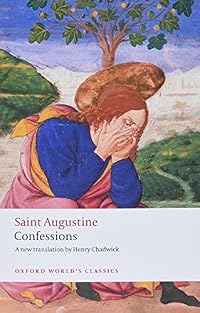
Description
This timeless work is applicable to everyone who has experienced the struggle between good and evil in his own soul. St. Augustine, born in Tagaste, Numidia, in North Africa (now Constantine) in 354, was raised by a devout Christian mother. He abandoned the Christianity in which he had been brought up, taking on a mistress who bore him an illegitimate son. After hearing the sermons of Ambrose, he began a great internal struggle which led to his conversion in 387. The Confessions describes show more his conversion, shedding light on the questions that troubled him on his way to the Cross. The earliest of autobiographies, The Confessions remains unsurpassed as a sincere and intimate record of a great and pious person laying bare his soul before God. Other than Scripture, it is the most famous--and perhaps the most important--of all spiritual books. show lessTags
Recommendations
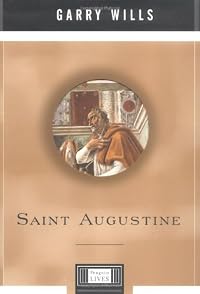




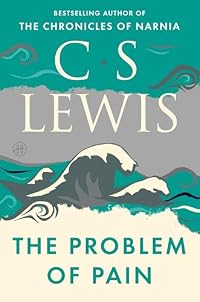
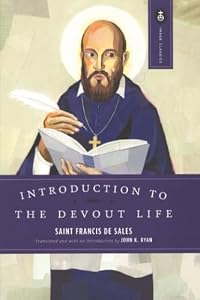
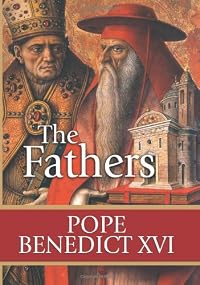
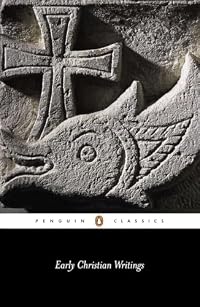

Member Recommendations
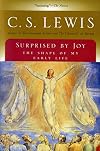
2below For anyone interested in exploring spiritual autobiographies, C. S. Lewis' is worth checking out. Unlike Augustine, who covers the entire span of his life from birth to his conversion in adulthood, Lewis focuses on his childhood and young adult years and how his experiences during this time shaped the development of his spiritual life as he got older. I found Lewis' book a much quicker read than Augustine's, though both are very good.
65
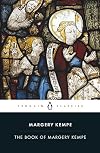

lisanicholas Mannin's novel is modeled on the real-life spiritual autobiography of St Augustine of Hippo. Read the original!
02


satanburger CONFESSIONS 6.8 (you'll see the similarities)
07
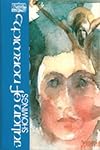
AranelST A completely different spiritual autobiography, from a quite different era, but also a classic in its own right. For those who want to broaden their readings from Christian history.
Member Reviews
Simultaneously read a contemporary academic translation by Peter Constantine (University of Connecticut) and a contemporary translation by a non-academic, Benignus O'Rourke of the Order of St. Augustine, that seeks to make the text more easily accessible by simplifying the sentence structure and, uniquely, breaking the lines into short poetic-like units of text. Augustine likely would have approved such an effort as he wrote in a simpler Latin than that of the famous orators and intellectuals of his own day that he taught to students for many years, and in the work bemoans that he was initially put off by the simplicity of language of the Christian scriptures: "It struck me as unworthy of comparison to the distinction of a Cicero. My show more strutting pride shunned the simplicity of the Scripture, my eye not keen enough to penetrate its interior." (trans. Constantine).
Could my own strutting pride enjoy a translation inspired by a desire to provide today's youth with a text that is easy to follow, non-poetry formatted to impersonate poetry? Happily yes! Clarity is no fault, and the poetic-like structure works I think. Here's an example where I think it heightens the emotion that Augustine wants to communicate, concerning his state of mind following the death of a close friend when he was a young man. First, Constantine:
Now O'Rourke:
Here's an instance where O'Rourke adds clarity to the passage that in its reference to the Roman god Jupiter would surely have been clearly understood two thousand years ago, but using a strict translation today it isn't quite so clear. Constantine:
Have to admit I didn't quite follow Augustine's point there. What's all that about thunder and why can't you thunder and adultery both? Then I read the O'Rourke:
Aha, Augustine is highlighting the hypocrisy of the gods in classical texts and how this is also present in humans, blustering one way yet behaving in quite another. This regrettable aspect of human nature was copy/pasted onto Roman gods, leaving Augustine unconvinced that what he was reading and teaching to Rome's youth bore witness to actual truth. And one thing the Confessions makes clear, that I didn't really appreciate earlier, is that Augustine was embarked on a long journey in search of Truth from a young age, from reading Cicero to the community of the Manicheans to the philosophy of the Neoplatonists and finally to baptism in the Christian faith after becoming convinced by it after years of first intellectual resistance and then years of a resistance of his will (the famous "make me chaste, but please, not yet" years).
O'Rourke's unique translation is one I would highly recommend then, although he only translated the first 9 of the 13 books of the Confession, those in which Augustine composes the world's first written autobiography in the modern sense. Books 10 through 13 are a philosophy of time and memory, and an exegesis of Genesis. These more academic topics must be read in an academic translation. But O'Rourke gives us Augustine's personal journey of the intellect, of the heart, of the seeker, in a highly relatable reading that can seem quite contemporary.
Or, one might say, there is a light and it never goes out (Morrissey. Not translated.). show less
Could my own strutting pride enjoy a translation inspired by a desire to provide today's youth with a text that is easy to follow, non-poetry formatted to impersonate poetry? Happily yes! Clarity is no fault, and the poetic-like structure works I think. Here's an example where I think it heightens the emotion that Augustine wants to communicate, concerning his state of mind following the death of a close friend when he was a young man. First, Constantine:
Not in shady groves, not in amusements, nor in song could my soul find repose, nor in fragrant gardens or sumptuous feasts, not in the pleasures of bed and couch, not in books or poetry. Everything repelled me, even light itself. Everything was irksome and vile that was not what he was, everything except for laments and tears, since it was in those alone that I found a little solace.
Now O'Rourke:
Not in sheltered groves,
not in music or play,
not in gardens scented with flowers,
nor in feasting and company;
not in the pleasures of love,
not even in books, nor in poetry,
could my soul find rest.
All these I hated.
I hated the daylight.
Everything that was not him was painful and hurtful to me.
Only in my tears and sighs
did I taste some little peace.
Here's an instance where O'Rourke adds clarity to the passage that in its reference to the Roman god Jupiter would surely have been clearly understood two thousand years ago, but using a strict translation today it isn't quite so clear. Constantine:
Did I not read in you of Jupiter the thunderer and adulterer - he surely could not have been both, but was presented as such so that a fictitious thunder might mimic and pander to real adultery.
Have to admit I didn't quite follow Augustine's point there. What's all that about thunder and why can't you thunder and adultery both? Then I read the O'Rourke:
It was an accepted belief in the studies I followed
that Jupiter was both the one
who sends his thunderbolts on the wicked
and the one who was also an adulterer.
How could he possibly be both?
But so the story goes.
The result is that those who follow him in adultery
can put a bold face on it
by making false pretence of thunder.
Aha, Augustine is highlighting the hypocrisy of the gods in classical texts and how this is also present in humans, blustering one way yet behaving in quite another. This regrettable aspect of human nature was copy/pasted onto Roman gods, leaving Augustine unconvinced that what he was reading and teaching to Rome's youth bore witness to actual truth. And one thing the Confessions makes clear, that I didn't really appreciate earlier, is that Augustine was embarked on a long journey in search of Truth from a young age, from reading Cicero to the community of the Manicheans to the philosophy of the Neoplatonists and finally to baptism in the Christian faith after becoming convinced by it after years of first intellectual resistance and then years of a resistance of his will (the famous "make me chaste, but please, not yet" years).
O'Rourke's unique translation is one I would highly recommend then, although he only translated the first 9 of the 13 books of the Confession, those in which Augustine composes the world's first written autobiography in the modern sense. Books 10 through 13 are a philosophy of time and memory, and an exegesis of Genesis. These more academic topics must be read in an academic translation. But O'Rourke gives us Augustine's personal journey of the intellect, of the heart, of the seeker, in a highly relatable reading that can seem quite contemporary.
I was delighted to hear Ambrose
often saying in his sermons to the people,
and saying it with emphasis,
The letter kills,
but the Spirit gives life.
When he lifted the veil of mystery from the Scriptures
and opened to the people the spiritual meaning of texts,
which taken literally would seem to be absurd,
he said nothing that would offend.
Even so, I did not know whether what he said was true.
---
What you were I did not know.
But that you did exist,
and that the care of human affairs was in your hands,
I did believe.
This conviction was at times strong, at times fickle.
But at all times I believed that you existed and that you cared for us,
even though I did not know how I ought to think about you,
or work out what way would lead us to you,
or lead us back to you.
---
These books bade me
to return to myself.
So with you as guide
I entered into my deepest self.
But only because you helped me
was I able to do this.
I entered, then,
and with the eye of my soul
I saw the light within,
the light which never changes.
Or, one might say, there is a light and it never goes out (Morrissey. Not translated.). show less
I have read this book several times, both as part of the Basic Program of Liberal Education at the University of Chicago and most recently as one of the monthly selections of a reading group in which I participate. Like all classics it bears rereading and yields new insights each time I read it. But it also is unchanging in ways that struck me when I first read it; for Augustine's Confessions seem almost modern in the telling with a psychological perspective that brings his emotional growth alive across the centuries. From the carnality of his youth to the moment in the Milanese Garden when his perspective changed forever you the story is an earnest and sincere exposition of his personal growth. You do not have to be a Catholic or even show more a believer to appreciate the impact of events in the life of the young Augustine. His relations with his mother, Monica, are among those that still have impact on the modern reader. This is one of those "Great" books that remind you that true insight into the human condition transcends time and place. show less
I don't know whether 'review' is the right word here. Can one pass judgment on a work so seminal to the Western literary canon? Whether the reader be Christian or merely curious, The Confessions of St. Augustine conveys a remarkable look into the interior life of a man living in the latter stages of the Roman empire, circa 400CE. As a confession, the book is cast as an open letter to God, with all of humanity as coincidental readers who, it is hoped, would thereby profit from his story. These comments cover the first eight chapters, or fully half the book, which proceeds chronologically from his birth to the time of his conversion at the age of thirty-two.
I had access to two translations from the Latin. The first, by Edward Bouverie show more Pusey, is available in the public domain and as Volume 18 of the Encyclopedia Britannica's Great Books of the Western World, 1952 edition. And the second translation was by one R.S. Pine-Coffin (now there's a creatively hyphenated last name). I read the first four chapters using the Pusey and then switched to the Pine-Coffin. I do not recommend the Pusey which is very Victorian, ornate and cumbersome. It requires lots of effort to read comfortably, usually obscuring rather than illuminating the meanings which Augustine wished to make clear.
Augustine was – to put it bluntly – obsessed with feelings of guilt and remorse to a degree which makes modern day expressions of faith and humility sound pale and whiny in comparison. I am sunk in 'flagitious concupiscence,' he says (what ??!) - courtesy Pusey trans. - when all he did during his libertine days, apparently, was to attend the theater, read popular fiction and speak to unmarried women. And the worst crime he can remember, the one which highlights his youthful evil spree, was to have stolen pears from a neighbor's tree, not out of hunger but to throw to some hogs. In between outpourings of humility and adoration, impressive not only for their earnestness but for their command of Biblical references, Augustine wrestles with determinism, the problem of evil, the substance of God, and the Manichean influence he fell under as a young man. A summarizing quote: "What profited me then my nimble wit,' he writes, 'in those sciences and all those most knotty volumes, unraveled by me without aid from human instruction; seeing I erred so foully, and with such sacrilegious shamefulness in the doctrine of piety?"
On the whole (or half, in this case – my reading plan has me returning to the second part later this year..,), The Confessions is a good workout, heavy at times, famous for its place in early Christian thought and western cultural history. show less
I had access to two translations from the Latin. The first, by Edward Bouverie show more Pusey, is available in the public domain and as Volume 18 of the Encyclopedia Britannica's Great Books of the Western World, 1952 edition. And the second translation was by one R.S. Pine-Coffin (now there's a creatively hyphenated last name). I read the first four chapters using the Pusey and then switched to the Pine-Coffin. I do not recommend the Pusey which is very Victorian, ornate and cumbersome. It requires lots of effort to read comfortably, usually obscuring rather than illuminating the meanings which Augustine wished to make clear.
Augustine was – to put it bluntly – obsessed with feelings of guilt and remorse to a degree which makes modern day expressions of faith and humility sound pale and whiny in comparison. I am sunk in 'flagitious concupiscence,' he says (what ??!) - courtesy Pusey trans. - when all he did during his libertine days, apparently, was to attend the theater, read popular fiction and speak to unmarried women. And the worst crime he can remember, the one which highlights his youthful evil spree, was to have stolen pears from a neighbor's tree, not out of hunger but to throw to some hogs. In between outpourings of humility and adoration, impressive not only for their earnestness but for their command of Biblical references, Augustine wrestles with determinism, the problem of evil, the substance of God, and the Manichean influence he fell under as a young man. A summarizing quote: "What profited me then my nimble wit,' he writes, 'in those sciences and all those most knotty volumes, unraveled by me without aid from human instruction; seeing I erred so foully, and with such sacrilegious shamefulness in the doctrine of piety?"
On the whole (or half, in this case – my reading plan has me returning to the second part later this year..,), The Confessions is a good workout, heavy at times, famous for its place in early Christian thought and western cultural history. show less
Rereading this book I am reminded once again how powerful it is and how modern it seems to be. Like all classics it bears rereading and yields new insights each time I read it. But it also is unchanging in ways that struck me when I first read it; for Augustine's Confessions is both an apologetic account of his intellectual search for understanding and wisdom, yet in pursuing that search finding a rootlessness due to an ultimate dissatisfaction with different philosophical positions that he explores. From the carnality of his youth to the moment in the Milanese Garden when his perspective changed forever you the story is an earnest and sincere exposition of his personal growth. You do not have to be a Catholic or even a believer to show more appreciate the impact of events in the life of the young Augustine. The certainty for which Augustine strives is not found in philosophy alone, but rather in faith, only Christian faith, is this certainty possible for him. Having recently read Cicero myself, I was impressed that Cicero's writing had an important impact on Augustine.
His relations with his mother, Monica, are among those that still have impact on the modern reader. The combination of his personal insights, relations with friends and teachers, and the unusual (for his time) psychological portrait make one realize that this is one of those "Great" books that remind you that true insight into the human condition transcends time and place. show less
His relations with his mother, Monica, are among those that still have impact on the modern reader. The combination of his personal insights, relations with friends and teachers, and the unusual (for his time) psychological portrait make one realize that this is one of those "Great" books that remind you that true insight into the human condition transcends time and place. show less
From across fifteen centuries, Augustine's voice is vibrant and alive as he tries to navigate a Mediterranean world in political and spiritual transition. Drawn to a life of piety, he describes the temptations of the flesh in vivid, poetic metaphor:
Toys and trifles, utter vanities had been my mistresses, and now they were holding me back, pulling me by the garment of my flesh and softly murmuring in my ear: "Are you getting rid of us?" (p. 180)
Much of this reads in a "dear diary" tone as he talks directly to God in review of his life and struggles.
What I actually like the most is the incidental glimpses into daily life in antiquity. As a teacher myself, this vision of an unruly classroom jumped out to me:
At Carthage, on the other hand, show more the students are disgracefully out of control. They come breaking into a class in the most unmannerly way and, behaving almost like madmen, disturb the order which the master has established for the good of his pupils. (p. 100)
Preparing to marry, the old goat finds losing his bed-buddy to be an emotional loss more than a physical one:
The woman with whom I was in the habit of sleeping was torn from my side on the grounds of being an impediment to my marriage, and my heart, which clung to her, was broken and wounded and dropping blood. (p. 133)
Even this casual, urban encounter jumps off the page with life:
I was going along one of the streets of Milan when I noticed a poor beggar; he was fairly drunk, I suppose, and was laughing and enjoying himself. It was a sight which depressed me, and I spoke to the friends who were with me about all the sorrows which come to us because of our own madness. (p. 119)
Even back then, bar snacks were salty:
There is no pleasure in eating or drinking, unless the discomfort of hunger and thirst come before. Drunkards eat salty things to develop a thirst so great as to be painful, and pleasure arises when the liquor quenches the pain of the thirst. (p. 165) show less
Toys and trifles, utter vanities had been my mistresses, and now they were holding me back, pulling me by the garment of my flesh and softly murmuring in my ear: "Are you getting rid of us?" (p. 180)
Much of this reads in a "dear diary" tone as he talks directly to God in review of his life and struggles.
What I actually like the most is the incidental glimpses into daily life in antiquity. As a teacher myself, this vision of an unruly classroom jumped out to me:
At Carthage, on the other hand, show more the students are disgracefully out of control. They come breaking into a class in the most unmannerly way and, behaving almost like madmen, disturb the order which the master has established for the good of his pupils. (p. 100)
Preparing to marry, the old goat finds losing his bed-buddy to be an emotional loss more than a physical one:
The woman with whom I was in the habit of sleeping was torn from my side on the grounds of being an impediment to my marriage, and my heart, which clung to her, was broken and wounded and dropping blood. (p. 133)
Even this casual, urban encounter jumps off the page with life:
I was going along one of the streets of Milan when I noticed a poor beggar; he was fairly drunk, I suppose, and was laughing and enjoying himself. It was a sight which depressed me, and I spoke to the friends who were with me about all the sorrows which come to us because of our own madness. (p. 119)
Even back then, bar snacks were salty:
There is no pleasure in eating or drinking, unless the discomfort of hunger and thirst come before. Drunkards eat salty things to develop a thirst so great as to be painful, and pleasure arises when the liquor quenches the pain of the thirst. (p. 165) show less
What makes this such a popular testimonial and classic of Christian writing is the profound thinking he shares about the depth of his own spiritual life and his contemplation about creation and God. Most of the early chapters are about the wretchedness of his life and those of anyone before they find God. He starts at infancy and works his way through boyhood to the point where he was a young man of 30. Book 8, #13 includes a great description of his friend going to the gladiator events, intending not to watch but looking out of curiosity and becoming another bloodthirsty member of the crowd. St. Augustine's life was not that of a typical saint. After this passage: "my concubine being torn from my side as a hindrance to my marriage, my show more heart which clave unto her was torn and wounded and bleeding," he took on another mistress and kept with him the son by the first. He refers to Epicurus, remarking that he would have believed were it not for the tenet that there is nothing after death. This metaphysical debate shows the type of thought process that Augustine had to endure to reconcile current philosophy with early Christian beliefs: " that the body of an elephant should contain more of Thee than that of a sparrow, by how much larger it is, and takes up more room." In Book 7 #7, Augustine begins contemplating the nature of evil and how it "crept" into being. Did God create it? Again, we see reason guiding his spiritual thinking. He talks about the astrologers and how he rejected them based on a story of two men born at the exact same time, one a slave and the other a prince. Despite identical stars, they led very different lives. Hee first encountered John 1:1 by acquiring it among some books recorded by the Platonists. The Platonic concept of duality is entwined through much of Augustine's thinking. He considers the passage "and the word was made flesh" and appreciates the implication. He thinks about the meaning of an "incorruptible substance" and the effect on that which it touches. Book IX, #20 relates the strength and admonishment of women Christians at the time, and how they placed value in hearing the scripture in the home as a way of controlling abusive husbands. Book IX, #33 is the moving passage about how he came to understand his mother's death and how it brought him closer to God. Book X is the single most important and profound part of the Confessions. Having in the former books spoken of himself before his receiving the grace of baptism, in this section he admits what he then was. First, he inquires by what faculty we can know God at all, reasoning on the mystery of memory, wherein God, being made known, dwells undiscovered. Then he examines his own trials under the triple division of temptation, 'lust of the flesh, lust of the eyes, and pride.' The sins of the eyes is actually "curiosity." The sins of the flesh are all of those bodily pleasures and desires that take us away from the spiritual. Book X, #47: "Placed then amid these temptations, I strive daily against concupiscence in eating and drinking. For it is not of such nature, that I can settle on cutting it off once for all, and never touching it afterward, as I could of concubinage." Like many other great thinkers, Augustine considered the wonder of creation; in fact, just the nature of it alone to be proof of something greater than, i.e. God. There is much discussion about the nature of time, memory, the soul, and the how of God and man. In the closing books, he considers the immutable and eternal nature of God and the logical implication on creation, God's will, the past, the future, and the human frame of reference about these concepts. show less
A spiritual self-examination it tells of Augustine’s restless youth and of the stormy spiritual voyage that ended some 12 years before the book’s writing in the haven of the Roman Catholic Church. In reality, the work is not so much an autobiography as an exploration of the philosophical and emotional development of an individual soul. Confessions broke entirely fresh ground as literature, and the genre of autobiography owes many of its characteristics to Augustine.
Although autobiographical narrative makes up much of the first 9 of the 13 books of Confessions, autobiography is incidental to the main purpose of the work. For Augustine, “confessions” is a catchall term for acts of religiously authorized speech: praise of God, show more blame of self, confession of faith. The book is a richly textured meditation by a middle-aged man on the course and meaning of his own life. The dichotomy between past odyssey and present position of authority as bishop is emphasized in numerous ways in the book, not least in that what begins as a narrative of childhood ends with an extended and very churchy discussion of the book of Genesis; the progression is from the beginnings of a man’s life to the beginnings of human society.
Between those two points, the narrative of sin and redemption holds most readers’ attention. Those who seek to find in it the memoirs of a great sinner are invariably disappointed, indeed often puzzled at the minutiae of failure that preoccupy the author. Of greater significance is the account of redemption. Augustine is especially influenced by the powerful intellectual preaching of the suave and diplomatic bishop St. Ambrose, who reconciles for him the attractions of the intellectual and social culture of antiquity, in which Augustine was brought up and of which he was a master, and the spiritual teachings of Christianity. The link between the two was Ambrose’s exposition, and Augustine’s reception, of a selection of the doctrines of Plato, as mediated in late antiquity by the school of Neoplatonism. Augustine heard Ambrose and read, in Latin translation, some of the exceedingly difficult works of Plotinus and Porphyry. He acquired from them an intellectual vision of the fall and rise of the human soul, a vision he found confirmed in the reading of the Bible. show less
Although autobiographical narrative makes up much of the first 9 of the 13 books of Confessions, autobiography is incidental to the main purpose of the work. For Augustine, “confessions” is a catchall term for acts of religiously authorized speech: praise of God, show more blame of self, confession of faith. The book is a richly textured meditation by a middle-aged man on the course and meaning of his own life. The dichotomy between past odyssey and present position of authority as bishop is emphasized in numerous ways in the book, not least in that what begins as a narrative of childhood ends with an extended and very churchy discussion of the book of Genesis; the progression is from the beginnings of a man’s life to the beginnings of human society.
Between those two points, the narrative of sin and redemption holds most readers’ attention. Those who seek to find in it the memoirs of a great sinner are invariably disappointed, indeed often puzzled at the minutiae of failure that preoccupy the author. Of greater significance is the account of redemption. Augustine is especially influenced by the powerful intellectual preaching of the suave and diplomatic bishop St. Ambrose, who reconciles for him the attractions of the intellectual and social culture of antiquity, in which Augustine was brought up and of which he was a master, and the spiritual teachings of Christianity. The link between the two was Ambrose’s exposition, and Augustine’s reception, of a selection of the doctrines of Plato, as mediated in late antiquity by the school of Neoplatonism. Augustine heard Ambrose and read, in Latin translation, some of the exceedingly difficult works of Plotinus and Porphyry. He acquired from them an intellectual vision of the fall and rise of the human soul, a vision he found confirmed in the reading of the Bible. show less
Members
- Recently Added By
Lists

.
194 works; 2 members

𓐩hought Daughter ♱♰✟✞✝︎☨†˚₊‧꒰ა ♱ ໒꒱ ‧
38 works; 1 member

Recommendations by Peter Kreeft
45 works; 4 members

Works cited in The New Science of the Enchanted Universe by Marshall Sahlin
141 works; 1 member
el
1,139 works; 1 member

.
396 works; 1 member

Philosophy
23 works; 1 member

In Our Time books
4,934 works; 2 members

bound
100 works; 1 member

Lectuurlijst
63 works; 1 member
Author Information

Saint Augustine was born to a Catholic mother and a pagan father on November 13, 354, at Thagaste, near Algiers. He studied Latin literature and later taught rhetoric in Rome and Milan. He originally joined the Manicheans, a religious sect, but grew unhappy with some of their philosophies. After his conversion to Christianity and his baptism in show more 387, Augustine developed his own approach to philosophy and theology, accommodating a variety of methods and different perspectives. He believed that the grace of Christ was indispensable to human freedom, and he framed the concepts of original sin and just war. His thoughts greatly influenced the medieval worldview. One of Augustine's major goals was a single, unified church. He was ordained a priest in 391 and appointed Bishop of Hippo, in Roman Africa, in 396. Augustine was one of the most prolific Latin authors in terms of surviving works, and the list of his works consists of more than one hundred separate titles. His writings and arguments with other sects include the Donatists and the Pelagians. On the Trinity, The City of God, and On Nature and Grace are some of his important writings. Confessions, which is considered his masterpiece, is an autobiographical work that recounts his restless youth and details the spiritual experiences that led him to Christianity. Many of Augustine's ideas, such as those concerning sin and predestination, became integral to the doctrines of the Roman Catholic Church. In the Catholic Church he is a saint and pre-eminent Doctor of the Church, and the patron of the Augustinians. He is the patron saint of brewers, printers, and theologians. Augustine died on August 28, 430. (Bowker Author Biography) show less
Some Editions
Awards and Honors
Awards
Notable Lists
Series

Belongs to Publisher Series
Work Relationships
Is contained in
Contains
Is abridged in
Has as a study
Has as a student's study guide
Common Knowledge
- Canonical title
- The Confessions of St. Augustine
- Original title
- Confessiones
- Alternate titles
- Confessions of St. Augustine of Hippo; Confessions of Saint Augustine of Hippo; St. Augustine's Confessions; Saint Augustine's Confessions; The Confessions of St. Augustine; The Confessions of Saint Augustine
- Original publication date
- 397
- People/Characters
- Adeodatus (b.372, d.388); Alypius; Ambrosius Aurelianus (Aurelius Ambrose, c.&thinsp | 340&ndash | 397); Augustine of Hippo (Saint, 354-430); Marcus Tullius Cicero (106-43 BC); God (show all 10); Faustus of Rhegium or Riez (c. 405/410-c. 490/495); Jesus Christ; Monica (Saint, Mother of Augustine, c.&thinsp | 332 &ndash | 387); Nebridius
- Important places
- Algeria; Thagaste; Carthage; Milan, Lombardy, Italy; Ostia; Roman Empire (show all 7); Madaura
- Important events
- Augustine's conversion
- Related movies
- Restless Heart: The Confessions of Saint Augustine (2010); Augustine: The Decline of the Roman Empire (2010)
- Epigraph
- An allegorical interpretation of the first chapter of Genesis (Book XIII)
- Dedication
- dedicated to parentibus meis
- First words
- You are great, O Lord, and greatly to be praised: great is your power and to your wisdom there is no limit.
You are great, O Lord, and very worthy of praise; mighty is your power and your wisdom is immeasurable.
'Vast are you, Lord, and vast should be your praise' - 'vast what you do; what you know beyond assaying.'
Great art Thou, O Lord, and greatly to be praised; great is Thy power, and of Thy wisdom there is no number. [tr. F. J. Sheed] - Quotations
- It became clear to me that things which are subject to corruption must be good, for if they were perfect, or not good at all, they could not be corrupted.
Corruption is an agent of harm but if it is not taking away from what is good, it is causing no harm.
Who remembers the sins of my infancy? ... What were my sins? Did I bawl too loudly for the breast?
As an adolescent I had prayed ... "Give me chastity and give me control over myself, BUT NOT YET". - Last words
- (Click to show. Warning: May contain spoilers.)Thus, thus is it received, thus is it found, thus is it opened to us.
(Click to show. Warning: May contain spoilers.)I serve you and worship you so that good may come to me from you; I owe my existence and my goodness to you.
(Click to show. Warning: May contain spoilers.)Thus only shall we receive, thus shall we find, thus will it be opened to us. [tr. F. J. Sheed] - Blurbers
- Brown, Peter
- Original language
- Latin
- Canonical DDC/MDS
- 270.2092
- Canonical LCC
- BR65.A6
Classifications
- Genres
- Religion & Spirituality, Philosophy, Biography & Memoir, Nonfiction, History, General Nonfiction
- DDC/MDS
- 270.2092 — Religion History of Christianity History, geographic treatment, biography of Christianity Period of ecumenic councils; Centralization (325-787)
- LCC
- BR65 .A6 — Philosophy, Psychology and Religion Christianity Christianity Early Christian literature. Fathers of the Church, etc.
- BISAC
Statistics
- Members
- 20,918
- Popularity
- 268
- Reviews
- 134
- Rating
- (3.96)
- Languages
- 30 — Catalan, Chinese, Czech, Danish, Dutch, English, Estonian, Finnish, French, German, Greek, Hebrew, Hungarian, Italian, Korean, Latin, Multiple languages, Norwegian (Nynorsk), Norwegian (Bokmål), Norwegian, Farsi/Persian, Polish, Romanian, Russian, Croatian, Slovak, Spanish, Swedish, Turkish, Portuguese (Portugal)
- Media
- Paper, Audiobook, Ebook
- ISBNs
- 629
- UPCs
- 3
- ASINs
- 486