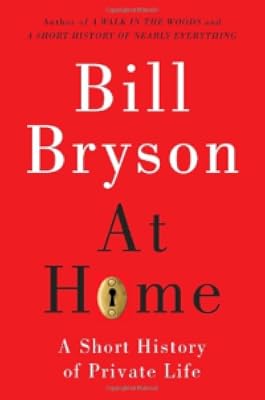
At Home: A Short History of Private Life
by Bill Bryson
On This Page
Description
Bryson takes readers on a tour of his house, a rural English parsonage, showing how each room has figured in the evolution of private life.Tags
Recommendations

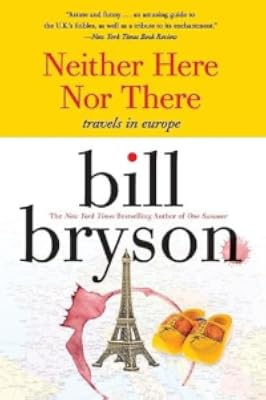
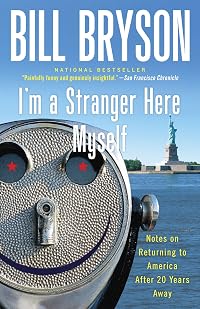
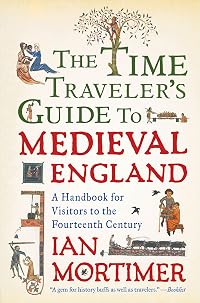




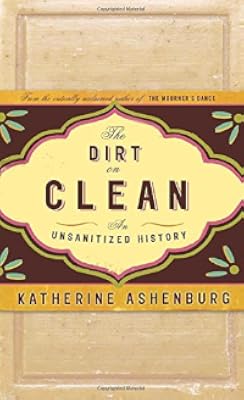








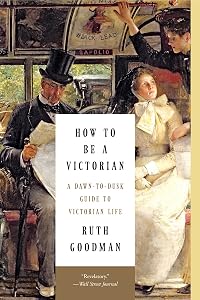
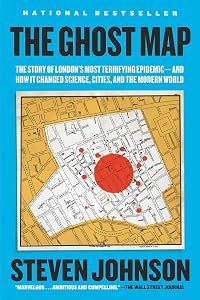
Member Recommendations
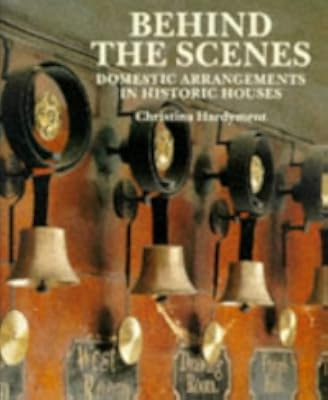
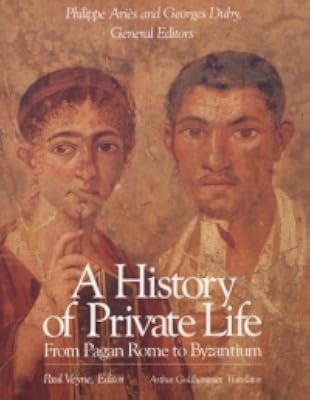
digifish_books A more detailed room-by-room consideration of domestic life in Victorian Britain
Also recommended by Booksloth
40
petterw Same style, same author, same enthusiasm, same fun
51
grizzly.anderson Bryson likes to wander from one topic to another, and toss in bits of trivia and history. Schott's Miscellany is a fascinating collection of trivia without the attempt to thread it together.
Servants: A Downstairs History of Britain from the Nineteenth Century to Modern Times by Lucy Lethbridge
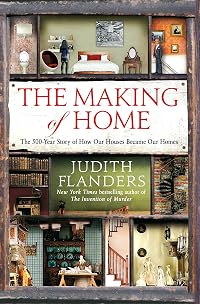
fannyprice Bryson's discussion of the development of the home from a more open, collaborative space to a warren of special-purpose rooms as the concept of "privacy" became more important dovetails nicely with Lethbridge's discussion of the increasing physical separation between servants and the served in 18th and 19th century British homes.
grizzly.anderson What Bryson does for the home, taking it one room at a time and looking at how we got where we are, Mars & Kohlstedt do for cities and infrastructure.
cbl_tn Both books address some of the same technological advances, such as refrigeration and electricity and artificial light, for a popular audience.
akblanchard Tangential histories of commonplace things.

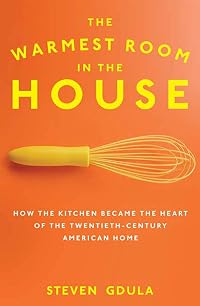
jcbrunner Adds the developments of the 20th century to Bryson's story (from a US point of view).
Member Reviews
Although Bryson’s book is subtitled “A Short History of Private Life,” it is a solid 497 pages of exploring western history through the outline of one home and its rooms. The author looks at topics as varied as the building of Crystal Palace, the history of farming, interior heating, the East India Company, rabid bats, the art of building staircases, and indoor plumbing. Each of the rooms, which include the hall, kitchen, scullery, fuse box, drawing room, dining room, cellar, passage, study, garden, plum room, stairs, bedroom, bathroom, dressing room, nursery, and attic, is used as the background for stories from history, sociology, science, architecture, and various other fields. Bryson begins with the background and some history show more surrounding his home, a former rectory built in the 1850′s, and inhabited by Reverend Thomas Marsham and his family. He addresses the question of why people live in houses, and the sociological and technological changes which were required from the formerly nomadic population before they settled. As the author moves from room to room, we learn not only about the history of his house, but about the struggles of putting food on the table, the innovation of ice, expectations of servants, fuel sources of the past two hundred years, interior design trends, the invention of mousetraps, and so on. Since this book addresses so many different topics, one might get a little dizzy jumping from topic to topic. However, the idea of using a house to tie together a variety of different fields makes for great reading. It’s a bit too hefty to be a bathroom reader, although along the same lines, you may find yourself sharing tidbits with friends, “Hey, did you know…?” This is a wonderfully educational book, and manages to be engaging and fun at the same time — no easy task. show less
I've occasionally reflected on the pace of change during the 20th century, but in this "short history of private life," Bill Bryson makes a convincing case that the magnitude of change may have been more striking during the 100 years preceding it. Domestic life as we know it today didn't really exist until pretty recent times, and Bryson explores its development via a room-by-room ramble through a 19th-century English country home - the former parsonage he lives in with his family. And "ramble" is the appropriate word, as it applies to the style of the book as well - there's really not much in the way of a strong narrative thread here, and that makes reviewing it rather challenging.
Bryson's writing is highly descriptive and very show more conversational. I could easily imagine I was hearing it as narration for a documentary miniseries - and, by the way, I think it would make a very good one. It might actually be more effective in that format, come to think of it. It's full of interesting facts, figures, and individuals, with one digression after another. With a chapter devoted to each room of the house, the author does manage to bring his stories around and tie them back to whichever room he's talking about before he moves on the next - and that's helpful, because all the digressions made it difficult for me to remember which room we were in at times!
The book falls a bit short of being "a history of the world without leaving home," as its focus is more narrow than that. Most of the discussion is focused on British history and society - as might be expected when one's vehicle is a particularly British country house - with a few side trips to America, continental Europe, India and China (countries whose histories are entwined with England's at one point or another), and is heavily concentrated on the years between 1600 and 1900. Bryson's attention isn't on the big events, but on how people lived - and how very differently they lived at opposite ends of the economic spectrum, since during the last couple of millennia, most people were at one end or the other. The evolution of domestic private life rather coincides with the establishment and growth of the middle class, and this is traced through new inventions, discoveries, and social practices. A few examples:
* The dining room wasn't part of most houses until Victorian times, and is the site of discussions of etiquette and upholstery
* The dressing room inspires talk about fabrics, fashions, and wigs
* The nursery prompts consideration of how the concept of childhood has changed over time
And here's something to keep in mind when you arrive at the "bathroom reading" portion of your house tour, tweeted from my own personal experience:
"There are some things that should NOT be read during lunch. Descriptions of 19th century pre-indoor-plumbing London are on that list."
This was my first exposure to Bill Bryson, and I intend to read more of his work. At Home is both entertaining and informative, and its lack of a strong narrative through-line makes it a book you can readily pick up and put down; I read it straight through, and I'm not sure that was the best approach. But however you approach it, it will fill your head with lots of new factoids to share with friends and family. show less
Bryson's writing is highly descriptive and very show more conversational. I could easily imagine I was hearing it as narration for a documentary miniseries - and, by the way, I think it would make a very good one. It might actually be more effective in that format, come to think of it. It's full of interesting facts, figures, and individuals, with one digression after another. With a chapter devoted to each room of the house, the author does manage to bring his stories around and tie them back to whichever room he's talking about before he moves on the next - and that's helpful, because all the digressions made it difficult for me to remember which room we were in at times!
The book falls a bit short of being "a history of the world without leaving home," as its focus is more narrow than that. Most of the discussion is focused on British history and society - as might be expected when one's vehicle is a particularly British country house - with a few side trips to America, continental Europe, India and China (countries whose histories are entwined with England's at one point or another), and is heavily concentrated on the years between 1600 and 1900. Bryson's attention isn't on the big events, but on how people lived - and how very differently they lived at opposite ends of the economic spectrum, since during the last couple of millennia, most people were at one end or the other. The evolution of domestic private life rather coincides with the establishment and growth of the middle class, and this is traced through new inventions, discoveries, and social practices. A few examples:
* The dining room wasn't part of most houses until Victorian times, and is the site of discussions of etiquette and upholstery
* The dressing room inspires talk about fabrics, fashions, and wigs
* The nursery prompts consideration of how the concept of childhood has changed over time
And here's something to keep in mind when you arrive at the "bathroom reading" portion of your house tour, tweeted from my own personal experience:
"There are some things that should NOT be read during lunch. Descriptions of 19th century pre-indoor-plumbing London are on that list."
This was my first exposure to Bill Bryson, and I intend to read more of his work. At Home is both entertaining and informative, and its lack of a strong narrative through-line makes it a book you can readily pick up and put down; I read it straight through, and I'm not sure that was the best approach. But however you approach it, it will fill your head with lots of new factoids to share with friends and family. show less
Terrifically self-indulgent -- yeah, it's all about you and your house, isn't it? Also very eurocentric, if that kind of thing bothers you. The thing that most bothers me, though, is that after going on and on about the deprivation and human misery rampant in Victorian London, he can then turn around and rail about the inheritance tax. "Hardly a great house in Britain didn't yield something at some point." All those fine works of art, gone! Lost forever! Oh, wait, no they aren't; they're just in the hands of some other rich bastard, and one who mostly likely didn't just inherit his money. Or better yet, they're actually (cue indiana jones voice) in a museum now. I'm as much an anglophile as the next person -- more, actually -- but why, show more exactly, should we be mourning the loss of houses that don't have adequate plumbing, heating, and electrical facilities and are way too big to be comfortable (remember all the space set aside of necessity to the now prohibitively expensive servants?)
That having been said, he's a great wordsmith, and the sheer volume of arcane detail in this book is frankly staggering. If you're into arcane detail as I am, it's definitely worth reading. show less
That having been said, he's a great wordsmith, and the sheer volume of arcane detail in this book is frankly staggering. If you're into arcane detail as I am, it's definitely worth reading. show less
Bill Bryson lives in a house that was once a rectory, the home of the resident clergyman of a small English village. The central conceit of this book involves Bryson taking readers on a stroll through this house and using each room along the way as a jumping-off point to talk about all the history that went into making that room what it is. Although said history, it should probably be noted, is almost entirely that of the British Isles and America. Bryson also claims at the outset that he intends to focus mainly on the time since the rectory was first built, in 1851, but in practice, he rambles far and wide across across the past, touching on matters from the world-changing (e.g. the invention of the cotton gin and its impact on the show more American south) to the trivial (like the history of wigs as a men's fashion accessory).
Just as an example of how wonderfully wide-ranging and random this amble through history is, consider the chapter spent in the dining room, which features such topics as salt, scurvy, the spice trade, the many mistakes of Christopher Columbus, crops and diseases imported from the New World, Samuel Pepys' diary, the introduction of coffee and tea to Britain, the Boston Tea Party, the evolution of the fork, overcomplicated 19th century table settings, and why we no longer eat the heaviest meal of the day at lunch. And somehow, it all flows together in what seems like a perfectly natural progression.
It's all genuinely fascinating stuff, too, full of odd, quirky little details of the kind I never knew I wanted to know, related in an engaging style by a man who is clearly enjoying it all as much as I did.
Also, I have come away from this book with four main points in my mind, all of which are things I already knew, but which are certainly deserving of further consideration:
1. Everything really is connected to everything else, in all kinds of weird and wonderful ways.
2. I am deeply, incredibly, unbelievably grateful to live in the 21th century.
3. Very rich people have always done insanely, unconscionably wasteful things.
And 4. The Victorians were just plan weird.
Anyway. I definitely recommend this for even the most casual of armchair history buffs. Especially the ones who'd like to know something about the history of their armchairs. show less
Just as an example of how wonderfully wide-ranging and random this amble through history is, consider the chapter spent in the dining room, which features such topics as salt, scurvy, the spice trade, the many mistakes of Christopher Columbus, crops and diseases imported from the New World, Samuel Pepys' diary, the introduction of coffee and tea to Britain, the Boston Tea Party, the evolution of the fork, overcomplicated 19th century table settings, and why we no longer eat the heaviest meal of the day at lunch. And somehow, it all flows together in what seems like a perfectly natural progression.
It's all genuinely fascinating stuff, too, full of odd, quirky little details of the kind I never knew I wanted to know, related in an engaging style by a man who is clearly enjoying it all as much as I did.
Also, I have come away from this book with four main points in my mind, all of which are things I already knew, but which are certainly deserving of further consideration:
1. Everything really is connected to everything else, in all kinds of weird and wonderful ways.
2. I am deeply, incredibly, unbelievably grateful to live in the 21th century.
3. Very rich people have always done insanely, unconscionably wasteful things.
And 4. The Victorians were just plan weird.
Anyway. I definitely recommend this for even the most casual of armchair history buffs. Especially the ones who'd like to know something about the history of their armchairs. show less
Did you know the word vicar comes from the word vicarious? Or that the reverend who wrote the hymn “Onward Christian Soldier” also wrote the first novel featuring a werewolf? What about the phrase room and board, any idea where that came from? After reading At Home you’ll brain will be packed full of trivia about houses and everything connected to them.
Bill Bryson has an incredible skill for taking the most random and mundane topics and making them enthralling. This is technically a “history of private lives” but that covers a lot of ground.
“If you had to summarize it in a sentence, you could say that the history of private life is a history of getting comfortable slowly.”
From the bathroom to the living room, we make show more our way through modern rooms learning why salt and pepper are the most common spices and that women had a really hard time getting care from doctors in the past. Also, make sure your wallpaper isn’t colored by arsenic!
This book covers so much more than the “home.” It explores how humanity has changed over the centuries, adjusting our domiciles as we change our habits. It shows how we use those homes to interact with the world and to retreat from it.
Bryson goes on to details the world of furniture and meals and social interactions in a way that is surprisingly engrossing. I honestly wondered how he could get a whole book out of life “at home” but he delves into the details of our endless search for comfort with such infectious enthusiasm. I found myself laughing out loud as I listened to it. I would definitely suggest getting your hands on the audiobook, which he reads himself. His dry sense of humor is best translated when you hear it from his own lips.
BOTTOM LINE: One of my favorite Bryson books! I felt like I learned so much and just when a topic started to get the tiniest bit tired he moved on to the next subject. If you’re a fan of nonfiction with a touch of humor and sarcasm (think Mary Roach or Sarah Vowell) I would highly recommend. show less
Bill Bryson has an incredible skill for taking the most random and mundane topics and making them enthralling. This is technically a “history of private lives” but that covers a lot of ground.
“If you had to summarize it in a sentence, you could say that the history of private life is a history of getting comfortable slowly.”
From the bathroom to the living room, we make show more our way through modern rooms learning why salt and pepper are the most common spices and that women had a really hard time getting care from doctors in the past. Also, make sure your wallpaper isn’t colored by arsenic!
This book covers so much more than the “home.” It explores how humanity has changed over the centuries, adjusting our domiciles as we change our habits. It shows how we use those homes to interact with the world and to retreat from it.
Bryson goes on to details the world of furniture and meals and social interactions in a way that is surprisingly engrossing. I honestly wondered how he could get a whole book out of life “at home” but he delves into the details of our endless search for comfort with such infectious enthusiasm. I found myself laughing out loud as I listened to it. I would definitely suggest getting your hands on the audiobook, which he reads himself. His dry sense of humor is best translated when you hear it from his own lips.
BOTTOM LINE: One of my favorite Bryson books! I felt like I learned so much and just when a topic started to get the tiniest bit tired he moved on to the next subject. If you’re a fan of nonfiction with a touch of humor and sarcasm (think Mary Roach or Sarah Vowell) I would highly recommend. show less
This should have been a 5 Star review of a comprehensive and enlightening history of a house bought by Bill Bryson.
Instead, I am appalled by the overriding focus on the dollar sign wealth of mainly corrupt rich white men and their absurd women.
There is barely any mention of America and the British empire being founded on the horrors of slavery and the blinding racism which continues
into today. He mentions America's Gilded Age with NO reference to The Civil War. He praises Eli Whitney and his cotton gin with ZERO reference
to its resultant entrenchment of slavery. And so it goes throughout the book.
Being kind, this is an astonishingly denier approach to ANY history.
Instead, I am appalled by the overriding focus on the dollar sign wealth of mainly corrupt rich white men and their absurd women.
There is barely any mention of America and the British empire being founded on the horrors of slavery and the blinding racism which continues
into today. He mentions America's Gilded Age with NO reference to The Civil War. He praises Eli Whitney and his cotton gin with ZERO reference
to its resultant entrenchment of slavery. And so it goes throughout the book.
Being kind, this is an astonishingly denier approach to ANY history.
Quite enjoyable and endlessly fascinating. There’s a lot in here I didn’t know, wouldn’t have thought to ask, and am glad to know more about. (The history of windows, for instance.) Bryson’s a good storyteller and a good condenser of facts, so this reads easily and doesn’t get bogged down, and I like his gentle sense of humour. I kind of wish he’d made more effort to go outside the white and the male, or if he did and found little (and included what he found), that he’d said so outright, but that’s the only real flaw I noted. I also want to flip through the illustrated edition now, so I can see some of the buildings and items he describes.
Warnings: Pretty focused on Anglo and American architecture and cultural changes. show more Has done a decent job including women but not POC. Quotes containing sexist and racist attitudes. Frank discussions of child abuse, child labour, sexual abuse, slavery, and historical medical practices in which Bryson sides with the victims. One chapter on vermin, germs, and household pests. One or two quips at the expense of women.
7.5/10 show less
Warnings: Pretty focused on Anglo and American architecture and cultural changes. show more Has done a decent job including women but not POC. Quotes containing sexist and racist attitudes. Frank discussions of child abuse, child labour, sexual abuse, slavery, and historical medical practices in which Bryson sides with the victims. One chapter on vermin, germs, and household pests. One or two quips at the expense of women.
7.5/10 show less
Members
- Recently Added By
Published Reviews
ThingScore 75
“At Home” is baggy, loose-jointed and genial. It moves along at a vigorously restless pace, with the energy of a Labrador retriever off the leash, racing up to each person it encounters, pawing and sniffing and barking at every fragrant thing, plunging into icy waters only to dash off again, invigorated. You do, somehow, maintain forward momentum and eventually get to the end. Bryson is show more fascinated by everything, and his curiosity is infectious. show less
added by khuggard
Bryson is certainly famous enough to have got away with a far less bulging compendium. Instead, on our behalf, he’s been through those hundreds of books (508 according to the bibliography) some of which even the most assiduous readers among us might never have got around to: Jacques Gelis’s History of Childbirth: Fertility, Pregnancy and Birth in Early Modern Europe, say, or John A show more Templer’s The Staircase: Studies of Hazards, Falls and Safer Designs. He’s then extracted their most arresting material and turned the result into a book that, for all its winning randomness, is not just hugely readable but a genuine page-turner — mainly because you can’t wait to see what you’ll find out next. show less
added by private library
Lists

Non-Fiction Worth Reading
1,016 works; 263 members

Top Five Books of 2015
811 works; 241 members

Biggest Disappointments
606 works; 168 members

Literature About Social Class
134 works; 19 members

Books I've read
87 works; 2 members

Authors from the United States
245 works; 3 members

Best 21st Century Books (So Far)
679 works; 86 members

Pleasant Surprises: Books That Exceeded Our Expectations
418 works; 143 members

Neuro Pride Book Club Book Shares
98 works; 1 member

Books Read in 2024
4,727 works; 128 members

Read
27 works; 1 member

Sociology
18 works; 1 member
Author Information

70+ Works 136,293 Members
Bill Bryson was born in Des Moines, Iowa on December 8, 1951. In 1973, he went backpacking in England, where he eventually decided to settle. He wrote for the English newspapers The Times and The Independent, as well as supplementing his income by writing travel articles. He moved back to the United States in 1995. His first travel book, The Lost show more Continent: Travels in Small-Town America, was published in 1989. His other books include I'm a Stranger Here Myself, In a Sunburned Country, Bill Bryson's Dictionary of Troublesome Words, Neither Here nor There: Travels in Europe, Made in America, The Mother Tongue, Bill Bryson's African Diary, A Short History of Nearly Everything, At Home: A Short History of Private Life, Walk About, and Seeing Further: The Story of Science, Discovery, the Genius of the Royal Society. A Walk in the Woods was adapted into a movie starring Robert Redford and Nick Nolte. Bryson's titles, The Road to Little Dribbling: Adventures of an American in Britain, Notes from a Small Island and Neither Here Nor There made the New York Times bestseller list in 2016. (Bowker Author Biography) show less
Some Editions
Awards and Honors
Awards
Distinctions
Series
Belongs to Publisher Series
Les ales esteses (311)
Work Relationships
Common Knowledge
- Canonical title*
- En Casa. Una breve historia de la vida privada
- Original title
- At Home. A Short History of Private Life
- Alternate titles
- At Home
- Original publication date
- 2010-10-05
- People/Characters
- Thomas Jefferson; Robert Adam; Albert, Prince Consort; Anne, Queen of Great Britain; Thomas Barnardo; William Beckford (show all 77); Bede or The Venerable Bede (673-735); Isabella Beeton; James Boswell; Charles Bridgeman; Capability Brown; 3rd Earl of Burlington; Charles Howard, 3rd Earl of Carlisle; Jane Carlyle; Thomas Carlyle; Lewis Carroll; Edwin Chadwick; Sir Wliilam Chambers; Charles II, King of England, Scotland, and Ireland; Vere Gordon Childe; Thomas Chippendale; Christopher Columbus; Charles Darwin; Charles Dickens; Thomas Edison; Gustave Eiffel; Elizabeth I, Queen of England; Friedrich Engels; Robert Fortune; Benjamin Franklin; George III, King of the United Kingdom; George IV, King of the United Kingdom; Sir William Harcourt; Henry VIII, King of England; James VI and I, King of Scots and King of England; Thomas Jefferson; Jane Loudon; John Claudius Loudon; Sarah Churchill, Duchess of Marlborough; Thomas J. G. Marsham; Karl Marx; J. P. Morgan; Horatio Nelson, 1st Viscount Nelson; Frederick Law Olmsted; Andrea Palladio; James Parker; Joseph Paxton; Samuel Pepys; Liza Picard; Augustus Pitt Rivers; John D. Rockefeller; John Ruskin; Bob Self; William Shakespeare; Tobias Smollett; Robert Smythson; John Snow; Richard Spruce; Edward Townsend Stotesbury; Joseph Swan; William Makepeace Thackeray; Edward Tull; Sir John Vanbrugh; George Washington Vanderbilt; Victoria, Queen of the United Kingdom; Vitruvius; Alfred Russel Wallace; Horace Walpole; Isaac Ware; George Washington; Thomas A. Watson; Elizabeth Worm; Christopher Wren; James Wyatt; Ötzi the Iceman; Grace Wilson Vanderbilt; John Lubbock
- Important places
- Monticello, Virginia, USA; Biltmore Estate, Asheville, North Carolina, USA; Blenheim Palace, Oxfordshire, England, UK; Boston, Massachusetts, USA; Castle Howard, North Yorkshire, England, UK; Chatsworth House, Chatsworth, Derbyshire, England, UK (show all 47); El Mirasol, Florida, USA; Erie Canal, USA; Florida, USA; Fonthill Abbey, Fonthill Gifford, Wiltshire, England, UK; Hampton Court Palace, Richmond, London, England, UK; Hardwick Hall, Derbyshire, England, UK; London, England, UK; Chiswick House, London, England, UK; Buckingham Palace, London, England, UK; Crystal Palace, London, England, UK; Houses of Parliament, London, England, UK; Hyde Park, London, England, UK; Kew Gardens, Richmond, London, England, UK; Smithfield Market, London, England, UK; New Jersey, USA; New Orleans, Louisiana, USA; New York, New York, USA; Central Park, New York, New York, USA; Fifth Avenue, New York, New York, USA; Statue of Liberty, New York, New York, USA; Norfolk, England, UK; Nuneham Park, Oxfordshire, England, UK; Orkney, Scotland, UK; Oxford, Oxfordshire, England, UK; Palm Beach, Florida, USA; Paris, France; Pennsylvania, USA; Philadelphia, Pennsylvania, USA; Britannia, Roman Empire; Rome, Italy; Salisbury Cathedral, Salisbury, Wiltshire, England, UK; Skara Brae, Orkney, Scotland, UK; Spice Islands, Indonesia; Stonehenge, Wiltshire, England, UK; Stowe House, Buckinghamshire, England, UK; River Thames, England, UK; Vicenza, Veneto, Italy; Villa Capra, Vicenza, Veneto, Italy; Washington, D.C., USA; Wenham Lake, Massachusetts, UK; Windsor Castle, Windsor, Berkshire, England, UK
- Important events
- World's Columbian Exposition (1893); The Great Exhibition (1851); The Great Stink; Industrial Revolution
- Epigraph
- None
- Dedication
- To Jesse & Wyatt
- First words
- Introduction
Some time after we moved into a former Church of England rectory in a village of tranquil anonymity in Norfolk, I had occasion to go up into the attic to look for the source of a slow but mysterious... (show all) drip.
Chapter I
The Year
In the autumn of 1850, in Hyde Park in London, there arose a most extraordinary structure: a giant iron-and-glass greenhouse covering nineteen acres of ground and containing within its airy... (show all) vastness enough room for four St. Paul's Cathedrals. - Quotations
- Jane Loudon published "Gardening for Ladies" in 1841. It was the first book to encourage women of elevated classes to get their hands dirty and even to take on a faint glow of perspiration. It bravely insisted that women coul... (show all)d manage gardening independent of male supervision if they simply observed a few sensible precautions - working steadily but not too vigorously, using only light tools, never standing on damp ground because of the unhealthy emanations that would rise up though their skirts.
We are so used to having a lot of comfort in our lives—to being clean, warm, and well fed—that we forget how recent most of that is.
If I had to summarize it in a sentence, you could say that the history of private life is a history of getting comfortable slowly.
Not until 1954 was the work complete. Nearly two hundred years after Jefferson started on it, Monticello was finally the house he had intended it to be.
We now come to the most dangerous part of the house—in fact, one of the most hazardous environments anywhere: the stairs.
Private life was completely transformed in the nineteenth century—socially, intellectually, technologically, hygienically, sartorially, sexually, and in almost any other respect that could be made into an adverb. - Last words
- (Click to show. Warning: May contain spoilers.)But that of course would be another book.
- Blurbers
- Flanders, Judith; Glendinning, Victoria; Hill, Susan
- Original language
- English
*Some information comes from Common Knowledge in other languages. Click "Edit" for more information.
Classifications
- Genres
- History, General Nonfiction, Nonfiction, Art & Design
- DDC/MDS
- 643.1 — Applied science & technology Home economics & family management Housing and household equipment Housing
- LCC
- GT165.5 .B79 — Geography, Anthropology and Recreation Manners and customs (General) Manners and customs (General) Houses. Dwellings
- BISAC
Statistics
- Members
- 7,269
- Popularity
- 1,604
- Reviews
- 283
- Rating
- (3.92)
- Languages
- 18 — Catalan, Chinese, Dutch, English, Estonian, Finnish, French, German, Hungarian, Italian, Lithuanian, Norwegian (Bokmål), Farsi/Persian, Polish, Portuguese, Serbian, Spanish, Swedish
- Media
- Paper, Audiobook, Ebook
- ISBNs
- 90
- UPCs
- 1
- ASINs
- 43