
Zitkala-Ša (1876–1938)
Author of American Indian Stories
About the Author
Image credit: Library of Congress Prints and Photographs Division
(REPRODUCTION NUMBER: LC-USZ62-119349)
Works by Zitkala-Ša
American Indian Stories, Legends, and Other Writings (Penguin Classics) (2003) 270 copies, 3 reviews
My Life: Impressions of an Indian Childhood; The School Days of an Indian Girl; Why I Am a Pagan (2014) 18 copies
Help Indians Help Themselves: The Later Writings of Gertrude Simmons-Bonnin {Zitkala-Ša} (2020) 6 copies
Works of Zitkala-Ša 1 copy
Associated Works
When the Light of the World Was Subdued, Our Songs Came Through: A Norton Anthology of Native Nations Poetry (2020) — Contributor — 374 copies, 4 reviews
Spider Woman's Granddaughters: Traditional Tales and Contemporary Writing by Native American Women (1989) — Contributor — 361 copies
Voice of the Turtle: American Indian Literature, 1900-1970 (1994) — Contributor — 139 copies, 1 review
The Heath Anthology of American Literature, Concise Edition (2003) — Contributor — 72 copies, 1 review
Nothing But the Truth: An Anthology of Native American Literature (2000) — Contributor — 54 copies, 2 reviews
La nueva mujer: Relatos de escritoras estadounidenses del siglo XIX — Contributor — 1 copy
Tagged
Common Knowledge
- Canonical name
- Zitkala-Ša
- Legal name
- Zitkala-Ša
- Other names
- Red Bird
Zitkala Ša
Bonnin, Gertrude Simmons (name given to her by missionaries) - Birthdate
- 1876-02-22
- Date of death
- 1938-01-26
- Gender
- female
- Education
- White's Manual Labor Institute
Earlham College
New England Conservatory of Music - Occupations
- teacher
musician
composer
writer
editor
Native activist - Organizations
- Society of American Indians
General Federation of Women's Clubs
The Church of Jesus Christ of Latter-day Saints - Awards and honors
- Venusian crater named in her honor
- Nationality
- Yankton Dakota
- Birthplace
- Yankton Indian Reservation, South Dakota, USA
- Places of residence
- Yankton Sioux Reservation, South Dakota, USA
- Place of death
- Washington, D.C., USA
- Burial location
- Arlington National Cemetery, Arlington, Virginia, USA
- Map Location
- USA
Members
Reviews

A mix of autobiographical sketches, traditional myths, no so traditional myths and an essay about the place of the Indians in the country make this book a bit weird. I enjoy all of those topics but the book does not differentiate between them - you do not know what exactly you are reading until you had started the essays/story.
It starts as expected - Zitkála-Šá recalls her early years and education - an almost common story of Native American children being carried away to be "civilized" show more in boarding schools. Or at least it is a pretty common one for this reader, more than 100 years after this book was first published. Despite its almost banality, it is still heartbreaking - writing later in life and after having taught in the schools herself, Zitkála-Šá manages to add a perspective while still keeping some of the innocence of the childhood memories and her early days as a teacher.
And then this memoir abruptly stops and she switches to tales and myths. These are all told from different perspectives and in different styles, drawing on the long oral traditions. In some ways they make the first part of the collection even more stark - for all the children like Zitkála-Šá who managed to preserve their own history and mythology, a lot of the kids who went to the boarding schools (and survived) ended up assimilated into the white culture - after all, that was what the education was all about.
The collection ends with a short essay about the interactions between the native population and the Spanish and English settlers which ends in an appeal for everyone to educate themselves about the Bureau of Indian Affairs and a report about it (which was not included - my guess is that it was widely available at the time - or foundable anyway).
Mint Editions had added a very short note about the author - I wish that they had commissioned a proper one. It helps understanding who Zitkála-Šá was and her work to appreciate some of what she has to say. So I looked elsewhere - the Wikipedia article is actually decent. show less
It starts as expected - Zitkála-Šá recalls her early years and education - an almost common story of Native American children being carried away to be "civilized" show more in boarding schools. Or at least it is a pretty common one for this reader, more than 100 years after this book was first published. Despite its almost banality, it is still heartbreaking - writing later in life and after having taught in the schools herself, Zitkála-Šá manages to add a perspective while still keeping some of the innocence of the childhood memories and her early days as a teacher.
And then this memoir abruptly stops and she switches to tales and myths. These are all told from different perspectives and in different styles, drawing on the long oral traditions. In some ways they make the first part of the collection even more stark - for all the children like Zitkála-Šá who managed to preserve their own history and mythology, a lot of the kids who went to the boarding schools (and survived) ended up assimilated into the white culture - after all, that was what the education was all about.
The collection ends with a short essay about the interactions between the native population and the Spanish and English settlers which ends in an appeal for everyone to educate themselves about the Bureau of Indian Affairs and a report about it (which was not included - my guess is that it was widely available at the time - or foundable anyway).
Mint Editions had added a very short note about the author - I wish that they had commissioned a proper one. It helps understanding who Zitkála-Šá was and her work to appreciate some of what she has to say. So I looked elsewhere - the Wikipedia article is actually decent. show less
 This review was written for LibraryThing Early Reviewers.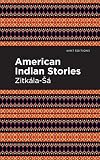
This is a very slim volume of stories, many of which are autobiographical, telling the common tale of a young Indian child taken from her family (with their consent) to be educated in white schools where (without their family's full knowledge) the "Indian" was systematically removed by denying them the use of their own language, changing their names, cutting their hair, substituting uncomfortable "American" garb for their familiar clothing (which had often been made specially for the journey show more with extra care), forcing them to adopt Christian religious practices, and through physical deprivation and abuse. The writing is often exquisite, with a 19th century feel to it, although the work was first published in 1926. There are also stories of coming of age, bravery, revenge and love in a more traditional story-telling style. There were one or two awkward transitions but mainly this was a highly approachable and enlightening read. The copy provided to me through Library Thing's Early Reviewers' program did not include the poems referred to by some earlier reviewers, and the final essay, "America's Indian Problem" seems to be missing some quoted material referenced by the author. Nor does this edition contain the essay "Why I am a Pagan", which I believe was part of the original publication. I have deducted a half-star from my rating for that reason.
The author came to understand the need to see her experiences as a gateway to a lifetime of trying to improve the lives of her own people. While she mourned the loss of native culture inherent in the system, she craved the education, and eventually attended both Earlham College and the New England Conservatory of Music. She became an accomplished musician and teacher, and a well known journalist and activist. She and her husband, Raymond Bonnin, founded the National Council of American Indians, and worked to gain full citizenship rights for people of all tribes. They are both buried in Arlington National Cemetery. show less
The author came to understand the need to see her experiences as a gateway to a lifetime of trying to improve the lives of her own people. While she mourned the loss of native culture inherent in the system, she craved the education, and eventually attended both Earlham College and the New England Conservatory of Music. She became an accomplished musician and teacher, and a well known journalist and activist. She and her husband, Raymond Bonnin, founded the National Council of American Indians, and worked to gain full citizenship rights for people of all tribes. They are both buried in Arlington National Cemetery. show less
This review was written for LibraryThing Early Reviewers.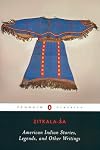
American Indian Stories, Legends, and Other Writings is a collection of works by Zitkála-Šá, including legends she wrote down, semi-autobiographical stories, allegories, speeches, essays, and more. It's split into sections that group similar content together and includes a long introduction and a few explanatory notes.
Overall, the writing quality is good. It's also easy to understand for modern readers. The legends in particular reminded me very much of the fairytales I was told as I show more child, and it didn't surprise me to learn that the author had herself been told them as a child. I could easily imagine parents choosing to read these to their own children or teachers including them in a school curriculum even today. The other sections clearly have an adult audience in mind, and the style becomes a bit more sophisticated as a result, but overall I would describe it as being very straight-forward.
My favorite parts were the legends and the semi-autobiographical stories. The latter in particular were extremely powerful and incredibly interesting given the time period in which the author lived. These stretch from early childhood through her life as a teacher and her ultimate decision to resign that position, but it does not go far beyond that. My biggest disappointment was that there were no more sections continuing her story. My second biggest was that some of her decision making is not explained in greater depth. If she had written a full memoir, I can only imagine how enlightening it would have been.
As for the other selections, I definitely liked some more than others. In general, I wished that a short section of context would have been given as an introduction to each rather than one giant introduction being given at the beginning of the book. I didn't read that introduction until the end, at which point I couldn't decide whether that had been a good decision or not. On one hand, it contained some spoilers I wouldn't have appreciated, and it drags on so long before the book has given you any stories that make you care to learn more about their author. On the other hand, it would have given me some of that context I was craving when I got to the essays and articles and other miscellaneous pieces. Either way, I would have appreciated even more historical context for some of the pieces, but perhaps this book was intended to be read in a more academic manner by people already studying the history.
I can't give my opinion of this book as a scholar or as an expert on the pertinent history or as anything more than what I am, but as a reader near the beginning of my learning process, I can say this book contributed a lot. Modern readers should be aware that Zitkála-Šá uses the terminology that was in use during her time, and at some points I felt as if she was unintentionally expressing some degree of internalized racism, but I do believe it's incredibly valuable when viewed in the proper historical context. I don't see this as the one book you should read to gain an understanding but rather one step on a journey that should include modern voices also. Learning history from those who lived through it can help us understand how situations evolved over time to create the world in which modern people live and modern authors write from, so I'm looking forward to building on the knowledge I've gained by reading this book. I would recommend it (or at least the autobiographical stories) to anyone who wants the same experience. show less
Overall, the writing quality is good. It's also easy to understand for modern readers. The legends in particular reminded me very much of the fairytales I was told as I show more child, and it didn't surprise me to learn that the author had herself been told them as a child. I could easily imagine parents choosing to read these to their own children or teachers including them in a school curriculum even today. The other sections clearly have an adult audience in mind, and the style becomes a bit more sophisticated as a result, but overall I would describe it as being very straight-forward.
My favorite parts were the legends and the semi-autobiographical stories. The latter in particular were extremely powerful and incredibly interesting given the time period in which the author lived. These stretch from early childhood through her life as a teacher and her ultimate decision to resign that position, but it does not go far beyond that. My biggest disappointment was that there were no more sections continuing her story. My second biggest was that some of her decision making is not explained in greater depth. If she had written a full memoir, I can only imagine how enlightening it would have been.
As for the other selections, I definitely liked some more than others. In general, I wished that a short section of context would have been given as an introduction to each rather than one giant introduction being given at the beginning of the book. I didn't read that introduction until the end, at which point I couldn't decide whether that had been a good decision or not. On one hand, it contained some spoilers I wouldn't have appreciated, and it drags on so long before the book has given you any stories that make you care to learn more about their author. On the other hand, it would have given me some of that context I was craving when I got to the essays and articles and other miscellaneous pieces. Either way, I would have appreciated even more historical context for some of the pieces, but perhaps this book was intended to be read in a more academic manner by people already studying the history.
I can't give my opinion of this book as a scholar or as an expert on the pertinent history or as anything more than what I am, but as a reader near the beginning of my learning process, I can say this book contributed a lot. Modern readers should be aware that Zitkála-Šá uses the terminology that was in use during her time, and at some points I felt as if she was unintentionally expressing some degree of internalized racism, but I do believe it's incredibly valuable when viewed in the proper historical context. I don't see this as the one book you should read to gain an understanding but rather one step on a journey that should include modern voices also. Learning history from those who lived through it can help us understand how situations evolved over time to create the world in which modern people live and modern authors write from, so I'm looking forward to building on the knowledge I've gained by reading this book. I would recommend it (or at least the autobiographical stories) to anyone who wants the same experience. show less

The century-old prose may seem a little precious at first, but stick with it. This is a delightful book of retold tales from the native people of the northern Great Plains. The author, Zitkala Ša, was a Dakota woman, and the illustrations to this book are also by a native artist. Zitkala Ša finds subtle ways to convey figures of speech, meaningful gestures, facial expressions, and other slices of life from the traditional Dakota culture. Iktomi, the immortal trickster, figures in most of show more the tales, which convey a moral lesson by inviting the reader to laugh at Iktomi's self-serving ways. show less
Lists
Awards


You May Also Like


Associated Authors
Statistics
- Works
- 27
- Also by
- 13
- Members
- 1,161
- Popularity
- #22,135
- Rating
- 3.9
- Reviews
- 35
- ISBNs
- 151
- Languages
- 3
- Favorited
- 2

