
A. N. Wilson
Author of The Victorians
About the Author
A. N. Wilson grew up in Staffordshire, England, and was educated at the Rugby School and New College, Oxford. A fellow of the Royal Society of Literature, he holds a prominent position in the world of literature and journalism. He is a prolific and award-winning biographer and celebrated novelist. show more He lives in North London. show less
Series
Works by A. N. Wilson
Resolution: a novel of Captain Cook's adventures of discovery to Australia, New Zealand and Hawaii, through the eyes of George Forster, the botanist on board his ship (2016) 53 copies, 1 review
Goethe: His Faustian Life - The Extraordinary Story of Modern Germany, a Troubled Genius and the Poem that Made Our World (2024) 36 copies
The King and the Christmas Tree: A heartwarming story and beautiful festive gift for young and old alike (2021) 18 copies
Lilibet: The Girl Who Would be Queen: A gorgeously illustrated gift book celebrating the life of Her Majesty Queen Elizabeth II (2022) 13 copies
The Lampitt Papers: Incline Our Hearts; A Bottle in the Smoke; and Daughters of Albion (1995) 9 copies
Winnie And Wolf 1 copy
A Jealous Ghost 1 copy
Iris Murdoch: As I Knew Her 1 copy
Associated Works
The Best of Saki [Picador/Pan/Folio, 49 stories] (1980) — Introduction, some editions; Introduction, some editions — 341 copies, 5 reviews
Literary Genius: 25 Classic Writers Who Define English & American Literature (2007) — Contributor — 96 copies, 2 reviews
Collected Poems — Introduction, some editions — 1 copy
Tagged
Common Knowledge
- Canonical name
- Wilson, A. N.
- Legal name
- Wilson, Andrew Norman
- Birthdate
- 1950-10-27
- Gender
- male
- Education
- New College, University of Oxford (BA|1972|MA|1976)
- Occupations
- journalist
essayist
novelist
biographer - Organizations
- New College, à Oxford (Chargé de cours, Littérature médiévale)
St Hugh's College, Oxford (Chargé de cours, Littérature médiévale)
Merchant Taylors' School, Northwood (Chargé de cours, Anglais)
London Evening Standard (Chroniqueur) - Awards and honors
- Royal Society of Literature (Fellow, 1980)
- Relationships
- Wilson, Bee (daughter)
Wilson, Emily R. (daughter)
Duncan-Jones, Katherine (former wife)
Guilding, Ruth (spouse) - Nationality
- UK
- Birthplace
- Stone, Staffordshire, England, UK
- Places of residence
- Staffordshire, England, UK
- Map Location
- England, UK
Members
Reviews
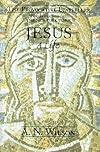
A.N. Wilson produced this attempt at an historical biography of Jesus of Nazareth in 1992. It remains a good read today. It is an 'attempt' because there is very little that can be reliably said about the historical Jesus as opposed to the mythos constructed in subsequent years.
His approach is interesting and intuitive rather than speculative. His starting point was then-recent research by Geza Vermes into the historical context of Jesus. This account gives a high probability that Jesus came show more from the Jewish elite as one of many Holy Men consistent with Judaic expectations.
From there Wilson teases out of the Four Gospels what looks to be viable as humanly real and then separates it out from the propagandistic games involved in subsequent struggles over what Christianity was to become, a process in which Paul was to be central.
The resulting account is, of course, speculative. Yet a fine understanding of the probable and known cultures of Galilee and Judaea in the period in which Jesus lived (a very short period of time) gives us something that is as likely to be credible as we are ever going to get.
What is clear and going to be uncomfortable for most 'Christians' is that, by this account, Jesus was no more a Christian than Marx was a Marxist. He was a Jew thinking along severely Judaic lines within Judaic culture but with a unique and 'pure' take on what that meant.
Two things are going on in this book - what Jesus was and what Jesus became in the hands of the winners of that initial ideological struggle for power. The two have to be kept separate because 'Christianity' is not an event but a process that relies on turning Christ's story into an event.
This is not going to be the last word on the matter. Wilson perhaps has his own axe to grind as someone who studied theology but who became troubled by the story he was given as truth yet he retains respect for the 'noble lie' that emerged out of those early struggles.
He also makes clear, certainly to this reader, evidentially that the Jews cannot be accused of Jesus' death in the way the later Church indicated (leading to the wide acceptance of anti-semitism). Only the Romans could decide on such a killing. Making the Jews responsible was propaganda.
What Wilson introduces are two ideas that the Gospels have no interest in promoting. The first is that Jesus' nexus of relationships looks to have been larger than those implied by the Gospels and that some of those connections were much more involved in Jewish politics than we thought.
The second is that Jesus was involved in a dramatic quasi-political operation (in a nation where religion was politics) and that his intervention was mistimed and misunderstood. He emerged in a calculated way but then got outplayed by his historical situation.
The Jewish establishment, trying to protect their own people, was trapped by being subject to the risk of brutal retaliation against Jews for radical acts by the Roman occupiers. They were forced into collaboration as apparently the lesser evil (not for the last time in Jewish history).
The Romans faced by what they thought might be an incipient revolt simply dealt with what they presumed to be a ringleader in a difficult situation without any interest whatsoever in what Jesus was actually trying to say or do.
In fact, although not overly explicit, we can tease out from Wilson's account that Jesus was interested in unifying the Jewish population around their cultural and spiritual identity in a deliberate move away from violent and useless (as it proved) confrontation with Rome.
Jesus' position was not 'gentle, meek and mild' but it was also not politically revolutionary. It was rather a dynamic message directed solely at Jews which emphasised that all Jews were of equal worth in belonging to the nation under God and that they should cohere as a nation.
We will never know the precise politics of this but it is plausible that such an ethno-nationalist message might still be regarded as problematic and confrontational by Rome, that the Jewish elite forced to collaborate were worried and that revolutionary involvement was engaged.
It also seems to be the case that a belief approach that was developed in relatively free non-Roman Galilee was entering into occupied Judaea, and especially Jerusalem, and that the Galileans understood what Jesus meant better than the new enthusiasts in the occupied heartland.
As to the belief system, this is the bridge to the later Church because the spiritual purification of Judaism to ensure the survival of the nation meant inclusive values and moral standards that could be transferred to the world at large after the failure of the first mission.
And this is what seems to have happened. The family core of the mission re-established control as an elite operation within Judaism but Paul's rethinking of that mission to include the Gentiles not merely challenged this but won out in the propaganda wars through the Gospels.
Jesus who died a disappointed Jew (if he died) saw the moral core of his message to the Jews radically transformed into a belief system that followed the increasingly hellenised diaspora, drew in gentiles and became the Church, the rock on which Christianity was to be built.
Personally, though I know no more than anyone else as to the actual facts of the case, Wilson's method (though he does not say this himself) allows me the space to say that it is possible (no more) that Jesus survived and leaves the picture, exiling himself far away from the Roman world.
The book has to be read in order to capture exactly what I mean by 'Wilson's method' which I constantly take to be one of using what little evidence is to hand to suggest plausible probabilities (with few certainties) and some space for possibilities.
I found much of it persuasive though never to the point of saying that I accepted this or that to be definitively true but only that this or that claim seems to be the most probable explanation, certainly better than relying on faith or an uncritical view of often propagandistic early church writing.
So, where does this leave faith? Much where it was before. Faith is faith. It is never going to be unravelled, except for people with a mind to critical thinking, if it is already in place. Some two thousand years of history have constructed a civilisational framework hard to beat.
Faith is not about the truth of any matter objectively or scientifically speaking but rather a truth that is used for organisational, social or individual psychological cohesion. The costs of unravelling faith is disorder as much in the collapse of individual identity as in social cohesion.
For the flexible faith-based intellectual, the historical (probabilistic) truth and the truth of revelation can co-exist despite the absurdities and illogicalities because they have to co-exist. If one of these has to die, well, it has to be the historical claim rather than the claim of belief.
To be fair, Wilson's aim is not to undermine faith at all. He respects it. He simply seems to want it to be seen for what it is and respected for what it is. The facts of the matter are simply to stand alongside it. The truth of the matter will at least moderate some nastier absurdities like antisemitism.
Naturally, the Christian community did not like the book (well, they would not, would they?) but it really does not matter. They are on strong ground in worrying about Wilson's intuitive approach to what facts there are but his approach is still stronger than their simple faith ... except as faith.
My recommendation is to take a deep breath, read the book with an open mind and choose which balance of common sense and faith suits you. Certainly Wilson is rigorous in his reasoning with what material he has. Jesus as Jew first and foremost in and around 30AD just seems right. show less
His approach is interesting and intuitive rather than speculative. His starting point was then-recent research by Geza Vermes into the historical context of Jesus. This account gives a high probability that Jesus came show more from the Jewish elite as one of many Holy Men consistent with Judaic expectations.
From there Wilson teases out of the Four Gospels what looks to be viable as humanly real and then separates it out from the propagandistic games involved in subsequent struggles over what Christianity was to become, a process in which Paul was to be central.
The resulting account is, of course, speculative. Yet a fine understanding of the probable and known cultures of Galilee and Judaea in the period in which Jesus lived (a very short period of time) gives us something that is as likely to be credible as we are ever going to get.
What is clear and going to be uncomfortable for most 'Christians' is that, by this account, Jesus was no more a Christian than Marx was a Marxist. He was a Jew thinking along severely Judaic lines within Judaic culture but with a unique and 'pure' take on what that meant.
Two things are going on in this book - what Jesus was and what Jesus became in the hands of the winners of that initial ideological struggle for power. The two have to be kept separate because 'Christianity' is not an event but a process that relies on turning Christ's story into an event.
This is not going to be the last word on the matter. Wilson perhaps has his own axe to grind as someone who studied theology but who became troubled by the story he was given as truth yet he retains respect for the 'noble lie' that emerged out of those early struggles.
He also makes clear, certainly to this reader, evidentially that the Jews cannot be accused of Jesus' death in the way the later Church indicated (leading to the wide acceptance of anti-semitism). Only the Romans could decide on such a killing. Making the Jews responsible was propaganda.
What Wilson introduces are two ideas that the Gospels have no interest in promoting. The first is that Jesus' nexus of relationships looks to have been larger than those implied by the Gospels and that some of those connections were much more involved in Jewish politics than we thought.
The second is that Jesus was involved in a dramatic quasi-political operation (in a nation where religion was politics) and that his intervention was mistimed and misunderstood. He emerged in a calculated way but then got outplayed by his historical situation.
The Jewish establishment, trying to protect their own people, was trapped by being subject to the risk of brutal retaliation against Jews for radical acts by the Roman occupiers. They were forced into collaboration as apparently the lesser evil (not for the last time in Jewish history).
The Romans faced by what they thought might be an incipient revolt simply dealt with what they presumed to be a ringleader in a difficult situation without any interest whatsoever in what Jesus was actually trying to say or do.
In fact, although not overly explicit, we can tease out from Wilson's account that Jesus was interested in unifying the Jewish population around their cultural and spiritual identity in a deliberate move away from violent and useless (as it proved) confrontation with Rome.
Jesus' position was not 'gentle, meek and mild' but it was also not politically revolutionary. It was rather a dynamic message directed solely at Jews which emphasised that all Jews were of equal worth in belonging to the nation under God and that they should cohere as a nation.
We will never know the precise politics of this but it is plausible that such an ethno-nationalist message might still be regarded as problematic and confrontational by Rome, that the Jewish elite forced to collaborate were worried and that revolutionary involvement was engaged.
It also seems to be the case that a belief approach that was developed in relatively free non-Roman Galilee was entering into occupied Judaea, and especially Jerusalem, and that the Galileans understood what Jesus meant better than the new enthusiasts in the occupied heartland.
As to the belief system, this is the bridge to the later Church because the spiritual purification of Judaism to ensure the survival of the nation meant inclusive values and moral standards that could be transferred to the world at large after the failure of the first mission.
And this is what seems to have happened. The family core of the mission re-established control as an elite operation within Judaism but Paul's rethinking of that mission to include the Gentiles not merely challenged this but won out in the propaganda wars through the Gospels.
Jesus who died a disappointed Jew (if he died) saw the moral core of his message to the Jews radically transformed into a belief system that followed the increasingly hellenised diaspora, drew in gentiles and became the Church, the rock on which Christianity was to be built.
Personally, though I know no more than anyone else as to the actual facts of the case, Wilson's method (though he does not say this himself) allows me the space to say that it is possible (no more) that Jesus survived and leaves the picture, exiling himself far away from the Roman world.
The book has to be read in order to capture exactly what I mean by 'Wilson's method' which I constantly take to be one of using what little evidence is to hand to suggest plausible probabilities (with few certainties) and some space for possibilities.
I found much of it persuasive though never to the point of saying that I accepted this or that to be definitively true but only that this or that claim seems to be the most probable explanation, certainly better than relying on faith or an uncritical view of often propagandistic early church writing.
So, where does this leave faith? Much where it was before. Faith is faith. It is never going to be unravelled, except for people with a mind to critical thinking, if it is already in place. Some two thousand years of history have constructed a civilisational framework hard to beat.
Faith is not about the truth of any matter objectively or scientifically speaking but rather a truth that is used for organisational, social or individual psychological cohesion. The costs of unravelling faith is disorder as much in the collapse of individual identity as in social cohesion.
For the flexible faith-based intellectual, the historical (probabilistic) truth and the truth of revelation can co-exist despite the absurdities and illogicalities because they have to co-exist. If one of these has to die, well, it has to be the historical claim rather than the claim of belief.
To be fair, Wilson's aim is not to undermine faith at all. He respects it. He simply seems to want it to be seen for what it is and respected for what it is. The facts of the matter are simply to stand alongside it. The truth of the matter will at least moderate some nastier absurdities like antisemitism.
Naturally, the Christian community did not like the book (well, they would not, would they?) but it really does not matter. They are on strong ground in worrying about Wilson's intuitive approach to what facts there are but his approach is still stronger than their simple faith ... except as faith.
My recommendation is to take a deep breath, read the book with an open mind and choose which balance of common sense and faith suits you. Certainly Wilson is rigorous in his reasoning with what material he has. Jesus as Jew first and foremost in and around 30AD just seems right. show less
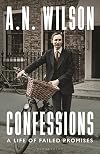
The tone of this memoir is rueful. Wilson, prolific author, looks back at seventy to his childhood and youth. Married at twenty, father of two by twenty-four, he soon felt trapped. At thirty, after false starts of studying for the priesthood and a middling academic career, he has embarked on his life work as a writer.
My reaction to this book was mixed. Its episodic style was, at times, hard to follow. Wilson seems aware of this and admits, somewhat apologetically, “I could not write a show more continuous narrative framework of early childhood. It is, rather, a series of smudged, non-chronological impressions.”The writing style I admired in God’s Funeral is here, although at times it detours into a sentence so clause-laden that I missed the point. Nor did Wilson’s ample linguistic skill prevent him from failing to notice that the pleonastic phrase “aesthetic awareness” should have been recast.
A niggling point this last, I concede. More serious is that the narrative is cluttered with many names. If Wilson left out anyone active in the British literary scene in those years (and before), I didn’t notice. Add to that their intertwined relationships through descent and multiple marriages. Keeping them all straight would have required a spreadsheet.
Many chapters are very short, but the plot runs on in the following chapter (one even begins “So,”), causing me to wonder why there had been a break. At times, within chapters, one anecdote leads to another, then another, only to return jarringly to the original topic of the chapter. If he’d been recounting this in a pub (Wilson and everyone else in the book consume a lot of alcohol), he’d have thrown in a “Where was I?”
For all that, this book was an enjoyable read. The saga of the Wedgwood dynasty, so interwoven with the fate of Wilson’s family, the Oxford gossip, and the lifelong wrestling with faith all kept my interest. Of the latter, he writes: “During the dark phases of life when I have told myself that I have lost my faith . . . , what I have actually been suffering from is a failure of imagination.”
I was moved by Wilson’s account of the deep, life-long friendship with his first wife, an Oxford fellow several years his senior, continued throughout her decline into dementia.
I was struck by Wilson’s ambivalence about his writing. This is first explored in the Introduction and is a recurrent theme. His first dose of celebrity came at sixteen when an editorial in his school paper attracted the attention of one of the national dailies. This infected him with the “excitement of cheap journalism”; without this experience, he reflects, he “would probably have been a better person.” His stints on various editorial staffs and the stream of commissioned articles all paid the bills. Still, Wilson wonders what he might have achieved in his books without his career in literary journalism (with its associated social life — the hours at book launches with a glass of warm white wine in hand).
There were times I tired of the public self-flagellation, yet this also yields some of the most poignant passages, such as the one that describes the “many hours . . . spent sitting or kneeling at the back of churches, painfully aware that in this vale of soul-making, the addiction to writing more and more journalism, the marital failure and infidelities, the booze was destroying, not making a soul.”
Dante began his epic at the mid-point of life. Wilson ends this confession halfway to seventy, at thirty-five, a pilgrim at Tolstoy’s grave in Yasnaya Polyana. Not a life-changing experience, Wilson concedes, but one that stayed with him not only as he embarked on his Tolstoy biography but ever since with its reminder of “why reading and writing play such a vital part in our lives.” show less
My reaction to this book was mixed. Its episodic style was, at times, hard to follow. Wilson seems aware of this and admits, somewhat apologetically, “I could not write a show more continuous narrative framework of early childhood. It is, rather, a series of smudged, non-chronological impressions.”The writing style I admired in God’s Funeral is here, although at times it detours into a sentence so clause-laden that I missed the point. Nor did Wilson’s ample linguistic skill prevent him from failing to notice that the pleonastic phrase “aesthetic awareness” should have been recast.
A niggling point this last, I concede. More serious is that the narrative is cluttered with many names. If Wilson left out anyone active in the British literary scene in those years (and before), I didn’t notice. Add to that their intertwined relationships through descent and multiple marriages. Keeping them all straight would have required a spreadsheet.
Many chapters are very short, but the plot runs on in the following chapter (one even begins “So,”), causing me to wonder why there had been a break. At times, within chapters, one anecdote leads to another, then another, only to return jarringly to the original topic of the chapter. If he’d been recounting this in a pub (Wilson and everyone else in the book consume a lot of alcohol), he’d have thrown in a “Where was I?”
For all that, this book was an enjoyable read. The saga of the Wedgwood dynasty, so interwoven with the fate of Wilson’s family, the Oxford gossip, and the lifelong wrestling with faith all kept my interest. Of the latter, he writes: “During the dark phases of life when I have told myself that I have lost my faith . . . , what I have actually been suffering from is a failure of imagination.”
I was moved by Wilson’s account of the deep, life-long friendship with his first wife, an Oxford fellow several years his senior, continued throughout her decline into dementia.
I was struck by Wilson’s ambivalence about his writing. This is first explored in the Introduction and is a recurrent theme. His first dose of celebrity came at sixteen when an editorial in his school paper attracted the attention of one of the national dailies. This infected him with the “excitement of cheap journalism”; without this experience, he reflects, he “would probably have been a better person.” His stints on various editorial staffs and the stream of commissioned articles all paid the bills. Still, Wilson wonders what he might have achieved in his books without his career in literary journalism (with its associated social life — the hours at book launches with a glass of warm white wine in hand).
There were times I tired of the public self-flagellation, yet this also yields some of the most poignant passages, such as the one that describes the “many hours . . . spent sitting or kneeling at the back of churches, painfully aware that in this vale of soul-making, the addiction to writing more and more journalism, the marital failure and infidelities, the booze was destroying, not making a soul.”
Dante began his epic at the mid-point of life. Wilson ends this confession halfway to seventy, at thirty-five, a pilgrim at Tolstoy’s grave in Yasnaya Polyana. Not a life-changing experience, Wilson concedes, but one that stayed with him not only as he embarked on his Tolstoy biography but ever since with its reminder of “why reading and writing play such a vital part in our lives.” show less
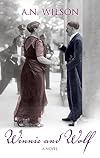
A.N. Wilson writes consistently interesting, thoughtful non-fiction, but his more recent novels have all seemed rather dull compared to those he wrote at the beginning of his career, some thirty years ago now. This seems to be the most interesting one for a while, but it's still heavy going in parts.
The premise is interesting, and as usual, Wilson has picked a subject that is almost bound to get him into trouble. His strategy for dealing with it is one straight out of Sir Walter Scott: show more nested levels of dull, pedantic narrators. Wilson's probably the first person to do this in anger since Old Mortality, and it's a risky approach: the voice of the lowest-level narrator, N____, is so dull and uninspired in the early part of the book that I nearly gave up. Fortunately Wilson cheats a bit and sneaks in his own voice when he moves out of the 1930s story of Hitler and Winifred Wagner into the back-stories of Richard Wagner and of Hitler's youth.
The "surprising" plot twist that we would expect to be the key to the whole book is not a surprise at all, as Wilson has his second-level narrator give it away in his "translator's preface". We're already warned at this point that we shouldn't necessarily believe N___'s story, and it soon becomes clear that it doesn't really matter: what's important is not the presumed parentage of the lady in Seattle, but the excuse it gives to look at the whole relationship between Hitler and the Wagner family in a new way.
I liked the non-chronological presentation that tied the story to the themes of Wagner's main operas. The central questions the book attacks are the obvious ones: Why were Germans attracted to Hitler and his policies? Can Wagner's artistic genius be disentangled from its political baggage? But they were treated in a reasonably fresh way.
I felt Wilson did a little better with Hitler than with Wagner. His treatment seems to ignore almost entirely that Wagner wrote music, and considers the operas on a purely literary level, as though they were plays or novels. Obviously that's partly a limitation imposed by the need to communicate to general readers, but there are ways of talking about music without getting too Thomas Mann about it. Cutting out the music altogether is just weird, especially in a book that seems to take it for granted that readers are reasonably familiar with the stories and characters of the operas. To be fair, he mentions the music of Tristan — how could he not? — but doesn't really say anything about it.
The treatment of Hitler looks at him from an unexpected viewpoint too — from behind! — but Wilson gives us the information we need to fit that unorthodox view into the more conventional picture of him. The Flounder metaphor is overworked a bit, though.
This being A.N. Wilson, his real interest isn't in anything as mundane as Wagner or Hitler: the book gives him a wonderful chance to have yet another go at the 19th century crisis of religious faith. Where the Wagner/Hitler story is paradoxically full of British figures (even the Ring is a reworking of Shakespeare, we're told), at this more abstract level everything is thoroughly German, and Wilson is able to wheel out all the big guns from Schopenhauer and Nietzsche to Heidegger and Wittgenstein. Fun for all the family.
Probably better as a slightly off-beat non-fiction study of Wagner-and-the-Nazis than it is as an historical novel, but not bad, for all that. show less
The premise is interesting, and as usual, Wilson has picked a subject that is almost bound to get him into trouble. His strategy for dealing with it is one straight out of Sir Walter Scott: show more nested levels of dull, pedantic narrators. Wilson's probably the first person to do this in anger since Old Mortality, and it's a risky approach: the voice of the lowest-level narrator, N____, is so dull and uninspired in the early part of the book that I nearly gave up. Fortunately Wilson cheats a bit and sneaks in his own voice when he moves out of the 1930s story of Hitler and Winifred Wagner into the back-stories of Richard Wagner and of Hitler's youth.
The "surprising" plot twist that we would expect to be the key to the whole book is not a surprise at all, as Wilson has his second-level narrator give it away in his "translator's preface". We're already warned at this point that we shouldn't necessarily believe N___'s story, and it soon becomes clear that it doesn't really matter: what's important is not the presumed parentage of the lady in Seattle, but the excuse it gives to look at the whole relationship between Hitler and the Wagner family in a new way.
I liked the non-chronological presentation that tied the story to the themes of Wagner's main operas. The central questions the book attacks are the obvious ones: Why were Germans attracted to Hitler and his policies? Can Wagner's artistic genius be disentangled from its political baggage? But they were treated in a reasonably fresh way.
I felt Wilson did a little better with Hitler than with Wagner. His treatment seems to ignore almost entirely that Wagner wrote music, and considers the operas on a purely literary level, as though they were plays or novels. Obviously that's partly a limitation imposed by the need to communicate to general readers, but there are ways of talking about music without getting too Thomas Mann about it. Cutting out the music altogether is just weird, especially in a book that seems to take it for granted that readers are reasonably familiar with the stories and characters of the operas. To be fair, he mentions the music of Tristan — how could he not? — but doesn't really say anything about it.
The treatment of Hitler looks at him from an unexpected viewpoint too — from behind! — but Wilson gives us the information we need to fit that unorthodox view into the more conventional picture of him. The Flounder metaphor is overworked a bit, though.
This being A.N. Wilson, his real interest isn't in anything as mundane as Wagner or Hitler: the book gives him a wonderful chance to have yet another go at the 19th century crisis of religious faith. Where the Wagner/Hitler story is paradoxically full of British figures (even the Ring is a reworking of Shakespeare, we're told), at this more abstract level everything is thoroughly German, and Wilson is able to wheel out all the big guns from Schopenhauer and Nietzsche to Heidegger and Wittgenstein. Fun for all the family.
Probably better as a slightly off-beat non-fiction study of Wagner-and-the-Nazis than it is as an historical novel, but not bad, for all that. show less
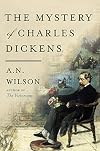
The life of Charles Dickens was as convoluted and as mysterious as any of his novels, which should not be surprising given that his novels were in many respects inspired by his life. A.N. Wilson explores all this in his 2020 book “The Mystery of Charles Dickens.”
Dickens, Wilson tells us, was in many respects as fictional a character as any he created on the page. He was, in other words, often a hypocrite, not always practicing the values in his own life that he so often preached in his show more fiction. His secret affair with the young actress Nelly Ternan, which did not become public until years after his death, is Wilson's prime example, to which he returns again and again. (Dickens wasn't alone in his deceit. After his death, Nelly lied about her age, pretended she had been just a little girl when she met Dickens and then married a clergyman.)
The great author hated his own mother and, after fathering 10 children, despised his own wife. He much preferred his wife's sister, who faithfully served Dickens for much of his life.
In successive chapters, Wilson writes about the mystery of Dickens's childhood, the mystery of his marriage, the mystery of his charity and so on, always paying close attention to the author's fiction to see what it reveals about each subject.
Sometimes Wilson can be as convoluted and as mysterious as anything relating to Charles Dickens, yet Dickens fans will find his book full of fascinating insights into both the man and his works. show less
Dickens, Wilson tells us, was in many respects as fictional a character as any he created on the page. He was, in other words, often a hypocrite, not always practicing the values in his own life that he so often preached in his show more fiction. His secret affair with the young actress Nelly Ternan, which did not become public until years after his death, is Wilson's prime example, to which he returns again and again. (Dickens wasn't alone in his deceit. After his death, Nelly lied about her age, pretended she had been just a little girl when she met Dickens and then married a clergyman.)
The great author hated his own mother and, after fathering 10 children, despised his own wife. He much preferred his wife's sister, who faithfully served Dickens for much of his life.
In successive chapters, Wilson writes about the mystery of Dickens's childhood, the mystery of his marriage, the mystery of his charity and so on, always paying close attention to the author's fiction to see what it reveals about each subject.
Sometimes Wilson can be as convoluted and as mysterious as anything relating to Charles Dickens, yet Dickens fans will find his book full of fascinating insights into both the man and his works. show less
Lists
Awards


You May Also Like


Associated Authors
Statistics
- Works
- 80
- Also by
- 19
- Members
- 10,121
- Popularity
- #2,346
- Rating
- 3.9
- Reviews
- 142
- ISBNs
- 425
- Languages
- 11
- Favorited
- 15


