
Chinua Achebe (1930–2013)
Author of Things Fall Apart
About the Author
Albert Chinualumogu Achebe was born on November 16, 1930 in Ogidi, Nigeria. He studied English, history and theology at University College in Ibadan from 1948 to 1953. After receiving a second-class degree, he taught for a while before joining the Nigeria Broadcasting Service in 1954. He was show more working as a broadcaster when he wrote his first two novels, and then quit working to devote himself to writing full time. Unfortunately his literary career was cut short by the Nigerian Civil War. During this time he supported the ill-fated Biafrian cause and served abroad as a diplomat. He and his family narrowly escaped assassination. After the civil war, he abandoned fiction for a period in favor of essays, short stories, and poetry. His works include Things Fall Apart, Arrow of God, No Longer at Ease, A Man of the People, Anthills of the Savannah, and There Was a Country. He also wrote four children's books including Chike and the River and How the Leopard Got His Claws. In 2007, he won the Man Booker International Prize for his "overall contribution to fiction on the world stage." He also worked as a professor of literature in Nigeria and the United States. He died following a brief illness on March 21, 2013 at the age of 82. (Bowker Author Biography) show less
Series
Works by Chinua Achebe
The African Trilogy: Things Fall Apart / No Longer At Ease / Arrow of God (1988) 571 copies, 7 reviews
Things Fall Apart : No Longer At Ease : Anthills of the Savannah (Voices of the African Diaspora) (1987) 30 copies, 1 review
Beyond hunger in Africa: Conventional wisdom and an African vision (Eastern African studies) (1990) 6 copies
Marriage is a Private Affair 2 copies
Civil Peace 2 copies
Human Mine Sweeper 1 copy
Le case crollano 1 copy
හිරු බැස ගිය පසු 1 copy
Associated Works
The Story and Its Writer: An Introduction to Short Fiction (1976) — Contributor — 1,216 copies, 3 reviews
A World of Ideas : Conversations With Thoughtful Men and Women About American Life Today and the Ideas Shaping Our Future (1989) — Interviewee — 602 copies, 1 review
The Art of the Tale: An International Anthology of Short Stories (1986) — Contributor — 383 copies, 3 reviews
Other Voices, Other Vistas: Short Stories from Africa, China, India, Japan, and Latin America (1992) — Contributor — 212 copies, 2 reviews
African Rhapsody: Short Stories of the Contemporary African Experience (1994) — Foreword, some editions — 23 copies
Tagged
Common Knowledge
- Legal name
- Achebe, Albert Chinụalụmọgụ
- Birthdate
- 1930-11-16
- Date of death
- 2013-03-21
- Gender
- male
- Education
- University College, Ibadan, Nigeria
University of London - Occupations
- broadcaster
professor
novelist
short story writer
poet
school teacher - Organizations
- Anambra State University of Technology
Bard College
Brown University
Nigerian Broadcasting Corporation - Awards and honors
- Visiting professorship (University of Massachusetts-Amherst ∙ University of Connecticut ∙ UCLA)
Friedenspreis des Deutschen Buchhandels (2002)
American Academy and Institute of Arts and Letters. Honorary Fellowship.
Nigerian National Merit Award
Campion Award (1996)
Lotus Prize for Literature (1975) - Relationships
- Okigbo, Christopher (friend)
- Short biography
- Chinua Achebe was born in Nigeria in 1930. He was raised in the large village of Ogidi, one of the first centers of Anglican missionary work in Eastern Nigeria, and was a graduate of University College, Ibadan.
His early career in radio ended abruptly in 1966, when he left his post as Director of External Broadcasting in Nigeria during the national upheaval that led to the Biafran War. He was appointed Senior Research Fellow at the University of Nigeria, Nsukka, and began lecturing widely abroad.
From 1972 to 1976, and again in 1987 to 1988, Mr. Achebe was Professor of English at the University of Massachusetts, Amherst, and also for one year at the University of Connecticut, Storrs.
Cited in the London Sunday Times as one of the "1,000 Makers of the Twentieth Century" for defining "a modern African literature that was truly African" and thereby making "a major contribution to world literature," Chinua Achebe published novels, short stories, essays and children's books. [adapted from Things Fall Apart, c1959, 1994 printing Anchor Books Ed.]
Mr. Achebe received numerous honors from around the world including more than twenty honorary doctorates from universities in England, Scotland, the United States, Canada, and Nigeria.
Latterly Mr. Achebe lived with his wife in Annandale, New York, where they both taught at Bard College. They had four children. - Nationality
- Nigeria
- Birthplace
- Ogidi, Anambra State, Nigeria Protectorate
- Places of residence
- Ogidi, Nigeria
Nekede, Nigeria
Umuahia, Abia State, Nigeria
Oba, Nigeria
Lagos, Nigeria
Enugu, Nigeria (show all 12)
Aba, Biafra
Nsukku, Nigeria
Nneobi, Nigeria
Annandale, New York, USA
Massachusetts, USA
Providence, Rhode Island, USA - Place of death
- Boston, Massachusetts, USA
- Burial location
- Ogidi, Anambra State, Nigeria
- Associated Place (for map)
- Nigeria
Members
Discussions
Happy Birthday, Chinua Achebe in Book talk (November 2025)
AFRICAN NOVEL CHALLENGE JULY 2023 - ACHEBE / OKRI in 75 Books Challenge for 2023 (August 2023)
Things Fall Apart Chapters 18-25/END in Geeks who love the Classics (February 2022)
Things Fall Apart Chapters 9-17 in Geeks who love the Classics (February 2022)
Things Fall Apart Chapters 1-8 in Geeks who love the Classics (January 2022)
Things Fall Apart Jan-March 2022 Housekeeping Items in Geeks who love the Classics (January 2022)
November 2020: Chinua Achebe in Monthly Author Reads (December 2020)
Reviews

Told in third person, mostly following a wealthy and fearless Igbo warrior, Okonkwo, Things Fall Apart describes life in a pre-colonial village in Nigeria up until the early days of European colonization.
The later part of my childhood I grew up in the church. I would say probably between 7 years old to 15/16 years old, when I stopped going. But I remember the stories of missionaries going all over the world to save the souls of those who were lost and "know no better". Now that I'm older and show more haven't been to church in a long time, I'm slowly reading about the other side of all of that. This novel challenges the narrative about "savages" and how the White Christian Saviors needed to "civilize" ("westernize") them.
“The white man is very clever. He came quietly and peaceably with his religion. We were amused at his foolishness and allowed him to stay. Now he has won our brothers, and our clan can no longer act like one. He has put a knife on things that held us together and we have fallen apart.” Obierika to Okonkwo.
Even though it's told through the life of Okonkwo as he, his village, and the villages around him experience the change, this novel doesn't side with the colonized or the colonizers. It still gives both the good and the bad of both systems. There's even a part in the book where the leaders of the Igbo people tell the teachers of the white church that they have nothing against them - they don't agree with all of their practices, and they know the church doesn't agree with theirs. But they (the Igbo people) are fine with leaving them alone as long as they too are left alone. The book neither condemns nor praises the worldview of either.
This novel really gave me things to think about. I know a lot of history taught in schools is white washed, made to look like the white man is the savior to all, and that's why I'm glad books like this exist so I can read and learn about the other side of things. show less
The later part of my childhood I grew up in the church. I would say probably between 7 years old to 15/16 years old, when I stopped going. But I remember the stories of missionaries going all over the world to save the souls of those who were lost and "know no better". Now that I'm older and show more haven't been to church in a long time, I'm slowly reading about the other side of all of that. This novel challenges the narrative about "savages" and how the White Christian Saviors needed to "civilize" ("westernize") them.
“The white man is very clever. He came quietly and peaceably with his religion. We were amused at his foolishness and allowed him to stay. Now he has won our brothers, and our clan can no longer act like one. He has put a knife on things that held us together and we have fallen apart.” Obierika to Okonkwo.
Even though it's told through the life of Okonkwo as he, his village, and the villages around him experience the change, this novel doesn't side with the colonized or the colonizers. It still gives both the good and the bad of both systems. There's even a part in the book where the leaders of the Igbo people tell the teachers of the white church that they have nothing against them - they don't agree with all of their practices, and they know the church doesn't agree with theirs. But they (the Igbo people) are fine with leaving them alone as long as they too are left alone. The book neither condemns nor praises the worldview of either.
This novel really gave me things to think about. I know a lot of history taught in schools is white washed, made to look like the white man is the savior to all, and that's why I'm glad books like this exist so I can read and learn about the other side of things. show less

Okonkwo is well-known in the nine villages making up Umuofia, a locality populated by the Igbo people in what is now Nigeria. Famous initially for his prowess in wrestling, and then more and more for his farming success and prosperity attained despite his lowly beginnings. Okonkwo's father was a gentle and musical man, but also a lazy one who was content to borrow from his friends rather than work hard himself, and Okonkwo has grown up to despise everything that his father stood for. His show more hard work and determination mean that he is well on the way to achieving his ambitions to become a great man within his clan, until a chance accident puts all at risk...
This is very much a book of two halves. The first paints a detailed and fascinating picture of the life lived in Nigeria before its colonisation by the British. The second half provides the rationale for the 'things fall apart' of the title, as the introduction of Christianity and the British administration and legal system sounds the death knell for the traditional Igbo society.
Achebe paints a balanced and non-judgmental picture of the history of his country, and in Okonkwo he has a protagonist who, despite being difficult to like, has integrity in the context of his time and culture. This was one of the first books to attempt to portray the point of view of the colonised Africans rather than the colonising Europeans, and the difference in viewpoints is summed up in one of the most powerful closing paragraph that I have read. show less
This is very much a book of two halves. The first paints a detailed and fascinating picture of the life lived in Nigeria before its colonisation by the British. The second half provides the rationale for the 'things fall apart' of the title, as the introduction of Christianity and the British administration and legal system sounds the death knell for the traditional Igbo society.
Achebe paints a balanced and non-judgmental picture of the history of his country, and in Okonkwo he has a protagonist who, despite being difficult to like, has integrity in the context of his time and culture. This was one of the first books to attempt to portray the point of view of the colonised Africans rather than the colonising Europeans, and the difference in viewpoints is summed up in one of the most powerful closing paragraph that I have read. show less
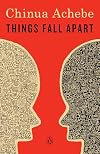
One of the chief functions of a good novelist is to challenge the way that the reader sees the world, a task that can be accomplished either subtly or dramatically. In Things Fall Apart, Achebe manages to confront his audience both ways. Told from the perspective of the Ibo tribesmen in Nigeria, the story revolves around the complex structures that define a society and how the imposition of an outside belief system can destroy that culture.
To Achebe’s great credit, the assignment of labels show more such as 'good' and 'bad' are not nearly as black and white as the characters that populate the book. It is at once a heart-breaking and thought-provoking work, particularly for anyone who thinks that Joseph Conrad’s Heart of Darkness is the definitive statement on the personal and societal impacts of colonialism. show less
To Achebe’s great credit, the assignment of labels show more such as 'good' and 'bad' are not nearly as black and white as the characters that populate the book. It is at once a heart-breaking and thought-provoking work, particularly for anyone who thinks that Joseph Conrad’s Heart of Darkness is the definitive statement on the personal and societal impacts of colonialism. show less
I’m not sure ‘enjoyed’ is the correct word, but I was very invested in this 60-year-old story of pre-colonial Africa and what happened when Europeans began to arrive on the scene. While it’s hard to like Okonkwo and some of the elements of Igbo culture as depicted here, it’s impossible not to feel heartbroken as the arrival of white missionaries begins to destroy a culture and way of life. Achebe’s writing is masterful.
Lists
. (1)
Nifty Fifties (1)
To Read (1)
Unread books (1)
Favourite Books (1)
Folio Society (1)
1950s (1)
African Settings (1)
Five star books (1)
top 100 (1)
Obama Reads (1)
el (1)
Reading Globally (1)
Read (1)
Booker Prize (1)
First Novels (1)
Black Authors (5)
Fave Books (1)
. (1)
current (1)
2017 Goal (1)
politics (1)
AP Lit (1)
Short and Sweet (2)
My TBR (2)
Africa (2)
Ambleside Books (1)
Schwob Nederland (1)
Read These Too (1)
Big Jubilee List (1)
A Novel Cure (1)
Overdue Podcast (1)
Reading list (1)
Awards


You May Also Like


Associated Authors
Statistics
- Works
- 61
- Also by
- 23
- Members
- 32,733
- Popularity
- #591
- Rating
- 3.8
- Reviews
- 627
- ISBNs
- 422
- Languages
- 26
- Favorited
- 46

