
William H. Gass (1924–2017)
Author of The Tunnel
About the Author
William Howard Gass was born in Fargo, North Dakota on July 30, 1924. During World War II, he served as an ensign in the Navy. He received an A.B. in philosophy from Kenyon College in 1947 and a PhD in philosophy from Cornell University in 1954. He taught at several universities including The show more College of Wooster, Purdue University, and Washington University in St. Louis. He wrote novels, collections of short stories and novellas, and collections of criticism. His novels included Omensetter's Luck, Middle C, and The Tunnel, which received the American Book Award. His other works of fiction included In the Heart of the Heart of the Country, Willie Master's Lonesome Wife, Cartesian Sonata and Other Novellas, and Eyes: Novellas and Stories. His collections of criticism included Tests of Time; A Temple of Texts, which won the 2007 Truman Capote Award for Literary Criticism; and Habitations of the Word and Finding a Form, which both won the National Book Critics Circle Award for Criticism. His essay collections included Fiction and the Figures of Life, The World Within the Word, and Reading Rilke. He died from congestive heart failure on December 6, 2017 at the age of 93. (Bowker Author Biography) show less
Works by William H. Gass
The First Winter of My Married Life 6 copies
Fifty literary pillars : a temple of texts : an exhibition to inaugurate the International Writers Center (1991) 5 copies
The Dual Muse: The Writer as Artist, The Artist as Writer: Catalogue of the Exhibition. Introduction by Cornelia Homburg (1997) 2 copies
Mad Meg in the Maelstrom 1 copy
Learning to Talk 1 copy
The Tunnel Reader 1 copy
Other Aliens (Conjunctions) 1 copy
Bed And Breakfast 1 copy
And 1 copy
Associated Works
For the Love of Books: 115 Celebrated Writers on the Books They Love Most (1999) — Contributor — 478 copies, 4 reviews
The Art of the Tale: An International Anthology of Short Stories (1986) — Contributor — 381 copies, 3 reviews
Still Wild: Short Fiction of the American West 1950 to the Present (2000) — Contributor — 165 copies, 1 review
The Glorious American Essay: One Hundred Essays from Colonial Times to the Present (2020) — Contributor — 116 copies
Who's Writing This? Notations on the Authorial I, with Self-Portraits {not Antæus} (1995) — Contributor — 76 copies
Conjunctions: 46, Selected Subversions: Essays on the World at Large (2006) — Contributor — 10 copies
Tagged
Common Knowledge
- Canonical name
- Gass, William H.
- Legal name
- Gass, William Howard
- Birthdate
- 1924-07-30
- Date of death
- 2017-12-06
- Gender
- male
- Education
- Ohio Wesleyan University
Kenyon College (BA|1947 - Philosophy)
Cornell University (PhD|1954 - Philosophy)
Warren G. Harding High School - Occupations
- distinguished professor
novelist
short story writer
essayist
critic - Organizations
- Washington University in St. Louis
Purdue University
College of Wooster
United States Navy (WWII) - Awards and honors
- PEN/Nabokov Award (2000)
Lannan Lifetime Achievement Award (1997)
Pushcart Prize (1976, 1983, 1987, 1992)
American Academy of Arts and Letters Academy Award (Literature, 1975)
American Academy of Arts and Sciences (1982)
American Academy and Institute of Arts and Letters (1983) (show all 7)
National Book Critics Circle Award for Criticism (1985, 1996, 2002) - Relationships
- Gass, Mary (wife)
- Nationality
- USA
- Birthplace
- Fargo, North Dakota, USA
- Places of residence
- Warren, Ohio, USA
- Place of death
- University City, Missouri, USA
- Associated Place (for map)
- USA
Members
Reviews
"If someone asks me, “Why do you write?” I can reply by pointing out that it is a very dumb question. Nevertheless, there is an answer. I write because I hate. A lot. Hard." - William H. Gass
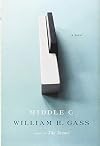
So everyone knows that Gass will be turning 89 soon. Instead of spending his 80s sitting in a rocking chair on his porch and yelling "Get off my lawn." at the neighborhood kids, he was writing. This. He was writing this beautiful, complex and nuanced work for last several years, diligently honing and show more perfecting each sentence. No middling C's for this man, he will settle for nothing less than an A . Is he really writing using the same words and following the same grammar as so many other authors do? That's hard to believe. His sentences don't merely convey one thing or the other. They perform a whole choreographed sequence and deliver a best-on-the-broadway level performance. If you are reading Gass, please be sure to read, pause and re-read and feel the pulse and the rhythm of his prose.
As great as he is at crafting these well-manicured sentences, he is just as adept at creating a character. Skizzen is going to stay on my mind for a while. Gass really puts "multi" into a multi-dimensional character. Skizzen's character is built up in such an intriguing style - one sentence at a time, one thought at a time. His relationships with his mother and his sister while they all deal with displacement in their own ways, his interactions with each of those unique and memorable characters he meets at different stages of his life, all contribute pieces to the puzzle. Even the absentee father is a big part of the person Joey is.
Gass has structured this work intricately, interleaving vignettes from different parts of Joey's life. What formed the main thrust of the narrative for me was the dichotomy (or what turned out be trichotomy) between Joey/Joseph Skizzen's selves. I kept looking for clues that will help me reconcile his different identities , and figure out how the younger Joey morphed into the adult Prof. Skizzen. Does our past need to be a part of who we are? Is any one of his identities more real than the others? Or is everything we get to see on the outside a mere representative sketch (meaning of word 'Skizzen') of a person? In creating the character of Skizzen, Gass provides a wonderful mediation on the notion of self and identity.
While Joey's ambition of being invisible and inconsequential may not seem like a lofty one, it certainly isn't the worst thing a person has ever aimed for. Sure he is not helping a blind person cross the road, but he is not hurting anyone either. He may not be working towards making the world a better place, but he is trying to keep his hands clean of the moral tarnish of the world. A world whose wrongs he finds too much for him to accept and forgive. He is someone who finds his sanctuary in a library or at a piano, how harmful could he be!
In addition to some of these main themes, there are several little moments that will leave a mark on the readers. There is a lot of depth to this work, some of which I am sure of having missed. Nick's review talks a bit about the relationship of Middle C with music. I am hoping there will be more reviews expounding how music informs the structure and the ideas in the novel.
I did briefly consider awarding 4 stars to Middle C . As impressive and near-perfect this book is, I can't help thinking that Gass might be holding back here. I noticed some very bright sparks in places, mostly during Joey's monologues. But those were rather short lived. I would love to see those sparks leap into big flames and engulf the entire book. I would love to see Gass's manic energy and passion being unleashed with full force. The reviews over here establish beyond doubt that The Tunnel is where I want to be. I am sure I will totally dig The Tunnel. Till then it is 4.987654321 stars. show less
One of the most beautifully surreal and wonderfully executed novels I've read in years. Gass is that rare writer who augments the canon by negotiating both divides of adhering to a tradition (bridging the Joycean and Falknerian into the post-modern milieu) and concomitantly standing singularly (and profoundly) alone. Over the course of this novel I was treated to serene and haunting descriptions, baroque details explicating both the madness and the wonder (at least in terms of purity of show more expression) implicit in the most common to the most elevated person.
What else can I say? Without giving anything away I can only say give yourself the time and leave yourself the energy to read this book cover to cover. If you do this you will see that literary brilliance might be endangered but it is still very much fighting to survive, without compromise, and without cares as to ostensible readability; Gass has won my respect and my admiration. show less
What else can I say? Without giving anything away I can only say give yourself the time and leave yourself the energy to read this book cover to cover. If you do this you will see that literary brilliance might be endangered but it is still very much fighting to survive, without compromise, and without cares as to ostensible readability; Gass has won my respect and my admiration. show less

Blue's more than a color, mood, or groove of a jukebox tune. The symbology of blue, along with its definitions, are as infinite as its nuanced hues. Aqua, azure, turquoise, cerulean, indigo, cobalt, ad infinitum . . . There's endless shades of adjectives on the adjective, blue.
Or so posits William H. Gass (and I tend to believe him), in his idiosyncratic, intertextual synthesis, On Being Blue: A Philosophical Inquiry (1976), of all that's ever been—or could be—blue.
Besides blue show more ontologically and blue philosophically, Gass covers blue cross-culturally, literarily, aesthetically, psychologically, epistemologically, phenomenologically, erotically, metaphorically, and practically every other word ending, "-ically," that one might encounter in the O.E.D. too.
At the book's core, I believe Gass is asking: How do blue's meanings become blue's meanings and what do blue's meanings then mean to our very being? Even an intrepid or sadomasochistic-type reader easily lured by books odd or arcane, incomprehensible, might be wondering "huh?" or even, regrettably, "WTF!?" at such an inquiry regarding "blue meaning and blue being," as I was, after having just asked it up above. Keep in mind, if you're still with me, that if Gass confounds you to the point you'd like to hurl On Being Blue out the window into the great blue yonder, know you're not alone, but in some very good company, as William H. Gass is a certifiable Linguistic Mystic. He gets off on the alchemy of language—what he's coined, "a world of words," like he's a wizard wielding a wand in lieu of pen—much more so than making his language spells, particularly in On Being Blue—completely understandable to an understandably perplexed, though diehard, cult readership.
On Being Blue, while beholden to all of the momentarily forthcoming labels, is not necessarily in a monogamous relationship with only one, be it prose poetry, strict philosophy per se, literary or art criticism, soft core erotica, autobiography, or a confabulated hodgepodge of all the forms, including fiction. Rather, On Being Blue, borrowing ingredients from all styles of discourse, serves as William H. Gass's metaphysical manifesto built not out of the blue, but literally out of blue. The Epicurean blue of knowledge. The blue in gnosis and the gnosis in blue. Blue truth. It's a highly stylized interdisciplinary hybrid of a master-wordsmiths exposition that doesn't offer any easily navigated routes (let alone clues) of interpreting every facet of that diamond, blue. And Gass makes no apologies for failing to do so, either.
No surprise there, as Gass has never cared about being contemporary or orthodox or popular for everyone's easy consumption, so in love with the crafting and fashioning of language he is; and, in reading On Being Blue, it certainly seems his animated language loves him back. Self-indulgently so? Onanistic, a tad? Perhaps. And that's probably the harshest criticism I could levy against it (and perhaps against Gass' oeuvre in general) that the point of it all (in his essays) or the plot of it all (in his postmodern stories and experimental novels) gets lost in his lush, elaborate language and esoterica.
Gass echoes Walter Benjamin's philosophy and criticism in that recondite regard. For it's akin to seeking out a rare genus of weed in the Amazon rainforest, hunting for the reclusive plot (if it even exists) in, say, Gass' dark magnum opus, The Tunnel (1995), for instance. And even in his earlier fiction, like the typographical hijinks so common in the novella, Willie Masters' Lonesome Wife (1968), spliced with provocative black-and-white photography of the attractive lonesome wife's naked anatomy, posed as she is among so much sensually arranged textual formatting (discovering as she does that intercourse with words is sheer ecstasy!), the plot, nevertheless, is about as visible to the reader's naked eye as an atom.
If there is a point to On Being Blue: A Philosophical Inquiry, however, the point is obvious. The point is blue. show less
Or so posits William H. Gass (and I tend to believe him), in his idiosyncratic, intertextual synthesis, On Being Blue: A Philosophical Inquiry (1976), of all that's ever been—or could be—blue.
Besides blue show more ontologically and blue philosophically, Gass covers blue cross-culturally, literarily, aesthetically, psychologically, epistemologically, phenomenologically, erotically, metaphorically, and practically every other word ending, "-ically," that one might encounter in the O.E.D. too.
At the book's core, I believe Gass is asking: How do blue's meanings become blue's meanings and what do blue's meanings then mean to our very being? Even an intrepid or sadomasochistic-type reader easily lured by books odd or arcane, incomprehensible, might be wondering "huh?" or even, regrettably, "WTF!?" at such an inquiry regarding "blue meaning and blue being," as I was, after having just asked it up above. Keep in mind, if you're still with me, that if Gass confounds you to the point you'd like to hurl On Being Blue out the window into the great blue yonder, know you're not alone, but in some very good company, as William H. Gass is a certifiable Linguistic Mystic. He gets off on the alchemy of language—what he's coined, "a world of words," like he's a wizard wielding a wand in lieu of pen—much more so than making his language spells, particularly in On Being Blue—completely understandable to an understandably perplexed, though diehard, cult readership.
On Being Blue, while beholden to all of the momentarily forthcoming labels, is not necessarily in a monogamous relationship with only one, be it prose poetry, strict philosophy per se, literary or art criticism, soft core erotica, autobiography, or a confabulated hodgepodge of all the forms, including fiction. Rather, On Being Blue, borrowing ingredients from all styles of discourse, serves as William H. Gass's metaphysical manifesto built not out of the blue, but literally out of blue. The Epicurean blue of knowledge. The blue in gnosis and the gnosis in blue. Blue truth. It's a highly stylized interdisciplinary hybrid of a master-wordsmiths exposition that doesn't offer any easily navigated routes (let alone clues) of interpreting every facet of that diamond, blue. And Gass makes no apologies for failing to do so, either.
No surprise there, as Gass has never cared about being contemporary or orthodox or popular for everyone's easy consumption, so in love with the crafting and fashioning of language he is; and, in reading On Being Blue, it certainly seems his animated language loves him back. Self-indulgently so? Onanistic, a tad? Perhaps. And that's probably the harshest criticism I could levy against it (and perhaps against Gass' oeuvre in general) that the point of it all (in his essays) or the plot of it all (in his postmodern stories and experimental novels) gets lost in his lush, elaborate language and esoterica.
Gass echoes Walter Benjamin's philosophy and criticism in that recondite regard. For it's akin to seeking out a rare genus of weed in the Amazon rainforest, hunting for the reclusive plot (if it even exists) in, say, Gass' dark magnum opus, The Tunnel (1995), for instance. And even in his earlier fiction, like the typographical hijinks so common in the novella, Willie Masters' Lonesome Wife (1968), spliced with provocative black-and-white photography of the attractive lonesome wife's naked anatomy, posed as she is among so much sensually arranged textual formatting (discovering as she does that intercourse with words is sheer ecstasy!), the plot, nevertheless, is about as visible to the reader's naked eye as an atom.
If there is a point to On Being Blue: A Philosophical Inquiry, however, the point is obvious. The point is blue. show less
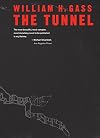
After twenty-four days of finally working my way through William H. Gass's masterpiece, I can say that my nails feel as besmirched as Herr I'm-Not-German Kohler's. Gass, in his highly entertaining notes to the editors of the book, states that "[t]he reader is to feel, as he or she doubtless will, as if they are crawling through an unpleasant and narrow darkness." Quite right. And in his interview with Michael Silverblatt (whose blurb adorns the cover of my Dalkey Archive paperback), Gass show more makes no qualms about the aspirations and demands of his book. Silverblatt, an avid and insightful reader if there ever was one, even confesses to swaying--yet not faltering--under the heft of the first 90 pages. The Tunnel is deliberately large, complex, and difficult. How else shall we, as readers, grow?
The novel is meant to present the interleaving of William Frederick Kohler's massive academic study, Guilt & Innocence in Hitler's Germany, and his diverting attempts to write the study's introduction. But Kohler does not like introductions; he likes endings; so his stops and statrts end up churning out a heap of pages about his own life. To say that it is confessional literature is an understatement--Kohler's level of baring it all puts Dostoyevsky to shame. So searing and intimate are the pages he turns out that he takes to hiding them within the pages of his historical study. What we, the readers, then have is the stack of interleaved pages. But although, to the reader who has not yet read The Tunnel, this could sound like something akin to Burroughs's cut-ups, I found the text fairly linear and readable. Perhaps, though, this is indicative of the warping I've undergone from the ilk of books I invite into my mind.
Without a doubt William Kohler is the most embittered, angriest, loneliest man in all of literature. As much as I stay away from such superlative statements--for I haven't, of course, read all of literature--I feel confident in my assertion. Kohler will upset you if you have at least a paucity of a moral code. He resents everyone and everything around him and holds nothing back in his telling us so. A principal target of his bitterness and resentment is the female, especially his wife Martha. This is a bold move on Gass's part, delivering a novel in 1995 while the women's lib movement of the 70s and 80s was still targeting WASP writers (or what David Foster Wallace called "Great Male Narcissists") for their base misogyny. But Gass has a trick up his sleeve. Kohler, in his monumental attacks against the feminine, is not very...endowed. Yes, and it consumes him, as the reader will find. What is interesting here it that, one of the invectives against WASP mega-novels is that it is a way of asserting the phallus on the world. We are thus forced to look for something beyond this easy way out; and, in the end, Gass will begin to bring us to an understanding and, just possibly, to sympathize with Kohler.
In the midst of all this anger, all this loneliness, however, is a deeply poetic language. Indeed, Kohler states many times that he gave up poetry and took on history. So we know he has poetic tendencies. Gass, of course, is a master of the metaphor. The style and language used throughout The Tunnel will singe even the densest eyebrows. Your toes will curl at some of the sentences he pulls off. Yes, this incongruity of pulchritude and grotesquerie is what causes the reader to latch onto the text both against and out of the will. It is hard to stave off my inclination to list out all of the sentences I highlighted in orange (my designated color for passages that stylistically dazzle me), but to do so would be to reprint the book and invite copyright trouble.
The book is not a direct meditation on Hitler's Germany; it is not Kohler's scholarly thesis. It is, rather, the confessions of a brilliant yet embittered madman, struggling to make some sense of life. His myriad propositions about what history is are sometimes profound and sometimes bathetic. For me, the most striking meditation concerns what Kohler phrases "life in a chair." For anyone with an academic, bookish, intellectual bent, Gass perfectly captures the pleasures and the pains of such a life. But, make no mistake, this is a sprawling, dense book that requires more than just the bedtime reader. It is a project that invites you to explore your own self, to examine the soft, vulnerable underbelly of life that we'd rather keep hidden. show less
The novel is meant to present the interleaving of William Frederick Kohler's massive academic study, Guilt & Innocence in Hitler's Germany, and his diverting attempts to write the study's introduction. But Kohler does not like introductions; he likes endings; so his stops and statrts end up churning out a heap of pages about his own life. To say that it is confessional literature is an understatement--Kohler's level of baring it all puts Dostoyevsky to shame. So searing and intimate are the pages he turns out that he takes to hiding them within the pages of his historical study. What we, the readers, then have is the stack of interleaved pages. But although, to the reader who has not yet read The Tunnel, this could sound like something akin to Burroughs's cut-ups, I found the text fairly linear and readable. Perhaps, though, this is indicative of the warping I've undergone from the ilk of books I invite into my mind.
Without a doubt William Kohler is the most embittered, angriest, loneliest man in all of literature. As much as I stay away from such superlative statements--for I haven't, of course, read all of literature--I feel confident in my assertion. Kohler will upset you if you have at least a paucity of a moral code. He resents everyone and everything around him and holds nothing back in his telling us so. A principal target of his bitterness and resentment is the female, especially his wife Martha. This is a bold move on Gass's part, delivering a novel in 1995 while the women's lib movement of the 70s and 80s was still targeting WASP writers (or what David Foster Wallace called "Great Male Narcissists") for their base misogyny. But Gass has a trick up his sleeve. Kohler, in his monumental attacks against the feminine, is not very...endowed. Yes, and it consumes him, as the reader will find. What is interesting here it that, one of the invectives against WASP mega-novels is that it is a way of asserting the phallus on the world. We are thus forced to look for something beyond this easy way out; and, in the end, Gass will begin to bring us to an understanding and, just possibly, to sympathize with Kohler.
In the midst of all this anger, all this loneliness, however, is a deeply poetic language. Indeed, Kohler states many times that he gave up poetry and took on history. So we know he has poetic tendencies. Gass, of course, is a master of the metaphor. The style and language used throughout The Tunnel will singe even the densest eyebrows. Your toes will curl at some of the sentences he pulls off. Yes, this incongruity of pulchritude and grotesquerie is what causes the reader to latch onto the text both against and out of the will. It is hard to stave off my inclination to list out all of the sentences I highlighted in orange (my designated color for passages that stylistically dazzle me), but to do so would be to reprint the book and invite copyright trouble.
The book is not a direct meditation on Hitler's Germany; it is not Kohler's scholarly thesis. It is, rather, the confessions of a brilliant yet embittered madman, struggling to make some sense of life. His myriad propositions about what history is are sometimes profound and sometimes bathetic. For me, the most striking meditation concerns what Kohler phrases "life in a chair." For anyone with an academic, bookish, intellectual bent, Gass perfectly captures the pleasures and the pains of such a life. But, make no mistake, this is a sprawling, dense book that requires more than just the bedtime reader. It is a project that invites you to explore your own self, to examine the soft, vulnerable underbelly of life that we'd rather keep hidden. show less
Lists
Awards


You May Also Like


Associated Authors
Statistics
- Works
- 46
- Also by
- 40
- Members
- 6,840
- Popularity
- #3,573
- Rating
- 4.0
- Reviews
- 71
- ISBNs
- 116
- Languages
- 9
- Favorited
- 35
