
Ron Hansen
Author of Mariette in Ecstasy
About the Author
Ron Hansen was born in Omaha Nebraska in 1947.He received a BA degree in English from Creighton University in Nebraska in 1970. He is the author of more than 20 books, stories, and anthologies. He received the Award in Literature from the American Academy and Institute of Arts and Letters for his show more book Nebraska, a collection of short fiction, in 1989. Some of his other works include Mariette in Ecstasy; the children's book, The Shadowmaker; Desperadoes; the Assassination of Jesse James by the Coward Robert Ford, which won the John Edgar Wideman Award in 1984; and the novel Atticus, a suspenseful murder mystery detailing a father's fierce love for his son. Atticus was a finalist for the National Book Award in 1996. Among the anthologies written by Hansen are The Sun So Hot I Froze To Death, Can I Just Sit Here For A While?, and True Romance. His short stories, with titles ranging from "His Dog" to "Playland," have appeared in the Stanford Alumni Magazine, Atlantic Monthly, the Iowa Review, Esquire, and many others. Besides holding Guggenheim and National Endowment for the Arts fellowships, Hansen has received a Lyndhurst Foundation Grant and is a fellow of the University of Michigan Society of Fellows. Hansen has also held the position of Gerald Manley Hopkins S.J. Professor of Arts and Humanities at Santa Clara University. In May 2006 he was inducted into the College of Fellows at Dominican School of Philosophy and Theology. Also in that year The Assasination of Jesse James was adapted for the screen. In 2009 Mariette In Ecstasy was adapted for the stage at Lifetime Theater in Chicago. (Bowker Author Biography) show less
Works by Ron Hansen
You've Got to Read This: Contemporary American Writers Introduce Stories that Held Them in Awe (1994) — Editor — 414 copies, 3 reviews
The Assassination of Jesse James by the Coward Robert Ford [2007 film] (2007) — Author — 252 copies, 2 reviews
The Western: Four Classic Novels of the 1940s & 50s (LOA #331): The Ox-Bow Incident / Shane / The Searchers / Warlock (The Library of America) (2020) — Editor — 136 copies, 3 reviews
Associated Works
The Scribner Anthology of Contemporary Short Fiction: Fifty North American American Stories Since 1970 (1999) — Contributor — 581 copies, 4 reviews
The Vintage Book of Contemporary American Short Stories (1994) — Contributor — 542 copies, 2 reviews
The Year's Best Fantasy and Horror: Tenth Annual Collection (1997) — Contributor — 302 copies, 5 reviews
The Workshop: Seven Decades of the Iowa Writers Workshop - 43 Stories, Recollections, & Essays on Iowa's Place in Twentieth-Century American Literature (1999) — Contributor — 197 copies, 1 review
Still Wild: Short Fiction of the American West 1950 to the Present (2000) — Contributor — 165 copies, 1 review
These United States: Original Essays by Leading American Writers on Their State within the Union by John Leonard (1995) — Contributor — 101 copies, 1 review
The Essential Writings: Selections from The Dark Night, The Spiritual Canticle, and The Living Flame of Love (Western Spiritual Classics) (2004) — Foreword, some editions — 70 copies
Genesis as It Is Written: Contemporary Writers on Our First Stories (1996) — Contributor — 69 copies
St. Peter's B-list: Contemporary Poems Inspired by the Saints (2014) — Foreword — 32 copies, 1 review
The Best of the West 4: New Stories from the West Side of the Missouri (Vol. 4) (1991) — Introduction — 15 copies
Tagged
Common Knowledge
- Legal name
- Hansen, Ronald Thomas
- Birthdate
- 1947-12-08
- Gender
- male
- Education
- The Jesuit School of Theology at Berkeley (2000-03)
Santa Clara University (MA ∙ Spirituality ∙ 1995)
Iowa Writers' Workshop (MFA ∙ Creative Writing ∙ 1974)
Creighton University (BA ∙ English ∙ 1970) - Occupations
- novelist
short story writer
essayist
professor
deacon
film producer (show all 8)
screenwriter
editor - Organizations
- Santa Clara University (professor)
University of California, Santa Cruz (professor)
Michigan Society of Fellows
Stanford University (professor)
The University of Nebraska Press (general series editor)
Catholic Relief Services (global fellow) (show all 11)
Alpha Sigma Nu
Dominican School of Philosophy and Theology
Diocese of San Jose (permanent deacon)
Saint Joseph of Cupertino parish
United States Army - Awards and honors
- Permanent deacon of the Catholic Church
The Marianist Award (2010)
The Denise Levertov Award (2010)
Commencement address and Doctor of Humane Letters, Merrimack College (2010)
Doctor of Humane Letters, Dominican School of Philosophy and Theology (2009)
Commencement address and Doctor of Humane Letters, Loyola College, Baltimore, Maryland (2009) (show all 23)
Commencement address and Doctor of Humane Letters, Thomas More College (2007)
Creighton Preparatory School Alumni Achievement Award (2005)
Commencement address and Doctor of Humane Letters, Saint Thomas Aquinas School of Theology, Saint Louis University (2004)
Commencement address and Doctor of Humane Letters, Le Moyne College (1998)
Alpha Sigma Nu, National Jesuit Honor Society (1998)
Lila Wallace-Reader’s Digest Foundation Fellow (1997-1999)
Doctor of Humane Letters, Spring Hill College (1996)
Lyndhurst Foundation Fellow (1993-95)
Creighton University Alumni Achievement Award (1991)
Guggenheim Fellowship (1990)
Award in Literature, American Academy and National Institute of Arts and Letters (1989)
National Endowment for the Arts Literature Fellowship (1987)
The Bordeaux Prize (1983)
The Michigan Society of Fellows (1981-1984)
National Endowment for the Arts Literature Fellowship (1979)
Bread Loaf Writers' Conference Fellowship (1979)
Wallace Stegner Creative Writing Fellowship (1977) - Relationships
- Caldwell, Bo (wife)
- Nationality
- USA
- Birthplace
- Omaha, Nebraska, USA
- Places of residence
- Omaha, Nebraska, USA
Northern California, USA - Associated Place (for map)
- USA
Members
Discussions
"Jesse James Was A Lad/Who Killed Many A Man..." in Pro and Con (August 2013)
Reviews
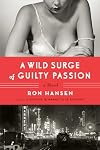
A fictionalized account of a real-life murder that caused a sensation in the Roaring '20's. I wasn't familiar with the Snyder/Gray case until I picked up this book, but I found it to be an absorbing one - a sad, sordid tale of adultery, murder, and wasted lives. Oh, and stupidity. The two lovers, Ruth Snyder and Judd Gray did a really, incredibly bad job of killing Ruth's husband Albert and trying to make it look like a robbery; so much so that the press dubbed this "The Dumb-bell Murder." show more Back in 1927, of course you couldn't watch "Law & Order" nonstop all day every day to get tips on police procedures and how to get away with a crime, but it's still hard to believe how inept they were.
The author did an amazing job of bringing Jazz Age Manhattan and these long-ago people to life. I found myself at different points sympathetic to the players in this tragedy - the murderers, their victim, and even the family and friends left to carry on in the aftermath. If you enjoy true crime, I recommend this one. And don't forget to look on line for details of the real case and pictures.There is a creepy photo that you can easily find, taken by a photographer on the sly, at the moment Ruth was executed in the electric chair at Sing Sing. show less
The author did an amazing job of bringing Jazz Age Manhattan and these long-ago people to life. I found myself at different points sympathetic to the players in this tragedy - the murderers, their victim, and even the family and friends left to carry on in the aftermath. If you enjoy true crime, I recommend this one. And don't forget to look on line for details of the real case and pictures.
Oddly enough, this was mentioned by John Waters in one of his books in a list of Catholic-related books. It is strange and well-written as it tells teh story of a 17-year old girl joining a convent as a postulant who soon begins to show the signs of stigmata. The reactions range from those who think she is a fraud, to those who think she is a saint, to those who think she may be a saint but hate her for being singled out by Jesus rather than them. The day-to-day life of the convent, in all show more its repetitive masses for one martyr or another and the petty jealousies and tiny acts of rebellion by its inmates, are interesting. In the end, the book is about religious hysteria at all levels, and for the non-believers among us, yet more evidence of the of the bankruptcy of religion in all forms.
I listened to the audiobook, which has gaps between sections that are way too long. show less
I listened to the audiobook, which has gaps between sections that are way too long. show less
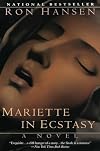
In my opinion, Ron Hansen is one of the finest and most under-appreciated novelists writing in America today. With little fanfare or hoopla, he has been publishing a remarkably broad range of eloquent, consistently powerful novels. Don't expect the self-indulgent pyrotechnics of many modern American authors who seem far more interested in showing their skills than actually writing good stories. Rather, Hansen is a craftsman--a careful, meticulous story-teller who clearly agonizes over every show more sentence and every word. His goal is not to demonstrate how he can write long sentences or channel Faulkner, but instead to move his narrative forward and construct compelling characters. Mariette in Ecstasy, a short, spare novel, is one of his best. The story is simple enough: a postulant who may or may not be receiving the stigmata. Hansen does not offer a definitive answer one way or the other and, had he done so, the story would have been a far lesser work. Rather, the uncertain nature of the "miracles" allows for an exploration of both the nature of faith and the dynamic of the community of faith. Also, by leaving the nature of miracles unresolved, Hansen invites the reader to draw his/her own conclusions, thus drawing them into the fundamental dialogue that frames the novel. In other words, the question of faith posed to the convent is ultimately posed to the reader. Remarkable book. Great choice for a book club. show less
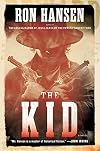
This is kind of a return by Ron Hansen to what first drew me to his writing, in his historical fiction about Jesse James (The Assassination of Jesse James) and about the Dalton Gang (Desperadoes). I was really happy to see this one in the upcoming fiction lists.
Billy the Kid is mythological, like other old west figures. Hansen doesn’t completely de-mythologize him, but he does bring him down to earth a bit. This kind of fiction does that, maybe a bit ironically, given that it is fiction, show more taking the image and reducing it down to a human scale.
Hansen’s book taught me new things about Billy’s life, and also provoked some thoughts about what makes an outlaw an outlaw.
Billy the Kid’s life was only 21 years long, but he was making his own way very early. He came from an almost cliche broken family. He was born Henry McCarty in 1859, and his father, Michael McCarty, died in the Civil War just a few years after Billy’s birth. His widowed mother Catherine married a man named William Antrim, who became Henry’s stepfather but left the family for a life of a prospecting. In Hansen’s portrayal, Henry seeks out his stepfather after his mother’s death (when he was 15), but Antrim wanted nothing to do with his stepson. Henry wasn’t yet Billy the Kid, and he genuinely seemed to be searching for an identity and a fatherly connection. He didn’t find it with his stepfather.
So at 15, Henry, soon to become “Kid Antrim” or William Bonney or Billy the Kid, was on his own. He was somewhat educated and even considered traditional occupations. But opportunities for hustling a way of life were closer to hand. He seems to have been a natural at gambling and stealing.
He was still a “kid”, especially in appearance — small, even a bit feminine. But he had daring, and he began to develop the kind of charisma that feeds mythology.
Both his charisma and his small stature played into his first killing, a blacksmith named Windy Cahill. What could have been just edgy bantering about prostitutes turned wrong, Cahill asking Billy, “Was it your momma who taught you how to pimp?” A classic over-the-edge attack against a man’s mother, and it got under Billy’s skin. Cahill was much bigger and stronger than Billy, and he bullied him. Billy’s response turned from bravado to weakness (“Stop it! You’re hurting me!”). But Billy got to his gun and shot Windy in the gut.
That one killing got Billy a reputation, but it was the Lincoln County War that looks to have been the point of no return, making “Billy the Kid” an outlaw forever.
John Tunstall was a New Mexico rancher. Billy had stolen horses from Tunstall, and he’d been caught and jailed. Tunstall came to see him, giving him what amounted to a job interview, and hired him to protect his ranch. Along with his ranch, Tunstall owned a mercantile store that had begun to eat into the business of L.G. Murphy & Co, known as “The House.”
The resulting battle, known as the Lincoln County War, pitted Tunstall’s side against the established powers of New Mexico. For Billy, the die seemed to be cast from then on. It’s not so much that he acted any differently than others, on either side. It was a matter of who won the war — the winning side got to exact “justice” and Billy was on the wrong side. From then on he was an outlaw.
The story that Hansen tells doesn’t make Billy bigger than life, but he does show what made him the outlaw that everyone remembers. Billy was not the “worst of the worst” — some of his own gang, especially “Dirty Dave” Rudabaugh, seemed much more brutal. But Billy was the one people listened to and noticed. He had charisma, he had a way with women, and he was smart enough and successful enough that other outlaws, like Rudabaugh, fell in behind him.
A book like this should be a fun read, as well as a book you actually learn something from. I think Hansen accomplishes both. He’s done his homework on Billy the Kid’s life, and he’s filled in the blanks — the thoughts in Billy’s head, the atmosphere of an outlaw’s life in the New Mexico territory of Billy’s time, and he even adds a light touch of dialect to his writing to make the reader feel just a little bit more present in the scene. Good stuff. show less
Billy the Kid is mythological, like other old west figures. Hansen doesn’t completely de-mythologize him, but he does bring him down to earth a bit. This kind of fiction does that, maybe a bit ironically, given that it is fiction, show more taking the image and reducing it down to a human scale.
Hansen’s book taught me new things about Billy’s life, and also provoked some thoughts about what makes an outlaw an outlaw.
Billy the Kid’s life was only 21 years long, but he was making his own way very early. He came from an almost cliche broken family. He was born Henry McCarty in 1859, and his father, Michael McCarty, died in the Civil War just a few years after Billy’s birth. His widowed mother Catherine married a man named William Antrim, who became Henry’s stepfather but left the family for a life of a prospecting. In Hansen’s portrayal, Henry seeks out his stepfather after his mother’s death (when he was 15), but Antrim wanted nothing to do with his stepson. Henry wasn’t yet Billy the Kid, and he genuinely seemed to be searching for an identity and a fatherly connection. He didn’t find it with his stepfather.
So at 15, Henry, soon to become “Kid Antrim” or William Bonney or Billy the Kid, was on his own. He was somewhat educated and even considered traditional occupations. But opportunities for hustling a way of life were closer to hand. He seems to have been a natural at gambling and stealing.
He was still a “kid”, especially in appearance — small, even a bit feminine. But he had daring, and he began to develop the kind of charisma that feeds mythology.
Both his charisma and his small stature played into his first killing, a blacksmith named Windy Cahill. What could have been just edgy bantering about prostitutes turned wrong, Cahill asking Billy, “Was it your momma who taught you how to pimp?” A classic over-the-edge attack against a man’s mother, and it got under Billy’s skin. Cahill was much bigger and stronger than Billy, and he bullied him. Billy’s response turned from bravado to weakness (“Stop it! You’re hurting me!”). But Billy got to his gun and shot Windy in the gut.
That one killing got Billy a reputation, but it was the Lincoln County War that looks to have been the point of no return, making “Billy the Kid” an outlaw forever.
John Tunstall was a New Mexico rancher. Billy had stolen horses from Tunstall, and he’d been caught and jailed. Tunstall came to see him, giving him what amounted to a job interview, and hired him to protect his ranch. Along with his ranch, Tunstall owned a mercantile store that had begun to eat into the business of L.G. Murphy & Co, known as “The House.”
The resulting battle, known as the Lincoln County War, pitted Tunstall’s side against the established powers of New Mexico. For Billy, the die seemed to be cast from then on. It’s not so much that he acted any differently than others, on either side. It was a matter of who won the war — the winning side got to exact “justice” and Billy was on the wrong side. From then on he was an outlaw.
The story that Hansen tells doesn’t make Billy bigger than life, but he does show what made him the outlaw that everyone remembers. Billy was not the “worst of the worst” — some of his own gang, especially “Dirty Dave” Rudabaugh, seemed much more brutal. But Billy was the one people listened to and noticed. He had charisma, he had a way with women, and he was smart enough and successful enough that other outlaws, like Rudabaugh, fell in behind him.
A book like this should be a fun read, as well as a book you actually learn something from. I think Hansen accomplishes both. He’s done his homework on Billy the Kid’s life, and he’s filled in the blanks — the thoughts in Billy’s head, the atmosphere of an outlaw’s life in the New Mexico territory of Billy’s time, and he even adds a light touch of dialect to his writing to make the reader feel just a little bit more present in the scene. Good stuff. show less
Lists
Awards


You May Also Like


Associated Authors
Statistics
- Works
- 25
- Also by
- 16
- Members
- 4,658
- Popularity
- #5,414
- Rating
- 3.7
- Reviews
- 115
- ISBNs
- 147
- Languages
- 6
- Favorited
- 8