
Gore Vidal (1925–2012)
Author of Lincoln
About the Author
Gore Vidal was born Eugene Luther Gore Vidal Jr. on October 3, 1925 at the U.S. Military Academy at West Point, New York. He did not go to college but attended St. Albans School in Washington and graduated from Phillips Exeter Academy in New Hampshire in 1943. He enlisted in the Army, where he show more became first mate on a freight supply ship in the Aleutian Islands. His first novel, Williwaw, was published in 1946 when he was twenty-one years old and working as an associate editor at the publishing company E. P. Dutton. The City and the Pillar was about a handsome, athletic young Virginia man who gradually discovers that he is homosexual, which caused controversy in the publishing world. The New York Times refused to advertise the novel and gave a negative review of it and future novels. He had such trouble getting subsequent novels reviewed that he turned to writing mysteries under the pseudonym Edgar Box and then gave up novel-writing altogether for a time. Once he moved to Hollywood, he wrote television dramas, screenplays, and plays. His films included I Accuse, Suddenly Last Summer with Tennessee Williams, Is Paris Burning? with Francis Ford Coppola, and Ben-Hur. His most successful play was The Best Man, which he also adapted into a film. He started writing novels again in the 1960's including Julian, Washington, D.C., Myra Breckenridge, Burr, Myron, 1876, Lincoln, Hollywood, Live From Golgotha: The Gospel According to Gore Vidal, and The Golden Age. He also published two collections of essays entitled The Second American Revolution, which won the National Book Critics Circle Award for criticism in 1982 and United States: Essays 1952-1992. In 2009, he received the National Book Awards lifetime achievement award. He died from complications of pneumonia on July 31, 2012 at the age of 86. (Bowker Author Biography) show less
Image credit: Gore Vidal en octobre 2006, à Los Angeles
Series
Works by Gore Vidal
Julian / Williwaw / The Judgement of Paris / Messiah / The City and the Pillar (1982) 86 copies, 1 review
The City and the Pillar, Revised: Including an Essay, Sex and the Law, and an Afterword (1965) 76 copies, 1 review
Gore Vidal History of The National Security State: Includes Vidal on America (2014) — Author — 37 copies
Romulus: The Broadway Adaptation and the Original Romulus the Great by Friedrich Duerrenmatt (Preface by Gore Vidal) (1966) — Contributor & Introduction — 9 copies
The Judgment of Paris 2 copies
Not Vital 2 copies
Trilogia dell'impero: La fine della liberta, Le menzogne dell'impero e altre tristi verita, Democrazia tradita (2005) 2 copies
Lincoln- Burr- 1876- Washington D. C.- Empire- Hollywood (Six Volumes) (Easton Press) (1990) 2 copies
Novel, A 2 copies
Eugene Luther Vidal 1 copy
Amerikai komédia 1876 1 copy
Amerikai komédia - 1876 1 copy
The Civil War 1 copy
The End of Liberty 1 copy
ගැලවුම්කාර ඉසිවරයා 1 copy
How I Survived the Fifties 1 copy
The Art of Fiction 1 copy
Il mondo di Watergate 1 copy
Tarzan Revisited 1 copy
Teremtš 1 copy
Narratives Of Empire 1: Burr 1 copy
Myra Breckinwidge & Myron 1 copy
Narratives Of Empire 3: 1876 1 copy
Paolo 1 copy
Associated Works
The Golden Bowl (1904) — Foreword, some editions; Introduction, some editions — 3,067 copies, 33 reviews
Out of This Century: Confessions of an Art Addict (1979) — Foreword, some editions — 266 copies, 3 reviews
The Moral Life: An Introductory Reader in Ethics and Literature (1999) — Contributor — 205 copies, 2 reviews
Into the Buzzsaw: Leading Journalists Expose the Myth of a Free Press (2002) — Foreword, some editions — 188 copies, 3 reviews
The Lincoln Anthology: Great Writers on His Life and Legacy from 1860 to Now (2008) — Contributor — 172 copies, 1 review
Jewish History, Jewish Religion: The Weight of Three Thousand Years (1994) — Foreword — 165 copies, 1 review
The Mark Twain Anthology: Great Writers on His Life and Work (2010) — Contributor — 160 copies, 1 review
Novel History: Historians and Novelists Confront America's Past and Each Other (2001) — Contributor — 139 copies, 1 review
The Edith Wharton Omnibus - Ethan Frome, Age of Innocence, Old New York (1978) — Introduction — 78 copies, 3 reviews
All Trivia: A Collection of Reflections & Aphorisms (1984) — Foreword, some editions — 77 copies, 1 review
The Best of the Nation: Selections from the Independent Magazine of Politics and Culture (2000) — Foreword — 71 copies
What Went Wrong In Ohio: The Conyers Report On The 2004 Presidential Election (2005) — Introduction — 46 copies
Rediscoveries II: Important Writers Select Their Favorite Works of Neglected Fiction (1988) — Contributor — 31 copies, 1 review
Paths of Resistance: The Art and Craft of the Political Novel (1989) — Contributor — 26 copies, 1 review
The Company They Kept, Volume Two: Writers on Unforgettable Friendships (2011) — Contributor — 25 copies
Middle Sexes: Redefining He and She [2005 TV Documentary film] (2005) — Narrator — 21 copies, 1 review
Tagged
Common Knowledge
- Canonical name
- Vidal, Gore
- Legal name
- Vidal, Eugene Luther Gore, Jr.
- Other names
- Box, Edgar (pseudonym)
Kay, Cameron (pseudonym)
Everard, Katherine (pseudonym)
Libra (pseudonym)
Vidal, Eugene Louis (birth name)
Vidal, Eugene Luther Gore - Birthdate
- 1925-10-03
- Date of death
- 2012-07-31
- Gender
- male
- Education
- Sidwell Friends School, Washington, DC, USA
St. Albans School, Washington, DC, USA
Phillips Exeter Academy - Occupations
- public intellectual
novelist
screenwriter
actor
playwright
essayist (show all 8)
writer
author - Organizations
- Metro-Goldwyn-Mayer
American Humanist Association - Awards and honors
- National Book Awards - Distinguished Contribution to American Letters (2009)
- Relationships
- Austen, Howard (life companion)
Gore, Thomas (grandfather)
Gore, Albert, Jr. (cousin)
Onassis, Jacqueline Kennedy (stepsister)
Williams, Tennessee (friend)
Welles, Orson (friend) - Cause of death
- pneumonia
- Nationality
- USA
- Birthplace
- West Point, New York, USA
- Places of residence
- West Point, New York, USA
Washington, D.C., USA
Ravello, Italy
Los Angeles, California, USA - Place of death
- Hollywood Hills, Los Angeles, California, USA
- Burial location
- Rock Creek Cemetery, Washington, D.C., USA
- Map Location
- USA
Members
Discussions
The City and the Pillar in Combiners! (June 2022)
Dreams of President Abe Lincoln in Dreamers (February 2017)
Talkin' Jack Kennedy Blues... in Pro and Con (November 2013)
Gore Vidal, 86, RIP in Book talk (August 2012)
Reviews
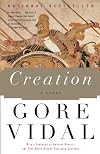
This novel purports to be the memoir of Cyrus Spitama, the fictional grandson of the prophet Zoroaster and Friend of Xerxes. Now 75 years old and blind, he dictates to his nephew Democritus (a historical figure; Vidal invents the family connection for the book’s purpose). Spitama serves as the mouthpiece for Vidal’s well-researched views, but the constellation of blind, elderly narrator and youthful scribe is also reminiscent of Vidal’s childhood relation to his grandfather, Thomas show more Pryor Gore, to whom the book is dedicated.
Three questions animated Spitama throughout his life: who created the universe (and why), why evil was created with good, and what happens to us after we die? In addition to hearing the last words of his grandfather, his service to the Persian king of kings permits him to listen to the varied answers from the remarkable figures who appeared in India, China, and Greece in the fifth century before the Common Era: Gotama (the Buddha), Master Li (teacher of the Way, Tao), Master K’ung (Confucius), and Anaxagoras. Even the young Socrates makes a comical cameo appearance. While these were all men, several remarkable women also appear, such as Aspasia, the courtesan companion of Pericles, or Atossa, Darius’s wife and Xerxes’s mother.
One theme throughout the book concerns the distortions in each philosopher’s teachings that accompanied their transcription into writing as the last eyewitnesses approached death.
Notable in their absence are the Hebrew prophets who also flourished in what Karen Armstrong called this time of the great transformation. Given the aversion to the Judaeo-Christian tradition that is prominent in many of Vidal’s other books, this silence contributes to an overall tolerant, if bemused, tone appropriate to the narrator. This man has seen much in his long, widely traveled life and declares, “in this old world, there is nothing new but ourselves.”
In reflecting on what he has heard from the teachers he has encountered, he concludes: “In the course of a long life I have been startled to find in other religions elements that I always took to be special revelations from the Wise Lord to Zoroaster. But now I realize that the Wise Lord is able to speak in all the languages of the world, and in all the languages of the world, his words are seldom understood or acted upon. But they do not vary. Because they are true.”
His caustic commentary on Athens and its politics, hauntingly reminiscent of late twentieth-century America, stands out against this backdrop. Vidal can also be counted on to differ from commonly accepted views, such as when Spitama says that Herodotus was wrong to say that Pythagoras adopted the teaching of metempsychosis (rebirth) from the Egyptians or when he offers his revisionist account of the battle of Marathon. Concerning haoma, the sacred drink of the Zoroastrians. Vidal shares the minority view that it was psychedelic.
Since this is a work of fiction, there is no index. But so many historical figures populate its pages that I found listing them as they appeared helpful. I read the second edition, which restored four chapters Vidal’s editor cut from the first because he feared the book was too long. It is long, but it held my interest throughout its 574 pages. Despite my enjoyment, I’m withholding the fifth star in my rating because I realize the subject matter and length might rule it out for some readers. show less
Three questions animated Spitama throughout his life: who created the universe (and why), why evil was created with good, and what happens to us after we die? In addition to hearing the last words of his grandfather, his service to the Persian king of kings permits him to listen to the varied answers from the remarkable figures who appeared in India, China, and Greece in the fifth century before the Common Era: Gotama (the Buddha), Master Li (teacher of the Way, Tao), Master K’ung (Confucius), and Anaxagoras. Even the young Socrates makes a comical cameo appearance. While these were all men, several remarkable women also appear, such as Aspasia, the courtesan companion of Pericles, or Atossa, Darius’s wife and Xerxes’s mother.
One theme throughout the book concerns the distortions in each philosopher’s teachings that accompanied their transcription into writing as the last eyewitnesses approached death.
Notable in their absence are the Hebrew prophets who also flourished in what Karen Armstrong called this time of the great transformation. Given the aversion to the Judaeo-Christian tradition that is prominent in many of Vidal’s other books, this silence contributes to an overall tolerant, if bemused, tone appropriate to the narrator. This man has seen much in his long, widely traveled life and declares, “in this old world, there is nothing new but ourselves.”
In reflecting on what he has heard from the teachers he has encountered, he concludes: “In the course of a long life I have been startled to find in other religions elements that I always took to be special revelations from the Wise Lord to Zoroaster. But now I realize that the Wise Lord is able to speak in all the languages of the world, and in all the languages of the world, his words are seldom understood or acted upon. But they do not vary. Because they are true.”
His caustic commentary on Athens and its politics, hauntingly reminiscent of late twentieth-century America, stands out against this backdrop. Vidal can also be counted on to differ from commonly accepted views, such as when Spitama says that Herodotus was wrong to say that Pythagoras adopted the teaching of metempsychosis (rebirth) from the Egyptians or when he offers his revisionist account of the battle of Marathon. Concerning haoma, the sacred drink of the Zoroastrians. Vidal shares the minority view that it was psychedelic.
Since this is a work of fiction, there is no index. But so many historical figures populate its pages that I found listing them as they appeared helpful. I read the second edition, which restored four chapters Vidal’s editor cut from the first because he feared the book was too long. It is long, but it held my interest throughout its 574 pages. Despite my enjoyment, I’m withholding the fifth star in my rating because I realize the subject matter and length might rule it out for some readers. show less
Se dovessi scegliere una sola parola per caratterizzare questo libro, credo che userei "scappare". Ma non in senso negativo. La storia di Jim Willard è fatta proprio di questo, un continuo scappare dalle situazioni, una corsa veloce e continua alla ricerca di quel qualcosa che lo possa rendere felice, ma che alla fine non ha chiaro nemmeno lui cosa possa essere. Credo che tutti siano alla ricerca della felicità, esattamente come Jim. A volte è autodistruttivo, a volte semplicemente show more accetta le situazioni per come sono, per poi ritornare sui suoi passi e cambiare idea, ripartendo e cercando altro. Ho trovato molto reale la sua storia, anche se avrei preferito, ovviamente, un diverso finale. show less
Burr by Gore Vidal

Gore Vidal's Burr: A Novel represents the best type of historical fiction. Vidal does not bind himself to historical fact except where it enhances the narrative, at times moving people through time or space to better his story, but using the dynamism of the history he describes to drive his tale. He even creates a fictional protagonist, Charles Schuyler (not of the Schuylers into whose family Alexander Hamilton married), in order to allow him access to the object of his focus. Though Vidal show more appears to attempt a rehabilitation of Aaron Burr's reputation, he describes him as "a monster, in short" (pg. 4). Vidal's descriptions of Burr return continuously to diabolic imagery. He writes, "Aaron Burr has made an arrangement with the devil. Every dark legend is true" (pg. 69). Vidal's Burr continually reclines near a fire, unable to stay warm even in summer. Vidal's protagonist writes of Washington City, "If this is not Hell, it will do. I have never been so hot. I can see why Colonel Burr wanted to be president - to revel in the stifling, damp heat of this depressing tropical swamp" (pg. 409). Even his desire to keep his word evokes Milton's Lucifer. Vidal writes, "In politics, as in life, one ought to do what one has promised to do. This has been my Quixotic code" (pg. 194). This foreshadows the concept of honor that historian Joanne B. Freeman later argued prevented Burr from dropping his campaign for the presidency when he tied with Jefferson in 1800. Despite these literary touches, Vidal delights in accurately describing individuals as they might have appeared to Burr as well as the locations in which they worked and lived. He even tells the story of Helen Jewett, who had faded from notoriety by the 1970s and would not experience a resurgence of popular interest until Patricia Cline Cohen's 1999 biography. Historians, both professional and casual, of the colonial and early Republic periods will find much to enjoy in this novel. show less
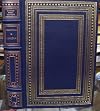
In this rather massive tome, Vidal successfully gives us the feeling of being in Lincoln’s White House, surrounded by his “team of rivals” and confronted with the South seceding. He is strongest when he highlights the menagerie of people from the era, ranging from the better known, like the members of Lincoln’s cabinet, the ambitious Wiliam Seward and Salmon Chase, the timid general George McClellan, or the radical Republicans in congress like Thaddeus Stevens, but also in more show more obscure figures in Washington D.C. or the army at the time. He clearly did a lot of research here, and one certainly gets the sense for the time and place.
It’s far from a complete list, but random things which stood out for me included Lincoln’s use of the “blue mass” (upwards of 33% mercury) for severe constipation, and President’s Park with its unfinished Washington Monument being the site of the daily slaughter of cattle and pigs, which combined with the odor of a stagnant canal, led to overpowering odor. We also get a nuanced portrayal of Mary Todd Lincoln, who was a progressive voice in a slave-holding, secessionist family, yet with the fatal flaw of lavish spending, and having seances to speak to her dead son Willie, following his devastating death.
There are various details of the war of course, most of which I believe will be known to those who’ve studied the period, but Vidal does a reasonably good job at bringing them to life. The terrible nearness of the conflict is striking, a couple of times when Washington D.C. is vulnerable to an attack (which really makes one wonder ‘what if’), and when through binoculars Lincoln can see the large Confederate flag hanging at an inn in Alexandria, Virginia, the one that 24-year-old Elmer Ellsworth would die taking down, the first Union officer to die in the war. We also get quite a taste for the supreme difficulty Salmon Chase faced financing the war effort at a time when there was no income tax, in which he established a national banking system, issued paper currency, and sold war bonds to wealthy investors.
The main reason for not liking the book as much as I did when I started reading it, soaking up all of the history as I went, was that unfortunately Vidal repeats some of the falsehoods propagated by Lost Cause historians. It’s like he got lost in the details and missed the critical main points, or that he was so intent on not producing hagiography that he swung the pendulum too far in the other direction. Or, perhaps it’s because he grew up in the south, as he mentions in the preface.
The main sins of the book relate to what Vidal writes about the Constitutionality of secession, the reason for the war, the view of Lincoln as a dictator (and one operating without a higher moral cause), and the completely unexamined elephant in the room, the opinions and life in the South at the time.
On the Constitutionality of secession, Vidal goes from this exchange early in the book:
“But the Southern States regard the organization of the Union as a more casual affair. As they entered it of their own free will, so that can leave it.”
“But no provision was ever made in the Constitution for their leaving it.”
“They say that this right is implicit.”
“Nothing so astounding and fundamental would not be spelled out in the Constitution.”
To this load of crap at the end of the book:
“You see, the Southern states had every Constitutional right to go out of the Union. But Lincoln said, no. Lincoln said, this Union can never be broken.”
Vidal fails to mention that secession was illegal per the Constitution, for the clause that allowed it in the earlier Articles of Confederation had been removed, and as Lincoln put it, because no government provides for its own dissolution. He does not mention that Southern states agreed that secession was not a right in 1814, when New Englanders talked about doing so because of the War of 1812, or that Andrew Jackson opposed South Carolina’s threatened secession in 1832. He presents a view that it is Lincoln and Lincoln alone who has come up with this view, that everyone else would have let the South go.
Related to this, through a conversation between John Hay and newspaper editor Charles Eames, Vidal also regurgitates the Lost Cause falsehood about the reason for war. He has Hay aimlessly wondering what the war was about, that it was “like the fever; it came for no reason and left for no reason.” Eames then puts the war on Lincoln to preserve the Union, that only after the fighting did he “shift over to the slavery side,” and that the South was just “fighting for independence.” While it’s true that Lincoln’s motivation was to preserve the Union, what’s ridiculous in this dialogue is that it fails to mention that the South seceded for no other reason that slavery, which Southerners fully realized at the time, as evidenced in a myriad of their founding documents and articles from their leaders.
A page later he mentions a mulatto waiter “as loyal to the Confederacy as his employer,” and then a chapter later writes this: “Like most natives of Washington, David had been amazed by the Union soldiers’ hatred of all Negroes. By and large, Southerners got on well with them. After all, they grew up with their niggers; and they liked – even loved – the ones who kept their place. … After all, wasn’t that what the war was supposed to be about? How the institution of slavery gave the South an advantage over the North’s so-called free, if ill-paid, labor.”
Good grief. And this snippet may be the only place in the book where Southern life is mentioned at all. While there are references to Lincoln’s often contradictory views as he tried to navigate a moderate position within the progressive party of the period, there is never a single mention of the absolutely vile viewpoints of the South and how that mattered to what was going on. Instead we get a far from flattering view of the radical Republicans in Congress, men who were true heroes to the country in pushing progress before and after the war.
Vidal closes part two with William Seward mouthing the Southern viewpoint, that Lincoln had made himself into an “absolute dictator without ever letting anyone suspect that he was anything more than a joking, timid backwoods lawyer.” Later while Lincoln and Seward discuss the phrasing “government of the people, by the people, and for the people,” he has Seward wondering what “of the people” meant when it’s obviously a reference to not having a king, and then has Lincoln murmur that a “race of eagles,” e.g. an elite group, an alpha – like himself, like Bismarck – could suffice. Nothing could be farther from Lincoln’s views or the spirits of his writings.
Along these lines, Vidal overstates Lincoln’s suspension of habeas corpus as evidence of his wielding dictatorial power. The Constitution explicitly provides that “in cases of rebellion” that it may be suspended, a bar the secession clearly met, yet you’d never know it from the way Lincoln and his cabinet members talk about it. The Lincoln presented here is upholding the Union for the Union’s sake, damn the Constitution, and out of his own aggressive statesmanship, not because of his fidelity to its having a higher moral purpose, its dedication to the proposition that all men are created equal. Conveniently Vidal does not go into any depth on Lincoln’s efforts after the war to get the 13th Amendment passed.
In trying to build this into a type of Shakespearean tragedy, Vidal begins swaying more into things he imagines or wishes were true, vs. actual history. There are assassination attempts on Lincoln as he rides his horse at night, resulting in a bullet hole through his top hat not once but twice. He implies that Lincoln’s real grandfather was the slavery advocate John C. Calhoun, which was shaky at the time, and which has been refuted by DNA testing. It leads to a terrible final chapter that includes the insane (and highly melodramatic) view that Lincoln had “in some mysterious fashion, willed his own murder as a form of atonement for the great and terrible thing that he had done.” Good lord, this was perhaps the worst ending to a book I’ve ever read, let alone a historical drama.
Perhaps there is nothing more damning than the exchange between Herbert Mitgang and Vidal. Mitgang commented that Vidal had accepted the rather outrageous revisionist belief that "Lincoln really wanted the Civil War, with its 600,000 casualties, in order to eclipse the Founding Fathers and insure his own place in the pantheon of great presidents." In response to his, Vidal wrote, "Yes, that is pretty much what I came to believe."
If you’re interested in reading about Lincoln and want historical accuracy, I’d suggest Doris Kearn’s Goodwin’s Team of Rivals instead. If you’d like something poetic, but which captures the humanism of Lincoln far better than what Vidal did here, I’d recommend George Saunders’ Lincoln in the Bardo. While the details contained within Vidal’s writing are seductive, his overall conclusions and messages are insidious, and dangerously wrong. show less
It’s far from a complete list, but random things which stood out for me included Lincoln’s use of the “blue mass” (upwards of 33% mercury) for severe constipation, and President’s Park with its unfinished Washington Monument being the site of the daily slaughter of cattle and pigs, which combined with the odor of a stagnant canal, led to overpowering odor. We also get a nuanced portrayal of Mary Todd Lincoln, who was a progressive voice in a slave-holding, secessionist family, yet with the fatal flaw of lavish spending, and having seances to speak to her dead son Willie, following his devastating death.
There are various details of the war of course, most of which I believe will be known to those who’ve studied the period, but Vidal does a reasonably good job at bringing them to life. The terrible nearness of the conflict is striking, a couple of times when Washington D.C. is vulnerable to an attack (which really makes one wonder ‘what if’), and when through binoculars Lincoln can see the large Confederate flag hanging at an inn in Alexandria, Virginia, the one that 24-year-old Elmer Ellsworth would die taking down, the first Union officer to die in the war. We also get quite a taste for the supreme difficulty Salmon Chase faced financing the war effort at a time when there was no income tax, in which he established a national banking system, issued paper currency, and sold war bonds to wealthy investors.
The main reason for not liking the book as much as I did when I started reading it, soaking up all of the history as I went, was that unfortunately Vidal repeats some of the falsehoods propagated by Lost Cause historians. It’s like he got lost in the details and missed the critical main points, or that he was so intent on not producing hagiography that he swung the pendulum too far in the other direction. Or, perhaps it’s because he grew up in the south, as he mentions in the preface.
The main sins of the book relate to what Vidal writes about the Constitutionality of secession, the reason for the war, the view of Lincoln as a dictator (and one operating without a higher moral cause), and the completely unexamined elephant in the room, the opinions and life in the South at the time.
On the Constitutionality of secession, Vidal goes from this exchange early in the book:
“But the Southern States regard the organization of the Union as a more casual affair. As they entered it of their own free will, so that can leave it.”
“But no provision was ever made in the Constitution for their leaving it.”
“They say that this right is implicit.”
“Nothing so astounding and fundamental would not be spelled out in the Constitution.”
To this load of crap at the end of the book:
“You see, the Southern states had every Constitutional right to go out of the Union. But Lincoln said, no. Lincoln said, this Union can never be broken.”
Vidal fails to mention that secession was illegal per the Constitution, for the clause that allowed it in the earlier Articles of Confederation had been removed, and as Lincoln put it, because no government provides for its own dissolution. He does not mention that Southern states agreed that secession was not a right in 1814, when New Englanders talked about doing so because of the War of 1812, or that Andrew Jackson opposed South Carolina’s threatened secession in 1832. He presents a view that it is Lincoln and Lincoln alone who has come up with this view, that everyone else would have let the South go.
Related to this, through a conversation between John Hay and newspaper editor Charles Eames, Vidal also regurgitates the Lost Cause falsehood about the reason for war. He has Hay aimlessly wondering what the war was about, that it was “like the fever; it came for no reason and left for no reason.” Eames then puts the war on Lincoln to preserve the Union, that only after the fighting did he “shift over to the slavery side,” and that the South was just “fighting for independence.” While it’s true that Lincoln’s motivation was to preserve the Union, what’s ridiculous in this dialogue is that it fails to mention that the South seceded for no other reason that slavery, which Southerners fully realized at the time, as evidenced in a myriad of their founding documents and articles from their leaders.
A page later he mentions a mulatto waiter “as loyal to the Confederacy as his employer,” and then a chapter later writes this: “Like most natives of Washington, David had been amazed by the Union soldiers’ hatred of all Negroes. By and large, Southerners got on well with them. After all, they grew up with their niggers; and they liked – even loved – the ones who kept their place. … After all, wasn’t that what the war was supposed to be about? How the institution of slavery gave the South an advantage over the North’s so-called free, if ill-paid, labor.”
Good grief. And this snippet may be the only place in the book where Southern life is mentioned at all. While there are references to Lincoln’s often contradictory views as he tried to navigate a moderate position within the progressive party of the period, there is never a single mention of the absolutely vile viewpoints of the South and how that mattered to what was going on. Instead we get a far from flattering view of the radical Republicans in Congress, men who were true heroes to the country in pushing progress before and after the war.
Vidal closes part two with William Seward mouthing the Southern viewpoint, that Lincoln had made himself into an “absolute dictator without ever letting anyone suspect that he was anything more than a joking, timid backwoods lawyer.” Later while Lincoln and Seward discuss the phrasing “government of the people, by the people, and for the people,” he has Seward wondering what “of the people” meant when it’s obviously a reference to not having a king, and then has Lincoln murmur that a “race of eagles,” e.g. an elite group, an alpha – like himself, like Bismarck – could suffice. Nothing could be farther from Lincoln’s views or the spirits of his writings.
Along these lines, Vidal overstates Lincoln’s suspension of habeas corpus as evidence of his wielding dictatorial power. The Constitution explicitly provides that “in cases of rebellion” that it may be suspended, a bar the secession clearly met, yet you’d never know it from the way Lincoln and his cabinet members talk about it. The Lincoln presented here is upholding the Union for the Union’s sake, damn the Constitution, and out of his own aggressive statesmanship, not because of his fidelity to its having a higher moral purpose, its dedication to the proposition that all men are created equal. Conveniently Vidal does not go into any depth on Lincoln’s efforts after the war to get the 13th Amendment passed.
In trying to build this into a type of Shakespearean tragedy, Vidal begins swaying more into things he imagines or wishes were true, vs. actual history. There are assassination attempts on Lincoln as he rides his horse at night, resulting in a bullet hole through his top hat not once but twice. He implies that Lincoln’s real grandfather was the slavery advocate John C. Calhoun, which was shaky at the time, and which has been refuted by DNA testing. It leads to a terrible final chapter that includes the insane (and highly melodramatic) view that Lincoln had “in some mysterious fashion, willed his own murder as a form of atonement for the great and terrible thing that he had done.” Good lord, this was perhaps the worst ending to a book I’ve ever read, let alone a historical drama.
Perhaps there is nothing more damning than the exchange between Herbert Mitgang and Vidal. Mitgang commented that Vidal had accepted the rather outrageous revisionist belief that "Lincoln really wanted the Civil War, with its 600,000 casualties, in order to eclipse the Founding Fathers and insure his own place in the pantheon of great presidents." In response to his, Vidal wrote, "Yes, that is pretty much what I came to believe."
If you’re interested in reading about Lincoln and want historical accuracy, I’d suggest Doris Kearn’s Goodwin’s Team of Rivals instead. If you’d like something poetic, but which captures the humanism of Lincoln far better than what Vidal did here, I’d recommend George Saunders’ Lincoln in the Bardo. While the details contained within Vidal’s writing are seductive, his overall conclusions and messages are insidious, and dangerously wrong. show less
Lists
1990s (1)
Books (1)
Founding Father (1)
1970 Club (1)
All Things Oz (1)
Hidden Classics (1)
1980s (1)
1970s (2)
Five star books (4)
Kink Classics (1)
1940s (1)
discontinued (1)
Awards


You May Also Like


Associated Authors
Statistics
- Works
- 168
- Also by
- 62
- Members
- 31,241
- Popularity
- #630
- Rating
- 3.8
- Reviews
- 503
- ISBNs
- 809
- Languages
- 23
- Favorited
- 125


