

Gore Vidal (1925–2012)
Author of Lincoln
About the Author
Gore Vidal was born Eugene Luther Gore Vidal Jr. on October 3, 1925 at the U.S. Military Academy at West Point, New York. He did not go to college but attended St. Albans School in Washington and graduated from Phillips Exeter Academy in New Hampshire in 1943. He enlisted in the Army, where he show more became first mate on a freight supply ship in the Aleutian Islands. His first novel, Williwaw, was published in 1946 when he was twenty-one years old and working as an associate editor at the publishing company E. P. Dutton. The City and the Pillar was about a handsome, athletic young Virginia man who gradually discovers that he is homosexual, which caused controversy in the publishing world. The New York Times refused to advertise the novel and gave a negative review of it and future novels. He had such trouble getting subsequent novels reviewed that he turned to writing mysteries under the pseudonym Edgar Box and then gave up novel-writing altogether for a time. Once he moved to Hollywood, he wrote television dramas, screenplays, and plays. His films included I Accuse, Suddenly Last Summer with Tennessee Williams, Is Paris Burning? with Francis Ford Coppola, and Ben-Hur. His most successful play was The Best Man, which he also adapted into a film. He started writing novels again in the 1960's including Julian, Washington, D.C., Myra Breckenridge, Burr, Myron, 1876, Lincoln, Hollywood, Live From Golgotha: The Gospel According to Gore Vidal, and The Golden Age. He also published two collections of essays entitled The Second American Revolution, which won the National Book Critics Circle Award for criticism in 1982 and United States: Essays 1952-1992. In 2009, he received the National Book Awards lifetime achievement award. He died from complications of pneumonia on July 31, 2012 at the age of 86. (Bowker Author Biography) show less
Image credit: Gore Vidal en octobre 2006, à Los Angeles
Series
Works by Gore Vidal
Julian / Williwaw / The Judgement of Paris / Messiah / The City and the Pillar (1982) 85 copies, 1 review
The City and the Pillar, Revised: Including an Essay, Sex and the Law, and an Afterword (1965) 76 copies, 1 review
Gore Vidal History of The National Security State: Includes Vidal on America (2014) — Author — 37 copies
Romulus: The Broadway Adaptation and the Original Romulus the Great by Friedrich Duerrenmatt (Preface by Gore Vidal) (1966) — Contributor & Introduction — 9 copies
The Judgment of Paris 2 copies
Not Vital 2 copies
Trilogia dell'impero: La fine della liberta, Le menzogne dell'impero e altre tristi verita, Democrazia tradita (2005) 2 copies
Lincoln- Burr- 1876- Washington D. C.- Empire- Hollywood (Six Volumes) (Easton Press) (1990) 2 copies
Novel, A 2 copies
Amerikai komédia 1876 1 copy
Amerikai komédia - 1876 1 copy
The Civil War 1 copy
The End of Liberty 1 copy
ගැලවුම්කාර ඉසිවරයා 1 copy
The Art of Fiction 1 copy
Il mondo di Watergate 1 copy
Tarzan Revisited 1 copy
How I Survived the Fifties 1 copy
Eugene Luther Vidal 1 copy
Teremtš 1 copy
Narratives Of Empire 1: Burr 1 copy
Myra Breckinwidge & Myron 1 copy
Narratives Of Empire 3: 1876 1 copy
Paolo 1 copy
Associated Works
The Golden Bowl (1904) — Foreword, some editions; Introduction, some editions — 3,063 copies, 33 reviews
Out of This Century: Confessions of an Art Addict (1979) — Foreword, some editions — 264 copies, 3 reviews
The Moral Life: An Introductory Reader in Ethics and Literature (1999) — Contributor — 202 copies, 2 reviews
Into the Buzzsaw: Leading Journalists Expose the Myth of a Free Press (2002) — Foreword, some editions — 188 copies, 3 reviews
The Lincoln Anthology: Great Writers on His Life and Legacy from 1860 to Now (2008) — Contributor — 172 copies, 1 review
Jewish History, Jewish Religion: The Weight of Three Thousand Years (1994) — Foreword — 164 copies, 1 review
The Mark Twain Anthology: Great Writers on His Life and Work (2010) — Contributor — 159 copies, 1 review
Novel History: Historians and Novelists Confront America's Past and Each Other (2001) — Contributor — 139 copies, 1 review
The Edith Wharton Omnibus - Ethan Frome, Age of Innocence, Old New York (1978) — Introduction — 78 copies, 3 reviews
All Trivia: A Collection of Reflections & Aphorisms (1984) — Foreword, some editions — 77 copies, 1 review
The Best of the Nation: Selections from the Independent Magazine of Politics and Culture (2000) — Foreword — 71 copies
What Went Wrong In Ohio: The Conyers Report On The 2004 Presidential Election (2005) — Introduction — 46 copies
Rediscoveries II: Important Writers Select Their Favorite Works of Neglected Fiction (1988) — Contributor — 31 copies, 1 review
Paths of Resistance: The Art and Craft of the Political Novel (1989) — Contributor — 26 copies, 1 review
The Company They Kept, Volume Two: Writers on Unforgettable Friendships (2011) — Contributor — 25 copies
Middle Sexes: Redefining He and She [2005 TV Documentary film] (2005) — Narrator — 21 copies, 1 review
Tagged
Common Knowledge
- Canonical name
- Vidal, Gore
- Legal name
- Vidal, Eugene Luther Gore, Jr.
- Other names
- Box, Edgar (pseudonym)
Kay, Cameron (pseudonym)
Everard, Katherine (pseudonym)
Libra (pseudonym)
Vidal, Eugene Louis (birth name)
Vidal, Eugene Luther Gore - Birthdate
- 1925-10-03
- Date of death
- 2012-07-31
- Gender
- male
- Education
- Sidwell Friends School, Washington, DC, USA
St. Albans School, Washington, DC, USA
Phillips Exeter Academy - Occupations
- public intellectual
novelist
screenwriter
actor
playwright
essayist (show all 8)
writer
author - Organizations
- Metro-Goldwyn-Mayer
American Humanist Association - Awards and honors
- National Book Awards - Distinguished Contribution to American Letters (2009)
- Relationships
- Austen, Howard (life companion)
Gore, Thomas (grandfather)
Gore, Albert, Jr. (cousin)
Onassis, Jacqueline Kennedy (stepsister)
Williams, Tennessee (friend)
Welles, Orson (friend) - Cause of death
- pneumonia
- Nationality
- USA
- Birthplace
- West Point, New York, USA
- Places of residence
- West Point, New York, USA
Washington, D.C., USA
Ravello, Italy
Los Angeles, California, USA - Place of death
- Hollywood Hills, Los Angeles, California, USA
- Burial location
- Rock Creek Cemetery, Washington, D.C., USA
- Map Location
- USA
Members
Discussions
The City and the Pillar in Combiners! (June 2022)
Dreams of President Abe Lincoln in Dreamers (February 2017)
Talkin' Jack Kennedy Blues... in Pro and Con (November 2013)
Gore Vidal, 86, RIP in Book talk (August 2012)
Reviews

A thoroughly nasty, but very enjoyable, memoir, in which Gore Vidal shamelessly and wittily takes the opportunity to settle scores with numerous well-known people who aren't around any more to answer back, whilst at the same time doing his best to impress us with how many of the great and famous he has rubbed shoulders with at one time or another. I frequently felt uncomfortable about laughing out loud at this book, but it was hard not to.
Lots of vitriol is directed at his mother; at the show more Kennedys (he shared a stepfather with Jackie); at the US literary establishment, which he accuses of blacklisting him after the publication of The city and the pillar with its explicit same-sex love story; at Truman Capote (accused of being short); at President Truman's "national security state" (fair enough); at European cinema for its deluded notion that directors are more important than writers; at Charlton Heston; at Hillary Clinton (insufficiently impressed at meeting him); at the English royal family (dim); and at just about everyone else who appears in the book, with the minor exceptions of Tennessee Williams, who is only mildly teased, and Vidal's grandfather Senator T P Gore, who can do no wrong. show less
Lots of vitriol is directed at his mother; at the show more Kennedys (he shared a stepfather with Jackie); at the US literary establishment, which he accuses of blacklisting him after the publication of The city and the pillar with its explicit same-sex love story; at Truman Capote (accused of being short); at President Truman's "national security state" (fair enough); at European cinema for its deluded notion that directors are more important than writers; at Charlton Heston; at Hillary Clinton (insufficiently impressed at meeting him); at the English royal family (dim); and at just about everyone else who appears in the book, with the minor exceptions of Tennessee Williams, who is only mildly teased, and Vidal's grandfather Senator T P Gore, who can do no wrong. show less
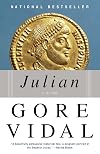
Well, I thank Julian Barnes for this one. While many people were flummoxed by the lengthy central section of Barnes's recent Elizabeth Finch, I quite enjoyed that curious venture into the life of Julian, later known as "the Apostate." I didn't know about this Roman emperor who decided to push back against the inroads of what he called "the Galileans," and the Christianity imposed by Constantine as the official faith of the empire. Julian's goal was the restoration of the old Roman pantheon show more and the Mithraic cult (from which the Galileans appropriated a number of practices, holidays, and folklore), while still permitting freedom of worship for everyone.
Vidal's Julian is a bookish, nerdy kid who wants only to be left alone to study and read and talk philosophy. Alas, as the nephew of Constantine and cousin to Constantius, Constantine's son and heir to the imperial purple, he could not avoid the deadly pressures - as one in line for the throne, he would always be watched and suspected as conniving to take it for himself. He lived his youth striving to be inconspicuous, unobjectionable, and alive. His older brother, ambitious, scheming, but not too bright, serves as an object lesson when he gets on someone's bad side and is murdered. Julian just wants to live.
And live he does. Structured as excerpts from Julian's purported memoir and diary, Vidal leads him from his scholarly pursuits into the temptations of power and adulation, through mystical religious epiphany, to an obsessive reliance on omens and auguries (he was known as the Bull Burner for the numbers of animals he slaughtered in sacrifice), to a thundering ambition to exceed Alexander's conquests of, well, every place he can get to. And - of course - it ends badly. The memoir sections are leavened by marginal commentary made by two scholars and erstwhile friends of Julian, often with acerbic, sharply funny observations on Julian's own reliability.
Vidal is hard on the Galileans - there is plenty to complain of and discuss, and as a seasoned philosopher, Julian is an able disputant in the theological strife. He is likable, ebullient, quite smart about managing men and what will persuade or coerce them into doing what he wants. But for all his dismissal of Christian beliefs, his own beliefs lead him astray and let him down... with bloody consequences for thousands, and himself. Some criticize this novel as excessively anti-Christian, and so it is to some extent, but the Roman gods ain't much better, and all the worse when you start mixing religion with affairs of state. This book was published in 1964... we should still be paying careful attention today!
Talky, busy... don't even try to keep straight who all those other Romans are who people the pages. Just roll with it, and watch this basically decent, intelligent, ambitious, courageous young fellow on his progress through the messy, violent, foolish, unpredictable, dangerous world of the Roman empire in the 4th century. show less
Vidal's Julian is a bookish, nerdy kid who wants only to be left alone to study and read and talk philosophy. Alas, as the nephew of Constantine and cousin to Constantius, Constantine's son and heir to the imperial purple, he could not avoid the deadly pressures - as one in line for the throne, he would always be watched and suspected as conniving to take it for himself. He lived his youth striving to be inconspicuous, unobjectionable, and alive. His older brother, ambitious, scheming, but not too bright, serves as an object lesson when he gets on someone's bad side and is murdered. Julian just wants to live.
And live he does. Structured as excerpts from Julian's purported memoir and diary, Vidal leads him from his scholarly pursuits into the temptations of power and adulation, through mystical religious epiphany, to an obsessive reliance on omens and auguries (he was known as the Bull Burner for the numbers of animals he slaughtered in sacrifice), to a thundering ambition to exceed Alexander's conquests of, well, every place he can get to. And - of course - it ends badly. The memoir sections are leavened by marginal commentary made by two scholars and erstwhile friends of Julian, often with acerbic, sharply funny observations on Julian's own reliability.
Vidal is hard on the Galileans - there is plenty to complain of and discuss, and as a seasoned philosopher, Julian is an able disputant in the theological strife. He is likable, ebullient, quite smart about managing men and what will persuade or coerce them into doing what he wants. But for all his dismissal of Christian beliefs, his own beliefs lead him astray and let him down... with bloody consequences for thousands, and himself. Some criticize this novel as excessively anti-Christian, and so it is to some extent, but the Roman gods ain't much better, and all the worse when you start mixing religion with affairs of state. This book was published in 1964... we should still be paying careful attention today!
Talky, busy... don't even try to keep straight who all those other Romans are who people the pages. Just roll with it, and watch this basically decent, intelligent, ambitious, courageous young fellow on his progress through the messy, violent, foolish, unpredictable, dangerous world of the Roman empire in the 4th century. show less
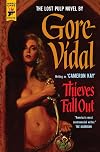
That was a lot more fun that I expected. A pulp mix of 1950's political drama meets Casablanca meets jewel of the Nile, with the emphasis on intrigue over adventure. There's a few gritty action moments, but it's mostly petty villains and femme fatales trying to orchestrate a jewel theft against the backdrop of rebellion in Egypt.
Snappy dialogue, fast paced and lots of colourful characters. Loved it
Snappy dialogue, fast paced and lots of colourful characters. Loved it
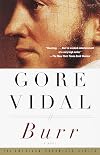
A stunning novel, in which Vidal uses the cannily chosen Aaron Burr as a hatchet to take apart the founding fathers and our various myths about them and show how all their human frailties are embedded in the nation and its direction. Burr, and his Boswell, Charles Schuyler, are an impeccably drawn pair of unreliable narrators who take us down the river of the creation of the United States and show us nooks and crannies in it we never even suspected.
Lists
Founding Father (1)
Books (1)
1970 Club (1)
All Things Oz (1)
1990s (1)
Hidden Classics (1)
1970s (2)
Five star books (4)
1980s (1)
1940s (1)
Kink Classics (1)
discontinued (1)
Awards


You May Also Like


Associated Authors
Statistics
- Works
- 168
- Also by
- 62
- Members
- 31,158
- Popularity
- #634
- Rating
- 3.8
- Reviews
- 502
- ISBNs
- 809
- Languages
- 23
- Favorited
- 125


