
Jonathan Dee (2) (1962–)
Author of The Privileges
For other authors named Jonathan Dee, see the disambiguation page.
About the Author
Image credit: Merk h
Works by Jonathan Dee
Associated Works
Money Changes Everything: Twenty-Two Writers Tackle the Last Taboo with Tales of Sudden Windfalls, Staggering Debts, and (2007) — Contributor — 51 copies, 1 review
Tagged
Common Knowledge
- Canonical name
- Dee, Jonathan
- Birthdate
- 1962
- Gender
- male
- Education
- Yale University
- Organizations
- Paris Review
- Nationality
- USA
- Associated Place (for map)
- USA
Members
Reviews

The unnamed narrator arrives in an unnamed city, having ditched everything that might identify him or make him traceable--his phone, his car, his driver's license. All he has is an envelope full of cash, $165,000 more or less, which he calculates is enough to last him until he is no more. He rents an apartment. on the second floor above his landlord, and begins living a modest life. He continues to be careful to avoid places and transactions which might lead to his being identified--no show more shopping at chain stores, or walking on streets where there might be cameras. His only activity is watching the kids, many of them immigrants, pass by on their way to and from school. We the readers are left wondering: Why is he hiding? What did he do? Will he ever go back to his old life?
These questions, and the excellent quality of the writing, were enough to keep me engaged and reading. This is a character study in which the main character is not just escaping something, he wants to totally disappear, as if he never existed. There is a healthy dose of social commentary here, about the ills of our current society, but also a bit of dark humor. (Two examples: "Nothing escapes the world's attention like a poor person." and "If white people had a tombstone, it would read, 'They Stopped At Nothing.'") I really enjoyed reading this (enough that I've gone on to read two more books by this author), though I do feel the "big reveal" implicitly promised by the underlying premise was a bit of a letdown.
First Line: "The American Interstate Highway system. Wonder of the twentieth century world."
Last Line: "From up close he looks nothing like me at all."
3 stars show less
These questions, and the excellent quality of the writing, were enough to keep me engaged and reading. This is a character study in which the main character is not just escaping something, he wants to totally disappear, as if he never existed. There is a healthy dose of social commentary here, about the ills of our current society, but also a bit of dark humor. (Two examples: "Nothing escapes the world's attention like a poor person." and "If white people had a tombstone, it would read, 'They Stopped At Nothing.'") I really enjoyed reading this (enough that I've gone on to read two more books by this author), though I do feel the "big reveal" implicitly promised by the underlying premise was a bit of a letdown.
First Line: "The American Interstate Highway system. Wonder of the twentieth century world."
Last Line: "From up close he looks nothing like me at all."
3 stars show less
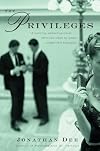
In Jonathan Dee’s new novel, the characters learn that freedom is not another word for nothing less to lose. It is a symbol of nothing left to gain. Readers have a close-up view of a way they will never be, living in privilege beyond the pale. We are fascinated outsiders who are able to crash the parties, activities, and minds of the possessors of significant wealth.
Dee introduces families and friends at the wedding of Adam and Cynthia celebrated in the hinterlands of Pittsburgh. show more Personality revealing vignettes are presented simultaneously, one character thinking about the no-barriers future while another trades stories of a gilded history with a lifelong friend at a blue collar bar.
Although we have observed second hand and with great fascination the privileged class, Dee’s skillful narrative puts readers right in the room with them. We are so close that I was embarrassed by the clothing I was wearing while reading the novel. Like Proust’s description of nobility in The Guermantes Way, we can understand the characters’ motivations, thoughts, and actions but can only imagine the other-worldly dimensions of their consciousness.
Even when Dee allows us to live later with Adam and Cynthia and their two children, April and Jonas, we think we know them while having only limited insight into their character. Each of the four family members’ personalities unfold within very wide boundaries compared to the cramped structures of our own lives. The dimensions of the world of significant wealth are so far-flung that the characters try to observe the values of others less fortunate to find some irreducible starting point. Of course, in the novel there is no such absolute zero, no standard to anchor a unifying philosophy. On the other end of the spectrum, there is no class above them. The best the family members can do is rely on solipsism and develop rules of conduct and understanding that are unique to each person but with intersecting areas that keep the family together with a very close bond.
The mind views of Adam, Cynthia, April, and Jonas encompass the realm of infinite personal wealth. The assumption of nothing left to gain makes past mistakes, indiscretions, and illegal money building strategies irrelevant to their present noble life. So, the family members keep running (literally for Adam) with the exercise privately timed and juggled to situations leaving readers in the dust. When local and world history change, these privileged characters naturally repurpose information, and moral relativism becomes too restrictive, too passé.
The four main characters are forever time-urgent and predictably other-serving rather than self-serving. Adam, for example, has a rather heroic personal code of conduct as strict and meaningful as Hemingway’s Robert Jordon in For Whom the Bell Tolls, but it is determined by the life of the mind rather than the life of action.
This is a top notch novel that involves a great story, detailed character development, and a liberating unifying philosophy. We readers can see that we have the privileges in spades, in our own minds. I highly recommend this novel for readers to enjoy and gain an intimate perspective on the contemporary families who are beyond the social register, beyond condescension, like Proust’s Guermantes. show less
Dee introduces families and friends at the wedding of Adam and Cynthia celebrated in the hinterlands of Pittsburgh. show more Personality revealing vignettes are presented simultaneously, one character thinking about the no-barriers future while another trades stories of a gilded history with a lifelong friend at a blue collar bar.
Although we have observed second hand and with great fascination the privileged class, Dee’s skillful narrative puts readers right in the room with them. We are so close that I was embarrassed by the clothing I was wearing while reading the novel. Like Proust’s description of nobility in The Guermantes Way, we can understand the characters’ motivations, thoughts, and actions but can only imagine the other-worldly dimensions of their consciousness.
Even when Dee allows us to live later with Adam and Cynthia and their two children, April and Jonas, we think we know them while having only limited insight into their character. Each of the four family members’ personalities unfold within very wide boundaries compared to the cramped structures of our own lives. The dimensions of the world of significant wealth are so far-flung that the characters try to observe the values of others less fortunate to find some irreducible starting point. Of course, in the novel there is no such absolute zero, no standard to anchor a unifying philosophy. On the other end of the spectrum, there is no class above them. The best the family members can do is rely on solipsism and develop rules of conduct and understanding that are unique to each person but with intersecting areas that keep the family together with a very close bond.
The mind views of Adam, Cynthia, April, and Jonas encompass the realm of infinite personal wealth. The assumption of nothing left to gain makes past mistakes, indiscretions, and illegal money building strategies irrelevant to their present noble life. So, the family members keep running (literally for Adam) with the exercise privately timed and juggled to situations leaving readers in the dust. When local and world history change, these privileged characters naturally repurpose information, and moral relativism becomes too restrictive, too passé.
The four main characters are forever time-urgent and predictably other-serving rather than self-serving. Adam, for example, has a rather heroic personal code of conduct as strict and meaningful as Hemingway’s Robert Jordon in For Whom the Bell Tolls, but it is determined by the life of the mind rather than the life of action.
This is a top notch novel that involves a great story, detailed character development, and a liberating unifying philosophy. We readers can see that we have the privileges in spades, in our own minds. I highly recommend this novel for readers to enjoy and gain an intimate perspective on the contemporary families who are beyond the social register, beyond condescension, like Proust’s Guermantes. show less

Don’t be like the idiots who couldn’t get past the first narrator. Instead, do what I did and flip ahead to see if he stays. He doesn’t. And personally, I don’t understand why he was needed anyway.
Ok, with that out of the way let me tell you my first impression of this book was one of comfort - that I was in the hands of a writer with skill. The prose just lit up my brain somehow. Once I got past the initial narrator that is. What a creepy, misogynist piece of work he was. I was show more dreading meeting him again, but luckily we don’t and as I said above, I’m not sure why he was necessary. Perhaps as a way to show how undone Mark was and how trusting. 9/11 made us all crazy, but I do agree with the sentiment on page 41 that the people who died weren’t heroes, they were victims. Sad, but just that. This doesn't include fire, police or rescue...those deaths were the deaths of heroes.
Mark is pretty trusting. I mean, how dumb do you have to be to fall for a scam like that. I was investing in the mid-90s and found trustworthy, reputable firms to give my money to. It’s not that hard. Oy.
The small town vibe felt reminiscent of Richard Russo’s books. The relationships are all plausible, intimate and well-drawn, especially the power structure, what there is of it. I found the transitions focusing on one person to another to be smooth and natural. Gerry is a sociopath. Hadi’s civic funding reminded me of Clark Rockefeller’s doings in real-life Cornish NH. I imagined the set up would culminate in the economic implosion of 2008, but it didn’t. All in all it was a good book, but I do have some complaints -
First, the elder Firth situation goes unresolved. Much is made of mom’s worsening alzheimer’s and dad’s anger, but it just slides off the page into nothing. Second, I don’t remember people doing the hyper-local thing in 2003 or so. You know...buying local food and products because they’re local. Third, a restaurant wants to use local ingredients and has a May menu listing tomatoes, eggplant, beets, peppers etc. Stuff you will NEVER get in New England at that time unless you have a huge greenhouse operation.
The characterization of Candace’s unsatisfactory boyfriend on pages 210-11 is so great though. We all have known guys like this -
“Andrew, second-generation owner of the sporting goods store in Howland where Candace bought running shoes and the like, was a classic local type. He thought he knew everything; he was overconfident and condescending and maybe two-thirds as good looking as he thought he was and he had always gotten what he wanted because he was too dumb to understand how much else there was to want, outside of the life he was living, the life he had always lived. The less he knew about something, or someone, the more superior he felt. She longed to undo him.” show less
Ok, with that out of the way let me tell you my first impression of this book was one of comfort - that I was in the hands of a writer with skill. The prose just lit up my brain somehow. Once I got past the initial narrator that is. What a creepy, misogynist piece of work he was. I was show more dreading meeting him again, but luckily we don’t and as I said above, I’m not sure why he was necessary. Perhaps as a way to show how undone Mark was and how trusting. 9/11 made us all crazy, but I do agree with the sentiment on page 41 that the people who died weren’t heroes, they were victims. Sad, but just that. This doesn't include fire, police or rescue...those deaths were the deaths of heroes.
Mark is pretty trusting. I mean, how dumb do you have to be to fall for a scam like that. I was investing in the mid-90s and found trustworthy, reputable firms to give my money to. It’s not that hard. Oy.
The small town vibe felt reminiscent of Richard Russo’s books. The relationships are all plausible, intimate and well-drawn, especially the power structure, what there is of it. I found the transitions focusing on one person to another to be smooth and natural. Gerry is a sociopath. Hadi’s civic funding reminded me of Clark Rockefeller’s doings in real-life Cornish NH. I imagined the set up would culminate in the economic implosion of 2008, but it didn’t. All in all it was a good book, but I do have some complaints -
First, the elder Firth situation goes unresolved. Much is made of mom’s worsening alzheimer’s and dad’s anger, but it just slides off the page into nothing. Second, I don’t remember people doing the hyper-local thing in 2003 or so. You know...buying local food and products because they’re local. Third, a restaurant wants to use local ingredients and has a May menu listing tomatoes, eggplant, beets, peppers etc. Stuff you will NEVER get in New England at that time unless you have a huge greenhouse operation.
The characterization of Candace’s unsatisfactory boyfriend on pages 210-11 is so great though. We all have known guys like this -
“Andrew, second-generation owner of the sporting goods store in Howland where Candace bought running shoes and the like, was a classic local type. He thought he knew everything; he was overconfident and condescending and maybe two-thirds as good looking as he thought he was and he had always gotten what he wanted because he was too dumb to understand how much else there was to want, outside of the life he was living, the life he had always lived. The less he knew about something, or someone, the more superior he felt. She longed to undo him.” show less
The most telling quote of this book for me was early on in the story. Cynthia, a young bride on her wedding day, is thinking back to the planning for the event. The groom, Adam, had been in favor of something simpler, “But the truth was that that wouldn't have seemed unusual enough to Cynthia, too little distinct from a typical Saturday night out drinking and dancing with their friends, just with fancier clothes and a worse band. She wasn't completely sure why the idea should appeal to her show more at all – the big schmaltzy wedding, the sort of wedding for which everyone would have to make travel plans – but she didn't make a habit of questioning her wants.”
Not questioning one's wants is what this book is about. It is about people who feel so entitled that their very wanting something justifies getting it, and the means necessary to do so.
This proves true throughout Adam and Cynthia's life together. Though they do seem to love and be faithful to one another – their main commonality seems not to be desire for each other, but desire for things, for status, for power, for the bigger and better and faster and newer.
This kind of thinking also shapes their parenting skills. When reflecting on her children, Cynthia thinks, “What was supposed to be the point of denying them anything? Who decided that not having things that your parents hadn't had either was character building somehow?” “And what was the point of getting hung up on how much things cost?”
I must have read that sentence about not denying your children anything at least three times. Though I know that sentiment is out there, even in parents that can't afford to live by that way of reasoning, the thought makes me almost ill. The children that result from the absence of the word “no” in their lives are not ones that will neither live happy nor productive lives, nor be people I hope to encounter very often.
April, Adam and Cynthia's daughter, certainly proves this to be true. “If, in a given activity, there was a next step to be taken – a taller cliff to dive from, purer drugs to try, something bigger and more difficult to steal – someone, at some point, was going to take that step, it was like a law of nature, and so let the record reflect that that someone was her.”
This thought is a mirror of one her father has - “That was it: everything was open to them. What was life's object if not that? Adam knew on some level that he had to get as much money out of those Anguillian accounts as possible and shut them down, but more than that he wanted to just spend it all on the three of them, as orgiastically, challenge his family to come up with desires they hadn't even thought of yet and then make those desires real.”
This is a book about people I don't understand and don't admire in the least. That is not to say it's a bad book, it's a story well and probably accurately told about people who have egos and desires even bigger than their grotesquely large bank accounts.
(On a side note? There was one laugh out loud moment when the Hamptons are referred to as “a game preserve for rich people”.)
“The Privileges” is a book about the ultra rich...and the children of the ultra rich. It's about a world that few of us understand and even fewer will ever experience. It's about a mindset that doesn't see any ramifications from one's actions, as long as those actions benefit oneself. It's a story that seems lurking behind the eyes of more and more people on the news these days...those people who are finally realizing that their privileges can't always save them from themselves. show less
Not questioning one's wants is what this book is about. It is about people who feel so entitled that their very wanting something justifies getting it, and the means necessary to do so.
This proves true throughout Adam and Cynthia's life together. Though they do seem to love and be faithful to one another – their main commonality seems not to be desire for each other, but desire for things, for status, for power, for the bigger and better and faster and newer.
This kind of thinking also shapes their parenting skills. When reflecting on her children, Cynthia thinks, “What was supposed to be the point of denying them anything? Who decided that not having things that your parents hadn't had either was character building somehow?” “And what was the point of getting hung up on how much things cost?”
I must have read that sentence about not denying your children anything at least three times. Though I know that sentiment is out there, even in parents that can't afford to live by that way of reasoning, the thought makes me almost ill. The children that result from the absence of the word “no” in their lives are not ones that will neither live happy nor productive lives, nor be people I hope to encounter very often.
April, Adam and Cynthia's daughter, certainly proves this to be true. “If, in a given activity, there was a next step to be taken – a taller cliff to dive from, purer drugs to try, something bigger and more difficult to steal – someone, at some point, was going to take that step, it was like a law of nature, and so let the record reflect that that someone was her.”
This thought is a mirror of one her father has - “That was it: everything was open to them. What was life's object if not that? Adam knew on some level that he had to get as much money out of those Anguillian accounts as possible and shut them down, but more than that he wanted to just spend it all on the three of them, as orgiastically, challenge his family to come up with desires they hadn't even thought of yet and then make those desires real.”
This is a book about people I don't understand and don't admire in the least. That is not to say it's a bad book, it's a story well and probably accurately told about people who have egos and desires even bigger than their grotesquely large bank accounts.
(On a side note? There was one laugh out loud moment when the Hamptons are referred to as “a game preserve for rich people”.)
“The Privileges” is a book about the ultra rich...and the children of the ultra rich. It's about a world that few of us understand and even fewer will ever experience. It's about a mindset that doesn't see any ramifications from one's actions, as long as those actions benefit oneself. It's a story that seems lurking behind the eyes of more and more people on the news these days...those people who are finally realizing that their privileges can't always save them from themselves. show less
Lists
Awards


You May Also Like


Associated Authors
Statistics
- Works
- 8
- Also by
- 3
- Members
- 1,624
- Popularity
- #15,845
- Rating
- 3.4
- Reviews
- 115
- ISBNs
- 155
- Languages
- 9
- Favorited
- 4
