
Katherine Anne Porter (1890–1980)
Author of The Collected Stories of Katherine Anne Porter
About the Author
Katherine Anne Porter is known for her subtle and delicate perception; her careful, disciplined technique; and her precision of word and phrase. She wrote slowly and with restraint but achieved an impression of ease and naturalness that is close to perfection. She was born in Texas, schooled in show more Louisiana convents, and, working as a newspaper reporter and freelance journalist, traveled to such places as Paris, Majorca, Berlin, Vienna, and Mexico. Her Collected Stories (1965), which won both the Pulitzer Prize and the National Book Award in 1966, was written over a long lifetime. It includes works that have been a standard part of high school and college literature courses for a half-century. Among the best are "Noon Wine," "The Jilting of Granny Weatherall," and "Flowering Judas." "Pale Horse, Pale Rider," long enough to be considered a novelette, is one of several stories about a character named Miranda who as a girl and young woman undergoes experiences not unlike those of Porter. Other Miranda stories are "Old Mortality" and a group of seven gathered under the title "The Old Order" that deal with her childhood. Her one and only full-length novel, Ship of Fools (1962), 20 years in the writing, "is the story of a voyage... . A novel of character rather than of action, it has as its main purpose a study of the German ethos shortly before Hitler's coming to power in Germany... ."Ship of Fools' is also a human comedy and a moral allegory" (New Yorker). To some critics, the book was a disappointment, but all recognized its importance and it appeared on the bestseller list for 28 weeks in 1962. "In my view," wrote Robert Penn Warren in a tribute published in Saturday Review after Porter's death in 1980, "the final importance of Katherine Anne Porter is not merely that she has written a number of fictions which have enlarged and deepened the nature of the story, both short and long, in our time, but that she has created an oeuvre---a body of work including fiction, essays, letters, and journals---that bears the stamp of a personality, distinctive, delicately perceptive, keenly aware of the depth and darkness of human experience, delighted by the beauty of the world and the triumphs of human kindness and warmth, and thoroughly committed to a quest for meaning in the midst of the ironic complexities of man's lot." Much of the nonfictional part of that body of work was gathered into The Collected Essays and Occasional Writings of Katherine Anne Porter. (Bowker Author Biography) show less
Image credit: UPress, University Press of Mississippi
Works by Katherine Anne Porter
Los Premios Pulitzer de Novela (Vol. VIII): Margaret Ayer Barnes, A. B. Guthrie Jr., Katherine Ann Porter, Bernard Malamud (1982) — Contributor — 5 copies
Theft [short story] 3 copies
Selected short stories 2 copies
María Concepción 2 copies
Porter Katherine Anne 2 copies
Bolondok hajója 1 copy
Statek szaleńców 1 copy
Wino O Południu 1 copy
NARRACIONES SELECTAS 1 copy
Bolondok hajj̤a : regňy 1 copy
Det skæve tårn 1 copy
Rope 1 copy
He 1 copy
They Trample on Your Heart 1 copy
Associated Works
Literature: An Introduction to Fiction, Poetry, and Drama (1995) — Contributor, some editions — 1,012 copies, 7 reviews
Perrine's Literature: Structure, Sound, and Sense (1970) — Contributor, some editions — 893 copies, 4 reviews
The World of the Short Story: A 20th Century Collection (1986) — Contributor — 512 copies, 4 reviews
New York Stories [Everyman's Library Pocket Classics] (2011) — Contributor, some editions — 198 copies, 5 reviews
The Mangy Parrot: The Life and Times of Periquillo Sarniento, Written by Himself for His Children (1816) — Translator, some editions — 178 copies, 3 reviews
Growing Up in the South: An Anthology of Modern Southern Literature (1991) — Contributor — 164 copies, 1 review
An American Album: One Hundred and Fifty Years of Harper's Magazine (2000) — Contributor — 145 copies, 1 review
The Norton Anthology of American Literature, Volume 2: 1865 to Present (1979) — Contributor, some editions — 136 copies
The Retrial of Joan of Arc: The Evidence for her Vindication (1982) — Foreword, some editions — 88 copies, 1 review
The Heath Anthology of American Literature, Concise Edition (2003) — Contributor — 73 copies, 1 review
Gentlemen, Scholars and Scoundrels: A Treasury of the Best of Harper's Magazine from 1850 to the Present (1972) — Contributor — 62 copies
Published and Perished: Memoria, Eulogies, and Remembrances of American Writers (2002) — Contributor — 41 copies, 1 review
The Haves and Have Nots: 30 Stories About Money and Class in America (1999) — Contributor — 36 copies
Fifty Years of the American Short Story from the O. Henry Awards 1919-1970 (1970) — Contributor — 17 copies, 1 review
Many-Colored Fleece: An Anthology of Twentieth-Century Catholic Fiction (2022) — Contributor — 9 copies
The Best Short Stories of 1937 and the Yearbook of the American Short Story (1937) — Contributor — 8 copies
The Best Short Stories of 1940 and the Yearbook of the American Short Story (1940) — Contributor — 8 copies
The Best Short Stories of 1936 and the Yearbook of the American Short Story (1936) — Contributor — 5 copies
Fifty Years of the American Short Story from the O. Henry Awards 1919-1970, Volume 2 (1970) — Contributor — 5 copies
The Best Short Stories of 1933 and the Yearbook of the American Short Story (1933) — Contributor — 2 copies
The Ethnic Image in Modern American Literature, 1900-1950, Volumes 1-2 (1984) — Contributor — 1 copy
Antologia do conto moderno — Author — 1 copy
Tagged
Common Knowledge
- Legal name
- Porter, Callie Russel
- Other names
- Porter, Katherine Anne Maria Veronica Callista Russel
- Birthdate
- 1890-05-15
- Date of death
- 1980-09-18
- Gender
- female
- Education
- self-educated
- Occupations
- short story writer
novelist
essayist
journalist
translator
literary critic (show all 7)
ghostwriter - Organizations
- American Academy of Arts and Letters (Literature ∙ 1941)
National Institute of Arts and Letters (vice-president, 1950-52) - Awards and honors
- Emerson-Thoreau Medal (1962)
Gold medal, National Institute of Arts and Letters (1967)
Creative arts award, Brandeis University (1971-72)
Postage stamp, US Postal Service (2006) - Relationships
- Erskine, Albert (husband)
Taylor, Peter Hillsman (friend) - Nationality
- USA
- Birthplace
- Indian Creek, Texas, USA
- Places of residence
- Indian Creek, Texas, USA
Chicago, Illinois, USA
Denver, Colorado, USA
New York, New York, USA
Mexico City, Mexico
Berlin, Germany (show all 9)
Paris, France
Silver Spring, Maryland, USA
Kyle, Texas, USA - Place of death
- Silver Spring, Maryland, USA
- Burial location
- Indian Creek Cemetery, Indian Creek, Texas, USA
- Associated Place (for map)
- USA
Members
Reviews

Following the toil of twenty years, Katherine Anne Porter published her one and only novel in 1962 on the heels of her fame as a short story author. It became the number one bestseller in fiction for that year. Her inspiration was a similar cruise and the fellow passengers she observed while traveling from Mexico to Germany in the 1930s. Her novel serves to capture the rampant prejudices and attitudes of the time among people from different nations and circumstances, in the years of the show more Great Depression leading up to World War II and the Jewish Holocaust.
In his earlier novel "Howards End", E.M. Forster explicitly implored us to "only connect". In "Ship of Fools", Katherine Anne Porter depicts a world that does the inverse as if to underline the point. It is very simple to dismiss this as 500 pages of nothing more than unlikeable people being cruel to one another, without considering if that's fully intentional and what can be learned from it.
Is there nothing likeable about the artist Jenny, who knows she needs to get out from under her boyfriend's thumb and somehow cannot? About Freytag, who stands up for his Jewish wife even in her absence? About Elsa Lutz, the unfortunate girl who dreams hopelessly of finding love? Or what about Mrs. Hutten, who has a brilliant and penetrating mind of her own but feels obliged to live in her husband's shadow? Certainly even these characters have their low moments, but again that's part of the message.
Why are none of these people making an effort to actually know one another? The answer lands frighteningly close to what we habitually do in our own lives. Isn't it easier not to get involved, not to care, to judge without knowing? After all, look what happens when we try. Porter shows us barriers we may meet with: racism, misogyny, ageism, prejudice against other social classes. All of them are defence mechanisms against fear of the other, whichever 'other' they've chosen to designate.
Everyone on the ship fears being call upon to empathize, certain they would never be empathized with themselves. Jenny almost says it, when David asks what she's crying for. "Everything in the whole world. That lets you in, somewhere ..." All it does is hurt those who show empathy, exposing themselves as the weak, the vulnerable, the foolish. It becomes a contest to see who can make whom display it, and for what. They are horrified when given one another's confidences, as if being handed poison. Nobody wants to summon the empathy being called upon. Take Mrs. Treadwell, when she does not want to understand too much about Mr. Freytag's life and circumstances: "There was no cure, no comfort, tears change nothing and words can never get at the truth. No don't tell me any more about yourself, I am not listening, you cannot force my attention. I don't want know you, and I will not know you. Don't try to come nearer."
Disdain of others, dislike, even cold hatred, are used as a means of self-preservation. Perhaps they don't want exposure to how small and self-involved their problems are in the grand scheme. Why does nobody understand or appreciate the enormity of what they are going through? It's a certainty that blinds them from understanding anyone else, or even wanting to understand. There are examples in plenty of this dismissive behaviour in the novel, in the acts of racism, righteous religious differences, Mrs. Rittersdorf's diary entries, on and on. Mrs. Schmitt feels it happening: "One man's desire must always crowd out another's, one must always take his own good at another's expense. Or so it seemed. God forgive us all." And yet she behaves no better.
Where will it all lead? On a literal level, the ship leads them to Germany which in that time period was the epitome of all the problems here on display. On a literary level, we should look at Ric and Rac who place themselves "outside of humanity" with their utter disregard for anything and everything, the symbol of what at least most of the adults are striving for. On the outside, at least. On the inside they are also these children, but huddling and shivering in their bunks with no where safe to turn. Vulnerable, and afraid of that vulnerability.
The best novels hold up a mirror to show us what we are. We don't have to like it, but let's at least acknowledge what not liking it means. show less
In his earlier novel "Howards End", E.M. Forster explicitly implored us to "only connect". In "Ship of Fools", Katherine Anne Porter depicts a world that does the inverse as if to underline the point. It is very simple to dismiss this as 500 pages of nothing more than unlikeable people being cruel to one another, without considering if that's fully intentional and what can be learned from it.
Is there nothing likeable about the artist Jenny, who knows she needs to get out from under her boyfriend's thumb and somehow cannot? About Freytag, who stands up for his Jewish wife even in her absence? About Elsa Lutz, the unfortunate girl who dreams hopelessly of finding love? Or what about Mrs. Hutten, who has a brilliant and penetrating mind of her own but feels obliged to live in her husband's shadow? Certainly even these characters have their low moments, but again that's part of the message.
Why are none of these people making an effort to actually know one another? The answer lands frighteningly close to what we habitually do in our own lives. Isn't it easier not to get involved, not to care, to judge without knowing? After all, look what happens when we try. Porter shows us barriers we may meet with: racism, misogyny, ageism, prejudice against other social classes. All of them are defence mechanisms against fear of the other, whichever 'other' they've chosen to designate.
Everyone on the ship fears being call upon to empathize, certain they would never be empathized with themselves. Jenny almost says it, when David asks what she's crying for. "Everything in the whole world. That lets you in, somewhere ..." All it does is hurt those who show empathy, exposing themselves as the weak, the vulnerable, the foolish. It becomes a contest to see who can make whom display it, and for what. They are horrified when given one another's confidences, as if being handed poison. Nobody wants to summon the empathy being called upon. Take Mrs. Treadwell, when she does not want to understand too much about Mr. Freytag's life and circumstances: "There was no cure, no comfort, tears change nothing and words can never get at the truth. No don't tell me any more about yourself, I am not listening, you cannot force my attention. I don't want know you, and I will not know you. Don't try to come nearer."
Disdain of others, dislike, even cold hatred, are used as a means of self-preservation. Perhaps they don't want exposure to how small and self-involved their problems are in the grand scheme. Why does nobody understand or appreciate the enormity of what they are going through? It's a certainty that blinds them from understanding anyone else, or even wanting to understand. There are examples in plenty of this dismissive behaviour in the novel, in the acts of racism, righteous religious differences, Mrs. Rittersdorf's diary entries, on and on. Mrs. Schmitt feels it happening: "One man's desire must always crowd out another's, one must always take his own good at another's expense. Or so it seemed. God forgive us all." And yet she behaves no better.
Where will it all lead? On a literal level, the ship leads them to Germany which in that time period was the epitome of all the problems here on display. On a literary level, we should look at Ric and Rac who place themselves "outside of humanity" with their utter disregard for anything and everything, the symbol of what at least most of the adults are striving for. On the outside, at least. On the inside they are also these children, but huddling and shivering in their bunks with no where safe to turn. Vulnerable, and afraid of that vulnerability.
The best novels hold up a mirror to show us what we are. We don't have to like it, but let's at least acknowledge what not liking it means. show less

Katherine Anne Porter remembers what happens in the adolescent brain, she knows how husbands and wives argue and what about, she knows how poorly drawn is the line between aspiration and realism. Her stories are high on intimacy rather than drama, internal rather than external. There are themes she circles back to in subsequent stories like echoes, revisiting and reconsidering. Sometimes she holds the mirror a little too close for comfort; but that problem lies with me, not her. There are show more too many stories here to rate all of them, but some of the highlights:
Virgin Violeta - the bitter clash of fantasy and reality in coming-of-age.
The Martyr - contrasts in perception/reputation before and after death.
Rope - a perfect capturing of petty marital bickering.
He - the convenience of adopting others' biases.
The Jilting of Granny Weatherall - death bed regrets.
The Cracked Looking Glass - a kinder, gentler Madame Bovary story.
Old Mortality - the past as family legend, gossip, or the tiresome memories of a prior generation.
Noon Wine - consequences for caring "how things look"; study Mr Thompson.
Pale Horse, Pale Rider - journalist vs metaphorical horsemen of the apocalypse.
The Old Order - Tennyson, "The old order changes, yielding place to new." Contrasts generations; comprised of several shorter stories.
The Downward Path to Wisdom - the mis-rearing of a young child.
A Day's Work - balanced view of a dysfunctional marriage.
Holiday - an unexpected personal connection.
The Leaning Tower - an American finds 1931 Berlin to be fragile and vulnerable. show less
Virgin Violeta - the bitter clash of fantasy and reality in coming-of-age.
The Martyr - contrasts in perception/reputation before and after death.
Rope - a perfect capturing of petty marital bickering.
He - the convenience of adopting others' biases.
The Jilting of Granny Weatherall - death bed regrets.
The Cracked Looking Glass - a kinder, gentler Madame Bovary story.
Old Mortality - the past as family legend, gossip, or the tiresome memories of a prior generation.
Noon Wine - consequences for caring "how things look"; study Mr Thompson.
Pale Horse, Pale Rider - journalist vs metaphorical horsemen of the apocalypse.
The Old Order - Tennyson, "The old order changes, yielding place to new." Contrasts generations; comprised of several shorter stories.
The Downward Path to Wisdom - the mis-rearing of a young child.
A Day's Work - balanced view of a dysfunctional marriage.
Holiday - an unexpected personal connection.
The Leaning Tower - an American finds 1931 Berlin to be fragile and vulnerable. show less
Pale horse, pale rider Three short novels: a library of america ebook classic by Katherine Anne Porter

I had read nothing by Katherine Anne Porter up until this year. I was missing out on a perceptive, powerful, profound author and now I'm just worried about reading through all her work too quickly. PH,PR was on my pandemic reading list and it was a wonderful (and dark) personal account, not only of someone who experienced the Spanish flu firsthand, suffering the illness and the loss of someone she loved, but someone experiencing the culture of the First World War from a critical, sometimes show more cynical, perspective. I began to highlight on every other page, gems like:
[T]he worst of war is the fear and suspicion and the awful expression in all the eyes you meet...as if they had pulled down the shutters over their minds and their hearts and were peering out at you, ready to leap if you make one gesture or say one word they do not understand instantly...It's what war does to the mind and heart...
And:
The body is a curious monster, no place to live in, how could anyone feel at home there? Is it possible I can ever accustom myself to this place? she asked herself.
I could go on. The way that she weaves dreams and fevered visions through her prose is masterful.
I could go on...but better you go pick up a copy and read it straight from Porter. show less
[T]he worst of war is the fear and suspicion and the awful expression in all the eyes you meet...as if they had pulled down the shutters over their minds and their hearts and were peering out at you, ready to leap if you make one gesture or say one word they do not understand instantly...It's what war does to the mind and heart...
And:
The body is a curious monster, no place to live in, how could anyone feel at home there? Is it possible I can ever accustom myself to this place? she asked herself.
I could go on. The way that she weaves dreams and fevered visions through her prose is masterful.
I could go on...but better you go pick up a copy and read it straight from Porter. show less
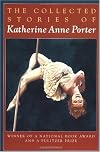
This was one of the best collections of short stories I've ever read.
I am not generally a fan of short stories. I like to commit to my literature and short stories tend to feel like a summer fling that was over before I was able to analyze it to death and suck all of the fun out it.
I especially dislike collections of short stories because even the best authors' voices come through in them. While I typically like to feel as though I can hear an author's voice, when it happens during a book show more of 30 of their short stories and it's the same author with different stories, I get confused, partially due to the fact that I'm extremely dumb and partially due to the fact that they almost always center around the same themes or characters who hail from similar backgrounds and locations.
This was not the case with Katherine Anne Porter. Every one of these stories was completely different in style, voice, content and characterization and every one of the stories was brilliant. It helped that many of them were over 50 pages long (one was over 100). The length allowed me to get to know the characters as intimately as I wanted.
All in all, this was a fantastic book from a writer who is not only talented but extremely versatile as well. show less
I am not generally a fan of short stories. I like to commit to my literature and short stories tend to feel like a summer fling that was over before I was able to analyze it to death and suck all of the fun out it.
I especially dislike collections of short stories because even the best authors' voices come through in them. While I typically like to feel as though I can hear an author's voice, when it happens during a book show more of 30 of their short stories and it's the same author with different stories, I get confused, partially due to the fact that I'm extremely dumb and partially due to the fact that they almost always center around the same themes or characters who hail from similar backgrounds and locations.
This was not the case with Katherine Anne Porter. Every one of these stories was completely different in style, voice, content and characterization and every one of the stories was brilliant. It helped that many of them were over 50 pages long (one was over 100). The length allowed me to get to know the characters as intimately as I wanted.
All in all, this was a fantastic book from a writer who is not only talented but extremely versatile as well. show less
Lists
1960s (1)
Female Author (1)
Favourite Books (1)
Read These Too (1)
Southern Fiction (1)
Hidden Classics (1)
Ocean Setting (1)
Books with Twins (1)
discontinued (1)
Schwob Nederland (1)
1930s (1)
Awards


You May Also Like


Associated Authors
Statistics
- Works
- 64
- Also by
- 96
- Members
- 5,341
- Popularity
- #4,661
- Rating
- 3.8
- Reviews
- 88
- ISBNs
- 146
- Languages
- 12
- Favorited
- 21
