
Mark Doty
Author of Dog Years: A Memoir
About the Author
Image credit: Photo by Matthew Stroshane, from MarkDoty.org
Works by Mark Doty
Turtle, Swan and Bethlehem in Broad Daylight: TWO VOLUMES OF POETRY (Other Poetry Volumes) (1999) 62 copies
The Helen Burns Poetry Anthology: New Voices from the Academy of American Poets Vol 9. (2010) 3 copies
Poetry and Commitment 1 copy
Gulf Coast, Summer/Fall 2003 1 copy
Gulf Coast, Summer/Fall 2004 1 copy
Public Displays of Affection 1 copy
Associated Works
The Making of a Poem: A Norton Anthology of Poetic Forms (2000) — Contributor — 1,473 copies, 9 reviews
The Vintage Book of Contemporary American Poetry (1990) — Contributor, some editions — 860 copies, 3 reviews
Touchstone Anthology of Contemporary Creative Nonfiction: Work from 1970 to the Present (2007) — Contributor — 220 copies, 3 reviews
The Poetry Pharmacy: Tried-and-True Prescriptions for the Heart, Mind, and Soul (2017) 198 copies, 5 reviews
The Best American Poetry 2014 (The Best American Poetry series) (2014) — Contributor — 89 copies, 1 review
Bullets Into Bells: Poets and Citizens Respond to Gun Violence (2017) — Contributor — 68 copies, 3 reviews
Significant Objects: 100 Extraordinary Stories about Ordinary Things (2012) — Contributor — 64 copies, 1 review
Here Lies My Heart: Essays on Why We Marry, Why We Don't, and What We Find There (1999) — Contributor — 62 copies, 3 reviews
Whos Yer Daddy?: Gay Writers Celebrate Their Mentors and Forerunners (2012) — Contributor — 20 copies
Tagged
Common Knowledge
- Birthdate
- 1953-08-10
- Gender
- male
- Education
- Drake University (B.A.)
Goddard College (M.F.A. creative writing) - Occupations
- poet
professor - Awards and honors
- Whiting Writers' Award (1994)
National Book Award Winner (2008)
The National Book Critics Circle Award
The PEN/Martha Albrand Award
The Los Angeles Times Book Prize
The T.S. Eliot Prize - Relationships
- Lisicky, Paul (ex-husband)
- Short biography
- Mark Doty is the author of numerous books of poems, including Deep Lane, which is forthcoming from W. W. Norton in 2015. He is a professor/writer-in-residence at Rutgers University in New Brunswick, New Jersey, and a Chancellor of the Academy of American Poets. He published under the name M.R. Doty during the late 1970s, while writing in collaboration with his wife, Ruth Doty.
- Nationality
- USA
- Birthplace
- Maryville, Tennessee, USA
- Places of residence
- Houston, Texas, USA
New York, New York, USA - Associated Place (for map)
- USA
Members
Reviews

I've always had a mixed relationship with Walt Whitman's poetry: there's a gloriously liberating quality in the way he digs out handfuls of names and trade-terms and idioms, formal and informal, and takes it for granted that there is a poem in there somewhere; there's his endless fascination with breaking down the barrier of skin between himself and the rest of humanity (especially beautiful working men...) — but there's also his brash self-promotion, his arrogant assumption of American show more primacy in the world, his Wordsworth-like descent into celebrity-prophet status in old age, and the way that so many of his best lines have been turned into clichés that make it difficult to read them afresh. And — perhaps above all — he's a poet who gave implicit permission to generations and generations of lesser imitators (especially, but not exclusively, in his own country) to rant endlessly in free verse.
Doty has a go at overcoming these problems, in a book that's a mixture of critical biography of Whitman, seminar-room close-reading of parts of "Song of myself" and "Crossing Brooklyn Ferry", and a confessional memoir of Doty himself as gay man, poet, teacher and Whitman-reader in the 20th century. He digs into the early editions of Leaves of grass and the circumstances of their production to help us see what was so radical and new about what Whitman was giving himself the authority to do: not only breaking away from strict forms and integrating vernacular language in ways that Coleridge and Wordsworth could only dream about, but writing directly and almost without evasion about sexuality and the physicality of our desire for other bodies (much of this got toned down in later editions). Doty reminds us of the relative freedom Whitman still had to write about love between men in the 1850s, before the medicalisation of same-sex desire made readers start looking in such texts for the criminal and perverted. Even then, I think you'd have to be very blind to coded messages not to see at least some of the queer sexual imagery Whitman thrusts at us...
I did find it a little bit disturbing how smoothly Doty switches between his blackboard voice and his bedroom voice. Obviously there's something deliberately Whitmanesque about that technique: he wants us to understand that reading a poem isn't just a matter of analysing the words in a classroom, you have to be able to find parallels in your own experience to project it onto as well, even if most of us aren't called upon to do that publicly. Sometimes hearing about Doty's life and the men in it and what they meant to him was interesting and wonderful, but sometimes it felt like being trapped with an embarrassingly confessional stranger in a railway compartment.
Still, a worthwhile book, and one that seems to deal very fairly with Whitman. show less
Doty has a go at overcoming these problems, in a book that's a mixture of critical biography of Whitman, seminar-room close-reading of parts of "Song of myself" and "Crossing Brooklyn Ferry", and a confessional memoir of Doty himself as gay man, poet, teacher and Whitman-reader in the 20th century. He digs into the early editions of Leaves of grass and the circumstances of their production to help us see what was so radical and new about what Whitman was giving himself the authority to do: not only breaking away from strict forms and integrating vernacular language in ways that Coleridge and Wordsworth could only dream about, but writing directly and almost without evasion about sexuality and the physicality of our desire for other bodies (much of this got toned down in later editions). Doty reminds us of the relative freedom Whitman still had to write about love between men in the 1850s, before the medicalisation of same-sex desire made readers start looking in such texts for the criminal and perverted. Even then, I think you'd have to be very blind to coded messages not to see at least some of the queer sexual imagery Whitman thrusts at us...
I did find it a little bit disturbing how smoothly Doty switches between his blackboard voice and his bedroom voice. Obviously there's something deliberately Whitmanesque about that technique: he wants us to understand that reading a poem isn't just a matter of analysing the words in a classroom, you have to be able to find parallels in your own experience to project it onto as well, even if most of us aren't called upon to do that publicly. Sometimes hearing about Doty's life and the men in it and what they meant to him was interesting and wonderful, but sometimes it felt like being trapped with an embarrassingly confessional stranger in a railway compartment.
Still, a worthwhile book, and one that seems to deal very fairly with Whitman. show less
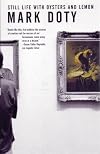
Still Life With Oysters and Lemon by Mark Doty 5.0
I read this book for my Delve Class, now being held on Zoom. I am totally loving it even if we can't access the Portland Art Museum where this class was supposed to be held. (COVID-19)
Doty explores what makes paintings so precious, and furthermore, why we value art at all, or the objects around our house. Where does the meaning come from, the value? It's not just their monetary worth that counts. He evokes subtle colors, rough textures, rich show more scents, and eternal love. (I used 27 book darts, marking passage I want to revisit, which is saying a lot since the book is only 70 pages long.)
Doty is a poet, and the richness of his words cannot be surpassed as he describes the beauty of these paintings and of life. There are no pictures in the book, which forced me to use my imagination to translate his lines of prose into strokes of imagery. Only afterwards did I venture to the internet to look up these Masters' works of art.
And then there is his exploration of the meaning of life.
Here are just a few quotes:
"On one side of the balance is the need for home, for the deep solid roots of place and belonging; on the other side is the desire for travel and motion, for the single separate spark of the self freely moving forward, out into time, into the great absorbing stream of the world.
A fierce internal debate, between staying moored and drifting away, between holding on and letting go. Perhaps wisdom lies in our ability to negotiate between these two poles. Necessary to us, both of them--but how to live in connection with out feeling suffocated, compromised, erased? We long to connect: we fear that if we do, our freedom, and individuality will disappear." (p. 7)
"...a poetic field of objects arrayed against the dark, things somehow joined in a conspiracy of silence, taking place...in the time of art, which is a little nearer to the time of eternity than our poor daily gestures." (p. 15)
"...Goethe commented that he would rather posses the painting of the thing than the sumptuous object itself; the image, as rendered in oil, was more lovely and, finally, more desirable. I agree, but it is the image of the daily world I prefer to own. When both are made of paint, is a cabbage any less precious than a golden cup?" (p. 36)
Read this!! show less
I read this book for my Delve Class, now being held on Zoom. I am totally loving it even if we can't access the Portland Art Museum where this class was supposed to be held. (COVID-19)
Doty explores what makes paintings so precious, and furthermore, why we value art at all, or the objects around our house. Where does the meaning come from, the value? It's not just their monetary worth that counts. He evokes subtle colors, rough textures, rich show more scents, and eternal love. (I used 27 book darts, marking passage I want to revisit, which is saying a lot since the book is only 70 pages long.)
Doty is a poet, and the richness of his words cannot be surpassed as he describes the beauty of these paintings and of life. There are no pictures in the book, which forced me to use my imagination to translate his lines of prose into strokes of imagery. Only afterwards did I venture to the internet to look up these Masters' works of art.
And then there is his exploration of the meaning of life.
Here are just a few quotes:
"On one side of the balance is the need for home, for the deep solid roots of place and belonging; on the other side is the desire for travel and motion, for the single separate spark of the self freely moving forward, out into time, into the great absorbing stream of the world.
A fierce internal debate, between staying moored and drifting away, between holding on and letting go. Perhaps wisdom lies in our ability to negotiate between these two poles. Necessary to us, both of them--but how to live in connection with out feeling suffocated, compromised, erased? We long to connect: we fear that if we do, our freedom, and individuality will disappear." (p. 7)
"...a poetic field of objects arrayed against the dark, things somehow joined in a conspiracy of silence, taking place...in the time of art, which is a little nearer to the time of eternity than our poor daily gestures." (p. 15)
"...Goethe commented that he would rather posses the painting of the thing than the sumptuous object itself; the image, as rendered in oil, was more lovely and, finally, more desirable. I agree, but it is the image of the daily world I prefer to own. When both are made of paint, is a cabbage any less precious than a golden cup?" (p. 36)
Read this!! show less
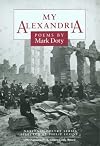
This book of poems had sat on my shelf for years waiting to be read. I'd heard that it referred to the AIDS crisis of the 1980s. I thought I knew what it was about - on the cover of the book, the ruins, men sitting on great toppled stones, half broken walls rising above and pierced with holes for windows that looked on nothing. I was prepared for something painfully lovely, for words that enfolded and crushed until the chest ached. What I wasn't prepated for: snow.
...white cargo show more sifting
equally all night onto roofs
and lilacs, fenceposts and streets.
We're the shook heart of the paperweight,
the glass village falling forever
through the steady arms
of the snow, which touch us,
each pair, just once,
then let us go....
How many small perceptive moments these poems have - quiet, introspective, precise. There's grief here, terrible grief .. not a scream in darkness but instead an empty pair of jeans, dogs and cats that must be given up, a young woman in a hospital. The grief is genuine and felt, very affecting but far from hopeless. For example, this beautiful excerpt of "Night Ferry":
Twelve dark minutes. Love,
we are between worlds, between
unfathomed water and I don’t know how much
light-flecked black sky, the fogged circles
of island lamps. I am almost not afraid
on this good boat, breathing its good smell
of grease and kerosene,
warm wind rising up the stairwell
from the engine's serious study.
There's no beautiful binding
for this story, only the temporary,
liquid endpapers of the hurried water,
shot with random color. But in the gliding forward's
a scent so quick and startling
it might as well be blowing
off the stars. Now, just before we arrive,
the wind carries a signal and a comfort,
lovely, though not really meant for us:
woodsmoke risen from the chilly shore.
What a lovely book of poems this was! I wish I hadn't waited so long to read it. show less
...white cargo show more sifting
equally all night onto roofs
and lilacs, fenceposts and streets.
We're the shook heart of the paperweight,
the glass village falling forever
through the steady arms
of the snow, which touch us,
each pair, just once,
then let us go....
How many small perceptive moments these poems have - quiet, introspective, precise. There's grief here, terrible grief .. not a scream in darkness but instead an empty pair of jeans, dogs and cats that must be given up, a young woman in a hospital. The grief is genuine and felt, very affecting but far from hopeless. For example, this beautiful excerpt of "Night Ferry":
Twelve dark minutes. Love,
we are between worlds, between
unfathomed water and I don’t know how much
light-flecked black sky, the fogged circles
of island lamps. I am almost not afraid
on this good boat, breathing its good smell
of grease and kerosene,
warm wind rising up the stairwell
from the engine's serious study.
There's no beautiful binding
for this story, only the temporary,
liquid endpapers of the hurried water,
shot with random color. But in the gliding forward's
a scent so quick and startling
it might as well be blowing
off the stars. Now, just before we arrive,
the wind carries a signal and a comfort,
lovely, though not really meant for us:
woodsmoke risen from the chilly shore.
What a lovely book of poems this was! I wish I hadn't waited so long to read it. show less
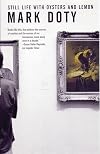
A very brief (about a 90 minute read) and gorgeously written deep dive into the nature of art and possessions, the ways that static images, pitchers, bowls, or words hold lives, memories, maybe the souls of all who have passed by. Doty explores this through a number of examples, but for me most movingly through his discussions of still lives. I spend a lot of time in museums, but I confess I am never really drawn to still lives. "Great, it is a photorealistic dead goose, some bread and some show more grapes." "Oh, nice artichoke." But Doty has given me a new context within which to see these renderings and an understanding of the process of creating these images, the ways in which these very specific piments were produced, that help me to see with the eyes and feel with the heart of the artists. I looked up the painting referenced in the title, and it turns out it is one I have seen many times but have paid little attention to. It is just something I walk past to get to work I care more about. Doty taught me how to see the painting and made it more beautiful and more affecting. I think I am going to run over to the Met in the morning and test that out!
Unfixed, unfixable but fixed forever, in the movement of light intersecting a thin slice of lemon, the transulcent, honeyed cells in which all of time is stored, in which starlight has made its long journey into flesh, into pulp and sugars, to become this irreplaceable sudden moment; clear yellow, reverberant, sour, quickening the senses, alive. Fragrant? Nearly so. Offer the sense enough evidence, enough of the information we need, and we'll complete the rest. This timeless bit of fruit is made only of ground clays suspended in oils and varnishes, oils that have dried now. Only glazed cloth, but what the mind sees, what the tougue apprehends, is fresh, quick, squirting forth its juices.show less
Lists
Awards


You May Also Like


Associated Authors
Statistics
- Works
- 37
- Also by
- 36
- Members
- 4,196
- Popularity
- #5,990
- Rating
- 3.9
- Reviews
- 74
- ISBNs
- 102
- Languages
- 3
- Favorited
- 15

