This topic is currently marked as "dormant"—the last message is more than 90 days old. You can revive it by posting a reply.
1markon

I work in a public library, where I am excited to be getting ready to host a human library in June. In addition to reading, I enjoy music , cooking, and sing in a threshold choir. My dog Milo is a lab/pit bull mix.
I read fiction in the fantasy, science fiction and mystery genres, some literary fiction, and any nonfiction that looks interesting that I run across.
4labfs39
Hi Ardene! I'm glad to find your new thread. Are you doing Club Read this year? I have yet to make a thread, and I have been horrible about posting, but I do like to track my reading.
5PaulCranswick
Happy 2019
A year full of books
A year full of friends
A year full of all your wishes realised
I look forward to keeping up with you, Ardene, this year.
6FAMeulstee
Happy reading in 2019, Ardene!
7markon
Thanks for the welcome everyone!
>4 labfs39: I'm going to hang out with the 75ers this year Lisa. Like you, I don't post as often as I'd like to, but I do like looking back over my reads at the end if the year.
>5 PaulCranswick: Hi Paul! Nice to hear from you!
>6 FAMeulstee: Thanks!
>4 labfs39: I'm going to hang out with the 75ers this year Lisa. Like you, I don't post as often as I'd like to, but I do like looking back over my reads at the end if the year.
>5 PaulCranswick: Hi Paul! Nice to hear from you!
>6 FAMeulstee: Thanks!
8markon
Last year's faves? Here are some titles I enjoyed.


![]()
Historical Fiction
The open door by Latifa al-Zeyyat
The secrets between us by Thrity Umrugar
Home fire by Kamila Shamsie
Do not say we have nothing by Madeline Thien
The cloister James Carroll


Fantasy/fairytale
Sisters of the winter wood (fairytale mashup) by Rena Rossner
Spinning silver by Naomi Novik
A thousand beginnings and endings edited by Ellen Oh & Elsie Chapman
Wicked wonders by Ellen Klagers


Science fiction
Borne & Strange Bird by Jeff VanderMeer
Children of time by Adraian Tchaikovsky

Mystery
The Witch elm US (or Wych Elm, UK) by Tana French


Fiction
The overstory by Richard Powers
The muse by Jessie Burton


Non fiction
Hidden figures by Margot Shetterly
Born to run by Bruce Springsteen


Historical Fiction
The open door by Latifa al-Zeyyat
The secrets between us by Thrity Umrugar
Home fire by Kamila Shamsie
Do not say we have nothing by Madeline Thien
The cloister James Carroll


Fantasy/fairytale
Sisters of the winter wood (fairytale mashup) by Rena Rossner
Spinning silver by Naomi Novik
A thousand beginnings and endings edited by Ellen Oh & Elsie Chapman
Wicked wonders by Ellen Klagers


Science fiction
Borne & Strange Bird by Jeff VanderMeer
Children of time by Adraian Tchaikovsky

Mystery
The Witch elm US (or Wych Elm, UK) by Tana French


Fiction
The overstory by Richard Powers
The muse by Jessie Burton


Non fiction
Hidden figures by Margot Shetterly
Born to run by Bruce Springsteen
9markon
2019 List
January
1. Jane Crow by Rosalind Rosenberg (Biography)
2. Outside the gates by Molly Gloss (juvenile fantasy)
3. Whichwood by Taherah Mafi (juvenile fantasy)
4. The invention of wings by Sue Monk Kidd
5. Fruit of the drunken tree by Ingrid Rojas Contreras (fiction)
6. The Babylon Eye by Masha du Toit (science fiction)
7. The strange by Masha du Toit (science fiction)
8. Song in a weary throat by Pauli Murray (autobiography)
9. Desolation mountain by William Kent Krueger (mystery)
10. Trail of lightning (fantasy/alt history) by Rebecca Roanhorse
February
11. Birth of the firebringer by Meredith Ann Pierce (juvenile fantasy)
12. The bear and the nightingale by Katherine Arden
13. Well-read black girl edited by Glory Edim (audio, non fiction)
14. The round house by Louise Erdrich (reread for Wiley Cash online book club)
15. Tower of thorns by Juliet Marillier (fantasy, book 2 of 3)
March
16. Visitor by C. J. Cherryh (reread, science fiction)
17. The Queen of Blood by Sarah Beth Durst (Fantasy)
Abandoned
The tangled tree: a radical new history of life by David Quammen
Life class by Pat Barker
The Language of thorns by Leigh Bardugo
The good neighbor by Maxwell King
Blanca & Roja by Anna-Marie McLemore
America is not the heart by Elaine Castillo
Also, check out post 67 for scifi categories to follow.
January
1. Jane Crow by Rosalind Rosenberg (Biography)
2. Outside the gates by Molly Gloss (juvenile fantasy)
3. Whichwood by Taherah Mafi (juvenile fantasy)
4. The invention of wings by Sue Monk Kidd
5. Fruit of the drunken tree by Ingrid Rojas Contreras (fiction)
6. The Babylon Eye by Masha du Toit (science fiction)
7. The strange by Masha du Toit (science fiction)
8. Song in a weary throat by Pauli Murray (autobiography)
9. Desolation mountain by William Kent Krueger (mystery)
10. Trail of lightning (fantasy/alt history) by Rebecca Roanhorse
February
11. Birth of the firebringer by Meredith Ann Pierce (juvenile fantasy)
12. The bear and the nightingale by Katherine Arden
13. Well-read black girl edited by Glory Edim (audio, non fiction)
14. The round house by Louise Erdrich (reread for Wiley Cash online book club)
15. Tower of thorns by Juliet Marillier (fantasy, book 2 of 3)
March
16. Visitor by C. J. Cherryh (reread, science fiction)
17. The Queen of Blood by Sarah Beth Durst (Fantasy)
Abandoned
The tangled tree: a radical new history of life by David Quammen
Life class by Pat Barker
The Language of thorns by Leigh Bardugo
The good neighbor by Maxwell King
Blanca & Roja by Anna-Marie McLemore
America is not the heart by Elaine Castillo
Also, check out post 67 for scifi categories to follow.
10markon
What am I reading now, you ask?
Song in a weary throat by Pauli Murray (autobiography)
The Tangled tree by David Quammen (non fiction, evolution)
The invention of wings Sue Monk Kid (fiction)
Bianca & Roja by Anna-Marie McLemore (YA fantasY
Brown by Kevin Young (poetry on audio)
Song in a weary throat by Pauli Murray (autobiography)
The Tangled tree by David Quammen (non fiction, evolution)
The invention of wings Sue Monk Kid (fiction)
Bianca & Roja by Anna-Marie McLemore (YA fantasY
Brown by Kevin Young (poetry on audio)
11vancouverdeb
Stopping by to say hi, Ardene! I'm glad you decided to land in the 75's this year. A couple of your last year favourites, Home Fire and Do Not Say We Have Nothing were favourite of mine in 2017. I've yet to decide what my favourite books of 2018 were.
Ohh, sorry about the lack of a keyboard.
Ohh, sorry about the lack of a keyboard.
12ronincats
Ardene!! I'm glad you came by my thread to let me know you were back. I've got you starred now.
13markon
>11 vancouverdeb: You'll notice I listed a lot of favorites this year to make my choice easier.
>12 ronincats: Look forward to following your scifi & fantasy reads and your pottery this year Roni.
>12 ronincats: Look forward to following your scifi & fantasy reads and your pottery this year Roni.
14markon

Outside the gates by Molly Gloss (juvenile fantasy)
Vren is cast out from his walled village when he demonstrates an affinity for animals. He is befriended by Rusche, a weatherworker, and by a family of wolves. When Rusche goes missing, Vern and his wolf-friend Trim set off to find him.
This is Molly Glass' first novel, and I enjoyed it. It's mostly a fable about being different and outcast. I read it to get an idea of her writing style because I've been hearing some buzz about the reissue of some of her previous novels. (This one is the only juvenile.) Wild Life won the Tiptree award, but I may read Dazzle of Day next.

Whichwood by Taherah Mafi (juvenile fantasy)
Laylee is the only mordeshor in her village after the death of her mother and the abandonement of her father whose spirit is crushed by her mother's death. Laylee does her best to complete the task of washing and burying the dead to prepare them to successfully move on to the afterlife. Unfortunately, the village doesn't appreciate what she's doing or pay her appropriately, she is getting behind during a hard winter, and when the dead aren't properly handled, their spirits don't move on and they eventually start looking for a new skin (body.) Then two strangers appear and offer to help, but can Laylee trust them?
15markon
 Jane Crow: the life of Pauli Murray by Rosalind Rosenberg
The words “nevertheless, she persisted,” describe Pauli Murray well. She weathered having multiple doors shut in her face on the basis of race, gender, and activism, and she kept her sexual orientation? status? secret from all but a very few close friends. (Today we would most likely refer to her as transgendered.)
Trained as a lawyer at Howard University in the early 1940s her research and paper for a class her senior year provided a springboard for Thurgood Marshall’s and the NAACP’s civil rights litigation in the 1960s. A paper she co-wrote in the 1960s provided one leg of Ruth Bader Ginsberg’s litigation on behalf of women’s rights in the 1970s. She served on JFKs Presidential Commission on the Status of women in the 1970s, and also helped found NOW, though she quickly backed away from the organization when she realized that it was going to cater to middle class white women. And in the 1980s she became the first black Episcopal priest in the U.S.
The words that came to mind when I finished this biography were guarded, visionary, and persistent.
I also found it rather depressing reading about all the nay sayers she faced in her life. This may be in part because of the academic orientation of the biography. The narrative also focused primarily on her external accomplishments and lack of the outward trappings of success, and not on her inner life or personal relationships. Personally, I found Julie Phillips' biography of Alice B. Sheldon/James Tiptree more compelling reading.
I had more questions about Murray when I finished the biography than when I started. Questions like, why did she want to become a priest? (her spiritual life and choices are not described in this biography.) How did she withstand the lack of professional success and economic instability of her early adult life? I wondered how a biography that focused on her spiritual life and family and personal relationships, would differ from Jane Crow. Was Murray satisfied with her life? What did she see as her greatest successes?
While Jane Crow is well worth reading, I found it rather dry and incomplete because it doesn’t discuss what motivates Murray and drives her. I hope there will be other biographies that explore these parts of her life.


I am currently reading Song in a weary throat, Pauli Murray’s autobiography. I find the voice and the story more compelling here, though since she was so guarded about her sexual inclinations she does not discuss them, or the struggles she had because she felt she was a male in a woman's body. I’m glad Rosenberg does. A lifelong Episcopalian, she doesn't discuss her spiritual life in detail, but it is present throughout the book. I will probably obtain a copy of Proud Shoes, her memoir of her family as well. I'm finding her interesting, admirable, and likable.
16markon

I recently finished Fruit of the drunken tree by Ingrid Rojas Contreras, and though I don't have a review yet, if you're interested in discussion of the book check out this link on Goodreads.
17labfs39
>15 markon: Great review, Ardene!
18markon
>17 labfs39: Thanks Lisa. I'm looking forward to an online discussion of this over the next few weeks.
19markon
 (reread)
The eye of the title is a crossroads station between the Real (the world you and I know) and the Strange (another world) - though I suspect it's other worlds. Elke Veraart was an eco-terrorist in her teens and a gardag (cybernetic dog) handler as an adult before an altercation got her sent to prison. Her former supervisor offers her a way out - find a missing gardag, Meisje, and her handler, Ben, who were smuggled into the eye by the dog's creators on a mission. Both dog and handler have gone missing. Find them discretely so no one will know the corporation who developed Meisje smuggled her into the eye.
I enjoyed this tale of Elke and the relationships she develops, the culture of the eye, the judicial system there, and the internal politics of competing corporations. I read this and The Real, the second book in the Linked Worlds trilogy a few months ago, and reread this first in the series while visiting my dad. I plan to buy an ebook of the final novel, The Strange to read on the flight back to Georgia tomorrow.
20markon
Multiple points of view in fiction: When do you like it, when do you hate it?
I found myself frustrated by the use of multiple points of view (POV) in a couple of novels last month, and, inspired by some discussion on Club Read's Questions for the Avid Reader thread (my question is at post 22) and with co-workers, I have started poking around the internet to try to learn something about when using multiple POVs makes sense and when it doesn’t. (There are many articles describing what point of view is and naming different types; I’m coming up with a working list of categories to use.)
My plan going forward is to pay attention to when, how, and maybe why multiple POV are used in books I read & what I think about it. I’m hopeful that in six months or so I may start to see some patterns, or at least understand what about it I dislike when I get frustrated.
This technique is used frequently in science fiction & fantasy, genres I read; when I looked back at the books I read in 2018 I identified several titles that I thought used it successfully.
The Nightingale by Kristin Hannah
The Muse by Jessie Burton
The Overstory by Richard Powers
Three Pines mysteries by Louise Penny
The Fruit of the Drunken Tree by Ingrid Rojas Contreras
Science Fiction or Fantasy
Convergence and Emergence by C. J. Cherryh
Children of Time by Adrian Tchaikovsky
Semiosis by Sue Burke (this wasn't my favorite novel, but the use of multiple POV was fine.)
Spinning Silver by Naomi Novik
What are some novels you’ve read recently that used multiple points of view well? Have you come across any lately that use it poorly?
I found myself frustrated by the use of multiple points of view (POV) in a couple of novels last month, and, inspired by some discussion on Club Read's Questions for the Avid Reader thread (my question is at post 22) and with co-workers, I have started poking around the internet to try to learn something about when using multiple POVs makes sense and when it doesn’t. (There are many articles describing what point of view is and naming different types; I’m coming up with a working list of categories to use.)
My plan going forward is to pay attention to when, how, and maybe why multiple POV are used in books I read & what I think about it. I’m hopeful that in six months or so I may start to see some patterns, or at least understand what about it I dislike when I get frustrated.
This technique is used frequently in science fiction & fantasy, genres I read; when I looked back at the books I read in 2018 I identified several titles that I thought used it successfully.
The Nightingale by Kristin Hannah
The Muse by Jessie Burton
The Overstory by Richard Powers
Three Pines mysteries by Louise Penny
The Fruit of the Drunken Tree by Ingrid Rojas Contreras
Science Fiction or Fantasy
Convergence and Emergence by C. J. Cherryh
Children of Time by Adrian Tchaikovsky
Semiosis by Sue Burke (this wasn't my favorite novel, but the use of multiple POV was fine.)
Spinning Silver by Naomi Novik
What are some novels you’ve read recently that used multiple points of view well? Have you come across any lately that use it poorly?
21ronincats
Interesting question! The problem is that I usually forget POV info and just recall basic plot when looking back. I agree that Spinning Silver used the technique extremely well. I suppose one would have to classify many epic fantasies as multiple POV, such as LOTR and The Wheel of Time, simply because of their complex plots and huge casts.
22markon
>21 ronincats: Yes, it's a technique that lends itself well to large casts scattered over distance (or time). I've caught myself thinking more times recently as I get to the end of a section (and a cliffhanger) that "I'm so tired of switching back and forth!" I don't know if it's being used even more than usual or if I've run across more than my share where it's not handled well. So I'm going to pay attention for awhile and see what I learn about my reading tastes, and about the technique.
23markon
Finished within the last two weeks:
Well-read black girl edited by Glory Edim (audio, non fiction)
The round house by Louise Erdrich (reread for Wiley Cash online book club)
Tower of thorns by Juliet Marillier (fantasy, book 2 of 3)
Currently reading:
Black Leopard, Red Wolf by Marlon James (fantasy, book 1 of 3 in projected trilogy)
Don't call me crazy edited by Kelly Jensen (non fiction)
The secret history of Wonder Woman by Jill Lepore (non fiction)
Hearts of the missing by Carol Potenza (mystery)
Point of View Information
Two non fiction books are essays written primarily by authors: Well-read black girl and Don't call me crazy. Most essays are written from the point of view of the author, since they are personal reflections. I'm not counting these as multiple point of view books. They are both collections of personal reflections on a topic
The round house Completely written from Joe's point of view, unusual for author Erdrich.
Tower of thorns is written from 3 points of view: 1. Geiléis, who seeks help to break a curse, 2. Grim, 3. Blackthorn. Each chapter is headed with the name of the character who is telling what they see, hear, do & feel. Geiléis also tells us piecemeal throughout the book about the beginning of the curse. I found this one a page turner, and didn't have any trouble following the story.
Geiléis is a an unlikeable character. While I felt sympathy for the young girl she was at the beginning of the curse, the idea of immediate and undying love springing up between two individuals who have just met is pet peve of mine - infatuation happens that way, but not love. And I didn't like what seemed to me the manipulative use of others, including Blackthorn.
Blackthorn, alas, is too trusting and naive in this 2nd of a 3-book series, which seems out of character for her. I did greatly enjoy learning some of Grim's backstory. I will continue to read Marillier, this one was a little under par in my opinion.
Hearts of the missing Completely written from the protagonist's (Sergeant Nicky Matthews.) This first in a series and winner of the 2017 Hillerman prize for best book set in the southwest holds promise. Not finished yet, but enjoying it so far.
Score? - 2 books from a single point of view, and 1 with multiple points of view that was enjoyable.
Well-read black girl edited by Glory Edim (audio, non fiction)
The round house by Louise Erdrich (reread for Wiley Cash online book club)
Tower of thorns by Juliet Marillier (fantasy, book 2 of 3)
Currently reading:
Black Leopard, Red Wolf by Marlon James (fantasy, book 1 of 3 in projected trilogy)
Don't call me crazy edited by Kelly Jensen (non fiction)
The secret history of Wonder Woman by Jill Lepore (non fiction)
Hearts of the missing by Carol Potenza (mystery)
Point of View Information
Two non fiction books are essays written primarily by authors: Well-read black girl and Don't call me crazy. Most essays are written from the point of view of the author, since they are personal reflections. I'm not counting these as multiple point of view books. They are both collections of personal reflections on a topic
The round house Completely written from Joe's point of view, unusual for author Erdrich.
Tower of thorns is written from 3 points of view: 1. Geiléis, who seeks help to break a curse, 2. Grim, 3. Blackthorn. Each chapter is headed with the name of the character who is telling what they see, hear, do & feel. Geiléis also tells us piecemeal throughout the book about the beginning of the curse. I found this one a page turner, and didn't have any trouble following the story.
Geiléis is a an unlikeable character. While I felt sympathy for the young girl she was at the beginning of the curse, the idea of immediate and undying love springing up between two individuals who have just met is pet peve of mine - infatuation happens that way, but not love. And I didn't like what seemed to me the manipulative use of others, including Blackthorn.
Blackthorn, alas, is too trusting and naive in this 2nd of a 3-book series, which seems out of character for her. I did greatly enjoy learning some of Grim's backstory. I will continue to read Marillier, this one was a little under par in my opinion.
Hearts of the missing Completely written from the protagonist's (Sergeant Nicky Matthews.) This first in a series and winner of the 2017 Hillerman prize for best book set in the southwest holds promise. Not finished yet, but enjoying it so far.
Score? - 2 books from a single point of view, and 1 with multiple points of view that was enjoyable.
24ronincats
I just put a hold on Black Leopard, Red Wolf at the library so I will be interested in your opinion, Ardene.
25markon
>24 ronincats: I like the writing, Roni, but haven't gotten very far yet.
26markon
Have been enjoying the Atlanta Jewish Film Festival the last two weekends I've been off. I was drawn to documentaries this year, seeing four of them, and one fiction movie.
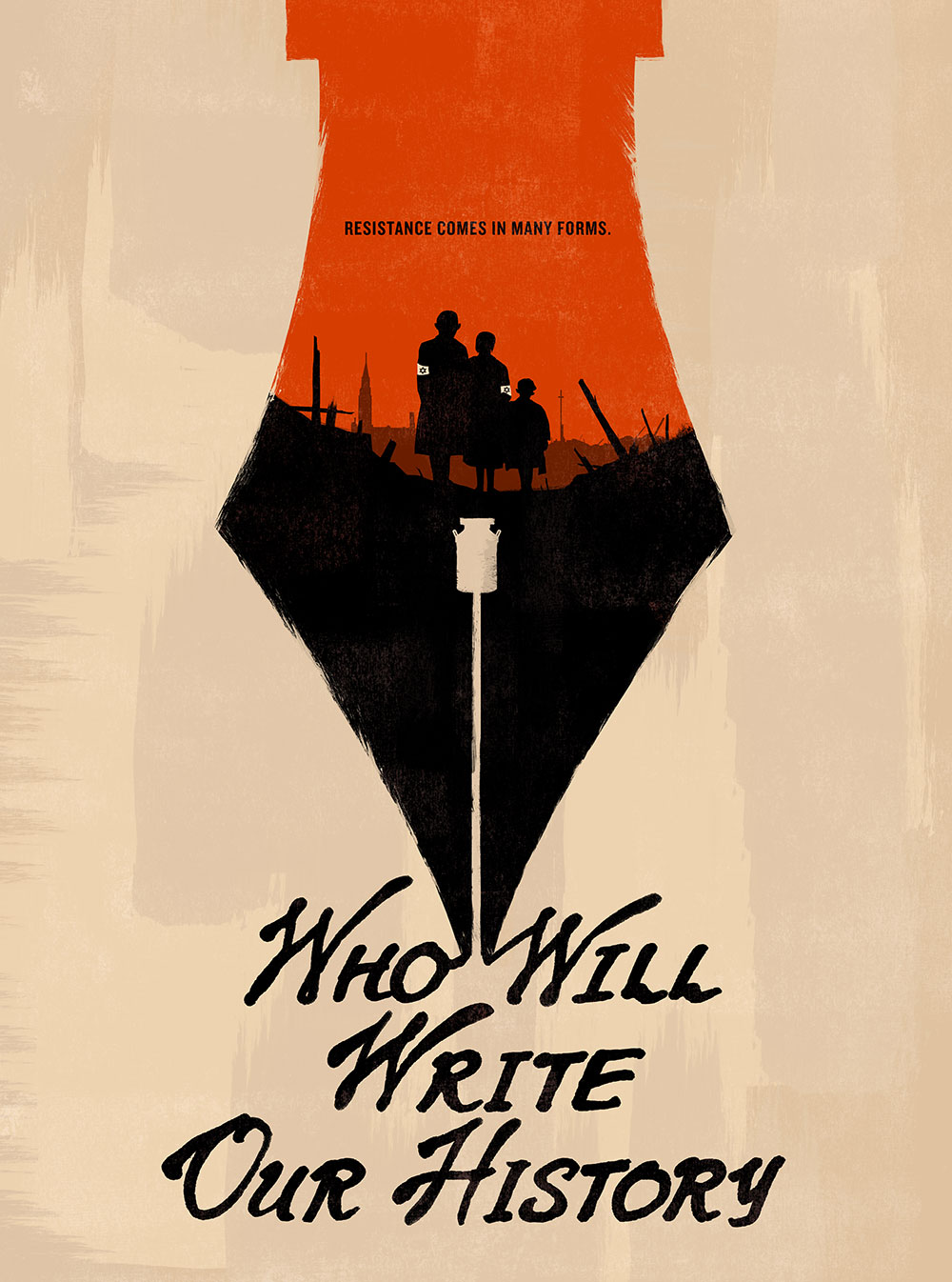
The most unsettling was Who will write our history? based on the book linked here. It is the story of a group of Jewish intellectuals (code named Oyneg Shabbes) who collected accounts of everyday life from people in the Warsaw ghetto during World War II, as well as artifacts (playbills, newspapers, armbands, drawings, etc.) Their work expanded throughout Poland as refugees continued to gather in Warsaw; they were responsible for getting the Grojanowski report about Chelmo to England. The archives were buried so that the Jewish side of the story could be told in addition to the one the Nazis documented.
Three of about 60 of these people survived. One of them was Rachel Auerbach, a journalist and author who ran a soup kitchen in Warsaw, and later became the head of the Department of the Collection of Witness Testimony at Yad Vashem in Israel. Two of three caches have been recovered. The documents are held at the Jewish Historical Institute in Warsaw, and are available in digital format to researchers there and at the U.S. Holocaust Museum's archives. A 36-volume edition of the archive in Polish was finally published in 2018.
The most unsettling was Who will write our history? based on the book linked here. It is the story of a group of Jewish intellectuals (code named Oyneg Shabbes) who collected accounts of everyday life from people in the Warsaw ghetto during World War II, as well as artifacts (playbills, newspapers, armbands, drawings, etc.) Their work expanded throughout Poland as refugees continued to gather in Warsaw; they were responsible for getting the Grojanowski report about Chelmo to England. The archives were buried so that the Jewish side of the story could be told in addition to the one the Nazis documented.
Three of about 60 of these people survived. One of them was Rachel Auerbach, a journalist and author who ran a soup kitchen in Warsaw, and later became the head of the Department of the Collection of Witness Testimony at Yad Vashem in Israel. Two of three caches have been recovered. The documents are held at the Jewish Historical Institute in Warsaw, and are available in digital format to researchers there and at the U.S. Holocaust Museum's archives. A 36-volume edition of the archive in Polish was finally published in 2018.
27markon
Recently Completed
Den of Wolves by Juliet Marillier (fantasy, volume 3 of 3)
The round house by Louise Erdrich (reread)
Puppies, dogs and blue northers by Gary Paulsen
This side of wild by Gary Paulsen
Finished section 1 of Black Leopard, Red Wolf by Marlon James last night. It's a bit confusing, knowing what is myth, what is real and whether we're in the present, or telling the story of how we got where we are now (and I'm not sure where that is, yet.) Rich and layered and we'll see what I think when I get to the end of this volume.
Den of Wolves by Juliet Marillier (fantasy, volume 3 of 3)
The round house by Louise Erdrich (reread)
Puppies, dogs and blue northers by Gary Paulsen
This side of wild by Gary Paulsen
Finished section 1 of Black Leopard, Red Wolf by Marlon James last night. It's a bit confusing, knowing what is myth, what is real and whether we're in the present, or telling the story of how we got where we are now (and I'm not sure where that is, yet.) Rich and layered and we'll see what I think when I get to the end of this volume.
28markon
I recently bought a new laptop (Windows 10, I've been without any digital device except my phone for a few years.) I'm taking it slow; so far I've got it updated, figured out I have to use a local password or I can't get onto the laptop unless I'm online, and I'm currently using the free trial of Norton antivirus that came pre-installed.
Now the fun part, downloading and installing software that I want to run!
Now the fun part, downloading and installing software that I want to run!
29markon
Recently Completed
Den of Wolves by Juliet Marillier (fantasy, volume 3 of 3)
The round house by Louise Erdrich (reread)
Puppies, dogs and blue northers by Gary Paulsen
This side of wild by Gary Paulsen
Finished section 1 of Black Leopard, Red Wolf by Marlon James last night. It's a bit confusing, knowing what is myth, what is real and whether we're in the present, or telling the story of how we got where we are now (and I'm not sure where that is, yet.) Rich and layered and we'll see what I think when I get to the end of this volume.
Headed into a few days off! We've had two days in a row without rain! Do I dare hope for a few more? Having dinner with some friends tonight and will go see my last film from the AJFF Wednesday, It must schwing! the Blue Note story. I hope to drive up into the North Georgia Mountains for an overnight of hiking and reading this weekend.
Den of Wolves by Juliet Marillier (fantasy, volume 3 of 3)
The round house by Louise Erdrich (reread)
Puppies, dogs and blue northers by Gary Paulsen
This side of wild by Gary Paulsen
Finished section 1 of Black Leopard, Red Wolf by Marlon James last night. It's a bit confusing, knowing what is myth, what is real and whether we're in the present, or telling the story of how we got where we are now (and I'm not sure where that is, yet.) Rich and layered and we'll see what I think when I get to the end of this volume.
Headed into a few days off! We've had two days in a row without rain! Do I dare hope for a few more? Having dinner with some friends tonight and will go see my last film from the AJFF Wednesday, It must schwing! the Blue Note story. I hope to drive up into the North Georgia Mountains for an overnight of hiking and reading this weekend.
30labfs39
>26 markon: Who Will Write Our History is a book bullet; I'll keep at eye out for it. You used the word "unsettling" for the book: what do you mean by that? Did you like the book?
P.S. We'll be spending spring break in a GA amusement park with the eight-year-old. He's only been on a couple of trips before; the only other one which included me was a disaster. Hoping for better things this time! Envy for weekend of hiking and reading.
P.S. We'll be spending spring break in a GA amusement park with the eight-year-old. He's only been on a couple of trips before; the only other one which included me was a disaster. Hoping for better things this time! Envy for weekend of hiking and reading.
31markon
> 30 Lisa, I saw the documentary/dramatization based on the book and the events, so what was unsettling was the footage shown in the documentary of people starving or lying dead in the streets or Warsaw and some stills or videos of the mass killings that were done there. Not that I haven't seen this before, but it's still difficult to watch.
I did like the movie - it was actors playing scenes from activities described in people's recovered writings interspersed with with photographs & videos to tell the story of some individuals, the group Oyneg Shabbes, and the city of Warsaw.
I do want to read the book as well. I'm disappointed and surprised, given the large Jewish population in Atlanta, that no library in the metro area has this book, including the universities. In fact, when I looked on WorldCat, only one library in Georgia has a copy! It's copyright 2009, with a new edition that I assume came out with the movie in 2018. Definitely going to buy this one, but don't know when I'll read it.
I did like the movie - it was actors playing scenes from activities described in people's recovered writings interspersed with with photographs & videos to tell the story of some individuals, the group Oyneg Shabbes, and the city of Warsaw.
I do want to read the book as well. I'm disappointed and surprised, given the large Jewish population in Atlanta, that no library in the metro area has this book, including the universities. In fact, when I looked on WorldCat, only one library in Georgia has a copy! It's copyright 2009, with a new edition that I assume came out with the movie in 2018. Definitely going to buy this one, but don't know when I'll read it.
32markon
>30 labfs39: Hope you have a better experience at the amusement park. I liked them fine as a teen and twenty-something, but they aren't on my radar now. I'm guessing you'll be west of Atlanta?
33labfs39
>32 markon: Whirlwind trip to Seattle complete and leaving Valdosta for FL tomorrow. It will be good in get back to my apartment.
Tomorrow is my Thingaversary, so I spent the last two weeks accumulating my 11 books (and one more as a head start on next year!). I went to four different bookshops and bought three books at each. Which shop was I supposed to short? ;-) I hope to post the list on my neglected website soon.
Tomorrow is my Thingaversary, so I spent the last two weeks accumulating my 11 books (and one more as a head start on next year!). I went to four different bookshops and bought three books at each. Which shop was I supposed to short? ;-) I hope to post the list on my neglected website soon.
35PaulCranswick
Have a great Sunday, Ardene.

