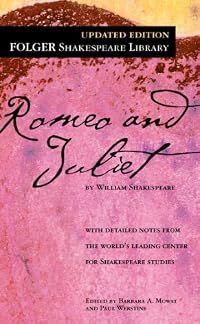
Romeo and Juliet
by William Shakespeare
On This Page
Description
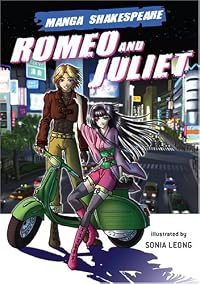
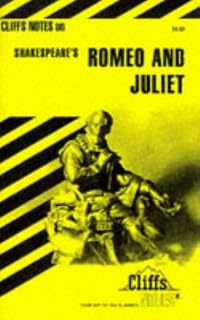
Romeo and Juliet is one of Shakespeare's early tragedies. The two young title characters fall madly in love, but are the children of feuding houses whose hatred for each other works to a devastating end. The play was immensely popular in Shakespeare's lifetime and is the most enduring of his plays along with Hamlet. Romeo and Juliet is considered one of the archetypal love stories..
Tags
Recommendations
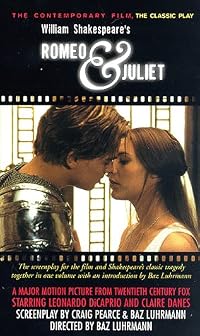


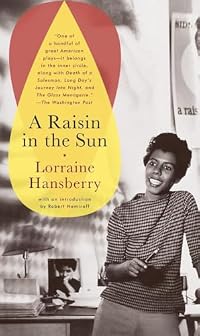

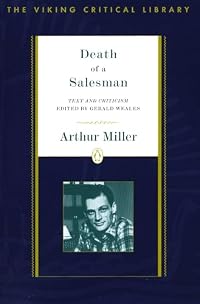
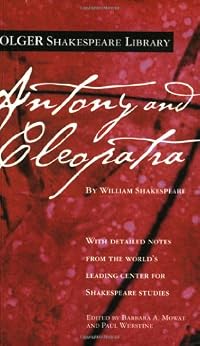
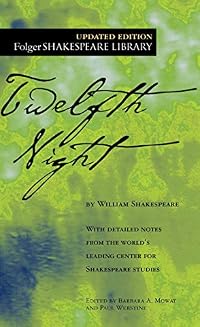

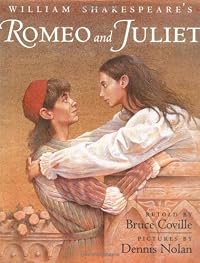
Member Recommendations

anonymous user Shakespeare's treatments of passionate, irrational and self-destructive love between teenagers (R&J) and mature people (A&C) make for a truly fascinating comparison. The vastly greater political and metaphysical implications, as well as the extreme concentration of the language, in the later play show how far Shakespeare developed for just over a decade.


Member Reviews
2016 Re-Read: Just wanted to note that a lot of people here on Goodreads seem to be horribly misinterpreting this work. It's categorized as a "tragedy" not a "romance". True, the two leads fall in love pretty easily, but they are, after all, teenagers. The story is about that heady, impetuous period in all our lives and just how dangerous it can be. It is not meant to be the love story to end all love stories and was never intended to be. Neither is it a satire, making fun of teenage longing. Shakespeare wouldn't have given some of the most beautiful and stirring speeches ever written expounding on love to his two leads if that were the case. Instead, the central focus here is on the hatred between the two families that keeps these show more lovers apart. Shakespeare's play warns us about the horrible alchemy caused when the passion of the teenage years converges with adult hatred and bigotry. Sadly, it's a lesson the world still has not fully learned.
2011 Re-Read: I've read this so many times throughout high school and college and it never gets old. How could you not give R&J five stars? It's pretty much a pinnacle of world literature. show less
2011 Re-Read: I've read this so many times throughout high school and college and it never gets old. How could you not give R&J five stars? It's pretty much a pinnacle of world literature. show less
This was the first Shakespeare play that I read as a Freshman in a small town Wisconsin high school about fifty years ago (doesn't seem that long). Romeo and Juliet is a tragedy written relatively early in his career by playwright William Shakespeare about two young lovers whose deaths ultimately unite their feuding families. But upon rereading the play it seems that there is much more to it than this. Here are some lines from the chorus that opens the play:
"Two households, both alike in dignity
(In fair Verona, where we lay our scene),
From ancient grudge break to new mutiny,
Where civil blood makes civil hands unclean."
(The Prologue, 1-4)
So it seems that we also have a play about civil disorder and strife in the community of Verona. This show more disorder arose from "ancient grudge" but, as we find in the first scene of Act I, when a street fight breaks out between youths supporting the Capulets versus the Montagues (Verona's version of the Hatfields and the McCoys) we quickly face the strife that is contemporary to the story of the young lovers, though it is doubtful any of the youthful combatants are aware of the source of the "ancient grudge". It will take much more bloodshed before order is restored. The overall arc of this story is reminiscent of The Oresteia of Aeschylus where disorder from the blood feud within the House of Atreus was not ended until the founding of the rule of law by Athena. But the chorus also tells of the lovers' plight:
"From forth the fatal loins of these two foes
A pair of star-crossed lovers take their life;
Whose misadventured piteous overthrows
Doth with their death bury their parents' strife."
(The Prologue, 5-8)
These lines remind us that it is best known as a tragedy of a young "pair of star-crossed lovers" and was among Shakespeare's most popular archetypal stories of young, teenage lovers. While they must hide their love and later their marriage (although the later part happens relatively quickly) due to the civil strife their fates seem to be more astral in nature (remember the stars) and would have succumbed to an early death at any rate.
The play belongs to a tradition of tragic romances stretching back to antiquity. Believed written between 1591 and 1595, the play was first published in a quarto version in 1597. While you might quibble, as I do, with the easy-going Friar's willingness to marry the young lovers, the play moves quickly and deftly due to Shakespeare's use of dramatic structure, especially effects such as switching between comedy and tragedy to heighten tension. His expansion of minor characters (Mercutio has some particularly beautiful lines) and his use of sub-plots to embellish the story, has been praised as an early sign of his dramatic skill. The play ascribes different poetic forms to different characters, sometimes changing the form as the character develops. Romeo, for example, grows more adept at the sonnet over the course of the play. I believe because of both these aspects and the great use of language that is already present in early Shakespeare that it is a great place to start reading Shakespeare, especially for those who may have not had the opportunity to the early start that some of us, like myself, had in their own teenage years. show less
"Two households, both alike in dignity
(In fair Verona, where we lay our scene),
From ancient grudge break to new mutiny,
Where civil blood makes civil hands unclean."
(The Prologue, 1-4)
So it seems that we also have a play about civil disorder and strife in the community of Verona. This show more disorder arose from "ancient grudge" but, as we find in the first scene of Act I, when a street fight breaks out between youths supporting the Capulets versus the Montagues (Verona's version of the Hatfields and the McCoys) we quickly face the strife that is contemporary to the story of the young lovers, though it is doubtful any of the youthful combatants are aware of the source of the "ancient grudge". It will take much more bloodshed before order is restored. The overall arc of this story is reminiscent of The Oresteia of Aeschylus where disorder from the blood feud within the House of Atreus was not ended until the founding of the rule of law by Athena. But the chorus also tells of the lovers' plight:
"From forth the fatal loins of these two foes
A pair of star-crossed lovers take their life;
Whose misadventured piteous overthrows
Doth with their death bury their parents' strife."
(The Prologue, 5-8)
These lines remind us that it is best known as a tragedy of a young "pair of star-crossed lovers" and was among Shakespeare's most popular archetypal stories of young, teenage lovers. While they must hide their love and later their marriage (although the later part happens relatively quickly) due to the civil strife their fates seem to be more astral in nature (remember the stars) and would have succumbed to an early death at any rate.
The play belongs to a tradition of tragic romances stretching back to antiquity. Believed written between 1591 and 1595, the play was first published in a quarto version in 1597. While you might quibble, as I do, with the easy-going Friar's willingness to marry the young lovers, the play moves quickly and deftly due to Shakespeare's use of dramatic structure, especially effects such as switching between comedy and tragedy to heighten tension. His expansion of minor characters (Mercutio has some particularly beautiful lines) and his use of sub-plots to embellish the story, has been praised as an early sign of his dramatic skill. The play ascribes different poetic forms to different characters, sometimes changing the form as the character develops. Romeo, for example, grows more adept at the sonnet over the course of the play. I believe because of both these aspects and the great use of language that is already present in early Shakespeare that it is a great place to start reading Shakespeare, especially for those who may have not had the opportunity to the early start that some of us, like myself, had in their own teenage years. show less
Just cultural literacy alone demands you read this play; which I actually think is among Shakespeare's most readable and lyrical, with indelible, lovely lines. It ranks among my favorite of his because of the way he both expresses the beauty of young love as well as the potential destructiveness of adolescent passions in which, unfortunately, Romeo and Juliet are well-matched.
I remember a teacher once explaining how character propels plot through Shakespeare plays. If Othello had been inserted into Hamlet's plot and vice versa there would have been no tragedy. Othello wouldn't have hesitated to destroy Claudius and Hamlet would have thoroughly investigated before killing Desdemona. In this play Romeo and Juliet each pull each other show more towards the tragedy, their immaturity and overwhelmed emotions as much the linchpin as their family's feuds.
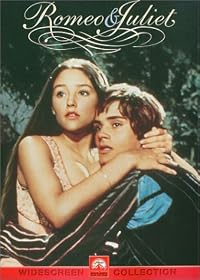
Of course, there's nothing like seeing this dramatized. I rather love the 1968 film directed by Franco Zeffirelli. A traditional approach with actors of the right ages to fit their roles. show less
I remember a teacher once explaining how character propels plot through Shakespeare plays. If Othello had been inserted into Hamlet's plot and vice versa there would have been no tragedy. Othello wouldn't have hesitated to destroy Claudius and Hamlet would have thoroughly investigated before killing Desdemona. In this play Romeo and Juliet each pull each other show more towards the tragedy, their immaturity and overwhelmed emotions as much the linchpin as their family's feuds.
Of course, there's nothing like seeing this dramatized. I rather love the 1968 film directed by Franco Zeffirelli. A traditional approach with actors of the right ages to fit their roles. show less
One of William Shakespeare's earlier plays and it shows, lacking some of the nuance of other plays I have read by the Bard. This is more Shakespeare the crowd-pleaser than Shakespeare the artist, with Romeo and Juliet's characters all too readily indulging in cheap jokes and bawdy innuendo like these were the Carry On stories of their time. There were so many lines which seem innocuous to modern ears but which my annotated Wordsworth Classics edition assures me are in all probability not-so-subtle references to penises and vaginas. Well, they don't teach you that at Key Stage 3 English.
Nevertheless, this is still Shakespeare and it still hits hard when it wants to. It is rightly one of his most iconic and influential plays; even if some show more of the lines fall flat, it remains greater than the sum of its parts. It is the classic crowd-pleasing tale of star-crossed lovers (a phrase coined by Shakespeare in this very play) and the codifier of many tropes on doomed love and the impetuous romance of youth. Such tropes have been plundered and bastardized in modern times by zombie trash like Twilight, so if this is what passed for low entertainment in the late 16th century then Tudor English audiences don't know how good they had it.
One of the themes which particularly interested me was one emphasised by Cedric Watts in the introduction to my Wordsworth edition; the idea that Romeo and Juliet was key in changing societal norms on marriage. As Watts says, the dominance of the belief that marriage should be based on the free choice of loving partners [rather than a choice made by one's family or by economic circumstances] is, historically, a relatively recent phenomenon, and more localised geographically than we may at first think." (pg. 16). At the very least, the play backed the winning horse, "eloquently voic[ing] the idea which eventually prevailed." (pg. 16). Considering that the freedom of choice in marriage is still not an option in many parts of the world – including, sadly, amongst some elements of our own society – then this is a salient theme to ponder. As with the other Shakespeare plays I have read, I find it remarkable that so short a piece – Shakespeare refers very early on to "the two hours' traffic of our stage" (pg. 35) – can retain within it such variety and depth. Even accounting for the bawdiness and the prick jokes, Shakespeare is still more than worth our time and effort." show less
Nevertheless, this is still Shakespeare and it still hits hard when it wants to. It is rightly one of his most iconic and influential plays; even if some show more of the lines fall flat, it remains greater than the sum of its parts. It is the classic crowd-pleasing tale of star-crossed lovers (a phrase coined by Shakespeare in this very play) and the codifier of many tropes on doomed love and the impetuous romance of youth. Such tropes have been plundered and bastardized in modern times by zombie trash like Twilight, so if this is what passed for low entertainment in the late 16th century then Tudor English audiences don't know how good they had it.
One of the themes which particularly interested me was one emphasised by Cedric Watts in the introduction to my Wordsworth edition; the idea that Romeo and Juliet was key in changing societal norms on marriage. As Watts says, the dominance of the belief that marriage should be based on the free choice of loving partners [rather than a choice made by one's family or by economic circumstances] is, historically, a relatively recent phenomenon, and more localised geographically than we may at first think." (pg. 16). At the very least, the play backed the winning horse, "eloquently voic[ing] the idea which eventually prevailed." (pg. 16). Considering that the freedom of choice in marriage is still not an option in many parts of the world – including, sadly, amongst some elements of our own society – then this is a salient theme to ponder. As with the other Shakespeare plays I have read, I find it remarkable that so short a piece – Shakespeare refers very early on to "the two hours' traffic of our stage" (pg. 35) – can retain within it such variety and depth. Even accounting for the bawdiness and the prick jokes, Shakespeare is still more than worth our time and effort." show less
The famous quote from Sigmund Freud, while possibly apocryphal, should nonetheless have been a guiding principle for the author of "The Tragedie of Romeo and Juliet: A Frankly Annotated First Folio Edition": "A cigar is sometimes just a cigar!" In the case of this tendentious study of the vulgar in Shakespeare's play, perhaps a fish is just a fish, or a scabbard is just a scabbard, or a - well, you get the point.
In our post-modern, sex-saturated culture, it is inevitable that everything cultural must be put under the psychological microscope in order to divine any and all traces of sexual innuendo, allegory, comparison, representation, symbolism, etc., etc. And the author does a superb job of it. Was Shakespeare "bawdy" in his plays? show more Most certainly. But can and should every other line in major parts of "Romeo and Juliet" be declared not just bawdy, but vulgar, obscene, scatological? That seems to be the preferred reading of Shakespeare by this author. From the (very interesting and instructive) introduction with its arched eyebrow condescension toward "those fun-loving Puritans", to the formulaic but often questionable equivalences with their equal signs (such and such = such and such =such and such: voila! a sexual reference after all!), to the liberal scattering of the words "probable" or "likely" or "possibly" throughout many of the conclusions, leaves one amazed that the author found this forced approach to Elizabethan English necessary to come to the "correct" interpretation.
The accessible rendition of this highly accurate First Folio Edition of the text of the play is worth the price of admission, i.e., the purchase price of the book itself. But the reading of the play can only be made more enjoyable by ignoring to one degree or another, the Author's agenda driven annotations as the "sound and fury" of background noise. show less
In our post-modern, sex-saturated culture, it is inevitable that everything cultural must be put under the psychological microscope in order to divine any and all traces of sexual innuendo, allegory, comparison, representation, symbolism, etc., etc. And the author does a superb job of it. Was Shakespeare "bawdy" in his plays? show more Most certainly. But can and should every other line in major parts of "Romeo and Juliet" be declared not just bawdy, but vulgar, obscene, scatological? That seems to be the preferred reading of Shakespeare by this author. From the (very interesting and instructive) introduction with its arched eyebrow condescension toward "those fun-loving Puritans", to the formulaic but often questionable equivalences with their equal signs (such and such = such and such =such and such: voila! a sexual reference after all!), to the liberal scattering of the words "probable" or "likely" or "possibly" throughout many of the conclusions, leaves one amazed that the author found this forced approach to Elizabethan English necessary to come to the "correct" interpretation.
The accessible rendition of this highly accurate First Folio Edition of the text of the play is worth the price of admission, i.e., the purchase price of the book itself. But the reading of the play can only be made more enjoyable by ignoring to one degree or another, the Author's agenda driven annotations as the "sound and fury" of background noise. show less
 This review was written for LibraryThing Early Reviewers.
As long as you remind yourself that this is teen melodrama and not tragedy the essential vapidity of the central relationship and the frustratingly buried deeper and more complex relationships--actually all Romeo's, with Mercutio but also Benvolio, Tybalt, the priest--don't get in the way of good tawdry enjoyment. Now I think about it, Romeo's like a cryptohomoerotic sixteenth-century Archie.
Esta bela tragédia acontece em Verona e gira, é claro, em torno de Romeo Montague e Julieta Capuleto, dois jovens amantes virtualmente condenados por causa da briga entre suas famílias. Shakespeare, um mestre em prenúncios, faz da Nurse a personagem que primeiramente prenuncia os eventos futuros. Comparações entre luz e escuridão também não faltam. São fundamentais para a peça importantes cenas de amor que acontecem no escuro, longe da desordem que marca o dia. Romeo ama Julieta à noite, mas mata durante a balbúrdia diurna. Há também um forte conflito no uso da prata e do ouro. A prata é invocada como um símbolo do amor e da beleza. O ouro, por outro lado, é usado como um sinal de ganância e desejo. A ereção das show more estátuas douradas, no final, denota o fato de que nem Montague nem Capuleto aprenderam realmente alguma coisa com suas perdas. Tal como os personagens de Richard III sonham com seus destinos, Romeu também tem um sonho que o alerta para o destino: "Sonhei que minha senhora veio e me encontrou morto." Referências sexuais e bíblicas abundam. Há uma estranha referência bíblica quando Benvolio tenta parar a luta: "Embainhem as espadas, vocês não sabem o que fazem." - ecoando as palavras de Cristo quando tentou parar a luta entre os apóstolos e os romanos durante a sua prisão. Frei Lourenço parece brincar de Deus ao convencer Julieta a beber a poção que fará com que aqueles a seu redor acreditem que ela esteja, de fato, morta até que Romeu a venha ressuscitar. Em sua tentativa de brincar de Deus, Frei Lourenço está condenado ao fracasso pela simples arrogância de seus atos - uma conotação com a morte de Cristo que não pode ter escapado aos cristãos que assistiram às primeiras performances desta peça. show less
Members
- Recently Added By
Lists

Favorite Shakespeare plays?
37 works; 44 members

scav
54 works; 2 members

Literature which inspired Pop songs
85 works; 9 members

1964 College Preparatory Reading List
202 works; 8 members

Stage Plays/Screenplays/Dialogues/Anything Dialogue-Storytelling Related
81 works; 2 members
r/acting on Reddit - Essential Plays
44 works; 2 members

Books Mentioned in The Wedding Planner's Daughter series
107 works; 2 members

DELETE
48 works; 2 members

My 100 Favorite Books of All Time
57 works; 2 members
1:28 p.m.'s 350 Stage Plays Challenge
94 works; 3 members

Greatest Books, allegedly
484 works; 9 members

Book Titles Mentioned In Newberry Medal And Honor Books
884 works; 3 members

Favorite Romance Fiction
247 works; 115 members

AP Lit
363 works; 6 members

Mustich's 1000 Books to Read Before You Die: A Life Changing List
1,001 works; 18 members
Essential/Recognized Stage Plays
115 works; 4 members
Best Book and Movie Combos
70 works; 11 members

Favourite Love Stories
53 works; 1 member

Books Read in 2023
5,547 works; 144 members

1970s
657 works; 23 members

Works in the game of Authors
44 works; 2 members

Books recommended by Calgary Public Library staff
1,588 works; 4 members
'Books You Can't Live Without: The Top 100', The Guardian, 2007
156 works; 7 members

Recommended Reading : 600 Classics Reviewed, Editors of Salem Press, 2015
634 works; 6 members

2025 Reading List
51 works; 2 members
Books in Riverdale
123 works; 3 members
My Play Collection
769 works; 3 members

The Complete Rory Gilmore Reading List
506 works; 5 members
School Made Us Read It
380 works; 196 members

Every Non-Musical Play Nominated for a Tony Award
64 works; 3 members

Read For Your Life
157 works; 1 member

.
396 works; 1 member
Books available on Open Library
171 works; 4 members
Out of Copyright
244 works; 14 members
Plays I Like
230 works; 31 members

Bibliography for How to be a Heroine
148 works; 12 members
Bibliography for Among Others
159 works; 15 members
Books You Read During High School (For School)
301 works; 52 members

A High School Trip to Italy
55 works; 7 members
Read the book and saw the movie
1,170 works; 195 members

Best of World Literature
431 works; 51 members

Books Set in Italy
167 works; 19 members
The Top Ten: Writers Pick Their Favorite Books
240 works; 31 members
Great Books Favorites
71 works; 6 members
Love and Marriage
93 works; 10 members

Carole's List
445 works; 13 members

Ambleside Books
459 works; 18 members

Books Featured on Gilmore Girls
307 works; 21 members
Favorite Literary Love Stories
182 works; 101 members

100 Books to Read in a Lifetime (That Are Older Than 200 Years)
415 works; 173 members

University literature
145 works; 5 members

Best Love Stories
107 works; 14 members
CCE 1000 Good Books List
1,033 works; 12 members

Poetry Corner
187 works; 15 members
100 World Classics
99 works; 15 members

Read
293 works; 4 members
Blue Pyramid 1,276 Best Books of All Time
1,248 works; 32 members
Early Modern (Shakesperean)
64 works; 2 members

Books I've read
87 works; 2 members

Western World's Greatest Books - Project Gutenberg
295 works; 15 members
Favourite Books
1,817 works; 316 members
The College Board: 101 Great Books Recommended for College-Bound Readers
111 works; 7 members
Fiction with Women's Names in the Title
378 works; 15 members

Alphabetical Books
211 works; 3 members

Europe
205 works; 6 members
Daria Morgendorffer's Bookshelf
70 works; 5 members
In Our Time books
4,934 works; 2 members
Author Information

5,935+ Works 439,813 Members
William Shakespeare, 1564 - 1616 Although there are many myths and mysteries surrounding William Shakespeare, a great deal is actually known about his life. He was born in Stratford-Upon-Avon, son of John Shakespeare, a prosperous merchant and local politician and Mary Arden, who had the wealth to send their oldest son to Stratford Grammar School. show more At 18, Shakespeare married Anne Hathaway, the 27-year-old daughter of a local farmer, and they had their first daughter six months later. He probably developed an interest in theatre by watching plays performed by traveling players in Stratford while still in his youth. Some time before 1592, he left his family to take up residence in London, where he began acting and writing plays and poetry. By 1594 Shakespeare had become a member and part owner of an acting company called The Lord Chamberlain's Men, where he soon became the company's principal playwright. His plays enjoyed great popularity and high critical acclaim in the newly built Globe Theatre. It was through his popularity that the troupe gained the attention of the new king, James I, who appointed them the King's Players in 1603. Before retiring to Stratford in 1613, after the Globe burned down, he wrote more than three dozen plays (that we are sure of) and more than 150 sonnets. He was celebrated by Ben Jonson, one of the leading playwrights of the day, as a writer who would be "not for an age, but for all time," a prediction that has proved to be true. Today, Shakespeare towers over all other English writers and has few rivals in any language. His genius and creativity continue to astound scholars, and his plays continue to delight audiences. Many have served as the basis for operas, ballets, musical compositions, and films. While Jonson and other writers labored over their plays, Shakespeare seems to have had the ability to turn out work of exceptionally high caliber at an amazing speed. At the height of his career, he wrote an average of two plays a year as well as dozens of poems, songs, and possibly even verses for tombstones and heraldic shields, all while he continued to act in the plays performed by the Lord Chamberlain's Men. This staggering output is even more impressive when one considers its variety. Except for the English history plays, he never wrote the same kind of play twice. He seems to have had a good deal of fun in trying his hand at every kind of play. Shakespeare wrote 154 sonnets, all published on 1609, most of which were dedicated to his patron Henry Wriothsley, The Earl of Southhampton. He also wrote 13 comedies, 13 histories, 6 tragedies, and 4 tragecomedies. He died at Stratford-upon-Avon April 23, 1616, and was buried two days later on the grounds of Holy Trinity Church in Stratford. His cause of death was unknown, but it is surmised that he knew he was dying. (Bowker Author Biography) show less
Some Editions
Awards and Honors
Awards
Distinctions
Notable Lists
Series
Belongs to Publisher Series
New Penguin Shakespeare (NS1)
Penguin Shakespeare (B10)
The Yale Shakespeare (12)
Centopaginemillelire (20)
William Shakespeare, Theatralische Werke in 21 Einzelbänden, übersetzt von Christoph Martin Wieland (17)
GF Flammarion (669)
Clube de Literatura Clássica (CLC) (50 [June 2024])
Haagse Comedie (31)
Little Blue Books (250)
dtv (12481)
insel taschenbuch (3141 / 4035)
Work Relationships
Is contained in
The Works of William Shakespeare: The Henry Irving Shakespeare: Volume 2: Romeo and Juliet, King Henry VI Pt. 1, King Henry Vi Pt. 2 by William Shakespeare
The complete works of William Shakespeare : reprinted from the First Folio (volume 10 of 13) by William Shakespeare
The Annotated Shakespeare: The Comedies, Histories, Sonnets and Other Poems, Tragedies and Romances Complete by William Shakespeare (indirect)
90 Masterpieces You Must Read (Vol.1): Novels, Poetry, Plays, Short Stories, Essays, Psychology & Philosophy by Various
Shakespeares Dramatische Werke Vierter Band / Meyers Klassiker (Romeo / Hamlet / Othello) by William Shakespeare
Is retold in
Has the adaptation
Is abridged in
Is parodied in
Is replied to in
Was inspired by
Inspired
Tchaikovsky & Shakespeare: Hamlet / The Tempest / Romeo and Juliet [sound recording] by Piotr Ilyich Tchaikovsky
Shakespeare Overtures: The Tempest - Othello - Macbeth - Romeo and Juliet / Elegie for Orchestra, WoO 48 / Fest-Ouvertüre, Op. 117 [sound recording] by Joseph Joachim Raff
Has as a study
Has as a supplement
Has as a commentary on the text
Has as a student's study guide
Has as a teacher's guide
Common Knowledge
- Canonical title
- Romeo and Juliet
- Original title
- The Tragedy of Romeo and Juliet
- Alternate titles
- The Most Excellent and Lamentable Tragedy of Romeo and Juliet; An Excellent conceited Tragedie of Romeo and Juliet; The Tragedie of Romeo and Juliet
- Original publication date
- 1597; 1975: Fumetti adaptation
- People/Characters
- Romeo Montague; Juliet Capulet; Mercutio; Benvolio Montague; Count Paris; Balthasar (show all 17); Gregory; Sampson; Capulet (Juliet's father); Montague; Friar Laurence; Nurse; Apothecary; Rosaline Capulet; Lady Montague; Lady Capulet; Tybalt Capulet
- Important places
- Verona, Veneto, Italy; Veneto, Italy; Mantua, Lombardy, Italy; Lombardy, Italy; Italy
- Related movies
- Romeo and Juliet (1900 | IMDb); Romeo e Giulietta (1908 | IMDb); Romeo and Juliet (1908/I | IMDb); Romeo and Juliet (1908/II | IMDb); Roméo se fait bandit (1909 | IMDb); Romeo and Juliet (1911 | IMDb) (show all 71); Romeo e Giulietta (1912 | IMDb); Indian Romeo and Juliet (1912 | IMDb); Romeo and Juliet (1916/II | IMDb); Romeo and Juliet (1916/I | IMDb); Romeo and Juliet (1936 | IMDb); Julieta y Romeo (1939 | IMDb); Shuhaddaa el gharam (1942 | IMDb); Romeo y Julieta (1943 | IMDb); Romeo and Juliet (1947 | IMDb); Les amants de Vérone (1949 | IMDb); Romeo at Julieta (1951 | IMDb); Romeo and Juliet (1954 | IMDb); Romeo i Dzhulyetta (1955 | IMDb); Producers' Showcase:Romeo and Juliet (1957 | s3e7 | IMDb); BBC Sunday-Night Theatre:Romeo and Juliet (1955 | s6e21 | IMDb); Romanoff and Juliet (1961 | IMDb); West Side Story (1961 | IMDb); Romeo i Djulijeta (1963 | IMDb); Giulietta e Romeo (1964 | IMDb); Romeo and Juliet (1965 | IMDb); Romeo y Julieta (1966 | IMDb); Romeo and Juliet (1966 | IMDb); Romeo and Juliet (1968/I | IMDb); The Secret Sex Lives of Romeo and Juliet (1969 | IMDb); Romeo y Julieta (1971 | IMDb); Romeo and Juliet (1976 | IMDb); The Bolshoi Ballet: Romeo and Juliet (1976 | IMDb); Romeo & Juliet (1978 | IMDb); Estudio 1: Romeo y Julieta (1972 | IMDb); Runaway Robots! Romie-O and Julie-8 (1979 | IMDb); The Tragedy of Romeo and Juliet (1982 | IMDb); Romeo e Giulietta (1982 | IMDb); Romeo et Juliette (1982 | IMDb); Romeo and Juliet (1987 | IMDb); Romeo and Juliet Part II (1988 | IMDb); Montoyas y Tarantos (1989 | IMDb); Romeo-Juliet (1990 | IMDb); Romeo en Julia (1991 | IMDb); Romeo & Julia (1992 | IMDb); Romeo & Juliet (1993 | IMDb); Fantastic Fantasy Factory (1993 | IMDb); Roméo et Juliette (1994 | IMDb); Romeo & Juliet (1994 | IMDb); Romeo and Juliet (1995 | IMDb); Love Is All There Is (1996 | IMDb); Tromeo and Juliet (1996 | IMDb); Romeo Juliet (1996 | IMDb); Romeo och Julia (1996 | IMDb); Romeo and Juliet (2000 | IMDb); Romeo e Giulietta (2000 | IMDb); Dilbert: Company Picnic (2000 | s2e15 | IMDb); Roméo et Juliette (2002 | IMDb); Roméo & Juliette (2002 | IMDb); Bollywood Queen (2002 | IMDb); Kebab Connection (2004 | IMDb); O Casamento de Romeu e Julieta (2005 | IMDb); Romeo & Juliet: Sealed with a Kiss (2006 | IMDb); Rockin' Romeo & Juliet (2006 | IMDb); Romeo y Julieta (2007 | IMDb); Romio x Jurietto (2007 | IMDb); Romeo & Juliet vs. The Living Dead (2009 | IMDb); Romeo Juliet (1996 | IMDb); Wishbone" Rosie Oh! Rosie Oh! (1995 | IMDb); Shakespeare in Love (1998 | IMDb); Romeo and Juliet (2013 | IMDb)
- First words
- Two households, both alike in dignity, In fair Verona, where we lay our scene, From ancient grudge break to new mutiny, Where civil blood makes civil hands unclean.
- Quotations
- But, soft! what light through yonder window breaks?
It is the east, and Juliet is the sun.
Good night, good night! parting is such sweet sorrow,
That I shall say good night till it be morrow.
This bud of love, by summer's ripening breath,
May prove a beauteous flower when next we meet.
What's in a name? That which we call a rose
By any other name would smell as sweet.
A plague o' both your houses!
Lady Capulet:
This night you shall behold him at our feast.
Read o'er the volume of young Paris' face,
And find delight writ there with beauty's pen.
Examine every married lineament,
And see... (show all) how one another lends content
And what obscured in this fair volume lies
Find written in the margent of his eyes.
This precious book of love, this unbound lover,
To beautify him only lacks a cover.
Romeo:
If I profane with my unworthiest hand
This holy shrine, the gentle sin is this.
My lips, two blushing pilgrims, ready stand
To smooth that rough touch with a tender kiss.
Juliet:
<... (show all)br>Good pilgrim, you do wrong your hand too much,
Which mannerly devotion shows in this.
For saints have hands that pilgrims' hands do touch,
And palm to palm is holy palmers' kiss.
Romeo:
Have not saints lips, and holy palmers too?
Juliet:
Ay, pilgrim, lips that they must use in prayer.
Romeo:
O, then, dear saint, let lips do what hands do!
They pray: grant thou, lest faith turn to despair.
Juliet:
Saints do not move, though grant for prayers' sake.
Romeo:
Then move not while my prayer's effect I take.
Juliet:
In truth, fair Montague, I am too fond,
And therefore thou mayst think my 'haviour light.
But trust me, gentleman, I'll prove more true
Than those that have more cunning to be strange.
<... (show all)br>But that thou overheardest, ere I was ware,
My true love-passion. Therefore pardon me,
And not impute this yielding to light love,
Which the dark night hath so discovered.
Friar Laurence:
In one respect I'll thy assistant be.
For this alliance may so happy prove
To turn to your households' rancour to pure love
Juliet:
O God, I have an ill-divining soul!
Methinks I see thee, now thou art so low,
As one dead in the bottom of a tomb.
Either my eyesight fails, or thou lookest pale.
Romeo:
I dreamt my lady came and found me dead -
Strange dream that gives a dead man leave to think! -
And breathed such life with kisses in my lips
That I revived and was an emperor.
Juliet:
It is too rash, too unadvised, too sudden;
Too like the lightning, which doth cease to be
Ere one can say 'It lightens. - Last words
- (Click to show. Warning: May contain spoilers.)A glooming peace this morning with it brings;
The sun, for sorrow, will not show his head:
Go hence, to have more talk of these sad things;
Some shall be pardon'd, and some punished:
For never was a story of more woe
Than this of Juliet and her Romeo. - Publisher's editor
- Harrison, G. B. (Penguin Popular Classics); Spencer, T. J. B. (New Penguin Shakespeare); Newborn, Sasha (Bandanna Shakespeare Series)
- Original language
- English; German
- Canonical DDC/MDS
- 822.33
- Canonical LCC
- PR2831.A1
- Disambiguation notice
- Please distinguish between this work, which is Shakespeare's original play, from any of its many adaptations (audio, video, reworking, etc.).
3458348417 2005 softcover German insel taschenbuch 3141 transl. Thomas Brasc... (show all)h
3458357351 2011 softcover German insel taschenbuch 4035 transl. Thomas Brasch
Classifications
Statistics
- Members
- 32,922
- Popularity
- 99
- Reviews
- 310
- Rating
- (3.71)
- Languages
- 36 — Arabic, Catalan, Chinese, Czech, Danish, Dutch, English, Esperanto, Estonian, Finnish, French, German, Galician, Greek, Hindi, Hungarian, Indonesian, Italian, Japanese, Korean, Lithuanian, Malay, Multiple languages, Norwegian (Nynorsk), Norwegian (Bokmål), Panjabi, Polish, Romanian, Russian, Serbian, Slovak, Spanish, Swedish, Turkish, Ukrainian, Portuguese (Portugal)
- Media
- Paper, Audiobook, Ebook
- ISBNs
- 1,274
- UPCs
- 18
- ASINs
- 394
