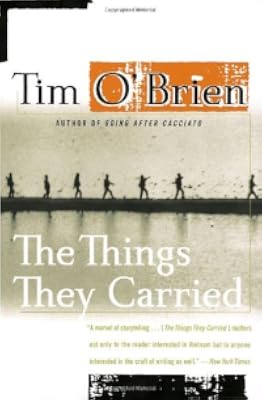
The Things They Carried
by Tim O'Brien
On This Page
Description
Heroic young men carry the emotional weight of their lives to war in Vietnam in a patchwork account of a modern journey into the heart of darkness.Tags
Recommendations
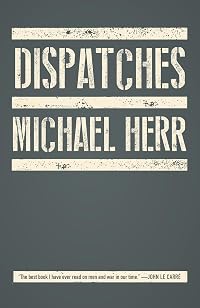
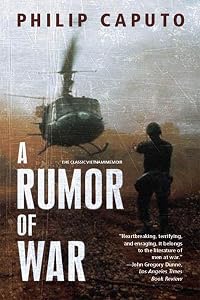
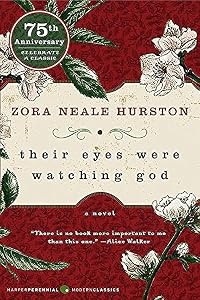
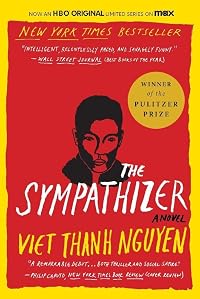


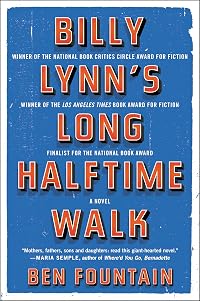
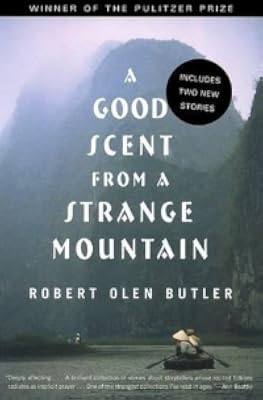
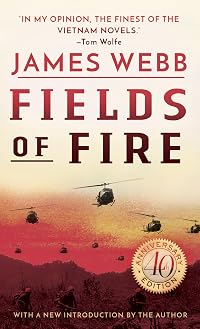
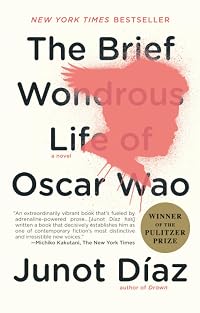

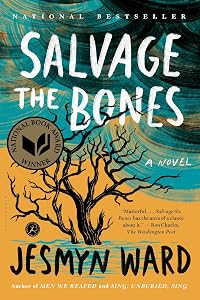
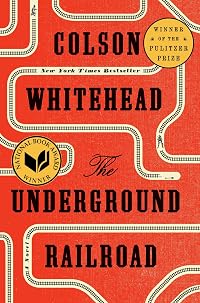
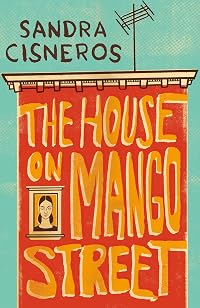
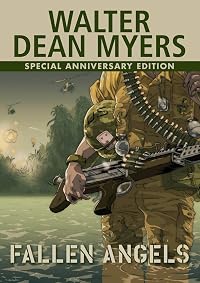


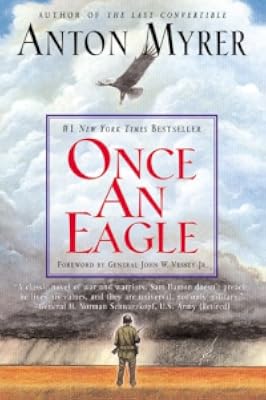
Member Recommendations
chrisharpe A similar novel, just as powerful - from the North Vietnamese perspective...
Also recommended by ateolf
41

Loon by Jack McLean
by SqueakyChu
andyg227 An incredible journey of soldiers fighting and dying in the Vietnam War.
Also recommended by chrisharpe
22
jrgoetziii Because The Iliad is a classic war story and The Things They Carried is not, but took a number of passages almost directly from The Iliad (one of these is the catalog in the first book, but there are many others, too). The Iliad covers significantly more range and depth, and its themes are timeless.
39

Member Reviews
Tim O'Brien's semi-autobiographical work on the Vietnam War is a collection of beautifully written, melancholy short stories set both during the conflict and decades years later.
My brother recommended this book years ago. He has a habit of enjoying books that are poetic and lyrical, reflective and very sad. So I put it off, deciding I needed to be in the right mood. This year, my library's book discussion choices were the final push I needed to finally put it on the top of the "to read" list. I am really glad I did. It is very sad, and violent at times, which I expected. I was not prepared with how bowled over I was, by the characters, the writing, the exploration of "truth" vs. "fact," the working through of a terrible war by writing show more stories. I found myself slowing down, reading only two or three stories at a time so that I could really take each one in. Each story is placed carefully, so they each tell a story and they each illuminate the others. I have so much to think about and talk about in discussion tomorrow, and I took far more copious notes than I usually do, even for a book discussion book. Highly, highly recommended. show less
My brother recommended this book years ago. He has a habit of enjoying books that are poetic and lyrical, reflective and very sad. So I put it off, deciding I needed to be in the right mood. This year, my library's book discussion choices were the final push I needed to finally put it on the top of the "to read" list. I am really glad I did. It is very sad, and violent at times, which I expected. I was not prepared with how bowled over I was, by the characters, the writing, the exploration of "truth" vs. "fact," the working through of a terrible war by writing show more stories. I found myself slowing down, reading only two or three stories at a time so that I could really take each one in. Each story is placed carefully, so they each tell a story and they each illuminate the others. I have so much to think about and talk about in discussion tomorrow, and I took far more copious notes than I usually do, even for a book discussion book. Highly, highly recommended. show less
Read for ... well, I don't even remember how many times I've read this book. But this WAS the first time I've read it since I got back from war myself. And shockingly, it isn't the war parts that got me - it's the truth parts; it's the parts that suggest a story can save a life and be more true even when it is made-up. It's telling a deeper story and letting the details be imagined from that pure spot of memory and emotion. This is now, as it has always been - beautiful. But more than that, now. Now, it's personal.
Read it.
Read it.
I have read. I think, six O'Brien books and enjoyed them all, but THE THINGS THEY CARRIED is the one I keep coming back to. I first read these stories over 25 years ago and then re-read some of them a few times since. Found this copy in the local thrift store a couple months ago, and I couldn't bear to leave it there. Fifty cents. Have been dipping into it now for past few weeks, and remembering once again what a very personal, gut-wrenching thing it must have been for O'Brien to set these stories down, sometimes more than once, from different points of view, with slight or major changes variations, always contemplating the awful and mysterious finality of death, which he witnessed often and even caused himself during his time in the show more war.
The Broadway Books edition I have now is from 1998 and is fronted with eight solid pages of glowing praise in blurbs from all over this country. So what could I possibly add? What it all amounts to is a book in which a very talented writer, who also happens to be a tortured veteran of a misbegotten and pointless war, literally pours out his heart, his soul, and his guts. He remains, all these years later, haunted by what he saw and did in that war, unable to forget any of it. This is a beautiful book, richly deserving of its reputation as a classic of war lit. This time I'll hang on to it, because it is a book worth revisiting. My highest recommendation.
- Tim Bazzett, author of the Cold War memoir, SOLDIER BOY: AT PLAY IN THE ASA show less
The Broadway Books edition I have now is from 1998 and is fronted with eight solid pages of glowing praise in blurbs from all over this country. So what could I possibly add? What it all amounts to is a book in which a very talented writer, who also happens to be a tortured veteran of a misbegotten and pointless war, literally pours out his heart, his soul, and his guts. He remains, all these years later, haunted by what he saw and did in that war, unable to forget any of it. This is a beautiful book, richly deserving of its reputation as a classic of war lit. This time I'll hang on to it, because it is a book worth revisiting. My highest recommendation.
- Tim Bazzett, author of the Cold War memoir, SOLDIER BOY: AT PLAY IN THE ASA show less
I had a friend who went to war. Part of him did not come home. His shoulder and much of his upper body was metal plate, but that is not the part I am talking about. The part that was left there was a piece of his soul, an innocence and lightness that could never be recaptured. He talked about the war when he was in his cups, which he was too often. His best buddy in the war was killed in front of his eyes, and Sam was convinced (be it true or not) that the bullet he took was meant for Sam. He felt his friend had saved his life and that he was not worthy of that sacrifice. Knowing him made reading this book a harder experience for me, it made the stories more real, it reminded me how many Sams there were out there in the jungles of show more Vietnam.
This is, of course, a book about war, and as such, not surprisingly, a book about loss. It is also a book about death, even the deaths of those who live, for people die in stages sometimes, they die in bits and pieces that they bury and exhume and rebury.
I cannot imagine anyone reads this book without taking it personally. Certainly the men who fought this war must find something I can never touch inside its pages. What I found myself seeing were Sam’s eyes, the way they sparkled when he was free of war for a moment and the way they clouded and glazed when he tried to tell anyone about what he was feeling. I would sometimes catch him in a quiet moment at his desk, and I knew without a word that he was there. From the first page, I was walking with Sam, not with Tim, but then I realized Sam and Tim and Kiowa and Curt Lemon, are all the same person for one short moment in time.
I know why I have had this on my TBR for so long and procrastinated about opening it to read. No one really wants to go back to that war for even a second. I understand as little now about why were there as I did then, and history usually gives a person more perspective, not less. I think about all the potential we lost, not only in the person of those who died, but in those who came back so changed and could find no way to move forward. Tim O’Brien is one of the lucky ones. He found a voice through his writing and purged some of his ghosts in that way. Some men just carried them to the grave, unpurged...and that must be the worst weight they were asked to carry. show less
This is, of course, a book about war, and as such, not surprisingly, a book about loss. It is also a book about death, even the deaths of those who live, for people die in stages sometimes, they die in bits and pieces that they bury and exhume and rebury.
I cannot imagine anyone reads this book without taking it personally. Certainly the men who fought this war must find something I can never touch inside its pages. What I found myself seeing were Sam’s eyes, the way they sparkled when he was free of war for a moment and the way they clouded and glazed when he tried to tell anyone about what he was feeling. I would sometimes catch him in a quiet moment at his desk, and I knew without a word that he was there. From the first page, I was walking with Sam, not with Tim, but then I realized Sam and Tim and Kiowa and Curt Lemon, are all the same person for one short moment in time.
I know why I have had this on my TBR for so long and procrastinated about opening it to read. No one really wants to go back to that war for even a second. I understand as little now about why were there as I did then, and history usually gives a person more perspective, not less. I think about all the potential we lost, not only in the person of those who died, but in those who came back so changed and could find no way to move forward. Tim O’Brien is one of the lucky ones. He found a voice through his writing and purged some of his ghosts in that way. Some men just carried them to the grave, unpurged...and that must be the worst weight they were asked to carry. show less
As Tim O’Brien knows all too well, battle tested soldiers carry the heavy weight of their experiences throughout life. Even though the tales they share may change with time and distance, it is through storytelling that the trauma of warfare finds meaning and heals. Published in 1990, The Things They Carried is regarded as a classic study, detailing what a good many American soldiers experienced during the Vietnam War. In this collection of linked stories drawn from the writer’s tour of duty, he focuses on soldiers serving in Alpha Company. Even though O’Brien makes clear they are fictional in nature, there is no doubt each contains essential truths that have long haunted him.
While a sobering read, it shows the macabre humor show more soldiers use to preserve their sanity, and how the trauma of warfare can strip away a soldier’s sense of humanity toward the enemy they are facing. Bravado is used to bury fear, and even if horror is joked away, its seed is likely to later bloom into post traumatic stress.
These stories are both haunting and heartbreaking. It is no wonder that many of them continue to turn up as assigned readings in schools. For anyone who might glorify warfare, The Things They Carried serves as a reminder of the high cost extracted, not only among those wounded or killed, but on the mental health of all. Almost twenty-five years after the telling, this book is a reminder that as long as survivors remain to tell the tale, no war is truly over. show less
While a sobering read, it shows the macabre humor show more soldiers use to preserve their sanity, and how the trauma of warfare can strip away a soldier’s sense of humanity toward the enemy they are facing. Bravado is used to bury fear, and even if horror is joked away, its seed is likely to later bloom into post traumatic stress.
These stories are both haunting and heartbreaking. It is no wonder that many of them continue to turn up as assigned readings in schools. For anyone who might glorify warfare, The Things They Carried serves as a reminder of the high cost extracted, not only among those wounded or killed, but on the mental health of all. Almost twenty-five years after the telling, this book is a reminder that as long as survivors remain to tell the tale, no war is truly over. show less
The Things They Carried hit me almost in the opposite way. As I began reading the collection of stories and essays that make up the novel, I had doubts that it would knock my socks off as it had for so many others. The more I read, the more the stories came together, and the more the book came to life for me. By the end, I was, in fact, blown away.
Tim O'Brien's accounts of the Vietnam War in The Things They Carried are fiction, based in fact. It's hard not to think of the book as completely nonfiction when reading it, especially since the author writes in the first person and the narrator shares the author's name.
O'Brien's book is real and raw, sometimes funny, often sad. The collection of stories is about friendship, love, hope and show more death as much as it is about the war experience itself. Several of the stories stood out for me, in particular the one in which Tim receives his draft letter. Opposed to the war, he considers dodging the draft. How does a person reconcile one's beliefs with one's duty? My own father enlisted in the military and so his going to Vietnam was not a forced issue, not really. What must it have been like for a man who didn't make that choice on his own, who was forced to fight in a war he didn't believe in? "On the Rainy River" struck a chord with me that still lingers in the back of my mind and probably will for a long time to come.
There are also stories about the first kill, about coping with death, how a soldier may do many brave things during a war, but it is what he fails to do or isn't able to do that gnaws away at him. The author captures the many faces of war: the friendships that form, the horrors, the pressure, pain and strengths of the men. And how fitting the title, The Things They Carried! Not only do these men carry heavy loads of physical items, they also bare psychological and emotional burdens.
In fiction, there is truth. Sometimes it is easier to get to the truth through fiction than through nonfiction. We can see into the heart of it much more clearly. Both Paco's Story and The Things They Carried are good examples of portraying the truth in fiction at its finest. show less
Tim O'Brien's accounts of the Vietnam War in The Things They Carried are fiction, based in fact. It's hard not to think of the book as completely nonfiction when reading it, especially since the author writes in the first person and the narrator shares the author's name.
O'Brien's book is real and raw, sometimes funny, often sad. The collection of stories is about friendship, love, hope and show more death as much as it is about the war experience itself. Several of the stories stood out for me, in particular the one in which Tim receives his draft letter. Opposed to the war, he considers dodging the draft. How does a person reconcile one's beliefs with one's duty? My own father enlisted in the military and so his going to Vietnam was not a forced issue, not really. What must it have been like for a man who didn't make that choice on his own, who was forced to fight in a war he didn't believe in? "On the Rainy River" struck a chord with me that still lingers in the back of my mind and probably will for a long time to come.
There are also stories about the first kill, about coping with death, how a soldier may do many brave things during a war, but it is what he fails to do or isn't able to do that gnaws away at him. The author captures the many faces of war: the friendships that form, the horrors, the pressure, pain and strengths of the men. And how fitting the title, The Things They Carried! Not only do these men carry heavy loads of physical items, they also bare psychological and emotional burdens.
In fiction, there is truth. Sometimes it is easier to get to the truth through fiction than through nonfiction. We can see into the heart of it much more clearly. Both Paco's Story and The Things They Carried are good examples of portraying the truth in fiction at its finest. show less
The Things They Carried is an excellent companion to Ken Burns's documentary, The Vietnam War, in which Tim O'Brien is one of the many contributors. It is categorized as a work of fiction...a series of stories about being a foot soldier in Vietnam, which O'Brien was. I think the line between fact and fiction is very very blurry here, but I have no doubt that all of it is True. O'Brien plays around with the concept of truth in fiction within the text; he tells the same story from different perspectives, often repeating certain "facts" like a mantra, or as if the narrator is attempting to settle the "truth" of the matter in his own mind in a way he can live with. He presents certain chapters as direct address to the reader ("here's why I show more told that story that way"), but are those real/factual, or just also True? There is no shying away from the grim, unimaginable horrors of that particular war; the things clean-cut American kids (many of them teenagers, can we please never never never forget that?) did there that defy their upbringing are spelled out in graphic prose. The things that they suffered and endured and died from, the lies they were told and the other lies they told themselves or their loved ones, the physical torment they learned to live with, and the mental anguish that eventually did some of them in are all in there. And yet the overall effect of The Things They Carried isn't depressing or horrifying at all. It's a brilliant piece of writing, with flashes of pure poetry, and an interesting structure. The sum is quite inexplicably beautiful. Highly recommended. show less
Members
- Recently Added By
Published Reviews
ThingScore 75
"As the wars in Iraq and Afghanistan drag on, O’Brien’s powerful depictions are as real today as ever."
added by SandSing7
Lists

1001 Books You Must Read Before You Die
1,448 works; 1,134 members

The Guardian's 1000 Novels Everyone Must Read
1,005 works; 551 members

Best Historical Fiction
620 works; 261 members

Best Contemporary Literary Fiction (Around the Last 30 Years)
388 works; 124 members

Recommend the 20 best books you've read in the last five years
2,168 works; 602 members

Unread books
1,063 works; 83 members

The Top Ten: Writers Pick Their Favorite Books
240 works; 31 members
20th Century Literature
1,161 works; 55 members

100 books to read in a lifetime
102 works; 37 members

Stories of War and Revolution
143 works; 54 members

Banned Books Week 2014
268 works; 63 members

Best War Stories
87 works; 16 members

Pulitzer Prize for Fiction - Finalists
88 works; 9 members

Favorite Short Fiction
228 works; 99 members

1990s
309 works; 17 members

Significant works of postmodern fiction
86 works; 25 members

War Literature
101 works; 19 members

Top Five Books of 2017
757 works; 231 members

Five star books
1,767 works; 110 members
Blue Pyramid 1,276 Best Books of All Time
1,248 works; 32 members

Books Read in 2014
2,343 works; 89 members

1,001 BYMRBYD Concensus
723 works; 27 members

100 New Classics
101 works; 13 members

Adult Books for YA Readers
194 works; 6 members
Best of American Literature
146 works; 9 members
Best War Fiction Books
41 works; 4 members

Books To Get From The Library
115 works; 5 members

Carole's List
445 works; 13 members
Books I've Read
40 works; 2 members

Most Depressing Books
69 works; 16 members

Powell's 50 Books for 50 Years
50 works; 4 members

Books Read in 2017
4,249 works; 130 members

Books Read in 2016
4,666 works; 199 members

E's Reader
30 works; 1 member

Literary Travelogue of the United States Challenge
133 works; 6 members

Books Read in 2009
464 works; 11 members

Books Read in 2003
258 works; 7 members

Fiction: Historical
288 works; 3 members

Fiction: Asia
85 works; 2 members

Recommended Reading : 600 Classics Reviewed, Editors of Salem Press, 2015
634 works; 6 members
NPR Books You Love: Books That Shaped You in High School
26 works; 1 member

Books recommended in the history category on FiveBooks.com
329 works; 4 members

B-B to Get
131 works; 1 member

Epistolary Books
105 works; 27 members

Wishlist
4 works; 1 member
Our Favorite Banned Books
138 works; 122 members

Novels without quotation marks
25 works; 1 member
THE WAR ROOM
813 works; 24 members

Metafiction
86 works; 23 members

Mustich's 1000 Books to Read Before You Die: A Life Changing List
1,001 works; 19 members
AP Lit
363 works; 6 members

Florida's Book Bans and Challenges
311 works; 4 members

Short Story and Novella Collections
47 works; 6 members

Asia
178 works; 7 members

Allie's Wishlist
217 works; 2 members
Fiction For Men
142 works; 11 members

Books for HS summer reading
21 works; 2 members
Top-Rated Books on LibraryThing
272 works; 117 members
Best Psychological Fiction
81 works; 16 members

Short Story Collections and Anthologies
261 works; 42 members

Books Read in 1995
22 works; 1 member
Author Information

21+ Works 26,173 Members
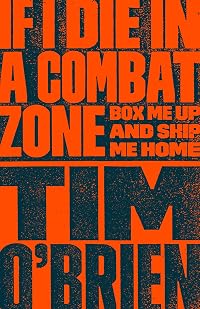
Tim O'Brien was born on October 1, 1946 in Austin, Minnesota. He graduated from Macalester College in 1968 and was immediately drafted into the U. S. Army, serving from 1969 to 1970 and receiving a Purple Heart. Three years later, his memoirs of the Vietnam War were published as If I Die in a Combat Zone, Box Me Up and Ship Me Home. Later works show more include Northern Lights (1975), Going After Cacciato (1978, winner of the National Book Award), and The Things They Carried (1990, winner of the Melcher Book Award and finalist for the Pulitzer Prize and the National Book Critics Circle Award). (Bowker Author Biography) show less
Some Editions
Awards and Honors
Awards
Distinctions
Notable Lists
Series
Belongs to Publisher Series
Work Relationships
Has as a study
Has as a student's study guide
Common Knowledge
- Canonical title
- The Things They Carried
- Original title
- The Things They Carried
- Original publication date
- 1990
- People/Characters
- Tim O'Brien - Author; Curt Lemon; Jimmy Cross; Norman Bowker; Bob "Rat" Kiley; Azar (show all 21); Bobby Jorgenson; Ted Lavender; Martha; Henry Dobbins; Mitchell Sanders; Dave Jensen; Lee Strunk; Linda; Kathleen O'Brien; Mark Fossie; Mary Anne Bell; Elroy Berdahl; Eddie Diamond; Marty Phillips; Nick Veenhof
- Important places
- Vietnam; Cleveland Heights, Ohio, USA; Canada; Minnesota, USA; Iowa, USA; Than Khe, Vietnam (show all 10); Worthington, Minnesota, USA; Quang Ngai, Vietnam; Tra Bong, Vietnam; Batangan Peninsula, Vietnam
- Important events
- Vietnam War
- Related movies
- A Soldier's Sweetheart (1998 | IMDb)
- Epigraph
- This book is essentially different from any other that has been published concerning the 'late war' or any of its incidents. Those who have had any such experience as the author will see its truthfulness at once, and to all ... (show all)other readers it is commended as a statement of actual things by one who experienced them to the fullest.
-- John Ransom's Andersonville Diary - Dedication
- This book is lovingly dedicated to the men of Alpha Company, and in particular to Jimmy Cross, Norman Bowker, Rat Kiley, Mitchell Sanders, Henry Dobbins, and Kiowa.
- First words
- First Lieutenant Jimmy Cross carried letters from a girl named Martha, a junior at Mount Sebastian College in New Jersey. They werre not love letters, but Lieutenant Cross was hoping, so he kept them folded in plastic at the... (show all) bottom of his rucksack.
- Quotations
- It was my view then, and still is, that you don't make war without knowing why.
I was a coward. I went to the war. (p.61)
Garden of Evil. Over here, man, every sin's real fresh and original.
"Well, right now," she said, "I'm not dead. But when I am, it's like . . . I don't know, I guess it's like being inside a book that nobody's reading." (p.245)
I want you to know why story-truth is truer sometimes than happening-truth. Here is the happening-truth. I was once a soldier. There were many bodies, real bodies with real faces, but I was young then and I was afraid to look... (show all). And now, twenty years later, I'm left with faceless responsibility and faceless grief.
Here is the story-truth. He was a slim, dead, almost dainty young man of about twenty. He lay in the center of a red clay trail near the village of My Khe. His jaw was in his throat. His one eye was shut, the other eye was a star-shaped hole. I killed him.
What stories can do, I guess, is make things present.
Stories are for joining the past to the future...Stories are for eternity, when memory is erased, when there is nothing to remember except the story. (p.38)
They carried the common secret of cowardice barely restrained,...Men killed and died because they were embarrassed not to. It was what had brought them to the war in the first place, nothing positive, no dreams of glory or ho... (show all)nor, just to avoid the blush of dishonor. (p.21)
Courage... comes to us in finite quantities...and by being frugal and stashing it away and letting it draw interest, we steadily increase our moral capital in preparation for that day when the account must be drawn down. It w... (show all)as a comforting theory. It dispensed with all those bothersome little acts of daily courage...it justified the past while amortizing the future. (p.40)
A true war story is never moral. It does not instruct nor encourage virtue, nor suggest models of proper human behavior, nor restrain men from doing the things men have always done...If at the end of a war story you feel upli... (show all)fted, or if you feel that some small bit of rectitude has been salvaged from the larger waste, then you have been made the victim of a very old and terrible lie....
As a first rule of thumb, therefore, you can tell a true war story by its absolute and uncompromising allegiance to obscenity and evil...If you don't care for obscenity, you don't care for the truth; if you don't care for the truth, watch how you vote. Send guys to war, they come home talking dirty. (p.68-9)
In war you lose your sense of the definite, hence your sense of truth itself, and therfore it is safe to say that in a true war story nothing is ever absolutely true.(p.82)
...proximity to death brings with it a corresponding proximity to life...you're never more alive than when you're almost dead. (p.81) - Last words
- (Click to show. Warning: May contain spoilers.)I'm young and happy. I'll never die. I'm skimming across the surface of my own history, moving fast, riding the melt beneath the blades, doing loops and spins, and when I take a high leap into the dark and come down thirty years later, I realize it is as Tim trying to save Timmy's life with a story.
- Blurbers
- Herr, Michael; Eder, Richard; Harris, Robert B; Kakutani, Michiko; Dowling, Tom; Caldwell, Gail (show all 16); Prescott, Peter S.; Baber, Asa; Solomon, Andy; Robertson, William; Wilson, Robert; Bass, Rick; Lyons, Gene; Brady, Martin; Franzen, Ernst-Ulrich; Mort, John
- Original language
- English US
- Canonical DDC/MDS
- 813.54
- Canonical LCC
- PS3565.B75
- Disambiguation notice
- This is a collection of short stories, one of which is titled The Things They Carried. Do not combine this collection with that individual story.
Classifications
Statistics
- Members
- 16,500
- Popularity
- 408
- Reviews
- 414
- Rating
- (4.18)
- Languages
- 8 — Dutch, English, French, German, Polish, Spanish, Swedish, Turkish
- Media
- Paper, Audiobook, Ebook
- ISBNs
- 62
- UPCs
- 3
- ASINs
- 47