On This Page
Description
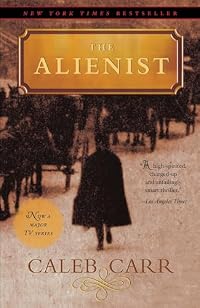
A new breed of evil in Old New YorkNew York, 1886: Lower Manhattan's underworld is ruled by a new generation of cold-blooded criminals...Police Commissioner Theodore Roosevelt battles widespread corruption within the department's ranks...and a shockingly brutal murder sets off an investigation that could change crime-fighting forever.
In the middle of a wintry March night, New York Times reporter John Moore is summoned to the East River by his friend Dr. Laszlo Kreizler, a brilliant pioneer show more in the new and much-maligned discipline of psychology, the emerging study of society's "alienated" mentally ill. There they view the horribly mutilated body of a young boy, a prostitute from one of Manhattan's infamous brothels. Supervised by Commissioner Roosevelt, the newsman and his "alienist" mentor embark on a revolutionary attempt to identify the killer by assembling his psychological profile — a dangerous quest that takes them into the tortured past and twisted mind of a murderer who has killed before...and will kill again before the hunt is over.
As rich in vivid period ambience as Ragtime and Time and Again, and as relentlessly suspenseful as Red Dragon or The Silence of the Lambs, The Alienist will take you to a New York that no longer exists — to confront an evil of timeless savagery. show less
Tags
Recommendations

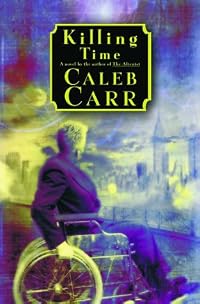
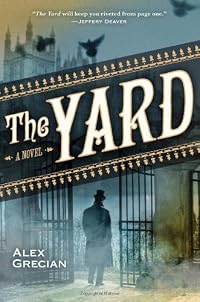
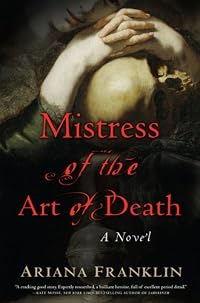
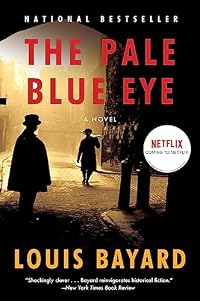



Member Recommendations
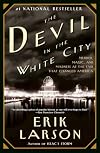
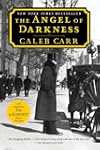
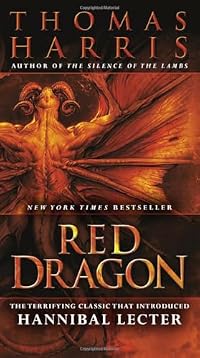
PghDragonMan From the case files of Dr. Lazlo Kreizler, a fictitious early practitioner of what is know known as Psychology.
111


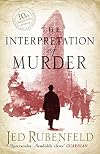
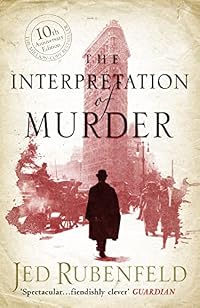
bookmomo Interpretation of Murder is also about psychological crime solving in NYC at the beginning of the twentieth century, with Freud and Jung this time.
61
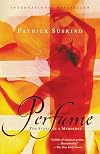
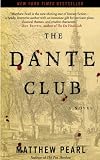
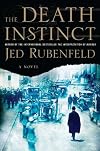

majkia similar in that both books - although one in New York, one in London, follows the beginnings of modern forensics and modern policing.
20

brewergirl Set in different historical periods, but both books involve tracking a serial killer of children.
20
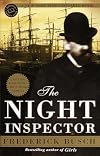
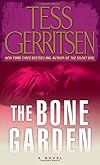
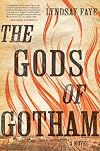
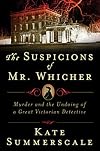
Member Reviews
"'They'll want him to be mad, of course,' Lazlo mused, not hearing me. 'The doctors here, the newspapers, the judges; they'd like to think that only a madman would shoot a five-year-old girl in the head. It creates certain . . . difficulties, if we are forced to accept that our society can produce sane men who commit such acts.'" (from The Alienist, page 33)
This passage resonates with me and seems relevant, not only for the book's major themes, but for our time, as well. How many times is a terrible crime committed and the immediate response is: oh, that person must be crazy, insane, mentally ill! No one likes to think that someone who is sane could do something that heinous, because that implies that the criminal is one of us, like us, show more and that creates the possibility that we could become like him, capable of doing the heinous act we've just condemned. That means we're capable of doing anything. Disturbing, indeed.
Lazlo is the alienist of the title, a psychiatrist in a time when psychiatry was viewed with suspicion, a non-scientific, disreputable profession. He is called in to investigate a horrific murder of a young male prostitute. Along with a ragtag assortment of other people, he works to create a profile of the murderer from the details of the murder victim's body and circumstances.
Back when I was starting to write fiction (in high school), I heard about this novel. It was praised and I was mildly interested, but I never got around to it until now.
I'm torn on how to rate this book.
On the one hand, it held my attention for the two days I spent reading it. I enjoyed the historical details, as well as the exploration of contemporary ideas about criminal behavior, mental illness, and the intersection of the two. The young victims are male child prostitutes, and I found the contemporary attitudes toward sex trafficking interesting to read about. It's tragic that the United States preferred to ignore both child prostitution and the poverty that drove many kids to sell themselves. What was once some flat, impersonal facts in a history book came alive for me in Carr's novel.
On the other, I disliked the detailed description of the murder victims' bodies. It was disturbing, as it was obviously intended and needed to be. It was also necessary, given that the entire premise revolved around Lazlo & company's attempt to profile the murderer based on the details of the murders (including the mutilated bodies).
But here's my question regarding this book and other murder mysteries: Does using something as horrible as a murder for entertainment a good thing? (I could apply the question to any terrible thing, such as rape, suicide, war, etc.) Does it desensitize the reader to the horrible nature of ending another person's life, leading to a callous attitude when confronted with this in real life? Or is there a benefit to fictionalizing crimes? Does it depend upon the author's attitude or motivation? I'm not sure. It's a question I've been bothered by since junior high school, and for many years I stopped reading mysteries because of it.
Add to that the very detailed nature of the victims' bodies in this book, and I'm disturbed even more. Many of the victims are first seen after their death. They exist only as victims, not as full-fledged characters (fictionalized humans). It's standard practice in this genre, but it has the effect of dehumanizing the victims and making me almost indifferent to their (fictional) deaths. Is this good? What benefit can there be in this? I really don't know.
Because of my conflicted response, I can't give it 5 or 4 stars, but the quality of the writing is terrific. 3 stars. show less
This passage resonates with me and seems relevant, not only for the book's major themes, but for our time, as well. How many times is a terrible crime committed and the immediate response is: oh, that person must be crazy, insane, mentally ill! No one likes to think that someone who is sane could do something that heinous, because that implies that the criminal is one of us, like us, show more and that creates the possibility that we could become like him, capable of doing the heinous act we've just condemned. That means we're capable of doing anything. Disturbing, indeed.
Lazlo is the alienist of the title, a psychiatrist in a time when psychiatry was viewed with suspicion, a non-scientific, disreputable profession. He is called in to investigate a horrific murder of a young male prostitute. Along with a ragtag assortment of other people, he works to create a profile of the murderer from the details of the murder victim's body and circumstances.
Back when I was starting to write fiction (in high school), I heard about this novel. It was praised and I was mildly interested, but I never got around to it until now.
I'm torn on how to rate this book.
On the one hand, it held my attention for the two days I spent reading it. I enjoyed the historical details, as well as the exploration of contemporary ideas about criminal behavior, mental illness, and the intersection of the two. The young victims are male child prostitutes, and I found the contemporary attitudes toward sex trafficking interesting to read about. It's tragic that the United States preferred to ignore both child prostitution and the poverty that drove many kids to sell themselves. What was once some flat, impersonal facts in a history book came alive for me in Carr's novel.
On the other, I disliked the detailed description of the murder victims' bodies. It was disturbing, as it was obviously intended and needed to be. It was also necessary, given that the entire premise revolved around Lazlo & company's attempt to profile the murderer based on the details of the murders (including the mutilated bodies).
But here's my question regarding this book and other murder mysteries: Does using something as horrible as a murder for entertainment a good thing? (I could apply the question to any terrible thing, such as rape, suicide, war, etc.) Does it desensitize the reader to the horrible nature of ending another person's life, leading to a callous attitude when confronted with this in real life? Or is there a benefit to fictionalizing crimes? Does it depend upon the author's attitude or motivation? I'm not sure. It's a question I've been bothered by since junior high school, and for many years I stopped reading mysteries because of it.
Add to that the very detailed nature of the victims' bodies in this book, and I'm disturbed even more. Many of the victims are first seen after their death. They exist only as victims, not as full-fledged characters (fictionalized humans). It's standard practice in this genre, but it has the effect of dehumanizing the victims and making me almost indifferent to their (fictional) deaths. Is this good? What benefit can there be in this? I really don't know.
Because of my conflicted response, I can't give it 5 or 4 stars, but the quality of the writing is terrific. 3 stars. show less
Summary: In the New York City of 1896, corruption was rampant, particularly in the city's police department. New Police Commissioner Teddy Roosevelt was attempting reform, but a number of cases still fell through the cracks. An apparent pattern in several of these cases is brought to the attention of Dr. Laszlo Kreizler, a psychologist (or "alienist") who is obsessed with the ways in which childhood experience can shape later life. The cases all involve the violent and disturbing murders of immigrant children - specifically those who had been making their living at one of the city's numerous brothels. Kreizler, along with reporter John Moore, two of the top (and first) forensic scientists of the time, and a young woman determined to show more become the city's first female police officer, must push police work beyond where it has gone before, creating a profile of this shadowy serial killer... and finding him before he can strike again.
Review: While I didn't always love the packaging, the story at the core of The Alienist was an excellent detective mystery. The pacing is excellent, the historical detail is fascinating, and the action/thriller parts were properly exciting. It's not a mystery in a whodunit sense, where the clues are all given to the reader, and that reader can piece together the solution on their own; because the detectives are working on profiling the killer, who could be anyone in the city, there's not really that element of solving the mystery for yourself. Nevertheless, I was kept thoroughly engaged by Kreizler's team's efforts, even when I couldn't see (or even guess) where they were going.
But really, the best part about this book for me was the historical atmosphere. While I like the idea of Gilded Age NYC in theory, several of my past encounters with it in fiction have been rather disappointing (a problem of the prose, not the setting, but a strong enough association to make me wary.) Carr, however, brings the era wonderfully to life, taking readers from the glitzy world of Delmonico's Restaurant to the dankest and darkest slums and brothels. He also manages to smoothly incorporate not just the feeling of the city itself, but also some aspects of the wider political and social climate of the time, which doesn't always happen in historical fiction. And most of all, I found the glimpse into the history of mental illness and the early days of forensics completely fascinating; it was a time in which the idea that fingerprints were unique and invariant was still considered quackery, but it was widely believed that the retina retained an image of the last thing a person saw before death.
This book is written as a memoir from Moore's point of view. While this did lend some reflective, larger-picture aspects to the story than it would have had if it hadn't been told in the first person, I think the lack of immediacy hurt the story more than it helped. For starters, it's clear that if Moore is telling the story, he must have survived its events, which diffuses some of the suspense of what would otherwise have been very tense scenes. But what mostly annoyed me was that the memoir framework was used to put these really broad, portentous "teaser" hints throughout the book: a lot of "we didn't know it at the time, but..."-type statements that would take chapters to be revealed and resolved. But in the grand scheme of things, that's relatively minor; most of what this book does, it does very well indeed. 4 out of 5 stars.
Recommendation: The comparison that kept coming to mind while I read was to Devil in the White City; despite the fiction/non-fiction divide, they're actually very similar not only in subject matter but also in tone. But more broadly, I think this one should definitely be on the radar for any fan of historical mysteries, or fans of modern mysteries who are interested in the early days of serial killers and forensic detective work. show less
Review: While I didn't always love the packaging, the story at the core of The Alienist was an excellent detective mystery. The pacing is excellent, the historical detail is fascinating, and the action/thriller parts were properly exciting. It's not a mystery in a whodunit sense, where the clues are all given to the reader, and that reader can piece together the solution on their own; because the detectives are working on profiling the killer, who could be anyone in the city, there's not really that element of solving the mystery for yourself. Nevertheless, I was kept thoroughly engaged by Kreizler's team's efforts, even when I couldn't see (or even guess) where they were going.
But really, the best part about this book for me was the historical atmosphere. While I like the idea of Gilded Age NYC in theory, several of my past encounters with it in fiction have been rather disappointing (a problem of the prose, not the setting, but a strong enough association to make me wary.) Carr, however, brings the era wonderfully to life, taking readers from the glitzy world of Delmonico's Restaurant to the dankest and darkest slums and brothels. He also manages to smoothly incorporate not just the feeling of the city itself, but also some aspects of the wider political and social climate of the time, which doesn't always happen in historical fiction. And most of all, I found the glimpse into the history of mental illness and the early days of forensics completely fascinating; it was a time in which the idea that fingerprints were unique and invariant was still considered quackery, but it was widely believed that the retina retained an image of the last thing a person saw before death.
This book is written as a memoir from Moore's point of view. While this did lend some reflective, larger-picture aspects to the story than it would have had if it hadn't been told in the first person, I think the lack of immediacy hurt the story more than it helped. For starters, it's clear that if Moore is telling the story, he must have survived its events, which diffuses some of the suspense of what would otherwise have been very tense scenes. But what mostly annoyed me was that the memoir framework was used to put these really broad, portentous "teaser" hints throughout the book: a lot of "we didn't know it at the time, but..."-type statements that would take chapters to be revealed and resolved. But in the grand scheme of things, that's relatively minor; most of what this book does, it does very well indeed. 4 out of 5 stars.
Recommendation: The comparison that kept coming to mind while I read was to Devil in the White City; despite the fiction/non-fiction divide, they're actually very similar not only in subject matter but also in tone. But more broadly, I think this one should definitely be on the radar for any fan of historical mysteries, or fans of modern mysteries who are interested in the early days of serial killers and forensic detective work. show less
Despite the fact that this book indeed reads like a Sherlock Holmes mystery of sorts, I found this novel utterly enjoyable and read it in only a few sittings. As a fan of historical fiction, I fell in love with the trueness Carr portrayed to the era and setting as well as the characters. Although not a huge fan of murder mysteries or psychological thrillers, Carr drew me into the world of the early 1900s New York effortlessly, kidnapping my attention as I grappled with recent discoveries and turning points in the investigation of this tale. I found myself eagerly plotting my next opportunity to read this amazing work and would definitely recommend it to anyone who enjoys murder mysteries or is interested in forensics/criminology.
Do not read the abridged version. The book thrives on minutiae and the abridged version is just worse.
A very detailed historical novel that rides somewhere between Holmes and Hannibal. It really mines the references of historical New York and the history of psychology, giving enough sense of place to reference housing and places to eat, and enough detail in psychology to discuss William James and Freud as well as questionable pioneers in criminology like Lombardo. It's a rich setting with notes of Gangs of New York. The investigative aspect gets to straddle science and pseudoscience with fingerprinting, graphology and more mythical ideas like imaging the eyeball to try to see the last recorded vision before death. It's verisimilitude, show more not dead on accuracy however. People are a bit too modern in their views and loose of tongue in a world of Victorians, it's the Deadwood solution without the linguistic flair.
There's also something decidedly Holmesian, although the great detective is a psychologist here, and his trusty companion a journalist, the relationship often seems intentionally cloned. Repeated use of the Hansom cab especially springs the likeness to mind, but overall the effect is perhaps closer to latter books like The Seven-Per-Cent Solution or Dust and Shadow: An Account of the Ripper Killings by Dr. John H. Watson. Injecting some characters like the then-police commissioner Teddy Roosevelt is almost gratuitous fun.
It's unfortunately at the end the story can't quite live up to the very long build-up. The villain and conclusion fall short of the book's own hype. The scenery on the way is worth the trip however. show less
A very detailed historical novel that rides somewhere between Holmes and Hannibal. It really mines the references of historical New York and the history of psychology, giving enough sense of place to reference housing and places to eat, and enough detail in psychology to discuss William James and Freud as well as questionable pioneers in criminology like Lombardo. It's a rich setting with notes of Gangs of New York. The investigative aspect gets to straddle science and pseudoscience with fingerprinting, graphology and more mythical ideas like imaging the eyeball to try to see the last recorded vision before death. It's verisimilitude, show more not dead on accuracy however. People are a bit too modern in their views and loose of tongue in a world of Victorians, it's the Deadwood solution without the linguistic flair.
There's also something decidedly Holmesian, although the great detective is a psychologist here, and his trusty companion a journalist, the relationship often seems intentionally cloned. Repeated use of the Hansom cab especially springs the likeness to mind, but overall the effect is perhaps closer to latter books like The Seven-Per-Cent Solution or Dust and Shadow: An Account of the Ripper Killings by Dr. John H. Watson. Injecting some characters like the then-police commissioner Teddy Roosevelt is almost gratuitous fun.
It's unfortunately at the end the story can't quite live up to the very long build-up. The villain and conclusion fall short of the book's own hype. The scenery on the way is worth the trip however. show less
I admit the fairly high rating may reflect this book hits the spot for me in several ways. I love books that cross genres, and this one is a melange of mystery, suspense/thriller and historical fiction--and one set in my own beloved New York City--albeit that of 1896. I admit I got a kick out of reading of familiar streets and landmarks, and those of the gilded age that have disappeared. This is written as the first person account of John Schuyler Moore, a crime reporter for the New York Times. He's pulled in by his Harvard College classmates Theodore Roosevelt, the future President then a reforming Police Commissioner, and Dr. Laszlo Kreizler, an "alienist." A note at the beginning of the book states: "Prior to the twentieth century, show more persons suffering from mental illness were thought to be 'alienated,' not only from the rest of society but from their own true natures. Those experts who studied mental pathologies were therefore known as alienists." Moore and Kreizler form an investigating team to track down a serial killer with the detective Isaacson brothers and Sara Howard, who aspires to be the first female police officer. I love the historical details of the city and of the emerging sciences of forensics and psychology, and how the novel takes us from the slums of the Lower East Side to the Metropolitan Opera's Diamond Horseshoe. This was an engrossing, lively yarn I relished from beginning to end. show less
Caleb Carr's novel of a serial killer on the loose in turn of the century New York, and the dangerous pursuit of him by Dr. Lazlo Kreizler and his friends is a truly wonderful read. This has so much period atmosphere the reader can almost hear the hoofbeats trotting over the cobblestone streets beneath gaslit street lamps. It is long and exciting, yet not long enough, because by the time you finish, you'll feel like many of these people are your friends, and want to spend more time with them.
The riveting story is narrated by Dr. Kreizler's good friend, John Moore. Before you are finished reading this delicious historical mystery you will meet an array of interesting and memorable characters you'll come to cherish. Sara Howard is a show more pretty and extremely capable woman ahead of her time. Sara and Kreizler's pal, Moore, push the investigation forward against strong opposition from conventional law enforcement. Two New York cops also ahead of their time, Lucius and Marcus, will use footwork and cutting-edge investigative techniques to catch a dangerous killer. A young street urchin, Stevie, saved from a miserable future by the good doctor, and a very loyal servant named Cyrus round out this rag-tag group that confront the unthinkable. They will break new ground, using Lazlo's "profile" to catch a serial killer.
When Lazlo's old friend, Theodore Roosevelt, now head of the New York Police Department, is confronted with several murders of boy prostitutes so gruesome in nature that even the most seasoned and hardened of professionals can barely stomach being called to the murder scenes, he makes a decision that will change the face of police-work forever. He unofficially allows Kreizler to form a small group to pursue the killer through psychological profiling. Police secretary Sara Howard, and crime reporter John Moore, a man who knows the underbelly of New York all to well, are two of the main players in this exciting mystery. As they close in on the killer through Kreizler's use of psychological profiling, danger hits closer to home than any of our friends had expected.
There are moments so full of flavor in this fine historical mystery that you'll feel like you are sitting alongside the characters at Delmonico's as they enjoy a good meal, and plan their next move. This fine novel is truly memorable, and holds a special place among books I've read. If you love historical mysteries you do not want to miss this one! show less
The riveting story is narrated by Dr. Kreizler's good friend, John Moore. Before you are finished reading this delicious historical mystery you will meet an array of interesting and memorable characters you'll come to cherish. Sara Howard is a show more pretty and extremely capable woman ahead of her time. Sara and Kreizler's pal, Moore, push the investigation forward against strong opposition from conventional law enforcement. Two New York cops also ahead of their time, Lucius and Marcus, will use footwork and cutting-edge investigative techniques to catch a dangerous killer. A young street urchin, Stevie, saved from a miserable future by the good doctor, and a very loyal servant named Cyrus round out this rag-tag group that confront the unthinkable. They will break new ground, using Lazlo's "profile" to catch a serial killer.
When Lazlo's old friend, Theodore Roosevelt, now head of the New York Police Department, is confronted with several murders of boy prostitutes so gruesome in nature that even the most seasoned and hardened of professionals can barely stomach being called to the murder scenes, he makes a decision that will change the face of police-work forever. He unofficially allows Kreizler to form a small group to pursue the killer through psychological profiling. Police secretary Sara Howard, and crime reporter John Moore, a man who knows the underbelly of New York all to well, are two of the main players in this exciting mystery. As they close in on the killer through Kreizler's use of psychological profiling, danger hits closer to home than any of our friends had expected.
There are moments so full of flavor in this fine historical mystery that you'll feel like you are sitting alongside the characters at Delmonico's as they enjoy a good meal, and plan their next move. This fine novel is truly memorable, and holds a special place among books I've read. If you love historical mysteries you do not want to miss this one! show less
What a fantastic book and well worth pulling off the shelves for a re-read (I know it was a re-read because the bookmark was still in place!). Told with all the grime and opulence and change that was 1896 New York City, it also describes the work of an early psychologist or Alienist, as the title was at the time.
The book opens (after a chapter giving the details of their lives told over dinner decades later) with John Schuyler Moore, a police beat reporter, and his friend, Laszlo Kreizler, investigating what becomes a string of murders of young boy prostitutes. The burgeoning idea of speaking to the insane without the use of drugs and recognizing the effects of abuse on children has influenced Kreizler to use his methods to find this show more killer.
Woven into this story is the new Commissioner of Police, Theodore Roosevelt, and a woman who wants nothing more than to investigate crimes with the police department. On her own terms. A pair of brothers rounds out the investigative team and their methods that are commonplace today: finding an isolated room for their research, writing ideas onto chalkboards to find commonalities, and knocking on door after door to find and track down possible clues. Each new set of ideas brings different aspects of New York's City life to the growing investigation.
Putting together the pieces of this murderer, what motivates him to choose his victims, what his childhood was like, and when he might strike next are brilliantly done. I have not seen the TV series based on this book so there were no spoilers for me. Just good, gritty, historical story-telling at its finest. show less
The book opens (after a chapter giving the details of their lives told over dinner decades later) with John Schuyler Moore, a police beat reporter, and his friend, Laszlo Kreizler, investigating what becomes a string of murders of young boy prostitutes. The burgeoning idea of speaking to the insane without the use of drugs and recognizing the effects of abuse on children has influenced Kreizler to use his methods to find this show more killer.
Woven into this story is the new Commissioner of Police, Theodore Roosevelt, and a woman who wants nothing more than to investigate crimes with the police department. On her own terms. A pair of brothers rounds out the investigative team and their methods that are commonplace today: finding an isolated room for their research, writing ideas onto chalkboards to find commonalities, and knocking on door after door to find and track down possible clues. Each new set of ideas brings different aspects of New York's City life to the growing investigation.
Putting together the pieces of this murderer, what motivates him to choose his victims, what his childhood was like, and when he might strike next are brilliantly done. I have not seen the TV series based on this book so there were no spoilers for me. Just good, gritty, historical story-telling at its finest. show less
Members
- Recently Added By
Published Reviews
A series of gruesome murders and mutilations of heartrendingly young prostitutes--boys dressed as girls--reunites three alumni of William James' pioneering Harvard psychology lectures: Times reporter John Schuyler Moore, eminent psychologist Dr. Laszlo Kreizler (called, after the fashion of the time, an ``alienist''), and New York Police Commissioner Theodore Roosevelt.... The result is show more somehow gripping yet lifeless, as evocative period detail jostles with a cast of characters who are, for the most part, as pallid as the murder victims. show less
added by Lemeritus
Kreizler is a fictional hero, but in Caleb Carr's imaginings he becomes every bit as believable as the book's real-life characters, and the murders he sets out to solve take on a ghoulish plausibility.... The Alienist isn't only an ingenious thriller. Carr brings enormous gusto to his portrait of old New York, where breakfast for the well-to-do might comprise 'cucumber fillets, Creole eggs, show more and broiled squab'. From the fetid reek of 'stale beer dives' to the baronial splendour of bankers' mansions, from dirt-poor tenements to the fanciest French restaurants, the city seems to rise off the page....Part of the book's triumph is that it accommodates big questions without sacrificing anything in accessibility; it recreates a world that is simultaneously alive and haunting show less
added by Lemeritus
Lists

Best Historical Fiction
620 works; 261 members

Historical Fiction
889 works; 89 members

Best Historical Crime
44 works; 17 members

Recommend the 20 best books you've read in the last five years
2,167 works; 606 members

100 Mysteries and Thrillers to Read in a Lifetime
99 works; 22 members

Sense of place
156 works; 13 members

Detective/Mystery Fiction set in the Gilded Age
12 works; 6 members

Crime and Mysteries to Read
746 works; 31 members

100 Best Thrillers of All Time
100 works; 6 members

Murder Mysteries
57 works; 11 members

NPRs your picks: top 100 Killer Thrillers
100 works; 17 members

Books Set in New York City
127 works; 21 members

Historical Fiction Set in Gilded Age
13 works; 5 members
Page Turners
185 works; 11 members

Lit Lattes Ep 002
12 works; 1 member

Books About Murder
313 works; 7 members
Favourite Books
1,817 works; 316 members

Unread books
1,063 works; 86 members

Detective Stories
343 works; 5 members

books read in 2019
50 works; 1 member

Gaslamp Mysteries
78 works; 4 members
Best Mysteries With a Historical Setting
292 works; 160 members

Gen X Library
245 works; 4 members

Books I Read Before The Invention Of The Internet.
144 works; 1 member

Books Read in 2025
4,090 works; 97 members

Books Read in 2024
4,623 works; 126 members

75 Books Challenge 2015 Halloween Read long list
45 works; 4 members

The Joe Rogan Experience Library
254 works; 3 members

Books Read in 2018
4,360 works; 110 members

Thrillers to read
21 works; 2 members
Adult Books for YA Readers
194 works; 6 members

infjsarah's wishlist
408 works; 2 members
American Lit for Eng 11 Research Project
368 works; 6 members

BingoDOG - Scientists in Fiction
111 works; 17 members
Books That Go Bump in the Night
42 works; 6 members

Urban Fiction
74 works; 7 members

Historical Figures in Fiction
51 works; 5 members

Best books I read in 2013
152 works; 3 members

Tagged by Tim or Meh!
91 works; 8 members

Books Read in 1995
15 works; 1 member
Author Information

18+ Works 20,245 Members
Caleb Carr, a lifetime resident of New York, was born in 1955 and grew up on the Lower East Side. His father was an editor and close friend to famous Beat Generation writers, such as Jack Kerouac and Allen Ginsberg. Although Carr was personally exposed to their style of writing and Bohemian lifestyles, he chose to take his own work in a different show more direction. Where the Beat writers wrote purely from expression and feelings, Caleb Carr's works are diligently researched and known for their historical accuracy. Caleb Carr developed a love of history at a young age, acquiring a keen interest in military history while attending a Quaker high school. This interest led him to major in history at Kenyon College and NYU. Notable works by Caleb Carr are The Alienist, which was on the New York Times' bestseller list for 24 weeks; The Devil Soldier; and Angel of Darkness. In addition to writing fiction, Carr is a contributing editor of MHQ: The Quarterly Journal of Military History. (Bowker Author Biography) Caleb Carr was born in Manhattan and grew up on the Lower East Side, where he still lives. In addition to his bestselling fiction, Mr. Carr writes frequently on military and political affairs. He is series editor of the Modern Library War Series and is a contributing editor of MHQ: The Quarterly Journal of Military History. (Publisher Provided) show less
Some Editions
Awards and Honors
Awards
Distinctions
Series
Belongs to Publisher Series
Heyne Allgemeine Reihe (9843)
Work Relationships
Is contained in
Has as a student's study guide
Common Knowledge
- Canonical title*
- The Alienist
- Original title
- The Alienist
- Original publication date
- 1994
- People/Characters
- John Schuyler Moore (artist); Dr. Laszlo Kreizler (alienist); Theodore Roosevelt (historical figure, here as NYC police chief); Sarah Howard; Lucius Isaacson; Marcus Isaacson (show all 13); Cyrus Montrose; Stevie Taggert; Paul Kelly (historical figure); J. Pierpont Morgan (historical figure); Jacob Riis (historical figure); James T. Ellison (historical figure); Anthony Comstock (historical figure)
- Important places
- New York, New York, USA
- Important events*
- 1896
- Related movies
- The Alienist (2018 | IMDb | TV mini-series)
- Epigraph
- "They who would be young when they are old, must be old when they are young."
John Ray, 1670
2017 edition:
Whilst part of what we perceive comes through our senses from the object before us, another part (and it may be the larger part) always comes out of our own mind.
--William James
The Principles of Psyc... (show all)hology
2017 edition:
These bloody thoughts,
from what are they born?
--Piave,
from Verdi's Macbeth - Dedication
- This book is dedicated to
Ellen Blain, Meghann Haldeman,
Ethan Randall, Jack Evans,
and Eugene Byrd
2017 edition:
This edition is dedicated to
Those Readers Who Made It Possible
and to the memory of
Dr. David Abrahamsen - First words
- January 8th, 1919
Theodore is in the ground. - Last words
- (Click to show. Warning: May contain spoilers.)The structure didn't look like much, all laid open to view that way; it was hard to believe that it had ever been strong enough to withstand the fantastic pressure exerted by millions of gallons of water.
- Publisher's editor
- Godoff, Ann
- Original language
- English
- Canonical DDC/MDS
- 813/.54; 813.6
- Canonical LCC
- PS3553.A76277 A44
*Some information comes from Common Knowledge in other languages. Click "Edit" for more information.
Classifications
Statistics
- Members
- 10,413
- Popularity
- 924
- Reviews
- 262
- Rating
- (3.96)
- Languages
- 13 — Catalan, Czech, Danish, Dutch, English, French, German, Italian, Polish, Portuguese, Russian, Spanish, Turkish
- Media
- Paper, Audiobook, Ebook
- ISBNs
- 87
- UPCs
- 1
- ASINs
- 42