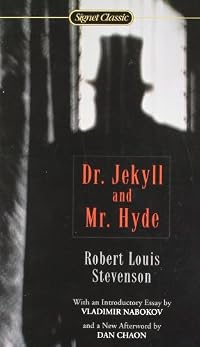
The Strange Case of Dr. Jekyll and Mr. Hyde
by Robert Louis Stevenson
On This Page
Description
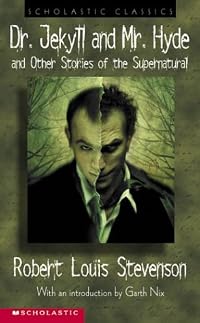
Dealing with split personalities, Dr. Jekyll battles with himself to overcome the evil Mr. Hyde. An old friend of Dr. Jekyll's, a lawyer Gabriel John Utterson, investigates odd occurrences that are linked to Mr. Hyde. Dr. Jekyll is determined to stop becoming Mr. Hyde and uses a potion to stop the transition. This works for a time but the need for the potion increases because he can't stave off the beast.Tags
Recommendations








Member Recommendations

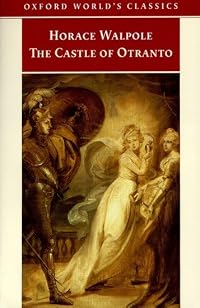
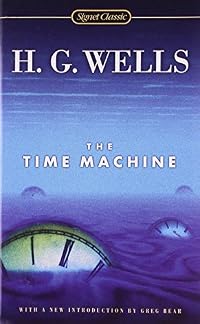
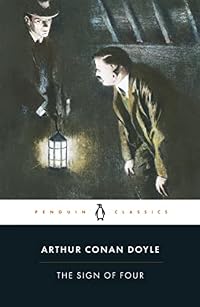
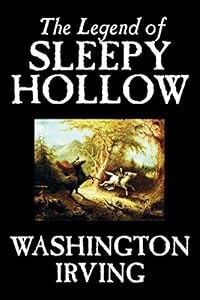
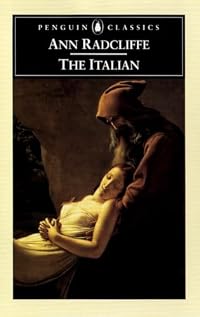
lucyknows Joseph Conrad's Heart of Darkness could be paired with Oscar Wilde's The Picture of Dorian Gray or The Strange Case of Dr Jekyll and Mr Hyde. In all three novels the authors depict the struggle of people against the forces of evil.
Also recommended by chrisharpe
231


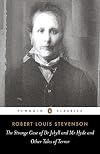
anonymous user The Penguin Classics edition is worth having by all who enjoy Stevenson's brilliant little novel. The Introduction, Notes and afterword by Robert Mighall vary in quality and contain some superficial, misguided or simply irrelevant stuff. But they also contain some fascinating background and useful annotations.
31
lilisin Very different stylistically but these books cover the same theme. However, Abe goes into much more detail about the repercussions that comes with letting your other side get the best of you.
21


weelinda this book was a wonderful book to read and now I have read all the books in this series well the two of them but they are very very good and will be reading the third one soon
03
JenniferRobb Dr. Jekyll and Mr. Hyde is alluded to in Chaos in Death and at least one of the characters in each are similar.
Member Reviews
I can't imagine why it's taken me until now to read this novel, but it has.
Obviously I'd been missing something wonderful.
Can't say what I'd expected before starting—likely a somewhat trashy pulp type novel. Instead, I got a gorgeously written introspective story of a highly tortured protagonist. Fantastic stuff.
As a side note, after reading this, it becomes very clear where Stan Lee came to borrow ideas for the Hulk character.
Obviously I'd been missing something wonderful.
Can't say what I'd expected before starting—likely a somewhat trashy pulp type novel. Instead, I got a gorgeously written introspective story of a highly tortured protagonist. Fantastic stuff.
As a side note, after reading this, it becomes very clear where Stan Lee came to borrow ideas for the Hulk character.
Rating: 5 of 5
What can be said about a classic such as The Strange Case of Dr. Jekyll and Mr. Hyde? A story so well-known, one that has permeated our culture so completely (perhaps rivaled only by Frankenstein and Dracula), most everyone knows the gist without ever having read the novella or watched a film adaption. I daresay, little, if anything new, or at the very least, "fresh." Thus I will stick to my personal reaction in this review.
From a writer's perspective, I applaud (and appreciate) the structure and narrative style. Stevenson built upon (and relied on) the reader's natural curiosity and desire to solve the mystery of Mr. Hyde, to know what was "really" happening, which probably made this quite the sensational page-turner show more during its initial publication in 1886. I read the story much slower than I do with most modern fiction; there's much to savor and digest for those patient enough to nibble. One of the story's less subtle themes - repression of one's curiosity and not asking questions that "shouldn't" be asked - was ingenious, wasn't it? Given the tools Stevenson utilized to engage readers. OH! And the descriptions throughout the story often knocked me for a loop they were so ... distinct; Stevenson knew exactly what images he wanted to conjure up in readers' minds.
I will definitely give this one a re-read whenever I want a refresher in (1) allegory and (2) the characterization and theme of duality and hypocrisy.
Disclaimer: If you are bored or confused by complex sentences, extended paragraphs, and/or Victorian Era prose, then The Strange Case of Dr. Jekyll and Mr. Hyde probably won't float your boat. show less
What can be said about a classic such as The Strange Case of Dr. Jekyll and Mr. Hyde? A story so well-known, one that has permeated our culture so completely (perhaps rivaled only by Frankenstein and Dracula), most everyone knows the gist without ever having read the novella or watched a film adaption. I daresay, little, if anything new, or at the very least, "fresh." Thus I will stick to my personal reaction in this review.
From a writer's perspective, I applaud (and appreciate) the structure and narrative style. Stevenson built upon (and relied on) the reader's natural curiosity and desire to solve the mystery of Mr. Hyde, to know what was "really" happening, which probably made this quite the sensational page-turner show more during its initial publication in 1886. I read the story much slower than I do with most modern fiction; there's much to savor and digest for those patient enough to nibble. One of the story's less subtle themes - repression of one's curiosity and not asking questions that "shouldn't" be asked - was ingenious, wasn't it? Given the tools Stevenson utilized to engage readers. OH! And the descriptions throughout the story often knocked me for a loop they were so ... distinct; Stevenson knew exactly what images he wanted to conjure up in readers' minds.
I will definitely give this one a re-read whenever I want a refresher in (1) allegory and (2) the characterization and theme of duality and hypocrisy.
Disclaimer: If you are bored or confused by complex sentences, extended paragraphs, and/or Victorian Era prose, then The Strange Case of Dr. Jekyll and Mr. Hyde probably won't float your boat. show less
This struck me as less about the conflict between good and evil in a person's soul, and more about Victorian bourgeois hypocrisy.
Prior to Jekyll's transformation, he uses the shield of medical respectability to indulge his unnamed, and therefore probably sexual, vices (the other main vices of Victorian England, gambling and alcohol, not being unnameable), and had already been leading a double life.
His potion, Jekyll says, has the potential to emphasise either the "good" or "evil" traits of the personality, in his Case unleashing Hyde due to his preexisting affinity for wickedness. Before the transformation, Jekyll had to hide this part of his life; as Hyde he is both more concealed and more visible to "polite society", which is more show more concerned with appearances than substance. Although we don't get to follow Jekyll or Hyde into the world of their indulgences, it is likely that the people of that echelon of society better knew the quality of Henry Jekyll, and were of old acquainted with the qualities, if not the figure, of Edward Hyde. show less
Prior to Jekyll's transformation, he uses the shield of medical respectability to indulge his unnamed, and therefore probably sexual, vices (the other main vices of Victorian England, gambling and alcohol, not being unnameable), and had already been leading a double life.
His potion, Jekyll says, has the potential to emphasise either the "good" or "evil" traits of the personality, in his Case unleashing Hyde due to his preexisting affinity for wickedness. Before the transformation, Jekyll had to hide this part of his life; as Hyde he is both more concealed and more visible to "polite society", which is more show more concerned with appearances than substance. Although we don't get to follow Jekyll or Hyde into the world of their indulgences, it is likely that the people of that echelon of society better knew the quality of Henry Jekyll, and were of old acquainted with the qualities, if not the figure, of Edward Hyde. show less
A slim and elusive narrative, on which following generations have built their own psychodramas. The idea of duality, of the personality as a construct of differences, has a grip on our modern psyches and is made concrete in Jekyll and Hyde. Stevenson turns our internal dramas outside, giving them a Victorian packing of pea souper fogs, hansom cabs and mysterious smoking potions.
Muy buena adaptación. La idea de suprimir el misterio para centrarse en el tema de la dualidad refuerza los personajes (a la vez que muestra a Jekyll como un gran hipócrita) y el dibujo de Olivares le da un aire siniestro que refleja muy bien la atmósfera de la historia.
There are books I’m surprised to realize I haven’t read, yet they seemed a pervasive part of culture as long as I can remember. The Strange Case of Dr. Jekyll and Mr. Hyde is one of them. Of course, I’d seen the old movie with Frederic March numerous times, thanks to Channel 9’s Million Dollar Movie. I suppose that’s why I never picked up the book.
My interest was recently awakened, again via television, when the BBC aired a dramatic reading that included nearly a third of the book’s text.
The book is psychologically acute and builds well the sense of horror. A few parts drag; in particular, the letter from Dr. Lanyon rehearses more of the plot than necessary. This was an easy cut for the BBC adapters. I liked how, after the show more story is told mainly from the point of view of Utterson, the lawyer, the final chapter is narrated by Dr. Jekyll via a confessional letter he quickly wrote before his final transition to Edward Hyde.
The best part of the confession is that there are no specifics of the base crimes Jekyll alludes to, other than those few that have already come up in the plot, such as the murder of Carew. This empty space allows each reader to fill in the narrative gap however he chooses. I think the name Hyde says enough. Stevenson has created no role for Miriam Hopkins in his plot.
“Zwei Seelen wohnen, ach! in meiner Brust” lamented that pre-Romantic, Goethe. He was hardly the first to wonder at the dual nature in each of us. Imagine if one could separate these two natures and delegate all we wish we wouldn’t do to that “other”? Theoretically, the good me could become more consistently philanthropic. What could go wrong?
Imagine it Stevenson did, and long before Lumon Industries engineered “Innies” and “Outies,” he shows that it’s not a good idea. If science was the new religion of the nineteenth century, Stevenson follows Mary Shelley and others as a dissenter. show less
My interest was recently awakened, again via television, when the BBC aired a dramatic reading that included nearly a third of the book’s text.
The book is psychologically acute and builds well the sense of horror. A few parts drag; in particular, the letter from Dr. Lanyon rehearses more of the plot than necessary. This was an easy cut for the BBC adapters. I liked how, after the show more story is told mainly from the point of view of Utterson, the lawyer, the final chapter is narrated by Dr. Jekyll via a confessional letter he quickly wrote before his final transition to Edward Hyde.
The best part of the confession is that there are no specifics of the base crimes Jekyll alludes to, other than those few that have already come up in the plot, such as the murder of Carew. This empty space allows each reader to fill in the narrative gap however he chooses. I think the name Hyde says enough. Stevenson has created no role for Miriam Hopkins in his plot.
“Zwei Seelen wohnen, ach! in meiner Brust” lamented that pre-Romantic, Goethe. He was hardly the first to wonder at the dual nature in each of us. Imagine if one could separate these two natures and delegate all we wish we wouldn’t do to that “other”? Theoretically, the good me could become more consistently philanthropic. What could go wrong?
Imagine it Stevenson did, and long before Lumon Industries engineered “Innies” and “Outies,” he shows that it’s not a good idea. If science was the new religion of the nineteenth century, Stevenson follows Mary Shelley and others as a dissenter. show less
The Strange Case of Dr. Jekyll and Mr. Hyde has, I fear, suffered a fate quite similar to books such as Gulliver's Travels by having been popularized as being something it is not. The latter is too often misinterpreted as a children's book while the former is either misrepresented as a simple horror story or, worse yet, as an inspiration for comic books (excuse me, I suppose I should have said “graphic novels”) or the films made from them, such as The League of Extraordinary Gentlemen. In any case, the original stories have too often been simplified, and far too many people have thoroughly erroneous ideas of the real stories.
Stevenson's theme in The Strange Case is the duality of human nature, every man (he does not address the show more distaff side of humanity) being possessed of both good, beneficent, generous, helpful qualities and evil, malevolent, spiteful, destructive qualities. These opposites are not equally balanced within a man, and whichever qualities are practiced and strengthened will predominate. With every good intention in the world, Dr. Jekyll experiments on separating these opposing qualities and inadvertently exercises those of negative bent until they come to predominate. Stevenson's protagonist readily admits that men are more complex than this simple duality suggests but explains that his initial interest must focus on the two basic sides of the personality, leaving more complex divisions to the future.
The composition of this short novel (which some deem a long short story) reminds me of Bram Stoker's Dracula. The author relies heavily on suggestion, hint and innuendo to develop the plot. It is as though the facts of the story are imperfectly glimpsed through a thick London fog, leaving the reader/viewer to wonder whether what he saw was actual or a phantom of his imagination. Not until the final chapter does Dr. Jekyll speak directly to readers, confirming what we have suspected for some time and providing a very satisfactory dénouement.
Those whose understanding of Dr. Jekyll and Mr. Hyde has been gleaned from hearsay, movies, or comics owe it to themselves to read Stevenson's short novel. They may come to realize that their understanding is flawed, and they will surely enjoy observing Stevenson's "suggestive horror" style of writing. Is there any sort of lesson to be learned from this little work of fiction? Indeed, humans are complex creatures so be careful of which characteristics you choose to develop, practice and strengthen! show less
Stevenson's theme in The Strange Case is the duality of human nature, every man (he does not address the show more distaff side of humanity) being possessed of both good, beneficent, generous, helpful qualities and evil, malevolent, spiteful, destructive qualities. These opposites are not equally balanced within a man, and whichever qualities are practiced and strengthened will predominate. With every good intention in the world, Dr. Jekyll experiments on separating these opposing qualities and inadvertently exercises those of negative bent until they come to predominate. Stevenson's protagonist readily admits that men are more complex than this simple duality suggests but explains that his initial interest must focus on the two basic sides of the personality, leaving more complex divisions to the future.
The composition of this short novel (which some deem a long short story) reminds me of Bram Stoker's Dracula. The author relies heavily on suggestion, hint and innuendo to develop the plot. It is as though the facts of the story are imperfectly glimpsed through a thick London fog, leaving the reader/viewer to wonder whether what he saw was actual or a phantom of his imagination. Not until the final chapter does Dr. Jekyll speak directly to readers, confirming what we have suspected for some time and providing a very satisfactory dénouement.
Those whose understanding of Dr. Jekyll and Mr. Hyde has been gleaned from hearsay, movies, or comics owe it to themselves to read Stevenson's short novel. They may come to realize that their understanding is flawed, and they will surely enjoy observing Stevenson's "suggestive horror" style of writing. Is there any sort of lesson to be learned from this little work of fiction? Indeed, humans are complex creatures so be careful of which characteristics you choose to develop, practice and strengthen! show less
Members
- Recently Added By
Published Reviews
added by private library
Lists

1001 Books You Must Read Before You Die
1,448 works; 1,132 members

The Guardian's 1000 Novels Everyone Must Read
1,005 works; 546 members

Classics you know you should have read but probably haven't
421 works; 407 members
501 Must-Read Books
508 works; 72 members

Best Science Fiction Novels
816 works; 426 members
Best of British Literature
226 works; 41 members

Best Horror Books
281 works; 85 members

Best Gothic Fiction
110 works; 31 members

Favourite 19th century fiction
257 works; 62 members

Read the book and saw the movie
1,170 works; 195 members

Favourite Books
1,817 works; 316 members

The Top Ten: Writers Pick Their Favorite Books
240 works; 31 members

Best Books Set in London
157 works; 40 members

Mental health fiction
55 works; 18 members

Survey of Classic Fantastic Fiction
36 works; 9 members

Best Psychological Fiction
81 works; 16 members

The Guardian's 100 greatest novels of all time
100 works; 16 members

Best Crime Fiction
262 works; 39 members

100 Mysteries and Thrillers to Read in a Lifetime
99 works; 22 members
Folio Society
831 works; 50 members

19th Century
190 works; 16 members

Books With a Twist
69 works; 46 members

Recommend the 20 best books you've read in the last five years
2,168 works; 602 members
Harold Bloom - The Western Canon: C. The Democratic Age
336 works; 15 members

Weird and Weirder Fiction
266 works; 34 members

Western World's Greatest Books - Project Gutenberg
295 works; 15 members

Short and Sweet
243 works; 23 members
LibraryThingers' 1001 Books You Must Read Before You Die
442 works; 30 members
Fiction For Men
142 works; 11 members
Blue Pyramid 1,276 Best Books of All Time
1,248 works; 32 members
Science Fiction
42 works; 7 members
Best of Scottish Literature
35 works; 6 members

Survey of Science Fiction and Fantasy
101 works; 13 members
Out of Copyright
244 works; 14 members

Survey of Gothic and Horror Literature
18 works; 4 members
Cawthorn and Moorcock's Fantasy: The 100 Best Books
110 works; 7 members

75 Books Challenge Halloween Read "Official" Selections
71 works; 7 members

Global Reads: Books Set in the United Kingdom and Ireland
109 works; 5 members

Books Set in Great Britain
191 works; 13 members

A Novel Cure
742 works; 23 members

Great Books Favorites
71 works; 6 members

1,001 BYMRBYD Concensus
723 works; 27 members

100 Best Thrillers of All Time
100 works; 6 members

Jones and Newman's Horror: The 100 Best Books
100 works; 4 members

Best Antiheroes and Antiheroines
119 works; 7 members
Newark Public Library's 1904 List of a Thousand of the Best Novels
95 works; 5 members

Lovecraft's 'Supernatural Horror in Literature' Reading List
216 works; 8 members

Top Five Books of 2014
1,064 works; 397 members

Victorian Period
113 works; 10 members
Stephen King's Biggest Influences
46 works; 3 members

Most Disturbing Books
124 works; 27 members

League of Extraordinary Gentlemen Read-athon
8 works; 1 member

Books Featured on Gilmore Girls
307 works; 21 members
College Reads (Lit Edition)
75 works; 5 members

Carole's List
445 works; 13 members

Best Horror Mega-List
342 works; 6 members

Greatest Books
40 works; 3 members

Urban Fiction
74 works; 7 members

To Read - Horror
137 works; 13 members
Survey of Classic Crime
39 works; 7 members

BBC Top Books
78 works; 3 members

Books Read in 2023
5,547 works; 145 members
CCE 1000 Good Books List
1,033 works; 12 members
United Kingdom
82 works; 5 members
Overdue Podcast
803 works; 9 members

Best Psychological Suspense
33 works; 6 members

Strange Cities
30 works; 7 members

Stories of Good Versus Evil
22 works; 7 members

Books Read in 2017
4,249 works; 129 members

1880s
14 works; 2 members
Trinity College Booklist (1951): Class Ten, English Literature
358 works; 5 members
Speculative Fiction to Read
706 works; 32 members

Wishlist
10 works; 1 member
Literature which inspired Pop songs
85 works; 9 members
Books Read in 2016
4,666 works; 199 members

Haycraft Queen Cornerstones
181 works; 3 members

Authors from Scotland
9 works; 1 member

Books Read in 2006
418 works; 8 members
Retrospective of Horror and Thrillers
21 works; 2 members

100 Hemskaste
81 works; 1 member

Literary and artistic references in HBO's Lovecraft Country
32 works; 1 member

Genre Benders: Science Fiction + Horror
15 works; 4 members

Books About Murder
313 works; 7 members
The Complete Rory Gilmore Reading List
506 works; 5 members

DigitalDreamDoor top 300
300 works; 4 members

Mustich's 1000 Books to Read Before You Die: A Life Changing List
1,001 works; 18 members
Franklit
95 works; 1 member
Read in 2006
140 works; 1 member

Lucy's Long List
69 works; 1 member

Recommended Literary Books
111 works; 1 member

Greatest Books, allegedly
484 works; 9 members

2024 Reads
31 works; 1 member

Books Read in 2025
4,090 works; 97 members
Horror Writers Association Reading List (1996)
40 works; 3 members
Books You Read For University
184 works; 3 members

Recommended Reading : 600 Classics Reviewed, Editors of Salem Press, 2015
634 works; 6 members
.
396 works; 1 member
.
194 works; 2 members
Works in the game of Authors
44 works; 2 members
el
1,139 works; 1 member
Books We Love to Reread
688 works; 296 members

Check Library
169 works; 1 member
Reading LIst
648 works; 1 member
In Our Time books
4,934 works; 2 members
Horror Then & Now
44 works; 4 members
Kate & Cheyanne's Horror Extravaganza
144 works; 6 members
School Made Us Read It
380 works; 196 members

Recovery from Psychopath
127 works; 1 member

Books Read in 2026
1,718 works; 62 members

100 knjiga
100 works; 1 member
Evil Lurks Among Us
10 works; 1 member
Novels/Poems/Short Stories/Anything Storytelling Related
112 works; 2 members

Childhood Favorites
427 works; 24 members
Allegorical Fiction
16 works; 4 members
British Mystery
469 works; 14 members
Novels that you shouldn't waste your time on
94 works; 52 members

Books Read in 2012
815 works; 34 members

Ambleside Books
459 works; 18 members

Tagged 19th Century
104 works; 7 members
Mad Scientists
1 work; 2 members

BingoDOG - Scientists in Fiction
111 works; 17 members
Tagged Doctors
15 works; 5 members

Crime and Mysteries to Read
746 works; 31 members

Works Referenced in The League of Extraordinary Gentlemen
122 works; 6 members

Biggest Disappointments
606 works; 168 members
The League of Extraordinary Gentlemen
87 works; 4 members

Haunted Britain and Ireland
51 works; 7 members
Best books set in London
26 works; 1 member

Books Read in 2011
684 works; 20 members
Protagonists - Men
32 works; 2 members
Books available on Open Library
171 works; 4 members

Books Read in 2021
5,361 works; 114 members
Most Popular Penguins
70 works; 5 members

Literary Works Read in College
316 works; 15 members
Five star books
1,755 works; 108 members

Short Story Collections and Anthologies
260 works; 42 members
Best Fantasy Novels
821 works; 357 members

Best of World Literature
431 works; 51 members

Unread books
1,063 works; 85 members
Talk Discussions
Past Discussions
OT: Amaranthine Books' edition of The Strange Case of Dr. Jekyll and Mr. Hyde in George Macy devotees (August 2020)
OT: The Strange Case of Dr. Jekyll and Mr. Hyde from Amaranthine Books in Folio Society Devotees (October 2018)
Author Information

2,784+ Works 138,907 Members
Novelist, poet, and essayist Robert Louis Stevenson was born in Edinburgh, Scotland. A sickly child, Stevenson was an invalid for part of his childhood and remained in ill health throughout his life. He began studying engineering at Edinburgh University but soon switched to law. His true inclination, however, was for writing. For several years show more after completing his studies, Stevenson traveled on the Continent, gathering ideas for his writing. His Inland Voyage (1878) and Travels with a Donkey (1878) describe some of his experiences there. A variety of essays and short stories followed, most of which were published in magazines. It was with the publication of Treasure Island in 1883, however, that Stevenson achieved wide recognition and fame. This was followed by his most successful adventure story, Kidnapped, which appeared in 1886. With stories such as Treasure Island and Kidnapped, Stevenson revived Daniel Defoe's novel of romantic adventure, adding to it psychological analysis. While these stories and others, such as David Balfour and The Master of Ballantrae (1889), are stories of adventure, they are at the same time fine studies of character. The Master of Ballantrae, in particular, is a study of evil character, and this study is taken even further in The Strange Case of Dr. Jekyll and Mr. Hyde (1886). In 1887 Stevenson and his wife, Fanny, went to the United States, first to the health spas of Saranac Lake, New York, and then on to the West Coast. From there they set out for the South Seas in 1889. Except for one trip to Sidney, Australia, Stevenson spent the remainder of his life on the island of Samoa with his devoted wife and stepson. While there he wrote The Wrecker (1892), Island Nights Entertainments (1893), and Catriona (1893), a sequel to Kidnapped. He also worked on St. Ives and The Weir of Hermiston, which many consider to be his masterpiece. He died suddenly of apoplexy, leaving both of these works unfinished. Both were published posthumously; St. Ives was completed by Sir Arthur Quiller-Couch, and The Weir of Hermiston was published unfinished. Stevenson was buried on Samoa, an island he had come to love very much. Although Stevenson's novels are perhaps more accomplished, his short stories are also vivid and memorable. All show his power of invention, his command of the macabre and the eerie, and the psychological depth of his characterization. (Bowker Author Biography) show less
Some Editions
Awards and Honors
Notable Lists
Series
Belongs to Publisher Series
Tus libros (4)
Biblioteca de Verão (11)
Karanlık Kitaplık (15)
Blackbirds (1995.4)
Club Joven Bruguera (29)
Newton Compton Live (22)
GF Flammarion (625)
El País Aventuras (25)
Airmont Classics (42)
detebe-Klassiker (22868)
Den svarte serie (45)
Penguin 60s Classics (49)
dtv zweisprachig (Englisch)
Penguin English Library, 2012 series (2012-11)
Zephyr Books (129)
Insel-Bücherei (Nr. 301)
detebe (22868)
Reclams Universal-Bibliothek (6649)
insel taschenbuch (0572)
Work Relationships
Is contained in
Dr. Jekyll and Mr. Hyde / The Secret Sharer / Transformation: Three Tales of Doubles by Susan J. Wolfson
Black Arrow / Dr. Jekyll and Mr. Hyde / Kidnapped / Master of Ballantrae / Treasure Island / Weir of Hermiston by Robert Louis Stevenson
"The pavilion on the links". "The strange case of Dr. Jekyll and Mr. Hyde" and other stories, essays, poems by Robert Louis Stevenson
Dr. Jekyll und Mr. Hyde und andere Schauergeschichten. ( Phantastische Literatur). by Robert Louis Stevenson
The strange case of Dr. Jekyll & Mr. Hyde: with a full-length sparknotes reader's companion / includes suggestions for further reading by Robert Louis Stevenson
Strange Case of Dr. Jekyll and Mr. Hyde: Complete Text with Integrated Study Guide from Shmoop by Shmoop
The Works of Robert Louis Stevenson - Swanston Edition, Vol. 5 The Dynamiter; The Strange Case of Dr. Jekyll and Mr. Hyde; Thrawn Janet by Robert Louis Stevenson
The Ultimate Science Fiction Mega Collection: 24 of the Best Sci-Fi Books of All Time: A Journey to the Center of the Earth, 20,000 Leagues Under the Sea, Around the World in 80 Days, John Carter of Mars Trilogy, The War of the Worlds, The Time Machine, Frankenstein, Dr. Jekyll and Mr. Hyde, 3 Ray Bradbury Stories, Flatland, & More by Jules Verne
The Complete Short Stories Of Robert Louis Stevenson: With A Selection Of The Best Short Novels by Robert Louis Stevenson
The tales of Tusitala : a selection of the best short, stories of Robert Louis Stevenson by Robert Louis Stevenson
Great Classic Horror Stories: Frankenstein, the Signalman Carmilla, Dr. Jekyll and Mr. Hyde the Yellow Wallpaper, Dracula by Alison Larkin
Is retold in
Has the adaptation
Classics Illustrated #7: Dr. Jekyll and Mr. Hyde (Classics Illustrated Graphic Novels) by Robert Louis Stevenson
Reading & Training : Robert Louis Stevenson : The strange case of Dr. Jekyll and Mr. Hyde {2008) [book + sound recording] by CIDEB
The Strange Case of Dr Jekyll & Mr Hyde: BBC Radio 4 full-cast dramatisation by Robert Louis Stevenson
The Usborne Book of Classic Horror: The Stories of Dracula, Frankenstein, Jekyll & Hyde (Paperback Classics) by John Grant
The Graphic Canon, Vol. 2: From "Kubla Khan" to the Brontë Sisters to The Picture of Dorian Gray by Russ Kick
Robert Louis Stevenson: A BBC Radio Drama Collection: Treasure Island, Kidnapped, The Strange Case of Dr Jekyll and Mr Hyde and More by Robert Louis Stevenson
The Strange Case of Dr. Jekyll and Mr. Hyde [1989 Nightmare Classics TV episode] by Michael Lindsay-Hogg
Is abridged in
Is parodied in
Inspired
Has as a reference guide/companion
Has as a commentary on the text
Has as a student's study guide
Common Knowledge
- Canonical title
- The Strange Case of Dr Jekyll and Mr Hyde; The Strange Case of Dr. Jekyll and Mr. Hyde
- Original title
- The Strange Case of Dr. Jekyll and Mr. Hyde; Strange Case of Dr Jekyll and Mr Hyde
- Alternate titles*
- Il Dr. Jekyll e Mr. Hyde
- Original publication date
- 1886
- People/Characters
- Henry Jekyll (doctor); Gabriel John Utterson; Richard Enfield; Hastie Lanyon (doctor); Poole (Jekyll's butler); Edward Hyde (show all 10); Danvers Carew (Sir); Inspector Newcomen; Guest (Utterson's head clerk); Bradshaw (Jekyll's footman)
- Important places
- London, England, UK; Cavendish Square, London, England, UK; Gaunt Street, London, England, UK; Soho, London, England, UK
- Related movies
- Jekyll & Hyde (1995 | IMDb); Mary Reilly (1996 | IMDb); Dr. Jekyll and Mr. Hyde (1931 | IMDb); Dr. Jekyll and Mr. Hyde (1980 | IMDb); Dr Jekyll & Sister Hyde (1971 | IMDb)
- Epigraph
- It's ill to loose the bands that God decreed to bind;
Still will we be the children of the heather and the wind;
Far away from home, O it's still for you and me
That the broom is blowing bonnie in the north countr... (show all)ie. - Dedication
- TO
KATHARINE DE MATTOS
To Katherine De Mattos
It's ill to loose the bands that God decreed to bind;
Still will we be the children of the heather and the wind.
Far away from home, O it's still for you and me
That the broom is blowing bo... (show all)nnie in the north countrie. - First words
- Mr. Utterson the lawyer was a man of a rugged countenance, that was never lighted by a smile; cold, scanty and embarrassed in discourse; backward in sentiment; lean, long, dusty, dreary, and yet somehow lovable.
- Quotations
- With every day, and from both sides of my intelligence, the moral and the intellectual, I thus drew steadily nearer to that truth by whose partial discovery I have been doomed to such a dreadful shipwreck: that man is not tru... (show all)ly one, but truly two. I say two, because the state of my own knowledge does not pass beyond that point. Others will follow, others will outstrip me on the same lines; and I hazard the guess that man will be ultimately known for a mere polity of multifarious, incongruous and independent denizens.
- Last words
- (Click to show. Warning: May contain spoilers.)Here then, as I lay down the pen and proceed to seal up my confession, I bring the life of that unhappy Henry Jekyll to an end.
- Original language
- English
- Canonical DDC/MDS
- 823.8
- Disambiguation notice
- This is the single story work. Please do not combine with other story collections or with abridged versions.
*Some information comes from Common Knowledge in other languages. Click "Edit" for more information.
Classifications
Statistics
- Members
- 19,656
- Popularity
- 295
- Reviews
- 367
- Rating
- (3.73)
- Languages
- 33 — Arabic, Catalan, Chinese, Czech, Danish, Dutch, English, Esperanto, Estonian, Finnish, French, German, Greek, Hebrew, Hindi, Hungarian, Indonesian, Italian, Korean, Multiple languages, Norwegian (Bokmål), Norwegian, Farsi/Persian, Polish, Romanian, Russian, Serbian, Slovak, Slovenian, Spanish, Swedish, Turkish, Portuguese (Portugal)
- Media
- Paper, Audiobook, Ebook
- ISBNs
- 1,447
- UPCs
- 11
- ASINs
- 407