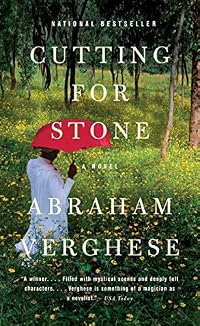
Cutting for Stone
by Abraham Verghese
On This Page
Description
Marion and Shiva Stone are twin brothers born of a secret union between a beautiful Indian nun and a brash British surgeon at a mission hospital in Addis Ababa. Orphaned by their mother's death in childbirth and their father's disappearance, bound together by a preternatural connection and a shared fascination with medicine, the twins come of age as Ethiopia hovers on the brink of revolution. Yet it will be love, not politics -- their passion for the same woman -- that will tear them apart show more and force Marion, fresh out of medical school, to flee his homeland. He makes his way to America, finding refuge in his work as an intern at an underfunded, overcrowded New York City hospital. When the past catches up to him -- nearly destroying him -- Marion must entrust his life to the two men he thought he trusted least in the world: the surgeon father who abandoned him and the brother who betrayed him. show lessTags
Recommendations
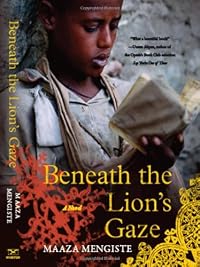
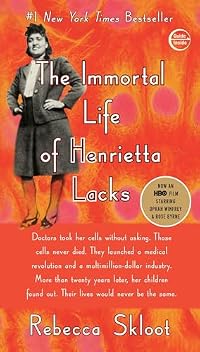
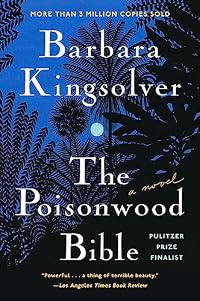

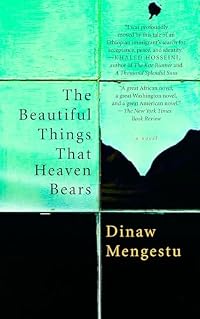
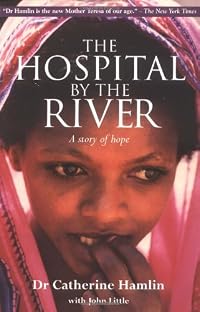
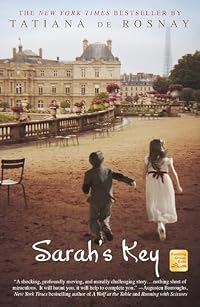




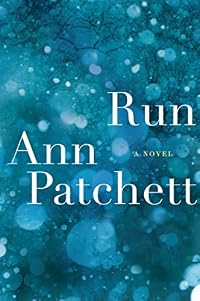
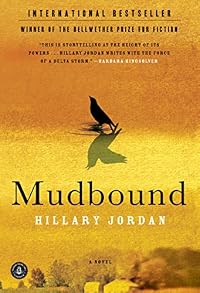
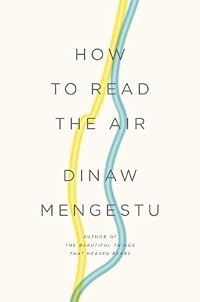
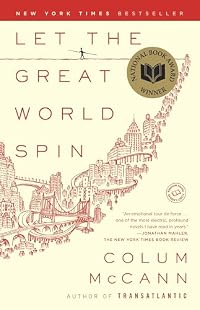
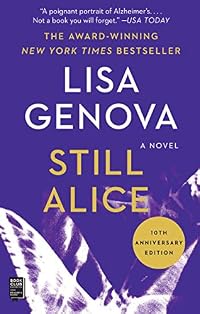

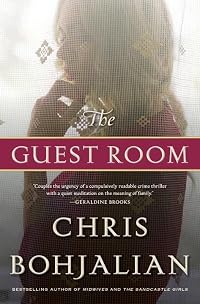
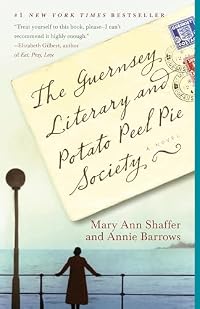
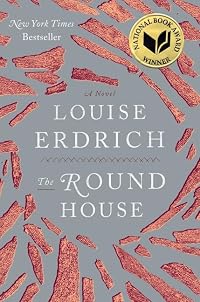
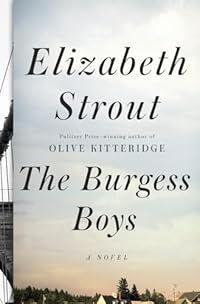
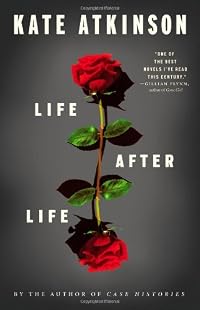
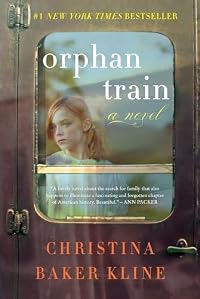

Member Recommendations
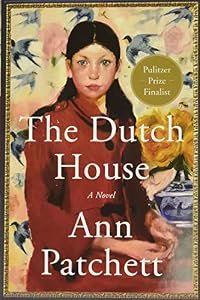
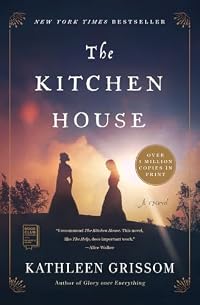
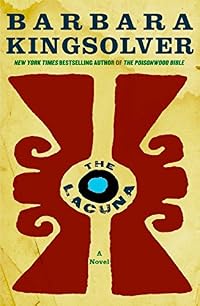
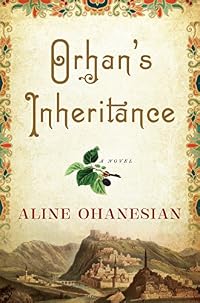
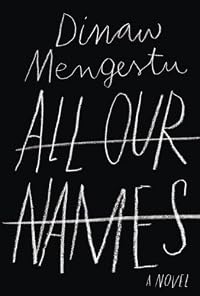
momofthreewi Both are rich in character development and centered around unique families.
245
JGoto Also about the ties & love/hate relationship between identical twins.
153

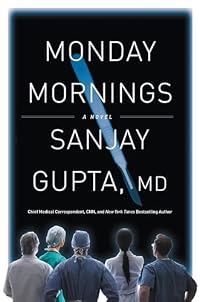
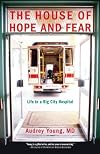
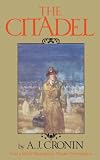
GoST Both books relate the eventful, coming-of-age stories of physicians and their struggle to learn their craft, complete with detailed descriptions of medical procedures.
131
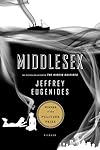
someproseandcons Both books are family and community sagas centered around secrets, and both books are carried by a strong and compelling voice.
94
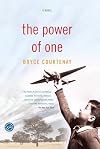
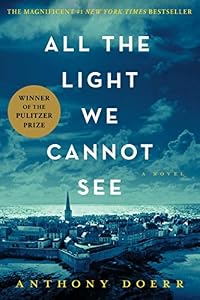
ddelmoni Exceptional characters and storyline, set in South Africa during WWII. Exceptional writing. If you liked Cutting for Stone you'll like The Power of One.
40
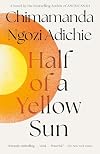
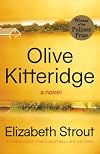
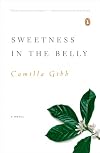
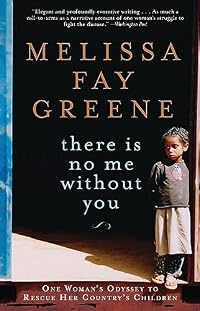
Ciruelo Both novels have a medical focus and are set in Ethiopia. The main characters in each novel were orphaned at an early age and each spent their childhoods in a religious setting.
21
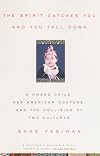
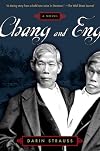
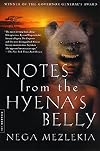
BookshelfMonstrosity Cutting for Stone portrays the life of a pair of conjoined twins separated at birth; Eng and Chang is the fictional biography of the famous original Siamese twins, who remained joined at the sternum throughout their lives. Readers interested in conjoined twins may enjoy both novels.
22
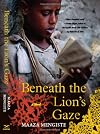
novelcommentary This was recently featured on NPR- go to thier website for an author interview.
Member Reviews
A great long read full of all the right elements: human strengths and frailties; love and hatred; hope and despair; fate and irony; birth, death, and revolution. We see it all through the eyes of Marion Stone, one of a pair of twin boys born under traumatic circumstances in a mission hospital in Addis Ababa in 1954. Orphaned within hours by the death of their mother and the disappearance of their father, they are raised by two remarkable physicians who begin the boys' medical training at the age of 9 by teaching them to "read" pulses. There is never any doubt that they will both become doctors, but many other aspects of their increasingly separate lives are not so predictable. This novel has so much to recommend it---brilliant show more story-telling, character development, exploration of all kinds of human relationships, history lessons...and then there is the medical detail. If you're at all squeamish, you won't appreciate the descriptions of what syphilis, cancer, tuberculosis and other scourges do to the human body when left untreated or the detailed explanations of surgical procedures from vasectomies to organ transplants, but these are all essential to the intricate tapestry Verghese has woven in Cutting for Stone. show less
In a mission hospital in Addis Ababa, Ethiopia, a nun suddenly goes into labor, giving birth to twins. To the shock and anguish of all involved, the woman, who was also a nurse at the hospital, dies during her ordeal. The twins, Marion and Shiva, are subsequently raised by two other doctors at the hospital and destined to become doctors themselves, but throughout their lives they continue to be haunted by the mystery surrounding their birth.
I was absolutely absorbed by this richly detailed and sweeping story of family, history and medicine. It was educational as well as fascinating and thought-provoking. In ways I can't quite put my finger on the writing was also somewhat reminiscent to me of Middlesex. There was one scene I wish had show more played out differently as it seemed uncomfortably out of character for Marion, but unfortunately it was also the plot device which led nearly to his demise. Despite that single reservation, I recommend the book highly. show less
I was absolutely absorbed by this richly detailed and sweeping story of family, history and medicine. It was educational as well as fascinating and thought-provoking. In ways I can't quite put my finger on the writing was also somewhat reminiscent to me of Middlesex. There was one scene I wish had show more played out differently as it seemed uncomfortably out of character for Marion, but unfortunately it was also the plot device which led nearly to his demise. Despite that single reservation, I recommend the book highly. show less
I really enjoyed this book. Full disclosure: I listened to the audiobook version, unabridged on 19 discs. Read magnificently by Sunil Malhotra. The story was excellent, multi-layered, the writing, truly beautiful. But the reading was outstanding. This actor is a master of accents and he truly made ALL the characters come to life in a way that reading the book myself would not have accomplished. I can't recommend this audiobook highly enough. I actually followed along with the actual book near the end, something I've never done before.
The story is about 2 boys, twins, born in Ethiopia in 1954. But the story actually begins long before their birth and continues well into their adulthood. It takes the reader to India, Ethiopia, Eritrea, show more and the United States. The ground covered - on a literary level, not just geographically - delves into history, politics, medicine (in a big way), culture, and the emotional layers of love, betrayal, family and psyche. And, it is exquisitely written. If you think you know, at any given point, where the story is going, you will be surprised.
Here is a bonus; Verghese, himself, speaking, on a variety of topics, the inspiration for this book being one of them (some of the other pieces in the right sidebar by him are also worth a look):
http://www.youtube.com/watch?v=eIBe_iwx5PY
The only thing I missed in this book that would have been helpful (for me, anyhow) would have been a glossary of foreign words. It wasn't really difficult to infer meaning from context but personally, I love glossaries. show less
The story is about 2 boys, twins, born in Ethiopia in 1954. But the story actually begins long before their birth and continues well into their adulthood. It takes the reader to India, Ethiopia, Eritrea, show more and the United States. The ground covered - on a literary level, not just geographically - delves into history, politics, medicine (in a big way), culture, and the emotional layers of love, betrayal, family and psyche. And, it is exquisitely written. If you think you know, at any given point, where the story is going, you will be surprised.
Here is a bonus; Verghese, himself, speaking, on a variety of topics, the inspiration for this book being one of them (some of the other pieces in the right sidebar by him are also worth a look):
http://www.youtube.com/watch?v=eIBe_iwx5PY
The only thing I missed in this book that would have been helpful (for me, anyhow) would have been a glossary of foreign words. It wasn't really difficult to infer meaning from context but personally, I love glossaries. show less
My tears flowed uncontrollably when Shiva died. Shiva is usually narrated and seen from the perspective of Marion but you know he would have deemed his death worthy if his brother lived. He is a very interesting character, and I wish Verghese had given him more airtime. In contrast, the main character, Marion, seemed ordinary and even petty. He couldn't let go of his brother's betrayal and he admitted honestly that if he were in Shiva's shoes, he may not have donated half his liver. It is when we finished the story that we understand what Marion said in the story's beginning - that it is only with the telling of the story that his rift with Shiva can be healed. It is his redemption.
Cutting for Stone
By Abraham Verghese
Sally Apollon
Overall Score: 9 out of 10
Literary Style
I suppose I had a bit of a leg-up on the rest of you, knowing a lot of the medical terminology and feeling a familiarity with a lot of the descriptive processes of disease and medicine and surgery. I do hope that didn’t frighten you off, because I do think that medicine (surgery too) have a poetry all of their own. I really appreciated how the author drew from all of the senses to give an adequate description not only of the disease and diagnostic processes, but of the techniques employed to heal, soothe, cure, make well, or even to allow to die. The sense of touch is so important in palpating a pulse, or cutting a suture; the sense of smell show more so crucial in picking up what a patient cannot, or will not tell you. The nuances of the sense of hearing are critical when picking up breath or bowel sounds. The sense of sight is so key when discerning anemia, pallor, cyanosis or even a rash. Taste was not really neglected—because there were so many keen descriptions of celebratory & significant meals; not to mention so many instances when people vomited from an emotional reaction. (Funny that; in all my years nursing, (almost 25) I have NEVER known a staff member to vomit before, during or after surgery, nor have I felt that way myself). Nor have I been present when people have done so much from shock or grief, but that seemed to happen a lot in the book.
But I digress, I found the story unfolded in a very natural way, the style didn’t get in the way of the story, but was descriptive enough to make me believe I knew Ethiopia & Missing Hospital by the time it was done.
Themes
MEDICINE: Rarely heralded in a novel in an accurate and credible way. I don’t think I’ve ever read a book where someone’s passion to practice medicine is as well-entwined with a love-life story. There were so many ‘Aha” moments for me in reading this…In my own practice I love the way each person has a (medical) story to tell and it’s history unfolds as an array of signs and symptoms. It’s also a beautifully wrought illustration of how peoples’ lives guide them into certain areas of medicine. Was it Matron who encouraged Marion to challenge himself & find his symphony? There is something about a good doctor or nurse that their personality is revealed and enhanced in their practice, indeed is an integral part of who they are in their work. It is also a little scary (and I’ve often seen it happen) and of course it can happen in many almost any profession that one can choose “perfection of the life, or of the work” (Yeats), sadly hiding out in work that is absorbing, interesting and has plenty of it’s own rewards. It’s a talent indeed to take that which is absorbing & demanding and keep it in it’s place. But I’d hasten to say that I’ve said many-a-time that I’m glad I’m not a doctor, for many reasons: the awesome (addictive) responsibility of literally having another’s life-in-your-hands, the fact that your human errors can be lives lost, the hours are awful too…can eat years of your life away.
Funny thing, although some of the medical techniques portrayed are out-dated; most of it is first class, indeed, even if we don’t still do so now, what has gone before has provided the building blocks for what has gone on afterwards. And I would like to add that the week before I started this book I ordered a “Sims (Marion’s namesake!) Vaginal Retractor” for use by myself and the doctor I work with to better visualize the cervix during insertion of Tandem & Ring for brachytherapy (Internal radiation for cervical cancer) a treatment I’m involved with on an almost weekly basis. Medicine has so many stories to tell. I also have to say that the pivotal surgical scenes; the initial C-Section and the transplant were so well-portrayed and I’m hard-to-please in medical drama, they seemed completely authentic and believable to me, even the likelihood of Shiva having a DVT in his arm post-op, quite common & having to go on anticoagulants (but of course) and then bleeding out rapidly through a cerebral arteriovenous malformation….Ahhh! but of course! He had funky cerebral vasculature from the beginning we SHOULD HAVE KNOWN! It’s not really that uncommon, if we did angiograms of everyones blood vessels we’d probably see a bunch of them, but in normal clotting scenarios, without extra pressure you probably go through life unknowingly.
Side note: hepatitis & TB are endemic in NY area jails—sexual abuse & drug use (portals of transmission) inevitably rife.
Final word about medicine, I have to say I LOVED the acronyms that were created by B.C. Gandhi, it’s really Gallows humor, or black humor, but medicine has a whole heap of it (sure Becky’s familiar) and it’s really a way of coping when you feel like you’re in the trenches, punch-drunk, middle-of the night, end of a double shift when the last thing that can go wrong just did go wrong. It’s funny to have your own slang when medicine already has it’s own language that you’ve had to master…my fave “BFO”, on page 488 of my edition. The equivalent in my practice is a patient that we refer to as a “train wreck” who has all the medical problems in the book and a few not in the book.
THIRD WORLD: I found it to be a fascinating window into how medicine is practiced and how attitudes are towards medicine in a country such as Ethiopia where resources are so few and basic things such as food and hygiene were luxuries. It’s wonderful to see the dignity, patience, joy & faith of people on a daily basis. I found it amazing to see the sheer hard work and adaptability of the nurses and physicians who changed the purpose of the diarrhea room, for example, depending on the season & the need. And it was terrific to see the pillars that the staff became in the society. Tragic, however, to see the horrors that people were witness to on a regular basis; a brutally oppressive regime and the daily torment of high infant mortality & not enough to eat. The portrait of Tisge’s dying child was so well-written. Also, I did like the authenticity of the “bloodless coup” and it’s demise and the hijack of Ethiopean Airlines. And of course, Ras Taferi, Haile Selassie himself was a REAL MAN—supposed descendent of Solomon, revered by Jamaicans far & wide (bizarre, huh>)
REVOLUTION: In a country so poor, revolution is almost inevitable. There were parallels in the lives of Shiva, Marion & Genet—for whom life had an undertow of sadness that pulled toward tragedy.
LOVE & LOSS: These two were forever entwined in this book, the risk of love heralds the inevitability of loss. What is the saying “Better to have loved & lost than never loved at all”? Who said that? Don’t get me started with the whole fistula & female circumcision thing, I’ll be here all night; I’ll just say this, women have suffered so badly at the hands of men the world over in the name of love. And that their mothers perpetuate this, shame on them! [It did feel a little bit unreal as if the author “killed off” Rosina (her suicide) because she couldn’t live with her awareness of what she had done to her child…I fear the reality for many mothers & daughters is far more mundane.]
Characterization
SISTER MARY JOSEPH PRAISE: Sadly, her character was only a sketch although she loomed large over everything. The letter at the end didn’t quite do it for me.
GHOSH: I really enjoyed him, he was the unsung hero of the book, loved his sayings and his depths of compassion & humor & appetite for life. He made a great father.
HEMA: She was a brave & fiery little lady! What a terrific doctor and wonderful mother. Loved the “Version” clinic. I was almost offered an “aversion” for Amelia—same exact procedure, 9she was a footling presention, hence my C-Section) but not very often done in NYC hospitals—partly a dying art, partly too risky, risk of ruptuting placenta. They could see with ultrasound that Amelia’s placenta was on the FRONT of my uterus, too likely to dislodge. I was so happy when she finally appreciated Ghosh, she nearly lost him!
STONE: What a great name for him; terribly sad story of his mother with the exploding eroding mass and (tabes dorsalis! Dementia! of course!) his father with syphilis. BUT, I do not forgive him a) neglecting to notice that he impregnated the woman he worked with daily (!!!!)…OR b) his rejection of his sons for the majority of his adult life (the entirety of their childhoods), that was truly despicable. But of course, it made for a great story, it enabled Ghosh & Hema to be the parents they should have been and in leaving he DID unwittingly rescue them from himself. So funny, but not so unusual for a man to be such a colossal failure in his private life and such a amazing success in his professional life.
MARION: It was a good thing to have the story told in his voice, he was the most fully imagined, credible character to me. Determined, tortured by his sensitive conscience, he was the voice that tied the story together. I did appreciate his naïve worship of Genet, and always feared that she didn’t deserve it—sadly it came back to bite him again & again.
SHIVA: He was a strange dude, huh? I would say borderline Asperger’s or something, with his drawing & mathematical-photographic genius & unemotional connections to people. Yep, Asperger’s, I think, there I feel better now. Truth is, people have been odd & unusual before and since there were names & labels and I’d probably best leave him alone as just Shiva. The twin-bond was a curious thing, wish I knew more about that in real life. It WOULD be good for a liver transplant though.
GENET: What a tragic-messed up chick she turned out to be—surprising really, because she WAS loved. But I guess it just didn’t work out for her, the fake-father that she had & his tragic end conspired against her psyche in mean ways. Then that one impulsive teenage act—with Shiva turned their worlds on a dime. Evidently, nothing was ever the same again. You KNEW she turned up again like a BAD PENNY—you knew it wasn’t going to end well.
Summary
Loved the book—best choice yet, wish I could choose one this good. I read it kind of quickly & now I will miss it, but dwell on it a while. Thanks for your choice, Lauren!
Final thought: The indelible irony of these words to Stone Jr & Sr at the M & M Rounds in Boston…
“What treatment is administered by ear in an emergency?” “WORDS OF COMFORT”!
I love it! show less
By Abraham Verghese
Sally Apollon
Overall Score: 9 out of 10
Literary Style
I suppose I had a bit of a leg-up on the rest of you, knowing a lot of the medical terminology and feeling a familiarity with a lot of the descriptive processes of disease and medicine and surgery. I do hope that didn’t frighten you off, because I do think that medicine (surgery too) have a poetry all of their own. I really appreciated how the author drew from all of the senses to give an adequate description not only of the disease and diagnostic processes, but of the techniques employed to heal, soothe, cure, make well, or even to allow to die. The sense of touch is so important in palpating a pulse, or cutting a suture; the sense of smell show more so crucial in picking up what a patient cannot, or will not tell you. The nuances of the sense of hearing are critical when picking up breath or bowel sounds. The sense of sight is so key when discerning anemia, pallor, cyanosis or even a rash. Taste was not really neglected—because there were so many keen descriptions of celebratory & significant meals; not to mention so many instances when people vomited from an emotional reaction. (Funny that; in all my years nursing, (almost 25) I have NEVER known a staff member to vomit before, during or after surgery, nor have I felt that way myself). Nor have I been present when people have done so much from shock or grief, but that seemed to happen a lot in the book.
But I digress, I found the story unfolded in a very natural way, the style didn’t get in the way of the story, but was descriptive enough to make me believe I knew Ethiopia & Missing Hospital by the time it was done.
Themes
MEDICINE: Rarely heralded in a novel in an accurate and credible way. I don’t think I’ve ever read a book where someone’s passion to practice medicine is as well-entwined with a love-life story. There were so many ‘Aha” moments for me in reading this…In my own practice I love the way each person has a (medical) story to tell and it’s history unfolds as an array of signs and symptoms. It’s also a beautifully wrought illustration of how peoples’ lives guide them into certain areas of medicine. Was it Matron who encouraged Marion to challenge himself & find his symphony? There is something about a good doctor or nurse that their personality is revealed and enhanced in their practice, indeed is an integral part of who they are in their work. It is also a little scary (and I’ve often seen it happen) and of course it can happen in many almost any profession that one can choose “perfection of the life, or of the work” (Yeats), sadly hiding out in work that is absorbing, interesting and has plenty of it’s own rewards. It’s a talent indeed to take that which is absorbing & demanding and keep it in it’s place. But I’d hasten to say that I’ve said many-a-time that I’m glad I’m not a doctor, for many reasons: the awesome (addictive) responsibility of literally having another’s life-in-your-hands, the fact that your human errors can be lives lost, the hours are awful too…can eat years of your life away.
Funny thing, although some of the medical techniques portrayed are out-dated; most of it is first class, indeed, even if we don’t still do so now, what has gone before has provided the building blocks for what has gone on afterwards. And I would like to add that the week before I started this book I ordered a “Sims (Marion’s namesake!) Vaginal Retractor” for use by myself and the doctor I work with to better visualize the cervix during insertion of Tandem & Ring for brachytherapy (Internal radiation for cervical cancer) a treatment I’m involved with on an almost weekly basis. Medicine has so many stories to tell. I also have to say that the pivotal surgical scenes; the initial C-Section and the transplant were so well-portrayed and I’m hard-to-please in medical drama, they seemed completely authentic and believable to me, even the likelihood of Shiva having a DVT in his arm post-op, quite common & having to go on anticoagulants (but of course) and then bleeding out rapidly through a cerebral arteriovenous malformation….Ahhh! but of course! He had funky cerebral vasculature from the beginning we SHOULD HAVE KNOWN! It’s not really that uncommon, if we did angiograms of everyones blood vessels we’d probably see a bunch of them, but in normal clotting scenarios, without extra pressure you probably go through life unknowingly.
Side note: hepatitis & TB are endemic in NY area jails—sexual abuse & drug use (portals of transmission) inevitably rife.
Final word about medicine, I have to say I LOVED the acronyms that were created by B.C. Gandhi, it’s really Gallows humor, or black humor, but medicine has a whole heap of it (sure Becky’s familiar) and it’s really a way of coping when you feel like you’re in the trenches, punch-drunk, middle-of the night, end of a double shift when the last thing that can go wrong just did go wrong. It’s funny to have your own slang when medicine already has it’s own language that you’ve had to master…my fave “BFO”, on page 488 of my edition. The equivalent in my practice is a patient that we refer to as a “train wreck” who has all the medical problems in the book and a few not in the book.
THIRD WORLD: I found it to be a fascinating window into how medicine is practiced and how attitudes are towards medicine in a country such as Ethiopia where resources are so few and basic things such as food and hygiene were luxuries. It’s wonderful to see the dignity, patience, joy & faith of people on a daily basis. I found it amazing to see the sheer hard work and adaptability of the nurses and physicians who changed the purpose of the diarrhea room, for example, depending on the season & the need. And it was terrific to see the pillars that the staff became in the society. Tragic, however, to see the horrors that people were witness to on a regular basis; a brutally oppressive regime and the daily torment of high infant mortality & not enough to eat. The portrait of Tisge’s dying child was so well-written. Also, I did like the authenticity of the “bloodless coup” and it’s demise and the hijack of Ethiopean Airlines. And of course, Ras Taferi, Haile Selassie himself was a REAL MAN—supposed descendent of Solomon, revered by Jamaicans far & wide (bizarre, huh>)
REVOLUTION: In a country so poor, revolution is almost inevitable. There were parallels in the lives of Shiva, Marion & Genet—for whom life had an undertow of sadness that pulled toward tragedy.
LOVE & LOSS: These two were forever entwined in this book, the risk of love heralds the inevitability of loss. What is the saying “Better to have loved & lost than never loved at all”? Who said that? Don’t get me started with the whole fistula & female circumcision thing, I’ll be here all night; I’ll just say this, women have suffered so badly at the hands of men the world over in the name of love. And that their mothers perpetuate this, shame on them! [It did feel a little bit unreal as if the author “killed off” Rosina (her suicide) because she couldn’t live with her awareness of what she had done to her child…I fear the reality for many mothers & daughters is far more mundane.]
Characterization
SISTER MARY JOSEPH PRAISE: Sadly, her character was only a sketch although she loomed large over everything. The letter at the end didn’t quite do it for me.
GHOSH: I really enjoyed him, he was the unsung hero of the book, loved his sayings and his depths of compassion & humor & appetite for life. He made a great father.
HEMA: She was a brave & fiery little lady! What a terrific doctor and wonderful mother. Loved the “Version” clinic. I was almost offered an “aversion” for Amelia—same exact procedure, 9she was a footling presention, hence my C-Section) but not very often done in NYC hospitals—partly a dying art, partly too risky, risk of ruptuting placenta. They could see with ultrasound that Amelia’s placenta was on the FRONT of my uterus, too likely to dislodge. I was so happy when she finally appreciated Ghosh, she nearly lost him!
STONE: What a great name for him; terribly sad story of his mother with the exploding eroding mass and (tabes dorsalis! Dementia! of course!) his father with syphilis. BUT, I do not forgive him a) neglecting to notice that he impregnated the woman he worked with daily (!!!!)…OR b) his rejection of his sons for the majority of his adult life (the entirety of their childhoods), that was truly despicable. But of course, it made for a great story, it enabled Ghosh & Hema to be the parents they should have been and in leaving he DID unwittingly rescue them from himself. So funny, but not so unusual for a man to be such a colossal failure in his private life and such a amazing success in his professional life.
MARION: It was a good thing to have the story told in his voice, he was the most fully imagined, credible character to me. Determined, tortured by his sensitive conscience, he was the voice that tied the story together. I did appreciate his naïve worship of Genet, and always feared that she didn’t deserve it—sadly it came back to bite him again & again.
SHIVA: He was a strange dude, huh? I would say borderline Asperger’s or something, with his drawing & mathematical-photographic genius & unemotional connections to people. Yep, Asperger’s, I think, there I feel better now. Truth is, people have been odd & unusual before and since there were names & labels and I’d probably best leave him alone as just Shiva. The twin-bond was a curious thing, wish I knew more about that in real life. It WOULD be good for a liver transplant though.
GENET: What a tragic-messed up chick she turned out to be—surprising really, because she WAS loved. But I guess it just didn’t work out for her, the fake-father that she had & his tragic end conspired against her psyche in mean ways. Then that one impulsive teenage act—with Shiva turned their worlds on a dime. Evidently, nothing was ever the same again. You KNEW she turned up again like a BAD PENNY—you knew it wasn’t going to end well.
Summary
Loved the book—best choice yet, wish I could choose one this good. I read it kind of quickly & now I will miss it, but dwell on it a while. Thanks for your choice, Lauren!
Final thought: The indelible irony of these words to Stone Jr & Sr at the M & M Rounds in Boston…
“What treatment is administered by ear in an emergency?” “WORDS OF COMFORT”!
I love it! show less
This book offers pretty much all of the things I look for in reading material--deep, rich characters, an interesting setting, a compelling and unpredictable story, and a look at an aspect of life that I am not familiar with. The author has allowed his characters to define themselves and, in doing so, they leave a lasting impact on the reader. Ethiopia is unfamiliar terrain to most of us, as is the day to day routine of a big-city hospital in a poor neighborhood. Descriptions of both show an intimacy that is too authentic not to be real. As to the story, it's complex, heart-warming and leaves you pondering all the possibilities. Who could ask for more.
Absolutely beautiful. This book is a very tricky balancing act of history, medicine, love letter to Ethiopia, mystery and romance...which sounds like an awful mixed bag if not for the binding element of the center story of these twins which simply compels you through the swampy field of all the former. Which is not to say that any of the other elements don't work - they do, and the collective result is a book elevated from a simple sibling story to something much more layered and epic. The one caveat about this book: slow start. The initial birth scene takes about 100 pages to culminate, and Verghese is unsparing with the ensuing medical details. The tone in this first section is very different from the rest, but all of this can be show more forgiven once part two starts. From there the narrative never slows. In fact, it's easy to miss appreciating the writing itself - the full descriptions of scene and character, the artful balancing of plot lines - in racing to find out what happens next. It wasn't until I finished that I realized I hadn't once stopped to think about structure, to break down any particular scene and perform a kind of exploratory surgery of my own so that I might better understand how Verghese did it. None of that even occurred to me. It wasn't until I finished that those questions came to me , but even then they were pushed aside in favor of running the story over in my mind again, because I wasn't yet ready to let it go. show less
Members
- Recently Added By
Published Reviews
ThingScore 75
Cutting for Stone - the phrase is from the Hippocratic oath - is about twins born joined at the head, in a mission hospital in Addis Ababa half a century ago. Their mother, a nun from Madras, does not survive the birth. Their father, a British surgeon called Thomas Stone, cannot bear the loss and flees, so Marion and Shiva are raised by two Indian doctors in the hospital where their parents show more worked; both become surgeons. show less
Lists

Recommend the 20 best books you've read in the last five years
2,168 works; 601 members

Top-Rated Books on LibraryThing
272 works; 117 members

Best of World Literature
431 works; 51 members
Historical Fiction
889 works; 89 members
Best African Books
126 works; 46 members

Favorite Long Books
330 works; 42 members

Top Five Books of 2013
1,562 works; 715 members

Best 21st Century Books (So Far)
670 works; 86 members

Books recommended by Barack Obama
295 works; 28 members

100 books to read in a lifetime
102 works; 37 members

Best Workplace Fiction
47 works; 18 members

Books That Made Me Cry
199 works; 105 members

Top Five Books of 2016
795 works; 229 members

Best medical fiction
26 works; 17 members

Best books read in 2011
200 works; 51 members

Books with Twins
175 works; 12 members

tell me where it hurts
36 works; 7 members

A Novel Cure
742 works; 23 members

Favorite Audiobooks Listened to in 2011
33 works; 11 members
Contemporary Fiction
109 works; 7 members

Five star books
1,755 works; 108 members

Africa
109 works; 8 members

Books Read in 2023
5,547 works; 145 members

SantaThing 2014 Gifts
299 works; 17 members

Books Read in 2016
4,666 works; 199 members

SHOULD Read Books!
354 works; 9 members

Obama Reads
181 works; 3 members
First Novels
373 works; 16 members

NYT Readers best of 21st C
100 works; 8 members

Recommended Reading : 600 Classics Reviewed, Editors of Salem Press, 2015
634 works; 6 members

Books Read in 2025
4,090 works; 97 members

.
184 works; 1 member
Most Popular Books Tagged Africa
35 works; 3 members

Ethiopia
17 works; 2 members

Indie Next Picks
196 works; 4 members

Around the World in 80 Books
79 works; 4 members

Swinging Seventies
255 works; 16 members

Books Read in 2018
4,360 works; 110 members

Books Read in 2011
684 works; 20 members

Allie's List of Books I Want To Read
93 works; 1 member

To Read
617 works; 7 members

Top Five Books of 2025
954 works; 303 members
Author Information

10+ Works 16,177 Members
Abraham Verghese was born in Addis Ababa, Ethiopia in 1955. He received an M.D. from Madras University, India, in 1979 and came to the U.S a year later to do a residency in Tennessee. He also earned an M.F.A. from the University of Iowa in 1991. Verghese has been involved mainly in medical research and teaching. His specialties include internal show more medicine, pulmonary diseases, geriatrics, and infectious diseases; the latter has led to an interest in AIDS, which has been the subject of much of his writing. Verghese's thesis was a collection of stories about AIDS, and he then went on to write My Own Country: A Doctor's Story of a Town and Its People in the Age of AIDS. My Own Country received the Lambda Literary Award for Nonfiction and was selected by Time as one of the top five books of 1994. Verghese is also the author of The Tennis Partner: A Doctor's Story of Friendship and Loss, and his short stories, articles, and reviews have appeared in magazines and newspapers such as North American Review, Sports Illustrated, and MD. Verghese, who is divorced, has two children, Steven and Jacob and resides in El Paso, Tex. (Bowker Author Biography) show less
Some Editions
Awards and Honors
Awards
Distinctions
Notable Lists
Series
Belongs to Publisher Series
Common Knowledge
- Canonical title
- Cutting for Stone
- Original title
- Cutting for stone
- Original publication date
- 2009
- People/Characters
- Sister Anjali; Sister Mary Joseph Praise; Thomas Stone; Shessy Geevarughese; Marion Praise Stone; Shiva Praise Stone (show all 14); Matron Hirst; Abhi Ghosh; Kaplana Hemlatha; Deepak Jesudass; Rosina; Genet; Almaz; Sergeant Zemui
- Important places
- Addis Ababa, Ethiopia; The Bronx, New York, New York, USA
- Epigraph
- And because I love this life
I know I shall love death as well
The child cries out when
From the right breast the mother
Takes it away, in the very next moment
To find in the left one
Its consolation.
-... (show all)- Rabindranath Tagore,
from Gitanjuli - Dedication
- For George and Mariam Verghese Scribere jussit amor
- First words
- Prologue: After eight months spent in the obscurity of our mother's womb, my brother Shiva, and I came into the world in the late afternoon of the twentieth of September in the year of grace 1954.
Chapter 1: Sister Mary Joseph Praise had come to Missing Hospital from India, seven years before our birth. - Last words
- (Click to show. Warning: May contain spoilers.)"Stone here," he said, his voice sounding so close, as if he were there with me, as if nothing at all separated our two worlds.
- Blurbers
- Kidder, Tracy ; Salzman, Mark ; Bly, Robert ; Chen, Pauline W. ; Selzer, Richard ; Gawande, Arul (show all 8); Packer, Ann ; Schwartz, John Burnham
- Original language
- English
Classifications
Statistics
- Members
- 10,576
- Popularity
- 903
- Reviews
- 566
- Rating
- (4.26)
- Languages
- 13 — Danish, Dutch, English, French, German, Italian, Norwegian (Bokmål), Polish, Portuguese, Croatian, Slovak, Spanish, Swedish
- Media
- Paper, Audiobook, Ebook
- ISBNs
- 58
- UPCs
- 1
- ASINs
- 29