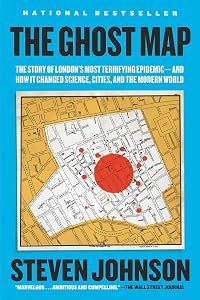
The Ghost Map: The Story of London's Most Terrifying Epidemic--and How It Changed Science, Cities, and the Modern World
by Steven Johnson
On This Page
Description
A thrilling historical account of the worst cholera outbreak in Victorian London-and a brilliant exploration of how Dr. John Snow's solution revolutionized the way we think about disease, cities, science, and the modern world. From the dynamic thinker routinely compared to Malcolm Gladwell, E. O. Wilson, and James Gleick, The Ghost Map is a riveting page-turner with a real-life historical hero that brilliantly illuminates the intertwined histories of the spread of viruses, rise of cities, show more and the nature of scientific inquiry. These are topics that have long obsessed Steven Johnson, and The Ghost Map is a true triumph of the kind of multidisciplinary thinking for which he's become famous-a book that, like the work of Jared Diamond, presents both vivid history and a powerful and provocative explanation of what it means for the world we live in. The Ghost Map takes place in the summer of 1854. A devastating cholera outbreak seizes London just as it is emerging as a modern city: more than 2 million people packed into a ten-mile circumference, a hub of travel and commerce, teeming with people from all over the world, continually pushing the limits of infrastructure that's outdated as soon as it's updated. Dr. John Snow-whose ideas about contagion had been dismissed by the scientific community-is spurred to intense action when the people in his neighborhood begin dying. With enthralling suspense, Johnson chronicles Snow's day-by-day efforts, as he risks his own life to prove how the epidemic is being spread. When he creates the map that traces the pattern of outbreak back to its source, Dr. Snow didn't just solve the most pressing medical riddle of his time. He ultimately established a precedent for the way modern city-dwellers, city planners, physicians, and public officials think about the spread of disease and the development of the modern urban environment. The Ghost Map is an endlessly compelling and utterly gripping account of that London summer of 1854, from the microbial level to the macrourban-theory level-including, most important, the human level. show lessTags
Recommendations







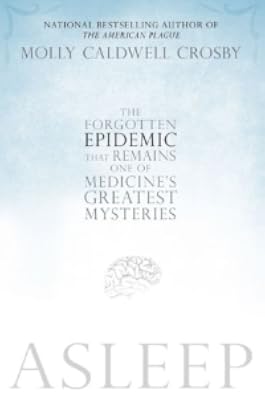
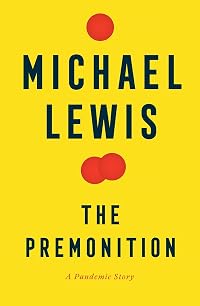
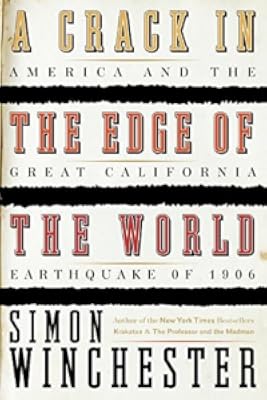
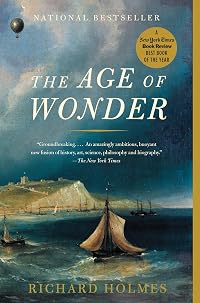

Member Recommendations
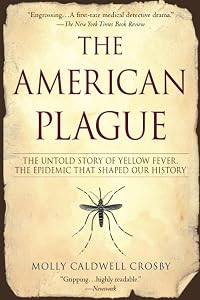
The American Plague: The Untold Story of Yellow Fever, the Epidemic that Shaped Our History by Molly Caldwell Crosby
John_Vaughan A story of courage as much as plague
JBDTest2 Testing a bug (but these two do seem like they'd go well together)
11
by anonymous user
Sandydog1 A much, much, more recent (and equally gross) epidemiological thriller/mystery.

Member Reviews
This book explores the ideas of urbanism, epidemiology, and social networks through the lens of the 1854 Broad Street cholera outbreak in the Soho district of London. Dr. John Snow, with the help of Reverend Henry Whitehead, created a map of where people infected with cholera lived and drew their water to trace the infection to a water pump on Broad Street. That Snow and Whitehead knew the neighborhood and its people well proved advantageous in creating the connections needed to document the spread of disease. Snow also had to fight an uphill battle against the prevailing scientific belief that diseases like cholera were spread through the air, known as the miasma theory.
Johnson details how the evolutionary response to putrefaction and show more vile odors made such beliefs plausible, but practices such as "cleaning up" the city by deliberately washing waste into the water inadvertently caused infections to increase. Johnson also depicts the urban environment as a unique battleground for humans and microorganisms. All in all this is a fascinating account of an historic account, with broader implications for how we live today and into the future. show less
Johnson details how the evolutionary response to putrefaction and show more vile odors made such beliefs plausible, but practices such as "cleaning up" the city by deliberately washing waste into the water inadvertently caused infections to increase. Johnson also depicts the urban environment as a unique battleground for humans and microorganisms. All in all this is a fascinating account of an historic account, with broader implications for how we live today and into the future. show less
A manual on taking down received wisdom and the confederacy of dunces that toot and holler behind it. The descriptions of the Miasmists struggling to maintain their world-view, the air was so foul it polluted the water, are sadly too familiar today. John Snow appears to be a saint of hard scrabble science.
Where do you find the conjunction of epidemiology, mathematics, anthropology, and Victorian history? You do in this enlightening book, The Ghost Map, subtitled "The Story of London's Most Terrifying Epidemic - and How It Changed Science, Cities, and the Modern World. The subtitle is not an overstatement for this is one of the best books about the history of science that I have read. Steven Johnson provides the details of an episode in the improvement of scientific understanding that makes you wonder that such improvement ever occurs. Just as important as the scientific story are the connections the author makes between it and the history of the growth of cities with the impact of disease and its control on the possibilities for further show more growth. The background of certain key contributors, both medical and political, along with such contextual information as the history and literature of the times, 1850's London, adds to the wealth of information that makes the story of this Cholera epidemic worth reading. I enjoyed each chapter as I learned about an important chapter in the history of science. show less
This turned out to be a great companion piece to Sandra Hempel's "The Medical Detective" because combined, you really get the whole story. Like a sociological study, Johnson covers London's growth and city structure as a massive petri dish for disease, but also its people: "...epidemics create a kind of history from below: they can be world-changing, but the participants are almost inevitably ordinary folk...not thinking for a second about how their actions will be recorded for posterity..."
The first of these ordinary folks are the "recyclers" and waste collectors of society, among them are night-soil men and sewer-hunters. By simply existing, they were proof that one can literally slosh through human waste every day, but the "miasma" show more will not give you cholera. The second essential group of course are the victims. The miasma theory was standard, but John Snow was a highly observant man. He built his "waterborne theory" over many years of extensive research. Even before the infamous Broad Street outbreak, he learned that 12 ordinary people living in one slum building died from cholera, but the building across from it didn't. This was because, of course, they got their water from different sources. Snow also had to go against imperfect data! Snow's colleague, William Farr, attempted to record cholera deaths by elevation, the higher ground seemingly safer. But Snow went door to door and asked where they got their water. He mapped, recorded and pursued every lead. Turns out of course, the higher elevation had a cleaner water source. He was even stunned to find that clear water may still be deadly. Later, he found an unlikely ally in Rev Henry Whitehead, a member of the Broad Street community. The author ultimately gives credit to local assistance. Without it, John Snow wouldn't have been able to succeed as he did.
The author allowed you to appreciate Snow's efforts and how lucky some of us truly are to have access to clean water. You really can't take it for granted! show less
The first of these ordinary folks are the "recyclers" and waste collectors of society, among them are night-soil men and sewer-hunters. By simply existing, they were proof that one can literally slosh through human waste every day, but the "miasma" show more will not give you cholera. The second essential group of course are the victims. The miasma theory was standard, but John Snow was a highly observant man. He built his "waterborne theory" over many years of extensive research. Even before the infamous Broad Street outbreak, he learned that 12 ordinary people living in one slum building died from cholera, but the building across from it didn't. This was because, of course, they got their water from different sources. Snow also had to go against imperfect data! Snow's colleague, William Farr, attempted to record cholera deaths by elevation, the higher ground seemingly safer. But Snow went door to door and asked where they got their water. He mapped, recorded and pursued every lead. Turns out of course, the higher elevation had a cleaner water source. He was even stunned to find that clear water may still be deadly. Later, he found an unlikely ally in Rev Henry Whitehead, a member of the Broad Street community. The author ultimately gives credit to local assistance. Without it, John Snow wouldn't have been able to succeed as he did.
The author allowed you to appreciate Snow's efforts and how lucky some of us truly are to have access to clean water. You really can't take it for granted! show less
In 1854, cholera tore through a London Soho neighborhood with speed and impact far greater than previous outbreaks. Prevailing views on disease attributed the transmission of cholera to “miasma,” meaning there was something in the air, and that certain individuals would be more or less susceptible depending on their socioeconomic class and living arrangements. These beliefs, firmly entrenched in the medical establishment, hindered the authorities’ response to the outbreak. Enter John Snow, a neighborhood physician who had been studying cholera for years. Through door-to-door canvassing and painstaking documentation, Snow developed a new theory of water-borne bacteria, and then faced the daunting task of convincing the authorities show more to respond accordingly. His unlikely partnership with local curate Henry Whitehead was instrumental in making the case.
The Ghost Map was a fascinating account of a public health situation, the state of London’s infrastructure during that era, and the ways in which even the most knowledgeable people can fail to see their limits or accept new data points. I would have preferred the book had ended with its concluding chapter focused on Victorian London, and not the epilogue. This final section leaps forward to the 21st century and discusses the rise of urban living, the internet, and public health concerns at the time of publication (2006): annual flu vaccines and the H5N1 avian flu virus. This was doomed to obsolescence from the start, and I found myself wishing the author had stuck with the history. But his final sentences are spot on:
The Ghost Map was a fascinating account of a public health situation, the state of London’s infrastructure during that era, and the ways in which even the most knowledgeable people can fail to see their limits or accept new data points. I would have preferred the book had ended with its concluding chapter focused on Victorian London, and not the epilogue. This final section leaps forward to the 21st century and discusses the rise of urban living, the internet, and public health concerns at the time of publication (2006): annual flu vaccines and the H5N1 avian flu virus. This was doomed to obsolescence from the start, and I found myself wishing the author had stuck with the history. But his final sentences are spot on:
However profound the threats are that confront us today, they are solvable, if we acknowledge the underlying problem, if we listen to science and not superstition, if we keep a channel open for dissenting voices that might actually have real answers. The global challenges that we face are not necessarily an apocalyptic crisis of capitalism or mankind’s hubris finally clashing with the balanced spirit of Gaia. We have confronted equally appalling crises before. The only question is whether we can steer around these crises without killing ten million people, or more. So let’s get on with it.show less
Cholera: not just something you perished from while playing Oregon Trail! Once thought to be caused by miasma/foul air, the 1854 cholera outbreak in London was a turning point in humanity's understanding of the disease and its spread. Intrepid physician John Snow fought an uphill battle against local authorities who were convinced cholera was spread by noxious sewer gases and could not be persuaded otherwise...until Snow drew up a map of victims' homes and their relationship with the Broad Street water pump.
I was surprised to find this book about a devastating, feared and deadly disease to be so enjoyable. I learned a great deal about not only cholera, but also 19th-century urban sanitation, medicine and municipal infrastructure. The show more final chapters revealed some fascinating things with respect to urban vs. city dwelling and, having now come through the other side of the global COVID-19 epidemic, were freakily prescient regarding potential future viruses. I love that there is now a pub named "John Snow" right next to location of Broad Street pump. Highly recommended for fans of narrative nonfiction. show less
I was surprised to find this book about a devastating, feared and deadly disease to be so enjoyable. I learned a great deal about not only cholera, but also 19th-century urban sanitation, medicine and municipal infrastructure. The show more final chapters revealed some fascinating things with respect to urban vs. city dwelling and, having now come through the other side of the global COVID-19 epidemic, were freakily prescient regarding potential future viruses. I love that there is now a pub named "John Snow" right next to location of Broad Street pump. Highly recommended for fans of narrative nonfiction. show less
A somewhat gross dive into mid-19th century London's SOHO district where Cholera spread rapidly around the Broad Street pump. One researcher, the self-made but eminent pioneering anesthesiologist, Dr. Snow, was already following water as the vector for the disease, while an Anglican neighborhood priest was collecting information for his own report. The narrative takes a while to get to how these two came to work together and how while the findings that the water from the pump was the vector was not widely accepted or lauded at the time it was the first real step away from the intuitive miasma theory and came into its own well before the end of the century.
Members
- Recently Added By
Published Reviews
To nonfiction book writers: if you want your book to sell, make huge, dramatic claims with your title and/or subtitle. If you want your book to be a bestseller, you actually have to fulfill those claims. Steven Johnson has done both, again and again.
added by John_Vaughan
Lists

Disaster Books
74 works; 19 members

Best Medical Nonfiction
79 works; 29 members

Best History Books about Epidemics
27 works; 24 members
Best Books About Plagues and Epidemics
99 works; 17 members

Best Books on London (non-fiction)
43 works; 11 members

Best General History Books
50 works; 20 members
Non-Fiction Worth Reading
1,015 works; 261 members

For Science!
39 works; 5 members

medical memoirs
24 works; 3 members

To Read - Medicine
18 works; 1 member

Top Five Books of 2018
802 works; 265 members

Accidents, Disasters, and Tragedies
175 works; 7 members

Science: Health & Medical
100 works; 1 member

Favourite Books
1,819 works; 316 members

Best Books Set in London
157 works; 40 members

Books Read in 2013
1,630 works; 51 members

Books Read in 2020
4,379 works; 123 members

The Great Courses: Your Deceptive Mind
60 works; 1 member

Dear Nerdfighteria Maybe-Fiction Recommendations
24 works; 1 member

Mind Expanding Books by hackerkid
581 works; 8 members

Books With the Most Memorable Titles
478 works; 158 members

Weirdo Nonfiction
138 works; 3 members
The War on Cars podcast
108 works; 1 member

Top Five Books of 2025
954 works; 303 members
Talk Discussions
Past Discussions
The 2013 Science, Religion, and History group read discussion thread in 75 Books Challenge for 2013 (March 2017)
The Ghost Map - Group Read in 75 Books Challenge for 2013 (April 2013)
Author Information

19+ Works 16,019 Members
Some Editions
Awards and Honors
Distinctions
Notable Lists
Common Knowledge
- Original publication date
- 2006-10-19
- People/Characters
- John Snow; Reverend Henry Whitehead; Filippo Pacini; Henry Mayhew; Benjamin Hall, 1st Baron Llanover; Joseph William Bazalgette (show all 10); William Farr; Charles Dickens; Sir Edwin Chadwick; Sarah Lewis
- Important places
- London, England, UK; River Thames, England, UK; Soho, London, England, UK
- Important events
- Broad Street Cholera Outbreak (1854); The Great Stink (1858); East End Cholera Outbreak (1866); Poor Law Acts (1832 | 1834); Public Health Act (1848); Nuisances Removal and Contagious Diseases Prevention Act (1848)
- Epigraph
- "A Klee painting named 'Angelus Novus' shows an angel looking as though he is about to move away from something he is fixedly contemplating. His eyes are staring, his mouth is open, his wings are spread. This is how one pictu... (show all)res the angel of history. His face is turned toward the past. Where we perceive a chain of events, he sees one single catastrophe which keeps piling wreckage and hurls it in front of his feet. The angel would like to stay, awaken the dead, and make whole what has been smashed. But a storm is blowing in from Paradise; it has got caught in his wings with such a violence that the angel can no longer close them. The storm irresistably propels him into the future to which his back is turned, while the pile of debris before him grows skyward. This storm is what we call progress."
—Walter Benjamin, "Theses on the Philosophy of History" - Dedication
- For the women in my life:
My mother and sisters, for their amazing work
on the front lines of public health
Alexa, for the gift of Henry Whitehead
and Mame, for introducing me to London so many year... (show all)s ago . . . - First words
- It is August 1854, and London is a city of scavengers.
- Last words
- (Click to show. Warning: May contain spoilers.)The only question is whether we can steer around these crises without killing ten million people, or more. So let's get on with it.
- Publisher's editor
- McDonald, Sean
- Blurbers
- Gladwell, Malcolm
- Original language
- English
- Canonical DDC/MDS
- 614.514
- Canonical LCC
- RC133.G6
Classifications
- Genres
- History, General Nonfiction, Science & Nature, Nonfiction
- DDC/MDS
- 614.514 — Applied science & technology Medicine & health Epidemics, Poisons, Alternative Medicine Incidence of and public measures to prevent specific diseases and kinds of diseases Salmonella infections, bacillary diseases, clostridium infections, diphtheria, cholera, dysenteries, influenza Cholera
- LCC
- RC133 .G6 — Medicine Internal medicine Internal medicine Infectious and parasitic diseases
- BISAC
Statistics
- Members
- 5,008
- Popularity
- 2,788
- Reviews
- 207
- Rating
- (3.96)
- Languages
- 7 — Chinese, Dutch, English, Korean, Norwegian (Bokmål), Spanish, Portuguese (Portugal)
- Media
- Paper, Audiobook, Ebook
- ISBNs
- 27
- ASINs
- 19