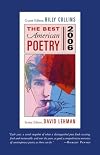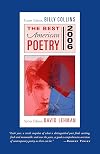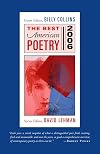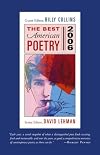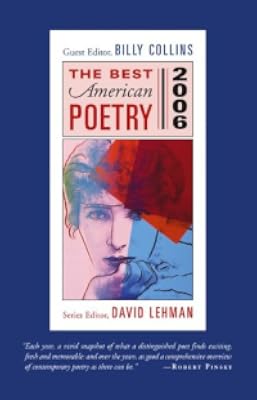
The Best American Poetry 2006
by Billy Collins (Editor), David Lehman (Editor), J. Allyn Rosser (Contributor)
The Best American Poetry (19)
On This Page
Description
Contains seventy-five poems by American poets, selected by the editor as the best of 2005, and includes a brief profile of each featured poet.Tags
Recommendations






Member Reviews
Why even read American lit journals when you can kick back with one of these each year? After reading 1,754 magazines, Billy Collins asks the same question but more sardonically, adding: “It’s enough to make you wish the NEA would award grants to poets for not writing.” There’s an aura of anger around Billy Collins. And an aura of boredom. In his introduction, Collins guesses that “83%” of published poetry “is not worth reading.” I’m a fan of honest criticism, but I can’t help feeling his stance is an arrogant one. It’s a bit like saying 83% of people are not worth meeting. It rather depends on who is doing the meeting, doesn't it? And as Collins himself points out, every editor of the series likes a different show more 17%.
Blanket statements like “most poetry sucks” don't exactly help a weary reader. As soon a reviewer steps outside the poem discussed, it becomes invective not literary criticism. Such venting quickly becomes as useless as the bad poetry one is venting about. After all, how many books of any genre does one ever love? In our life time only a handful books will have a significant impact on us. This is true for any reader of any subject. The real danger is sycophantic reviewing, not over-publishing. The worst you can level at over-publishing is that it kills trees, (which newspapers and Brazilian cattle ranchers are also guilty of.) But to suggest some poets shouldn't bother is simply mean spirited, and of little value critically. Why should people be dissuaded from the pleasure of not only trying to write a good poem, but attempting to share it? I am wary of arguments that begin with the assumption that almost all of the (fill-in-blank-here-of-whatever group-you-choose) should be cast into oblivion. It's a knee-jerk, reactionary, angry stance. And a potentially destructive one. However, one piece of critical advise Collins offers does stick in my mind. He writes “too many poems seemed oblivious to my presence and not the least interested in my participation as a reader. If you’re going to stop talking to me, then I’m going to stop listening.” Exactly. This strikes me as sound critical advise.
Collins both writes and likes poetry that can be swallowed whole. And while I’m more keen on Paul Muldoon’s 2005 effort with the same series, there are of course a number a poems here I really like. Here’s a perfect example of the kind of line Collins delights in: “Did you know that boiling to death / was once a common punishment / in England and parts of Europe?” This is from a poem titled “For my niece sidney, age six” by Amy Gerstler. Hardly a first line one is expecting from such a title. It’s a kind of shock and awe approach Collins is seeking, as if Collins neede to wake himself out of tedium. Another favourite of mine is “What I never told you about the Abortion” by Alison Townsend. An agonizingly heartbreaking piece where the speaker expounds (in non-rhyming couplets) on the effect such a decision had on her relationship with her partner. Again, it’s a jolt, and searing. “Prayer to Tear Down the Sperm-Dam Down,” another zinger (again in couplets) is almost psychotically charged. It's a beatitude-like sermonish romp exploring of the desire to procreate, to begin begetting in the face of an oblivion-inducing, indifferent universe. Religiously nihilistic, and joy to read. In too many of the poems, Collins’ partiality toward the easy speaking does not ignite the selection. As in many of Collins own poems, an engaging use of metaphor or wordplay isn't what carries the momentum of the selection, but the spark of unexpected, juxtaposed statements. This sort of tendency can be labeled “quirky,” but I think there’s a kind of protestant Puritanism at work here too that shuns embellishment and the ornate. Just the facts, ma’am. However, the “facts” in many of these poems paint at times a vertigo inducing poetic reality that reveals an unexpected world view. show less
Blanket statements like “most poetry sucks” don't exactly help a weary reader. As soon a reviewer steps outside the poem discussed, it becomes invective not literary criticism. Such venting quickly becomes as useless as the bad poetry one is venting about. After all, how many books of any genre does one ever love? In our life time only a handful books will have a significant impact on us. This is true for any reader of any subject. The real danger is sycophantic reviewing, not over-publishing. The worst you can level at over-publishing is that it kills trees, (which newspapers and Brazilian cattle ranchers are also guilty of.) But to suggest some poets shouldn't bother is simply mean spirited, and of little value critically. Why should people be dissuaded from the pleasure of not only trying to write a good poem, but attempting to share it? I am wary of arguments that begin with the assumption that almost all of the (fill-in-blank-here-of-whatever group-you-choose) should be cast into oblivion. It's a knee-jerk, reactionary, angry stance. And a potentially destructive one. However, one piece of critical advise Collins offers does stick in my mind. He writes “too many poems seemed oblivious to my presence and not the least interested in my participation as a reader. If you’re going to stop talking to me, then I’m going to stop listening.” Exactly. This strikes me as sound critical advise.
Collins both writes and likes poetry that can be swallowed whole. And while I’m more keen on Paul Muldoon’s 2005 effort with the same series, there are of course a number a poems here I really like. Here’s a perfect example of the kind of line Collins delights in: “Did you know that boiling to death / was once a common punishment / in England and parts of Europe?” This is from a poem titled “For my niece sidney, age six” by Amy Gerstler. Hardly a first line one is expecting from such a title. It’s a kind of shock and awe approach Collins is seeking, as if Collins neede to wake himself out of tedium. Another favourite of mine is “What I never told you about the Abortion” by Alison Townsend. An agonizingly heartbreaking piece where the speaker expounds (in non-rhyming couplets) on the effect such a decision had on her relationship with her partner. Again, it’s a jolt, and searing. “Prayer to Tear Down the Sperm-Dam Down,” another zinger (again in couplets) is almost psychotically charged. It's a beatitude-like sermonish romp exploring of the desire to procreate, to begin begetting in the face of an oblivion-inducing, indifferent universe. Religiously nihilistic, and joy to read. In too many of the poems, Collins’ partiality toward the easy speaking does not ignite the selection. As in many of Collins own poems, an engaging use of metaphor or wordplay isn't what carries the momentum of the selection, but the spark of unexpected, juxtaposed statements. This sort of tendency can be labeled “quirky,” but I think there’s a kind of protestant Puritanism at work here too that shuns embellishment and the ornate. Just the facts, ma’am. However, the “facts” in many of these poems paint at times a vertigo inducing poetic reality that reveals an unexpected world view. show less
Surely this was not the best American poetry of 2006! There were a few that stood out. "Religion" by Robert Wrigley about a mysterious shoe brought home by an old dog was a favorite and stimulated much discussion at bookclub. Why does the narrator have so many one-legged friends? Also "Gratification" by Susan Wood: "Now the sun is going down in flames like a ship on fire, but slowly, listing a little to the left. Don't worry, everyone on board gets off. That's the best part. Everyone is saved." And, "Monsieur Pierre est mort," about the fate of a beleagured French teacher's pet rock. Most of the poems, however, read more like essays on overvisited themes than poetry that catches you by the heart and demands that you stay awhile and show more return often. show less
Surely this was not the best American poetry of 2006! There were a few that stood out. "Religion" by Robert Wrigley about a mysterious shoe brought home by an old dog was a favorite and stimulated much discussion at bookclub. Why does the narrator have so many one-legged friends? Also "Gratification" by Susan Wood: "Now the sun is going down in flames like a ship on fire, but slowly, listing a little to the left. Don't worry, everyone on board gets off. That's the best part. Everyone is saved." And, "Monsieur Pierre est mort," about the fate of a beleagured French teacher's pet rock. Most of the poems, however, read more like essays on overvisited themes than poetry that catches you by the heart and demands that you stay awhile and show more return often. show less
It's incredible what passes for poetry now. "Prose poetry" has become an excuse to write like you speak and absolves the writer from having any unique insights or profound observation. If that is an unfair assessment of prose poetry then perhaps it is my own fault for not having made adequate effort at finding the good stuff. Perhaps 2006 was a bad year, but my suspicion is that poetry, prose or narrative or whatever, has been dumbed down by the 20 year old morons that infest the MFA programs in this country.
Even so, there are maybe three gems in here. You've gotta mine and dig and wash and skip, but you may find a couple with some depth and worth a few re-reads.
Most of these "poems" (that's right, quotation marks) are lame, kitschy, show more not clunky, not at all clunky, which is great, but that's not enough, there has to be something more, not just clever commas, to let us know, how clever, you think you are, by separating your sentences, just so. (See what I did there?)
Two stars for the few good ones. Instead of this, just read Keats again. show less
Even so, there are maybe three gems in here. You've gotta mine and dig and wash and skip, but you may find a couple with some depth and worth a few re-reads.
Most of these "poems" (that's right, quotation marks) are lame, kitschy, show more not clunky, not at all clunky, which is great, but that's not enough, there has to be something more, not just clever commas, to let us know, how clever, you think you are, by separating your sentences, just so. (See what I did there?)
Two stars for the few good ones. Instead of this, just read Keats again. show less
I enjoyed the poetry....but....it's one of those books where everything was good, but nothing truly jumped me by surprise and stayed with me. I assume some of the poems will do that for somebody, but this was a one-time read that I enjoyed for the most part, but probably won't go back to at any point.
Ratings
Members
- Recently Added By
Lists

Wishlist
71 works; 1 member
Author Information

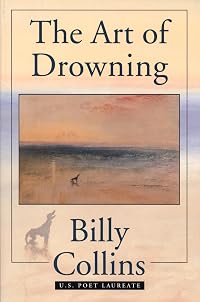
Billy Collins has published six collections of poetry, including Questions About Angels and The Art of Drowning, Picnic, Lightning, his latest, sold more than 25,000 copies in its first year. He teaches at Lehman College of the City University of New York and at Sarah Lawrence College. He was named U.S. Poet Laureate in June 2000. (Bowker Author show more Biography) Billy Collins was born in New York City in 1941. He earned a BA from the College of the Holy Cross, and both an MA and PhD from the University of California-Riverside. Collins conducted summer poetry workshops at University College Galway and is the Poet in Residence at Burren College of Art in Ireland. He is also a professor of English at Lehman College (CUNY). In 1992, Collins was chosen to be the Literary Lion of the New York Public Library. He was named U.S. Poet Laureate in 2001 and held the title until 2003. Collins then served as Poet Laureate for the State of New York from 2004 until 2006. His poetry has appeared in anthologies, textbooks and periodicals including Poetry, The American Poetry Review, The American scholar, Harper's, The Paris Review and The New Yorker. He is the author of six books of poetry including "The Art of Drowning." His poems have also been selected to appear in The Best American Poetry of 1992, 1993 and 1997. His works have won various awards including the Bess Hokin Prize, the Frederick Bock Prize, the Oscar Blumenthal Prize and the Levinson Prize, all awarded by Poetry. He has received fellowships from the New York Foundation for the Arts, the National Endowment for the Arts and the Guggenheim Foundation. His collection of poems entitled Aimless Love made numerous best-seller lists in 2013. (Bowker Author Biography) show less

David Lehman's books include One Hundred Autobiographies: A Memoir and Playlist: A Poem. He is the editor of The Oxford Book of American Poetry and series editor of The Best American Poetry. He has written nonfiction books about the New York School of poets, classic American popular songs, Frank Sinatra, and mystery novels, among other subjects.
J. Allyn Rosser is the author of three previous poetry collections: Foiled Again, Misery Prefigured, and Bright Moves. She is the recipient of numerous awards, most recently the New Criterion Poetry Prize and fellowships from the Guggenheim and Lannan Foundations. Rosser is associate professor of English at Ohio University and is editor in chief show more of New Ohio Review. show less
All Editions
Series

Common Knowledge
- Canonical title
- The Best American Poetry 2006
- Original publication date
- 2006
Classifications
- Genres
- Poetry, Fiction and Literature
- DDC/MDS
- 811.008 — Literature & rhetoric American literature in English American poetry Specific kinds of poetry {only by more than one author} Modified standard subdivisions Collections of literary texts
- LCC
- PS584 — Language and Literature American literature American literature Collections of American literature Poetry
- BISAC
Statistics
- Members
- 200
- Popularity
- 163,670
- Reviews
- 5
- Rating
- (3.60)
- Languages
- English
- Media
- Paper, Ebook
- ISBNs
- 3
- ASINs
- 2