On This Page
Description
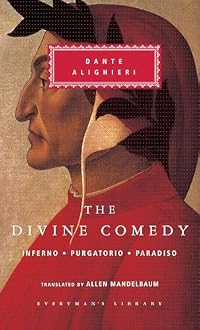
"Dante's theme is universal. ... The story is an allegory representing the soul's journey from spiritual depths to spiritual heights. As mankind exposes itself, by its merits or demerits, to the rewards or the punishments of justice, it experiences 'Inferno' or hell, 'Purgatorio' or purgatory, and 'Paradiso' or heaven, a vision of a world of beauty, light, and song"--container.Tags
Recommendations








Member Recommendations

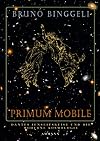
vreeland Bruno Binggeli verbindet Dantes Grosses Werk mit der modernen Astrophysik und macht sich in und mit der Lektüre der Göttlichen Komödie und den darin enthaltenen mittelalterlichen Jenseitsvorstellungen auf die Suche nach dem "Big Bang" - dem Urknall. Paradies und Superraum, Gnadenwahl und Quantenphysik, Hölle und Schwarze Löcher: Mittelalter und Moderne passen sehr viel besser zusammen als man glaubt. Binggeli ist Physiker und Galaxienforscher an der Universität Basel; die wissenschaftliche Akribie, mit der er die Göttliche Komödie mit aktuellen Forschungsergebnissen in Relation bringt, schafft für beide Seiten reizvolle neue Perspektiven und Ansätze des Verstehens.
13
Member Reviews
"Когда-то я в годину зрелых летВ дремучий лес зашел и заблудился…"– так начинается "Божественная комедия", бессмертная поэтическая трилогия, в которой Данте дерзко переосмыслил средневековую традицию "хождений" по загробному миру и религиозных "видений", и создал поистине уникальное произведение, в котором мистика сочетается с философией, а притча – с весьма ядовитым политическим памфлетом. Прошли show more века. Политическая злободневность "Божественной комедии" давно пропала, но остались и бессмертная красота языка Данте, и мощь его литературного таланта, и сила философской мысли, предвосхитившей духовные и нравственные искания гуманистических гениев Возрождения. show less
Dante’s famous The Divine Comedy lies at the intersection of art and theology. I love artful renditions of theology. Further, it is known as the best work of poetry ever to grace the language of Italian. Therefore, I decided to look for a good translation. I’ve enjoyed Longfellow’s poetry in the past, and when I saw that he undertook an adaptation, I chose to give it a go.
Unfortunately, Longfellow seemed to stick a little too close to the Latin roots of the original Italian. Many English words seemed to represent Latinized English rather than modern Anglo English. Dante wrote in the vernacular, not in Latin, the language of scholars. The result? This translation seems to consistently choose words that confuse the reader more than show more convey to her/him the spirit of Dante’s language. The artfulness of Dante’s original is maintained, especially in consistent alliterations. However, entirely gone is Dante’s appeal to the people.
The vivid, memorable scenes of the Inferno are lost in Longfellow’s poetic sophistication. Having read widely in history, I’m quite used to archaic writing. This work, however, takes archaisms to a new standard. Entire sentences are rendered in a Victorian manner that is based on classical languages instead of common English. The result deludes rather than enlightens. Again, this was not Dante’s intent.
Yes, Longfellow was a professor of Italian at Harvard. Yes, he is an acclaimed poet, one of the best that America has ever produced. This work does not bring the best outcome from his skill. He appeals to a highbrow readership whose style was more in vogue during his century. It’s out of touch with modern sentiment, and it’s out of touch with Dante’s appeal to the masses. Dante may guide us from Hades through purgatory and into paradise; unfortunately, Longfellow’s ethereal language does not convey the beauty of the original, and as such he leaves us in the hell of ignorance instead of the heavenly bliss of true knowledge.
If you want to experience Dante’s beautiful imagery, try another translation. There exist plenty that do the trick. Longfellow’s translation requires a nearby dictionary and plenty of stamina. show less
Unfortunately, Longfellow seemed to stick a little too close to the Latin roots of the original Italian. Many English words seemed to represent Latinized English rather than modern Anglo English. Dante wrote in the vernacular, not in Latin, the language of scholars. The result? This translation seems to consistently choose words that confuse the reader more than show more convey to her/him the spirit of Dante’s language. The artfulness of Dante’s original is maintained, especially in consistent alliterations. However, entirely gone is Dante’s appeal to the people.
The vivid, memorable scenes of the Inferno are lost in Longfellow’s poetic sophistication. Having read widely in history, I’m quite used to archaic writing. This work, however, takes archaisms to a new standard. Entire sentences are rendered in a Victorian manner that is based on classical languages instead of common English. The result deludes rather than enlightens. Again, this was not Dante’s intent.
Yes, Longfellow was a professor of Italian at Harvard. Yes, he is an acclaimed poet, one of the best that America has ever produced. This work does not bring the best outcome from his skill. He appeals to a highbrow readership whose style was more in vogue during his century. It’s out of touch with modern sentiment, and it’s out of touch with Dante’s appeal to the masses. Dante may guide us from Hades through purgatory and into paradise; unfortunately, Longfellow’s ethereal language does not convey the beauty of the original, and as such he leaves us in the hell of ignorance instead of the heavenly bliss of true knowledge.
If you want to experience Dante’s beautiful imagery, try another translation. There exist plenty that do the trick. Longfellow’s translation requires a nearby dictionary and plenty of stamina. show less
I've been lost in the forest before. The worst that has ever happened to me was a bit of confusion and a late supper.
When Dante got lost ...
"Midway upon the journey of our life
I found myself within a forest dark,
For the straightforward pathway had been lost.
Ah me! how hard a thing it is to say
What was this forest savage, rough, and stern,
Which in the very thought renews the fear."
(Inferno, I:1-6)
Instead of making it home for dinner, he took an epic journey through hell, purgatory, and heaven. He begins in fear, he ends in love:
"The Love which moves the sun and the other stars" (Paradiso, XXXIII:145).
I've been meaning to read this classic for years. When I saw Barnes & Noble's beautiful leather-bound edition, I couldn't resist.
Reading it show more was a challenge. It's not every day you read a Nineteenth century English translation of a Fourteenth Century Italian text in verse! With the help of a dictionary app and SparkNotes, I fell into the rhythm of the poem and began to understand it. Reading the text aloud (even muttering the cadence under my breath) helped immensely.
I'm not qualified to comment on the literary merit of this classic, or the translation. I'll keep my comments to theological issues.
*** Go to Hell! ***
Dante wrote his masterpiece in exile. He found himself on the wrong side of political power and was banished from his home in Florence on trumped-up charges (xi).
The Germans have a word, schadenfreude, which refers to the joy taken at someone else's misfortune. It's not a very flattering quality, but one Dante seems to enjoy. When he arrived in the sixth circle of hell, he wandered around tombs that held heretics who were tortured.
"Upon a sudden issued forth this sound
From out one of the tombs; wherefore I pressed,
Fearing, a little nearer to my Leader.
And unto me he said: "Turn thee; what dost thou?
Behold there Farinata who has risen;
From the waist upwards wholly shalt thous see him."
(Inferno X:28-33)
The character from the crypt was none other than Farinata, his real life political enemy. What do you do with a political enemy from earth? Stick him in your literary hell! This is where an annotated text is very helpful (unless you're up-to-date with the people of Fourteenth Century Florence).
Unfortunately, Dante's pattern for dealing with some of his enemies has been followed many times in church history. Instead of doing the hard work of loving your enemy, it's easier to just demonize him.
*** Highway to Hell ***
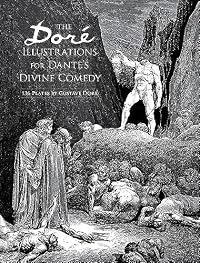
My edition of The Divine Comedy is filled with illustrations from Gustave Doré. These illustrations taught me something: hell is far more exciting and interesting than heaven. Inferno is far more frequently and graphically illustrated than Paradiso.
This attitude—the idea that heaven is boring and hell is exciting—is still around. Perhaps AC/DC popularized it the best:
"Ain't nothin' that I'd rather do
Goin' down
Party time
My friends are gonna be there too
I'm on the highway to hell"
Dante's hell is full of all sorts of interesting (if sadistic) tortures. Some people are burned alive, some turn into trees whose limbs are pecked at by Harpies, some are boiled alive in a river of blood, some are shat upon. Literally. Poop falls from the sky. I'm sure a psychiatrist would have a field day with Dante!
If you squint, you can read this torture as divine justice in the light of God's holiness. Realistically, it's another sad example of schadenfreude. Someone needs to go back in time and give him a copy of VanBalthasar's Dare We Hope?
*** Disembodied Heaven & the Impassable Deity ***
I always knew that I disagreed with Dante's view of hell. I was surprised by how much I disagreed with his heaven—and his Trinity!
Dante's God is an Aristotelian construct mediated by Aquinas:
"O grace abundant, by which I presumed
To fix my sight upon the Light Eternal,
So that the seeing I consumed therein!
...
Substance, and accident, and their operations,
All infused together in such wise
That what I speak of is one simple light.
...
Withing the deep and luminous substance
Of the High Light appeared to me three circles,
Of threefold color and of one dimension,"
(Paradiso XXXIII:82-84, 88-90, 115-117)
God, for Dante, is an immovable point of perfect light. Three circles symbolize the Trinity, with three different coloured lights. All manifold colours emanate from this point. The heavenly spheres (the planets), all rotate around this point as do the various levels of heavenly worshipers. There is nothing to do in heaven but to be consumed in contemplation.
That sounds spiritual, but it's nowhere near biblical. Biblical metaphors include a throne with a blood-stained lamb. Biblical metaphors speak of a river with trees of life lining the banks. Dante's God is a philosophical idea. I'll stick with the Holy One of Israel who breathed his breath into this dust and called it good.
Dante's Divine Comedy is a challenging and interesting work to read. Just don't confuse literature with theology. show less
When Dante got lost ...
"Midway upon the journey of our life
I found myself within a forest dark,
For the straightforward pathway had been lost.
Ah me! how hard a thing it is to say
What was this forest savage, rough, and stern,
Which in the very thought renews the fear."
(Inferno, I:1-6)
Instead of making it home for dinner, he took an epic journey through hell, purgatory, and heaven. He begins in fear, he ends in love:
"The Love which moves the sun and the other stars" (Paradiso, XXXIII:145).
I've been meaning to read this classic for years. When I saw Barnes & Noble's beautiful leather-bound edition, I couldn't resist.
Reading it show more was a challenge. It's not every day you read a Nineteenth century English translation of a Fourteenth Century Italian text in verse! With the help of a dictionary app and SparkNotes, I fell into the rhythm of the poem and began to understand it. Reading the text aloud (even muttering the cadence under my breath) helped immensely.
I'm not qualified to comment on the literary merit of this classic, or the translation. I'll keep my comments to theological issues.
*** Go to Hell! ***
Dante wrote his masterpiece in exile. He found himself on the wrong side of political power and was banished from his home in Florence on trumped-up charges (xi).
The Germans have a word, schadenfreude, which refers to the joy taken at someone else's misfortune. It's not a very flattering quality, but one Dante seems to enjoy. When he arrived in the sixth circle of hell, he wandered around tombs that held heretics who were tortured.
"Upon a sudden issued forth this sound
From out one of the tombs; wherefore I pressed,
Fearing, a little nearer to my Leader.
And unto me he said: "Turn thee; what dost thou?
Behold there Farinata who has risen;
From the waist upwards wholly shalt thous see him."
(Inferno X:28-33)
The character from the crypt was none other than Farinata, his real life political enemy. What do you do with a political enemy from earth? Stick him in your literary hell! This is where an annotated text is very helpful (unless you're up-to-date with the people of Fourteenth Century Florence).
Unfortunately, Dante's pattern for dealing with some of his enemies has been followed many times in church history. Instead of doing the hard work of loving your enemy, it's easier to just demonize him.
*** Highway to Hell ***
My edition of The Divine Comedy is filled with illustrations from Gustave Doré. These illustrations taught me something: hell is far more exciting and interesting than heaven. Inferno is far more frequently and graphically illustrated than Paradiso.
This attitude—the idea that heaven is boring and hell is exciting—is still around. Perhaps AC/DC popularized it the best:
"Ain't nothin' that I'd rather do
Goin' down
Party time
My friends are gonna be there too
I'm on the highway to hell"
Dante's hell is full of all sorts of interesting (if sadistic) tortures. Some people are burned alive, some turn into trees whose limbs are pecked at by Harpies, some are boiled alive in a river of blood, some are shat upon. Literally. Poop falls from the sky. I'm sure a psychiatrist would have a field day with Dante!
If you squint, you can read this torture as divine justice in the light of God's holiness. Realistically, it's another sad example of schadenfreude. Someone needs to go back in time and give him a copy of VanBalthasar's Dare We Hope?
*** Disembodied Heaven & the Impassable Deity ***
I always knew that I disagreed with Dante's view of hell. I was surprised by how much I disagreed with his heaven—and his Trinity!
Dante's God is an Aristotelian construct mediated by Aquinas:
"O grace abundant, by which I presumed
To fix my sight upon the Light Eternal,
So that the seeing I consumed therein!
...
Substance, and accident, and their operations,
All infused together in such wise
That what I speak of is one simple light.
...
Withing the deep and luminous substance
Of the High Light appeared to me three circles,
Of threefold color and of one dimension,"
(Paradiso XXXIII:82-84, 88-90, 115-117)
God, for Dante, is an immovable point of perfect light. Three circles symbolize the Trinity, with three different coloured lights. All manifold colours emanate from this point. The heavenly spheres (the planets), all rotate around this point as do the various levels of heavenly worshipers. There is nothing to do in heaven but to be consumed in contemplation.
That sounds spiritual, but it's nowhere near biblical. Biblical metaphors include a throne with a blood-stained lamb. Biblical metaphors speak of a river with trees of life lining the banks. Dante's God is a philosophical idea. I'll stick with the Holy One of Israel who breathed his breath into this dust and called it good.
Dante's Divine Comedy is a challenging and interesting work to read. Just don't confuse literature with theology. show less
How do you even begin to wrap your head around this work, let alone rate it? Being my first read through of all three canticles i can only lie back in awe, near breathless and more or less stupefied. Dante's achievement is at once a glorification of the divine and a passionate portrayal of the artist's desires and abilities. A lament and a celebration of what can be done and what can't even be approached, Dante uses the testaments, the psalms, the biblical literature entire along with the events of his current italy as a backdrop and a stage for the soul of the artist and the mortal man to suffer, rise, and grasp the fundamentals of his world, external and internal.
Many props and accolades to John Ciardi's incredible translation of the show more three canticles. While inevitably much was lost in the work's translation from italian to english, i can't help but feel that ciardi (with his superb notes and annotations) was able to depict the lion's share of the supreme power of the poem.
In short, not enough can be said to this work's benefit, go, READ IT. It's a time sink but so well worth it. show less
Many props and accolades to John Ciardi's incredible translation of the show more three canticles. While inevitably much was lost in the work's translation from italian to english, i can't help but feel that ciardi (with his superb notes and annotations) was able to depict the lion's share of the supreme power of the poem.
In short, not enough can be said to this work's benefit, go, READ IT. It's a time sink but so well worth it. show less
One of the absolute summits of western (arguably, world) literature.
The general outline is well-enough known: Dante has a vision (on Easter weekend, 1300) in which he visits Hell, Purgatory, and Heaven. (The vision frame is external to the poem itself; the Dante inside the poem is the dreamer from the very beginning.) He is guided through the first two realms (well, all of Hell and most of Purgatory) by Virgil, and through the rest of Purgatory and all of Heaven by Beatrice, the focus of his early work La Vita Nuova. He begins in a dark wood, "selva oscura" and ends with the beatific vision of the union of the Christian Trinity and the Aristotelian unmoved mover: "l'amor che move il sole e l'altre stelle".
On its way he maintains a show more multi-level allegory, fills it with an encyclopaedia of his day's science, history, and theology, carries out an extended argument regarding the (sad) politics of his day and of his beloved Florence, from which he was an exile, and does so in verse which stays at high level of virtuosity throughout. It's the sort of thing that writers like Alanus de Insulis tried in a less ambitious way and failed (well, failed by comparison: who except specialists reads the De Planctu Naturae these days?).
There is no equivalent achievement, and very few at the same level. This would get six stars if they were available. show less
The general outline is well-enough known: Dante has a vision (on Easter weekend, 1300) in which he visits Hell, Purgatory, and Heaven. (The vision frame is external to the poem itself; the Dante inside the poem is the dreamer from the very beginning.) He is guided through the first two realms (well, all of Hell and most of Purgatory) by Virgil, and through the rest of Purgatory and all of Heaven by Beatrice, the focus of his early work La Vita Nuova. He begins in a dark wood, "selva oscura" and ends with the beatific vision of the union of the Christian Trinity and the Aristotelian unmoved mover: "l'amor che move il sole e l'altre stelle".
On its way he maintains a show more multi-level allegory, fills it with an encyclopaedia of his day's science, history, and theology, carries out an extended argument regarding the (sad) politics of his day and of his beloved Florence, from which he was an exile, and does so in verse which stays at high level of virtuosity throughout. It's the sort of thing that writers like Alanus de Insulis tried in a less ambitious way and failed (well, failed by comparison: who except specialists reads the De Planctu Naturae these days?).
There is no equivalent achievement, and very few at the same level. This would get six stars if they were available. show less
I find this among the most amazing works I've ever read--despite that the work is essentially Christian Allegory and I'm an atheist. First and foremost for its structure. Recently I read Moby Dick and though it had powerful passages I found it self-indulgent and bloated and devoutly wished an editor had taken a hatchet to the numerous digressions. There is no such thing as digressions in Dante. I don't think I've ever read a more carefully crafted work. We visit three realms in three Canticas (Hell, Purgatory and Heaven) each of 33 cantos and in a terza rima verse in a triple rhyme scheme. Nothing is incidental or left to chance here. That's not where the structure ends either. Hell has nine levels, Purgatory has seven terraces on its show more mountain and Heaven nine celestial spheres (so, yes, there is a Seventh Heaven!) All in all, this is an imaginary landscape worthy of Tolkien or Pratchett, both in large ways and small details. I found it fitting how Dante tied both sins and virtues to love--a sin was love misdirected or applied, and the lower you go in hell, the less love there is involved, until at the lowest reaches you find Satan and traitors encased in a lake of ice. Then there are all the striking phrases, plays of ideas and gorgeous imagery that comes through despite translations. This might be Christian Allegory, but unlike say John Bunyan's Pilgrim's Progress it's far from dry or tedious and is full of real life contemporaries of Dante and historical figures. There are also Dante's guides here. His Virgil is wonderful--and the perfect choice. The great Latin poet of the Aeneid leading the great Italian poet who made his Tuscan dialect the standard with his poetry. Well, guide through Hell and Purgatory until he changes places with Beatrice. Which reminds me of that old joke--Heaven for the climate--Hell for the company.
And certainly Hell is what stays most vividly in my mind. I remember still loving the Purgatorio--it's the most human and relatable somehow of the poems and Paradise has its beauties. But I remember the people of Hell best. There's Virgil of course, who must remain in limbo for eternity because he wasn't a Christian. There's Francesca di Rimini and her lover, for their adultery forever condemned to be flung about in an eternal wind so that even Dante pities them. And that, of course, is the flip side of this. Dante's poem embodies the orthodox Roman Catholic Christianity of the 1300s and might give even Christians today pause. Even though I don't count myself a Christian, I get the appeal of hell. In fact, I can remember exactly when I understood it. When once upon a time I felt betrayed, and knew there was no recourse. The person involved would never get their comeuppance upon this Earth. How nice I thought, if there really was a God and a Hell to redress the balance. The virtue of any Hell therefore is justice. These are the words Dante tells us are at hell's entrance.
THROUGH ME THE WAY INTO THE SUFFERING CITY,
THROUGH ME THE WAY TO THE ETERNAL PAIN,
THROUGH ME THE WAY THAT RUNS AMONG THE LOST.
JUSTICE URGED ON MY HIGH ARTIFICER;
MY MAKER WAS DIVINE AUTHORITY,
THE HIGHEST WISDOM, AND THE PRIMAL LOVE.
BEFORE ME NOTHING BUT ETERNAL THINGS
WERE MADE, AND I ENDURE ETERNALLY.
ABANDON EVERY HOPE, WHO ENTER HERE.
It's hard to see Dante's vision matching the orthodox doctrine as just however, even when I might agree a particular transgression deserves punishment. Never mind the virtuous and good in limbo because they weren't Christians or unbaptized or in hell because they committed suicide or were homosexual. And poor Cassio and Brutus, condemned to the lowest circle because they conspired to kill a tyrant who was destroying their republic. My biggest problem with hell is that it is eternal. Take all the worst tyrants who murdered millions, make them suffer not only the length of the lifetimes of their victims but all the years they might have had, I doubt if you add it up it comes to the age of the Earth--never mind eternity. Justice taken to extremes is not justice--it's vindictiveness and sadism. Something impossible for me to equate with "the primal love."
Yet I loved this work so much upon my first read (I read the Dorothy Sayers translation) I went out and bought two other versions. One by Allen Mandelbaum (primarily because it was a dual language book with the Italian on one page facing the English translation) and a hardcover version translated by Charles Eliot Norton. Finally, before writing up my review and inspired by Matthew Pearl's The Dante Club, I got reacquainted by finding Longfellow's translation online. Of all of them, I greatly prefer Mandelbaum's translation. The others try to keep the rhyming and rhythm of the original and this means a sometimes tortured syntax and use of archaic words and the result is forced and often obscure, making the work much harder to read than it should be. show less
And certainly Hell is what stays most vividly in my mind. I remember still loving the Purgatorio--it's the most human and relatable somehow of the poems and Paradise has its beauties. But I remember the people of Hell best. There's Virgil of course, who must remain in limbo for eternity because he wasn't a Christian. There's Francesca di Rimini and her lover, for their adultery forever condemned to be flung about in an eternal wind so that even Dante pities them. And that, of course, is the flip side of this. Dante's poem embodies the orthodox Roman Catholic Christianity of the 1300s and might give even Christians today pause. Even though I don't count myself a Christian, I get the appeal of hell. In fact, I can remember exactly when I understood it. When once upon a time I felt betrayed, and knew there was no recourse. The person involved would never get their comeuppance upon this Earth. How nice I thought, if there really was a God and a Hell to redress the balance. The virtue of any Hell therefore is justice. These are the words Dante tells us are at hell's entrance.
THROUGH ME THE WAY INTO THE SUFFERING CITY,
THROUGH ME THE WAY TO THE ETERNAL PAIN,
THROUGH ME THE WAY THAT RUNS AMONG THE LOST.
JUSTICE URGED ON MY HIGH ARTIFICER;
MY MAKER WAS DIVINE AUTHORITY,
THE HIGHEST WISDOM, AND THE PRIMAL LOVE.
BEFORE ME NOTHING BUT ETERNAL THINGS
WERE MADE, AND I ENDURE ETERNALLY.
ABANDON EVERY HOPE, WHO ENTER HERE.
It's hard to see Dante's vision matching the orthodox doctrine as just however, even when I might agree a particular transgression deserves punishment. Never mind the virtuous and good in limbo because they weren't Christians or unbaptized or in hell because they committed suicide or were homosexual. And poor Cassio and Brutus, condemned to the lowest circle because they conspired to kill a tyrant who was destroying their republic. My biggest problem with hell is that it is eternal. Take all the worst tyrants who murdered millions, make them suffer not only the length of the lifetimes of their victims but all the years they might have had, I doubt if you add it up it comes to the age of the Earth--never mind eternity. Justice taken to extremes is not justice--it's vindictiveness and sadism. Something impossible for me to equate with "the primal love."
Yet I loved this work so much upon my first read (I read the Dorothy Sayers translation) I went out and bought two other versions. One by Allen Mandelbaum (primarily because it was a dual language book with the Italian on one page facing the English translation) and a hardcover version translated by Charles Eliot Norton. Finally, before writing up my review and inspired by Matthew Pearl's The Dante Club, I got reacquainted by finding Longfellow's translation online. Of all of them, I greatly prefer Mandelbaum's translation. The others try to keep the rhyming and rhythm of the original and this means a sometimes tortured syntax and use of archaic words and the result is forced and often obscure, making the work much harder to read than it should be. show less
Okay, I only read the Inferno, but I really enjoyed the translation by John Ciardi--both as poetry and (with his comprehensive notes) as commentary. I looked around at various editions to get a sense of how the verse was handled and ended up buying this complete ebook version for the iPad. I thought Ciardi handled the rhyming pattern and meter really well (basically employing an ABA BAB scheme). It's impossible to use Dante's AAA rhyme scheme in English, but Ciardi's simple pattern seemed like a good adaptation. Also Ciardi's language is closer to what I think the author intended (albeit for our era and language), as Dante wrote in Italian when almost all scholarly works and serious poetry would have been written in Italian.
I'm glad I show more finally read this, both for getting to understand the source from which so many of our ideas about hell came, and for getting some of the interesting historical tidbits, which usually had to be explained in the notes. But being able to read an engaging translation made this a surprisingly enjoyable tour of hell, instead of the slog I'd feared.
Even though I skipped over Purgatory and Paradise, I'd recommend this Ciardi translation for whatever circle of the afterlife you're planning on visiting. But if you ask me, go straight to hell. show less
I'm glad I show more finally read this, both for getting to understand the source from which so many of our ideas about hell came, and for getting some of the interesting historical tidbits, which usually had to be explained in the notes. But being able to read an engaging translation made this a surprisingly enjoyable tour of hell, instead of the slog I'd feared.
Even though I skipped over Purgatory and Paradise, I'd recommend this Ciardi translation for whatever circle of the afterlife you're planning on visiting. But if you ask me, go straight to hell. show less
Members
- Recently Added By
Lists

Classics you know you should have read but probably haven't
421 works; 407 members

Rory Gilmore Challenge 101-200
33 works; 1 member

Christian Classics (Old and Modern)
53 works; 3 members

My List
302 works; 1 member

Book Titles Mentioned In Newberry Medal And Honor Books
884 works; 3 members

Western Canon
24 works; 1 member

Books We'd Want on a Desert Island
203 works; 131 members

New Lifetime Reading Plan by Fadiman and Major
225 works; 5 members

AP Lit
363 works; 6 members

Books Referenced by Izetbegovic's Islam Between East and West
233 works; 2 members
1
1 work; 1 member

Books and authors mentioned by Le Clézio in his Nobel Prize speech
87 works; 3 members

Greatest Books, allegedly
484 works; 9 members
Western Canon
206 works; 2 members
Out of Copyright
244 works; 14 members

Will Durant's 100 Books: An Update
46 works; 4 members

Books Read in 2022
5,164 works; 113 members

Ten books that most shaped your view of history
91 works; 12 members

Fake Top 100 Fiction
81 works; 4 members

readingList
38 works; 1 member

BitLife
212 works; 4 members
How to Read a Book's Recommended Reading List
309 works; 10 members

.
194 works; 2 members

In Our Time books
4,934 works; 2 members

Para comprar
5 works; 1 member

100
15 works; 1 member
el
1,139 works; 1 member
.
396 works; 1 member

Reading LIst
648 works; 1 member

𓐩hought Daughter ♱♰✟✞✝︎☨†˚₊‧꒰ა ♱ ໒꒱ ‧
38 works; 1 member
The Complete Rory Gilmore Reading List
506 works; 5 members
important
24 works; 1 member
Favorite Books in Translation
320 works; 133 members

Gen X Library
245 works; 4 members
Books in The Club Dumas
72 works; 1 member

Books Read in 2024
4,623 works; 126 members
Books with ribbon marks
3 works; 1 member

Recommended Reading : 600 Classics Reviewed, Editors of Salem Press, 2015
634 works; 6 members

Books Read in 2020
4,379 works; 124 members

current
52 works; 1 member
My 100 Favorite Books of All Time
57 works; 2 members

The Art of Manliness' 100+ Books Every Man Should Read
108 works; 2 members

Favourite Medieval Books
49 works; 17 members
1001 Books You Must Read Before You Die
1,448 works; 1,132 members

Books Read in 2016
4,666 works; 199 members

Western World's Greatest Books - Project Gutenberg
295 works; 15 members

SantaThing 2014 Gifts
299 works; 17 members

Books You Couldn't Finish
202 works; 32 members

Church Times 100 Best Christian Books
106 works; 26 members

Ten Books That Have Stayed With Me
160 works; 29 members

Books that changed the world
67 works; 64 members
100 Books to Read in a Lifetime (That Are Older Than 200 Years)
415 works; 175 members

Top Five Books of 2016
795 works; 228 members

Italian Literature
556 works; 41 members

The Top Ten: Writers Pick Their Favorite Books
240 works; 30 members

Philip Ward's Lifetime Reading Plan
592 works; 22 members
Newsweek's Top 100 Books: The Meta-List
100 works; 18 members
Epic Fiction
42 works; 12 members
Favourite Books
1,817 works; 308 members

Best Books Involving Satan
63 works; 24 members

Unread books
1,063 works; 84 members

Trinity College Booklist (1951): Class Nine, Foreign Literatures
161 works; 3 members

Leseliste
21 works; 1 member

Rory Gilmore Book Club
193 works; 5 members

The Road to Freedom (Will Durant's 100 Best Books for an Education)
100 works; 8 members
Literature Before the 17th Century
20 works; 5 members
A Reading List
100 works; 3 members

real people in fiction circumstances
74 works; 10 members
The 100 Best Books of All Time by Norwegian Book Club (World Library)
104 works; 21 members

50 Tough Books for Extreme Readers
71 works; 39 members

Books Read in 2002
195 works; 8 members
1964 College Preparatory Reading List
202 works; 8 members
Literature which inspired Pop songs
85 works; 9 members
Mensa for Kids Excellence in Reading Award Program (Grades 9-12)
116 works; 3 members
Edad Media
33 works; 1 member

Books available on Open Library
171 works; 4 members
Overdue Podcast
800 works; 9 members

Europe
205 works; 6 members

Books Featured on Gilmore Girls
307 works; 21 members

99 Bücher, die man gelesen haben muss
37 works; 1 member
Mensa for Kids Excellence in Reading Award Program (Grades 9-12)
116 works; 4 members
Daria Morgendorffer's Bookshelf
70 works; 5 members

Top 100 to Read before you Die
109 works; 7 members

Lectuurlijst
63 works; 1 member
Talk Discussions
Past Discussions
LE: Dante's The Divine Comedy in Folio Society Devotees (July 2023)
Opinions on older translations of The Divine Comedy? in Book talk (April 2022)
Henry Boyd's translation of Dante's Divine Comedy. in Book talk (February 2022)
Divine Comedy in Folio Society Devotees (September 2021)
Best Translation of The Divine Comedy? in Geeks who love the Classics (December 2010)
Dante's Divine Comedy in 1001 Books to read before you die (November 2008)
Author Information

Some Editions
Awards and Honors
Awards
Distinctions
Notable Lists
Series

The Divine Comedy (Collections and Selections — 1-3)
Belongs to Publisher Series
Gouden Reeks (3)
dtv Klassik (2107)
Perpetua reeks (11)
Biblioteka Narodowa (Seria II Nr 187)
Dwarsliggers (31)
Letras Universales (100)
Harvard Classics (20)
Fischer Bücherei (100)
L&PM Pocket (344)
La nostra biblioteca Edipem (15-25-51)
Els Nostres Clàssics, Col·lecció A (106-107, 112, 116, 120, 124)
Modern Library (208)
insel taschenbuch (0094)
Everyman's Library (308)
A tot vent (388)
Work Relationships
Is contained in
Contains
Has the adaptation
Is abridged in
Inspired
Has as a reference guide/companion
Has as a study
Has as a commentary on the text
Has as a student's study guide
Common Knowledge
- Canonical title
- The Divine Comedy
- Original title
- La Divina Commedia
- Alternate titles
- Divine Commedy
- Original publication date
- 1308 - 1320
- People/Characters
- Dante Alighieri; Virgil; Beatrice; The Poet; Beatrice Portinari; Bernard of Clairvaux (show all 13); The Pilgrim; Virgin Mary; Achilles; Homer; Francis of Assisi; Angels; Thomas Aquinas
- Important places
- Hell; Florence, Italy; Heaven; Rome, Italy; Florence, Tuscany, Italy; Assissi, Italy (show all 8); Purgatory; Italy
- Important events
- Holy Week; 14th century; Middle Ages
- Related movies
- A Divina Comédia (1991 | Manoel de Oliveira | IMDb); Dante: The Divine Comedy (2002 | IMDb)
- First words
- [Mandelbaum translation]
When I had journeyed half of our life's way, - Quotations
- Abandon all hope, ye who enter here.
Across the paper, close before the flame, /
We see a kind of coloured darkness go, /
Not black yet, but the white dies just the same.
And then Donatus, who once set his hand /
To grammar, the first art, so we might climb /
From verbal chaos and thus understand /
Expressive form.
As a good guitarist will bring in / The notes of trembling strings to make more true / The singer's melody, whereby the song / Grows sweeter still - Last words
- (Click to show. Warning: May contain spoilers.)[Mandelbaum translation]
the Love that moves the sun and the other stars. - Blurbers
- Kenner, Hugh; Peyre, Henri; Fagles, Robert
- Original language
- Italian
- Canonical DDC/MDS
- 851.15
Classifications
- Genres
- Poetry, Fiction and Literature
- DDC/MDS
- 851.15 — Literature & rhetoric Italian, Romanian & related literatures Italian poetry Early Italian; Age of Dante –1375 Alighieri, Dante 1265–1321
- LCC
- PQ4315 .C5 — Language and Literature French, Italian, Spanish and Portuguese literatures Italian literature Individual authors and works to 1400
- BISAC
Statistics
- Members
- 26,291
- Popularity
- 165
- Reviews
- 221
- Rating
- (4.12)
- Languages
- 37 — Arabic, Bulgarian, Catalan, Chinese, Czech, Danish, Dutch, English, Esperanto, Finnish, French, German, Galician, Greek, Hebrew, Hungarian, Italian, Japanese, Korean, Latin, Multiple languages, Norwegian (Nynorsk), Norwegian (Bokmål), Norwegian, Polish, Romanian, Russian, Serbian, Scots, Croatian, Slovenian, Spanish, Swedish, Turkish, Ukrainian, Portuguese (Portugal), Portuguese (Brazil)
- Media
- Paper, Audiobook, Ebook
- ISBNs
- 1,102
- UPCs
- 4
- ASINs
- 667