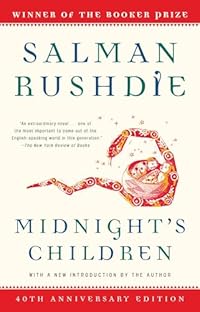
Midnight's Children
by Salman Rushdie
On This Page
Description
Salman Rushdie holds the literary world in awe with a jaw-dropping catalog of critically acclaimed novels that have made him one of the world's most celebrated authors. Winner of the prestigious Booker of Bookers, Midnight's Children tells the story of Saleem Sinai, born on the stroke of India's independence.Tags
Recommendations

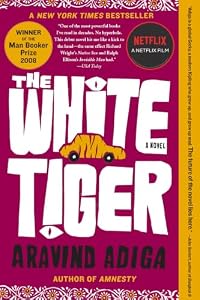
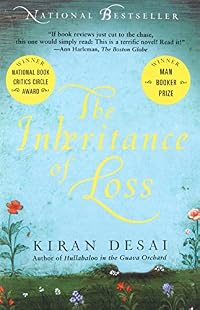
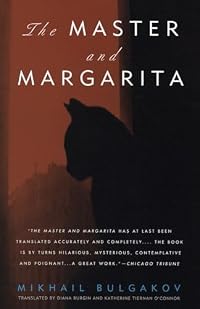
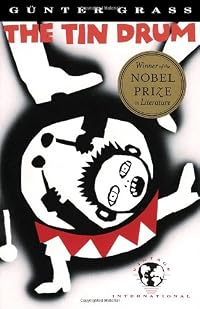
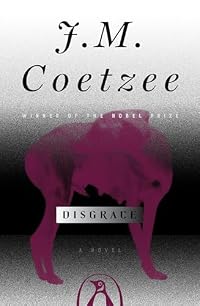
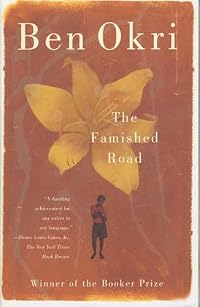
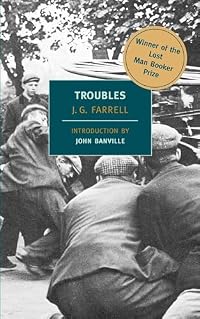




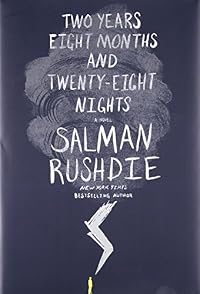
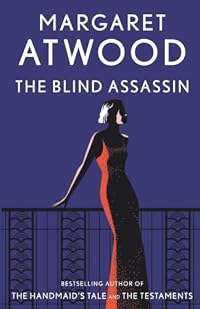

Member Recommendations
GabrielF I think Rushdie based a lot of his style in Midnight's Children on The Tin Drum. Both books are historical epics told through the perspective of a child with strange powers.
CGlanovsky A boy bound to the destiny of his birthplace. Surreal elements.
81
wrmjr66 I think The Moor's Last Sigh is Rushdie's best book since Midnight's Children.
21
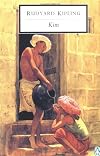
Gregorio_Roth The book is a modern interpretation of KIM in a number of ways. I think it will complete your point of view on Imperialism and India.
Member Reviews
Saleem Sinai is born at the very stroke of midnight on the first day of India’s Independence from British rule. But he is only one of 1,000 other children born in the first hour of India’s freedom. And all of the children are gifted with supernatural powers, Saleem with a telepathic power to connect with and channel each of his brothers and sisters of freedom. Saleem’s life, his family’s history, and the lives of [Midnight’s Children] mirror the turbulent story of India.
I would never have ever picked up a Salman Rushdie book if not for the 100 best lists that I have been reading through over the years. Rushdie is such a polarizing figure, with a jihadist bounty on his head for offending an Ayatollah, he grinds through wives show more and women and is always ready to comment on anything to anyone. For example, the top search result for him just this minute is the following quote:
The world is full of things that upset people. But most of us deal with it and move on and don’t try and burn the planet down. There is no right in the world not to be offended. That right simply doesn’t exist. In a free society, an open society, people have strong opinions, and these opinions very often clash. In a democracy, we have to learn to deal with this.
Whether he offends you or not, and he’s offended many, Rushdie is a master and I’m glad I didn’t miss this book.
Told in a sort of rabbit-trail stream of consciousness, the narrative begins by telling Saleem’s family history first, beginning with his grandparents. Gazing at the past through a long lens in this way, Rushdie is able to ground his message of interconnectedness – who we are is a derivation of all our ancestral history and every event, no matter how insignificant, that plays a part in any life. Languid in its pace, the story never rushes to any conclusion or climax – our narrator, the hero of the story, is not even born until well after the first 100 pages of the book. Every detail of each character’s life and motivation is pondered on and explored. And the result is a rich, succulent epic that is never tiresome.
[Midnight’s Children] has been categorized as a magical realism story – one that blends the magical with the real. Whether that is an accurate characterization depends on your view of Saleem’s narrative, as he repeatedly admits to being an unreliable narrator. Is Saleem telling the truth about the powers of his compatriots and the mystical events that often plague him? Or is he processing the tragic and difficult history of his home with the fantastical to make it more palatable. Saleem would simply say, “It happened that way because that’s how it happened.”
Don’t be frightened by Rushdie’s polarizing personality. [Midnight’s Children] is a good old-fashioned story-telling. There are political and social implications to the story, but Rushdie doesn’t force an agenda, he just tells Saleem’s story. And don’t be put-off by the cultural milieu of this story. Unless you’re from India or are a scholar on Indian history, there will be much in the book that is strange and indecipherable. But the history and culture are not important; they are simply different colors or tastes in a familiar and common story.
Bottom Line: A rich epic of India, but also just a good-old fashioned well-told story, recognizable to anyone, anywhere.
5 bones!!!!!
A Favorite for the Year. show less
I would never have ever picked up a Salman Rushdie book if not for the 100 best lists that I have been reading through over the years. Rushdie is such a polarizing figure, with a jihadist bounty on his head for offending an Ayatollah, he grinds through wives show more and women and is always ready to comment on anything to anyone. For example, the top search result for him just this minute is the following quote:
The world is full of things that upset people. But most of us deal with it and move on and don’t try and burn the planet down. There is no right in the world not to be offended. That right simply doesn’t exist. In a free society, an open society, people have strong opinions, and these opinions very often clash. In a democracy, we have to learn to deal with this.
Whether he offends you or not, and he’s offended many, Rushdie is a master and I’m glad I didn’t miss this book.
Told in a sort of rabbit-trail stream of consciousness, the narrative begins by telling Saleem’s family history first, beginning with his grandparents. Gazing at the past through a long lens in this way, Rushdie is able to ground his message of interconnectedness – who we are is a derivation of all our ancestral history and every event, no matter how insignificant, that plays a part in any life. Languid in its pace, the story never rushes to any conclusion or climax – our narrator, the hero of the story, is not even born until well after the first 100 pages of the book. Every detail of each character’s life and motivation is pondered on and explored. And the result is a rich, succulent epic that is never tiresome.
[Midnight’s Children] has been categorized as a magical realism story – one that blends the magical with the real. Whether that is an accurate characterization depends on your view of Saleem’s narrative, as he repeatedly admits to being an unreliable narrator. Is Saleem telling the truth about the powers of his compatriots and the mystical events that often plague him? Or is he processing the tragic and difficult history of his home with the fantastical to make it more palatable. Saleem would simply say, “It happened that way because that’s how it happened.”
Don’t be frightened by Rushdie’s polarizing personality. [Midnight’s Children] is a good old-fashioned story-telling. There are political and social implications to the story, but Rushdie doesn’t force an agenda, he just tells Saleem’s story. And don’t be put-off by the cultural milieu of this story. Unless you’re from India or are a scholar on Indian history, there will be much in the book that is strange and indecipherable. But the history and culture are not important; they are simply different colors or tastes in a familiar and common story.
Bottom Line: A rich epic of India, but also just a good-old fashioned well-told story, recognizable to anyone, anywhere.
5 bones!!!!!
A Favorite for the Year. show less
Chutnification: the immortalization of a cucumber, or rather, a nose, into something indelibly Indian.
Just... wow.
This story of an inner-ear and nose follows through India's independence through the Emergency during Indra Ghandi, taking on mythological proportions. It is, first and foremost, a delightful, sensual, funny, detailed portrayal of a family saga that pretty much mirrors the trials and tribulations of India itself. Between the partition, Pakistan, the wars, the religions, the profundity of an India that cannot know itself.
To know one person in India, you must eat the world. You must eat it every time for every person.
But as if this wasn't enough to make a brilliant novel, and it certainly is deserving all the awards it ever show more got, it ALSO happens to be science fiction. Or is it? The thing is, all these Midnight Children born on the hour of India's rebirth (even if political), are all gifted with extraordinary powers.
Our main character, Saleem, when really young, had an ever-snotty nose, and while it was blocked, he could read minds. He was able to contact all the Midnight Children and connect them all. When he could breathe right, he had a preternaturally supreme sense of smell. Others could enter mirrors, change their sex at will, become werewolves. 512 children. All of them modern Hindu Gods. :)
But this book is full of tragedies as well as humor, full of profundity and silliness, anger and optimism, memory and forgetfulness. Just like India, the family is all things at all times and can never be pigeonholed.
I could easily write a few books on this book. It's just that rich. And delightful. I know enough of this part of the world that I didn't flounder that much, but more than that, I was struck by the smells this book evoked. :) I rather fell into the book and couldn't breathe until I finished.
Ah, it deserves all the praise. :) show less
Just... wow.
This story of an inner-ear and nose follows through India's independence through the Emergency during Indra Ghandi, taking on mythological proportions. It is, first and foremost, a delightful, sensual, funny, detailed portrayal of a family saga that pretty much mirrors the trials and tribulations of India itself. Between the partition, Pakistan, the wars, the religions, the profundity of an India that cannot know itself.
To know one person in India, you must eat the world. You must eat it every time for every person.
But as if this wasn't enough to make a brilliant novel, and it certainly is deserving all the awards it ever show more got, it ALSO happens to be science fiction. Or is it? The thing is, all these Midnight Children born on the hour of India's rebirth (even if political), are all gifted with extraordinary powers.
Our main character, Saleem, when really young, had an ever-snotty nose, and while it was blocked, he could read minds. He was able to contact all the Midnight Children and connect them all. When he could breathe right, he had a preternaturally supreme sense of smell. Others could enter mirrors, change their sex at will, become werewolves. 512 children. All of them modern Hindu Gods. :)
But this book is full of tragedies as well as humor, full of profundity and silliness, anger and optimism, memory and forgetfulness. Just like India, the family is all things at all times and can never be pigeonholed.
I could easily write a few books on this book. It's just that rich. And delightful. I know enough of this part of the world that I didn't flounder that much, but more than that, I was struck by the smells this book evoked. :) I rather fell into the book and couldn't breathe until I finished.
Ah, it deserves all the praise. :) show less
“Memory’s truth, because memory has its own special kind. It selects, eliminates, alters, exaggerates, minimizes, glorifies, and vilifies also; but in the end it creates its own reality, its heterogeneous but usually coherent versions of events; and no sane human being ever trusts someone else’s version more than his own.”
Born at the stroke of midnight at the exact moment of India's independence, Saleem Sinai, is a special child. However, this coincidence of birth has consequences he is isn't prepared for: telepathic powers connect him to 1,000 other 'midnight children' all of whom have unusual gifts.
‘Midnight’s Children’ is an epic novel that opens up with a child being born at midnight on 15th August, 1947 and is show more divided in to three parts, the novel begins with the story of Sinai’s family and the various events that lead to India’s independence and eventually to partition.
Rushdie is undoubtedly an extraordinary writer and 'Midnight’s Children' is a complex novel told by an unreliable, at times annoying, but fascinating narrator. It is a story in which reality meets myth, in which dreams turn into facts, in which countries live lives resembling closely those of human beings that inhabit them. A story that highlights the relation between father and son and a nation yet in its pubescent stage. Saleem's story is a family saga like no other, a whirlwind of disasters and triumphs that mirrors the course of modern India.
Finally, there is a very human dimension to this book. There are glimpses into souls of people living in India, Kashmir and Pakistan. There is rich and poor, powerful and helpless, loyalty and betrayal, love and heart break, and above all there is a little boy questioning his identity who grows into a man who loves his country but isn’t afraid to examine its issues.
Rushdie is without doubt a bold writer and I'm usually a big fan of historical fiction, so why didn't I enjoy it more. Firstly Rushie’s style of writing took some adjusting to, it took an awful lot of effort and concentration. Secondly, its humour whilst unique was so dark that it was at times really uncomfortable to read. But most importantly it felt self-indulgent at times, as if Rushdie was deliberately trying to confuse his reader. Rushdie sometimes seemed to go off on tangents, which partially contributed unnecessarily to the novel’s considerable length. show less
Born at the stroke of midnight at the exact moment of India's independence, Saleem Sinai, is a special child. However, this coincidence of birth has consequences he is isn't prepared for: telepathic powers connect him to 1,000 other 'midnight children' all of whom have unusual gifts.
‘Midnight’s Children’ is an epic novel that opens up with a child being born at midnight on 15th August, 1947 and is show more divided in to three parts, the novel begins with the story of Sinai’s family and the various events that lead to India’s independence and eventually to partition.
Rushdie is undoubtedly an extraordinary writer and 'Midnight’s Children' is a complex novel told by an unreliable, at times annoying, but fascinating narrator. It is a story in which reality meets myth, in which dreams turn into facts, in which countries live lives resembling closely those of human beings that inhabit them. A story that highlights the relation between father and son and a nation yet in its pubescent stage. Saleem's story is a family saga like no other, a whirlwind of disasters and triumphs that mirrors the course of modern India.
Finally, there is a very human dimension to this book. There are glimpses into souls of people living in India, Kashmir and Pakistan. There is rich and poor, powerful and helpless, loyalty and betrayal, love and heart break, and above all there is a little boy questioning his identity who grows into a man who loves his country but isn’t afraid to examine its issues.
Rushdie is without doubt a bold writer and I'm usually a big fan of historical fiction, so why didn't I enjoy it more. Firstly Rushie’s style of writing took some adjusting to, it took an awful lot of effort and concentration. Secondly, its humour whilst unique was so dark that it was at times really uncomfortable to read. But most importantly it felt self-indulgent at times, as if Rushdie was deliberately trying to confuse his reader. Rushdie sometimes seemed to go off on tangents, which partially contributed unnecessarily to the novel’s considerable length. show less
Midnight's Children is the story of the 1,001 children who were born in the midnight hour of India's independence. Through Saleem, who was born at the stroke of midnight, we learn that each of these children was endowed with unique gifts of varying degrees of usefulness. Saleem has the ability to read all the minds of the people of India, and in this way can make each of the children aware of him and each other.
But that's not the whole story. Saleem draws great significance from his midnight birth, believing it signifies that his life is tied to the fate of the country. He points out how the small, seemingly insignificant events of of his life have had great impact on his chosen country, often intoning that it is all his fault.
But show more that's not the story either. The story is about how his grandfather fell in love with a woman through a hole in a sheet, how his mother loved the man in the basement, how his father always reeked of failure, how Saleem loved a girl who loved his best friend. Midnight's Children is an epic and immense tale, drawing in the fate of an entire country, and yet is also an intimate and personal tale of a boy who expects too much of himself and all the people -- family, friends, enemies -- who surround him.
Rushdie is an amazing writer with a very poetic style, and he fills these pages with complex characters, full of goodness and ugliness and beauty and kindness and cruelty. He blends the supernatural and the surreal into the everyday, making it entirely believable.
I wanted to love this novel, but perhaps the scope is too large, perhaps there's just too much to take in. I wanted to love it, but I just couldn't quite. It couldn't be anything other than what it is. To try to remove the grand scope of the story the parallel of personal and political, it wouldn't have the same power and effect, and yet, however wonderful it was, I can only say that I liked it. show less
But that's not the whole story. Saleem draws great significance from his midnight birth, believing it signifies that his life is tied to the fate of the country. He points out how the small, seemingly insignificant events of of his life have had great impact on his chosen country, often intoning that it is all his fault.
But show more that's not the story either. The story is about how his grandfather fell in love with a woman through a hole in a sheet, how his mother loved the man in the basement, how his father always reeked of failure, how Saleem loved a girl who loved his best friend. Midnight's Children is an epic and immense tale, drawing in the fate of an entire country, and yet is also an intimate and personal tale of a boy who expects too much of himself and all the people -- family, friends, enemies -- who surround him.
Rushdie is an amazing writer with a very poetic style, and he fills these pages with complex characters, full of goodness and ugliness and beauty and kindness and cruelty. He blends the supernatural and the surreal into the everyday, making it entirely believable.
I wanted to love this novel, but perhaps the scope is too large, perhaps there's just too much to take in. I wanted to love it, but I just couldn't quite. It couldn't be anything other than what it is. To try to remove the grand scope of the story the parallel of personal and political, it wouldn't have the same power and effect, and yet, however wonderful it was, I can only say that I liked it. show less
What a masterpiece! I don't understand everything and the narrator is very unreliable (interesting that he keeps reminding us of this) but still, this is brilliant. Rushdie weaves the history of India, Pakistan, and Bangladesh into this tale of magical realism, which manages at the same time to explore loaded themes of greatness, identity, and ambition. Rushdie also writes in a way that makes you turn the pages; his writing is so whirlwind it just sucks you in. I love his titling of each chapter; the titling is succinct but perfectly describes the core of the chapter. Nevertheless, this is definitely not an easy read but it pays to persevere.
Today, 14 August 2022, is the 75th anniversary of Pakistan's independence, and tomorrow India will celebrate 75 years of its independence. Partition occurred at midnight between 14 and 15 August - the pivotal moment of this book. It's poignant that as I joined the local Pakistani-heritage community's celebrations today, and was thinking of this, probably Rushdie's second most famous book, he is recovering from being stabbed multiple times.
Prophesy and partition
“Nose and knees and knees and nose” – part of a prophecy about the unborn narrator. A few days after reading this, I was fortunate to be in the Acropolis Museum, and was struck by a collection of three bas-reliefs that were just of knees. Coupled with the relative lack of show more whole noses on some of the statues, I was transported back to this book.
This was my first adult Rushdie, following soon after his gorgeous children’s/YA novel, Haroun and the Sea of Stories.
My initial reaction to this was “The language is lush and sensuous, seasoned with a little wit. But I feel hampered by my vague knowledge of Indian history, culture and mythology”. I thought much same at the end, although I also realised it’s a powerful and entrancing book at any level.
“I am the sum total of everything that went before me… To understand me you’ll have to swallow the world.” But not just him, “To understand just one life, you have to swallow the world.”
What and for who(m)?
A knowledge of 20th century Indian history is clearly an advantage but, given the complexity and length of the story, it might be a slight distraction as well. Perhaps a timeline of key events would be a useful appendix.
In the preface, Rushdie observes that Indians treat it as historical fiction and westerners as fantasy. I think it’s a hybrid, with the mystical, magical, surreal aspects increasing towards the end. He also explains that many of the characters are based on family and childhood friends. He doesn't mention that the adult bedwetter shares a name with his own son! His son was an infant at the time of writing, so it may have reflected the frustrations of early parenthood, but I can't believe his son thanked him for it later. On the other hand, Haroun and the Sea of Stories, written a few years later, has a beautiful and heart-breaking to the same son.
It’s a curious, disorienting book that has passages of conventional narrative interspersed with rambling passages of history, allegory, philosophical reverie, and recaps and foreshadowing of plot. It’s worth keeping a few notes, as many characters change name and/or turn out not to be who you were first told they were.
Reading it was a strange sensation: it was so far removed from anything familiar to me that it could almost have been sci-fi (I know that sounds weird). I loved some of the language, and appreciated the craft of the author, but I could not quite love it in the way I wanted and expected to. Straight after this, I turned to Atwood’s The Blind Assassin, which is another long and multi-layered novel, but where the desire to read just a little bit more was a deeper compulsion, with no parallel sense of… worthiness (not the right word, but I’m not sure what is).
Rushdie delivered, but I fell short. The book deserves all its awards and a full 5*, but my own experience was 4*.
Plot
The plot is both simple and complex (duality and opposites are recurring themes).
Saleem (the narrator)’s mother visits a soothsayer when pregnant, and his bizarre and seemingly contradictory conundrums sum up events, including: the knees and nose (above), “two heads – but you shall see only one… cobra will creep… Washing will hide him – voices will guide him… Blood will betray him” mentions of doctors, spittoons, jungle, wizards and soldiers, ending “He will have sons without having sons! He will be old before he is old! And he will die. . . before he is dead!”
Saleem is born at midnight on the day India becomes independent, and raised in a wealthy Indian family. As a child, he becomes aware of a telepathic link to other Indian children born that night: Midnight’s Children, each of whom has at least one special power. “Thanks to the occult tyrannies of those blandly saluting clocks, I had been mystically handcuffed to history”.
The events he tells, from his grandparent’s meeting onwards, are many and varied, but with common themes, woven in to a kaleidoscopic story that stays just short of confusing.
Themes
Early on, the idea of something being revealed in fragments is introduced, and later, Saleem says “the ghostly echo of that perforated sheet… condemned me to see my own life – its meanings, its structures – in fragments also.” Midnight’s Children are fragmented across the country; Saleem is their only connection. Hence, it seems appropriate to conjure impressions of the book from its many disparate, but intertwined, themes. As for assembling all these fragments…? That’s where I feel I failed slightly.
• Fragments and holes, versus wholeness
When Dr Aadam Aziz (Saleem’s grandfather) found himself “unable to worship a god in whose existence he could not wholly disbelieve”, it “made a hole in him… leaving him vulnerable to women and history.” There are many mentions of that hole (and others): “Sometimes, through a trick of the light, Amina thought she saw, in the centre of her father’s body, a dark shadow like a hole.”
The original perforated sheet is used to examine a young female patient, seeing only what he needs to see. After many different ailments, he had a “badly-fitting collage of her severally-inspected parts” that filled up the hole inside him, even though he had never seen her face. It is sensitively and sensuously written.
Loving in fragments is harder, especially when the subject is “now unified and transmuted into a formidable figure”, but more than one character attempts it.
A descendant uses a different piece of perforated fabric to maintain modesty and anonymity while pursuing a singing career.
• Duality, pairs and opposites
There are so many instances and aspects of these concepts, that there is no need to list or expand on them. Perhaps the most significant are Saleem and his “destructive, violent alter-ego”, leading opposite lives, and The Widow (Mrs Gandhi) with her centre parting giving her a white side and black side.
• Snakes (and ladders), hence reversal
As prophesised, snakes are important, both real and imaginary. Cobra venom cures typhoid, and from Snakes and Ladders (“perfect balance of rewards and penalties”), Saleem has “an early awareness of the ambiguity of snakes” and encounters plenty of ups and downs. This is an area where knowledge of Indian mythology would help.
• Impotence
Biological and metaphorical impotence, permanent and temporary, affects several characters (quite apart from mention of high-pressure sterilisation campaigns), including the nation of India itself.
• Confused parentage, gaining parents
“Once again a child was to be born to a father who was not his father, although by a terrible irony the child would be the true grandchild of his father’s parents.”
Not everyone is the biological child of who they are thought to be, not just from illicit relationships, but also, in incident at the heart of the book, by the deliberate act of a third party. Furthermore, Saleem develops a habit of acquiring a string of fathers and father figures.
• Name-changing
Some characters are known by nicknames (Saleem’s grandmother is Reverend Mother and his sister The Brass Monkey), and others change their name – especially women, to have children (his grandmother, mother and wife). This probably resonates with Indian mythology and culture in ways I don’t know.
• Storytelling, truth, memory, reality, and free speech
“What’s real and what’s true are not necessarily the same.”
“Reality is a question of perspective; the further you get from the past, the more concrete and plausible it seems.” Just as a cinema screen looks real until you’re so close you can see the pixels.
“Memory’s truth… in the end it creates its own reality.”
“What actually happens is less important than what the author can manage to persuade his audience to believe.”
This was written years before the fatwa that sent Rushdie into hiding (and which is reflected in Haroun; see my review, linked at the top). However, a punishment in this is to “seal our lips”, like the "Sign of the Zipped Lips" in Haroun. One character here is voluntarily mute for three years, as a protest, and another is very late learning to speak.
• Magic
All the Midnight’s Children have a power. Saleem considers his telepathic and telegraphic skills to be the most powerful (“the ability to look into the hearts and minds of men”), with those born less close to midnight having progressively weaker skills. But others can become invisible, step in and out of mirrors, multiply fish, change sex at will, inflict physical pain with words, have perfect memory, heal, do alchemy, time travel, speak all languages, prophesy and more. Appropriately, the child of two Midnight’s Children is mute for three years, then his first word is Abracadabra.
There is also a little numerology: 420 = fraud, 1001 = magic, 555 = evil.
• Vanishing
Several characters disappear for a time, or permanently: oblivion via the Djinn bottle, magical invisibility, running away, death, and two who apparently have vitiligo.
• Time and preservation
The time of birth is key to Saleem’s life and self-appointed mission to rescue his country. He ends up (no spoiler – he says this early on) as a pickle-maker and a writer: “I spend my time at the great work of preserving. Memory, as well as fruit, is being saved from the corruption of the clocks.” This reminded me of one of the few other Indian books I’ve read, The God of Small Things, in which the family has a pickle factory.
• Smell and other senses
Saleem has a huge nose, and at different times has no sense of smell and a very powerful, magical one that can detect safety, danger, the “glutinous reek of hypocrisy” and “the fatalistic hopelessness of the slum dwellers and the smug defensiveness of the rich”. “The perfume of her sad hopefulness permeates her.”
Emotions can be transferred via sewing and cooking: “the curries and meatballs of intransigence… fish salans of stubbornness and the birianis of determination” and clothes “into whose seams she had sewn her old maid’s bile… the baby-things of bitterness, then the rompers of resentment… the starch of jealousy… our wardrobe was binding us into the webs of her revenge.”
• Blood
Blood was in the prophecy in a specific way, but it crops up in many other ways and there are a couple of paragraphs where Saleem rattles them off.
• Spittoon and Anglepoise
A silver spittoon inlaid with lapis lazuli is important, as are spittoons in general. I felt the cultural gap here.
Trivial (or maybe not), but within the first hundred pages, I’d noted at least three variants of “Anglepoised pool of light”. Having spotted it, it was almost more distracting to find only two more in the remaining 500+ pages.
I'm not the only person to have noticed:
Salman Rushdie and Translation:
"the Anglepoise lamp, a uniquely individualistic type of lighting which lights up only the small, restricted area of desk or writing materials in its scope. The phrase also seems to imply Anglophone or Anglophile literary writing alongside the notion of writing by lamplight."
Salman Rushdie: Critical Essays volume 1:
"The trope of the Anglepoise light... suggests the divided sensibility in Saleem, a child born in post-colonial India, not post-Independence India."
And the moral is...?
I’m not sure there is one. The subject is raised obliquely a few times, but somehow feels lacking. I’m puzzled that I wrote that: I don’t seek out morality tales, but as I compile this review, I realise this felt like the sort of book that had, or ought to have, such a thread, and yet I lost it in the rich tapestry.
The Midnight Children “found it easy to be brilliant, [but] we were always confused about being good”, just as Saleem used his powers to cheat in class in an attempt to gain parental approval.
Another gap was precisely WHY Mary Pereira does the thing she does. A reason is given, but it doesn’t really make sense to me, and the implications and effects are so huge, I wanted to understand. Related to that, why did those who found out, not try to investigate and find?
“For what reason you’re rich and I’m poor?”
Quotes
• “His face was a sculpture of wind and water: ripples made of hide.”
• “Most of what happens in our lives happens in our absence.”
• “Even in his moments of triumph, there hung the stink of future failure.”
• “Poverty eats away at the tarmac like a drought, where people live their invisible lives.”
• “He had eyes like road-drills, hard and full of ratatat.”
• “An apartment of such supernatural untidiness.”
• “Blurred the edges of himself by drink.”
• "I have become, it seems to me, the apex of an isosceles triangle, supported equally by twin deities, the wild god of memory and the lotus-goddess of the present... but must I now be reconciled to the narrow one-dimensionality of a straight line?"
• “Uncreated lives rotting in her womb.”
• “We could hear the creaks and groans of a rustling, decayed imagination.”
• Army recruits “were so young, and had not had time to acquire the type of memories which give men a firm hold on reality.”
• When invisible, “I hung in a sphere of absence”.
• “A girl who followed him with eyes moistened with accusation.”
• “The widow’s finest, most delicate joke: instead of torturing us, she gave us hope. Which meant she had something… to take away.”
• “Soft, amorous susurrations, like the couplings of velvet mice.”
• “The quinquesyllabic monotony of the wheels.”
• Apparently, Lady Mountbatten “ate chicken breasts secretly behind a locked lavatory door.” It is strange if true, and even stranger to mention it.
There were also a few multi-tense strings, which were quite effective in context: “we were are shall be the gods you never had” and he ”will be is already more cautious.” show less
Prophesy and partition
“Nose and knees and knees and nose” – part of a prophecy about the unborn narrator. A few days after reading this, I was fortunate to be in the Acropolis Museum, and was struck by a collection of three bas-reliefs that were just of knees. Coupled with the relative lack of show more whole noses on some of the statues, I was transported back to this book.
This was my first adult Rushdie, following soon after his gorgeous children’s/YA novel, Haroun and the Sea of Stories.
My initial reaction to this was “The language is lush and sensuous, seasoned with a little wit. But I feel hampered by my vague knowledge of Indian history, culture and mythology”. I thought much same at the end, although I also realised it’s a powerful and entrancing book at any level.
“I am the sum total of everything that went before me… To understand me you’ll have to swallow the world.” But not just him, “To understand just one life, you have to swallow the world.”
What and for who(m)?
A knowledge of 20th century Indian history is clearly an advantage but, given the complexity and length of the story, it might be a slight distraction as well. Perhaps a timeline of key events would be a useful appendix.
In the preface, Rushdie observes that Indians treat it as historical fiction and westerners as fantasy. I think it’s a hybrid, with the mystical, magical, surreal aspects increasing towards the end. He also explains that many of the characters are based on family and childhood friends. He doesn't mention that the adult bedwetter shares a name with his own son! His son was an infant at the time of writing, so it may have reflected the frustrations of early parenthood, but I can't believe his son thanked him for it later. On the other hand, Haroun and the Sea of Stories, written a few years later, has a beautiful and heart-breaking to the same son.
It’s a curious, disorienting book that has passages of conventional narrative interspersed with rambling passages of history, allegory, philosophical reverie, and recaps and foreshadowing of plot. It’s worth keeping a few notes, as many characters change name and/or turn out not to be who you were first told they were.
Reading it was a strange sensation: it was so far removed from anything familiar to me that it could almost have been sci-fi (I know that sounds weird). I loved some of the language, and appreciated the craft of the author, but I could not quite love it in the way I wanted and expected to. Straight after this, I turned to Atwood’s The Blind Assassin, which is another long and multi-layered novel, but where the desire to read just a little bit more was a deeper compulsion, with no parallel sense of… worthiness (not the right word, but I’m not sure what is).
Rushdie delivered, but I fell short. The book deserves all its awards and a full 5*, but my own experience was 4*.
Plot
The plot is both simple and complex (duality and opposites are recurring themes).
Saleem (the narrator)’s mother visits a soothsayer when pregnant, and his bizarre and seemingly contradictory conundrums sum up events, including: the knees and nose (above), “two heads – but you shall see only one… cobra will creep… Washing will hide him – voices will guide him… Blood will betray him” mentions of doctors, spittoons, jungle, wizards and soldiers, ending “He will have sons without having sons! He will be old before he is old! And he will die. . . before he is dead!”
Saleem is born at midnight on the day India becomes independent, and raised in a wealthy Indian family. As a child, he becomes aware of a telepathic link to other Indian children born that night: Midnight’s Children, each of whom has at least one special power. “Thanks to the occult tyrannies of those blandly saluting clocks, I had been mystically handcuffed to history”.
The events he tells, from his grandparent’s meeting onwards, are many and varied, but with common themes, woven in to a kaleidoscopic story that stays just short of confusing.
Themes
Early on, the idea of something being revealed in fragments is introduced, and later, Saleem says “the ghostly echo of that perforated sheet… condemned me to see my own life – its meanings, its structures – in fragments also.” Midnight’s Children are fragmented across the country; Saleem is their only connection. Hence, it seems appropriate to conjure impressions of the book from its many disparate, but intertwined, themes. As for assembling all these fragments…? That’s where I feel I failed slightly.
• Fragments and holes, versus wholeness
When Dr Aadam Aziz (Saleem’s grandfather) found himself “unable to worship a god in whose existence he could not wholly disbelieve”, it “made a hole in him… leaving him vulnerable to women and history.” There are many mentions of that hole (and others): “Sometimes, through a trick of the light, Amina thought she saw, in the centre of her father’s body, a dark shadow like a hole.”
The original perforated sheet is used to examine a young female patient, seeing only what he needs to see. After many different ailments, he had a “badly-fitting collage of her severally-inspected parts” that filled up the hole inside him, even though he had never seen her face. It is sensitively and sensuously written.
Loving in fragments is harder, especially when the subject is “now unified and transmuted into a formidable figure”, but more than one character attempts it.
A descendant uses a different piece of perforated fabric to maintain modesty and anonymity while pursuing a singing career.
• Duality, pairs and opposites
There are so many instances and aspects of these concepts, that there is no need to list or expand on them. Perhaps the most significant are Saleem and his “destructive, violent alter-ego”, leading opposite lives, and The Widow (Mrs Gandhi) with her centre parting giving her a white side and black side.
• Snakes (and ladders), hence reversal
As prophesised, snakes are important, both real and imaginary. Cobra venom cures typhoid, and from Snakes and Ladders (“perfect balance of rewards and penalties”), Saleem has “an early awareness of the ambiguity of snakes” and encounters plenty of ups and downs. This is an area where knowledge of Indian mythology would help.
• Impotence
Biological and metaphorical impotence, permanent and temporary, affects several characters (quite apart from mention of high-pressure sterilisation campaigns), including the nation of India itself.
• Confused parentage, gaining parents
“Once again a child was to be born to a father who was not his father, although by a terrible irony the child would be the true grandchild of his father’s parents.”
Not everyone is the biological child of who they are thought to be, not just from illicit relationships, but also, in incident at the heart of the book, by the deliberate act of a third party. Furthermore, Saleem develops a habit of acquiring a string of fathers and father figures.
• Name-changing
Some characters are known by nicknames (Saleem’s grandmother is Reverend Mother and his sister The Brass Monkey), and others change their name – especially women, to have children (his grandmother, mother and wife). This probably resonates with Indian mythology and culture in ways I don’t know.
• Storytelling, truth, memory, reality, and free speech
“What’s real and what’s true are not necessarily the same.”
“Reality is a question of perspective; the further you get from the past, the more concrete and plausible it seems.” Just as a cinema screen looks real until you’re so close you can see the pixels.
“Memory’s truth… in the end it creates its own reality.”
“What actually happens is less important than what the author can manage to persuade his audience to believe.”
This was written years before the fatwa that sent Rushdie into hiding (and which is reflected in Haroun; see my review, linked at the top). However, a punishment in this is to “seal our lips”, like the "Sign of the Zipped Lips" in Haroun. One character here is voluntarily mute for three years, as a protest, and another is very late learning to speak.
• Magic
All the Midnight’s Children have a power. Saleem considers his telepathic and telegraphic skills to be the most powerful (“the ability to look into the hearts and minds of men”), with those born less close to midnight having progressively weaker skills. But others can become invisible, step in and out of mirrors, multiply fish, change sex at will, inflict physical pain with words, have perfect memory, heal, do alchemy, time travel, speak all languages, prophesy and more. Appropriately, the child of two Midnight’s Children is mute for three years, then his first word is Abracadabra.
There is also a little numerology: 420 = fraud, 1001 = magic, 555 = evil.
• Vanishing
Several characters disappear for a time, or permanently: oblivion via the Djinn bottle, magical invisibility, running away, death, and two who apparently have vitiligo.
• Time and preservation
The time of birth is key to Saleem’s life and self-appointed mission to rescue his country. He ends up (no spoiler – he says this early on) as a pickle-maker and a writer: “I spend my time at the great work of preserving. Memory, as well as fruit, is being saved from the corruption of the clocks.” This reminded me of one of the few other Indian books I’ve read, The God of Small Things, in which the family has a pickle factory.
• Smell and other senses
Saleem has a huge nose, and at different times has no sense of smell and a very powerful, magical one that can detect safety, danger, the “glutinous reek of hypocrisy” and “the fatalistic hopelessness of the slum dwellers and the smug defensiveness of the rich”. “The perfume of her sad hopefulness permeates her.”
Emotions can be transferred via sewing and cooking: “the curries and meatballs of intransigence… fish salans of stubbornness and the birianis of determination” and clothes “into whose seams she had sewn her old maid’s bile… the baby-things of bitterness, then the rompers of resentment… the starch of jealousy… our wardrobe was binding us into the webs of her revenge.”
• Blood
Blood was in the prophecy in a specific way, but it crops up in many other ways and there are a couple of paragraphs where Saleem rattles them off.
• Spittoon and Anglepoise
A silver spittoon inlaid with lapis lazuli is important, as are spittoons in general. I felt the cultural gap here.
Trivial (or maybe not), but within the first hundred pages, I’d noted at least three variants of “Anglepoised pool of light”. Having spotted it, it was almost more distracting to find only two more in the remaining 500+ pages.
I'm not the only person to have noticed:
Salman Rushdie and Translation:
"the Anglepoise lamp, a uniquely individualistic type of lighting which lights up only the small, restricted area of desk or writing materials in its scope. The phrase also seems to imply Anglophone or Anglophile literary writing alongside the notion of writing by lamplight."
Salman Rushdie: Critical Essays volume 1:
"The trope of the Anglepoise light... suggests the divided sensibility in Saleem, a child born in post-colonial India, not post-Independence India."
And the moral is...?
I’m not sure there is one. The subject is raised obliquely a few times, but somehow feels lacking. I’m puzzled that I wrote that: I don’t seek out morality tales, but as I compile this review, I realise this felt like the sort of book that had, or ought to have, such a thread, and yet I lost it in the rich tapestry.
The Midnight Children “found it easy to be brilliant, [but] we were always confused about being good”, just as Saleem used his powers to cheat in class in an attempt to gain parental approval.
Another gap was precisely WHY Mary Pereira does the thing she does. A reason is given, but it doesn’t really make sense to me, and the implications and effects are so huge, I wanted to understand. Related to that, why did those who found out, not try to investigate and find?
“For what reason you’re rich and I’m poor?”
Quotes
• “His face was a sculpture of wind and water: ripples made of hide.”
• “Most of what happens in our lives happens in our absence.”
• “Even in his moments of triumph, there hung the stink of future failure.”
• “Poverty eats away at the tarmac like a drought, where people live their invisible lives.”
• “He had eyes like road-drills, hard and full of ratatat.”
• “An apartment of such supernatural untidiness.”
• “Blurred the edges of himself by drink.”
• "I have become, it seems to me, the apex of an isosceles triangle, supported equally by twin deities, the wild god of memory and the lotus-goddess of the present... but must I now be reconciled to the narrow one-dimensionality of a straight line?"
• “Uncreated lives rotting in her womb.”
• “We could hear the creaks and groans of a rustling, decayed imagination.”
• Army recruits “were so young, and had not had time to acquire the type of memories which give men a firm hold on reality.”
• When invisible, “I hung in a sphere of absence”.
• “A girl who followed him with eyes moistened with accusation.”
• “The widow’s finest, most delicate joke: instead of torturing us, she gave us hope. Which meant she had something… to take away.”
• “Soft, amorous susurrations, like the couplings of velvet mice.”
• “The quinquesyllabic monotony of the wheels.”
• Apparently, Lady Mountbatten “ate chicken breasts secretly behind a locked lavatory door.” It is strange if true, and even stranger to mention it.
There were also a few multi-tense strings, which were quite effective in context: “we were are shall be the gods you never had” and he ”will be is already more cautious.” show less
whoa. Slow, tough reading. It's a heavily affected prose that constantly circles back and forward, and you have to keep track of both to understand the sentences. I just had trouble processing this prose. I had to slow down, and I found it mentally wearing.
The book, as designed, is a history of India through Saleem Sinai - a boy born to a nonreligious Muslim family at midnight, the exact moment of India's independence, of August 15, 1947 - about the time Rushdie himself was born. (Pakistan had declared independence a day earlier). Elements of the style reflect 1001 Nights ... I think (I haven't read it). And the novel is flush with references to Indian and Hindu mythologies. But everything is undermined. Everything Saleem is gets show more turned upside down, foundational carpets pulled out, with nothing to replace them. Everything we learn about who he is becomes meaningless. Everything he becomes has no purpose. We go through language demonstrations, wars with Pakistan, the division of Pakistan, and the Emergency pushed through by Indira Ghandi as an effort to stay in power in the 1970's. India established itself as a civil democracy, independent of religion, but a chaotic one. Citizens could not criticize the government during the Emergency. Pakistan, meanwhile, was established as an Islamic nation and was rife with cultural restrictions, military coups, and government lies. Well, that's Saleem's sense.
Saleem is India, but also Saleem is one boy caught in history. He is only 31 when he tells us this story. But his tone is full of the nostalgia and regret you expect from an old man. Saleem, like Rushdie, is a child of privileged Bombay. (Mumbai had never existed at publication) His senses are filled with the cultural mélange and insanity of this multicultural city. During the language riots, Bombay was fought over politically by citizens of different language-groups attempting to pull the city in different directions. Saleem will experience different parts of Pakistan, Bangladesh and the slums of Delhi. None of these experiences will inspire anything positive, except that charming erratic chaos of Bombay.
The language. Like the novel, the language seems to undermine itself. It has an absurd aspect. It's typically called magical realism, but it didn't have any magic feel to me of any kind. It just felt extreme, out there, on the sentence level. Forced humor, disgusting humor, effectively forced and disgusting. It works. It circles. It's dizzying and exhausting.
This is the book that put Rushdie on the map. It was his second novel. Good reviews allowed him to quit his regular job to write full time. It would win the Booker Prize award, a selection that would come to define that award. It's widely considered the best Booker. And it had a wide impact. Indira Ghandi sued him. (He was sued for one line. He was not sued for deeply criticizing her unethical policies, actions, and maneuvers. The line in question playfully suggested her neglect of her husband had caused his death - the sentiment in-line with the book's tone of attitude over reality, but not really one a reader would take very seriously. Well, maybe they would. Anyway, he agreed to take the line out!)
As much I admire and admired this book, it was a tough read. I was really engaged through large parts of the middle. But not in the beginning, and not at the end. It was slow, and was work. And my emotions weren't in. You know how we tend to say, I'm glad I read it. I've need time to say that. I am actually glad I read it. It's rich in meaning and complexity and what it covers. I learned a about Indian history and mythology. I didn't know so much of modern India was Muslim. I didn't know how repressive Indira Ghandi's government was. And I didn't know anything about Hindu mythology. It's a book that is great fun to think back on. There is a lot here. The mixture of cultures, and history, and the way it's done is refreshing. Rushdie's choice to undermine everything he says makes for tough reading, but it also makes an interesting and creative commentary of life, history, politics and, of course, India.
Read at your own risk. 🙂
2025
https://www.librarything.com/topic/369129#8880210 show less
The book, as designed, is a history of India through Saleem Sinai - a boy born to a nonreligious Muslim family at midnight, the exact moment of India's independence, of August 15, 1947 - about the time Rushdie himself was born. (Pakistan had declared independence a day earlier). Elements of the style reflect 1001 Nights ... I think (I haven't read it). And the novel is flush with references to Indian and Hindu mythologies. But everything is undermined. Everything Saleem is gets show more turned upside down, foundational carpets pulled out, with nothing to replace them. Everything we learn about who he is becomes meaningless. Everything he becomes has no purpose. We go through language demonstrations, wars with Pakistan, the division of Pakistan, and the Emergency pushed through by Indira Ghandi as an effort to stay in power in the 1970's. India established itself as a civil democracy, independent of religion, but a chaotic one. Citizens could not criticize the government during the Emergency. Pakistan, meanwhile, was established as an Islamic nation and was rife with cultural restrictions, military coups, and government lies. Well, that's Saleem's sense.
Saleem is India, but also Saleem is one boy caught in history. He is only 31 when he tells us this story. But his tone is full of the nostalgia and regret you expect from an old man. Saleem, like Rushdie, is a child of privileged Bombay. (Mumbai had never existed at publication) His senses are filled with the cultural mélange and insanity of this multicultural city. During the language riots, Bombay was fought over politically by citizens of different language-groups attempting to pull the city in different directions. Saleem will experience different parts of Pakistan, Bangladesh and the slums of Delhi. None of these experiences will inspire anything positive, except that charming erratic chaos of Bombay.
The language. Like the novel, the language seems to undermine itself. It has an absurd aspect. It's typically called magical realism, but it didn't have any magic feel to me of any kind. It just felt extreme, out there, on the sentence level. Forced humor, disgusting humor, effectively forced and disgusting. It works. It circles. It's dizzying and exhausting.
This is the book that put Rushdie on the map. It was his second novel. Good reviews allowed him to quit his regular job to write full time. It would win the Booker Prize award, a selection that would come to define that award. It's widely considered the best Booker. And it had a wide impact. Indira Ghandi sued him. (He was sued for one line. He was not sued for deeply criticizing her unethical policies, actions, and maneuvers. The line in question playfully suggested her neglect of her husband had caused his death - the sentiment in-line with the book's tone of attitude over reality, but not really one a reader would take very seriously. Well, maybe they would. Anyway, he agreed to take the line out!)
As much I admire and admired this book, it was a tough read. I was really engaged through large parts of the middle. But not in the beginning, and not at the end. It was slow, and was work. And my emotions weren't in. You know how we tend to say, I'm glad I read it. I've need time to say that. I am actually glad I read it. It's rich in meaning and complexity and what it covers. I learned a about Indian history and mythology. I didn't know so much of modern India was Muslim. I didn't know how repressive Indira Ghandi's government was. And I didn't know anything about Hindu mythology. It's a book that is great fun to think back on. There is a lot here. The mixture of cultures, and history, and the way it's done is refreshing. Rushdie's choice to undermine everything he says makes for tough reading, but it also makes an interesting and creative commentary of life, history, politics and, of course, India.
Read at your own risk. 🙂
2025
https://www.librarything.com/topic/369129#8880210 show less
Members
- Recently Added By
Published Reviews
ThingScore 100
Midnight's Children is a teeming fable of postcolonial India, told in magical-realist fashion by a telepathic hero born at the stroke of midnight on the day the country became independent. First published in 1981, it was met with little immediate excitement.
added by mikeg2
Lists

1001 Books You Must Read Before You Die
1,448 works; 1,132 members

The Guardian's 1000 Novels Everyone Must Read
1,005 works; 546 members

Classics you know you should have read but probably haven't
421 works; 407 members

Best Contemporary Literary Fiction (Around the Last 30 Years)
388 works; 124 members
BBC Big Read
191 works; 46 members

Radcliffe's 100 Best Novel of the 20th Century
100 works; 32 members
Le Monde - Les 100 livres du siècle
121 works; 25 members

Best of World Literature
431 works; 51 members

Magic Realism
371 works; 51 members
20th Century Literature
1,161 works; 55 members

Favorite Long Books
330 works; 42 members

The 100 Best Books of All Time by Norwegian Book Club (World Library)
104 works; 21 members

Newsweek's Top 100 Books: The Meta-List
100 works; 18 members

Best Historical Fiction
620 works; 257 members
Booker Prize
491 works; 62 members
Favourite Booker Prize contenders
73 works; 21 members
Literature About Social Class
134 works; 19 members

Recommend the 20 best books you've read in the last five years
2,167 works; 601 members
Favourite Books
1,817 works; 309 members
Larry McCaffery's 20th Century Greatest Hits: 100 English-Language Books
103 works; 12 members
Best Family Stories
241 works; 22 members

All Things India
95 works; 21 members

Philosophical Fiction
97 works; 27 members

100 books to read in a lifetime
102 works; 37 members
Best Political Fiction
92 works; 12 members

Top Five Books of 2013
1,564 works; 722 members
Folio Society
831 works; 53 members

Stream of Consciousness
87 works; 8 members
1980s
356 works; 23 members
Canon de la narrativa universal del siglo XX
254 works; 6 members
Unreliable Narrators
170 works; 43 members
Favorite Coming of Age Novels.
164 works; 51 members

Unread books
1,063 works; 86 members
Booker Prize Shortlist: Titles Read
103 works; 10 members
Time Magazine's "All-Time 100"
113 works; 15 members

Slipstream or Interstitial Fiction
160 works; 19 members
Harold Bloom - The Western Canon: D. The Chaotic Age
833 works; 24 members

Best family sagas
244 works; 33 members
Blue Pyramid 1,276 Best Books of All Time
1,248 works; 32 members

Experimental Literature
141 works; 17 members

magic realism novels
44 works; 10 members
Time's All-Time 100 Novels
100 works; 27 members
LibraryThingers' 1001 Books You Must Read Before You Die
442 works; 30 members

50 Books from the Past 50 Years
50 works; 8 members

Most Popular Books Tagged India
36 works; 5 members

A Novel Cure
742 works; 23 members

Big Jubilee List
70 works; 3 members

BBC Radio 4 Bookclub
304 works; 13 members

Top Five Books of 2016
795 works; 229 members

Five star books
1,755 works; 107 members

Best Antiheroes and Antiheroines
119 works; 6 members

40 Books to Read Before You’re 40
40 works; 4 members
1,001 BYMRBYD Concensus
723 works; 27 members
The Guardian's 100 Best Novels Written in English
105 works; 13 members
BBC Big Read
100 works; 10 members
Asia
178 works; 7 members

Top 100 to Read before you Die
109 works; 7 members

Man Booker Prize Longlist 1981
7 works; 2 members
TML 200 Best Books 1950-1999
202 works; 10 members

The Greatest Books
99 works; 5 members
My list of 100 books to read next
100 works; 4 members
Elegant Prose
80 works; 4 members

BBC Top Books
78 works; 3 members
I Can't Finish This Book
189 works; 22 members

Top 50 Favourite Books
50 works; 2 members
Fake Top 100 Fiction
81 works; 4 members

Revolutions
72 works; 5 members

Speculative Fiction from around the World
610 works; 17 members

hopes
34 works; 1 member

History novels (not too romancey)
37 works; 5 members

1960s
281 works; 16 members

What Makes This Book So Great
102 works; 16 members
Speculative Fiction to Read
706 works; 32 members

Books Read in 2020
4,379 works; 124 members
My Favourite Books
86 works; 5 members

Books Read in 2022
5,164 works; 113 members
http://thegreatestbooks.org's Greatest Fiction Books
59 works; 1 member

DigitalDreamDoor top 300
300 works; 4 members
Canon de la narrativa universal del s. XX (cicutadry)
499 works; 3 members

Top Five Books of 2024
795 works; 264 members
Retrospective of 20th- and 21st-century literature
154 works; 1 member
The Modern Library's 100 Best Novels: The Board's List
85 works; 5 members

Book Riot Read Harder 2026
80 works; 1 member

.
194 works; 2 members

Recommended Reading : 600 Classics Reviewed, Editors of Salem Press, 2015
634 works; 6 members

Magical Realism
23 works; 2 members
.
396 works; 1 member
Modern Library's 100 Best Novels
100 works; 2 members

Books Read in 2026
1,665 works; 62 members

The 150 Greatest Novels of All Time
150 works; 6 members
Books We Love to Reread
688 works; 296 members

Books Read in 2024
4,623 works; 126 members
'Books You Can't Live Without: The Top 100', The Guardian, 2007
156 works; 7 members

Reading Glasses Podcast
410 works; 3 members

BBC World Book Club
261 works; 5 members
Witchy Fiction
253 works; 126 members

Books With the Most Memorable Titles
478 works; 158 members
Franklit
95 works; 1 member

Yet another list
67 works; 1 member

Mustich's 1000 Books to Read Before You Die: A Life Changing List
1,001 works; 18 members

AP Lit
363 works; 6 members

Recommended Literary Books
111 works; 1 member

Greatest Books, allegedly
484 works; 9 members
Books I Loved
17 works; 1 member

Biggest Disappointments
606 works; 165 members
Tonikat reading completed on Librarything journals
329 works; 2 members

The Modern Library (The Two Hundred Best Novels....
202 works; 1 member
Talk Discussions
Past Discussions
**Group Read: Midnight's Children General Thread** in 75 Books Challenge for 2010 (April 2010)
Author Information

90+ Works 69,693 Members
Salman Rushdie was born in India on June 19, 1947. He was raised in Pakistan and educated in England. His novels include Grimus, Shame, The Satanic Verses, Haroun and the Sea of Stories, The Moor's Last Sigh, The Ground Beneath Her Feet, Fury, Shalimar the Clown, The Enchantress of Florence, Luka and the Fire of Life, and The Golden House. His show more non-fiction works include Joseph Anton, Imaginary Homelands, The Jaguar Smile, and Step across This Line. He also wrote a collection of short stories entitled East, West. He has received numerous awards including the Whitbread Prize for Best Novel twice, the James Tait Black Prize, the French Prix du Meilleur Livre Étranger, the Booker Prize in 1981 for Midnight's Children, and the 2014 PEN/Pinter Prize. (Bowker Author Biography) show less
Some Editions
Awards and Honors
Awards
Distinctions
Notable Lists
Series
Belongs to Publisher Series
Work Relationships
Is contained in
Has the adaptation
Has as a study
Has as a student's study guide
Common Knowledge
- Canonical title*
- Middernachtskinderen
- Original title
- Midnight's Children
- Original publication date
- 1981
- People/Characters
- Saleem Sinai; Jamila Singer; Aadam Aziz; Tai; Naseem Ghani; Ghani (show all 49); Padma Mangroli; Oskar; Ilse Lubin; Alia; Amina Sinai; Mumtaz; Hanif; Pia; Mustapha; Emerald; Mian Abdullah; Hummingbird; Nadir Khan ; Rashid; General Zulfikar; Lifafa Das; Shri Ramram Seth; William Methwold; Ahmed Sinai; Wee Willie Winkie; Vanita; Mary Pereira; Doctor Narlikar; Doctor Bose; Evie Lilith Burns ; Sonny Ibrahim; Joseph D'Costa; Shiva; Parvati-the-witch; Homi Catrack; Lila Sabarmati ; Commander Sabarmati ; Alice Pereira; Uncle Puffs; Tai Bibi; Farooq; Shaheed; Ayooba; Sonia; Durga; Aadam Sinai; Picture Singh; Musa
- Important places
- India; Pakistan; Arabian Sea
- Important events
- Partition of India; Indo-Pakistani War of 1965
- Related movies
- Midnight's Children (2012 | IMDb)
- Dedication
- For Zafar Rushdie
who, contrary to all expectations,
was born in the afternoon. - First words
- I was born in the city of Bombay . . . once upon a time.
- Quotations
- The insurance money came; January ended; and in time it took to close down their affairs in Delhi and move to the city in which - Dr Narlikat the gynecologist knew - property was temporarily as cheap as dirt, my mother concen... (show all)trated on her segmented scheme to love her husband.
- Last words
- (Click to show. Warning: May contain spoilers.)Yes, they will trample me underfoot, the numbers marching one two three, four hundred million five hundred six, reducing me to specks of voiceless dust, just as, in all good time, they will trample my son who is not my son, and his son who will not be his, and his who will not be his, until the thousand and first generation, until a thousand and one midnights have bestowed their terrible gifts and a thousand and one children have died, because it is the privilege and the curse of midnight’s children to be both masters and victims of their times, to forsake privacy and be sucked into the annihilating whirlpool of the multitudes, and to be unable to live or die in peace.
- Original language
- English UK
- Canonical DDC/MDS
- 823.914
- Canonical LCC
- PR6058.U757 M5
- Disambiguation notice
- Please distinguish among:
– Salman Rushdie's original 1981 novel, Midnight's Children;
– Rushdie's 1999 screenplay adaptation (with introduction) of the novel, having the same title; and
– The 2003 stage... (show all) play, Salman Rushdie's Midnight's Children, adapted for theater by Rushdie, Tim Supple and Simon Reade.
Thank you.
*Some information comes from Common Knowledge in other languages. Click "Edit" for more information.
Classifications
Statistics
- Members
- 15,476
- Popularity
- 445
- Reviews
- 269
- Rating
- (4.04)
- Languages
- 29 — Catalan, Chinese, Czech, Danish, Dutch, English, Estonian, Finnish, French, German, Greek, Hindi, Hungarian, Icelandic, Italian, Lithuanian, Norwegian (Bokmål), Norwegian, Polish, Portuguese, Romanian, Russian, Serbian, Slovenian, Spanish, Swedish, Turkish, Ukrainian, Vietnamese
- Media
- Paper, Audiobook, Ebook
- ISBNs
- 157
- UPCs
- 2
- ASINs
- 60