On This Page
Description
In Lady Chatterley's Lover, Lawrence argues for individual regeneration, which can be found only through the relationship between man and woman (and, he asserts sometimes, man and man). Love and personal relationships are the threads that bind this novel together. Lawrence explores a wide range of different types of relationships. The reader sees the brutal, bullying relationship between Mellors and his wife Bertha, who punishes him by preventing his pleasure. There is Tommy Dukes, who has show more no relationship because he cannot find a woman who he respects intellectually and at the same time finds desirable. There is also the perverse, maternal relationship that ultimately develops between Clifford and Mrs. Bolton after Connie has left. Masterfully written, one of the most important novels of all time. This in the original unexpurgated edition. show lessTags
Recommendations

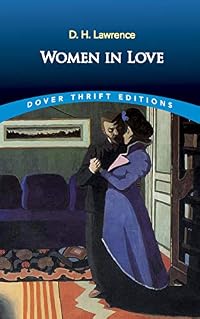







Member Recommendations





by anonymous user


bluepiano A good follow-up or perhaps corrective. Plot is broad, conventional stuff; it's Brown's great gift for language and his sense of humour that make the book.
Member Reviews
You know a book is trouble when it's published privately in Italy in 1928 and again in France a year later. It wasn't published openly to the masses until 1960 when it was promptly banned across the world. The United States, Canada, Australia, India, and Japan all found fault with it. Finally, when it was at the center of a 1960 British obscenity trial, things came to a head.
Who doesn't know this story? Lady Chatterley is an attractive upper-class woman married to an equally handsome man who happens to be paralyzed from the waist down. Connie is young, spoiled, and has certain...needs. Her husband says he understands, but a man and wife's varying perceptions of the same marriage are striking. Clifford Chatterley doesn't really show more understand the resentments of his wife. A poignant scene is when Connie watches a mother hen protect her eggs and feels empty. She wants a child. She wants a lover. She finds solace in the gamekeeper, Oliver Mellors, who lives on the grounds. His cottage is a short distance from the estate...It is the classic tale of class differences. Lawrence goes a bit further by exploring themes of industrialism (Clifford wants to modernize mining with new technology) and mind-body psychology (the struggle between the heart and mind when it involves sexuality, especially when it is illicit in nature). The ending is ambiguous, as typical of Lawrence's work, but it ends with hope. show less
Who doesn't know this story? Lady Chatterley is an attractive upper-class woman married to an equally handsome man who happens to be paralyzed from the waist down. Connie is young, spoiled, and has certain...needs. Her husband says he understands, but a man and wife's varying perceptions of the same marriage are striking. Clifford Chatterley doesn't really show more understand the resentments of his wife. A poignant scene is when Connie watches a mother hen protect her eggs and feels empty. She wants a child. She wants a lover. She finds solace in the gamekeeper, Oliver Mellors, who lives on the grounds. His cottage is a short distance from the estate...It is the classic tale of class differences. Lawrence goes a bit further by exploring themes of industrialism (Clifford wants to modernize mining with new technology) and mind-body psychology (the struggle between the heart and mind when it involves sexuality, especially when it is illicit in nature). The ending is ambiguous, as typical of Lawrence's work, but it ends with hope. show less
Shockingly unsexy for a book banned for pornography until 1960. The sex bits are so incredibly not sexy, I wonder whether the “porn” was simply an excuse to ban a book full of frank language, ideas about people, and class.
It’s full of unpleasant people being unpleasant, sexist, classist, and most damningly, tediously dull. There’s no lust, no love, and not even much, if any, like displayed between anyone.
Don’t read looking for a love story or porn. Do read for endless (usually wrong-headed) rants. Also, the words bowels and womb are alarmingly overused.
It’s full of unpleasant people being unpleasant, sexist, classist, and most damningly, tediously dull. There’s no lust, no love, and not even much, if any, like displayed between anyone.
Don’t read looking for a love story or porn. Do read for endless (usually wrong-headed) rants. Also, the words bowels and womb are alarmingly overused.
This book! Was many things I was expecting, but many things I was not expecting! Where to start?
The obvious thing that everyone knows about Lady Chatterley's Lover is that it was banned for obscenity. And there are, as you would expect, explicit sex scenes and the use of words like arse and fuck and cunt. It's no worse than anything you would get in Jilly Cooper, and it is weirdly dated and coy in places, but it's true, this book has a lot of explicit sex in it.
The thing I did not expect about the sex talk is the bad sex. I don't mean 'bad sex writing' (you can judge for yourself), but times in the book where one person is having good sex and the other isn't, or neither of them are enjoying sex, or the discussions about different types show more of sex and what makes sex good. It was interesting, and although some of it is very of its time some of it was quite insightful.
But I would definitely judge this as plot-with-porn, not porn-with-plot. All of the main characters seem complex and drawn with a lot of nuances. I am not sure I actually like Mellors the gamekeeper. He is prickly and proud (the bit wherehe just has to be nice about someone's paintings who is prepared to make a huge sacrifice to help Mellors and Connie both get their divorces in the least complicated way, and he just has to be So Rude! And the bit where he's rude to Connie's sister . He has not learned 'if you can't say anything nice don't say anything.') And his relationship with his first wife is told from a very one-sided point of view, and even that doesn't make him look good. Not to mention the fact that he actually has a small daughter who lives with his mother, who he basically ignores and disregards for the entire book. But he's interesting, and has seen a lot of the world and learned a lot from it. Connie also I find it hard to make my mind up about. Clifford is not an easy man, and Connie has been dealt a hard hand, and you can see why Connie seeks solace elsewhere. But she is so foolish, and so wrapped up in her own passion. You definitely get the feeling that whoever wrote this book had firsthand experience of those intoxicating, doomed, stupid love affairs where the people involved think their own desperate passion is the only thing that matters in the world.
I did not know the plot, and so was not expecting Clifford to be crippled in the war, or the storylines about Connie's burnout as a carer and then her withdrawal from him. It was much more tragic than I expected.
I got the book because I had found out DH Lawrence was from near where I grew up, but I hadn't expected how richly it is set in the Dukeries and the North Nottinghamshire coal fields. He has so many things spot on about the place and the people. And he holds so many of them so clearly in such contempt - the book scorns the intellectual upper classes at the same time as it sneers on the malformed miners. It doesn't even feel that fond of foolish Connie and Mellors making love in the rain in the wood. But gosh does it see them clearly, even if through coal tinted glasses. show less
The obvious thing that everyone knows about Lady Chatterley's Lover is that it was banned for obscenity. And there are, as you would expect, explicit sex scenes and the use of words like arse and fuck and cunt. It's no worse than anything you would get in Jilly Cooper, and it is weirdly dated and coy in places, but it's true, this book has a lot of explicit sex in it.
The thing I did not expect about the sex talk is the bad sex. I don't mean 'bad sex writing' (you can judge for yourself), but times in the book where one person is having good sex and the other isn't, or neither of them are enjoying sex, or the discussions about different types show more of sex and what makes sex good. It was interesting, and although some of it is very of its time some of it was quite insightful.
But I would definitely judge this as plot-with-porn, not porn-with-plot. All of the main characters seem complex and drawn with a lot of nuances. I am not sure I actually like Mellors the gamekeeper. He is prickly and proud (the bit where
I did not know the plot, and so was not expecting Clifford to be crippled in the war, or the storylines about Connie's burnout as a carer and then her withdrawal from him. It was much more tragic than I expected.
I got the book because I had found out DH Lawrence was from near where I grew up, but I hadn't expected how richly it is set in the Dukeries and the North Nottinghamshire coal fields. He has so many things spot on about the place and the people. And he holds so many of them so clearly in such contempt - the book scorns the intellectual upper classes at the same time as it sneers on the malformed miners. It doesn't even feel that fond of foolish Connie and Mellors making love in the rain in the wood. But gosh does it see them clearly, even if through coal tinted glasses. show less
Another classic that I've finally gotten to! This was my first novel by D.H. Lawrence and the review is going to be a bit tricky. I am of two very separate minds about this book. I liked Lawrence's writing and am eager to read more. Something about the flow and pacing really engaged me. The novel itself was very well-done in it's exploration of the ramifications of WWI on different social classes and sexes. I thought it was interesting to contrast the characters who were changed by the war vs. those who weren't (or tried not to be) and also the areas in which society/culture changed after the war vs. the ways it didn't. All the different combinations of these four possibilities made for a lot of interesting themes.
But then there's the show more negative. Obviously, this book is most known for the love scenes between Connie and Mellors. The problem is that these are really dated. Not only the language and the ideas of what good sex is, but the thought that their relationship is somehow ideal and lets them be themselves did not convince me. In fact, it offended me. Mellors in particular has some really offensive ideas about women and sex. He did not strike me as the epitome of manhood, as I think Lawrence intended him. I came away from the book hoping that Connie uses this experience as a stepping stone to a better, more balanced relationship, though I doubt that's what Lawrence intended me to hope.
Overall, I liked Lawrence's writing and want to read more of his novels, but I know this particular book won't be my favorite. show less
But then there's the show more negative. Obviously, this book is most known for the love scenes between Connie and Mellors. The problem is that these are really dated. Not only the language and the ideas of what good sex is, but the thought that their relationship is somehow ideal and lets them be themselves did not convince me. In fact, it offended me. Mellors in particular has some really offensive ideas about women and sex. He did not strike me as the epitome of manhood, as I think Lawrence intended him. I came away from the book hoping that Connie uses this experience as a stepping stone to a better, more balanced relationship, though I doubt that's what Lawrence intended me to hope.
Overall, I liked Lawrence's writing and want to read more of his novels, but I know this particular book won't be my favorite. show less
I've loved modernist fiction for a long time, but I've had a love-hate relationship with D.H. Lawrence for about as long. Lady Chatterley's lover is the best Lawrence I've ever read. Yes, you can still find what I think of as his bad habits there: his tendency to describe everything using opposites, his obsession with vitality which often seems, as someone else put it, "a sick man's dream of health," his obvious disdain for many of his characters and their choices. But all of these tendencies are reined in here: even his tendency toward repetition comes off as lyrical rather than merely trying. I can enthusiastically recommend it to people who don't much like D.H. Lawrence.
What's most delightful about "Lady Chatterley" is that, show more considering a book that's supposedly about an intense, erotic affair between two people, it's surprisingly wide-ranging. One of the things that makes this book work is, oddly enough, is how carefully Lawrence crafts its temporal and physical setting. Beyond Constance and Oliver's relationship, we get a clear-eyed description of the generalized despair that followed the end of the First World War, a pitiless description of the British artistic scene, a careful transcription of the Derby dialect, and a look destructive effects of the coal industry on Lawrence's beloved British countryside that's simultaneously regretful and buzzing with dark energy. His descriptions of both the main characters' erotic adventures and the lush woods that they have them in are truly beautiful, there are passages where everything in the book seems to pulse with sensuality and life. For all his opinions about the state in which he found the world, I can't think of too many writers who were more interested in writing the body than Lawrence was. This novel might owe its notoriety to its four-letter words and its explicitness, but it also communicates the physicality of both sex and mere being exceptionally well. The paralyzed Clifford is sort of given short shrift here -- one imagines that he's got a body, too, though Lawrence depicts him as largely inert. Also, even while he praises the joy of sexual congress, Lawrence seems to have a lot of ideas about exactly how men and women should and shouldn't have sex. In the final analysis, though, seeing as it was produced by a writer who sometimes comes off as bitter and spiteful about the modern world, "Lady Chatterley" seems like a surprisingly optimistic argument for romantic and physical love. This may be especially true of its lovely final pages, where Constance and Oliver plan out a future that emphasizes the rhythms of nature, their love, and their truest selves. A difficult book from a difficult writer, but certainly worth the effort. show less
What's most delightful about "Lady Chatterley" is that, show more considering a book that's supposedly about an intense, erotic affair between two people, it's surprisingly wide-ranging. One of the things that makes this book work is, oddly enough, is how carefully Lawrence crafts its temporal and physical setting. Beyond Constance and Oliver's relationship, we get a clear-eyed description of the generalized despair that followed the end of the First World War, a pitiless description of the British artistic scene, a careful transcription of the Derby dialect, and a look destructive effects of the coal industry on Lawrence's beloved British countryside that's simultaneously regretful and buzzing with dark energy. His descriptions of both the main characters' erotic adventures and the lush woods that they have them in are truly beautiful, there are passages where everything in the book seems to pulse with sensuality and life. For all his opinions about the state in which he found the world, I can't think of too many writers who were more interested in writing the body than Lawrence was. This novel might owe its notoriety to its four-letter words and its explicitness, but it also communicates the physicality of both sex and mere being exceptionally well. The paralyzed Clifford is sort of given short shrift here -- one imagines that he's got a body, too, though Lawrence depicts him as largely inert. Also, even while he praises the joy of sexual congress, Lawrence seems to have a lot of ideas about exactly how men and women should and shouldn't have sex. In the final analysis, though, seeing as it was produced by a writer who sometimes comes off as bitter and spiteful about the modern world, "Lady Chatterley" seems like a surprisingly optimistic argument for romantic and physical love. This may be especially true of its lovely final pages, where Constance and Oliver plan out a future that emphasizes the rhythms of nature, their love, and their truest selves. A difficult book from a difficult writer, but certainly worth the effort. show less
For a novel that is purported to be of the “bodice-ripper” genre (ie chick lit) and was written almost 100 years ago, I can’t believe how forward thinking D.H. Lawrence is.
During the 1920s, feminism, female rights, and especially the female organism were new concepts that came about as a result of increased female independence during the Great War. Women had been called to the workforce to replace all of the men who were sent away to the battlefields of Europe, and even after the few remaining men of the Lost Generation returned to England women were not willing to back to being hausfraus. Lady Chatterly is definitely not one of these working women - her family are clearly minor aristocrats and she marries into the leisure class show more as well - but she personifies the increased intellectual and social freedoms that women of her station became accustomed to in parallel. Constance was given an extensive education during her family’s travels throughout Europe as a young woman and Lawrence makes it clear that she and her sister were given relative freedom to explore all of life that intrigued them. Both sisters had love affairs in their teens - a likely unheard of concept previously, and still likely uncommon - that are presented hand in hand with their highly developed intellect that in fact challenged the men of their circles to keep up or be left behind. This development of personality is one that was surely a shock to readers at the time of the book’s publication, as the idea that women could be seen as intellectual equals as men - and an even greater shock that these women had casual sexual encounters in which they proved to be the more emotionally removed sex of the two.
As the novel progresses, it seems for a moment or two that Constance will grow out of her adolescent behaviour when she marries Lord Clifford Chatterly during the course of the War. Even when Clifford returns home to his ancestral seat at Wragby Hall paralyzed from the waist down that Constance will buck up and be a dutiful wife, only allowing her intellect and true personality to show during conversations with Clifford and his group of intellectual friends. This is clearly not to last, though, as her introduction to this group of interesting men draws obvious comparisons to her youth in Germany surrounded by men of strong opinion and vocabulary. Inevitably, her instinct for sexual encounter is piqued by an Irish writer, Michaelis, who, while ultimately a disappointment to her emotionally and physically, begins her path to a true break from the hopelessly inadequate Clifford. Clifford, while a writer of popular fiction is technically of the intelligentsia that Constance craves as stimuli, he is highly traditional in his outlook on life (especially when it comes to the restrictions of class) which Constance begins to find constrictive in her more accepting views of people. His physical reliance on Constance for daily care is really just the final nail in the coffin of emotion, as she has no interest in being a glorified maid who gets nothing in return for her efforts.
It came as a bit of a shock to me that the person whom Constance finally falls in love with (and leaves Clifford officially for) is the Oliver Mellors, the game keeper of the Wragby Estate. The two of them are from incredibly different walks of life and at their initial encounters were incredibly tense, but their differences only seem to heighten their similarities. Neither are willing to go along with accepted societal norms, and both have a complete disregard for the fripperies of aristocratic privilege and the lack of practicality that it entails. The pair of them argue constantly about practically nothing, but Lawrence has tapped into the exact passion that comes from these types of relationships. They are based on passion, rather than rationality, and the people in them don’t give a damn about what society thinks - even if they make plans to be eventually accepted by this society. For a book published in 1928 that seems to be aimed at the accepted popular market in England, Lawrence is incredibly graphic in his description of sex between the couple. His scenes of “depravity” are of course tame in comparison to earlier authors like the Marquis de Sade, but what I expect caused so much outrage was that he published his novel for the English market (where society was still very closeted about sex in comparison to the Continental population) and was depicting sex between two consenting adults as normal rather than presenting the scenes as gross exaggerations and exceptions to the norm (as De Sade does in his novels). To modern readers who have access to a wide range of pornographic and erotic material (in addition to modern outlooks on sex and relationships between adults) Lawrence’s novel likely seem incredibly tame, but what we must remember is that it is this novel (and many others in between) that helped usher along modern viewpoints on these themes by exposing people to new ways of thinking about the reality of human relationships rather than chaste idealized fictions. show less
During the 1920s, feminism, female rights, and especially the female organism were new concepts that came about as a result of increased female independence during the Great War. Women had been called to the workforce to replace all of the men who were sent away to the battlefields of Europe, and even after the few remaining men of the Lost Generation returned to England women were not willing to back to being hausfraus. Lady Chatterly is definitely not one of these working women - her family are clearly minor aristocrats and she marries into the leisure class show more as well - but she personifies the increased intellectual and social freedoms that women of her station became accustomed to in parallel. Constance was given an extensive education during her family’s travels throughout Europe as a young woman and Lawrence makes it clear that she and her sister were given relative freedom to explore all of life that intrigued them. Both sisters had love affairs in their teens - a likely unheard of concept previously, and still likely uncommon - that are presented hand in hand with their highly developed intellect that in fact challenged the men of their circles to keep up or be left behind. This development of personality is one that was surely a shock to readers at the time of the book’s publication, as the idea that women could be seen as intellectual equals as men - and an even greater shock that these women had casual sexual encounters in which they proved to be the more emotionally removed sex of the two.
As the novel progresses, it seems for a moment or two that Constance will grow out of her adolescent behaviour when she marries Lord Clifford Chatterly during the course of the War. Even when Clifford returns home to his ancestral seat at Wragby Hall paralyzed from the waist down that Constance will buck up and be a dutiful wife, only allowing her intellect and true personality to show during conversations with Clifford and his group of intellectual friends. This is clearly not to last, though, as her introduction to this group of interesting men draws obvious comparisons to her youth in Germany surrounded by men of strong opinion and vocabulary. Inevitably, her instinct for sexual encounter is piqued by an Irish writer, Michaelis, who, while ultimately a disappointment to her emotionally and physically, begins her path to a true break from the hopelessly inadequate Clifford. Clifford, while a writer of popular fiction is technically of the intelligentsia that Constance craves as stimuli, he is highly traditional in his outlook on life (especially when it comes to the restrictions of class) which Constance begins to find constrictive in her more accepting views of people. His physical reliance on Constance for daily care is really just the final nail in the coffin of emotion, as she has no interest in being a glorified maid who gets nothing in return for her efforts.
It came as a bit of a shock to me that the person whom Constance finally falls in love with (and leaves Clifford officially for) is the Oliver Mellors, the game keeper of the Wragby Estate. The two of them are from incredibly different walks of life and at their initial encounters were incredibly tense, but their differences only seem to heighten their similarities. Neither are willing to go along with accepted societal norms, and both have a complete disregard for the fripperies of aristocratic privilege and the lack of practicality that it entails. The pair of them argue constantly about practically nothing, but Lawrence has tapped into the exact passion that comes from these types of relationships. They are based on passion, rather than rationality, and the people in them don’t give a damn about what society thinks - even if they make plans to be eventually accepted by this society. For a book published in 1928 that seems to be aimed at the accepted popular market in England, Lawrence is incredibly graphic in his description of sex between the couple. His scenes of “depravity” are of course tame in comparison to earlier authors like the Marquis de Sade, but what I expect caused so much outrage was that he published his novel for the English market (where society was still very closeted about sex in comparison to the Continental population) and was depicting sex between two consenting adults as normal rather than presenting the scenes as gross exaggerations and exceptions to the norm (as De Sade does in his novels). To modern readers who have access to a wide range of pornographic and erotic material (in addition to modern outlooks on sex and relationships between adults) Lawrence’s novel likely seem incredibly tame, but what we must remember is that it is this novel (and many others in between) that helped usher along modern viewpoints on these themes by exposing people to new ways of thinking about the reality of human relationships rather than chaste idealized fictions. show less
Lady Chatterley's Lover is Lawrence's final novel before his untimely death from tuberculosis at the age of 44, and like every one of his works it follows these same familiar themes: the renunciation of the body in favor of the intellect, epitomized by the wheelchair-bound Clifford (Lord Chatterley) and his unconsummated marriage to Connie. Predictably, then, the novel unfolds Connie's physical flowering, awoken by an initial affair with the populist Irish playwright Michaelis, who fails to satisfy her, and eventually by Oliver Mellors, the local gamekeeper, the lover of the title.
It startles me that I have to give this book such a low rating, since I have at least liked, if not loved, almost everything else I have read by Lawrence. show more Women in Love, in particular, I consider to be one of the greatest novels of the English canon. But Lady Chatterley's Lover pales in comparison to that earlier work. The central reason is that Lawrence provides a cast that is too didactic and one-sided for its own good. The reader is never in any doubt that our sympathies are supposed to lie with Connie and Mellors, with Clifford presented as a fairly straightforward petty tyrant whose sterile emotional and intellectual life cannot make up for his obvious physical limitations. Sorely missing is a character like Gerald Crich (from Women in Love) who, despite repeatedly being in the "wrong" in terms of Lawrence's philosophy, nonetheless possesses a robust physical presence and energy that lends nuance and ambiguity to his character, making him a worthy counterbalance to Rupert Birkin's role as Lawrence's mouthpiece. In Lady Chatterley's Lover, by contrast, Lawrence fails to give voice to the kind of self-criticism that adds depth and credibility to his other works of fiction.
It was because of this lopsidedness in the narrative perspective that I constantly felt in a rebellious mood against the novel's point of view. Connie is supposed to be the sympathetic core of the book, but while I understood her reservations well enough, I couldn't identify with many of her actions. Unlike her Victorian predecessors, this adulteress was not stuck in her marriage to Clifford: she could have walked away at any time, having both the financial means and the legal ability to do so. Instead, she prefers sanctimoniously to torture Clifford from a sense of revenge that completely undermined any sympathy I might have had for her. Sure, Clifford was a mistake and a boor, but Connie's cruelty to him is selfish, immature, and ultimately unwarranted. Her sadistic fantasy of passing off another man's child for him to raise is probably the nadir of her character.
Ultimately, Lady Chatterley's Lover is a failure not only for its shrill one-sidedness, but because it fails to extend Lawrence's philosophy in any meaningful way. Certainly the language and sex scenes are more explicit, overlaid as they are with the usual Lawrentian jargon that makes them sound strange and outdated to readers not used to his metaphors, but the whole story is haunted by a sense that we have seen it all before: Mellors, in particular, might be Paul Morel, the protagonist of Sons and Lovers, some twenty years later. The philosophical discussions, similarly, feature an array of forgettable characters who pop up and then disappear without adding anything new to what Lawrence has said before. But what irked me the most was Connie's newfound desire for a child as the symbol of her hope for a better world. This conclusion I found to be the worst kind of emotional blackmail, one that implies that the decision not to have children is an indicator of despair and a renunciation of life.
There are times when I have thought, like a young Nicholas Urfe in John Fowles's novel The Magus, that Lawrence was the greatest, most splendid human being of the twentieth century. There is certainly plenty of wisdom and insight in his diagnosis of the underlying problems of modern humanity. But then there are other times, such as when reading Lady Chatterley's Lover, that I find myself unable to follow him any further, not because I have come to a fundamental disagreement with his ideas, but because the terms on which they are offered are no longer acceptable. show less
It startles me that I have to give this book such a low rating, since I have at least liked, if not loved, almost everything else I have read by Lawrence. show more Women in Love, in particular, I consider to be one of the greatest novels of the English canon. But Lady Chatterley's Lover pales in comparison to that earlier work. The central reason is that Lawrence provides a cast that is too didactic and one-sided for its own good. The reader is never in any doubt that our sympathies are supposed to lie with Connie and Mellors, with Clifford presented as a fairly straightforward petty tyrant whose sterile emotional and intellectual life cannot make up for his obvious physical limitations. Sorely missing is a character like Gerald Crich (from Women in Love) who, despite repeatedly being in the "wrong" in terms of Lawrence's philosophy, nonetheless possesses a robust physical presence and energy that lends nuance and ambiguity to his character, making him a worthy counterbalance to Rupert Birkin's role as Lawrence's mouthpiece. In Lady Chatterley's Lover, by contrast, Lawrence fails to give voice to the kind of self-criticism that adds depth and credibility to his other works of fiction.
It was because of this lopsidedness in the narrative perspective that I constantly felt in a rebellious mood against the novel's point of view. Connie is supposed to be the sympathetic core of the book, but while I understood her reservations well enough, I couldn't identify with many of her actions. Unlike her Victorian predecessors, this adulteress was not stuck in her marriage to Clifford: she could have walked away at any time, having both the financial means and the legal ability to do so. Instead, she prefers sanctimoniously to torture Clifford from a sense of revenge that completely undermined any sympathy I might have had for her. Sure, Clifford was a mistake and a boor, but Connie's cruelty to him is selfish, immature, and ultimately unwarranted. Her sadistic fantasy of passing off another man's child for him to raise is probably the nadir of her character.
Ultimately, Lady Chatterley's Lover is a failure not only for its shrill one-sidedness, but because it fails to extend Lawrence's philosophy in any meaningful way. Certainly the language and sex scenes are more explicit, overlaid as they are with the usual Lawrentian jargon that makes them sound strange and outdated to readers not used to his metaphors, but the whole story is haunted by a sense that we have seen it all before: Mellors, in particular, might be Paul Morel, the protagonist of Sons and Lovers, some twenty years later. The philosophical discussions, similarly, feature an array of forgettable characters who pop up and then disappear without adding anything new to what Lawrence has said before. But what irked me the most was Connie's newfound desire for a child as the symbol of her hope for a better world. This conclusion I found to be the worst kind of emotional blackmail, one that implies that the decision not to have children is an indicator of despair and a renunciation of life.
There are times when I have thought, like a young Nicholas Urfe in John Fowles's novel The Magus, that Lawrence was the greatest, most splendid human being of the twentieth century. There is certainly plenty of wisdom and insight in his diagnosis of the underlying problems of modern humanity. But then there are other times, such as when reading Lady Chatterley's Lover, that I find myself unable to follow him any further, not because I have come to a fundamental disagreement with his ideas, but because the terms on which they are offered are no longer acceptable. show less
Members
- Recently Added By
Published Reviews
ThingScore 50
Although written many years ago, Lady Chatterley's Lover has just been reissued by the Grove Press, and this fictional account of the day-to-day life of an English gamekeeper is still of considerable interest to outdoor minded readers, as it contains many passages on pheasant raising, the apprehending of poachers, ways to control vermin, and other chores and duties of the professional show more gamekeeper. Unfortunately one is obliged to wade through many pages of extraneous material in order to discover and savor these sidelights on the management of a Midland shooting estate, and in this reviewer's opinion this book cannot take the place of J.R. Miller's Practical Gamekeeping. show less
added by Cynfelyn
Lists

1001 Books You Must Read Before You Die
1,448 works; 1,132 members

The Guardian's 1000 Novels Everyone Must Read
1,005 works; 549 members

Classics you know you should have read but probably haven't
421 works; 407 members

Radcliffe's 100 Best Novel of the 20th Century
100 works; 32 members
David Bowie's Top 100
97 works; 23 members
Le Monde - Les 100 livres du siècle
121 works; 25 members

Literature About Social Class
134 works; 19 members
20th Century Literature
1,161 works; 54 members
Best of British Literature
226 works; 41 members
Banned Books Week 2014
268 works; 62 members
In and About the 1920s
181 works; 31 members

Women's Stories
88 works; 13 members

Best Love Stories
107 works; 14 members

Best Feminist Literature
188 works; 26 members

Love and Marriage
93 works; 10 members

Female Protagonist
1,056 works; 56 members

Unread books
1,063 works; 87 members
Favorite Literary Love Stories
182 works; 101 members
Banned or Challenged Books
400 works; 41 members

Books Featured on Gilmore Girls
307 works; 21 members

Western World's Greatest Books - Project Gutenberg
295 works; 15 members

Global Reads: Books Set in the United Kingdom and Ireland
109 works; 5 members

Books Set in Great Britain
191 works; 13 members
Love Triangles in Literature
108 works; 15 members
1,001 BYMRBYD Concensus
723 works; 27 members
Literature About Women and Girls
391 works; 39 members

Blue Pyramid 1,276 Best Books of All Time
1,248 works; 32 members
1920s
141 works; 6 members

A Novel Cure
742 works; 23 members
My list of 100 books to read next
100 works; 4 members

Modernism
140 works; 8 members

Amanda's Guaranteed Books
110 works; 5 members

Rory Gilmore Book Club
193 works; 5 members

Books Read in 2023
5,547 works; 145 members

Books Read in 2014
2,341 works; 86 members

Publisher's Weekly Bestsellers - Part II - 1940 - 1979
355 works; 5 members
Carole's List
445 works; 13 members
United Kingdom
82 works; 4 members
Books mentioned in The Diary of a Provincial Lady
59 works; 4 members
discontinued
24 works; 4 members

Mad Men Reading List
25 works; 5 members

University literature
145 works; 5 members

Erotic Fiction
53 works; 5 members
Overdue Podcast
803 works; 9 members

Books with Noble Titles
179 works; 11 members

Books Read in 2009
464 works; 11 members
Literature About Adultery
69 works; 10 members
Books Read in 2016
4,666 works; 199 members

Banging Book Club
36 works; 1 member

Read in 2009
44 works; 1 member

Classics
31 works; 1 member

el
1,139 works; 1 member
My Mad Men Reading List
47 works; 1 member
Reading LIst
648 works; 1 member

Books Read in 2025
4,090 works; 97 members
David Bowie’s Top 100 Favourite Reads
100 works; 3 members
.
194 works; 2 members
The Complete Rory Gilmore Reading List
506 works; 5 members

Read in 2011
81 works; 1 member

Books Read in 2011
684 works; 20 members

Recommended Reading : 600 Classics Reviewed, Editors of Salem Press, 2015
634 works; 6 members
Our Favorite Banned Books
138 works; 122 members

living room bookshelf
150 works; 1 member
Banned Books
40 works; 2 members

Books You Read For University
184 works; 3 members
David Bowie's List of Top 100 Books
94 works; 6 members
Books referenced in A Very Great Profession: The Woman's Novel 1914-39
199 works; 6 members

Alphabetical Books
211 works; 3 members

Literary Works Read in College
316 works; 15 members

Books Read in 2021
5,361 works; 114 members

.
396 works; 1 member

Best of World Literature
431 works; 51 members
Talk Discussions
Past Discussions
The lady Chatterley's lover in Literary Snobs (April 2013)
Lady Chatterley's Lover in 1001 Books to read before you die (January 2008)
Author Information

D(avid) H(erbert) Lawrence was born on September 11, 1885. His father was a coal miner and Lawrence grew up in a mining town in England. He always hated the mines, however, and frequently used them in his writing to represent both darkness and industrialism, which he despised because he felt it was scarring the English countryside. Lawrence show more attended high school and college in Nottingham and, after graduation, became a school teacher in Croyden in 1908. Although his first two novels had been unsuccessful, he turned to writing full time when a serious illness forced him to stop teaching. Lawrence spent much of his adult life abroad in Europe, particularly Italy, where he wrote some of his most significant and most controversial novels, including Sons and Lovers and Lady Chatterly's Lover. Lawrence and his wife, Frieda, who had left her first husband and her children to live with him, spent several years touring Europe and also lived in New Mexico for a time. Lawrence had been a frail child, and he suffered much of his life from tuberculosis. Eventually, he retired to a sanitorium in Nice, France. He died in France in 1930, at age 44. In his relatively short life, he produced more than 50 volumes of short stories, poems, plays, essays, travel journals, and letters, in addition to the novels for which he is best known. (Bowker Author Biography) show less
Some Editions
Awards and Honors
Awards
Distinctions
Notable Lists
Series

Lady Chatterley's Lover (3rd Version)
Belongs to Publisher Series
Ebook [Newton] (6)
Modern Library book (148)
Penguin Clothbound Classics (2009)
Ultimoreeks (I, 4)
Colecção Mil Folhas (32)
rororo (11638)
Gallimard, Folio (19-871)
Work Relationships
Is contained in
Sons and Lovers; St Mawr; The Fox; The White Peacock; Love among the Haystacks; The Virgin and the Gypsy; Lady Chatterley's Lover by D. H. Lawrence
D.H. LAWRENCE OMNIBUS: THE COMPLETE NOVELS: SONS AND LOVERS, ST. MAWR, THE FOX, THE WHITE PEACOCK, LOVE AMONG THE HAYSTA by D. H. Lawrence
Sons and Lovers / Women in Love / Lady Chatterly's Lover / Love Among the Haystacks by D. H. Lawrence
Women in Love • Lady Chatterley's Lovers • The Rainbow • Sons and Lovers • The Plumed Serpent by D. H. Lawrence
Has the adaptation
Is parodied in
Inspired
Has as a reference guide/companion
Has as a study
Has as a supplement
Has as a student's study guide
Common Knowledge
- Canonical title
- Lady Chatterley's Lover
- Original title
- Lady Chatterley's Lover
- Alternate titles*
- Lady Chatterleys Liebhaber
- Original publication date
- 1928
- People/Characters
- Constance Chatterley (Lady Chatterley); Connie Chatterley; Clifford Chatterley; Oliver Mellors; Bertha Mellors; Tommy Dukes (show all 7); Mrs Bolton
- Important places
- Wragby, Lincolnshire, England, UK; Venice, Veneto, Italy; England, UK
- Related movies
- L'amant de lady Chatterley (1955 | IMDb); Lady Chatterley's Lover (1981 | IMDb); Lady Chatterley (1993 | IMDb); Lady Chatterley (2006 | IMDb); Lady Chatterley's Lover (2015 | IMDb); Lady Chatterley's Lover (2022 | IMDb)
- Dedication
- Publisher's dedication : "......to the twelve jurors who returned a verdict of 'Not Guilty' [on 2 November, 1960] and thus made D.H. Lawrence's last novel available for the first time to the public in the United Kindom"
- First words
- Ours is essentially a tragic age, so we refuse to take it tragically.
- Quotations
- Ours is essentially a tragic age, so we refuse to take it tragically. The cataclysm has happened, we are among the ruins, we start to build up new litle habitats, to have new little hopes. It is rather hard work: there is no ... (show all)smooth road into the future: but we go round, or scramble ver the obstacles. We've got to live, no matter how many skies have fallen.
The beautiful pure freedom of a woman was infnitely more wonderful than any sexual love. The only unfortunate thing was that men lagged so far behind women in the matter. They insisted on the sex thing like dogs.
"No, I don't hate you," she said. "I think you're nice." - "Ah!" he said to her fiercely, "I'd rather you said that to me than said you love me! It means such a lot more..."
The world is supposed to be full of possibilities, but they narrow down to pretty few in most personal experience. There's lots of good fish in the sea... maybe... but the vast masses seem to be mackerel or herring, and if yo... (show all)u're not mackerel or herring yourself, you are likely to find very few good fish in the sea.
"I can't see I do a woman any more harm by sleeping with her than by dancing with her... or even talking to her about the weather. It's just an interchange of sensations instead of ideas, so why not?"
"If you HAVE the proper sort of emotion or sympathy with a woman, you OUGHT to sleep with her," said May. "It's the only decent thing, to go to bed with her. Just as, when you are interested talking to someone, the only decen... (show all)t thing is to have the talk out."
Perhaps the human soul needs excursions, and must not be denied them. But the point of an excursion is that you come home again.
It was the last bit of passion left in these men: the passion for making a display.
"A woman wants you to like her and talk to her, and at the same time love her and desire her; and it seems to me the two things are mutually exclusive."- "But they shouldn't be!" - "No doubt water ought not to be so wet as it... (show all) is; it overdoes it in wetness. But there it is! I like women and talk to them, and therefore I don't love them and desire them. The two things don't happen at the same time in me." - "I think they ought to."
All the great words, it seemed to Connie, were cancelled for her generation: love, joy, happiness, home, mother, father, husband, all these great, dynamic words were half dead now, and dying from day to day. Home was a place ... (show all)you lived in, love was a thing you didn't fool yourself about, joy was a word you applied to a good Charleston, happiness was a term of hypocrisy used to bluff other people, a father was an individual who enjoyed his own existence, a husband was a man you lived with and kept going in spirits. As for sex, the last of the great words, it was just a cocktail term for an excitement that bucked you up for a while, then left you more raggy than ever. Frayed! It was as if the very material you were made of was cheap stuff, and was fraying out to nothing.
All that really remained was a stubborn stoicism: and in that there was a certain pleasure. In the very experience of the nothingness of life, phase after phase, étape after étape, there was a certain grisly satisfaction. So that's that! Always this was the last utterance: home, love, marriage, Michaelis: So that's that! And when one died, the last words to life would be: So that's that!
It seemed as if most of the `really good' men just missed the bus. After all you only lived one life, and if you missed the bus, you were just left on the pavement, along with the rest of the failures.
"A woman has to live her life, or live to repent not having lived it."
Society was terrible because it was insane. Civilized society was insane. Money and so-called love are its two great manias; money a long way first. - Last words
- (Click to show. Warning: May contain spoilers.)John Thomas says good-night to Lady Jane, a little droopingly, but with a hopeful heart.
- Original language
- English
- Disambiguation notice
- See also the Wikipedia article.
*Some information comes from Common Knowledge in other languages. Click "Edit" for more information.
Classifications
Statistics
- Members
- 15,255
- Popularity
- 457
- Reviews
- 241
- Rating
- (3.48)
- Languages
- 36 — Arabic, Bulgarian, Catalan, Czech, Danish, Dutch, English, Estonian, Finnish, French, German, Greek, Hebrew, Hungarian, Indonesian, Italian, Japanese, Korean, Lithuanian, Norwegian (Bokmål), Norwegian, Farsi/Persian, Polish, Romanian, Russian, Croatian, Slovenian, Spanish, Swedish, Tagalog, Turkish, Ukrainian, Urdu, Portuguese (Portugal), Portuguese (Brazil), Chinese, traditional
- Media
- Paper, Audiobook, Ebook
- ISBNs
- 540
- UPCs
- 5
- ASINs
- 359