
Virginia Woolf (1882–1941)
Author of Mrs. Dalloway
About the Author
Virginia Woolf was born in London, England on January 25, 1882. She was the daughter of the prominent literary critic Leslie Stephen. Her early education was obtained at home through her parents and governesses. After death of her father in 1904, her family moved to Bloomsbury, where they formed show more the nucleus of the Bloomsbury Group, a circle of philosophers, writers, and artists. During her lifetime, she wrote both fiction and non-fiction works. Her novels included Jacob's Room, Mrs. Dalloway, To the Lighthouse, Orlando, and Between the Acts. Her non-fiction books included The Common Reader, A Room of One's Own, Three Guineas, The Captain's Death Bed and Other Essays, and The Death of the Moth and Other Essays. Having had periods of depression throughout her life and fearing a final mental breakdown from which she might not recover, Woolf drowned herself on March 28, 1941 at the age of 59. Her husband published part of her farewell letter to deny that she had taken her life because she could not face the terrible times of war. (Bowker Author Biography) show less
Image credit: Wikipedia
Series
Works by Virginia Woolf
Books and Portraits: Some Further Selections from the Literary and Biographical Writings (1977) 187 copies
Virginia Woolf Collection: Includes Her Greatest Works: Mrs. Dalloway, Orlando, to the Lighthouse, a Room of One's Own (2013) 29 copies
Schrijversdagboek 2 20 copies
Profissões Para Mulheres e Outros Artigos Feministas. Pocket Plus (Em Portuguese do Brasil) (2012) 20 copies, 2 reviews
Schrijversdagboek 1 18 copies
Dinamització d'activitats de temps lliure educatiu infantil i juvenil : manual de formació (2017) 7 copies
As Mulheres Devem Chorar Ou Se Unir Contra a Guerra. Patriarcado e Militarismo (Em Portugues do Brasil) (2019) 6 copies
The Virginia Woolf BBC Radio Drama Collection: Seven full-cast dramatisations (2019) 5 copies, 2 reviews
Greatest Short Stories by Women 5 copies
Collected Works of Virginia Woolf. Illustrated: Jacob's room. Monday or Tuesday. Mrs. Dalloway. To the Lighthouse. Orlando (2021) 3 copies
Robinson Crusoe [essay] 3 copies
48 Ensaios 3 copies
Tutti i romanzi I : La crociera ; Notte e giorno ; La camera de Jacob ; La signora Dalloway (1994) 3 copies
Modern Fiction [essay] 3 copies
Jacob's Room [Annotated] 3 copies
Cinco relatos para mujeres 3 copies
O cameră doar a ei 3 copies
Mrs. Dalloway (Annotated): Original 1925 Edition with Contemporary Biography of Virginia Woolf (1925) 3 copies
Monday Of Tuesday 2 copies
LibriVox Ghost Story Collection 004 2 copies
To the Lighthouse / Orlando 2 copies
NATË E DITË 2 copies
The Bookclub-in-a-Box Discussion Guide to To The Lighthouse, the Novel by Virginia Woolf (Bookclub-In-A-Box) (2005) 2 copies
A Summing Up [short story] 2 copies
Notes on an Elizabethan Play [essay] 2 copies
Tutti i romanzi II : Gita la faro ; Orlando ; Le onde ; Gli anni ; Tra un atto e l'altro (-0001) 2 copies
The Virginia Woolf Anthology (A Room of One's Own, Mrs Dalloway, To the Lighthouse, The Years etc) (2016) 2 copies
The Leaning Tower 2 copies
The History of Love 2 copies
Mrs Dalloway in Bond street & other stories= Mrs. Dalloway a Bond Streeten és más elbeszélések (2017) 2 copies
Professions for Women 2 copies
The Russian Point of View [essay] 2 copies
Jane Austen [essay] 2 copies
Together and Apart [short story] 2 copies
Romankunstens faser 2 copies
Mrs. Dalloway / Orlando 2 copies
Obras Completas (Vol. 1) 2 copies
The Love of Reading 1 copy
Virginia Woolf Volume 2 1 copy
Una stanza tutta per sé 1 copy
Jacob’s Room 1 copy
Mrs. Dalloway and Essays 1 copy
Escenas de una vida: matrimonio, amigos y escritura: Una selección de los diarios a cargo de Gonzalo Torné (CLAVE INTELECTUAL) (2021) 1 copy
Mrs. Dalloway'in Partisi 1 copy
Virginia Woolf: The Complete Novels + A Room of One's Own (The Greatest Writers of All Time Book 17) 1 copy
Room of One's Own 1 copy
Orlando 1 copy
Hogarth sixpenny pamphlets 1 copy
Souls, Ghosts and Vampires 1 copy
A Room of One's Own and The Common Reader: Virginia Woolf’s Finest Essays Together for the First Time (2025) 1 copy
L272 - Mrs. Dalloway 1 copy
Calatorie in larg 1 copy
TRI MONEDHAT E ARIT 1 copy
L320 - Mrs Dalloway 1 copy
THE HOGARTH LETTERS 1 copy
NJOLLA NË MUR 1 copy
Virginia Woolf Archive 1 copy
NJË DHOME ME VETE 1 copy
Correspondance 1 copy
Mrs. Dallowy 1 copy
Rouva Dalloway 1 copy
SST 78 - La crociera 1 copy
SST 81 - Notte e giorno 1 copy
Lytton Strachey Letters 1 copy
Mrs Dalloway & The Waves 1 copy
La crociera. Ediz. integrale 1 copy
The Novels, Volume 3 1 copy
Romans & Nouvelles 1 copy
Mrs Dolloway 1 copy
Lastna soba 1 copy
The Modern Essay [essay] 1 copy
Montaigne [essay] 1 copy
Defoe [essay] 1 copy
Addison [essay] 1 copy
Lives of the Obscure [essay] 1 copy
George Eliot [essay] 1 copy
Outlines [essay] 1 copy
Joseph Conrad [essay] 1 copy
The Common Reader [essay] 1 copy
Aurora Leigh [essay] 1 copy
Geraldine and Jane [essay] 1 copy
William Hazlitt [essay] 1 copy
Four Figures [essay] 1 copy
Jack Mytton [essay] 1 copy
Two Parsons [essay] 1 copy
Old Bloomsbury [essay] 1 copy
George Gissing [essay] 1 copy
Mrs. Dalloway - Manuscrito — Author — 1 copy
Journal, tome 2 [1919-1922] 1 copy
Reminiscences [essay] 1 copy
Las Excentricas 1 copy
Kew Gardens and Other Works by Virginia Woolf (Unexpurgated Edition) (Halcyon Classics) (2009) 1 copy
The Niece of an Earl [essay] 1 copy
"Mr Bennet and Mrs Brown" 1 copy
El momento: noche de verano 1 copy
Al faro Orlando 1 copy
I classici Adelphi 1963-64 1 copy
Short Stories 1 copy
Essais 1 copy
Virginia Woolf par elle meme 1 copy
Short fiction 1 copy
Woolf Virginia 1 copy
Artículos y reseñas 1 copy
Rupert Brooke 1 copy
Virginia Woolf. La Mort de la phalène : Nouvelles traduites de l'anglais par Hélène Bokanowski. Préface de Sylvère Lotringer (1968) 1 copy
Власна кімната 1 copy
Associated Works
Paradise Lost [Norton Critical Edition] (1667) — Contributor, some editions — 2,431 copies, 14 reviews
A Sentimental Journey Through France and Italy (1768) — Introduction, some editions — 1,967 copies, 27 reviews
Literature: An Introduction to Fiction, Poetry, and Drama (1995) — Contributor, some editions — 1,017 copies, 7 reviews
A Vindication of the Rights of Woman {Norton Critical Edition} (1975) — Contributor — 526 copies, 5 reviews
Chloe Plus Olivia: An Anthology of Lesbian Literature from the 17th Century to the Present (1994) — Contributor — 482 copies, 1 review
A Truth Universally Acknowledged: 33 Great Writers on Why We Read Jane Austen (2009) — Contributor — 413 copies, 18 reviews
Choice Cuts: A Savory Selection of Food Writing from Around the World and Throughout History (2002) — Contributor — 368 copies, 2 reviews
The Norton Anthology of English Literature, 4th Edition, Volume 2 (1979) — Contributor — 271 copies, 1 review
The Graphic Canon, Vol. 3: From Heart of Darkness to Hemingway to Infinite Jest (2013) — Contributor — 162 copies, 1 review
An American Album: One Hundred and Fifty Years of Harper's Magazine (2000) — Contributor — 146 copies, 1 review
Aspects of Alice: Lewis Carroll's Dream Child as Seen Through the Critics' Looking-glasses, 1865-1971 (1971) — Contributor — 124 copies, 3 reviews
Delphi Complete Works of Charles Dickens (Illustrated) (2012) — Contributor, some editions — 96 copies
Queer: A Collection of LGBTQ Writing from Ancient Times to Yesterday (2021) — Contributor, some editions — 65 copies
British Women Writers: An Anthology from the Fourteenth Century to the Present (1989) — Contributor — 61 copies, 1 review
Jo's Girls: Tomboy Tales of High Adventure, True Grit, and Real Life (1997) — Contributor — 48 copies
The Lifted Veil: The Book of Fantastic Literature by Women 1800-World War II (1806) — Contributor — 45 copies
Out of the Best Books: An Anthology of Literature, Vol. 1: The Individual and Human Values (1964) — Contributor — 40 copies
Ghostly Gentlewomen: Two Centuries of Spectral Stories by the Gentle Sex (1977) — Contributor — 26 copies
Gender in Modernism: New Geographies, Complex Intersections (2007) — Contributor — 12 copies, 1 review
The Spoken Word: British Writers, 3-CD Set (British Library - British Library Sound Archive) (2008) — Contributor — 11 copies
De mooiste verhalen van James Baldwin, John Berger, Jorge Luis Borges, Jane Bowles, Joseph Brodsky, Charles Bukowski, Wi (1990) — Contributor — 6 copies
Selections, Autobiographical and Imaginative, from the Works of George Gissing (1929) — Introduction — 5 copies
Die englische Literatur 09 in Text und Darstellung. 20. Jahrhundert. (2001) — Contributor — 3 copies
Recent Paintings By Vanessa Bell. Exhibition catalogue. — Foreword, some editions — 2 copies
Ein Haus mit vielen Zimmern: Autorinnen erzählen vom Schreiben (edition fünf 27) (German Edition) (2015) — Contributor — 2 copies
Ensayistas ingleses — Contributor — 2 copies
Modern Short Stories — Contributor — 2 copies
Librivox Ghost Story Collection 006 — Contributor — 2 copies
Neue Rundschau 1/80 — Author — 1 copy
Eight Modern Essayists (First Edition) — Contributor — 1 copy
Contemporary British Short Stories II. George Orwell, Dylan Thomas, D. H. Lawrence, Virginia Woolf, H. E. Bates. (1998) — Author — 1 copy
The Dial, Vol LXXVII No 6, December 1924 — Contributor, some editions — 1 copy
The London mercury — Contributor — 1 copy
Orlando (Robert Wilson) [Programmheft] — Author — 1 copy
50 seltsame Geschichten — Contributor — 1 copy
* De Provence Lege Artis: Verhalen uit het land van Van Gogh — Contributor — 1 copy
Tagged
Common Knowledge
- Legal name
- Stephen, Adeline Virginia (birth name)
- Other names
- Woolf, Adeline Virginia
- Birthdate
- 1882-01-25
- Date of death
- 1941-03-28
- Gender
- female
- Occupations
- novelist
essayist
publisher
critic - Organizations
- Bloomsbury Group
Memoir Club
Hogarth Press - Relationships
- Woolf, Leonard (husband)
Stephen, Thoby (brother)
Stephen, Adrian (brother)
Bell, Vanessa (sister)
Stephen, Leslie (father)
Bell, Clive (brother-in-law) (show all 22)
Garnett, Angelica (niece)
Bell, Julian (nephew)
Bell, Quentin (nephew)
Nicholson, Virginia (great-niece)
Sackville-West, Vita (intimate friend)
Stephen, James Fitzjames (uncle)
Garnett, Henrietta (great-niece)
Woolf, Cecil (nephew)
Ritchie, Anne Thackeray (step-aunt)
Morrell, Lady Ottoline (friend)
Strachey, Lytton (friend)
Keynes, John Maynard (friend)
Forster, E. M. (friend)
Lehmann, John (employee)
Grant, Duncan (friend)
Fry, Roger (friend) - Short biography
- Born 1882 in Kensington, London. Daughter of Sir Leslie Stephen and Julia Duckworth. Married Leonard Woolf. Committed suicide, aged 59.
- Cause of death
- suicide
- Nationality
- UK
- Birthplace
- Kensington, Middlesex, England, UK
- Places of residence
- London, Middlesex, England, UK
Rodmell, Sussex, England, UK
St. Ives, Cornwall, England, UK - Place of death
- Lewes, East Sussex, England, UK
- Burial location
- Rodmell, Sussex, England, UK
- Map Location
- England, UK
Members
Discussions
Virginia Woolf/Mrs. Dalloway in Someone explain it to me... (September 2024)
Folio Archives 350: To the Lighthouse by Virginia Woolf 1988 in Folio Society Devotees (November 2023)
Group Read - A Room of One's Own in Club Read 2023 (May 2023)
A Room of One's Own (2017) in Folio Society Devotees (September 2021)
Virginia Woolf: Jacob's Room in Author Theme Reads (June 2019)
Group Read, February 2016: The Voyage Out in 1001 Books to read before you die (February 2016)
***April Group Read: Orlando by Virginia Woolf in 2015 Category Challenge (April 2015)
February 2015: Virginia Woolf in Monthly Author Reads (March 2015)
Group Read, December 2014: Orlando in 1001 Books to read before you die (December 2014)
I've never read *******; where should I start? in Virago Modern Classics (January 2014)
May 2012: Virginia Woolf in Monthly Author Reads (August 2012)
Woolf: The Voyage Out in Author Theme Reads (February 2009)
Virginia Woolf: Mrs. Dalloway in Author Theme Reads (February 2009)
Reviews

A lot of mysteriously evasive stuff. Playful too. This collection of eight stories from 1921 was important to me because of the window we get from an author who had only yet published two somewhat conventional novels. Nothing here is conventional. Lines require different mindsets, hard to find mindsets. Sometimes it’s oddly very beautiful. Often, it’s super-insecure.
lines like this: "Yet, the moment after, if the door was opened, spread about the floor, hung upon the walls, pendant from show more the ceiling--what?" It takes a moment to realize "the moment after" is the subject of the sentence, rather than simply a time descriptor. Which is elegant, but where does one store the meaning of the sentence in your mind?
There are many aspects of the stories like this. Although usually the point of the story becomes clear, it can leave an almost mystical feeling, trying to understand the full texture of the story, the way, for example, the ghostly couple exist in the opening story, holding hands, making noises. Are they real? Is this Woolf's deceased parents? Am I thinking the right mindset? Am I close? That whole mindset has a religious or spiritual tone to it. ... I mean, I think it does.
I don't know that these stories will stick, that they or can as they can be so elusive. Well, other than that ghostly couple who come to mind as soon as I think about the title. But the nature of the mindset here will be something I carry over, as venture on to the next Woolf novel, [Jacob's Room], one that is apparently very difficult.
2026
https://www.librarything.com/topic/384249#9194944 show less
lines like this: "Yet, the moment after, if the door was opened, spread about the floor, hung upon the walls, pendant from show more the ceiling--what?" It takes a moment to realize "the moment after" is the subject of the sentence, rather than simply a time descriptor. Which is elegant, but where does one store the meaning of the sentence in your mind?
There are many aspects of the stories like this. Although usually the point of the story becomes clear, it can leave an almost mystical feeling, trying to understand the full texture of the story, the way, for example, the ghostly couple exist in the opening story, holding hands, making noises. Are they real? Is this Woolf's deceased parents? Am I thinking the right mindset? Am I close? That whole mindset has a religious or spiritual tone to it. ... I mean, I think it does.
I don't know that these stories will stick, that they or can as they can be so elusive. Well, other than that ghostly couple who come to mind as soon as I think about the title. But the nature of the mindset here will be something I carry over, as venture on to the next Woolf novel, [Jacob's Room], one that is apparently very difficult.
2026
https://www.librarything.com/topic/384249#9194944 show less

Review of title story In a couple of pages, Virginia Woolf summons Schrodinger's ghost story: both the antithesis and apotheosis of the genre. The unspecified, slippery sense of things not being quite right, not easily explicable, works regardless of your belief, or lack of, in ghosts or gods.
It opens by addressing “you”:
“Whatever hour you woke there was a door shutting.”
A little later:
“But it wasn't that you woke us.”
I loved the imagery, ambiguity, deliberately odd language show more (fluid tenses, vague pronouns), opacity despite all the glass, poetic phrasing, and a candle that seems more dead than alive (it “burns stiff and still).
There are no white sheets, clattering chains, or “whoooooo”.
“Our eyes darken, we hear no steps beside us; we see no lady spread her ghostly cloak.”
Just impressions amid minds clouded by… who knows what?
Real or dream, and what does it mean?
Image: A dead rose and its reflection. “The windowpanes reflected apples, reflected roses; all the leaves were green in the glass.” (Source)
“For now we see through a glass, darkly; but then face to face: now I know in part; but then shall I know even as also I am known.” 1 Corinthians 13:12, King James Version
Quotes
• “The trees spun darkness for a wandering beam of sun.”
• “The wind roars up the avenue. Trees stoop and bend this way and that. Moonbeams splash and spill wildly in the rain.”
• “Death was the glass; death was between us.”
• “The wind drives straightly; the flame stoops slightly. Wild beams of moonlight cross both floor and wall.”
See also
• “‘Safe, safe, safe,’ the pulse of the house beat gladly.”
Very different from the heart that beats in the house in Poe’s The Tell-Tale Heart, which I reviewed HERE - although that is also addressed to “you”.
• Julio Cortázar's short story, House Taken Over, which I reviewed HERE.
Short story club
I read this as one of the stories in The Art of the Short Story, by Dana Gioia, from which I'm aiming to read one story a week with The Short Story Club, starting 2 May 2022.
You can read this story here.
You can join the group here. show less
It opens by addressing “you”:
“Whatever hour you woke there was a door shutting.”
A little later:
“But it wasn't that you woke us.”
I loved the imagery, ambiguity, deliberately odd language show more (fluid tenses, vague pronouns), opacity despite all the glass, poetic phrasing, and a candle that seems more dead than alive (it “burns stiff and still).
There are no white sheets, clattering chains, or “whoooooo”.
“Our eyes darken, we hear no steps beside us; we see no lady spread her ghostly cloak.”
Just impressions amid minds clouded by… who knows what?
Real or dream, and what does it mean?
Image: A dead rose and its reflection. “The windowpanes reflected apples, reflected roses; all the leaves were green in the glass.” (Source)
“For now we see through a glass, darkly; but then face to face: now I know in part; but then shall I know even as also I am known.” 1 Corinthians 13:12, King James Version
Quotes
• “The trees spun darkness for a wandering beam of sun.”
• “The wind roars up the avenue. Trees stoop and bend this way and that. Moonbeams splash and spill wildly in the rain.”
• “Death was the glass; death was between us.”
• “The wind drives straightly; the flame stoops slightly. Wild beams of moonlight cross both floor and wall.”
See also
• “‘Safe, safe, safe,’ the pulse of the house beat gladly.”
Very different from the heart that beats in the house in Poe’s The Tell-Tale Heart, which I reviewed HERE - although that is also addressed to “you”.
• Julio Cortázar's short story, House Taken Over, which I reviewed HERE.
Short story club
I read this as one of the stories in The Art of the Short Story, by Dana Gioia, from which I'm aiming to read one story a week with The Short Story Club, starting 2 May 2022.
You can read this story here.
You can join the group here. show less
A Room of One’s Own (Vintage Feminism Short Edition) (Vintage Feminism Short Editions) by Virginia Woolf
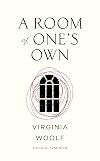
Published in 1929, the titular essay starts out as a lecture on the relationship between women and writing fiction. It is creative and thought-provoking, and not what one would expect an essay to be (at least I didn’t expect it). Woolf writes as other characters, such as Mary Seton or Mary Carmichael, but this is very much a work of non-fiction that addresses the reasons it was so difficult in the past for women to write fiction, including societal mores of earlier eras when women had show more limited (or no) access to funds, education, or private time. She lauds the accomplishment of early women fiction writers such as Jane Austen, George Eliot, and the Brontë sisters.
She takes issue with the men of her own and earlier times who wrote about women. She analyzes several of their works and find that they primarily portray women in limited roles in support of men. Some of these works make outlandish statements that refer to the lesser status of women in the traits such as morality and mental abilities. It made me very glad I did not live back then. While there are still issues in present day, it is certainly nothing like what women of the 19th century (and earlier) had to face. For example, it was acceptable for a husband to beat his wife, and women could not own property. Woolf’s style of expression is unique and creative. I found an edition of this work that included the titular essay (5 stars) and five short stories (4 stars), one of which, my favorite of the bunch, even mentions Clarissa Dalloway. show less
She takes issue with the men of her own and earlier times who wrote about women. She analyzes several of their works and find that they primarily portray women in limited roles in support of men. Some of these works make outlandish statements that refer to the lesser status of women in the traits such as morality and mental abilities. It made me very glad I did not live back then. While there are still issues in present day, it is certainly nothing like what women of the 19th century (and earlier) had to face. For example, it was acceptable for a husband to beat his wife, and women could not own property. Woolf’s style of expression is unique and creative. I found an edition of this work that included the titular essay (5 stars) and five short stories (4 stars), one of which, my favorite of the bunch, even mentions Clarissa Dalloway. show less
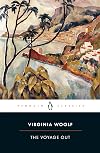
Virgina Woolf's first novel has a few surprises for me. For starters, it doesn't feel Modernist, but more like a traditional novel. It's full of intellectual elements, and games, with literary titles popping up in more and less serious ways. And it has some kind of spiritual whole to it. The title is a perfect one for such a ground-breaking first novel, and it's plot-relevant. And it has an odd humor to it. And some very dark elements.
We follow the strange Rachel Vinrace, a sheltered show more 24-year-old woman raised by her aunts who hasn't done a lot of things. She is obsessed with music and a great piano player. But she hasn't had a romantic relationship. She hasn't formulated her ideas. Humanity is still a great curiosity to her. She's very open to other people's ideas but responds with uninformed sort-of gut responses that may be original or quirky but don't always seem to make much sense. And when things aren't working for her, she returns to the music. This gives her a sort of counter-to-convention mind.
A novel of characters, we see Rachel through many different eyes. Within the book she will travel via her dad's company ship on the voyage out from London to Brazil, with a small group that gain boarding, including Rachel's aunt and uncle, and notably, briefly but prominently, Richard and Clarissa Dalloway. Then she will stay in fictional Santa Marina, Brazil, near a hotel full of English travelers. Latinos and natives are hidden in the background. This is basically an isolated community of well-to-do English adults - married and single, young and older. And they all have some sort of response to Rachel.
These characters may be intelligent and intellectual, or not, but they are all far more conventional than Rachel. So, in a way, they can't see her. One stunning character is Helen Ambrose, based on Woolf's deceased mother, who is Rachel's aunt and tries to play a mothering role. Another prominent character is Terrence Hewet, an intellectually minded wealthy bachelor with a lifetime income, who is also lazy and charming and writing a book he never actually writes. He will find Rachel irresistible and eventually become engaged to her. But there is a dark humor in the clash between his well-meaning, conventional, if young and idealistic, perspective and Rachel's unconventional mind.
There are several mysterious and dark elements of the book, which plays on the exotic locality either onboard the boat, or in Brazil. Rachel's dreams are eerie and striking. There is a sort of heart-of-darkness moment, which is also an engagement scene laying a gentle critique on the concept of marriage.
There are several feminist elements in here, and mostly they come across as a criticism of marriage. Engagement does not make people happy but instead stresses them out and darkens their outlook! Marriages are typically a mess hidden under the covers of convention. Helen is worldly, but her husband Ridley is lost in his office in his academic literary study, translating the ancient Greek poet, Pindar, famous for his odes to obscure Greek Olympian winners. And I cannot overlook Evelyn Murgatroyd, a young, comically and fiercely independent personality, compared to Napoleon, who welcomes and spurns marriage proposals. The illegitimate daughter of a servant, she storms through the book, placing herself in people's way, demanding understanding, needing affectionate attention. She needs men to propose to her, and she need's to reject them. They're simply too small for her character. Altogether, marriage here seems like a terribly dangerous thing.
The book is playfully literary throughout, giving a strong intellectual undertone. We note Rachel hates Jane Austen and Gibbon. But everyone has something literary going on. Ridley Ambrose's Pindar. St. John Hirst, another bachelor based on Lytton Strachey, is incredibly erudite, and socially awkward, especially with woman. He demands Rachel read Gibbon so he can evaluate her intellect! I do love that he reads [[Swinburne]]'s Sapphics during church. But all the characters, even the less scholarly, have literature on the their mind. Even a member of the ship's crew tells Helen of his love for Shakespeare's [Henry V].
And, since I'm already going on way too long, I want to say something about the pace, especially early on. It's not a fast-moving book. But when we are onboard the ship, floating, going seemingly nowhere, constrained by surrounding water, forcing everyone to interact, however awkwardly, it struck me both how mysterious it is, and how [[William Faulkner]] would play with similar themes. Faulkner's second novel, [Mosquitos], is a boat trip in the Louisiana swamps where the boat goes aground and everyone is stuck. Like this novel, his novel is full of conventional and very literary characters and a very impressionable young woman. His characters are more outrageous, and his heroine way more sexualized, but that pace, still, with confined, forced clashes of interaction, ties into the same elements here. Layering that with the maybe [Heart of Darkness] moment, we might have a little Conrad-Woolf-Faulkner literary train, although it probably only exists in my mind.
It's awkward to try to analyze Woolf as her work is so complex, and there is so much serious stuff out on her. It feels like mistakes might strike sparks and spontaneously combust off the screen. But, under that warning, I found that overall the book makes for and ponders a sort of clash, on different levels, between intellectual and rawer humanity, and in that way provides a gentle critique on conventional English cultural norms. Christianity, academia, unfair finances, sexual attraction and marriage all come under some criticism. And the impossibility of communication, of reaching Rachel, seems to provide another, counter theme. The deeper and surficial minds at play.
2026
https://www.librarything.com/topic/378447#9149888 show less
We follow the strange Rachel Vinrace, a sheltered show more 24-year-old woman raised by her aunts who hasn't done a lot of things. She is obsessed with music and a great piano player. But she hasn't had a romantic relationship. She hasn't formulated her ideas. Humanity is still a great curiosity to her. She's very open to other people's ideas but responds with uninformed sort-of gut responses that may be original or quirky but don't always seem to make much sense. And when things aren't working for her, she returns to the music. This gives her a sort of counter-to-convention mind.
A novel of characters, we see Rachel through many different eyes. Within the book she will travel via her dad's company ship on the voyage out from London to Brazil, with a small group that gain boarding, including Rachel's aunt and uncle, and notably, briefly but prominently, Richard and Clarissa Dalloway. Then she will stay in fictional Santa Marina, Brazil, near a hotel full of English travelers. Latinos and natives are hidden in the background. This is basically an isolated community of well-to-do English adults - married and single, young and older. And they all have some sort of response to Rachel.
These characters may be intelligent and intellectual, or not, but they are all far more conventional than Rachel. So, in a way, they can't see her. One stunning character is Helen Ambrose, based on Woolf's deceased mother, who is Rachel's aunt and tries to play a mothering role. Another prominent character is Terrence Hewet, an intellectually minded wealthy bachelor with a lifetime income, who is also lazy and charming and writing a book he never actually writes. He will find Rachel irresistible and eventually become engaged to her. But there is a dark humor in the clash between his well-meaning, conventional, if young and idealistic, perspective and Rachel's unconventional mind.
There are several mysterious and dark elements of the book, which plays on the exotic locality either onboard the boat, or in Brazil. Rachel's dreams are eerie and striking. There is a sort of heart-of-darkness moment, which is also an engagement scene laying a gentle critique on the concept of marriage.
There are several feminist elements in here, and mostly they come across as a criticism of marriage. Engagement does not make people happy but instead stresses them out and darkens their outlook! Marriages are typically a mess hidden under the covers of convention. Helen is worldly, but her husband Ridley is lost in his office in his academic literary study, translating the ancient Greek poet, Pindar, famous for his odes to obscure Greek Olympian winners. And I cannot overlook Evelyn Murgatroyd, a young, comically and fiercely independent personality, compared to Napoleon, who welcomes and spurns marriage proposals. The illegitimate daughter of a servant, she storms through the book, placing herself in people's way, demanding understanding, needing affectionate attention. She needs men to propose to her, and she need's to reject them. They're simply too small for her character. Altogether, marriage here seems like a terribly dangerous thing.
The book is playfully literary throughout, giving a strong intellectual undertone. We note Rachel hates Jane Austen and Gibbon. But everyone has something literary going on. Ridley Ambrose's Pindar. St. John Hirst, another bachelor based on Lytton Strachey, is incredibly erudite, and socially awkward, especially with woman. He demands Rachel read Gibbon so he can evaluate her intellect! I do love that he reads [[Swinburne]]'s Sapphics during church. But all the characters, even the less scholarly, have literature on the their mind. Even a member of the ship's crew tells Helen of his love for Shakespeare's [Henry V].
And, since I'm already going on way too long, I want to say something about the pace, especially early on. It's not a fast-moving book. But when we are onboard the ship, floating, going seemingly nowhere, constrained by surrounding water, forcing everyone to interact, however awkwardly, it struck me both how mysterious it is, and how [[William Faulkner]] would play with similar themes. Faulkner's second novel, [Mosquitos], is a boat trip in the Louisiana swamps where the boat goes aground and everyone is stuck. Like this novel, his novel is full of conventional and very literary characters and a very impressionable young woman. His characters are more outrageous, and his heroine way more sexualized, but that pace, still, with confined, forced clashes of interaction, ties into the same elements here. Layering that with the maybe [Heart of Darkness] moment, we might have a little Conrad-Woolf-Faulkner literary train, although it probably only exists in my mind.
It's awkward to try to analyze Woolf as her work is so complex, and there is so much serious stuff out on her. It feels like mistakes might strike sparks and spontaneously combust off the screen. But, under that warning, I found that overall the book makes for and ponders a sort of clash, on different levels, between intellectual and rawer humanity, and in that way provides a gentle critique on conventional English cultural norms. Christianity, academia, unfair finances, sexual attraction and marriage all come under some criticism. And the impossibility of communication, of reaching Rachel, seems to provide another, counter theme. The deeper and surficial minds at play.
2026
https://www.librarything.com/topic/378447#9149888 show less
Lists
One Day (1)
Want to Read (1)
Emily's Reviews (1)
Existentialism (1)
Franklit (1)
Backlisted (1)
1950s (1)
bound (1)
1940s (1)
Greatest Books (1)
Which house? (1)
Read in 2014 (1)
United Kingdom (1)
First Novels (1)
Magic Realism (1)
Reading list (1)
Metafiction (1)
The "A" List (1)
sad girl books (1)
. (1)
1910s (1)
Short and Sweet (1)
In Our Time books (12)
Persephone (3)
Take Four Books (3)
Romans (3)
Five star books (3)
Literary Witches (3)
Overdue Podcast (3)
AP Lit (3)
Woolf ranked (9)
Reading LIst (8)
Art of Reading (7)
Female Author (6)
1920s (6)
Favourite Books (5)
. (5)
Modernism (5)
Unread books (5)
Folio Society (4)
A Novel Cure (4)
el (4)
1930s (4)
Read (1)
Best First Lines (2)
Read in 2008 (1)
Deathreads (1)
Summer Books (1)
100 (1)
Feminism (2)
E's Reader (2)
Elegant Prose (2)
Ocean (2)
Women's Stories (2)
Books I've read (2)
Schwob Nederland (2)
Best Beach Reads (2)
Read These Too (2)
Awards


You May Also Like


Associated Authors
Statistics
- Works
- 652
- Also by
- 140
- Members
- 119,123
- Popularity
- #66
- Rating
- 4.1
- Reviews
- 1,740
- ISBNs
- 3,776
- Languages
- 37
- Favorited
- 660


