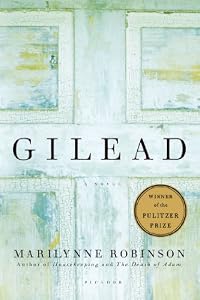
On This Page
Description
As the Reverend John Ames approaches the hour of his own death, he writes a letter to his son chronicling three previous generations of his family, a story that stretches back to the Civil War and reveals uncomfortable family secrets.Tags
Recommendations



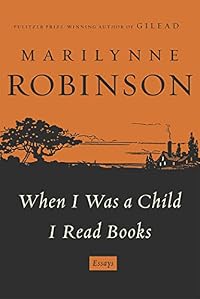
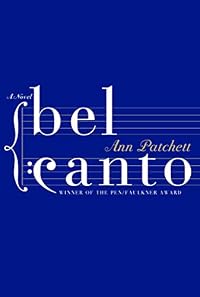
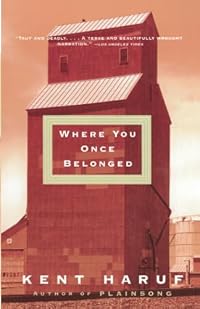
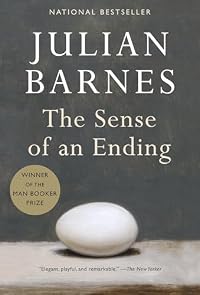


Member Recommendations


Member Reviews
The main word that comes to mind with this book is "Quiet." It is peaceful and calm, but somehow as I was rounding the corner into the final third of the novel, I realized how deeply invested I was in the characters. They are sincere and feel so real and the writing is so beautiful that it creeps in and settles around you, making you forget that you don't live in the small Iowa town of Gilead.
“It is an amazing thing to watch people laugh, the way it sort of takes them over. Sometimes they really do struggle with it . . . so I wonder what it is and where it comes from, and I wonder what it expends out of your system, so that you have to do it till you're done, like crying in a way, I suppose, except that laughter is much more easily show more spent.”
The book is written as a long letter from an elderly minister to his young son. He knows that his death will come before the boy has a chance to grow up and he wants to leave something for him. He wants to explain his life and decisions to him so that he can understand who his father was, even if he doesn't remember him well.
He lived his whole life in the tiny Midwestern town. He remained while others left and yet he is happy in his life. He has a strong faith, but that doesn't mean he never has questions or things he struggles with in his life. There's one man in the town who has always left him feeling disconcerted. He's felt antagonized by him for years, but truly the man is just trying to find his own peace.
“Christianity is a life, not a doctrine . . . I'm not saying never doubt or question. The Lord gave you a mind so that you would make honest use of it. I'm saying you must be sure that the doubts and questions are your own."
BOTTOM LINE: I have a feeling this is one of those books that will keep popping up in my mind over the years. Already I find myself thinking about it and mulling over different parts. I would highly recommend reading it when you are in the mood for a lovely quiet novel. There's no major action, it's about people that feel very real and deal with the same issues we all deal with: acceptance, regret, etc.
“These people who can see right through you never quite do you justice, because they never give you credit for the effort you're making to be better than you actually are, which is difficult and well meant and deserving of some little notice.”
“There are two occasions when the sacred beauty of Creation becomes dazzlingly apparent, and they occur together. One is when we feel our mortal insufficiency to the world, and the other is when we feel the world's mortal insufficiency to us.” show less
“It is an amazing thing to watch people laugh, the way it sort of takes them over. Sometimes they really do struggle with it . . . so I wonder what it is and where it comes from, and I wonder what it expends out of your system, so that you have to do it till you're done, like crying in a way, I suppose, except that laughter is much more easily show more spent.”
The book is written as a long letter from an elderly minister to his young son. He knows that his death will come before the boy has a chance to grow up and he wants to leave something for him. He wants to explain his life and decisions to him so that he can understand who his father was, even if he doesn't remember him well.
He lived his whole life in the tiny Midwestern town. He remained while others left and yet he is happy in his life. He has a strong faith, but that doesn't mean he never has questions or things he struggles with in his life. There's one man in the town who has always left him feeling disconcerted. He's felt antagonized by him for years, but truly the man is just trying to find his own peace.
“Christianity is a life, not a doctrine . . . I'm not saying never doubt or question. The Lord gave you a mind so that you would make honest use of it. I'm saying you must be sure that the doubts and questions are your own."
BOTTOM LINE: I have a feeling this is one of those books that will keep popping up in my mind over the years. Already I find myself thinking about it and mulling over different parts. I would highly recommend reading it when you are in the mood for a lovely quiet novel. There's no major action, it's about people that feel very real and deal with the same issues we all deal with: acceptance, regret, etc.
“These people who can see right through you never quite do you justice, because they never give you credit for the effort you're making to be better than you actually are, which is difficult and well meant and deserving of some little notice.”
“There are two occasions when the sacred beauty of Creation becomes dazzlingly apparent, and they occur together. One is when we feel our mortal insufficiency to the world, and the other is when we feel the world's mortal insufficiency to us.” show less
Quiet, reflective musings of a Christian preacher near the end of his life. In 1957 in the small town of Gilead, Iowa, John Ames is writing an account of his memories for his young son. He knows he will not be around to see him grow up, so he writes his thoughts about life, love, faith, forgiveness, grace, and family history.
It is slow-paced, philosophical, and occasionally meandering. This structure is in keeping with the writing of a long letter. The thin plot concerns Jack Boughton, the son of his neighbor and best friend, who has recently returned to town for unknown reasons. Jack’s backstory, involving family secrets, is gradually revealed.
I enjoyed the contemplative and optimistic tone. I also liked the way it portrays show more acceptance and kindness in the place of judgment. The author writes beautiful scenes of small-town life, portraying the beauty of a simple life with simple pleasures. The writing is quite lovely throughout, such passages such as:
“The moon looks wonderful in this warm evening light, just as a candle flame looks beautiful in the light of the morning. Light within light… It seems to me to be a metaphor for the human soul, the singular light within the great general light of existence.” show less
It is slow-paced, philosophical, and occasionally meandering. This structure is in keeping with the writing of a long letter. The thin plot concerns Jack Boughton, the son of his neighbor and best friend, who has recently returned to town for unknown reasons. Jack’s backstory, involving family secrets, is gradually revealed.
I enjoyed the contemplative and optimistic tone. I also liked the way it portrays show more acceptance and kindness in the place of judgment. The author writes beautiful scenes of small-town life, portraying the beauty of a simple life with simple pleasures. The writing is quite lovely throughout, such passages such as:
“The moon looks wonderful in this warm evening light, just as a candle flame looks beautiful in the light of the morning. Light within light… It seems to me to be a metaphor for the human soul, the singular light within the great general light of existence.” show less
Since its publication, this novel has been steadily recommended to me and I had made several attempts. In fact, I think I have taken this book out of the library more times than any other. I've taken it out of the library, renewed and racked up fines and then returned it, unread. After one more failed attempt (fifty pages farther than previous go's-at-it), I had to return the book to the library one more time. But I had a free audio-book coming my way (via-Audible) and thought I'd give it another try.
My slowness in reading this is not because I couldn't tell it was good. You can pick a page at random and the prose is good, deep and engaging. But I am a slow at reading literature. No shortage of appreciation on my side, fiction just show more demands more of me. Non-fiction requires only attention to detail and the ability to follow an argument. Fiction means entering the world the author has constructed. It demands your whole being.
You find some books when your ready (or from persistence). While I acknowledge the superiority of the written word, Tim Jerome's narration thoroughly engaged me and I found myself transfixed by the word's of John Ames as he records his last days and remembrances for his son. The themes of the novel: fathers & sons, doubt and faith, forgiveness and blessing washed over me. Because I listened to this book on audio, I hit the denouement of the novel while waiting to pick up my kids and walk them home from school. Tethered to my device I had the awkward sensation of being privately emotive in a public place.
Having made the journey once, I definitely want to read this again. show less
My slowness in reading this is not because I couldn't tell it was good. You can pick a page at random and the prose is good, deep and engaging. But I am a slow at reading literature. No shortage of appreciation on my side, fiction just show more demands more of me. Non-fiction requires only attention to detail and the ability to follow an argument. Fiction means entering the world the author has constructed. It demands your whole being.
You find some books when your ready (or from persistence). While I acknowledge the superiority of the written word, Tim Jerome's narration thoroughly engaged me and I found myself transfixed by the word's of John Ames as he records his last days and remembrances for his son. The themes of the novel: fathers & sons, doubt and faith, forgiveness and blessing washed over me. Because I listened to this book on audio, I hit the denouement of the novel while waiting to pick up my kids and walk them home from school. Tethered to my device I had the awkward sensation of being privately emotive in a public place.
Having made the journey once, I definitely want to read this again. show less
The setting is a small rural community in Iowa called Gilead; the time is the 1950's, and the narrator is an elderly minister and family man who sets out to record the things about himself that he wants his 7 year old son to know. The minister, John Ames, is the son and grandson of ministers who also served in Gilead.
The author is female, Marilynne Robinson, but she does a very convincing job of writing from the perspective of an elderly man. In effect, the novel is one long letter, and is carefully composed to slowly reveal the history of the Ames men...and Reverend John is likely a lot more honest on paper than it would be appropriate to be if he were telling a child in real time some of the details that made his grandfather and show more great grandfather so memorable. And of course the letter writer reveals much of himself as he digs deeper and deeper.
His style is conversational, and sometimes he is distracted by the beauty that surrounds him. Reverend Ames shares compelling memories of moonlit nights, the way the wind sounds in the trees, and the beauty of daybreak from within the walls of the old church building. His thoughts often include biblical references, which one might expect from a preacher, and an incredible amount of biblical commentary, not all of which is in agreement with his orthodoxy, but nevertheless provokes thought and reflection.
Ames has been reminded of his mortality by a diagnosis of a weak heart that may not last much longer, and there is so much that he wants his child to know. He lost the wife of his youth in childbirth and expected to spend the rest of his life in service, but alone. His second wife is much younger than he is; she is an unlikely minister's wife, but their love is strong and deep. At one point early in the epistle, John writes:
I'm writing this in part to tell you that if you ever wonder what you've done in your life, and everyone does wonder sooner or later, you have been God's grace to me, a miracle, something more than a miracle. You may not remember me very well at all, and it may seem to you to be no great thing to have been the good child of an old man in a shabby little town you will no doubt leave behind. If only I had the words to tell you.
I mean, is that good writing or what?
And the writer goes on to reveal so much more about the village of Gilead, his lifelong friendship with the Presbyterian minister and his large family, not to mention the saga of his own grandfather, whose vision of Christ led him to leave Maine for Kansas to work for the abolition of slavery. He may have killed a Union soldier, and definitely served as a chaplain during the Civil War. His unorthodox ministry caused a strained relationship with his son, Ames' father, who eventually became a pacifist.
Great writing; great story: you will be moved. the first edition was published in 2004, so you ought to be able to find it at the library and at Half Price books. You'll be missing out if you don't go get it! show less
The author is female, Marilynne Robinson, but she does a very convincing job of writing from the perspective of an elderly man. In effect, the novel is one long letter, and is carefully composed to slowly reveal the history of the Ames men...and Reverend John is likely a lot more honest on paper than it would be appropriate to be if he were telling a child in real time some of the details that made his grandfather and show more great grandfather so memorable. And of course the letter writer reveals much of himself as he digs deeper and deeper.
His style is conversational, and sometimes he is distracted by the beauty that surrounds him. Reverend Ames shares compelling memories of moonlit nights, the way the wind sounds in the trees, and the beauty of daybreak from within the walls of the old church building. His thoughts often include biblical references, which one might expect from a preacher, and an incredible amount of biblical commentary, not all of which is in agreement with his orthodoxy, but nevertheless provokes thought and reflection.
Ames has been reminded of his mortality by a diagnosis of a weak heart that may not last much longer, and there is so much that he wants his child to know. He lost the wife of his youth in childbirth and expected to spend the rest of his life in service, but alone. His second wife is much younger than he is; she is an unlikely minister's wife, but their love is strong and deep. At one point early in the epistle, John writes:
I'm writing this in part to tell you that if you ever wonder what you've done in your life, and everyone does wonder sooner or later, you have been God's grace to me, a miracle, something more than a miracle. You may not remember me very well at all, and it may seem to you to be no great thing to have been the good child of an old man in a shabby little town you will no doubt leave behind. If only I had the words to tell you.
I mean, is that good writing or what?
And the writer goes on to reveal so much more about the village of Gilead, his lifelong friendship with the Presbyterian minister and his large family, not to mention the saga of his own grandfather, whose vision of Christ led him to leave Maine for Kansas to work for the abolition of slavery. He may have killed a Union soldier, and definitely served as a chaplain during the Civil War. His unorthodox ministry caused a strained relationship with his son, Ames' father, who eventually became a pacifist.
Great writing; great story: you will be moved. the first edition was published in 2004, so you ought to be able to find it at the library and at Half Price books. You'll be missing out if you don't go get it! show less
In "Gilead" Marilynne Robinson plumbs the depths of character, faith and memory. The small ordinary instances in John Ames's life aren't freighted with undue weight but presented with clarity and imbued with the significance each individual attaches to their own histories. How Robsinson achieves this is masterful. In this concise book Robinson conceptualizes the scope of a life and takes it all in from the long, dark periods to the ever shortening moments of joy leading up to John's death. This is perhaps the most impressive aspect of the author's craft in this novel but the discourse and wisdom dispensed in John's thoughts on theology and the nature of faith further contribute to the beautiful gravity of this work.
The story of Gilead is deceptively simple: John Ames, a Congregationalist minister presiding over the town of Gilead in 1950's Iowa, is nearing the end of his life. He's in his 80's, has a much younger wife and a seven year old son, and he worries that his son will grow up not knowing the man his father was, only knowing the old, gentle Reverend he has become. So Gilead is the letter Ames writes to his son to ensure that Ames and his history is passed down.
The language is also simple, in its way. Measured and careful, here careful literally meaning "full of care," it is the exact embodiment of Ames, a paced, virtuous prose for a virtuous man. There are shades of Steinbeck, of Melville, and it's written in such a precise voice you show more immediately feel every breath, every step Ames takes as he tells his story to his son.
But what Marilynne Robinson has accomplished with Gilead is something far greater than the simple story of a minister wanting his son to remember him. She's taken the essence of family, of the love a father holds for his child, and distilled it in a work that reading it brings to mind all the images, scents, and sounds of a life lived radiantly and passionately with love. Only her second novel, written 24 years after her first, Gilead won both the National Book Critics Circle Award and the Pulitzer Prize, and very rarely have I read something that so instantly canonizes itself in my mind.
Ames' story isn't just his own, it crosses and observes the events that marked the lives of his father, his grandfather, and his best friend and fellow man of God Old Robert Boughton, a man also in failing health, and a man with a shining eye for his son, John "Jack" Ames Boughton, named after Ames during his baptism and newly returned to Gilead for purposes not made clear until the end of the novel. And as Ames writes to his son about his history, he can't help but also write of his present, and his fears around Jack and his ever-increasing presence within his family's lives.
One of the great surprises Robinson provides is that the circumstance described above doesn't go in the direction you hink it's going to go, although she has a lot of fun making you think it might. What is does do is focus for Ames the weaknesses he has to overcome, and provide him his last chance to redeem Jack and his own behavior towards him. When Jack finally explains his situation and intentions to Ames, you realize that as Ames is compelled to write this accounting to his biological son, so must he also reconcile his life and provide the things needed to his spiritual son.
At only 250 pages, it's incredible that Gilead packs as much content as it does. It just goes to prove that in the hands of a master like Robinson, 250 pages is enough for an entire life. I can't recommend this book highly enough, and I can't wait to get my hands on her newest novel Home, which seems to tell the same story from the perspective of the Boughton family. This is an instant classic and without a doubt the book to beat for my Book of the Year for 2008. show less
The language is also simple, in its way. Measured and careful, here careful literally meaning "full of care," it is the exact embodiment of Ames, a paced, virtuous prose for a virtuous man. There are shades of Steinbeck, of Melville, and it's written in such a precise voice you show more immediately feel every breath, every step Ames takes as he tells his story to his son.
But what Marilynne Robinson has accomplished with Gilead is something far greater than the simple story of a minister wanting his son to remember him. She's taken the essence of family, of the love a father holds for his child, and distilled it in a work that reading it brings to mind all the images, scents, and sounds of a life lived radiantly and passionately with love. Only her second novel, written 24 years after her first, Gilead won both the National Book Critics Circle Award and the Pulitzer Prize, and very rarely have I read something that so instantly canonizes itself in my mind.
Ames' story isn't just his own, it crosses and observes the events that marked the lives of his father, his grandfather, and his best friend and fellow man of God Old Robert Boughton, a man also in failing health, and a man with a shining eye for his son, John "Jack" Ames Boughton, named after Ames during his baptism and newly returned to Gilead for purposes not made clear until the end of the novel. And as Ames writes to his son about his history, he can't help but also write of his present, and his fears around Jack and his ever-increasing presence within his family's lives.
One of the great surprises Robinson provides is that the circumstance described above doesn't go in the direction you hink it's going to go, although she has a lot of fun making you think it might. What is does do is focus for Ames the weaknesses he has to overcome, and provide him his last chance to redeem Jack and his own behavior towards him. When Jack finally explains his situation and intentions to Ames, you realize that as Ames is compelled to write this accounting to his biological son, so must he also reconcile his life and provide the things needed to his spiritual son.
At only 250 pages, it's incredible that Gilead packs as much content as it does. It just goes to prove that in the hands of a master like Robinson, 250 pages is enough for an entire life. I can't recommend this book highly enough, and I can't wait to get my hands on her newest novel Home, which seems to tell the same story from the perspective of the Boughton family. This is an instant classic and without a doubt the book to beat for my Book of the Year for 2008. show less
I'd had this book on my shelves for an AGE. Probably over a decade at least. But what finally pushed me to pick this up and read it was the Book Riot Podcast — it's a book the hosts often refer to, constantly recommend, and at some point they asked, if you're a long-time listener of this show and haven't read this book yet...?
Okay, fine, I said. I'll read it.
And as soon as I did... the John Brown connection? The Kansas connection? The evolution of theology as influenced by current events/generations? No, I, TOO now want to know how I went so long without reading this!
I LOVED this book. Ravenously loved it. I gifted copies to multiple people I know. I loved the period, the tone, the theology, the Kansas/Iowa, the John Brown (who show more appears only peripherally in this picture but LOOMS LARGE), the small town pasturage, the prairie, the small town.
Do I love it enough to read the rest of the books? I don't know. I think the parts I am obviously interested in have already been told. But still. A five-star read, easily jumps to the list of the books of my heart forever. show less
Okay, fine, I said. I'll read it.
And as soon as I did... the John Brown connection? The Kansas connection? The evolution of theology as influenced by current events/generations? No, I, TOO now want to know how I went so long without reading this!
I LOVED this book. Ravenously loved it. I gifted copies to multiple people I know. I loved the period, the tone, the theology, the Kansas/Iowa, the John Brown (who show more appears only peripherally in this picture but LOOMS LARGE), the small town pasturage, the prairie, the small town.
Do I love it enough to read the rest of the books? I don't know. I think the parts I am obviously interested in have already been told. But still. A five-star read, easily jumps to the list of the books of my heart forever. show less
Members
- Recently Added By
Published Reviews
ThingScore 100
But in Gilead, Robinson is addressing the plight of serious people with a calm-eyed reminder of the liberal philosophical and religious traditions of a nation whose small towns "were once the bold ramparts meant to shelter peace", citing a tradition of intellectual discursiveness and a historical cycle that shifts from radical to conservative then back to radical again, and presenting, as if show more from the point of view of time's own blindness, an era when unthinkable things were happening but were themselves about to change unimaginably, for the better. It takes issue with the status quo by being a message, across generations, from a now outdated status quo. "What have I to leave you but the ruins of old courage, and the lore of old gallantry and hope?" show less
added by melmore
Gradually, Robinson's novel teaches us how to read it, suggests how we might slow down to walk at its own processional pace, and how we might learn to coddle its many fine details. Nowadays, when so many writers are acclaimed as great stylists, it's hard to make anyone notice when you praise a writer's prose. There is, however, something remarkable about the writing in 'Gilead.' It's not just show more a matter of writing well, although Robinson demonstrates that talent on every page [...] Robinson's words have a spiritual force that's very rare in contemporary fiction -- what Ames means when he refers to 'grace as a sort of ecstatic fire that takes things down to essentials. show less
added by melmore
Marilynne Robinson draws on all of these associations in her new novel, which -- let's say this right now -- is so serenely beautiful, and written in a prose so gravely measured and thoughtful, that one feels touched with grace just to read it. Gilead possesses the quiet ineluctable perfection of Flaubert's "A Simple Heart" as well as the moral and emotional complexity of Robert Frost's show more deepest poetry. There's nothing flashy in these pages, and yet one regularly pauses to reread sentences, sometimes for their beauty, sometimes for their truth: "Adulthood is a wonderful thing, and brief. You must be sure to enjoy it while it lasts." show less
added by melmore
Lists

The Guardian's 1000 Novels Everyone Must Read
1,005 works; 546 members

Pulitzer Prize Winners for Fiction
102 works; 54 members

Recommend the 20 best books you've read in the last five years
2,168 works; 606 members

Favourite Women's Prize for Fiction, Orange & Bailey's Prize contenders
132 works; 52 members

1001 Books You Must Read Before You Die
1,448 works; 1,131 members

Best 21st Century Books (So Far)
670 works; 86 members

Great American Novels
158 works; 40 members
Historical Fiction
889 works; 91 members

Best Contemporary Literary Fiction (Around the Last 30 Years)
388 works; 122 members

Fiction Featuring Cranky, Eccentric Old Folks
80 works; 35 members
Favourite Books
1,817 works; 308 members

Female Author
1,235 works; 67 members

The Guardian's 100 best books of the 21st century
100 works; 21 members

PBS The Great American Read
100 works; 21 members
BBC's 100 Novels That Shaped Our World
100 works; 22 members

Philosophical Fiction
97 works; 27 members

Books recommended by Barack Obama
295 works; 28 members

50 Books from the Past 50 Years
50 works; 8 members

Books Set in Iowa
34 works; 8 members

Unread books
1,063 works; 82 members

the old and the restless
62 works; 14 members
Books tagged favorites
390 works; 30 members

100 New Classics
101 works; 13 members
Best Family Stories
241 works; 22 members

Church Times 100 Best Christian Books
106 works; 26 members

Pen/Faulkner Winners and Finalists
178 works; 9 members

Best family sagas
244 works; 34 members

Religious Fiction
58 works; 13 members

Top Five Books of 2014
1,064 works; 397 members

Top Five Books of 2018
802 works; 264 members

Elena Ferrante's 40 favourite books by female authors
40 works; 10 members
Top Five Books of 2016
795 works; 229 members

Five star books
1,755 works; 107 members

BBC Radio 4 Bookclub
340 works; 13 members
The American Experience
173 works; 18 members

One Book, Many Authors
441 works; 40 members

2000s decade
85 works; 7 members

End of Your Life Book Club
134 works; 4 members
Books Featured on Readers' Review of the Diane Rehm Show
161 works; 8 members
Novels featuring Fathers
56 works; 7 members
SantaThing 2014 Gifts
299 works; 17 members

Allie's Favourite 150 Books
145 works; 3 members

Books Read in 2016
4,666 works; 199 members
Overdue Podcast
803 works; 9 members

Obama Reads
181 works; 3 members
Books Set in Small Towns and Villages
278 works; 16 members

Top Five Books of 2012
55 works; 10 members

A's favorite novels
100 works; 3 members

The American novels that should have won the Booker prize
16 works; 3 members

Books Read in 2006
421 works; 7 members
Literary Travelogue of the United States Challenge
133 works; 6 members

Books Read in 2020
4,379 works; 123 members

Blue Pyramid 1,276 Best Books of All Time
1,248 works; 32 members
American Lit for Eng 11 Research Project
368 works; 6 members

Books We Love to Reread
688 works; 296 members

NYT Readers best of 21st C
100 works; 8 members

To Read
617 works; 7 members
Books That Made Us Cry
278 works; 145 members

Retrospective of 20th- and 21st-century literature
154 works; 1 member

.
184 works; 1 member

BBC World Book Club
261 works; 5 members
Vlogbrothers Book Recommendations
307 works; 4 members

Top Five Books of 2025
954 works; 302 members
NYT 100 best books of 21st C
100 works; 31 members

The Five Books That Represent Us
390 works; 147 members

Novels without quotation marks
25 works; 1 member

N.T. McQueen's Inspiration List
23 works; 1 member

Mustich's 1000 Books to Read Before You Die: A Life Changing List
1,001 works; 18 members

Favorite Epistolary Fiction
143 works; 144 members

Books Read in 2019
4,052 works; 108 members

Best books I read in 2013
152 works; 3 members

Books You Couldn't Finish
202 works; 29 members

Christianity Books You've Read
179 works; 18 members

Books Read in 2018
4,360 works; 110 members

All Iowa Reads
13 works; 2 members
Alphabetical Books
211 works; 3 members

You Couldn't Pay Me to Read That (Take 2)
203 works; 86 members
Talk Discussions
Past Discussions
Gilead in Someone explain it to me... (July 2014)
Author Information

20+ Works 32,366 Members
Marilynne Robinson's first novel, Housekeeping, won the Hemingway Foundation/PEN Award. Her other novels include Mother Country and Lila. Gilead won the 2005 Pulitzer Prize for Fiction and the National Book Critics Circle Award and Home won the Orange Prize and the Los Angeles Times Book Prize. Her nonfiction books include When I Was a Child I show more Read Books, Absence of Mind, and The Death of Adam. She was the recipient of a 2012 National Humanities Medal, awarded by President Barack Obama. She received the Library of Congress Prize for American Fiction in 2016. She has been named the winner of the Richard C Holbrooke Distinguished Achievement Award as part of the 2016 Dayton Literary Peace Prize. She was included on Time magazine's annual list of the 100 most influential people in the world. (Bowker Author Biography) show less
Some Editions
Awards and Honors
Series

Belongs to Publisher Series
Mirmanda (170)
Work Relationships
Is contained in
Has as a student's study guide
Common Knowledge
- Canonical title
- Gilead
- Original title
- Gilead
- Original publication date
- 2004
- People/Characters
- John Ames; Jack Boughton; Robert Boughton; Glory Boughton
- Important places
- Gilead, Iowa, USA; Iowa, USA
- Dedication
- For John and Ellen Summers, my dear father and mother.
- First words
- I told you last night that I might be gone sometime, and you said, Where, and I said, To be with the Good Lord, and you said, Why, and I said, Because I'm old, and you said, I don't think you're old.
- Quotations
- This is an interesting planet. It deserves all the attention you can give it (p. 28).
I want your dear perishable self to live long and love this poor perishable world (p.53).
I can't believe we will forget our sorrows altogether. That would mean forgetting that we had lived, humanly speaking. Sorrow seems to me to be a great part of the substance of human life (p. 104).
But if the awkwardness and falseness and failure of religion are interpreted to mean there is no core of truth in it.... the people are disables from trusting their thoughts, their expressions of belief, and their understandi... (show all)ng, and even from believing in the essential dignity of their and their neighbors' endlessly flawed experience of belief (p.146).
I conceal my motives from myself pretty effectively sometimes (p. 147).
Because nothing true can be said about God from a posture of defense (p. 177).
It was Coleridge who said Christianity is a life not a doctrine, words to that effect. I'm not saying never doubt or question. The Lord gave you a mind so that you would make honest use of it... you must be sure that the doub... (show all)ts and questions are your own (p.179).
Love is holy because it is like grace -- the worthiness of its object is never really what matters (p.209).
Wherever you turn your eyes the world can shine like transfiguration. You don't have to bring a thing to it except a little willingness to see. Only who would have the courage to see it? (p. 245).
There is something real signified by that word 'just' that proper language won't acknowledge. (p. 32). - Last words
- (Click to show. Warning: May contain spoilers.)I'll pray, and then I'll sleep.
- Blurbers
- Waters, Sarah
- Original language
- English
- Canonical DDC/MDS
- 813.54
- Canonical LCC
- PS3568.O3125
Classifications
Statistics
- Members
- 13,398
- Popularity
- 574
- Reviews
- 416
- Rating
- (3.90)
- Languages
- 17 — Catalan, Czech, Danish, Dutch, English, Finnish, French, German, Greek, Italian, Norwegian (Bokmål), Polish, Croatian, Spanish, Swedish, Turkish, Portuguese (Portugal)
- Media
- Paper, Audiobook, Ebook
- ISBNs
- 89
- ASINs
- 33