On This Page
Description
After a cyclone transports her to the land of Oz, Dorothy must seek out the great wizard in order to return to Kansas.Tags
Recommendations

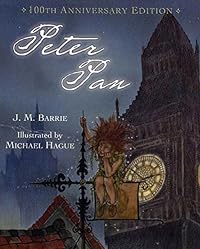


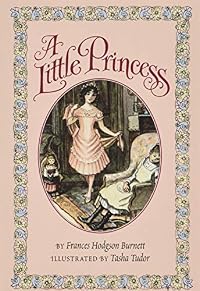

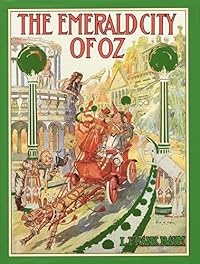
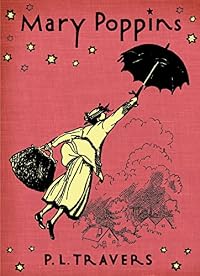

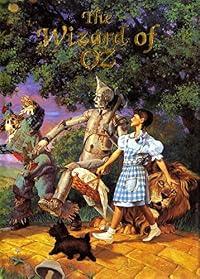


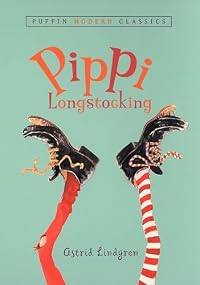
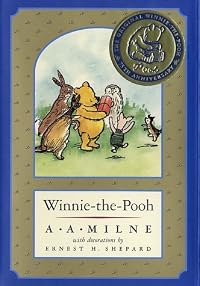
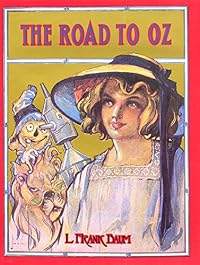
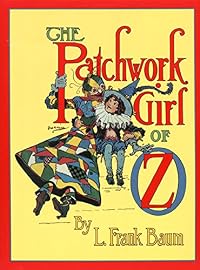



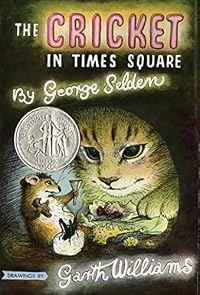
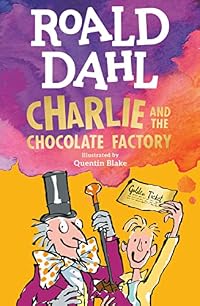
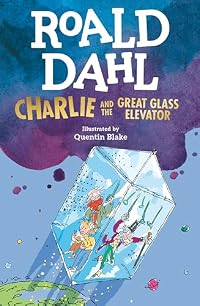
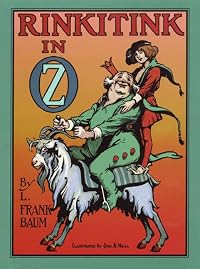
Member Recommendations

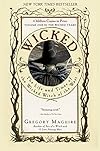
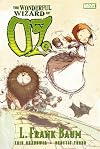

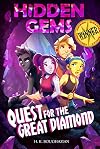
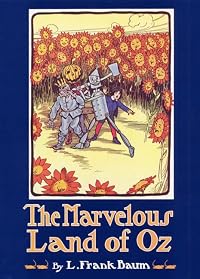
JenniferRobb Gem's quest to find the Great Diamond reminds me of Dorothy's quest to find the Wizard.
20
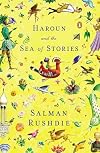


fulner Explore Bill Still's take on the symbolism within Baum's Wonderful Wizard of Oz and its relation to the global economic system amid Baum's bought with with several newspapers during the progressive era.
13
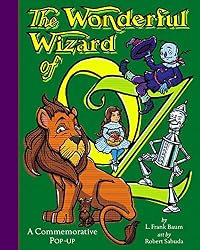
Othemts These books share a similar quest for self-knowledge with the ultimate realization that what one is looking for was with you all the time. After all, there's no place like Om
510
Member Reviews
Anne Hathaway is not a horrible narrator. When she is narrating lines of text, her voice is quite pleasant, melodious, and very easy on the ears. Her vocalizations of the characters, however, leave a lot to be desired. The Lion has a Jewish twang, while the Scarecrow definitely has a Brooklyn lilt. Dorothy sounds like she is always going to cry, and the Tin Woodman sounds like he is also constantly on the verge of tears. Had Ms. Hathaway not tried so hard to differentiate the voices, the entire performance would have been much more even and bearable. Unfortunately, her voices becomes so distracting that one begins to cringe at the mere thought of more dialogue. This is not the type of narrator experience one should have when one is show more already highly antagonistic towards the story.
That being said, there are some pleasant surprises that slightly redeem the story. Knowing about the hypothesized allegorical connections before listening or reading the original version makes one focus on the multiple mentions of silver, green, and gold throughout the story. (Unfortunately, whether the allegory is true or not is not something a generic reader will ever be able to discern.) Then there is the addition of a backstory for the Flying Monkeys, which makes them less frightening and much more interesting characters. The details of the book omitted from the movie really do add a bit more credence to the story, although that is not saying much.
The main issue with The Wonderful Wizard of Oz is that it passes itself off as an adult warning tale hidden within the confines of a children’s story, and neither are very good stories or warnings. There is no doubt that the use of color is a deliberate choice, and there is plenty of symbolism throughout the story. However, it is obtuse symbolism. Even literary scholars do not agree on Baum’s ultimate message. There is something fundamentally wrong and almost subliminal about Baum’s motivation when no one can interpret his message. As for the child’s tale portion, there are aspects of the story that seem questionable for its audience. The killing, the slavery, and the trickery are all one thing, but the characters themselves are also problematic. They are embarrassingly clueless and naïve, something which just does not mesh well with today’s information-driven culture. They do not question authority, and they earn rewards for their lack of challenge. They are nothing but blind followers, not the mindset most parents want to teach their children. The children’s story may have been appropriate for the time in which it was written, but it does not cross generations at all.
I am not and have never been a fan of the movie version of The Wizard of Oz. Dorothy and her friends drive me batty. There is something about her voice that makes me cringe. The story is too extreme in its lessons of good and evil for enjoyment, and while the cinematography is gorgeous, it does nothing to improve the overall plot. I was really hoping the combination of Anne Hathaway and the original version of the story would be enough to change my mind. Alas, it is not enough, and my attempt to at least understand the fascination of this weird and pitiful story is at an end. show less
That being said, there are some pleasant surprises that slightly redeem the story. Knowing about the hypothesized allegorical connections before listening or reading the original version makes one focus on the multiple mentions of silver, green, and gold throughout the story. (Unfortunately, whether the allegory is true or not is not something a generic reader will ever be able to discern.) Then there is the addition of a backstory for the Flying Monkeys, which makes them less frightening and much more interesting characters. The details of the book omitted from the movie really do add a bit more credence to the story, although that is not saying much.
The main issue with The Wonderful Wizard of Oz is that it passes itself off as an adult warning tale hidden within the confines of a children’s story, and neither are very good stories or warnings. There is no doubt that the use of color is a deliberate choice, and there is plenty of symbolism throughout the story. However, it is obtuse symbolism. Even literary scholars do not agree on Baum’s ultimate message. There is something fundamentally wrong and almost subliminal about Baum’s motivation when no one can interpret his message. As for the child’s tale portion, there are aspects of the story that seem questionable for its audience. The killing, the slavery, and the trickery are all one thing, but the characters themselves are also problematic. They are embarrassingly clueless and naïve, something which just does not mesh well with today’s information-driven culture. They do not question authority, and they earn rewards for their lack of challenge. They are nothing but blind followers, not the mindset most parents want to teach their children. The children’s story may have been appropriate for the time in which it was written, but it does not cross generations at all.
I am not and have never been a fan of the movie version of The Wizard of Oz. Dorothy and her friends drive me batty. There is something about her voice that makes me cringe. The story is too extreme in its lessons of good and evil for enjoyment, and while the cinematography is gorgeous, it does nothing to improve the overall plot. I was really hoping the combination of Anne Hathaway and the original version of the story would be enough to change my mind. Alas, it is not enough, and my attempt to at least understand the fascination of this weird and pitiful story is at an end. show less
Enduring story, but between the ever earnest Dorothy and Gregory Maguire's Elphaba, I'm siding with the Wicked Witch of the West (whose great film lines - 'and your little dog too!' - started out as 'Watch out - here I go!'). And why would anyone have a burning desire to return to Kansas? Love the illustrations though.
Low rating on this one, because while it's a kids book, I'm reading it with a critical eye to all the weird plot holes. I get that it is an episodic story with each chapter having some kind of small but surmountable obstacle, but it just makes No Sense as a whole story.
I have an issue with 'it's okay to kill people if they are evil', and that definitely turns up more than once. And 'good people can be trusted with too much power, because they are good'. Although that latter one at least is followed up by the 'good' people doing small things with their too much power, and then handing the power on.
In terms of topics I think would need discussing with kids - one character is emotional about killing a small animal, and then turns around show more and has no qualms about killing two others. And isn't happy about the lion going off to find something to eat. I didn't notice any explicit bigotry, which is a surprise in a kids book of this era. show less
I have an issue with 'it's okay to kill people if they are evil', and that definitely turns up more than once. And 'good people can be trusted with too much power, because they are good'. Although that latter one at least is followed up by the 'good' people doing small things with their too much power, and then handing the power on.
In terms of topics I think would need discussing with kids - one character is emotional about killing a small animal, and then turns around show more and has no qualms about killing two others. And isn't happy about the lion going off to find something to eat. I didn't notice any explicit bigotry, which is a surprise in a kids book of this era. show less
The Wizard of Oz, illustrated by Michael Hague.
I grew up reading the Oz books - L. Frank Baum's fourteen stories set in that magical country, as well as Ruth Plumly Thompson's twenty-one subsequent tales - and have always had a soft spot for them. This first and best-known entry in the series, immortalized in the musical film made of it in 1939, was the beginning of it all. As a child, I owned this edition by Michael Hague, given to me by my grandparents on my seventh birthday. Although I have since read the facsimile reproduction of the original first edition, with the charming artwork by W.W. Denslow, Hague's illustrations will always be connected to Oz, in my mind. It is a cruel irony that now, just as I am embarking on a show more retrospective rereading project, I have had the misfortune to lose my childhood copy of this book. I would have enjoyed contrasting and comparing it with the Denslow... show less
I grew up reading the Oz books - L. Frank Baum's fourteen stories set in that magical country, as well as Ruth Plumly Thompson's twenty-one subsequent tales - and have always had a soft spot for them. This first and best-known entry in the series, immortalized in the musical film made of it in 1939, was the beginning of it all. As a child, I owned this edition by Michael Hague, given to me by my grandparents on my seventh birthday. Although I have since read the facsimile reproduction of the original first edition, with the charming artwork by W.W. Denslow, Hague's illustrations will always be connected to Oz, in my mind. It is a cruel irony that now, just as I am embarking on a show more retrospective rereading project, I have had the misfortune to lose my childhood copy of this book. I would have enjoyed contrasting and comparing it with the Denslow... show less
If Philip K Dick and Hieronymus Bosch collaborated on a childrens' book, this is what it would look like. L Frank Baum's 1901 apocalyptic psychadelic freakout classic signals the end of the well-ordered and reasonable Victorian world. Aguished midwestern teen Dorothy, raised by her Aunt and "Uncle" in the depleted midwest wastelands escapes into an allegorical crazyworld to befriend the walking, breathing icons of her adolescent insecurities: cowardace, stupidity, and heartlessness (literally!). To conquer her fears and return to reality, she embarks on an odyssey highlighted by confrontation with chimeric tiger/bears, a meeting with the flawed dictator of her fantasyland, and in the culminating scene, she participates in the homicide show more of her own alter-ego: the Wicked Witch of the West (a scene which is reprised well in Chuck Palahniuk's 1996 [book:Fight Club: a novel|5759]). In 2009, this would be called schizoid disassociative disorder, and not surprisingly, The Wizard of Oz *IS* mentioned as a trigger stimulus in [book:Thanks For The Memories... The Truth Has Set Me Free The Memoirs of Bob Hope's and Henry Kissinger's Mind-Controlled Slave|920701].
The Wizard of Oz was written between Japan's crushing victories in the First Sino-Japanese War (1894) and the Russo-Japanese War (1905). The Sino-Japanese War showcased the rapid strides Japan had taken towards modernization, beginning in the Meji Era (1868), and the war concluded with Japan routing the Chinese navy, dethroning their ruler in Korea, and seizing Manchuria. [book:The Sino-Japanese War of 1894-1895: Perceptions Power and Primacy|164645] Just a few years later, Russia's humiliation at the hands of the Japanese navy was the first time a Western power had been so decisively decimated by an Eastern power since the Muslims took Constantinople in 1453. Western anguish over Japan's meteoric ascendency in this era cannot be overstated. It was a veritable earthquake in diplomatic circles, and seems to have loomed large in Baum's mind, given his incessant symbology hammering away at this, including: the East vs. West witches, the China village, the Emerald (jade) City, the Wizard's hegemony over Oz through control of technology, and the Lion (an effete British Empire, unable to challange the flying monkeys -which work EVEN BETTER ,post-Pearl Harbor, as avatars of Japanese militarism). In the book, Dorothy's shoes are silver, which some believe is an obscure reference to the silver standard- a hotly debated monetary policy issue at the time of writing. By the 1930's when the movie was made, the silver standard issue was no longer in the public eye. With color film available, MGM studio heads made the shoes (ultimately the vehicles of her escape) ruby red. It has been pointed out that the red showed up better on screen than silver, but coincidentally or not, red also seems a better choice, serving as a reference to the iconic Japanese song, Akai Kutsu ("red shoes"), which laments "the girl in the red shoes" who takes a voyage with a foreigner from the West, never to return. Check out the lyrics (with translation), and even listen to the song at Akai Kutsu link
In present day, we have grown accustomed to this sort of psycho-chaotic political angst literature, perhaps in part because of the annual television broadcasts of The Wizard over these past forty years. Sure, Philip K Dick, Aldous Huxley, William Gibson, and H P Lovecraft wrote plenty of even more f'd up sh*t later on, but by that time, the public had been completely desensitized. Baum, on the other hand, was writing in the friggin' VICTORIAN age! Counterculture childrens' television moguls Sid and Marty Krofft were very influenced by the Oz movie, and Sid even contributes to [book:Short and Sweet: The Life and Times of the Lollipop Munchkin|397780]. The Kroffts loosely based their early 1970's television show "Liddsville" on The Wizard of Oz, but re-cast it with a male protagonist, and dropped all the anguish about Japanese expansionism, despite the impending juggernaut Japanese economy of the 1980's. (A samauri helmet character does appear in one episode, however. Learn more about it, if you like, with[book:Pufnstuf Other Stuff: The Weird and Wonderful World of Sid Marty Krofft|1064718] ) Liddsville didn't seem to work well in the video format, and failed in my opinion, because it wasn't angry enough. show less
The Wizard of Oz was written between Japan's crushing victories in the First Sino-Japanese War (1894) and the Russo-Japanese War (1905). The Sino-Japanese War showcased the rapid strides Japan had taken towards modernization, beginning in the Meji Era (1868), and the war concluded with Japan routing the Chinese navy, dethroning their ruler in Korea, and seizing Manchuria. [book:The Sino-Japanese War of 1894-1895: Perceptions Power and Primacy|164645] Just a few years later, Russia's humiliation at the hands of the Japanese navy was the first time a Western power had been so decisively decimated by an Eastern power since the Muslims took Constantinople in 1453. Western anguish over Japan's meteoric ascendency in this era cannot be overstated. It was a veritable earthquake in diplomatic circles, and seems to have loomed large in Baum's mind, given his incessant symbology hammering away at this, including: the East vs. West witches, the China village, the Emerald (jade) City, the Wizard's hegemony over Oz through control of technology, and the Lion (an effete British Empire, unable to challange the flying monkeys -which work EVEN BETTER ,post-Pearl Harbor, as avatars of Japanese militarism). In the book, Dorothy's shoes are silver, which some believe is an obscure reference to the silver standard- a hotly debated monetary policy issue at the time of writing. By the 1930's when the movie was made, the silver standard issue was no longer in the public eye. With color film available, MGM studio heads made the shoes (ultimately the vehicles of her escape) ruby red. It has been pointed out that the red showed up better on screen than silver, but coincidentally or not, red also seems a better choice, serving as a reference to the iconic Japanese song, Akai Kutsu ("red shoes"), which laments "the girl in the red shoes" who takes a voyage with a foreigner from the West, never to return. Check out the lyrics (with translation), and even listen to the song at Akai Kutsu link
In present day, we have grown accustomed to this sort of psycho-chaotic political angst literature, perhaps in part because of the annual television broadcasts of The Wizard over these past forty years. Sure, Philip K Dick, Aldous Huxley, William Gibson, and H P Lovecraft wrote plenty of even more f'd up sh*t later on, but by that time, the public had been completely desensitized. Baum, on the other hand, was writing in the friggin' VICTORIAN age! Counterculture childrens' television moguls Sid and Marty Krofft were very influenced by the Oz movie, and Sid even contributes to [book:Short and Sweet: The Life and Times of the Lollipop Munchkin|397780]. The Kroffts loosely based their early 1970's television show "Liddsville" on The Wizard of Oz, but re-cast it with a male protagonist, and dropped all the anguish about Japanese expansionism, despite the impending juggernaut Japanese economy of the 1980's. (A samauri helmet character does appear in one episode, however. Learn more about it, if you like, with[book:Pufnstuf Other Stuff: The Weird and Wonderful World of Sid Marty Krofft|1064718] ) Liddsville didn't seem to work well in the video format, and failed in my opinion, because it wasn't angry enough. show less
A perfectly pleasant, though unremarkable, read. I think this book suffers from the world it created being so well-known by modern readers. I probably would have been more enchanted by Munchkinland and the Emerald City and so on, had I not already seen the movie several times and been a huge fan of the musical Wicked. I enjoyed getting to juxtapose the events of the book and the events of the movie, and I enjoyed the more obscure sections of the book that weren't represented one to one in the movie. Seems like a perfectly fine children's book, with an easy enough plot to follow, some repetition to help guide a young reader along, and plenty of whimsy.
The introduction by the author that was included in my edition had Baum stating that show more his goal while writing this story was "solely to please the children of today" and to write a "modernized fairy tale, in which the wonderment and joy are retained and the heartaches and nightmares are left out." In that sense, I'd say Baum achieved his goal, though I'm not sure we agree on what exactly makes a good children's story. Many kids simply love being frightened, in a safe environment, such as with a parent reading them a story, and that can add to the "wonderment and joy" of their experience. The Wonderful Wizard of Oz, by contrast to the tales of Grimm and Andersen, to whom Baum is directly comparing himself, feels somewhat flattened. While there are still highs and lows, the stakes never feel insurmountable and consequences seem to be nonexistent. As a result, after the first few setbacks are easily overcome by our heroes, the book becomes almost boring.
Anyway, I read this as preparation for reading Gregory Maguire's Wicked, so, as a book that I felt I needed to check off my list, as I said, it was perfectly pleasant. show less
The introduction by the author that was included in my edition had Baum stating that show more his goal while writing this story was "solely to please the children of today" and to write a "modernized fairy tale, in which the wonderment and joy are retained and the heartaches and nightmares are left out." In that sense, I'd say Baum achieved his goal, though I'm not sure we agree on what exactly makes a good children's story. Many kids simply love being frightened, in a safe environment, such as with a parent reading them a story, and that can add to the "wonderment and joy" of their experience. The Wonderful Wizard of Oz, by contrast to the tales of Grimm and Andersen, to whom Baum is directly comparing himself, feels somewhat flattened. While there are still highs and lows, the stakes never feel insurmountable and consequences seem to be nonexistent. As a result, after the first few setbacks are easily overcome by our heroes, the book becomes almost boring.
Anyway, I read this as preparation for reading Gregory Maguire's Wicked, so, as a book that I felt I needed to check off my list, as I said, it was perfectly pleasant. show less
Book 11 - L.Frank Baum - The Wizard of Oz
Many, many moons ago when I was a lad and the world was still in black and white I was one of the main characters in my primary school play of The Wizard of Oz. I played the Scarecrow of course...if I only had a brain. After a slight diversion into the serious world of Mr Grisham I decided it was time to return to Oz.
Now we all know the story...don’t we ? With Silver Shoes, the deadly poppy field, the dainty china country and the country of the quadlings - this was all new to me. And it is gruesome...properly gruesome with wolves getting their heads cut off and the giant spider...eughhh.
It is also remarkably witty...just after Scarecrow gets his brains...
“Why are those needles and pins show more sticking out of your head?" asked the Tin Woodman.
"That is proof that he is sharp," remarked the Lion.”
Loved this diversion into the classic children’s tale show less
Many, many moons ago when I was a lad and the world was still in black and white I was one of the main characters in my primary school play of The Wizard of Oz. I played the Scarecrow of course...if I only had a brain. After a slight diversion into the serious world of Mr Grisham I decided it was time to return to Oz.
Now we all know the story...don’t we ? With Silver Shoes, the deadly poppy field, the dainty china country and the country of the quadlings - this was all new to me. And it is gruesome...properly gruesome with wolves getting their heads cut off and the giant spider...eughhh.
It is also remarkably witty...just after Scarecrow gets his brains...
“Why are those needles and pins show more sticking out of your head?" asked the Tin Woodman.
"That is proof that he is sharp," remarked the Lion.”
Loved this diversion into the classic children’s tale show less
Members
- Recently Added By
Lists

Read the book and saw the movie
1,170 works; 195 members

Favorite Childhood Books
1,602 works; 516 members

Best Fantasy Novels
821 works; 357 members

Best Children's Books You've Read
197 works; 74 members
1001 Children's Books You Must Read Before You Grow Up
774 works; 101 members

501 Must-Read Books
508 works; 71 members

Classics you know you should have read but probably haven't
421 works; 405 members

Radcliffe's 100 Best Novel of the 20th Century
100 works; 32 members
Best Books About Journeys and Quests
117 works; 30 members
NPRs Ultimate Backseat Bookshelf: 100 Must-Reads for kids 9-14
222 works; 30 members

Stories About Other Worlds
145 works; 13 members
New York Public Library's Books of the Century
120 works; 19 members

Female Protagonist
1,056 works; 56 members

Favourite Books
1,817 works; 308 members

School Library Journal - 2012 Top 100 Children's Novels
68 works; 8 members

1900s (Decade, not century)
73 works; 17 members
Childhood Favorites
427 works; 24 members

20th Century Literature
1,161 works; 55 members
Five books to read aloud to your kids
35 works; 17 members

Best middle grade books
130 works; 24 members
Survey of Science Fiction and Fantasy
101 works; 13 members
Survey of Fantasy Classics
111 works; 23 members

Best Friendship Stories
205 works; 16 members
Mensa for Kids Excellence in Reading Award Program (Grades 4-6)
64 works; 9 members

Fantasy novels with a female protagonist
76 works; 15 members

Best Adventure Stories
66 works; 13 members

Books I've Read More Than Once
602 works; 49 members
One Book, Many Authors
441 works; 39 members

The Seven-League Shelf
57 works; 3 members
Books tagged favorites
390 works; 30 members

Books Featured on Gilmore Girls
307 works; 21 members
Movie Adaptations
111 works; 4 members
LibraryThingers' 1001 Books You Must Read Before You Die
442 works; 30 members
Banned Books Week 2014
268 works; 63 members
Tagged Parallel Worlds
43 works; 11 members
Works That Inspired Disney Movies
119 works; 13 members
Satori Smiles Children's Book List
262 works; 7 members
Speculative Fiction to Read
706 works; 31 members

Top Five Books of 2022
736 works; 272 members

Children's Classics Worth Reading
68 works; 9 members
Travel from real to fantasy world -- children's/young adult fiction
125 works; 11 members
Page Turners
185 works; 11 members
Everybody Has A 'Best Books List'. Here is mine.
20 works; 1 member

Books Read in 2023
5,547 works; 145 members

Recommended Reading : 600 Classics Reviewed, Editors of Salem Press, 2015
634 works; 6 members

el
1,139 works; 1 member
The Complete Rory Gilmore Reading List
506 works; 5 members
Literature which inspired Pop songs
85 works; 9 members

Literary Works Read in College
316 works; 15 members
Books Mentioned in The Wedding Planner's Daughter series
107 works; 2 members

Books We Loved As Children
603 works; 252 members
School Made Us Read It
380 works; 196 members

Books Read in 2005
173 works; 7 members

.
396 works; 1 member

Favorite Kids Books (chapter, middle grade)
168 works; 4 members

Books Read in 2021
5,361 works; 114 members

Books mentioned in Fire and Hemlock by Diana Wynne Jones
33 works; 1 member

4th Grade Books
312 works; 5 members
All Things Oz
4 works; 1 member

Tagged Storms
31 works; 3 members
Novels/Poems/Short Stories/Anything Storytelling Related
112 works; 2 members

Rory Gilmore Book Club
193 works; 5 members
Books in Riverdale
123 works; 3 members

Before Austen Comes Aesop
318 works; 9 members

Recommended Reading List
219 works; 1 member

Books You Read For University
184 works; 3 members
Witchy Fiction
253 works; 126 members
Children's Literature 1900 - 1950 in order
413 works; 8 members

Mustich's 1000 Books to Read Before You Die: A Life Changing List
1,001 works; 18 members

um actually
76 works; 3 members

Books Read in 2024
4,623 works; 126 members
Book Worlds We'd Like To Visit
322 works; 158 members

Books Read in 2025
4,090 works; 97 members

Recommended Fantasy Books
77 works; 5 members
Victorian Period
113 works; 10 members
College Reads (Lit Edition)
75 works; 5 members

Read Aloud Revival
108 works; 4 members

DigitalDreamDoor top 300
300 works; 4 members

Build Your Library Level 4
23 works; 1 member
Five star books
1,755 works; 107 members

Books Read in 2019
4,052 works; 110 members

New York Public Library's Books of the Century - All
170 works; 14 members
Honey For a Child's Heart
1,152 works; 25 members

Carole's List
445 works; 13 members
Ambleside Books
459 works; 18 members
Books Set in Kansas
19 works; 7 members

Houses and Buildings as Characters in Fiction
182 works; 29 members

Books Read in 2013
1,629 works; 51 members

Best books I read in 2013
152 works; 3 members
Witches and Wizards Oh My
135 works; 12 members
Literature About Women and Girls
391 works; 39 members

Books About Girls
219 works; 17 members

Cyclones -- children's/young adult fiction
9 works; 2 members

Watched the Movie, Probably Won't Read the Book
185 works; 34 members
Out of Copyright
244 works; 14 members

Books Read in 2012
815 works; 34 members
Folio Society
831 works; 53 members

Unread books
1,063 works; 82 members

Geek Dad Read to Your Kids Additions List
66 works; 4 members

Brightly Beaming Curriculum Books
281 works; 8 members
BBC Top Books
78 works; 3 members

Books Read in 2015
3,298 works; 126 members

Books Read in 2017
4,248 works; 130 members

Penguin Random House
458 works; 4 members
Literary Travelogue of the United States Challenge
133 works; 6 members
First Novels
373 works; 17 members
Books on my Kindle
162 works; 3 members
Overdue Podcast
803 works; 9 members

PRC 2015 Years 7&8
50 works; 1 member

Books Featured on Readers' Review of the Diane Rehm Show
161 works; 8 members

Blue Pyramid 1,276 Best Books of All Time
1,248 works; 32 members
Novels of Great Adventures
34 works; 5 members
American Lit for Eng 11 Research Project
368 works; 6 members

All Things Oz
32 works; 2 members

BingoDOG - Books With Natural Disasters: Fiction
39 works; 11 members
Puffin Books 70th anniversary handbook recommendations
537 works; 10 members
CCE 1000 Good Books List
1,033 works; 12 members
Best Books of the 20th Century
193 works; 5 members

Sonlight Books
1,487 works; 25 members

Books referenced in the Astral Library
60 works; 1 member
1970s
657 works; 23 members
Talk Discussions
Past Discussions
Lyra's Press -- The Wonderful Wizard of Oz in Fine Press Forum (December 2024)
Author Information

Best known as the author of the Wizard of Oz series, Lyman Frank Baum was born on May 15, 1856, in New York. When Baum was a young man, his father, who had made a fortune in oil, gave him several theaters in New York and Pennsylvania to manage. Eventually, Baum had his first taste of success as a writer when he staged The Maid of Arran, a show more melodrama he had written and scored. Married in 1882 to Maud Gage, whose mother was an influential suffragette, the two had four sons. Baum often entertained his children with nursery rhymes and in 1897 published a compilation titled Mother Goose in Prose, which was illustrated by Maxfield Parrish. The project was followed by three other picture books of rhymes, illustrated by William Wallace Denslow. The success of the nursery rhymes persuaded Baum to craft a novel out of one of the stories, which he titled The Wonderful Wizard of Oz. Some critics have suggested that Baum modeled the character of the Wizard on himself. Other books for children followed the original Oz book, and Baum continued to produce the popular Oz books until his death in 1919. The series was so popular that after Baum's death and by special arrangement, Oz books continued to be written for the series by other authors. Glinda of Oz, the last Oz book that Baum wrote, was published in 1920. (Bowker Author Biography) show less
Some Editions
Awards and Honors
Series
Oz (1)
Belongs to Publisher Series
Cucaña adaptados (10)
Project Gutenberg EBook (55, 21179, 43936)
Geração Público (6)
El País Aventuras (42)
Airmont Classics (69)
Reclams Universal-Bibliothek (9001)
Work Relationships
Is contained in
Children's Classic Compendium: Anne of Green Gables / Little Princess / Wizard of Oz by Lucy Maud Montgomery
Is retold in
Has the (non-series) sequel
Has the (non-series) prequel
Has the adaptation
Is abridged in
Inspired
Has as a study
Has as a supplement
Has as a student's study guide
Common Knowledge
- Canonical title
- The Wonderful Wizard of Oz
- Original title
- The Wonderful Wizard of Oz
- Alternate titles
- The Wizard of Oz
- Original publication date
- 1900-03-17
- People/Characters
- Dorothy Gale; Toto; Uncle Henry; Aunt Em; Good Witch of the North; Wicked Witch of the East (show all 30); Munchkins; Boq; Scarecrow [Oz]; Tin Woodman; Cowardly Lion; Kalidahs; The Stork; The Wildcat; Queen of the Field Mice; Field Mice; Guardian of the Gates; Soldier With the Green Whiskers; Jellia Jamb; Wizard of Oz; Wicked Witch of the West; Winged Monkeys; Winkies; Gayelette; Quelala; Fighting Trees; China Princess; Mr. Joker; Hammer-Heads; Glinda (The Good Witch of the South)
- Important places
- Kansas, USA; Oz; Munchkin Country; Yellow Brick Road; Emerald City; Winkie Country (show all 8); Quadling Country; China Country
- Related movies
- The Wizard of Oz (1939 | IMDb); The Wiz (1978 | IMDb); The Wonderful Wizard of Oz (1987 | IMDb); Tin Man (2007 | IMDb); Oz: The Great and Powerful (2013 | IMDb); Wicked (2021 | IMDb)
- Dedication
- This book is dedicated to my good friend and comrade, my wife L. F. B.
- First words
- Dorothy lived in the midst of the great Kansas prairies, with Uncle Henry, who was a farmer, and Aunt Em, who was the farmer's wife.
- Quotations
- "Take me home to Aunt Em!"
"Come along, Toto," she said. "We will go to the Emerald City and ask the great Oz how to get back to Kansas."
Finally, one of the biggest mice spoke.
‘Is there nothing we can do,’ it asked, ‘to repay you for saving the life of our Queen?’
‘Nothing that I know of,’ answered the Woodman; but the Scarecrow, who... (show all) had been trying to think, but could not because his head was stuffed with straw, said, quickly, ‘Oh, yes; you can save our friend, the Cowardly Lion, who is asleep in the poppy bed.’ - Last words
- (Click to show. Warning: May contain spoilers.)"I'm so glad to be at home again!"
- Publisher's editor*
- Fuente Dorada Ediciones. Valladolid
- Original language
- English
- Canonical DDC/MDS
- 813.52
- Canonical LCC
- PZ7.B327
- Disambiguation notice
- Please DO NOT combine film adaptations (DVDs, videos), or any abridged, young reader's, excerpted, anthologized, or other adaptations, with the work for the book. These are considered separate and distinct works for LibraryTh... (show all)ing cataloging. Also please be careful when editing and deleting information in Common Knowledge, since this is common data that affects everyone in LibraryThing.
*Some information comes from Common Knowledge in other languages. Click "Edit" for more information.
Classifications
Statistics
- Members
- 26,525
- Popularity
- 161
- Reviews
- 477
- Rating
- (3.87)
- Languages
- 34 — Arabic, Catalan, Chinese, Czech, Danish, Dutch, English, Esperanto, Estonian, Finnish, French, German, Scottish Gaelic, Galician, Greek, Hindi, Hungarian, Indonesian, Italian, Japanese, Korean, Norwegian (Bokmål), Norwegian, Polish, Romanian, Russian, Slovak, Spanish, Swedish, Thai, Turkish, Urdu, Portuguese (Portugal), Portuguese (Brazil)
- Media
- Paper, Audiobook, Ebook
- ISBNs
- 1,353
- UPCs
- 19
- ASINs
- 412