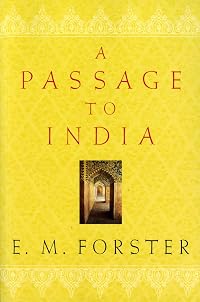
A Passage to India
by E. M. Forster
On This Page
Description
In this hard-hitting novel, first published in 1924, the murky personal relationship between an Englishwoman and an Indian doctor mirrors the troubled politics of colonialism. Adela Quested and her fellow British travelers, eager to experience the "real" India, develop a friendship with the urbane Dr. Aziz. While on a group outing, Adela and Dr. Aziz visit the Marabar caves together. As they emerge, Adela accuses the doctor of assaulting her. While Adela never actually claims she was raped, show more the decisions she makes ostracize her from both her countrymen and the natives, setting off a complex chain of events that forever changes the lives of all involved. This intense and moving story asks the listener serious questions about preconceptions regarding race, sex, religion, and truth. A political and philosophical masterpiece. show lessTags
Recommendations














Member Recommendations
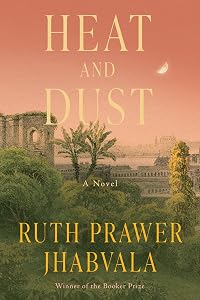
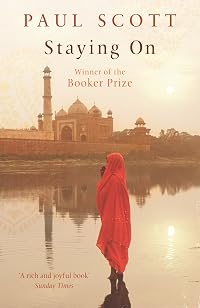
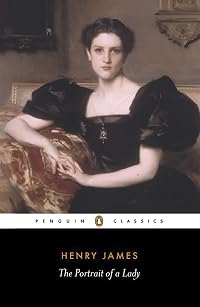
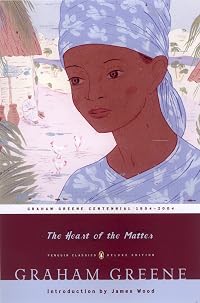
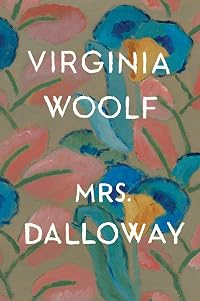
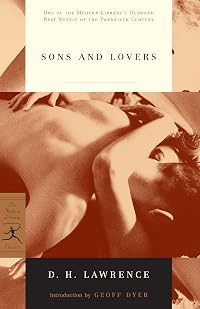
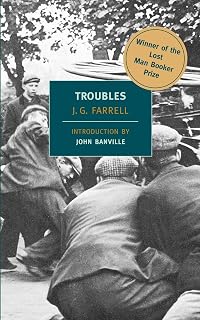
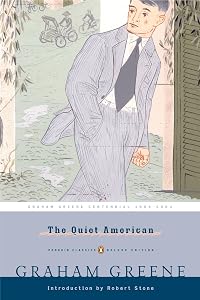
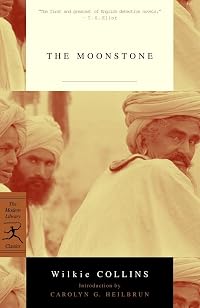
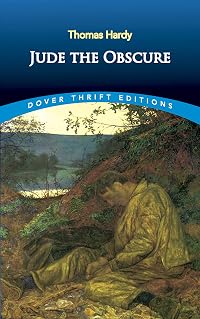
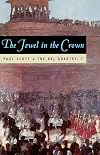
FemmeNoiresque Scott's The Raj Quartet, and particularly the relationship between Daphne Manners and Hari Kumar in the first novel, The Jewel In The Crown, is a revisioning of the charge of rape made by Adela Quested to Dr Aziz. Race, class and empire are explored in the aftermath of this event, in WWII India.
60

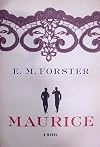
li33ieg Same author, different setting, same core themes
50
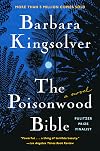
lucyknows You could use the theme of colonialism to pair The Poisonwood Bible by Barbara Kingsolver with Passage to India by E. M. Forster.
40
Cecrow These two novels bear close relationship in setting and circumstance.
31
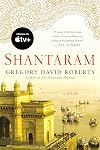

li33ieg Similar period and themes
34
zasmine Cross referenced by Naipaul in 'An area of Darkness'

by KayCliff

by anonymous user
Member Reviews
Somehow I'd gotten the impression that A Passage to India was a departure from Forster's earlier novels. In subject matter, sure, but in all else this is a very Forsterian novel: sharply observed social commentary, lyrical prose, meditations on the human condition, and an almost mythic quality that is nevertheless grounded in the banal. Forster's novels are romantic, but they don't romanticize.
I'm glad I found myself reading this book in 2020. It's fundamentally a novel about nationalism, a topic I have formed Strong Opinions about. Actually maybe just one opinion, which Forster evidently shares. Please imagine, in place of this book, a tract titled "NATIONALISM" in 72-pt font, followed by one sentence: "FUCK THAT SHIT." (Forster show more phrases it more delicately.)
As a portrait of India and Indian people goes, I am not equipped to judge this novel. I think I can say it is a humane and openhearted effort. Certainly Forster's disdain for British culture does not lead him into the trap I expected, that of romanticizing the East. Instead, he attempts to be both empathetic and objective.
As far as objectivity goes, well. The text is littered with generalizations about Indians; some of these are the narrative's attempts at pointing out cultural differences, while others rise from the collective point-of-view of the colonizers. All that said, I expected this to be a novel written for the white gaze, and it's not quite that. Forster seems to be reaching toward an inclusive audience, whether or not he ever quite gets there.
I won't give away the plot, but I will say that this novel is set in British India at the turn of the 20th century and shows a British elite closing ranks in response to their tribal identity being threatened. The threat isn't some vast cultural divide between British and Indian people—the mutiny of 1857 is passing out of memory; the Indian elite is increasingly Westernized. To borrow an observation from Hannah Arendt, it's not necessarily difference that triggers xenophobia, but assimilation and the threat of social categories dissolving.
Meanwhile we have Dr. Aziz and his circle, acculturated Muslim Indians who are trying to invent a tribe of their own. Their definition of India keeps widening—Muslim identity becomes Indian pan-nationalism, which almost widens to human solidarity—but they, and we, can't quite reach across the gap.
And here's where this book gets really interesting, using the vocabulary of religion to imagine the (im)possibilities of a truly universal love. You could, in fact, write a very trite five-paragraph essay about how the second half of this book follows the structure of the Nativity story. I have no idea if Forster had this in mind; certainly he's not crass enough to explicitly compare the experiences Adele and Mrs. Morse have in the caves to an Annunciation. Nevertheless, this scene does take on a numinous quality. Encountering divinity is not a comfortable experience, threatening our belief that we are separate individuals in a structured universe. When the gods try to seize us, we flail.
This book won't enchant you with its memorable character studies or gripping plot, but something about the shape of Forster's novels is really compelling to me. I'm glad I read this one. show less
I'm glad I found myself reading this book in 2020. It's fundamentally a novel about nationalism, a topic I have formed Strong Opinions about. Actually maybe just one opinion, which Forster evidently shares. Please imagine, in place of this book, a tract titled "NATIONALISM" in 72-pt font, followed by one sentence: "FUCK THAT SHIT." (Forster show more phrases it more delicately.)
As a portrait of India and Indian people goes, I am not equipped to judge this novel. I think I can say it is a humane and openhearted effort. Certainly Forster's disdain for British culture does not lead him into the trap I expected, that of romanticizing the East. Instead, he attempts to be both empathetic and objective.
As far as objectivity goes, well. The text is littered with generalizations about Indians; some of these are the narrative's attempts at pointing out cultural differences, while others rise from the collective point-of-view of the colonizers. All that said, I expected this to be a novel written for the white gaze, and it's not quite that. Forster seems to be reaching toward an inclusive audience, whether or not he ever quite gets there.
I won't give away the plot, but I will say that this novel is set in British India at the turn of the 20th century and shows a British elite closing ranks in response to their tribal identity being threatened. The threat isn't some vast cultural divide between British and Indian people—the mutiny of 1857 is passing out of memory; the Indian elite is increasingly Westernized. To borrow an observation from Hannah Arendt, it's not necessarily difference that triggers xenophobia, but assimilation and the threat of social categories dissolving.
Meanwhile we have Dr. Aziz and his circle, acculturated Muslim Indians who are trying to invent a tribe of their own. Their definition of India keeps widening—Muslim identity becomes Indian pan-nationalism, which almost widens to human solidarity—but they, and we, can't quite reach across the gap.
And here's where this book gets really interesting, using the vocabulary of religion to imagine the (im)possibilities of a truly universal love. You could, in fact, write a very trite five-paragraph essay about how the second half of this book follows the structure of the Nativity story. I have no idea if Forster had this in mind; certainly he's not crass enough to explicitly compare the experiences Adele and Mrs. Morse have in the caves to an Annunciation. Nevertheless, this scene does take on a numinous quality. Encountering divinity is not a comfortable experience, threatening our belief that we are separate individuals in a structured universe. When the gods try to seize us, we flail.
This book won't enchant you with its memorable character studies or gripping plot, but something about the shape of Forster's novels is really compelling to me. I'm glad I read this one. show less
‘The past! the infinite greatness of the past!’ thrilled Walt Whitman in ‘A Passage to India’. A quarter of a century later, Forster borrowed Whitman's title, but with a very different mood in mind. In place of the American's wild-eyed certainties, Forster gives us echoes and confusion; instead of epic quests of the soul, there is only an eternal impasse of personal and cultural misunderstanding.
Animals and birds are half-seen, unidentified; the landscape is a featureless blur; motives are illogical and rest on miscommunication. All human language, in the final analysis, amounts to nothing more than the dull ou-boum thrown back from the Malabar caves during the fateful expedition at the heart of the novel. ‘If one had spoken show more vileness in that place, or quoted lofty poetry, the comment would have been the same – “ou-boum”.’
Will Self once recommend as an exercise reducing a novel to a single word (he suggested in the case of The Naked Lunch, for instance, that it would be ‘insect’). For A Passage to India, that keyword would be ‘muddle’ – a term that recurs, gradually shedding its cosiness and accreting a sense of existential indistinctness, a kind of cosmic flou that renders good intentions, indeed all human endeavour, futile. ‘I like mysteries,’ says Mrs Moore, the novel's moral core, ‘but I rather dislike muddles.’ Elsewhere, Forster talks with something like dread of a ‘spiritual muddledom’ for which ‘no high-sounding words can be found’.
The plot of this book is, at times, heart-poundingly dramatic, but Forster is careful to make sure that even this is founded on doubt and indecision. In fact, what one thinks of as ‘the plot’ of A Passage to India is a storyline that arises, reaches its climax, and is resolved entirely within the second of the book's three acts. What then, you might ask, is the point of parts one and three? Well, among other things they prevent the plot from seeming too tidy – there is always something before the beginning, something after the end, to frustrate neat conclusions. ‘Adventures do occur,’ he says, ‘but not punctually.’ Life isn't tidy – it's a muddle.
British India is a perfect setting for this kind of exploration: not only does it play host to numerous individual confusions, it is itself, as it were, the political embodiment of such a confusion. One of the wonderful things about this book is that the obvious hypocrisy and conflict between the English and the Indians is not left to stand alone, as a heavy-handed message, but is echoed by similar divisions between Muslim and Hindu, man and woman, young and old, devotee and atheist. Still, it is the gulf of understanding between the British rulers and their Indian subjects that provides the most interesting material for Forster's bitter social comedy. Most of the Brits are deliciously dislikable, couching their racism in patriotic slogans, droning through the national anthem every evening at the Club, and – like one of the wives – learning only enough of the language to speak to the servants (‘so she knew none of the politer forms, and of the verbs only the imperative mood’).
The heroes of this book are those that try to reach across this divide, or to challenge the assumptions of their own side.
‘Your sentiments are those of a god,’ she said quietly, but it was his manner rather than his sentiments that annoyed her.
Trying to recover his temper, he said, ‘India likes gods.’
‘And Englishmen like posing as gods.’
These attempts don't work, and the reason they don't work is that cultural or racial divides are – the book suggests – only a special case of that ‘spiritual muddledom’ that is a universal constant. Still, the worldview isn't as bleak as it might seem. That famous ‘not yet’ in the book's closing lines is a lot more hopeful than a ‘no’, and if we're prevented from coming together by our tangled and violent past, that also raises the possibility that a better future can be laid down by the present we choose to enact now, every day, with each other. ‘For what is the present, after all,’ as Walt Whitman asked, ‘but a growth out of the past?’ show less
Animals and birds are half-seen, unidentified; the landscape is a featureless blur; motives are illogical and rest on miscommunication. All human language, in the final analysis, amounts to nothing more than the dull ou-boum thrown back from the Malabar caves during the fateful expedition at the heart of the novel. ‘If one had spoken show more vileness in that place, or quoted lofty poetry, the comment would have been the same – “ou-boum”.’
Will Self once recommend as an exercise reducing a novel to a single word (he suggested in the case of The Naked Lunch, for instance, that it would be ‘insect’). For A Passage to India, that keyword would be ‘muddle’ – a term that recurs, gradually shedding its cosiness and accreting a sense of existential indistinctness, a kind of cosmic flou that renders good intentions, indeed all human endeavour, futile. ‘I like mysteries,’ says Mrs Moore, the novel's moral core, ‘but I rather dislike muddles.’ Elsewhere, Forster talks with something like dread of a ‘spiritual muddledom’ for which ‘no high-sounding words can be found’.
The plot of this book is, at times, heart-poundingly dramatic, but Forster is careful to make sure that even this is founded on doubt and indecision. In fact, what one thinks of as ‘the plot’ of A Passage to India is a storyline that arises, reaches its climax, and is resolved entirely within the second of the book's three acts. What then, you might ask, is the point of parts one and three? Well, among other things they prevent the plot from seeming too tidy – there is always something before the beginning, something after the end, to frustrate neat conclusions. ‘Adventures do occur,’ he says, ‘but not punctually.’ Life isn't tidy – it's a muddle.
British India is a perfect setting for this kind of exploration: not only does it play host to numerous individual confusions, it is itself, as it were, the political embodiment of such a confusion. One of the wonderful things about this book is that the obvious hypocrisy and conflict between the English and the Indians is not left to stand alone, as a heavy-handed message, but is echoed by similar divisions between Muslim and Hindu, man and woman, young and old, devotee and atheist. Still, it is the gulf of understanding between the British rulers and their Indian subjects that provides the most interesting material for Forster's bitter social comedy. Most of the Brits are deliciously dislikable, couching their racism in patriotic slogans, droning through the national anthem every evening at the Club, and – like one of the wives – learning only enough of the language to speak to the servants (‘so she knew none of the politer forms, and of the verbs only the imperative mood’).
The heroes of this book are those that try to reach across this divide, or to challenge the assumptions of their own side.
‘Your sentiments are those of a god,’ she said quietly, but it was his manner rather than his sentiments that annoyed her.
Trying to recover his temper, he said, ‘India likes gods.’
‘And Englishmen like posing as gods.’
These attempts don't work, and the reason they don't work is that cultural or racial divides are – the book suggests – only a special case of that ‘spiritual muddledom’ that is a universal constant. Still, the worldview isn't as bleak as it might seem. That famous ‘not yet’ in the book's closing lines is a lot more hopeful than a ‘no’, and if we're prevented from coming together by our tangled and violent past, that also raises the possibility that a better future can be laid down by the present we choose to enact now, every day, with each other. ‘For what is the present, after all,’ as Walt Whitman asked, ‘but a growth out of the past?’ show less
The tone is set for Forster's novel of social and racial disconnection in the opening paragraphs with a beautiful description of the fictional Indian town of Chandrapore. In the lowlands, near the river, the bazaars teeming with trash and filth obscure the view of anything else. All of its construction, whether temple or shanty, is in a state of near total decocmposition, with any thought of decoration or repair two hundred years gone. On top of a hill, protected by palm and neem trees, not only from the eyes of the lower town citizens, but also from any distasteful view of the lower town, lies the British civil station and settlement. Carefully ordered and lush with greenery, the enclave even features a sky which is painted with vivid show more and beautiful colors not found below. In the distance, rising up from the unyieldingly flay desert, the Marabar caves menace the whole town, both British and Indian alike.
Bound together by the politics of the day, the Bitish and the Indian peoples ache to break free from one another. Indeed, the various Inidian sects , Hindu, Moslem, and Christian, are united in one thing only, their hatred, fear, and envy of the ruling British class. This antipathy is particularly difficult or those who bridge the gap between the two socities, slippling back and forth for jobs in service to one another. Dr Aziz and Fielding are two such souls, set somewhat adrift between allegiance to their own and individual feelings of wonder and warmth for some of the people whom they serve. Aziz and Fielding attempt to build a friendship and reach out across the void that separates them. Given the deeply entrenched barriers between them, however, the efforts of Aziz and Fielding do not proceed without consequence. It is in the consequences of their friendship, of their individual efforts at reconciliation and understanding, that the message of Forster's novel rests. Is it possible to bridge such gaps? Is it possible to change group thought through individual action? And how is the individual who takes such action affected?
Forster's novel is not kind to either the ruling British class nor the Indian people, though he shines more affection on the latter. He seems genuinenly fascinated with India, its people, its culture, and its landscape. This is one of the reasons why the novel is so captivating. Aside from any deeper message, the book is a beautiful tribute to the diverse Indian world and the people who populate it. On another level, though, Forster's story is a subtle and detailed comment on disconnection, those that flow from all kinds of differences, differences in race, status, and religion. Though Forster's story is carefully constructed, his overarching message is rather blunt: human disconnectedness is largely a function of indvidual ego.
Highly recommended. Read this book for any of the previous reasons; read it for Forster's skillful writing; read it for his portrayal of India; read it for his deeper message. For all of these reasons, the book is well placed among the best literature available and well worth your time. show less
Bound together by the politics of the day, the Bitish and the Indian peoples ache to break free from one another. Indeed, the various Inidian sects , Hindu, Moslem, and Christian, are united in one thing only, their hatred, fear, and envy of the ruling British class. This antipathy is particularly difficult or those who bridge the gap between the two socities, slippling back and forth for jobs in service to one another. Dr Aziz and Fielding are two such souls, set somewhat adrift between allegiance to their own and individual feelings of wonder and warmth for some of the people whom they serve. Aziz and Fielding attempt to build a friendship and reach out across the void that separates them. Given the deeply entrenched barriers between them, however, the efforts of Aziz and Fielding do not proceed without consequence. It is in the consequences of their friendship, of their individual efforts at reconciliation and understanding, that the message of Forster's novel rests. Is it possible to bridge such gaps? Is it possible to change group thought through individual action? And how is the individual who takes such action affected?
Forster's novel is not kind to either the ruling British class nor the Indian people, though he shines more affection on the latter. He seems genuinenly fascinated with India, its people, its culture, and its landscape. This is one of the reasons why the novel is so captivating. Aside from any deeper message, the book is a beautiful tribute to the diverse Indian world and the people who populate it. On another level, though, Forster's story is a subtle and detailed comment on disconnection, those that flow from all kinds of differences, differences in race, status, and religion. Though Forster's story is carefully constructed, his overarching message is rather blunt: human disconnectedness is largely a function of indvidual ego.
Highly recommended. Read this book for any of the previous reasons; read it for Forster's skillful writing; read it for his portrayal of India; read it for his deeper message. For all of these reasons, the book is well placed among the best literature available and well worth your time. show less
I had actually never read any E. M. Forster before teaching this novel. There's a lot going on in it: it amazes me to think that anyone could have ever wondered if it was pro-British or pro-Indian, but maybe that's my modern anti-colonialist biases at work. (Though maybe as a feminist, I should believe the accusation.) The crux of the whole book is arguably the incident in the caves, but the alleged sexual assault is just one part of that. There's a weird break in the narration at that moment-- if there is a sexual assault, it occurs between pages, and that feels like a cheat designed to up the ambiguity, given how closely Forster renders point-of-view throughout the rest of the novel.
But is it a cheat? If there was a sexual assault, show more it's a very modernist move to indicate it through a break in narration: the trauma of the event would render it unthinkable and therefore unnarratable. (It's kind of like, but very different to, how Hardy handles the rape of Tess in Tess of the D'Urbervilles, which I taught in the same class.)
However, then the cheat becomes: if there wasn't a sexual assault, why is there a break in the narration? The answer to that, I would argue, lies earlier in the novel, where we are told, "Most of life is so dull that there is nothing to be said about it, and the books and talk that would describe it as interesting are obliged to exaggerate, in the hope of justifying their own existence" (146). Like all moments where fiction tells you about what fiction does, you have to read this as indicative of what this work of fiction is or is not doing. According to A Passage to India, there are long passages of time where nothing happens, where the brain is lying if it indicates emotion was actually felt: "a perfectly adjusted organism would be silent" (146). So if nothing happened in the caves, of course there's a break in the narration, because if nothing is happening, the book must be silent since this book is a "perfectly adjusted organism," not an exaggerator like all those earlier works of fiction.
What is easy to overlook if you focus on the sexual assault, I think, is that there's another act of violence in the cave: Mrs. Moore's crisis of faith. Mrs. Moore struggles with what she thought were fundamentals of existence when she finally travels to a place where they are not true. India is older than anything in world (135), upsetting her beliefs in Britain and in Christianity, and the darkness of the cave shows how a whisper can be echoed to seem all-consuming (166). She thinks the cave is evil, but it turns out to just be that the cave amplifies what is brought into it; I never thought I'd make this comparison, but it's basically the cave from The Empire Strikes Back. In the end, she cannot write down what happened (165)-- it really was too traumatic for her. Later we are told that there is no sorrow like Mrs. Moore's sorrow, the experience of an utterly unprofound vision. When East meets West, Mrs. Moore accesses the modern condition and realizes how meaningless life is. Poor woman. show less
But is it a cheat? If there was a sexual assault, show more it's a very modernist move to indicate it through a break in narration: the trauma of the event would render it unthinkable and therefore unnarratable. (It's kind of like, but very different to, how Hardy handles the rape of Tess in Tess of the D'Urbervilles, which I taught in the same class.)
However, then the cheat becomes: if there wasn't a sexual assault, why is there a break in the narration? The answer to that, I would argue, lies earlier in the novel, where we are told, "Most of life is so dull that there is nothing to be said about it, and the books and talk that would describe it as interesting are obliged to exaggerate, in the hope of justifying their own existence" (146). Like all moments where fiction tells you about what fiction does, you have to read this as indicative of what this work of fiction is or is not doing. According to A Passage to India, there are long passages of time where nothing happens, where the brain is lying if it indicates emotion was actually felt: "a perfectly adjusted organism would be silent" (146). So if nothing happened in the caves, of course there's a break in the narration, because if nothing is happening, the book must be silent since this book is a "perfectly adjusted organism," not an exaggerator like all those earlier works of fiction.
What is easy to overlook if you focus on the sexual assault, I think, is that there's another act of violence in the cave: Mrs. Moore's crisis of faith. Mrs. Moore struggles with what she thought were fundamentals of existence when she finally travels to a place where they are not true. India is older than anything in world (135), upsetting her beliefs in Britain and in Christianity, and the darkness of the cave shows how a whisper can be echoed to seem all-consuming (166). She thinks the cave is evil, but it turns out to just be that the cave amplifies what is brought into it; I never thought I'd make this comparison, but it's basically the cave from The Empire Strikes Back. In the end, she cannot write down what happened (165)-- it really was too traumatic for her. Later we are told that there is no sorrow like Mrs. Moore's sorrow, the experience of an utterly unprofound vision. When East meets West, Mrs. Moore accesses the modern condition and realizes how meaningless life is. Poor woman. show less
Adela Quested and Mrs. Moore arrive in Chandrapore, Adela to see if she and Mrs. Moore's son, Ronny, should be married. They both want to experience "the real India" and less of the carefully curated world created to keep the English women safely contained. When Mrs. Moore encounters a young Muslim doctor at a mosque, they form a quick friendship, which leads Dr. Aziz to invite the two women to an excursion to the nearby Malabar caves, an excursion that will end disastrously with Adela leveling charges against Dr. Aziz, allegations that will unsettle all of Chandrapore and the court case even more so.
In his portrayal of the British in India, Forster is scathing in his contempt for what colonialism does to the Imperialists controlling a show more country. They are insular and unable to see the people they rule over as people. The women are especially affected, since they are as limited as the women of India in experiencing the lives of people different from themselves. It makes them scared and reactive, and the men who rule over this obscure corner of the British Empire encourage them to be fearful. While I don't doubt that Forster was ahead of the curve, he still treats the Indian characters as simpler than their British counterparts, especially the one Hindu character who is inscrutable to the point of incoherence. That said, this is an insightful and riveting look at the Raj. show less
In his portrayal of the British in India, Forster is scathing in his contempt for what colonialism does to the Imperialists controlling a show more country. They are insular and unable to see the people they rule over as people. The women are especially affected, since they are as limited as the women of India in experiencing the lives of people different from themselves. It makes them scared and reactive, and the men who rule over this obscure corner of the British Empire encourage them to be fearful. While I don't doubt that Forster was ahead of the curve, he still treats the Indian characters as simpler than their British counterparts, especially the one Hindu character who is inscrutable to the point of incoherence. That said, this is an insightful and riveting look at the Raj. show less
A tragedy about how kind people will inevitably become enemies in an unequal racist world, written with an amount of nuance a lot of books nowadays wish they had.
Anti-colonial yet still orientalist. It questions the British rule sharply at every turn, with an amazing attention to detail, but also generalizes ‘Orientals’ as a whole and never truly defends Aziz. For a book from the 1920s though? Iconic.
I was impressed with how the white English people were not written as simplistic oppressors. They are, but it is not displayed through pure hatred or contempt. They excuse all their actions with logic and arguments, they have laws and civility, and that made them highly realistic in a way that resonates a lot in 2025.
Anti-colonial yet still orientalist. It questions the British rule sharply at every turn, with an amazing attention to detail, but also generalizes ‘Orientals’ as a whole and never truly defends Aziz. For a book from the 1920s though? Iconic.
I was impressed with how the white English people were not written as simplistic oppressors. They are, but it is not displayed through pure hatred or contempt. They excuse all their actions with logic and arguments, they have laws and civility, and that made them highly realistic in a way that resonates a lot in 2025.
From 1858 to 1947, India was under British colonial rule. A Passage to India was published in 1924, and is a scathing critique of colonization. Adela Quested has traveled to Chandrapore with the elderly Mrs Moore, in order to decide whether she should marry Mrs Moore’s son, Chief Magistrate Ronny Heaslop. Mrs Moore and Adela are eager to see India and get to know its people. Early on, Mrs Moore meets Dr Aziz and he befriends both Mrs Moore and Adela. This mingling between the races is frowned upon, to put it mildly. Things spiral out of control when Aziz organizes a visit to the Marabar caves, which ends with Adela accusing Aziz of sexual assault.
The Marabar caves incident unleashes a torrent of racist rhetoric and behavior against show more the Indian people. Forster deftly shows how the British-Indian relationship could be successful, and also how it can fall apart in a second. The denouement offers some hope for the individuals involved, but colonization has done irreparable harm. These are difficult themes, well-written.A Passage to India is worthy of its status as a classic. show less
The Marabar caves incident unleashes a torrent of racist rhetoric and behavior against show more the Indian people. Forster deftly shows how the British-Indian relationship could be successful, and also how it can fall apart in a second. The denouement offers some hope for the individuals involved, but colonization has done irreparable harm. These are difficult themes, well-written.A Passage to India is worthy of its status as a classic. show less
Members
- Recently Added By
Lists

1001 Books You Must Read Before You Die
1,448 works; 1,133 members

The Guardian's 1000 Novels Everyone Must Read
1,005 works; 551 members

Classics you know you should have read but probably haven't
421 works; 409 members

Read the book and saw the movie
1,170 works; 192 members

Radcliffe's 100 Best Novel of the 20th Century
100 works; 32 members
501 Must-Read Books
529 works; 72 members

Newsweek's Top 100 Books: The Meta-List
100 works; 18 members
Best of British Literature
226 works; 41 members
New York Public Library's Books of the Century
120 works; 19 members
Literature About Social Class
134 works; 19 members
20th Century Literature
1,161 works; 54 members

Philip Ward's Lifetime Reading Plan
592 works; 22 members

Best Historical Fiction
620 works; 257 members
In and About the 1920s
181 works; 31 members

The Top Ten: Writers Pick Their Favorite Books
240 works; 31 members
Favourite Books
1,819 works; 316 members

All Things India
95 works; 21 members
Larry McCaffery's 20th Century Greatest Hits: 100 English-Language Books
103 works; 12 members
Best Political Fiction
92 works; 12 members
Folio Society
831 works; 49 members

The Guardian's 100 greatest novels of all time
100 works; 16 members

Best Books About Journeys and Quests
117 works; 30 members

New York Public Library's Books of the Century - All
170 works; 14 members
Legal Stories
84 works; 12 members
Time Magazine's "All-Time 100"
113 works; 15 members
Harold Bloom - The Western Canon: D. The Chaotic Age
833 works; 24 members

Canon de la narrativa universal del siglo XX
254 works; 6 members

Books Featured on Gilmore Girls
307 works; 21 members
LibraryThingers' 1001 Books You Must Read Before You Die
442 works; 30 members
Time's All-Time 100 Novels
100 works; 27 members
Banned or Challenged Books
400 works; 37 members

A Novel Cure
742 works; 23 members

100 Most Recommended Works
100 works; 11 members
1,001 BYMRBYD Concensus
723 works; 27 members
1920s
141 works; 6 members
Banned Books Week 2014
268 works; 62 members

The Guardian's 100 Best Novels Written in English
105 works; 13 members

Mensa for Kids Excellence in Reading Award Program (Grades 9-12)
116 works; 5 members

Most Popular Books Tagged India
36 works; 5 members
The Greatest Books
99 works; 5 members

Books You Read During High School (For School)
301 works; 52 members
The Modern Library's 100 Best Novels: The Board's List
85 works; 6 members
Fish Out of Water: The Perils of Abroad
25 works; 5 members

Modernism
140 works; 7 members

Expand Your Reading Demographics!
47 works; 15 members

Asia
178 works; 7 members
My list of 100 books to read next
100 works; 4 members

Rory Gilmore Book Club
193 works; 5 members
Mensa for Kids Excellence in Reading Award Program (Grades 9-12)
116 works; 3 members
Out of Copyright
244 works; 14 members
Fake Top 100 Fiction
81 works; 4 members

SHOULD Read Books!
354 works; 9 members
Racism and Race Relations in Literature
48 works; 9 members
Trinity College Booklist (1951): Class Ten, English Literature
358 works; 5 members

University literature
145 works; 5 members

Books Read in 2009
464 works; 11 members

For Further Reading: A List of 160 Novels from 15 Literatures
160 works; 4 members

Books Read in 2016
4,666 works; 199 members

Books Read in 2017
4,249 works; 129 members

Books Read in 2003
261 works; 7 members
http://thegreatestbooks.org's Greatest Fiction Books
59 works; 1 member
The Complete Rory Gilmore Reading List
506 works; 5 members
Modern Library's 100 Best Novels
100 works; 2 members

Recommended Reading : 600 Classics Reviewed, Editors of Salem Press, 2015
634 works; 6 members

The 150 Greatest Novels of All Time
150 works; 6 members
Canon de la narrativa universal del s. XX (cicutadry)
499 works; 3 members

Top Five Books of 2024
795 works; 264 members

bound
100 works; 1 member

The LonesomeReader Book Club
36 works; 1 member

Our Favorite Comfort Reads
334 works; 200 members

Retrospective of 20th- and 21st-century literature
154 works; 1 member

.
194 works; 2 members
DigitalDreamDoor top 300
300 works; 4 members
.
396 works; 1 member

Books Read in 2025
4,128 works; 98 members
School Made Us Read It
380 works; 196 members

Personal 2025 reads
18 works; 1 member
Books We Want To Read Again For The First Time
384 works; 160 members

Read with a Friend
17 works; 1 member

Tonikat reading completed on Librarything journals
329 works; 2 members
Books You Read For University
184 works; 3 members
New Lifetime Reading Plan by Fadiman and Major
225 works; 5 members

Sonlight Books
1,487 works; 25 members
Tagged 20th Century
33 works; 4 members
Books With Place Names in the Title
257 works; 11 members
Global Reads: Books Set in South Asia
30 works; 3 members

Best books I read in 2013
152 works; 3 members

Classics
7 works; 2 members

Biggest Disappointments
606 works; 163 members

My TBR
371 works; 3 members

Classics Set in Foreign Countries
3 works; 2 members

Books Read in 2002
198 works; 8 members

Books Read in 2021
5,361 works; 114 members

Ambleside Books
459 works; 18 members

Greatest Books, allegedly
484 works; 9 members

AP Lit
363 works; 6 members

Mustich's 1000 Books to Read Before You Die: A Life Changing List
1,001 works; 20 members
Classical Conversations Challenge II Exposition
18 works; 1 member

Books Read in 1996
23 works; 1 member

Unread books
1,063 works; 83 members
Author Information

189+ Works 56,961 Members
Edward Morgan Forster was born on January 1, 1879, in London, England. He never knew his father, who died when Forster was an infant. Forster graduated from King's College, Cambridge, with B.A. degrees in classics (1900) and history (1901), as well as an M.A. (1910). In the mid-1940s he returned to Cambridge as a professor, living quietly there show more until his death in 1970. Forster was named to the Order of Companions of Honor to the Queen in 1953. Forster's writing was extensively influenced by the traveling he did in the earlier part of his life. After graduating from Cambridge, he lived in both Greece and Italy, and used the latter as the setting for the novels Where Angels Fear to Tread (1905) and A Room with a View (1908). The Longest Journey was published in 1907. Howard's End was modeled on the house he lived in with his mother during his childhood. During World War I, he worked as a Red Cross Volunteer in Alexandria, aiding in the search for missing soldiers; he later wrote about these experiences in the nonfiction works Alexandria: A History and Guide and Pharos and Pharillon. His two journeys to India, in 1912 and 1922, resulted in A Passage to India (1924), which many consider to be Forster's best work; this title earned the James Tait Black Memorial Prize. Forster wrote only six novels, all prior to 1925 (although Maurice was not published until 1971, a year after Forster's death, probably because of its homosexual theme). For much of the rest of his life, he wrote literary criticism (Aspects of the Novel) and nonfiction, including biographies (Goldsworthy Lowes Dickinson), histories, political pieces, and radio broadcasts. Howard's End, A Room with a View, and A Passage to India have all been made into successful films. (Bowker Author Biography) show less
Some Editions
Awards and Honors
Awards
Notable Lists
Daniel S. Burt's Novel 100 (064 – 64)
Series
Belongs to Publisher Series
Work Relationships
Is contained in
Has the adaptation
Has as a reference guide/companion
Has as a study
Has as a commentary on the text
Has as a student's study guide
Common Knowledge
- Canonical title
- A Passage to India
- Original title
- A Passage to India
- Alternate titles*
- Overtocht naar India
- Original publication date
- 1924
- People/Characters
- Dr Aziz; Adela Quested; Cyril Fielding; Ronny Heaslop; Mrs Moore; Mr Turton (show all 10); Mrs Turton; Professor Godbole; Hamidullah; Stella Moore
- Important places
- India; Chandrapore, Bihar, India (fictional); British India
- Important events
- British Raj; Indian independence movement
- Related movies
- A Passage to India (1984 | IMDb)
- Dedication
- To Syed Ross Masood and to the seventeen years of our friendship
- First words
- Except for the Marabar caves—and they are twenty miles off—the city of Chandrapore presents nothing extraordinary.
The India described in A Passage to India no longer exists either politically or socially. (Prefatory Note)
Perhaps it is chance, more than any peculiar devotion, that determines a man in his choice of medium, when he finds himself possessed by an obscure impulse towards creation. (Introduction) - Quotations
- "We must exclude someone from our gathering, or we shall be left with nothing."
- Last words
- (Click to show. Warning: May contain spoilers.)But the horses didn't want it—they swerved apart; the earth didn't want it, sending up rock through which riders must pass single file; the temples, the tanks, the jail, the palace, the birds, the carrion, the Guest House, that came into view as they issued from the gap and saw Mau beneath: they didn't want it, they said in their hundred voices "No, not yet," and the sky said, "No, not there."
(Click to show. Warning: May contain spoilers.)I my also mention here that The Hill of Devi (an autobiographical work published in 1953) contains some of the material utilized in the final section of the novel. (Prefatory Note)
(Click to show. Warning: May contain spoilers.)It is possible that the mind which saw so visionarily the significance of Stephen, and which could tell the Wilcoxes that 'nothing has been done wrong', has achieved their own wisdom; that the organism, being perfectly adjusted, is silent. (Introduction) - Original language
- English
*Some information comes from Common Knowledge in other languages. Click "Edit" for more information.
Classifications
Statistics
- Members
- 13,912
- Popularity
- 542
- Reviews
- 168
- Rating
- (3.76)
- Languages
- 24 — Bengali, Catalan, Chinese, Czech, Danish, Dutch, English, Estonian, Finnish, French, German, Greek, Hungarian, Italian, Lithuanian, Norwegian (Bokmål), Polish, Portuguese, Romanian, Croatian, Slovenian, Spanish, Swedish, Turkish
- Media
- Paper, Audiobook, Ebook
- ISBNs
- 226
- UPCs
- 5
- ASINs
- 179