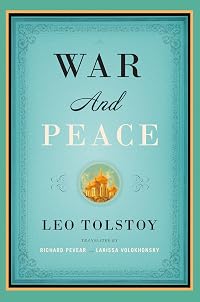
War and Peace
by Leo Tolstoy
On This Page
Description
Napoleon's turbulent history with Russia including his doomed 1812 invasion provides the setting for Leo Tolstoy's War and Peace . Often referred to as the greatest novel of all time, Tolstoy's classic follows the tumultuous personal lives of two aristocratic families touching on all of the great human epochs; youth, matrimony, age and death.Tags
Recommendations

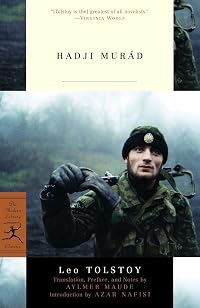
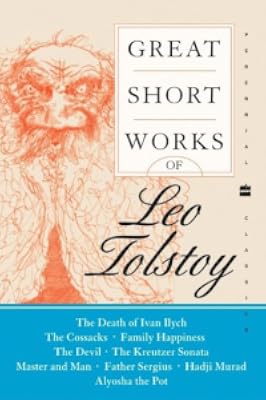
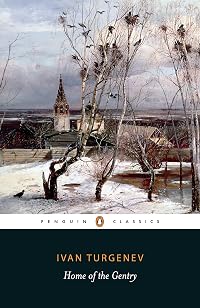
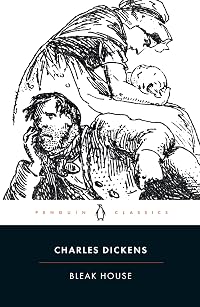
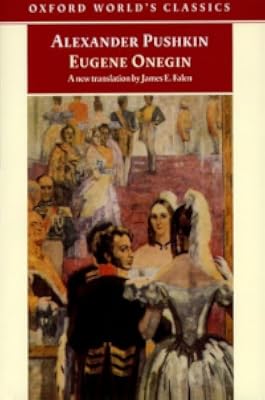
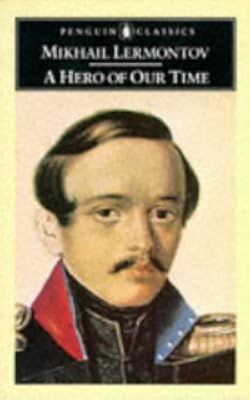

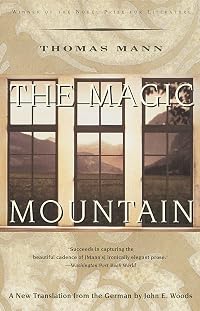
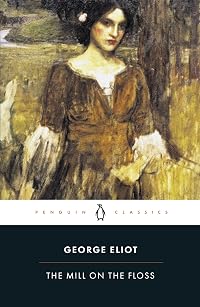
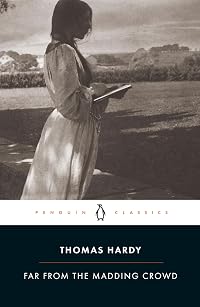

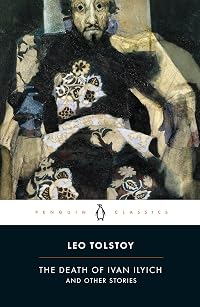

Member Recommendations
by roby72


Los mas bellos cuentos rusos. Prologo con resena critica de la obra, vida y obra del autor, y marco historico. (Spanish Edition) by Alexander Pushkin
carajava Es muy recomendable despues o, en todo caso antes de leer guerra y paz, puesto que, mejorarà tu forma de ver el mundo donde viviàn los rusos, comprenderlo y razonar sus precarias situaciònes.
fulner rich people sit around and talk about war as if it didn't matter
34

Eustrabirbeonne Well, Henri Troyat is no Tolstoy of course, and he did not pretend he was : he described himself as a mere "storyteller". Yet some of his fiction is real good, and this "cycle" is certainly his best. And of course, Russian-born Lev Aslanovich Tarasov had in mind the never-written sequel to "War and Peace" about the Decembrist uprising, which Tolstoy initiates in the final chapters of "War and Peace" with his hints at Pierre's active participation in a "society". Would Natasha, already a mother of four in 1820, have left her children behind to follow Pierre in Siberia, as other convicts' wives did?

CurrerBell Hardy's "Immanent Will" has much in common with Tolstoy's historical determinism. Personally, I'm in that probably quite small minority that prefers The Dynasts over Tolstoy's novel – partly because I find in Hardy's "The Road to Waterloo" scene (3.VI.vii) one of the greatest of antiwar poems.
WirSindAlive Both works share the thrilling stories in a the historical setting of the hight aristocracy, mixed with some political backgroungd.
Member Reviews
If you look up pneumonoultramicroscopicsilicovolcanoconiosis in the OED (and let's face it, who hasn't?) then you'll discover that it is "a word invented in imitation of polysyllabic medical terms, alleged to mean ‘a lung disease caused by the inhalation of very fine sand and ash dust’ but occurring only as an instance of a very long word."
I used to think of War and Peace in much the same way. While ostensibly it's a book about Napoleon's invasion of Russia and his eventual retreat, really it's just used as an example of a very long, difficult book. I went home to visit my family while I was reading the book and my dad, seeing me sat in the garden with a hefty tome in my hands said "What's that, War and Peace? Ha ha ha." Except of show more course it was War and Peace, which rather deflated his lit-wit. So I told the one about the giraffe with the grand piano going into a bar and we had a good old laugh about that instead.
Much as it's difficult to think of aforementioned lung disease as just a long word once you've inhaled enough ash dust and started coughing up your epiglottis, so too it's difficult to think of this novel as just a long book once you've enjoyed (most of) it's historical delights.
Tolstoy is a wonderful storyteller, zooming in and out of nineteenth century Europe like the video for Will Smith's Miami. Admittedly, some of Anthony Briggs' translatory choices leave something to be desired. A lot of the characters speak French in the original, and at times the use of language is rather important to the plot. Briggs deals with this by ending speeches where this is the case with "said Steve in French" or "said Bob, mangling his words because he was rubbish at Russian." It always feels clumsy, but to be honest there's probably no good solution to this problem. He also has one of the characters, Denisov, talk like Jonathan Ross, turning all his 'r's into 'w's. I can only assume this is taken from the original text, but Briggs Anglicises all of the characters' verbal quirks - peasants turn into cockneys, posh men say "old chap", and so on. Briggs mentions that his translation studiously avoids sentences that would raise an "inappropriate smile" such as "he ejaculated with a grimace" and so on. Alas, Denisov's speech impediment does lead us to hear about the "wank of Germans." Damn you, inappropriate smile.
So yes, it turns out the book isn't really outrageously long, I read the Night's Dawn trilogy a couple of years ago and that clocks in at the best part of four thousand pages. War and Peace's length is also alleviated by the fact it's well written and really not that difficult. While [b:Les Misérables|2225130|Les Misérables|Victor Hugo|http://photo.goodreads.com/books/1222130242s/2225130.jpg|3208463] is three hundred pages of plot with a thousand pages of Hugo's ruminations on France and nunneries and the Parisian sewer system, here we have mostly plot with roughly one chapter from each part of each volume thrown over to Tolstoy's thoughts about history and his ideas on what amounts to historical calculus. These thoughts are both interesting and illuminating, if a little repetitive, and do nothing to detract from the book, which - once you set to it - is a rollicking read.
Except for the last fifty pages. Sweet monkey Tuesdays, those last fifty pages. show less
I used to think of War and Peace in much the same way. While ostensibly it's a book about Napoleon's invasion of Russia and his eventual retreat, really it's just used as an example of a very long, difficult book. I went home to visit my family while I was reading the book and my dad, seeing me sat in the garden with a hefty tome in my hands said "What's that, War and Peace? Ha ha ha." Except of show more course it was War and Peace, which rather deflated his lit-wit. So I told the one about the giraffe with the grand piano going into a bar and we had a good old laugh about that instead.
Much as it's difficult to think of aforementioned lung disease as just a long word once you've inhaled enough ash dust and started coughing up your epiglottis, so too it's difficult to think of this novel as just a long book once you've enjoyed (most of) it's historical delights.
Tolstoy is a wonderful storyteller, zooming in and out of nineteenth century Europe like the video for Will Smith's Miami. Admittedly, some of Anthony Briggs' translatory choices leave something to be desired. A lot of the characters speak French in the original, and at times the use of language is rather important to the plot. Briggs deals with this by ending speeches where this is the case with "said Steve in French" or "said Bob, mangling his words because he was rubbish at Russian." It always feels clumsy, but to be honest there's probably no good solution to this problem. He also has one of the characters, Denisov, talk like Jonathan Ross, turning all his 'r's into 'w's. I can only assume this is taken from the original text, but Briggs Anglicises all of the characters' verbal quirks - peasants turn into cockneys, posh men say "old chap", and so on. Briggs mentions that his translation studiously avoids sentences that would raise an "inappropriate smile" such as "he ejaculated with a grimace" and so on. Alas, Denisov's speech impediment does lead us to hear about the "wank of Germans." Damn you, inappropriate smile.
So yes, it turns out the book isn't really outrageously long, I read the Night's Dawn trilogy a couple of years ago and that clocks in at the best part of four thousand pages. War and Peace's length is also alleviated by the fact it's well written and really not that difficult. While [b:Les Misérables|2225130|Les Misérables|Victor Hugo|http://photo.goodreads.com/books/1222130242s/2225130.jpg|3208463] is three hundred pages of plot with a thousand pages of Hugo's ruminations on France and nunneries and the Parisian sewer system, here we have mostly plot with roughly one chapter from each part of each volume thrown over to Tolstoy's thoughts about history and his ideas on what amounts to historical calculus. These thoughts are both interesting and illuminating, if a little repetitive, and do nothing to detract from the book, which - once you set to it - is a rollicking read.
Except for the last fifty pages. Sweet monkey Tuesdays, those last fifty pages. show less
I actually remember finding Tolstoy's Anna Karenina a good read, although it's been so long I'd have to reread it to relate what I found absorbing. War and Peace is a very different matter. It's a mammoth novel, one of the longest in the Western canon, roughly 560,000 words; it comes to over a thousand pages in the editions I've seen. I was determined to stick it out to the end because this is considered one of the greatest and most influential novels in literature, so I wanted to experience it first hand, and I didn't want to ever have to go back for another try again. I took it in slow steps, reading only one "book" of the 15 each day. Encompassing dozens of characters written in a God's eye omniscient view, it takes hundreds of pages show more before you get a sense who are the important characters. Among the LibraryThing reviews is an interesting comment by CS Lewis about War and Peace. It's meant to be complimentary, but expresses well exactly what I hated in it as a novel. Lewis talks about how Tolstoy negates what is "dangerous" in the novel form by never invoking the "narrative lust" to find out what happens next and instilling an indifference to the fate of the characters "which is not a blank indifference at all, but almost like submission to the will of God." In other words, you rarely care about what happens or about any of the characters.
The novel centers on five interconnected aristocratic families, and if the novel has a chief character, it's Count Pierre Bezukhov. And he's a buffoon. When we first meet him, he's described as a "a stout, heavily built young man" with "natural" manners (meaning none) and he's such a social disaster his hostess follows him around to try to repair the damage of his ill-judged outbursts. He lisps, he stammers. He's easily led yet subject to grandiose delusions, he's absentminded and he's lucky he comes into an inheritance, because he had no idea what to do for a career, and lacks the basic competence to succeed. Soon after the party introducing him, he gets involved in a drunken incident where a police officer was tied to a bear and thrown into a river. Following him and his emo musings around for hundreds of pages wasn't a joy. It occurred to me that if we were in an Jane Austen novel, Pierre would be the comic relief--a Mr Collins or Mr Rushworth--not a character taken seriously. But it wasn't as if any of the characters initially popped out at me as distinctive or sympathetic or complex. Nicholas Rostov struck me as a fool, Prince Andrew Bolkonsky arrogant and callous, Boris Drubetskoy a mercenary social climber and all the Kuragins are despicable. Whenever I started to feel sympathy for some of the characters, such as Prince Andrew or his sanctimonious sister Princess Mary or the flighty Natasha Rostov, before long they'd do something to lose my liking.
Pierre and his loves take up a lot the peace part, which contain long drawn-out set pieces such as masonic initiations, aristocratic hunting parties and opera performances. The book does give you a sense of everyday life among the 19th century Russian gentry. But the book is also famously about the Napoleonic Wars, but if anything, I found that part even more wanting. Please understand, I've read and finished and enjoyed lots of weighty 19th century classics, and a lot of them have been very, very long. And I love history, too, having read plenty of books on the subject around as long as War and Peace. This also isn't a girl thing. I was fascinated by Shaara's novel Killer Angels centering on the Battle of Gettysburg. But Tolstoy's battles are on the whole as sleep-inducing as his ballrooms. Despite some gory imagery here and there, and some vivid passages, his battle scenes are rarely exciting except when one of the major characters are in danger of their lives or wounded--a few pages out of many dozens. Tolstoy expressed well the contingent, chaotic aspect of battle, but neither leadership nor the bond between brother soldiers is something his view of war encompasses. Any time there are flashes of brilliance in his battle scenes, you can be sure the momentum will be broken by endless, repetitive digressions on Tolstoy's one-note theory of history (complete with algebraic equations at one point).
Despite its reputation as the ultimate historical novel, I didn't feel as if I gained any insight into the history of the Napoleonic Wars and the personages involved. But then Tolstoy doesn't believe that leaders play an important role: "A king is history's slave. History, that is, the unconscious, general, hive life of mankind, uses every moment of the life of kings as a tool for its own purposes." Tolstoy scoffs at the very idea of military science or "military genius" determining outcome. His Napoleon comes across as a caricature. Tellingly, Tolstoy scoffs even at the idea that one can diagnose a disease--"no disease suffered by a live person can be known." Tolstoy at one point indulges in a long paragraph of national stereotypes--I had to shake my head at his characterizations of Russians, because it sounded so much like a description of himself as betrayed in his novel: "A Russian is self-assured just because he knows nothing and does not want to know anything, since he does not believe that anything can be known." If you can't believe in knowledge, then you can't have knowledge to impart.
Ultimately, for me War and Peace was a monstrosity that steamrolls you with its very length. And boy, that epilogue? Tolstoy serves up two, with the second containing no story but only a rant on history and the Theory-Of-It-All (tm.) he'd been constantly expounding upon for hundreds of pages. I guess by the time most people get to the end of over a thousand pages, they want to think it worth it. I can't say I do. Well, except now I have bragging rights. I actually read from cover to cover--actually finished War and Peace! After this, even James Joyce's Ulysses and Márquez's One Hundred Years of Solitude can hold no terror. show less
The novel centers on five interconnected aristocratic families, and if the novel has a chief character, it's Count Pierre Bezukhov. And he's a buffoon. When we first meet him, he's described as a "a stout, heavily built young man" with "natural" manners (meaning none) and he's such a social disaster his hostess follows him around to try to repair the damage of his ill-judged outbursts. He lisps, he stammers. He's easily led yet subject to grandiose delusions, he's absentminded and he's lucky he comes into an inheritance, because he had no idea what to do for a career, and lacks the basic competence to succeed. Soon after the party introducing him, he gets involved in a drunken incident where a police officer was tied to a bear and thrown into a river. Following him and his emo musings around for hundreds of pages wasn't a joy. It occurred to me that if we were in an Jane Austen novel, Pierre would be the comic relief--a Mr Collins or Mr Rushworth--not a character taken seriously. But it wasn't as if any of the characters initially popped out at me as distinctive or sympathetic or complex. Nicholas Rostov struck me as a fool, Prince Andrew Bolkonsky arrogant and callous, Boris Drubetskoy a mercenary social climber and all the Kuragins are despicable. Whenever I started to feel sympathy for some of the characters, such as Prince Andrew or his sanctimonious sister Princess Mary or the flighty Natasha Rostov, before long they'd do something to lose my liking.
Pierre and his loves take up a lot the peace part, which contain long drawn-out set pieces such as masonic initiations, aristocratic hunting parties and opera performances. The book does give you a sense of everyday life among the 19th century Russian gentry. But the book is also famously about the Napoleonic Wars, but if anything, I found that part even more wanting. Please understand, I've read and finished and enjoyed lots of weighty 19th century classics, and a lot of them have been very, very long. And I love history, too, having read plenty of books on the subject around as long as War and Peace. This also isn't a girl thing. I was fascinated by Shaara's novel Killer Angels centering on the Battle of Gettysburg. But Tolstoy's battles are on the whole as sleep-inducing as his ballrooms. Despite some gory imagery here and there, and some vivid passages, his battle scenes are rarely exciting except when one of the major characters are in danger of their lives or wounded--a few pages out of many dozens. Tolstoy expressed well the contingent, chaotic aspect of battle, but neither leadership nor the bond between brother soldiers is something his view of war encompasses. Any time there are flashes of brilliance in his battle scenes, you can be sure the momentum will be broken by endless, repetitive digressions on Tolstoy's one-note theory of history (complete with algebraic equations at one point).
Despite its reputation as the ultimate historical novel, I didn't feel as if I gained any insight into the history of the Napoleonic Wars and the personages involved. But then Tolstoy doesn't believe that leaders play an important role: "A king is history's slave. History, that is, the unconscious, general, hive life of mankind, uses every moment of the life of kings as a tool for its own purposes." Tolstoy scoffs at the very idea of military science or "military genius" determining outcome. His Napoleon comes across as a caricature. Tellingly, Tolstoy scoffs even at the idea that one can diagnose a disease--"no disease suffered by a live person can be known." Tolstoy at one point indulges in a long paragraph of national stereotypes--I had to shake my head at his characterizations of Russians, because it sounded so much like a description of himself as betrayed in his novel: "A Russian is self-assured just because he knows nothing and does not want to know anything, since he does not believe that anything can be known." If you can't believe in knowledge, then you can't have knowledge to impart.
Ultimately, for me War and Peace was a monstrosity that steamrolls you with its very length. And boy, that epilogue? Tolstoy serves up two, with the second containing no story but only a rant on history and the Theory-Of-It-All (tm.) he'd been constantly expounding upon for hundreds of pages. I guess by the time most people get to the end of over a thousand pages, they want to think it worth it. I can't say I do. Well, except now I have bragging rights. I actually read from cover to cover--actually finished War and Peace! After this, even James Joyce's Ulysses and Márquez's One Hundred Years of Solitude can hold no terror. show less
Only in our conceited age of the popularization of knowledge – thanks to that most powerful engine of ignorance, the diffusion of printed matter – has the question of freedom of will been put on a level on which the question itself cannot exist.
Tolstoy is a much better storyteller than a thinker; in other words, no matter how hard he wants to be Borges, he's much better off gamboling in the bucolic glories of his beloved Russia. Part Two of this book's Epilogue cemented that in stone, forty pages of Tolstoy destroying any denunciation he had made of the horrors of war with redundant, solipsistic, and inconclusive meanderings on freewill and power. Had he stuck with a simple 'Well we just don't know so how about we keep thinking and show more not killing each other in those horrible massacres known as war that we shouldn't be lauding as much as we do' and ended it there, it would have been a good, sensible end. Instead, he went on. And on. And on. I've heard this paradoxical thinking is part of his appeal and his later works tell a different story but I just finished 1440 pages of the reputably nineteenth longest work in the history of novels and I am NOT going to do the 'Oh but you read the wrong one now this work is the one that is the true best of the author...' dance. Right now, enough is enough.
I recently ran across a bundle of reviews condemning Hugo for overt egotism in his [Les Misérables], and while I see the truth in that, I'll take boundless hope for empathetic humanity over thought experiments culminating in either religion or endless gnawing of ones' leg in efforts to escape any day. All authors are completely full of themselves to some degree of thinking their compositions are worthy of an audience, and while I promised to not let this review commit itself to Hugo vs. Tolstoy time, I like writers that offer a backdoor, who give an opinion/story/whatnot without spending endless paragraphs quibbling over its immutability and/or not. You like what you think? Stay considerate, consistent, and somewhere along the line concise, and I'll probably like it too.
"He could not disavow his deeds, lauded as they were by half the world, and so he was obliged to repudiate truth and beauty and all humanity."
That line sums up everything I find great in Tolstoy, that utter rout of Napoleon and putting in his place a conjuration of ineffable worth that is in no way encompassed by military might. Unfortunately, Tolstoy's very much a Hemingway, and I can only hope some of that humanity he names rubbed off on him in the eight years between the publications of W&P and [Anna Karenina], for every time a woman shows up he has no time for anything but lazy characterization, patronizing hypocrisy, and insipid similes such as how the effort to achieve women's rights is like the effort to cook the perfect meal and has no consideration for the holy sacred "family" that constitutes the only reason for matrimony. The irony is that, like many men and women of both that time and this one, he doesn't see that the patriarchy he is so horrified by, leastwise in massacres committed in the name of king and nationalism, is birthed in every situation where a woman is expected to take on all of empathy and a man is refused the slightest share. This is a given I usually don't mention due to its ridiculous ubiquity, but seeing how much time Tolstoy spent trying and failing to write women, it deserves explicit mention.
In light of that, if I do the usual thing and focus on the thoughts of male characters while keeping only a cursory eye on those of women, there's some good stuff to be found. Proust does the rich people screwing each other over in petty politics and gainful one-ups better, but Proust never went to war. Between the psychological discourse of varying levels of insight and the constant relations of history to physical laws that range from intriguing to utterly laughable, we have breathtaking sketches of natural landscape and its humans, a sleigh ride in particular being one of my favorite scenes in literature of all time. Sentiment abounds, but was made bearable by the few moments when real value was found in empathy and the bonds of humanity. I would've been happier had I forgone the epilogue, but I also wouldn't have the right to evaluate it, and of all of Tolstoy's attempts to pin down the nature of power, I favor knowledge above all others.
In short, I thought I'd get more out of this than I did, but that moment six years ago when I had to return W&P unfinished to the library has now been vindicated. Also, that Russian film adaptation looks mighty appealing. show less
War and peace
A flawed masterpiece if ever there was one.
The story is full of sensory detail about people, their skin colour, hair arrangements, breath, finger pressures. From the Tsar down to the humblest peasant, characters come alive as complex contradictory people, both their behaviour and their inner lives. Both estate life and the salons are real; the war too ,especially the lower ranks and the suffering and resilience. “Dann commit die Moral” , as Brecht might put it. In the first half or so, just the occasional short chapter where Tolstoy analyses the big picture, with some interesting comments on the foibles of Napoleon, Alexander and others. Then in the later parts of the book the story is gradually abandoned and he holds show more forth about the emptiness of the “Great Man Theory of History”. He fails to make a very convincing case (I occasionally thought of how Marx might argue that we are bubbles in the tide of economic forces), but perhaps because of that he goes on and on, repeating himself, trying to find another way to say the same thing, trying to show he’s read some books on the matter. His fictional characters come so alive and seem to show some kind of free will as they cope with the pressure of events; but by the later part of the book he’s left them behind, mostly in rather dreary domesticity, and the whole sermon is a yawning bore.
On Audible, narrated by Jonathan Keeble (not Th Newton) it’s lively though, as so often, let down by pronunciation of foreign lingos. His French is really shaky and the opening chapters are famous for the aristos speaking French. So I’m then unsure about his pron of all the Russian names, which we all know can get quite complicated. We get Kututsov instead of Kutuzov, for example.
And did the Reds abolish all those matronymics? We don’t hear them these days. show less
A flawed masterpiece if ever there was one.
The story is full of sensory detail about people, their skin colour, hair arrangements, breath, finger pressures. From the Tsar down to the humblest peasant, characters come alive as complex contradictory people, both their behaviour and their inner lives. Both estate life and the salons are real; the war too ,especially the lower ranks and the suffering and resilience. “Dann commit die Moral” , as Brecht might put it. In the first half or so, just the occasional short chapter where Tolstoy analyses the big picture, with some interesting comments on the foibles of Napoleon, Alexander and others. Then in the later parts of the book the story is gradually abandoned and he holds show more forth about the emptiness of the “Great Man Theory of History”. He fails to make a very convincing case (I occasionally thought of how Marx might argue that we are bubbles in the tide of economic forces), but perhaps because of that he goes on and on, repeating himself, trying to find another way to say the same thing, trying to show he’s read some books on the matter. His fictional characters come so alive and seem to show some kind of free will as they cope with the pressure of events; but by the later part of the book he’s left them behind, mostly in rather dreary domesticity, and the whole sermon is a yawning bore.
On Audible, narrated by Jonathan Keeble (not Th Newton) it’s lively though, as so often, let down by pronunciation of foreign lingos. His French is really shaky and the opening chapters are famous for the aristos speaking French. So I’m then unsure about his pron of all the Russian names, which we all know can get quite complicated. We get Kututsov instead of Kutuzov, for example.
And did the Reds abolish all those matronymics? We don’t hear them these days. show less
I've had this book on my shelf for a long time, but have always been intimidated by the length and the reputation of this epic story. I finally armed myself with the audio book, print copy of the book, and a copy of the character map from Wikipedia and began. After 4 weeks (1200 pages and 64 hours of narration), I finished the book... and I loved it.
The book is really two parallel stories. The first is about 4 different Russian aristocratic families, the Rostovs, the Bolkonskys, the Kuragins and the Bezukhovs. The book opens in 1805, when many of the main characters are on the brink of adulthood. Spanning 8 years, the characters grow from idealistic young aristocrats to mature adults who have experienced sacrifice and loss. The second show more story is about the Napoleonic War in Russia and features not only the main fictional characters, but also many historical figures of the time, such as Napoleon and Alexander I. Covering the complicated relationship between these 2 emperors, the epic story unfolds, from the initial war between France and Russia, to an uneasy alliance between the 2 countries, and finishes with the Napoleon's invasion that leads to his ultimate defeat.
Although the book is LONG, I found the writing descriptive and not overly wordy. I loved the descriptions of Tsarist Russia and the social strata between the aristocracy and the serfs. Even simple events, like a wolf hunt, were captivating and beautifully written. Although many people criticize Tolstoy for his preachy style when he discusses his views on history and the war, I found these diversions from the story very interesting. His philosophy on whether major events are caused by people (like Napoleon), the environment at that time in history, or society was fascinating.
I alternated between listening and reading. The audio version I had was narrated by Neville Jason, and it was superb. Overall, a great experience. show less
The book is really two parallel stories. The first is about 4 different Russian aristocratic families, the Rostovs, the Bolkonskys, the Kuragins and the Bezukhovs. The book opens in 1805, when many of the main characters are on the brink of adulthood. Spanning 8 years, the characters grow from idealistic young aristocrats to mature adults who have experienced sacrifice and loss. The second show more story is about the Napoleonic War in Russia and features not only the main fictional characters, but also many historical figures of the time, such as Napoleon and Alexander I. Covering the complicated relationship between these 2 emperors, the epic story unfolds, from the initial war between France and Russia, to an uneasy alliance between the 2 countries, and finishes with the Napoleon's invasion that leads to his ultimate defeat.
Although the book is LONG, I found the writing descriptive and not overly wordy. I loved the descriptions of Tsarist Russia and the social strata between the aristocracy and the serfs. Even simple events, like a wolf hunt, were captivating and beautifully written. Although many people criticize Tolstoy for his preachy style when he discusses his views on history and the war, I found these diversions from the story very interesting. His philosophy on whether major events are caused by people (like Napoleon), the environment at that time in history, or society was fascinating.
I alternated between listening and reading. The audio version I had was narrated by Neville Jason, and it was superb. Overall, a great experience. show less
Yay, finished!!!! So happy! Like, I have reached a milestone!
War and Peace is all that - battles, privations and illogicality of war on one hand; balls, romances, and a giant soap opera on the other.
The soap opera is hugely enjoyable, with excellently drawn characters. Contrary to popular belief, Tolstoy has a flowing, mildly humorous, well-paced writing style that is easy to read. His observation of character, feelings, and power of bringing everyday events into a living, breathing picture is unparalleled. The characters are complex, grow and develop during the books, as they go through life challenges that change them. There are tragedies, heartbreak but also happy endings, all drawn in exquisite detail. There is no one like Tolstoy show more when it comes to human observation.
The war parts were less enjoyable. The description of soldier’s encampments and their experiences in battles were moving and clearly from first hand. However when it came to the description of high command, or battle strategy, my eyes were glazing over.
There were entire chapters and a complete epilogue where Tolstoy was having an ongoing, repetitive argument about what drives historical events - the will of the leaders, chance, God’s will, or an unwitting flow of historical trends. At first this was mildly interesting, but after a while a total slog. I set aside the book a number of times and sat on it for weeks. Finally I have figured out that the sloggy philosophy was confined to separate chapters, and I ended up skimming, then skipping those. Much better, and finished with a very satisfying ending.
Soap opera - 5 stars. Soldier’s life - 4 stars. Philosophy - 1 star. Luckily, The first two is about 95% of the book. And luckily, the sloggy parts are easy to skip.
Overall I preferred Anna Karenina - all the good soap opera without any sloggy parts. show less
War and Peace is all that - battles, privations and illogicality of war on one hand; balls, romances, and a giant soap opera on the other.
The soap opera is hugely enjoyable, with excellently drawn characters. Contrary to popular belief, Tolstoy has a flowing, mildly humorous, well-paced writing style that is easy to read. His observation of character, feelings, and power of bringing everyday events into a living, breathing picture is unparalleled. The characters are complex, grow and develop during the books, as they go through life challenges that change them. There are tragedies, heartbreak but also happy endings, all drawn in exquisite detail. There is no one like Tolstoy show more when it comes to human observation.
The war parts were less enjoyable. The description of soldier’s encampments and their experiences in battles were moving and clearly from first hand. However when it came to the description of high command, or battle strategy, my eyes were glazing over.
There were entire chapters and a complete epilogue where Tolstoy was having an ongoing, repetitive argument about what drives historical events - the will of the leaders, chance, God’s will, or an unwitting flow of historical trends. At first this was mildly interesting, but after a while a total slog. I set aside the book a number of times and sat on it for weeks. Finally I have figured out that the sloggy philosophy was confined to separate chapters, and I ended up skimming, then skipping those. Much better, and finished with a very satisfying ending.
Soap opera - 5 stars. Soldier’s life - 4 stars. Philosophy - 1 star. Luckily, The first two is about 95% of the book. And luckily, the sloggy parts are easy to skip.
Overall I preferred Anna Karenina - all the good soap opera without any sloggy parts. show less
Rarely has a novel with such a thumping thesis (Tolstoy’s rejection of the so-called great man theory of history) been so affecting, so charming at times, and so brutally honest at others. Once you give yourself over to it, it is engrossing and the pages (the many, many pages) seem to fly by. And perhaps not surprising for such a long and complex work, your allegiances to characters develop and shift over the course of the novel. Whether it is the moral development of the seemingly dense Pierre, or the reclamation of the overly proud Prince Andrei, or even the dizzying excitement of Natasha and its aftermath, the care that Tolstoy takes with his fictional characters helps humanize the necessarily violent battle sections of the novel. show more Despite the frequent authorial disquisitions on the impossibility of the will of one man, be that man Napoleon or Alexander, directing the outcome of huge events, Tolstoy regularly brings the focus down to single individuals in the midst of a battle and we see how personally meaningful their individual actions are for them.
There is no need for me to recommend this novel. It stands as one of the bulwarks of imaginative fiction and for that reason alone, if no other, it deserves to be read. But what I would say is how surprisingly funny and charming and at other times heart-poundingly tense it can be. So as well as being an important, possibly a necessary, read, it is also a good read. Enjoy! show less
There is no need for me to recommend this novel. It stands as one of the bulwarks of imaginative fiction and for that reason alone, if no other, it deserves to be read. But what I would say is how surprisingly funny and charming and at other times heart-poundingly tense it can be. So as well as being an important, possibly a necessary, read, it is also a good read. Enjoy! show less
Members
- Recently Added By
Published Reviews
ThingScore 81
The title Tolstoy finally settled on was taken from the political theorist Pierre-Joseph Proudhorn's book La Guerre et L Paix (1861) a title which means what it says and no more. But when Tolstoy completed and published the final version of his novel Voyna i mir in 1869, the word mir carried a number of connotations and meanings, including a slightly obsolete one referring to society, mankind. show more In this case the word could mean, roughly speaking, humanity. Tolstoy's novel is concerned not merely with war and the cessation of war, it is about human beings, for whom war is a vast muddle, which is the curse of society. It is about the triumph of the human spirit in time of war; and the side that wins the war is the side that displays the stronger spirit. Natasha's dance and Andrey's sudden understanding of what matters are triumphant leaps of the human spirit; each results in an inner joy, a peace. show less
added by Cynfelyn
The novel is not just a masterclass in fiction, Ms Li believes, but a remedy for distress. At the most difficult times in her life, she says, she has turned to it again and again, reassured by its “solidity” in the face of uncertainty.
added by tim.taylor
I had it on my desk for about a year, and now I've given up and put it back on the shelf.
added by Sylak
Lists

The Guardian's 1000 Novels Everyone Must Read
1,005 works; 547 members

Classics you know you should have read but probably haven't
421 works; 406 members

1001 Books You Must Read Before You Die
1,448 works; 1,133 members

Top-Rated Books on LibraryThing
272 works; 117 members

Best Historical Fiction
620 works; 261 members
501 Must-Read Books
529 works; 72 members
BBC Big Read
191 works; 45 members

Best of World Literature
434 works; 51 members

Favourite 19th century fiction
257 works; 62 members

Russian Literature
184 works; 32 members

The Top Ten: Writers Pick Their Favorite Books
240 works; 31 members

Favorite Long Books
330 works; 42 members
Favourite Books
1,819 works; 309 members
Historical Fiction
889 works; 90 members
The 100 Best Books of All Time by Norwegian Book Club (World Library)
104 works; 23 members

The Telegraph's 110 Best Books: The Perfect Library
101 works; 17 members
Newsweek's Top 100 Books: The Meta-List
100 works; 18 members

Recommend the 20 best books you've read in the last five years
2,168 works; 606 members
Philip Ward's Lifetime Reading Plan
592 works; 22 members

Philosophical Fiction
97 works; 27 members
Best Family Stories
241 works; 22 members

50 Tough Books for Extreme Readers
71 works; 40 members

19th Century
190 works; 16 members

PBS The Great American Read
100 works; 21 members
Best Political Fiction
92 works; 12 members

Read the book and saw the movie
1,170 works; 195 members

Best War Stories
87 works; 16 members

Best family sagas
244 works; 33 members

Best Love Stories
107 works; 14 members

Best Spy Fiction
153 works; 102 members
LibraryThingers' 1001 Books You Must Read Before You Die
442 works; 30 members
Blue Pyramid 1,276 Best Books of All Time
1,248 works; 32 members
Love and Marriage
93 works; 10 members

Western World's Greatest Books - Project Gutenberg
295 works; 15 members

Books Featured on Gilmore Girls
307 works; 21 members
Five star books
1,757 works; 107 members
BBC Big Read
100 works; 10 members
Folio Society
831 works; 52 members
Books about Russia and the former USSR
67 works; 12 members

Great Books Favorites
71 works; 6 members
Out of Copyright
244 works; 14 members
Epic Fiction
42 works; 12 members

40 Books to Read Before You’re 40
40 works; 4 members

Pleasant Surprises: Books That Exceeded Our Expectations
418 works; 143 members
Best Friendship Stories
205 works; 16 members

"I'd Group-Read That"
20 works; 6 members

Stories of War and Revolution
143 works; 54 members

Top Five Books of 2021
604 works; 181 members

War Literature
101 works; 19 members

Top Five Books of 2018
802 works; 264 members

Top Five Books of 2014
1,064 works; 398 members
1,001 BYMRBYD Concensus
723 works; 27 members
The Greatest Books
99 works; 5 members

Publisher's Weekly Bestsellers Prior to 1895 in Chronological Order
95 works; 6 members

A Novel Cure
742 works; 23 members
Top Five Books of 2016
795 works; 229 members

Watched the Movie, Probably Won't Read the Book
185 works; 34 members
How to Read a Book's Recommended Reading List
309 works; 10 members

Fake Top 100 Fiction
81 works; 4 members

F. Scott Fitzgerald's 22 Essential Books (1936)
22 works; 3 members

Top 100 to Read before you Die
109 works; 7 members

100 Most Recommended Works
100 works; 11 members

One Book, Many Authors
441 works; 40 members

W. S. Maugham's Reading Suggestions for Spiritual Enrichment: Continental
19 works; 3 members
Newark Public Library's 1904 List of a Thousand of the Best Novels
95 works; 5 members

Europe
205 works; 6 members
Mind Expanding Books by hackerkid
581 works; 8 members
Best War Fiction Books
41 works; 4 members
Lamont's Hundred Best Novels (1947)
100 works; 4 members

BBC Top Books
78 works; 3 members
Daria Morgendorffer's Bookshelf
70 works; 5 members

Rory Gilmore Book Club
193 works; 5 members

1860s
25 works; 4 members

Books Read in 2023
5,547 works; 145 members
Realism
9 works; 1 member

Shaykh Hamza's Book Recommendations
439 works; 3 members
The Road to Freedom (Will Durant's 100 Best Books for an Education)
100 works; 8 members
Jordan B. Peterson's Recommended Books
104 works; 5 members

I Can't Finish This Book
189 works; 22 members

Recommended Philosophic Novels
26 works; 1 member

Books set in Moscow
16 works; 1 member

100 books that changed the world
31 works; 2 members
Literature in Translation
113 works; 5 members

Books Read in 2016
4,666 works; 197 members

Fifty Representative Historical Novels
50 works; 2 members

Not finished Books
7 works; 1 member

Books set in Saint Petersburg
16 works; 1 member

SomethingAwful TBB BOTM
66 works; 2 members
W. Somerset Maugham's "Ten Best Novels of the World"
10 works; 4 members

Books on my Kindle
162 works; 3 members

Russian Literature Sequence
28 works; 1 member

SHOULD Read Books!
354 works; 9 members
The College Board: 101 Great Books Recommended for College-Bound Readers
111 works; 7 members

Well-Educated Mind
150 works; 3 members

100
56 works; 1 member
CCE 1000 Good Books List
1,033 works; 12 members

Will Durant's 100 Books: An Update
46 works; 4 members

O, those Russians (as Boney M sang)
16 works; 1 member
Books to Reread Someday
53 works; 7 members

Recommended Reading : 600 Classics Reviewed, Editors of Salem Press, 2015
634 works; 6 members

The 150 Greatest Novels of All Time
150 works; 6 members

Books Read in 2025
4,091 works; 97 members
My Favorite Russian Novels
37 works; 2 members
'Books You Can't Live Without: The Top 100', The Guardian, 2007
156 works; 7 members
Books We Love to Reread
688 works; 296 members

Favorite Books in Translation
320 works; 133 members

Books That Changed Our Perspective
423 works; 168 members

DigitalDreamDoor top 300
300 works; 4 members
Books in The Club Dumas
72 works; 1 member
Very Long Novels
15 works; 1 member
The Complete Rory Gilmore Reading List
506 works; 5 members
Books We Want To Read Again For The First Time
384 works; 160 members
Must Read as Soon As Possible
5 works; 1 member

Books Read in 2024
4,623 works; 126 members
.
396 works; 1 member

el
1,139 works; 1 member

Books referenced in the Astral Library
60 works; 1 member
In Our Time books
4,934 works; 2 members
bound
100 works; 1 member

Books We Resisted Reading
178 works; 110 members

100 knjiga
100 works; 1 member
BitLife
212 works; 4 members
THE WAR ROOM
813 works; 24 members

Juggernauts (fiction)
21 works; 3 members

Greatest Books, allegedly
484 works; 9 members

Ten Unforgettable Dreams in Literature
10 works; 4 members

Bibliografia essenziale
86 works; 2 members

Alphabetical Books
211 works; 3 members
Trinity College Booklist (1951): Class Nine, Foreign Literatures
161 works; 3 members

My TBR list
38 works; 1 member

Tagged 19th Century
104 works; 7 members

All Things Russia
459 works; 11 members

Books I Own But Haven't Read
144 works; 2 members

Allie's List of Books I Want To Read
93 works; 1 member
Northern Exposure's Chris in the Morning Reading List
31 works; 1 member

Books and authors mentioned by Le Clézio in his Nobel Prize speech
87 works; 3 members

readingList
38 works; 1 member

Books Referenced by Izetbegovic's Islam Between East and West
233 works; 2 members

Books Read in Library
21 works; 1 member
Mustich's 1000 Books to Read Before You Die: A Life Changing List
1,001 works; 19 members
New Lifetime Reading Plan by Fadiman and Major
225 works; 5 members
Books We'd Want on a Desert Island
203 works; 129 members

My List
302 works; 1 member
1964 College Preparatory Reading List
202 works; 8 members

Top Five Books of 2023
767 works; 317 members

To read
39 works; 1 member

Unread books
1,063 works; 87 members
You Couldn't Pay Me to Read That (Take 2)
203 works; 80 members
Talk Discussions
Past Discussions
War and Peace - Leo Tolstoy edition 1868 + 1869 (Russian literature) in Book talk (February 2023)
War and Peace Group Read 2011 - Vol 2, Part III in 75 Books Challenge for 2011 (June 2021)
Group read: War and Peace by Leo Tolstoy in 75 Books Challenge for 2017 (February 2017)
Group Read: War and Peace in 2016 Category Challenge (April 2016)
War and Peace Group Read 2011 - Intro thread (no spoilers) in 75 Books Challenge for 2011 (December 2015)
New edition of War and Peace? in Fans of Russian authors (July 2012)
WWII, from the inside in History at 30,000 feet: The Big Picture (February 2012)
Who Translated the 1911 Everyman's Library War and Peace? in Fans of Russian authors (September 2011)
War and Peace Group Read 2011 - Vol 3, Part III in 75 Books Challenge for 2011 (July 2011)
War and Peace Group Read 2011 - Vol 3, Part II in 75 Books Challenge for 2011 (July 2011)
War and Peace Group Read 2011 - Vol 2, Part V in 75 Books Challenge for 2011 (July 2011)
War and Peace Group Read 2011 - Vol 2, Part IV in 75 Books Challenge for 2011 (July 2011)
War and Peace Group Read 2011 - Epilogue II in 75 Books Challenge for 2011 (June 2011)
War and Peace Group Read 2011 - Vol 1, Part 3 spoiler thread in 75 Books Challenge for 2011 (June 2011)
War and Peace Group Read 2011 - Epilogue I in 75 Books Challenge for 2011 (June 2011)
War and Peace Group Read 2011 - Vol 4, Part IV in 75 Books Challenge for 2011 (June 2011)
War And Peace in Book talk (May 2011)
War and Peace Group Read 2011 - Vol 1, Part 2 spoiler thread in 75 Books Challenge for 2011 (May 2011)
War and Peace Group Read 2011 - "Wrap Up" (spoiler) Thread in 75 Books Challenge for 2011 (May 2011)
War and Peace Group Read 2011 - Vol 4, Part III in 75 Books Challenge for 2011 (May 2011)
War and Peace Group Read 2011 - Vol 4, Part II in 75 Books Challenge for 2011 (May 2011)
War and Peace Group Read 2011 - Vol 1, Part 1 spoiler thread in 75 Books Challenge for 2011 (May 2011)
War and Peace Group Read 2011 - Vol 4, Part I in 75 Books Challenge for 2011 (May 2011)
War and Peace Group Read 2011 - Vol 3, Part I in 75 Books Challenge for 2011 (May 2011)
Group Read: War and Peace in 75 Books Challenge for 2009 (December 2009)
War and Peace in Fans of Russian authors (April 2009)
War and Peace in 1001 Books to read before you die (May 2008)
Tolstoy's War and Peace: more on the Volokhonsky/Pevear translation in Fans of Russian authors (May 2008)
war and peace character tree in 1001 Books to read before you die (November 2007)
Tolstoy's War and Peace: comments on the Volokhonsky,/Pevear translation by Simon Schama, BBC R3 in Fans of Russian authors (November 2007)
Author Information

2,509+ Works 129,717 Members
Count Lev Nikolayevich Tolstoy was born on September 9, 1828 in Russia. He is usually referred to as Leo Tolstoy. He was a Russian author who is regarded as one of the greatest authors of all time. Leo Tolstoy is best known for his novels War and Peace (1869) and Anna Karenina (1877). Tolstoy's fiction includes dozens of short stories and several show more novellas such as The Death of Ivan Ilyich, Family Happiness, and Hadji Murad. He also wrote plays and numerous philosophical essays. Tolstoy had a profound moral crisis and spiritual awakening in the 1870's which he outlined in his work, A Confession. His literal interpretation of the ethical teachings of Jesus, centering on the Sermon on the Mount, caused him to become a fervent Christian anarchist and pacifist. His ideas of nonviolent resistance which he shared in his works The Kingdom of God is Within You, had a profund impact on figures such as Mohandas Gandhi and Martin Luther King, Jr. On September 23, 1862 Tolstoy married Sophia Andreevna Behrs. She was the daughter of a court physician. They had 13 children, eight of whom survived childhood. Their early married life allowed Tolstoy much freedom to compose War and Peace and Anna Karenina with his wife acting as his secretary and proofreader. The Tolstoy family left Russia in the aftermath of the Russian Revolution and the subsequent establishment of the Soviet Union. Leo Tolstoy's relatives and descendants moved to Sweden, Germany, the United Kingdom, France and the United States. Tolstoy died of pneumonia at Astapovo train station, after a day's rail journey south on November 20, 1910 at the age of 82. (Bowker Author Biography) Count Leo Tolstoy was born in 1828 on the family estate of Yasnaya Polyana in the Tula province. He married in 1862 & was the father of 13 children. Tolstoy managed the estate of Yasnaya Polyana & ran its peasant schools, while writing his great novels, "War & Peace" (1869) & "Anna Karenina" (1877). He died in 1910. (Publisher Provided) show less
Some Editions
Awards and Honors
Awards
Distinctions
Notable Lists
BBC's Big Read (20)
Torchlight List (#143)
Bulgarian Big Read (33)
Hungarian Big Read (52)
Schecks Bücher (67)
The 20 Most Popular Books Throughout History (15: 1869)
Series
Belongs to Publisher Series
List Taschenbuch (398 - 401)
Os Grandes Romances Históricos (21-24)
Modern Library Giant (G1)
Penguin Clothbound Classics (2016)
La nostra biblioteca Edipem (65-66-67)
Work Relationships
Is contained in
I capolavori (Anna Karenina - Guerra e pace - La morte di Ivan Il'ič- Resurrezione - La sonata a Kreutzer e altri racconti) (Italian Edition) by Lev Tolstoj
International Collector's Library Classics 19 volumes: Crime & Punishment; Twenty Thousand Leagues Under the Sea; Mysterious Island; Magic Mountain; Around the World in 80 Days; Count of Monte Cristo; Camille; Quo Vadis; Hunchback of Notre Dame; Nana; Scaramouche; Pinocchio; Fernande; War and Peace; The Egyptian; From the Earth to the Moon; Candide; Treasure of Sierra Madre; Siddhartha/Steppenwolf by Jules Verne
Contains
Is retold in
Has the adaptation
Is abridged in
Has as a supplement
Has as a commentary on the text
Has as a student's study guide
Common Knowledge
- Canonical title
- War and Peace
- Original title
- Война и мир; Война и миръ; Vojna i Mir
- Alternate titles*
- Guerre et Paix
- Original publication date
- 1865-1867 (Serialised) (Serialised); 1869 (Book) (Book)
- People/Characters
- Count Ilya Andreyevich Rostov; Pierre, Count Bezukhov; Count Pyotr Kirillovich 'Pierre' Bezukhov; Natasha Rostova; Prince Andrei Nikolayevich Bolkonsky; Andrew Bolkonski (show all 51); Countess Natalya Rostova; Nicholas Rostov; Princess Maria Nikolayevna Bolkonskaya; Boris Dubretskoy; Countess Natalia Ilyinichna 'Natasha' Rostova; Vasily Sergeyevich Kuragin; Count Nikolai Ilyich Rostov; Helene Kuragina; Sofia Alexandrovna 'Sonya' Rostova; Anatole Kuragin; Countess Vera Ilyinichna Rostova; Sonya; Pyotr Ilyich 'Petya' Rostov; Mary Bolkonskaya; Prince Vasily Sergeyevich Kuragin; Napoleon Bonaparte; Princess Elena Vasilyevna 'Hélène' Kuragin; Nicholas Bolkonski; Prince Anatol Vasilyevich Kuragin; Vasily Dmitrich Denisov; Prince Ipolit Vasilyevich; Alexander Dmitrich Balashev; Prince Boris Drubetskoy; Anna Pavlovna Scherer; Princess Anna Mikhailovna Drubetskoya; Bourienne; Fyodor Ivanovich Dolokhov; Anna Mikhaylovna; Adolf Karlovich Berg; Ilya Rostov; Anna Pavlovna Sherer; Julie Karagina; Maria Dmitryevna Akhrosimova; Michael Kutuzov; Amalia Evgenyevna Bourienne; Prince Murat; Hippolytus Karagin; Platon Krataev; Dolokhov; Petya Ilyitch Rostov; General Mikhail Ilarionovich Kutuzov; Catiche; Osip Bazdeyev; Peter ivanovich Bagration; Alexander I, Emperor of Russia
- Important places
- St. Petersburg, Russia; Moscow, Russia; Bleak Hills; Borodino, Russia; Otradnoe, Moskow, Russia; Smolensk, Russia (show all 10); Vienna, Austria; Mytishtchy, Russia; Voronezh, Russia; Austerlitz, Czech Republic
- Important events
- Napoleonic Wars; Napoleon's invasion of Russia (1812); Battle of Borodino
- Related movies
- War and Peace (1956 | IMDb); Voyna i mir (1915 | IMDb); Voyna i mir (1967 | IMDb); War & Peace (1972 | IMDb); War and Peace (2007 | IMDb); Sensô to heiwa (1947 | IMDb) (show all 7); La guerre et la paix (2000 | IMDb)
- First words
- "Well, Prince, Genoa and Lucca are now no more than private estates of the Bonaparte family."
'Well, Prince, Genoa and Lucca are now nothing more than estates taken over by the Buonaparte family.' (Anthony Briggs) - Quotations
- War is not a polite recreation but the vilest thing in life, and we ought to understand that and not play at war.
Since time began and men started killing each other, no man has ever committed such a crime against one of his fellows without comforting himself with the same idea. This idea is 'the public good', a supposed benefit for othe... (show all)r people. - Last words
- (Click to show. Warning: May contain spoilers.)Yes I will do something with which even he would be satisfied. . . . (End of First Epilogue-Maude/Maude)
(Click to show. Warning: May contain spoilers.)In the first case it was necessary to renounce the consciousness of an unreal immobility in space and to recognize a motion we did not feel; in the present case it is similarly necessary to renounce a freedom that does not exist, and to recognize a dependence of which we are not conscious.
(Click to show. Warning: May contain spoilers.)End of Book 15: "But why go to Petersburg?" Natasha suddenly asked, and hastily replied to her own question. "But no, no, he must. . . Yes, Mary, He must . . ." [tr. Maude/Maude] - Blurbers
- Alexandrov, Vladimir E.; Allen, Bruce
- Original language
- Russian
- Canonical DDC/MDS
- 891.733
- Canonical LCC
- PG3366
- Disambiguation notice
- This is the complete work "War and Peace" by Leo Tolstoy. Do not combine with single volumes of the work, or with abridgments of the work.
*Some information comes from Common Knowledge in other languages. Click "Edit" for more information.
Classifications
- Genres
- General Fiction, Fiction and Literature, Historical Fiction
- DDC/MDS
- 891.733 — Literature & rhetoric Literatures of other languages East Indo-European and Celtic literatures Russian and East Slavic languages Russian fiction 1800–1917
- LCC
- PG3366 — Language and Literature Slavic languages and literatures. Baltic languages. Albanian language Slavic. Baltic. Albanian Russian literature Individual authors and works 1800-1870 Tolstoi
- BISAC
Statistics
- Members
- 33,592
- Popularity
- 95
- Reviews
- 511
- Rating
- (4.25)
- Languages
- 30 — Arabic, Catalan, Chinese, Czech, Danish, Dutch, English, Finnish, French, German, Greek, Hebrew, Hindi, Hungarian, Italian, Japanese, Lithuanian, Norwegian (Bokmål), Norwegian, Farsi/Persian, Polish, Romanian, Russian, Serbian, Slovenian, Spanish, Swedish, Turkish, Ukrainian, Portuguese (Portugal)
- Media
- Paper, Audiobook, Ebook
- ISBNs
- 690
- UPCs
- 6
- ASINs
- 524