On This Page
Description
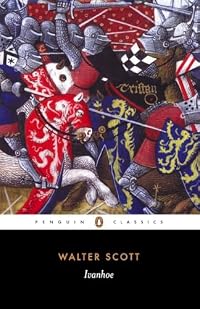
The epitome of the chivalric novel, Ivanhoe sweeps listeners into Medieval England and the lives of a memorable cast of characters. Ivanhoe, a trusted ally of Richard the Lion Hearted, returns from the Crusades to reclaim the inheritance his father denied him. Rebecca, a vibrant, beautiful Jewish woman, is defended by Ivanhoe against a charge of witchcraft-but it is Lady Rowena who is Ivanhoe's true love. The wicked Prince John plots to usurp England's throne, but two of the most popular show more heroes in all of English literature-Richard the Lion Hearted and the well-loved, famous outlaw Robin Hoo-team up to defeat the Normans and regain the castle. The success of this novel lies with Sir Walter Scott's skillful blend of historic reality, chivalric romance, and high adventure. show lessTags
Recommendations




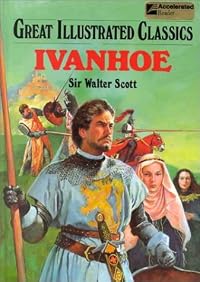







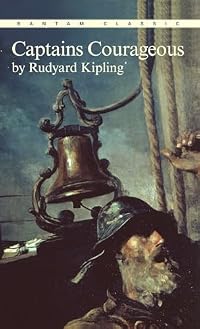
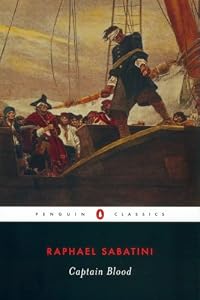
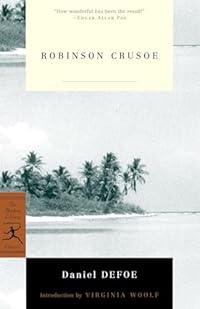
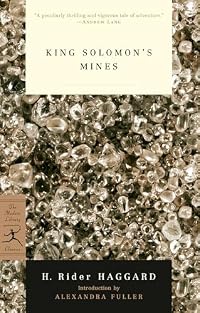
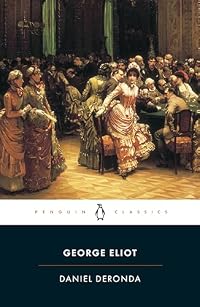

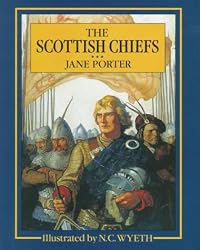

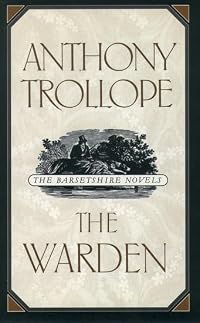

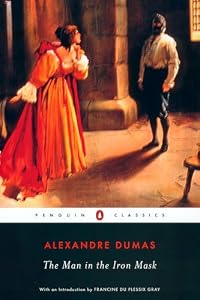
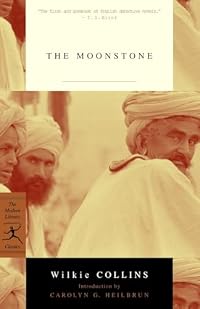

Member Recommendations


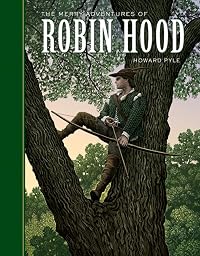
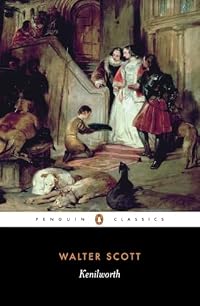
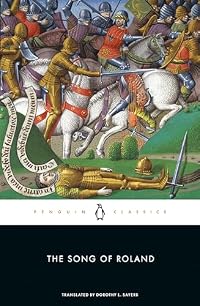
-pilgrim- Another Scott novel with a mediaeval setting.

aulsmith A light historical novel about what was happening with Richard in captivity while Ivanhoe is trying to keep England from falling apart.

morryb Two Tales of Knights.

writard If you like medieval language and lore

Cecrow If you grasp Ivanhoe, you'll be able to appreciate Twain's humor.
11

Morryman84 Both main characters seek to save the damsel in distress, and it is a Walter Scott Novel
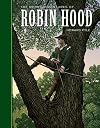
Morryman84 Robin Hood makes an appearance in Ivanhoe
Member Reviews
The novel that started the craze for historical fiction set in medieval times. All the tropes are already here, Normans and Saxons, Templars, tournaments, sieges of castles, Richard the Lionheart and treacherous Prince John, Robin Hood and Friar Tuck, beautiful oppressed heroines, accusations of sorcery.
We live in a more cynical age, so it does need a hefty suspension of belief but nevertheless I thoroughly enjoyed it even if I found the dialogue a bit stagy at times.
We live in a more cynical age, so it does need a hefty suspension of belief but nevertheless I thoroughly enjoyed it even if I found the dialogue a bit stagy at times.
This was a pleasant surprise! I knew Ivanhoe from my youth from the boys' books and from the black-and-white films, but the original version really has much more to offer. And while reading you gradually notice more and more aspects and themes that rightly make this novel world literature. It starts off quite Chaucerian (including the mottos at the beginning of the chapters), with the clearly medieval setting, the strong anti-clerical accents, and the antagonism between Norman and Anglo-Saxon nobles. At a certain point I thought this predominantly was a nationalistic novel because of the pronounced anti-French slant (it is no coincidence that the book was written shortly after of the struggle against Napoleon). A bit further on, the show more very emphasized rejection of anti-Semitism became apparent. Of course, the knightly ideal is also fully addressed, although with a sting: Scott clearly emphasizes how outdated this obsessive adherence to the exalted values of knighthood is, how flawed and counterproductive. He even lets his characters reflect on this. And so it turns out that almost all the characters are people with shortcomings: the lust for power and the cynicism of the Normans, the nostalgic clinging to the past of the Anglo-Saxons, even the so sympathetically portrayed Jew Isaac, as avarice itself, and also the ‘good’ knights Ivanhoe and Richard the Lionheart do not escape it; Scott regularly puts them on display with cunning irony. Two exceptions: the ladies Rowena and Rebecca; Rowena is portrayed a bit too angelically for my taste, she hardly weighs on the story; but Rebecca, on the other hand, is a woman who stands firmly; she even seems – more than Ivanhoe – to be the most important character, and therefore gets the last word.
Of course there are the ‘Romantics’-aspects: the extensive descriptions of castles, forests and tournaments.; the sometimes very pathetically escalating emotions of the characters, and a number of very improbable twists, including the predictable and quickly reeled off happy ending. But Ivanhoe is more than a simple novel, and certainly much more than a boy's story. I enjoyed this very much. show less
Of course there are the ‘Romantics’-aspects: the extensive descriptions of castles, forests and tournaments.; the sometimes very pathetically escalating emotions of the characters, and a number of very improbable twists, including the predictable and quickly reeled off happy ending. But Ivanhoe is more than a simple novel, and certainly much more than a boy's story. I enjoyed this very much. show less
Wilfred of Ivanhoe is a secondary character in his titular novel, which does more to provide a basis for the modern Robin Hood myth than anything else. It is slow to start (the setup drags on for what seems like ever), but once the action begins, this is a cracking good read. There are several storylines which split off and weave their way back together by the end of the narrative.
It was definitely enraging to read Rebecca's storyline, as she's basically kidnapped against her will and taken to a priory, where she's then tried as a sorceress for "tempting" the man who kidnapped her. Rage-inducing does not even begin to cover it! At least Rebecca had some backbone and continually threw off the Templar's advances. She'd rather die than go show more anywhere willingly with him. Go Rebecca!
You could only class this as a (small-r) romance if you squint reeeeeeeeeeeeeeeeeeeally hard at the penultimate chapters. Otherwise, this is more about chivalry and courtly devotion than anything else. Read it for the adventure and to learn more about Robin Hood, not because you're looking for the star-crossed lovers promised in the book blurb. show less
It was definitely enraging to read Rebecca's storyline, as she's basically kidnapped against her will and taken to a priory, where she's then tried as a sorceress for "tempting" the man who kidnapped her. Rage-inducing does not even begin to cover it! At least Rebecca had some backbone and continually threw off the Templar's advances. She'd rather die than go show more anywhere willingly with him. Go Rebecca!
You could only class this as a (small-r) romance if you squint reeeeeeeeeeeeeeeeeeeally hard at the penultimate chapters. Otherwise, this is more about chivalry and courtly devotion than anything else. Read it for the adventure and to learn more about Robin Hood, not because you're looking for the star-crossed lovers promised in the book blurb. show less
Knights errant, jousting tournaments, a king in disguise and a plot against said king, fair damosels and their various distresses, a fool who is touchingly loyal to his gruff master, naughty templars and Robin of Locksley. What else could one possibly want or need in a story? Well, maybe just a smidge less anti-Semitism, to be honest. But otherwise, this one is a hoot.
(Seriously, the way Isaac of York is treated across the board by 'good' and 'bad' guys alike bothered me enough to knock me right out of the story on several occasions. Product of the times and all, I suppose, but the cavalier nature of it all sets my teeth on edge.)
(Seriously, the way Isaac of York is treated across the board by 'good' and 'bad' guys alike bothered me enough to knock me right out of the story on several occasions. Product of the times and all, I suppose, but the cavalier nature of it all sets my teeth on edge.)
Almost Shakespearean, occasionally. Bold and exciting story running parallel to the Robin Hood myth. The most interesting thing about this book from the 1800s is the awareness of racial, religious and gender tensions. The author had a very modern, tolerant view, showing Christians, Jews, and Muslims to all be equally human, with both selfish and noble parts among them. Then he crafts several clever examples of how and why women get the short end of the stick, and are often blamed for the choices made by men. The narrative loses its way now and then, there are too many POVs, and the poetry and songs interlaced in the narrative do nothing for me, but this is a classic that everyone should read.
When I was a youngster, one of our favorite family activities was to play the then-familiar card game called Authors, which was basically "Go Fish" with the likes of Hawthorne, Tennyson, Longfellow, and Dickens in sets of four instead of numeric rank within suit. (Where else would you find James Fenimore Cooper on a peer footing with William Shakespeare?) Thus the face of Sir Walter Scott was more familiar to me than that of my own deceased grandmother.
Scott was, in fact, an icon of classic entertainment, an author whose works were among the staples of childhood and young adult reading, with their jousting knights in armor, their chivalrous deeds and dark intrigues, their acts of high valor and foul treachery, their political show more allegiances and divided loyalties, their spirited damsels and their swashbuckling heroes.
In ninth grade, when my classmates and I were assigned to read Ivanhoe, I met Scott like an old family friend. The affectionate greeting, however, was not returned with equal warmth. In fact, the language and substance of this novel were both so alien to me that I honestly don't know how I managed to read it at all.
In those days, meaning the end of the Eisenhower administration, Ivanhoe was required reading in public schools across the U.S. I can't imagine why. I didn't hate it--I never hated anything we read in school. I was a straight-A English student throughout my scholastic career and later made language the basis of my profession. But the necessary knowledge of British history and traditional social structure, command of an archaic vocabulary, and ability to parse the convoluted style and grammar of the early nineteenth century in another culture all seem like formidable obstacles to comprehension for young teenagers, even without the adult themes and conflicts, the violence, and the very disturbing vein of institutionalized antisemitism that prevail throughout the novel.
How many 14-year-olds could have been expected to get much of anything out of this? All else aside, how much knowledge of medieval England and its politics was any American highschooler expected to have? I'm amazed that there weren't dozens of more recent, more generally readable, and more culturally apt choices that were considered to be essential to the education of American young people. I got through it somehow, along with the rest of my ninth-grade class, but I missed all the adventure in a sea of confusing language, lost context, and bewildering names. What a shame that curriculum requirements, both then and now, should serve to foster lifelong antipathy toward certain works and toward reading in general when, now more than ever, literacy is an essential skill and severely weakened cultural bonds could use reinforcement.
In intervening years I have read quantities of British literature and older literature and older British literature, and I feel very much at home with it. I'm comfortable with both a nineteenth-century prose style and a medieval setting. Archaic vocabulary does not trip me up, and I don't mind protracted descriptions, windy commentary, or so-called author intrusion. Still, it took me a long while to come back around to Scott.
A couple of years ago I enjoyed The Bride of Lammermoor, followed by The Heart of Midlothian. After that it seemed to be time to revisit Ivanhoe. I finished it a week ago.
From my present perspective, Ivanhoe is a relic, not so much of the historical period of its setting (with which Scott admitted to having taken considerable liberties) or even of the literary era in which it was written (early nineteenth century) as of a period in our European-American cultural and educational history in which youngsters read romances such as Ivanhoe voluntarily and for pleasure. Those same audiences these days would be viewing action movies for which you don't actually need a vocabulary at all.
Or maybe those aren't the kids avidly watching car chases and explosions and splattering pixels of gore in first-person-shooter video games. Maybe they're among the considerably smaller number who play chess and Magic: The Gathering and Sodoku: a relatively privileged, nerdy set (privileged if only with the motive, means, and opportunity to do those things) who don't gravitate toward the lowest common denominator. In any event, their path to imaginative excitement and adventure is not via such printed words as these:
=====(Excerpt begins)
"I am indeed bound to vengeance," murmured Cedric; "Saint Withold knows my heart."
Front-de-Boeuf, in the meanwhile, led the way to a postern, where, passing the moat on a single plank, they reached a small barbican, or exterior defence, which communicated with the open field by a well-fortified sallyport.
"Begone, then; and if thou wilt do mine errand, and if thou return hither when it is done, thou shalt see Saxon flesh cheap as ever was hog's in the shambles of Sheffield. And, hark thee, thou seemest to be a jolly confessor---come hither after the onslaught, and thou shalt have as much Malvoisie as would drench thy whole convent."
"Assuredly we shall meet again," answered Cedric.
"Something in hand the whilst," continued the Norman; and, as they parted at the postern door, he thrust into Cedric's reluctant hand a gold byzant, adding, "Remember, I will flay off both cowl and skin, if thou failest in thy purpose."
"And full leave will I give thee to do both," answered Cedric, leaving the postern, and striding forth over the free field with a joyful step, "if, when we meet next, I deserve not better at thine hand."---Turning then back towards the castle, he threw the piece of gold towards the donor, exclaiming at the same time, "False Norman, thy money perish with thee!"
Front-de-Boeuf heard the words imperfectly, but the action was suspicious---"Archers," he called to the warders on the outward battlements, "send me an arrow through yon monk's frock!---yet stay," he said, as his retainers were bending their bows, "it avails not--we must thus far trust him since we have no better shift. I think he dares not betray me---at the worst I can but treat with these Saxon dogs whom I have safe in kennel. Ho! Giles gaoler, let them bring Cedric of Rotherwood before me, and the other churl, his companion---him I mean of Coningsburgh ---Athelstane there, or what call they him? Their very names are an encumbrance to a Norman knight's mouth, and have, as it were, a flavour of bacon. Give me a stoup of wine, as jolly Prince John said, that I may wash away the relish---place it in the armoury, and thither lead the prisoners."
His commands were obeyed; and, upon entering that Gothic apartment, hung with many spoils won by his own valour and that of his father, he found a flagon of wine on the massive oaken table, and the two Saxon captives under the guard of four of his dependents. Front-de-Boeuf took a long drought of wine, and then addressed his prisoners---for the manner in which Wamba drew the cap over his face, the change of dress, the gloomy and broken light, and the Baron's imperfect acquaintance with the features of Cedric (who avoided his Norman neighbours, and seldom stirred beyond his own domains) prevented him from discovering that the most important of his captives had made his escape.
=====(Excerpt ends)
That lengthy and randomly chosen passage depicting a tense, suspenseful escape is adequately representative of the flavor of the whole. I would be willing to wager that no reader in 2013, no matter how widely read and how well versed in older literature, would have difficulty understanding how daunting four hundred pages of the same would be to today's young reader.
Did I enjoy the book? I did. I was sorry when it ended. And naturally it is no fault of the author and no criticism of his literary tradition to anticipate that the present generation of readers will have little appetite for this work. Whether that should be so is irrelevant; the truth is that it is.
I wonder how much longer there will be readers outside of academe who can read it at all. show less
Scott was, in fact, an icon of classic entertainment, an author whose works were among the staples of childhood and young adult reading, with their jousting knights in armor, their chivalrous deeds and dark intrigues, their acts of high valor and foul treachery, their political show more allegiances and divided loyalties, their spirited damsels and their swashbuckling heroes.
In ninth grade, when my classmates and I were assigned to read Ivanhoe, I met Scott like an old family friend. The affectionate greeting, however, was not returned with equal warmth. In fact, the language and substance of this novel were both so alien to me that I honestly don't know how I managed to read it at all.
In those days, meaning the end of the Eisenhower administration, Ivanhoe was required reading in public schools across the U.S. I can't imagine why. I didn't hate it--I never hated anything we read in school. I was a straight-A English student throughout my scholastic career and later made language the basis of my profession. But the necessary knowledge of British history and traditional social structure, command of an archaic vocabulary, and ability to parse the convoluted style and grammar of the early nineteenth century in another culture all seem like formidable obstacles to comprehension for young teenagers, even without the adult themes and conflicts, the violence, and the very disturbing vein of institutionalized antisemitism that prevail throughout the novel.
How many 14-year-olds could have been expected to get much of anything out of this? All else aside, how much knowledge of medieval England and its politics was any American highschooler expected to have? I'm amazed that there weren't dozens of more recent, more generally readable, and more culturally apt choices that were considered to be essential to the education of American young people. I got through it somehow, along with the rest of my ninth-grade class, but I missed all the adventure in a sea of confusing language, lost context, and bewildering names. What a shame that curriculum requirements, both then and now, should serve to foster lifelong antipathy toward certain works and toward reading in general when, now more than ever, literacy is an essential skill and severely weakened cultural bonds could use reinforcement.
In intervening years I have read quantities of British literature and older literature and older British literature, and I feel very much at home with it. I'm comfortable with both a nineteenth-century prose style and a medieval setting. Archaic vocabulary does not trip me up, and I don't mind protracted descriptions, windy commentary, or so-called author intrusion. Still, it took me a long while to come back around to Scott.
A couple of years ago I enjoyed The Bride of Lammermoor, followed by The Heart of Midlothian. After that it seemed to be time to revisit Ivanhoe. I finished it a week ago.
From my present perspective, Ivanhoe is a relic, not so much of the historical period of its setting (with which Scott admitted to having taken considerable liberties) or even of the literary era in which it was written (early nineteenth century) as of a period in our European-American cultural and educational history in which youngsters read romances such as Ivanhoe voluntarily and for pleasure. Those same audiences these days would be viewing action movies for which you don't actually need a vocabulary at all.
Or maybe those aren't the kids avidly watching car chases and explosions and splattering pixels of gore in first-person-shooter video games. Maybe they're among the considerably smaller number who play chess and Magic: The Gathering and Sodoku: a relatively privileged, nerdy set (privileged if only with the motive, means, and opportunity to do those things) who don't gravitate toward the lowest common denominator. In any event, their path to imaginative excitement and adventure is not via such printed words as these:
=====(Excerpt begins)
"I am indeed bound to vengeance," murmured Cedric; "Saint Withold knows my heart."
Front-de-Boeuf, in the meanwhile, led the way to a postern, where, passing the moat on a single plank, they reached a small barbican, or exterior defence, which communicated with the open field by a well-fortified sallyport.
"Begone, then; and if thou wilt do mine errand, and if thou return hither when it is done, thou shalt see Saxon flesh cheap as ever was hog's in the shambles of Sheffield. And, hark thee, thou seemest to be a jolly confessor---come hither after the onslaught, and thou shalt have as much Malvoisie as would drench thy whole convent."
"Assuredly we shall meet again," answered Cedric.
"Something in hand the whilst," continued the Norman; and, as they parted at the postern door, he thrust into Cedric's reluctant hand a gold byzant, adding, "Remember, I will flay off both cowl and skin, if thou failest in thy purpose."
"And full leave will I give thee to do both," answered Cedric, leaving the postern, and striding forth over the free field with a joyful step, "if, when we meet next, I deserve not better at thine hand."---Turning then back towards the castle, he threw the piece of gold towards the donor, exclaiming at the same time, "False Norman, thy money perish with thee!"
Front-de-Boeuf heard the words imperfectly, but the action was suspicious---"Archers," he called to the warders on the outward battlements, "send me an arrow through yon monk's frock!---yet stay," he said, as his retainers were bending their bows, "it avails not--we must thus far trust him since we have no better shift. I think he dares not betray me---at the worst I can but treat with these Saxon dogs whom I have safe in kennel. Ho! Giles gaoler, let them bring Cedric of Rotherwood before me, and the other churl, his companion---him I mean of Coningsburgh ---Athelstane there, or what call they him? Their very names are an encumbrance to a Norman knight's mouth, and have, as it were, a flavour of bacon. Give me a stoup of wine, as jolly Prince John said, that I may wash away the relish---place it in the armoury, and thither lead the prisoners."
His commands were obeyed; and, upon entering that Gothic apartment, hung with many spoils won by his own valour and that of his father, he found a flagon of wine on the massive oaken table, and the two Saxon captives under the guard of four of his dependents. Front-de-Boeuf took a long drought of wine, and then addressed his prisoners---for the manner in which Wamba drew the cap over his face, the change of dress, the gloomy and broken light, and the Baron's imperfect acquaintance with the features of Cedric (who avoided his Norman neighbours, and seldom stirred beyond his own domains) prevented him from discovering that the most important of his captives had made his escape.
=====(Excerpt ends)
That lengthy and randomly chosen passage depicting a tense, suspenseful escape is adequately representative of the flavor of the whole. I would be willing to wager that no reader in 2013, no matter how widely read and how well versed in older literature, would have difficulty understanding how daunting four hundred pages of the same would be to today's young reader.
Did I enjoy the book? I did. I was sorry when it ended. And naturally it is no fault of the author and no criticism of his literary tradition to anticipate that the present generation of readers will have little appetite for this work. Whether that should be so is irrelevant; the truth is that it is.
I wonder how much longer there will be readers outside of academe who can read it at all. show less
A friend tells me Scott was credited with being one of the first to write historical fiction, perhaps the inventor of historical fiction. Ivanhoe may not be historically accurate, but I found Scott's efforts to intertwine his historical references with the narrative most impressive. Richard the Lion-Hearted and King John, certainly, as well as Robin Hood and Friar Tuck come alive for the reader in this fast-paced action story. (Some readers would argue that the convoluted language and the stilted efforts of Scott to explain the sequencing of events in the narrative negate his efforts to depict rollicking adventure, but once you grow accustomed to his language, the novel moves at a fast clip.) Most of the characters are drawn in a more show more nuanced way than you might credit given how they now appear so archetypal, but if you take a break from the action to think about the moral conflicts they embody, you can see why Scott's novel has endured. Well-worth reading. show less
Members
- Recently Added By
Lists

1001 Books You Must Read Before You Die
1,448 works; 1,131 members

The Guardian's 1000 Novels Everyone Must Read
1,005 works; 549 members

Classics you know you should have read but probably haven't
421 works; 407 members

Best Historical Fiction
620 works; 257 members

Favourite 19th century fiction
257 works; 60 members

Historical Fiction
889 works; 91 members
Best of British Literature
226 works; 41 members

Read the book and saw the movie
1,170 works; 192 members

Unread books
1,063 works; 87 members
BBC's 100 Novels That Shaped Our World
100 works; 22 members

Best War Stories
87 works; 16 members
Love and Marriage
93 works; 10 members

Books Set in Great Britain
191 works; 13 members

...read all, pay nowt (Books set in Yorkshire)
86 works; 14 members
150 Best Novels Selected by Brander Matthews (1883)
150 works; 7 members

Best of Scottish Literature
35 works; 6 members

100 Most Recommended Works
100 works; 11 members

Western World's Greatest Books - Project Gutenberg
295 works; 15 members

Fiction For Men
142 works; 10 members

1,001 BYMRBYD Concensus
723 works; 27 members

Publisher's Weekly Bestsellers Prior to 1895 in Chronological Order
95 works; 6 members

War Literature
101 works; 19 members

Best Adventure Stories
66 works; 13 members

Fake Top 100 Fiction
81 works; 4 members

1820s
8 works; 1 member

Fifty Representative Historical Novels
50 works; 2 members
Elegant Prose
80 works; 4 members

Books Read in 2023
5,547 works; 145 members

CCE 1000 Good Books List
1,033 works; 12 members

100
56 works; 1 member

SHOULD Read Books!
354 works; 9 members

Set in the Middle Ages
42 works; 9 members
Books We Want To Read Again For The First Time
384 works; 160 members

Book Titles Mentioned In Newberry Medal And Honor Books
884 works; 3 members
School Made Us Read It
380 works; 196 members

Greatest Books, allegedly
484 works; 9 members
Works in the game of Authors
44 works; 2 members
.
396 works; 1 member

Books We Loved As Children
603 works; 252 members

Recommended Reading : 600 Classics Reviewed, Editors of Salem Press, 2015
634 works; 6 members

Book Review Roundup
254 works; 2 members

r/History Recommended Reading List
603 works; 12 members

DigitalDreamDoor top 300
300 works; 4 members
F. B. Perkins' List of 100 Best Fiction
100 works; 5 members

A Reading List
100 works; 3 members

Favorite Childhood Books
1,646 works; 513 members

Henry II and Family - Favorite Fiction
9 works; 1 member

Merrill's English Texts
59 works; 3 members

Literature of Honor for Boys
91 works; 3 members

Generation Joshua
115 works; 3 members
bound
100 works; 1 member
Trinity College Booklist (1951): Class Ten, English Literature
358 works; 5 members

Edad Media
33 works; 1 member

Books Read in 2018
4,360 works; 110 members

Mensa for Kids Excellence in Reading Award Program (Grades 7-8)
62 works; 3 members

Mensa for Kids Excellence in Reading Award Program (Grades 7-8)
62 works; 1 member
All Things Great Britain
66 works; 1 member
Out of Copyright
244 works; 14 members

Blue Pyramid 1,276 Best Books of All Time
1,248 works; 32 members

Favorite Long Books
330 works; 42 members
Favourite Books
1,817 works; 316 members
Talk Discussions
Past Discussions
DLE of Ivanhoe? in Easton Press Collectors (August 2024)
Just finished Ivanhoe in Geeks who love the Classics (July 2021)
IVANHOE - Group read thread in 2013 Category Challenge (October 2013)
Author Information

Some Editions
Awards and Honors
Distinctions
Notable Lists
Greatest Books algorithm (541)
Series


Belongs to Publisher Series
Ebook [Newton] (150)
World's Greatest Literature (Volume 7)
Coleção Obras-Primas (50)
Crisol literario (96)
Grandes Novelas de Aventuras (XLIV)
Everyman's Library (16)
The Pocket Library (PL-19, PL-502)
El País Aventuras (18)
Geração Público (20)
Amstelboeken (48-49)
Dean's Classics (28)
The World's Classics (29)
Airmont Classics (34)
Doubleday Dolphin (C31)
Crisol (212)
Tus libros (97)
Penguin English Library, 2012 series (2012-12)
Sammlung Hofenberg (Scott)
Scholastic T (200)
Corticelli [Mursia] (155)
Work Relationships
Is contained in
Adventure Classics--Ivanhoe, Gullivers Travels, Treasure Island, The Call of the Wild, The Count of Monte Cristo (boxed set) by Walter Scott
Contains
Is retold in
Has the (non-series) sequel
Has the adaptation
Is abridged in
Is parodied in
Inspired
Common Knowledge
- Canonical title
- Ivanhoe
- Original title
- Ivanhoe
- Original publication date
- 1819; 1971: Joyas Literarias Juveniles, No. 16 - "Ivanhoe", Editorial Bruguera, S. A. (in Spanish) (in Spanish)
- People/Characters
- Lady Rowena; Rebecca of York; Sir Wilfred of Ivanhoe; John, King of England (Prince John); Richard I, King of England (Coeur de Lion, Lionheart); Sir Brian de Bois-Guilbert (Knight Templar) (show all 24); Isaac of York; Friar Tuck; Cedric the Saxon; Wamba; Lucas Beaumanoir, Grand Master of the Knights Templar; Gurth; Athelstane; Aymer, Prior of Jorvaulx; Robin Hood (Robin of Locksley); Reginald Front-de-Boeuf; Maurice de Bracy; Hugh de Grantmesnel; Conrad de Malvoisin; Sir Philip de Malvoisin; Richard de Malvoisin; Ralph de Vipont; Dame Ulrica; Higg
- Important places
- Leicestershire, England, UK; Nottinghamshire, England, UK; Sherwood Forest, Nottinghamshire, England, UK; York, North Yorkshire, England, UK; Yorkshire, England, UK
- Important events
- Third Crusade; Middle Ages
- Related movies
- Ivanhoe (1952 | Richard Thorpe | IMDb); Ivanhoe (1970 | TV mini-series | IMDb); Ivanhoe (1997 | TV mini-series | IMDb); Dark Knight (2000 | IMDb)
- Epigraph*
- So sprachen sie, indes die satten Schweine
Heimzogen abends aus dem Buchenhaine -
Mit Quieken, Grunzen, widerwill'gem Schrei'n
Ging jedes lärmend in den Stall hinein. (Alexander Popes Übersetzung von Homers "O... (show all)dyssee", 14, 453-456) - First words
- In that pleasant district of merry England which is watered by the river Don, there extended in ancient times a large forest, covering the greater part of the beautiful hills and valleys which lie between Sheffield and the pl... (show all)easant town of Doncaster.
- Last words
- (Click to show. Warning: May contain spoilers.)With the life of a generous, but rash and romantic monarch, perished all the projects which his ambition and his generosity had formed; to whom may be applied, with a slight alteration, the lines composed by Johnson for Charles of Sweden—
His fate was destined to a foreign strand,
A petty fortress and an “humble” hand;
He left the name at which the world grew pale,
To point a moral, or adorn a tale. - Publisher's editor*
- Newton Compton
- Original language
- English
- Canonical DDC/MDS
- 823.7
- Canonical LCC
- PR5318
- Disambiguation notice
- This is the main work for Ivanhoe, by Sir Walter Scott. Please do not combine with any adaptation, abridgment, etc.
ISBN 0821204718 - edited, abridged, and annotated by Robin S. Wright.
Academy Classics fo... (show all)r junior high schools series - abridged and edited by J.C. Tressler
ISBN 028970250X, DUTCH: 90-02-13331-6 - Edited, abridged and annotated by Robin S. Wright; illustrated by Christopher Bradbury
ISBNs 1587172488, 1587172496 - Adapted by Marianna Mayer
*Some information comes from Common Knowledge in other languages. Click "Edit" for more information.
Classifications
Statistics
- Members
- 14,995
- Popularity
- 475
- Reviews
- 137
- Rating
- (3.74)
- Languages
- 27 — Arabic, Basque, Catalan, Czech, Danish, Dutch, English, Estonian, Finnish, French, German, Greek, Hungarian, Italian, Korean, Lithuanian, Norwegian (Bokmål), Norwegian, Polish, Romanian, Russian, Serbian, Spanish, Swedish, Turkish, Ukrainian, Portuguese (Portugal)
- Media
- Paper, Audiobook, Ebook
- ISBNs
- 703
- UPCs
- 5
- ASINs
- 514