
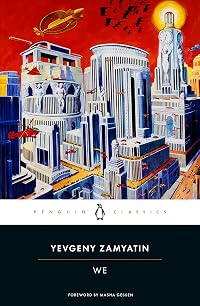
We
by Yevgeny Zamyatin
On This Page
Description
Set in the twenty-sixth century A.D., Yevgeny Zamyatin's masterpiece describes life under the regimented totalitarian society of OneState, ruled over by the all-powerful "Benefactor." Recognized as the inspiration for George Orwell's 1984, We is the archetype of the modern dystopia, or anti-Utopia: a great prose poem detailing the fate that might befall us all if we surrender our individual selves to some collective dream of technology and fail in the vigilance that is the price of freedom. show more Clarence Brown's brilliant translation is based on the corrected text of the novel, first published in Russia in 1988 after more than sixty years' suppression. show lessTags
Recommendations


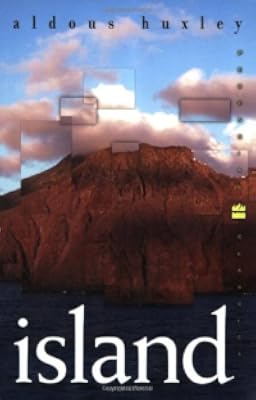
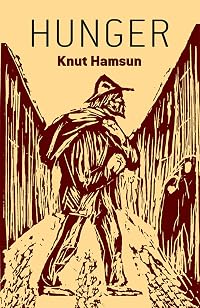

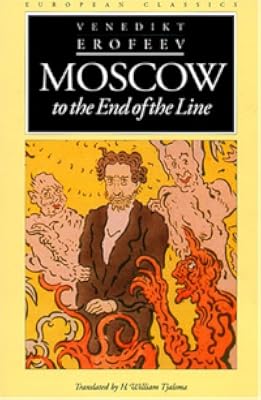
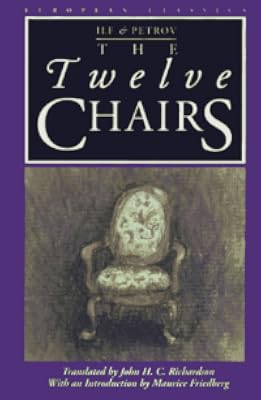




Member Recommendations
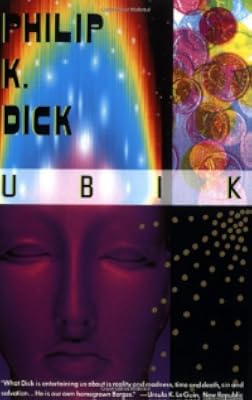
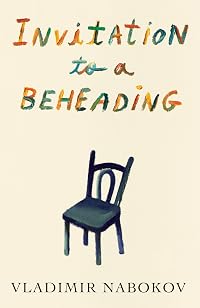
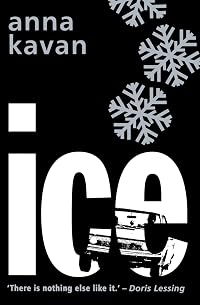
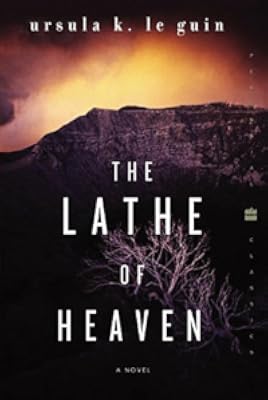
timoroso Zamyatin's "We" was not just a precursor of "Nineteen Eighty-Four" but the work Orwell took as a model for his own book.
311
leigonj As We (1920) is anti-communist Russian science fiction, Red Star (1908) is pro-communist Russian science fiction. They are equally superb.
70

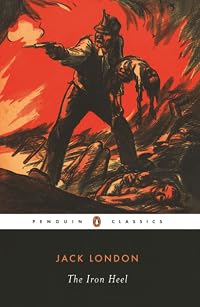
DuneSherban While thematically distinct from We, Aelita shares its problematic view of early Soviet society, and can also be read as a discourse on totalitarian society, revolution and Bolshevism (published originally in 1923).
40


Member Reviews
A predecessor to dystopian classics 1984 and Brave New World, We is written in the style of a journal, that of of D-503, a spacecraft engineer who lives in the 'United State'. The organization and rules of the 'United State' strictly uphold the superiority of logic, mathematics, and reason, positing that individuality and freedom are roadblocks that prevent humans from reaching unbridled happiness. D-503 lives in a glass house like everyone so that all of his actions can be seen by his neighbors and the state, he follows the mandated 50 repetitions of 'mastication' before swallowing a bite of food, and he fills out 'pink sheets' on other community members for scheduled and detached sex. Yet through all of this D-503 has an awakening of show more his individuality, or his soul. He begins to see the world as it truly is, and discovers that there are others like him, that another revolution is not only possible but also imminent.
I'm split with my opinion on We. I struggled immensely through the actual prose of it. It's written in a way that heavily resembles the thought process of a confused and damaged mind. Sentences or even entire lines of the thought will end instantaneously, details are obfuscated and nebulous, and the location and timing of events is often unclear. There are certainly moments of clarity that provide perspective. Especially interesting is the final chapter of the book, after D-503 has had the surgery to remove his 'illness'. Everything is in focus and logical, detached from the events that are described. The ending made me rethink my opinion on the writing style, but I still can't quite get past it. It was not the most enjoyable of a reading experience, but looking back on it I'm glad that I pushed through finished the book.
That all being said, I think it's crazy that We isn't more commonly held in the same group of classic dystopian as those previously mentioned, especially since it predates and even heavily influenced them. There is some especially important and unique conversations about the role of revolution in society. Zamyatin, perhaps criticizing the position of the soviet state that was forming around him, argues that, just as there is no highest number, there can be no final revolution. There will always be resistance in any group, and this resistance is vital to the health of society. I also especially enjoyed discussion of self reflection as it relates to the line: "A healthy eye, a finger, a tooth is not felt. Is it not clear then that consciousness of oneself is a sickness?". We spends a lot of time dealing with self discovery and agency as it relates to a government that preaches conformity. D-503's journey is both interesting because of the revolution that buds around him, and his own growth as a person that eventually gets snuffed out by the state. I think that We grows stronger as the story progresses. It also has some dated by brilliant world building that is buttressed by knowing how creative it must've been at it's publication.
We is a flawed work to be sure, but it's also deeply thematic and rich. It deserves it's place as one of the grandfathers of the genre, but stands on it's own merits as well. show less
I'm split with my opinion on We. I struggled immensely through the actual prose of it. It's written in a way that heavily resembles the thought process of a confused and damaged mind. Sentences or even entire lines of the thought will end instantaneously, details are obfuscated and nebulous, and the location and timing of events is often unclear. There are certainly moments of clarity that provide perspective. Especially interesting is the final chapter of the book, after D-503 has had the surgery to remove his 'illness'. Everything is in focus and logical, detached from the events that are described. The ending made me rethink my opinion on the writing style, but I still can't quite get past it. It was not the most enjoyable of a reading experience, but looking back on it I'm glad that I pushed through finished the book.
That all being said, I think it's crazy that We isn't more commonly held in the same group of classic dystopian as those previously mentioned, especially since it predates and even heavily influenced them. There is some especially important and unique conversations about the role of revolution in society. Zamyatin, perhaps criticizing the position of the soviet state that was forming around him, argues that, just as there is no highest number, there can be no final revolution. There will always be resistance in any group, and this resistance is vital to the health of society. I also especially enjoyed discussion of self reflection as it relates to the line: "A healthy eye, a finger, a tooth is not felt. Is it not clear then that consciousness of oneself is a sickness?". We spends a lot of time dealing with self discovery and agency as it relates to a government that preaches conformity. D-503's journey is both interesting because of the revolution that buds around him, and his own growth as a person that eventually gets snuffed out by the state. I think that We grows stronger as the story progresses. It also has some dated by brilliant world building that is buttressed by knowing how creative it must've been at it's publication.
We is a flawed work to be sure, but it's also deeply thematic and rich. It deserves it's place as one of the grandfathers of the genre, but stands on it's own merits as well. show less
This classic novel is elegantly written (even in translation!), timeless in its message and so perfect in its assessment of what is often called "the human condition". I am so glad I read it. "We" is not "just another dystopian novel". Zamyatin captures the inability of humans to eliminate their soul, no matter how many generations of indoctrination have taken place. The story is told as a diary written by the main character, who begins as a supporter of the United State. In his writing, D-503 (yes everyone is a number) explores the concept that individuality breeds discontent and therefore never results in happiness. To avoid this unhappy state, one's life must be circumscribed by specific rules, including how many times to chew your show more food, in order to attain a feeling of contentment. He meets someone who totally contradicts that message and, perhaps for the first time in his life, has to confront what it means to think and act for oneself. This is devastating and leads him to seek medical help. He discovers that the happiness he thought he shared with others is not real. Other members of society have similar difficulties and fears about suppressing their individualism. Everything blows up at the end. I won't reveal what happens, but it is an amazing novel. Unforgettable and absolutely at the top of my list of all-time favorites. show less
I know this is an important book, and it was a major influence on later dystopias like 1984 and Brave New World. But it wasn’t a very enjoyable or even very edifying book to read (or, more properly, listen to). It’s told as a series of first-person journal entries of D-503, who lives in the OneState, in many ways similar to the aforementioned better-known dystopias. D-503’s prose is laden with difficult-to-follow metaphors, to the extent that I sometimes didn’t know if he was dreaming, hallucinating, or just using incomprehensible metaphors to convey what he himself had trouble comprehending. The ending was impactful, but it was a long haul to get there. As a warning to future readers, this edition had a spoiler-y preface by show more Margaret Atwood—I wish I’d saved it for after I finished reading. Narrator Toby Jones did a good job, but it didn’t salvage the difficult text. show less
I don't read a lot of science fiction, but this one is a classic. Like Doctor Zhivago it was banned in Russia, smuggled out, and published in Europe.
Zamyatin's book is a dystopian satire of life in Russia after the revolution. It is set 600 years in the future, in the land of One State, where the citizens are happy because they have no freedom. Where there is no freedom there is no crime. People live and work in glass buildings. There is no envy because everyone is equal, a cell in the collective organism of the One State.
The narrator is D-503, a mathematician and the builder of the Integral. His life is mathematically predictable, and therefore happy, until he meets I-303, falls in love and discovers the remnants of a soul. Can they show more escape the repression of the One state?
Zamyatin's book was the precursor of Brave New World and Nineteen Eighty-Four. It was first published in 1921, in the early years of the revolution. It is well worth reading, and not just because it is the first satire on totalitarianism. Zamyatin has a sense of humour and a lightness of touch. Apparently he had synaesthesia, so the book is swamped in colour, odour and texture. He eliminates unnecessary words by recruiting old words for new functions. When you read that a functionary's eyes "javelined", you know just what Zamyatin means.
Highly recommended 4.5* show less
Zamyatin's book is a dystopian satire of life in Russia after the revolution. It is set 600 years in the future, in the land of One State, where the citizens are happy because they have no freedom. Where there is no freedom there is no crime. People live and work in glass buildings. There is no envy because everyone is equal, a cell in the collective organism of the One State.
The narrator is D-503, a mathematician and the builder of the Integral. His life is mathematically predictable, and therefore happy, until he meets I-303, falls in love and discovers the remnants of a soul. Can they show more escape the repression of the One state?
Zamyatin's book was the precursor of Brave New World and Nineteen Eighty-Four. It was first published in 1921, in the early years of the revolution. It is well worth reading, and not just because it is the first satire on totalitarianism. Zamyatin has a sense of humour and a lightness of touch. Apparently he had synaesthesia, so the book is swamped in colour, odour and texture. He eliminates unnecessary words by recruiting old words for new functions. When you read that a functionary's eyes "javelined", you know just what Zamyatin means.
Highly recommended 4.5* show less
Brilliant, but not enjoyable, imo. So, the comparisons to 1984 and BNW have validity. I would say it can also be compared to [a:Philip K. Dick|4764|Philip K. Dick|https://images.gr-assets.com/authors/1264613853p2/4764.jpg] paranoic hallucinations like [b:Do Androids Dream of Electric Sheep?|7082|Do Androids Dream of Electric Sheep?|Philip K. Dick|https://images.gr-assets.com/books/1435458683s/7082.jpg|830939]. I would have to read it again, probably at least two more times, to figure out everything that was going on, and another time to catch all the metaphors and symbols, and another to analyze the techniques and effectiveness of the writing. And I really don't wanna. Otoh, if you do read dystopias, or Literature, check this out: show more poetic, intelligent, gracefully translated, and still very likely to become relevant again if we don't learn from history.
I quote as a relevant sample two chapters, one passage. A medical officer has advised our man to get more exercise, and suggested a certain destination as goal. Ellipses the author's; not mine:
"In order to carry out the doctor's prescription, I deliberately chose to walk along two lines at right angles instead of a hypotenuse. I was already on the second line--the road along the Green Wall. From the illimitable green ocean behind the Wall rose a wild wave of roots, flowers, branches, leaves. It reared, and in a moment it would roll and break and overwhelm me, and, instead of a man--the finest and most precise of instruments--I would be turned into...
"But fortunately between me and wild green ocean was the glass of the Wall. Oh, great, divinely bounding wisdom of walls and barriers! They are, perhaps, the greatest of man's inventions. Man ceased to be a wild animal only when he built the first wall. Man ceased to be savage only when we had built the Green Wall, when we had isolated our perfect mechanical world from the irrational, hideous world of trees, birds, animals...." show less
I quote as a relevant sample two chapters, one passage. A medical officer has advised our man to get more exercise, and suggested a certain destination as goal. Ellipses the author's; not mine:
"In order to carry out the doctor's prescription, I deliberately chose to walk along two lines at right angles instead of a hypotenuse. I was already on the second line--the road along the Green Wall. From the illimitable green ocean behind the Wall rose a wild wave of roots, flowers, branches, leaves. It reared, and in a moment it would roll and break and overwhelm me, and, instead of a man--the finest and most precise of instruments--I would be turned into...
"But fortunately between me and wild green ocean was the glass of the Wall. Oh, great, divinely bounding wisdom of walls and barriers! They are, perhaps, the greatest of man's inventions. Man ceased to be a wild animal only when he built the first wall. Man ceased to be savage only when we had built the Green Wall, when we had isolated our perfect mechanical world from the irrational, hideous world of trees, birds, animals...." show less
Breathtakingly brilliant, like the crystal glass buildings of the One State - in Natasha Randall's 2007 translation (older ones may differ a lot).
Seamlessly switching between beauty and horror:
“In the morning, the sun is rosy, transparent, warm gold. And the air itself is a little rosy, all steeped in the sun’s gentle blood.”
Laden with oxymorons: simultaneously Utopia and dystopia.
Polychromatic, synaesthetic, hypnotic, and often blurring reality and dreams.
Profound and prophetic, from a century ago.
Unlike anything else I’ve read, yet there are echoes to and from other writers.
Consider
• If you could have only happiness OR freedom, which would you pick?
• Is it possible to be happy without freedom?
• Or perhaps, if you show more believe you're happy, nothing else matters?
A question not explicitly addressed is how you can have state poetry and music in a society that suppresses and punishes individuality, imagination, and soul?
Setup - no spoilers
After the Two-Hundred Year War, which killed all but 0.2% of humanity, the One State built the Green Wall to separate it from the wilds beyond. It’s now a thousand years later: the Accumulator Tower protects against major storms, the streets and apartment blocks are made of sparkling glass, everyone lives happily and harmoniously with plenty of food (petroleum-based), work, and clothes, overseen by the Benefactor, elected on the Great Day of the One Vote. It doesn’t sound too bad, does it?
Image: Futuristic glass skyline, reflected, in blue hues (Source)
But with a Table of Hours that includes curfew, and nicotine and alcohol prohibited, it’s almost monastic, except they can have sex, by formal request (which they can't refuse). More sinisterly, health, happiness, and conformity are compulsory. Pregnancy requires permission, and babies go straight to the Children-Rearing Factory. The Bureau of Guardians ensures compliance, but mostly people believe they're happy:
“Even in our thoughts. No one is ever ‘one’, but always ‘one of’. We are so identical.”
The horror is mostly clinical and philosophical, rather than bloody and grim (and when it's the latter, it's performed as a beautified ritual).
One State is preparing to launch a rocket called the Integral, with a “heavy cargo of inescapable happiness”. The dawn of benevolent colonisation?
“If they won’t understand that we bring them mathematically infallible happiness, it will be our duty to force them to be happy.”
D-503 is only thirty-two and is the chief builder, writing this journal for unknown “planetary readers”. His mathematical metaphors gradually become more imaginative and lyrical. And crazed. Because imagination is a dangerous flaw in an authoritarian state, with no privacy, where you never know who you can trust.
“How pleasant it was to feel someone’s vigilant eye lovingly protecting you from the slightest mistake.”
Individuals
Other main characters are O-90 (D's usual sexual partner, who is as round as her identity), R-13 (schoolfriend of D, state poet at executions (beauty and horror, again), and occasional sexual partner of O), I-330 (a singular woman, with agency, who D is repulsed by and attracted to), and S-4711 (with serpentine posture).
“Everything was in its place, so simple, normal, legitimate: glassy buildings, beaming with lights; a glassy, pale sky; a greenish, still night. But underneath all this quiet, chilly glass, the boiling, the crimson, the shagginess drifted inaudibly.”
Inevitably, not all the shiny happy people are quite as happy as they’re supposed to be, but that’s revealed gradually, in a narrative that blends cold numbers and facts with ravishing dreams and unconsciousness, creating tense mystery and lush drama.
Image: “The Feeling of Darkness” by Raija Jokinen: flax/sewing yarn/starch delicate model of a person (Source)
I’ve read and watched enough sci-fi that the basic plot contained few surprises, but the telling of this is superlative, and it's better to read the inspiration than just the imitators.
“A person is a novel: you don’t know how it will end until the very last page.”
The closing words of this translation are suitably nuanced:
“I hope we will win. More than that: I know we will win. Because reason should win.”
Which “we”?
Whose definition of “reason”?
And that “should” is significant.
Quotes
There are many descriptions and metaphors relating to geometry, equations, glass, crystal, yellow (and, to a lesser extent, blue), and lips, lots of lips (including R's “African lips”, which always repel him). These are all from Natasha Randall's translation.
They are hidden for easy scrolling; no actual spoilers.
Synaesthetic
• “A twentieth-century avenue in deafening multicolour.”
• “Glassy silk rustled on her shoulders.”
• “The multicoloured noise that stifles the logical progress of thought.”
• “Laughter comes in different colours.”
• “All days are the same yellow colour, like desiccated incandescent sand.”
Architecture
• “The intimate peal of the crystal-sparkling latrine.”
• “The glass walls have dispersed in the fog, like crystal salts in water.”
• “I see the transparent, living cranes bending their swanlike necks… thoughtfully and tenderly feeding the Integral with scary explosive food.”
Ideology
• “The mathematician is the cause, the music is the effect.”
• “So: there are two forces in the world, entropy and energy. One tends toward blissful peace, to happy equilibrium, and the other towards destruction of equilibrium, toward torturously constant movement.”
• “Bliss and envy - they are the numerator and the denominator of the fraction known as happiness.”
• “Freedom, i.e., the unorganised savage state.”
• “Freedom and crime are so indissolubly connected… like the movement of the aero and its velocity.”
• “Being original is to violate equality.”
• “Mankind ceased to be savage when we built the Green Wall, when we isolated our perfect, machined world by means of the Wall, from the irrational, chaotic world of the trees, birds, animals.”
• “Only the rational and the useful are beautiful: machines, boots, formulas, food, etc.”
• “The unbearably sharp blade of a beam flashes, then a barely audible crackle… A prostrate body - suffused in a faint luminescent smoke, melting, melting, dissolving with horrifying quickness … And then nothing: just a puddle of chemically pure water that only a minute ago swilled tempestuously and redly in his heart.” [beauty in public execution]
Light and sky
• “Our kind of sunshine, the pale-bluish-crystalline kind, which disperses evenly through our glass bricks.”
• “A May sky of blue majolica and the light sun in its own golden aero.”
• “A solemn, bright day… Everything is crystal-fixed and eternal - like our new glass.”
• “The morning blueness, chaste, not yet dried of its night-time tears.”
• “Roofs were strewn with black, extinguished smouldering birds.”
Lips
• “All women are lips, all lips. Some are pink and firmly round”, but others are “like a knife-slit… still dripping sweet blood.”
• “The wind dries your lips… you lick your lips incessantly without meaning to and increasingly think about your lips.”
Significance
This is a ground-breaking cornerstone of sci-fi dystopias, but even if it weren’t, it would be worth reading. It was written in 1921, first published in English translation in 1924, and finally published in Russian in 1952 (it was banned for many years because the critique of authoritarian collectivism was so clear).
The style won't appeal to everyone, but for those who enjoy dystopias and ethereal writing, it's a must. I was blown away by its brilliance, especially in comparison with 1984 and Brave New World, which I can't see in the same light after reading this ur-dystopia, which is masterfully superior, although they are important for their wider readership.
• George Orwell’s 1984 borrows heavily in terms of plot, but without the exquisite language or indeed, the physically beautiful city: his Oceania is clearly dystopian from the start and power is maintained by fear and suffering. See my review HERE.
• Aldous Huxley’s Brave New World also borrows from this, with drug-based happiness being unfulfilling, and where Huxley has Henry Ford as an icon of industrial efficiency, Zamyatin has FW Taylor. See my review HERE.
• The lyrical writing about subtly darkening dystopian horror surely influenced Ray Bradbury, several of whose books I reviewed HERE, as well as Kay Dick’s They: A Sequence of Unease, which I reviewed HERE.
• Apparently, other works directly inspired by this include:
- Ayn Rand's Anthem
- Kurt Vonnegut's Player Piano
- Ursula K Le Guin's The Dispossessed: An Ambiguous Utopia
• Zamyatin’s father was an Orthodox priest, and although Zamyatin lost his faith quite young, there are clear Biblical analogies, especially Adam and Eve and Mephi(stopholes).
• I wonder if Zamyatin was familiar with Kafka, specifically, the Harrow (like the Gas Bell Jar) in In the Penal Colony, which I reviewed HERE. See all my Kafka many reviews HERE.
Translations and Will Self's introduction
My edition was translated by Natasha Randall, who explained her approach to Zamyatin’s “syncopated” style in a useful preface. I’m told Zilboorg's translation is the one to avoid (United State, rather than One State, for example, and generally clunky and hard to read).
Mine was published with an introduction by Will Self that, when I got home, I discovered had been carefully cut out by the previous owner, and the excision pointed out on the title page. I couldn't find the whole text online, so I had no idea why he hated it so much! But he did write his name and phone number in it, so I'm tempted to get in touch...!
Having loved this book, I was shocked to discover neither my twenty-something nor their spouse, who met via their uni sci-fi society, had read this! So I ordered a copy for them - a new one, with Will Self's introduction, which I copied, read, and put in my book.
The worst thing about Self's piece is that it was OK, but unremarkable. I can’t understand why it would stir vehement feelings (for or against). The only bit that stood out was this rather pretentious sentence:
“With its plosive language, its prose of stuttering enjambment, its pell-mell transitions of space, time and psychic state, its agonies of ellipsis and its daring synaesthesia, We may be out of this world – yet it remains profoundly of it.”
Anyway, the kiddos will have a copy by the end of the month, and I hope that at least one of them reads it and loves it as much as I did. show less
Seamlessly switching between beauty and horror:
“In the morning, the sun is rosy, transparent, warm gold. And the air itself is a little rosy, all steeped in the sun’s gentle blood.”
Laden with oxymorons: simultaneously Utopia and dystopia.
Polychromatic, synaesthetic, hypnotic, and often blurring reality and dreams.
Profound and prophetic, from a century ago.
Unlike anything else I’ve read, yet there are echoes to and from other writers.
Consider
• If you could have only happiness OR freedom, which would you pick?
• Is it possible to be happy without freedom?
• Or perhaps, if you show more believe you're happy, nothing else matters?
A question not explicitly addressed is how you can have state poetry and music in a society that suppresses and punishes individuality, imagination, and soul?
Setup - no spoilers
After the Two-Hundred Year War, which killed all but 0.2% of humanity, the One State built the Green Wall to separate it from the wilds beyond. It’s now a thousand years later: the Accumulator Tower protects against major storms, the streets and apartment blocks are made of sparkling glass, everyone lives happily and harmoniously with plenty of food (petroleum-based), work, and clothes, overseen by the Benefactor, elected on the Great Day of the One Vote. It doesn’t sound too bad, does it?
Image: Futuristic glass skyline, reflected, in blue hues (Source)
But with a Table of Hours that includes curfew, and nicotine and alcohol prohibited, it’s almost monastic, except they can have sex, by formal request (which they can't refuse). More sinisterly, health, happiness, and conformity are compulsory. Pregnancy requires permission, and babies go straight to the Children-Rearing Factory. The Bureau of Guardians ensures compliance, but mostly people believe they're happy:
“Even in our thoughts. No one is ever ‘one’, but always ‘one of’. We are so identical.”
The horror is mostly clinical and philosophical, rather than bloody and grim (and when it's the latter, it's performed as a beautified ritual).
One State is preparing to launch a rocket called the Integral, with a “heavy cargo of inescapable happiness”. The dawn of benevolent colonisation?
“If they won’t understand that we bring them mathematically infallible happiness, it will be our duty to force them to be happy.”
D-503 is only thirty-two and is the chief builder, writing this journal for unknown “planetary readers”. His mathematical metaphors gradually become more imaginative and lyrical. And crazed. Because imagination is a dangerous flaw in an authoritarian state, with no privacy, where you never know who you can trust.
“How pleasant it was to feel someone’s vigilant eye lovingly protecting you from the slightest mistake.”
Individuals
Other main characters are O-90 (D's usual sexual partner, who is as round as her identity), R-13 (schoolfriend of D, state poet at executions (beauty and horror, again), and occasional sexual partner of O), I-330 (a singular woman, with agency, who D is repulsed by and attracted to), and S-4711 (with serpentine posture).
“Everything was in its place, so simple, normal, legitimate: glassy buildings, beaming with lights; a glassy, pale sky; a greenish, still night. But underneath all this quiet, chilly glass, the boiling, the crimson, the shagginess drifted inaudibly.”
Inevitably, not all the shiny happy people are quite as happy as they’re supposed to be, but that’s revealed gradually, in a narrative that blends cold numbers and facts with ravishing dreams and unconsciousness, creating tense mystery and lush drama.
Image: “The Feeling of Darkness” by Raija Jokinen: flax/sewing yarn/starch delicate model of a person (Source)
I’ve read and watched enough sci-fi that the basic plot contained few surprises, but the telling of this is superlative, and it's better to read the inspiration than just the imitators.
“A person is a novel: you don’t know how it will end until the very last page.”
The closing words of this translation are suitably nuanced:
“I hope we will win. More than that: I know we will win. Because reason should win.”
Which “we”?
Whose definition of “reason”?
And that “should” is significant.
Quotes
There are many descriptions and metaphors relating to geometry, equations, glass, crystal, yellow (and, to a lesser extent, blue), and lips, lots of lips (including R's “African lips”, which always repel him). These are all from Natasha Randall's translation.
They are hidden for easy scrolling; no actual spoilers.
Synaesthetic
• “A twentieth-century avenue in deafening multicolour.”
• “Glassy silk rustled on her shoulders.”
• “The multicoloured noise that stifles the logical progress of thought.”
• “Laughter comes in different colours.”
• “All days are the same yellow colour, like desiccated incandescent sand.”
Architecture
• “The intimate peal of the crystal-sparkling latrine.”
• “The glass walls have dispersed in the fog, like crystal salts in water.”
• “I see the transparent, living cranes bending their swanlike necks… thoughtfully and tenderly feeding the Integral with scary explosive food.”
Ideology
• “The mathematician is the cause, the music is the effect.”
• “So: there are two forces in the world, entropy and energy. One tends toward blissful peace, to happy equilibrium, and the other towards destruction of equilibrium, toward torturously constant movement.”
• “Bliss and envy - they are the numerator and the denominator of the fraction known as happiness.”
• “Freedom, i.e., the unorganised savage state.”
• “Freedom and crime are so indissolubly connected… like the movement of the aero and its velocity.”
• “Being original is to violate equality.”
• “Mankind ceased to be savage when we built the Green Wall, when we isolated our perfect, machined world by means of the Wall, from the irrational, chaotic world of the trees, birds, animals.”
• “Only the rational and the useful are beautiful: machines, boots, formulas, food, etc.”
• “The unbearably sharp blade of a beam flashes, then a barely audible crackle… A prostrate body - suffused in a faint luminescent smoke, melting, melting, dissolving with horrifying quickness … And then nothing: just a puddle of chemically pure water that only a minute ago swilled tempestuously and redly in his heart.” [beauty in public execution]
Light and sky
• “Our kind of sunshine, the pale-bluish-crystalline kind, which disperses evenly through our glass bricks.”
• “A May sky of blue majolica and the light sun in its own golden aero.”
• “A solemn, bright day… Everything is crystal-fixed and eternal - like our new glass.”
• “The morning blueness, chaste, not yet dried of its night-time tears.”
• “Roofs were strewn with black, extinguished smouldering birds.”
Lips
• “All women are lips, all lips. Some are pink and firmly round”, but others are “like a knife-slit… still dripping sweet blood.”
• “The wind dries your lips… you lick your lips incessantly without meaning to and increasingly think about your lips.”
Significance
This is a ground-breaking cornerstone of sci-fi dystopias, but even if it weren’t, it would be worth reading. It was written in 1921, first published in English translation in 1924, and finally published in Russian in 1952 (it was banned for many years because the critique of authoritarian collectivism was so clear).
The style won't appeal to everyone, but for those who enjoy dystopias and ethereal writing, it's a must. I was blown away by its brilliance, especially in comparison with 1984 and Brave New World, which I can't see in the same light after reading this ur-dystopia, which is masterfully superior, although they are important for their wider readership.
• George Orwell’s 1984 borrows heavily in terms of plot, but without the exquisite language or indeed, the physically beautiful city: his Oceania is clearly dystopian from the start and power is maintained by fear and suffering. See my review HERE.
• Aldous Huxley’s Brave New World also borrows from this, with drug-based happiness being unfulfilling, and where Huxley has Henry Ford as an icon of industrial efficiency, Zamyatin has FW Taylor. See my review HERE.
• The lyrical writing about subtly darkening dystopian horror surely influenced Ray Bradbury, several of whose books I reviewed HERE, as well as Kay Dick’s They: A Sequence of Unease, which I reviewed HERE.
• Apparently, other works directly inspired by this include:
- Ayn Rand's Anthem
- Kurt Vonnegut's Player Piano
- Ursula K Le Guin's The Dispossessed: An Ambiguous Utopia
• Zamyatin’s father was an Orthodox priest, and although Zamyatin lost his faith quite young, there are clear Biblical analogies, especially Adam and Eve and Mephi(stopholes).
• I wonder if Zamyatin was familiar with Kafka, specifically, the Harrow (like the Gas Bell Jar) in In the Penal Colony, which I reviewed HERE. See all my Kafka many reviews HERE.
Translations and Will Self's introduction
My edition was translated by Natasha Randall, who explained her approach to Zamyatin’s “syncopated” style in a useful preface. I’m told Zilboorg's translation is the one to avoid (United State, rather than One State, for example, and generally clunky and hard to read).
Mine was published with an introduction by Will Self that, when I got home, I discovered had been carefully cut out by the previous owner, and the excision pointed out on the title page. I couldn't find the whole text online, so I had no idea why he hated it so much! But he did write his name and phone number in it, so I'm tempted to get in touch...!
Having loved this book, I was shocked to discover neither my twenty-something nor their spouse, who met via their uni sci-fi society, had read this! So I ordered a copy for them - a new one, with Will Self's introduction, which I copied, read, and put in my book.
The worst thing about Self's piece is that it was OK, but unremarkable. I can’t understand why it would stir vehement feelings (for or against). The only bit that stood out was this rather pretentious sentence:
“With its plosive language, its prose of stuttering enjambment, its pell-mell transitions of space, time and psychic state, its agonies of ellipsis and its daring synaesthesia, We may be out of this world – yet it remains profoundly of it.”
Anyway, the kiddos will have a copy by the end of the month, and I hope that at least one of them reads it and loves it as much as I did. show less
Written in the early 1920’s by Yevgeny Zamyatin, this is a book that was most certainly leveraged by George Orwell when he wrote 1984, and is every bit just as worthy of being considered a masterpiece. It tells the tale of an aeronautical engineer in the distant future who is joyfully living under a totalitarian regime so intrusive that even the sense of individuality has been removed from its citizens. They are part of “We,” referred to by numbers, living in glass apartments where all of their movements (with the exception of state-licensed sexual encounters) are visible to their neighbors. Their time is scheduled by the State, they attend State executions, and they dutifully report to have their imaginations excised in a precise show more brain operation. Then one day, he meets and falls for a woman who seems to operate a little bit outside of the rules, challenging his views of the world and himself.
As Margaret Atwood so perfectly summarizes in the Introduction, “Zamyatin was writing WE in 1920-21, while the civil war that followed the Bolshevik-dominated October Revolution was still ongoing. Zamyatin himself, having been a member of the movement before 1905, was an Old Bolshevik (a group slated for liquidation by Stalin in the 1930s because they stuck to their original democratic-communist ideals instead of going along with Comrade Stalin’s autocracy) – but now that the Bolshevik’s were winning the civil war, Zamyatin didn’t like the way things were going. The original communal committees were becoming mere rubber-stampers for the power elite that had emerged under Lenin and would be solidified under Stalin. Was this equality? Was this the flowering of the individual’s gifts and talents that had been so romantically proposed by the earlier party?”
While Zamyatin does not directly criticize the nascent Soviet State, its censors recognized its implication. While it was published in English in 1924, it would not be published in the Soviet Union until 1988. His writing style is a bit confusing at times, but the imagery he created and how accurately it foretold where his country was going (albeit in extrapolated form) was brilliant. Along the way he fuses elements of Christian allegory and mathematics, elements I liked. Most of all, though, in creating the extreme of this authoritarian regime, he asks questions about the individual’s role relative to the state, or collective. Like Jack London in The Iron Heel and Orwell in 1984, he understood the mechanics of power, and the lengths to which those in power will go to preserve it. It’s a dark and chilling read to say the least.
This edition is blessed with the aforementioned introduction from Margaret Atwood, George Orwell’s 1946 review of the book, and Ursula Le Guin’s stunning article “The Stalin in the Soul” subtitled “Sketch for a Science Fiction Novel,” with the latter really standing out. Written over 1973-77 when the communists were in power in the Soviet Union, Le Guin comments on a different form of censorship in the West, that of the market, and how writers and artists bend to its will. “We are not a totalitarian state,” she writes, “we continue to be a democracy in more than name – but a capitalist, corporate democracy.” Of art she says “Unless it is something familiar rewarmed, or something experimental in form but clearly trivial or cynical in content, it is unsafe. It must be safe. It mustn’t hurt the consumers. It mustn’t change the consumers.” She further adds that as opposed to America, Russians “do believe in art, in the power of art to change the minds of men.” It’s a brilliant read, and I highly recommend getting an edition with this article.
More quotes:
On American optimism, this also from Le Guin’s article:
“The recent fantasy bestseller Jonathan Livingston Seagull is a serious book, unmistakably sincere. It is also intellectually, ethically, and emotionally trivial. The author has not thought things through. He is pushing one of the beautifully packaged Instant Answers we specialize in this country. He says that if you think you can fly very fast, why, then you can fly very fast. And if you smile, all is well. All the world is well. When you smile, you just know that that man dying of gangrene in Cambodia and that starving four-year-old in Bangladesh and the woman next door with cancer will feel ever so much better, and they’ll smile too. This wishful thinking, this callous refusal to admit the existence of pain, defeat, and death, is not only typical of successful American writing, but also of Soviet writers who “succeeded” where a Zamyatin “failed” – the Stalin Prize winners, with their horrible optimism. Once you stop asking questions, once you let Stalin into your soul, you can only smile, and smile, and smile.”
On Christianity:
“And the merciful Christian God himself, who slowly roasted all who disobeyed Him in the flames of Hell – isn’t he an executioner, too? And what was greater: the number of Christians who were burned, or the number of people that Christians burned when their turn came? And yet – remember this: nevertheless, for centuries, the Christian God was glorified as the God of Love.”
On freedom and happiness:
“The man and woman in paradise were given a choice: they could either have happiness without freedom or freedom without happiness – there was no third option. Those blockheads chose freedom – and can you blame them? - but ended up spending the consequent centuries dreaming of shackles. Shackles – yes, shackles – that’s what all their ‘world sorrow’ was really about. And it went on like that for centuries! It wasn’t until we came along that humanity finally figured out how to return to our state of grace…”
On individual rights:
“Even among the Ancients, the more adult ones knew that the wellspring of rights is power – that rights are a function of power. So, on two sides of the scale, we have: a gram and a ton, “I” on one, and “We,” the One State, on the other. Isn’t it already clear? The presumption that “I” can have any “rights” with respect to the State is exactly like thinking a gram can equal a ton. From this, we have our regular distribution: the ton gets power and the gram gets duties. And the most natural path from obscurity to greatness: forget you’re a gram and feel the power of being one-millionth of a ton…”
And:
“In the ancient world, the Christians understood this, our only (though very imperfect) predecessors. They knew that humility is a virtue and pride, a sin. That WE comes from God, and I – from the devil.”
On revolutions, dangerous thoughts in the Soviet Union of 1920:
“There is no final revolution. Revolutions are infinite. Finality is for children: children are scared of infinity and ’t's very important that children can sleep at night…” show less
As Margaret Atwood so perfectly summarizes in the Introduction, “Zamyatin was writing WE in 1920-21, while the civil war that followed the Bolshevik-dominated October Revolution was still ongoing. Zamyatin himself, having been a member of the movement before 1905, was an Old Bolshevik (a group slated for liquidation by Stalin in the 1930s because they stuck to their original democratic-communist ideals instead of going along with Comrade Stalin’s autocracy) – but now that the Bolshevik’s were winning the civil war, Zamyatin didn’t like the way things were going. The original communal committees were becoming mere rubber-stampers for the power elite that had emerged under Lenin and would be solidified under Stalin. Was this equality? Was this the flowering of the individual’s gifts and talents that had been so romantically proposed by the earlier party?”
While Zamyatin does not directly criticize the nascent Soviet State, its censors recognized its implication. While it was published in English in 1924, it would not be published in the Soviet Union until 1988. His writing style is a bit confusing at times, but the imagery he created and how accurately it foretold where his country was going (albeit in extrapolated form) was brilliant. Along the way he fuses elements of Christian allegory and mathematics, elements I liked. Most of all, though, in creating the extreme of this authoritarian regime, he asks questions about the individual’s role relative to the state, or collective. Like Jack London in The Iron Heel and Orwell in 1984, he understood the mechanics of power, and the lengths to which those in power will go to preserve it. It’s a dark and chilling read to say the least.
This edition is blessed with the aforementioned introduction from Margaret Atwood, George Orwell’s 1946 review of the book, and Ursula Le Guin’s stunning article “The Stalin in the Soul” subtitled “Sketch for a Science Fiction Novel,” with the latter really standing out. Written over 1973-77 when the communists were in power in the Soviet Union, Le Guin comments on a different form of censorship in the West, that of the market, and how writers and artists bend to its will. “We are not a totalitarian state,” she writes, “we continue to be a democracy in more than name – but a capitalist, corporate democracy.” Of art she says “Unless it is something familiar rewarmed, or something experimental in form but clearly trivial or cynical in content, it is unsafe. It must be safe. It mustn’t hurt the consumers. It mustn’t change the consumers.” She further adds that as opposed to America, Russians “do believe in art, in the power of art to change the minds of men.” It’s a brilliant read, and I highly recommend getting an edition with this article.
More quotes:
On American optimism, this also from Le Guin’s article:
“The recent fantasy bestseller Jonathan Livingston Seagull is a serious book, unmistakably sincere. It is also intellectually, ethically, and emotionally trivial. The author has not thought things through. He is pushing one of the beautifully packaged Instant Answers we specialize in this country. He says that if you think you can fly very fast, why, then you can fly very fast. And if you smile, all is well. All the world is well. When you smile, you just know that that man dying of gangrene in Cambodia and that starving four-year-old in Bangladesh and the woman next door with cancer will feel ever so much better, and they’ll smile too. This wishful thinking, this callous refusal to admit the existence of pain, defeat, and death, is not only typical of successful American writing, but also of Soviet writers who “succeeded” where a Zamyatin “failed” – the Stalin Prize winners, with their horrible optimism. Once you stop asking questions, once you let Stalin into your soul, you can only smile, and smile, and smile.”
On Christianity:
“And the merciful Christian God himself, who slowly roasted all who disobeyed Him in the flames of Hell – isn’t he an executioner, too? And what was greater: the number of Christians who were burned, or the number of people that Christians burned when their turn came? And yet – remember this: nevertheless, for centuries, the Christian God was glorified as the God of Love.”
On freedom and happiness:
“The man and woman in paradise were given a choice: they could either have happiness without freedom or freedom without happiness – there was no third option. Those blockheads chose freedom – and can you blame them? - but ended up spending the consequent centuries dreaming of shackles. Shackles – yes, shackles – that’s what all their ‘world sorrow’ was really about. And it went on like that for centuries! It wasn’t until we came along that humanity finally figured out how to return to our state of grace…”
On individual rights:
“Even among the Ancients, the more adult ones knew that the wellspring of rights is power – that rights are a function of power. So, on two sides of the scale, we have: a gram and a ton, “I” on one, and “We,” the One State, on the other. Isn’t it already clear? The presumption that “I” can have any “rights” with respect to the State is exactly like thinking a gram can equal a ton. From this, we have our regular distribution: the ton gets power and the gram gets duties. And the most natural path from obscurity to greatness: forget you’re a gram and feel the power of being one-millionth of a ton…”
And:
“In the ancient world, the Christians understood this, our only (though very imperfect) predecessors. They knew that humility is a virtue and pride, a sin. That WE comes from God, and I – from the devil.”
On revolutions, dangerous thoughts in the Soviet Union of 1920:
“There is no final revolution. Revolutions are infinite. Finality is for children: children are scared of infinity and ’t's very important that children can sleep at night…” show less
Members
- Recently Added By
Lists

Best Dystopias
280 works; 271 members

The Guardian's 1000 Novels Everyone Must Read
1,005 works; 550 members

Best Science Fiction Novels
816 works; 426 members
1001 Books You Must Read Before You Die
1,448 works; 1,131 members
Survey of Classic Science Fiction
171 works; 48 members

Classics you know you should have read but probably haven't
421 works; 407 members

Best Science Fiction Originally Published in a Language Other Than English
449 works; 34 members

Futurism Works
25 works; 6 members
Best Political Fiction
92 works; 12 members

Weird and Weirder Fiction
270 works; 35 members
Best Satire
188 works; 27 members
Dystopian and Apocalyptic Literature
350 works; 74 members
20th Century Literature
1,161 works; 55 members

Survey of Classic Dystopias
29 works; 4 members

S.F. Masterworks (Complete)
229 works; 15 members

Banned Books Week 2014
268 works; 62 members
SF & Fantasy in Translation
95 works; 18 members

David Brin: Dire Warnings And Self-Preventing Prophecies
17 works; 3 members

An End of the World Reading List
63 works; 4 members

Top Five Books of 2014
1,064 works; 398 members

Walls
24 works; 2 members

Russian Literature
184 works; 35 members
LibraryThingers' 1001 Books You Must Read Before You Die
442 works; 29 members

Top Five Books of 2018
802 works; 264 members

Slipstream or Interstitial Fiction
160 works; 19 members

Strange Cities
30 works; 7 members

Experimental Literature
141 works; 18 members

Speculative Fiction to Read
706 works; 32 members

Top 50 Favourite Books
50 works; 2 members

Out of Copyright
244 works; 14 members

Books Read in 2011
684 works; 20 members

1920s
141 works; 6 members
Dystopia Must-Reads
18 works; 2 members

Books Read in 2021
5,361 works; 114 members

Modernism
140 works; 8 members

Classics Book Club 2025
11 works; 1 member

.
396 works; 1 member

Recommended Literary Books
111 works; 1 member

Singleton Science Fiction
10 works; 3 members

Books Read in 2023
5,547 works; 145 members

Books Read in 2024
4,623 works; 126 members
Our Favorite Banned Books
138 works; 122 members

The 150 Greatest Novels of All Time
150 works; 6 members
Reading LIst
648 works; 1 member
Widely acclaimed, one book per year
105 works; 3 members

Llibres que he llegit el 2024
77 works; 1 member

La Bibliothèque idéale de la SF (Éditions Albin Michel, 1988)
52 works; 1 member

2025 Reading List
51 works; 2 members
Folio Society
831 works; 48 members

Reading Globally
136 works; 15 members

Further Russian Reading
19 works; 3 members

Books Read in 2020
4,379 works; 123 members

Unread books
1,063 works; 87 members

Books Read in 2013
1,630 works; 51 members
Favourite Books
1,817 works; 316 members
In and About the 1920s
181 works; 31 members

Best of World Literature
432 works; 51 members
Banned or Challenged Books
400 works; 41 members

Philip Ward's Lifetime Reading Plan
592 works; 22 members

Global Reads: Books Set in Eastern Europe
45 works; 10 members

A Novel Cure
742 works; 23 members

Books Read in 2014
2,343 works; 89 members

KayStJ's to-read list
1,616 works; 11 members

Western World's Greatest Books - Project Gutenberg
295 works; 15 members

recalling favorites...
105 works; 2 members

Books Read in 2016
4,666 works; 197 members

"We" narration
49 works; 2 members

Política - Clásicos
164 works; 2 members

Speculative Fiction from around the World
610 works; 17 members
1,001 BYMRBYD Concensus
723 works; 27 members

100 knjiga
100 works; 1 member

Libertarian Books
102 works; 19 members
Talk Discussions
Past Discussions
We by Zamiatin in Fans of Russian authors (August 2011)
Author Information

Zamyatin studied at the Polytechnic Institute in St. Petersburg and became a professional naval engineer. His first story appeared in 1908, and he became serious about writing in 1913, when his short novel A Provincial Tale (1913) was favorably received. He became part of the neorealist group, which included Remizov and Prishvin. During World War show more I, he supervised the construction of icebreakers in England for the Russian government. After his return home, he published two satiric works about English life, "The Islanders" (1918) and "The Fisher of Men" (1922). During the civil war and the early 1920s, Zamyatin published theoretical essays as well as fiction. He played a central role in many cultural activities---as an editor, organizer, and teacher of literary technique---and had an important influence on younger writers, such as Olesha and Ivanov. Zamyatin's prose after the Revolution involved extensive use of ellipses, color symbolism, and elaborate chains of imagery. It is exemplified in such well-known stories as "Mamai" (1921) and "The Cage" (1922). His best-known work is the novel We (1924), a satiric, futuristic tale of a dystopia that was a plausible extrapolation from early twentieth-century social and political trends. The book, which directly influenced George Orwell's (see Vol. 1) 1984, 1984, was published abroad in several translations during the 1920s. In 1927 a shortened Russian version appeared in Prague, and the violent press campaign that followed led to Zamyatin's resignation from a writers' organization and, eventually, to his direct appeal to Stalin for permission to leave the Soviet Union. This being granted in 1931, Zamyatin settled in Paris, where he continued to work until his death. Until glasnost he was unpublished and virtually unknown in Russia. (Bowker Author Biography) show less
Some Editions
Awards and Honors
Series
Belongs to Publisher Series
KiWi Paperback (49)
Work Relationships
Is contained in
Has the adaptation
Is abridged in
Inspired
Has as a student's study guide
Common Knowledge
- Canonical title*
- Wir
- Original title
- Мы
- Alternate titles*
- My
- Original publication date
- 1921 (written) (written); 1924 (published) (published); 1993 (English: Brown) (English: Brown); 1. ed. it. Bergamo, Minerva Italica, 1955
- People/Characters
- D-503; O-90; R-13; I-330; The Benefactor; S-4711 (show all 10); Second Builder; U; Pliapa; Skinny Doctor
- Important places
- One State
- Important events
- Two Hundred Years' War
- Related movies*
- Wir (1981 | IMDb)
- First words
- I am merely copying out here, word for word, what was printed today in the State Gazette: In 120 days from now the building of the INTEGRAL will be finished.
- Quotations
- The effect of that woman on me was as unpleasant as a displaced irrational number that has accidentally crept into an equation.
There is no final revolution. Revolutions are infinite.
I do not want anyone to want for me--I want to want for myself.
I shall attempt nothing more than to note down what I see, what I think - or, to be more exact, what we think (that's right: we, and let this WE be the title of these records). But this, surely, will be a derivative of our li... (show all)fe, of the mathematically perfect life of OneState, and if that is so, then won't this be, of its own accord, whatever I may wish, an epic?
A human being is like a novel: until the last page you don't know how it will end. Or it wouldn't be worth reading...."
What if today's essentially irrelevant occurrence—what if all this is only the beginning, only the first meterorite in a whole series of rumbling, burning rocks, spilling through infinity toward our paradise? - Last words
- (Click to show. Warning: May contain spoilers.)Because reason has to win.
(Alt.) Because Reason must prevail. - Blurbers
- Le Guin, Ursula K.; Orwell, George; Benford, Gregory
- Original language
- Russian
- Canonical DDC/MDS
- 891.7342
- Canonical LCC
- PG3476.Z34
*Some information comes from Common Knowledge in other languages. Click "Edit" for more information.
Classifications
- Genres
- Science Fiction, Fiction and Literature
- DDC/MDS
- 891.7342 — Literature & rhetoric Literatures of other languages East Indo-European and Celtic literatures Russian and East Slavic languages Russian fiction USSR 1917–1991 Early 20th century 1917–1945
- LCC
- PG3476 .Z34 — Language and Literature Slavic languages and literatures. Baltic languages. Albanian language Slavic. Baltic. Albanian Russian literature Individual authors and works 1917-1960
- BISAC
Statistics
- Members
- 9,983
- Popularity
- 1,000
- Reviews
- 247
- Rating
- (3.83)
- Languages
- 26 — Catalan, Czech, Danish, Dutch, English, Estonian, Finnish, French, German, Greek, Hebrew, Hungarian, Italian, Japanese, Korean, Lithuanian, Polish, Romanian, Russian, Serbian, Croatian, Spanish, Swedish, Turkish, Portuguese (Brazil), Chinese, traditional
- Media
- Paper, Audiobook, Ebook
- ISBNs
- 259
- ASINs
- 106