On This Page
Description
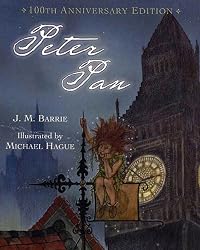
The adventures of the three Darling children in Never-Never Land with Peter Pan, the boy who would not grow up.Tags
Recommendations
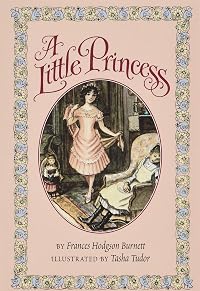

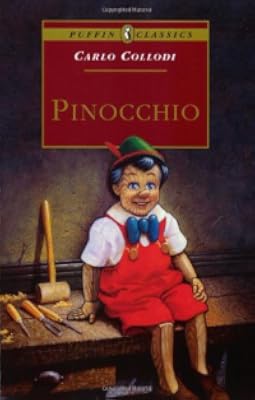
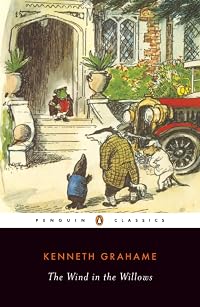
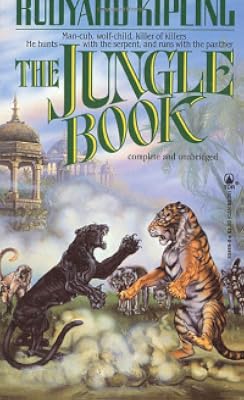
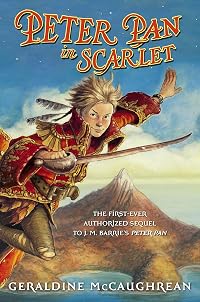

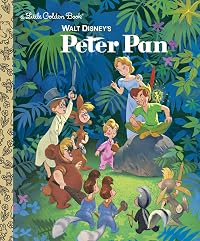





Member Recommendations
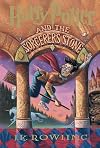
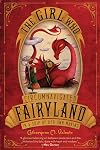
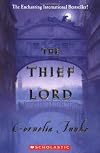
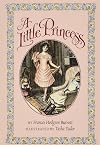

Dust by Kara Swanson
by anonymous user
Member Reviews
I confess, I really liked it.
I say "confess" because Peter Pan includes those "of its time" issues: sexist stereotypes and racist expressions that make one wince today. Rightly so.
It can be a dilemma for readers.
I resolve the dilemma by judging a book by its heart. If a book (looking at you A Princess of Mars) has a violent, lurid message of racial and male superiority that might once have seemed, um, harmless, and that is its primary message, then I am not going to hold back my critical disdain of it. Regardless of its "time."
On the other hand, I don't feel like the issues are its heart in Peter Pan. I feel Barrie's story is intended to revel in a child's naturally wild as well as fearful sensibilities, done so wittily and tenderly show more that I forgive his inability to fly into the future to see how we would view phrases like "red skins" and "Great White Father," and the relegating a female's function to motherhood (except Tink, who is equally as wild and unapologetic as Peter). The dilemma lies in what you believe was his intention, don't you think?
As to its banning in some locations of the U.S., it is with utter respect that I believe it is the parents responsiblity to decide for themselves if this remains appropriate for their children. Banning has always been ridiculous and, thankfully, ineffective. And now, with the Internet, even more ridiculous and ineffective.
And bad reviews, some verging on loathing for this story? I heartily agree with them! What I'm agreeing with, though, is my distaste for oppressions, then and now. I am offended by it, but that doesn't change that it once was so, and continues. That continuation is likely why the story is offensive, since plenty of classic literature is rife with what we find intolerable now. Are we offended today by Pride and Prejudice with its focus on desperate husband-hunting? Generally speaking, no, because our Western society has gone beyond that and so it has little power to be offensive.
Reading now just for my own self (and I'm also of my time, as we all are), I recognize there are books that can transcend their time while still being of their time. Peter Pan has done that, in spite of those parts of itself, much like fairy tales have.
It remains timeless...
"...so long as children are gay and innocent and heartless." show less
I say "confess" because Peter Pan includes those "of its time" issues: sexist stereotypes and racist expressions that make one wince today. Rightly so.
It can be a dilemma for readers.
I resolve the dilemma by judging a book by its heart. If a book (looking at you A Princess of Mars) has a violent, lurid message of racial and male superiority that might once have seemed, um, harmless, and that is its primary message, then I am not going to hold back my critical disdain of it. Regardless of its "time."
On the other hand, I don't feel like the issues are its heart in Peter Pan. I feel Barrie's story is intended to revel in a child's naturally wild as well as fearful sensibilities, done so wittily and tenderly show more that I forgive his inability to fly into the future to see how we would view phrases like "red skins" and "Great White Father," and the relegating a female's function to motherhood (except Tink, who is equally as wild and unapologetic as Peter). The dilemma lies in what you believe was his intention, don't you think?
As to its banning in some locations of the U.S., it is with utter respect that I believe it is the parents responsiblity to decide for themselves if this remains appropriate for their children. Banning has always been ridiculous and, thankfully, ineffective. And now, with the Internet, even more ridiculous and ineffective.
And bad reviews, some verging on loathing for this story? I heartily agree with them! What I'm agreeing with, though, is my distaste for oppressions, then and now. I am offended by it, but that doesn't change that it once was so, and continues. That continuation is likely why the story is offensive, since plenty of classic literature is rife with what we find intolerable now. Are we offended today by Pride and Prejudice with its focus on desperate husband-hunting? Generally speaking, no, because our Western society has gone beyond that and so it has little power to be offensive.
Reading now just for my own self (and I'm also of my time, as we all are), I recognize there are books that can transcend their time while still being of their time. Peter Pan has done that, in spite of those parts of itself, much like fairy tales have.
It remains timeless...
"...so long as children are gay and innocent and heartless." show less
A lot darker than the Disneyfied version, Neverland is half nightmare and Pan much more of a capricious and immoral god of his realm. The appeals to courage being couched in terms of a british spirit have also been lost to time in modern adaptations. While the indians were actually part of the Disney movie, they've been quietly excised since.
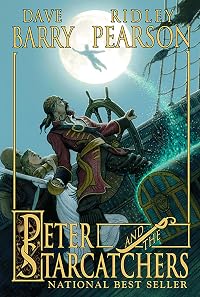
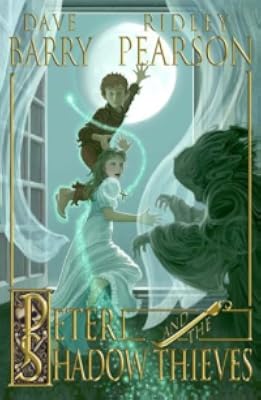
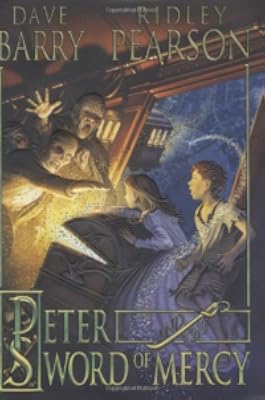
Of course, I'd seen the Disney version many times before reading the original. I'd also read the delightfully adventurous Peter Pan and the Starcatchers series by Dave Barry and Ridley Pearson. No surprise that the original from 1911 was quite different from either - especially in the character of Peter Pan himself. In the original he is portrayed as much younger, more naive, selfish, and unable to focus on anything of import for more than a few minutes... just like a five or six year old child generally is. Wendy's portrayal seems slightly misogynistic by today's standards, as even in Neverland, she seems happy to stay home darning the boys socks while they go off on adventures. And the racist portrayals of the "redskins" is atrocious. show more Nonetheless, I was surprised to find a few tears slipping down my cheeks as I read the last couple of chapters. The book is, after all, about both the joys and the tragedy of growing up, and losing the magic of childhood. show less
The first time I read Peter Pan, I was seventeen and a freshman in college. I remember being charmed, enchanted. That was the period in my life where I discovered Alice in Wonderland as well, and I was enraptured by the whimsy of the story. Thirteen years later, I still understand what appealed to me. But I also have grown older and wiser and more aware, and there are a lot of cringy moments.
I want to discuss those first, because I believe it's smart to rip off the band-aid and have done with it.
As a whole, Peter Pan is racist and sexist. There's no talking around it - it's quite glaring and abhorrent. The language used to describe native peoples is inappropriate. Tiger Lily and her tribe are grossly characitured. There is nothing, show more absolutely nothing redeeming that can be said for the story in this respect. It is honestly awful.
As far as sexism goes, we have six female characters here. In Neverland, we have Tinkerbell and Tiger Lily. In England, there is Mrs. Darling, Liza, Nana, and of course between both worlds we have Wendy. Tiger Lily's entire role is to be rescued by Peter. Mrs. Darling, Liza, Nana, and Wendy all exist to be housekeepers and caregivers. The importance of a mother is a strong theme in this book, and while that is sweet in some ways, this book very clearly lays out that the role of the woman is to keep house and have babies. Um!? The character with the most potential of spirit and individuality is Tinkerbell, and while she has never been a favorite before, I think I have a begrudging respecter her now.
Except, of course, that all the young ladies are desperately in love with the clueless Peter Pan, and everything they do, they do for love of him. Excuse me now.
This is such a waste, because removing the problematic elements, Neverland is so wonderful. The voice in which this story is told is charming and exciting, like a story being told to you, something you can treasure close to your heart. Of course Peter Pan has captured the hearts of so many - it's easy to see, what with the wonderful possibility of a secret adventure, shared childhood memories, and also - how lovely would it be to fly? The world itself is disarmingly wonderful. Except for the racism and sexism. Oh why, oh why, J. M. Barrie. Why.
There is an addendum in the audiobook cautioning that the words in this book are not the opinions of the narrator, and are a product of the time of publication, 1906. Even Audible knows there's some sketchy sketchy nope stuff.
It's really a shame because Neverland is such a presence, and I want its magic to endure. And I think in modern retellings, it does! I'd skip the Disney adaptation, but later plays and retellings do a wonderful job taking the magic in this story, and stripping it of its harmful elements. Still, those harmful elements do exist in the source material and because of them, we need to be cautious about perpetuating the story. It's a complicated moral decision to make.
Story-wise, I really like the cyclical feel of it, the way things rotate and change so quickly, and the strange and perfect balance of roles and the blurry line between good and evil. I wasn't altogether crazy about the group dynamics, but I did like individual characters. Toodles and Smee, of course, are precious. And I really like the voice this story was told in (the narrator was good too, but I mean the writing voice in this case). Peter, or course, is the absolute worst, but I think I liked that about him too, because it made human interesting character. Seriously though - what a brat.
You will have to make your own choice about Peter Pan. On the one hand, I enjoyed the magic in this storytelling a lot. But the racism and sexism drew me out of the story, so I had a really mixed experience. The good elements are so, so good, but the bad elements are quite bad. This story is so deeply entwined in our cultural consciousness, though, that you, dear reader, probably know the magic of it without needing to read the book. show less
I want to discuss those first, because I believe it's smart to rip off the band-aid and have done with it.
As a whole, Peter Pan is racist and sexist. There's no talking around it - it's quite glaring and abhorrent. The language used to describe native peoples is inappropriate. Tiger Lily and her tribe are grossly characitured. There is nothing, show more absolutely nothing redeeming that can be said for the story in this respect. It is honestly awful.
As far as sexism goes, we have six female characters here. In Neverland, we have Tinkerbell and Tiger Lily. In England, there is Mrs. Darling, Liza, Nana, and of course between both worlds we have Wendy. Tiger Lily's entire role is to be rescued by Peter. Mrs. Darling, Liza, Nana, and Wendy all exist to be housekeepers and caregivers. The importance of a mother is a strong theme in this book, and while that is sweet in some ways, this book very clearly lays out that the role of the woman is to keep house and have babies. Um!? The character with the most potential of spirit and individuality is Tinkerbell, and while she has never been a favorite before, I think I have a begrudging respecter her now.
Except, of course, that all the young ladies are desperately in love with the clueless Peter Pan, and everything they do, they do for love of him. Excuse me now.
This is such a waste, because removing the problematic elements, Neverland is so wonderful. The voice in which this story is told is charming and exciting, like a story being told to you, something you can treasure close to your heart. Of course Peter Pan has captured the hearts of so many - it's easy to see, what with the wonderful possibility of a secret adventure, shared childhood memories, and also - how lovely would it be to fly? The world itself is disarmingly wonderful. Except for the racism and sexism. Oh why, oh why, J. M. Barrie. Why.
There is an addendum in the audiobook cautioning that the words in this book are not the opinions of the narrator, and are a product of the time of publication, 1906. Even Audible knows there's some sketchy sketchy nope stuff.
It's really a shame because Neverland is such a presence, and I want its magic to endure. And I think in modern retellings, it does! I'd skip the Disney adaptation, but later plays and retellings do a wonderful job taking the magic in this story, and stripping it of its harmful elements. Still, those harmful elements do exist in the source material and because of them, we need to be cautious about perpetuating the story. It's a complicated moral decision to make.
Story-wise, I really like the cyclical feel of it, the way things rotate and change so quickly, and the strange and perfect balance of roles and the blurry line between good and evil. I wasn't altogether crazy about the group dynamics, but I did like individual characters. Toodles and Smee, of course, are precious. And I really like the voice this story was told in (the narrator was good too, but I mean the writing voice in this case). Peter, or course, is the absolute worst, but I think I liked that about him too, because it made human interesting character. Seriously though - what a brat.
You will have to make your own choice about Peter Pan. On the one hand, I enjoyed the magic in this storytelling a lot. But the racism and sexism drew me out of the story, so I had a really mixed experience. The good elements are so, so good, but the bad elements are quite bad. This story is so deeply entwined in our cultural consciousness, though, that you, dear reader, probably know the magic of it without needing to read the book. show less
Although the story was very familiar to me, I don’t recall ever reading the book before. I saw the Mary Martin version on TV as a child. It struck me this time around how odd the plot is, with everyone expecting Wendy to assume the role of mother to Peter and the Lost Boys. Things have changed in the century since this book was written. Infant and child mortality was a lot higher in the early 20th century than it is now. Women’s mortality from childbirth (or other causes) was also a lot higher then. Children who had lost their mothers, or who had friends or relations who had lost their mothers, might see themselves among the motherless children of Neverland. The story may not resonate with 21st century children in the same way, and show more that’s a good thing. show less
What a bizarre and surprising little book! As did many people, I grew up on Disney’s Peter Pan, so reading Barrie’s original at the age of 48 was quite the shock. Peter is cocky, heartless, tragic, and rather fiendish (Barrie’s words, not mine), vaguely malevolent as well as irresistibly charismatic. Tinker Bell is stout and inclined to call people “silly asses,” and Captain Hook is obsessed with the traditions of his public school (private school in the U.S.). This ain’t Walt’s Neverland.
It is a meditation on childhood and the meaning of leaving it behind. As well as the inevitability of death and the realization (both disturbing and reassuring) that there will always be another generation to take our place.
The opening show more passage sets the stage: “All children, except one, grow up. They soon know that they will grow up, and the way Wendy knew was this. One day when she was two years old she was playing in a garden, and she plucked another flower and ran with it to her mother. I suppose she must have looked rather delightful, for Mrs. Darling put her hand to her heart and cried, ‘Oh, why can’t you remain like this for ever!’ This was all that passed between them on the subject, but henceforth Wendy knew that she must grow up. You always know after you are two. Two is the beginning of the end.”
Ironically, you must be adult to appreciate the best moments of Peter Pan for its not until you’ve passed through childhood that you can understand all that “Two is the beginning of the end” entails. show less
It is a meditation on childhood and the meaning of leaving it behind. As well as the inevitability of death and the realization (both disturbing and reassuring) that there will always be another generation to take our place.
The opening show more passage sets the stage: “All children, except one, grow up. They soon know that they will grow up, and the way Wendy knew was this. One day when she was two years old she was playing in a garden, and she plucked another flower and ran with it to her mother. I suppose she must have looked rather delightful, for Mrs. Darling put her hand to her heart and cried, ‘Oh, why can’t you remain like this for ever!’ This was all that passed between them on the subject, but henceforth Wendy knew that she must grow up. You always know after you are two. Two is the beginning of the end.”
Ironically, you must be adult to appreciate the best moments of Peter Pan for its not until you’ve passed through childhood that you can understand all that “Two is the beginning of the end” entails. show less
"All children, except one, grow up," declares the narrator of this classic children's fantasy, in an opening line that has become - like the novel's elfin hero, his piratical adversary, or the fantastical land in which he lives - almost a byword for the enchantment of youth and the make-believe of childhood. Who doesn't know the eternally young Peter Pan, his child-mother Wendy, or his melancholy enemy, Captain Hook? Who hasn't heard of Neverland, that magical island to be found somewhere out there in the Milky Way, if one flies in the direction of the "second star to the right, and straight on till morning?"
References to the story of Peter Pan, who first saw light as a character in J.M Barrie's 1902 adult novel, The Little White show more Bird**, before becoming the subject of a 1904 stage play, Peter Pan; or, the Boy Who Wouldn't Grow Up, and then eventually the hero of his own book, Peter and Wendy (also published over the years as Peter Pan and Wendy, as well as just Peter Pan) in 1911, pop up quite frequently in the world of children's literature, and well beyond. From contemporary sequels like Geraldine McCaughrean's Peter Pan in Scarlet, penned long after the fact, to fantasy series such as Dave Barry and Ridley Pearson's Peter and the Starcatchers, that take the characters from the original story, and create their own world; from film retellings like Disney's 1953 animated Peter Pan, or revisionist live action ones like the 1991 Hook, to the recent Finding Neverland, which examined the story behind the story, it is evident that this character, and his creator, are still very much with us.
All of which makes reading Peter Pan for the very first time as an adult, having grown up thinking that it was a story that I knew, a revelatory experience. Almost immediately, one begins to notice little differences, and to suspect that the various adaptations of the story, down through the years, have also played a role in our perception of it - its presence in our culture. I was surprised to discover, for instance, that the original does not speak of Neverland as lying in the direction of the "second star to the right," a quote used to great effect at the conclusion of Star Trek IV: The Undiscovered Country (which also features some fabulous Shakespearean quotations... but I digress), but rather has Peter mention it as being "second to the right..." Apparently it was Disney who inserted the "star" that made this such a pertinent Star Trek quote - who knew?!! Of course there's also the fact that in the story Peter is simply ad-libbing, and the "directions" to Neverland, such as they are, are never meant to be taken seriously.
On a deeper level, I was completely unprepared for the tone of Barrie's work, and for the elements of tragedy that are apparent, in the character of Peter Pan, and in his interaction with those around him. I had always just assumed, from the way in which this character and his story was presented to me - in adaptations of course, but especially by other readers, and the way they spoke about him - that his was meant to be a joyfully youthful experience. Carefree. Lighthearted and thoughtless, and entirely free from sorrow. And certainly, it is all that. But it's not just that, as I discovered! Peter Pan may live in Neverland, but he also lives in limbo. He is a being who knows pleasure, and experiences some manner of joy, but who, because he cannot change - or perhaps, because he has been too long cut off from others - is forever barred from some of the fundamental experiences that make us human. He cannot form permanent bonds with others, and although he feels intensely in the moment, he eventually forgets even those he loves. There is a deep sadness to the way in which he is portrayed, at times, that was unexpected.
That this melancholy was intentional, in Barrie's characterization, is hinted at by the name Peter Pan itself, I think, with the reference to Pan, the ancient Greek god of the wild. Is Peter's story that of a child who never wishes to grow up, or that of a person who has become separated from the human experience, and cannot find his way back? Or perhaps both? Is the rejection of boring adulthood, of the conventionality of becoming a man, really just a rejection of the human condition, with all its imperfections? Has Peter become, not a boy - who is, after all, a young human - but something inhuman? I'm sure some scholar must have long since picked this theme apart - I will have to look for some good Barrie criticism!
Having finally read the novel Peter Pan, as part of our August discussion, over in The Children's Fiction Club to which I belong, I was left with much to ponder. There were, of course, elements of the story that did not come as a surprise, and were less thought-provoking than they were (sadly) demeaning. The dehumanizing depiction of Native Americans here - somewhere in the vicinity of the Noble Savage, I would say - the many little chauvinistic asides about "women" (which usually, although not always, meant Wendy) just naturally liking certain things, were about what I was expecting. I think that quite a bit of this could do with some in-depth examination - and I'm sure some critic has already done it! - and imagine that Wendy's story would make just as interesting a topic as Peter's. After all, it isn't an accident that the book was originally styled Peter and Wendy. Still, despite noting these issues, in my reading, the largest portion of my attention, when not given over to the story itself, was engaged by this question of Peter's humanity (or lack thereof), and his fate, and the tragic way in which both were depicted. All of which is to say: this wasn't what I was expecting! I mean that in the best possible way...
**The chapters involving Peter, in Barrie's The Little White Bird were eventually extracted, and published separately in 1906, under the title Peter Pan in Kensington Gardens show less
References to the story of Peter Pan, who first saw light as a character in J.M Barrie's 1902 adult novel, The Little White show more Bird**, before becoming the subject of a 1904 stage play, Peter Pan; or, the Boy Who Wouldn't Grow Up, and then eventually the hero of his own book, Peter and Wendy (also published over the years as Peter Pan and Wendy, as well as just Peter Pan) in 1911, pop up quite frequently in the world of children's literature, and well beyond. From contemporary sequels like Geraldine McCaughrean's Peter Pan in Scarlet, penned long after the fact, to fantasy series such as Dave Barry and Ridley Pearson's Peter and the Starcatchers, that take the characters from the original story, and create their own world; from film retellings like Disney's 1953 animated Peter Pan, or revisionist live action ones like the 1991 Hook, to the recent Finding Neverland, which examined the story behind the story, it is evident that this character, and his creator, are still very much with us.
All of which makes reading Peter Pan for the very first time as an adult, having grown up thinking that it was a story that I knew, a revelatory experience. Almost immediately, one begins to notice little differences, and to suspect that the various adaptations of the story, down through the years, have also played a role in our perception of it - its presence in our culture. I was surprised to discover, for instance, that the original does not speak of Neverland as lying in the direction of the "second star to the right," a quote used to great effect at the conclusion of Star Trek IV: The Undiscovered Country (which also features some fabulous Shakespearean quotations... but I digress), but rather has Peter mention it as being "second to the right..." Apparently it was Disney who inserted the "star" that made this such a pertinent Star Trek quote - who knew?!! Of course there's also the fact that in the story Peter is simply ad-libbing, and the "directions" to Neverland, such as they are, are never meant to be taken seriously.
On a deeper level, I was completely unprepared for the tone of Barrie's work, and for the elements of tragedy that are apparent, in the character of Peter Pan, and in his interaction with those around him. I had always just assumed, from the way in which this character and his story was presented to me - in adaptations of course, but especially by other readers, and the way they spoke about him - that his was meant to be a joyfully youthful experience. Carefree. Lighthearted and thoughtless, and entirely free from sorrow. And certainly, it is all that. But it's not just that, as I discovered! Peter Pan may live in Neverland, but he also lives in limbo. He is a being who knows pleasure, and experiences some manner of joy, but who, because he cannot change - or perhaps, because he has been too long cut off from others - is forever barred from some of the fundamental experiences that make us human. He cannot form permanent bonds with others, and although he feels intensely in the moment, he eventually forgets even those he loves. There is a deep sadness to the way in which he is portrayed, at times, that was unexpected.
That this melancholy was intentional, in Barrie's characterization, is hinted at by the name Peter Pan itself, I think, with the reference to Pan, the ancient Greek god of the wild. Is Peter's story that of a child who never wishes to grow up, or that of a person who has become separated from the human experience, and cannot find his way back? Or perhaps both? Is the rejection of boring adulthood, of the conventionality of becoming a man, really just a rejection of the human condition, with all its imperfections? Has Peter become, not a boy - who is, after all, a young human - but something inhuman? I'm sure some scholar must have long since picked this theme apart - I will have to look for some good Barrie criticism!
Having finally read the novel Peter Pan, as part of our August discussion, over in The Children's Fiction Club to which I belong, I was left with much to ponder. There were, of course, elements of the story that did not come as a surprise, and were less thought-provoking than they were (sadly) demeaning. The dehumanizing depiction of Native Americans here - somewhere in the vicinity of the Noble Savage, I would say - the many little chauvinistic asides about "women" (which usually, although not always, meant Wendy) just naturally liking certain things, were about what I was expecting. I think that quite a bit of this could do with some in-depth examination - and I'm sure some critic has already done it! - and imagine that Wendy's story would make just as interesting a topic as Peter's. After all, it isn't an accident that the book was originally styled Peter and Wendy. Still, despite noting these issues, in my reading, the largest portion of my attention, when not given over to the story itself, was engaged by this question of Peter's humanity (or lack thereof), and his fate, and the tragic way in which both were depicted. All of which is to say: this wasn't what I was expecting! I mean that in the best possible way...
**The chapters involving Peter, in Barrie's The Little White Bird were eventually extracted, and published separately in 1906, under the title Peter Pan in Kensington Gardens show less
Members
- Recently Added By
Lists

Favorite Childhood Books
1,651 works; 519 members

Best Fantasy Novels
821 works; 361 members

Read the book and saw the movie
1,170 works; 193 members

Best Children's Books You've Read
197 works; 75 members

Classics you know you should have read but probably haven't
421 works; 409 members

501 Must-Read Books
529 works; 72 members
1001 Children's Books You Must Read Before You Grow Up
774 works; 101 members

School Library Journal - 2012 Top 100 Children's Novels
68 works; 8 members

Recommended Faerie books
67 works; 22 members
Children's Fantasy
73 works; 10 members
Best of British Literature
226 works; 41 members
NPRs Ultimate Backseat Bookshelf: 100 Must-Reads for kids 9-14
222 works; 30 members
Childhood Favorites
427 works; 24 members
Five books to read aloud to your kids
35 works; 17 members

Great Pirate Books
39 works; 21 members

Best middle grade books
130 works; 24 members

Stories About Other Worlds
145 works; 13 members

A Child's Book Tour of London
51 works; 7 members
Survey of Fantasy Classics
111 works; 23 members

Books I've Read More Than Once
602 works; 49 members

Best Friendship Stories
205 works; 16 members
Survey of Science Fiction and Fantasy
101 works; 13 members
Twentieth Century Greatest Hits
27 works; 11 members

Books with racist aspects you wished you had been warned about
29 works; 10 members
Works That Inspired Disney Movies
119 works; 13 members

Satori Smiles Children's Book List
262 works; 7 members

Recommend the 20 best books you've read in the last five years
2,168 works; 607 members
Honey For a Child's Heart
1,152 works; 25 members

Best Books Set in London
157 works; 42 members

Folio Society
831 works; 53 members

Books about pirates
29 works; 10 members

Books with a Character's Name as the Title
130 works; 10 members
Formative books
20 works; 4 members

20th Century Literature
1,161 works; 55 members

Children's Classics Worth Reading
68 works; 9 members

Sonlight Books
1,487 works; 25 members
Books tagged favorites
390 works; 30 members

Favorite children's chapter books
15 works; 1 member

Books Read in 2023
5,638 works; 147 members
Best First Lines
133 works; 8 members

Books that give you Gender Euphoria
2 works; 1 member

Top Five Books of 2017
757 works; 231 members
Travel from real to fantasy world -- children's/young adult fiction
125 works; 11 members
Ambleside Books
459 works; 18 members

Inkworld Trilogy Books
14 works; 1 member

SantaThing 2014 Gifts
299 works; 17 members

Puffin Books 70th anniversary handbook recommendations
537 works; 10 members

Books Read in 2024
4,727 works; 128 members

The "A" List
67 works; 8 members

READ IN 2021
239 works; 4 members

Books referenced in the Astral Library
60 works; 1 member

HMS: Make Your Child a Lover of Books, Ages 9 & up
111 works; 2 members

Books Read in 2021
5,361 works; 114 members
Books Read in 2016
110 works; 1 member

Books Read in 2022
5,226 works; 115 members

Before Austen Comes Aesop
318 works; 9 members

Favorite Kids Books (chapter, middle grade)
170 works; 4 members

.
194 works; 2 members

Mustich's 1000 Books to Read Before You Die: A Life Changing List
1,001 works; 20 members
Books With Our Favorite First Lines
168 works; 104 members

Books Read in 2020
4,379 works; 123 members

World without adults
27 works; 2 members

Books We Loved As Children
603 works; 253 members

Recommended Reading List
219 works; 1 member
Recommended Reading : 600 Classics Reviewed, Editors of Salem Press, 2015
634 works; 6 members

1910s
90 works; 16 members
Overdue Podcast
808 works; 9 members

Literary Classics To Read (pre 1900)
19 works; 2 members
Ten Books That Have Stayed With Me
160 works; 30 members

Swashbucklers
29 works; 6 members

Kidnapping -- children's/young adult fiction
598 works; 3 members

Boys, girls, flying, fantasy -- children's/young adult fiction
27 works; 2 members

Stories Featuring Reptiles
22 works; 5 members

A Novel Cure
742 works; 23 members
Children's Adventure
53 works; 4 members

Best manuscripts lost on public transport (or elsewhere...)
7 works; 3 members

Enfants sans
14 works; 1 member
Books tagged unread
41 works; 1 member
Five star books
1,767 works; 110 members
Fiction with Men's Given Names in the Title
302 works; 11 members
Works Referenced in The League of Extraordinary Gentlemen
122 works; 6 members
The League of Extraordinary Gentlemen
87 works; 4 members

Western World's Greatest Books - Project Gutenberg
295 works; 15 members

Unread books
1,063 works; 87 members

Books Featured on Readers' Review of the Diane Rehm Show
161 works; 8 members

Books read by Charlie in "The Perks of Being a Wallflower"
12 works; 2 members
Books Set on Islands
190 works; 24 members

Amanda's Guaranteed Books
110 works; 5 members

Books Read in 2016
4,666 works; 197 members

Books Read in 2017
4,249 works; 130 members

Take Four Books
130 works; 1 member

CCE 1000 Good Books List
1,033 works; 12 members
Author Information

447+ Works 31,764 Members
James Matthew Barrie, the creator of Peter Pan, was born on May 9, 1860, in Kirriemuir, Angus, Scotland. His idyllic boyhood was shattered by his brother's death when Barrie was six. His own grief and that of his mother influenced the rest of his life. Through his work, he sought to recapture the carefree joy of his first six years. Barrie came to show more London as a freelance writer in 1885. His early fiction, Auld Licht Idylls (1888) and A Window in Thrums (1889), were inspired by his youth in Kirriemuir. After publishing a biography of his mother Margaret Ogilvy and the autobiographical novel Sentimental Tommy, about a boy living in a dream world (1896), he concentrated on writing plays. The Admirable Crichton (1902), the story of a butler who becomes king of a desert island, helped to establish Barrie's reputation as a playwright. Meanwhile, he began to relive his childhood by telling the first Peter Pan stories to the sons of his friend, Sylvia Llewellyn Davies. The play Peter Pan was first performed in 1904 and published as a novel seven years later. Its imaginative drama, featuring the eternal boy's triumph over the grownup Captain Hook, idealizes childhood and underscores adults' inability to regain it. These resonant themes made it a classic of world literature. Barrie's later work shows his increasingly cynical view of adulthood, particularly in Dear Brutus (1917). Often considered his finest play, it concerns nine men and women whose caprices destroy a miraculous opportunity to relive their lives. Barrie married the former Mary Ansell in 1894. They divorced in 1909, never having any children. Barrie died in London on June 19, 1937. (Bowker Author Biography) show less
Some Editions
Awards and Honors
Awards
Notable Lists
Series

Belongs to Publisher Series
Work Relationships
Is contained in
Is retold in
Is a (non-series) sequel to
Has the (non-series) sequel
Has the (non-series) prequel
Has the adaptation
Is abridged in
Is an expanded version of
Inspired
Hook by Terry Brooks
Has as a commentary on the text
Has as a student's study guide
Common Knowledge
- Canonical title
- Peter Pan
- Original title
- Peter and Wendy
- Alternate titles
- Peter Pan and Wendy; Boy Who Wouldn't Grow Up; Peter Pan
- Original publication date
- 1911
- People/Characters
- Wendy Darling; Peter Pan; Captain Hook; John Darling; Mrs. Darling; Tiger Lily (show all 33); Michael Darling; Mr. George Darling; Tinker Bell (fairy); Nana [Peter Pan] (dog); Slightly (Lost Boy); Tootles (Lost Boy); Cecco; Curly (Lost Boy); Bill Jukes; The Twins (Lost Boys); Nibs; Smee; Liza (maid); Cookson; Gentleman Starkey; Skylights; Noodler; Robert Mullins; Alf Mason; George Scourie; Charles Turley; Foggerty; Ed Teynte; Lean Wolf; Great Big Little Panther; Jane; Margaret
- Important places
- London, England, UK; Neverland; Kensington Gardens, London, England, UK
- Related movies
- Peter Pan (1953 | IMDb); Return to Never Land (2002 | IMDb); Peter Pan (1960 | IMDb); Hallmark Hall of Fame: Peter Pan (1976 | IMDb); Peter Pan II: Return to Neverland (2002 | IMDb); Peter Pan (2003 | IMDb) (show all 10); Finding Neverland (2004 | IMDb); Neverland (2011 | IMDb); Pan (2015 | IMDb); Peter Pan (2018 | IMDb)
- First words
- All children, except one, grow up.
- Quotations
- "Now," said he, "shall I give you a kiss?" and she replied with a slight primness, "if you please." She made herself rather cheap by inclining her face toward him, but he merely dropped an acorn button into her hand; so she s... (show all)lowly returned her face to where it had been before, and said nicely that she would wear his kiss on a chain around her neck.
Mr and Mrs Darling and Nana rushed into the nursery too late. The birds were flown.
At the sight of his own blood, whose peculiar colour, you remember, was offensive to him, the sword fell from Hook's hand, and he was at Peter's mercy.
"Now!" cried all the boys, but with a magnificent gesture Peter in... (show all)vited his opponent to pick up his sword. Hook did so instantly, but with a tragic feeling that Peter was showing good form. - Last words
- (Click to show. Warning: May contain spoilers.)When Margaret grows up she will have a daughter, who is to be Peter's mother in turn; and thus it will go on, so long as children are gay and innocent and heartless.
- Publisher's editor*
- Edival,Ediciones. Valladolid; Editorial Alfredo Ortells. Vallencia; Edelvives
- Original language
- English; Inglés
- Canonical DDC/MDS
- 823.912
- Canonical LCC
- PZ7.B27539 P
- Disambiguation notice
- Please do not combine the novel with the original play.
The original play was written by J.M. Barrie and first performed in 1904.
Peter and Wendy is the title of Barrie's 1911 novelization of it. The novel follows th... (show all)e play closely, but includes a final chapter not part of the original play.
The novel is now usually published under the title Peter and Wendy or simply Peter Pan.
Per WorldCat, ISBN 0805072454 is for a book by J.M. Barrie; not a video.
ISBN 1897035128 is a Blue Heron Books edition of Peter Pan.
ISBN 0689866917 is an Aladdin edition of Peter Pan.
ISBN 014086847X is a Puffin edition of Peter Pan.
ISBN 1566197139 is a Barnes & Noble publication of Peter Pan.
*Some information comes from Common Knowledge in other languages. Click "Edit" for more information.
Classifications
- Genres
- Fiction and Literature, Children's Books, Fantasy
- DDC/MDS
- 823.912 — Literature & rhetoric English & Old English literatures English fiction 1900- 1901-1999 1901-1945
- LCC
- PZ7 .B27539 — Language and Literature Fiction and juvenile belles lettres Fiction and juvenile belles lettres Juvenile belles lettres
- BISAC
Statistics
- Members
- 22,797
- Popularity
- 229
- Reviews
- 365
- Rating
- (3.94)
- Languages
- 29 — Catalan, Chinese, Czech, Danish, Dutch, English, Estonian, Finnish, French, German, Greek, Hungarian, Italian, Japanese, Korean, Lithuanian, Norwegian (Bokmål), Norwegian, Polish, Romanian, Russian, Serbian, Slovak, Spanish, Swedish, Thai, Turkish, Ukrainian, Portuguese (Portugal)
- Media
- Paper, Audiobook, Ebook
- ISBNs
- 1,156
- UPCs
- 14
- ASINs
- 306